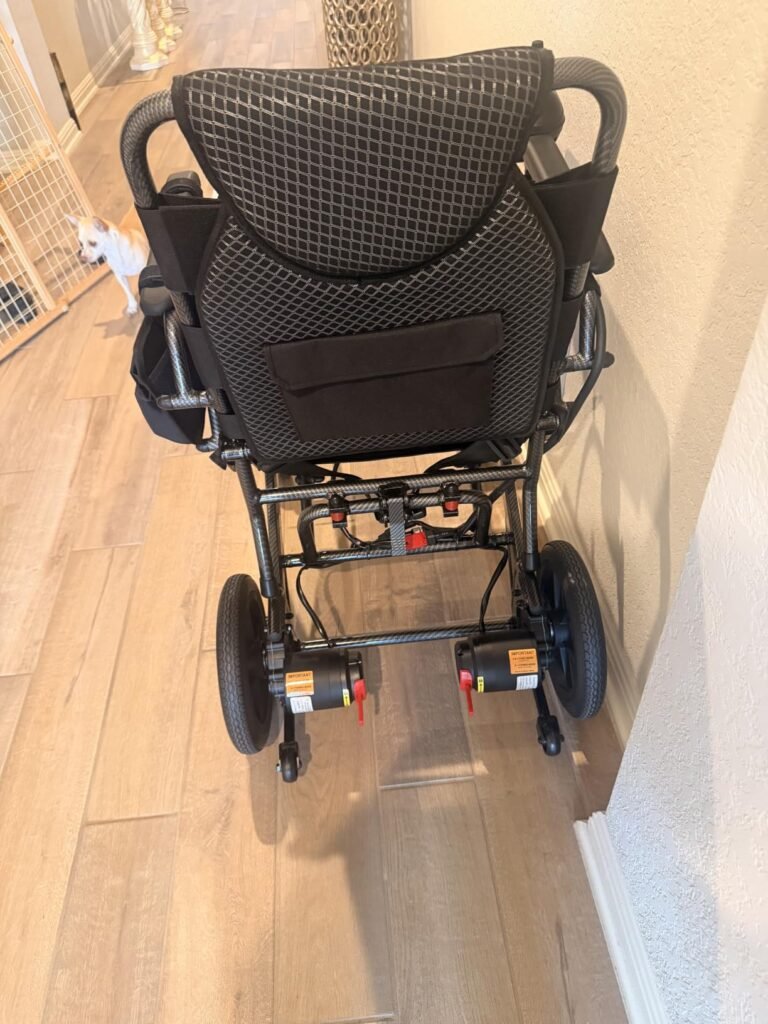
2026 Upgrade Foldable
8.6Editor score700W powerful motor
20-mile battery range
3.73 mph top speed
12Ah lithium battery
Compare 10 folding electric wheelchairs by weight, range, motor power, and portability. Find the right power chair for travel, daily errands, and home use.
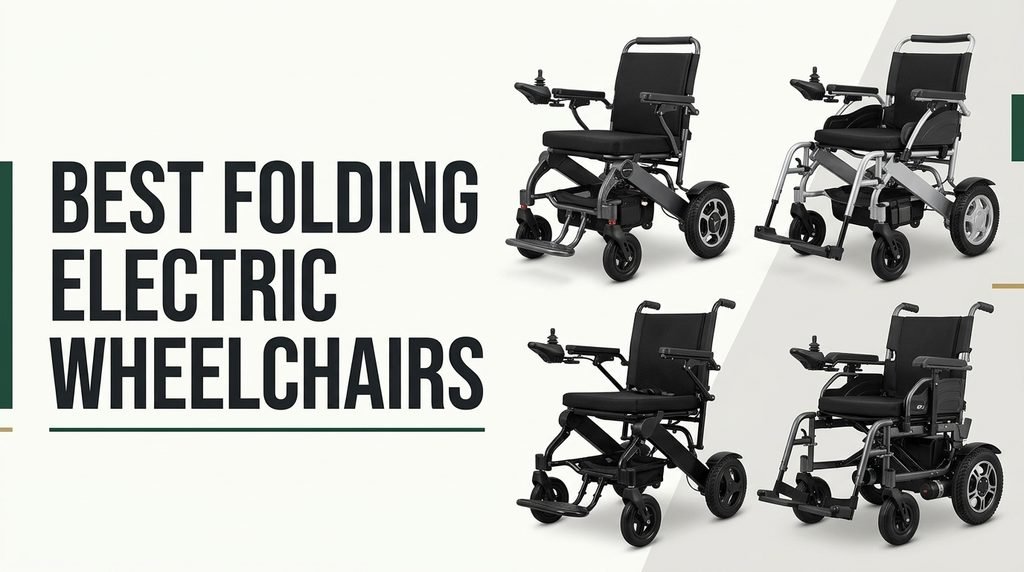
Choosing the right folding electric wheelchair for 2026 comes down to weight, range, folding speed, and daily comfort. We compare 10 standout models on frame materials, motor output, battery life, portability, weight capacity, safety systems, and real-world usability to help you match a power chair to how you actually move through your day.
Folding power chairs vary widely in price and capability, from budget models under $310 to premium carbon fiber frames near $1,600. The right pick depends on whether you prioritize solo lifting, airline travel, longer range, or heavy-duty capacity. Understanding these trade-offs prevents overpaying for features you will not use.
This guide breaks down motor wattage, battery configurations, folding mechanisms, and comfort details so you can shortlist confidently. Whether you need a 22-pound carbon fiber chair for effortless lifting, a 700W motor for hills, or a caregiver-friendly Bluetooth remote, each pick here targets a specific type of buyer.
We compared 10 folding electric wheelchairs using the details that genuinely help a buyer decide: chair weight, folding speed, motor wattage, battery range, weight capacity, tire type, braking systems, controller ergonomics, comfort features, warranty coverage, and owner feedback. The notes focus on practical trade-offs so each pick connects to how people actually fold, lift, transport, and use a power chair in cars, homes, airports, and everyday errands.


Compare key features, scores, and current prices side by side. A shorter feature list means fewer details were available, not necessarily fewer capabilities.


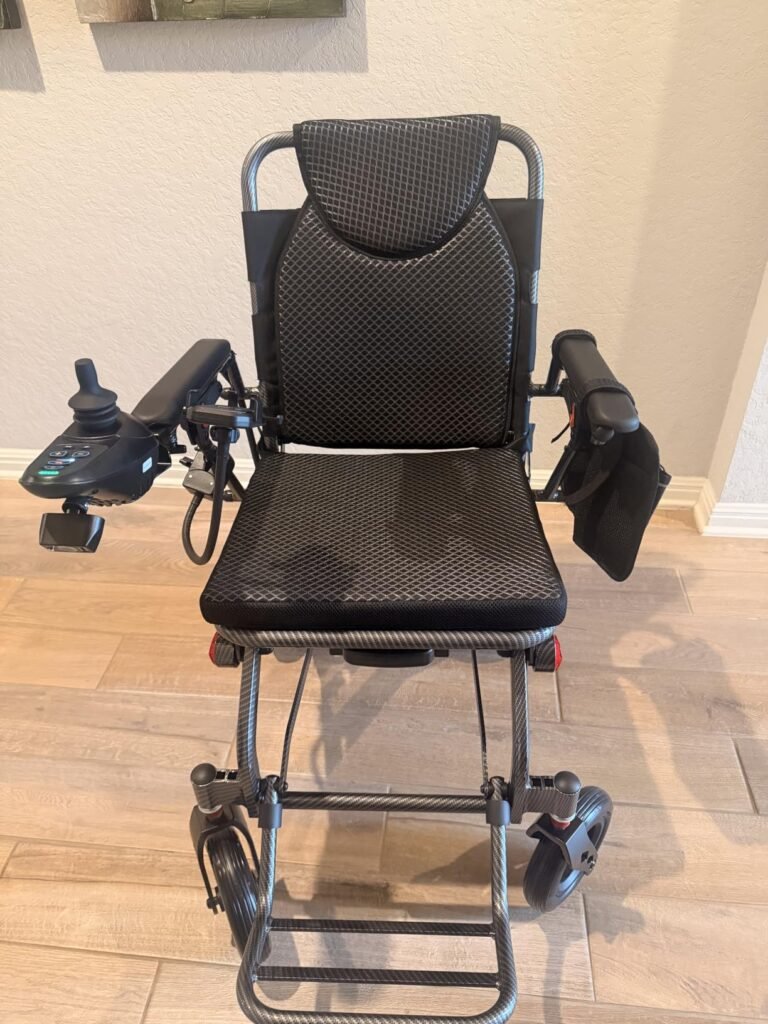
With the highest customer rating in this comparison, this 38-pound motorized chair strikes an excellent balance between portability and everyday capability. The 18-mile range from a single 12Ah battery is noticeably longer than many competitors at the same price point, meaning fewer mid-day charging concerns during shopping trips, medical appointments, or extended errands.
We may earn a commission when you buy through this link, at no additional cost to you.
The electromagnetic braking system holds the chair firmly on inclines the instant you release the joystick, eliminating the unsettling rollback that some cheaper chairs allow. Five adjustable speed settings let you dial in comfortable pacing for crowded aisles or open sidewalks. The motor runs quietly, which matters more than first-time buyers often expect when you spend hours in the chair indoors.
Comfort receives genuine attention here. The padded seat and backrest support extended sitting, and both are removable for cleaning, an underrated convenience for daily users. Ergonomic footrests reduce leg fatigue during longer rides, and retractable armrests swing up to make transfers to beds, cars, or dining chairs much easier.
The joystick controller mounts on either the left or right armrest, accommodating users with limited hand function on one side or caregivers who prefer a specific position. This small detail makes a significant daily difference, especially in households where more than one person may assist with navigation.
The 2-year motor and frame warranty plus 1-year battery coverage provide stronger protection than most chairs in the under-$600 segment. If you want a reliable daily driver that folds in seconds, delivers solid range, and carries the confidence of top ratings, this is the chair to put at the top of your shortlist. Users needing all-terrain traction should consider models with pneumatic tires.
Buyers who need all-terrain capability for gravel, grass, or unpaved trails should consider chairs with larger pneumatic tires.
We may earn a commission when you buy through this link, at no additional cost to you.
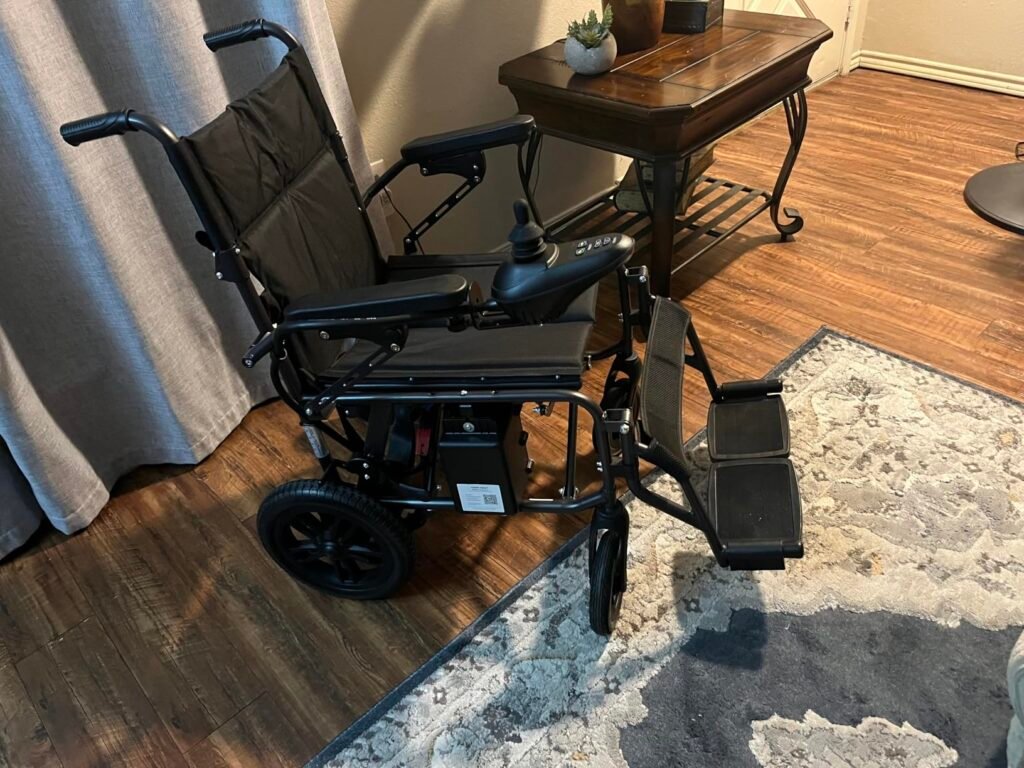
Priced under $300, this folding chair delivers specs that rival models costing two or three times as much. The 700W motor is the strongest in this comparison, giving it noticeable advantages on hills, thick carpet, and outdoor surfaces where weaker motors would struggle. For budget-conscious buyers who still need real motor power, this model is genuinely hard to beat.
We may earn a commission when you buy through this link, at no additional cost to you.
The 12Ah battery supports up to 20 miles of travel per charge, which handles most full-day outings comfortably. Top speed reaches 3.73 mph, roughly matching a brisk walking pace so you can keep up with walking companions. The control panel is thoughtfully arranged, with a battery indicator, horn, speed adjustment, and a 360-degree joystick within easy reach.
Safety coverage is surprisingly complete for the price. Rear anti-tip wheels add stability on uneven ground, electromagnetic brakes prevent unintended rolling, a hand brake gives manual stopping control, and a seat belt keeps riders secure. These are the same categories of protection found on chairs priced above $2,000, which makes the value equation compelling.
A 700W motor generates substantially more torque than the 250W to 500W motors on many competing chairs. In practice, this means better performance on ramps, thick carpet, and slight outdoor grades. Underpowered chairs tend to bog down on inclines and drain batteries faster when climbing, so extra wattage here is a real functional advantage rather than a marketing number.
The main trade-off is a lower average rating, which suggests some buyers have encountered quality inconsistencies that premium chairs typically avoid. If you accept a budget purchase and plan to use the chair mostly on paved surfaces for moderate distances, it delivers more motor and range per dollar than anything else in this comparison.
Buyers who need a proven long-term reliability record or detailed frame weight specifications should choose a higher-rated model.
We may earn a commission when you buy through this link, at no additional cost to you.
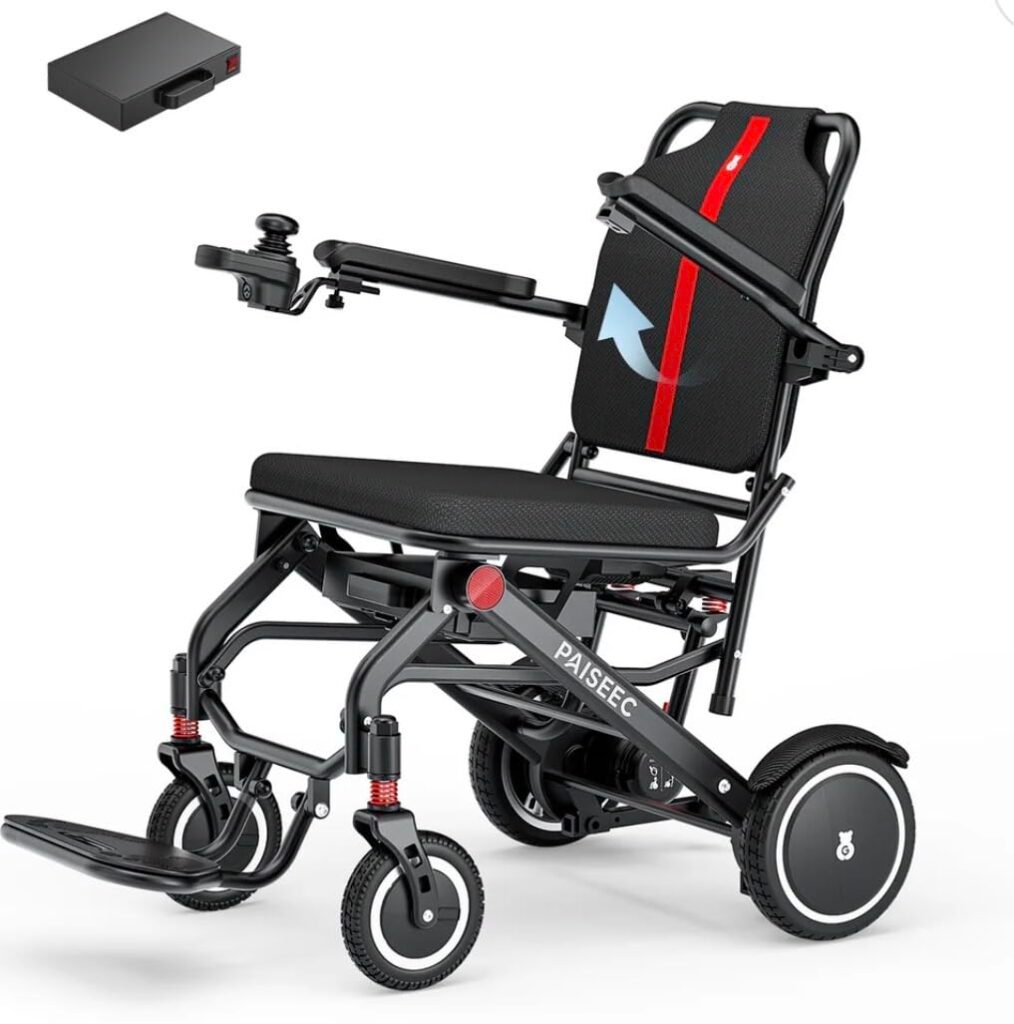
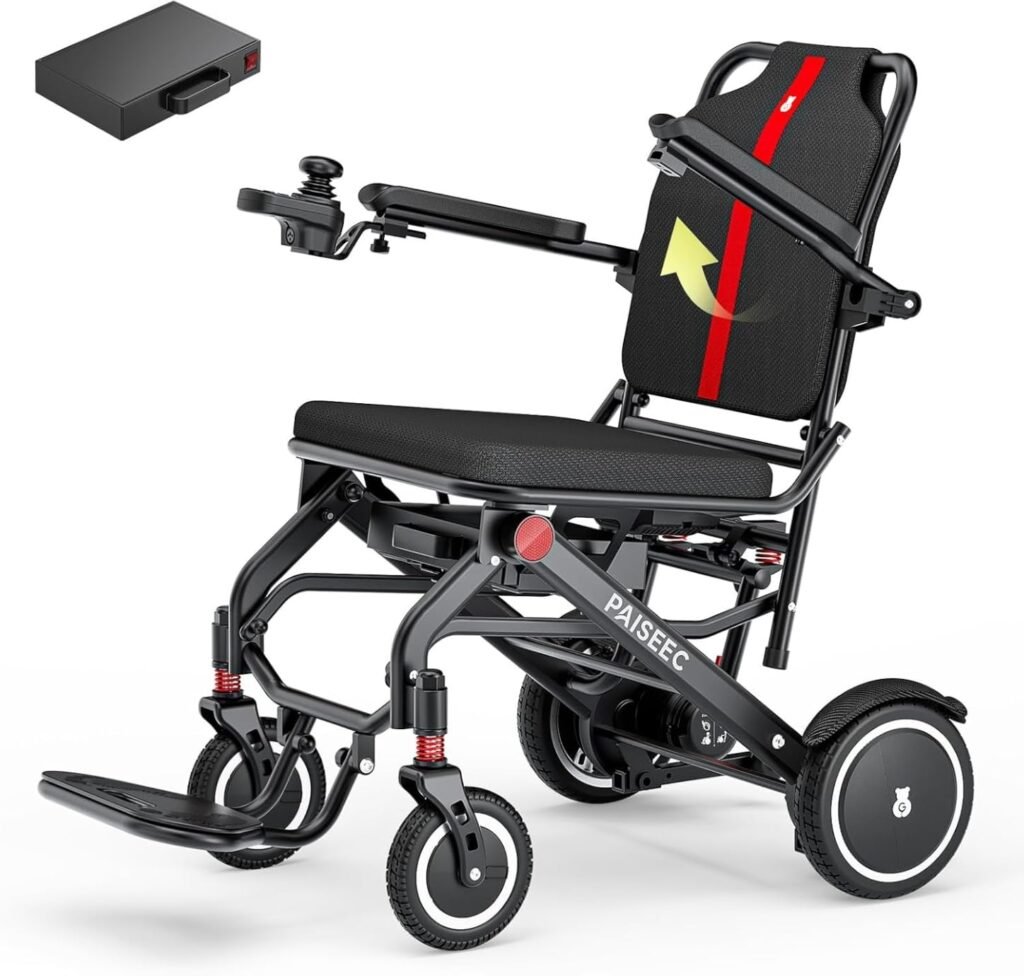
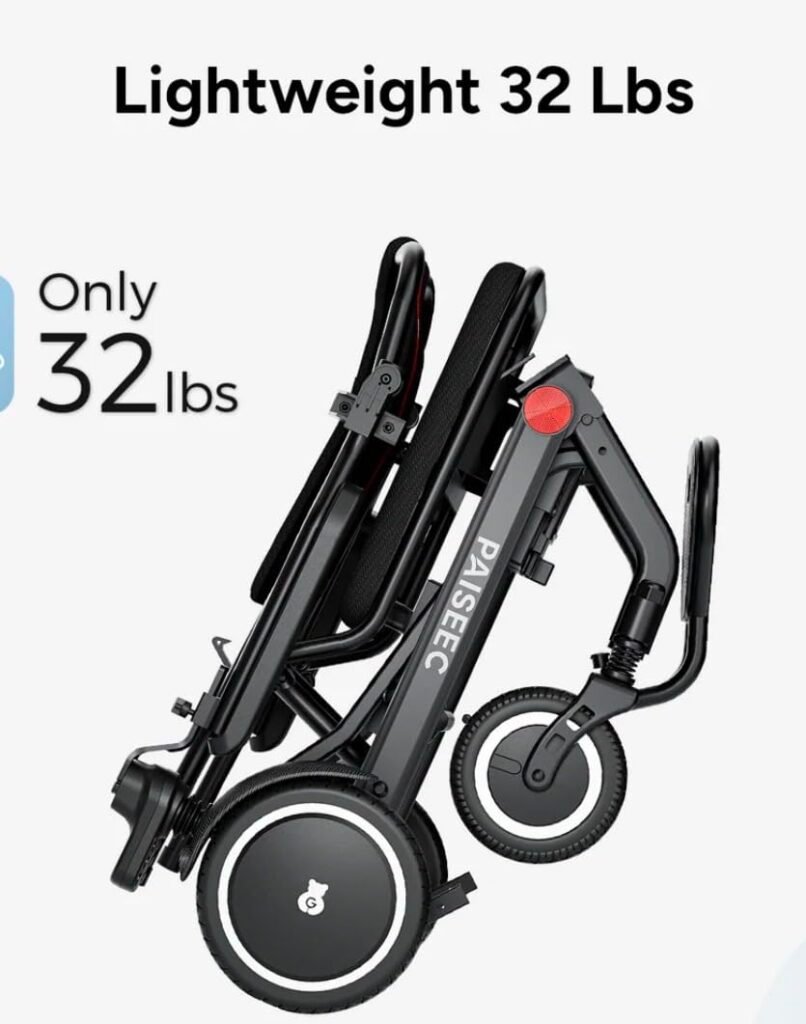
The Paiseec Q3 targets buyers who prioritize easy lifting and indoor maneuverability. At 32 pounds, it is among the lightest chairs in this guide, which matters enormously if you or a caregiver load the chair into a car multiple times per day. A tight turning radius helps it move through bedrooms, hallways, and narrow doorways without constant repositioning.
We may earn a commission when you buy through this link, at no additional cost to you.
The 500W brushless motor delivers quicker throttle response and quieter operation than lower-output alternatives. Combined with an intelligent safety system that prevents sudden starts, abrupt stops, and rollback on slopes, the ride feels controlled rather than jerky. Automatic speed reduction when turning is a thoughtful touch that reduces the risk of tipping in tight indoor spaces.
Shock-absorbing springs under the front and rear wheels plus additional cushioning under the seat noticeably reduce vibration from rough pavement and thresholds. Liftable armrests make transfers easier for older users or anyone with limited hip mobility. The dual-battery configuration extends range up to 22 miles, and the airline-approved lithium pack simplifies travel by plane or ship.
The Paiseec Q3 uses controlled acceleration and deceleration curves that prevent the sudden jolts common on cheaper chairs. Rollback protection engages automatically on slopes, and the chair reduces speed when turning to lower the risk of tipping. These behaviors add up to a smoother, more predictable ride, especially important for users with limited balance or hand strength.
This chair suits users who mainly move through indoor spaces but want capable outdoor performance when needed. Two-step folding takes just seconds, and the compact folded footprint fits car trunks, closets, and small apartments. Buyers looking for the longest frame warranty in this segment may prefer alternatives with multi-year coverage.
Users who want the longest possible frame warranty should consider chairs with multi-year frame coverage.
We may earn a commission when you buy through this link, at no additional cost to you.
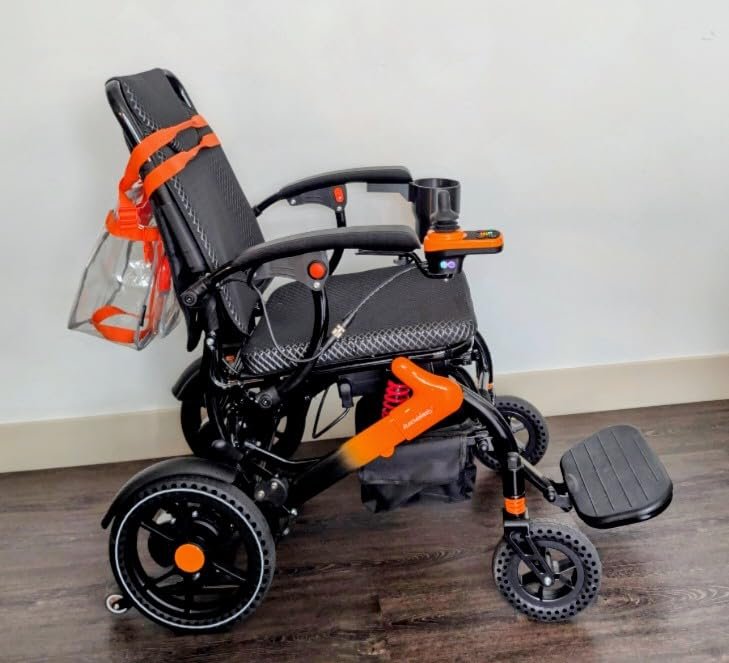
The Orange 15 MI chair delivers a well-rounded package of light weight, capable motor performance, and thoughtful comfort details. The 36-pound aluminum frame folds in about three seconds with a single click, making it manageable for solo lifting into a car trunk. A 12-degree climbing ability handles most ADA-compliant ramps and moderate driveways without stress.

We may earn a commission when you buy through this link, at no additional cost to you.
The automatic braking system is worth understanding before purchase. Rather than stopping instantly, the chair decelerates smoothly over a short distance, which prevents the jarring inertia that abrupt stops can cause. Riders who value predictable, controlled stops will appreciate this behavior, though buyers expecting an immediate hard stop should adjust their expectations.
The 4.9-pound battery detaches easily for indoor charging, which is especially helpful for users who keep the chair in a garage or vehicle. Five speed levels let you dial in the right pace for indoor navigation or outdoor cruising, and the LED light system doubles as a phone charger, which is genuinely useful for longer outings. The 90-degree adjustable armrests and foldable footrests make transfers and desk access easier.
Instead of stopping immediately when you release the joystick, this chair decelerates over roughly 50 centimeters depending on your current speed. This design reduces the jerk that can cause discomfort or loss of balance. It takes a short adjustment period, especially indoors where you may need to release the joystick slightly earlier than expected to stop at a specific point.
This chair is a strong fit for users who value a comfortable seat, smooth deceleration, and integrated lighting for evening use. The one-year warranty is shorter than some rivals, which is worth factoring in for buyers who prioritize long-term coverage. For anyone whose daily routine falls within a 15-mile range, this model handles it capably.
Riders who prefer immediate hard stops rather than cushioned deceleration should consider chairs with sharper braking response.
We may earn a commission when you buy through this link, at no additional cost to you.
The ByteTecpeak model stands out for one specific reason: it carries a 5-year frame warranty, the longest in this comparison. For a category where the frame is the most expensive component to replace, that coverage significantly improves the long-term value proposition. Paired with a 500W motor and 330-pound capacity, this chair is built to last through years of daily use.

We may earn a commission when you buy through this link, at no additional cost to you.
Dual-mode operation adds practical flexibility. In electric mode, an electromagnetic brake provides secure stopping and rollback prevention. Switch to manual mode and the chair pushes like a traditional wheelchair, which is invaluable when the battery runs low or when a caregiver needs to move you through spaces where powered navigation is impractical. Not all folding power chairs offer this fallback.
The 46.8-pound frame is heavier than the lightest chairs in this guide but still manageable for most caregivers. It supports up to 330 pounds and delivers up to 15 miles of range on a detachable, airline-approved lithium battery. Three integrated storage bags provide practical space for groceries, personal items, and medications, and the shock-absorbing suspension smooths out vibrations from rough pavement.
The ability to switch between electric and manual operation is more useful than it sounds. If the battery depletes far from a charging point, you can still get home under manual power. In tight indoor spaces where powered turning feels awkward, manual mode gives caregivers finer control. This flexibility is a feature many folding power chairs lack entirely.
This chair suits buyers who want dependable everyday performance backed by unusually strong warranty protection. If long-term ownership matters more than shaving off a few pounds of chair weight, the ByteTecpeak is a smart choice. Users chasing the absolute lightest option or the highest capacity should look elsewhere in this guide.
Buyers whose top priority is the lightest possible frame weight should consider the sub-35-pound models in this guide.
We may earn a commission when you buy through this link, at no additional cost to you.
The Paiseec Q5 sits in a category of its own. At just 22 pounds, it is the lightest folding power chair in this entire comparison and one of the lightest available anywhere. This extreme lightness makes solo lifting genuinely effortless, which is a game-changer for smaller users or anyone whose caregiver has limited lifting capacity.

We may earn a commission when you buy through this link, at no additional cost to you.
The one-piece carbon fiber frame is the reason this weight is possible. Carbon fiber offers a much stronger strength-to-weight ratio than aluminum, and the seamless construction eliminates weak joints that could fail over time. The material also resists corrosion, which extends useful life in humid climates or rainy regions where metal frames can degrade.
Range performance is equally impressive. The standard configuration delivers 14 miles per charge, and the optional dual-battery setup extends that to 28 miles, which is more than enough for full-day outings, city exploration, or long shopping trips. A tight 34.5-inch turning radius handles narrow doorways and crowded spaces, and the folded dimensions of roughly 28 by 10 by 28 inches slot into small car trunks or apartment closets.
Carbon fiber costs significantly more to manufacture than aluminum, which explains the premium price. In return, you get a chair that weighs less than half of most competitors while remaining structurally strong. For users who lift the chair multiple times daily, that weight difference translates directly into reduced physical strain, fewer helper requests, and greater independence.
The Bluetooth remote control is a genuinely useful addition for caregivers, allowing wireless operation from a comfortable distance. A rear-facing joystick option is also available for direct control when walking behind the chair. At $1,599, this is a premium investment aimed at users who prioritize absolute portability and long range over budget considerations.
Budget-conscious buyers who do not need an ultralight frame should consider the aluminum chairs in this guide priced under $700.
We may earn a commission when you buy through this link, at no additional cost to you.
This chair aims at budget buyers who still want capable outdoor performance. The 360W dual motor configuration provides better traction than single-motor chairs at this price, and the design specifically targets grass, gravel, and mixed terrain. For users who spend time in parks, unpaved paths, or backyards, that capability is a real practical advantage.

We may earn a commission when you buy through this link, at no additional cost to you.
Comfort details are stronger than expected at this price. The 17-inch wide seat cushion and breathable backrest support extended sitting and help protect the coccyx and lumbar spine during long trips. Folding footrests make it easier to stand up or slide closer to a desk. An included storage bag keeps shopping essentials and personal items within easy reach.
The 12Ah removable battery delivers up to 15 miles of range and detaches easily for indoor charging, which is helpful for users without ground-floor outlets near the chair’s storage location. A 360-degree joystick gives one-finger control, and the mounting side is user-selectable. LED lights improve visibility for nighttime travel, and integrated USB ports let you top off a phone while riding.
The 286-pound capacity is lower than several other chairs in this comparison. Always choose a chair rated at least 20 to 30 pounds above your actual weight to account for clothing, bags, and lap items. Operating a chair near its maximum rating reduces battery range, motor responsiveness, and braking effectiveness. Larger users should look at the 330-pound and 350-pound models in this guide.
The 4.0 average rating suggests some quality variability, which is a common trade-off at this price point. Anti-tip wheels and a solid safety feature set help offset those concerns. If your top priority is affordable outdoor capability and your weight falls comfortably under 286 pounds, this chair delivers meaningful performance for the money.
Users weighing over 260 pounds should choose a chair with a higher weight capacity rating for optimal performance.
We may earn a commission when you buy through this link, at no additional cost to you.
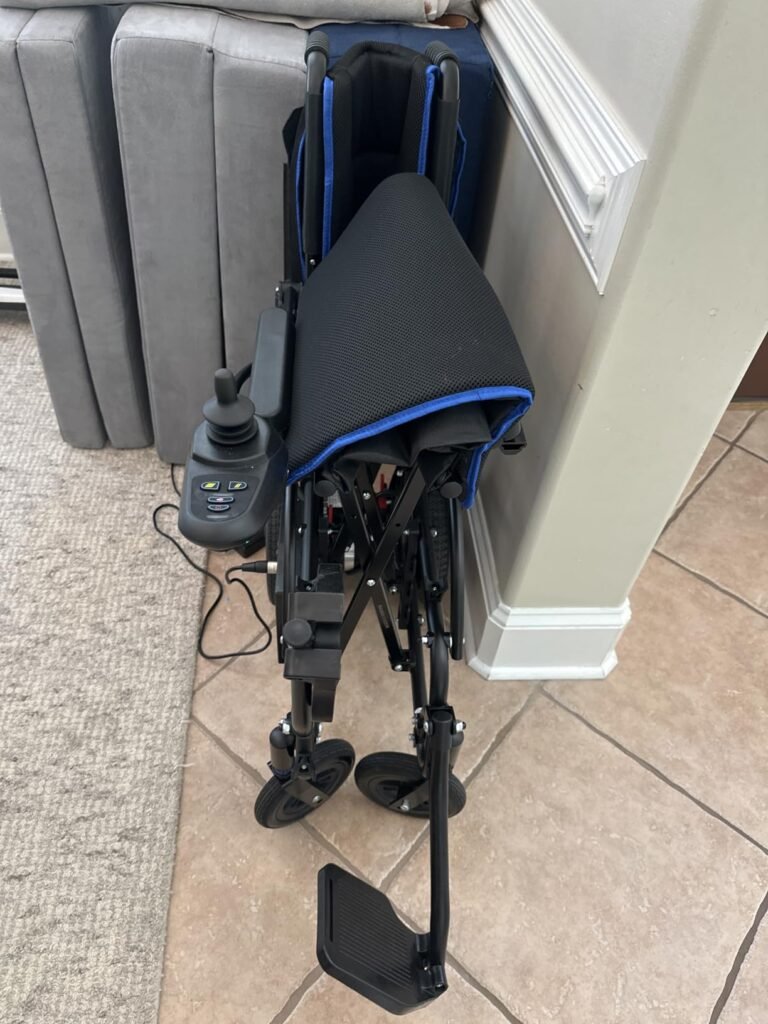
The Vive Airframe comes from an established mobility brand and targets a specific user profile: adults between 5 feet and 6 feet 2 inches tall who weigh up to 225 pounds. This sizing focus means the chair fits its intended users comfortably without feeling either cramped or oversized, which is a common complaint with generically sized chairs.
We may earn a commission when you buy through this link, at no additional cost to you.
The 39.5-pound frame folds in seconds and fits in most car trunks without disassembly, and the chair arrives ready to use out of the box. Total weight with battery installed reaches 44 pounds, still manageable for most caregivers. The reinforced frame supports up to 225 pounds and prioritizes stability for daily indoor and outdoor use.
The adjustable joystick sensitivity is a genuinely useful feature that many chairs lack. Users with limited hand strength or reduced dexterity can tune the joystick to require less pressure, while more experienced users can dial in precise, quick response. The compact turning radius handles tight indoor spaces, crowded stores, and narrow doorways without excessive maneuvering.
Power chairs sized for a specific height range provide better ergonomics than one-size-fits-all designs. Users too tall for a chair often experience knee and back discomfort due to seat height, while shorter users may struggle to reach controls comfortably. The Vive Airframe’s 5-foot to 6-foot-2 range covers most adults but excludes very tall or very short users, so verify your fit before purchasing.
The main trade-off is battery range. At 9 miles per charge, this chair has the shortest range in this guide, which limits it to shorter daily outings and errands close to home. Full recharge takes 6 to 8 hours. If your daily routine stays within a few miles of home and you value brand reputation over maximum range, the Vive Airframe delivers a well-engineered, reliable option.
Users who regularly travel more than 9 miles between charges should choose a chair with a larger battery or dual-battery configuration.
We may earn a commission when you buy through this link, at no additional cost to you.
Rounding out this comparison, the JustHero 36LBS Silver deserves a second look for buyers who prioritize maintenance-free ownership. The honeycomb puncture-proof PU solid tires are one of the most practical features on any chair in this guide because they completely eliminate the risk of flats. If you live in an urban environment where sidewalk debris is common, this alone can save you significant frustration.

We may earn a commission when you buy through this link, at no additional cost to you.
The 500W brushless motor pairing provides quiet operation, low maintenance, and enough torque for 12-degree inclines. Combined with a compact turning radius, this chair maneuvers well in narrow indoor spaces while still handling outdoor sidewalks and driveways confidently. The 350-pound weight capacity accommodates a broad range of adult users.
The controller is thoughtfully designed with a highly responsive 360-degree joystick, five speed levels, and dual USB charging ports so you can top off a phone while you ride. LED lighting is included for evening travel, and the mounting side is user-selectable. Flip-up armrests make it easier to slide up to a table or transfer from the chair.
Solid PU tires with honeycomb construction never go flat, which eliminates one of the most common power chair maintenance issues. The trade-off is a slightly firmer ride compared to pneumatic alternatives. For users who prioritize reliability over maximum shock absorption, this is a worthwhile exchange, especially in urban environments where glass, nails, and debris are unavoidable.
The 2-year frame warranty and 1-year coverage on the controller, motor, and battery provide reasonable long-term protection. For buyers who value puncture-proof tires, airline compatibility, and a proven feature set at a mid-range price, this chair remains a strong option. Users needing longer daily range should consider chairs with 18-mile or 20-mile batteries in this guide.
Buyers who need the softest possible ride quality over rough terrain should consider chairs with pneumatic tires and suspension systems.
We may earn a commission when you buy through this link, at no additional cost to you.
Selecting a folding power chair involves more than comparing prices. The right chair depends on your daily environment, physical needs, travel habits, and the level of assistance you have available. This buying guide walks through the most important decision factors so you can shortlist with confidence.
The weight of a folding electric wheelchair determines whether you or a caregiver can load it into a vehicle without a mechanical lift. The chairs in this comparison range from 22 pounds up to roughly 47 pounds, and that 25-pound spread is enormous in practice. A 22-pound carbon fiber chair can be lifted by most adults with minimal effort, while a 46-pound chair typically requires more strength or a second person for repeated loading and unloading.
Frame material is the main driver of chair weight. Carbon fiber is the lightest and strongest option but comes at a premium price, as seen in the Paiseec Q5. Aircraft-grade aluminum alloy offers an excellent balance of strength and weight at a more accessible cost, which is why most chairs in the 32 to 40-pound range use aluminum construction. Steel frames are heaviest and rare in folding models because they defeat the purpose of portability.
Be honest about who will be lifting the chair and how often. If you load and unload multiple times per day and lift alone, invest in a lighter frame. If the chair mostly stays in one location, a heavier but more affordable model may be the smarter choice.
Folding design directly affects how convenient the chair is for daily use. One-click and three-second folding mechanisms are dramatically easier than multi-step processes that require removing components, folding footrests, and collapsing the frame in sequence. If you fold the chair multiple times per day for car transport or apartment storage, the difference between three seconds and three minutes adds up quickly.
Two-step folding, like the Paiseec Q3 mechanism, offers a good balance of simplicity and structural rigidity. One-click designs, common on the JustHero and Orange 15 MI chairs, prioritize maximum speed and are especially valuable for users with limited hand strength. Also consider folded dimensions: some chairs collapse to 10 or 12 inches thick, which matters for fitting into compact car trunks or narrow storage spaces.
Test the folding mechanism mentally by imagining doing it 20 times per week. If any step feels awkward or requires significant grip strength, prioritize a simpler design. The chairs in this guide with the fastest folding mechanisms generally command a small price premium but pay it back in daily convenience.
Motor wattage directly affects how well a folding power chair handles inclines, thick carpet, and outdoor terrain. Chairs in this guide range from 360W dual motors to a single 700W unit. Higher wattage generally means faster acceleration, better hill-climbing ability, and less strain on the battery during demanding use. Dual-motor configurations typically provide better traction and smoother power delivery than single-motor setups.
Brushless motors are the standard in modern folding power chairs because they run quieter, generate less heat, and require virtually no maintenance compared to brushed alternatives. When comparing motor specs, pay attention to the climbing angle rating. A chair rated for 12-degree inclines will handle most ADA-compliant ramps comfortably, while chairs without a published grade rating may struggle on steeper driveways or sidewalk transitions.
If you live in a hilly area or frequently navigate ramps, prioritize a chair with at least 500W of combined motor output and a published climbing specification. For flat indoor use, a lower-wattage motor will serve you well and may extend battery life between charges.
Travel range varies from 9 miles to 28 miles across the chairs in this guide, and the real-world figure depends on terrain, user weight, speed settings, and temperature. A 20-mile rating typically translates to 14 to 17 miles of actual use under mixed conditions. Consider your typical daily distance before choosing a battery size. If your longest regular outing is a three-mile round trip, a 15-mile range provides ample buffer.
Charging logistics matter more than most first-time buyers realize. Detachable batteries that charge separately from the chair are a significant convenience because you can leave the frame in the car or garage while bringing the lightweight battery pack indoors to a standard outlet. Charging times typically range from three to eight hours for a full cycle. Lithium-ion batteries are lighter and safer than older lead-acid alternatives and generally last three to five years before capacity degrades noticeably.
Choose a chair with a detachable battery if you live in an apartment or lack ground-floor charging access. If you fly regularly, verify that the battery is airline-approved and under the watt-hour limit set by your carrier, typically 300Wh for mobility devices.
Weight capacity ratings in this guide range from 225 pounds to 350 pounds, and exceeding the rated limit can compromise braking performance, motor life, and frame integrity. Always choose a chair with a capacity rating that exceeds your actual weight by at least 20 to 30 pounds to account for clothing, bags, and any items you carry on your lap. A chair operating near its maximum rating will also drain the battery faster and may feel less responsive on inclines.
Higher capacity chairs achieve their ratings through stronger frame materials, reinforced joints, and heavier-duty motors. The Vive Airframe’s 225-pound rating suits smaller adults, while chairs rated at 330 to 350 pounds accommodate a broader range of users. Carbon fiber allows exceptional strength-to-weight ratios, but most folding chairs balance capacity, weight, and cost through aluminum construction.
Match the capacity rating to your actual needs rather than defaulting to the highest number available. A properly matched chair performs better and lasts longer than an underrated or oversized alternative.
Electromagnetic braking is the most important safety feature on a modern folding electric wheelchair. This system automatically engages when you release the joystick, preventing the chair from rolling on slopes or uneven ground. All chairs in this guide include some form of automatic braking, but responsiveness and holding power vary. Look for models that specifically mention anti-rollback performance on inclines, since that is the scenario where braking matters most.
Additional safety features worth evaluating include anti-tip wheels at the rear, seat belts, hand brakes for manual stopping control, and speed governors that limit maximum velocity in tight spaces. Anti-tip wheels prevent the chair from tipping backward when climbing steep ramps or curbs, which is a genuine risk on chairs with a short wheelbase. Seat belts keep you positioned correctly during sudden stops or bumpy terrain.
Prioritize electromagnetic braking and anti-tip wheels as non-negotiable features. Speed governors and seat belts are valuable additions, especially for users with limited core strength or balance. If a chair lacks any of these basic safety elements, look elsewhere.
The joystick controller is your primary interface with the chair, and its design affects comfort and safety during every ride. Look for a 360-degree joystick that responds to light finger pressure, multiple speed settings that let you adjust for different environments, and a clear battery indicator so you are never caught off guard by a depleted charge. Adjustable joystick sensitivity, as offered on the Vive Airframe, is especially valuable for users with limited hand strength.
Mounting flexibility is another important consideration. Controllers that install on either the left or right armrest accommodate users with limited hand function on one side and allow caregivers to operate the chair from their preferred position. The turning radius of the chair itself also affects maneuverability: a 34-inch radius fits through standard doorways, while a tighter radius makes bathroom navigation and crowded spaces much easier.
If you have limited hand dexterity or grip strength, prioritize models with adjustable sensitivity and light joystick response. For frequent indoor use in older homes with narrow hallways, favor chairs with the tightest published turning radius.
Warranty terms vary widely across folding electric wheelchairs and can significantly affect total cost of ownership. Frame warranties range from one to five years in this guide, while motor, controller, and battery coverage typically spans one to two years. The ByteTecpeak model’s 5-year frame warranty stands out as the longest in this comparison and reflects genuine manufacturer confidence in build quality.
Beyond the written warranty, consider the manufacturer’s service infrastructure. Some brands offer 24-hour phone support and rapid replacement parts, while others rely on email-only communication with slower response times. These service details matter most when something goes wrong six months after purchase, not on the day you unbox the chair. Factor in the cost of potential battery replacements, which typically run $100 to $300 every three to five years.
Treat the warranty as a signal of build quality and manufacturer confidence. A multi-year frame warranty on an aluminum chair is more reassuring than a one-year warranty on a similar model, and it can meaningfully offset a higher upfront price.
Before your first ride, fully charge the battery and familiarize yourself with the controller layout, speed settings, and braking behavior in a safe, open area. Start at the lowest speed setting and practice turning, stopping, and reversing on flat ground before attempting ramps or uneven surfaces. Adjust the armrests, footrests, and seat belt for a comfortable and secure fit, and make sure the joystick is mounted on the side that matches your dominant hand or caregiver preference.
Regular maintenance extends the life of your chair and prevents unexpected breakdowns. Wipe down the frame and seat weekly with a damp cloth to remove dirt and moisture, especially after outdoor use in rain or on muddy paths. Check the tire condition monthly for wear, cracks, or embedded debris, and inspect the battery connections for corrosion. Keep the charging port clean and dry, and store the chair in a temperature-controlled environment when possible to preserve battery health.
For long-term battery care, avoid letting the charge drop below 20 percent before recharging, and do not leave the battery on the charger indefinitely once it reaches full capacity. If you plan to store the chair for more than a few weeks, charge the battery to approximately 60 percent and disconnect it from the frame. Fold the chair according to the manufacturer’s instructions before transport, and always secure it in the vehicle to prevent shifting during transit.
Most folding power chairs in this guide use airline-approved lithium batteries, but you must verify that the battery meets your carrier's watt-hour limits, typically 300Wh for mobility devices. Airlines generally require you to notify them at least 48 hours before departure and may ask you to remove the battery for cabin storage. Check the specific airline's mobility device policy before booking your flight.
Range varies from about 9 miles to 28 miles across the models in this guide. Real-world range depends on user weight, terrain, speed settings, and temperature, so expect roughly 70 to 80 percent of the rated distance during typical mixed use. If you regularly cover long distances, look for a model with a dual-battery option or a larger single battery.
Charging times typically range from three to eight hours for a full cycle using the included charger and a standard household outlet. Detachable batteries can be charged separately from the chair, which is convenient if you need to charge indoors while the frame stays in a vehicle or garage. Avoid using third-party chargers, as incorrect voltage can damage the battery.
Choose a chair rated at least 20 to 30 pounds above your actual body weight to account for clothing, bags, and lap items. Operating a chair near its maximum capacity reduces battery range, motor responsiveness, and braking effectiveness. The chairs in this guide range from 225 pounds up to 350 pounds, so most users will find a suitable option within that spread.
Modern folding power chairs use aircraft-grade aluminum or carbon fiber frames engineered for daily use, including transfers, transport, and repeated folding. The folding mechanism itself is designed to withstand thousands of cycles when operated correctly. Choose a chair with a multi-year frame warranty for additional assurance, and follow the manufacturer's folding instructions to avoid unnecessary stress on hinge points.
Performance on outdoor terrain depends on tire type, motor wattage, and ground clearance. Chairs with pneumatic tires or larger drive wheels handle grass, gravel, and rough sidewalks better than models with small solid casters. If you primarily use your chair indoors on smooth floors, terrain capability is less critical, but frequent outdoor users should prioritize chairs specifically rated for varied surfaces.
Some folding electric wheelchairs, like the ByteTecpeak model, include a manual mode that disengages the motors and allows the chair to be pushed like a traditional wheelchair. This feature is invaluable for emergencies and situations where the battery runs low far from a charging point. Check whether the model you are considering offers this option, as not all folding power chairs include it.
One-click folding mechanisms collapse the chair in about three seconds with a single release action, while multi-step folding may require folding footrests, releasing latches, and collapsing the frame in sequence. For daily transport into a car trunk, one-click designs save significant time and effort. Users with limited hand strength particularly benefit from simpler folding systems.
Medicare Part B may cover a power wheelchair if a doctor certifies that it is medically necessary for use inside your home. Coverage typically requires a face-to-face examination and a written order from your physician. Private insurance plans vary widely, so contact your provider directly to understand your specific benefits, copayments, and any prior authorization requirements before purchasing.
Lithium-ion batteries in modern folding power chairs typically last three to five years before capacity degrades noticeably. Battery lifespan depends on charging habits, temperature exposure, and usage patterns. Avoid deep discharges below 20 percent, do not leave the battery on the charger indefinitely, and store the chair in a temperature-controlled environment to maximize battery life.
The 38LBS Lightweight Motorized wheelchair stands out as the strongest overall choice for most buyers, combining the highest customer rating in this guide with an 18-mile range, comfortable seating, and a reliable electromagnetic braking system at a mid-range price. It delivers the features that matter most for daily use without the complexity or cost of premium alternatives, making it a dependable starting point for anyone new to folding power chairs.
For specific needs, the 2026 Upgrade Foldable offers remarkable value under $300 with a 700W motor and 20-mile range, while the Paiseec Q5 provides unmatched portability with its 22-pound carbon fiber frame and Bluetooth caregiver remote. The ByteTecpeak model earns attention for its 5-year frame warranty and dual-mode operation, and the Paiseec Q3 balances a 32-pound frame with shock absorption for smoother rides.
Your final decision should come down to three questions: how often you lift the chair alone, how far you travel each day, and what surfaces you navigate most. Match those answers to the weight, range, motor, and tire specifications in this guide, and you will land on a chair that genuinely improves your daily mobility rather than creating new frustrations.