MechMaxx EFS48 PTO
8.4Editor score48-inch working width
15-35HP compatible
20 flail hammers
CAT 1 three-point hitch
Find the right flail mowers for 2026. We compare 10 standout options by build quality, useful features, owner feedback, value, and everyday trade-offs.
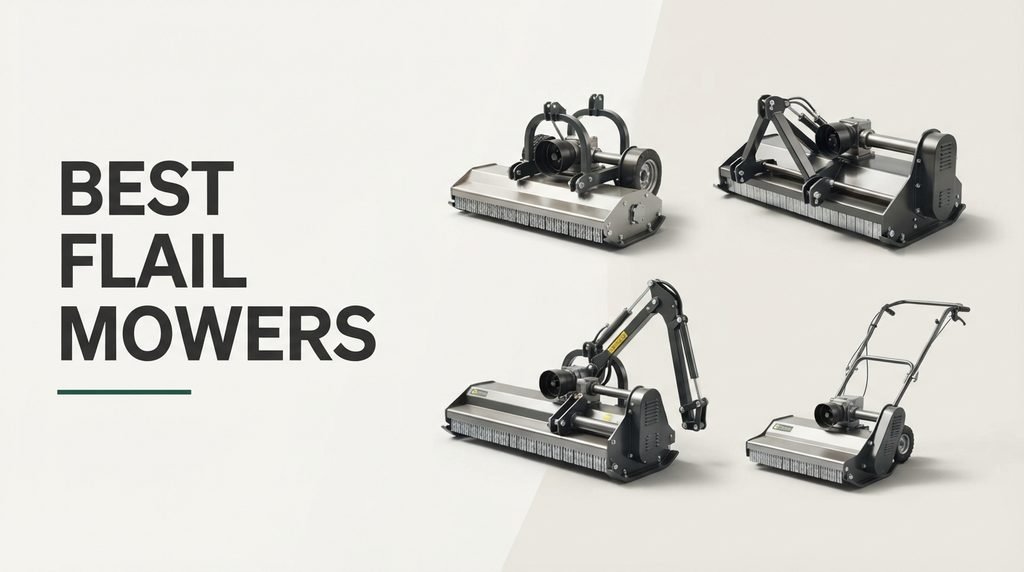
Find the right flail mowers for 2026. We compare 10 standout models by the factors that matter most in this category, including cutting width, horsepower compatibility, hitch class, hammer or blade count, offset and tilt capabilities, build quality, intended terrain, mulching performance, and overall value for landowners managing pastures, ditches, orchards, and overgrown property.
Flail mowers differ sharply in design and use case. A light-duty PTO unit for a compact tractor serves a completely different buyer than a tow-behind ATV mower, a walk-behind tracked model, or a remote-controlled hybrid for steep slopes. Matching the mower to your tractor horsepower, terrain, and vegetation type is the single most important decision you will make.
The models in this guide cover a wide range, from a 48-inch light-duty PTO mower under $1,400 to a 72-inch heavy-duty offset ditch bank mower approaching $4,000 and remote-controlled slope mowers in the same bracket. Understanding where your property, equipment, and workload fall in that range will steer you to the right choice.
We compared 10 flail mowers using the details that actually help a buyer decide: cutting width, hitch category, PTO horsepower range, hammer count and blade type, maximum material diameter, offset and tilt capability, mowing height adjustment, drive system, intended terrain, owner feedback, warranty signals, and value. The notes focus on practical trade-offs so each pick connects to how property owners, farmers, and land managers actually use flail mowers for pastures, ditches, orchards, and overgrown terrain.


Compare key features, scores, and current prices side by side. A shorter feature list means fewer details were available, not necessarily fewer capabilities.


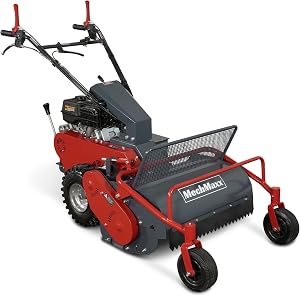


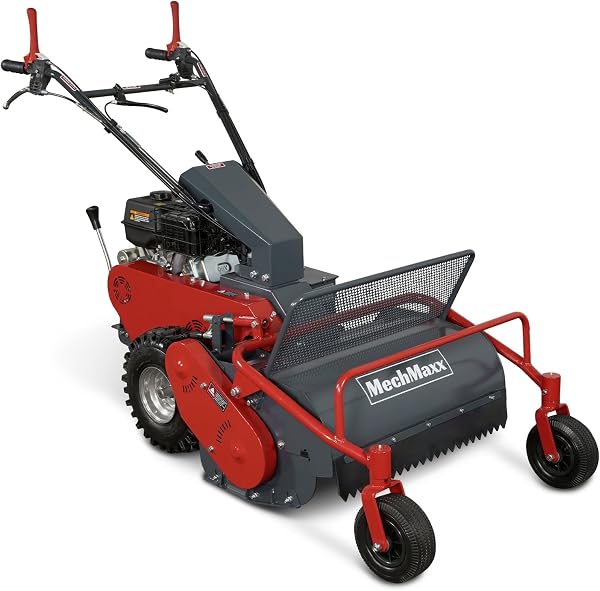
This tracked walk-behind flail mower is built for property owners who do not have a tractor but still need to tackle rough, soft, or sloped terrain that would defeat a conventional push mower. The rubber tracks spread the mower's weight over a larger contact area, which prevents sinking in wet ground and provides superior grip on hillsides. The electric-start 10 horsepower engine takes the frustration out of cold starts.
We may earn a commission when you buy through this link, at no additional cost to you.
Thirty-eight Y-shaped flail blades make up the cutting assembly. The Y-shape is designed to pivot and deflect when the blade strikes a rock or hidden obstacle, which protects both the spindle and the blade itself from catastrophic damage. For properties with buried debris, old fence wire, or rocky areas, this design offers a real durability advantage over fixed blades or hammer-only setups.
The 3-forward, 1-reverse transmission gives you controlled speed selection for different conditions, and the tool-free handlebar adjustments mean you can quickly change the operating height for different users or situations. The compact 27-inch footprint fits through standard gates and between obstacles that would stop a larger machine. Build quality is reinforced throughout, which is reflected in the price.
Rubber tracks shine when the ground is soft, muddy, or sloped. They distribute weight evenly, resist slipping, and climb grades that would spin wheeled mowers. The tradeoff is higher initial cost and more maintenance over time. If your worst terrain is dry and firm, wheels are usually the better value.
This is specialist equipment aimed at smaller properties with challenging conditions, orchards with tight row spacing, or professional landscapers who need a compact flail option. The tracked version costs more than the wheeled SFM27W but earns its premium on steep slopes, wet ground, and uneven terrain. For flat, dry properties, the wheeled version offers the same cutting performance at a lower price.
Buyers with flat, firm property or who need to cover large acreage quickly will do better with a tractor-mounted PTO flail mower.
We may earn a commission when you buy through this link, at no additional cost to you.
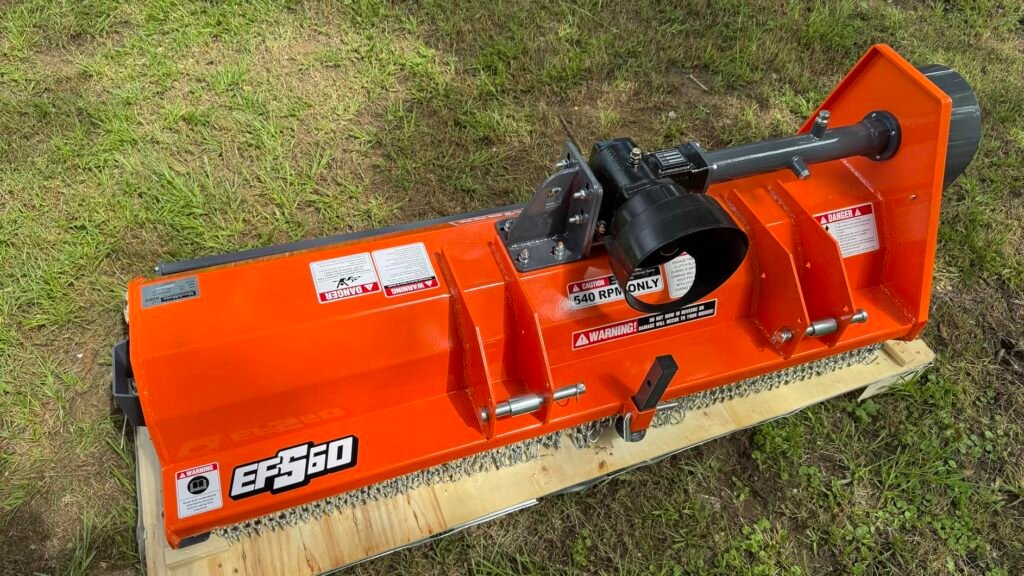
This 48-inch PTO flail mower is aimed at compact tractor owners who want to upgrade from a rotary cutter to a mulching flail without stepping up to commercial-tier pricing. The Category 1 three-point hitch matches the most common sub-compact and compact utility tractors, and the 15-35 horsepower range covers the majority of hobby farm and small property setups. The orange powder-coated finish adds a tidy, finished look.
We may earn a commission when you buy through this link, at no additional cost to you.
A 540 RPM PTO shaft drives the belt system that spins the flail rotor, delivering efficient power transfer to the 20 forged hammers. The hammers can mulch material up to 0.75 inch in diameter, which is well suited to pasture grass, light brush, and seasonal cleanup rather than clearing established saplings. The front safety chains help contain thrown debris, and the sealed tapered roller bearings extend the maintenance interval compared with cheaper unsealed designs.
Mowing height adjusts from roughly 0.6 to 1.8 inches, giving you enough range to tidy up a hay field or clean up a garden plot. The kickstand makes storage and hookup much easier when you are working alone, which is a small detail that matters more than you would expect. Keep in mind that this unit is not compatible with quick hitch adapters, so plan on standard three-point pin connections.
A higher hammer count generally produces a finer mulch and leaves a cleaner cut because more cutting surfaces pass over each strip of ground per rotation. The 20 hammers on this unit are enough for pasture and lawn maintenance but may struggle with thick, stemmy brush where fewer, heavier hammers would be preferable.
If you are managing a few acres of mixed grass and lighter vegetation and already own a compact tractor, this model offers an affordable path into flail mowing. Buyers who need to tackle heavier brush, saplings, or large commercial acreage will outgrow it quickly and should look at the 53-inch BILT HARD or a heavier offset model instead.
Buyers who need to clear overgrown land with saplings or who use a quick hitch system should choose a heavier model with compatible hitching.
We may earn a commission when you buy through this link, at no additional cost to you.
This tow-behind flail mower is designed for property owners who have an ATV or UTV but no tractor with a PTO. Instead of drawing power from the tow vehicle, it uses its own 459cc ZONSEN gasoline engine with electric start, which means the tow vehicle only needs to pull and steer. The 2-inch ball receiver connection makes hookup fast and compatible with most side-by-sides.
We may earn a commission when you buy through this link, at no additional cost to you.
The 48-inch cutting width with a 5-point offset lets you mow precisely around buildings, fence lines, and tree rows without the tow vehicle driving over the vegetation you just cut. Twenty-eight hammers produce a consistent, well-sized mulch that distributes evenly out of the rear drain, so you do not need to rake or collect clippings. Cutting height adjusts from 0.4 to 2.5 inches via a handle, giving good flexibility for different pasture conditions.
The 16-inch all-terrain rubber tires are sized for real property use, handling uneven ground, moderate slopes, and transitions between surfaces without digging in. An integrated stand simplifies storage when the mower is detached. Electric start is a genuine convenience, especially in cool weather when pull-starts can become frustrating.
Many budget tow-behind mowers rely on ground-drive power, which only works if the tires are turning fast enough. A dedicated engine like the ZONSEN 459cc lets the cutting rotor run at full speed regardless of tow speed, which produces a cleaner cut and allows the mower to work slowly and precisely around obstacles.
One important limitation is that this unit is not designed for clearing overgrown land. The specifications call out a 4-inch maximum grass height, so this is maintenance equipment rather than a reclaim tool. If your property is regularly mowed and you want to add ATV-powered flail capability, this is a strong choice. If you need to tackle neglected acreage, start with a brush cutter and come back with this unit for maintenance mowing.
Buyers who need to reclaim overgrown land or who own a PTO tractor will get better value from a standard three-point model.
We may earn a commission when you buy through this link, at no additional cost to you.
The VAM48 is a step up in capability from the standard PTO flail mower, built specifically to handle ditch banks, embankments, and uneven terrain that a straight-line mower cannot reach. The offset hitch design shifts the cutting head laterally, and hydraulic controls let you angle the deck up to 90 degrees upward or 60 degrees downward from level. That range opens up access to the sloped sides of drainage ditches, pond banks, and roadside shoulders.
We may earn a commission when you buy through this link, at no additional cost to you.
A 540 RPM PTO shaft drives the rotor to 2356 RPM through the belt system, which is fast enough to mulch material up to 1.5 inches in diameter. That is double the capacity of lighter flail mowers and makes a meaningful difference when clearing areas with woody brush and seasonal overgrowth. Twenty forged hammers deliver the cutting force, and the heavy rear roller helps the deck track smoothly over uneven ground.
The maximum lateral movement from center is roughly 69 inches, which is substantial reach for a 48-inch mower. That extension lets you keep the tractor on firm ground while cutting slopes you would never want to drive on directly. Front safety chains and sealed tapered roller bearings carry over from the standard mower, and the kickstand simplifies hookup.
If you have ever tried to mow a drainage ditch with a standard mower, you know how limiting a flat deck becomes. The ability to tilt the cutting head to match the slope of the terrain keeps the hammers at a consistent height above the ground and dramatically improves cut quality. For properties with any kind of ditching or embankment work, offset and tilt are worth the premium.
This mower is best suited to property owners and small-scale land managers who regularly deal with drainage ditches, embankments, or orchards where a straight-cutting deck is not practical. The 25-50 horsepower requirement means you need a mid-size compact or utility tractor, not a sub-compact. If your property is flat open pasture, the simpler EFS48 or the wider NAM60 will give you more acres per hour at a lower price.
Owners of flat open pasture with no slopes or ditches will not benefit enough from the offset and tilt features to justify the price.
We may earn a commission when you buy through this link, at no additional cost to you.
This remote-controlled flail mower addresses one of the most dangerous jobs in property maintenance: mowing steep slopes where a conventional tractor or walk-behind mower would be unsafe. The industrial-grade remote lets you operate from up to 2000 feet away, which means you can position yourself safely on level ground while the machine handles grades up to 55 degrees. For retention pond banks, highway shoulders, and dam faces, that capability is genuinely transformative.
We may earn a commission when you buy through this link, at no additional cost to you.
A 459cc commercial engine powers the reinforced flail head, which handles dense grass, weeds, and light saplings up to a fine mulch in a single pass. The hybrid drive system is a smart design choice, pairing the gas engine for cutting power with electric motors for the tracks. This combination improves fuel economy by roughly 25 percent compared to pure gas drives while providing precise, responsive movement on uneven ground.
The commercial-grade rubber-steel hybrid tracks are the critical hardware. They keep ground pressure under 5 PSI, which protects soft lawns and allows the mower to work in muddy conditions without tearing up turf. The one-touch emergency stop button on the remote cuts power to both the blades and the tracks instantly, providing OSHA-compliant safety for high-risk work. Replaceable flail blades in three hardness grades let you tune the machine for different vegetation.
Rollovers are a leading cause of serious injury and death in agriculture and landscaping. Mowing a 55-degree slope with a conventional ride-on mower is simply not safe at any skill level. A remote-controlled mower moves the operator out of the roll zone entirely, which is why these machines have become standard equipment for professional slope maintenance despite their high initial cost.
This is a serious investment aimed at property managers, landscaping professionals, utility maintenance crews, and large landowners who regularly deal with slopes or hazardous terrain. The cost is high, but so is the alternative, both in equipment and in the real risk of operator injury on steep ground. For buyers who have struggled with slope mowing for years, this unit is often the first practical solution.
Hobby farmers with flat property or small-scale users who only occasionally face slopes will find this overkill and overpriced for their needs.
We may earn a commission when you buy through this link, at no additional cost to you.
This hybrid crawler flail mower is a close cousin to the 459cc remote-controlled model, aimed at the same category of buyer: professionals and large landowners who need to mow terrain that is unsafe or impractical for conventional equipment. The 39.4-inch cutting width is slightly narrower than some alternatives, but the smaller footprint can be an advantage on tight slopes or around obstacles.
We may earn a commission when you buy through this link, at no additional cost to you.
The 459cc commercial engine drives a professional flail head capable of mulching dense grass, weeds, brush, and light saplings in a single pass. The smart hybrid drive system coordinates the gas engine for cutting power with electric motors for the tracks, which produces smooth, responsive handling on complex terrain. The system also improves fuel efficiency compared to purely gas-driven alternatives.
The industrial-grade remote gives operators the ability to maneuver the machine from a safe distance, and the one-touch emergency stop cuts power to the cutting head and tracks instantly if something goes wrong. Rugged construction protects internal components, and the track chassis minimizes ground damage even on wet or soft terrain. Build quality is clearly aimed at commercial duty cycles.
Pure gas drive systems can feel abrupt and burn more fuel at idle. The hybrid approach uses electric motors for the tracks, which provides much finer speed control and reduces fuel consumption during slow precision work. The gas engine stays focused on providing cutting power, which is where it operates most efficiently.
The main difference from the 55-degree-rated sibling is that this unit does not advertise a specific slope rating, suggesting it may be positioned for rugged but less extreme terrain. For buyers who need the safety and capability of a remote-controlled mower but who do not regularly face the steepest grades, this model offers similar core technology at the same price point. Verify your specific slope requirements before deciding between the two.
Buyers who need a specific slope rating or who want the proven 55-degree capability should choose the sibling 459cc model instead.
We may earn a commission when you buy through this link, at no additional cost to you.
Stepping up to a 60-inch cutting width makes a substantial difference in acres per hour, which matters when you are managing larger properties or trying to finish before the weather changes. This PTO flail mower is sized for mid-range compact utility tractors in the 30 to 60 horsepower range, which is where many small farm and ranch operations sit. The offset Category 1 three-point hitch gives you some ability to shift the cut line laterally.
We may earn a commission when you buy through this link, at no additional cost to you.
Forged flail hammers deliver the cutting power, and the belt drive transmission efficiently transfers energy from the PTO shaft to the rotor. Belt systems are generally quieter and more forgiving than direct drives, absorbing shock when hammers strike unexpected obstacles. The front chain curtain and standard safety features keep debris contained during normal operation.
The 60-inch width is a sweet spot for medium-sized properties, where a 48-inch mower would require too many passes and a 72-inch commercial unit would be oversized for the tractor. If your tractor is at the upper end of the horsepower range, you will have plenty of power in reserve for dense material. At the lower end, plan on taking it a bit slower in challenging conditions.
A wider deck is only an advantage if your tractor can turn it under load. Running a wide mower with a tractor at the bottom of the recommended horsepower range leads to bogging in heavy grass and premature wear on both the mower and the tractor. Err on the side of a slightly narrower deck if you are near the lower end of the horsepower range.
This mower is best suited to buyers with established mid-size tractors who want to upgrade from a rotary cutter or add proper flail capability. Owners of smaller tractors should stick with the 48-inch models, and those with larger tractors who need to tackle heavy brush will be better served by the 72-inch heavy-duty option. Confirm your tractor’s PTO horsepower, not just engine horsepower, before ordering.
Owners of sub-compact tractors or those who need to use quick hitch systems should look at smaller or more hitch-compatible options.
We may earn a commission when you buy through this link, at no additional cost to you.
This wheeled version of the walk-behind flail mower delivers the same cutting performance as the tracked SFM27T at a lower price point. The 10 horsepower 302cc electric-start engine provides consistent power to the rotor, and the self-propelled drive takes the strain out of pushing a heavy machine through tough vegetation. For buyers whose terrain is primarily firm and relatively flat, the wheeled version offers excellent value.
We may earn a commission when you buy through this link, at no additional cost to you.
The 38 Y-shaped flail blades are the same cutting assembly used on the tracked model. The Y-shape pivots when it strikes an obstacle, which protects the spindle from damage and extends the life of the blades themselves. This is a meaningful advantage over fixed-blade designs in properties with rocks, buried debris, or old wire fencing that can hide in overgrown areas.
The three-forward speed transmission with reverse gives you the control you need for different conditions, from fast travel on finished ground to slow, deliberate cutting through heavy material. Tool-free handlebar adjustment lets different users set a comfortable operating position quickly, and the compact 27-inch width fits through standard gates and tight spaces where larger mowers cannot go.
A proper walk-behind flail mower is a different class of equipment than a residential push mower. The flail cutting action handles dense material that would stall or damage a rotary blade, and the self-propelled drive carries the machine through conditions that would exhaust an operator pushing a conventional mower. For property maintenance beyond simple lawn care, the capability gap is substantial.
The decision between wheels and tracks really comes down to your terrain. Wheels work well on firm, dry ground and give you better value, while tracks earn their premium on soft, wet, or sloped terrain. For landscapers, small orchard owners, and estate maintenance where ground conditions are manageable, the SFM27W offers the full capability of the Y-blade flail system at a lower cost.
Buyers with steep slopes, wet terrain, or large acreage should look at the tracked version or a tractor-mounted model instead.
We may earn a commission when you buy through this link, at no additional cost to you.
This 72-inch heavy-duty ditch bank mower is professional-grade equipment designed for the kind of work that overwhelms lighter machines. The 70 to 110 horsepower requirement and Category 2 hitch place it squarely in utility tractor territory, which means this is specialist equipment for working farms, land management operations, and municipal maintenance crews rather than hobby properties.
We may earn a commission when you buy through this link, at no additional cost to you.
The headline capability is the ability to cut and mulch material up to 6 inches in diameter in a single pass. That is heavy sapling territory, and it reflects the serious construction throughout the mower. The 65 horsepower Italian CMR gearbox is a quality component that handles the sustained loads of professional work, and the 16 forged hammer flail blades are built for durability rather than hammer count alone.
The 111-inch offset distance from center is remarkable reach, letting operators keep the tractor safely on level ground while the cutting head works deep ditches, embankments, and awkward terrain. The 90-degree upward and 55-degree downward tilt range covers nearly any angle you will encounter on roadside shoulders, drainage work, or vineyard row ends. An adjustable rear roller controls cutting height on uneven ground and leaves a cleaner result.
The AGF72 uses just 16 hammers compared to 20 or more on lighter models, but each hammer is substantially larger and heavier. For heavy material like saplings and dense brush, mass and impact force matter more than cutting surface count. Lighter hammers would deflect off thick stems, while heavy forged hammers power through them.
This is clearly specialist equipment with a specialist price. If you have the tractor to run it and the workload to justify it, nothing else on this list comes close for serious ditch bank and brush work. For most property owners, this is far more mower than needed and the horsepower requirement puts it out of reach anyway. Confirm your tractor meets both the horsepower and the Category 2 hitch requirements before ordering.
Hobby farmers, compact tractor owners, and anyone without a Category 2 utility tractor should look at the 48-inch or 60-inch options.
We may earn a commission when you buy through this link, at no additional cost to you.
The BILT HARD 53-inch flail mower earns a strong recommendation by combining a practical cutting width with build quality that stands out in the compact tractor segment. The 53-inch width is wider than most 48-inch options but still manageable for 15 to 35 horsepower tractors, giving you better acres per hour without pushing your tractor past its limits. The Category 1 three-point hitch is universally compatible with the most common compact tractors.
We may earn a commission when you buy through this link, at no additional cost to you.
The hammer blades are made from heat-treated 40Cr alloy steel, which is a step above the generic steel used in many lower-priced flail mowers. The 18 forged hammers deliver cleaner cuts and better durability in demanding conditions, handling grass, weeds, and brush up to 0.75 inch in diameter. For pastures, trails, fields, and general property maintenance, this capacity covers almost every realistic use case.
A triple belt drive system transmits power from the 540 RPM PTO shaft to the rotor, providing redundancy and smoother power delivery compared to single-belt alternatives. If one belt fails, the others can keep the mower running until you can replace it, which is a real advantage on a working property. The adjustable rear roller controls cutting height and improves stability on uneven ground, while reinforced front safety flaps replace traditional chain curtains with a more effective debris barrier.
Traditional chain curtains on flail mowers can wear, break, and let debris escape over time. Reinforced solid flaps provide more consistent debris containment and require less maintenance. For properties where you mow near roads, buildings, or livestock, the improved debris control is a genuine safety benefit worth considering.
This is an excellent all-around choice for compact tractor owners who want upgraded materials and construction without jumping to a commercial-tier price. The strong owner rating backs up the specifications, and the combination of width, hammer count, and quality components makes it a smarter buy than many cheaper alternatives. For most hobby farmers, estate owners, and small acreage managers, this mower will handle the vast majority of real-world tasks for years.
Buyers who need to clear heavy saplings or who have utility-class tractors with CAT 2 hitches should step up to a heavier commercial mower.
We may earn a commission when you buy through this link, at no additional cost to you.
Choosing a flail mower requires honest assessment of your tractor or power source, your terrain, the type of vegetation you need to handle, and how much you plan to use the equipment. The right mower matches all these factors, while the wrong one will either overwhelm your tractor, underperform on your terrain, or sit unused because it is too much hassle to deploy.
Flail mowers are rated for specific horsepower ranges, and these ratings matter more than they do for simpler attachments like box blades. A mower rated for 25 to 50 horsepower will struggle on a 20 horsepower tractor and may damage the tractor’s PTO shaft under heavy load. Conversely, running an undersized mower on a 60 horsepower tractor wastes capability and may not justify the purchase.
Hitch category is equally important. Category 1 hitches are standard on compact utility tractors in the 15 to 45 horsepower range, while Category 2 hitches appear on larger utility tractors from about 40 to 100 horsepower. The 72-inch AGF72 in this guide requires a CAT 2 hitch, which is a key filter for buyers. Also check whether a mower is compatible with quick-hitch adapters, since several models in this guide specifically are not.
Match the mower to your actual tractor, not an aspirational one. If you plan to upgrade tractors in the near future, size the mower for your current equipment and plan to buy a bigger mower when you upgrade.
A wider cutting swath covers more ground per pass, which translates directly to acres per hour. A 60-inch mower cuts 25 percent more ground per pass than a 48-inch mower, which adds up over large properties. However, wider mowers require more horsepower, cost more upfront, and are harder to maneuver in tight spaces like orchards or around buildings.
Working speed also depends on the terrain and vegetation. A 48-inch mower in dense brush may actually finish a job faster than a 60-inch mower that bogs down and forces you to slow down or raise the deck. For most property owners managing 5 to 20 acres of mixed use land, the 48-inch to 53-inch range is a sweet spot that balances productivity against versatility.
If you consistently mow large open areas with light to moderate vegetation, go wider. If you deal with tight spaces, mixed terrain, or heavy brush, a slightly narrower mower will often serve you better.
Flail mowers use hammers, Y-blades, or knife blades mounted on a horizontal rotor. Hammers are heavy and durable, excelling at woody material and brush up to the mower’s rated capacity. Y-blades are lighter and pivot on impact, making them good for grass, weeds, and lighter material while protecting the spindle from damage. Knife blades produce the cleanest finish cut but are least tolerant of hidden obstacles.
Hammer count affects cut quality and finish. More hammers generally produce a finer mulch and leave a cleaner look, which is why the 20-plus hammer models in this guide suit general property maintenance. Heavier mowers like the 72-inch AGF72 use fewer, larger hammers because mass and impact force matter more than cutting surface count when handling 6-inch diameter saplings.
Choose hammers for brush and tough vegetation, Y-blades for mixed use with hidden obstacle risk, and knife blades for finish work. Hammer count matters less than matching hammer type to your real workload.
Standard flail mowers cut directly behind the tractor on level ground. Offset mowers shift the cutting head laterally, letting you mow around fence lines, under tree branches, and along ditches without the tractor driving over the vegetation. Tilt-capable offset mowers add the ability to angle the deck up or down to match sloped terrain, which is essential for ditch bank and embankment work.
Hydraulic offset and tilt controls, like those on the MechMaxx VAM48 and AGF72, let you adjust angles from the tractor seat without stopping to make mechanical changes. Manual offset is less convenient but costs less. The maximum offset distance determines how far the cutting head can reach from the tractor’s center line, which matters for keeping the tractor on firm ground while working slopes.
If your property includes ditches, pond banks, orchard rows, or awkward terrain, offset and tilt are worth the premium. For flat open pastures and fields, a standard mower is more cost-effective.
Most tractor-mounted flail mowers use belt drive systems, which absorb shock, reduce vibration, and are relatively easy to maintain. Single belt systems are simpler and cheaper, while triple belt systems like the BILT HARD 53-inch provide redundancy and smoother power transfer. For working properties where downtime matters, redundant belts offer real peace of mind.
ATV-powered mowers like the MechMaxx ATV120 use a dedicated gasoline engine rather than drawing power from the tow vehicle, which means the cutting rotor can run at full speed regardless of tow speed. Walk-behind models have their own self-propelled drives, and remote-controlled mowers often use hybrid gas-electric systems that pair gas engine cutting power with electric track motors for precise maneuvering.
For tractor use, belt drive is standard and reliable. For non-tractor applications, verify that the mower has a dedicated engine rather than ground-driven power, which limits capability.
Flat, firm terrain accommodates almost any flail mower. Wet, soft, or sloped ground changes the equation entirely. Tracked walk-behind mowers like the MechMaxx SFM27T distribute weight over a larger contact area, which prevents sinking and provides superior grip on slopes. For steeper work, remote-controlled mowers remove the operator from the hazard zone entirely.
Slope rating matters especially for ride-on and walk-behind equipment. Operator safety deteriorates rapidly past about 15 to 20 degrees for conventional equipment, and rollovers are a leading cause of serious injury in property maintenance. Remote-controlled mowers with 55-degree capability like the 459cc model in this guide handle terrain that is simply unsafe to work manually.
Match equipment to terrain honestly. If any part of your property exceeds 20 degrees, strongly consider a remote-controlled option for those areas even if you use a different mower for easier terrain.
Flail mowers typically adjust cutting height through a rear roller that controls how far the cutting deck sits above the ground. Lower settings produce a close finish cut suitable for finished lawn or hay field work, while higher settings keep hammers above hidden rocks and debris in rougher conditions. Height ranges in this guide span roughly 0.4 inch to 2.5 inches, which covers most practical applications.
The rear roller does more than control height. It also stabilizes the mower on uneven ground, prevents the hammers from scalping high spots, and helps the mower track smoothly across contours. Heavy rollers on larger mowers also help compact and smooth the cut area, which is useful on access roads and trails.
If you need finish-quality cutting, prioritize low minimum height and smooth rear roller operation. For rough mowing, higher clearance is more important than minimum height.
Flail mower prices range from under $1,400 for light-duty compact tractor units to nearly $4,000 for commercial 72-inch models and remote-controlled slope mowers. The right price point depends on your workload rather than your budget alone. A cheap mower that cannot handle your terrain or vegetation becomes expensive quickly when you need to replace it or repair constant damage.
Durable components like forged hammers, alloy steel blades, Italian gearboxes, and triple belt drives all cost more upfront but pay back on working properties where downtime is expensive. Lighter mowers suit occasional use on hobby farms, while heavier construction earns its keep in commercial and daily use. Warranty length and parts availability also factor into long-term value.
Buy the capability you actually need rather than defaulting to the cheapest option. A well-matched mid-range mower typically outlasts and outperforms a bargain unit that was undersized for the job.
Before first use, verify that your tractor’s PTO horsepower matches the mower’s rating and that the three-point hitch is properly adjusted. Grease all specified zerks, check the PTO shaft length to ensure it does not bind during turns or when the deck is raised, and inspect all belts for proper tension. Walk the mowing area to identify and flag any hidden hazards like old fence posts, rocks, or buried debris that could damage hammers or throw dangerous projectiles.
During operation, engage the PTO at idle and gradually bring the tractor up to the specified RPM, typically 540. Start mowing at a slow ground speed to see how the mower handles the vegetation, then increase speed as conditions allow. If you hear the engine labor or see the mower bog down, slow your ground speed before raising the deck. Overlap passes slightly to avoid missed strips, and avoid sharp turns while the PTO is engaged to prevent shaft damage. For walk-behind and remote-controlled models, follow the manufacturer’s break-in procedures carefully.
After each use, clean grass and debris from the deck, inspect the hammers or blades for damage, and check that all safety features including chains, flaps, and shields are intact. Grease bearings on the recommended schedule, usually every 8 to 10 hours of operation. Store the mower on its kickstand or in a dry, covered location to prevent rust on hammers and shafts. For gas-powered walk-behind and remote-controlled models, run the engine dry or treat the fuel before long-term storage, and remove or trickle-charge batteries. Replace worn hammers in sets to maintain rotor balance and prevent damaging vibration.
A flail mower uses many small hammers or blades spinning on a horizontal rotor to shred vegetation into fine mulch. A rotary cutter uses one or two large horizontal blades on a vertical axis and chops material into larger pieces. Flail mowers produce a cleaner cut, finer mulch, and safer debris containment, while rotary cutters are typically cheaper, simpler, and handle thicker material faster. For properties where appearance and safety matter, flail mowers usually win.
Each mower lists a specific horsepower range you should follow. Light-duty 48-inch flail mowers typically need 15 to 35 horsepower, 60-inch mowers want 30 to 60 horsepower, and 72-inch commercial units require 70 to 110 horsepower. Running an undersized tractor will bog the mower in heavy vegetation and may damage the PTO shaft. Stay within the recommended range, ideally in the middle, for the best balance of productivity and equipment longevity.
Capability varies dramatically by model. Light-duty flail mowers typically handle material up to 0.75 inch in diameter, offset ditch bank mowers can push to 1.5 inches, and heavy commercial units like the 72-inch AGF72 handle up to 6 inches. Trying to mow material beyond the rated capacity damages hammers, shocks the gearbox, and can throw dangerous debris. Match the mower's rating to the actual vegetation you need to clear.
Flail mowers are generally safer than rotary cutters because the cutting action throws debris downward and backward rather than outward. Front safety chains or reinforced flaps help contain any material that does escape. However, no mower is risk-free. Keep bystanders at a safe distance, wear eye protection, and avoid mowing areas with large amounts of loose rocks or hidden metal objects. Remote-controlled models dramatically improve operator safety on dangerous terrain.
Hitch categories refer to the pin sizes and spacing on the three-point hitch system. Category 1 is standard on compact utility tractors from roughly 15 to 45 horsepower, with 7/8 inch top link pins and 22-inch lower link spacing. Category 2 is used on larger utility tractors from about 40 to 100 horsepower, with 1 inch top link pins and wider lower link spacing. Mowers are designed for specific categories, so verify compatibility before buying.
Some flail mowers are compatible with quick hitch adapters, but many are not. Several of the MechMaxx models in this guide specifically call out that they are not suitable for quick hitch units. The lower link spacing and height on quick hitches may not match certain mower designs. If you use a quick hitch, verify compatibility explicitly before ordering or plan to use standard three-point pin connections for the mower.
Remote-controlled flail mowers use industrial-grade radio remotes to let an operator control the machine from a safe distance, often up to 2000 feet away. The best units use hybrid drive systems that pair a gas engine for cutting power with electric motors for the tracks, which provides precise control. They typically include emergency stop buttons that instantly cut power to the blades and tracks. These machines handle slopes up to 55 degrees that would be dangerous or impossible with conventional equipment.
Hammer replacement frequency depends on usage intensity, vegetation type, and whether you hit hidden obstacles. Light residential use may yield years between replacements, while commercial operations in rocky conditions may require replacement every season. Always replace hammers in sets to maintain rotor balance, since an unbalanced rotor causes damaging vibration. Inspect hammers after each use and replace any that are cracked, chipped significantly, or worn below usable size.
Flail mowers handle wet conditions better than many rotary mowers because the cutting action shreds material rather than relying on clean slicing. However, wet grass is heavier and may require slower ground speeds, especially if you are near the lower end of your tractor's recommended horsepower range. Tracked walk-behind and remote-controlled mowers excel in wet conditions where wheeled equipment would slip or get stuck.
Routine maintenance includes greasing bearings every 8 to 10 operating hours, checking belt tension regularly, inspecting hammers for damage after each use, and cleaning accumulated debris from the deck. The PTO shaft needs regular lubrication at the universal joints and sliding splines. Gearboxes typically require periodic oil checks and changes according to the manufacturer's schedule. Proper maintenance easily doubles the service life of the mower compared to neglected equipment.
The BILT HARD 53 Inch flail mower stands out as the strongest overall choice for compact tractor owners. Its combination of 40Cr alloy steel hammers, triple belt drive redundancy, reinforced safety flap design, and adjustable rear roller offers meaningfully better construction than most alternatives at a competitive price. For buyers running 15 to 35 horsepower tractors, it covers the vast majority of real-world property maintenance tasks with equipment built to last.
Several alternatives serve different buyers well. The MechMaxx EFS48 offers the lowest entry price for compact tractor owners who want to try flail mowing without a major investment. The MechMaxx VAM48 adds offset and hydraulic tilt for buyers who deal with ditch banks and embankments. The 459cc remote-controlled model is the clear choice for anyone managing steep slopes, while the walk-behind SFM27T and SFM27W models suit smaller properties without a tractor. For large-scale commercial work, the 72-inch AGF72 delivers heavy-duty capability for utility-class tractors.
Ultimately, the right flail mower matches your tractor or power source, your terrain, and the vegetation you need to handle. Buyers with compact tractors managing a few acres of mixed grass and light brush will be well served by the 48-inch to 53-inch tractor-mounted options. Those with larger properties or heavier workloads benefit from stepping up to the 60-inch, 72-inch, or specialty offset models. For dangerous slopes or properties without a tractor, the walk-behind and remote-controlled options open possibilities that would otherwise be impractical. Match the equipment to the real job, and the mower will pay back its cost in productivity, safety, and finish quality.