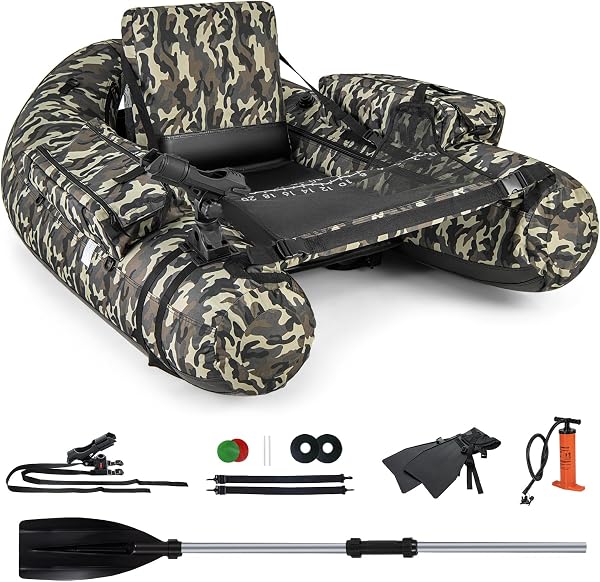
Goplus Inflatable
8.6Editor score350 lbs capacity
600D polyester exterior
Includes paddle flippers
Inflatable adjustable backrest
Find the right fishing float tubes for 2026. We compare 10 standout options by build quality, useful features, owner feedback, value, and everyday trade-offs.
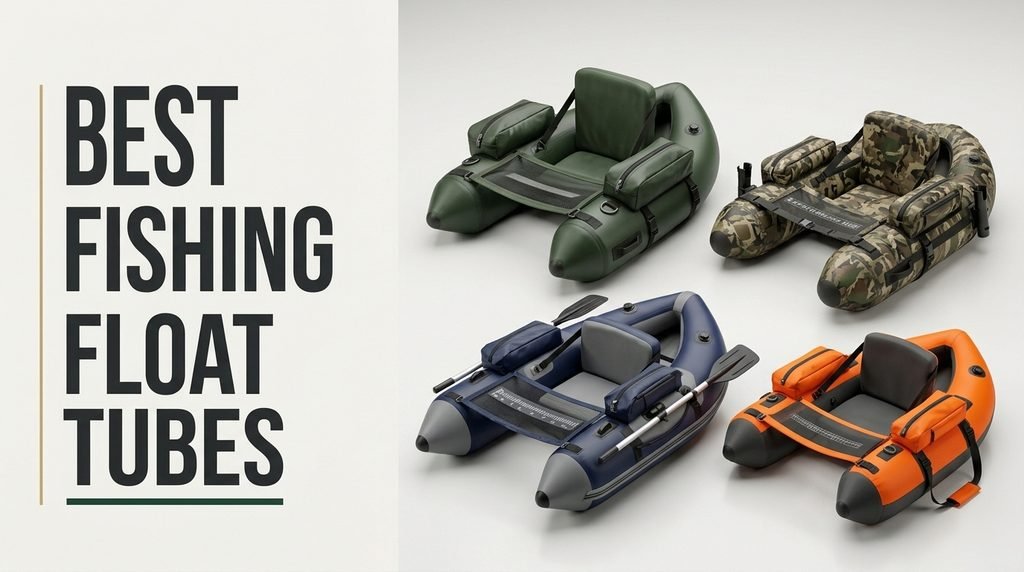
Find the right fishing float tubes for your next season on the water. We compare 10 standout inflatable belly boats by the factors that matter most, including weight capacity, hull material, seat comfort, storage layout, inflation speed, portability, and included accessories like pumps, paddles, and rod holders.
Float tubes range from compact U-shaped designs for calm lakes to larger circular models with higher weight limits and more gear storage. The right choice depends on where you fish, how much equipment you carry, and how far you need to hike to reach the water.
This guide breaks down each option with clear specs, practical pros and cons, and straightforward buying advice. Whether you need a budget-friendly starter tube or a fully accessorized setup for all-day angling, you will find a match that fits your fishing style and budget.
We compared 10 fishing float tubes using the details that actually help an angler decide: weight capacity, hull material and puncture resistance, seat comfort, storage configuration, inflation method, portability, included accessories, and overall value. The notes focus on practical trade-offs so each pick connects to how people actually launch, paddle, fish, and pack up a belly boat on lakes, ponds, and slow-moving rivers.


Compare key features, scores, and current prices side by side. A shorter feature list means fewer details were available, not necessarily fewer capabilities.




This Serenelife Pro Kit version carries the highest owner rating in the entire guide, suggesting strong satisfaction among buyers who have used it on the water. The package includes the float tube, manual pump, carry bag, waterproof side storage bags, and a repair kit, making it one of the most complete out-of-the-box setups available at any price point.
We may earn a commission when you buy through this link, at no additional cost to you.
The laminated PVC hull with UV-resistant marine-grade fabric is designed to withstand prolonged sun exposure and the abrasion that comes with launching from rocky or weedy shorelines. The 220-pound capacity is adequate for lighter anglers, and the inflatable seat with adjustable backrest provides enough support for comfortable half-day outings.
Two fishing rod holders keep your rods organized and secure, and the waterproof storage pockets are a meaningful upgrade over open mesh bags when you are fishing in choppy conditions or light rain. The included fish ruler along the hull is a small but appreciated detail that saves time when you need to verify a catch meets the legal size limit.
Even well-built float tubes can develop small punctures from thorns, sharp rocks, or fish hooks. Having a repair kit in your carry bag means you can patch a leak on the shore and continue fishing rather than packing up early. Check that the kit includes both adhesive patches and a valve wrench before your first trip.
The premium price over the standard Serenelife model may reflect a more complete accessory bundle or updated packaging. If you value the convenience of a fully kitted setup and the confidence of a top owner rating, this version is worth the investment, provided the 220-pound capacity suits your body weight and gear load.
Anglers over 200 pounds who need a higher weight capacity for safety and comfort.
We may earn a commission when you buy through this link, at no additional cost to you.
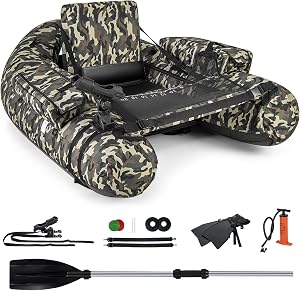
The Goplus inflatable float tube targets anglers who want a turnkey belly boat without buying accessories separately. Its 350-pound load capacity provides a comfortable margin for most adults plus a full day of gear, and the included aluminum paddle and PP flippers mean you can start fishing the same afternoon it arrives.
We may earn a commission when you buy through this link, at no additional cost to you.
Construction pairs a PVC interior bladder with a 600D polyester outer shell, which is a common and proven combination in this price range. The polyester layer resists abrasion from dock edges and rocky shorelines, while the PVC bladder holds air reliably when the Boston-style valves are properly seated. The inflatable seat and adjustable backrest let you fine-tune your sitting angle, which matters when you are casting repeatedly over several hours.
On the water, the two side storage bags keep tackle boxes and bait within arm’s reach, and the rear fish net gives you a place to stash your catch without cluttering the seat area. The adjustable fishing rod holder frees both hands for re-tying leaders or eating lunch, and the built-in fish ruler along the hull saves you from digging through a tackle box for a measuring tape.
The dual side bags and rear mesh net create a three-zone storage system that keeps frequently used items separated from your catch. This layout reduces the chance of tangled line or lost lures when you shift positions in the seat, and the D-rings along the hull let you clip on additional gear like a landing net or water bottle.
This float tube makes the most sense for anglers who fish small to mid-size lakes and want everything in one package. If you already own quality flippers and a paddle, you may be paying for accessories you will not use, but for a first-time float tube buyer the bundled approach simplifies the setup considerably.
Anglers who already own premium flippers and paddles and prefer a bare-bones tube to customize themselves.
We may earn a commission when you buy through this link, at no additional cost to you.
Caddis Sports has been a recognized name in float tubes for years, and the Nevada model reflects that experience in its straightforward U-shaped design. The classic open-front profile lets you kick freely with your legs while the padded stabilizer bar across the front keeps the two pontoons from splaying apart under load, which improves tracking and overall stability on calm to lightly choppy water.
We may earn a commission when you buy through this link, at no additional cost to you.
The hull uses heavy-duty rip-stop material with double stitching at the stress points, a construction detail that matters more than it might seem at first glance. Rip-stop fabric limits tear propagation if the outer layer snags on a branch or dock cleat, and the reinforced seams reduce the risk of slow leaks developing at the bladder-to-fabric junction over multiple seasons of use.
Fishing-specific touches include two main equipment pockets, a front rod holder, a dry-fly patch for fly anglers, and multiple D-rings for clipping on accessories. The fluorescent safety accents along the pontoons are a practical addition for shared waterways where motorboats may not expect a low-profile angler at surface level.
U-shaped float tubes remain popular because they offer a good balance of maneuverability and simplicity. The open front lets water flow through rather than pushing against a solid bow, which reduces drag when you kick. This shape also makes it easier to climb in and out from a shallow bank compared to fully enclosed circular designs.
The Nevada is a strong pick for anglers who value build quality and brand reputation over bundled accessories. You will need to supply your own pump, flippers, and paddle, but the tube itself is well-constructed and comfortable enough for full-day outings on ponds, reservoirs, and slow-moving rivers.
Buyers who want a complete kit with pump, flippers, and paddle included in the box.
We may earn a commission when you buy through this link, at no additional cost to you.
The INTEX Big Catch Pro stands apart from most float tubes in this guide by using a 3-ply laminate construction with a polyester core, which provides significantly more rigidity than single-layer PVC bladders. The result is a belly boat that sits higher on the water and resists flexing when you shift your weight to fight a fish, and the 308-pound capacity accommodates most anglers with gear.
We may earn a commission when you buy through this link, at no additional cost to you.
The Fiber-Tech interior floor construction adds structural support under the seat area, which improves comfort during long sessions and reduces the sagging sensation that cheaper inflatable floors can develop after a few hours. High-pressure spring-loaded valves make inflation and deflation faster than traditional twist valves, and the 0.08 bar inflation pressure gives the hull a firmness that closer resembles a rigid kayak than a pool float.
A removable skeg on the underside helps the tube track straight when you are paddling across open water, which is a meaningful advantage on larger lakes where wind and current can push a round-bottomed tube off course. The included oars and rugged backpack with hip belt round out the package and make this one of the most complete float tube sets available.
The removable skeg is a feature most float tubes lack, and it makes a noticeable difference when you need to cross a wind-swept cove or hold position against a gentle current. If you primarily fish small, sheltered ponds, the skeg may be unnecessary, but for reservoir and lake anglers it adds a layer of control that flippers alone cannot match.
This model suits anglers who fish larger bodies of water and want a more kayak-like experience without the weight and roof-rack logistics of a hard-shell boat. The higher price reflects the advanced construction, so it is best justified if you plan to use the tube frequently and in varied conditions.
Casual anglers who fish small ponds and do not need the added rigidity or tracking of a premium laminate hull.
We may earn a commission when you buy through this link, at no additional cost to you.
At the lowest price point in this guide, the PEXMOR inflatable float tube delivers a surprisingly capable package for anglers who are new to belly boat fishing or who want a secondary tube for casual weekend trips. The 350-pound capacity matches much more expensive models, and the waterproof polyester fabric provides adequate durability for typical lake and pond use.
We may earn a commission when you buy through this link, at no additional cost to you.
Setup is straightforward thanks to the included air pump with multiple nozzle sizes, and the bladders inflate to full size in just a few minutes. The Velcro rod holder strips along the hull let you secure one or two rods while you re-rig or handle a landing net, and the built-in fish ruler eliminates one small piece of gear from your tackle bag.
Comfort is handled by a padded seat and adjustable shoulder straps that double as carry handles when the tube is deflated. The two side storage bags are large enough for a small tackle box and a water bottle, though they lack the rigid structure of the zippered boxes found on some higher-end models.
To extend the life of a budget-friendly tube, rinse the fabric and bladders with fresh water after each use and let them dry completely before storage. Avoid dragging the hull across gravel or concrete, and consider picking up a pair of inexpensive wading flippers separately to improve your kicking efficiency on the water.
This float tube is an excellent starting point for anyone curious about float tube fishing without a large upfront investment. The tradeoff is fewer included accessories and a simpler construction, but for calm-water fishing on a budget the PEXMOR covers the essentials well.
Experienced anglers who need heavy-duty construction for frequent use in rough or rocky conditions.
We may earn a commission when you buy through this link, at no additional cost to you.
The Serenelife float tube distinguishes itself with UV-resistant, marine-grade fabric that holds up better than standard polyester when exposed to prolonged sunlight. If you fish in southern climates or during peak summer months, this material choice can slow the fading and fabric degradation that cheaper tubes experience after a season or two of intense sun exposure.
We may earn a commission when you buy through this link, at no additional cost to you.
The laminated PVC construction provides solid puncture resistance, and the 220-pound capacity is sufficient for lighter anglers or those who travel with minimal gear. Two fishing rod holders keep your rods secure and out of the way, which is especially useful when you are wading into position before inflating the tube at the water’s edge.
Storage comes in the form of two waterproof side pockets that help keep electronics, wallets, and phone dry even when water splashes over the pontoons. The included repair kit is a practical addition that lets you patch minor punctures on the spot rather than ending your fishing day early.
A float tube’s rated capacity includes your body weight plus all gear, clothing, and waders. If you weigh 190 pounds and wear waders that add another 10 pounds when wet, a 220-pound tube leaves very little room for tackle and catch. Always factor in the total loaded weight rather than just your body weight when choosing a capacity rating.
This tube is best suited for smaller anglers or those who fish light and prioritize fabric longevity over maximum weight capacity. If you are close to the 220-pound limit with your body weight alone, consider one of the 350-pound models in this guide for a more comfortable safety margin.
Anglers over 200 pounds or those who carry heavy tackle setups and multiple rods.
We may earn a commission when you buy through this link, at no additional cost to you.
The Caddis High Sierra II uses a fully circular 42-inch design that wraps around the angler for even weight distribution and consistent stability in all directions. This shape is particularly helpful when you are fighting a fish that runs in circles around you, because the tube resists tipping regardless of which direction the pull comes from.
We may earn a commission when you buy through this link, at no additional cost to you.
At just 6.2 pounds, this is one of the lightest float tubes in the guide, which makes it an appealing option for anglers who hike long distances to reach remote ponds or alpine lakes. The heavy-duty rip-stop material and double-stitched seams provide durability that belies the low weight, and the 20-inch vinyl primary bladder holds air reliably through a full day on the water.
The nylon-coated mesh working and stripping apron drapes across your lap to give you a flat surface for organizing flies, lures, and leaders while you are seated. Two main equipment pockets and multiple D-rings round out the storage options, and the fluorescent safety accents serve the same visibility purpose as on the Nevada model.
Circular float tubes excel in small, calm bodies of water where you drift or hold position near structure. U-shaped tubes track better when you need to cover distance by kicking across a lake. Consider your typical fishing style and the size of the water you frequent before choosing between the two profiles.
Choose the High Sierra II if you prioritize lightweight portability and all-around stability over straight-line tracking speed. The circular profile sacrifices some directional efficiency when kicking, but for still-water fishing where you mostly hold position and cast, the tradeoff is well worth the added stability and reduced carry weight.
Anglers who need to cover large distances across open water by kicking and want strong directional tracking.
We may earn a commission when you buy through this link, at no additional cost to you.
The GYMAX Fish Finder model addresses a growing need among float tube anglers who use portable sonar units to locate fish and map bottom structure. The dedicated fish finder holder mounts your device within easy viewing distance, so you can monitor depth and fish marks without juggling a handheld unit while trying to cast and kick simultaneously.
We may earn a commission when you buy through this link, at no additional cost to you.
The hull combines a 600D polyester exterior with a high-quality PVC interior, matching the construction approach used by several other tubes in this price range. The Boston valve system provides a tight seal that minimizes air loss during long sessions, and the inflatable seat with adjustable backrest keeps you comfortable when you are parked over a promising drop-off for an extended period.
Storage is generous, with two spacious side bags for tackle and a rear compartment for your catch. Six strategically placed D-rings give you plenty of anchor points for accessories like a landing net, drink holder, or additional electronics mounts, and the included aluminum paddle and flippers let you navigate without extra purchases.
A dedicated fish finder mount keeps your sonar screen stable and readable even when the tube rocks in choppy water. When choosing a portable fish finder for float tube use, look for compact units with a transducer that can be mounted on the hull or dropped over the side on a short arm, and make sure the battery pack fits in one of the side storage bags.
This float tube is the clear choice for anglers who rely on sonar or plan to add a fish finder to their setup. If you do not use electronics, the dedicated mount is simply an unused feature, and one of the lighter or less expensive models in this guide may be a better fit for your needs.
Minimalist anglers who do not use sonar and want the lightest possible tube for hike-in fishing.
We may earn a commission when you buy through this link, at no additional cost to you.
The GYMAX 350 Paddle model earns its maneuverability badge through a combination of the included aluminum paddle, PP flippers, and a 360-degree rotating rod holder that lets you position your rod in any direction without repositioning the entire tube. This flexibility is especially useful when you are working a shoreline and need to cast at varying angles as you drift.
We may earn a commission when you buy through this link, at no additional cost to you.
The 350-pound capacity and 600D polyester exterior with PVC interior provide the same durable construction found in other GYMAX models, and the well-sealed bladders maintain firm inflation throughout a full day on the water. The adjustable backrest straps let you dial in a more upright or reclined sitting position depending on your casting style and comfort preference.
Fish hook stators with hook-and-loop fasteners on both sides of the seat keep your most-used hooks organized and within quick reach, which reduces fumbling when you need to change lures in a hurry. The side bags and rear storage space provide enough room for a tackle box, snacks, and a few fish, and the included pump makes inflation quick at the launch point.
Flippers give you hands-free propulsion and are ideal for short repositioning moves and holding against a light current. A paddle is more efficient for covering longer distances across open water. Having both options, as this kit provides, lets you switch between the two depending on the situation and conserve energy over a long day.
This float tube is a strong all-around choice for anglers who want maximum control on the water without buying additional navigation accessories. The rotating rod holder is the standout feature and makes a real difference when you are targeting structure from multiple angles during a single drift.
Ultralight backpackers who need the absolute smallest and lightest float tube for remote alpine lakes.
We may earn a commission when you buy through this link, at no additional cost to you.
The GYMAX 350 Ruler model refines the storage layout that float tube anglers often struggle with by adding a dedicated rear compartment for your catch alongside two large side bags and a mesh pocket for small essentials like line clippers, hook removers, and sunscreen. This separation keeps fish slime and scales away from your clean tackle and personal items.
We may earn a commission when you buy through this link, at no additional cost to you.
The 600D polyester and PVC construction matches the durability of other GYMAX tubes in this guide, and the Boston valve system provides a reliable seal that resists the slow air leaks that can develop with cheaper twist-style valves. The 350-pound capacity gives most anglers a comfortable margin, and the inflatable seat with adjustable backrest supports long hours on the water.
The detachable fishing rod holder and included fish ruler cover the two most common accessory needs, and the aluminum paddle and flippers round out the navigation options. The adjustable shoulder straps make the 58-inch tube manageable to carry from your vehicle to the launch point, though it is not the lightest option for long hikes.
A rear mesh or net compartment allows water to circulate around your catch, which helps keep fish alive and fresh until you return to shore. If you plan to keep fish regularly, look for a float tube with a dedicated rear storage area rather than stuffing your catch into the same bags as your tackle and electronics.
This float tube is ideal for anglers who keep their catch and want a clean, organized storage system that separates fish from gear. If you practice catch-and-release exclusively, the rear fish compartment is less critical, and you might prefer a lighter model with a simpler layout.
Strict catch-and-release anglers who do not need rear fish storage and prefer a lighter, simpler tube.
We may earn a commission when you buy through this link, at no additional cost to you.
A fishing float tube is one of the most affordable and portable ways to access water that is too deep for wading but too small or remote for a full-size boat. The right choice depends on a handful of practical factors that affect your comfort, safety, and fishing success on the water.
Weight capacity is the single most important specification to check before buying a float tube. The rated limit includes your body weight, waders, clothing, tackle, food, water, and any fish you plan to keep. A tube rated for 350 pounds gives a comfortable margin for most adults, while a 220-pound model may feel cramped and sit dangerously low in the water if you are a larger angler or carry heavy gear.
Buoyancy is closely related to capacity but also depends on the size and number of air bladders. Larger pontoons displace more water and provide a higher ride, which keeps you drier and more stable in choppy conditions. If you fish in cold water and wear thick neoprene waders, remember that the waders themselves add significant weight when soaked, and you need to account for that in your total load calculation.
Choose a float tube with at least 50 pounds of capacity above your fully loaded weight. This safety margin ensures the tube rides high enough to handle waves, wind, and the sudden shifts in balance that happen when you hook a large fish.
Most float tubes use a two-layer construction with an inner air bladder made of PVC or urethane and an outer shell made of polyester or nylon fabric. The outer shell takes the abuse from rocks, dock edges, and brush, while the inner bladder holds the air. Higher-denier fabrics like 600D polyester resist abrasion better than lighter materials, and rip-stop weaves limit tear propagation if the fabric does snag.
Some premium models use multi-ply laminate construction with a polyester core sandwiched between PVC layers, which provides significantly more rigidity and puncture resistance than single-layer bladders. These tubes feel more like rigid kayaks on the water and are less prone to flexing and sagging over long sessions, but they also cost more and weigh more when packed.
If you fish in areas with sharp rocks, submerged timber, or heavy vegetation, invest in a tube with a higher-denier outer shell or a multi-ply laminate hull. For calm ponds with soft muddy banks, a standard PVC-and-polyester construction is usually sufficient and saves money.
Float tubes come in three main shapes: U-shaped, V-shaped, and circular. U-shaped tubes have an open front that lets water flow through, reducing drag when you kick and making it easier to climb in from a shallow bank. They track reasonably well in a straight line and are the most popular choice for general lake and pond fishing.
Circular tubes wrap completely around the angler, providing 360-degree stability that is especially helpful when fighting fish that run in circles. The tradeoff is that circular tubes catch more water resistance when you try to kick in a straight line, making them slower to cover distance. V-shaped tubes are less common but offer a compromise between the tracking of a U-shape and the stability of a circle.
Match the shape to your typical fishing style. If you mostly drift and cast in one area, a circular tube provides excellent stability. If you need to kick across open water to reach different spots, a U-shaped or V-shaped design will get you there with less effort.
You will spend hours sitting in your float tube, so seat comfort is not a luxury but a necessity. Look for an inflatable seat with an adjustable backrest that lets you change your sitting angle throughout the day. A more upright position is better for casting and fighting fish, while a slightly reclined angle reduces lower back fatigue during long drifts.
The seat height above the waterline also matters. Higher seats keep you drier and give you a better vantage point for spotting fish and reading the water surface, but they also raise your center of gravity and can make the tube feel less stable in wind. Most float tubes strike a reasonable balance, but if you are tall or have back issues, prioritize models with thick padding and multiple backrest adjustment points.
Before buying, check whether the seat and backrest are separate inflatable chambers or a single unit. Separate chambers let you adjust the firmness of each independently, which gives you more control over your sitting position and comfort level.
Storage on a float tube is limited by design, so efficient organization is key. Most tubes offer two side pockets or bags for tackle and personal items, and some add a rear compartment or mesh net for your catch. Waterproof pockets are a significant upgrade over open mesh bags if you fish in choppy water or rainy conditions, because they protect electronics and valuables from splashes.
D-rings and attachment points along the hull let you clip on additional gear like landing nets, drink holders, and camera tethers. Count the number of D-rings before buying if you use a lot of accessories, because adding aftermarket attachment points to a float tube is difficult and can compromise the fabric.
Think about what you actually carry on a typical fishing trip and choose a tube with enough storage to keep everything organized without overloading the pontoons. A cluttered float tube is not only frustrating to fish from but also less stable on the water.
Most float tubes inflate with a manual hand pump or foot pump, and the process typically takes five to ten minutes. Boston-style valves are the most common and provide a good seal with relatively fast airflow, while spring-loaded high-pressure valves on premium models inflate even faster and create a firmer hull. Avoid tubes with cheap twist valves that are prone to cross-threading and slow air loss.
Portability matters if you need to hike to your fishing spot. Check the packed dimensions and weight of the deflated tube, and look for models that include a carry bag or backpack straps. Tubes under 10 pounds are manageable for moderate hikes, while heavier models with more accessories may require a short walk from the parking area.
If you fish at remote locations, prioritize a lightweight tube with a compact packed size and a reliable pump. If you drive to a boat ramp and launch from the shore, weight and packed size are less critical, and you can choose a heavier model with more features and accessories.
Some float tubes ship as bare-bones hulls that require you to purchase a pump, flippers, paddle, and rod holders separately, while others include everything you need to start fishing right away. Bundled kits are convenient and often cheaper than buying each accessory individually, but the included accessories may not match the quality of standalone products you would choose yourself.
Key accessories to evaluate include the pump type and nozzle compatibility, flipper size and stiffness, paddle length and blade shape, rod holder adjustability, and the presence of a repair kit. A repair kit is one of the most valuable inclusions because a small puncture can end your fishing day if you have no way to patch it on the spot.
Calculate the total cost of ownership by adding the price of any missing accessories to the tube’s purchase price. A cheaper tube that requires a separate pump, flippers, and paddle may end up costing the same as a more expensive all-in-one kit, so compare the complete setups rather than just the tube prices.
Before your first outing, inflate the float tube fully at home and let it sit for several hours to check for leaks around the valves and seams. Practice assembling and disassembling the tube a few times so you can set up quickly at the water’s edge, and adjust the seat and backrest straps to find a comfortable position before you are sitting in cold water. Always wear a personal flotation device when using a float tube, even in shallow water, because an unexpected puncture or sudden weather change can put you in the water quickly.
On the water, use your flippers for short repositioning moves and your paddle for longer crossings. Keep your weight centered in the seat and avoid sudden shifts that could tip the tube, especially when landing a fish. If wind picks up, lower your profile by leaning slightly forward and use the paddle to maintain your position rather than fighting the current with your legs alone.
After each trip, rinse the entire float tube with fresh water to remove algae, mud, and fish slime, then let it dry completely in a shaded area before deflating and storing it. Prolonged sun exposure while drying can degrade the fabric and bladder over time, so avoid leaving the inflated tube on hot pavement or in direct sunlight for extended periods. Store the deflated tube loosely rolled in a cool, dry place rather than tightly compressed, which can create permanent creases in the bladder material.
Choose a float tube based on your total loaded weight, not just your body weight. Add the weight of your waders, clothing, tackle, and any gear you carry, then select a tube with at least 50 pounds of capacity above that total. Most adult anglers are well served by a 300 to 350-pound capacity model, while lighter anglers can use 220-pound tubes comfortably.
Float tubes are safe when used properly on calm to moderately choppy water. Always wear a personal flotation device, check the weather forecast before launching, and avoid using a float tube in strong currents, heavy wind, or large open water where motorboat traffic is common. Inspect your tube for leaks before every trip and carry a repair kit.
Waders are strongly recommended because your legs and lower body will be submerged in the water while you sit in the float tube. Neoprene waders provide insulation in cold water, while breathable waders are more comfortable in warm weather. Without waders, you will get wet and cold very quickly, which can lead to hypothermia even on mild days.
Most float tubes inflate in five to ten minutes using the included manual hand pump. Tubes with high-pressure spring-loaded valves may inflate slightly faster, while larger models with multiple bladder chambers can take a bit longer. A foot pump can speed up the process if you prefer not to use your arms.
Float tubes work best on calm lakes, ponds, and slow-moving rivers. Avoid using a float tube in fast currents, rapids, or rivers with heavy boat traffic, because the low profile and limited speed of a float tube make it difficult to maneuver out of danger. If you do fish a river, stay in calm eddies and backwaters and always wear a PFD.
Most float tube repair kits include adhesive patches and a small tube of glue. Locate the puncture by inflating the bladder and listening for hissing or applying soapy water to the surface and watching for bubbles. Clean and dry the area around the puncture, apply the adhesive, press the patch firmly in place, and let it cure for the recommended time before inflating the tube again.
Float tube and belly boat are two names for the same product. The term belly boat comes from the early designs where the angler sat with their belly partially submerged in the water. Modern float tubes have raised seats that keep most of your body above the waterline, but both terms are still used interchangeably by anglers and manufacturers.
Most float tubes deflate and fold into a compact bundle that fits in a carry bag or backpack. Many models include adjustable shoulder straps that let you carry the deflated tube like a backpack from your vehicle to the launch point. Inflated float tubes can be carried short distances using the built-in grab handles, but they are bulky and awkward to transport over long distances.
No, float tubes are designed for seated use only. Standing in a float tube would raise your center of gravity dramatically and almost certainly cause the tube to tip over. If you need a standing platform for sight fishing or casting, consider a pontoon boat or a small kayak with a standing deck instead.
A well-maintained float tube can last five to ten years or more. The lifespan depends on the quality of the materials, how often you use the tube, and how well you care for it after each trip. Rinsing with fresh water, drying in the shade, and storing the tube loosely rolled in a cool place will significantly extend its usable life compared to leaving it inflated in the sun or storing it wet.
The Caddis Sports Nevada stands out as the strongest overall choice for most anglers, combining a proven U-shaped design, double-stitched rip-stop construction, and the highest owner rating among the well-established brands in this guide. Its padded stabilizer bar and stripping apron reflect years of design refinement, and the fluorescent safety accents add a practical layer of visibility on shared waterways.
For budget-conscious buyers, the PEXMOR inflatable delivers a 350-pound capacity and essential accessories at the lowest price in this comparison, making it an excellent entry point into float tube fishing. Anglers who want a premium, kayak-like experience should consider the INTEX Big Catch Pro with its 3-ply laminate hull and removable tracking skeg, while those who rely on sonar will appreciate the dedicated fish finder mount on the GYMAX Fish Finder model.
Start by matching the weight capacity to your fully loaded body weight, then choose a shape and feature set that fits your typical fishing environment. A float tube is one of the most rewarding investments an angler can make, opening up quiet coves and backcountry ponds that larger boats cannot reach. Pick the model that aligns with your needs, take care of it after each trip, and enjoy the unique perspective that float tube fishing provides.