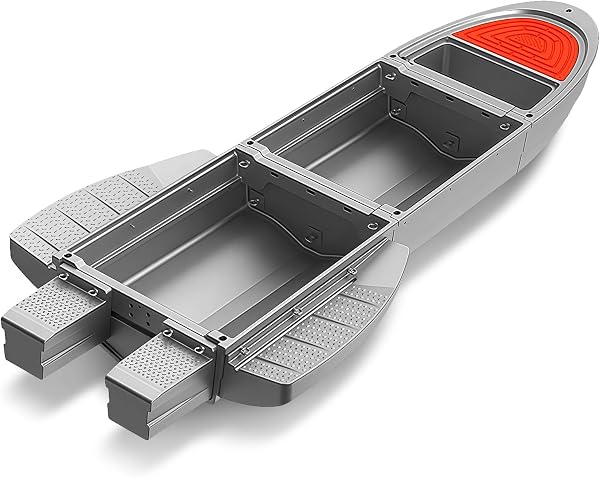
Folding Jon Boat
9.4Editor scoreModular collapsible hull design
800 lb buoyancy support
Live water fish compartment
High strength PE construction
Find the right fishing boats for 2026. We compare 8 standout options by build quality, useful features, owner feedback, value, and everyday trade-offs.
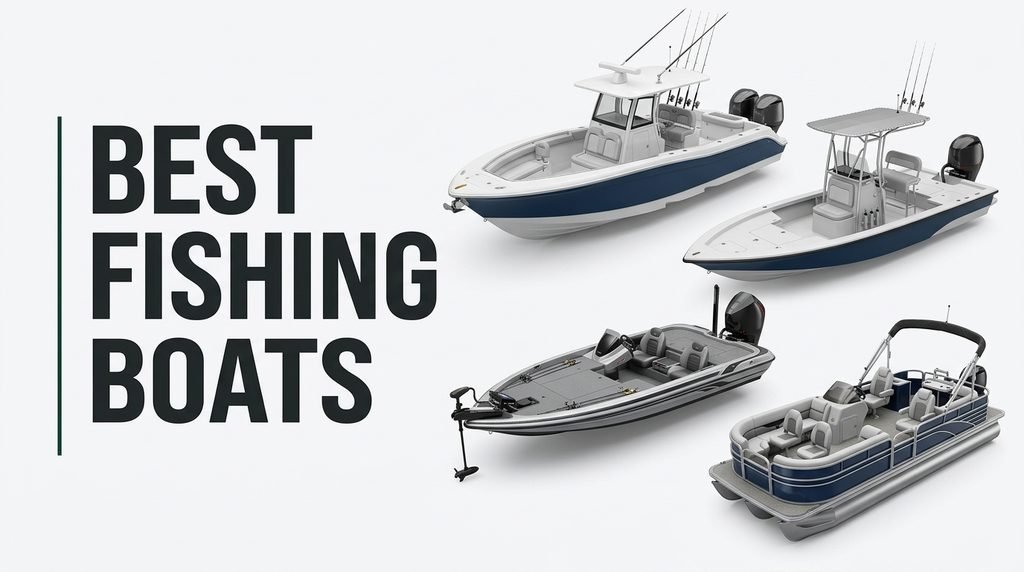
Find the right fishing boats for your next weekend on the water. We compare 10 standout options by the factors that matter most, such as hull durability, total weight capacity, motor compatibility, onboard seating, portability, and value for the everyday angler.
Not every fishing trip requires a massive bass boat on a custom trailer. Today’s market offers incredible versatility, ranging from folding modular boats that fit inside a large SUV to high-impact pontoon-style hulls designed specifically for stability when casting. Knowing how you plan to transport your boat and what kind of water you will navigate is critical to making the right choice.
This guide breaks down each model’s practical features and trade-offs. Whether you are looking for a pre-wired angler boat ready for a trolling motor or a simple inflatable raft for casual pond fishing, these detailed comparisons will help you choose the best vessel for your needs.
We compared 10 fishing boats using the details that actually help an angler decide: hull material, maximum weight limit, motor mounting capability, seat adjustability, built-in rod holders, transport handles, and overall stability. The notes focus on practical on-the-water trade-offs, so each pick feels connected to how people actually haul, launch, and fish from these vessels in real-world environments.

Compare key features, scores, and current prices side by side. A shorter feature list means fewer details were available, not necessarily fewer capabilities.




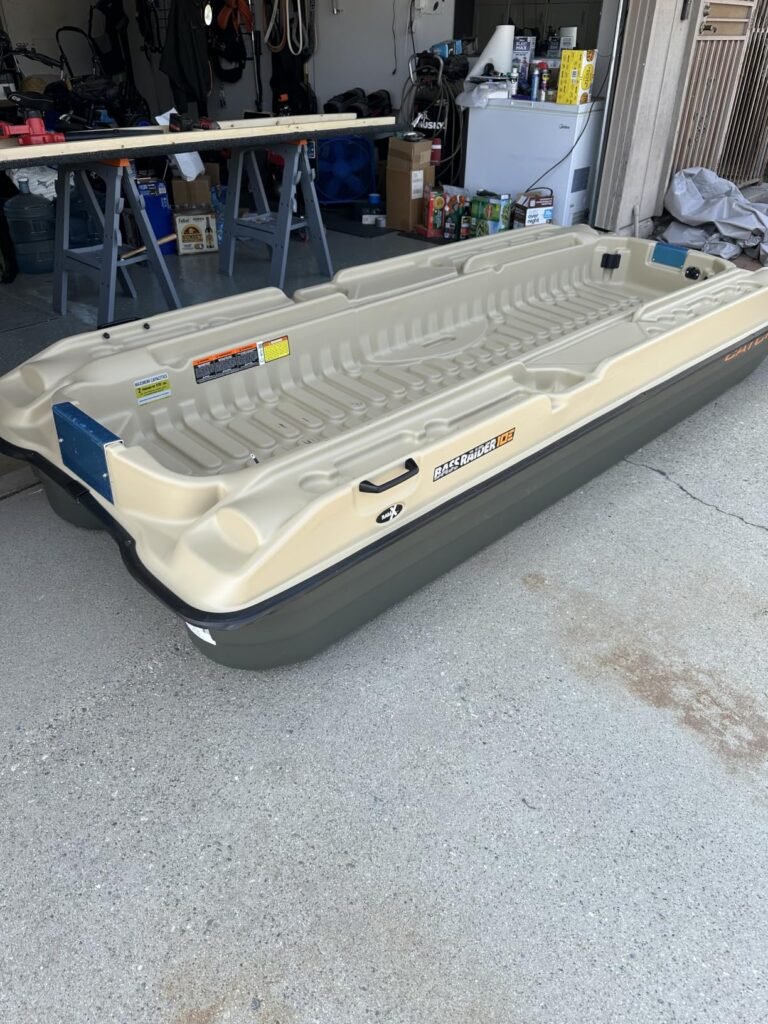
The Pelican Bass Raider 10E equipped with the Ergo360 seating system is engineered for dedicated anglers who want pontoon-style stability without the cost of a full-size bass boat. Its twin-pontoon hull design provides an exceptionally stable platform, drastically reducing the rocking motion that often occurs when two people cast or stand simultaneously.
We may earn a commission when you buy through this link, at no additional cost to you.
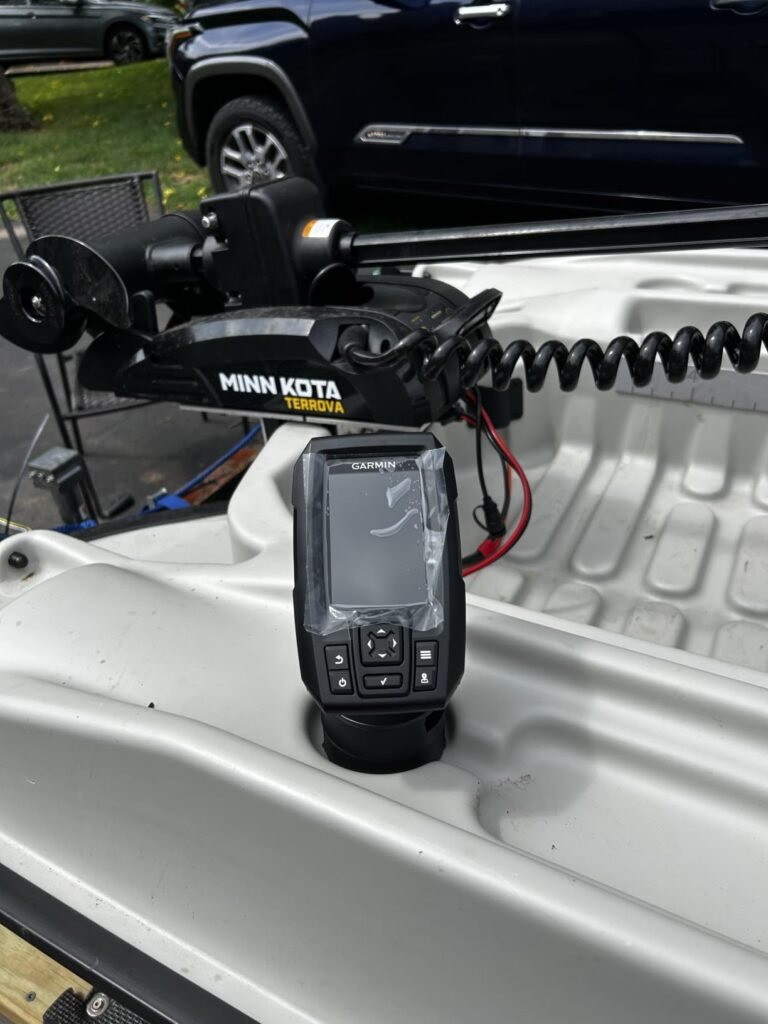
A standout feature of this model is that it comes pre-wired. It includes a built-in 12V electrical outlet, allowing you to easily connect a trolling motor or a fish finder sonar without having to run messy wiring across the deck. When combined with the heavy-duty RAM-X hull—a material known for bouncing off rocks and stumps without cracking—this boat is ready for serious shallow-water navigation.
Comfort on long fishing days is handled by the Ergo360 seating system. Both seats are mounted on sliding tracks, letting you adjust legroom perfectly, and they swivel a full 360 degrees so you can follow a fish around the boat without straining your back. With a 600-pound maximum capacity, it comfortably holds two adults, a large marine battery, and a full day’s worth of tackle.
Running your own wiring for a trolling motor on a small plastic boat often involves exposed cables that pose a tripping hazard or get snagged on hooks. A pre-wired boat hides the main power cables inside the hull and provides a clean, marine-grade plug port at the transom, drastically reducing setup time at the boat ramp.
Because it is over 10 feet long and features a solid, high-impact hull, you will need a pickup truck bed or a small trailer to transport it to the launch site. It is also heavy enough that dragging it alone is a chore, making it best suited for pairs. If you have the transport capacity, the pre-wired convenience and supreme stability make this the most capable small fishing boat on the market.
Solo anglers who need to rooftop-load their boat onto a small sedan.
We may earn a commission when you buy through this link, at no additional cost to you.
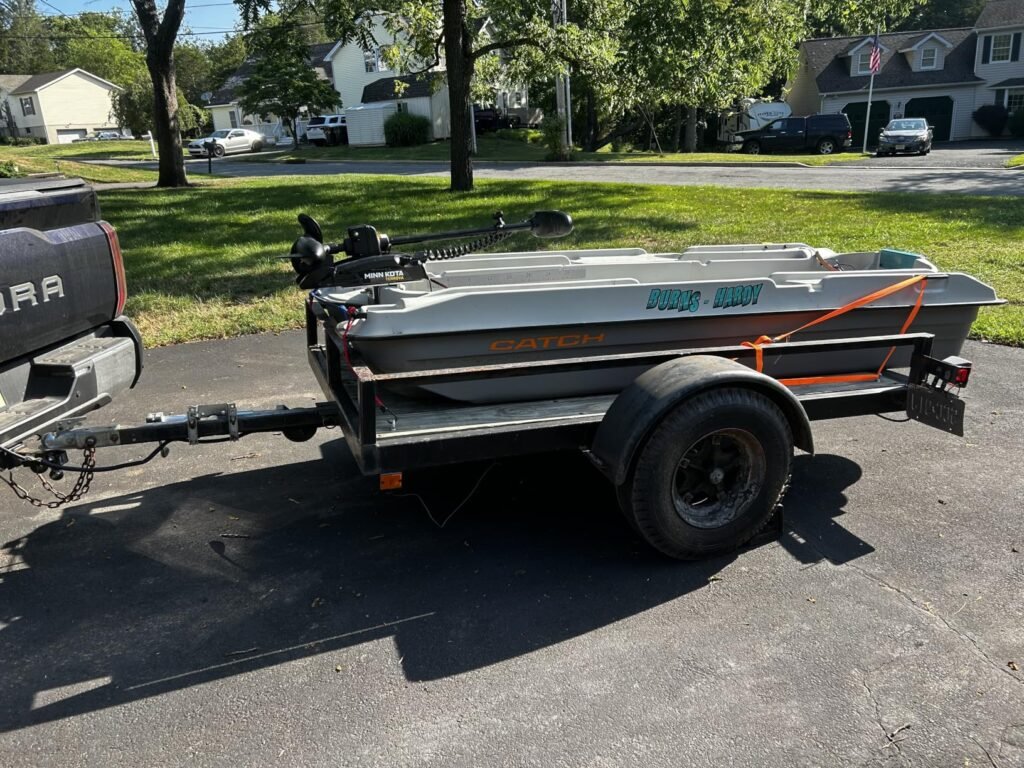
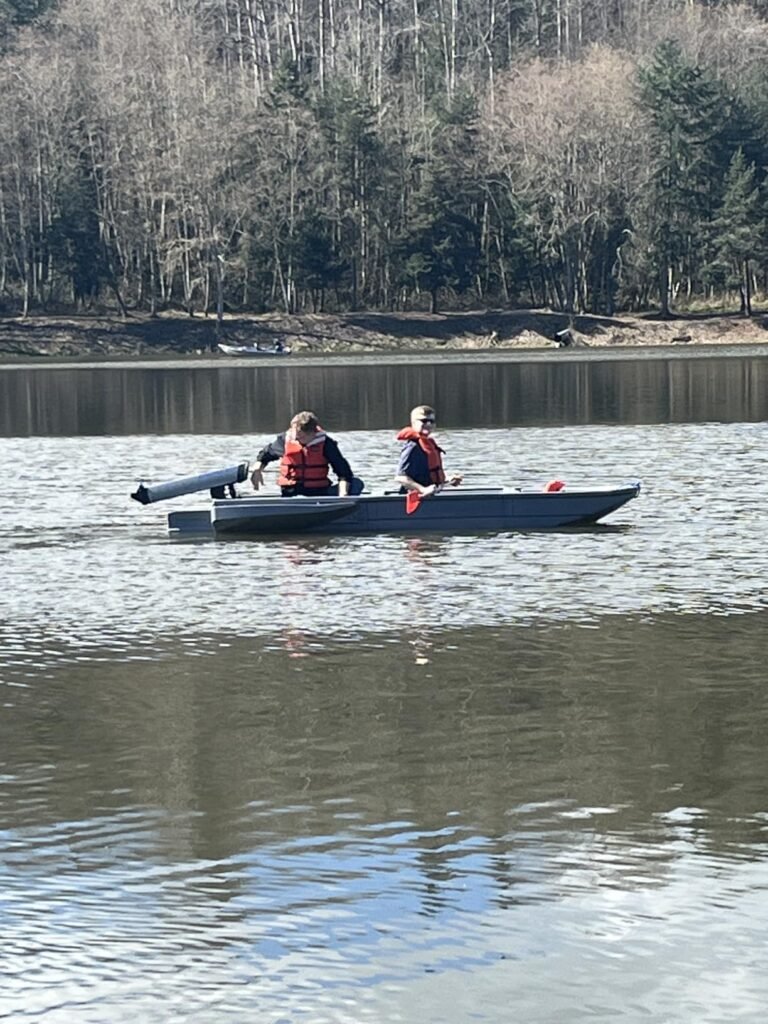
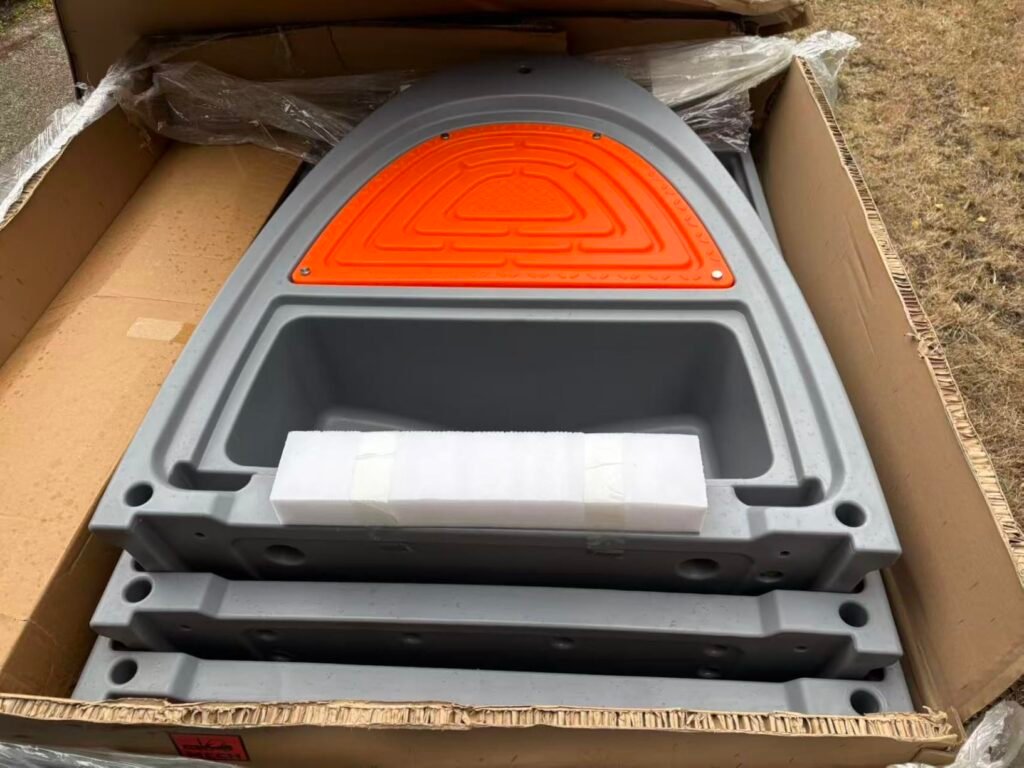
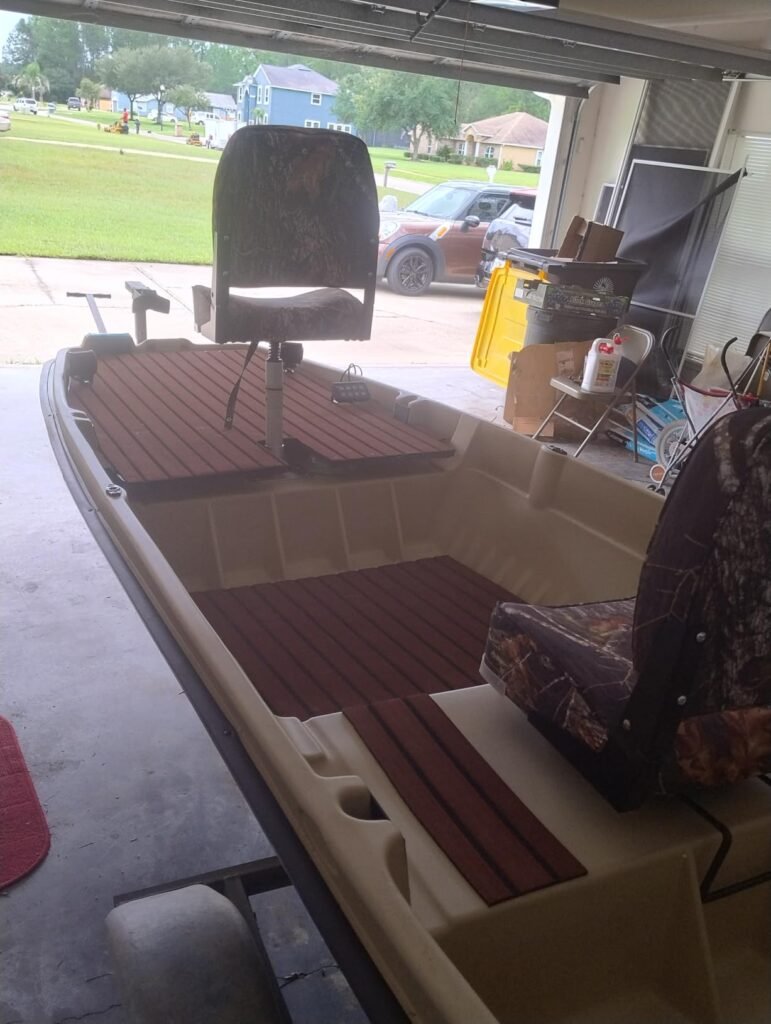
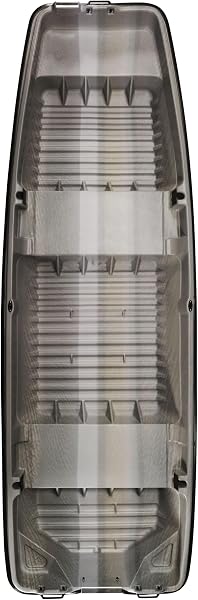
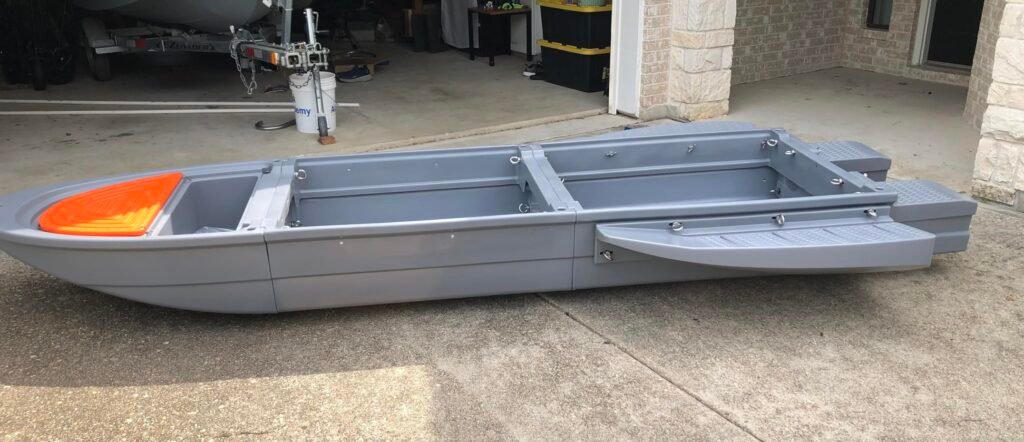
If you want the capacity of a full-size jon boat but do not own a trailer or a pickup truck, this Folding Modular Jon Boat offers an ingenious solution. It breaks down into multiple separate sections that can be stacked and loaded into the back of an SUV or minivan. Once at the water, you assemble the pieces using the included 304 stainless steel hardware.
We may earn a commission when you buy through this link, at no additional cost to you.
Stability is heavily prioritized through the inclusion of side and tail pontoons. These outriggers significantly increase the boat’s footprint in the water, preventing the bow rise and rollover risk common when mounting a heavier motor to a small vessel. In fact, this boat can support up to a 10hp outboard motor, giving you access to larger lakes and faster currents.
The interior features a dedicated bow storage compartment for dry gear and a live water compartment designed to keep your catch alive without taking on excess water. Constructed from high-strength PE (polyethylene) through a monolithic molding process, the hull pieces are impact-resistant enough to handle rocky landings and submerged reefs.
Modular boats rely on watertight gaskets and heavy-duty hardware to join the hull sections securely. Because the components are molded from stiff PE plastic, they lock together rigidly, mimicking the feel of a single-piece boat once assembled. However, keeping the stainless steel screws clean and preventing the threaded inserts from cross-threading is crucial for long-term reliability.
The main trade-off for this extreme portability is the assembly time. While the manufacturer states it can be assembled in under 10 minutes, it does require manually securing screws before every launch, which is more tedious than simply sliding a boat off a trailer. For urban anglers or those with limited storage space at home, the modular design provides capabilities that would otherwise be impossible.
Anglers who want a grab-and-go boat that launches instantly without any assembly steps.
We may earn a commission when you buy through this link, at no additional cost to you.
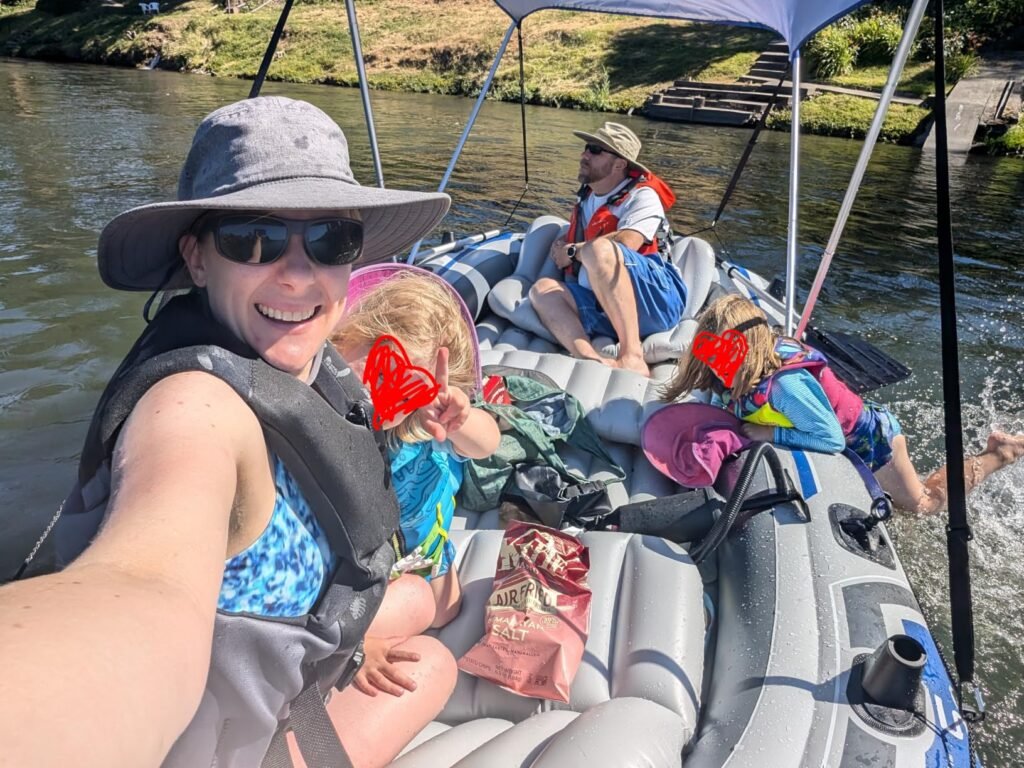
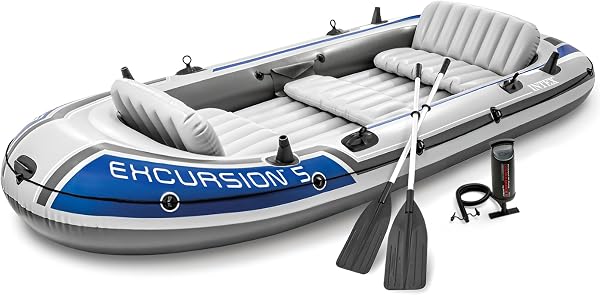
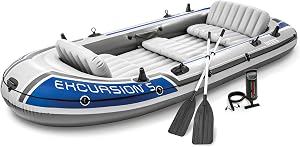
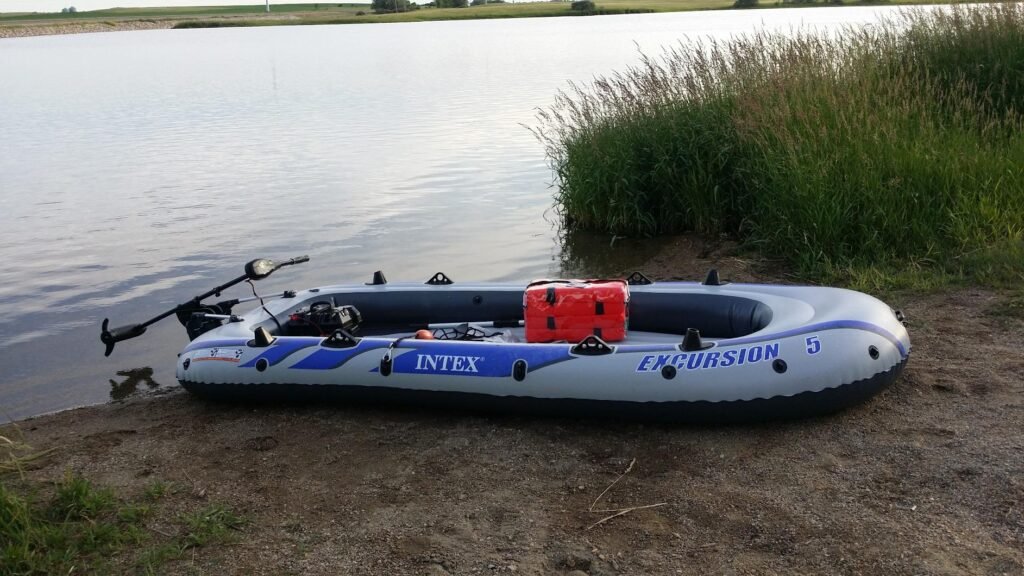
The INTEX Excursion 5 proves that you do not need to spend a fortune to get multiple people out on the water. With an inflated footprint of 12 feet long and over 5 feet wide, it boasts a massive 1300-pound weight limit. While advertising it as a 5-person boat might feel crowded with fishing gear, it offers incredibly spacious and comfortable seating for two or three anglers with full tackle boxes.
We may earn a commission when you buy through this link, at no additional cost to you.
Constructed from SuperStrong enhanced molecular PVC, the material is thicker and more abrasion-resistant than standard pool toys, though it still requires care around rocky shores and sharp fishing hooks. The inclusion of four detachable fishing rod holders transforms it from a simple raft into a functional fishing vessel, allowing you to troll lines while rowing.
Portability is the primary reason to choose an inflatable. When deflated using the quick-release Dual Boston valves, the entire boat fits into a carry bag that drops easily into the trunk of a compact sedan. The package includes a high-output hand pump and two 54-inch oars, meaning it is entirely ready for the water right out of the box.
Inflatable boats lack the heavy, submerged keel of a hard-plastic boat, making them highly susceptible to wind drift. If you plan to fish a specific structure or drop-off, bringing a small anchor on a long rope is essential. Without an anchor, a light breeze will constantly spin the raft and pull your bait away from the strike zone.
The limitations of inflatables must be respected. Because it sits high on the water and is very lightweight, even a moderate breeze will push the boat off course, making precise casting difficult on windy days. Additionally, a trolling motor requires purchasing a separate transom mounting kit. For calm ponds and slow-moving rivers, however, it is an unbeatable value.
Navigating rivers with sharp submerged branches or fishing in high-wind conditions.
We may earn a commission when you buy through this link, at no additional cost to you.
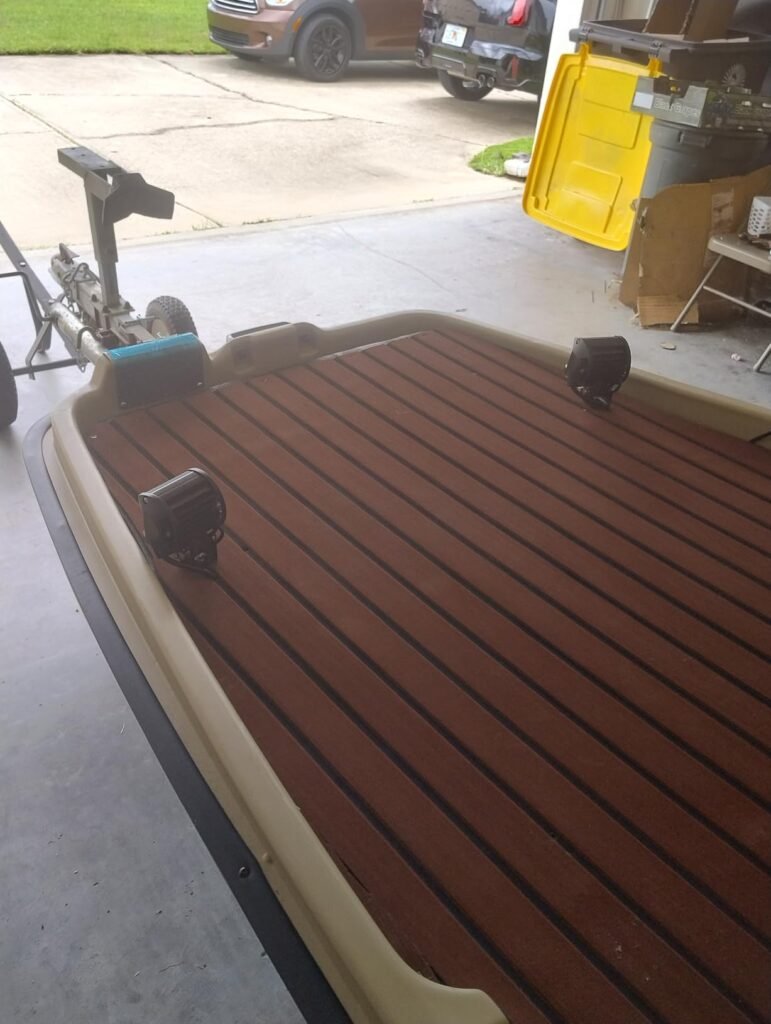
The Pelican Intruder 12 is a classic, no-nonsense jon boat built for shallow-water access. Unlike twin-pontoon models, the Intruder features a flat-bottom hull that drafts very little water, allowing you to slide over sandbars, through thick lily pads, and into backwater coves that deeper boats cannot reach. The khaki colorway makes it equally suitable as a stealthy platform for duck hunting during the fall.
We may earn a commission when you buy through this link, at no additional cost to you.
Versatility in propulsion is a major advantage here. The boat features both a built-in metal bow trolling mount and a stern motor mount, capable of handling a gas outboard up to 6 HP or a heavy-duty electric trolling motor. If you prefer to stay quiet in shallow water, it also includes integrated oarlock receptacles on both sides for traditional rowing.
Inside, the 12-foot length provides 36 cubic feet of cargo space, leaving plenty of room for decoys, large coolers, or bulky tackle boxes. Pelican’s unique manufacturing process includes additional flotation foam inside the hull, ensuring the boat remains buoyant and safe even if it takes on water, surpassing standard ABYC safety requirements.
A flat-bottom jon boat distributes its weight over a very wide, flat surface rather than a narrow V-shape. This reduces the boat’s draft—the depth of water needed to float. This design allows anglers to push through inches of water to reach secluded spawning beds or retrieve downed waterfowl without the hull scraping the mud.
The main limitation is seating comfort. It features molded bench seats which provide a stable base for casting but lack the back support and swivel convenience of a premium pedestal seat. Additionally, the 420-pound weight capacity requires you to pack carefully if two heavy adults are on board. For a rugged, low-maintenance shallow water vessel, it remains an excellent choice.
Anglers looking for plush, back-supporting swivel seats for all-day trolling.
We may earn a commission when you buy through this link, at no additional cost to you.
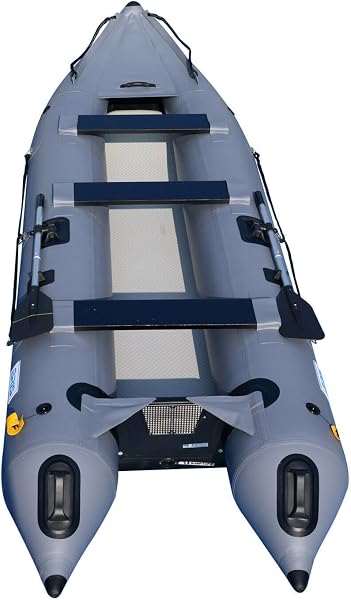
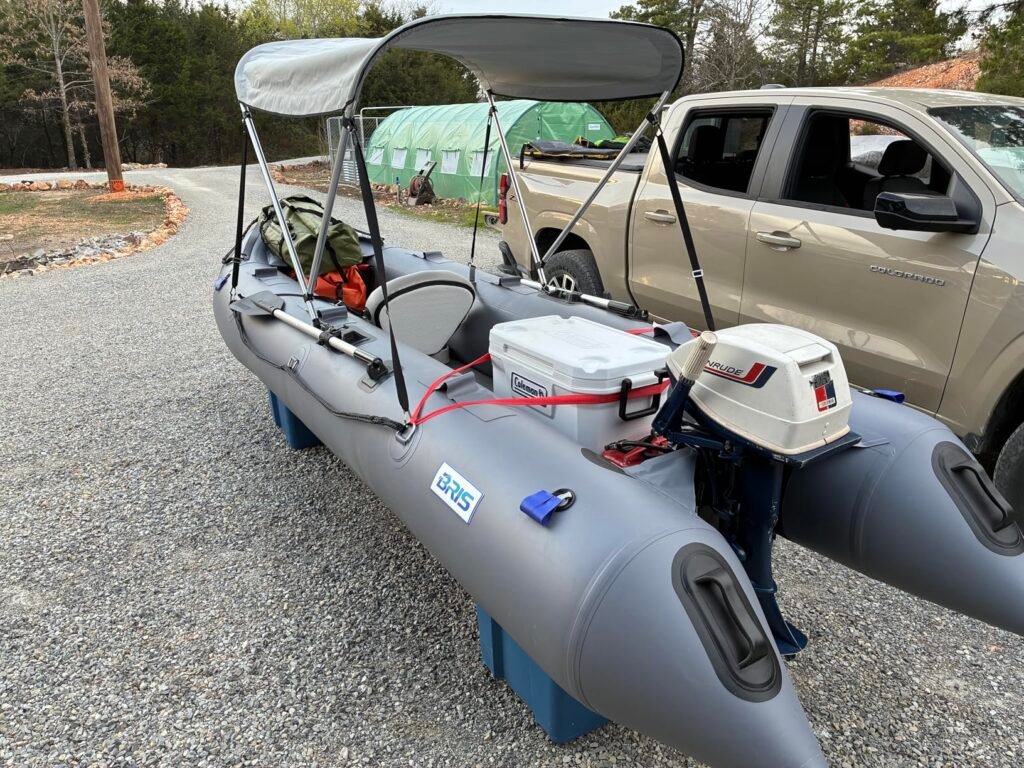
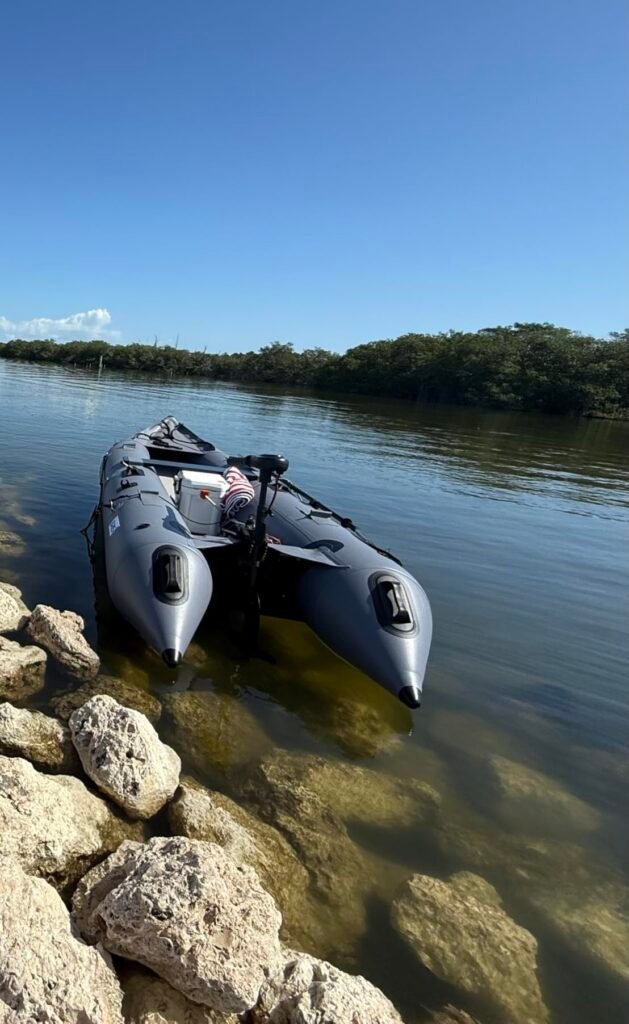
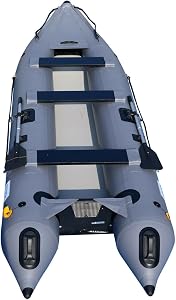
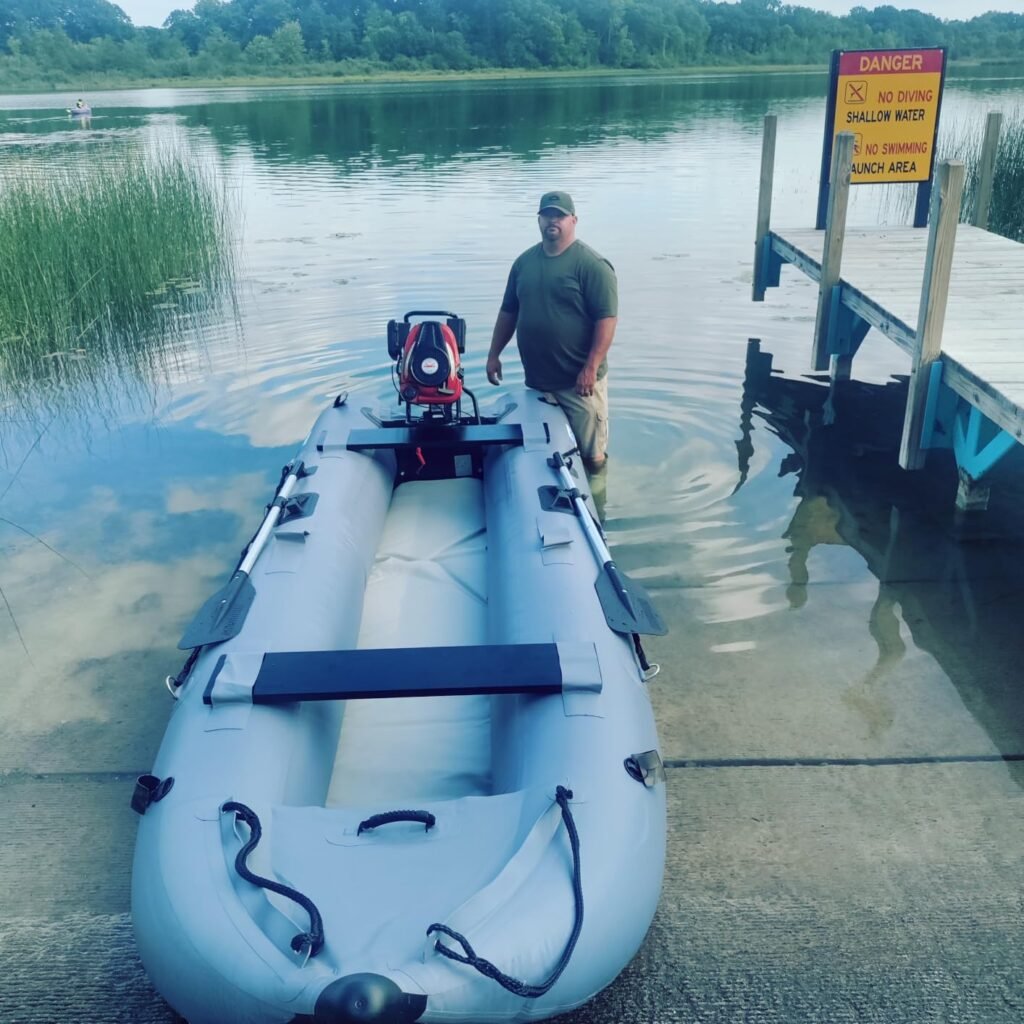
Bridging the gap between a kayak and a motorized raft, the BRIS 14.1ft Inflatable Boat is built with commercial-grade materials for serious watermen. Unlike cheap recreational inflatables, this boat is constructed from 1100 Denier PVC with polyester support. This heavy-duty fabric strongly resists tearing and tension, making it safe for environments with submerged timber and rocky shorelines.
We may earn a commission when you buy through this link, at no additional cost to you.
The defining feature of this vessel is the high-pressure drop-stitch air floor. When inflated to the proper PSI, the floor becomes rigid enough that an angler can easily stand up to cast or stretch their legs—a rarity in inflatable boats. The massive 17.5-inch diameter side tubes provide immense buoyancy, making the boat incredibly difficult to flip even in choppy water.
Construction quality is evident in the heat-welded seams, which are often quadruple overlapped. This prevents the seams from degrading in extreme humidity or saltwater, a common failure point on glued inflatables. It includes a proper transom to mount a motor, complete with splash guards to minimize backwash when reversing.
Drop-stitch technology connects the top and bottom layers of PVC with tens of thousands of fine polyester threads. When inflated to a high pressure (usually over 8 PSI), these threads pull tight, creating a flat, rock-hard surface. This technology allows inflatable floors to mimic the stability of marine plywood without the associated weight or rot issues.
Because of the heavy-duty PVC and marine plywood bench seats, this boat is significantly heavier and bulkier than standard inflatables when packed away. You will need a strong back to carry the bag to the water’s edge. If you want the rigid performance of a hard boat with the ultimate storage convenience of an inflatable, this heavy-duty model delivers.
Casual weekenders looking for an ultra-light, easy-to-carry pond raft.
We may earn a commission when you buy through this link, at no additional cost to you.
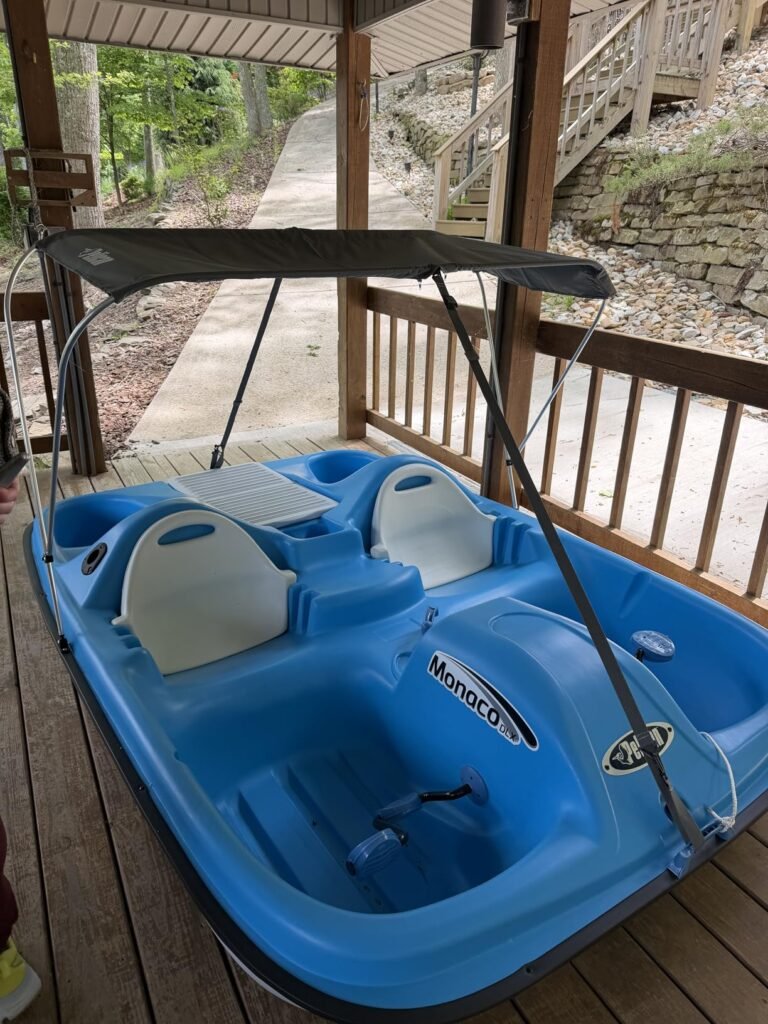
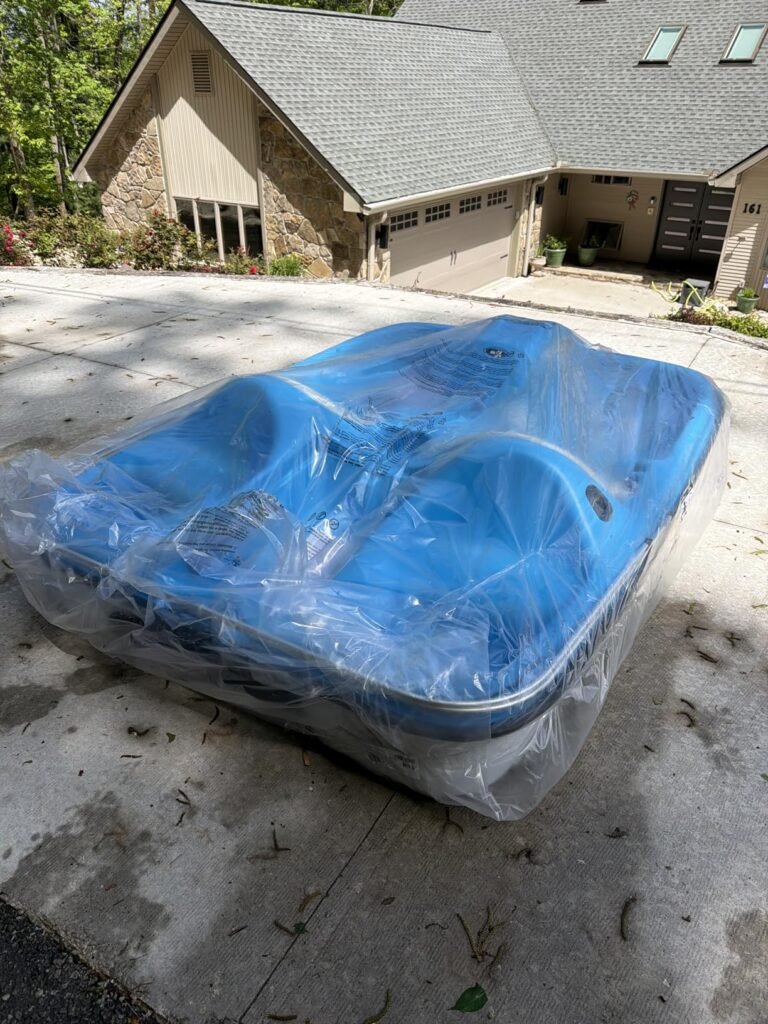
While non-traditional for serious anglers, the Pelican Monaco Pedal Boat offers a unique, stealthy approach to fishing calm lakes and slow-moving rivers. The human-powered pedal drive is entirely silent, allowing you to slip over shallow weed beds and into tight coves without the humming vibration of a trolling motor spooking the fish.
We may earn a commission when you buy through this link, at no additional cost to you.
Pelican has modified this standard recreational design into an “Angler” edition by adding two flush-mount rod holders behind the rear seats. This allows you to troll a line slowly while pedaling. It also features a built-in cooler storage compartment with solid covers, freeing up deck space that would otherwise be taken by a bulky plastic cooler.
Comfort and sun protection are major advantages here. The foldable canopy shields the pilot from intense midday UV rays, allowing for longer, more comfortable fishing sessions. The molded seats feature adjustable backrests to support your posture while pedaling, and with a 775-pound weight capacity, you can safely bring a partner and a lot of tackle.
In clear, shallow water, fish are highly sensitive to unnatural noises and vibrations echoing through the hull. A pedal-driven mechanism creates a slow, rhythmic churning that blends into natural water noise much better than the high-pitched whine of an electric prop, allowing you to get closer to easily spooked species like shallow-water bass.
The obvious limitation is speed and current capability. Pedaling a wide, blunt-nosed boat against a strong river current or high wind is exhausting and largely ineffective. It is also quite wide and heavy, requiring a trailer or a large truck bed for transport. For families living on a calm lake who want a quiet, gas-free vessel that doubles as a fishing platform, it is a fun, low-maintenance option.
Large lakes with heavy boat wakes or rivers with moderate-to-fast currents.
We may earn a commission when you buy through this link, at no additional cost to you.
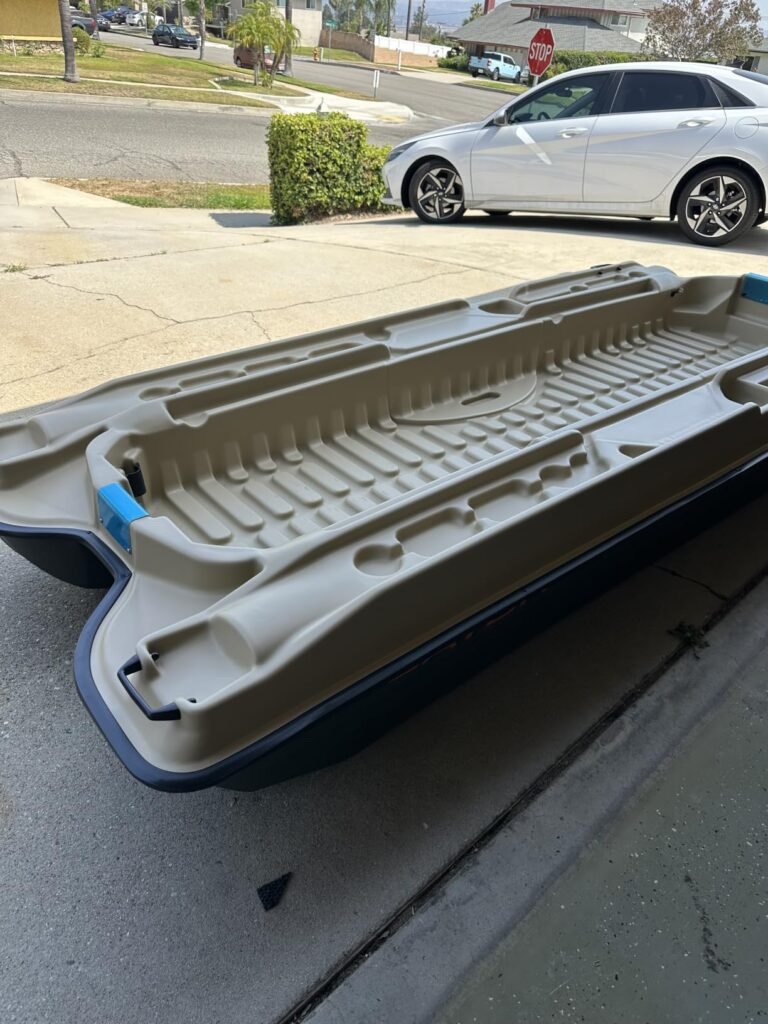
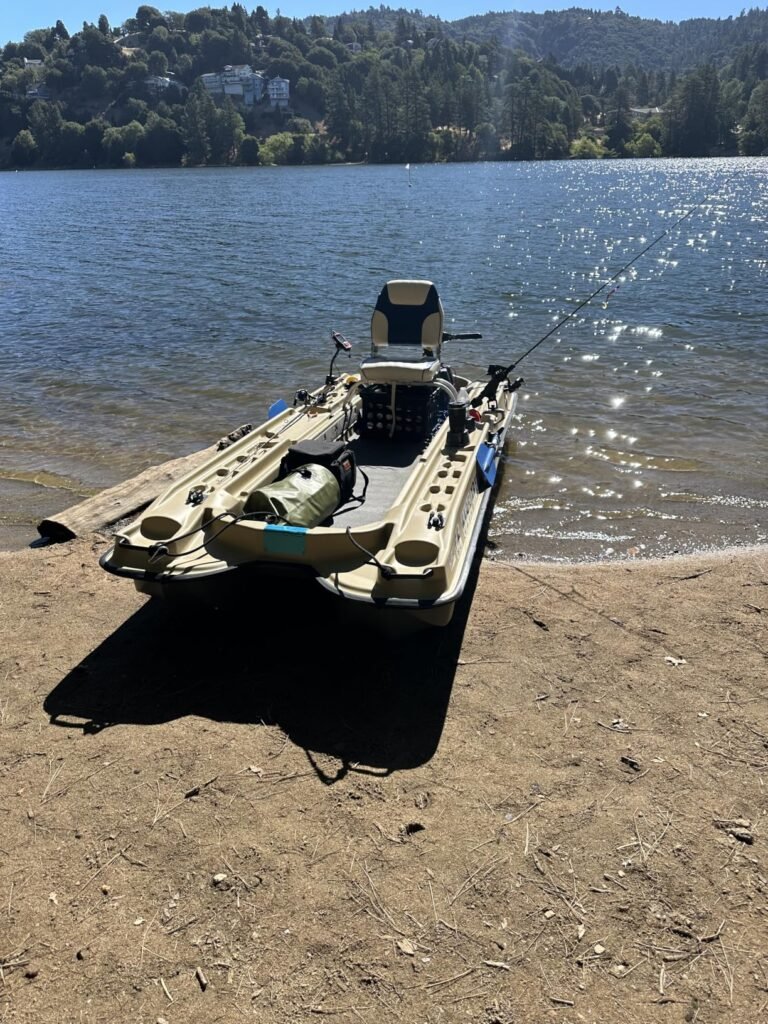
The standard edition of the Pelican Bass Raider 10E offers the exact same highly stable, twin-pontoon hull as the premium Ergo360 model, but with a slightly simpler seating arrangement. It remains an exceptional platform for two anglers who want to stand up, cast, and reel without feeling like the boat is going to tip over.
We may earn a commission when you buy through this link, at no additional cost to you.
Crucially, this model retains the pre-wired 12V electrical outlet. This feature alone saves hours of frustrating DIY wiring work, allowing you to plug your trolling motor into the transom and connect your marine battery securely inside the hull. Multiple built-in storage compartments and drink holders keep small gear organized and off the deck, reducing tripping hazards.
The seats on this model fold down flat and slide along tracks, allowing you to balance the weight of the boat perfectly depending on whether you are riding solo or with a partner. They also swivel 360 degrees. However, they lack the advanced ergonomic contouring found on Pelican’s premium Ergo360 chairs, which you may notice after six hours on the water.
Unlike a V-hull that cuts through the water, a twin-pontoon hull pushes water. If too much weight is in the front, the bow will plow into the waves, killing your speed and splashing water onboard. The sliding track seats on this model allow you to shift your body weight backward, raising the bow and drastically improving the efficiency of your trolling motor.
Like all twin-pontoon models, the wide, blocky hull creates drag, meaning it will not move quickly with a small trolling motor. It is also heavy and bulky, equipped with four carrying handles specifically because it requires two people to lift it. If you want the legendary stability of the Bass Raider at a slightly lower price point, this standard model is a highly reliable choice.
Anglers seeking high-speed transit across large, choppy lakes.
We may earn a commission when you buy through this link, at no additional cost to you.
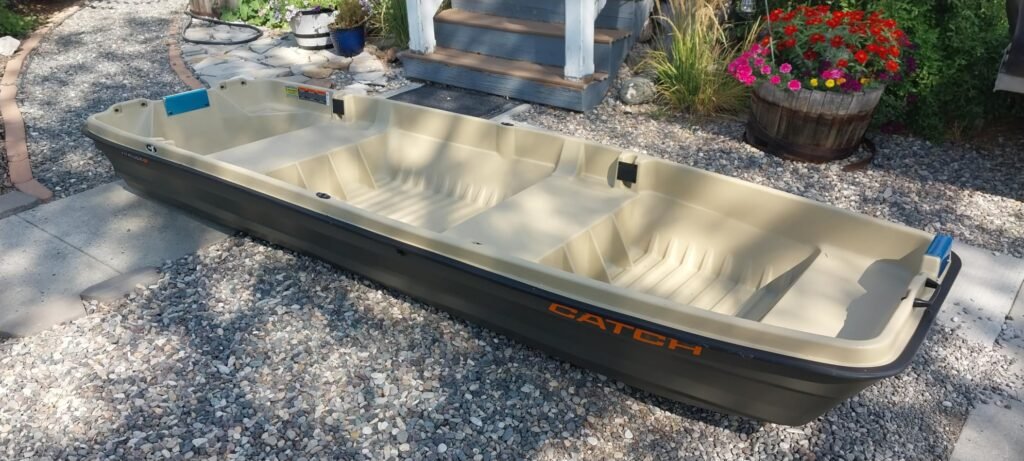
The Pelican Catch Intruder 12 is structurally very similar to the standard Khaki Intruder model, built from the same impact-resistant RAM-X material that defines Pelican's lineup. It utilizes a flat-bottom jon boat design that excels in shallow water, allowing you to access remote fishing spots without scraping the hull on submerged logs.
We may earn a commission when you buy through this link, at no additional cost to you.
It features the necessary hardware for motorized propulsion, sporting both a bow trolling mount and a stern mount rated for a gas motor up to 6 HP. The 36 cubic feet of interior cargo space and 420-pound weight capacity are perfectly adequate for a solo angler loaded down with gear or two adults packing light.
Despite these solid specifications, buyers must pay attention to the unusually low 2.4-star rating. While the supplied data does not detail specific customer complaints, low ratings on simple plastic hulls often stem from shipping damage, missing hardware (like drain plugs), or dissatisfaction with the rigid, uncomfortable built-in bench seats that do not swivel.
Many anglers who purchase basic jon boats immediately drill into the molded bench seats to install aftermarket swivel mounts and padded marine chairs. This DIY upgrade drastically improves all-day comfort, but you must ensure you seal any drilled holes with marine-grade silicone to prevent water from slowly seeping into the hull’s internal floatation foam.
If you are looking for a basic, rugged hull to customize yourself with aftermarket swivel seats and padded decking, the foundation here is solid RAM-X plastic. However, given the low owner feedback score, buyers should proceed with caution and inspect the boat carefully upon delivery for any structural compromises or missing components.
Buyers who want a plush, ready-to-fish boat with excellent customer feedback right out of the box.
We may earn a commission when you buy through this link, at no additional cost to you.
Selecting the right small fishing boat comes down to matching the hull design to your local waterways and your vehicle’s transport capacity. A boat that performs perfectly on a calm, shallow pond might be dangerous on a large, windy lake, and a boat that is too heavy to load will simply sit in your garage. This guide breaks down the essential factors you should evaluate before buying.
The shape of the hull dictates how the boat interacts with the water. Twin-pontoon hulls, like the Pelican Bass Raider series, feature two distinct outer hulls with a raised center. This design offers incredible lateral stability. You can stand on the edge of the boat, lean over to net a fish, or cast heavily without the boat tipping dangerously. The trade-off is that twin pontoons create a lot of drag, meaning they are slow and require more battery power to push through the water.
Flat-bottom jon boats, like the Pelican Intruder 12, distribute weight across a wide, flat surface. This gives them a very shallow draft, allowing you to slide through inches of water to reach backwater coves. They cut through the water more easily than pontoons, making them faster with small motors. However, they are more prone to tipping if you suddenly shift your weight to one side.
If your primary goal is standing up to cast for bass, prioritize a twin-pontoon hull for maximum stability. If you need to navigate very shallow, weed-choked water or want better speed with a small motor, a flat-bottom jon boat is the better tool.
A boat’s weight and dimensions define how you will get it to the water. Hard plastic boats 10 to 12 feet long usually weigh between 100 and 150 pounds. While two people can lift them using the carrying handles, you will need a pickup truck with the tailgate down or a small utility trailer to transport them safely. Sliding a 150-pound boat onto the roof of an SUV solo is a recipe for scratched paint and a strained back.
If you drive a sedan or a compact SUV, inflatable boats or folding modular boats are your best options. The INTEX Excursion 5 deflates to fit into a trunk, while the Folding Modular Jon Boat breaks down into rigid pieces that stack inside a cargo area. Inflatables are light enough for one person to carry to the shoreline, drastically expanding where you can launch.
Do not buy a heavy twin-pontoon boat unless you have a clear plan for loading it into a truck or trailer. If you often fish solo, prioritize lightweight inflatables or invest in a wheeled kayak cart to pull heavier boats down to the launch ramp.
Rowing a heavy boat all day cuts into your fishing time. Most rigid fishing boats feature a reinforced stern (rear) transom designed to hold a small gas outboard or an electric trolling motor. The maximum horsepower rating is usually between 3 HP and 6 HP; exceeding this can crack the plastic hull or cause the bow to flip backward under acceleration.
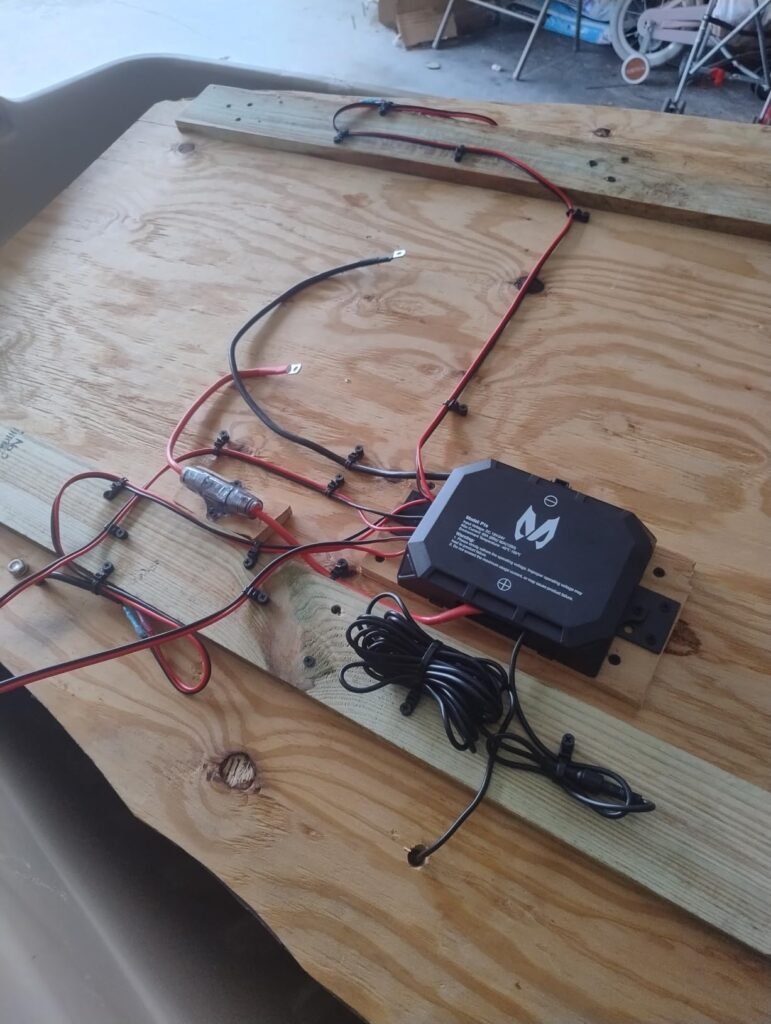
Wiring an electric motor on a small boat can be messy, with battery cables running exposed across the deck where they can trip you or snag hooks. Boats like the Bass Raider 10E solve this by being ‘pre-wired.’ They feature internal wiring with a plug port at the transom, allowing you to plug in your motor cleanly and keep the heavy marine battery tucked safely away in a designated compartment.
If you plan to use an electric trolling motor immediately, a pre-wired boat is worth the extra upfront cost. If you buy a standard boat, plan to buy marine-grade cable ties and battery boxes to manage the wiring safely.
Every boat lists a maximum weight capacity, but loading a boat to its absolute maximum is dangerous and uncomfortable. A boat rated for 600 pounds might technically hold two 250-pound adults and a 100-pound battery, but it will sit very low in the water, draft poorly, and risk taking on water over the bow if a wake hits it.
When calculating your needed capacity, add up the weight of the passengers, the outboard motor, a heavy 12V marine deep-cycle battery (which can weigh 60 pounds alone), a cooler full of ice, and all your tackle. You generally want your total gear and passenger weight to sit at roughly 70 to 80 percent of the boat’s maximum capacity to ensure it still handles well and responds quickly to steering.
For solo anglers, a 400-pound capacity is usually fine. For two adults fishing with an electric motor and a cooler, look for boats with at least a 600-pound to 800-pound capacity to maintain a safe, dry ride.
Sitting on a hard plastic bench for six hours will ruin your lower back. Basic jon boats often feature molded bench seats. While these keep costs down and provide structural rigidity to the hull, they are terrible for long trips. Anglers often have to bolt aftermarket swivel seats onto these benches to make them usable.
Premium small boats feature elevated, track-mounted swivel seats. A 360-degree swivel allows you to turn around to operate the tiller handle on your motor or cast off the back of the boat without twisting your spine. Track mounts allow you to slide the seat forward or backward to distribute weight evenly, which is critical for keeping the bow level when running a motor.
Do not underestimate the value of a good seat. If the boat you want has molded benches, factor the cost of aftermarket swivel seats and mounting hardware into your initial budget.
Rigid boats from brands like Pelican are often made from proprietary high-density polyethylene (like RAM-X). This material is slightly flexible, allowing it to absorb impacts from submerged rocks and boat ramp concrete without shattering. It is highly resistant to UV degradation, meaning it will survive years of outdoor storage without becoming brittle.
Inflatable boats rely on PVC. High-end inflatables, like the BRIS 14.1ft, use 1100 Denier PVC with polyester mesh support, which feels as thick as a commercial whitewater raft and strongly resists hooks and branches. Budget inflatables use thinner PVC that is more susceptible to punctures and seam blowouts if left fully inflated in the hot sun.
If you fish rivers with sharp submerged branches or rocky shores, a hard polyethylene hull is the safest choice. If you choose an inflatable, never drag it across gravel, and always carry the included repair patch kit in your tackle box.
Properly balancing your boat is the most important step before leaving the dock. Small boats are highly sensitive to weight distribution. If you place a heavy marine battery, a cooler, and a large adult all in the rear of the boat, the bow will lift violently when you apply throttle, making steering impossible and risking taking on water over the transom. Always place heavy items like batteries and anchors toward the center or front of the boat to keep the hull sitting level in the water.
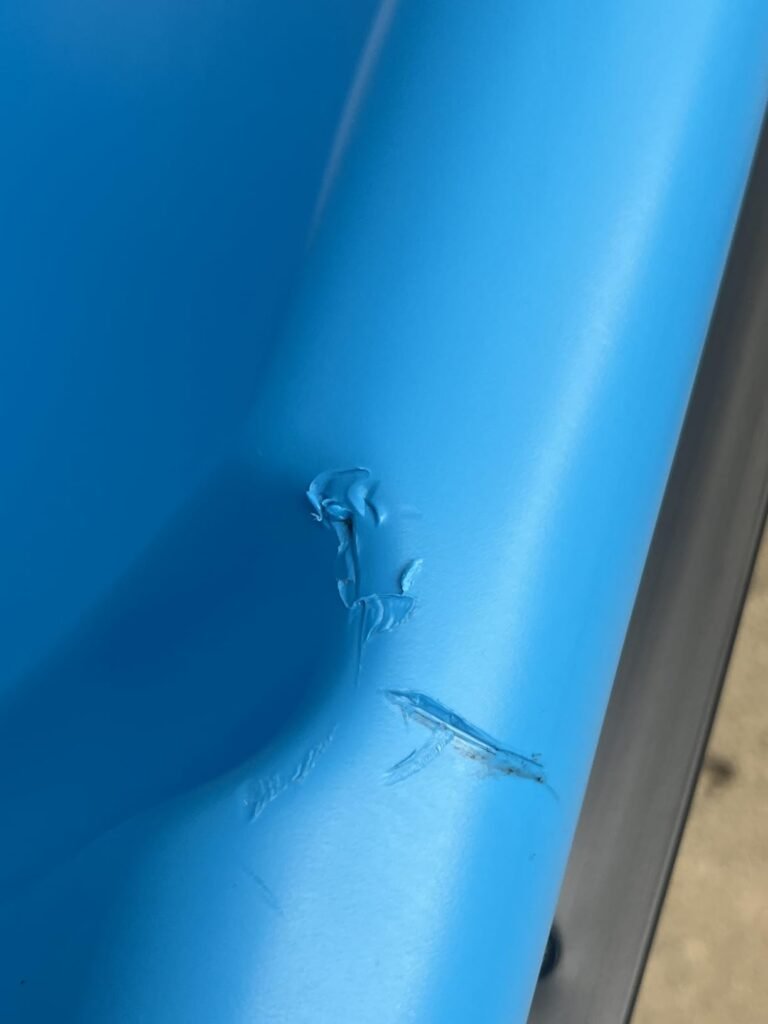
Maintenance for hard-plastic hulls is minimal but essential. Do not drag a loaded plastic boat across concrete boat ramps or asphalt, as this will quickly grind down the hull material and eventually wear a hole through the keel. When storing a plastic boat outdoors, flip it upside down on padded sawhorses or cover it with a heavy tarp. Leaving an open boat upright allows rain to fill the hull, and the massive weight of trapped water can warp the plastic permanently.
For inflatable boats, pressure management dictates longevity. Heat causes the air inside the tubes to expand significantly. If you inflate the boat to maximum pressure in the cool morning, the midday sun can over-pressurize the tubes and blow out a seam. Always release a small amount of air as the day heats up, and wash the PVC with fresh water to remove grit and fish slime before folding it tightly into its storage bag.
In most states, any boat propelled by a motor—including a small electric trolling motor—must be registered with the local Department of Motor Vehicles or Department of Natural Resources. If you rely purely on oars or pedals, registration is often not required, but you must check your specific state's boating regulations before hitting the water.
Standing up is generally safe in twin-pontoon boats like the Pelican Bass Raider because the outer hulls provide extreme lateral stability. However, standing in a narrow, flat-bottom jon boat or a soft-floor inflatable is much riskier and can easily cause you to lose your balance if a wake hits the boat unexpectedly.
For 10-to-12-foot plastic or inflatable boats, a 12-volt electric trolling motor with 30 to 40 pounds of thrust is usually perfect. It provides plenty of speed to move the boat against light winds and currents without draining a standard marine battery too quickly.
Commercial-grade inflatables made from 1100 Denier PVC can deflect most glancing hook snags, but a direct, forceful hook set can puncture any inflatable. You must exercise caution when casting, landing fish with a net, and storing sharp tackle to avoid accidentally sinking your boat.
A 12-foot boat typically requires a pickup truck with the tailgate down (secured with heavy-duty ratchet straps) or a small utility trailer. While some lightweight models can be car-topped on an SUV roof rack, you will need a helper to lift the awkward 100-plus pound hull safely overhead.
A pre-wired boat has electrical cables built directly into the hull during manufacturing. It usually features a plug-in port at the rear for your trolling motor and battery terminal connections securely housed inside the boat. This keeps messy wiring off the deck where you might trip over it.
Yes, provided the boat features a reinforced metal transom mount and you do not exceed the manufacturer's maximum horsepower rating. Most 10-to-12-foot plastic boats are rated for a maximum of 3 HP to 6 HP. Exceeding this limit can cause structural failure or cause the boat to flip.
Most hard-plastic boats feature a removable drain plug at the lowest point of the stern. When you pull the boat out of the water, remove the plug and tilt the bow upward to let rainwater and splashed lake water drain out. Always remember to securely reinstall the plug before launching.
The Pelican Bass Raider 10E with the Ergo360 seating system is the ultimate choice for anglers who want the stability of a bass boat without the trailer footprint. Its twin-pontoon design allows for safe standing, and the pre-wired electrical system makes hooking up a trolling motor effortless, ensuring you spend more time fishing and less time messing with cables.
If transport space is your primary limitation, the Folding Modular Jon Boat offers a brilliant engineering solution. By breaking down into stackable sections, it brings a massive 800-pound buoyancy rating to vehicles that cannot tow a trailer, though you must accept the trade-off of brief assembly before each launch.
For those on a strict budget or looking to access secluded ponds, the INTEX Excursion 5 provides incredible value. It holds multiple people, packs down into a sedan trunk, and includes the rod holders necessary for a casual day of trolling, proving that you do not need to spend a fortune to enjoy a great day on the water.