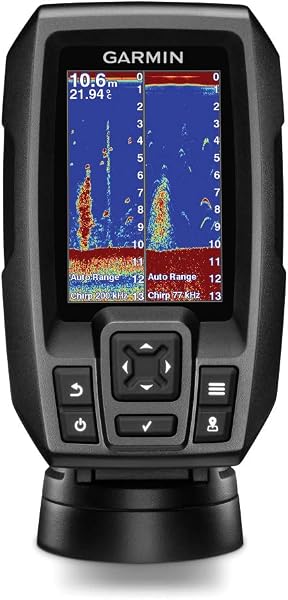
Garmin Striker 4
9.2Editor score3.5-inch display
CHIRP sonar included
Built-in GPS
IPX7 waterproof rating
Find the right fish finders for 2026. We compare 10 standout options by build quality, useful features, owner feedback, value, and everyday trade-offs.
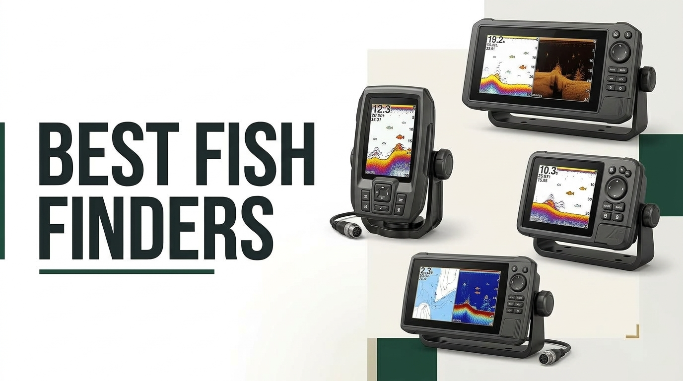
Choosing the right fish finder in 2026 comes down to balancing sonar technology, display size, GPS mapping, transducer capability, and price against how and where you actually fish. We compare 10 standout options from compact 3.5-inch units under $150 to premium 10-inch touchscreens with live sonar so you can match the right electronics to your boat, kayak, or ice shack.
The lineup spans traditional CHIRP-only units for straightforward depth and fish arch reading, Down Imaging models for detailed structure below the boat, Side Imaging systems for scanning wide swaths of water, and cutting-edge live sonar that shows fish moving in real time. Each technology serves different fishing styles and price points.
Before diving into the reviews, think about your typical water depth, boat size, and whether you need mapping features or just basic fish detection. Kayak and ice anglers benefit from compact portable units. Bass boat owners often want Side Imaging and GPS chartplotters. The reviews and buying guide below break down these trade-offs in plain language.
We compared 10 fish finders using the details that actually help an angler decide: sonar technology (CHIRP, Down Imaging, Side Imaging, Live), screen size and resolution, GPS mapping and chartplotter capability, transducer type and depth range, mounting flexibility, connectivity options like Wi-Fi and Bluetooth, ease of installation, waterproof rating, and overall value. The notes focus on practical trade-offs so each pick connects to how anglers actually locate structure, track bait, and mark waypoints on the water.
Compare key features, scores, and current prices side by side. A shorter feature list means fewer details were available, not necessarily fewer capabilities.




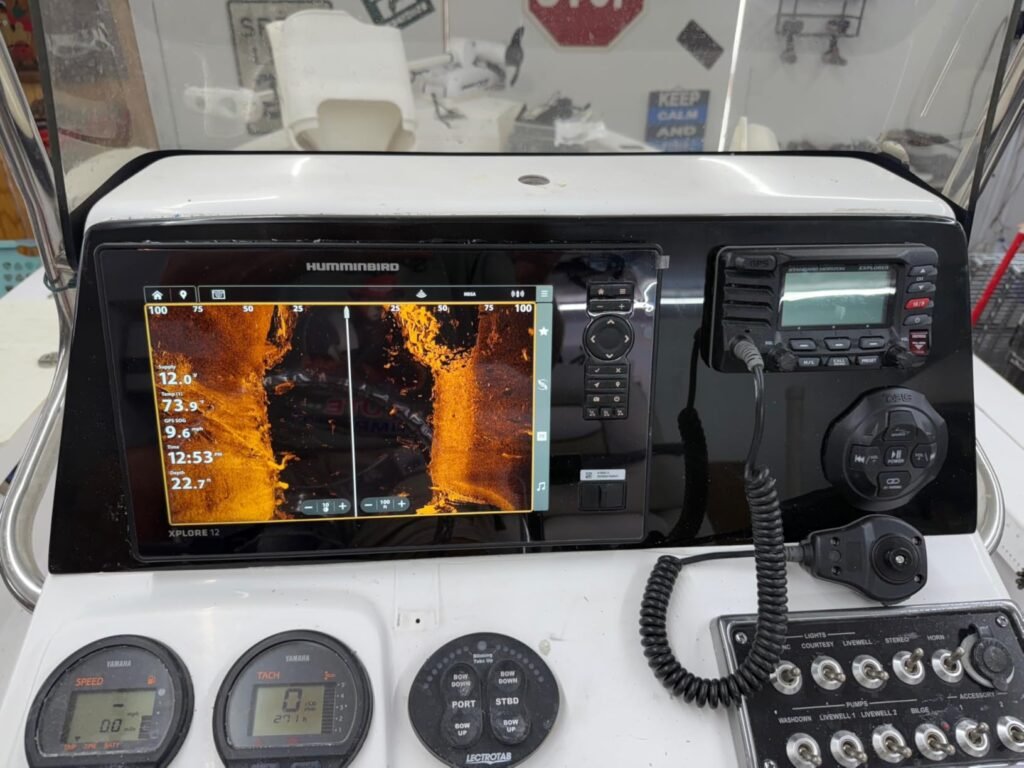
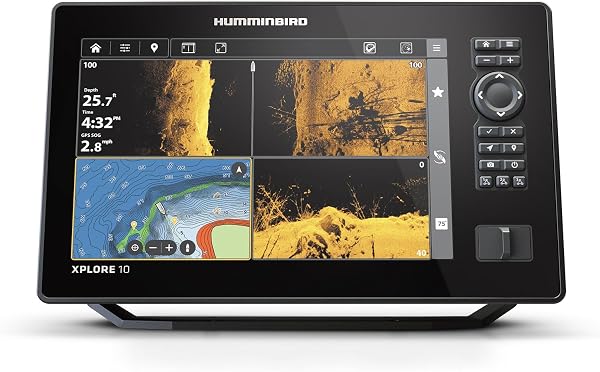
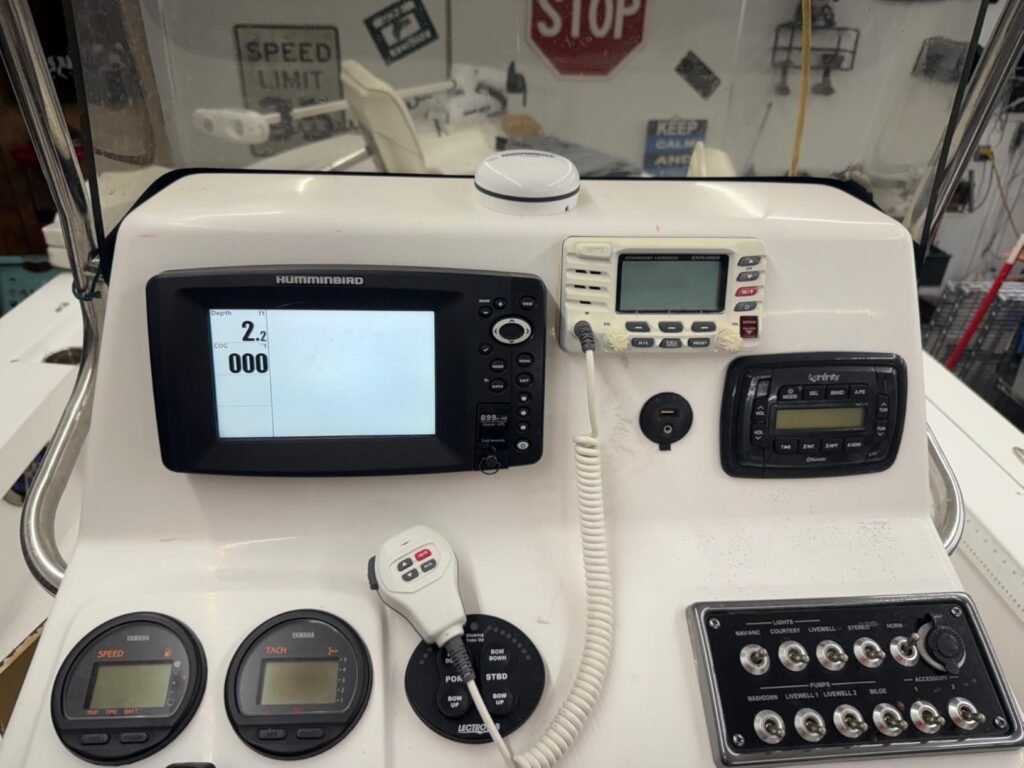
The Humminbird XPLORE is the flagship pick for tournament anglers and serious boat owners who want the absolute best sonar performance and mapping integration available. The 10-inch HD touchscreen is spacious enough to run multiple sonar views simultaneously without cramping any single panel, and dual touchscreen plus keypad controls ensure reliable operation in any weather condition.
We may earn a commission when you buy through this link, at no additional cost to you.
MEGA Side Imaging+ and MEGA Down Imaging+ both feature enhanced 200-foot range on each side, doubling the coverage area of standard MEGA Imaging. This lets you scan larger areas of water faster during pre-fishing and cover more potential structure in a single pass. Dual Spectrum CHIRP handles traditional fish arch detection with the precision that serious anglers demand.
The included LakeMaster and CoastMaster VX map card covers US and Canada regions with the detailed mapping features that tournament fishing demands. AutoChart Live extends coverage for waters not on the preloaded charts. One-Boat Network integration links the XPLORE with Minn Kota trolling motors and Cannon downriggers for coordinated boat control, while high-speed Ethernet and NMEA 2000 networking connect multiple displays and accessories.
One-Boat Network is Humminbird’s ecosystem that links your fish finder with compatible Minn Kota trolling motors, Cannon downriggers, and other accessories through Bluetooth and Ethernet. You can control your trolling motor from the fish finder screen, set precise anchor points on GPS coordinates, and coordinate downrigger positioning with sonar readings. This integration transforms your electronics from separate tools into a coordinated fishing system that saves time and improves precision.
This fish finder is the strongest pick for tournament anglers, guide services, and serious enthusiasts building a complete boat electronics package. The transducer is sold separately, so factor that into your total investment. Casual weekend anglers will find the XPLORE overkill for their needs. For those building a premium fishing electronics system, this unit delivers no-compromise performance.
Casual weekend anglers or those on tight budgets who do not need premium features.
We may earn a commission when you buy through this link, at no additional cost to you.
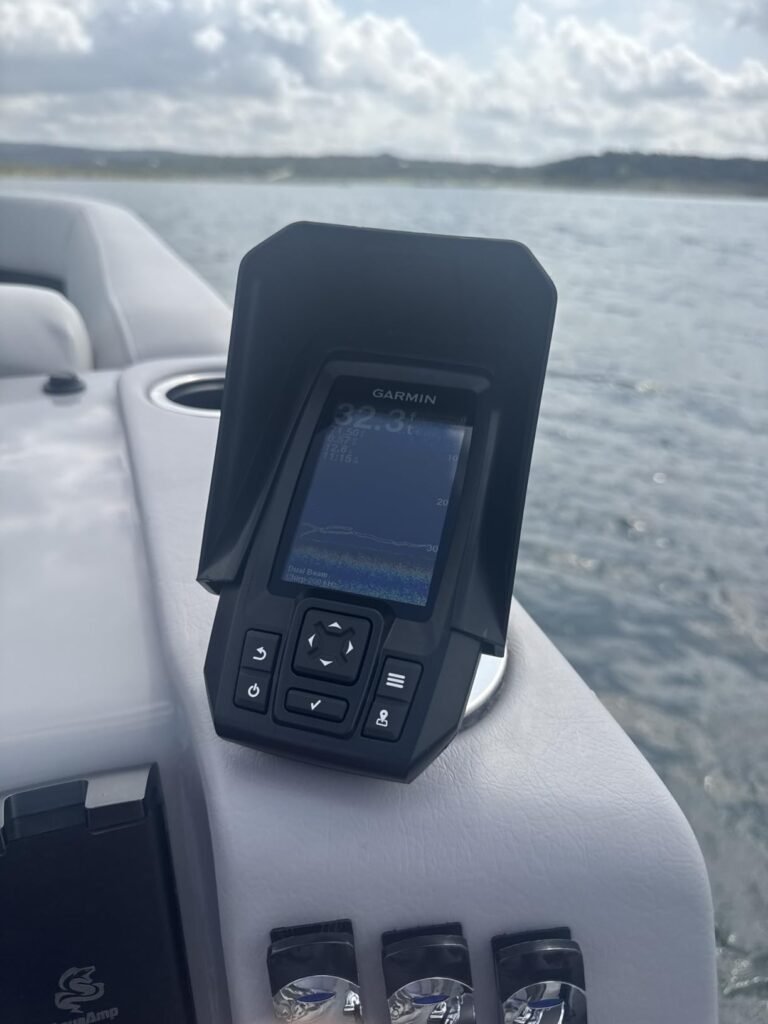
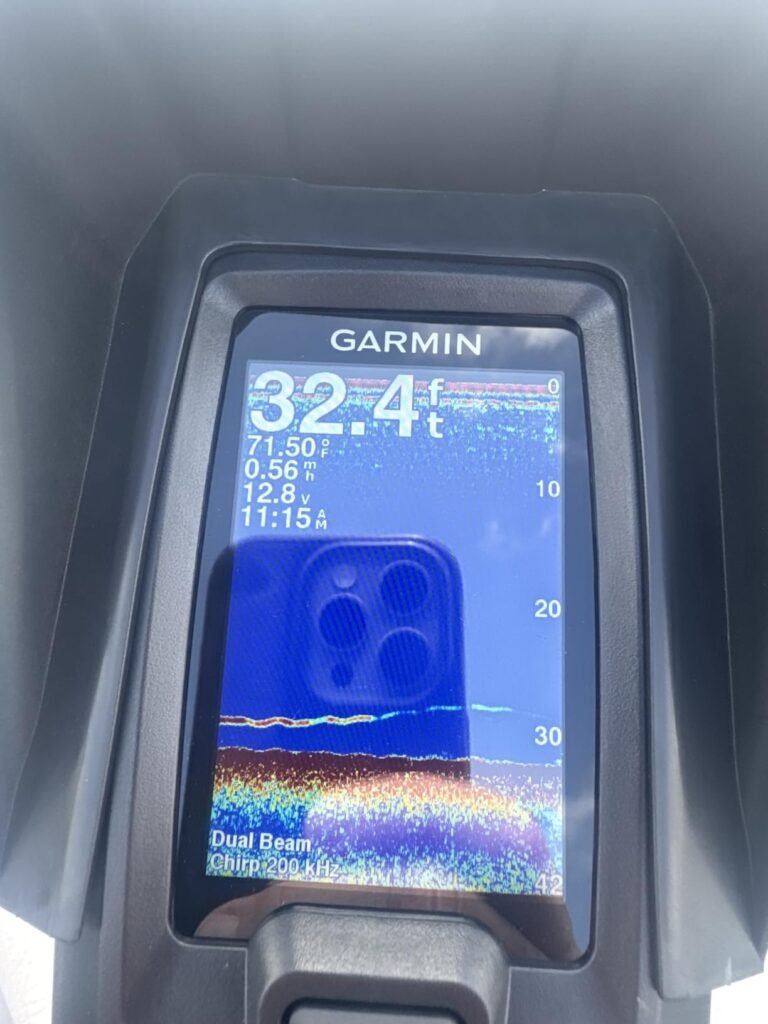
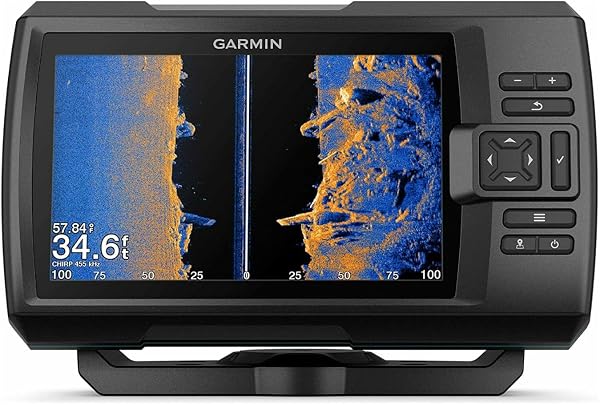
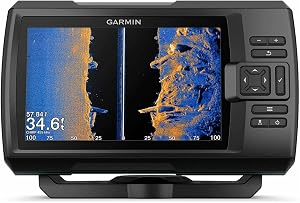
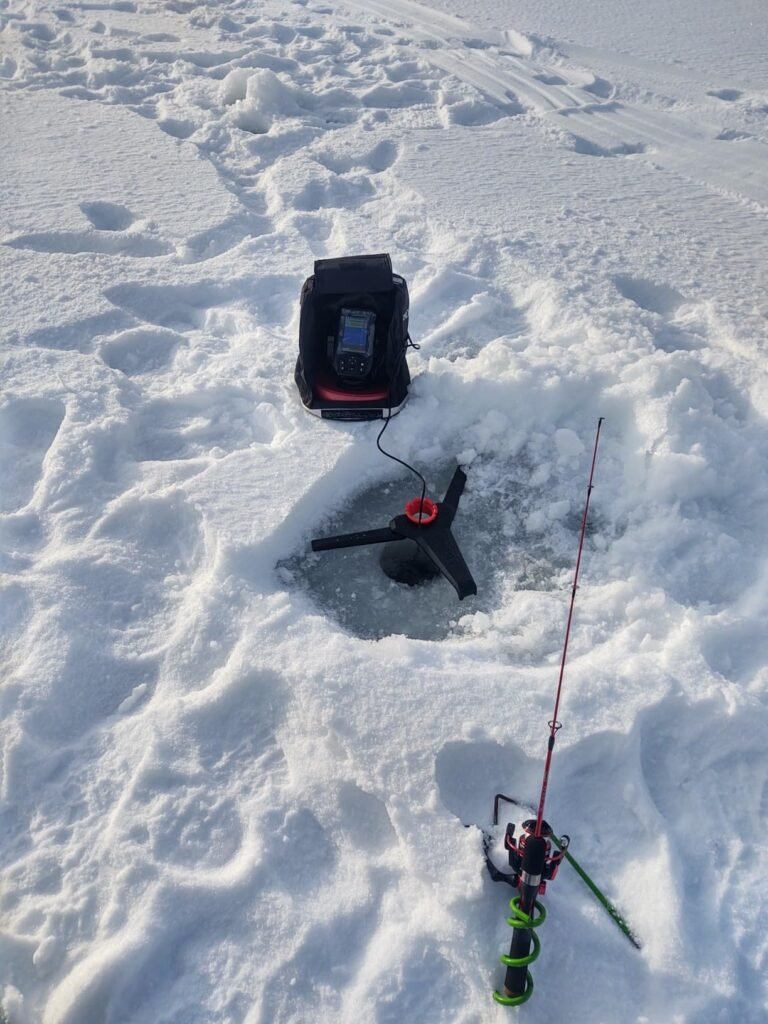
The Garmin Striker 4 has earned its reputation as the go-to entry-level fish finder because it delivers genuine CHIRP sonar and built-in GPS at a price that rivals bare-bones units without either feature. It is the smart pick for kayak anglers, small boat owners, and beginners who want to graduate from guessing to actually seeing what is beneath their boat without spending hundreds of dollars.
We may earn a commission when you buy through this link, at no additional cost to you.
CHIRP sonar sends a continuous sweep of frequencies rather than a single fixed pulse, which produces crisper fish arches and better target separation than older single-frequency sonar. ClearVu scanning sonar adds near-photographic images of structure below the boat. Together these give you a clear picture of bottom composition, submerged trees, and fish holding tight to cover, all on a compact 3.5-inch display.
The built-in GPS is the sleeper feature that makes this unit genuinely useful for repeat trips. You can mark waypoints on brush piles, drop-offs, and productive spots, then navigate back to them on future outings. A built-in flasher mode displays sonar data in the traditional round dial format that ice anglers and vertical jiggers prefer. The IPX7 waterproof rating handles rain and splashes without concern.
Traditional single-frequency sonar sends one pulse and reads the return, producing basic depth and general fish arch shapes. CHIRP sonar sweeps continuously through a range of frequencies, gathering much more information about each object it hits. The result is clearer fish arches, better separation between fish that are close together, and more accurate depth readings. Finding CHIRP on a sub-$150 unit like the Striker 4 is a genuine value that older or cheaper competitors cannot match.
This fish finder is the strongest pick for anyone shopping under $150 who wants proper CHIRP sonar and GPS waypoint capability. Kayak anglers appreciate the small size and low power draw. If you fish from a large boat and want a big screen or Side Imaging, look at higher-tier options. For the price, the Striker 4 delivers exceptional value that has held up for years.
Large boat owners who want a bigger screen or Side Imaging capability.
We may earn a commission when you buy through this link, at no additional cost to you.
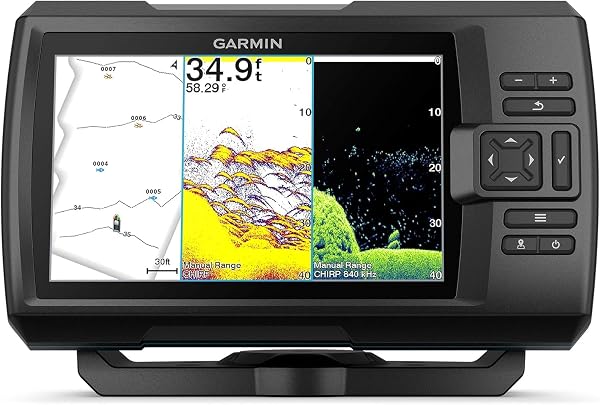
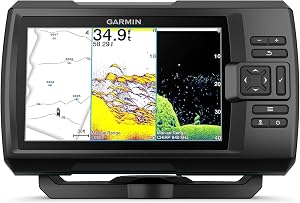
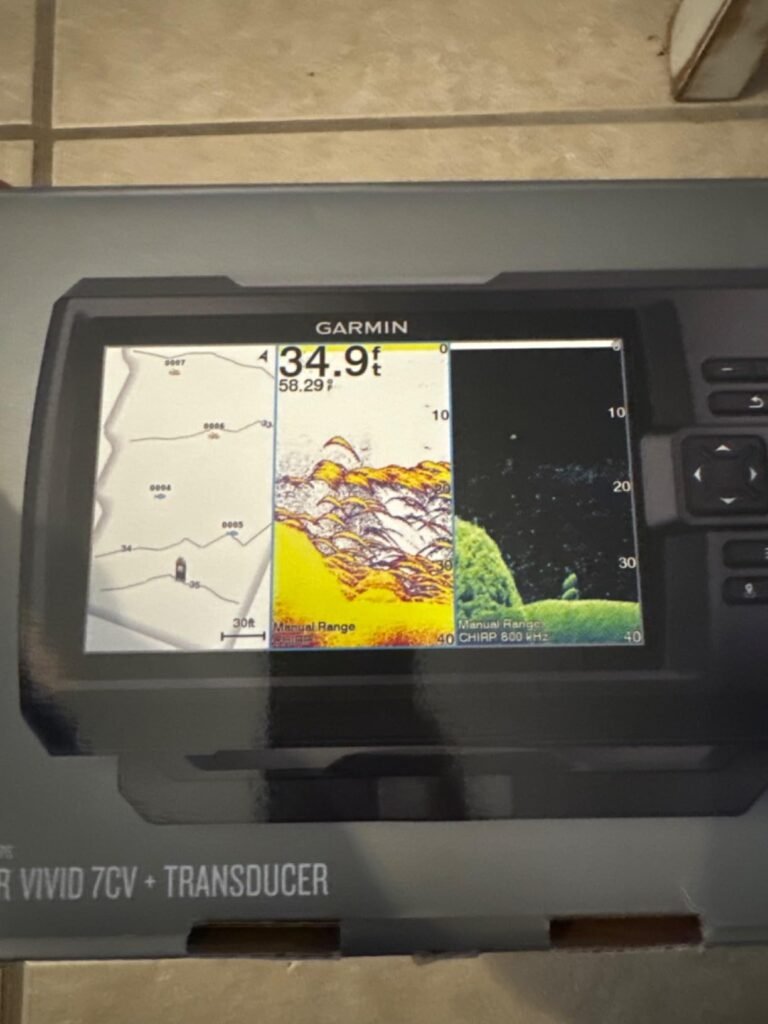
The Garmin Striker Vivid 7cv steps up the display size to 7 inches while adding vivid scanning sonar color palettes that make distinguishing fish from structure noticeably easier. The larger screen is a real upgrade for boat owners who found the 4-inch and 5-inch units too small to read at a glance while running the trolling motor or working a shoreline pattern.
We may earn a commission when you buy through this link, at no additional cost to you.
The included GT20 transducer supports both traditional Garmin CHIRP sonar and CHIRP ClearVu scanning sonar, giving you flexibility between wide-area fish detection and detailed structure imaging directly below the boat. Vivid color palettes let you choose from several color schemes that emphasize contrast, helping you spot subtle differences in bottom hardness, vegetation, and suspended fish that muted palettes might blur together.
Wi-Fi connectivity connects the unit to the ActiveCaptain smartphone app, which enables waypoint transfer, software update notifications, and access to the Garmin Quickdraw Community for user-shared depth contours. Built-in Quickdraw Contours mapping lets you create custom 1-foot contour maps of any body of water as you fish, which is invaluable for finding productive depth changes on lakes without commercial chart coverage.
Quickdraw Contours is Garmin’s feature that automatically creates 1-foot contour maps as you drive around a body of water. Every time your boat crosses a new location, the unit records depth and builds a personal map that gets more detailed with each pass. This is especially valuable on small lakes, farm ponds, and reservoirs that lack commercial chart coverage. Over time you build a highly detailed picture of the water’s structure that helps you find productive fishing zones.
This fish finder fits mid-size boat owners who want a spacious display, custom mapping capability, and smartphone integration without stepping up to the premium tier. If you already own detailed chart cards or want Side Imaging, consider a Humminbird Helix 7 G4 instead. For value-focused anglers who want a big screen and useful mapping, the Vivid 7cv delivers strong all-around performance.
Anglers who need preloaded detailed lake charts out of the box.
We may earn a commission when you buy through this link, at no additional cost to you.
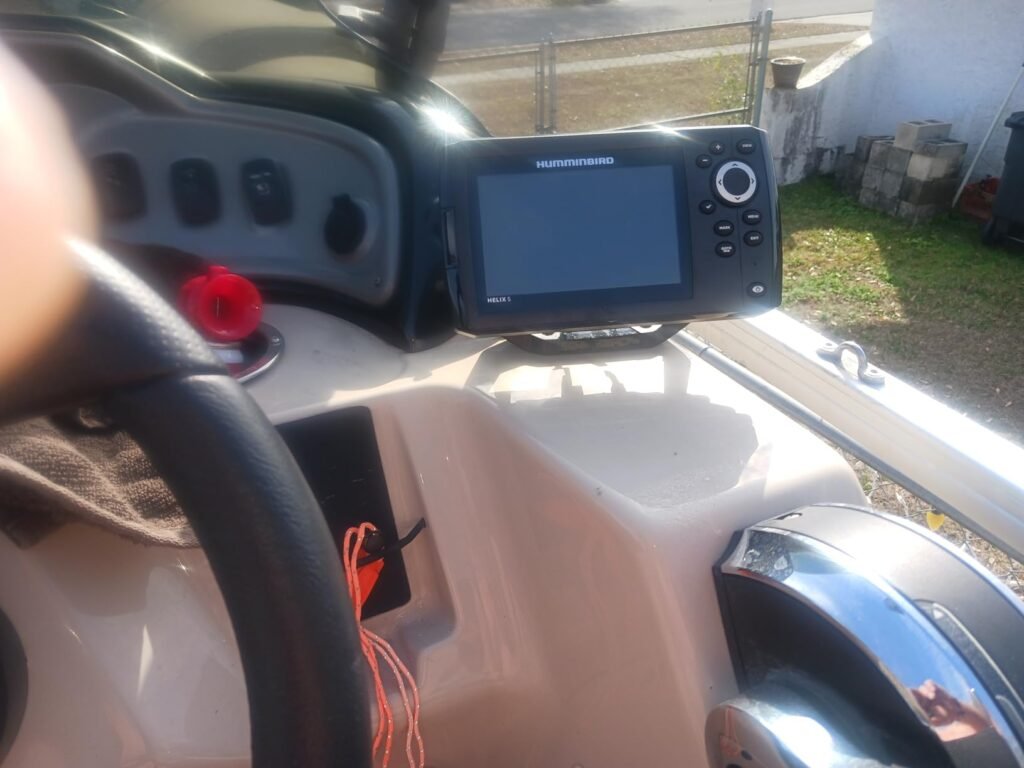
The Humminbird Helix 5 CHIRP GPS is a strong pick for anglers who want a proper chartplotter with preloaded maps rather than starting from scratch. The Humminbird Basemap covers more than 10,000 lakes and the entire continental US coastline out of the box, so you can navigate to fishing spots and identify depth contours the first day you install the unit.
We may earn a commission when you buy through this link, at no additional cost to you.
Dual Spectrum CHIRP sonar is Humminbird’s approach to CHIRP that offers Wide Mode for maximum area coverage and Narrow Mode for detailed target separation on specific spots. The low-Q transducer produces precise 2D target separation, meaning fish holding close together appear as distinct arches rather than a blurred blob. This helps you distinguish schools of bait from individual predators lurking below.
AutoChart Live is the standout mapping feature that creates real-time depth contour maps as you fish, with 8 hours of built-in recording. If you regularly fish waters not fully covered by the Basemap, this feature builds a detailed personal chart over time. LakeMaster, CoastMaster, and Navionics chart card compatibility means you can add premium chart coverage for any region you want to fish seriously.
Preloaded Humminbird Basemap coverage saves you both money and setup time compared to buying a bare unit and adding chart cards separately. For casual and moderate anglers fishing well-known lakes and coastal areas, the built-in coverage handles most navigation needs. Serious tournament anglers or those fishing specific regions heavily can add premium LakeMaster or CoastMaster cards for enhanced detail like 1-foot contours, boat ramps, and structure highlights.
This unit suits mid-size boat owners who prioritize mapping and traditional CHIRP fish detection over imaging technologies. Softkey button controls remain reliable in wet weather and cold conditions when touchscreens can misbehave. If you want Side or Down Imaging, step up to the Helix 5 DI or Helix 7 G4. For a solid mapping-focused fish finder at a reasonable price, this Helix 5 delivers well.
Anglers who need Side Imaging or a larger screen for detailed structure work.
We may earn a commission when you buy through this link, at no additional cost to you.
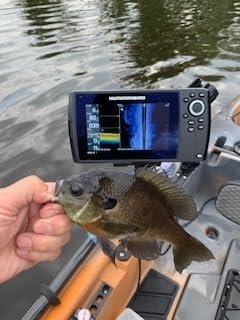
The Humminbird Helix 7 G4 is the sweet spot pick for serious anglers who want MEGA Side and Down Imaging in a compact, affordable package. It scans 125 feet on either side of your boat and 125 feet directly beneath, giving you a comprehensive view of structure, cover, and fish across a wide swath of water. That coverage transforms how efficiently you can locate productive water on unfamiliar lakes.
We may earn a commission when you buy through this link, at no additional cost to you.
MEGA Imaging delivers 3 times more detail than standard imaging sonar, which means submerged brush, rock piles, and even individual fish appear with striking clarity. The included transducer handles all three sonar technologies simultaneously, so you can run split-screen views showing MEGA Side Imaging, MEGA Down Imaging, and traditional CHIRP arches all at once for complete situational awareness.
Dual Spectrum CHIRP with Wide and Narrow modes rounds out the sonar package for fish arch reading and depth. Preloaded Humminbird Basemap covers 10,000+ lakes, and compatibility with LakeMaster, CoastMaster, and Navionics charts lets you add premium mapping for serious tournament fishing. AutoChart Live records real-time depth contours as you fish, building custom maps of any water you cover.
Side Imaging scans horizontally across the water column to either side of your boat, effectively giving you a photograph-like view of the bottom and structure without needing to drive directly over it. This is invaluable for locating scattered cover on flats, isolated rock piles on channel edges, and schools of bait suspended in open water. MEGA versions operate at higher frequencies for significantly sharper image detail than standard Side Imaging, which was already excellent.
This unit is the standout choice for bass anglers, tournament fishermen, and serious enthusiasts who want proper Side Imaging without stepping into premium 10-inch pricing. The 7-inch display balances viewing area with mounting flexibility for most boats. Beginners or budget-focused anglers should look at the Helix 5 or Striker 4 instead. For a complete imaging fish finder that punches above its weight, the Helix 7 G4 is hard to beat.
Budget-focused anglers who do not need Side Imaging or a large 7-inch screen.
We may earn a commission when you buy through this link, at no additional cost to you.
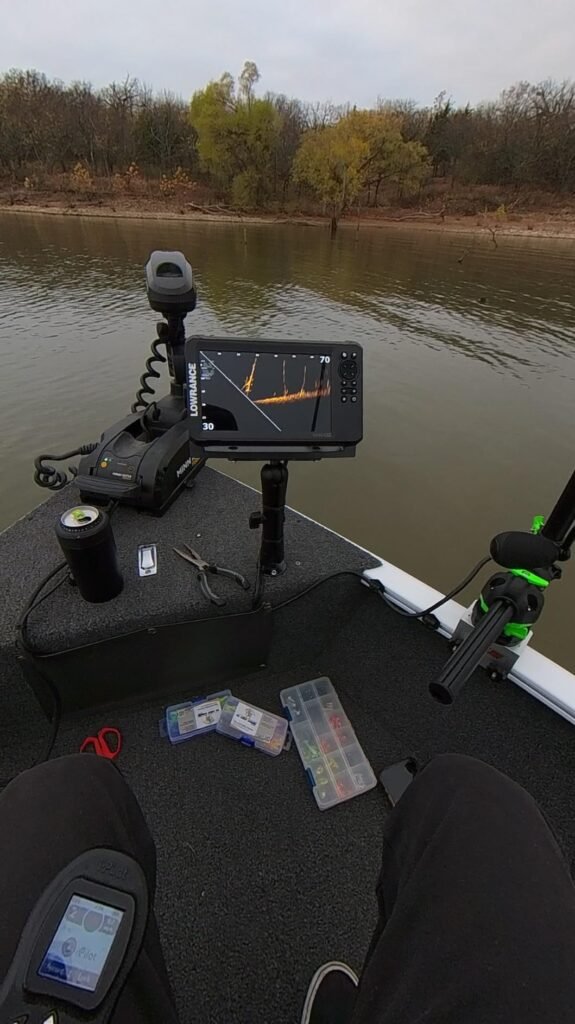
The Lowrance Eagle Eye 9 brings live sonar technology to a more accessible price point than dedicated live sonar systems, making it the pick for anglers who want to see fish move and respond to lures in real time. Live Forward and Live Down views show you not just where fish are, but how they react as your lure approaches, which fundamentally changes how you can fine-tune presentations on the water.
We may earn a commission when you buy through this link, at no additional cost to you.
The single included transducer delivers four sonar modes: Live Forward, Live Down, CHIRP sonar, and DownScan Imaging. This all-in-one approach eliminates the complexity of mounting multiple transducers and simplifies wiring on the boat. FishReveal combines CHIRP fish targets with DownScan detail to make individual fish easier to distinguish from surrounding structure and vegetation.
Preloaded C-MAP charts cover more than 17,000 US inland lakes with high-resolution detail, and Genesis Live mapping lets you create custom depth contours in real time as you fish new water. The 9-inch IPS display is large enough for detailed viewing without dominating the console, and its high-quality panel remains readable in direct sunlight. Direct transducer connection means no separate sonar module is needed.
Live Forward sonar displays what is in front of the boat in real time, showing fish, structure, and bait as they move through the water column. Live Down sonar does the same for what is directly below. Unlike traditional sonar that shows a historical scrolling view, live sonar updates continuously so you can watch fish approach your lure and either commit or turn away. This visibility transforms lure selection, retrieval speed, and presentation decisions on the water.
This unit is a strong pick for serious anglers who want the game-changing capability of live sonar without paying for a top-tier separate system. Bass anglers, walleye fishermen, and crappie enthusiasts benefit most from watching fish react to lures. Anglers who fish primarily saltwater or in fast-moving current may find live sonar less useful. For freshwater precision fishing, the Eagle Eye 9 is a powerful tool.
Casual anglers who do not need real-time fish tracking or want simpler sonar.
We may earn a commission when you buy through this link, at no additional cost to you.
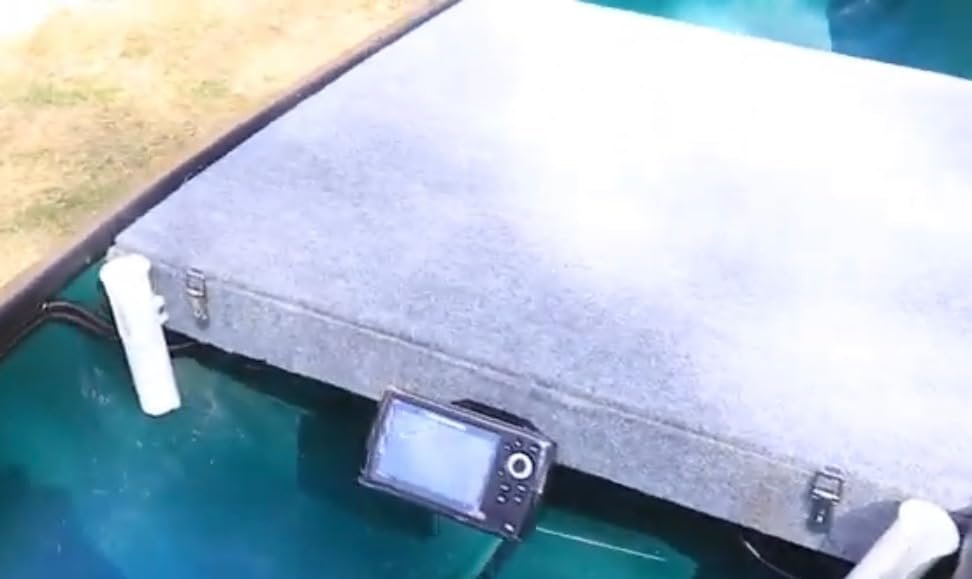
The Humminbird Helix 5 DI adds CHIRP Down Imaging to the base Helix 5 platform, giving you a clear photograph-like view of what is directly beneath the boat without stepping up to a Side Imaging unit. This is a smart middle-ground option for anglers who want more than traditional 2D sonar but do not need the wide coverage of Side Imaging.
We may earn a commission when you buy through this link, at no additional cost to you.
CHIRP Down Imaging uses digital sonar processing to filter out visual noise and clutter, producing crisp detail of bottom structure, submerged trees, brush piles, and individual fish holding tight to cover. Dual Spectrum CHIRP sonar handles traditional fish arch detection with Wide and Narrow modes, so you get comprehensive fish-finding capability plus detailed structure imaging in a single unit.
GPS chartplotter functionality includes the Humminbird Basemap with 10,000+ lakes and continental US coastlines preloaded, plus compatibility with premium LakeMaster, CoastMaster, and Navionics chart cards. AutoChart Live records real-time depth contours as you fish, building custom maps of waters not fully covered by commercial charts. The softkey menu system operates reliably in cold and wet weather when touchscreens can be temperamental.
Traditional 2D sonar produces stylized arches for fish and shows bottom composition as color gradients, which requires interpretation to understand what you are seeing. Down Imaging produces near-photograph quality views of what is directly below the boat, showing individual tree branches, rock formations, and fish shapes with visual detail. Together, the two technologies complement each other: 2D CHIRP excels at distinguishing individual fish holding at various depths, while Down Imaging clearly shows the structure they are relating to.
This unit fits anglers who want Down Imaging capability at a mid-range price point and prefer traditional button controls. It suits kayak anglers with larger craft, small boat owners, and anglers upgrading from basic units. If you need Side Imaging or a larger screen, look at the Helix 7 G4 instead. For a solid Down Imaging chartplotter under $400, the Helix 5 DI delivers strong value.
Anglers who want Side Imaging or need a larger screen for viewing detail.
We may earn a commission when you buy through this link, at no additional cost to you.
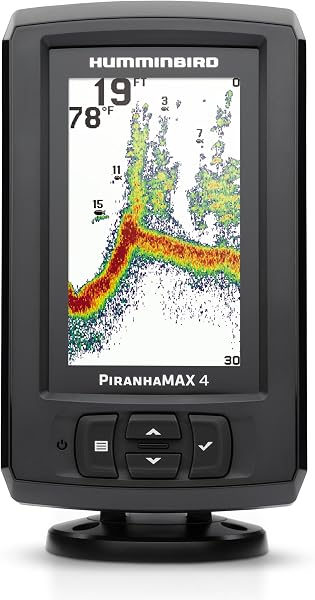
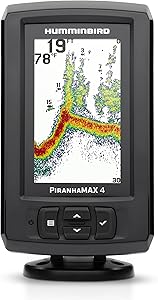
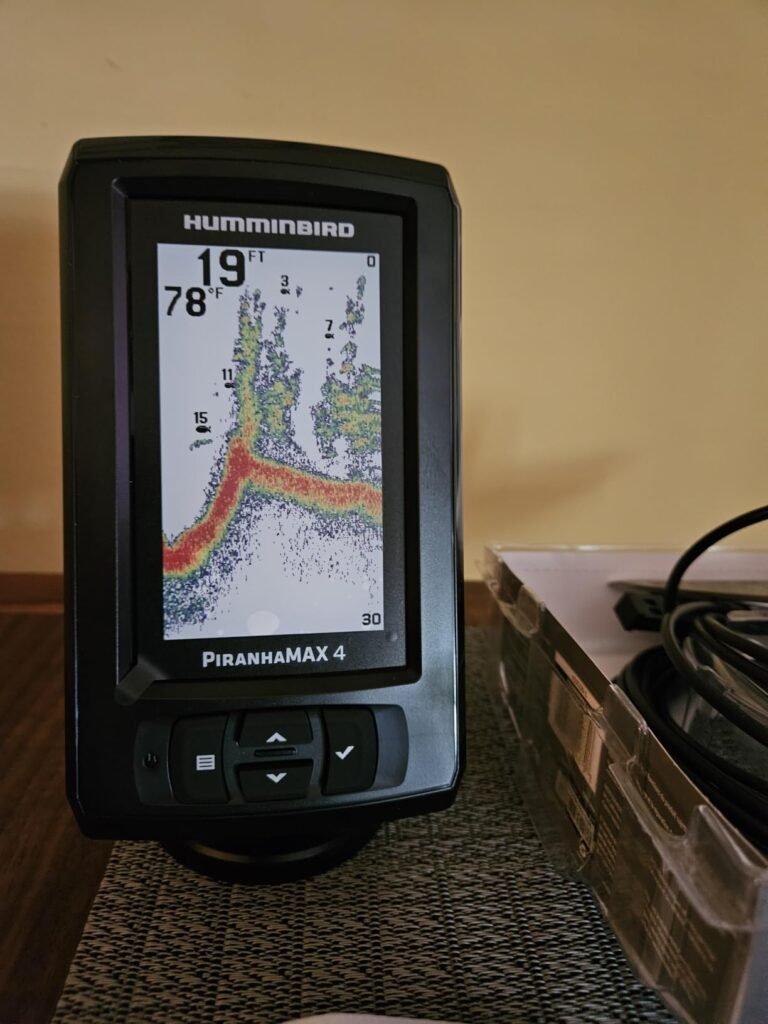
The Humminbird PiranhaMAX 4 is aimed at anglers who want a straightforward, easy-to-use fish finder without the complexity or cost of CHIRP, imaging, or GPS features. It is the pick for weekend anglers, first-time buyers, and small boat owners who want to see what is beneath the boat without a learning curve or extensive setup.
We may earn a commission when you buy through this link, at no additional cost to you.
Dual Beam sonar offers two viewing modes: a narrow beam for detailed fish detection and structure identification, and a wide beam for maximum coverage area to locate fish across a larger swath of water. This dual capability handles both scouting mode and detailed inspection with a single transducer, keeping the interface simple and the setup manageable.
The 4-inch display strikes a balance between readability and compact footprint, fitting easily on small boats, jon boats, canoes, and kayaks. The included tilt-and-swivel mount lets you position the screen at the ideal viewing angle for your fishing position. The XNT 9 28 T transom-mount transducer is straightforward to install on most small watercraft without professional help.
Not every angler needs GPS mapping and imaging technology. Casual fishermen, kids learning to fish, and small boat owners often benefit from a simple depth and fish finder without the distractions of complex menus and features. The PiranhaMAX 4 lets you quickly see water depth, bottom composition, and fish presence without setup complexity. For occasional use, a rental boat, or a starter unit, straightforward simplicity is a genuine advantage.
This fish finder fits anglers who want basic depth and fish detection without any complexity. It is a good starter unit or a secondary display for a smaller boat. Anglers who want GPS waypoint marking, mapping, CHIRP sonar, or imaging technology should invest in higher-tier options like the Garmin Striker 4 or Humminbird Helix 5. For simple, affordable fish finding, the PiranhaMAX 4 delivers.
Anglers who want GPS waypoints, mapping, CHIRP sonar, or imaging technology.
We may earn a commission when you buy through this link, at no additional cost to you.
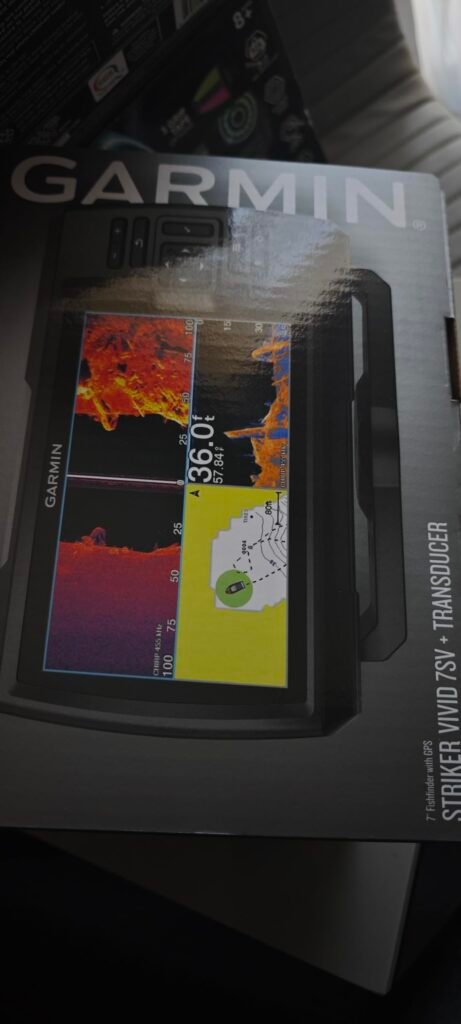
The Garmin Striker Vivid 4cv is the compact color option for kayak anglers, small boat owners, and space-conscious setups who want more visual clarity than a monochrome display. The 4-inch screen fits easily on tight consoles and yak decks while the vivid scanning sonar color palettes make it easier to distinguish fish, structure, and bottom composition at a glance.
We may earn a commission when you buy through this link, at no additional cost to you.
The included GT20 transducer delivers both traditional Garmin CHIRP sonar and CHIRP ClearVu scanning sonar, giving you flexibility between wide-area fish detection and detailed structure imaging beneath the boat. CHIRP technology produces crisper fish arches and better target separation than fixed-frequency sonar, which is a meaningful upgrade even on a compact 4-inch display.
High-sensitivity GPS lets you mark waypoints on productive spots, create routes for consistent trolling patterns, and monitor your boat speed. Quickdraw Contours mapping creates 1-foot contour maps of the water as you fish, building a personal chart over multiple trips. The tilt-and-swivel bailmount bracket adjusts viewing angle for different fishing positions, and the compact size fits mounting locations too small for larger units.
Vivid color palettes are alternate color schemes that emphasize contrast between fish, structure, and bottom composition compared to standard sonar coloring. You can choose from several palette options in the settings menu, selecting whichever scheme makes the most sense for the water conditions and your visual preferences. In murky water or under changing light conditions, switching palettes can reveal detail that was harder to spot in the default view.
This fish finder is a strong pick for kayak anglers, canoe fishermen, and small boat owners who value compact size and color clarity. It offers a meaningful upgrade over the monochrome Striker 4 with the same core features. If you need a larger screen or Side Imaging, step up to the Vivid 7cv or Helix 7 G4. For compact color CHIRP sonar with mapping, the Vivid 4cv is one of the best small-unit options available.
Anglers who need a larger screen for detailed viewing or Side Imaging capability.
We may earn a commission when you buy through this link, at no additional cost to you.
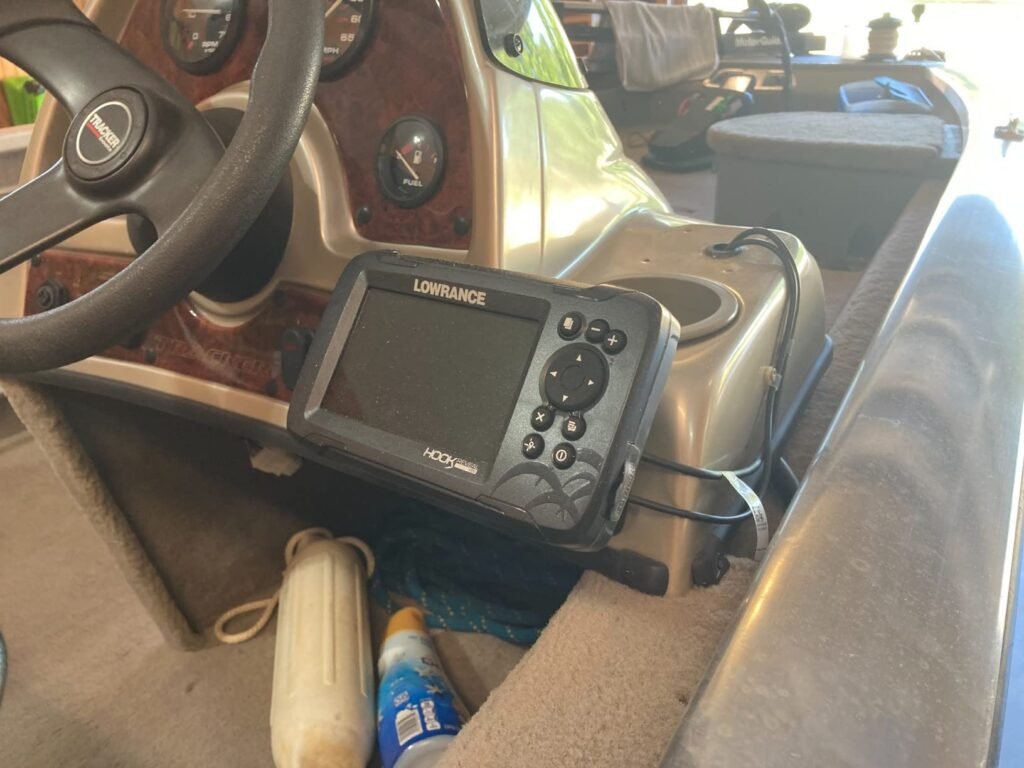
The Lowrance HOOK Reveal 5 SplitShot is a solid mid-range option for anglers who want CHIRP sonar, DownScan Imaging, and preloaded inland mapping in a single unit. The 5-inch SolarMAX display is specifically designed for high daylight visibility, remaining readable even in direct sunlight when many competing displays wash out and become hard to read.
We may earn a commission when you buy through this link, at no additional cost to you.
The included SplitShot transducer delivers both wide-angle CHIRP sonar for maximum fish-finding coverage and DownScan Imaging for detailed views of fish-holding structure beneath the boat. FishReveal technology combines the target separation of CHIRP with the high-resolution images of DownScan to make fish stand out clearly against surrounding structure, which is especially helpful in cover-heavy waters.
Preloaded C-MAP charts cover nearly 4,000 US inland lakes with high-detail depth contours, boat ramps, and points of interest. Genesis Live mapping creates custom contour maps in real time as you fish, letting you build detailed charts of waters not fully covered by the preloaded maps. Autotuning sonar automatically adjusts settings as fishing conditions change, meaning you spend more time fishing and less time tweaking menus.
Fish finder settings like sensitivity, ping speed, and color gain need adjustment as water depth, clarity, and bottom composition change throughout the day. Autotuning sonar handles these adjustments automatically in the background, keeping the display optimized for current conditions without manual intervention. This is genuinely useful for casual anglers who do not want to become sonar experts and for busy fishing days when you would rather focus on casting than menu diving.
This unit fits mid-size boat owners who fish US inland waters and value preloaded C-MAP charts specific to lake fishing. The autotuning feature is a genuine convenience for anglers who do not want to master sonar settings. The 4.2 star rating reflects some variability in owner experiences with screen brightness and setup. For anglers who fit its target profile and prioritize C-MAP inland coverage, the HOOK Reveal 5 delivers well.
Anglers fishing primarily coastal or saltwater who need marine-focused charts.
We may earn a commission when you buy through this link, at no additional cost to you.
The best fish finder for you depends on your boat type, typical water depth, and how much you want to spend on advanced features. The factors below cover the specifications that genuinely affect your on-water experience so you can prioritize what matters and avoid paying for capabilities you will not use.
Fish finders use several different sonar technologies, each with distinct strengths. Traditional 2D CHIRP sonar sends a sweeping range of frequencies and produces classic fish arches on a scrolling display. It excels at detecting fish across the water column and reading bottom composition. Down Imaging produces near-photograph views of what is directly beneath the boat, showing individual tree branches, rock formations, and fish holding tight to structure.
Side Imaging scans horizontally to either side of the boat, giving you a wide swath of coverage that reveals scattered cover, isolated structure, and schools of bait. MEGA Imaging from Humminbird operates at higher frequencies for significantly sharper detail than standard Side or Down Imaging. Live sonar, offered on units like the Lowrance Eagle Eye 9, shows fish moving in real time so you can watch how they react to your lure.
Choose CHIRP-only units for basic depth and fish detection. Add Down Imaging for detailed structure views below the boat. Step up to Side Imaging for comprehensive water coverage. Consider live sonar if you want to fine-tune presentations based on real-time fish behavior.
Fish finder screens range from compact 3.5-inch units for kayaks and jon boats up to 10-inch flagship displays for tournament boats. Small screens are easier to mount in tight spaces and consume less power, making them ideal for battery-powered setups on kayaks and small craft. Large screens let you run split-screen views showing multiple sonar modes simultaneously without cramping any single panel.
Display quality matters as much as size. High-resolution screens produce clearer imaging details, and features like SolarMAX or IPS panels maintain visibility in bright direct sunlight when standard displays wash out. Touchscreens like the Humminbird XPLORE add intuitive navigation but can be tricky with wet fingers or gloves, which is why premium units combine touchscreen with backup keypad controls.
Match screen size to your boat. Kayaks and small craft do well with 4-inch to 5-inch units. Mid-size boats benefit from 7-inch displays. Larger boats and tournament setups justify 9-inch or 10-inch screens for multi-panel views.
GPS functionality on fish finders serves two main purposes: marking waypoints on productive spots and displaying chartplotter maps for navigation. Even basic units like the Garmin Striker 4 include waypoint marking, which lets you save locations of brush piles, drop-offs, and productive fishing zones for repeat visits. This alone justifies stepping up from GPS-free units for anyone who fishes the same waters regularly.
Preloaded charts save you money and setup time compared to buying bare units and adding chart cards separately. Humminbird Basemap covers 10,000+ lakes, C-MAP charts cover 4,000 to 17,000 US inland lakes depending on the unit, and premium cards like LakeMaster, CoastMaster, and Navionics add high-detail features for serious fishing. Real-time mapping features like Quickdraw Contours, AutoChart Live, and Genesis Live create custom depth contour maps as you fish new water.
Prioritize GPS waypoint capability at minimum. Add preloaded chart coverage if you fish varied waters. Invest in real-time mapping if you frequently explore lakes without commercial chart coverage.
The transducer is the underwater component that sends sonar pulses and receives returns. Transom-mount transducers attach to the back of the boat with a bracket and work well for most fiberglass and aluminum hulls. Trolling motor mounts attach to the shaft of a trolling motor, providing steerable sonar coverage that follows wherever you point the motor. Through-hull transducers require permanent installation but deliver the cleanest signal at high speeds.
Modern all-in-one transducers like the SplitShot, GT20, and MEGA Imaging units handle multiple sonar modes from a single housing, simplifying installation and reducing hull clutter. Some premium fish finders like the Humminbird XPLORE ship without a transducer so you can choose the exact model that matches your boat and fishing style, though this adds to the total investment.
Match the transducer type to your boat. Transom-mount works for most recreational boats. Trolling motor mounts benefit anglers who fish primarily from the bow. Verify whether the transducer is included in the box when comparing prices.
Different fish finders handle different depth ranges. Entry-level units like the Garmin Striker 4 reach 1,600 feet in freshwater and 750 feet in saltwater, which is more than adequate for lake and coastal shallow fishing. Deep-water offshore anglers need units specifically designed for extreme depths with high-power transducers rated for the environment.
Saltwater use requires transducers specifically designed to handle salt corrosion and typically operates at different frequencies than freshwater units. Some fish finders are optimized for one environment over the other, so verify the intended use case matches your fishing. Freshwater anglers rarely need extreme depth capability, while saltwater fishermen should prioritize corrosion resistance and higher power output.
For most freshwater and shallow coastal fishing, standard depth ratings are more than sufficient. Deep offshore fishing demands specialized equipment beyond typical recreational fish finders.
Modern fish finders increasingly include connectivity features that extend their capability beyond standalone use. Wi-Fi connectivity, found on units like the Garmin Striker Vivid 7cv, links the fish finder to a smartphone app for waypoint transfer, software updates, and community-shared depth contours. Bluetooth enables smartphone notifications and wireless accessory control.
Networking features like NMEA 2000, Ethernet, and Humminbird One-Boat Network let you connect multiple displays, trolling motors, downriggers, and other marine electronics into a coordinated system. This is essential for serious tournament boats and boat owners building complete electronics packages. For basic single-display setups, these features are less critical.
Prioritize Wi-Fi for smartphone integration and community mapping features. Invest in networking capabilities only if you plan to expand your boat electronics beyond a single display.
Fish finders use either dedicated keypad controls, touchscreens, or both. Keypad controls remain reliable in cold weather, wet conditions, and while wearing gloves, which is why traditional anglers often prefer them. Touchscreens offer intuitive navigation and faster menu access but can be tricky with wet fingers or in freezing temperatures.
Premium units like the Humminbird XPLORE combine touchscreen with backup keypad controls, giving you the best of both approaches. Softkey controls found on Humminbird Helix units use context-sensitive buttons that adapt to whatever menu you are in, providing reliable operation without the complexity of dedicated buttons for every function.
For fishing in variable weather or cold climates, prioritize keypad or softkey controls. For calm-weather fishing where touchscreen convenience matters, touchscreen-equipped units offer faster navigation.
When installing a new fish finder, take time to mount the transducer correctly for reliable signal quality. Transom-mount transducers should sit slightly below the hull with the face parallel to the water surface, avoiding turbulence from strakes or hull features. Route the transducer cable away from other wiring to prevent electrical interference, and secure loose cables with zip ties to prevent damage from vibration. Test the unit at slow speeds before running at high throttle to confirm the transducer angle is correct.
Learn your fish finder’s menu system and adjust settings for the specific waters you fish. Sensitivity, ping speed, and color gain settings all affect what appears on the screen. Autotuning features handle these adjustments automatically on some units, but manual control produces better results as you gain experience. Save waypoints as you find productive spots, and label them clearly so you can identify each location on future trips. Back up waypoints periodically to a smartphone app or memory card in case the unit fails.
Clean the display and transducer regularly to maintain performance. Wipe the screen with a soft microfiber cloth and mild soap to remove salt spray, sunscreen residue, and fingerprints. Rinse the transducer with fresh water after saltwater use to prevent corrosion buildup. Store the fish finder in a dry place during off-season and protect the display with a cover to prevent scratches. Update the unit’s software when new versions become available to access improvements and new features, and consider adding chart card updates every few years to keep mapping data current.
CHIRP sonar is a meaningful upgrade over traditional single-frequency sonar because it produces crisper fish arches, better target separation, and clearer bottom detail. Even entry-level units like the Garmin Striker 4 include CHIRP at affordable prices, so there is little reason to buy fixed-frequency sonar in 2026. For anyone spending more than $100, CHIRP should be considered a baseline requirement.
Down Imaging shows what is directly beneath the boat with near-photograph clarity, revealing individual tree branches, rocks, and fish holding tight to structure. Side Imaging scans horizontally to either side of the boat, covering a much wider swath of water and revealing scattered structure, cover, and bait schools you would otherwise miss. Down Imaging is great for detailed inspection over spots you know, while Side Imaging excels at locating productive water on unfamiliar lakes.
Screen size matters most when you want to run split-screen views showing multiple sonar modes simultaneously. A 4-inch screen works fine for a single view but feels cramped when displaying Side Imaging, Down Imaging, and traditional sonar at once. A 7-inch or larger screen makes multi-panel views practical and improves overall readability at glance. For kayaks and small boats, compact screens work well; for bigger boats, larger displays justify the investment.
GPS waypoint capability is valuable for any angler who fishes the same waters repeatedly. Being able to mark productive spots, brush piles, and drop-offs and navigate back to them on future trips dramatically improves fishing efficiency. Even entry-level units like the Garmin Striker 4 include GPS at low prices, so there is little reason to skip this feature unless you fish exclusively new water every trip.
Live sonar shows fish and structure in real time rather than as historical scrolling views, letting you watch fish approach your lure and react to different presentations. It fundamentally changes how you can fine-tune retrieves, adjust lure choices, and understand fish behavior. Live sonar is worth the investment for serious bass, walleye, and crappie anglers, but casual fishermen may not need or use the capability enough to justify the cost.
Yes, compact fish finders like the Garmin Striker 4, Striker Vivid 4cv, and PiranhaMAX 4 are well suited for kayak use. They operate on low power draw compatible with small batteries, mount easily on limited deck space, and provide meaningful depth and structure information without complexity. Waterproof ratings like IPX7 handle typical kayak spray without concern. Many kayak-specific mounting solutions are available from third-party manufacturers.
Chart card selection depends on where you fish. LakeMaster cards excel at freshwater lake detail with 1-foot contours and structure highlights. CoastMaster covers coastal saltwater areas with detailed navigation features. Navionics offers broad coverage across both fresh and salt water. C-MAP charts, preloaded on Lowrance units, provide strong US inland lake detail. Check your fish finder's compatibility before purchasing, and prioritize cards covering your primary fishing regions.
Transom-mount transducers attach to the back of the boat with an included bracket, positioned slightly below the hull with the face parallel to the water. Avoid mounting near strakes, propeller wash, or other turbulence sources that disrupt signal quality. Route the cable through an existing hull penetration or use a dedicated cable gland. Test at slow speeds first to confirm the angle produces clean readings before running at high throttle. Many boat dealers offer professional installation for anyone uncomfortable with the process.
All three brands make excellent fish finders with distinct strengths. Garmin is known for user-friendly interfaces and strong entry-level value with the Striker line. Humminbird pioneered MEGA Imaging and offers the strongest Side Imaging technology. Lowrance dominates in tournament bass fishing with C-MAP charts and increasingly with live sonar. Choose based on the specific features you want rather than brand loyalty, as all three deliver reliable performance in their intended use cases.
Check for software updates at least once per season, typically before your fishing year begins. Updates add new features, improve sonar processing, and fix bugs discovered since the previous release. Most modern units connect via Wi-Fi or smartphone app to check for updates automatically. Chart card data can be updated every few years as coastlines, navigation aids, and water features change. Keeping software and charts current ensures you get the best performance from your investment.
The Humminbird Helix 7 G4 stands out as the strongest overall pick for serious anglers thanks to its MEGA Side and Down Imaging, Dual Spectrum CHIRP sonar, preloaded Basemap coverage, and AutoChart Live real-time mapping in a compact 7-inch package. It delivers premium imaging capability without the flagship price of larger touchscreen units, making it the sweet spot for tournament bass anglers, walleye fishermen, and enthusiasts building serious fishing electronics.
For budget-focused shoppers, the Garmin Striker 4 delivers genuine CHIRP sonar and GPS waypoint capability at under $150, which is exceptional value for kayak anglers and small boat owners. The Humminbird XPLORE represents the premium end with its 10-inch HD touchscreen, MEGA Imaging+, and One-Boat Network integration for tournament boats. Live sonar enthusiasts should look at the Lowrance Eagle Eye 9 for real-time fish tracking without the complexity of separate live sonar systems.
Start by identifying your boat type, typical water depth, and primary fishing style. Kayak and small boat anglers benefit from compact CHIRP units with GPS. Mid-size boat owners hit the sweet spot with 7-inch Down or Side Imaging units. Tournament boats justify premium touchscreen displays with networking. Every model in this lineup delivers reliable performance for its intended use, so the right choice depends on matching capability to how you actually fish.