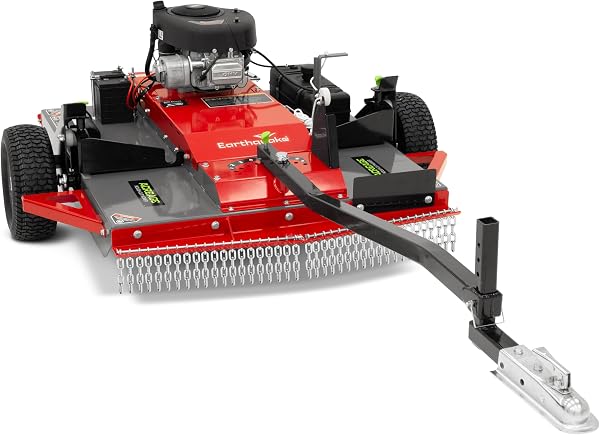
Earthquake Acreage 42795
8.4Editor score44-inch steel deck
17.5HP Briggs engine
Electric start battery
11-gauge steel deck
Find the right field mowers for 2026. We compare 10 standout options by build quality, useful features, owner feedback, value, and everyday trade-offs.

Choose the right field mower for 2026 with a clear comparison of 10 standout models. We break down what actually matters when cutting overgrown grass, brush, and larger properties: cutting width, engine or battery power, deck construction, terrain capability, hitch or drive systems, height adjustment range, and how each mower handles the specific demands of field, acreage, and rough-terrain work.
The gap between a tow-behind rough-cut mower and a cordless push mower is enormous, and matching the tool to the task is what separates a smart purchase from a frustrating one. Rough-cut units tackle three-inch saplings behind a tractor, while battery-powered walk-behinds excel at maintained turf. Understanding your acreage, vegetation, and towing vehicle is the starting point.
This guide covers heavy-duty tow-behind field mowers for acreage owners, self-propelled string trimmers for tall weed management, and cordless push and self-propelled models for smaller field-adjacent lawns. Use the comparison table, reviews, and buying guide below to match a mower to your property, vegetation type, and typical maintenance schedule.
We compared 10 field mowers using the specs that actually help a buyer decide: cutting width, engine displacement or battery voltage, deck material and thickness, maximum vegetation size handled, hitch or drive system, height adjustment range, tire type and size, offset mowing capability, run time or fuel capacity, warranty coverage, and owner feedback. The notes focus on practical trade-offs so each pick connects to how people actually mow overgrown fields, maintain acreage, and handle brush along fence lines and property boundaries.


Compare key features, scores, and current prices side by side. A shorter feature list means fewer details were available, not necessarily fewer capabilities.




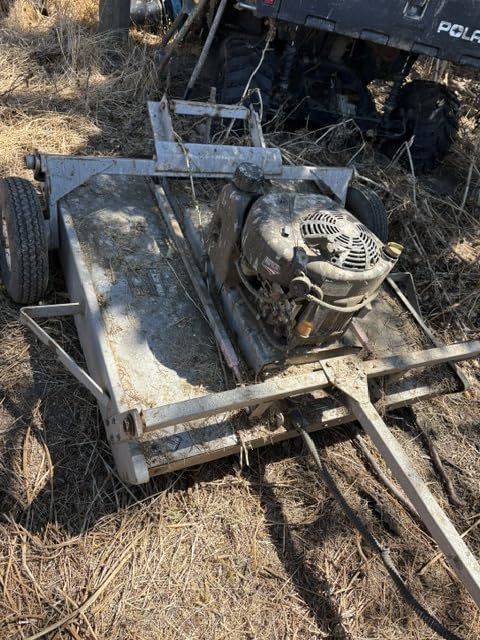
The Swisher 44-inch rough-cut mower earns the top owner rating in this comparison and stands out for the operator-friendly remote blade engagement system. Instead of stopping the tractor, dismounting, and walking back to the mower to engage blades, you control blade engagement from the towing vehicle, which meaningfully improves both safety and efficiency during long field sessions.
We may earn a commission when you buy through this link, at no additional cost to you.
The 11.5 HP engine cuts brush and saplings up to three inches in diameter, handling the same demanding vegetation as the Earthquake Acreage but with a slightly different feature set. The 44-inch cutting width matches most acreage mowers in this category, and the machine is purpose-built for rough-cut work rather than finish-cut lawns. This dedicated design means the mower performs its intended job well without compromising to serve multiple purposes.
The offset hitch positions the mower to the left or right of the tow vehicle for reaching edges, fence lines, and tight areas that a directly-behind mower can’t access. This is particularly valuable for maintaining property boundaries, ditch banks, and pasture edges where the tractor’s tire path would leave uncut strips near vertical obstacles. Single-point height adjustment ranges from 3 to 7 inches and allows quick changes to match field conditions.
Manual blade engagement requires stopping the tractor, walking back to the mower, and pulling a lever every time you need to disengage or re-engage blades. Remote control saves this time on every field with obstacles, gates, or turnaround areas. Over a full day of mowing acreage, remote engagement can save an hour or more and reduces operator fatigue from repeatedly dismounting and remounting the tractor.
Choose the Swisher if remote blade control ranks high on your priority list and you want a proven rough-cut design with strong owner satisfaction. The perfect 5.0 rating reflects consistent buyer approval. If you prefer wider height adjustment range up to 7.5 inches or want break-away blade protection, the Earthquake Acreage offers those specific advantages at a similar price point.
Homeowners with finish-cut lawn needs or those without adequate tow vehicles for a full-size rough-cut mower.
We may earn a commission when you buy through this link, at no additional cost to you.
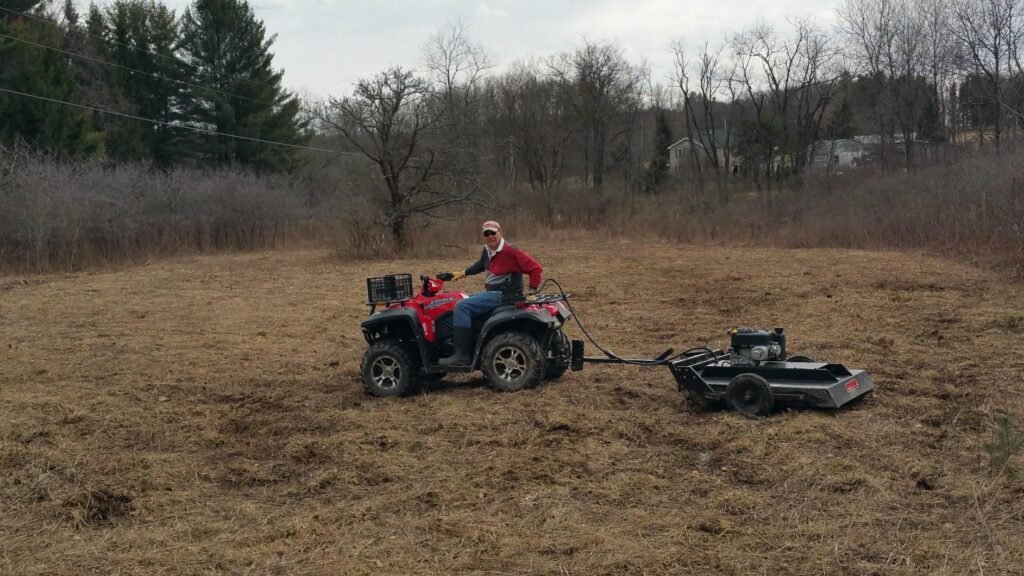
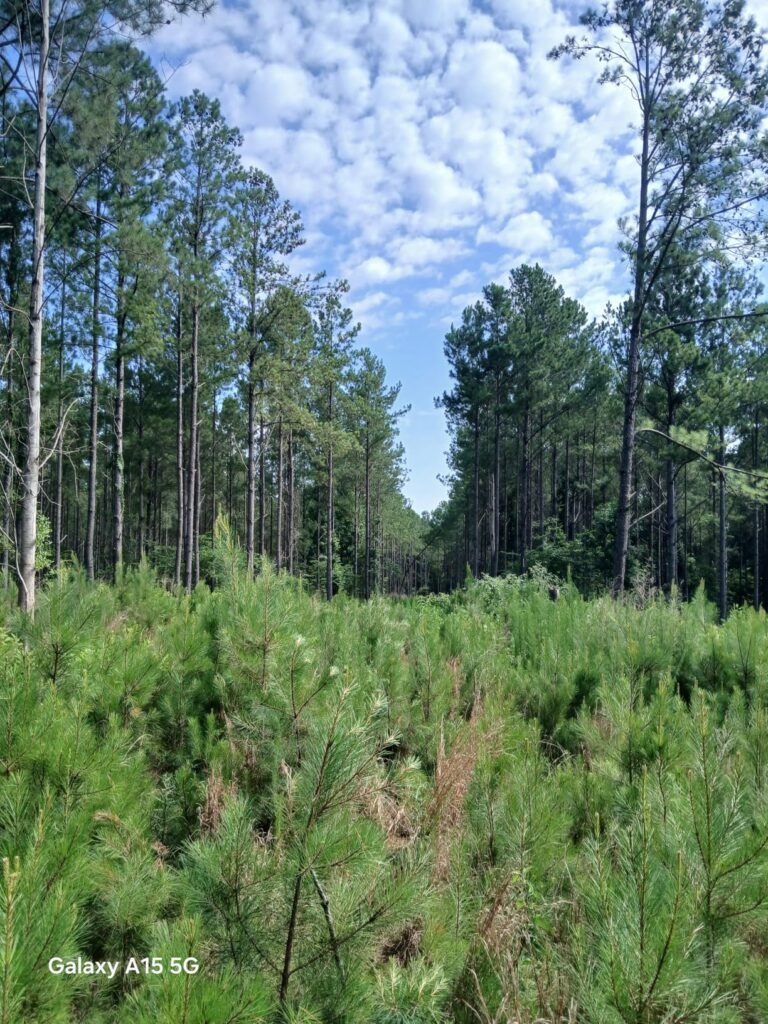
The Earthquake Acreage tow-behind mower is built for property owners who need to reclaim overgrown pastures, clear brush along fence lines, and maintain acreage that would destroy a standard lawn mower. The 44-inch cutting width and 17.5 HP Briggs and Stratton engine handle tall grass, thick brush, and saplings up to three inches in diameter in a single pass, which changes what is possible on neglected land.
We may earn a commission when you buy through this link, at no additional cost to you.
The two pivoting break-away blades are the key engineering detail. They tackle heavy vegetation aggressively but swing out of the way when they hit rocks, stumps, or hidden obstacles, which protects both the blades and the drive system from the shock damage that ends the life of cheaper mowers. The Briggs Advanced Debris Management System keeps the engine clean by deflecting grass and debris away from cooling components, extending engine life during heavy field work.
Adjustable offset mowing is a genuine productivity feature. You can position the mower up to four feet behind the tow vehicle in either direction to reach fence lines, ditch slopes, and areas under low tree limbs that would otherwise require hand trimming. Tool-less cutting height adjustment ranges from 3.5 to 7.5 inches, and you can change it on the fly without stopping to hunt for wrenches. The keyed electric start with included battery eliminates the pull-start struggle common in this class.
Fixed blades on rough-cut mowers can shatter or bend when they strike hidden rocks, buried stumps, or metal debris that is common in overgrown fields. Break-away blades pivot back on impact and then swing forward again for the next cut, which prevents the catastrophic drive-system damage that can bend PTO shafts or crack gearboxes. This design is why professional rough-cut mowers cost more than standard finish mowers.
This is the strongest overall choice for serious acreage owners who need a rough-cut mower that will handle years of demanding field work. The five-year limited product warranty and two-year engine warranty back the investment. If your property is smaller than an acre or your vegetation stays maintained, a cordless walk-behind will meet your needs at a fraction of the price.
Homeowners with small maintained lawns or those without a suitable tow vehicle and storage space.
We may earn a commission when you buy through this link, at no additional cost to you.
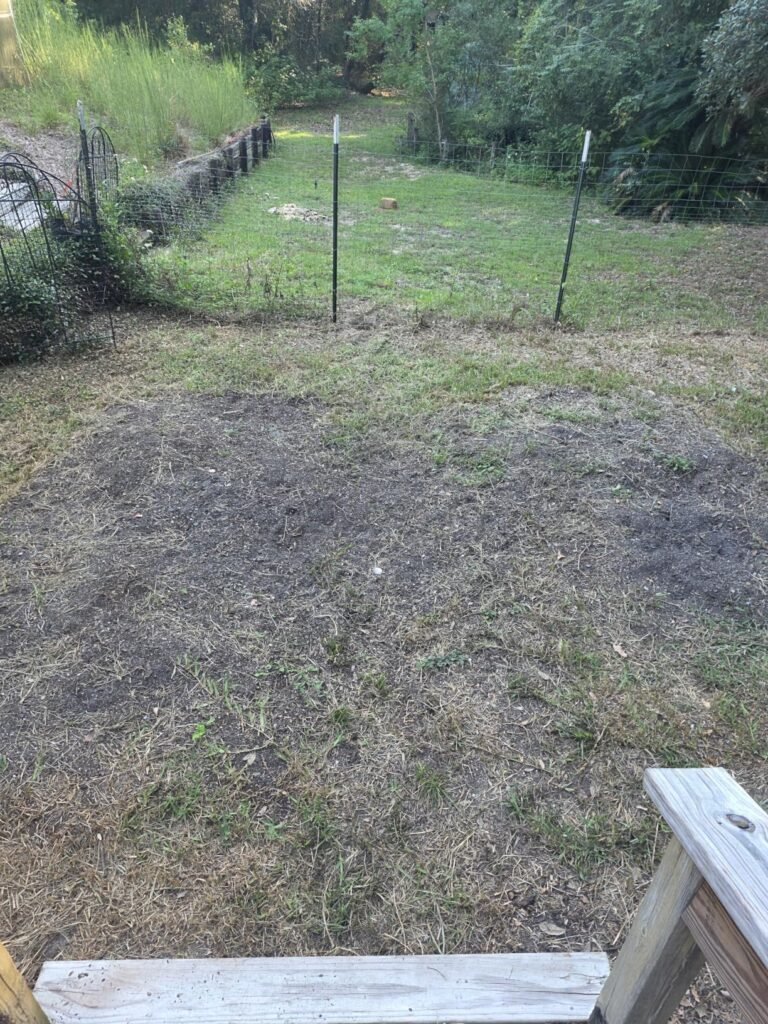
The BILT HARD walk-behind string trimmer targets the middle ground between a handheld weed eater and a full tow-behind field mower. For property owners with tall grass along fence lines, overgrown ditches, or field edges that a riding mower can't reach, this self-propelled unit handles vegetation that would burn out consumer-grade trimmers within minutes.
We may earn a commission when you buy through this link, at no additional cost to you.
The 170cc OHV four-cycle engine provides real power for cutting through thick weeds, dense brush, and overgrown grass that would stop a lighter machine. Four-cycle engines are simpler to maintain than two-stroke designs because they run on straight gasoline without oil-fuel mixing, which matters for owners who use the trimmer occasionally throughout the season rather than daily. The manual recoil start is straightforward, and the engine has enough torque to keep the string spinning through dense material.
The self-propelled drive system moves the trimmer at a steady 1.9 mph, letting you guide rather than push it across slopes, uneven ground, and rough terrain. This matters significantly on longer sessions where fatigue becomes the limiting factor. The 10-inch flat-free wheels roll over roots, rocks, and ruts without the puncture risk of pneumatic tires, and the eight-position height adjustment ranges from 1.6 to 3.7 inches to match different vegetation and terrain conditions.
String trimmers use nylon line that cuts vegetation without the safety and maintenance concerns of exposed blades. This works well for tall grass, weeds, and thin brush but wears down quickly in heavy woody material. For occasional field trimming and edge work, string is convenient and safer. For dense brush and small saplings, dedicated brush cutters with metal blades are more efficient but require more careful operation.
This unit is the right choice for owners of small acreage properties, rural lots, and rough field edges where a riding mower can’t fit but a handheld trimmer isn’t enough. The heavy-duty one-piece steel deck adds stability on uneven ground. If you need to cut brush thicker than a pencil or vegetation over three feet tall regularly, step up to a full tow-behind rough-cut mower like the Earthquake or Swisher.
Buyers who need to cut brush thicker than about a half inch or reclaim severely overgrown acreage.
We may earn a commission when you buy through this link, at no additional cost to you.
The Greenworks 60V 21-inch push mower brings serious battery power to field-adjacent lawns and smaller rough properties. The 60V platform provides 50 percent more torque than 40V mowers and delivers 3200 RPM blade speed, which matches many 150cc gas mowers without the fumes, noise, or maintenance headaches.

We may earn a commission when you buy through this link, at no additional cost to you.
The IPX4 waterproof rating is a genuine differentiator for field work where you often encounter dew, morning moisture, or damp grass that would sideline lesser electric mowers. The steel deck resists rust and handles the abuse of rougher terrain better than plastic decks common at lower price points. Dual SmartCut blades automatically adjust power for tall, wet, or thick grass, which prevents the bogging down that plagues single-blade battery mowers in challenging conditions.
The 4-in-1 versatility lets you mulch, bag, side-discharge, or use turbo leaf mode depending on the task at hand. Side discharge is particularly valuable for field work where you want to throw clippings clear of the cutting path rather than collect them. Oversized 10-inch rear wheels and 8-inch front tires provide smooth maneuvering over uneven terrain, and the LED headlights extend usable mowing time into early morning or late evening.
IPX4 protection means the mower resists water splashing from any direction, which covers morning dew, brief rain, and washing down after use. This does not mean full submersion, so avoid mowing in standing water or leaving the mower exposed to heavy rainstorms. For field-adjacent work where wet grass is common, this rating provides genuine peace of mind that lower-rated mowers can’t match.
This mower makes sense for property owners with field-adjacent lawns up to about a third of an acre who want gas-like power without the maintenance. The four-year tool and battery warranty backs the investment, and the 60V ecosystem includes over 75 compatible tools. If you need to cut acreage above half an acre per session or handle vegetation taller than typical lawn grass, a tow-behind or self-propelled option will serve you better.
Acreage owners with fields larger than a half acre or those managing severely overgrown vegetation.
We may earn a commission when you buy through this link, at no additional cost to you.
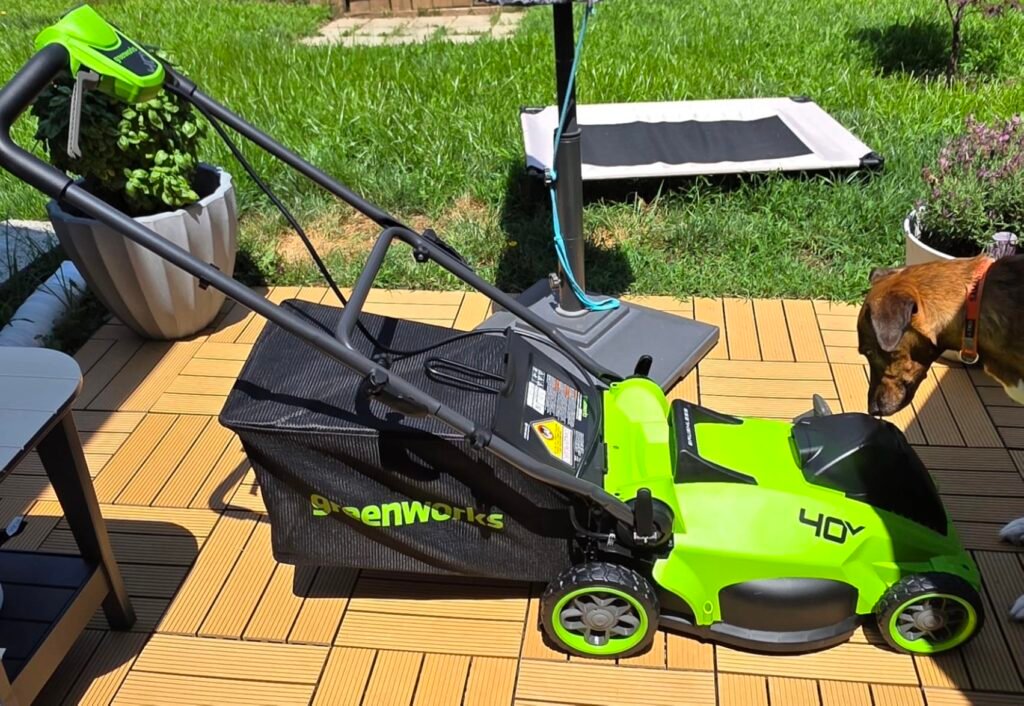
The Greenworks 40V 16-inch push mower is a lightweight, budget-friendly option for property owners who need to maintain small field areas, garden edges, or supplementary spaces where a larger mower would be overkill. Weighing 35 percent less than steel deck alternatives, it is significantly easier to maneuver around obstacles and load into a truck bed for travel between properties.

We may earn a commission when you buy through this link, at no additional cost to you.
The 40V battery system provides adequate power for maintained grass and light field vegetation, and the 4.0Ah battery cuts up to a third of an acre on a single charge in typical conditions. This makes it well-suited for owners with small rural lots, secondary mowing spots, or as a supplemental mower for hard-to-reach corners of larger properties. The 16-inch cutting width is narrower than most field mowers but excels at maneuvering through tight spaces.
The 5-position single-lever height adjustment lets you quickly change cutting height for different vegetation without hunting for individual wheel adjusters. The 2-in-1 system supports mulching and rear bagging, though it lacks the side-discharge and turbo modes found on premium models. The lightweight plastic deck sacrifices some durability compared to steel but keeps overall weight manageable for extended use.
40V systems work well for maintained residential lawns and light field trimming but struggle with tall or wet grass and larger properties. 60V systems double the useful cutting torque and handle rougher conditions. 80V systems approach gas mower performance and cut half acre or more per charge. Choose 40V for supplementary use, 60V for primary mowing on modest properties, and 80V for larger residential or small acreage work.
This mower is the right choice for buyers on a tight budget who need occasional mowing capability for small field-adjacent areas. The three-year tool and battery warranty adds reasonable protection. If you need to handle heavy field grass, tall weeds, or areas larger than a third of an acre per session, step up to the 60V or 80V options or move to a gas-powered field mower.
Property owners with acreage above a third of an acre or those cutting tall field grass regularly.
We may earn a commission when you buy through this link, at no additional cost to you.
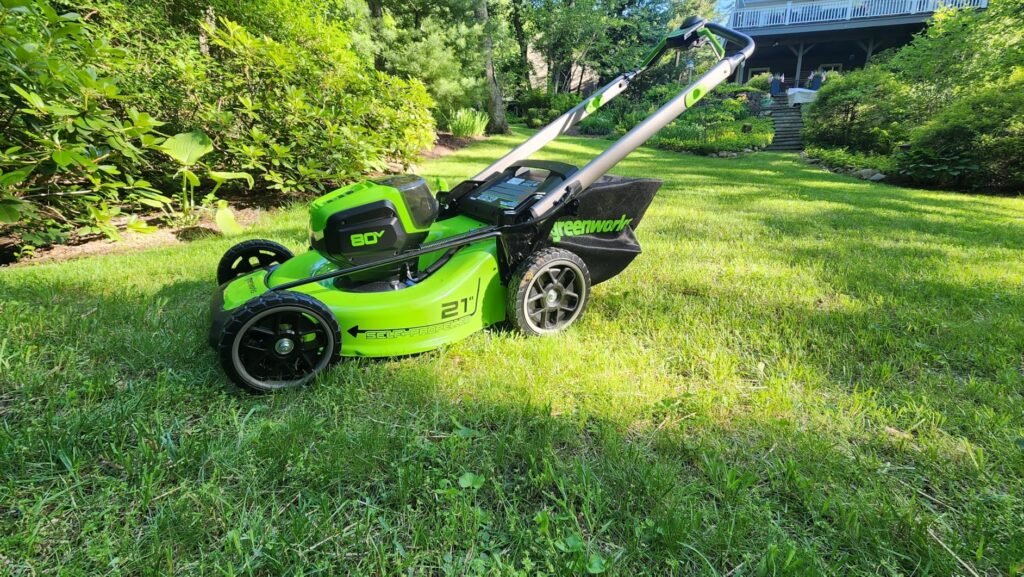
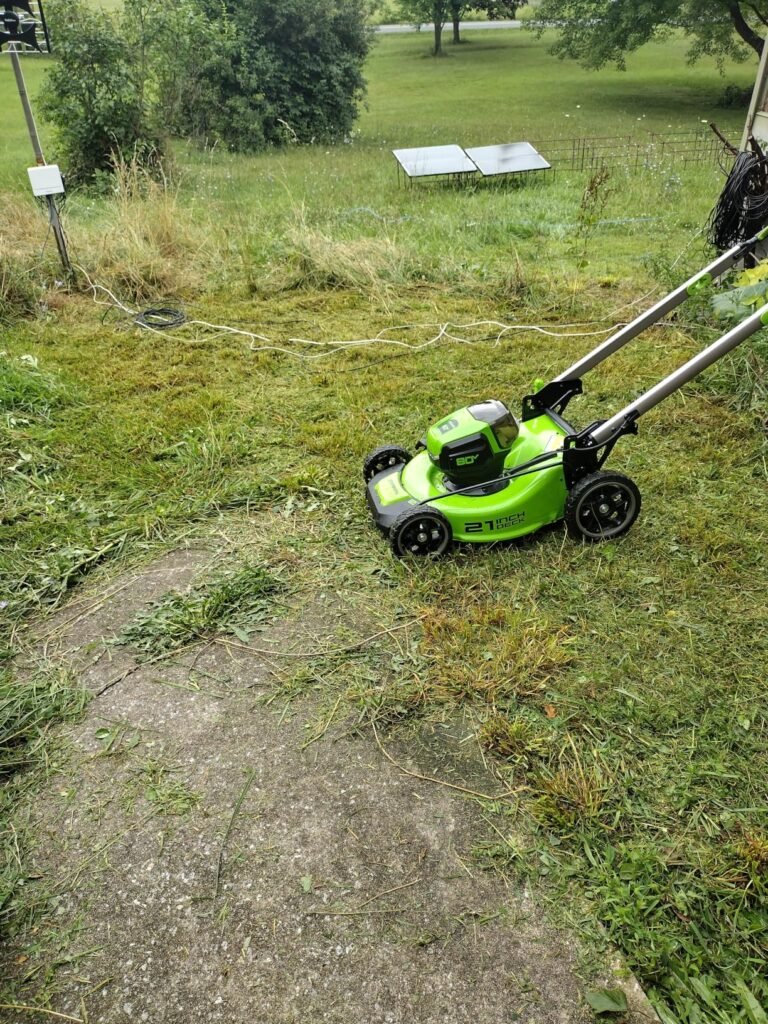
The Greenworks 80V self-propelled mower steps up to gas-like performance in a battery-powered package that handles field-adjacent lawns up to half an acre per charge. The 80V platform provides significantly more torque than lower-voltage systems, and the rear-wheel drive design provides better traction on slopes and uneven terrain than front-wheel drive alternatives.
We may earn a commission when you buy through this link, at no additional cost to you.
The 21-inch steel deck handles larger cutting swaths per pass, and the brushless motor delivers efficient power conversion with longer motor life than brushed alternatives. Variable speed control on the self-propelled drive lets you match your walking pace to the terrain and grass conditions, from slow careful passes through heavy vegetation to faster work on maintained sections.
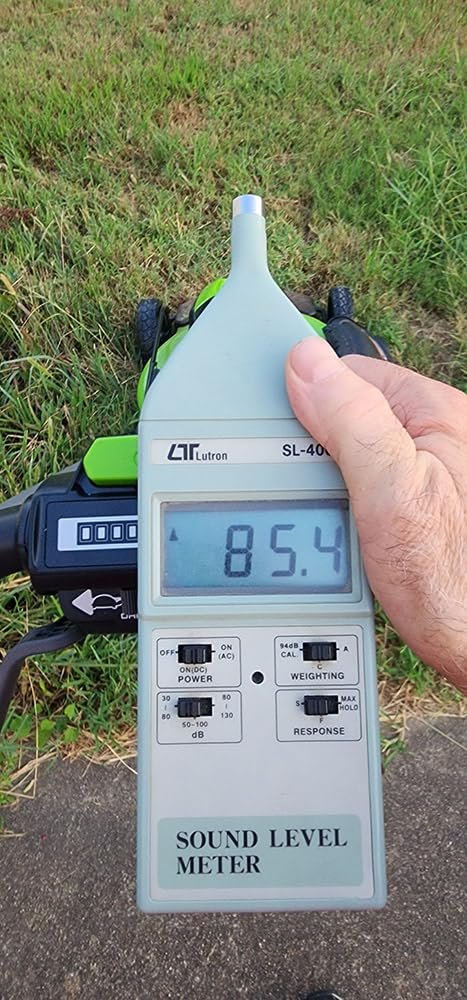
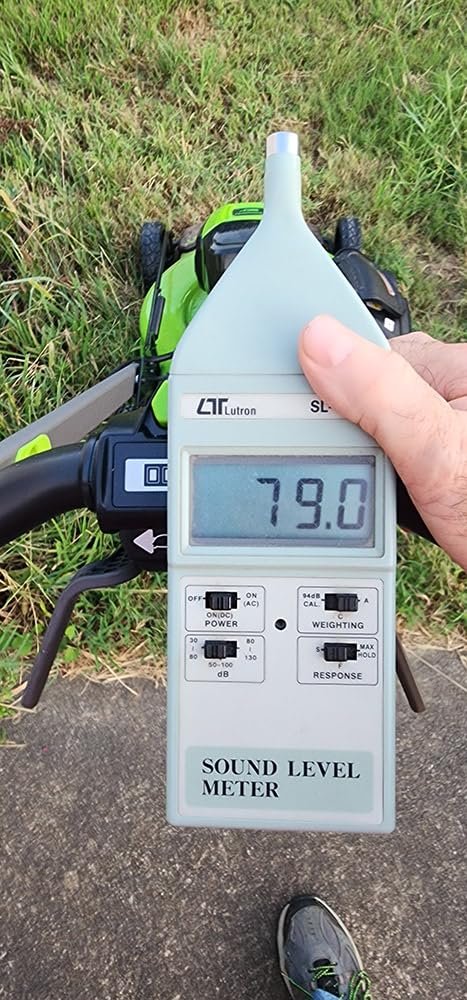
The LED headlight enables early-morning and late-evening mowing during peak summer months when daytime heat makes field work uncomfortable. Operating three times quieter than gas mowers, this unit is friendlier to neighbors and reduces the ear protection burden during long sessions. The four-year tool and battery warranty backs the investment, and battery compatibility extends across the entire 80V Greenworks ecosystem of over 75 tools.
Front-wheel drive mowers can lose traction on slopes because operator weight shifts to the rear, unloading the drive wheels. Rear-wheel drive keeps the drive wheels under the operator’s weight, providing better grip on inclines and rougher terrain typical of field-adjacent lawns. For flat maintained yards, either system works fine. For slopes or uneven ground, rear-wheel drive is meaningfully more capable.
This mower is a strong choice for property owners with half-acre lots that include sloped or rough field-adjacent areas where rear-wheel drive traction matters. The battery-powered convenience eliminates gas maintenance and starts instantly with a push button. If you need to cut acreage significantly larger than half an acre per session, plan for extra batteries or step up to a tow-behind option.
Buyers with acreage larger than half an acre who need continuous cutting without battery swaps.
We may earn a commission when you buy through this link, at no additional cost to you.
The Greenworks 80V push mower earns the highest owner rating among Greenworks mowers in this comparison and delivers gas-like performance in a simpler push-only configuration that keeps the price lower than self-propelled alternatives. For property owners who don't need self-propelled assistance, this model provides the same cutting power at meaningful savings.

We may earn a commission when you buy through this link, at no additional cost to you.
The 21-inch steel deck and brushless motor combination cuts up to half an acre per charge with the 4.0Ah battery, which handles most field-adjacent residential lawns without stopping to swap batteries. The steel deck resists rust and handles rougher terrain better than plastic alternatives common at lower price points, and the brushless motor design provides longer life and quieter operation than traditional brushed motors.
The 4-in-1 versatility supports mulching, bagging, side-discharge, and turbo leaf pickup modes, letting the same mower handle spring cleanup, summer maintenance, and fall leaf management without additional attachments. LED headlights enable extended usable hours during shorter days, and the operation runs three times quieter than gas mowers of comparable cutting capability.
Push mowers cost less, weigh less, and have fewer mechanical parts to fail than self-propelled versions. For flat lawns under a half acre with physically capable operators, push design is entirely adequate and more reliable long-term. Self-propelled is worth the premium for large properties, sloped terrain, or operators who value reduced effort. Match the drive type to your actual physical needs rather than paying for features you won’t benefit from.
This push mower makes sense for physically capable property owners with half-acre lots who want to save money by skipping self-propel and prefer the reliability of a simpler mechanical design. The instant push-button start eliminates gas mower frustrations, and the four-year warranty provides long-term confidence. If your property is sloped or extends beyond half an acre, the self-propelled 80V version or a tow-behind option will be less tiring.
Buyers with slopes, large acreage, or physical limitations that make push mowing difficult.
We may earn a commission when you buy through this link, at no additional cost to you.
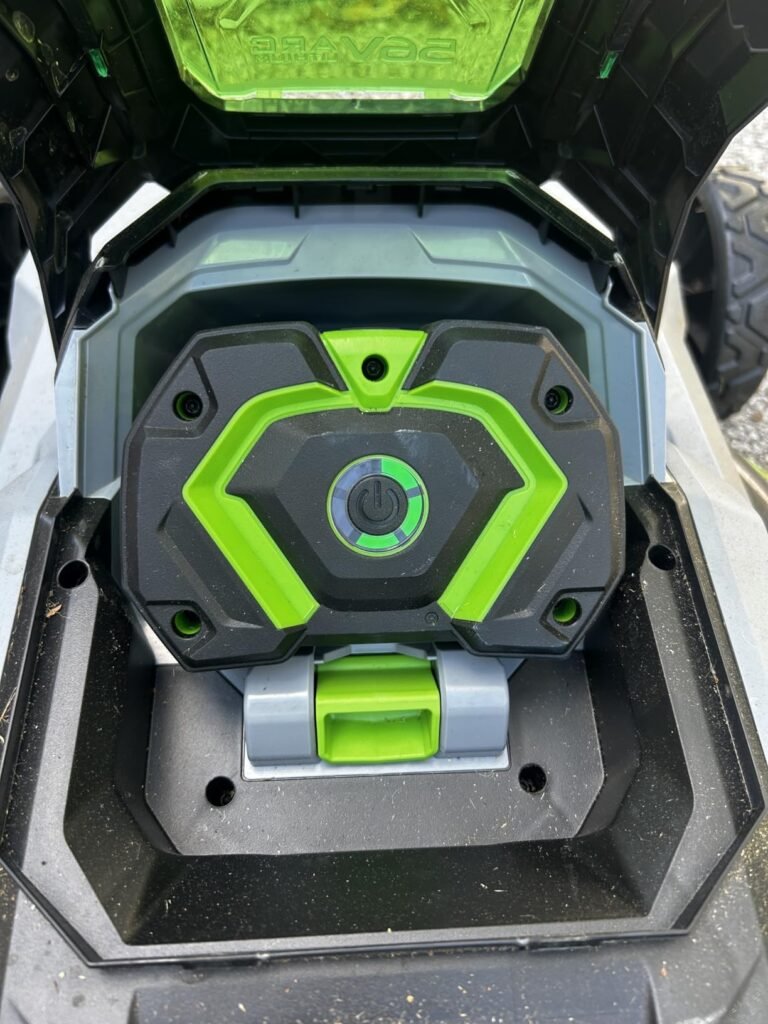
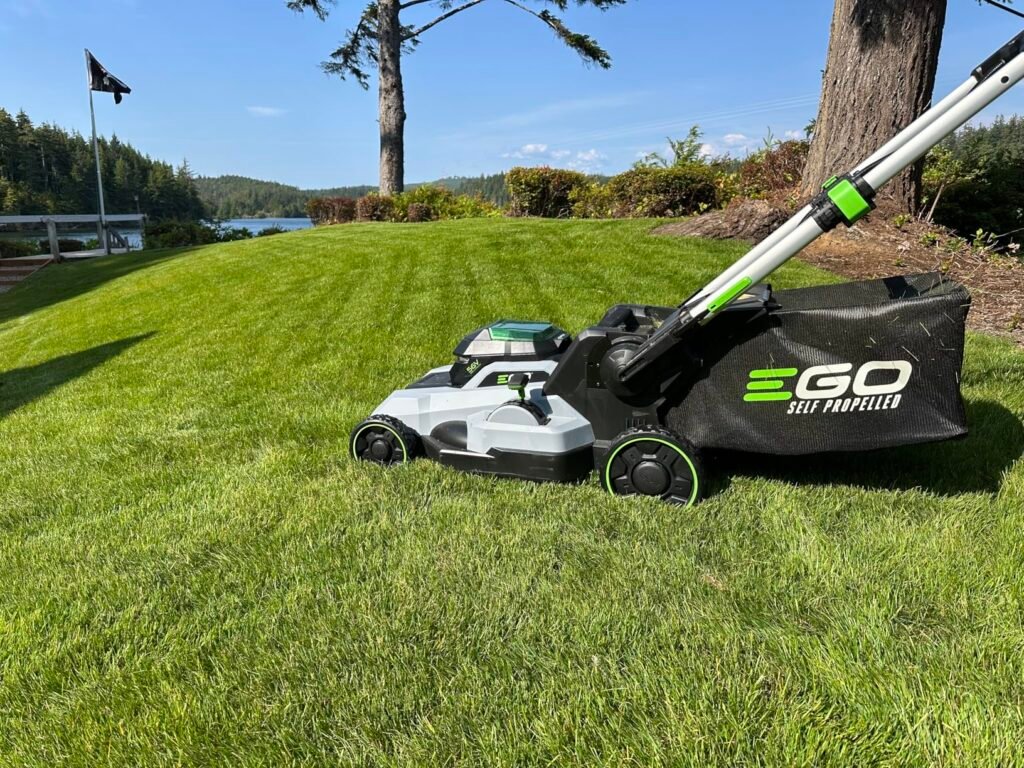
The EGO LM2125SP represents the premium end of battery-powered mowing with a 56V 7.5Ah battery that delivers up to 60 minutes of runtime, which is enough for most half-acre field-adjacent properties in a single session. EGO's Touch Drive technology is genuinely innovative: instead of a traditional bail bar, you engage self-propel by touching a palm-activated control and adjust speed with a fingertip scroll dial.

We may earn a commission when you buy through this link, at no additional cost to you.
The high-efficiency brushless motor delivers up to 6.0 ft-lbs of cutting torque, which EGO claims exceeds gas-powered mowers of comparable size. This power translates to reliable cutting in taller and wetter grass without the bogging down that limits lower-voltage battery mowers. The 21-inch deck handles standard residential cutting widths, and the mower is compatible with all EGO 56V ARC Lithium batteries for extended runtime with additional battery packs.
Seven cutting height settings range from 1.25 to 4 inches, adjustable with one hand, and the mower supports mulching, side-discharge, and bagging with the included two-bushel grass bag. Push-button start, bright LED headlights, and IPX4 weather resistance round out the premium feature set. The adjustable handle height and folding design support compact garage storage.
Traditional self-propelled mowers use spring-loaded bail bars that require constant hand pressure to maintain drive engagement. This creates hand fatigue during long sessions and can be uncomfortable for users with grip strength limitations. Touch Drive requires only light palm pressure to engage and thumb operation for speed changes, which reduces fatigue and makes the mower more accessible to operators who struggle with traditional bail bar tension.
This mower is the right choice for buyers who want the most refined battery mowing experience and are willing to pay for premium features like Touch Drive and 60-minute runtime. The EGO 56V ecosystem includes over 80 compatible tools. If you don’t need Touch Drive innovation and want to save money, the Greenworks 80V models deliver similar core performance at lower prices.
Budget-focused buyers or those already invested in a different battery platform.
We may earn a commission when you buy through this link, at no additional cost to you.
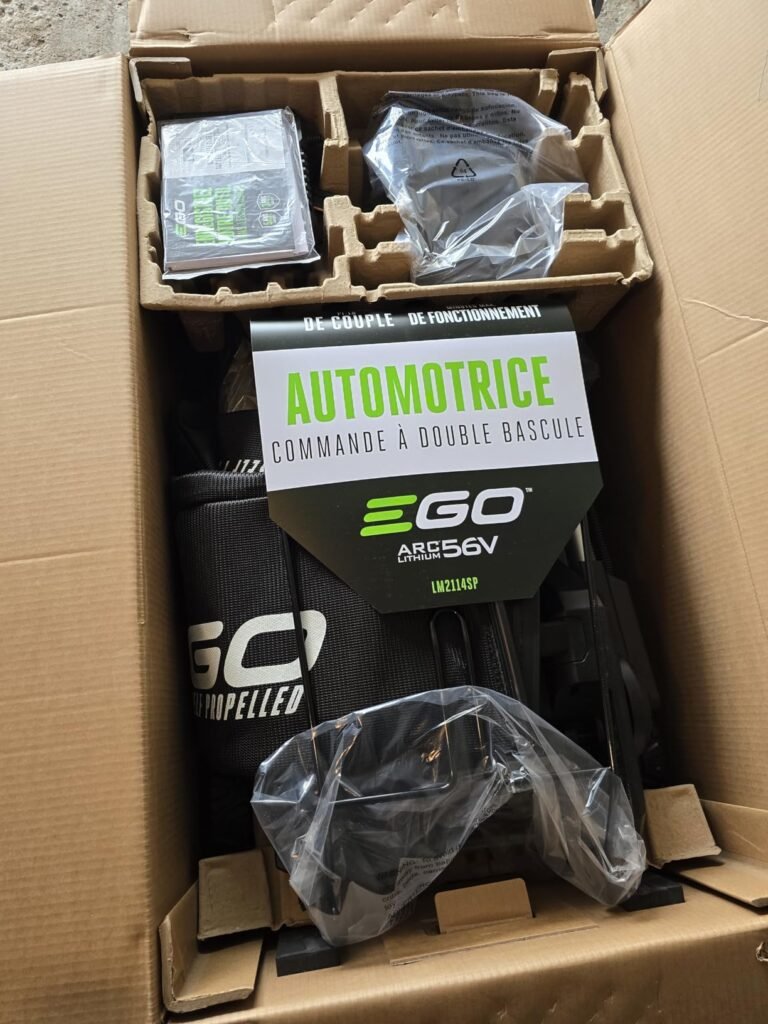
The EGO LM2114SP takes a different approach to self-propelled ergonomics with a dual-toggle handleset that engages the drive system with either hand. This design lets operators switch hand positions during long sessions to reduce fatigue and provides genuine ambidextrous operation for left-handed users who often find traditional right-hand controls uncomfortable.
We may earn a commission when you buy through this link, at no additional cost to you.
The 56V 6.0Ah ARC Lithium battery delivers up to 50 minutes of runtime, which handles most residential lawn and field-adjacent work in a single session. The high-efficiency brushless motor provides the same 6.0 ft-lbs of cutting torque as the LM2125SP, exceeding gas-powered mowers of comparable size with lower vibration and lifelong durability that brushed motors can’t match.
Seven-position cutting height adjustment ranges from 1.25 to 4 inches, and the 3-in-1 function supports mulching, bagging, and side discharge for versatile use across different mowing scenarios. Push-button start eliminates pull-cord frustrations, bright LED headlights extend usable mowing hours, and the adjustable handle height accommodates operators of different heights. The folding design supports compact vertical storage.
Extended mowing sessions with a single-hand drive control create asymmetric fatigue and can cause forearm cramping in the dominant hand. Dual-toggle systems let you switch hands periodically, distributing the workload and preventing the specific muscle fatigue that limits comfortable session length. For half-acre and larger properties, this design difference translates to less physical strain over years of use.
This mower is a strong choice for buyers who prefer traditional bail-bar-style controls with the ergonomic advantage of dual-hand operation, and it costs less than the LM2125SP while sharing the same core cutting performance. If you want the innovative Touch Drive palm control or need the longer 60-minute runtime, step up to the LM2125SP. If you don’t need dual-toggle operation and want to save more, the Greenworks 80V models compete well.
Buyers who prefer Touch Drive palm activation or need the maximum 60-minute battery runtime.
We may earn a commission when you buy through this link, at no additional cost to you.
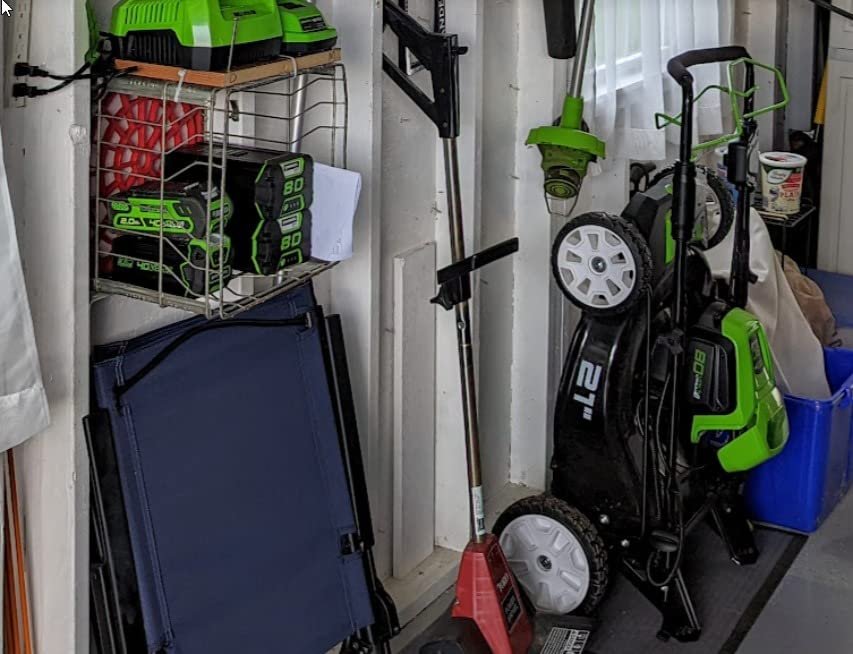
The Greenworks 80V Pro self-propelled mower stands out for its innovative SmartCut technology that automatically senses grass conditions and adjusts motor power to match, delivering the perfect cut across variable field conditions without operator intervention. This intelligent power management extends effective battery life by using only the power actually needed for each section of grass.
We may earn a commission when you buy through this link, at no additional cost to you.
The 80V system with 4.0Ah battery delivers up to 45 minutes of runtime, and the included 60-minute rapid charger minimizes downtime between sessions or during battery swaps for larger properties. Rear-wheel drive with variable speed control provides maximum traction on slopes and uneven terrain typical of field-adjacent lawns, and the brushless motor delivers efficient power conversion with quieter operation than brushed alternatives.
The 3-in-1 design supports mulching, rear bagging, and side discharge with a single-lever 7-position height adjustment. One standout practical feature is vertical storage capability, which uses up to 70 percent less garage floor space than conventional horizontal storage. For property owners with tight garage or shed space, this alone can justify the price premium.
Battery mowers typically run at constant motor speed regardless of grass density, wasting energy in thinner sections. SmartCut technology monitors motor load and reduces power draw when grass is light while ramping up automatically for thick or tall sections. Over a full mowing session, this adaptive approach can extend usable runtime by a meaningful percentage compared to fixed-speed operation, especially on properties with mixed grass conditions.
This mower is a strong choice for buyers who value intelligent power management and vertical storage capability, and who work across variable terrain where SmartCut technology genuinely helps. The 80V ecosystem includes over 75 compatible tools for expanding your cordless toolkit. If you don’t need SmartCut adaptation or vertical storage, the standard 80V Greenworks models deliver similar core cutting performance for less money.
Buyers who want the simplest possible operation without power management features or those who need longer runtime per battery.
We may earn a commission when you buy through this link, at no additional cost to you.
A field mower is often the single most demanding tool on a rural or acreage property. The right choice cuts through overgrown vegetation efficiently and lasts for years, while the wrong one bogs down, breaks under stress, or forces you to make many more passes than necessary. Use the factors below to match a mower to your property size, vegetation type, and available towing or maintenance equipment.
Cutting width directly determines how quickly you can cover your property. Push mowers typically range from 16 to 22 inches, walk-behind string trimmers extend to 22 inches, and tow-behind field mowers usually offer 44 inches or more. A 44-inch tow-behind covers roughly twice the ground per pass as a 22-inch walk-behind, which means half the passes and half the time on properties above a quarter acre.
For acreage above one acre, a 44-inch or wider tow-behind mower is almost essential unless you have unlimited time. Between a quarter acre and one acre, self-propelled walk-behinds strike a reasonable balance. Under a quarter acre, push mowers work fine and cost significantly less. Also consider whether your property has obstacles like trees, garden beds, or landscaping features that limit the usable path for wider mowers.
Measure your property honestly and choose a cutting width that will let you finish the job in a reasonable time. A 16-inch push mower on two acres becomes a full weekend project, while a 44-inch tow-behind can handle the same property in a few hours.
Engine or motor power determines what vegetation the mower can handle without bogging down or damaging itself. Standard residential push and self-propelled mowers use 140cc to 190cc engines or 40V to 80V battery systems, which handle maintained grass but struggle with tall weeds and brush. Field-specific mowers step up to 170cc walk-behind engines and 11.5 to 17.5 HP tow-behind engines that can cut through saplings and dense brush.
Match engine power to your actual vegetation. If your fields are mowed regularly and stay under a foot tall, standard mower engines work fine. If you’re reclaiming overgrown land with grass over knee-high or brush and saplings, you need a purpose-built rough-cut mower like the Earthquake Acreage or Swisher with an engine rated for that work. Underpowered mowers in heavy vegetation overheat, bog down, and can suffer permanent damage.
For light field work with occasional tall grass, 170cc walk-behind engines handle most tasks. For serious brush and saplings up to three inches thick, choose tow-behind rough-cut mowers with 11.5 HP or larger engines specifically rated for that vegetation size.
The mower deck takes constant abuse from vegetation, debris, and impacts with hidden obstacles. Steel decks are the standard for serious field work because they resist damage from rocks, roots, and buried metal that would crack plastic decks. Deck thickness matters: 11-gauge steel is significantly more resistant to bending and denting than thinner 14-gauge steel common on lower-priced mowers.
Deck features also affect performance. Enclosed chain guards on rough-cut mowers keep debris from being thrown at the operator or tow vehicle. Deck skirts and baffles improve airflow for better cutting performance and cleaner clipping distribution. On battery mowers, waterproof-rated decks (IPX4 or better) allow use in wet conditions that would damage lesser designs.
For field work with unknown or debris-prone terrain, prioritize thick steel construction with protective chain guards. For maintained residential lawns, standard deck construction is sufficient and keeps the price lower.
Field terrain varies dramatically from smooth pasture to rocky, rutted ground with roots and hidden obstacles. Tire type and size affect how smoothly the mower rolls and how well it handles uneven surfaces. Pneumatic tires provide the smoothest ride and best flotation on soft ground but can puncture on thorns or sharp debris common in field conditions. Flat-free or solid tires eliminate puncture risk but transmit more vibration and provide less cushioning.
Tire size also matters. Larger 10 to 12-inch wheels roll over ruts, roots, and rocks more easily than smaller 6 to 8-inch wheels. On tow-behind mowers, pneumatic tires help absorb impacts that would otherwise transfer directly to the mower deck and drive system, extending mower life on rough terrain. Wide-tread patterns provide better traction on slopes and reduce lawn damage compared to narrow tires that dig ruts.
For rough field terrain with thorns or debris, flat-free wheels prevent breakdowns. For smoother pasture or slope work, larger pneumatic tires provide better ride quality and traction. Match tire size to terrain roughness and priority between comfort and puncture resistance.
Cutting height range affects what you can accomplish with the mower. Residential lawn mowers typically adjust from 1.25 to 4 inches, which suits maintained turf. Field mowers extend the range higher, often 3.5 to 7.5 inches on the Earthquake or 3 to 7 inches on the Swisher, because tall field grass requires higher initial cuts to prevent bogging down. Making the first pass at maximum height and then dropping down for a second cleaner pass is often more efficient than trying to cut everything short in one pass.
The adjustment method affects usability. Single-lever height adjustment on premium mowers changes all four wheels simultaneously with one motion, which is fast and consistent. Individual wheel adjusters are slower and can result in uneven cutting height if not adjusted carefully. Tool-less adjustment is nearly universal on modern mowers, but tow-behind field mowers may require getting off the tractor for changes unless they include operator-accessible controls.
For frequent height changes across variable terrain, prioritize single-lever adjustment. For consistent height across most of a large field, individual adjusters work fine because you set them once at the start of the session.
Tow-behind field mowers use standard 2-inch ball couplers or pin-style hitches. Ball couplers provide smoother towing with less jerking and rattling than pin hitches, and they’re compatible with most modern tow vehicles that use standard trailer balls. Adjustable hitch tongues let you dial in the correct height for different tow vehicles, which affects both handling and mowing consistency.
For walk-behind field mowers, drive system choice affects operator fatigue. Self-propelled models use ground speed control to match your walking pace, and rear-wheel drive provides better traction on slopes than front-wheel drive. Push mowers require constant physical effort but are simpler, lighter, and less expensive. For battery mowers, drive system affects battery runtime because self-propel draws additional power beyond just cutting.
For tow-behind use, verify hitch compatibility with your tractor or ATV before buying. For walk-behind field work, self-propel makes a real difference on slopes and larger properties, while push design saves money and complexity for flat lawns under a half acre.
Power source determines maintenance, runtime, noise, and total cost of ownership. Gas-powered mowers offer unlimited runtime as long as you have fuel, higher raw cutting power for heavy vegetation, and traditional reliability. They also require regular maintenance including oil changes, spark plug replacement, air filter service, and winterization for seasonal storage.
Battery-powered mowers eliminate the maintenance burden and start instantly with the push of a button. Modern 60V, 80V, and 56V systems approach gas-mower cutting power for typical residential and field-adjacent use. Runtime is the primary limitation: most battery mowers cut a half acre per charge, which requires spare batteries or charging breaks for larger properties. Battery ecosystems like Greenworks 80V and EGO 56V include dozens of compatible tools, so investment in one battery platform extends across trimmers, blowers, chainsaws, and more.
Choose gas for serious rough-cut field work with heavy vegetation or properties too large for battery runtime. Choose battery power for maintenance-free residential and light field use up to a half acre, and consider ecosystem compatibility if you’re building out a complete cordless outdoor tool set.
Warranty coverage varies significantly across the field mower category. Heavy-duty tow-behind mowers like the Earthquake Acreage offer 5-year limited product warranties and 2-year engine warranties, reflecting the expected long service life of premium field equipment. Battery-powered residential mowers typically offer 3 to 4-year tool and battery warranties.
US-based customer support is a genuine advantage for field mowers because troubleshooting complex issues over language barriers or during odd hours becomes frustrating quickly. Manufacturers with established parts distribution networks also make repairs faster and less expensive than budget brands that may struggle to source replacement parts years after purchase.
For long-term investments in premium field mowers, prioritize established manufacturers with strong warranty coverage and US-based support. For budget battery mowers meant for lighter duty, standard 3-year warranties are adequate and match the expected service life of the equipment.
Before starting any field work, walk the area to identify hidden obstacles like buried rocks, tree stumps, metal debris, and low tree branches that could damage the mower or cause safety hazards. Set the cutting height high for the first pass through tall vegetation, then lower it for a second cleaner pass if needed. This two-pass approach prevents bogging down the engine, protects the blades from unnecessary stress, and produces better final results than trying to cut everything short in one pass.
Perform routine maintenance according to the manufacturer’s schedule. Gas engines require oil changes every 25 to 50 hours of operation, spark plug replacement annually, and air filter service depending on dust exposure. Battery mowers need blade sharpening and deck cleaning to maintain cutting performance. Sharpen blades at least once per season for standard mowers and more frequently for field mowers that cut abrasive vegetation. Dull blades tear grass rather than cutting cleanly, which increases motor load and reduces battery runtime or fuel efficiency.
Clean the deck after every use, especially in field conditions where wet grass and debris accumulate quickly. Remove buildup that can rust steel decks or unbalance the blade rotation. For battery mowers, avoid pressure washing which can force water past seals and damage electronic components. For gas mowers, drain fuel before long-term storage or add fuel stabilizer to prevent carburetor gumming. Store all mowers in dry locations out of direct weather when possible, and use covers if outdoor storage is unavoidable. On tow-behind mowers, disconnect the battery for extended storage to prevent parasitic drain.
Field mowers are built for tall grass, weeds, and light brush that would damage or overwhelm regular lawn mowers. They typically feature heavier decks, more powerful engines, larger tires for rough terrain, and higher cutting heights. Regular lawn mowers are designed for maintained turf and struggle with vegetation over about eight inches tall. If you're reclaiming overgrown land or maintaining pasture, invest in a proper field mower.
Most tow-behind field mowers connect to lawn tractors, ATVs, UTVs, or garden tractors using standard 2-inch ball couplers or pin hitches. You don't need a large agricultural tractor for residential-scale rough-cut mowers. Verify that your tow vehicle has adequate towing capacity for the loaded mower (typically 200 pounds or more for 44-inch models) and that the hitch height is compatible with the mower's tongue.
Modern 60V, 80V, and 56V battery mowers handle field-adjacent lawns and light overgrowth well, particularly models with brushless motors and larger cutting decks. However, battery mowers are not designed for reclaiming severely overgrown fields with brush and saplings. For maintained field-adjacent grass up to a half acre per session, battery power works well. For serious brush and acreage work, gas-powered tow-behind mowers remain necessary.
For one acre of field-adjacent maintained grass, an 80V self-propelled battery mower with a 21-inch deck can handle the job in two sessions or one with a spare battery. For a full acre of tall field grass or overgrown terrain, a tow-behind rough-cut mower with 44-inch cutting width is significantly more efficient. String trimmer walk-behinds work for edges but are too slow for full-acre coverage.
For the first pass through tall or overgrown field grass, set the cutting height to the maximum (typically 4 to 7 inches depending on the mower). This prevents bogging down and doesn't stress the engine or blades unnecessarily. After the first pass, you can make a second pass at a lower height for a cleaner finished look. Cutting field grass too short in one pass creates thatch problems and can damage the underlying root system.
Self-propelled mowers are worth the premium for larger properties, sloped terrain, or operators who value reduced physical effort. For flat lawns under a half acre, push mowers are less expensive and mechanically simpler. On field-adjacent terrain with hills or uneven ground, rear-wheel-drive self-propelled models provide meaningfully better traction and reduce fatigue during long sessions.
Field mowing throws debris more forcefully than lawn mowing due to tougher vegetation and hidden objects. Wear safety glasses or a full face shield, hearing protection (especially for gas mowers), sturdy closed-toe boots, and long pants. Long sleeves protect against thrown debris and thorns. When operating tow-behind rough-cut mowers, maintain safe distances between the mower and any bystanders, and never operate around children or pets.
Sharpen blades on field mowers at least once per season, and more often if you cut heavy or abrasive vegetation regularly. Dull blades tear rather than cut, which stresses the engine, reduces cutting efficiency, and damages plant health on maintained sections. Rough-cut mowers with break-away blade designs are less sensitive to sharpness than finish-cut mowers, but sharp blades still improve performance and reduce fuel or battery consumption.
Most gas field mowers handle damp grass adequately, though wet vegetation is heavier and requires more power. Avoid mowing in standing water or on saturated ground that could rut. Battery mowers with IPX4 ratings like the Greenworks 60V model handle wet grass better than lower-rated alternatives. Wait for grass to dry after heavy rain to prevent clumping, poor cutting quality, and increased risk of slipping on slopes.
The Earthquake Acreage 44-inch tow-behind mower stands out as the strongest overall choice for property owners with serious field mowing needs. Its combination of 17.5 HP Briggs power, 44-inch cutting width, three-inch sapling capacity, adjustable four-foot offset, and 11-gauge steel deck handles the toughest acreage work. The five-year limited warranty and two-year engine warranty back the investment for years of reliable service.
For buyers with different priorities, the Swisher 44-inch rough-cut mower offers a proven design with convenient remote blade control and the highest owner satisfaction rating, the BILT HARD 22-inch walk-behind trimmer handles fence lines and field edges that riding equipment can't reach, and the Greenworks 80V and EGO battery mowers deliver gas-like performance for maintained field-adjacent lawns up to a half acre without the fuel and maintenance burden of gas engines.
Start by measuring your property, identifying your worst vegetation conditions, and determining what towing or handling equipment you have available. Match those factors to a mower with appropriate cutting width, engine power, and terrain capability. Use the buying guide factors above to weigh trade-offs between rough-cut power and finish-cut precision, gas convenience and battery simplicity, and choose the mower that will handle your specific property demands for many seasons of reliable field work ahead.