Ready Hour 120
9.2Editor score120 total servings
25-year shelf life
22 resealable pouches
Made in USA
Find the right emergency food kits for 2026. We compare 10 standout options by build quality, useful features, owner feedback, value, and everyday trade-offs.
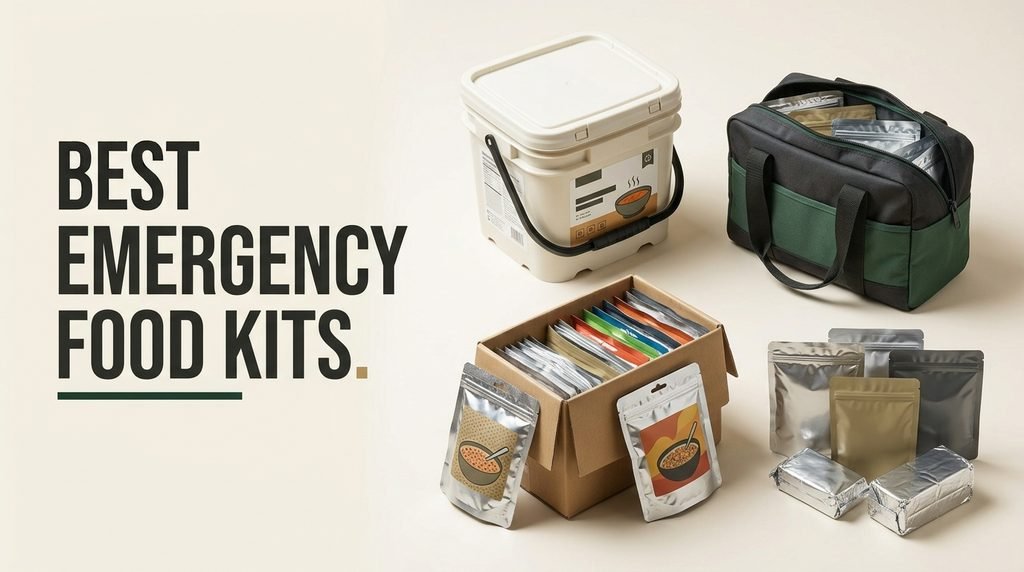
Building the right emergency food reserve for 2026 means balancing shelf life, calorie density, meal variety, and storage practicality against your household size and preparedness goals. We compare 10 standout survival food kits by the factors that matter most: serving counts, packaging durability, preparation requirements, nutritional variety, container design, brand reliability, and whether the kit genuinely suits short-term crisis or long-term storage.
Emergency food supplies vary widely in what they actually deliver. Some kits focus on entrees for lunch and dinner, others cover breakfast specifically, and complete 360-serving buckets aim for weeks of sustenance. Freeze-dried and dehydrated meals differ in preparation needs, texture, and water requirements, which affects how usable each kit is during an actual emergency.
Whether you need a 72-hour grab bag for sudden evacuations, a family-sized bucket for extended power outages, or a long-term pantry stockpile for serious preparedness, the picks below cover the most practical options available. Read on to find the emergency food kit that matches your household size, your storage space, and the kind of situations you want to be ready for.
We compared 10 emergency food kits using the details that actually help a buyer decide: total servings, calorie counts, shelf life, packaging quality, water and heat requirements, meal variety, portability, container durability, and value per serving. The notes focus on practical trade-offs so each pick connects to how families and preppers actually use these supplies, from short-term grab bags for evacuations to long-term pantry storage for extended disruptions and real-world outdoor use.


Compare key features, scores, and current prices side by side. A shorter feature list means fewer details were available, not necessarily fewer capabilities.





The Augason Farms Lunch & Dinner Variety Kit delivers the broadest meal rotation of any kit in this guide, with 13 distinct varieties ranging from lasagna marinara and fettuccine alfredo to black bean burger mix and chocolate pudding. For households concerned about meal fatigue during an extended emergency, this variety matters significantly because eating the same two or three meals repeatedly becomes a real morale problem beyond the first few days.
We may earn a commission when you buy through this link, at no additional cost to you.
At 22,940 total calories across 113 servings, this kit provides substantial sustenance in a relatively affordable package. The cost per serving is one of the lowest in the category, which makes Augason Farms a practical choice for budget-conscious buyers who want to build a serious food reserve without the premium pricing of other brands. The 4-gallon bucket is compact enough for closet storage while still holding a meaningful quantity of food.
Preparation uses the just-add-water-and-heat approach that most dehydrated and freeze-dried meals share. Unlike some freeze-dried options that rehydrate in minutes with hot water alone, these dehydrated meals typically require simmering on a stove to reach proper texture. This means you need to think about cooking fuel as part of your overall emergency plan, whether that is a camping stove, propane burner, or alternative heat source.
Food fatigue is a real phenomenon that affects morale and willingness to eat during extended emergencies. Research into disaster response consistently shows that people under stress eat less when faced with monotonous food options, even when calories are available. Thirteen distinct meal varieties in this kit give you enough rotation to maintain appetite and family morale during the kind of multi-week scenarios that justify long-term food storage in the first place.
This kit is the right choice for budget-conscious preparedness buyers who want maximum meal variety and calorie density per dollar. The main tradeoff is that preparation requires actual cooking with heat rather than just hot water, so your emergency plan must include a way to boil and simmer. For buyers with camping stoves or alternative cooking setups ready to go, this delivers exceptional value across a surprising range of comfort-food meals.
Buyers without reliable access to a stove or heat source for simmering, or those who need the ultra-fast rehydration of freeze-dried meals.
We may earn a commission when you buy through this link, at no additional cost to you.
The Ready Hour 120 Serving Entree Bucket is built for preppers and households that want a solid foundation of long-term emergency food without overcommitting to a massive 360-serving system. With 22 resealable pouches containing a mix of entrees, this kit lets you open only what you need and save the rest, which matters when a family of two or three activates the supply during a short-term outage rather than a full-scale emergency.
We may earn a commission when you buy through this link, at no additional cost to you.
The flood-safe container is one of the more thoughtful details in this category. Many emergency food buckets look sturdy but offer limited protection against water damage, which is a real concern in basements, garages, and storm-prone areas. The sealed bucket construction protects the inner pouches even if the storage area takes on water, and the integrated handle makes grab-and-go transport practical during evacuations.
Preparation is straightforward with the standard just-add-water approach that most freeze-dried meals use. Each pouch indicates water quantity and cook time, typically 10 to 15 minutes from boiling water to ready-to-eat. The food is designed to taste good enough for everyday use rather than only serving as last-resort calories, which encourages the kind of rotation and sampling that keeps your emergency stockpile fresh in both practice and memory.
During an actual emergency, you rarely need to prepare an entire multi-serving pouch at once. Resealable pouches let you cook just what the household needs for a single meal and save the rest for the next day, which stretches your supply and reduces waste. The 22 resealable pouches in this kit are a practical advantage over bulk-packaged alternatives that force you to prepare an entire large pouch each time.
This bucket is the right choice for buyers who want a quality 25-year food reserve from an established American manufacturer without stepping up to the price of a 360-serving kit. The main tradeoff is that it covers only entrees, so you will need a separate breakfast kit for complete daily coverage. For households adding to an existing stockpile or starting with lunch and dinner coverage first, this delivers excellent value.
Buyers who need complete daily coverage including breakfast or who want pre-mixed single-serving pouches for grab-and-go use.
We may earn a commission when you buy through this link, at no additional cost to you.
The ReadyWise 120 Serving Sample Bucket aims to introduce new preparedness buyers to the ReadyWise entree lineup through a curated selection of popular meals. Featured dishes include Cheesy Macaroni, Lasagna, Teriyaki Rice, and Chicken Flavored Noodle Soup, giving you a representative mix of flavors to identify which varieties your family actually prefers before committing to larger supplies.
We may earn a commission when you buy through this link, at no additional cost to you.
The split-lid bucket is a distinctive design detail that proves surprisingly useful. One half of the lid snaps off and functions as a tray or food holder, which simplifies serving when you are preparing meals outside a normal kitchen setting. During a power outage or camping scenario, having a dedicated clean surface for food preparation makes the experience more manageable than wrestling with pouches on uneven ground.
The stackable design matters more than it first appears. For buyers who plan to build up a larger emergency stockpile over time, buckets that stack efficiently save significant space in pantries, garages, and basement storage areas. The 25-year shelf life gives you ample time to work through the supply at your own pace, whether through gradual rotation into daily meals or during actual emergencies.
The split-lid tray design is more than a marketing feature. During actual use, having a flat clean surface to place a steaming pouch on while you add utensils, salt, or seasonings makes meal preparation significantly easier. The lid also serves as a food holder when eating, which is particularly useful during outdoor or vehicle-based scenarios where tables and plates may not be available.
This kit is a strong fit for first-time emergency food buyers who want to sample a brand’s offerings before committing to larger supplies. The main tradeoff is that the sample variety is curated by the manufacturer rather than selected by you, so some meals may appeal more than others. For buyers who want flexibility to try before scaling up, this delivers real practical value at an accessible price point.
Buyers who already know which specific meals they want or who need breakfast coverage included in the same kit.
We may earn a commission when you buy through this link, at no additional cost to you.
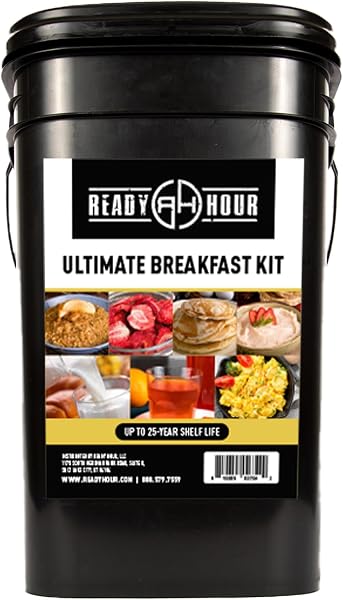
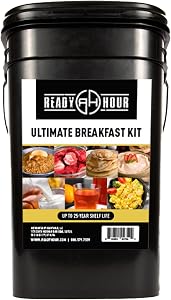
The Ready Hour Breakfast Bucket fills the specific gap left by most emergency food kits, which tend to focus on lunch and dinner entrees while leaving breakfast as an afterthought. With 128 servings across seven different breakfast varieties including Maple Grove Oatmeal, Buttermilk Pancakes, and Scrambled Eggs, this bucket provides proper morning meal coverage for households that take breakfast seriously even during emergencies.
We may earn a commission when you buy through this link, at no additional cost to you.
The 2,000-plus calorie daily delivery is particularly notable because it addresses one of the common complaints about emergency food kits: insufficient calories to actually sustain active adults. During an actual emergency, physical and mental stress often increases caloric needs rather than reducing them, and kits that deliver only 1,200 or 1,500 calories per day leave people hungry and tired. Hitting over 2,000 daily calories makes this kit genuinely sustaining rather than just survival-level.
Packaging construction is a clear step above budget alternatives. Quadruple-wrapped resealable pouches with double-sized oxygen absorbers extend practical shelf life and protect against moisture, light, and air infiltration. The industrial-strength bucket adds another protective layer and simplifies storage. These construction details matter because an emergency food supply only helps if it remains edible when you actually need it years or decades after purchase.
An effective emergency food plan covers breakfast, lunch, dinner, and snacks across the expected emergency duration. Combining a dedicated breakfast bucket with an entree bucket like the Ready Hour 120 Serving Entree gives you proper meal rotation throughout the day. For households planning 30 or more days of emergency food, this combination approach generally delivers better satisfaction than a single mixed bucket because you get more variety at each meal time.
This bucket is the right choice for households building out a complete day-to-day emergency food plan rather than just entree coverage. The obvious tradeoff is that you need to pair it with a lunch and dinner kit like the Ready Hour 120 Serving Entree Bucket for full daily meals. For buyers who want proper breakfast variety during extended emergencies rather than eating granola bars for weeks, this provides exactly what the entree-focused kits miss.
Buyers who want a single all-in-one kit covering all three daily meals or those who already have breakfast coverage from other sources.
We may earn a commission when you buy through this link, at no additional cost to you.
The ReadyWise 132 Serving Survival Bucket solves the common problem of needing both breakfast and entrees without buying two separate buckets. With 3 breakfast options, 8 gourmet entrees, and 2 drink choices including the brand's Whey Milk Alternative, this single container provides enough meal variety to carry a small family through a multi-week emergency without becoming repetitive.
We may earn a commission when you buy through this link, at no additional cost to you.
The 11 total meal varieties strike a reasonable balance between simplicity and rotation. Fewer options than the Augason 13-variety kit, but with the significant advantage of covering all three daily meal periods. For buyers who want one bucket that handles everything rather than coordinating multiple specialized kits, this consolidated approach reduces complexity in both purchasing and daily use.
The familiar split-lid bucket serves as both container and food preparation tray, which has become a signature ReadyWise feature. The stackable design works well for buyers who plan to accumulate multiple buckets over time, since they fit neatly together in pantries and basement storage areas. The 25-year shelf life provides long storage runway, and the just-add-water preparation suits most emergency scenarios where cooking equipment may be limited.
Serving counts can be misleading if you do not translate them into days of actual coverage. A 132-serving bucket at 3 servings per person per day covers one person for 44 days, two people for 22 days, or a family of four for 11 days. Think honestly about who you are feeding and for how long when calculating what you actually need. For most families, a single bucket this size represents a solid short-to-medium-term supply rather than a complete long-term solution.
This bucket is the right choice for small families or couples who want comprehensive meal coverage from a single container without the commitment of a 360-serving kit. The main tradeoff is that heavy users will need to add additional buckets for extended emergencies, since 132 servings runs through faster than it initially appears. For buyers looking at 2 to 3 weeks of coverage for 2 to 3 people, this hits a strong practical balance.
Large families or buyers planning for 30-plus days of emergency food who need the larger capacity of 300-plus serving kits.
We may earn a commission when you buy through this link, at no additional cost to you.
The 4Patriots 128 Serving Entree Kit stands out for its calorie density, delivering 31,600 total calories across 128 servings. That works out to approximately 247 calories per serving, which is substantially higher than many competing kits where servings often come in at 150 to 200 calories. For active adults during actual emergencies, those extra calories per serving make a real difference in energy and satiety.
We may earn a commission when you buy through this link, at no additional cost to you.
The recipe variety leans heavily toward comfort food that most Americans actually enjoy, including Nonna’s Secret Recipe Spaghetti, Cheesy Chili Mac, America’s Finest Mac & Cheese, Fireside Stew, and Frank’s Favorite Alfredo. During a stressful emergency, familiar comfort foods matter more than exotic variety, and this kit’s selection targets the kind of hearty home-style meals that help people feel normal when circumstances are anything but.
Packaging quality shows serious attention to shelf life preservation. Triple-layer Mylar pouches combined with high-capacity oxygen absorbers protect against the three main threats to long-term food storage: air, light, and moisture. This disaster-resistant construction gives you confidence that food purchased today will remain usable when needed 10, 20, or 25 years from now, which is the entire point of long-term emergency food reserves.
Kits that advertise high serving counts can be misleading if each serving only delivers 150 calories. An adult typically needs 2,000 or more calories per day, which means low-calorie servings add up to needing far more servings than the kit math suggests. The 4Patriots approach of fewer but larger servings often provides better practical value because each eating occasion actually satisfies hunger and sustains energy. Compare calories per serving as well as total servings when evaluating kits.
This kit is the right choice for buyers who want premium calorie density and comfort-food variety from an American-packed supply. The higher per-serving price reflects the extra calories and quality construction, and it also means you need fewer servings to meet actual daily calorie needs. For households that want serious emergency food without the compromises of ultra-budget alternatives, 4Patriots delivers quality that justifies the investment.
Budget-focused buyers who prioritize servings per dollar over calories per serving, or those who need breakfast coverage included.
We may earn a commission when you buy through this link, at no additional cost to you.
The ReadyWise 360 Serving Bucket represents a serious commitment to emergency preparedness, delivering a substantial food reserve that can carry a small family through weeks of disruption or a single individual through months. With 360 total servings covering both breakfast and gourmet entrees, this bucket consolidates significant coverage into a single purchase decision rather than requiring you to coordinate multiple smaller kits.
We may earn a commission when you buy through this link, at no additional cost to you.
Meal variety includes Cheesy Macaroni, Lasagna, Pasta Alfredo, Brown Sugar & Maple Multi Grain Cereal, and a bonus pouch of Maple Flavored Syrup to add to breakfast items. The syrup pouch is a thoughtful detail that elevates breakfast beyond basic sustenance, which matters psychologically during extended emergencies when morale maintenance becomes as important as pure calorie delivery.
The 25-year shelf life gives you decades of storage runway, which effectively means you can buy once and have the supply available indefinitely with proper storage conditions. The stackable split-lid bucket design matches other ReadyWise products, so multiple purchases over time integrate neatly into your overall storage system. For buyers who view emergency food as a long-term insurance policy rather than annual rotation, this storage longevity is a key value driver.
A 360-serving bucket takes up real physical space, typically around 2 cubic feet including clearance for access. Before buying, identify specifically where you will store it, considering factors like temperature stability, protection from flooding, accessibility during emergencies, and visibility to household members. Basements and interior closets work well, while garages and attics often experience temperature swings that can shorten shelf life. Climate-controlled storage preserves food quality best over the full 25-year rated lifespan.
This bucket is the right choice for serious preparedness buyers who want substantial long-term coverage in a single purchase and have the storage space to accommodate it. The main tradeoffs are the significant upfront investment and the physical space the bucket requires. For buyers who have been building up smaller kits and want to consolidate into a serious reserve, or households preparing for extended scenarios like multi-month supply disruptions, this delivers meaningful preparedness capability.
Apartment dwellers or buyers with limited storage space, or anyone who prefers to build up emergency supplies gradually in smaller increments.
We may earn a commission when you buy through this link, at no additional cost to you.
The 4Patriots 72-Hour Survival Food Kit targets a specific preparedness need: short-term emergency coverage for evacuations, vehicle emergency supplies, and short power outages where you do not need weeks of food. With 20 servings providing approximately 4,800 total calories over three days, this kit covers one person through a typical short-term emergency without the bulk and expense of larger supplies.
We may earn a commission when you buy through this link, at no additional cost to you.
The compact size is the key practical advantage. This kit fits easily in a vehicle emergency box, a bug-out bag, or an entryway closet for grab-and-go deployment during unexpected evacuations like wildfires, floods, or hurricane warnings. The lightweight packaging makes it practical to actually carry during walking evacuations, which is where many larger emergency food kits become impractical to transport.
Meal variety includes Grammy’s Sweet Oatmeal and America’s Finest Mac & Cheese among other options, delivering about six servings per day across breakfast, lunch, dinner, and snacks. At roughly 1,600 calories per person per day, this is survival-level rather than sustaining-level calorie intake, so active adults may need to supplement with additional snacks or energy bars for extended physical activity during the emergency.
Keeping emergency food in your vehicle addresses scenarios like being stranded during storms, extended traffic jams, or evacuations where you cannot return home. The 4Patriots 72-Hour Kit works well in this role because of its compact size and 25-year shelf life. Store the kit in the trunk or cargo area where temperatures are more stable than the passenger cabin, and check the kit annually to confirm the packaging remains intact and the storage temperature has not exceeded recommended limits.
This kit is the right choice for buyers who need short-term emergency coverage specifically for grab-and-go scenarios rather than long-term home storage. The main tradeoff is that 1,600 daily calories is at the low end of adult needs, so consider doubling up for two-person coverage or supplementing with higher-calorie backup supplies. For vehicles, evacuation bags, and apartment dwellers with limited storage, this delivers practical three-day coverage without overcommitting space or budget.
Buyers needing extended emergency coverage beyond three days or households that want full daily calorie needs for active adults.
We may earn a commission when you buy through this link, at no additional cost to you.
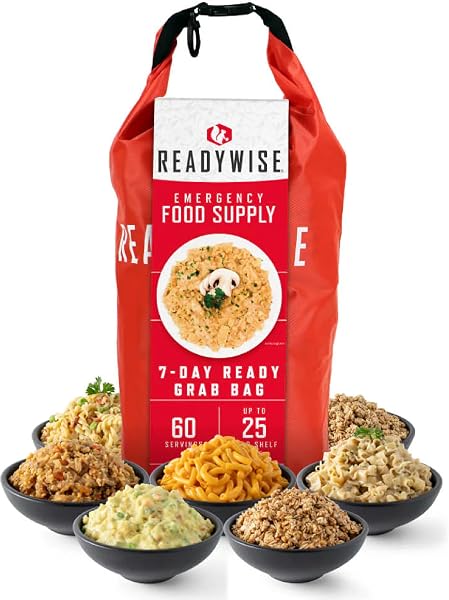
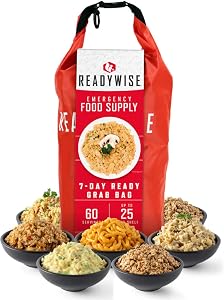
The ReadyWise 7 Day Grab Bag takes a fundamentally different approach from bucket-based kits by delivering 60 servings in a tactical-inspired backpack designed for mobility. For buyers building out a true bug-out setup where you may need to evacuate on foot, this packaging solves the critical problem that bucket-based supplies cannot: you cannot easily carry a 4-gallon bucket for miles during a walking evacuation.
We may earn a commission when you buy through this link, at no additional cost to you.
Meal variety covers both breakfast and entrees, including Cheesy Macaroni, Creamy Pasta & Vegetables, and Crunchy Granola. The 60 servings provide roughly a week of coverage for one person at reasonable serving rates, bridging the gap between the 20-serving 72-hour kits and the 120-plus serving home storage buckets. This makes it a solid middle option for scenarios lasting longer than a few days but less than extended multi-week emergencies.
The tactical-inspired backpack with adjustable strap transforms the practicality of emergency food during actual evacuations. Rather than needing to transport a bucket to a shelter or alternative location, you can simply pick up the pack and move. The organized interior keeps pouches accessible, and the backpack itself can serve additional purposes once the food is consumed. For wildfire-prone areas, hurricane zones, and flood regions, this grab-and-go design matters.
Many preparedness experts recommend separating food into its own dedicated pack rather than mixing it with other gear. This approach lets you grab specific supplies based on the emergency type: food plus water for shelter-in-place, or multiple packs including gear for longer evacuations. The ReadyWise 7 Day Grab Bag fits this strategy well because it is self-contained and can be grabbed independently of your other emergency supplies when the situation calls for it.
This grab bag is the right choice for buyers who prioritize evacuation mobility over bulk storage efficiency. The main tradeoff is that the backpack space devoted to food cannot carry other critical bug-out gear like water, first aid supplies, or shelter, so this works best as a dedicated food pack within a larger bug-out system rather than as your only emergency bag. For households in disaster-prone areas, pairing this with a separate gear pack creates a strong overall evacuation setup.
Buyers who want maximum storage efficiency or those who do not expect evacuation scenarios in their preparedness planning.
We may earn a commission when you buy through this link, at no additional cost to you.
The Ready Hour Fruit & Veggie Mix addresses the significant nutritional gap in most emergency food kits, which focus heavily on starches, pasta, and prepared entrees while leaving fresh produce essentially absent. For buyers who recognize that long-term emergency diets based entirely on mac and cheese and pasta create real nutritional deficiencies over time, freeze-dried fruits and vegetables provide the vitamins, fiber, and variety that help maintain health during extended food storage reliance.
We may earn a commission when you buy through this link, at no additional cost to you.
The 30-year shelf life is one of the longest in the entire emergency food category, extending even beyond the 25-year standard that most freeze-dried entrees offer. This extended shelf life makes the fruit and vegetable mix particularly valuable as a long-term pantry supplement, since you can buy once and have the supply available well into decades of future preparedness. Freeze-dried produce rehydrates quickly in water and can be eaten dry as a snack when needed.
The seven resealable pouches follow the same practical use-only-what-you-need approach that makes the Ready Hour entree bucket flexible. Resealed pouches last up to a year after opening, so you can incorporate small amounts into daily cooking during rotation without wasting the entire supply. This encourages regular use and familiarity with the product, which matters when you actually need to rely on it during emergencies.
Emergencies lasting weeks or months on prepared food can lead to deficiencies in vitamins A, C, and K along with reduced fiber intake, all of which affect health, energy, and immune function. Including freeze-dried fruits and vegetables in your stockpile addresses these gaps directly. During actual emergencies, mixing rehydrated produce into basic entrees transforms both the nutritional value and the eating experience, which supports both health and morale during extended disruptions.
This container is the right choice for buyers who already have primary entree and breakfast coverage and want to round out their emergency food plan with proper nutritional variety. The main tradeoff is that this is explicitly a supplement rather than a complete meal supply, so it must be paired with other kits for full coverage. For serious preparedness buyers thinking about long-term nutrition rather than just calorie delivery, adding freeze-dried produce to your stockpile fills a critical gap.
Buyers looking for a complete meal supply or those who want all nutrition from a single consolidated kit.
We may earn a commission when you buy through this link, at no additional cost to you.
Selecting an emergency food kit involves matching serving counts, calorie density, meal variety, and shelf life to your household size, storage situation, and preparedness goals. The kits in this guide cover a wide range of use cases, from 72-hour grab bags to 360-serving long-term reserves. This guide walks through the factors that genuinely matter when narrowing down your choice.
Serving counts advertised on emergency food kits can be deceiving if you do not translate them into actual days of coverage for your household. A kit with 120 servings might sound substantial, but at 3 servings per person per day it only covers one person for 40 days, two people for 20 days, or a family of four for 10 days. Before buying, do the honest math for your actual household size and the duration of emergency you want to prepare for.
Consider also that during actual emergencies, physical and mental stress often increases caloric needs rather than reducing them. Children, pregnant women, elderly family members, and people with health conditions may need more than the standard adult allocation. The 4Patriots 72-hour kit explicitly notes that its 1,600 daily calories may be insufficient for people in these categories, which is honest guidance that applies to most emergency food kits regardless of brand.
Match total serving counts to realistic household needs and emergency duration goals. For most families, a mix of short-term grab-bag kits and larger home storage buckets provides better flexibility than any single kit size.
Most quality emergency food kits advertise 25-year shelf life, with some like the Ready Hour Fruit & Veggie Mix reaching 30 years. These ratings assume proper storage conditions, which typically means cool temperatures below 75 degrees Fahrenheit, dry environments, protection from light, and intact packaging. Actual shelf life can be dramatically shorter if storage conditions exceed these recommendations, especially temperature.
Common storage mistakes significantly shorten shelf life. Garages and attics in warm climates can regularly exceed 100 degrees Fahrenheit during summer, which degrades freeze-dried food far faster than cool basement storage. Direct sunlight through windows damages pouches over time. Humid environments can compromise packaging seals and introduce moisture to oxygen absorbers. Choose storage locations with the best possible conditions available to you.
If you cannot provide ideal storage conditions, plan to rotate your supply more frequently rather than relying on the full 25-year shelf life. Checking buckets and pouches annually for signs of damage or degradation extends practical usefulness and catches problems early.
Different emergency food kits have significantly different preparation requirements, which matters during actual emergencies when resources like water, fuel, and cooking equipment may be limited. Freeze-dried meals typically rehydrate with hot water in minutes, requiring only a way to boil water. Dehydrated meals like those in the Augason Farms Lunch & Dinner Kit usually require actual simmering on a stove, which demands more fuel and cooking time.
Water requirements can be substantial. Many emergency meals need 1 to 2 cups of water per serving, which adds up quickly across multiple family members and multiple meals per day. A 7-day emergency food supply for a family of four could easily require 20 to 30 gallons of water just for cooking, not counting drinking water. Factor water storage or purification capability into your overall preparedness plan alongside your food supply.
Match preparation requirements to your realistic emergency scenario. If you expect scenarios where cooking fuel may be scarce, prioritize freeze-dried meals that need only hot water. If you have reliable camping stoves or alternative cooking setups, dehydrated meals offer better value per serving.
Food fatigue is a real phenomenon that affects morale and willingness to eat during extended emergencies. The Augason Farms kit with 13 varieties provides significantly more rotation than a kit with 4 or 5 meal options, which matters more over weeks of use than it does for occasional sampling. For emergency scenarios lasting more than a few days, variety becomes a genuine health and morale consideration rather than just a nice-to-have feature.
Family preferences also matter significantly. A kit full of meals your family does not actually enjoy sits unused during an emergency, which defeats the purpose of the stockpile entirely. Many brands offer sample kits like the ReadyWise 120 Serving Sample Bucket specifically so you can identify which varieties work for your household before committing to larger supplies. Taking advantage of these samplers prevents buying hundreds of servings of meals your family will not eat.
If you have young children, picky eaters, or specific dietary needs in your household, test meals before scaling up your supply. Build around what people actually enjoy rather than optimizing purely for calories or price per serving.
Emergency food packaging varies substantially in quality, which directly affects both shelf life and usability during actual emergencies. Premium kits like the 4Patriots and Ready Hour options use multi-layer Mylar pouches with high-capacity oxygen absorbers that provide genuine 25-year protection. Budget kits may use thinner single-layer packaging that compromises shelf life even under good storage conditions.
Container design matters for both storage and emergency use. Flood-safe buckets like those on Ready Hour products protect contents even if your storage area takes on water, which is a real concern for basement storage during flooding events. Split-lid designs on ReadyWise buckets provide practical food preparation surfaces during actual use. Grab-bag designs like the ReadyWise 7 Day solve mobility problems that bucket formats cannot address.
Match packaging and container features to your realistic emergency scenarios and storage situation. Flood-safe containers matter in flood zones, grab-bag designs matter for evacuation-prone areas, and premium pouch construction matters for very long-term storage.
Most emergency food kits focus on lunch and dinner entrees while leaving breakfast as an afterthought and skipping produce entirely. For complete daily meal coverage, you typically need to combine multiple specialized kits: an entree kit like the Ready Hour 120 Serving, a breakfast kit like the Ready Hour Breakfast Bucket, and ideally a supplement like the Ready Hour Fruit & Veggie Mix for nutritional variety.
Alternative approaches include all-in-one kits like the ReadyWise 132 Serving Bucket that include both breakfast and entrees in a single container, or the ReadyWise 360 Serving Bucket for consolidated long-term coverage. These single-container approaches simplify purchasing but may offer less variety and flexibility than coordinated specialized kits.
For buyers starting a serious emergency food plan, begin with entree coverage since it addresses the largest number of daily meals, then add breakfast and produce supplements as budget and storage space allow. This phased approach builds coverage over time without requiring a massive upfront investment.
Proper storage significantly extends the practical shelf life of emergency food kits. Choose a cool, dry, dark location with stable temperatures below 75 degrees Fahrenheit, which typically means interior closets, basements, or climate-controlled pantries rather than garages and attics. Keep buckets off bare concrete floors by using wooden pallets or shelving, since concrete can transfer temperature changes and condensation to the containers. Label each bucket with the purchase date to track your supply age.
Periodic sampling and rotation keeps your supply fresh in both the food itself and your family’s familiarity with preparing it. Open one pouch every few months to confirm the food quality remains good, test preparation methods, and identify which varieties your family actually enjoys. This practice also builds confidence that you can actually prepare the meals during an emergency when stress makes new tasks harder. Resealed pouches typically last up to a year after opening if stored properly.
Water planning deserves attention equal to the food supply itself. Most emergency meals require 1 to 2 cups of water per serving, which means a week of meals for a family of four could require 20 to 30 gallons of water just for cooking. Store adequate water alongside your food supply, plan for water purification capability if your supply might be limited, and remember that drinking water needs are separate from and additional to cooking water. A complete emergency food plan includes both the meals and the water needed to prepare them.
Most quality emergency food kits advertise 25-year shelf life, with some products like freeze-dried fruits reaching 30 years. These ratings assume proper storage conditions including cool temperatures below 75 degrees Fahrenheit, dry environments, and intact packaging. Actual shelf life can be significantly shorter if storage conditions exceed these recommendations. For maximum longevity, store in interior climate-controlled spaces rather than garages or attics.
Most adults need 2,000 to 2,500 calories per day during normal activity, and emergency scenarios often increase rather than decrease these needs due to physical and mental stress. Children, pregnant women, elderly family members, and people with health conditions may need different amounts. Many emergency food kits advertise serving counts that work out to only 1,200 to 1,600 calories per person per day, which is survival-level rather than sustaining-level. Plan for actual caloric needs rather than minimums.
Freeze-dried food has moisture removed through a vacuum freezing process that preserves cell structure, texture, and most nutrients while allowing fast rehydration with hot water in just a few minutes. Dehydrated food has moisture removed through heating, which is less expensive but typically requires actual simmering on a stove for 10 to 20 minutes to achieve proper texture. Freeze-dried generally offers better texture and nutrition retention, while dehydrated offers better value per serving.
Most emergency food kits require only a way to boil water, which can come from a camping stove, propane burner, grill, or home gas stove. Freeze-dried meals typically rehydrate with hot water alone, while dehydrated meals usually need actual simmering. Factor cooking fuel into your overall emergency plan, since gas and electric service may be disrupted during the exact emergencies you are preparing for. Having a dedicated camping stove with fuel reserves addresses this gap.
Most emergency meals require 1 to 2 cups of water per serving, which adds up substantially across multiple meals and family members. A week of three meals per day for a family of four could require 20 to 30 gallons of water just for cooking, in addition to drinking water needs of roughly a gallon per person per day. Plan water storage or purification capability alongside your food supply, since the two must work together during an actual emergency.
The right approach depends on your situation and goals. Multiple smaller kits like the 4Patriots 72-Hour and ReadyWise 7 Day Grab Bag provide flexibility for different scenarios like vehicle emergencies, evacuations, and short-term home disruptions. A single large kit like the ReadyWise 360 Serving Bucket consolidates long-term storage efficiency. Most serious preparedness plans use a combination: grab-bag kits for evacuation and vehicle supplies, plus larger buckets for home storage.
Properly stored emergency food often remains safe to eat beyond labeled shelf life, though nutritional value and taste may degrade over time. Signs of compromised food include damaged packaging, discoloration, off odors, or visible mold. If packaging remains intact and food looks and smells normal after preparation, it is generally safe to consume. However, nutritional content decreases over time, so very old food may not provide the vitamins and nutrients indicated on the original labeling.
Standard emergency food kits typically contain gluten, dairy, and common allergens, which may not suit everyone. Specialty brands offer gluten-free, dairy-free, and vegetarian options at higher prices, though the kits in this guide are primarily standard formulations. If you have serious dietary restrictions, read specific ingredient lists carefully before buying and consider supplementing with your own suitable storable foods. Having some familiar safe foods in your emergency supply reduces risk during an actual emergency.
Most preparedness experts recommend using emergency food kits as a backup to regular shelf-stable groceries rather than as the sole source. Canned goods, dried beans and rice, peanut butter, and other everyday pantry staples often provide better daily nutrition and taste at lower cost. Emergency food kits excel at long-term storage and quick preparation when regular food runs out or cooking becomes difficult. Think of them as insurance that activates when needed rather than daily meal plans.
Sample individual meals periodically during normal times rather than waiting for an actual emergency to try the food for the first time. This builds familiarity with preparation methods, identifies which varieties your family prefers, and reveals any taste or texture issues before they matter critically. Children especially benefit from trying emergency foods in advance, since familiar meals reduce stress and encourage eating during actual emergencies. Make sampling part of camping trips or occasional at-home practice.
The Ready Hour 120 Serving Entree Bucket stands out as the strongest overall choice for most households building serious emergency food reserves. Its combination of 25-year shelf life, flood-safe container, 22 resealable pouches for flexible use, and American manufacturing makes it a solid foundation for ongoing preparedness. For buyers starting their first substantial food reserve or adding to an existing stockpile, this entree bucket delivers quality and practical features that justify its position as the editorial choice.
For buyers with different needs, several strong alternatives serve specific use cases. The ReadyWise 360 Serving Bucket provides serious long-term coverage in a single purchase for buyers with storage space to accommodate it. The Augason Farms Lunch & Dinner Kit delivers exceptional meal variety at the lowest cost per serving for budget-conscious buyers. The 4Patriots 72-Hour Kit and ReadyWise 7 Day Grab Bag address evacuation and vehicle emergency scenarios where bucket formats become impractical. The Ready Hour Breakfast Bucket and Fruit & Veggie Mix fill specific gaps that most entree-focused kits leave unaddressed.
Choosing the right emergency food kit comes down to matching serving counts, calorie density, meal types, and container format to your actual household size, storage situation, and realistic emergency scenarios. Start by honestly calculating days of coverage for your family size, identify whether you need evacuation-ready portability or home storage efficiency, and decide whether you want all-in-one consolidation or specialized kits that cover specific meal periods. Any of the 10 options in this guide can serve as part of a serious preparedness plan when matched to the right user and purpose.