MEEPO Campus V3
8.0Editor scoreDual 500W hub motors
28 mph top speed
11-mile range
IPX5 water resistance
Compare 10 top electric skateboards by motor power, top speed, range, deck construction, and rider skill level to find the right board for your commute or ...
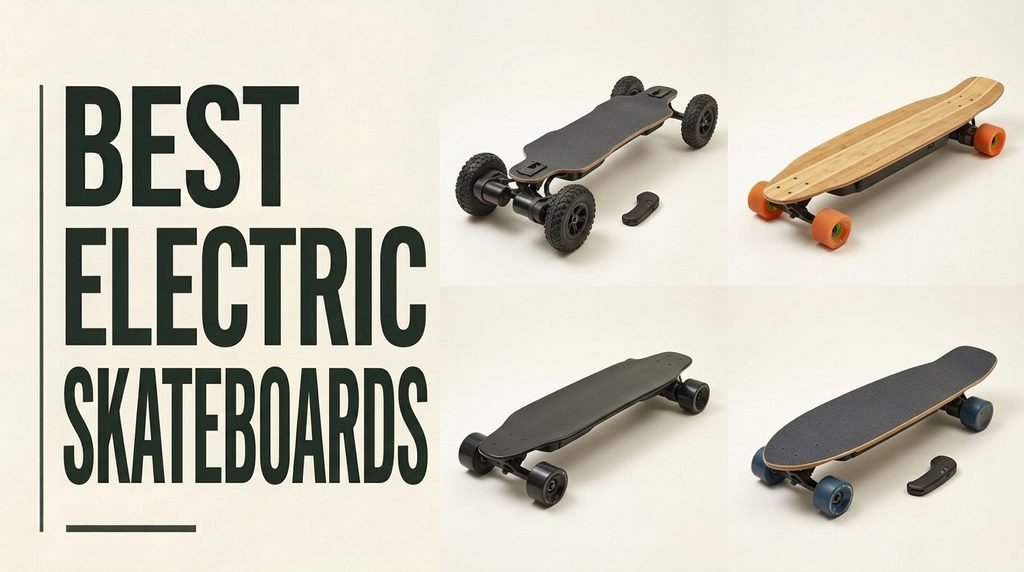
Choosing the right electric skateboard means balancing motor power, battery range, deck construction, and rider skill level against how you actually plan to ride. We compare 10 standout boards across commuter, off-road, and beginner categories so you can match top speed, hill-climbing ability, wheel type, and remote features to your daily routes and experience level.
The differences between these boards are substantial. A 350W single-motor cruiser handles neighborhood rides at 10 to 15 mph, while dual 1500W belt-drive setups push past 30 mph and conquer steep hills. Wheel size, deck flex, and whether the board uses hub motors or belt drives all affect how it feels under your feet.
Battery capacity, charging speed, and swappable packs determine how far you can go between stops. Safety certifications like UL 2272, remote ergonomics, and brake smoothness matter just as much as raw top speed. This guide breaks down each board so you can prioritize the features that fit your terrain, riding style, and confidence level.
We compared 10 electric skateboards using the specs that actually shape a buyer’s decision: motor power, top speed, range per charge, hill-climbing grade, deck construction, wheel type and diameter, remote features, braking smoothness, weight capacity, UL 2272 safety certification, and owner feedback. The notes focus on practical trade-offs so each pick connects to how riders actually commute, carve, cruise, and tackle different terrain at various skill levels.

Compare key features, scores, and current prices side by side. A shorter feature list means fewer details were available, not necessarily fewer capabilities.


The isinwheel V10 Off-Road is built for riders who want serious performance in a package that handles both pavement and lighter off-road paths. Dual 1500W belt-drive motors produce a combined 3000W of power that pushes the top speed to 32 mph with the kind of smooth, torque-rich acceleration that belt drives are known for. Belt systems typically deliver stronger initial pull than hub motors, which matters when climbing hills or accelerating from a stop with heavier loads.
We may earn a commission when you buy through this link, at no additional cost to you.
The 37-inch deck uses a 10-layer hybrid construction combining 8 maple layers with bamboo and fiberglass for a balance of strength, flex, and vibration damping. Custom laser-cut grip tape provides reliable traction without excessive deck weight, and the total 27-pound weight is manageable for a board at this performance level. The 265-pound weight capacity accommodates most adult riders with gear.
The 6-inch rubber pneumatic tires are the key to the board’s versatility. They absorb vibration on cracked pavement, roll smoothly over gravel and packed dirt, and resist punctures better than lightweight tubes. The smart LCD remote places speed, braking, and mode selection within easy reach, and professional-grade trucks keep carving and downhill descents stable at higher speeds where cheaper trucks begin to wobble.
Belt-drive motors deliver stronger torque and more responsive acceleration, which makes them the preferred choice for hill climbing and high-performance riding. The tradeoff is maintenance: belts wear out and need replacement every few hundred miles depending on riding style, and the exposed drivetrain is vulnerable to debris. Hub motors integrate the motor directly into the wheel for a cleaner, lower-maintenance design, but typically offer less torque and a slightly stiffer ride because the wheel itself is less compliant.
The main consideration is that belt-drive systems need periodic attention. Belts stretch and eventually need replacement, and the exposed drive mechanism is more vulnerable to debris than enclosed hub motors. The 32 mph top speed also demands a helmet and ideally full protective gear, since a fall at that speed can cause serious injury. For experienced riders who want long range, high top speed, and the ability to handle mixed terrain, the V10 delivers performance that justifies its higher position in the market.
Beginners, riders who want a maintenance-free hub motor system, or anyone uncomfortable with speeds above 25 mph.
We may earn a commission when you buy through this link, at no additional cost to you.
The MEEPO Campus V3 is built for riders who want a serious commuter board without stepping into off-road territory. Dual 500W hub motors push the top speed to around 28 mph, which is plenty quick for navigating college campuses, city streets, or neighborhood loops. The 8-layer Canadian maple deck provides the right balance of flex and rigidity, and the integrated carry handle cut into the deck makes a real difference when you need to climb stairs or load the board into a car.
We may earn a commission when you buy through this link, at no additional cost to you.
The ESC and M5 remote work together to deliver smoother braking than many competing boards in this price range. Four speed modes let you ease into riding at low settings before moving up to the full 28 mph top speed, which matters when you are still building confidence on an electric board. The IPX5 water resistance rating means light rain or wet pavement will not immediately damage the electronics, though this is not a free pass to ride through puddles.
Charging takes about 2.8 hours from empty to full at 1.5A, which is reasonable for a board in this capacity class. The 11-mile range is adequate for most commutes but will shrink if you ride aggressively, climb hills, or weigh more than the typical test rider. The package includes everything you need to get started: charger, adapter cable, remote, repair tool, and manual. MEEPO backs the board with a 6-month support window and UL 2272 certification.
Many electric skateboards weigh 15 pounds or more, and carrying a 40-inch deck under one arm gets awkward quickly. An integrated carry handle cut directly into the deck lets you grip the board like a briefcase, which is far more comfortable for stairs, elevators, and short walks between riding sections. This small design detail becomes a daily convenience if your route involves any walking segments or multi-modal transit.
The main consideration is that the 11-mile range places this board in the daily-commute category rather than the all-day cruising category. If your round trip exceeds 8 miles or includes significant hills, you may finish with less battery than you expect. For riders whose commutes fall within range and who value a portable board with a handle built into the deck, the Campus V3 is one of the more thoughtful commuter options available.
Riders who need more than 11 miles of range per charge or want serious off-road capability on rough terrain.
We may earn a commission when you buy through this link, at no additional cost to you.
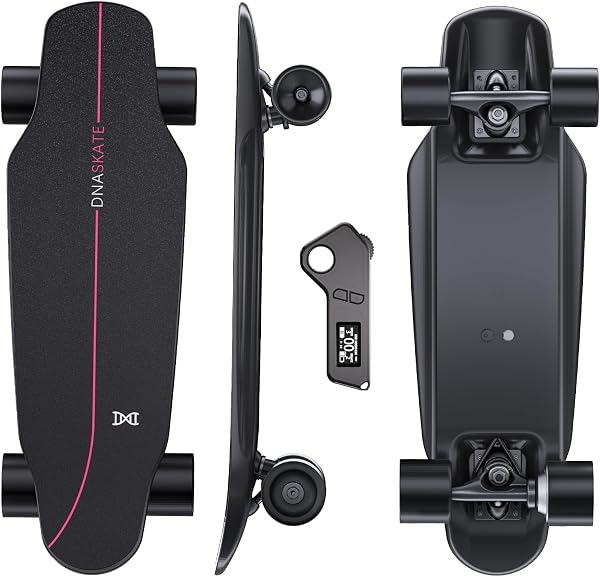
The DNASKATE M8 takes a different approach from most electric longboards. Instead of a wide, long deck built for high-speed stability, it uses a 28-inch short deck with a functional kicktail that behaves like a traditional cruiser skateboard. At 11.5 pounds, it is one of the lightest options in this guide, which makes it genuinely practical to carry into a classroom, office, or apartment without feeling encumbered.
We may earn a commission when you buy through this link, at no additional cost to you.
The 400W brushless hub motor pushes the top speed to around 15 mph, which is comfortable for most casual riders and fast enough for short urban commutes. The brushless hub motor design is generally more reliable than belt drives because there are fewer wearing parts and no belts to replace. The claimed 14-degree max climbing angle handles most mild urban hills, though steeper grades will slow the board significantly.
The LCD remote adds genuine utility by displaying speed, battery level, and the currently selected mode. Four speed modes let you dial the board down for beginners or crowded sidewalks. One of the smart design choices is the integrated battery housed inside the deck, which raises ground clearance and gives the board a cleaner look than external battery enclosures. Even without motor assistance, the kicktail lets you push the board like a regular shortboard if the battery runs out.
Most electric longboards have flat or slightly curved tails that are purely cosmetic. A functional kicktail lets you lift the nose for sharper turns, pop up curbs, and continue riding manually if the battery dies. This matters more than many beginners realize: having the option to kick-push home when you misjudge your range turns a potential problem into a minor inconvenience.
The main tradeoff is range and top speed. A 9-mile range covers most short commutes but will leave longer riders charging frequently, and the 15 mph top speed will feel slow if you want highway-adjacent cruising. For riders who prioritize portability, maneuverability, and a familiar shortboard feel over raw performance, the M8 is a well-rounded choice that fits into daily life more easily than larger boards.
Riders who want a wide, stable deck for high-speed cruising or need more than 9 miles of range per charge.
We may earn a commission when you buy through this link, at no additional cost to you.
The MEEPO Bamboo Off-Road is built for riders who want to leave pavement behind. Dual 1800W motors deliver enough torque to climb 30 percent slopes, which translates to real-world confidence on steep driveways, trail inclines, and bridge approaches. The 28 mph top speed is impressive, but the more meaningful spec is the 20 to 31 mile range, which puts this board in all-day adventure territory rather than quick-commute territory.
We may earn a commission when you buy through this link, at no additional cost to you.
The 42-inch deck combines Canadian maple with carbon fiber composite for the strength needed to handle the shock loads that come with off-road riding. Reinforced mountain-bike-style trucks and 8-inch pneumatic tires absorb vibration from gravel, grass, and packed dirt that would bounce a standard urethane-wheeled board to a stop. The removable 10Ah battery is a practical feature for riders who want to carry a spare or swap packs between longer rides.
The intelligent ESC smooths throttle response and braking precision, which matters at these speeds and on uneven terrain where sudden jolts can throw you off balance. The color-display remote shows real-time speed, mode selection, and includes a reverse mode for maneuvering in tight spaces. The combination of pneumatic tires and the carbon-reinforced deck absorbs enough shock to make rough paths genuinely enjoyable rather than punishing.
Standard polyurethane skateboard wheels are rigid and transmit every bump directly into your legs. Pneumatic air-filled tires compress on impact and smooth out everything from cracked pavement to packed trail dirt. The tradeoff is maintenance: pneumatic tires can go flat and need occasional pressure checks. For off-road riding, that minor upkeep is a small price to pay for the dramatic improvement in ride quality and the ability to tackle terrain that would stop a standard board.
The tradeoffs are weight and complexity. This is not a board you casually sling under your arm to walk into a coffee shop, and the dual-motor power demands respect from newer riders. The 3.9 star rating also suggests some buyers have encountered issues, so be prepared to use the warranty if problems arise. For experienced riders who want serious off-road capability and long range in a single package, this Bamboo model delivers performance that few electric skateboards can match.
Beginners, lightweight riders who need an easy-to-carry board, or anyone whose riding stays entirely on smooth pavement.
We may earn a commission when you buy through this link, at no additional cost to you.
The Askate A1 is designed around the needs of younger riders and newcomers to electric skateboarding. The 31.5-inch deck is compact enough to feel manageable without being so short that it loses stability, and the single 350W motor delivers a top speed of around 15 mph that is quick enough to feel exciting but slow enough to stay within a beginner's comfort zone. The 8-ply Canadian maple deck supports up to 264 pounds, which is generous for a board aimed at teens.
We may earn a commission when you buy through this link, at no additional cost to you.
The MR remote with its LED screen is one of the more useful features for new riders. Being able to see battery level, instant speed, and total mileage at a glance helps riders learn to manage their range and understand how their riding style affects battery consumption. Four speed modes paired with four brake modes let parents and new riders dial in the board’s responsiveness as skills develop, starting conservatively and working up to higher settings over time.
The claimed 17-mile range at steady speed is strong for a single-motor board at this price point, though real-world range will be lower if you ride aggressively or climb hills. The UL2272 certified battery provides the safety standard most parents look for before letting a teen ride, and the lithium pack delivers consistent power across its charge cycle. The vertical storage design is a thoughtful touch for apartments and dorm rooms where floor space is limited.
Manufacturer range claims are typically measured at steady low speeds on flat ground with a lightweight test rider. Real-world range for most riders falls 30 to 40 percent short of the advertised number because of hills, acceleration cycles, heavier rider weight, and wind resistance. When evaluating range, assume you will get about two-thirds of the claimed distance in normal riding conditions, which means a 17-mile board will realistically deliver around 10 to 12 miles for most riders.
The main limitation is the single-motor configuration. Dual-motor boards handle hills more confidently and provide redundancy if one motor has issues. For flat urban and suburban riding, the A1’s single motor is sufficient, but hilly areas will expose its limits. For parents shopping for a first electric skateboard for a teen or for adult beginners who want approachable specs and useful features, the Askate A1 is a sensible starting point.
Experienced riders who want dual-motor performance or anyone who regularly rides steep hills.
We may earn a commission when you buy through this link, at no additional cost to you.
The MEEPO Mini S3 solves one of electric skateboarding's biggest frustrations: running out of battery mid-ride. The swappable battery system lets you carry a spare pack and switch to a fresh battery in seconds, effectively doubling your range without waiting for charging. For riders who commute long distances or want to spend a full day cruising without hunting for outlets, this is a genuinely useful feature that competitors rarely offer at this price point.
We may earn a commission when you buy through this link, at no additional cost to you.
Dual 600W hub motors deliver a combined 1200W of power that handles 30-degree hills with ease. Four speed modes accommodate riders of different skill levels, and the smooth, maintenance-free hub motor design keeps long-term ownership costs low. The 187.2Wh UL-certified automotive-grade lithium battery provides consistent power across its 10 to 13 mile base range, and adding a swap battery can push total range to 20 to 26 miles.
The dual charging port design is a thoughtful performance detail. Using two chargers simultaneously fully recharges the battery in just 1.25 hours, which is faster than almost any competitor. Even with a single charger, you can go from empty to full in 2.5 hours. The 105mm large PU wheels and 7-ply bamboo and maple deck work together to absorb vibration and provide stability on rough urban surfaces where smaller wheels would struggle.
Non-swappable boards force you to plan every ride around battery capacity: how far can I go, where will I charge, how long until I can ride again. A swappable system eliminates that mental overhead because a 30-second battery swap gives you full range again. For commuters who ride to work and back, keeping a charged spare battery at the office means you never have to worry about recharging during the day. The upfront cost of extra batteries pays off quickly in flexibility and peace of mind.
The main consideration is that extra batteries and additional chargers are sold separately, so the full value of the swap-and-go system requires additional investment. The base range of 10 to 13 miles is also modest compared to some competitors, so the swap battery is less of a nice-to-have and more of a near-necessity for longer rides. For riders who prioritize range flexibility and fast charging, the S3 offers a battery system that few other boards can match.
Buyers who want maximum range on a single battery without purchasing additional accessories.
We may earn a commission when you buy through this link, at no additional cost to you.
The MEEPO Mini5 Flow stands out from the pack with its surf-inspired swallow tail deck design that is engineered for sharp turns and agile carving. The wider rear provides stability at speed while the swallow cutouts let you pivot and carve with a responsiveness that straight-tail decks cannot match. If you came to electric skateboarding from surfing or longboarding and miss the feeling of carving through turns, this deck shape will feel immediately familiar.
We may earn a commission when you buy through this link, at no additional cost to you.
At 9.5 inches wide, the Flow has one of the widest decks in its class, which translates to more foot space, better balance, and genuine comfort for riders with larger feet. The combination of fiberglass, bamboo, and maple in the deck construction provides the flex needed for responsive carving along with the strength to handle the 330-pound maximum load. Dual 2519W motors push the top speed to around 32 mph and tackle hills up to 26 percent grade.
The 105mm wheels, 100A bushings, and DKP trucks are tuned for the kind of smooth, carvy riding the deck shape invites. The sandblasted grip tape provides traction without visually overwhelming the deck graphics, and the EVA padded tail pad gives your rear foot a comfortable, locked-in platform for extended rides. The premium TP-50SG battery supports up to 24 miles of range per charge with just 2.5 hours of charging time to top it back up.
Narrow decks around 8 inches wide feel nimble but can cramp larger feet and reduce stability at speed. A 9.5-inch deck gives you noticeably more room to shift foot position during longer rides, which reduces fatigue and makes it easier to maintain balance on uneven surfaces. If you wear size 11 or larger shoes, deck width becomes one of the most important comfort factors to check before buying.
The main consideration is that the swallow tail shape is a stylistic commitment. It performs exceptionally well for carving and surf-style riding, but if you want a traditional longboard profile or a minimalist shortboard, this is not that board. At 23.7 pounds, it is also heavier than ultralight commuter options. For riders who value the carving experience and want a board with distinctive style, the Flow offers performance and personality that generic decks lack.
Riders who prefer a traditional longboard shape or need the lightest possible board for easy carrying.
We may earn a commission when you buy through this link, at no additional cost to you.
The WINDSEEKER Laser Carver is positioned as a true entry-level electric skateboard, prioritizing approachable performance and useful beginner features over raw specs. The 12.4 mph top speed is conservative by design, giving new riders time to develop balance and remote control skills without the risk of catastrophic high-speed falls. The 350W single hub motor delivers smooth acceleration that is easy to modulate from the remote.
We may earn a commission when you buy through this link, at no additional cost to you.
One of the standout features for beginners is fixed-speed cruise control, which engages when you hold the power button during acceleration. Once engaged, you can take your thumb off the throttle and let the board maintain speed on its own, which reduces hand fatigue on longer stretches and lets you focus on balance and steering rather than throttle modulation. The auto-boot when gliding feature means you do not need to bend down to turn the board on at every start.
The pressed-axle aluminum alloy trucks are more durable than the stamped-steel trucks found on many budget boards, which matters because trucks absorb the impact of every curb drop, pothole, and hard carve. The 8-ply rock maple deck supports up to 220 pounds and provides the flex needed for comfortable riding. UL 2272 certification confirms the battery meets safety standards, and the 2-hour charging time is reasonable for the 2000mAh battery capacity.
Modulating the throttle on an electric skateboard requires fine thumb control that most new riders have not developed yet. Fixed-speed cruise control removes that variable by maintaining a steady speed automatically, which lets you focus entirely on balance, foot position, and steering. As you build confidence, you can transition to full manual throttle control. This progressive learning path is one of the main reasons cruise control is a genuinely useful feature for beginners rather than just a convenience.
The main limitations are range and top speed. A 5-mile range is enough for short neighborhood rides but will not cover most commutes without a recharge, and the 12.4 mph top speed will feel slow once you gain experience. For true beginners, teens who need a first electric board, or anyone who wants an affordable way to try the category before investing more, the Laser Carver delivers solid value with useful beginner features. More serious riders will outgrow it quickly.
Experienced riders who want higher top speeds, longer range, or dual-motor performance.
We may earn a commission when you buy through this link, at no additional cost to you.
The Backfire G2 Black comes from a brand that has been in the electric skateboard space since 2009, which brings a level of design maturity and after-sales infrastructure that newer brands often lack. The G2 is positioned as a beginner-friendly longboard that still has enough power to remain fun as your skills develop, which is the sweet spot for riders who do not want to outgrow their first board within a few months.
We may earn a commission when you buy through this link, at no additional cost to you.
The 24 mph top speed is quick enough for confident riding but not so aggressive that it intimidates newer users. The 5.2Ah 187Wh battery pack uses high-quality cells with 41V high voltage and strong discharge capability, which translates to consistent power delivery across the full range. UL 2272 compliance confirms the battery meets safety standards, which is especially important for a board you might charge indoors or store in a shared living space.
The real upgrade over the original G2 from 2017 is the current generation of Hobbywing ESC, motors, and remote technology. These components deliver noticeably smoother acceleration and braking than earlier systems, which reduces the jerky starts and sudden stops that can throw newer riders off balance. The 11 to 12.5 mile range covers typical commutes and leisure rides, and the 180-day warranty is longer than most competitors offer at this price point.
Electric skateboards contain complex battery systems, custom motors, and proprietary remotes that can be difficult or impossible to service through third parties. Buying from an established brand like Backfire that has been in the market for over a decade means replacement parts, firmware updates, and warranty support are more likely to remain available over the life of the board. Newer brands may offer compelling specs, but their support infrastructure is often untested.
The main consideration is that this is a mature design rather than a cutting-edge release, so it lacks some of the newer features like swappable batteries or color displays. For buyers who value brand reliability, proven components, and a longer warranty over the latest features, the Backfire G2 delivers a well-executed balance of beginner-friendliness and real performance. It is a safe choice for a first electric longboard.
Riders who want the newest features like swappable batteries or need top speeds above 24 mph.
We may earn a commission when you buy through this link, at no additional cost to you.
The EBOSSOM ES6 SE is purpose-built for young riders aged 12 and up, with a 10 mph top speed that gives parents genuine peace of mind. At this speed, a fall is far more recoverable than at 20 or 30 mph, which makes this board a reasonable first electric skateboard for teens who are still developing coordination and judgment. The 350W brushless motor delivers steady, predictable acceleration that is easy to learn without being frustratingly slow.
We may earn a commission when you buy through this link, at no additional cost to you.
The wireless remote keeps the controls simple with intuitive speed, brake, and mode switches. Four speed modes let young riders start at the lowest setting and work their way up as skills develop, which is a far better learning path than diving straight into full power. The compact 27-inch deck is sized for smaller riders, making it easier to balance and control than full-size longboards that can feel unwieldy under younger users.
Safety certifications are a key selling point. The ES6 SE carries both UL 2272 certification for electrical safety and FCC compliance for the remote electronics, which addresses the two most common concerns parents have about kids-oriented electric skateboards. The reinforced deck supports up to 220 pounds, so the board can accommodate lightweight adult riders as well, though EBOSSOM recommends staying under 140 pounds for best battery performance and longevity.
Even at 10 mph, falls on pavement can cause scrapes, bruises, and occasionally broken wrists. Full protective gear including a helmet, knee pads, elbow pads, and wrist guards is strongly recommended for all riders but especially critical for young beginners who are still learning balance and response time. The small inconvenience of putting on gear before each ride is a trivial price to pay for preventing the kind of injury that could end riding entirely.
The limitations are what you would expect from a beginner board: the 10 mph top speed will feel slow to anyone with existing skating experience, and the 6 to 8 mile range is short compared to adult commuter boards. For its intended audience of young beginners and nervous first-time riders, those limitations are features rather than drawbacks. Pair the board with a helmet, knee pads, and elbow pads and it becomes one of the safest introductions to the category available.
Experienced riders or adults who want speeds above 10 mph or longer range for commuting.
We may earn a commission when you buy through this link, at no additional cost to you.
Selecting an electric skateboard involves more than picking the fastest board or the one with the longest advertised range. The right choice depends on your experience level, the terrain you will ride, how far you need to travel between charges, and how much time and money you want to invest in maintenance. This buying guide walks through the most important decision factors so you can match a board to your actual riding needs.
Motor power determines how quickly your board accelerates, how well it climbs hills, and how fast it will go on flat ground. Single-motor boards typically range from 350W to 500W and deliver top speeds between 10 and 15 mph, which is ideal for beginners and casual riders on flat terrain. Dual-motor boards combine two 500W to 1800W motors for top speeds between 24 and 32 mph, with significantly better hill-climbing ability and faster acceleration from a stop.
Top speed matters less than you might think. Riding at 30 mph on a skateboard is an experience most casual riders will never want to repeat, and the vast majority of real-world riding happens between 10 and 20 mph. What matters more is the acceleration curve and the board’s ability to maintain speed on hills. A dual-motor board at 1200W total will climb a 20 percent grade without strain, while a single 350W motor will slow dramatically on even moderate inclines.
Match motor power to your terrain and experience. Flat urban riders can get by with 350W single motors, hilly areas demand dual motors with at least 1000W combined output, and off-road or heavy riders should prioritize 1500W or higher per motor.
Range determines how far you can ride between charges, and it is one of the most commonly overstated specs in the electric skateboard market. Manufacturer claims assume ideal conditions: a lightweight rider at steady low speed on flat ground with no wind. Real-world range for most riders falls 30 to 40 percent below the advertised figure, so a board claiming 15 miles will realistically deliver 9 to 11 miles under normal use.
Charging time affects how practical the board is for daily use. Fast-charging designs with high-amp chargers can refill a battery in 1.25 to 2.5 hours, while slower chargers may take 4 to 5 hours. Swappable battery systems like those found on the MEEPO Mini S3 effectively eliminate charging downtime by letting you carry a spare pack. UL 2272 certification is essential for battery safety and should be considered non-negotiable, especially for boards charged indoors.
Calculate your typical round-trip distance, add a safety buffer of at least 30 percent, and choose a board whose advertised range exceeds that figure. For daily commuters, consider swappable battery systems that let you double your range on demand.
Electric skateboards use one of two drive systems. Hub motors integrate the motor directly into the wheel, creating a clean, maintenance-free design with no exposed belts or external drivetrain components. The tradeoff is that the motor becomes part of the wheel, which makes the wheel stiffer and slightly less compliant than a standard polyurethane wheel. Hub motors are quieter, more water-resistant, and virtually maintenance-free.
Belt-drive systems use a traditional motor connected to the wheel via a toothed belt. This design delivers more torque per watt, which translates to stronger hill climbing, faster acceleration, and better performance under load. The tradeoff is maintenance: belts stretch, wear, and eventually need replacement every few hundred miles. The exposed drivetrain is also more vulnerable to debris, water, and damage from scrapes.
Choose hub motors for low-maintenance commuting and casual riding on smooth pavement. Choose belt drives for maximum performance, hill climbing, and off-road use where torque matters more than drivetrain simplicity.
The deck is the platform you stand on, and its construction affects comfort, durability, and ride quality. Most electric skateboard decks use multiple layers of Canadian maple, typically 7 to 10 plies thick, for a balance of flex and strength. Some premium decks add bamboo, fiberglass, or carbon fiber layers to reduce weight while maintaining or increasing strength. Carbon fiber reinforcement is especially valuable on off-road boards where impact resistance matters.
Deck flex is a comfort consideration. Stiffer decks feel more stable at high speed but transmit more vibration from rough pavement into your legs. More flexible decks absorb vibration better and feel more lively during carving but can feel unstable at top speeds above 25 mph. Deck shape also matters: wider decks around 9 to 10 inches provide more foot space and stability, while narrower decks under 8 inches feel nimbler but can cramp larger feet.
Match deck construction to your use case. Pavement commuters benefit from maple-and-bamboo hybrids with moderate flex, high-speed riders want stiffer carbon-reinforced decks, and off-road riders should prioritize carbon fiber composite decks that can handle shock loads.
Wheels dramatically affect how your board handles different surfaces. Standard polyurethane wheels between 90mm and 105mm are the default choice for most electric skateboards and work well on smooth pavement. Larger PU wheels around 105mm roll over cracks and small debris better than smaller 83mm wheels, which can get caught by road imperfections and stop the board abruptly. Harder wheel durometers around 78A to 85A roll faster but transmit more vibration.
Pneumatic air-filled tires between 6 and 8 inches in diameter transform a board’s capability on rough surfaces. They absorb impacts that would stop a PU-wheeled board and allow riding on gravel, packed dirt, grass, and light trails. The tradeoff is maintenance: pneumatic tires can go flat, need occasional pressure checks, and are vulnerable to punctures from sharp debris. For dedicated off-road boards, this maintenance is well worth the dramatic improvement in terrain versatility.
Choose large PU wheels around 105mm for the best pavement experience, and only step up to pneumatic tires if you genuinely need off-road capability. Mixing wheel types for different occasions is impractical because changing wheels on most electric skateboards is time-consuming.
The remote is your primary interface with the board, and its features affect both safety and enjoyment. Basic remotes offer throttle, brake, and mode switching with no display. LCD or color-display remotes show real-time speed, battery level, selected mode, and sometimes mileage, which helps you manage range and understand how your riding affects battery consumption. For longer commutes, a display remote is a genuine upgrade that reduces anxiety about running out of power.
Remote ergonomics matter more than many buyers realize. A remote that fits comfortably in your hand and places the throttle wheel at a natural thumb angle will cause less fatigue on long rides and give you finer control over acceleration and braking. Cheap remotes with awkward button layouts or imprecise throttle wheels make the board harder to control and reduce confidence at higher speeds.
If possible, prioritize boards with LCD or color-display remotes, especially for commuting use. The small cost premium pays off in better range management and more precise control.
UL 2272 certification is the industry standard for electric skateboard battery safety. It verifies that the battery pack, charging system, and electronics have been tested to prevent fires, overheating, and other electrical hazards. For any board you plan to charge indoors or store in a shared living space, UL 2272 should be considered mandatory. Some boards also carry FCC certification for their remote electronics, which prevents interference with other wireless devices.
Build quality beyond the battery matters for long-term reliability. Pressed aluminum trucks are stronger than stamped-steel trucks, high-quality ESC units provide smoother acceleration and braking, and reputable brand components like Hobbywing ESCs have better long-term track records than generic alternatives. Warranty length is a useful proxy for build quality: brands that offer 6-month or longer warranties typically have more confidence in their products.
Never compromise on UL 2272 certification, and prioritize boards from established brands with warranty support longer than 90 days. The small savings on uncertified boards are not worth the fire risk or lack of after-sales support.
Weight capacity affects both safety and performance. Riding at or near a board’s maximum weight capacity reduces acceleration, shrinks range, and increases stress on motors and trucks. Most electric skateboards support between 220 and 330 pounds, but choosing a board rated well above your weight provides a safety margin and better long-term reliability. Heavier riders should also prioritize dual-motor boards because single motors struggle to maintain performance under load.
Deck width and length should also match rider size. Larger riders benefit from wider decks around 9.5 inches that provide more foot space and better balance. Taller riders may want longer decks around 37 to 42 inches that give them a wider stance for stability. Smaller riders and teens often find compact 27 to 32 inch decks easier to control and more comfortable to carry.
Choose a board whose weight capacity exceeds your weight by at least 30 percent, and match deck dimensions to your body size. If you are near the upper weight limit, step up to a dual-motor board for better hill-climbing performance.
Before your first ride, fully charge the battery and spend time familiarizing yourself with the remote in a safe open space like an empty parking lot. Start in the lowest speed mode and practice gentle acceleration, braking, and turning until the controls feel natural. Always wear a helmet, and consider knee pads, elbow pads, and wrist guards especially while learning. The vast majority of serious electric skateboard injuries come from falls at higher speeds without protective gear, and the gear is a trivial investment compared to the cost of a hospital visit.
Battery care has the biggest impact on long-term performance. Avoid draining the battery completely and avoid leaving it fully charged for weeks without use. For long-term storage, charge the battery to around 50 to 60 percent and store the board in a cool, dry location away from direct sunlight. Extreme temperatures damage lithium batteries, so avoid leaving your board in a hot car or freezing garage for extended periods. Most modern boards have smart battery management systems that enter sleep mode after extended inactivity, but checking the battery monthly during long storage periods is still a good habit.
Regular maintenance extends the life of your board significantly. Check trucks for loose bolts after the first few rides and periodically thereafter. For belt-drive boards, inspect belts for wear and replace them when they show signs of stretching or cracking. Keep wheels clean and free of debris, and tighten wheel bearings as needed. Avoid riding through puddles or heavy rain even on IPX5-rated boards, since prolonged water exposure can damage electronics not covered by the rating. After riding on dusty or dirty surfaces, wipe the deck and trucks down to prevent grit from working into bearings and moving parts.
Top speeds range from about 10 mph on beginner boards up to 32 mph on high-performance dual-motor boards. Most riders find 15 to 20 mph is the sweet spot for daily use, with higher speeds reserved for experienced riders in open areas. Remember that higher speeds also drain batteries faster and increase the severity of any falls.
Range varies from 5 miles on entry-level boards to 30+ miles on long-range off-road models. Real-world range typically falls 30 to 40 percent below manufacturer claims because of hills, rider weight, and aggressive riding. Swappable battery systems let you double your effective range by carrying a spare pack. Plan for the realistic range rather than the advertised number.
Yes, especially if you start with a board that has a low top speed mode and progressive speed settings. Boards like the EBOSSOM ES6 SE with a 10 mph top speed are specifically designed for new riders. Always wear a helmet and protective gear, start in low speed mode, and practice in an open space before taking the board into traffic or on hills.
Hub motors integrate the motor into the wheel for a clean, low-maintenance design that is quieter and more water-resistant. Belt drives use external motors connected to the wheels via belts, delivering stronger torque and better hill-climbing but requiring periodic belt replacement. Hub motors suit commuters who want minimal maintenance, while belt drives suit performance riders who prioritize acceleration and climbing power.
Hill climbing depends almost entirely on motor power. Single-motor boards under 500W struggle on grades above 10 percent, while dual-motor boards with 1500W or more combined output can handle 25 to 30 percent grades confidently. If you live in a hilly area, prioritize dual-motor boards and check the specified maximum climbing angle before buying.
Most electric skateboards have an IPX5 or lower water resistance rating, which means they can handle light rain and splashes but not puddles or heavy downpours. Prolonged water exposure can damage batteries, motors, and electronics even on rated boards. Avoid riding in rain whenever possible, and dry the board thoroughly if it does get wet.
Most lithium battery packs retain 70 to 80 percent of their original capacity after 300 to 500 full charge cycles, which translates to roughly 2 to 4 years of regular use. Proper care, including avoiding complete discharges and storing at moderate charge levels, significantly extends battery life. Swappable battery systems let you replace individual packs rather than retiring the whole board when the battery degrades.
At minimum, always wear a certified helmet. For higher-speed riding or if you are a beginner, add knee pads, elbow pads, and wrist guards. Full-face helmets provide better protection at speeds above 20 mph. Falls happen even to experienced riders, and the small inconvenience of wearing protective gear is trivial compared to the cost of serious injuries.
Most electric skateboards can be pushed manually like a regular board if the battery dies, though the drag from hub motors makes this harder than pushing a standard skateboard. Belt-drive boards usually push more easily because the motor is disconnected from the wheels. Boards with kicktails are especially practical because you can lift the nose and ride them like traditional cruisers.
Yes, UL 2272 certification should be considered non-negotiable, especially for boards you charge or store indoors. The certification verifies that the battery and charging system have been tested to prevent fires and electrical hazards. Uncertified boards have been responsible for house fires in multiple documented cases. The modest cost savings on uncertified boards are not worth the safety risk.
The MEEPO Campus V3 stands out as the strongest all-around choice for most riders thanks to its balanced combination of 28 mph top speed, 11-mile range, dual 500W hub motors, and the thoughtful integrated carry handle that makes daily transport practical. The IPX5 water resistance adds confidence for unpredictable weather, and the four-mode speed control lets riders at different skill levels dial in their comfort zone. For commuters and recreational riders alike, it hits the sweet spot of performance, portability, and value.
For buyers with specific needs, the alternatives are compelling. The isinwheel V10 Off-Road delivers true high-performance capability with 3000W of dual belt-drive power and 28 miles of range for riders who want serious speed and off-road versatility. The MEEPO Mini S3 Pixel solves the range problem entirely with its swappable battery system and 1.25-hour fast charging. The EBOSSOM ES6 SE provides a safe, affordable entry point for teens and true beginners who need a conservative first board with proper safety certifications.
The right electric skateboard for you depends on three questions: what is your experience level, where will you ride, and how far do you need to go between charges. Beginners should prioritize low top speeds and progressive mode controls over raw performance. Commuters need to match range to their actual route distance with a safety buffer. Riders tackling hills or rough terrain should invest in dual-motor boards with pneumatic tires. Use the comparison table and buying guide above to match a board to your real-world needs rather than chasing the highest spec on paper.