OLIGHT ArkPro Ultra
9.4Editor score1700 lumen flood
800 lumen spotlight
365nm UV light
Magnetic USB-C charging
Find the right edc flashlights for 2026. We compare 10 standout options by build quality, useful features, owner feedback, value, and everyday trade-offs.
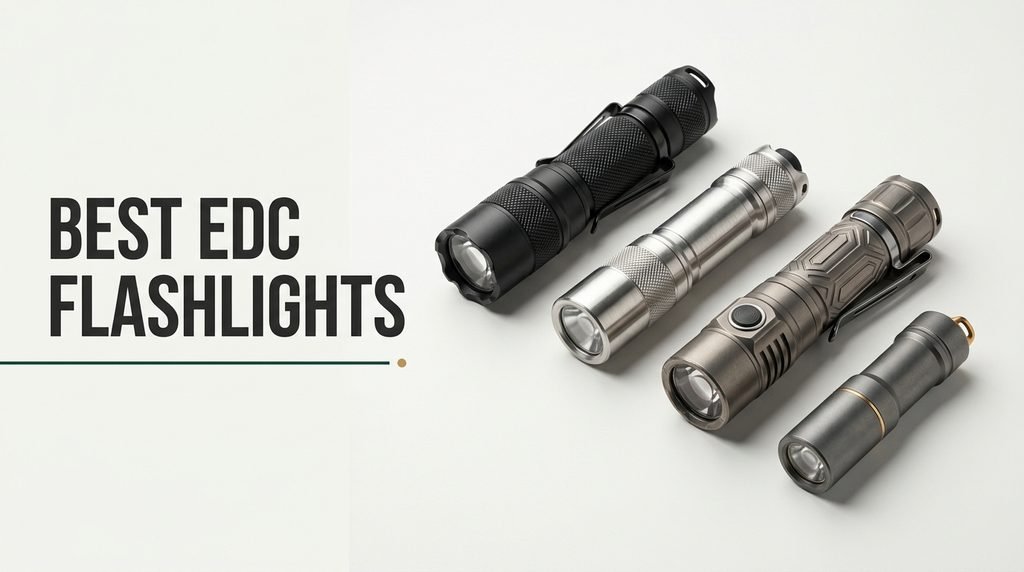
Choosing the right pocket light for 2026 comes down to a short list of practical factors: lumen output, beam distance, body size, charging options, battery runtime, build materials, and extras like UV or red light. This guide compares 10 standout EDC flashlights so you can match the right tool to your pocket, your work, and your everyday routine without overpaying.
EDC flashlights have evolved quickly. Flat bodies now disappear into jeans pockets, magnetic charging has become common, and output has climbed well past what most people need in a pinch. The real question is not which model is brightest, but which balance of brightness, runtime, and ergonomics matches how you actually use a light each day.
Below you will find a mix of ultra-compact penlights, flat-profile pocket flashlights, multi-light hybrids with UV and red modes, and high-output powerhouses. Each review explains who the light suits best, where it has limits, and what tradeoffs to weigh so you can confidently pick one that earns a permanent spot in your pocket or bag.
We compared 10 EDC flashlights using the details that actually matter when you carry a light daily: lumen output, beam distance, runtime, battery and charging type, body size and weight, pocket clip quality, waterproof rating, build materials, and secondary modes like UV, red, or RGB. Each pick is weighed against real everyday use, including pocket comfort, one-handed operation, and the tradeoffs between brightness, size, and battery life.

Compare key features, scores, and current prices side by side. A shorter feature list means fewer details were available, not necessarily fewer capabilities.






The standard ArkPro sits one step below the Ultra, offering a 1500 lumen floodlight, an 800 lumen spotlight that reaches 205 meters, UV, and a green beam. If you want the multi-source utility of the Ultra lineup but prefer to save a bit, this is the sweet spot in OLIGHT's flat EDC family.
We may earn a commission when you buy through this link, at no additional cost to you.
The flat body is the main appeal. It slips into a jeans pocket without printing like a traditional tube light, and the raised center ridge gives your fingers something to index on. A dedicated green beam button sits separate from the main selector, so switching between modes feels deliberate rather than fiddly.
Charging works through either USB-C or OLIGHT’s magnetic connector, which is a genuine convenience for anyone with other OLIGHT products already using that puck. Moonlight runtime stretches to around 14 days, which is useful for nightstand or go-bag duty where you want occasional low-level light without constant recharging.
For a typical commuter who uses the light a few times a day, expect to recharge roughly once a week on mid output. Keep the magnetic cable at your desk and the USB-C option in your bag, and you will rarely be caught at low battery.
Choose the ArkPro over the Ultra if you can live with 1500 lumens instead of 1700, or if the Ultra’s extended feature set feels like overkill. For most daily EDC use, the ArkPro delivers nearly identical performance and the same comfortable form factor at a lower price.
Buyers who want a traditional tube flashlight shape or user-replaceable batteries.
We may earn a commission when you buy through this link, at no additional cost to you.
The ArkPro Ultra is designed for someone who wants a single pocket light that can replace several specialty tools. In one flat body you get a wide 1700 lumen flood for general use, an 800 lumen spotlight when you need to see down the street, a 365nm UV light for stain and leak detection, and a green beam that works well for presentations or marking positions outdoors.
We may earn a commission when you buy through this link, at no additional cost to you.
What makes the Ultra stand out is how the four light sources can combine into seven configurations. The green beam pairs independently with any of the main three, which is unusual at this size. In practical terms, that means you can run flood with green at the same time to mark a target in a dim room, or UV plus green for inspection tasks where you need a pointer.
The body uses OLIGHT’s O-aluminum, which is noticeably harder than typical 6061 aluminum. The rotating mode dial feels secure, the dual-direction clip grips thick pocket seams, and the magnetic base lets it stick to a vehicle hood or metal shelf for hands-free work. Two color indicators show brightness and battery level, and a lockout cue prevents accidental activation in your pocket.
Property managers, hospitality workers, auto detailers, pet owners, and anyone who inspects surfaces will get real use from the UV mode. Trainers, hunters, and presenters benefit from the green beam. If none of those apply to you, a simpler single-source light saves money.
If you only need basic white light, the Ultra is more flashlight than you need. But if UV detection, a green pointer, or genuine multi-mode utility would actually get used, this is one of the most capable flat EDC flashlights available. Just plan on keeping it charged via the magnetic cable or USB-C, since the lithium polymer cell is permanently integrated.
Shoppers who only need basic white light and want a user-replaceable battery.
We may earn a commission when you buy through this link, at no additional cost to you.
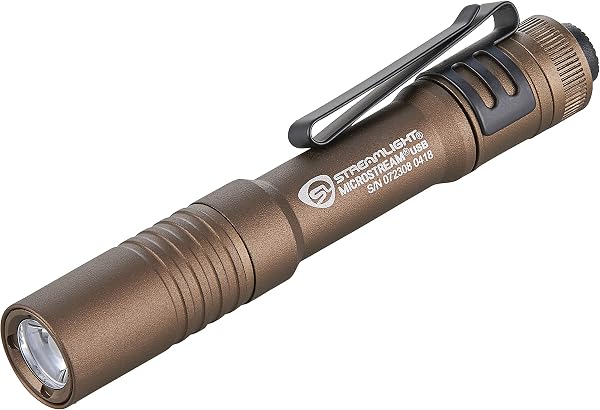
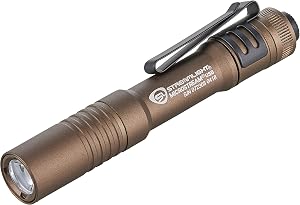
The MicroStream USB is proof that an EDC flashlight does not need 5000 lumens to be genuinely useful. With 250 lumens on high and 50 on low, it handles the vast majority of real pocket flashlight tasks: finding keys, walking a dog at night, checking under furniture, or lighting a dim hallway during a power blip.
We may earn a commission when you buy through this link, at no additional cost to you.
Streamlight has decades of experience building lights for first responders and tradespeople, and that reliability carries over here. The aluminum body is tested to one meter impact, the IPX4 rating handles splashes and light rain, and the included removable clip rotates onto a hat brim for genuine hands-free use.
Battery life is practical rather than extraordinary, with about 1.5 hours on high and 3.5 hours on low. The internal lithium-ion cell recharges via the included USB cable, and a status indicator tells you when it is topped off. At under four inches long, you can forget it is even in your pocket.
Indoor use, close-range outdoor tasks, and most routine EDC situations rarely need more than 200 lumens. Higher output drains batteries faster and can wash out detail at close range, so a modest, well-regulated light often outperforms a brighter one in practice.
If you want a dependable daily light without spending triple digits, the MicroStream is hard to beat. It will not out-throw a dedicated spotlight or match a flat EDC for raw output, but for everyday utility and a confidence-inspiring brand name, this is one of the easiest recommendations in the category.
Shoppers who need long throw, high output, or heavy outdoor weather resistance.
We may earn a commission when you buy through this link, at no additional cost to you.
The WUBEN G5 is for shoppers who prioritize absolute pocketability. At just 52 grams and small enough to live on a keychain, it is the kind of light you actually carry every day because you never notice it. The main white LED offers three brightness levels up to 400 lumens, which is plenty for close-range tasks.
We may earn a commission when you buy through this link, at no additional cost to you.
What sets the G5 apart in its price range is the auxiliary RGB module. Seven selectable colors cover everything from a red night-vision-friendly setting to a blue beacon or warning strobe. For campers, cyclists, or anyone who occasionally wants a signal light, that extra module adds genuine utility rather than feeling like a gimmick.
The rotating head and clip let you aim the beam without changing your grip, which is useful when the light is clipped to a cap brim or pocket. USB-C charging via a slide-switch design means you can top it up in about 90 minutes, and the IP65 rating handles rain and dust well for a light this small.
A keychain light should weigh less than 60 grams and tolerate rattling against keys. The G5 fits both criteria. If you prefer to carry a light clipped to a pocket, consider something a touch larger with a stronger clip for better retention.
Treat the G5 as a backup or always-on EDC rather than a primary workhorse. Runtime on high is limited by its tiny battery, and 400 lumens will not throw a beam across a yard. For the price, though, it is a thoughtful little tool that earns its spot on a keyring or in a jacket pocket.
Buyers who need maximum brightness or long runtime on a single charge.
We may earn a commission when you buy through this link, at no additional cost to you.
The HOTLIGH ZF8313 is pitched squarely at the home-handyman and weekend-mechanic crowd. With 2000 lumens on tap, a 144-meter beam, UV mode, and an RGB sidelight that doubles as an ambient or signal source, it packs a surprising amount of versatility into a sub-$30 light.
We may earn a commission when you buy through this link, at no additional cost to you.
Stepless dimming is the real everyday benefit here. Instead of clicking through fixed levels, holding the button smoothly ramps brightness from 120 up to 2000 lumens, letting you dial in exactly the output you need without flooding a workspace. Combined with the IPX6 water rating, it holds up to garage, driveway, and outdoor use.
The strong magnetic base and anti-slip clip are what make this light particularly useful for repair work. Stick it to a car hood, fridge, or toolbox and you have an instant work light that frees both hands. The built-in 2000mAh battery charges in roughly two hours over USB-C, with a visible blue indicator strip tracking progress.
Fixed brightness steps often skip the level you actually want. Stepless dimming lets you pick a brightness that preserves night vision or avoids wasting runtime, which translates to a longer usable charge in day-to-day situations.
This is not the slimmest option for pocket EDC, but it is a strong value if your idea of carrying a light means tossing it in a glove box, tool bag, or kitchen drawer where it stays ready for garage projects or power outages. The feature set at this price is tough to match.
Shoppers who want the slimmest possible flat EDC flashlight.
We may earn a commission when you buy through this link, at no additional cost to you.
The ArkPro Lite trims the ArkPro feature list to three light sources: 1200 lumens of white, a 365nm UV, and a red beam. The red light is the key differentiator for hunters, astronomers, campers, and anyone who needs to preserve their natural dark adaptation while reading maps or moving quietly at night.
We may earn a commission when you buy through this link, at no additional cost to you.
The 1000mW UV source is more powerful than many pocket UV lights, which makes it genuinely useful for finding pet accidents, hotel room stains, cash authentication, or scorpion spotting while hiking in the desert. SOS mode on the red light also adds a legitimate emergency signaling tool.
Ergonomically, the Lite shares the ArkPro family’s flat shape and anti-slip texture. The two-way pocket clip is sturdy enough for daily carry, and the magnetic tail clamp holds the light against metal surfaces for hands-free use. Dual charging via magnetic puck or USB-C keeps it practical for both home and travel.
Your eyes need around 20 to 30 minutes to fully adapt to darkness. White light instantly resets that adaptation, but red light preserves it, letting you check a map or gear without ruining your night vision. It also attracts fewer insects outdoors.
Choose the ArkPro Lite over the standard ArkPro if red light and strong UV matter more to you than a green pointer or maximum white output. For hunters, outdoor hobbyists, and inspection work, that trade is often the right one.
Buyers who want the brightest possible white output or need a green pointer beam.
We may earn a commission when you buy through this link, at no additional cost to you.
If flat EDC flashlights do not appeal to you, the Baton4 Pro is a strong pick in the traditional tube format. At 4.37 inches long and about four ounces, it feels substantial in the palm without being heavy, and the knurled grip gives you confident control even with wet or gloved hands.
We may earn a commission when you buy through this link, at no additional cost to you.
The 1600 lumen peak and 200 meter beam put it comfortably above most pocket lights for outdoor use. A dual-switch layout combines a smart magnetic tactical tail switch with a recessed metal side button, so you can access turbo quickly or scroll through brightness levels without changing grip.
Charging flexibility is a real convenience. The magnetic tail cap snaps on for the fastest setup, and unscrewing it reveals a hidden USB-C port that works with any phone cable. That means you are never stuck without power whether you are at home, in the car, or borrowing a charger on the road.
Flat lights hide better in pockets and do not roll on tables. Tube lights index more naturally in the hand, often feel more secure in use, and tend to offer stronger throw thanks to larger reflectors. Choose based on how you actually use the light more often.
Pick the Baton4 Pro if you want the familiar cylindrical shape, strong tactile controls, and brightness that holds its own on walks, campsites, or around the property. It is less jeans-pocket-discrete than a flat light, but far more comfortable in the hand for extended use.
Shoppers who specifically want the slim, flat profile of modern EDC lights.
We may earn a commission when you buy through this link, at no additional cost to you.
The Nitecore EDC29 pushes flat EDC flashlights into true high-performance territory. With a 6500 lumen maximum and a 437-yard beam, it rivals dedicated search lights despite being only 0.76 inches thick. For anyone who occasionally needs serious reach from a pocketable light, this is one of the most impressive options available.
We may earn a commission when you buy through this link, at no additional cost to you.
Separate spot and flood emitters give you genuine flexibility. The spot mode punches a focused beam across open distance, while the flood mode spreads light evenly for close-range tasks. A digital display shows current output and status, and the controls can be customized to match the modes you use most often.
A mechanical slide-lock switch prevents the light from firing in your pocket, which is important given how much heat and output are available on turbo. Two lockout modes let you choose between fully disabling the light or keeping low modes available for safety. USB-C recharging takes about 75 minutes from empty.
Any pocket light pushing thousands of lumens will step down to a lower output after a short time to protect itself. This is normal thermal regulation, not a defect. Expect the EDC29 to hold turbo briefly, then settle into a lower sustainable mode.
Understand that the highest modes draw heavily on the battery and generate real heat, so turbo is for short bursts, not continuous use. If you want occasional access to spotlight-level brightness in a flat EDC form, the EDC29 delivers. For purely routine daily use, something simpler will serve you better.
Buyers who want the simplest possible controls or long runtime on peak output.
We may earn a commission when you buy through this link, at no additional cost to you.
The Nitecore EDC37 steps up from the EDC29 with 8000 lumen Lumen Shield burst mode and a beam that reaches 459 yards. It is designed for enthusiasts who want flagship output and real-time information in a pocket-carryable format, even if that means accepting a slightly thicker 1.22 inch body.
We may earn a commission when you buy through this link, at no additional cost to you.
The OLED screen is the standout feature. Instead of guessing from indicator lights, you see actual lumen output, remaining runtime, and current battery level. For anyone who likes data or wants precise awareness of how a light is performing, this transforms the user experience and makes mode changes feel deliberate.
Two dual-stage buttons handle the controls. The round tail button adjusts brightness and triggers a momentary ultralow mode for stealth use, while the rectangular button is customizable for spotlight, floodlight, or strobe depending on your priorities. USB-C fast charging fully tops the battery in just over two hours.
The screen helps you plan runtime for long tasks like power outages or multi-hour outdoor use. Knowing you have 40 minutes left on a mid setting is more useful than watching a dim indicator slowly change color, especially when you want to avoid being caught in the dark.
The EDC37 earns its premium pricing with max output, screen feedback, and strong runtime on lower modes, up to 190 hours. If you want the most capable flat EDC flashlight in this guide and will actually use that capability, it is worth the investment. Casual users will not take advantage of what it offers.
Shoppers who want the smallest, lightest pocket light or basic single-button operation.
We may earn a commission when you buy through this link, at no additional cost to you.
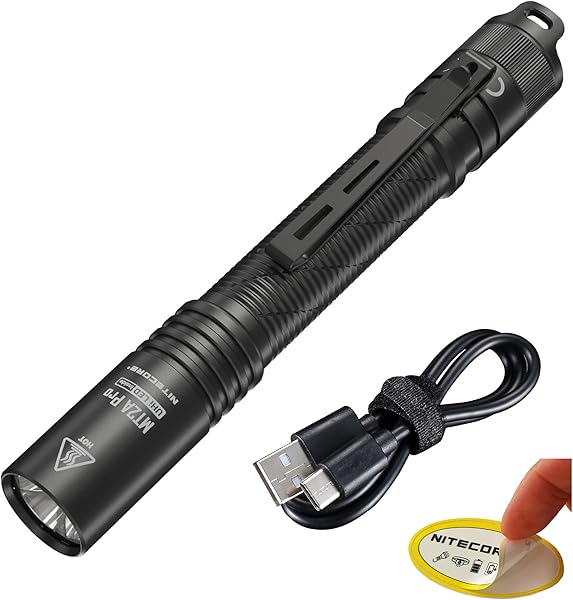
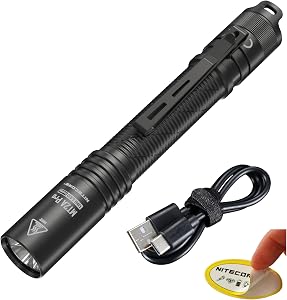
The MT2A Pro revives the classic penlight shape with modern internals. At under six inches long and just 3.45 ounces, it slides into a shirt pocket or shoulder bag easily, and the slim profile looks right at home clipped to a nurse's scrub top, mechanic's uniform, or jacket pocket.
We may earn a commission when you buy through this link, at no additional cost to you.
The output is where the MT2A Pro surprises. 1000 lumens from a penlight is well above what the format traditionally delivered, and the 279-yard beam gives you real reach when needed. Three brightness levels cover close inspection, general use, and distance tasks, with the tail switch recalling your last setting.
The real headline is dual power compatibility. The light recharges via USB-C like a modern EDC flashlight, but it can also run on two standard AA alkaline batteries in a pinch. That makes it uniquely well-suited for emergency kits, remote travel, or situations where you cannot count on finding a charging port.
Lithium internal batteries eventually degrade, and USB power is not always available. A light that can run on AAs lets you refresh power at any gas station, convenience store, or kitchen drawer, which is a meaningful advantage for travel kits and emergency gear.
Pick the MT2A Pro if the penlight shape fits your profession or carry style, or if you specifically want the backup of AA compatibility. It will not disappear into a jeans pocket like a flat EDC light, but it has a form factor and versatility story that nothing else in this guide matches.
Buyers who want a flat pocket profile or the brightest output in this guide.
We may earn a commission when you buy through this link, at no additional cost to you.
A great EDC flashlight is the one you actually carry and use. Below are the factors that genuinely matter when choosing between pocket lights, with practical guidance for making the right tradeoffs.
Lumens are the most marketed spec in flashlight shopping, but higher is not always better. For routine EDC tasks like checking a fuse box, walking a dog at night, finding dropped keys, or lighting a dim staircase, 100 to 300 lumens is usually plenty. Pushing beyond 1000 lumens is useful for outdoor distance work, searching large areas, or signaling, but most users rarely need to run those modes for long.
The practical consideration is that higher lumen counts drain batteries faster and produce heat that forces the light to step down to lower output. Something advertised at 8000 lumens is not going to deliver that output for hours. Look at how long the light can sustain a mid-brightness setting, since that is where you will spend most of your usage time.
If you are new to modern flashlights, start with a light in the 500 to 1500 lumen range. That gives you headroom for occasional high-output needs without wasting battery or weight on specs you will not use.
The best spec on paper is useless if the light stays in a drawer because it is too bulky to carry. Flat EDC flashlights have become popular precisely because they hide in a jeans pocket without the obvious cylinder-shaped print of a traditional tube light. Weight under five ounces is a good target for comfortable all-day carry.
Tube-shaped lights have their own advantages, particularly a more natural grip and often better throw thanks to a larger reflector. Penlights sit between the two formats, offering slim pocketability with a shape that still fits the hand well. Keychain lights work for ultralight carry but typically sacrifice brightness and runtime.
Think honestly about where the light will live. If it goes in a work pocket all day, prioritize flat shape and low weight. If it stays in a bag or glove box, size matters less and you can prioritize output or features instead.
Most modern EDC flashlights use integrated lithium polymer or lithium-ion batteries charged via USB-C or magnetic puck. Both work well, but there are tradeoffs. Built-in batteries make the light slimmer and simpler but eventually degrade and cannot be user-replaced. Models with removable 18650 or AA cells let you swap in fresh power anywhere.
Charging format also matters for your daily routine. USB-C has become universal, which means you can top up your light with the same cable as your phone. Magnetic charging is faster to connect and often more rugged since there is no exposed port, but you need the proprietary cable to use it. Dual-port designs give you both options.
Match the battery system to your use case. For primary EDC, built-in with USB-C is usually fine. For emergency kits, travel gear, or anywhere you cannot count on a charger, pick a light that accepts AAs or has a removable cell.
Beam pattern is often more important than raw brightness. A flood beam spreads light evenly across a wide area, which is ideal for walking paths, lighting a room, or close-up inspection. A spot or throw beam concentrates light into a tighter column that reaches farther, useful for searching across a yard or picking out distant details.
Many modern EDC flashlights offer separate flood and spot emitters, letting you switch based on the task. Reflector depth and emitter type influence how a beam performs, which is why two lights with identical lumen ratings can feel very different in use. Reading reviews that show actual beam shots is more useful than comparing specs alone.
If you are mostly indoors or doing close-range work, lean toward flood. If you spend time outdoors, around property, or need to identify things at distance, lean toward a light with a dedicated spot mode.
EDC flashlights get dropped, bumped, and occasionally caught in rain. Aluminum is the dominant material because it balances weight, strength, and heat dissipation well. Hardened variants like OLIGHT’s O-aluminum resist dents and scratches better than standard 6061, which matters if the light rides in a pocket with keys.
Water resistance is rated using the IP system. IPX4 handles splashes and light rain. IPX6 handles stronger water jets from any direction, which is more appropriate for outdoor work. IPX7 or IPX8 means the light can be submerged briefly. For most EDC use, IPX4 is adequate, but outdoor users should look for IPX6 or better.
Drop ratings, measured in meters, tell you how well the light survives falls. A one-meter rating is standard and realistic for pocket drops onto hard floors. Combined with sturdy construction, a well-rated light should last years of daily use.
Modern EDC flashlights increasingly include UV, red, green, or RGB auxiliary lights. UV helps with stain detection, leak finding, cash authentication, and spotting pet accidents. Red preserves night vision and is useful for astronomy, hunting, or quiet nighttime movement. Green beams work well for position marking and presentations.
These extra modes add real utility for the right user and real cost or complexity for everyone else. If you would never use UV detection, paying for it is wasted money. If you actually clean up after pets, inspect rental properties, or do forensic work, the UV mode alone may justify the purchase.
Be honest about which secondary modes you would actually use, then shop accordingly. The best multi-source light for someone who needs UV is overkill for someone who just wants white light to find their keys.
Controls make or break the user experience. Tail switches work well for tactical use and one-handed operation. Side switches feel more natural for scrolling through brightness levels. Rotating dials and recessed buttons help prevent accidental activation. The best interface for you depends on how you tend to grip and use the light.
Lockout features deserve attention. A light that accidentally fires in your pocket wastes battery and can get hot enough to damage fabric. Mechanical slide locks, button combinations, and twist-tail lockouts all work, but mechanical options are the most reliable since they do not rely on software.
Pocket clips should hold the light securely without being so stiff they tear fabric. Two-way clips that work in both directions add flexibility for cap brim or pocket carry. Magnetic bases are a bonus feature that turns the flashlight into a hands-free work light on any metal surface.
Set up your light before you need it. Charge the battery fully, test every mode, and practice the lockout procedure so you can trigger it quickly in your pocket. If your light has customizable buttons or memory recall, configure it to match the modes you use most often. A light you understand works better than one you fumble with.
Keep the lens and switches clean. Pocket lint, dirt, and skin oils gradually build up and can dim the output or interfere with button response. A soft cloth wipes the lens, and a cotton swab with a little rubbing alcohol cleans around switches and threads. Avoid solvents on anodized finishes to prevent discoloration.
For long-term battery health, avoid letting the light sit at zero percent for extended periods. Lithium cells last longest when stored around 40 to 70 percent charge and used regularly. If you store a light for months, top it up every few months. For lights that accept removable cells, cycle them occasionally rather than letting a single battery sit unused for years.
For most daily tasks, 200 to 500 lumens is plenty. Finding keys, walking at night, and checking dim spaces rarely need more. If you work outdoors, search larger areas, or want occasional access to a serious burst of light, look for a model that offers 1000 to 2000 lumens on tap. Lights pushing 6000 or 8000 lumens are useful for enthusiasts but overkill for most routine EDC use.
They are better for pocket carry because they do not print through fabric or roll off tables. Tube lights still have advantages, including a more natural grip, often better throw thanks to larger reflectors, and sometimes easier battery replacement. The right choice depends on how you carry and use the light. Many enthusiasts own one of each for different situations.
Both have strengths. USB-C uses the same cables as phones and other devices, so you are never without power. Magnetic charging connects faster and more reliably in rough conditions, and lights that use magnetic charging often have no exposed port, which improves water resistance. Dual-port models give you both options, which is the most convenient solution if available in your budget.
IPX ratings describe water resistance. IPX4 handles splashes and brief rain. IPX6 handles strong water jets from any direction, suitable for heavier weather. IPX7 means short submersion to one meter is okay, and IPX8 allows deeper submersion. For routine EDC use, IPX4 is adequate. If you spend time outdoors in rain, snow, or near water, look for IPX6 or higher.
Only if you actually use them. UV is useful for stain detection, leak finding, pet accident cleanup, and inspection work. Red preserves night vision for hunting, astronomy, or stealth. Green works for presentations and position marking. If none of those apply to your routine, a simpler white-only light is lighter, cheaper, and easier to operate without any downside.
That depends entirely on which modes you use. On moonlight or low settings, modern EDC flashlights can run for days or even weeks on a single charge. On medium brightness, expect several hours of continuous use. Turbo and high modes typically run from a few minutes to roughly an hour. For typical daily EDC use, most people recharge every one to two weeks.
This is normal thermal regulation, not a defect. High-output LEDs produce significant heat, and if the light did not step down, it could damage internal components or burn your hand. Expect turbo and high modes to run for 30 seconds to a few minutes before stepping down to a sustainable brightness. Plan high-output use as short bursts rather than continuous operation.
For emergency kits, prioritize a light that accepts standard AA or AAA batteries alongside USB-C recharging. That way you can refresh power from any convenience store or spare drawer during an extended outage. Also look for strong runtime on low modes, which matter more than peak brightness when you need light for many hours. A model with a reliable magnetic base adds hands-free utility.
Premium lights typically offer better LEDs, more refined machining, tighter waterproofing, longer-lasting electronics, and warranty support. Budget lights have narrowed the gap significantly in recent years, especially in raw brightness, but tend to cut corners on battery quality, switch feel, and long-term durability. If the light is your daily carry, spending more usually pays off over the years you own it.
Most EDC flashlights are allowed in carry-on luggage in the United States, but policies vary by country and airline. Lithium batteries over 100Wh may face restrictions, though EDC lights are well below that limit. Avoid packing lights with exposed strike bezels or tactical features in checked luggage without checking rules first. When in doubt, review your airline's lithium battery policy before travel.
The OLIGHT ArkPro Ultra stands out as the most complete EDC flashlight in this guide. Four light sources, a comfortable flat body, hardened aluminum construction, and dual charging make it the pick for buyers who want a single tool that handles general lighting, inspection, and specialty tasks without carrying multiple devices.
If the Ultra feels like too much, strong alternatives cover every other buyer. The Streamlight MicroStream is the easy value recommendation for simple, dependable daily use. The Nitecore EDC37 earns the premium slot for enthusiasts who want maximum output with real-time OLED feedback. The MT2A Pro suits anyone who prefers a penlight shape or wants AA compatibility for travel and emergency kits.
Match the light to how you actually carry and use it, not just to spec sheets. A flat EDC with modest output you carry every day will serve you far better than a flagship light that sits at home because it feels too bulky. Pick based on comfort, battery format, and the modes you will realistically use, and your new flashlight will quickly become one of the most-used tools you own.