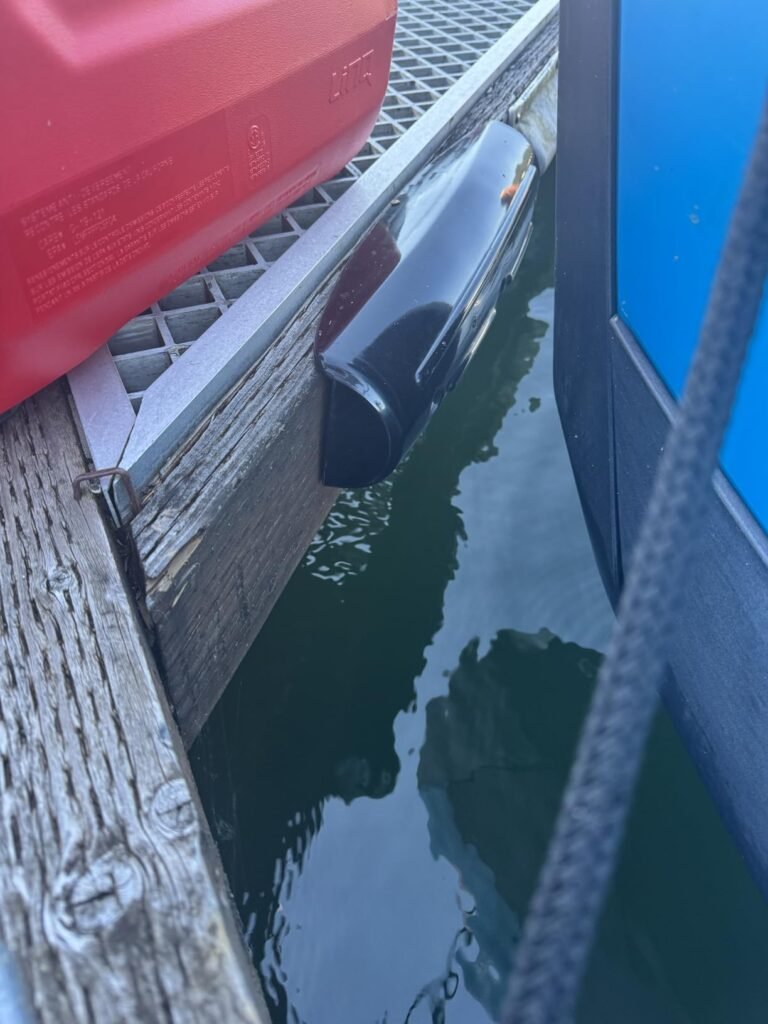
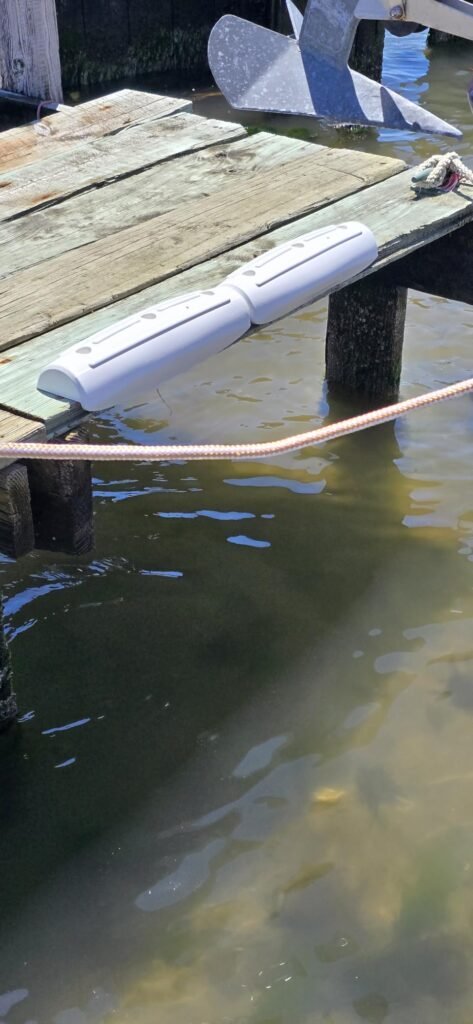
Edge Dock Bumper
9.2Editor score15.2 x 6 x 4 inches
Rotomolded vinyl build
304 stainless hardware
Permanent dock mount
Find the right dock bumpers for 2026. We compare 9 standout options by build quality, useful features, owner feedback, value, and everyday trade-offs.
Finding the right dock bumpers for 2026 means balancing impact protection, material durability, mounting style, and coverage length against your specific dock and vessel configuration. This guide compares 10 standout options ranging from inflatable vinyl fenders to high-density foam pads so you can protect both hull and dock without overspending on coverage you do not need.
Dock bumpers vary significantly in design and intended use. Inflatable PVC models cushion impact through air pressure, closed-cell foam resists compression over years of hits, and extruded dock edging wraps full perimeters for continuous protection. The right choice depends on your dock material, boat weight, water conditions, and whether you need corner, edge, or piling coverage.
The reviews below focus on practical selection factors rather than marketing claims. You will see how each bumper handles sun exposure, saltwater, repeated impact, and installation on different dock surfaces, plus honest limitations that help you avoid buying a product that does not match your actual slip configuration or boat size.
We compared 10 dock bumpers using the factors that genuinely affect protection and longevity: material composition, impact absorption, UV and corrosion resistance, mounting hardware quality, coverage length, installation ease, compatibility with edges, corners, or pilings, warranty signals, and owner feedback. The notes focus on practical tradeoffs so each pick connects to how boaters actually protect hulls and dock structures across freshwater and saltwater conditions throughout the season.

Compare key features, scores, and current prices side by side. A shorter feature list means fewer details were available, not necessarily fewer capabilities.


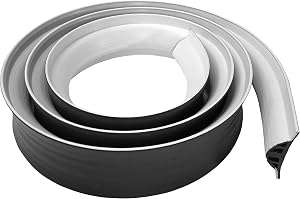
The Dock Edge DE1020BF has earned a 4.9-star rating that places it among the highest-rated dock bumpers in the category, reflecting consistent owner satisfaction across many installations. The 6-foot length wraps a full piling or extends along a substantial dock edge, providing continuous protection rather than the gaps left by shorter individual fenders.
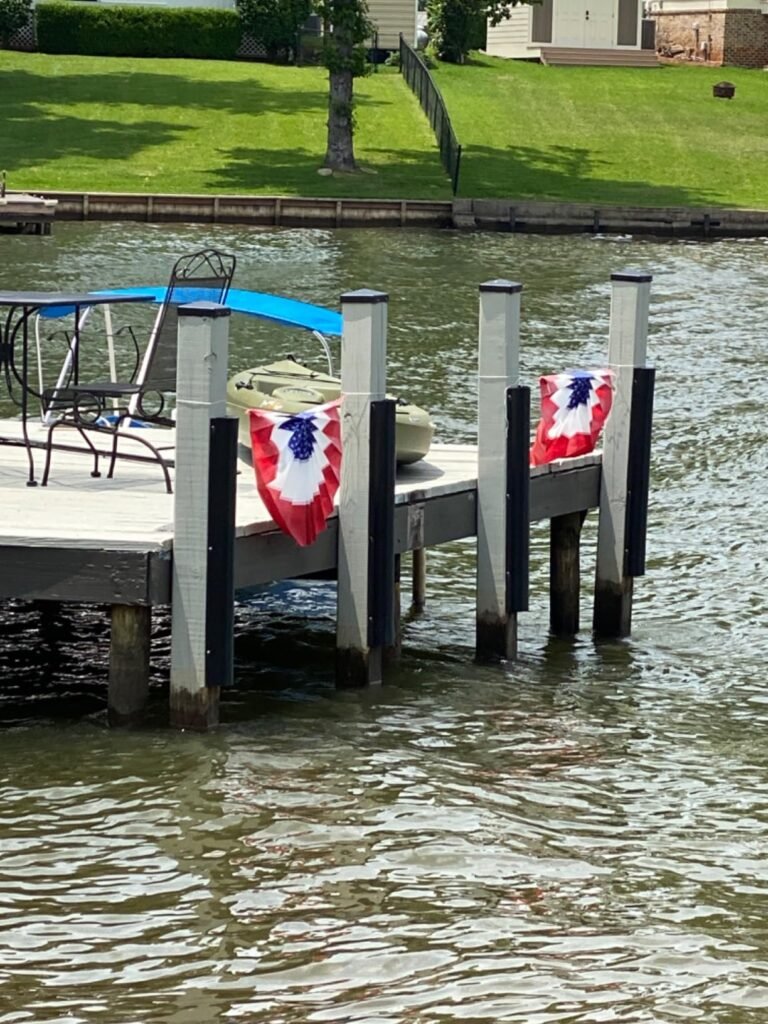
We may earn a commission when you buy through this link, at no additional cost to you.
The premium marine-grade PVC construction incorporates molded-in UV inhibitors and fungicides, which prevents the material from degrading, discoloring, or developing surface growth that affects cheaper vinyl products. These additives are built into the plastic itself rather than applied as a surface coating, so they continue protecting the material even after years of weather exposure.
The curved profile makes mounting on round piling surfaces straightforward, with the integral strengthening ribs adding structural rigidity against repeated impact. The design also works on flat surfaces, giving you flexibility across different dock configurations. The 6-foot length typically covers an entire piling from above-water to maximum tidal reach, protecting the full contact zone without needing multiple shorter sections.
UV inhibitors and fungicides molded directly into PVC during manufacturing provide protection throughout the entire thickness of the material rather than only at the surface. This means scuffs and surface wear do not compromise the material’s resistance to sun damage and organic growth. For products expected to last many years in marine environments, this manufacturing approach produces significantly longer service life than surface treatments.
This bumper is an excellent choice for boaters with piling-mounted slip configurations who want proven, long-lasting protection. The high rating and premium construction justify choosing it over cheaper alternatives for serious installations. If your dock has straight edges rather than pilings, other products in this guide may offer better value for your specific application.
Dock owners with primarily straight-edge configurations who do not need piling-specific curved profile mounting.
We may earn a commission when you buy through this link, at no additional cost to you.
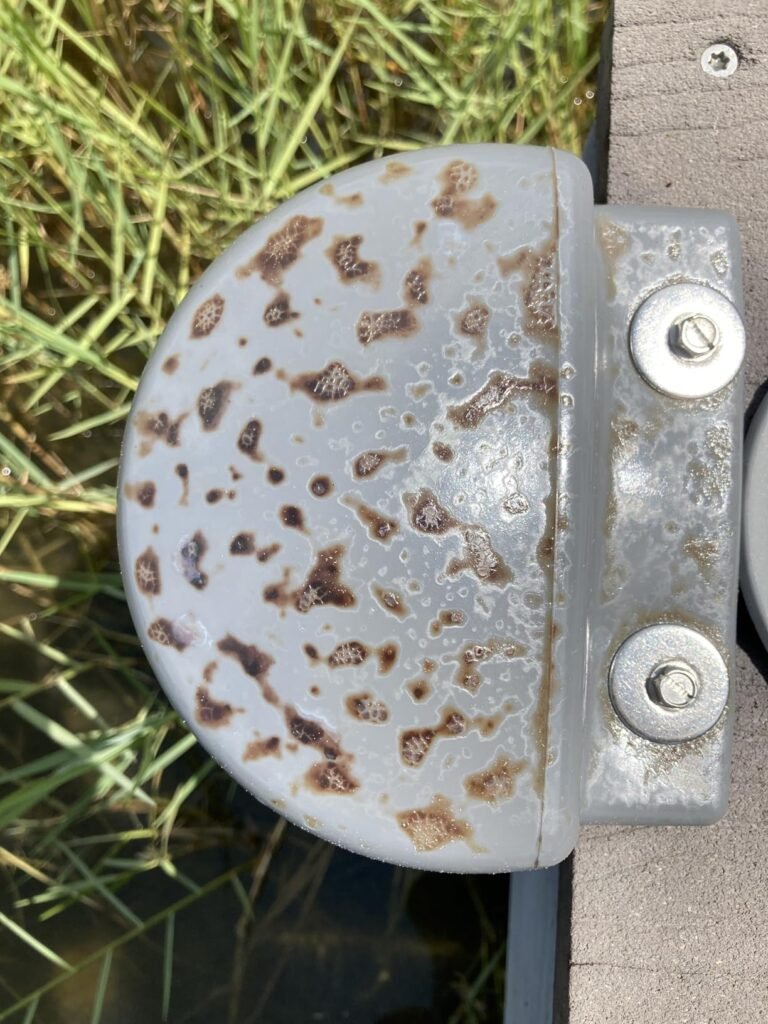
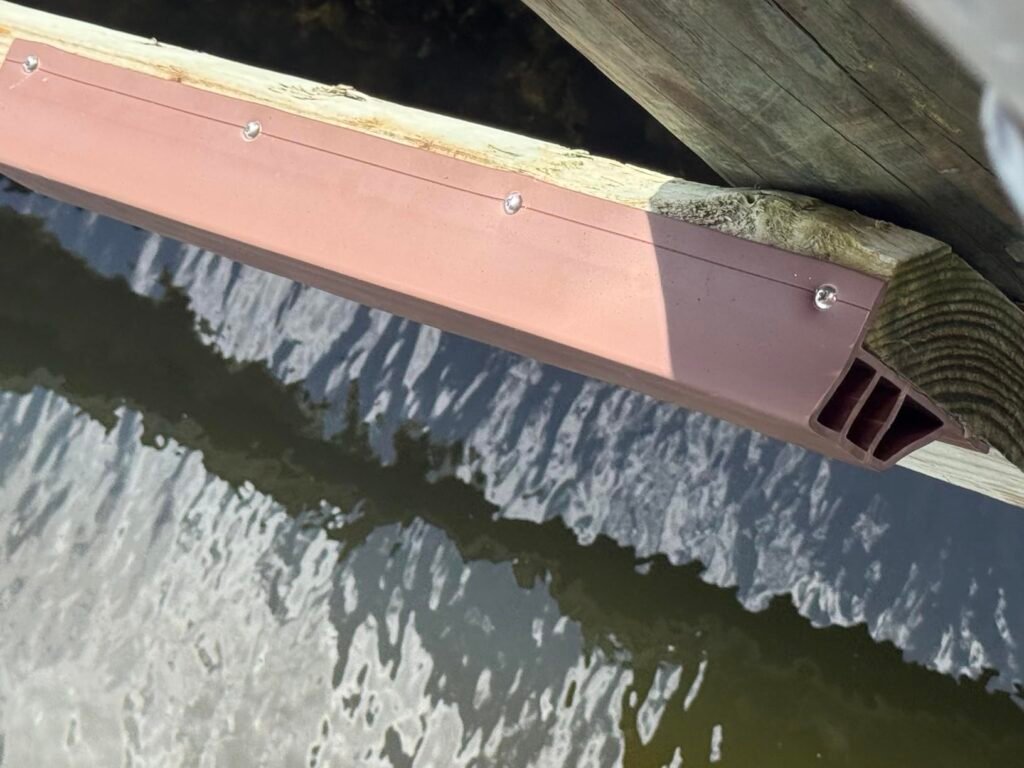
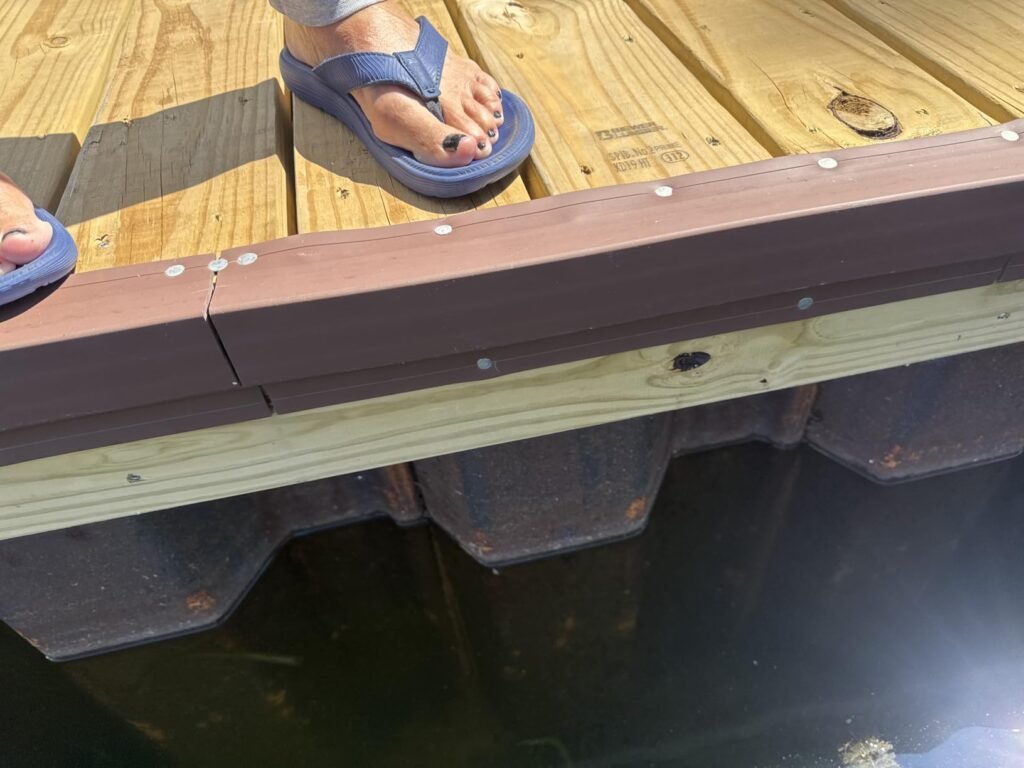
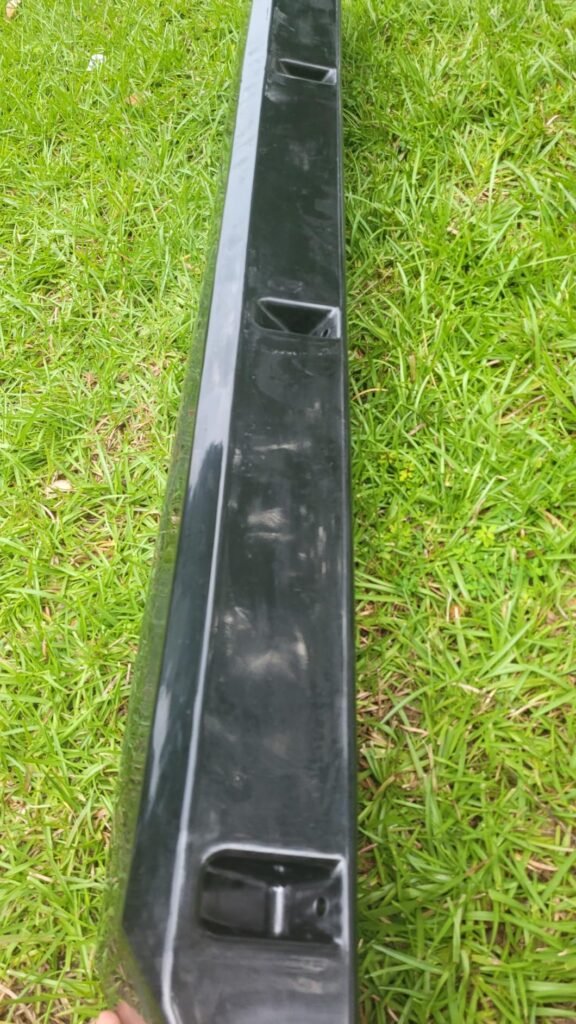
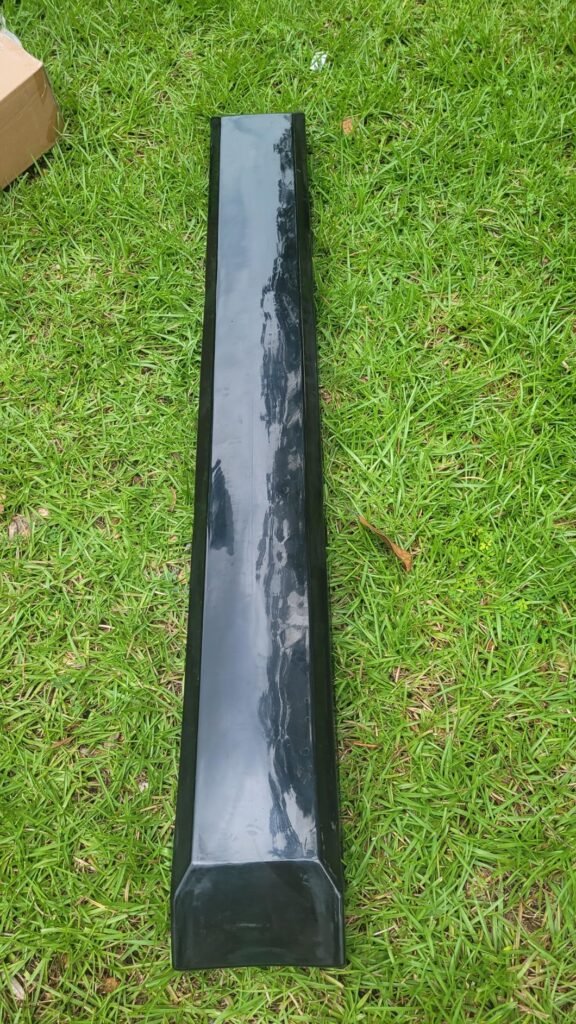
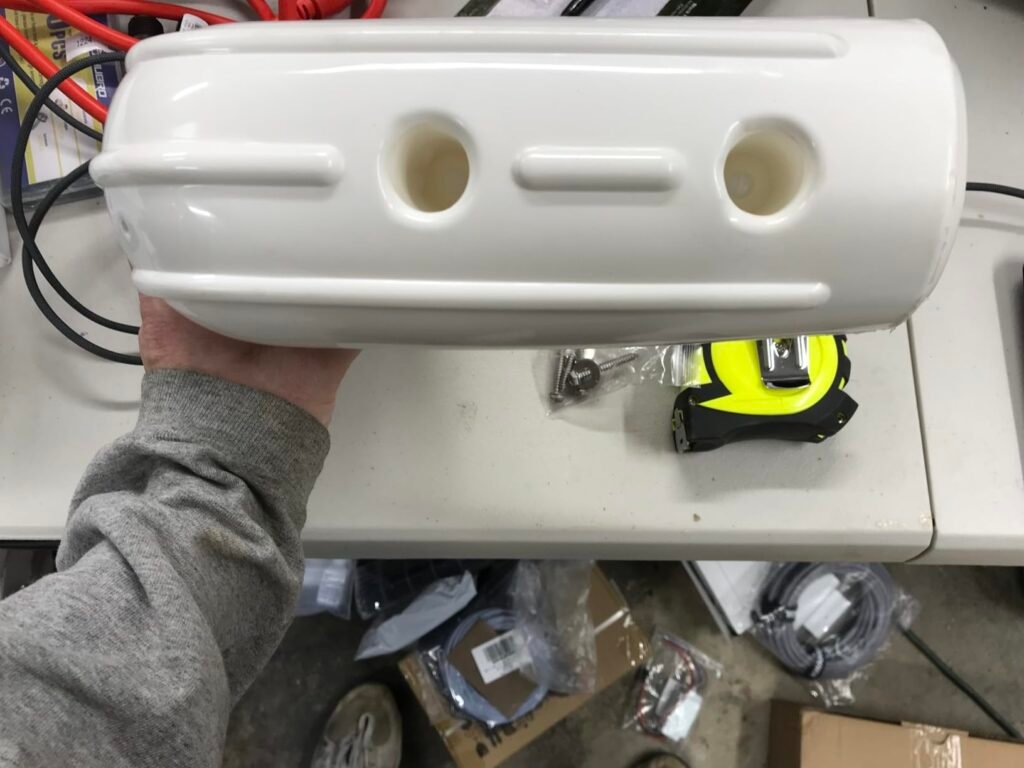
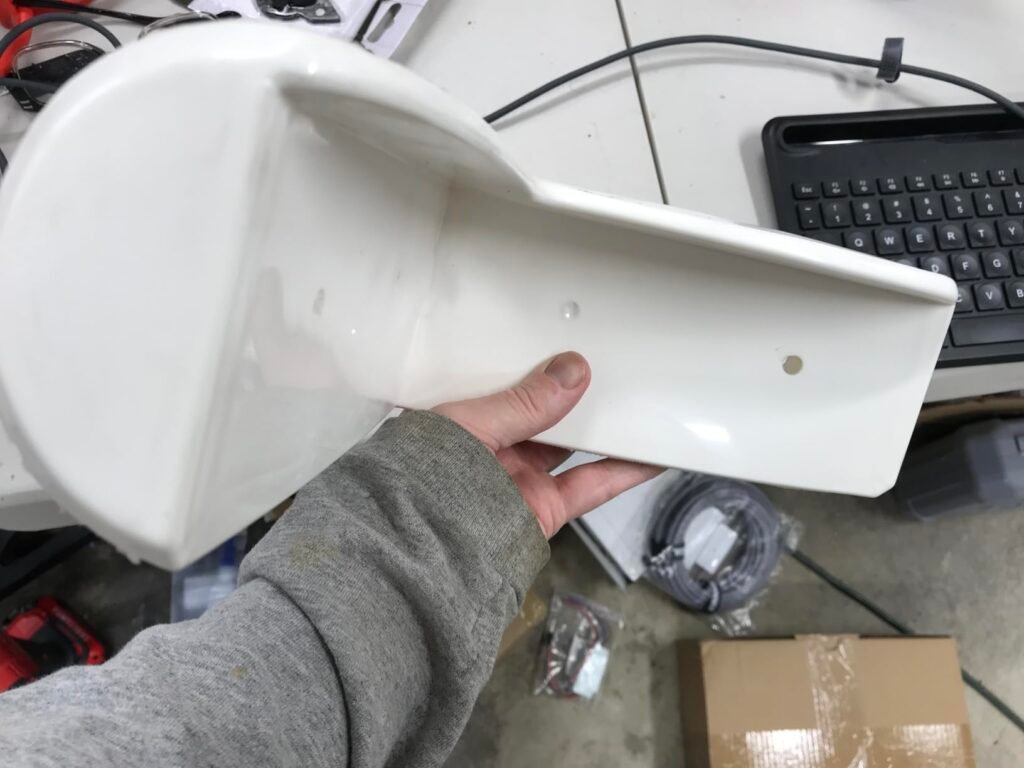
This edge-mounted dock bumper offers a budget-friendly way to protect both your boat and dock without sacrificing material quality. The rotomolded vinyl construction provides a soft, impact-absorbing surface that is tough enough to withstand repeated contact with hulls while remaining gentle on gelcoat finishes that scratch easily on harder bumpers.
We may earn a commission when you buy through this link, at no additional cost to you.
The 15.2 by 6 by 4-inch dimensions suit most residential dock edges and work especially well in slips where you need targeted protection at common contact points rather than full-perimeter coverage. The sturdy rib design across the fender surface distributes impact force across a wider area, which reduces localized stress on both the bumper and the dock-mounting hardware over time.
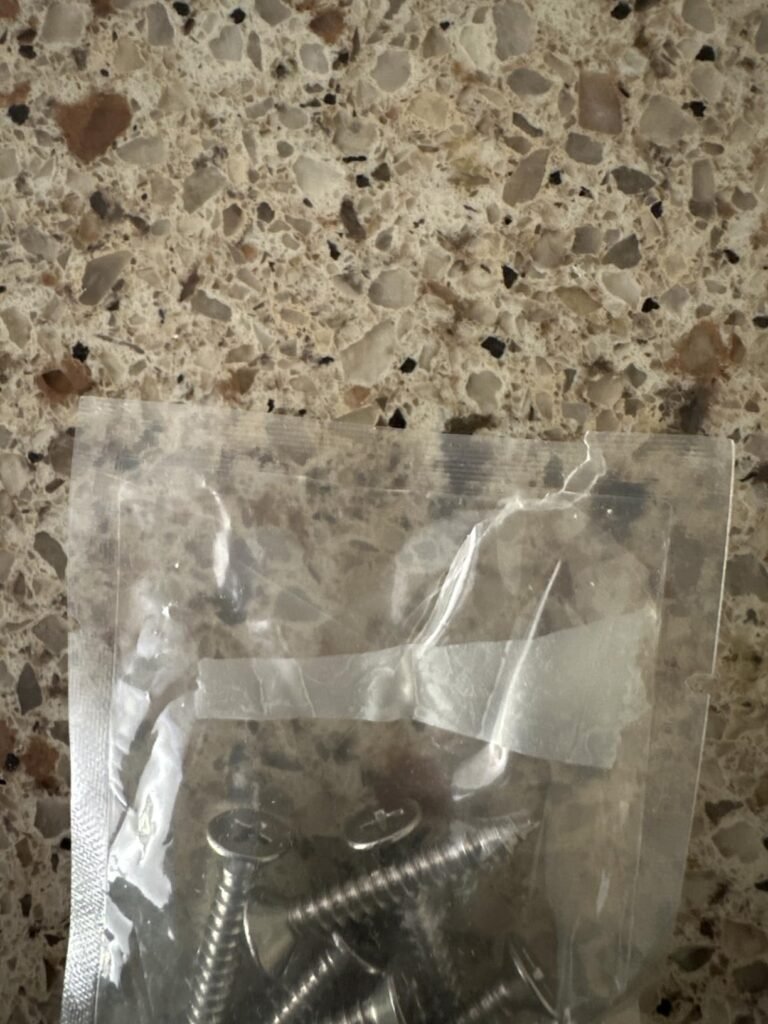
The included 304 stainless steel screws and washers resist the rust and corrosion that quickly ruin cheaper zinc-plated hardware in marine environments. The permanent mounting design means you install once and leave it in place through the season, avoiding the daily hassle of repositioning hanging fenders every time you dock. The round profile also helps guide the boat into the slip rather than deflecting it awkwardly.
Position fenders at common hull contact points along your dock, typically concentrated near the beam of your boat where the widest part makes contact during docking. For a typical 20-foot boat, two or three fenders spaced four to six feet apart usually provides adequate protection. Measure your boat length and dock configuration before ordering to avoid buying either too few units for proper coverage or more than you actually need.
This fender is a solid choice for dock owners who want quality marine-grade protection at a price that leaves room in the budget for multiple units. The main consideration is that each piece covers just over 15 inches, so longer dock sections will require several units installed along the edge for continuous coverage.
Dock owners who need continuous full-length edge protection rather than individual fender units at specific contact points.
We may earn a commission when you buy through this link, at no additional cost to you.
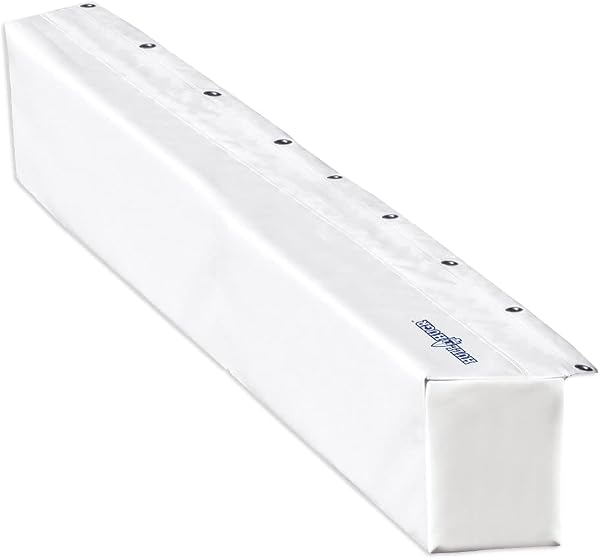
The HULL HUGR Marina Bumper targets dock owners who want commercial-grade protection without the complexity of a bulky foam block system. The high-quality tri-laminate vinyl cover combines UV and tear resistance in a package durable enough for busy commercial marinas yet still appropriate for premium personal dock installations where appearance matters alongside performance.
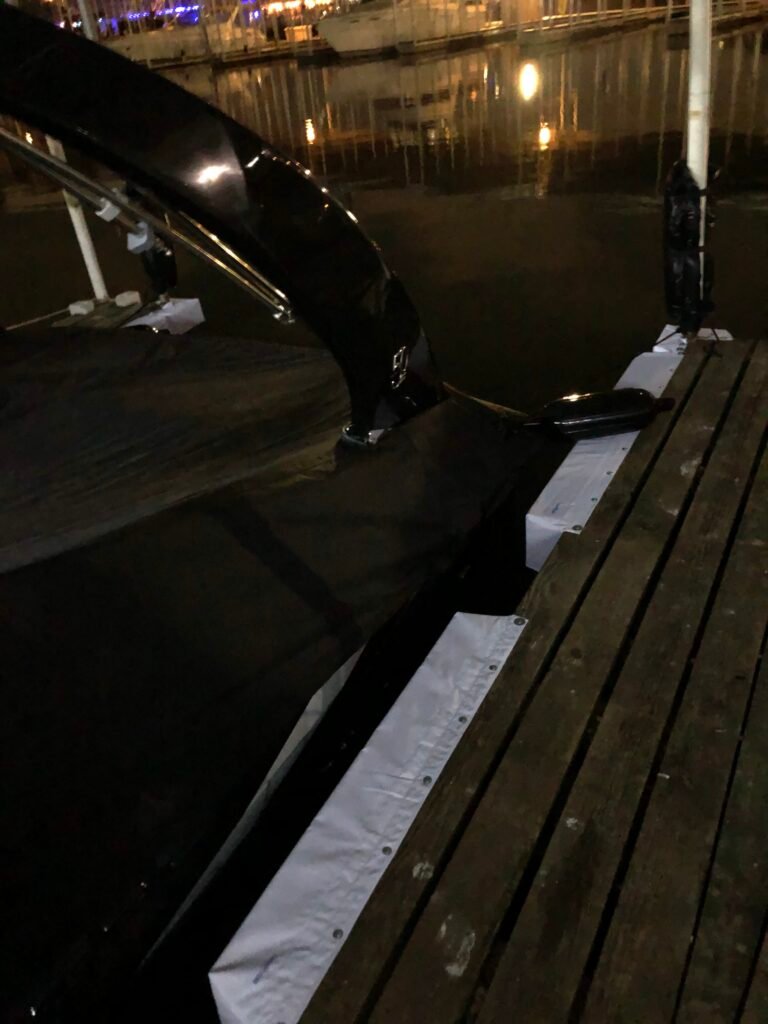
We may earn a commission when you buy through this link, at no additional cost to you.
The internal fill uses high-density closed-cell foam that maintains its protective loft through years of repeated impact. Unlike inflatable bumpers that can lose pressure or get punctured, closed-cell foam continues absorbing energy even if the outer cover develops small cuts or abrasions. The 48 by 8 by 6-inch dimensions provide substantial protection for a wide range of boat sizes.
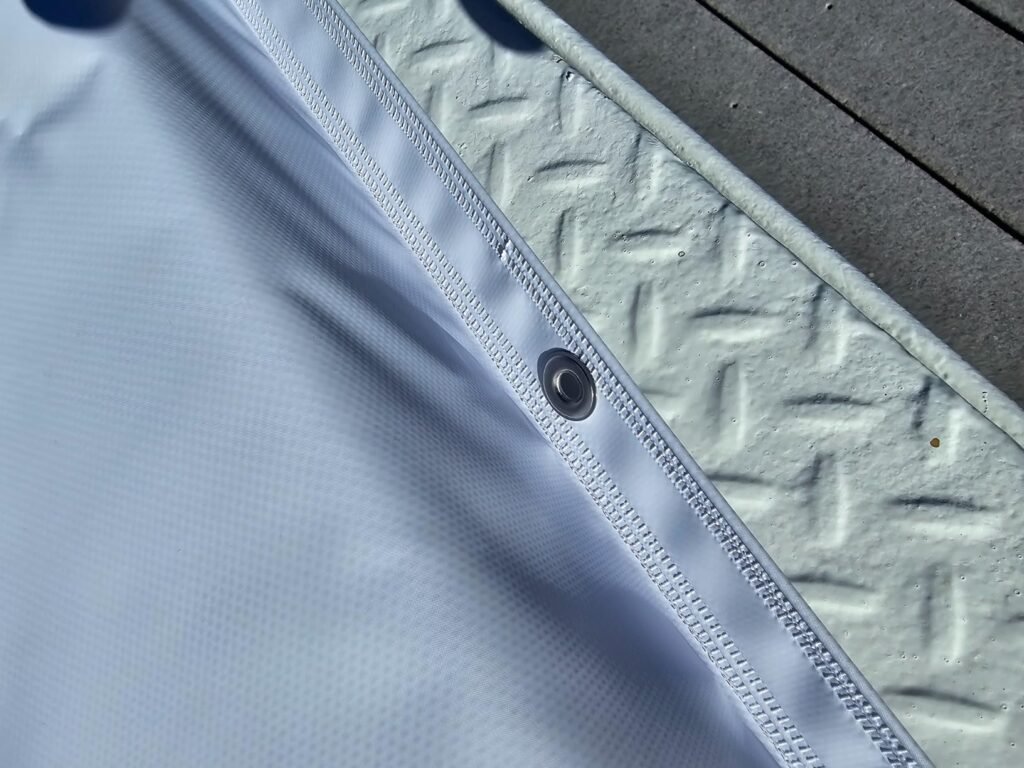
Multiple corrosion-proof stainless steel grommets along the full length allow secure mounting at several points, which prevents the bumper from sagging or shifting during use. This mounting flexibility is particularly valuable on docks with varying heights or when attaching to pilings where single-point mounting would cause the fender to swing. The padded surface prevents the dents, nicks, and scratches that quickly accumulate on unprotected hulls.
Closed-cell foam contains sealed air pockets that do not absorb water or lose protective density over time. This structure maintains consistent impact absorption season after season, even in harsh saltwater environments. Open-cell foam alternatives soak up water, become waterlogged, and eventually lose their protective qualities, which makes closed-cell construction the preferred choice for permanent dock installations exposed to the elements.
This bumper is best suited for boat owners with mid-size to larger vessels or anyone whose dock sees frequent docking traffic. The commercial-grade build justifies the higher cost through longer service life compared to budget alternatives. For small personal docks with light use, smaller and less expensive fenders may deliver adequate protection at better value.
Dock owners with small boats and infrequent docking who do not need the premium cost and larger footprint of commercial-grade construction.
We may earn a commission when you buy through this link, at no additional cost to you.
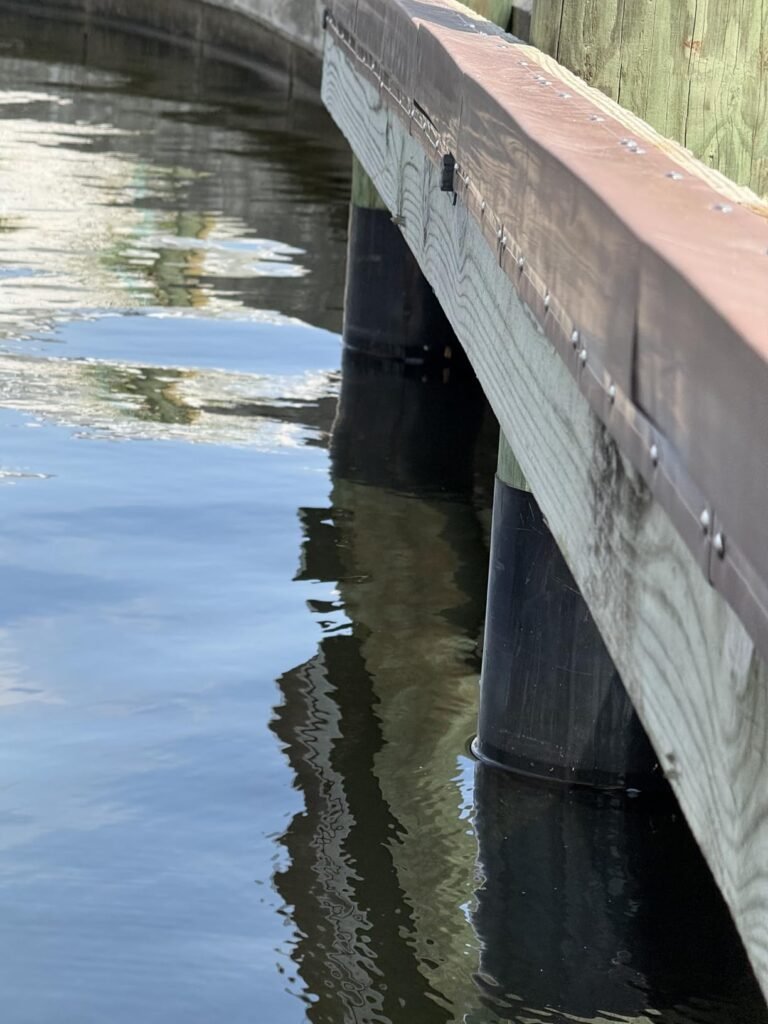
The Nalwort 24-foot dock bumper system is designed for boaters who want to protect an entire dock perimeter rather than relying on individual fenders at scattered points. The 24-foot total length is divided into 15 pre-cut 19.5-inch sections, which lets you wrap continuous dock edges, corners, and transitions without needing to custom-cut material or buy multiple separate products.
We may earn a commission when you buy through this link, at no additional cost to you.
The marine-grade material composition provides excellent corrosion resistance and weatherproofing against sun, rain, and saltwater exposure. The design emphasizes high-efficiency energy absorption, meaning the material compresses to reduce impact force when a boat makes contact and then rebounds to its original shape without permanent deformation. This elastic recovery extends useful life significantly compared to materials that take a set over time.
Available color options including black, gray, blue, brown, green, orange, and yellow let you match the bumpers to your dock aesthetic or choose high-visibility colors for safer navigation in low-light conditions. The non-rolled flat packaging means the sections arrive without creases or memory curls, allowing immediate installation straight from the box without needing to work out set-in bends.
Measure your dock perimeter including corners and transitions before ordering. A typical single-slip residential dock often needs 16 to 20 feet of coverage, while a double slip or U-shaped dock usually benefits from the full 24 feet. Buying slightly more than you measure accounts for installation adjustments and future repairs if any sections become damaged.
This system is a strong value for owners of larger docks, slip systems, or boathouses where continuous edge protection outperforms spot-protection with individual fenders. The main consideration is installation time: wrapping 24 feet of dock takes considerably longer than mounting a few individual bumpers, so plan accordingly for your initial setup.
Dock owners who only need targeted protection at specific contact points and would waste coverage with full-perimeter edging material.
We may earn a commission when you buy through this link, at no additional cost to you.
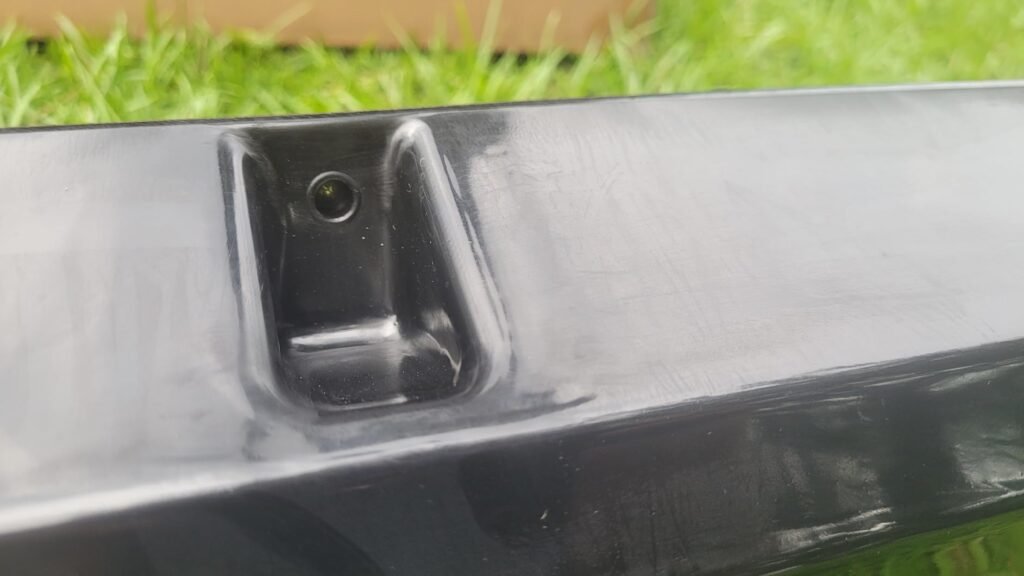
This 48-inch dock bumper tackles the versatility problem by working equally well mounted horizontally along dock straight edges or vertically on piling posts and poles. This dual-mount capability means boaters with mixed dock configurations can standardize on one product rather than buying different fenders for different surfaces, which simplifies both purchasing and installation planning.
We may earn a commission when you buy through this link, at no additional cost to you.
The 3.5-inch thickness provides substantial impact absorption, reducing the force transmitted to the dock structure and the boat hull during contact. The 48-inch length delivers extensive protection across a wider contact zone than compact fenders, which is particularly valuable for larger watercraft or situations where boat position within the slip can vary significantly based on wind and current.
Marine-grade polyvinyl chloride construction resists UV damage and the general wear that marine environments inflict on polymer products. The pre-drilled mounting holes and included stainless steel hardware make installation straightforward on either flat dock edges or round piling surfaces. The round surface profile also helps guide boats into position rather than catching on sharp edges.
When mounting vertically on pilings, position the bumper at the height where your boat hull will contact at mid-tide for optimal coverage across the tidal range. Horizontal edge mounting works best at the gunwale height of your typical docked vessel. Multiple bumpers may be needed on tall pilings or in locations with significant tidal variation to ensure protection at all water levels.
This bumper is a smart choice for owners of commercial marinas or personal docks with both edge and piling protection needs. The 4.7-star rating reflects consistent owner satisfaction across different mounting applications. For smaller docks with simple straight-edge configurations only, more compact and less expensive options may deliver adequate protection at lower cost.
Dock owners with very small boats or limited budgets who do not need the extended length and dual-mount versatility.
We may earn a commission when you buy through this link, at no additional cost to you.
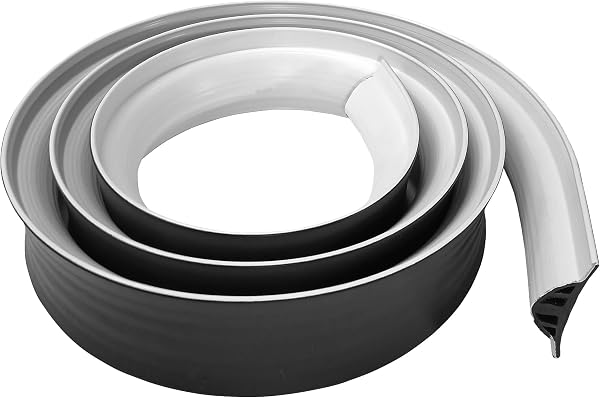
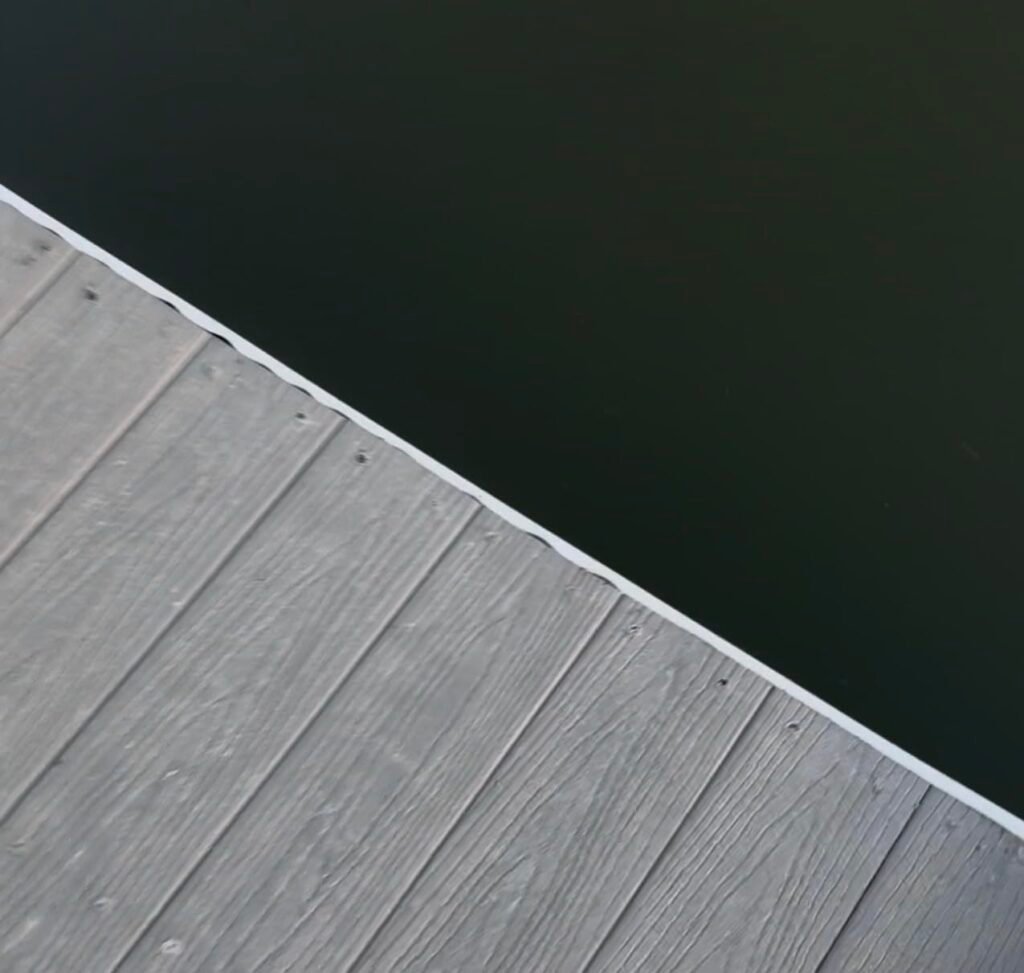
Taylor Made's commercial dock edging offers an American-made solution for boaters who want continuous side-guard protection along dock perimeters. The 10-foot coil format allows installation along straight runs or around gentle curves, giving you flexibility to protect long edge sections without the gaps that separate fender units leave between placements.
We may earn a commission when you buy through this link, at no additional cost to you.
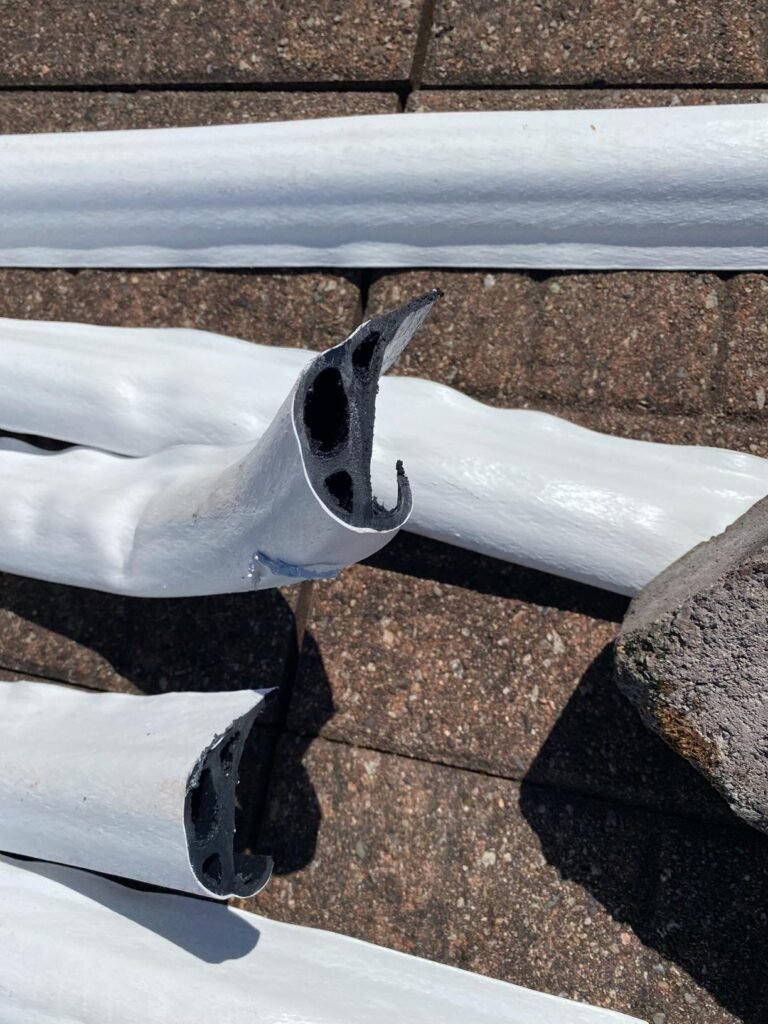
The double molded co-extrusion construction combines two materials in a single product for maximum strength and durability. The outer layer handles direct impact and UV exposure while the inner layer provides structural rigidity, resulting in a product that outperforms single-material alternatives in both toughness and longevity. The 85 percent recycled material composition with virgin white capstock also appeals to environmentally conscious buyers.
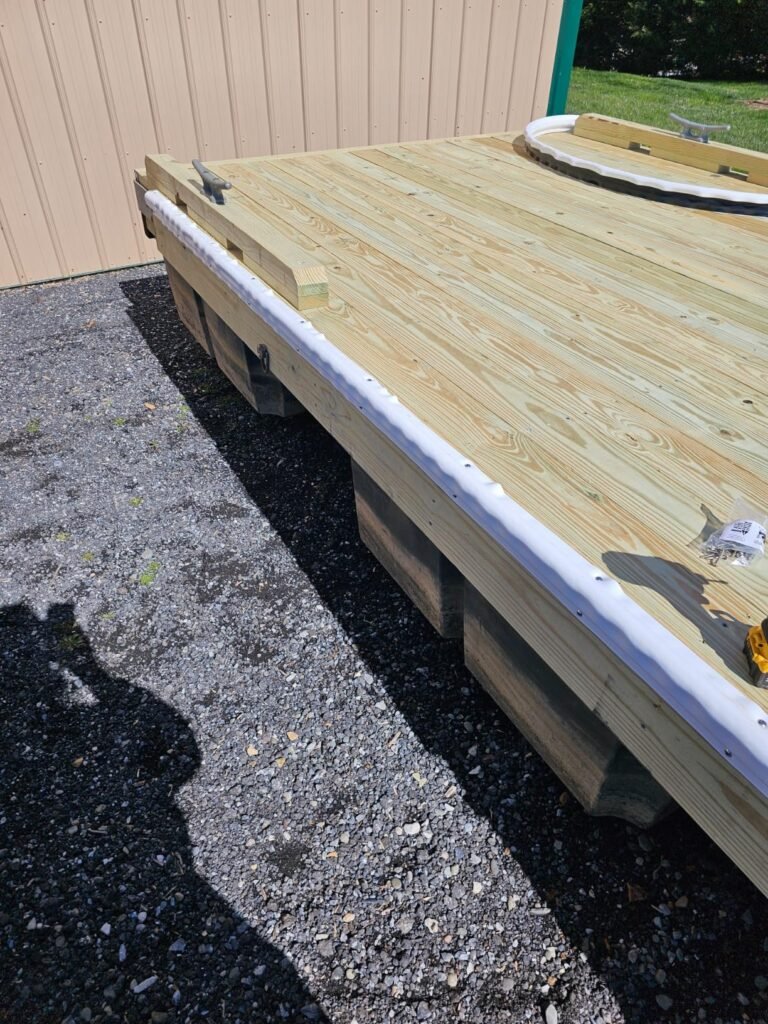
Installation uses standard screws or nails directly through the edging material into the dock structure. The flexible profile accommodates most dock edge geometries without requiring special preparation, though the capstock finish gives the product a clean, finished appearance that complements both residential and commercial installations. Hardware is sold separately, so budget for mounting fasteners when ordering.
Co-extrusion combines multiple polymer materials in a single manufacturing pass, allowing different properties to be engineered into different layers of the finished product. This produces a bumper that is simultaneously tough on the outside and flexible on the inside, offering better impact performance than any single-material product could achieve. The method also typically produces more uniform wall thickness and fewer weak points.
This edging suits boaters and marina operators who want American-manufactured quality and prefer continuous edge protection over discrete fender points. The main consideration is that the hardware is not included and the material requires cutting to length for custom installations, which adds a small amount of setup effort compared to pre-cut fender products.
Dock owners who need pre-cut, ready-to-install bumpers with included hardware and prefer not to measure, cut, or source separate fasteners.
We may earn a commission when you buy through this link, at no additional cost to you.
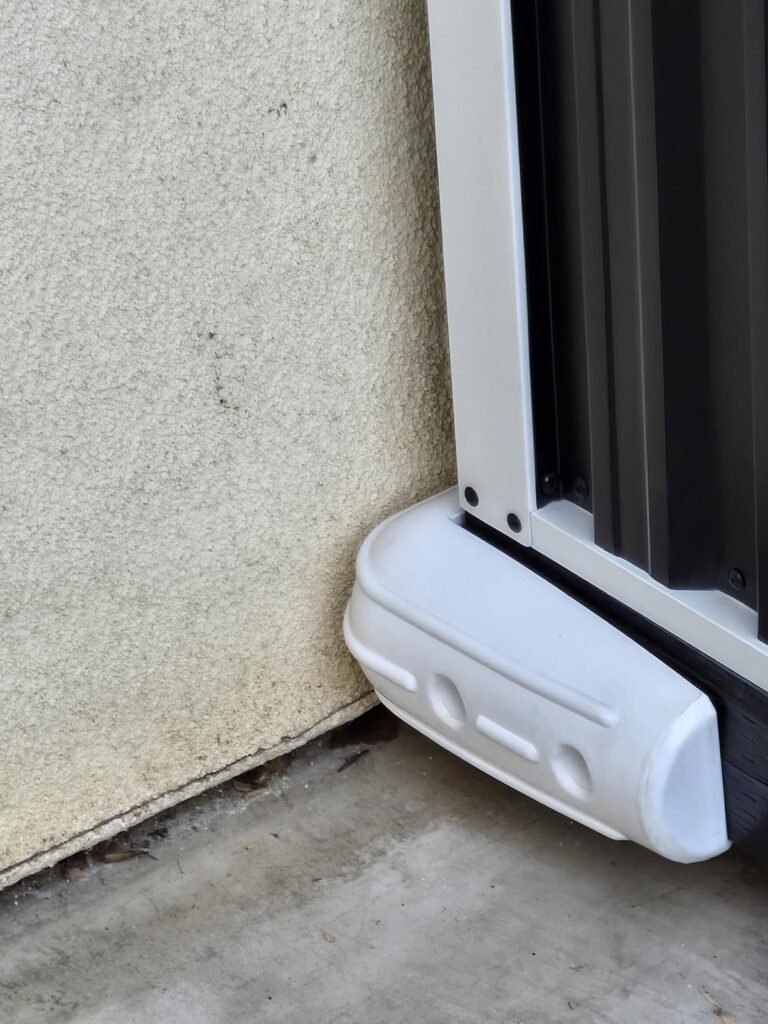
This corner bumper solves a specific problem that straight-edge fenders cannot address: protecting the sharp 90-degree corners of docks where boats are most likely to cause damage during tight docking maneuvers. The purpose-built angled design wraps around the corner itself rather than leaving the vulnerable point exposed between two separate straight fenders.
We may earn a commission when you buy through this link, at no additional cost to you.
The marine-grade soft vinyl construction resists UV damage, fading, tearing, chalking, splitting, and crushing while remaining gentle enough on boat hulls to prevent gelcoat scratches. The soft material compresses to absorb impact energy and then recovers its shape without permanent deformation, which maintains consistent protection across many years of use.
Four pre-drilled 5/16-inch mounting holes with 304 stainless steel hardware allow secure installation on both sides of the corner. The reinforcing ribs across the surface distribute impact force across a wider area and improve the overall structural integrity of the fender. The 10 by 10-inch coverage fits any standard 90-degree dock angle without modification.
Slip entry corners and the outside corners of U-shaped docks see the most frequent contact during docking because boats pivot around these points when entering and exiting. Protecting these high-wear locations with purpose-built corner bumpers prevents concentrated damage that straight-edge fenders cannot adequately address. Even a single corner unit at your slip entry can prevent significant hull and dock damage over a boating season.
This bumper is a smart addition to any dock installation that includes sharp corners, slip entries, or L-shaped configurations. It works best as a complement to straight-edge fenders rather than a replacement, giving you targeted protection at the specific points most likely to cause hull damage. Consider adding one or two corner units to any complete dock protection package.
Boaters with straight-only dock configurations where corner protection is irrelevant to their actual docking needs.
We may earn a commission when you buy through this link, at no additional cost to you.
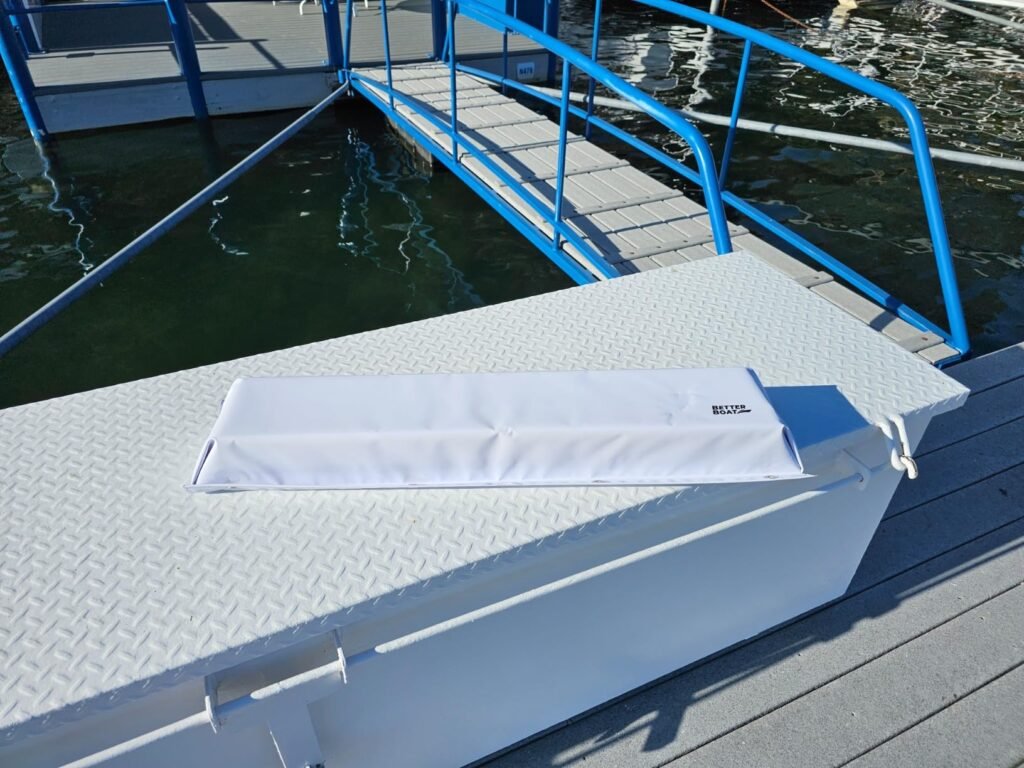
The Better Boat foam bumper represents a premium approach to dock protection, backed by a two-year manufacturer warranty from a family-owned American company based in Miami Beach, Florida. The high-density closed-cell foam core resists compression, flattening, and water absorption under repeated impact, maintaining a full 4-inch protective depth whether used daily or seasonally in fresh or saltwater environments.
We may earn a commission when you buy through this link, at no additional cost to you.
The outer cover uses thick tri-laminate UV-resistant vinyl with polyester backing and double thermal-bonded seams. This construction prevents the fading, peeling, and cracking that destroy cheaper vinyl covers after just a season or two in direct sun. Corrosion-resistant grommets at every mount point prevent the rust that often causes mounting hardware to fail long before the bumper material itself wears out.
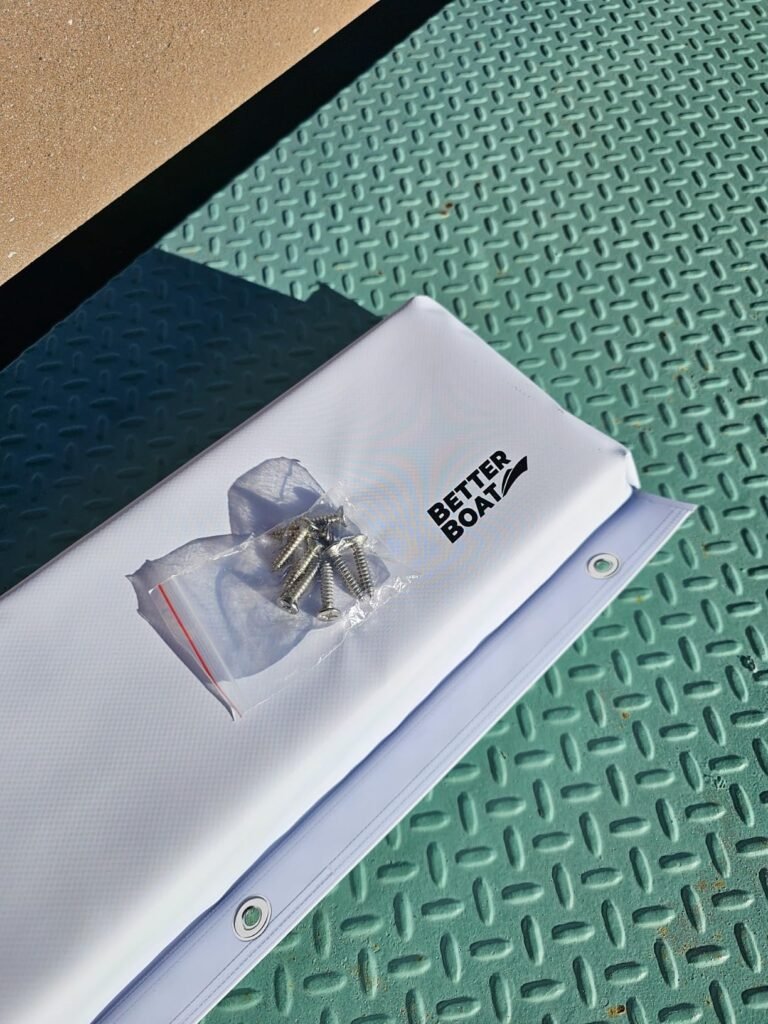
Installation is straightforward with stainless steel screws included in the package, eliminating the hassle of sourcing separate hardware. The bumper mounts horizontally along dock edges or vertically on pilings and posts, and the angled ends allow interior wrapping inside a slip for full-perimeter protection. Multiple length options including 36, 48, and 59 inches plus a dedicated corner piece cover most residential dock configurations.
A manufacturer willing to back a dock bumper with a two-year warranty is signaling confidence in both materials and construction. Marine environments are among the harshest on consumer products, so warranty coverage of this length suggests the manufacturer expects the product to perform reliably under real-world conditions. Keep your purchase documentation accessible in case warranty service becomes necessary for any premature failures.
This bumper is the right choice for dock owners who want long-term reliability backed by a meaningful warranty and are willing to pay a premium for proven marine-grade construction. The main consideration is cost: budget-focused buyers may find adequate protection in less expensive options, but the warranty and build quality often justify the investment over the lifetime of the installation.
Budget-focused buyers who prioritize the lowest upfront cost over long-term warranty coverage and premium material quality.
We may earn a commission when you buy through this link, at no additional cost to you.
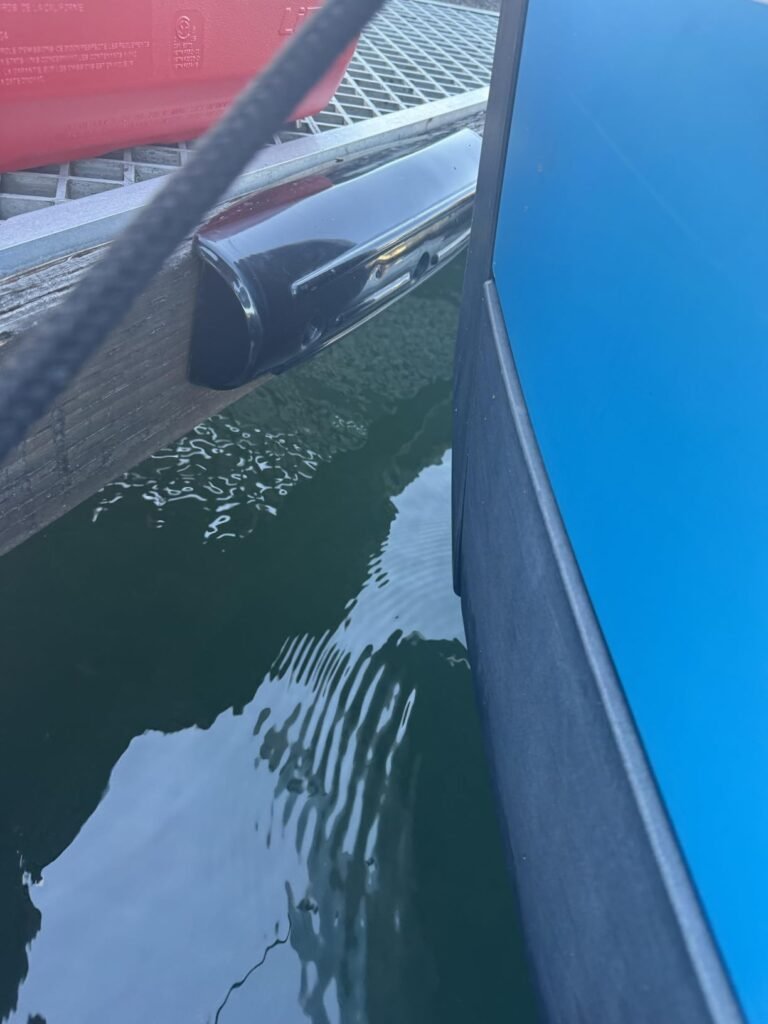
This compact edge bumper rounds out the comparison with a straightforward, residential-friendly design that fits standard boat docks and swim rafts. The 16.7-inch length provides targeted protection at specific contact points without the installation complexity or cost of continuous edging systems, making it a practical choice for homeowners with modest-sized boats and simple dock configurations.
We may earn a commission when you buy through this link, at no additional cost to you.
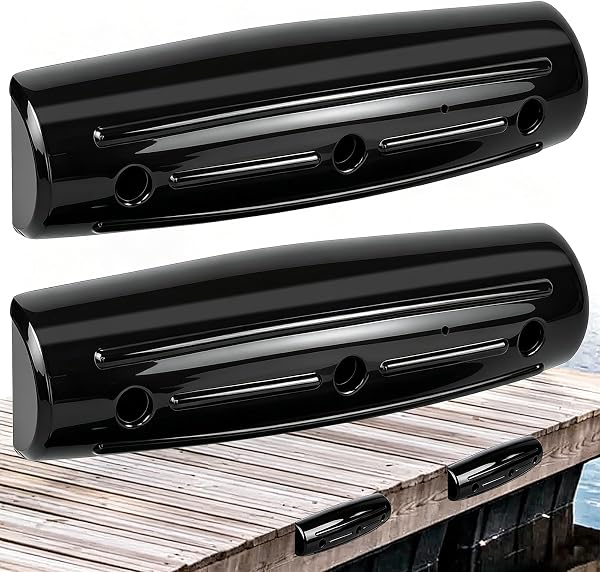
The marine-grade PVC construction delivers UV resistance and durability appropriate for both freshwater lakes and saltwater coastal use. The three pre-drilled 5/16-inch mounting holes with included hardware allow secure installation along dock edges, and the strengthening rib design across the surface distributes impact force to prevent concentrated wear at single points.
The soft, forgiving surface is particularly suitable for boats with painted or gelcoat finishes that scratch easily on harder bumper materials. The inflatable design absorbs impact through air cushioning, which provides gentle contact even during windier docking conditions. The universal fit makes the bumper equally appropriate for recreational boats, personal watercraft, and small sailboats.
Many dock owners benefit from combining different bumper types rather than standardizing on a single product. Compact units like this one work well for standard edge protection, while specialized corner bumpers protect sharp angles and piling-specific designs cover vertical posts. A thoughtful mix of products often delivers better overall protection than using the same bumper everywhere regardless of application.
This bumper works best for owners of smaller residential docks who want quality marine-grade protection without investing in commercial-grade systems. The main consideration is that multiple units will be needed for longer dock sections, and the inflatable construction requires periodic inflation checks compared to solid foam alternatives that maintain their shape indefinitely.
Owners of commercial marinas or larger vessels where heavier commercial-grade bumpers would deliver more appropriate protection for the usage demands.
We may earn a commission when you buy through this link, at no additional cost to you.
Choosing the right dock bumpers depends on your dock configuration, boat size, water conditions, and whether you need edge protection, piling coverage, or specialized corner reinforcement. The factors below walk through what matters most so you can match the correct product to your specific installation without overspending or underprotecting.
Dock bumpers fall into three main material categories, each with distinct advantages. Inflatable PVC designs like the 16.7-inch dock fender and the 48-inch edge piling bumper use air cushioning for soft, gentle impact absorption that is particularly kind to boat hulls. The tradeoff is that inflatable units can lose air over time and are more vulnerable to puncture from sharp objects or UV-degraded surface material.
Closed-cell foam bumpers like the HULL HUGR Marina Bumper and the Better Boat foam bumper fill the interior with high-density foam that resists compression, water absorption, and permanent deformation. These products maintain consistent protection depth throughout their service life, even after many years of repeated impact. The vinyl covers typically use tri-laminate construction with polyester backing for added tear resistance. Rotomolded vinyl designs like the edge dock bumper fender form a hollow but structurally rigid shell that absorbs impact through controlled flex rather than compression.
Match material to usage frequency. Daily commercial docking benefits from closed-cell foam durability, while occasional residential use works fine with inflatable or rotomolded alternatives at lower cost.
Dock bumpers range from compact 10-inch corner units up to continuous 24-foot edging systems. Individual fender units like the 15.2-inch edge bumper and the 16.7-inch dock fender provide targeted protection at specific contact points, which works well when boat position within the slip is predictable and consistent. Longer units like the 48-inch edge piling bumper and the 6-foot Dock Edge DE1020BF deliver extended coverage that accommodates variations in docking position.
Continuous edging products like the Nalwort 24-foot system and the Taylor Made 10-foot coil wrap entire dock perimeters without gaps. This full-coverage approach is particularly valuable in windy locations where boats may contact the dock at unpredictable points, or in commercial marinas where many different boats dock at the same slip. The tradeoff is higher material cost and longer installation time compared to discrete fender placement.
Measure your dock contact zones and typical boat position before buying. For most residential docks, three to five individual fenders provide adequate protection, while larger installations benefit from continuous edging systems.
Different bumper designs are optimized for different dock surfaces. Flat-edge mounting products work on straight dock sides and can be installed horizontally along the gunwale contact zone of your typical boat. Round piling bumpers like the Dock Edge DE1020BF use a curved profile that wraps naturally around cylindrical pilings. Dual-purpose products like the 48-inch edge piling bumper mount effectively on both flat and curved surfaces, offering flexibility for mixed dock configurations.
Corner-specific bumpers like the 10-inch corner unit address the 90-degree angles that straight bumpers cannot cover effectively. These purpose-built products protect the sharp corners where hulls are most likely to cause damage during tight docking maneuvers. Skipping corner protection is one of the most common mistakes dock owners make, since the corners of slips and L-shaped docks see concentrated impact during routine docking.
Audit your dock structure before shopping. Identify every surface type including straight edges, pilings, corners, and transitions, then choose products appropriate to each surface rather than forcing one bumper type everywhere.
Marine environments destroy inferior mounting hardware quickly, so the quality of included screws and grommets matters as much as the bumper material itself. 304 stainless steel hardware, included with products like the edge dock bumper fender, the 10-inch corner bumper, and the 48-inch edge piling bumper, resists the rust and corrosion that cause mounting failures in cheaper zinc-plated alternatives. The Better Boat foam bumper includes stainless screws designed specifically for its mounting pattern.
Some products like the Taylor Made dock edging and the Nalwort system are sold without included hardware, requiring separate purchase of fasteners. Factor hardware cost and selection into your total budget when comparing these products against competitors that include hardware. Pre-drilled mounting holes also simplify installation significantly compared to products requiring field-drilling, which reduces installation time and ensures proper hole placement for secure attachment.
Prioritize products with included stainless steel hardware for straightforward installations. If sourcing hardware separately, choose 304 or 316 stainless steel fasteners sized to match the bumper mounting holes exactly.
Dock bumpers face constant sun exposure, temperature cycling, and water contact throughout the season. UV degradation is the primary enemy of polymer bumper materials, causing fading, chalking, cracking, and eventual failure. Products with molded-in UV inhibitors like the Dock Edge DE1020BF incorporate protective chemistry throughout the material thickness, maintaining resistance even as surface layers wear away. Tri-laminate vinyl covers with polyester backing, like those on the HULL HUGR and Better Boat products, resist UV damage through combined material layers rather than relying on a single polymer formulation.
Water resistance matters particularly for internal fill materials. Closed-cell foam cores resist water absorption even if the outer cover develops small cuts, maintaining protective density across many seasons. Open-cell foams and lower-quality fills can absorb water, become waterlogged, and lose their protective qualities permanently. Saltwater environments accelerate degradation of all materials, so coastal boaters should prioritize marine-grade construction over freshwater-rated budget alternatives.
Choose products with explicit UV resistance claims and marine-grade material certifications. Avoid generic plastic bumpers not specifically rated for marine use, since these typically fail within a season or two of coastal exposure.
Warranty coverage provides meaningful insight into manufacturer confidence in product durability. The Better Boat foam bumper includes a two-year manufacturer warranty, which indicates the company expects reliable performance under real-world conditions. Keep purchase documentation accessible to simplify warranty service if premature failures occur. Products without warranty coverage are not necessarily inferior, but the absence of coverage shifts all performance risk to the buyer.
Established brands like Dock Edge, Taylor Made, and HULL HUGR have reputations built across years of marine product manufacturing, which generally translates to better quality control and parts availability compared to newer or unbranded alternatives. Newer brands may offer compelling value, but the lack of established service networks can complicate issues if problems arise. Reading recent owner feedback across multiple sources helps identify consistent quality concerns before buying.
Balance warranty, brand reputation, and price against your usage requirements. Daily commercial use justifies premium brands with warranty backing, while occasional residential use can tolerate newer brands at lower price points.
Proper installation starts with identifying the contact points where your boat typically touches the dock. Walk the length of your slip and note where hull marks, scuffs, or paint transfer have appeared on previous installations. Position bumpers directly at these contact zones rather than guessing at placement. For most residential docks, concentrate bumpers near the beam of your boat where the widest part makes contact during docking and departure. Pre-drill pilot holes if your dock material requires it, and use the included stainless steel hardware or equivalent 304-grade fasteners for lasting attachment.
During the boating season, inspect your bumpers monthly for signs of wear, damaged mounting hardware, or compromised material integrity. Check inflatable units for proper air pressure by pressing on the surface and watching for excessive compression. Rinse all bumpers with fresh water periodically to remove salt deposits, algae, and debris that can accelerate UV damage and surface wear. Pay particular attention to mounting hardware for signs of corrosion, since fastener failure can cause bumpers to detach during critical docking moments.
At season end, consider whether to leave bumpers mounted or remove them for storage. Permanently mounted products like most of those in this guide are designed to remain in place year-round, but removing them for winter in freezing climates can extend their service life significantly. If leaving them installed, give each unit a thorough cleaning and inspect for any damage that should be addressed before the next season. Replace mounting hardware showing any signs of corrosion to prevent sudden failure, and keep spare bumpers available for quick replacement of units that fail unexpectedly during the season.
The number depends on your boat size and dock configuration. For a typical 20-foot residential boat in a standard slip, three to five individual fenders usually provide adequate protection positioned near the beam and bow contact points. Larger boats, commercial slips, or docks with significant wind exposure may require continuous edging systems or additional corner protection. Measure your typical docked position before buying.
Inflatable bumpers offer softer impact absorption that is gentle on hull finishes but can lose air pressure over time and are more vulnerable to punctures. Foam-filled bumpers with closed-cell cores maintain consistent protection depth and resist compression permanently but may feel firmer against the hull. For daily commercial use, foam typically outperforms inflatable, while occasional residential use works well with either type.
Mount piling bumpers at the height where your boat hull contacts the piling at mid-tide, which provides coverage across the normal tidal range. In locations with significant tidal variation, you may need multiple bumpers at different heights on tall pilings. For floating docks that rise and fall with the tide, mount bumpers at the typical gunwale height of your docked boat. Check contact points at different water levels before finalizing placement.
Quality dock bumpers protect both simultaneously by absorbing impact energy that would otherwise damage either structure. The soft outer surface prevents hull scratches, scuffs, and gelcoat chips, while the structural rigidity of the bumper distributes impact force across a wider area of the dock to prevent concentrated damage. Properly installed bumpers extend the useful life of both your boat finish and dock structure.
Use 304 or 316 stainless steel screws sized to match the pre-drilled holes in your bumpers. Many quality products include appropriate hardware, but when sourcing separately, avoid zinc-plated or galvanized fasteners that will corrode quickly in marine environments. For wood docks, standard stainless deck screws work well. For composite or aluminum docks, select hardware specifically rated for your dock material to prevent galvanic corrosion.
Yes, most dock bumpers are designed for straightforward DIY installation with basic tools including a drill, screwdriver, and tape measure. Pre-drilled mounting holes simplify the process significantly, and most products include complete hardware kits. Allow one to three hours for a typical residential installation depending on the number of bumpers and dock complexity. Larger continuous edging systems take longer but still fall within DIY capability.
Quality marine-grade dock bumpers typically last three to seven years depending on sun exposure, water conditions, and usage frequency. Products with molded-in UV inhibitors and closed-cell foam cores like the Better Boat and Dock Edge options tend toward the longer end of this range. Harsh saltwater and intense sun exposure accelerate degradation, while sheltered freshwater installations extend service life. Expect to replace cheaper bumpers more frequently.
Corner bumpers address the sharp 90-degree angles that straight-edge fenders cannot adequately protect. These corners see concentrated impact during docking because boats naturally pivot around them when entering and exiting slips. Skipping corner protection is a common mistake that leads to hull damage over time. Even a single corner unit at your slip entry significantly reduces the risk of expensive hull repairs.
Most dock bumpers in this guide are designed for permanent installation and are intended to stay mounted year-round. However, you can remove them for seasonal storage if freezing conditions or ice movement would damage them. Keep the mounting hardware organized for easy reinstallation, and store removed bumpers in a dry, shaded location to extend their service life. Expect some wear on mounting holes from repeated removal.
Dock edging like the Taylor Made and Nalwort products provides continuous protection along the entire length of a dock edge, while dock bumpers are discrete units positioned at specific contact points. Edging offers full-perimeter coverage ideal for commercial marinas or windy locations with variable boat positioning. Individual bumpers work well for consistent docking patterns where you can predict where the hull will contact the dock.
The Dock Edge DE1020BF stands out as the strongest overall choice for most dock installations, earning a 4.9-star rating backed by premium marine-grade PVC construction, molded-in UV inhibitors, and integral strengthening ribs. The 6-foot length provides substantial continuous coverage on pilings or dock edges, and the proven brand reputation delivers confidence that the investment will perform reliably across many seasons of use.
For buyers with different priorities, several alternatives deserve serious consideration. The Better Boat foam bumper backs its premium construction with a two-year warranty for buyers who value guaranteed longevity. The edge dock bumper fender offers excellent value for budget-focused shoppers who need quality rotomolded vinyl without the premium price. The Nalwort 24-foot system suits larger installations requiring continuous perimeter protection, while the 10-inch corner bumper fills the specialized niche of 90-degree angle coverage that straight fenders cannot address.
Your best decision starts with honestly assessing your dock configuration, boat size, water conditions, and usage frequency. Match bumper material to your usage intensity, size to your contact zones, and mounting style to your dock surfaces. Mixing different bumper types for different applications often delivers better protection than standardizing on a single product. With the right combination in place, both your boat finish and dock structure will see significantly less wear over the seasons ahead.