Citizen Promaster 300m
9.2Editor score300m water resistant
Screw-back case
Polyurethane dive strap
Anti-reflective curved crystal
Find the right dive watches for 2026. We compare 10 standout options by build quality, useful features, owner feedback, value, and everyday trade-offs.

Choosing a dive watch in 2026 means balancing water resistance depth, ISO certification, movement type, bezel design, and dive computer functionality against your actual underwater activities and budget. We compare 10 standout options ranging from ISO-certified Citizen Promaster divers to Garmin’s watch-style dive computers, helping you match capability to whether you snorkel, recreationally scuba, or dive technically.
The category splits into two clear directions: traditional analog dive watches with rotating bezels for timing bottom time, and full dive computers that track depth, decompression, tank pressure, and gas mixes automatically. Prices range from under thirty dollars for water-resistant sport watches to over fifteen hundred for advanced dive computers with sonar communication and multi-band GPS.
Snorkelers and swimmers need different features than recreational scuba divers, and technical divers require another level entirely. This guide breaks down what separates each option so you can pick a timepiece that actually matches your diving discipline, whether that means a rugged Eco-Drive with 200m ISO rating or a wrist-mounted computer with bathymetric maps.
We compared 10 dive watches and dive computers using the details that genuinely matter underwater: water resistance depth, ISO 6425 certification, movement type, unidirectional bezel quality, luminous marker visibility, crystal material, crown protection, dive computer features, battery or power source, and long-term reliability. The notes focus on practical trade-offs so each pick connects to real diving scenarios, whether you need a snorkeling companion, a recreational scuba timepiece, or a technical dive computer with gas mix support.


Compare key features, scores, and current prices side by side. A shorter feature list means fewer details were available, not necessarily fewer capabilities.


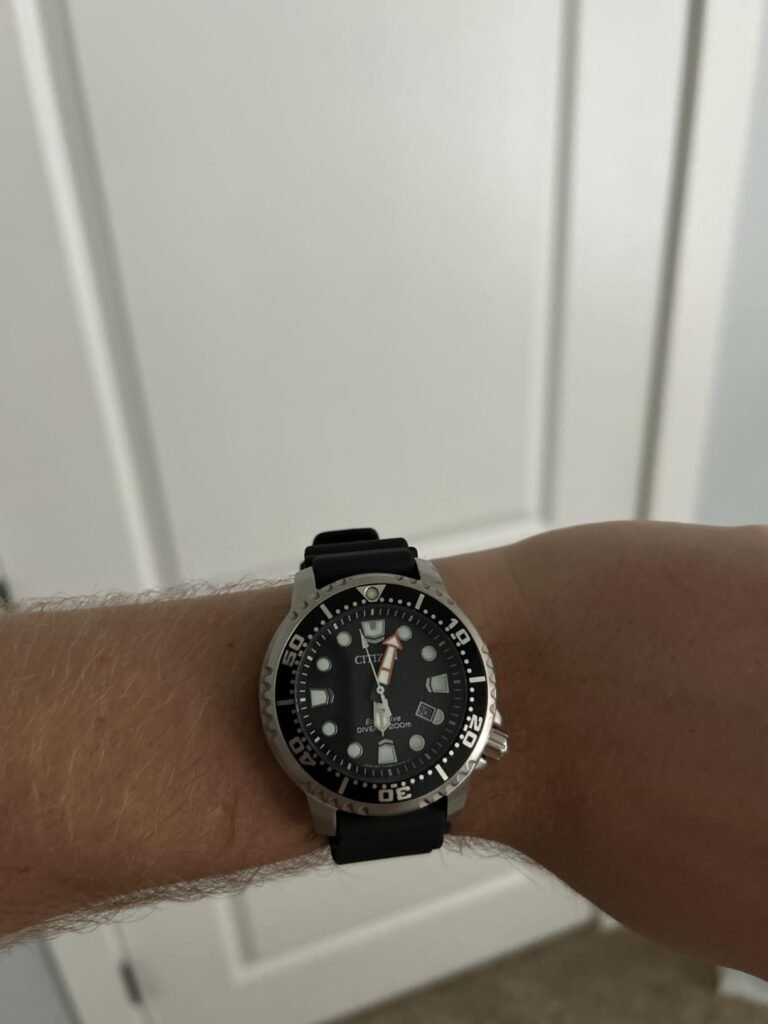
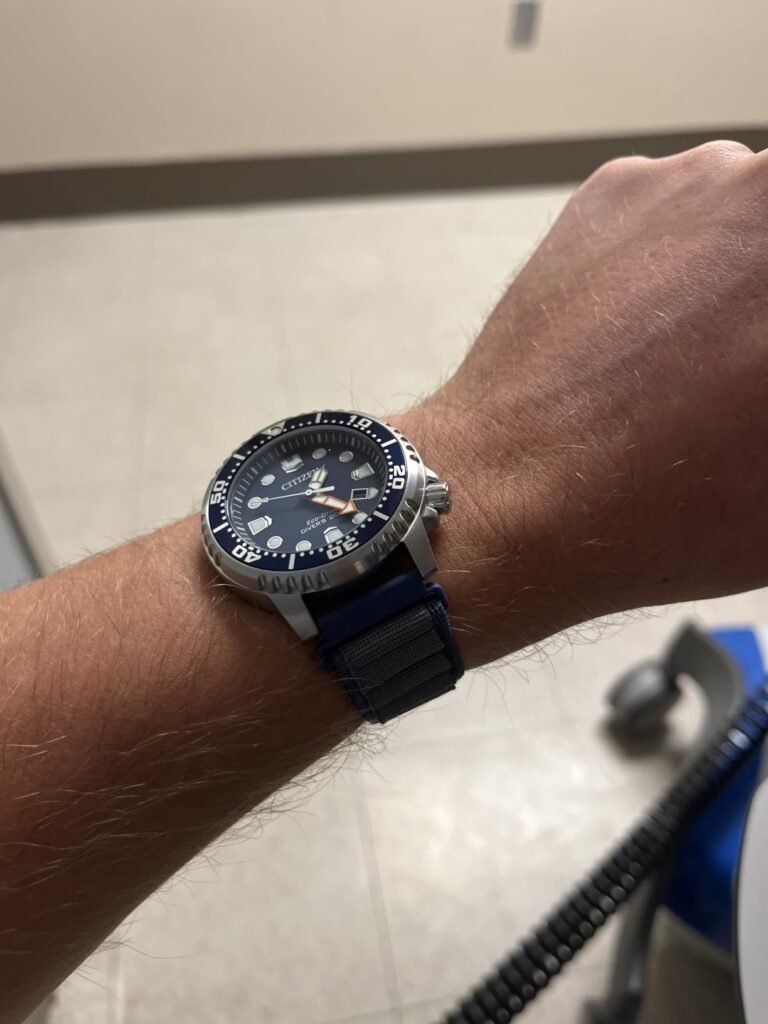
The Citizen Promaster Dive Eco-Drive earns the top overall recommendation by combining genuine ISO 6425 dive certification with Eco-Drive light-powered movement, eliminating the battery changes that can compromise water resistance on other dive watches. For recreational scuba divers and serious snorkelers who want a real dive-rated tool watch without ongoing service concerns, this timepiece hits a compelling balance of capability and long-term convenience.
We may earn a commission when you buy through this link, at no additional cost to you.
The 200-meter water resistance rating exceeds what recreational divers typically encounter, and the ISO certification means the watch has passed independent testing for water pressure resistance, magnetic resistance, shock resistance, and legibility underwater. The unidirectional rotating bezel provides the critical safety function of tracking elapsed bottom time, and the design cannot be accidentally advanced in a way that would extend perceived dive time.
The anti-reflective mineral crystal improves legibility in bright underwater conditions where glare can obscure the dial. Luminous hands and markers provide the visibility needed at depth where colors fade and light diminishes. The Eco-Drive movement uses any light source to keep the watch running indefinitely, which is a meaningful advantage over quartz movements that require battery replacements potentially compromising the case seals over time.
ISO 6425 is an international standard that defines what qualifies as a true dive watch, requiring independent testing for water resistance at rated depth plus 25 percent overpressure, magnetic and shock resistance, strap durability, and visibility of the minute markers at 25 centimeters distance in darkness. Watches marketed as ‘water resistant to 200m’ without ISO certification may not have undergone this rigorous testing. When you see the ISO 6425 designation, you’re getting verified performance rather than marketing claims.
This is the right pick for divers who want a certified tool watch that will last decades without service concerns. The 5-year manufacturer warranty demonstrates Citizen’s confidence in the build, and the classic Promaster styling means the watch will look appropriate both on the dive boat and in daily wear. Buyers wanting more scratch-resistant sapphire crystal or higher depth ratings should consider the 300m Promaster alternative.
Technical divers who need decompression algorithms, gas mix support, or full dive computer functionality.
We may earn a commission when you buy through this link, at no additional cost to you.
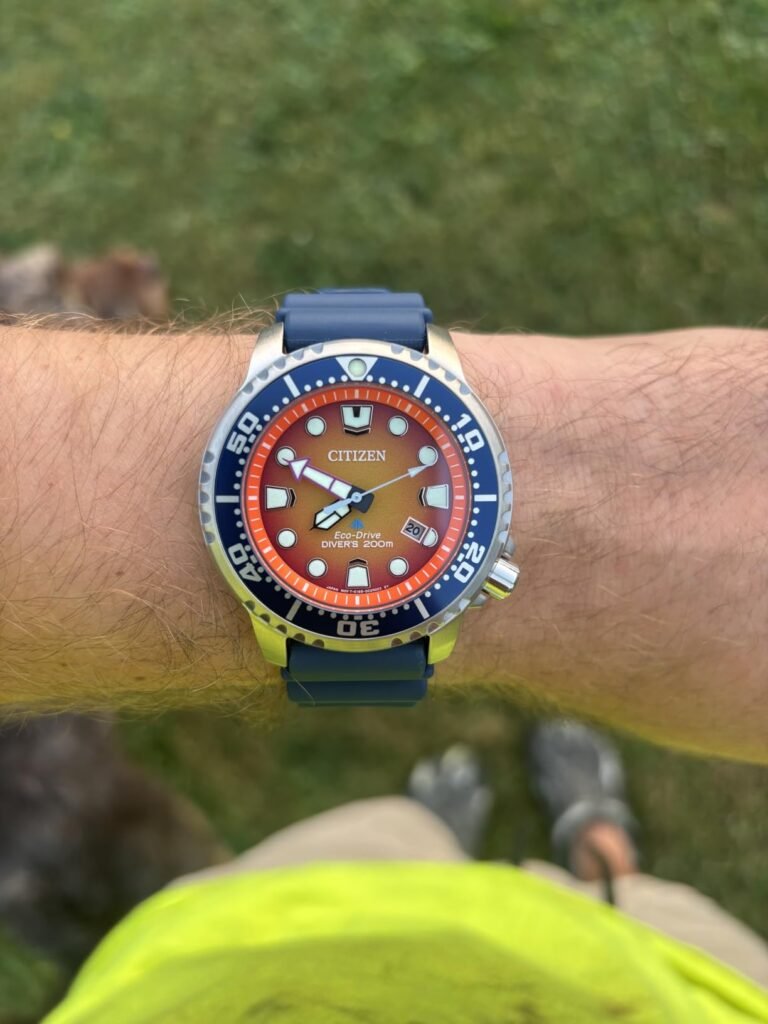
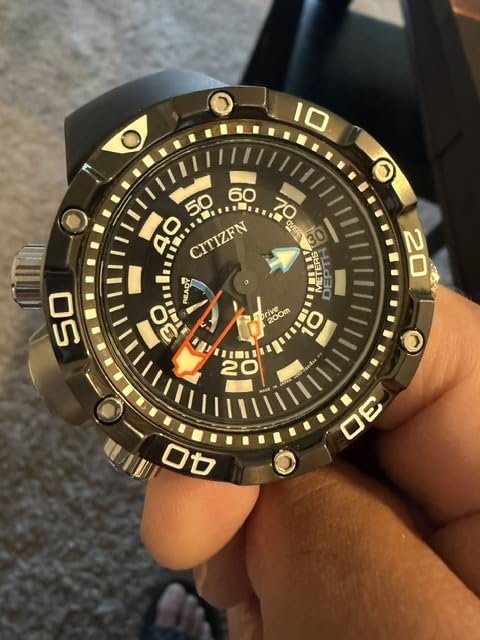
The Citizen Promaster 300m targets divers who want extra depth margin beyond typical recreational limits, along with the practical benefit of a polyurethane strap designed to fit over wetsuit sleeves. This is the watch to consider if you dive frequently, take diving seriously as a hobby, or want the psychological confidence of substantial depth margin beyond your actual dive profiles.

We may earn a commission when you buy through this link, at no additional cost to you.
The 300-meter water resistance rating provides a significant safety buffer even for advanced recreational diving to 40 meters, and the screw-back case combined with a screw-down crown creates a fully sealed dive-ready package. ISO certification confirms the watch has passed independent testing, and the anti-reflective curved crystal reduces glare underwater and at surface intervals under bright tropical sun.
The polyurethane strap is a practical dive choice that stretches comfortably over neoprene wetsuit sleeves and resists degradation from saltwater and chlorine exposure. Unlike metal bracelets that can require complex extension mechanisms to fit over exposure suits, the flexible strap adjusts easily. The rubber material also cushions the watch against shocks during boat entries and equipment handling, and it dries quickly between dives.
A screw-back case uses threaded caseback construction that physically screws down against a rubber gasket to create a watertight seal, similar to how a screw-down crown works. This is more secure under pressure than snap-on casebacks that rely solely on the gasket compression. Combined with a screw-down crown, screw-back construction provides the full sealing integrity needed for actual diving depths. Watches without both features may leak under sustained pressure at depth.
Choose this over the standard Promaster if you regularly dive deeper than 30 meters, wear thick exposure suits, or simply want maximum depth margin. The polyurethane strap makes it particularly practical for actual diving use, though divers who wear their watch primarily for daily use may prefer the metal bracelet options. The premium over the standard Promaster is modest for the additional capability.
Casual wear-focused buyers who prefer metal bracelets, or those seeking the lowest entry price for a dive watch.
We may earn a commission when you buy through this link, at no additional cost to you.
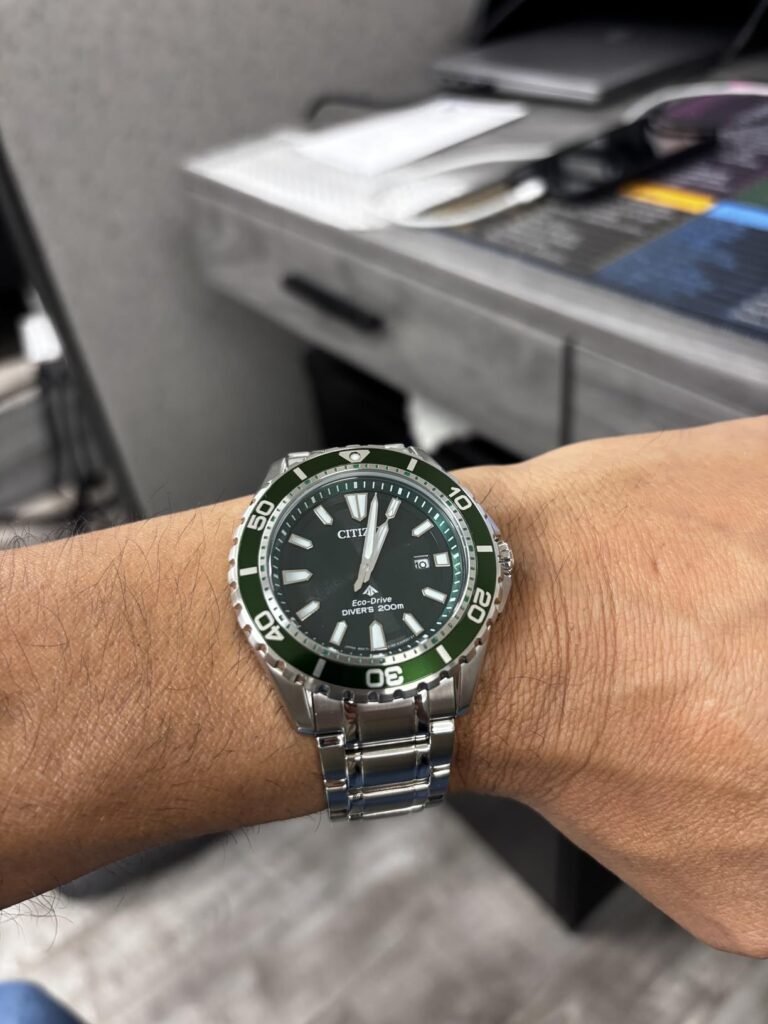
The Citizen Promaster Sea trades the utilitarian rubber strap of dedicated dive Promasters for a stainless steel bracelet that makes the watch equally at home in the office as on a dive boat. This dual-use versatility appeals to divers who want their tool watch to also serve as a daily wearer without needing to swap straps between land and water use.
We may earn a commission when you buy through this link, at no additional cost to you.
The 200-meter water resistance and ISO 6425 certification ensure this is a genuine dive watch rather than a dive-styled fashion piece. The one-way rotating bezel provides the essential timing function for tracking bottom time, with the unidirectional mechanism preventing accidental extension of perceived dive time in the safety-critical direction. Luminous hands and markers maintain legibility underwater and in low-light situations.
The stainless steel bracelet gives this watch dressier styling than rubber-strap dive watches, making it appropriate for business casual settings, restaurants, and daily wear situations where a polyurethane strap would look out of place. The Eco-Drive movement means no battery changes to worry about, and the sealed construction remains intact for the life of the watch since there’s no need to open the case for service.
Steel bracelets look sharper for daily wear but present practical challenges underwater. They add weight, can trap water and cause skin issues during long dives, and typically don’t extend enough to fit comfortably over thick wetsuit sleeves. Many bracelet-equipped dive watches include diver extension mechanisms, but these aren’t always sufficient for cold-water diving. Rubber and polyurethane straps stretch naturally, dry quickly, and better resist saltwater degradation, making them the pragmatic choice for actual diving.
This is the choice for divers who want one watch to cover both their diving activities and their daily wear rather than owning separate tools. The metal bracelet works for shallow diving and snorkeling but can be less practical over thick wetsuits without bracelet extensions. Serious divers who wear exposure suits regularly should consider the polyurethane-strap Promaster variants instead.
Cold-water or wetsuit divers who need a strap that extends easily over thick exposure suits.
We may earn a commission when you buy through this link, at no additional cost to you.
The Garmin Descent Mk3i sits at the top of the wrist-worn dive computer category, adding technology that traditional dive watches simply cannot match. Beyond standard dive computer functions, the SubWave sonar system allows preset diver-to-diver messages up to 30 meters underwater and can monitor tank pressures for up to eight divers when paired with the Descent T2 transceiver, adding a genuine safety and communication dimension to group diving.

We may earn a commission when you buy through this link, at no additional cost to you.
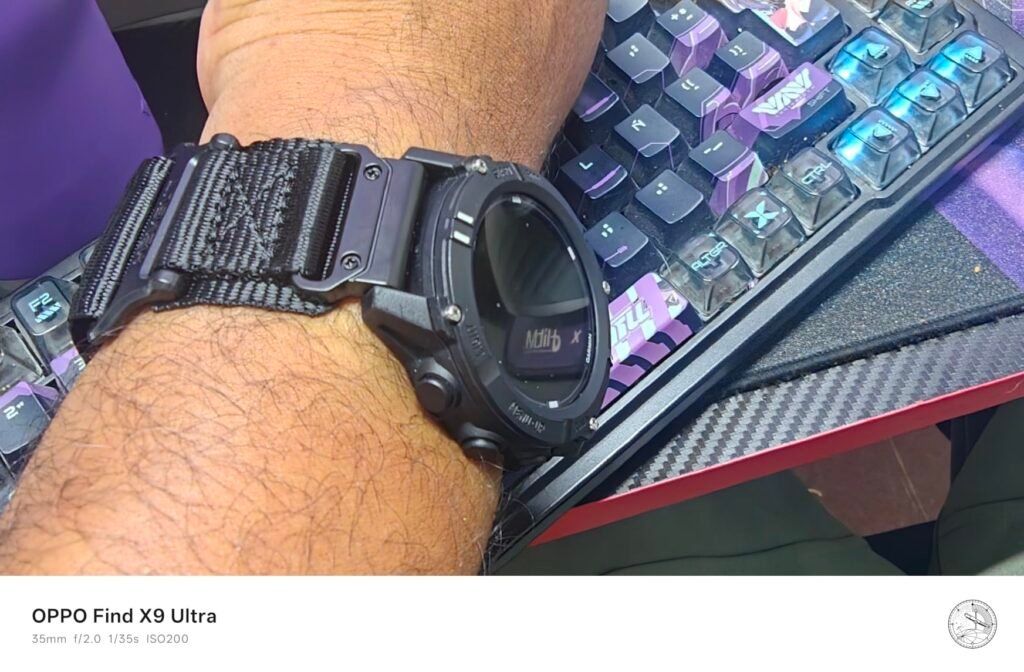
The 1.4-inch AMOLED display delivers exceptional visibility both above and below water, and the scratch-resistant sapphire lens protects it from damage during equipment handling. The 51mm titanium bezel is lightweight yet durable, and the 200-meter dive-rated case with leakproof inductive buttons meets the demands of both recreational and technical diving. Multiple dive modes support recreational scuba through advanced technical dives with different gas mixes.
The built-in LED flashlight with variable intensities and red or white light adds real utility for low-light diving, night dives, or surface signaling. DiveView maps include bathymetric depth contours and over 4,000 dive sites, and multi-band GPS provides surface accuracy for marking entry and exit points. The dive readiness feature considers sleep, exercise, stress, and jet lag to help you plan dives when your body is properly prepared.
SubWave sonar is Garmin’s underwater communication technology that lets divers send preset messages to each other through the water at ranges up to 30 meters. This addresses a fundamental limitation of scuba diving where verbal communication is impossible and hand signals require close proximity. The system can also relay tank pressure data from multiple divers back to a designated ‘dive leader’ who can monitor the group’s gas supply. For dive professionals and technical divers, this capability adds real safety value.
This is the dive computer for technical divers, dive instructors, and serious enthusiasts who want the most capable wrist-worn dive technology available. The price reflects genuinely advanced capability rather than luxury markup. Casual recreational divers can get most of the functionality they need from the less expensive Descent G2 or G1, and buyers with smaller wrists may find the 51mm case impractical for daily wear.
Casual snorkelers or recreational divers who don’t need advanced technical features or want a more compact watch.
We may earn a commission when you buy through this link, at no additional cost to you.
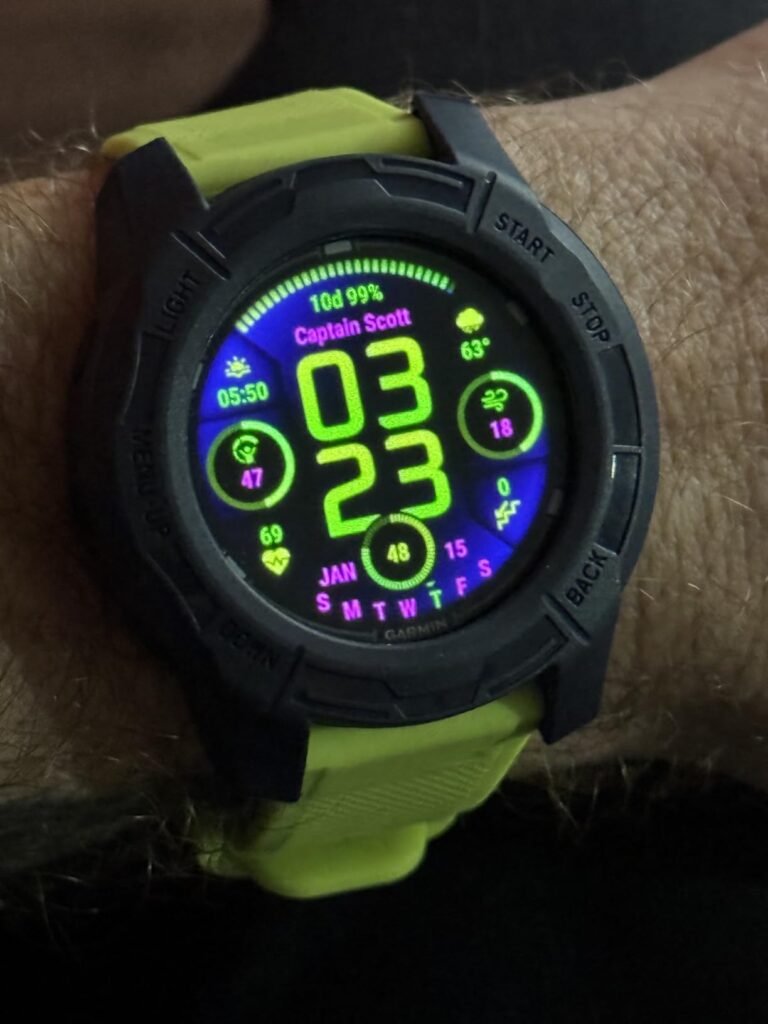
The Garmin Descent G2 brings advanced dive computer capability to a more accessible price point while adding a distinctive sustainability angle: the housing, bezel, and buttons are made entirely from recycled ocean-bound plastics. For divers who genuinely care about ocean conservation, this makes purchasing decisions align with the environments they enjoy exploring, adding meaningful character beyond spec sheets.
We may earn a commission when you buy through this link, at no additional cost to you.
The 1.2-inch AMOLED display delivers vibrant color and excellent underwater visibility, protected by a scratch-resistant sapphire lens. The 10 ATM dive rating covers recreational and most advanced diving, and support extends across recreational, advanced, technical, freediving, and pool apnea disciplines. Multi-GNSS support lets you mark surface entry and exit points precisely, which helps with navigation planning and post-dive review.
Battery life reaches 27 hours in dive mode and 10 days in smartwatch mode, meaning you won’t need to worry about charging between dive days on a typical trip. Smartwatch features include smart notifications, Garmin Pay contactless payments, and Connect IQ app personalization, making this a genuinely wearable daily piece rather than a specialized tool that sits in a dive bag. Fitness tracking with VO2 max estimates and heart rate monitoring adds ongoing training value.
Traditional dive watches with rotating bezels only track elapsed time, leaving depth monitoring and decompression calculations to a separate dive computer. A wrist-worn dive computer like the Descent G2 combines both functions plus automatic tissue nitrogen tracking, ascent rate warnings, safety stop timers, and dive log storage. For any diver going beyond casual snorkeling, the safety and convenience advantages of a real dive computer significantly outweigh the additional cost, and the smartwatch functionality makes daily wear practical.
This is the sweet spot in the Garmin Descent lineup for recreational and advanced recreational divers who want serious dive computer capability without the premium of the Mk3i. The sustainability story matters for environmentally conscious buyers, and the smaller 46mm case fits more wrists comfortably than the 51mm Mk3i. Technical divers needing SubWave sonar or multi-diver tank pressure monitoring should step up to the Mk3i instead.
Purist watch collectors who prefer mechanical analog watches, or buyers seeking the lowest entry price.
We may earn a commission when you buy through this link, at no additional cost to you.
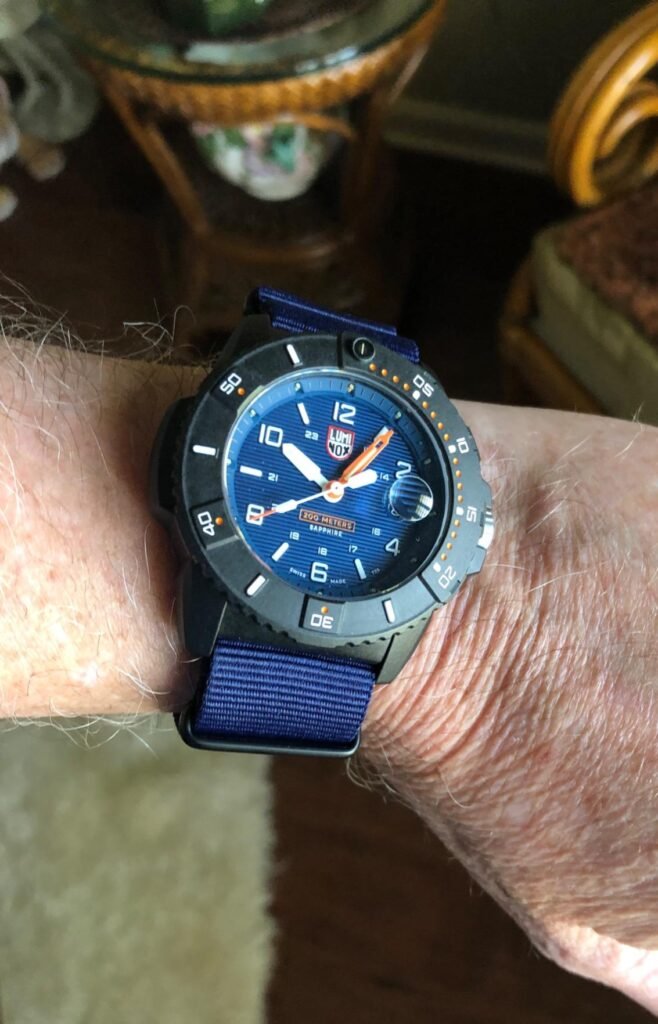
The Luminox Navy Seal 3600 stands out among dive watches through its self-illuminating Luminox Light Technology that provides constant visibility for up to 25 years without any button press or battery drain. This tritium-based system uses tiny micro gas light sources that glow continuously, meaning you can read the time and dive markers instantly at any moment day or night, which is genuinely useful for night diving and low-visibility conditions.
We may earn a commission when you buy through this link, at no additional cost to you.
Officially developed for the United States Department of the Navy and refined over 25 years of partnership with maritime special operations forces, the 3600 series carries genuine tactical heritage rather than just marketing positioning. The 200-meter water resistance, protected crown, screw-in caseback, and sapphire crystal with anti-reflective coating meet the demands of serious professional use. Swiss quartz movement delivers reliable accuracy without the winding requirements of mechanical alternatives.
The 45mm CARBONOX case in orange provides distinctive visual identity and reduces weight compared to full stainless steel construction, while the blue dial creates strong visual contrast with the green and orange LLT illumination points. The unidirectional rotating bezel handles standard dive timing functions, and the date window includes a magnifying loupe for improved legibility. The rubber strap suits the tactical aesthetic and stands up to saltwater exposure well.
Traditional watch lume like SuperLuminova charges from exposure to light and gradually fades over hours in darkness, requiring periodic recharging under a light source. Tritium gas tubes like the Luminox LLT system produce their own light through radioactive decay of tritium gas, providing constant illumination for approximately 25 years without any charging. This means the watch is fully readable the moment you look at it at any depth or in any darkness, which has real safety value for divers and night workers.
This watch appeals to buyers who want a Swiss-made dive watch with distinctive tactical styling and the practical benefit of always-visible tritium illumination. The self-illumination technology is genuinely valuable for divers, first responders, and anyone who needs to read time in complete darkness without touching the watch. Buyers preferring conservative dial designs or wanting Eco-Drive light-powered movement should consider the Citizen Promaster alternatives instead.
Buyers who prefer subtle traditional dive watch aesthetics or want the environmental sustainability of light-powered movements.
We may earn a commission when you buy through this link, at no additional cost to you.
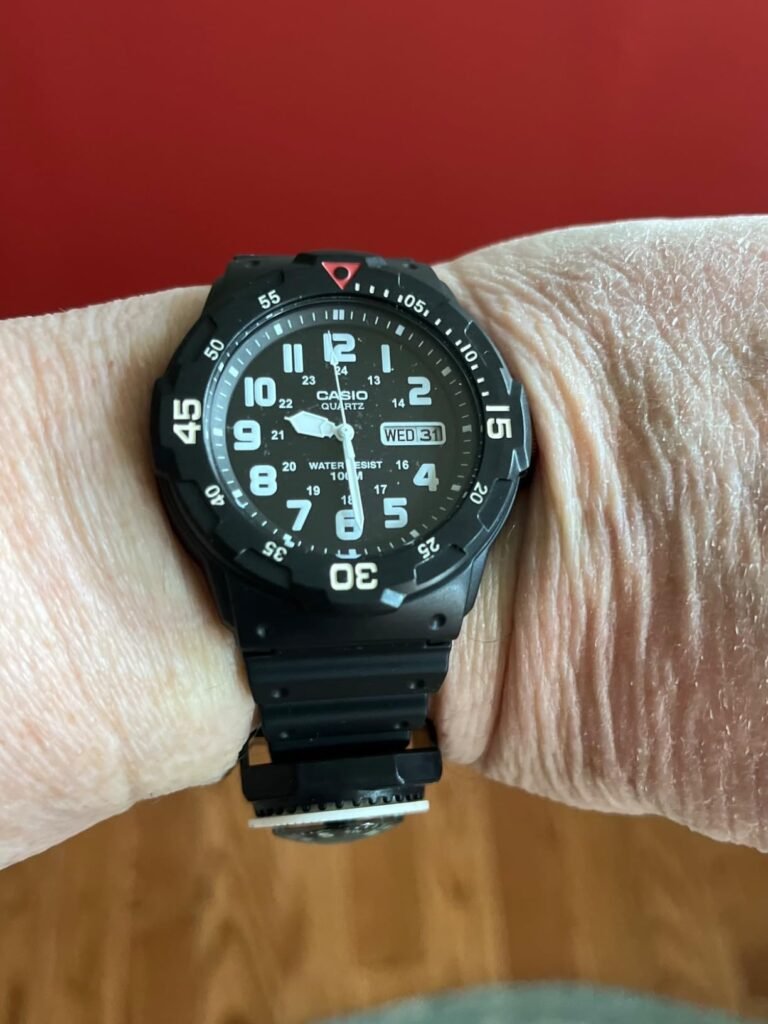
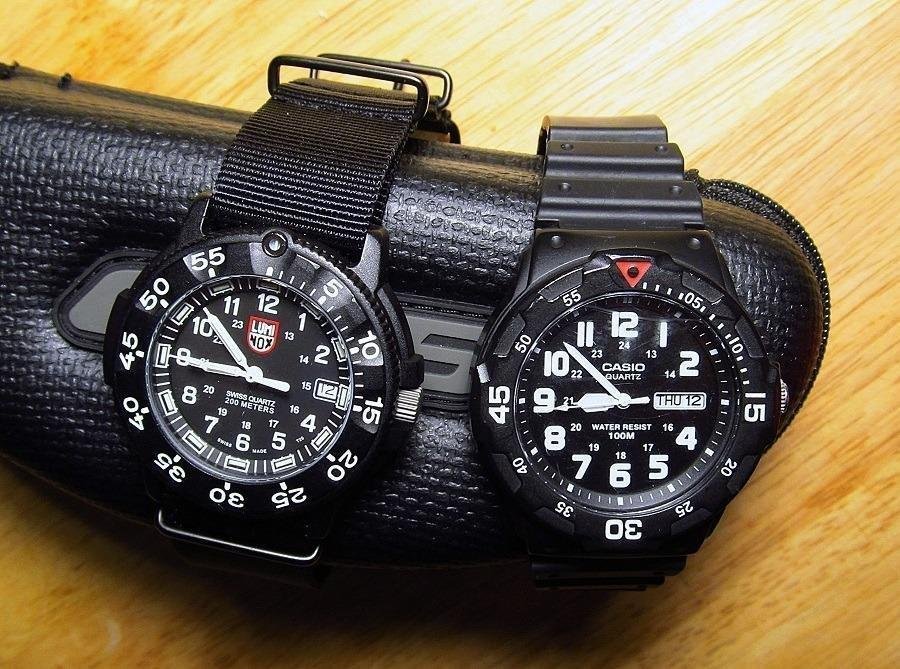
The Casio MRW200H proves that genuine water resistance doesn't require spending hundreds of dollars. At under thirty dollars, this watch delivers 100 meters of water resistance backed by both a screw-down crown and screw-down caseback, which is the sealing configuration typically found on watches costing five to ten times as much. For snorkeling, surfing, swimming, and casual water activities, it offers real capability at an accessibility that removes financial risk.
We may earn a commission when you buy through this link, at no additional cost to you.
The reliable Japanese quartz movement provides accurate timekeeping with 3-year battery life, meaning you won’t need to worry about power or the potential compromise to water resistance that comes with frequent battery changes. The 43mm resin case is lightweight and impact-resistant, and the mineral dial window resists everyday scratches. Analog display with three hands and a date window at 3 o’clock covers essential time and date functions.
The rotating bezel adds basic timing functionality for tracking elapsed time during water activities, though it lacks the unidirectional locking mechanism found on true ISO-certified dive watches. This is fine for casual use where the safety-critical function of preventing accidental time extension isn’t needed. The resin band with buckle closure suits water use, dries quickly, and won’t corrode from saltwater exposure like some metal bracelets can over time.
For most water activities that non-divers engage in, 100m water resistance provides more than adequate margin. Swimming, snorkeling, surfing, boating, and general water sports all happen at surface level or shallow depths where 100m specifications comfortably handle the actual pressures encountered. The screw-down crown and caseback of the Casio MRW200H seal it properly for these uses, and only actual scuba diving to significant depths genuinely requires the deeper ratings and ISO certification of dedicated dive watches.
This is the right pick for buyers who want genuine water-ready capability without any financial commitment. It works well as a beach and vacation watch, a backup for divers, or an entry point for anyone curious about dive-style watches. Serious recreational scuba divers should invest in ISO-certified alternatives like the Citizen Promaster, and technical divers need proper dive computers.
Actual scuba divers who need ISO certification, or buyers seeking premium materials like sapphire crystal.
We may earn a commission when you buy through this link, at no additional cost to you.
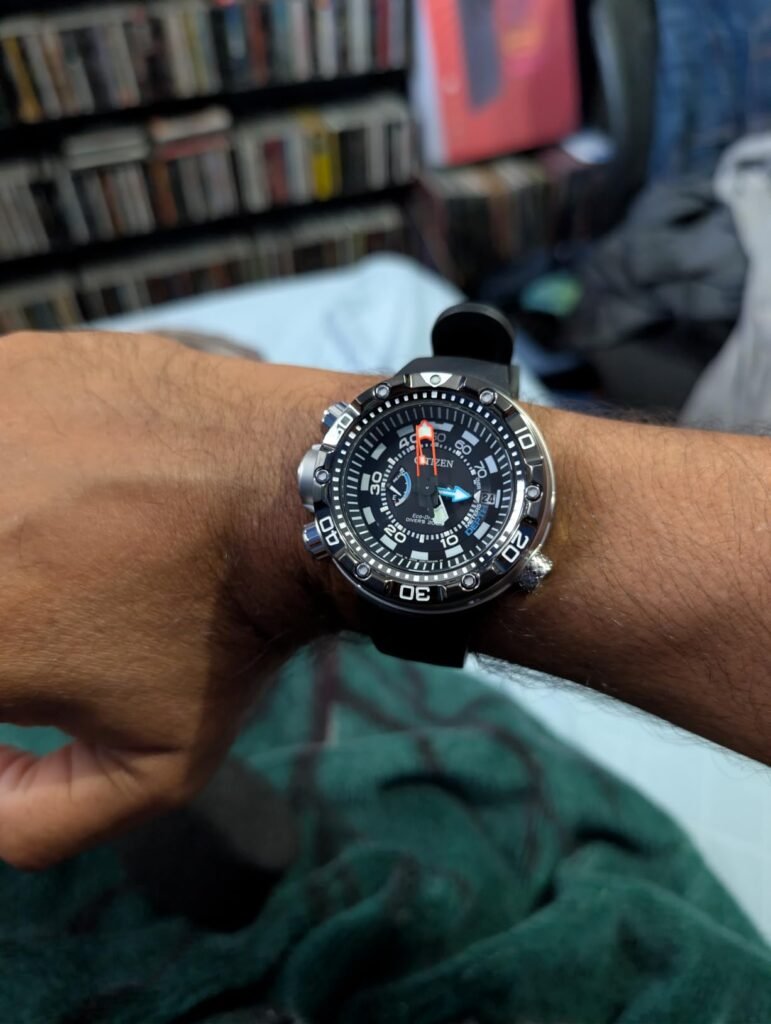
The Citizen Aqualand Depth Meter bridges the gap between traditional analog dive watches and full digital dive computers, adding real depth measurement functionality to a classic analog design. For divers who appreciate the aesthetics of a traditional watch but want more capability than just a rotating bezel provides, this offers genuine dive utility without abandoning the mechanical watch look.
We may earn a commission when you buy through this link, at no additional cost to you.
Depth display reaches to 70 meters with auto-start dive mode that begins depth tracking automatically when the watch is submerged, eliminating the need to remember to activate a dive function before entering the water. The rapid ascent alarm provides a critical safety warning if you’re ascending too quickly, which helps prevent decompression sickness. Maximum depth memory lets you review your deepest point after each dive, which is useful for logging and post-dive review.
The two-tone stainless steel case with luminous hands, markers, and anti-reflective mineral crystal provides good underwater legibility. The power reserve indicator shows how much charge remains in the Eco-Drive movement, giving you confidence that the watch won’t stop unexpectedly during a dive. The 200-meter water resistance rating provides margin well beyond the 70-meter depth measurement capability, and the polyurethane strap accommodates wetsuit sleeves.
A rotating bezel tells you how much time has passed but says nothing about how deep you are, requiring a separate depth gauge or dive computer for that critical information. Integrated depth measurement in an analog watch lets you monitor your current depth and maximum depth reached at a glance, without adding another piece of equipment to your dive gear. For divers who want to keep their setup minimal but need depth awareness, this integration provides real practical value.
This is the choice for divers who want depth measurement functionality without moving to a full digital dive computer, or who appreciate the aesthetic of an analog watch with practical dive electronics integrated seamlessly. The premium price reflects the specialized technology and Promaster heritage. Divers wanting decompression calculations, gas mix support, or dive log storage should choose a proper dive computer like the Garmin Descent options.
Casual snorkelers who don’t need depth measurement, or technical divers requiring full computer functionality.
We may earn a commission when you buy through this link, at no additional cost to you.
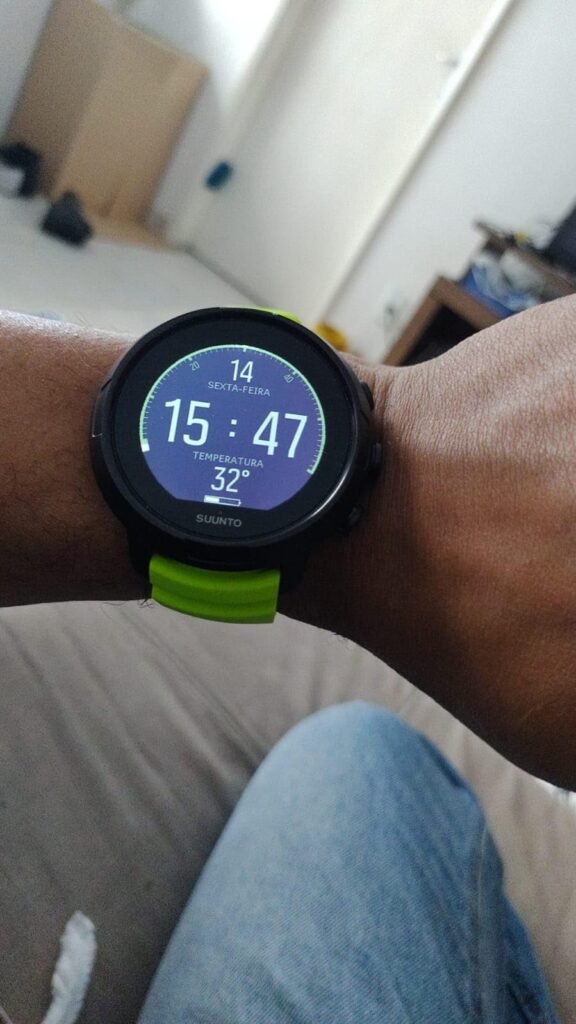
The Suunto D5 targets recreational and advanced recreational divers who want a full-featured dive computer with a color display and wireless tank pressure integration. Suunto has been a respected name in dive computers for decades, and the D5 brings modern display technology and connectivity to their proven decompression algorithms and dive management features.
We may earn a commission when you buy through this link, at no additional cost to you.
The color display makes underwater information significantly easier to interpret at a glance compared to monochrome alternatives, with different colors indicating status conditions like current depth, ascent rate warnings, and safety stop timers. Wireless tank pressure integration through a compatible transmitter shows your remaining air supply directly on the wrist, eliminating the need to check a separate submersible pressure gauge and providing a more integrated dive experience.
Vibration alarms provide tactile alerts for critical events like ascent rate warnings and safety stops, which is genuinely useful in noisy underwater environments or when visual attention is elsewhere. The built-in digital compass adds navigation capability that helps you maintain heading during dives and find your way back to entry points. Wireless mobile connection lets you sync dive logs and settings through smartphone apps for easy review and planning.
Traditional dive gear uses a submersible pressure gauge on a hose connected to your regulator to display remaining air. Wireless tank pressure integration replaces this with a small transmitter on your first stage that sends data to your dive computer, showing air remaining directly on the wrist display. This eliminates hose clutter, provides constant awareness of gas supply without turning to check a gauge, and allows the computer to calculate remaining bottom time based on your current breathing rate rather than just depth and time.
This is a solid choice for recreational divers who want proven Suunto decompression modeling with modern display technology and wireless features at a more accessible price than premium alternatives. The 100m water resistance rating covers recreational diving depths comfortably. Divers wanting the latest display technology and broader ecosystem integration may prefer the Garmin Descent options, and casual snorkelers don’t need this level of capability.
Casual snorkelers, buyers wanting the latest AMOLED displays, or divers already committed to another dive computer ecosystem.
We may earn a commission when you buy through this link, at no additional cost to you.
The Garmin Descent G1 delivers rugged dive computer capability at the most accessible Garmin price point, trading the vibrant AMOLED display of the G2 and Mk3i for a monochrome screen that dramatically extends battery life. The result is a highly capable dive computer that runs for 25 hours in dive mode and up to 21 days in smartwatch mode, making it particularly suited to extended dive trips and expedition use where charging opportunities are limited.

We may earn a commission when you buy through this link, at no additional cost to you.
The sapphire lens provides maximum scratch resistance for the display, and silicone bands offer comfortable secure fit that works with wetsuit sleeves. Support extends across recreational, advanced, technical, freediving, and spearfishing modes, giving divers comprehensive coverage regardless of their preferred discipline. Multi-GNSS support including GPS, GLONASS, and Galileo enables accurate surface entry and exit point marking for post-dive review and future navigation.
Over 30 built-in sports apps plus advanced training features like VO2 max tracking make this a genuinely useful daily fitness watch beyond diving. Smart notifications, Garmin Pay contactless payments, and Connect IQ app personalization add practical smartwatch functionality for daily wear. Wrist-based heart rate, Pulse Ox, Body Battery energy monitoring, and sleep tracking provide 24/7 health insights that complement the dive-focused features.
Extended dive trips often involve remote locations, liveaboard boats with limited charging outlets, and multiple dives per day for a week or more. A dive computer that requires nightly charging becomes a logistical concern in these situations, particularly if you forget to charge or share charging equipment. The Descent G1’s 21-day smartwatch battery and 25-hour dive mode battery mean you can typically complete a week-long dive trip with only a single mid-trip charge, dramatically simplifying travel logistics.
This is the right choice for recreational and advanced divers who want serious dive computer capability with maximum battery life and don’t need the AMOLED display of premium alternatives. The monochrome display is highly readable underwater and in sunlight, and the extended battery life is genuinely valuable for multi-day dive trips. Buyers wanting the visual appeal of color displays should step up to the G2, and technical divers needing sonar communication need the Mk3i.
Buyers who prioritize display vibrancy or technical divers needing advanced sonar features and gas mix support.
We may earn a commission when you buy through this link, at no additional cost to you.
Selecting the right dive watch means matching water resistance, certification, movement type, and dive features to your actual underwater activities and experience level. This section walks through the decision factors that separate genuine dive tools from dive-styled fashion watches.
ISO 6425 is the international standard that defines what qualifies as a genuine dive watch, requiring independent testing for water resistance at rated depth plus 25 percent overpressure, magnetic and shock resistance, strap durability, and underwater visibility at 25 centimeters. Watches without this certification may be water-resistant but haven’t undergone the rigorous testing that verifies actual dive capability. The Citizen Promaster dive watches carry ISO 6425 certification, while many dive-styled watches do not.
For actual scuba diving, ISO certification provides meaningful confidence that the watch will perform reliably underwater. For snorkeling, swimming, and casual water activities, non-certified watches with adequate water resistance work fine. The certification matters most for divers going below 10 meters where pressure and equipment interaction become more demanding. Marketing claims about water resistance without ISO certification should be evaluated cautiously since they may not reflect independent verification.
Prioritize ISO 6425 certification if you actually scuba dive rather than just snorkel or swim. For casual water use, focus instead on adequate water resistance rating and proven build quality from established brands.
Water resistance ratings don’t correspond directly to real-world depth capability because ratings assume the watch is stationary in water. Add pressure from swimming motion, diving descent, or waves and effective depth is significantly less. A 100m rating is generally swim-safe, 200m handles recreational scuba comfortably, and 300m provides margin for advanced recreational and light technical diving. Ratings above 300m are typically overkill for most divers.
For dedicated dive use, choose watches with at least 200 meters of water resistance combined with a screw-down crown and screw-down or screwed-back caseback. These physical sealing mechanisms provide the pressure resistance that gasket seals alone cannot maintain at depth. Watches with push-pull crowns can be adequate for shallow water but risk seal failure at diving depths, particularly if the crown gets bumped or pulled slightly during activity.
Match water resistance to your actual planned use plus safety margin. For recreational scuba to 30-40 meters, 200m ratings with proper sealing are sufficient. For extended time at greater depths or technical diving, choose 300m or higher ratings with proven sealing systems.
Dive watches use three main movement types, each with distinct advantages. Mechanical automatic movements offer traditional watchmaking appeal and never need batteries, but they require winding through wear or manual input and cost more. Quartz movements provide superior accuracy and lower initial cost but require battery replacements every few years, and each battery change potentially compromises water resistance if not done properly by a qualified watchmaker.
Eco-Drive and similar light-powered movements combine quartz accuracy with no battery replacements, using any light source to keep the watch running indefinitely. This is particularly valuable for dive watches since it eliminates the water resistance concerns that come with periodic battery changes. Citizen has pioneered this technology in dive watches, and their Promaster line offers ISO certification combined with Eco-Drive convenience.
For dive watches specifically, light-powered movements like Eco-Drive offer meaningful practical advantages over both mechanical and traditional quartz alternatives. If you prefer mechanical watches for other reasons, ensure any dive watch service is performed by qualified technicians who can properly maintain water resistance seals.
Traditional analog dive watches with rotating bezels only measure elapsed time, leaving depth monitoring and decompression calculations to separate equipment. This is fine for freedivers, snorkelers, and shallow scuba divers who don’t need advanced tracking. However, most recreational scuba divers benefit significantly from proper dive computers that track depth, ascent rates, safety stops, nitrogen loading, and dive time simultaneously.
Wrist-worn dive computers like the Garmin Descent series and Suunto D5 combine watch functionality with full dive computer capability, adding features like GPS surface tracking, dive log storage, and smartphone connectivity. These devices cost significantly more than analog dive watches but replace multiple pieces of dive equipment and provide safety benefits that justify the investment for regular divers.
Choose an analog dive watch if you snorkel, freedive, or want a dive-styled watch primarily for daily wear. Choose a dive computer if you scuba dive regularly and want proper decompression tracking, or if you dive in situations where the added safety features and data logging provide meaningful value.
The crystal protects the dial while allowing you to read the time, and its material significantly affects durability and underwater visibility. Sapphire crystal offers maximum scratch resistance and is standard on premium dive watches like the Luminox Navy Seal and Garmin Descent computers. Mineral crystal provides good scratch resistance at lower cost and works well for most dive applications, particularly when treated with anti-reflective coatings.
Anti-reflective coatings are genuinely valuable for dive watches because underwater light conditions and bright surface sun both create glare that reduces legibility. Watches with anti-reflective coatings on curved crystals like the Citizen Promaster options provide notably better readability underwater. Luminous hands and markers using SuperLuminova or tritium provide the low-light visibility essential for diving in poor visibility, deep water, or night conditions.
For dive watches, prioritize anti-reflective coating on the crystal and strong luminous compounds on hands and markers. Sapphire is preferable when budget allows, but mineral crystal remains adequate for most dive applications when properly protected within the case design.
Dive watches use unidirectional rotating bezels as a critical safety feature for tracking bottom time. The bezel can only rotate counterclockwise, meaning any accidental contact will only shorten the perceived elapsed time rather than extend it, which prevents divers from mistakenly believing they have more remaining bottom time than actually available. This is why ISO 6425 requires unidirectional bezels on certified dive watches.
Bezel quality varies significantly across dive watches. Premium bezels use ceramic inserts that resist scratching and fading, while budget options use painted or aluminum inserts that can wear over time. The click action should be crisp and precise, with 120 clicks per rotation being standard for dive watches to provide half-minute precision. Bezel grip design affects usability with wet or gloved hands, and coin-edge or serrated designs generally work better than smooth polished bezels.
For actual diving, ensure your dive watch has a unidirectional bezel with clear minute markings and good grip. For dive-styled daily wear only, bezel design becomes more of an aesthetic choice than a safety-critical feature.
The strap or bracelet dramatically affects how a dive watch performs during actual diving. Polyurethane and rubber straps stretch naturally over wetsuit sleeves, dry quickly between dives, and resist saltwater degradation better than most alternatives. Stainless steel bracelets look sharper for daily wear but require diver extension mechanisms to accommodate wetsuits and can trap water against skin during long dives.
For serious diving, dedicated rubber or polyurethane straps like those on the Citizen Promaster 300m are the practical choice. NATO straps and canvas alternatives also work but require careful selection to ensure they suit water use. If you want a dive watch primarily for daily wear with occasional light water use, bracelet options like the Citizen Promaster Sea provide better versatility for office and social settings without dedicated dive functionality.
Choose rubber or polyurethane straps for actual diving use and cold-water wetsuit compatibility. Choose bracelets for primarily land-based wear where daily aesthetics matter more than diving practicality. Consider watches with quick-release spring bars that allow easy strap swapping to match different situations.
Before every dive, verify that the crown is fully screwed down and the case appears intact with no visible damage to gaskets or the crystal. Set the rotating bezel by aligning the minute marker with the current minute hand position, giving you the reference point for tracking elapsed time throughout the dive. For dive computers, verify battery charge, review previous dive data if planning repetitive dives, and configure gas mixes and dive mode appropriate to your planned dive profile.
After every water use, rinse the watch thoroughly with fresh water to remove salt, sand, and chlorine that can degrade seals and cause corrosion over time. Pay particular attention to the crown, bezel, and case-back areas where residue can accumulate. Dry the watch completely before storage, and periodically check that the crown continues to screw down smoothly and that the bezel maintains its click action. For rubber and polyurethane straps, occasional cleaning with mild soap removes body oils that can degrade the material.
Service dive watches every 2-5 years through authorized service centers to inspect and replace gaskets that maintain water resistance. Never open the case yourself, and never manipulate the crown while underwater or in wet conditions. For quartz dive watches, have battery changes performed by qualified watchmakers who can pressure-test the watch after service to verify water resistance remains intact. Eco-Drive watches eliminate this concern by never requiring battery service. Store dive watches in dry conditions away from strong magnetic fields when not in use.
For recreational scuba diving to typical depths of 30-40 meters, watches rated at 200 meters or higher with screw-down crowns provide adequate safety margin. The rating accounts for water pressure but not the additional dynamic pressure from movement, so higher ratings provide meaningful safety buffer. Watches rated below 200 meters or without screw-down crowns should not be used for actual scuba diving regardless of marketing claims about water resistance.
For recreational scuba diving, a proper dive computer is significantly safer than an analog dive watch alone. Dive computers automatically track depth, ascent rate, safety stops, and nitrogen loading in real time. Traditional dive watches only measure elapsed time and leave depth monitoring to separate gauges. If you scuba dive regularly, invest in a dive computer. Snorkelers, freedivers, and daily wear enthusiasts can use analog dive watches without concerns.
ISO 6425 is an international standard requiring independent testing of water resistance at rated depth plus 25 percent overpressure, magnetic resistance, shock resistance, strap attachment strength, and legibility of markers at 25 centimeters in darkness. Watches without this certification may claim water resistance but haven't undergone verified testing. Look for the ISO certification for genuine dive-ready construction versus dive-styled fashion watches.
Yes, dive watches are designed for durability and work well as daily wear pieces. Their robust construction, water resistance, and legible dials make them versatile for various activities from office wear to outdoor adventures. Rubber straps suit active use while metal bracelets look dressier for professional settings. Just avoid strong magnetic fields and impacts that exceed the watch's shock resistance rating.
Most dive watches should be serviced every 2-5 years to inspect and replace gaskets that maintain water resistance. Watches that see actual diving use should be serviced on the shorter end of this range, while lightly used dive watches can go longer between services. Never open a dive watch case yourself, and always use authorized service centers that can pressure-test the watch after service to verify water resistance remains intact.
Unidirectional bezels can only rotate counterclockwise, which is a critical safety feature for tracking bottom time. Any accidental contact will only shorten the perceived elapsed time rather than extend it, preventing divers from mistakenly believing they have more remaining bottom time than they actually do. This is why ISO 6425 requires unidirectional bezels on certified dive watches, and it's why bidirectional bezels are inappropriate for actual diving use.
Traditional quartz movements use batteries that require replacement every few years, and each battery change potentially compromises water resistance if not done properly. Eco-Drive movements are light-powered and never need batteries, eliminating this concern entirely. For dive watches specifically, Eco-Drive provides meaningful practical advantages by avoiding the seal disturbances that come with periodic battery service. Both technologies offer similar accuracy and reliability otherwise.
For actual diving use, rubber or polyurethane straps are more practical because they stretch over wetsuit sleeves, dry quickly, and resist saltwater degradation. Metal bracelets look sharper for daily wear but require diver extension mechanisms to fit over exposure suits and can trap water against skin. Many divers own multiple straps and swap between them based on situation. Consider watches with quick-release spring bars for easy strap changes.
For mechanical dive watches, avoid setting the date manually between roughly 9 PM and 3 AM when the movement's date-change mechanism is engaged. Manual manipulation during this window can damage internal components. For quartz and Eco-Drive dive watches, this restriction generally doesn't apply, but check your specific watch's manual for confirmation. This is one advantage of quartz over mechanical for casual users who don't want to worry about date-setting timing.
Magnetic fields can affect the accuracy of mechanical watch movements by magnetizing components, though modern dive watches often include some magnetic resistance. Quartz and Eco-Drive movements are less affected but not immune. Avoid placing your dive watch directly on speakers, tablet cases with magnetic closures, or MRI equipment. If your mechanical dive watch starts running significantly fast or slow, magnetization is a common cause and can be corrected by a watchmaker.
The Citizen Promaster Dive Eco-Drive earns the top overall recommendation by combining genuine ISO 6425 dive certification with light-powered movement that eliminates battery service concerns. The 200-meter water resistance, anti-reflective mineral crystal, and 5-year warranty deliver serious dive capability at a reasonable price, and the Eco-Drive technology means the watch will run reliably for decades without needing case openings that could compromise water resistance. For most recreational divers and enthusiasts, this represents the sweet spot of capability, reliability, and value.
For serious recreational and technical divers, the Garmin Descent G2 offers proper dive computer functionality with AMOLED display technology and ocean-conservation sustainability at a more accessible price than the premium Mk3i. Budget-conscious buyers who want genuine water-ready capability without spending significantly can rely on the Casio MRW200H at under thirty dollars with real 100m water resistance and screw-down crown. The Luminox Navy Seal 3600 stands out for divers wanting always-visible tritium illumination and Swiss quartz reliability with distinctive tactical styling.
Start by identifying whether you're a snorkeler, recreational scuba diver, or technical diver, then match certification and features to your actual diving activities. Consider whether you want a traditional analog dive watch or a full dive computer, and factor in whether the watch will primarily see actual diving use or serve as a dive-styled daily wearer. Use the comparison table and buying guide above to narrow your options, and choose the timepiece that matches how you'll actually use it rather than aspirational scenarios.