WEN DT1516 Dethatcher
9.0Editor score16-inch cutting path
15-amp 3300 RPM
5-position depth adjustment
20-blade scarifying head
Find the right dethatchers for 2026. We compare 10 standout options by build quality, useful features, owner feedback, value, and everyday trade-offs.

Find the right dethatchers for 2026. We compare 10 standout options by the factors that matter most for lawn renovation, including motor power, cutting width, depth adjustment range, dethatching versus scarifying attachments, collection bag capacity, maneuverability, and build quality. Each pick reflects practical considerations for homeowners who want a healthier lawn without renting commercial equipment every spring and fall.
Electric corded dethatchers dominate this category because they deliver consistent power without battery runtime limits, though attachment-based cordless systems and tow-behind models fit specific use cases. Blade style matters significantly, with spring steel tines removing surface thatch while scarifying blades cut deeper for soil aeration and overseeding preparation. Most quality models combine both capabilities.
Price points span from under one hundred dollars for compact single-function units to over two hundred for premium attachment systems. The right choice depends on your lawn size, how dense the thatch layer has become, whether you need scarifying capability for overseeding, and how much storage space you have between the two or three annual uses most homeowners will perform.
We compared 10 lawn dethatchers using the details that actually help a buyer decide: motor amperage and RPM, cutting path width, depth adjustment positions, dethatching versus scarifying head options, collection bag capacity, foldable handle design, wheel quality, cord management features, owner feedback, and overall value. The notes focus on practical trade-offs so each pick connects to how homeowners actually tackle thatch buildup, aerate compacted soil, and prepare lawns for overseeding across spring and fall renovation windows.


Compare key features, scores, and current prices side by side. A shorter feature list means fewer details were available, not necessarily fewer capabilities.


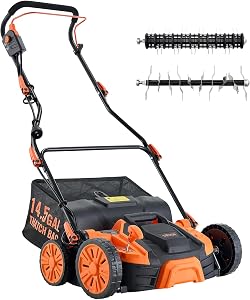
The TaskStar 16-inch dethatcher earns Editor's Choice honors for the highest owner rating in this guide at 4.8 stars, combined with a 15-amp 3500 RPM motor and a bonus adjustable thatch rake that most competitors do not include. For homeowners who want a complete lawn renovation kit in a single purchase, this package covers both powered dethatching and hand-raking for tight corners and spot touch-ups.
We may earn a commission when you buy through this link, at no additional cost to you.
The 15-amp motor reaches 3500 RPM across a 16-inch cutting path, which is at the higher end of consumer dethatcher power ratings. The tool-free quick-release system switches between dethatching and scarifying cylinders in seconds, making it practical to perform both operations during a single lawn session. The scarifier loosens soil for root growth while the dethatcher removes dead grass and thatch to improve airflow and water penetration.
The included bonus thatch rake adjusts from 55 to 83.5 inches long and 7.9 to 17.3 inches wide, providing substantial hand-raking capability for areas the powered unit cannot reach. The foldable handlebar enables compact storage during the off-season when the dethatcher sits in your garage or shed. The 14.5-gallon collection bag handles small-area debris, with the recommendation to remove the bag for larger working areas where emptying becomes a bottleneck.
Powered dethatchers cannot reach into tight corners, around trees, along fence lines, or into narrow strips between landscape beds. A hand thatch rake handles these spot-touch areas efficiently without requiring you to buy a separate tool. Having both the powered unit and the hand rake in a single purchase typically costs less than buying them separately, and the adjustable handle on the TaskStar rake accommodates different user heights for comfortable extended use.
This is the top overall recommendation for homeowners who want a feature-complete dethatching package backed by strong owner satisfaction. If you prefer an established major brand, consider the WEN or Sun Joe alternatives at the slight cost of some features. If you need maximum motor power, the TIECTOWN 15.5-amp model edges this out slightly on peak amperage.
Buyers who require an established major brand name or those with lawns too large for the included 14.5-gallon collection bag.
We may earn a commission when you buy through this link, at no additional cost to you.
The WEN DT1516 brings this established brand's reliability to lawn renovation work with a full 16-inch cutting path and genuine dual-function design. For homeowners who want a known manufacturer with established customer support and warranty coverage, WEN provides a safer purchase than many lesser-known alternatives at similar prices. The 2-year warranty gives real peace of mind for a seasonal tool.
We may earn a commission when you buy through this link, at no additional cost to you.
The 15-amp motor generates up to 3300 RPM across the 16-inch clearing path, providing enough power to handle established thatch layers in cool-season and warm-season grasses alike. The 5-position height adjustment ranges from a quarter-inch above the ground to a half-inch below, giving precise control over how aggressively the tines or scarifying blades engage with the soil. The automatic overload shutdown protects the motor if you accidentally bite off more than the machine can chew.
Switching between the 24-steel-tine dethatching head and the 20-blade scarifying head takes seconds, which matters when you want to do both tasks in a single lawn session. The detachable thatch collection bag reduces cleanup time compared to raking up the debris after dethatching, though you will still want a tarp or rake for larger yards where you empty the bag frequently. The scarifying head is useful before overseeding because it creates seed-to-soil contact zones in thin or compacted areas.
Dethatchers encounter varied conditions during a single pass, from loose dead grass to packed thatch mats and small rocks hidden in the lawn. Automatic overload shutdown protects the motor from burnout when the blades or tines encounter resistance beyond safe operating limits. Without this feature, pushing too hard through dense thatch can permanently damage the motor, requiring expensive repair or replacement. The protection circuit simply stops the motor temporarily, letting you back off and resume at a shallower setting.
Choose this model if you value established brand reliability and warranty coverage over newer alternatives. If you want slightly higher RPM or a bonus thatch rake for touch-up work, the TaskStar model offers more features at a similar price. For buyers on tighter budgets, the MZK or BILT HARD options deliver similar functionality for less money.
Buyers with large lawns who need wider cutting paths or those preferring cordless freedom over corded power.
We may earn a commission when you buy through this link, at no additional cost to you.
The Sun Joe AJ805E emphasizes maneuverability with four easy-glide wheels that reduce the push effort required during long dethatching sessions. For homeowners with medium-sized lawns who find full-weight dethatchers tiring to operate, the smoother rolling action of this design makes extended work sessions more comfortable. Sun Joe's established reputation in the outdoor power equipment space adds confidence to the purchase.
We may earn a commission when you buy through this link, at no additional cost to you.
The 13-amp motor is slightly less powerful than the 15-amp alternatives in this guide, but still generates sufficient torque for routine thatch removal in typical residential lawn conditions. The 15-inch cutting width covers ground efficiently without the extra weight of 16-inch models. The 5-position depth control adjusts how deeply the tines engage with the soil, which is important for matching the tool to your lawn’s actual thatch depth rather than always running at maximum aggression.
The large removable collection bag simplifies disposal by capturing thatch and debris as you work rather than requiring separate raking afterward. The four-wheel design distributes weight evenly and reduces the tendency to dig in or scalp during passes across uneven terrain. The dual dethatching and scarifying functionality lets you handle both routine maintenance and more intensive renovation work with the same machine.
Some dethatcher designs use only two wheels at the rear with the cutting mechanism directly on the ground at the front. Four-wheel designs like the Sun Joe AJ805E distribute weight more evenly and roll more smoothly across uneven lawn terrain. The result is less user effort during long passes and better consistency in cutting depth across the entire lawn. For homeowners who dethatch twice per year across a medium-sized yard, the ergonomic difference adds up noticeably over the course of a single session.
Choose this model if maneuverability and ease of use are priorities over absolute power. If you need maximum torque for thick established thatch, the 15-amp options from WEN, TaskStar, or TIECTOWN will handle tougher conditions. For buyers who want the best balance of features and smooth operation, the AJ805E delivers Sun Joe’s reliable design philosophy.
Buyers with very dense thatch requiring maximum motor power or those who need a cutting path wider than 15 inches.
We may earn a commission when you buy through this link, at no additional cost to you.
The Greenworks 13-amp 14-inch dethatcher takes a lightweight approach aimed at homeowners with smaller yards who prioritize easy handling over maximum cutting width. For users who find full-size 16-inch dethatchers heavy and unwieldy, the more compact Greenworks design reduces effort during turning and transport while still delivering the power needed for typical residential thatch removal.
We may earn a commission when you buy through this link, at no additional cost to you.
The 13-amp motor generates 3200 RPM with the push of a single button, eliminating complicated starting sequences. The 14-inch clearing width covers ground slightly slower than larger models but navigates tight landscape areas and around obstacles more easily. The 3-position depth adjustment offers less granular control than 5-position alternatives, but provides adequate flexibility for most lawn conditions through its three preset tine depths.
The quick-release attachment system allows fast switching between the included dethatcher and scarifier heads without tools. This matters when you want to make a dethatching pass to remove surface debris followed by a scarifying pass to break up compacted soil before overseeding. The quick-change design encourages actually using both heads rather than skipping the scarifier step because switching takes too long.
A wider cutting path means fewer passes to cover a given area, but it also means more weight and less maneuverability in tight spaces. For homeowners with lawns under 2,500 square feet, properties with many landscape beds and obstacles, or anyone who finds larger equipment difficult to turn, the 14-inch Greenworks design covers ground efficiently without becoming unwieldy. The 2-inch width difference compared to 16-inch models translates to about 12 percent more pass volume, which matters less than you might think for typical residential dethatching sessions.
This dethatcher is ideal for homeowners with smaller yards who value brand reputation and ease of handling. For larger lawns or heavier thatch conditions, step up to a 16-inch option like the WEN, TaskStar, or TIECTOWN alternatives. If you want 5-position depth control for finer tuning, the Sun Joe AJ805E or any of the 16-inch models provide more adjustment range.
Owners of large lawns who need to cover ground quickly or those requiring 5-position depth adjustment for precise control.
We may earn a commission when you buy through this link, at no additional cost to you.
The TIECTOWN 2026 Upgrade pushes motor specifications higher than most competitors with a 15.5-amp peak rating and 3600 RPM operation across a 16-inch cutting path. For homeowners dealing with heavy established thatch layers or compacted lawn conditions that stress lesser machines, this power headroom helps maintain cutting consistency without bogging down.
We may earn a commission when you buy through this link, at no additional cost to you.
The dual scarifying and dethatching modes switch via tool-free quick-release, with scarifying depth ranging from -0.47 to 0.24 inches and dethatching depth from -0.32 to 0.39 inches across the 5-position adjustment lever. This range accommodates everything from gentle maintenance passes on healthy lawns to aggressive renovation work on neglected or renovation-ready turf. The 3-position adjustable handle rod adapts to users of different heights for ergonomic comfort during extended sessions.
Practical details that affect daily use include a waterproof plug for safe outdoor operation, a cord clip to prevent accidental unplugging, and an extension cord holder that keeps cables organized and tangle-free. The 14.5-gallon removable collection bag reduces cleanup trips, while durable wheels ensure smooth movement across lawn terrain. The foldable handle enables compact storage between the two annual dethatching sessions most homeowners perform.
Motor amperage ratings indicate the maximum current the motor can draw during operation. Higher amperage generally correlates with more torque and the ability to maintain cutting speed under heavy loads. For lawns with multiple years of thatch buildup, dense cool-season grasses with heavy stem residue, or soils that resist tine penetration, the extra 0.5 amps of peak rating provides headroom that prevents motor bogging. For routine maintenance dethatching on well-tended lawns, standard 13 to 15-amp motors handle the work without needing peak power.
Choose this model if you need maximum motor power for dense thatch conditions or heavily established lawns. If you prefer an established brand name, the WEN or Greenworks options provide similar functionality with name-brand backing. For slightly higher owner satisfaction, the TaskStar 16-inch alternative edges this out despite similar specifications.
Buyers who prefer established major brands or those with light thatch conditions where standard 13-amp motors are sufficient.
We may earn a commission when you buy through this link, at no additional cost to you.
The MZK Lawn Dethatcher offers the lowest price in this guide at under one hundred dollars while still delivering a 13-amp copper motor rated at 3700 RPM across a 15-inch cutting path. For budget-conscious homeowners who need a functional dethatcher without premium brand pricing, this unit demonstrates that effective lawn renovation does not require a three-figure investment.
We may earn a commission when you buy through this link, at no additional cost to you.
The 13-amp copper motor spins at 3700 RPM, which is actually one of the higher RPM ratings in this comparison despite the lower amperage. Higher RPM helps the tines maintain cutting speed when encountering thatch resistance. The 15-inch cutting path balances coverage and maneuverability for typical residential lawn sizes. The adjustable depth settings ranging from -0.47 to 0.24 inches provide reasonable control for matching the tool to actual lawn conditions.
The 2-in-1 blade system switches between dethatching and scarifying functions, letting a single machine handle both routine debris removal and more intensive soil aeration work before overseeding. The large 45-liter collection bag minimizes the number of emptying stops during extended dethatching sessions. At just 27.5 pounds, the unit is lighter than many competitors, which reduces user fatigue during long passes. The foldable handle enables compact off-season storage.
Dethatcher blades spinning at thousands of RPM pose serious injury risks if accidentally activated. Dual safety switches require two deliberate actions to start the motor, typically pressing a safety button while simultaneously pulling the trigger. This design prevents accidental starts when children or pets touch the handle, when the trigger is bumped during transport, or when picking up the dethatcher to move it between work areas. The redundancy adds a few seconds to startup but significantly reduces injury risk.
This is the right choice for homeowners who want a capable dethatcher at the lowest possible price. The lesser-known brand positioning requires accepting potentially less robust long-term support than major brands offer. For buyers who want established brand reliability, step up to the WEN, Sun Joe, or Greenworks alternatives. For maximum power or features, the TaskStar or TIECTOWN options justify their higher prices.
Buyers who prefer established major brands with long warranty coverage or those requiring 16-inch cutting paths for maximum efficiency.
We may earn a commission when you buy through this link, at no additional cost to you.
The BILT HARD 16-inch dethatcher sits at an attractive mid-range price point while offering the full 15-amp motor, 16-inch cutting path, and 5-position depth adjustment that premium alternatives provide. For buyers who want 16-inch cutting capability without stepping into the higher-priced territory, this unit delivers the specifications that matter without obvious compromise.
We may earn a commission when you buy through this link, at no additional cost to you.
The 15-amp copper motor generates up to 3300 RPM, driving either the 16-blade scarifying roller or the 20-tine dethatching roller depending on which cylinder you install. The lock-off switch and overload protection add safety features that help prevent accidental starts and motor burnout under heavy loads. The recommendation to mow before dethatching applies to all models in this category, but is worth remembering because tall grass can wrap around tines and reduce cutting effectiveness.
Practical features include 7-inch front and 6-inch rear flat-free wheels that cannot go flat during off-season storage, a tool-free quick-lock knob for depth adjustment changes, a foldable handle rod for compact storage, and a 14.5-gallon removable grass bag. The 5-position depth adjustment lever offers scarifying and raking depths from -0.47 to 0.24 inches, matching the range of premium competitors. The combination of features at this price makes it hard to argue against for value-focused buyers.
Pneumatic tires provide a smoother ride but can go flat during months of storage between dethatching sessions. Flat-free wheels made from solid rubber or polyurethane eliminate the frustration of discovering a flat tire when you want to dethatch next spring. The tradeoff is slightly less shock absorption over bumpy terrain, which rarely matters for the typical lawn surfaces where dethatchers operate. For a tool used only two or three times per year, flat-free wheels prevent an unexpected equipment headache.
This is a smart pick for buyers who want full 16-inch dethatcher capability without paying premium brand prices. If maximum peak power matters, step up to the TIECTOWN model with 15.5-amp peak rating. If you want higher owner ratings, the TaskStar unit at a slightly higher price has stronger user feedback. For established brand reliability, consider the WEN alternative.
Buyers who prefer well-known major brands or those requiring maximum peak motor power for extremely dense thatch conditions.
We may earn a commission when you buy through this link, at no additional cost to you.
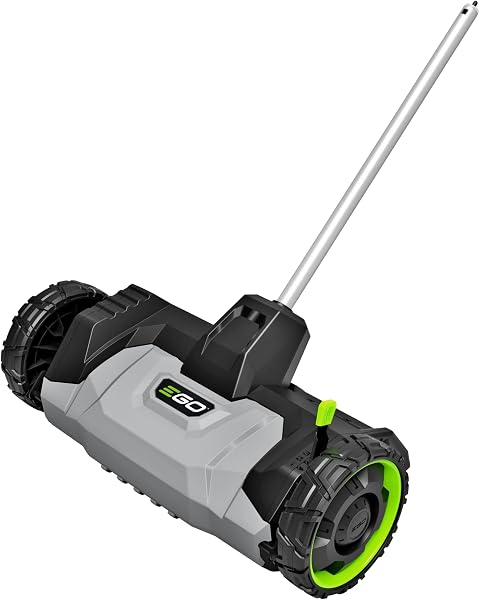
The EGO Power+ Multi-Head System Dethatcher Attachment serves a specific but valuable market: homeowners who already own the EGO POWER+ Multi-Head System and want to add dethatching capability without buying a complete dedicated machine. For users invested in the EGO cordless ecosystem, this attachment provides battery-powered dethatching freedom at a lower incremental cost than a complete corded unit.
We may earn a commission when you buy through this link, at no additional cost to you.
The 14-inch clearing width works with EGO’s PH1400 or PH1420 power heads (sold separately), using the same battery platform as EGO’s other outdoor power equipment. This eliminates cord management entirely and lets you dethatch anywhere on your property without extension cord placement planning. The three-position depth adjustment provides adequate control for most lawn conditions, with eight-inch rugged wheels delivering smooth operation across varied grass surfaces.
The solid steel drive shaft and steel tines are built for durability under repeated seasonal use, while IPX4-rated weather-resistant construction allows operation in damp conditions without concern. The 5-year limited tool warranty exceeds the coverage offered by most dethatchers in this guide, reflecting EGO’s confidence in the construction quality. The attachment’s integration with the broader EGO ecosystem means service and support follow established patterns rather than requiring new vendor relationships.
Battery-powered dethatchers eliminate cord management and let you work anywhere on your property regardless of outlet location. For lawns with limited outlet access, properties where extending cords across walkways creates tripping hazards, or users who already own compatible battery systems, cordless operation significantly improves the dethatching experience. The tradeoff is battery runtime, which may require multiple batteries or breaks for charging during larger jobs. For small to medium lawns, a single fully charged battery typically covers the entire area.
This is the right choice exclusively for buyers who already own compatible EGO POWER+ equipment or who are considering purchasing into the ecosystem. For users without existing EGO equipment, buying this attachment plus a power head and battery costs significantly more than any complete corded dethatcher in this guide. Pure dethatcher buyers should look at the WEN, TaskStar, or BILT HARD alternatives for better value.
Users who do not already own compatible EGO POWER+ equipment, as the total system cost significantly exceeds dedicated corded alternatives.
We may earn a commission when you buy through this link, at no additional cost to you.
The Agri-Fab 48-inch Tow-Behind Dethatcher serves a completely different market from the walk-behind electric units in this guide. For homeowners with large properties and existing lawn tractors or riding mowers, the tow-behind format covers massive areas in a single pass that would take hours with any walk-behind electric alternative. The 48-inch working width is three times wider than typical 16-inch electric dethatchers.
We may earn a commission when you buy through this link, at no additional cost to you.
The cantilever transport handle makes raising and lowering the tines simpler than wrestling with rear-mounted levers on cheaper tow-behind units. This matters when transitioning between dethatching mode and transport mode for moving across hard surfaces or driveways. The 24 heat-treated spring steel tines penetrate dried grass, weeds, and soil to loosen matted thatch and improve water, nutrient, and airflow access to grass roots.
The universal hitch fits most lawn and garden tractors, meaning you likely do not need to purchase additional adapters to connect to your existing equipment. The 7-inch flat-free wheels and 70-pound weight tray option let you add ballast for more aggressive dethatching action when conditions require it. Built in Sullivan, Illinois USA using global materials, the Agri-Fab brand has a long reputation for durable lawn and garden implements with a 3-year limited warranty backing the construction.
The break-even point between walk-behind and tow-behind dethatching depends on lawn size and your existing equipment. For properties under 10,000 square feet, walk-behind units cover the ground reasonably quickly. For properties over half an acre, the time savings from a 48-inch tow-behind unit become substantial. If you already own a lawn tractor, adding a tow-behind dethatcher for less than many walk-behind units cost makes economic sense. Without existing towing equipment, the total investment including a lawn tractor rarely pencils out for dethatching alone.
Choose this unit if you already own a lawn tractor and have a large property where walk-behind dethatching would take all weekend. For homeowners without a riding mower, this tool is not useful without the purchase of compatible towing equipment. The scarifying functionality found on electric units is absent here, so overseeding preparation requires separate equipment.
Homeowners without lawn tractors or those needing scarifying capability for overseeding preparation.
We may earn a commission when you buy through this link, at no additional cost to you.
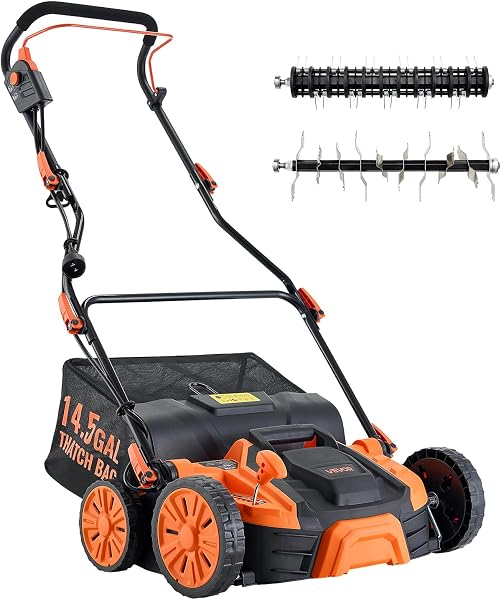
The VEVOR 2-in-1 Dethatcher offers full 16-inch dethatcher specifications at a competitive price, with a 15-amp motor spinning at 3600 RPM to drive either the 10-blade scarifier head or the 22-tooth dethatching rake. For buyers familiar with the VEVOR brand's approach of delivering commercial-adjacent features at consumer prices, this unit continues that pattern in the lawn care space.
We may earn a commission when you buy through this link, at no additional cost to you.
The snap-on quick-release system switches between the dethatching and scarifying blades without tools, enabling fast transitions during combined lawn renovation sessions. The 5-position depth settings provide scarifying depth from -0.47 to -0.12 inches and dethatching depth from -0.24 to 0.39 inches, which covers the range needed for most lawn conditions from gentle maintenance to aggressive renovation work. The 2-position adjustable handle accommodates users of different heights.
The 14.5-gallon detachable nylon collection bag reduces how often you need to empty debris during work. Safety-focused design details include a metal body for durability, heavy-duty wheels for terrain handling, wire clamps for cable control, and a waterproof plug for outdoor safety. The 26.68-pound operating weight makes this one of the lighter 16-inch dethatchers in this guide, reducing fatigue during extended passes.
A product’s specifications tell you what it should be capable of doing, while owner ratings reveal how well it actually performs over time in real-world use. The VEVOR unit’s specifications match or exceed most competitors on paper, yet the 4.0 star rating is lower than many similar products in this guide. This gap often indicates quality control inconsistencies, assembly issues, or long-term durability concerns that specifications alone cannot capture. When specs look strong but ratings lag, read individual reviews carefully to understand which specific issues matter for your intended use.
This dethatcher works for buyers comfortable with the VEVOR brand who want full-spec features at a competitive price. The lower owner rating suggests mixed experiences, so budget-focused buyers might consider the MZK or BILT HARD alternatives with better ratings. For established brand reliability, the WEN or Greenworks options provide more customer confidence at modestly higher prices.
Buyers who prioritize high owner satisfaction ratings or those who want established brand name recognition.
We may earn a commission when you buy through this link, at no additional cost to you.
Selecting a dethatcher depends on your lawn size, thatch severity, grass type, and whether you want standalone or multi-function capability. The factors below cover the most important decision points to help you choose a tool that actually improves your lawn renovation results rather than frustrating you during the two or three times per year you will use it.
Motor amperage directly affects how well a dethatcher handles heavy thatch loads without bogging down or overheating. The 13-amp motors found in units like the Sun Joe AJ805E and Greenworks 14-Inch provide enough power for routine maintenance on well-tended lawns with thin thatch layers. The 15-amp motors in the WEN, TaskStar, BILT HARD, and TIECTOWN options deliver meaningful power headroom for dense established thatch and compacted soil conditions where lower-amp units would struggle.
RPM ratings indicate how fast the blades or tines spin, with higher RPM providing more cutting cycles per second through resistant material. The TIECTOWN 3600 RPM and TaskStar 3500 RPM lead the pack among 15-amp models, while the MZK 3700 RPM shows that higher RPM is possible even with lower amperage designs. The combination of amperage and RPM matters more than either specification alone, so look at both numbers when comparing performance potential.
Choose 15-amp motors with 3300+ RPM for dense thatch or large lawns. Choose 13-amp motors for occasional maintenance on healthy, well-maintained lawns. For attachment systems or tow-behind units, power considerations shift to the host equipment rather than the dethatcher itself.
Cutting width determines how quickly you cover ground during each pass. The 14 to 15-inch widths of the Greenworks, Sun Joe, and MZK options cover ground slightly slower but maneuver more easily around landscape features and tight spaces. The 16-inch widths of the WEN, TaskStar, TIECTOWN, BILT HARD, and VEVOR models cover ground about 10 percent faster per pass, which adds up noticeably across larger lawns.
The 48-inch tow-behind width of the Agri-Fab unit represents a different category entirely, covering ground three times faster than walk-behind alternatives but requiring a lawn tractor to operate. For properties over half an acre, the time savings from a tow-behind unit can be substantial, while for smaller lawns the walk-behind format works just fine. The 14-inch width of the EGO attachment matches other compact models while offering cordless freedom.
Match cutting width to your lawn size: 14 to 15 inches for lawns under 5,000 square feet with many obstacles, 16 inches for larger open lawns up to half an acre, and 48-inch tow-behind for larger properties with existing lawn tractors.
Depth adjustment controls how aggressively the tines or blades engage with the soil, which is critical for matching the tool to actual lawn conditions. Five-position adjustment systems like those on the WEN, Sun Joe, TaskStar, TIECTOWN, BILT HARD, MZK, and VEVOR units provide finer control than three-position systems like the Greenworks and EGO alternatives. More positions let you dial in exactly the right depth for your specific lawn and avoid over-aggressive settings that damage healthy grass.
Depth ranges typically span from a quarter-inch above ground level to a half-inch below, with scarifying modes often reaching deeper than dethatching modes. The TaskStar range of -0.5 to +0.25 inches is typical, while the TIECTOWN scarifying depth down to -0.47 inches goes slightly deeper for aggressive renovation work. Running at maximum depth every time is usually counterproductive because it stresses healthy grass and removes more organic material than necessary.
Prioritize 5-position adjustment for versatile lawn conditions and precise control. Three-position systems work for simpler cases where you mainly adjust between light maintenance and more aggressive renovation modes.
Dethatching tines remove the layer of dead grass and organic debris that accumulates at the soil surface, improving water penetration and air circulation to the root zone. Scarifying blades cut deeper into the soil to break up compaction and create seed-to-soil contact zones that are essential for successful overseeding. Most quality units include both heads with tool-free quick-release switching between modes.
Dethatching alone works for routine maintenance when thatch is the primary concern. Scarifying is necessary before overseeding because it exposes bare soil where new seeds can germinate rather than sitting on top of dead organic material. Units with only dethatching capability, like the Agri-Fab tow-behind, still provide value for maintenance but will not prepare lawns for successful seeding without additional equipment or manual preparation.
Choose dual-function units with both dethatching and scarifying capability for complete lawn renovation flexibility. Single-function dethatchers work if you only need maintenance and prepare for overseeding using other methods.
Larger collection bags reduce the frequency of stopping to empty debris during dethatching sessions. The 14.5-gallon bags on the TaskStar, TIECTOWN, BILT HARD, and VEVOR units handle typical residential lawn sections before requiring emptying. The 45-liter bag on the MZK unit (approximately 12 gallons) handles slightly less. Smaller bags on units like the Greenworks or EGO systems require more frequent stops.
For large lawn sections or heavily thatched areas, removing the collection bag entirely and raking up debris afterward often proves faster than emptying the bag every few minutes. The TaskStar documentation specifically recommends this approach for larger working areas, which reflects realistic operational experience. Having a tarp or large pile location planned before starting makes post-dethatching cleanup more efficient regardless of your bag strategy.
Prioritize 14.5-gallon or larger bags for medium-sized lawns where emptying frequency affects workflow. For large lawns, plan to remove the bag and rake up debris separately for faster overall completion.
Dethatchers get used two or three times per year, which means they spend most of their lives in storage. Foldable handles like those on the TaskStar, TIECTOWN, MZK, BILT HARD, and VEVOR units reduce the storage footprint significantly compared to fixed-handle designs. The ability to collapse the handle lets the dethatcher stand upright in a corner or hang on garage wall hooks rather than sprawling across valuable floor space.
Weight affects both maneuverability during use and transport between storage and work areas. The 26.68-pound VEVOR unit and 27.5-pound MZK are among the lighter options, while the 30-pound TIECTOWN sits at the higher end of walk-behind weights. Flat-free wheels prevent the discouraging experience of discovering a flat tire when you want to use the dethatcher after months of storage.
Prioritize foldable handles and flat-free wheels for easier year-round ownership. Weight differences of a few pounds matter less during actual use than during carrying up garage stairs or into basement storage.
Corded electric dethatchers dominate this category because they deliver consistent power without battery runtime limits during what is often an extended lawn renovation session. The tradeoff is cord management, which requires planning extension cord placement to avoid running over the cord or creating tripping hazards. Heavy-duty outdoor extension cords in appropriate gauges (14 AWG up to 50 feet, 12 AWG up to 100 feet) are essential for proper motor performance.
Battery-powered systems like the EGO Multi-Head attachment eliminate cord management entirely but require investment in compatible power heads and batteries. For users already in a cordless ecosystem, adding a dethatching attachment provides freedom at modest incremental cost. For users without existing cordless equipment, the total system investment typically exceeds dedicated corded alternatives significantly.
Choose corded electric for lowest total cost and consistent power. Choose battery-powered attachments only if you already own compatible cordless equipment or are deliberately building out that ecosystem. Choose tow-behind units for large properties where a lawn tractor is already available.
Dethatcher prices in this guide range from under one hundred dollars for the MZK budget option to nearly two hundred fifty dollars for the EGO attachment system. Mid-range options like the BILT HARD and VEVOR units offer full 16-inch dethatcher specifications at competitive prices. Premium brand pricing from WEN and Greenworks reflects warranty coverage and brand reputation rather than meaningfully different performance.
Dethatchers get used so infrequently that the per-use cost spreads across many years of ownership. A quality dethatcher used twice annually for 10 years costs just a few dollars per use even at the higher end of this guide’s pricing. The ongoing cost difference between premium and budget options becomes minor over the total ownership period, so focus on features and brand confidence rather than minimizing initial price.
Start with budget options like the MZK or BILT HARD if you want to try dethatching before committing to premium equipment. Step up to the WEN or TaskStar for established brand confidence and better feature sets. Consider the EGO attachment only if you own compatible cordless equipment.
Before starting a dethatching session, mow your lawn to the recommended height (typically around 2 inches for most grass types) because tall grass can wrap around tines and reduce cutting effectiveness. Water the lawn lightly the day before if the soil is extremely dry, which helps tines penetrate more easily without excessive stress on the motor. Plan your extension cord placement carefully for corded units, laying the cord along one edge of the lawn and keeping it behind you as you work to avoid running it over. Start with a shallower depth setting than you think you need and adjust deeper only if the thatch pickup proves insufficient, since over-aggressive settings can damage healthy grass.
During operation, overlap each pass by about an inch to ensure complete coverage without missing strips of thatch between passes. Walk at a steady pace that lets the tines or blades do their work rather than forcing the machine through dense areas, which can bog down the motor and reduce cutting effectiveness. Empty the collection bag before it becomes completely full to maintain efficient debris pickup, or remove the bag entirely for large working areas where emptying frequency becomes a bottleneck. Switch between dethatching and scarifying heads as needed throughout the session, using the dethatching head for general cleanup and the scarifying head for areas requiring soil aeration or overseeding preparation.
After each use, disconnect the power source and clean debris from the tines, blades, and underside of the deck using a stiff brush or garden hose. Allow the unit to dry completely before storage to prevent rust formation on steel components. Fold the handle for compact storage if your model offers that feature, and store the unit in a dry garage or shed away from direct exposure to moisture. Rake up any remaining thatch debris from the lawn surface after dethatching, since leaving it in place defeats the purpose of removing it. Apply appropriate fertilizer and water the lawn thoroughly after dethatching to help the grass recover and take advantage of improved soil access to nutrients and moisture.
Most lawns benefit from dethatching once or twice per year during active growing seasons. Cool-season grasses like fescue and bluegrass respond best to dethatching in early spring or early fall when they are actively growing. Warm-season grasses like Bermuda and Zoysia prefer late spring through early summer dethatching after they have fully emerged from dormancy. Lawns with thatch layers thicker than half an inch should be dethatched to prevent water and nutrient blockage to the root zone.
Dethatching removes the layer of dead grass and organic debris at the soil surface using spring steel tines that comb through the thatch. Scarifying cuts deeper into the soil with blade-style attachments that break up compaction and create channels for air, water, and nutrient penetration. Scarifying is more aggressive and is typically used before overseeding to create seed-to-soil contact zones. Many modern units like the TaskStar and TIECTOWN include both functions with tool-free switching between heads.
Hand rakes work for small areas with light thatch but become impractical for anything larger than a few hundred square feet. Electric dethatchers remove thatch much faster and more consistently across larger lawns while reducing physical effort significantly. For lawns under 1,000 square feet with minimal thatch, a thatch rake like the one included with the TaskStar model may suffice. For larger lawns or significant thatch buildup, a powered dethatcher is a far more practical investment.
Thatch layers under half an inch are generally considered healthy and beneficial for the lawn ecosystem. Thatch between half an inch and one inch starts to interfere with water and nutrient penetration and should be reduced through dethatching. Thatch thicker than one inch significantly damages lawn health by preventing water from reaching roots, promoting disease, and creating environments for pest insects. Push aside the grass to measure your thatch layer at several lawn locations before deciding whether dethatching is needed.
Dethatching wet grass is not recommended because the tines or blades can tear healthy grass out by the roots when the ground is saturated. Wait until the lawn surface has dried after rain or morning dew before starting a dethatching session. Slightly moist soil beneath dry surface grass is actually ideal because the tines can penetrate without excessive force, but soggy ground causes damage. Most lawn care experts recommend dethatching two or three days after rainfall or watering.
A 5,000 square foot lawn typically takes 30 to 60 minutes to dethatch with a walk-behind electric unit, depending on thatch density and whether you also need to scarify for overseeding. Larger lawns scale proportionally, with half-acre properties often requiring two to three hours of actual dethatching time plus setup and cleanup. Tow-behind units like the Agri-Fab 48-inch cover ground three times faster than walk-behind alternatives, making them worth considering for large properties.
Thatch debris should be removed from the lawn surface after dethatching rather than left in place. Collection bags on walk-behind dethatchers capture debris as you work, which is convenient for smaller lawns. For larger areas, removing the bag and raking up debris separately often proves faster. Leaving thatch on the lawn defeats the purpose of removing it from the soil surface and can actually create new thatch problems if not addressed.
Dethatching new sod or recently seeded lawns can damage or kill the developing root systems. Wait at least one full growing season after sod installation before dethatching, and avoid dethatching areas with new seed for at least 60 to 90 days after germination. For established lawns over one year old, normal dethatching schedules apply. If you need to prepare an established lawn for overseeding, use the scarifying mode rather than aggressive dethatching to minimize stress on healthy grass.
After dethatching, water the lawn thoroughly to help the grass recover from the stress and take advantage of improved soil access to moisture. Apply a balanced fertilizer within a few days to support new growth through the dethatched areas. If you plan to overseed, do so within one to two weeks while the soil remains receptive to seed-to-soil contact. Keep the lawn well-watered for several weeks after dethatching to support recovery, especially during warm or dry weather conditions.
The TaskStar 16 Inch Dethatcher earns the strongest overall recommendation by combining the highest owner rating in this guide at 4.8 stars, a powerful 15-amp 3500 RPM motor across a 16-inch cutting path, 5-position depth adjustment, and a bonus adjustable thatch rake that competitors do not include. For homeowners who want a complete lawn renovation kit backed by strong user satisfaction and the ability to handle both powered dethatching and hand-raking spot touches in a single purchase, this package delivers more value than any alternative at similar prices.
Several alternatives suit different buyer priorities. The MZK Lawn Dethatcher under one hundred dollars offers remarkable value for budget-conscious buyers who need capable dethatching without premium pricing. The WEN DT1516 provides established brand reliability with 2-year warranty backing for buyers who prioritize known manufacturer support. The EGO Multi-Head Attachment delivers cordless freedom for existing EGO ecosystem owners. The Agri-Fab 48-inch Tow-Behind covers large properties efficiently for lawn tractor owners. The Sun Joe AJ805E emphasizes smooth maneuverability with its four-wheel design.
Your best choice depends on lawn size, thatch severity, grass type, and whether you already own compatible equipment like lawn tractors or cordless power heads. For most residential buyers with lawns between 5,000 and 10,000 square feet, a 15-amp 16-inch electric walk-behind unit with 5-position depth adjustment and 14.5-gallon collection bag handles all typical dethatching tasks effectively. Whatever you choose, mow before dethatching, start with shallower depth settings and adjust as needed, and follow up with appropriate fertilization and watering to help your lawn take maximum advantage of the renewed soil access that dethatching provides.