Jean Paul USA
8.8Editor scoreDurable ABS resin body
French Boehm key system
Adjustable thumb rest support
NAPBIRT technician play tested
Find the right clarinets for 2026. We compare 10 standout options by build quality, useful features, owner feedback, value, and everyday trade-offs.
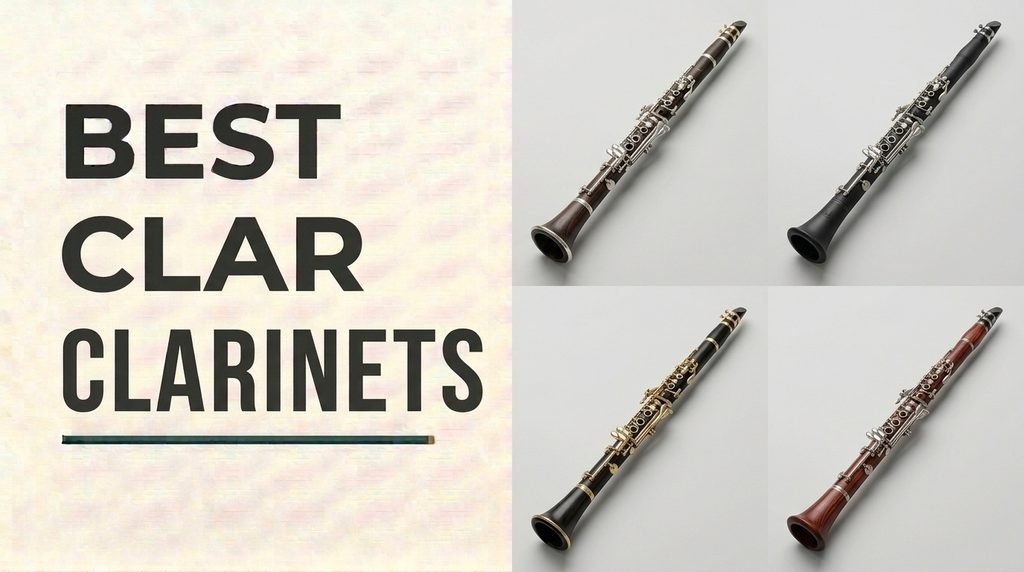
Find the right clarinets for 2026. We compare 10 standout options by the factors that matter most in woodwind selection, including body resonance, bore consistency, keywork plating, pad sealing, barrel tuning flexibility, technician setup, owner feedback, and long-term value for students and advancing players.
Selecting a B-flat soprano clarinet involves balancing acoustic warmth against environmental durability. While weather-resistant ABS resin and ebonite instruments excel in school band rooms and outdoor marching rehearsals, select grenadilla wood models and silver-plated intermediate horns offer the tonal complexity required for solo repertoire and concert ensembles.
Subtle mechanical details make a major impact on daily playability, particularly blue steel spring tension, pad material stability, adjustable thumb rests, and dual-barrel pitch compensation. By evaluating factory regulation alongside included mouthpieces and care accessories, this guide helps you choose an instrument that supports clean intonation and effortless technique.
We compared 10 clarinets across the acoustic and mechanical benchmarks that determine real-world musical progress: intonation stability across registers, body material resilience, keywork alloy durability, spring responsiveness, pad airtightness, barrel tuning options, and verified musician feedback. Our analysis highlights practical trade-offs between budget starter bundles, technician-regulated student horns, and professional wood instruments so players and parents can match their skill level and ensemble demands with confidence.


Compare key features, scores, and current prices side by side. A shorter feature list means fewer details were available, not necessarily fewer capabilities.



The Yamaha YCL-650II Professional Bb Clarinet sits at the pinnacle of our comparison, crafted for dedicated conservatory students, university music majors, and accomplished ensemble musicians who have outgrown synthetic student instruments. Drawing directly from the acoustic engineering of Yamaha's flagship Custom SEV series, the YCL-650II delivers true professional warmth, dynamic range, and tonal color.
We may earn a commission when you buy through this link, at no additional cost to you.
Unlike ABS resin or ebonite models, the body, barrel, and bell of the YCL-650II are turned from carefully seasoned, select grenadilla wood. Natural grenadilla possesses high density and acoustic resonance that imbues every note with dark, woody core overtones and remarkable projection across large concert halls. Precision-tapered tone holes are carefully undercut by hand to ensure seamless scale evenness and spot-on intonation across the chalumeau, clarion, and altissimo registers.
The 17-key, 6-ring Boehm mechanism is heavily plated in pure silver, offering a plush, responsive feel under the fingers while resisting tarnish and corrosion. Sculpted key spatulas and refined lever angles allow effortless execution of rapid orchestral excerpts, complex chamber music passages, and expressive solo literature.
Synthetic resin bodies produce a clean, direct tone, but they lack the complex harmonic overtones required for advanced solo and orchestral repertoire. The seasoned grenadilla wood bore of the YCL-650II responds dynamically to subtle changes in air speed and voicing, allowing experienced clarinetists to shape phrases with rich, expressive tonal nuance.
Because authentic grenadilla wood is an organic material sensitive to sudden humidity drops and extreme temperatures, this instrument should never be marched outdoors in rain or freezing weather. However, for indoor concert halls, wind ensembles, and solo recitals, the Yamaha YCL-650II is an extraordinary lifetime instrument.
Not suitable for outdoor marching band rehearsals or casual beginners who are not ready to maintain a natural wooden instrument.
We may earn a commission when you buy through this link, at no additional cost to you.
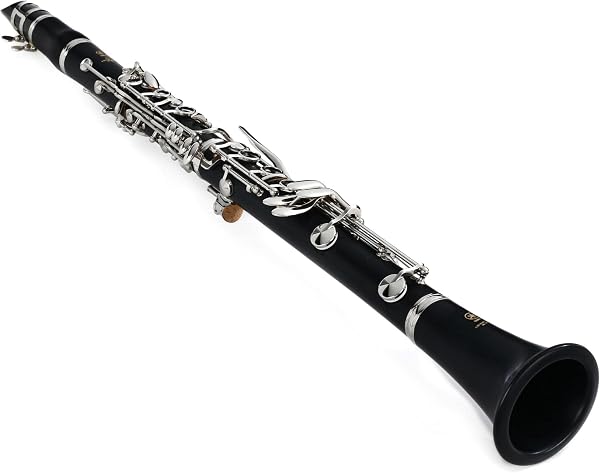
The Jean Paul USA CL-300 earns our top overall recommendation for beginning and developing woodwind players by bridging the gap between inexpensive online starter kits and high-priced conservatory brands. Designed specifically for school band programs, daily home practice, and marching rehearsals, it eliminates the mechanical pad leaks that frequently frustrate novice musicians.
We may earn a commission when you buy through this link, at no additional cost to you.
What sets the CL-300 apart in its price bracket is pre-shipment regulation: each instrument is set up and play-tested by a NAPBIRT-certified technician before leaving the warehouse. Ensuring that bridge keys align properly, spring tensions feel balanced, and tone hole pads seal completely allows students to produce clear low chalumeau notes on their very first day without fighting air leaks.
Constructed with a tough ABS resin body and standard French Boehm keywork, the clarinet easily withstands the temperature swings of outdoor football bleachers and busy school lockers without cracking or warping. An adjustable thumb rest allows instructors and parents to customize the vertical ergonomics to match smaller or growing hands, reducing right-hand thumb fatigue during long rehearsals.
Even a microscopic gap beneath a single clarinet pad can prevent an entire register from speaking cleanly, causing beginners to blame their embouchure when the fault lies in the hardware. Because the CL-300 undergoes inspection by certified band instrument repair technicians prior to shipping, key heights and linkage timings arrive properly dialed in.
While advancing players will eventually benefit from upgrading the stock mouthpiece or stepping up to a dual-barrel intermediate instrument, the CL-300 delivers dependable pitch center and focused tone right out of the case. For families seeking a reliable, educator-friendly student clarinet at a sensible price, it is an outstanding choice.
Not designed for conservatory soloists seeking the complex acoustic overtones of an unstained grenadilla wood bore.
We may earn a commission when you buy through this link, at no additional cost to you.
The Glory GLY-PBK Ebonite Bb Clarinet is tailored for hobbyists, curious adult learners, and budget-conscious shoppers who want a complete, all-in-one starter bundle at an entry-level price. When exploring a new woodwind instrument without committing hundreds of dollars up front, having every required maintenance and playing accessory in one box removes friction.
We may earn a commission when you buy through this link, at no additional cost to you.
Crafted from durable ebonite with a sleek, polished black finish, the body resists moisture absorption and climate fluctuations while providing a classic visual presence. The standard B-flat keywork offers light mechanical resistance suited to developing fingers, enabling learners to practice major scales, arpeggios, and basic band arrangements comfortably.
This package shines in its thorough accessory assortment. Beyond the hard shell carrying case, cork grease, and ten starter reeds, Glory includes a foldable clarinet stand, a dedicated mouthpiece brush, a specialized pad brush, and a cleaning cloth. Having dedicated brushes makes it easy for new players to keep tone holes and mouthpiece chambers hygienic from day one.
Purchasing a clarinet stand, mouthpiece brush, pad duster, cork grease, and spare reeds individually can quickly add fifty dollars to a beginner’s setup. Bundling all of these care tools directly into the Glory kit ensures new players can safely rest their instrument between practice sessions and clean moisture out of the bore immediately.
As expected at this ultra-budget tier, the factory reeds and stock mouthpiece are basic, and pairing the horn with a box of name-brand cane reeds will noticeably improve response and tone warmth. For casual beginners seeking the lowest cost of entry with a full maintenance kit included, the GLY-PBK delivers solid starter utility.
Not recommended for advanced concert performers or music majors who require precision-machined bores and heavy silver-plated keywork.
We may earn a commission when you buy through this link, at no additional cost to you.
The Herche Superior X5 Intermediate Bb Clarinet is built for students, parents, and band educators who prioritize rigorous quality control and after-sale repair security. Backed by a long-standing American family music business, this instrument combines CAD/CNC manufacturing precision with a comprehensive protection plan that takes the worry out of school band ownership.
We may earn a commission when you buy through this link, at no additional cost to you.
Every Superior X5 undergoes a three-stage verification protocol before reaching the musician: a technician executes an internal lamplight inspection to verify zero light leakage around tone holes, a factory professional play-tests the acoustic response, and a U.S. master technician performs a final play test and mechanical adjustment. The CNC-machined mouthpiece opening is designed to concentrate airflow for stable, centered intonation.
Mechanically, the clarinet pairs a lifetime-grade ABS resin body with solid nickel-silver keys assembled via lead-free welding. Blue steel springs provide crisp, snappy key return during rapid technical passages, while double-bladder pads maintain reliable airtight seals across changing seasons. The plush-lined case includes both carry handles and shoulder straps alongside Rico reeds, cork grease, and a bore swab.
During a lamplight test, a repair technician inserts a slender light tube down the clarinet bore in a darkened workspace to spot even hairline gaps under closed double-bladder pads. Combined with the included one-year maintenance and repair plan, players are protected against both out-of-box air leaks and routine first-year wear.
What truly distinguishes this package is the included one-year repair and maintenance plan alongside a three-year manufacturer warranty, covering routine adjustments and unexpected student mishaps. For families wanting peace of mind and verified setup accuracy, the Herche Superior X5 is a compelling investment.
Not ideal for players who strictly require a traditional grenadilla wood body for conservatory orchestra auditions.
We may earn a commission when you buy through this link, at no additional cost to you.
The Mendini by Cecilio Ebonite Bb Clarinet Kit with 2 Barrels is designed for beginning students who need an affordable complete outfit with added tuning flexibility for ensemble play. Ambient room temperature significantly affects woodwind pitch, and having two interchangeable barrels allows young players to match concert pitch in both cool morning classrooms and warm stage environments.
We may earn a commission when you buy through this link, at no additional cost to you.
Constructed from smooth, resonant ABS and bakelite-style composite materials, the body resists cracking while delivering a bright, stable tone. A metal ring wrapped around the bottom of the bell reinforces structural strength against accidental floor bumps while adding acoustic mass that aids projection and crisp articulation across the lower register.
The 17 nickel-plated keys resist deformation under enthusiastic beginner finger pressure and work with tightly sealed bladder pads to prevent air leakage. Each unit undergoes dual-stage inspection—first at the overseas manufacturing facility and again at Cecilio’s Southern California distribution center—to verify mechanical function prior to shipping.
Pulling a single barrel out too far to flatten sharp pitch creates an internal gap in the bore that disturbs throat-tone intonation. Including a second barrel allows students to swap barrel lengths cleanly, while the metal bell ring protects the vulnerable bottom rim from chipping if bumped against a metal music stand.
Inside the carrying case, beginners receive a 4C mouthpiece with ligature and cap, ten 2.5-strength reeds, cork grease, a foldable metal stand, a cleaning cloth, and an introductory study guide book. For students seeking a dual-barrel starter pack that covers every classroom necessity at a wallet-friendly price, this Mendini kit is a strong contender.
Not suited for advanced soloists seeking silver-plated keywork or hand-selected wooden acoustic barrels.
We may earn a commission when you buy through this link, at no additional cost to you.
The EASTROCK 17-Key Bb Clarinet offers beginning students an appealing combination of classic wood-like aesthetics, responsive spring action, and dual-barrel tuning versatility at an entry-level price. Rather than using a slick, shiny plastic exterior, EASTROCK finishes the durable ABS body with a textured matte surface that looks refined on stage and resists slippery grip during long practice sessions.
We may earn a commission when you buy through this link, at no additional cost to you.
Mechanically, the instrument utilizes the standard 17-key, 6-ring Boehm system plated in bright nickel for wear resistance. Under the keys, memory needle springs crafted from high-carbon steel provide lively elasticity and rapid key rebound, helping developing musicians execute clean trills and smooth legato transitions without sluggish pad closure.
To help students stay in tune with school band ensembles across changing seasons, the package includes two replaceable tuning barrels. Swapping between the barrels makes it straightforward to adjust the overall acoustic length of the air column without creating large, unstable gaps at the tenon joints.
Soft metal springs on bargain instruments can quickly lose tension, leaving side keys feeling spongy or slow to close. The high-carbon steel memory springs on the EASTROCK maintain consistent tension over repeated flexing, while the matte ABS finish prevents fingerprints and provides a secure, non-slip grip for nervous beginners.
While budget-minded buyers should consider pairing the horn with a standard student mouthpiece like a Yamaha 4C and quality cane reeds for optimal tone production, the core body and key mechanism offer solid value. It is a practical, low-cost choice for beginners starting band class or marching season.
Not intended for advanced concert players who require heavy silver-plated keys or technician-regulated intermediate bores.
We may earn a commission when you buy through this link, at no additional cost to you.
The Mendini by Cecilio Beginner Ebonite Bb Clarinet Kit provides a streamlined, single-barrel version of Cecilio's popular student outfit, ideal for younger beginners who benefit from simple, confusion-free instrument assembly. When elementary and middle school students are first learning to grease corks and align bridge keys, having one dedicated barrel keeps case organization simple.
We may earn a commission when you buy through this link, at no additional cost to you.
Built from smooth, resonant ABS resin paired with a classic bakelite aesthetic and a ring-wrapped bell mouth, this clarinet delivers bright projection and dependable structural toughness. The 17 nickel-plated keys offer comfortable resistance for young fingers, while tightly seated bladder pads maintain consistent airtightness for clear note production across the chalumeau and clarion registers.
Like its dual-barrel sibling, every clarinet in this line is inspected at the factory and re-tested at the company’s Southern California warehouse to catch shipping shifts before reaching the customer. The included 4C mouthpiece features a smooth facing designed to promote comfortable embouchure development and reduce lip fatigue.
For fifth- and sixth-grade beginners, managing five separate instrument joints plus a ligature and reed during a hurried five-minute band setup can be overwhelming. This single-barrel configuration eliminates confusion over which barrel length to choose, allowing young learners to focus entirely on proper bridge-key alignment and posture.
The kit comes fully stocked with ten 2.5-strength reeds, cork grease, a foldable stand that stores neatly inside the bell, a cleaning cloth, an instructional reference book, and a protective carrying case. For parents looking for an affordable, self-contained starter pack for a first-year band student, this kit covers all the essentials.
Not suited for advancing players who perform in temperature-varying venues requiring dual-barrel pitch adjustments.
We may earn a commission when you buy through this link, at no additional cost to you.
The Yamaha YCL-255 is widely regarded by music educators and woodwind technicians as the gold standard of student B-flat clarinets. Designed with acoustic engineering derived from Yamaha's high-end professional series, it offers unmatched mechanical reliability, spot-on intonation, and effortless response that helps students progress rapidly from beginner method books to advanced concert band literature.
We may earn a commission when you buy through this link, at no additional cost to you.
The body is crafted from a rugged matte ABS resin that replicates the handsome visual grain of genuine grenadilla wood while remaining completely impervious to rain, humidity swings, and outdoor marching band use. By removing the traditional metal bell ring found on older student models, Yamaha reduced the overall weight of the instrument without sacrificing impact strength, making it noticeably lighter and easier for young students to hold with proper posture.
Out of the box, the YCL-255 includes a genuine Yamaha 4C mouthpiece—an accessory that players on budget clarinets frequently buy separately as an immediate upgrade. The precision-molded facing of the 4C pairs seamlessly with the YCL-255’s bore geometry, producing a warm, centered tone and accurate pitch across every register.
Excessive weight at the bottom of a clarinet causes young players to drop their wrists and collapse their embouchure angle. Yamaha’s redesigned bell uses thick, resonant ABS chamber walls without a heavy metal ring, cutting fatigue while the included genuine 4C mouthpiece delivers immediate, reliable articulation.
While the initial purchase price is substantially higher than imported starter bundles, the YCL-255 rarely requires unscheduled repair bench adjustments, is serviced effortlessly by every local repair shop in the country, and retains impressive resale value when your student eventually graduates to a professional wooden horn.
Not aimed at casual buyers seeking a sub-$150 novelty starter kit with bulk accessories.
We may earn a commission when you buy through this link, at no additional cost to you.
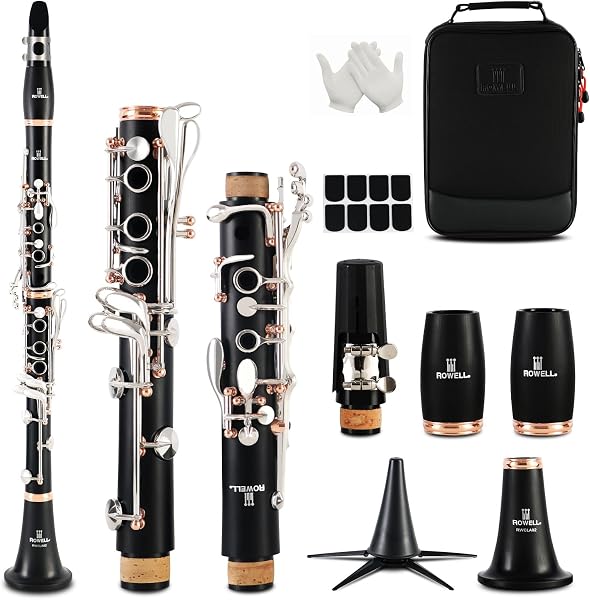
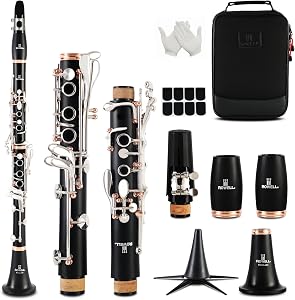
The ROWELL 17-Key B-Flat Clarinet is designed for advancing students and stage performers who want eye-catching visual flair paired with silver-plated ergonomics and dual-barrel pitch control. Featuring distinctive two-color keywork that blends bright silver-plated touchpieces with warm gold-toned posts and rings, it stands out visually while delivering smooth mechanical action.
We may earn a commission when you buy through this link, at no additional cost to you.
Acoustically, the instrument pairs a durable ABS composite body with a complex internal bore and a classic European-style flared bell mouth. Advanced tone-hole opening geometry enhances pitch stability across register breaks, producing a mellow, rounded voice that transitions smoothly from low chalumeau notes to bright upper register passages.
For players who experience skin irritation from standard nickel-plated keys, the silver-plated touchpieces offer a comfortable, hypoallergenic feel with a warmer tactile grip. Underneath the keys, memory needle springs provide crisp, elastic rebound for fast finger technique, while the inclusion of both long and short tuning tubes ensures accurate intonation regardless of room temperature.
Silver-plated keys provide a slightly softer, less slippery surface under the fingertips compared to bright nickel plating, helping advancing players maintain secure finger placement during rapid scales. Pairing the silver keywork with both long and short barrels lets musicians adapt effortlessly to cold rehearsal halls or warm concert stages.
Housed in a protective professional-style carrying case, the ROWELL clarinet offers advancing hobbyists and school performers an attractive step-up option that combines weather-resistant ABS durability with dual-barrel versatility.
Not intended for traditional orchestral players whose dress codes require standard monochrome silver keywork and unstained wood bodies.
We may earn a commission when you buy through this link, at no additional cost to you.
The Jean Paul CL-400 Intermediate Bb Clarinet is thoughtfully engineered for advancing middle and high school musicians who are ready for professional-style ergonomics and tuning precision, yet still need an instrument tough enough for year-round indoor and outdoor school band duties. It bridges the gap between basic beginner horns and delicate wooden instruments at an attainable price.
We may earn a commission when you buy through this link, at no additional cost to you.
To support ensemble pitch accuracy, the CL-400 ships with two precision-machined barrels measuring 65mm and 62mm. This dual-barrel setup allows advancing players to switch between standard A=440 and brighter A=442 tuning standards—or compensate for chilly rehearsal rooms—without pulling a single barrel out so far that throat tones go flat.
Hardware upgrades abound across the 17-key, 6-ring French Boehm mechanism. Silver-plated cupronickel keys paired with blue steel springs provide smooth, tactile finger action and superior corrosion resistance compared to entry-level nickel plating. Crucially, Jean Paul equips the CL-400 with modern synthetic pads rather than traditional fish-skin bladder pads, ensuring airtight tone-hole seals that will not warp, swell, or leak when exposed to humidity changes.
Traditional bladder pads expand and contract with seasonal humidity, often developing subtle leaks that require frequent repair shop visits. The synthetic pads on the CL-400 maintain a uniform, airtight seal year-round, while the paired 65mm and 62mm barrels let advancing students fine-tune ensemble intonation just like conservatory players.
Every CL-400 undergoes complete U.S. setup and regulation by a NAPBIRT-certified technician—verifying key heights, spring tension, and bridge regulation—and includes a CL-4 mouthpiece, Rico #2.5 reed, swab, and cork grease. For progressing students who split their time between concert wind ensemble and the marching field, the CL-400 is the smartest intermediate value available.
Not intended for professional orchestral players who exclusively require a natural African blackwood body.
We may earn a commission when you buy through this link, at no additional cost to you.
Selecting the right B-flat soprano clarinet requires matching the instrument’s body material, mechanical components, and factory regulation to the player’s experience level and performance environment. This comprehensive guide explains the essential acoustic and hardware factors that separate responsive, in-tune clarinets from frustrating ones.
The material used to construct a clarinet’s upper joint, lower joint, barrel, and bell dictates both its acoustic character and its environmental resilience. Student and intermediate marching clarinets—such as the Yamaha YCL-255, Jean Paul CL-300, and Jean Paul CL-400—are crafted from ABS resin, composite plastics, or hard rubber ebonite. Synthetic bodies offer an invaluable advantage for school musicians and outdoor performers: they are completely impervious to moisture absorption, sudden temperature drops, and dry winter heating. A student can play an ABS clarinet in a humid classroom, take it onto a chilly autumn football field, and store it in a locker without ever worrying that the body will crack or the tone holes will warp.
Professional concert clarinets, exemplified by the Yamaha YCL-650II, are turned from seasoned African blackwood, universally known in the woodwind world as grenadilla (Dalbergia melanoxylon). Grenadilla is an exceptionally dense, oily hardwood that vibrates sympathetically with the internal air column, generating a warm, dark core tone rich in complex harmonic overtones that synthetic plastics cannot fully replicate. However, because wood expands when wet from warm breath condensation and contracts in dry exterior air, grenadilla clarinets require careful break-in protocols, strict humidity control, and protection from outdoor weather extremes.
Match the body material to where and how the instrument will be played. For first-year beginners, middle school band students, and anyone performing outdoors in marching band or pep band, always choose a durable matte ABS resin or ebonite clarinet. Reserve grenadilla wood instruments for dedicated high school wind symphony players, college music majors, and indoor concert performers who are prepared to care for natural wood.
A clarinet’s key mechanism endures constant finger pressure, lateral leverage, and exposure to skin oils and perspiration. The underlying metal of quality clarinet keys is typically nickel-silver (cupronickel)—an alloy of copper, nickel, and zinc prized for its structural rigidity. Cheap, poorly alloyed pot-metal keys bend easily when a young student forces the joints together during assembly, throwing connected bridge keys out of alignment and rendering the instrument unplayable until bent back by a technician. Rigid forged or precision-cast nickel-silver keys, like those on the Yamaha YCL-255 and Herche Superior X5, hold their mechanical regulation over years of daily rehearsal.
The outer plating applied over the keywork affects both durability and tactile feel. Nickel plating is the traditional standard for student clarinets because it is exceptionally hard, resists surface scratches, and rarely tarnishes, requiring only a quick wipe with a microfiber cloth after practice. Silver plating—featured on the Yamaha YCL-650II, Jean Paul CL-400, and ROWELL Professional—provides a slightly softer, warmer, and less slippery feel beneath the fingertips, giving advancing players better tactile control during rapid technical passages. Additionally, silver plating is hypoallergenic for musicians who suffer from skin contact allergies to nickel.
For young beginners who may not wipe down their keys diligently after every session, durable nickel-plated keys offer low-maintenance reliability. For advancing intermediate players, sweaty-handed performers, or anyone with a known nickel allergy, upgrading to silver-plated keywork delivers superior finger grip and long-term comfort.
The most common reason a beginner struggles to produce a sound on a clarinet is not poor lung capacity, but a microscopic air leak beneath one of the tone-hole pads. Clarinet pads must form a 100% airtight seal across every tone hole above the note being fingered; if even one pad sits uneven by a fraction of a millimeter, the air column destabilizes, causing squeaks or total refusal to speak in the lower chalumeau register. Traditional student clarinets use double-bladder pads covered in thin natural membrane, whereas advanced student and intermediate models—like the Jean Paul CL-400—utilize synthetic pads that resist swelling, shrinking, and tearing across humidity shifts.
Equally critical is the spring mechanism that opens and closes each key. Quality clarinets utilize blue steel or high-carbon memory steel needle springs and flat springs. Blue steel offers superior elasticity and memory compared to cheap stainless steel wire, providing a light, snappy key return that enables crisp articulation and effortless trills. Just as important as the materials is pre-shipment regulation: instruments that are play-tested and adjusted by NAPBIRT-certified repair technicians (National Association of Professional Band Instrument Repair Technicians) or inspected via internal lamplight tests arrive with pad seating and linkage timing properly calibrated.
When shopping online for a student or intermediate clarinet, prioritize models that explicitly include domestic technician setup and play-testing—such as the Jean Paul CL-300, Jean Paul CL-400, or Herche Superior X5—or established conservatory brands like Yamaha whose factory tolerances are industry-renowned. Avoiding unregulated bargain instruments saves you from an immediate $100 repair shop bill.
The barrel—the short tapered tube positioned between the mouthpiece and the upper joint—acts as the primary tuning slide of the clarinet. Because sound waves travel faster in warm air and slower in cold air, a clarinet’s pitch naturally rises (goes sharp) in warm concert halls or during long rehearsals, and drops (goes flat) in chilly morning band rooms. To flatten a sharp instrument, players pull the barrel slightly out from the upper tenon joint; however, pulling a barrel out more than a couple of millimeters creates a wide internal chamber gap that throws throat tones (G4, G#4, A4, Bb4) out of tune with the rest of the scale.
To solve this acoustic dilemma, many intermediate and thoughtfully equipped student clarinets—including the Jean Paul CL-400, ROWELL Professional, Mendini Two-Barrel Kit, and EASTROCK—include two separate barrels of slightly different lengths, typically around 65mm (standard) and 62mm to 64mm (short). When playing in a cold room or tuning to a brighter European A=442 standard, the musician installs the shorter barrel to raise pitch cleanly; when the room warms up or when tuning to standard A=440 concert pitch, swapping to the longer barrel lowers pitch without introducing turbulent tenon gaps.
If your student only practices at home or in a single climate-controlled beginner classroom, a well-proportioned single barrel (such as on the Jean Paul CL-300 or Yamaha YCL-255) is completely sufficient. If the player performs in diverse venues, honor bands, or community ensembles where tuning standards and room temperatures fluctuate, having a dual-barrel setup is a major practical advantage.
While buyers naturally focus on the body and keys of the clarinet, the mouthpiece and reed generate 100% of the initial acoustic vibration. Even a three-thousand-dollar professional grenadilla clarinet will sound stuffy, harsh, and out of tune if paired with a warped, poorly molded mouthpiece and a splintered reed. A mouthpiece’s internal chamber, baffle angle, tip opening, and facing curve (lay) control how freely the reed vibrates against the rails when the player blows into the instrument.
Entry-level kits under $150 typically include a generic unbranded plastic mouthpiece and a pack of ten inexpensive factory reeds to keep total bundle pricing low. While these stock components allow a beginner to make their first sounds, the facing curves on generic mouthpieces are often uneven, requiring excessive biting pressure or breath effort. In contrast, models like the Yamaha YCL-255 include a genuine Yamaha 4C mouthpiece, which features precision-machined rails and a medium-closed tip opening specifically engineered to give beginners immediate tone center and easy response across all registers.
Regardless of which budget or mid-tier clarinet you purchase, budgeting $35 to $45 for a standard student mouthpiece (such as a Yamaha 4C) and a box of quality #2.0 or #2.5 cane reeds (such as Rico or Vandoren) is the single highest-impact upgrade you can make. Pairing a budget clarinet with a precision mouthpiece instantly transforms its playability and tone warmth.
Unlike flutes or saxophones that distribute weight across both hands or a neck strap, the entire weight of a B-flat clarinet rests directly on the side of the player’s right thumb via the rear thumb rest. For elementary and middle school students with smaller hands, a poorly positioned fixed thumb rest forces the right wrist to twist at an awkward angle, causing thumb pain and causing the fingers to pull off the open tone-hole rings.
Adjustable thumb rests—found on models like the Jean Paul CL-300—allow the player or teacher to loosen a retention screw and slide the thumb rest vertically up or down to match the exact span of the student’s hand. Many modern adjustable thumb rests also include a built-in eyelet for attaching a supportive clarinet neck strap, which takes the dead weight off the right thumb entirely during extended rehearsals. Additionally, look for cushioned rubber thumb rest sleeves that prevent calluses and soreness.
Finally, evaluate the carrying case and maintenance accessories included with the instrument. A quality backpack-style or shoulder-strap hard case protects the delicate keywork during school bus rides, while essential tools like a pull-through bore swab, tenon cork grease, and a foldable tripod stand encourage healthy daily care habits that keep the instrument out of the repair shop.
Proper assembly and disassembly habits protect your clarinet’s delicate bridge keys and tenon corks from costly damage. Before assembling a new clarinet, apply a thin coat of cork grease around each tenon cork using your finger so the joints slide together smoothly without excessive force. When joining the upper and lower body sections, always press down the upper joint’s rings to raise the connecting bridge lever—ensuring the upper and lower bridge keys never collide or bend as you gently twist the joints into alignment. Moistening the tip of your cane reed in clean water for a minute before securing it flat against the mouthpiece table with the ligature ensures responsive vibration and prevents reed warping.
Consistent post-practice moisture removal is essential for preserving pad life, bore cleanliness, and keywork action. Every single time you finish playing, remove the reed, wipe off excess moisture, and place it into a flat reed guard so the delicate tip dries straight rather than curling. Next, drop the weighted string of a microfiber or silk pull-through swab through the bell and pull it gently all the way through the body and barrel to remove warm breath condensation before it can soak into the tone-hole pads or corrode key screws. If any moisture collects inside a small tone hole, gently blot it dry with thin pad paper rather than rubbing the delicate pad skin.
Long-term storage and environmental care keep your instrument playing effortlessly season after season. Never leave a clarinet sitting unprotected on a chair or music stand where it can be knocked onto the floor; always place it on a stable tripod clarinet stand during brief rehearsal breaks or return it directly to its latched case. Keep the instrument away from extreme heat sources—such as car trunks in summer or home heating radiators in winter—which can dry out tenon corks, melt pad adhesive, and crack wooden bores. For grenadilla wood models like the Yamaha YCL-650II, break in the bore gradually during the first few weeks of ownership and maintain stable indoor humidity inside the case.
The B-flat soprano clarinet is the universal standard for school bands, orchestras, jazz ensembles, and method books worldwide. Its tube length places the tone holes and keys at a comfortable finger span for both children and adults, while producing a versatile range that blends effortlessly with brass and other woodwinds. Nearly all beginner sheet music and instructional courses are written specifically for the B-flat clarinet.
Beginning students should almost always start on a durable ABS resin or ebonite clarinet rather than a wooden instrument. ABS resin is lighter to hold, vastly more affordable, and completely resistant to cracking from humidity swings, outdoor marching band weather, or accidental bumps in a busy classroom. Wooden clarinets like the Yamaha YCL-650II are best saved for dedicated intermediate and advanced indoor concert players who have mastered daily instrument maintenance.
Squeaks and failure to speak on low notes usually stem from one of three causes: an uncovered tone hole under the player's fingertips, a chipped or crooked reed on the mouthpiece, or an air leak under a pad caused by a misaligned bridge key. First, verify that the bridge key between the upper and lower joints is properly aligned and not overlapping incorrectly. Next, ensure the fleshy pads of your fingers completely seal all six open rings, and try a fresh #2.0 or #2.5 reed positioned evenly with the tip of the mouthpiece.
Clarinet pitch fluctuates significantly with ambient temperature—going flat in cold air and sharp in warm rooms—and pulling a single barrel out too far creates an internal gap that ruins throat-tone tuning. Including both a standard longer barrel (typically 65mm) and a slightly shorter barrel (around 62mm to 64mm) allows the musician to adjust overall pitch to match any ensemble or room temperature while keeping the barrel joints seated snugly.
Most band directors recommend that beginners start on a #2.0 or #2.5 strength cane reed when using a standard student mouthpiece like a 4C. A #2.0 or #2.5 reed is flexible enough to vibrate easily with developing breath support while still maintaining enough stiffness to play high clarion notes in tune. As the player's embouchure muscles strengthen over the first year or two, they typically progress to #3.0 reeds for greater tonal core and dynamic control.
NAPBIRT stands for the National Association of Professional Band Instrument Repair Technicians, the premier professional organization for woodwind and brass repair specialists. When a clarinet is set up by a NAPBIRT-certified technician before shipping—such as on the Jean Paul CL-300 and CL-400—a trained specialist checks pad seating for air leaks, calibrates spring tension, and regulates linked keys so the horn plays properly right out of the box.
Yes, upgrading a generic stock mouthpiece to a precision-molded student mouthpiece like a Yamaha 4C is the single most cost-effective way to improve a budget clarinet's tone and playability. Because the mouthpiece and reed create the initial sound wave, a consistent facing curve and tip opening immediately make notes speak more easily, reduce squeaks, and stabilize pitch across all registers.
Nickel plating is hard, bright, and highly resistant to tarnish and scratches, making it the durable standard for student instruments. Silver plating offers a warmer aesthetic, a slightly softer and less slippery feel beneath the fingers for fast technical passages, and hypoallergenic comfort for players with nickel skin sensitivities. Silver keys require occasional wiping with a silver polishing cloth to prevent natural surface oxidation.
You only need to apply cork grease when the tenon joints feel dry or require noticeable force to twist together during assembly. On a brand-new clarinet with fresh corks, you may need a light dab of grease before each practice session during the first week until the cork absorbs the lubricant. Once conditioned, applying cork grease once every week or two is usually sufficient; avoid over-greasing, which can soften the glue holding the cork to the tenon.
Choosing the right B-flat clarinet comes down to matching mechanical reliability and acoustic material to your current stage of musical development. For most beginning band students and parents seeking a dependable, frustration-free start, the Jean Paul USA CL-300 stands out as our Editor's Choice, pairing a rugged ABS resin body and adjustable thumb rest with U.S. play-testing by NAPBIRT-certified repair technicians.
Musicians with specific advancement goals or budget targets have strong alternatives throughout our guide. Families who want the industry's most trusted band-director favorite with a genuine 4C mouthpiece included will appreciate the legendary durability of the Yamaha YCL-255, while progressing students who need dual-barrel tuning, silver-plated keys, and weather-proof synthetic pads for both concert and marching band will find exceptional value in the Jean Paul CL-400 and Herche Superior X5.
At the opposite ends of the spectrum, budget-friendly starter kits from Mendini, Glory, and EASTROCK provide accessible entry points complete with stands and care tools for casual learners, while serious conservatory and wind ensemble players ready for authentic grenadilla wood warmth will find an extraordinary lifetime partner in the professional Yamaha YCL-650II. Pair your chosen instrument with fresh cane reeds and consistent swabbing habits, and you will enjoy clean intonation and rewarding musical progress for years to come.