TOMASHI Portable Player
7.8Editor scoreCompact 4.57-inch body
Built-in speaker microphone
AA battery powered
Automatic stop system
Find the right cassette players for 2026. We compare 10 standout options by build quality, useful features, owner feedback, value, and everyday trade-offs.
Find the right cassette players for 2026. We compare 10 standout models by the factors that matter most to tape enthusiasts, including sound quality, build materials, battery life, portability, recording ability, Bluetooth or digital conversion features, speaker performance, and overall value for everyday listening or preserving an older tape collection.
The gap between a basic plastic walkman and a precision aluminum player is wider than many first-time buyers expect. Some models prioritize audiophile-grade playback with premium op-amps, while others focus on all-in-one versatility with CD, radio, and USB inputs built into a classic boombox form factor.
This guide breaks down each option with practical buying advice so you can match the right cassette player to your actual use case, whether that means serious analog listening, nostalgic background music, digitizing old mixtapes, or finding a thoughtful gift for someone who misses the tape era.
We compared 10 cassette players using the details that genuinely help a buyer decide: audio quality, build materials, battery or power options, recording capability, headphone and speaker performance, Bluetooth or USB features, portability, included accessories, warranty signals, and value at each price tier. The notes focus on practical trade-offs so each pick connects to how people actually listen to tapes today, whether that means casual playback, archival digitizing, or dedicated analog enjoyment.


Compare key features, scores, and current prices side by side. A shorter feature list means fewer details were available, not necessarily fewer capabilities.


The Retekess TR621 is designed around accessibility, with oversized buttons and a clean layout that makes it easy for grandparents, kids, or anyone who finds modern touchscreen interfaces frustrating. The clean white finish fits into most home decor without drawing attention, and the integrated handle lets you move it between rooms without unplugging multiple cables.
We may earn a commission when you buy through this link, at no additional cost to you.
Format support is where this player punches above its price. In addition to cassette tapes, the TR621 plays CD, CD-R, CD-RW, MP3, and WMA discs, along with files from a TF card or USB flash drive. AM/FM radio is also included for talk shows, news, and local stations. That coverage essentially spans every mainstream audio format from the past 50 years, which makes it a practical choice for anyone with a mixed media collection.
Both the cassette deck and CD player support programming, which lets you set a custom playback order rather than listening in the recorded sequence. The cassette side also supports recording, so you can create your own tapes from the radio or other sources. The small remote covers CD and USB playback from up to 32 feet away, though it cannot control the cassette deck or radio tuning, which is worth noting if remote operation is important.
Fine motor skills decline with age, and vision changes can make small labels hard to read. A player with large, clearly marked buttons becomes genuinely more enjoyable to use over time, not just easier. For gift buyers choosing a cassette player for an older relative, the control layout often matters more than audio specifications, because frustration with the interface stops the device from being used at all.
The power options match the all-in-one philosophy. Plug it into the wall for home use, or load six D batteries for outdoor or power-outage situations. The absence of Bluetooth is the main modern limitation, so if wireless streaming from a phone matters to you, look elsewhere in this list. For a straightforward combo player with excellent format support and intuitive controls, the TR621 is a reliable pick.
Shoppers who need Bluetooth streaming or a modern USB-C charging port.
We may earn a commission when you buy through this link, at no additional cost to you.
This TOMASHI player is one of the most affordable ways to get a working cassette deck in your hands. The compact dimensions make it easy to tuck into a drawer or carry in a jacket pocket, and the straightforward button layout covers the essentials: play, stop, rewind, fast forward, and record. It is a sensible pick for anyone who wants to revisit old tapes without committing to an expensive audiophile unit.
We may earn a commission when you buy through this link, at no additional cost to you.
The built-in speaker and microphone give it genuine utility beyond pure playback. You can record voice memos, dictation, or simple language-learning practice directly onto a blank tape, which is useful for students, hobbyists, or anyone recreating the mixtape experience. The automatic stop system is a small but meaningful feature because it prevents the pinch roller from grinding against the tape once a side finishes playing.
Power flexibility is where this model actually shines for the price. You can run it on two AA batteries for portable use or plug in a USB power source for stationary listening. If you choose USB power, remove the batteries first to avoid any conflict. This dual-power design is practical for an office desk, a bedside table, or a casual portable setup, though the lack of an included power supply means you may need to source your own cable.
Entry-level cassette players make sense for shoppers who want to confirm that old tapes still play before investing in a premium deck. They are also appropriate for children, grandparents, or anyone who prefers simple physical buttons over app-driven interfaces. The modest price means a scratched or broken unit is not a major loss, which is a practical consideration for use around pets, kids, or busy households.
The main compromise is audio fidelity. At this price point, you are not getting hi-fi playback, and the 3.9 star rating reflects that some buyers expected more. If your goal is nostalgic background listening, cataloging an old tape collection, or giving a thoughtful inexpensive gift, this player handles those jobs well. For critical listening or long-term daily use, stepping up to a mid-range model will reward you with better sound and build quality.
Audiophiles or listeners who care about accurate tonal balance and low wow and flutter.
We may earn a commission when you buy through this link, at no additional cost to you.
FiiO built its reputation on portable audiophile gear, and the CP13 brings that same philosophy to the cassette format. The transparent casing exposes the internal mechanism, which is both a visual statement and a nod to classic tape decks that showed off their reels. If you are serious about analog playback and want a modern player engineered with hi-fi priorities, this is the model that genuinely delivers on that promise.
We may earn a commission when you buy through this link, at no additional cost to you.
The audio circuit is the real story here. FiiO uses the JRC5532 op-amp, a chip with a long reputation in the audio world, paired with all-analog signal processing. The result is a cleaner, more detailed sound than the basic ICs found in budget cassette players. Combined with a large analog volume potentiometer rather than a cheap digital pot, the CP13 provides a smoother volume adjustment feel and better channel balance at low listening levels.
Battery life is another standout. The 1800mAh lithium cell supports over 13 hours of continuous playback and more than 268 days of standby, which is remarkable for a mechanical device with a motor driving a tape mechanism. USB-C charging means you can top it up with the same cable you use for a modern phone or laptop. The dual-mode power design also lets you run it directly from a 5V adapter, which is convenient for extended home listening sessions.
The op-amp in a cassette player handles the delicate signal coming off the tape head and amplifies it to a listenable level. A low-quality op-amp introduces noise, distortion, and a flat soundstage. The JRC5532 is widely used in audiophile equipment because it keeps the noise floor low and preserves the subtle dynamics in analog recordings, which is exactly what cassette tapes need to sound their best.
The main tradeoff is that the CP13 is a playback-only device. There is no recording function, no built-in speaker, and no radio. FiiO stripped the design down to focus exclusively on reproducing cassette audio with the highest possible fidelity. If you want versatility, this is not your player. If you want the best-sounding modern cassette experience in a well-built aluminum chassis, nothing else on this list competes on sound quality alone.
Buyers who need recording, radio, or a built-in speaker in a single unit.
We may earn a commission when you buy through this link, at no additional cost to you.
This boombox packs a cassette deck, CD player, AM/FM radio, Bluetooth receiver, USB drive input, and auxiliary input into a single classic chassis. For anyone who wants to consolidate multiple audio sources into one device, this all-in-one approach is hard to beat. The included remote lets you control the main functions from across the room, which is a thoughtful addition for kitchen or living room use.
We may earn a commission when you buy through this link, at no additional cost to you.
The 3W dual speakers deliver clean stereo sound at modest volumes, which suits background listening in a kitchen, workshop, or bedroom. Bluetooth 5.1 pairs quickly with phones and tablets for streaming playlists or podcasts, and the AUX input provides a wired alternative when you want the most reliable connection. The USB input adds another layer of flexibility by playing MP3 and WMA files directly from a flash drive.
The cassette deck includes recording functionality, which is increasingly rare in modern boomboxes. That means you can transfer audio from the radio or an AUX source onto a blank tape, which is useful for building custom mixtapes or preserving radio broadcasts. The LCD screen makes it easy to see what you are tuned to or which track is playing, and the extendable antenna improves FM reception in weaker signal areas.
A combo boombox eliminates the clutter of owning separate CD, cassette, and radio units. For older listeners with mixed-media collections or households that want one device for the kitchen or garage, consolidation saves counter space and simplifies daily use. The addition of Bluetooth and USB bridges the gap between legacy formats and modern streaming, which keeps the device relevant for family members of all ages.
Power options cover both scenarios: plug it into the wall for everyday home use, or load six C-size batteries for taking it outside. The built-in handle makes it genuinely portable, though the overall footprint is larger than a walkman-style player. The 5-year coverage from the seller is a meaningful signal of confidence that stands out in a category where many budget electronics come with limited support.
Buyers seeking serious bass response or hi-fi sound quality for critical music listening.
We may earn a commission when you buy through this link, at no additional cost to you.
The KLIM K7 solves a specific and valuable problem: converting old cassette tapes into digital MP3 files without needing a computer, special software, or technical know-how. For anyone with a shoebox of family recordings, concert bootlegs, or vintage mixtapes, this device makes preservation genuinely approachable. The included 16GB SD card gives you plenty of storage for an entire tape collection out of the box.
We may earn a commission when you buy through this link, at no additional cost to you.
The conversion workflow is deliberately simple. Play a tape and the K7 writes the audio to the SD card as an MP3 file in real time. There are no drivers to install or apps to configure, which removes the biggest barrier that stops people from digitizing their collections. The included SD card reader lets you transfer the files to a computer or phone afterward for sharing, backup, or further editing.
Beyond digitizing, the K7 works as a regular portable cassette player with a built-in speaker and a 3.5mm earphone jack. Earphones are included in the package, which is a nice touch at this price. The built-in microphone lets you record voice memos directly to the SD card, though it does not support recording onto blank cassette tapes. The 1000mAh rechargeable battery charges in two hours via USB-C and provides enough runtime for extended listening sessions.
Many cassette digitizing setups require a USB tape deck, audio recording software, and manual track splitting on a computer. That workflow intimidates casual users and often leads to tapes sitting unconverted for years. A standalone device like the K7 removes every technical barrier, which means more tapes actually get preserved. Simplicity wins over theoretical quality when the alternative is nothing happening at all.
The main limitation is that digital conversion inherits the quality of the source tape. A worn or stretched cassette will produce a worn or stretched MP3, and the K7 does not include noise reduction or restoration features. For preserving memories as-is, this is perfectly acceptable. For archival-quality digitization of valuable recordings, you may still want to invest in computer-based software for noise reduction and track splitting after the initial transfer.
Users who need to record new audio onto blank cassette tapes.
We may earn a commission when you buy through this link, at no additional cost to you.
The Greadio boombox occupies a sweet spot in the combo category, offering CD, cassette, AM/FM radio, Bluetooth, USB, and AUX inputs at a reasonable price. The classic design fits a kitchen counter, a workshop shelf, or a bedroom nightstand without feeling out of place. If you want a versatile all-in-one unit without the premium price of larger-brand alternatives, this is a sensible middle-ground choice.
We may earn a commission when you buy through this link, at no additional cost to you.
Bluetooth 5.1 pairs quickly with phones and tablets, usually in under a second, which is noticeably faster than older Bluetooth versions. The 20-foot remote range covers most living spaces, and the LCD screen makes tuning the radio or navigating CD tracks straightforward. Programming support on CD and USB modes lets you build custom playlists from the files you load, which is a nice touch for a device at this price.
The cassette side includes recording, which means you can capture radio broadcasts or AUX input onto blank tapes. This feature is becoming genuinely rare in new boomboxes, and it is worth prioritizing if you still enjoy making custom tapes or want to preserve live radio moments. The AM/FM tuner has a pull-out antenna that improves reception in weaker signal areas, which is helpful if your location is far from broadcast towers.
A Bluetooth receiver accepts audio from a phone or tablet and plays it through the boombox speakers. A Bluetooth transmitter sends audio from the boombox to wireless headphones or external Bluetooth speakers. Most combo boomboxes are receiver-only, which is fine for streaming music to the device but prevents you from listening to CDs or cassettes through wireless headphones. If silent listening matters, verify the direction of Bluetooth support before buying.
Power flexibility includes AC wall power for indoor use or six C-size batteries for portability. The handle makes it easy to carry between rooms or out to the patio. The 12-month warranty with 30-day money-back coverage adds buyer confidence, and 24/7 customer support means you have recourse if something goes wrong. The main limitation is that Bluetooth works only as a receiver, not a transmitter, so you cannot send audio from the boombox to wireless headphones.
Listeners who want to stream cassette or CD audio to Bluetooth headphones.
We may earn a commission when you buy through this link, at no additional cost to you.
The G Keni portable player strikes a thoughtful balance between a compact walkman and a full boombox. The slim rectangular form factor sits comfortably on a kitchen counter or workshop shelf, while the integrated carry handle makes it easy to move around the house or take out to a backyard. For anyone who wants a dependable radio and cassette combo without the bulk of a CD-equipped boombox, this is a strong pick.
We may earn a commission when you buy through this link, at no additional cost to you.
Radio reception is a highlight. The upgraded tuner and telescopic antenna deliver strong AM/FM pickup even in areas where cheaper radios struggle. This matters more than many buyers expect, because a radio that drops signal every time you move it is frustrating to use daily. The built-in speaker provides clear audio for talk shows, news, and sports broadcasts, which is a common use case for this type of player.
The cassette side includes a built-in microphone for recording directly onto blank tapes, which lets you capture radio broadcasts, voice memos, or custom mixes. Playback controls are simple and tactile, with no complex multi-function buttons to decipher. The 3.5mm headphone jack enables private listening when you do not want to disturb others, which is useful for shared living spaces or late-night listening.
Not all portable radios are built equally. A good AM/FM tuner uses quality filtering circuitry and a well-designed antenna to pull in weak signals cleanly. Cheap tuners introduce static, drift, and signal loss that make listening frustrating. If radio is a primary use case, look for players that specifically mention upgraded tuners and telescopic antennas rather than relying on generic internal antennas alone.
Power options cover both scenarios. The included AC cord handles stationary use, while four C batteries (sold separately) make the player genuinely portable. The main compromise is that the speaker is mono rather than stereo, which is appropriate for talk radio and casual music listening but will not satisfy anyone looking for immersive stereo imaging. For a focused radio and cassette player with reliable reception, this unit delivers consistent value.
Buyers who want stereo sound or Bluetooth wireless connectivity.
We may earn a commission when you buy through this link, at no additional cost to you.
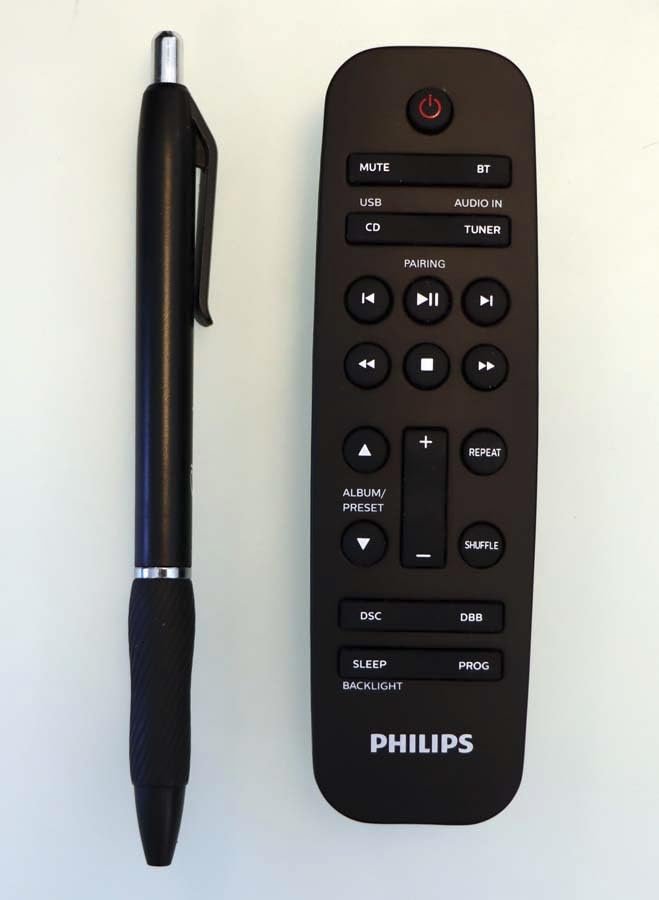
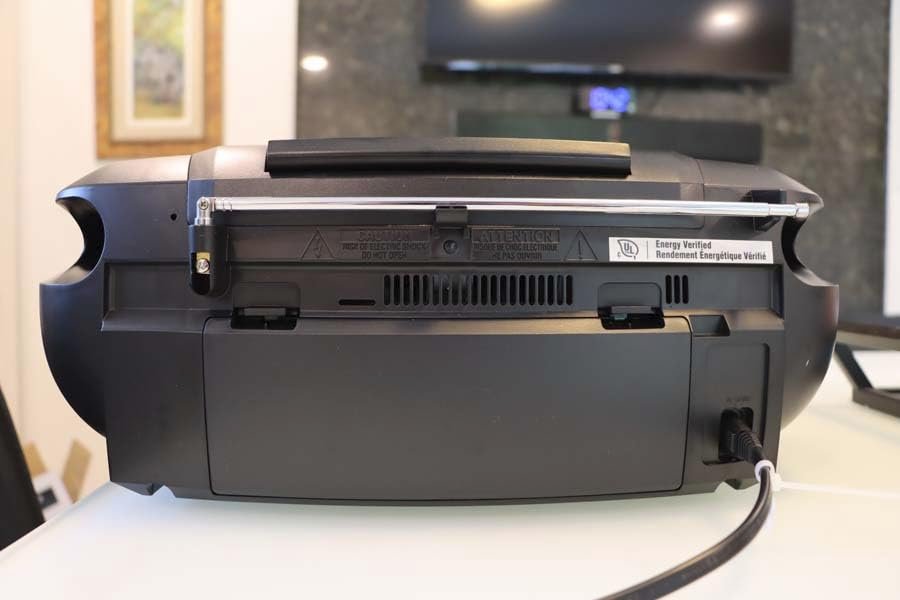
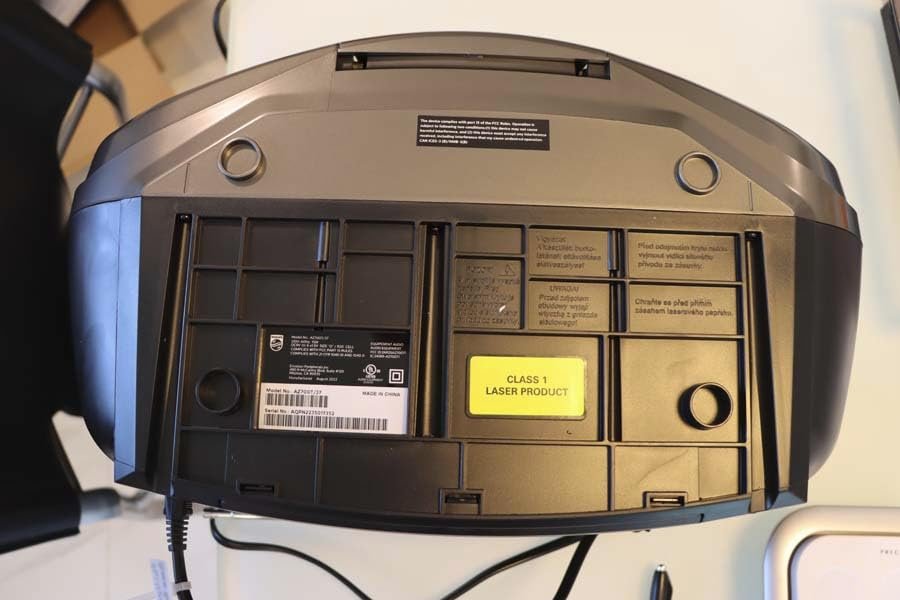
Philips is a trusted name in home audio, and this boombox applies that reputation to a modern cassette and CD combo. The bass reflex speaker design uses a tuned port to extend low-frequency response, which produces noticeably fuller sound than the small drivers in most boombox-style players. For listeners who want a serious kitchen or workshop audio system that still plays cassettes, this is the strongest pick in the all-in-one category.
We may earn a commission when you buy through this link, at no additional cost to you.
The feature set covers nearly everything. Bluetooth streams audio from phones and tablets, the CD player handles standard and MP3-encoded discs, and the cassette deck plays and records. The FM tuner includes 30 station presets with digital tuning, which is far more convenient than scrolling an analog dial every time you want to switch stations. The upgraded FM antenna improves reception compared to generic boomboxes.
Usability details stand out. The large control buttons are easy to find and press, and the backlit LCD screen stays readable in dim rooms. The USB input supports flash drives up to 128GB (FAT32 formatted), which is a significant jump over the smaller limits on many competing units. An AUX input and headphone jack add wired flexibility for devices that do not support Bluetooth or for private listening.
Bass reflex speakers use a tuned port, often visible as a hole or slot in the speaker cabinet, to extend low-frequency output beyond what the driver alone could produce. The port resonates at a specific frequency, reinforcing the bass response and giving music more warmth and body. In a boombox, this translates to noticeably fuller sound at moderate volumes, which matters for music genres that depend on low-end presence.
The main compromise is the price, which is the highest in this comparison. If you want serious sound quality in a classic boombox form factor, the Philips justifies the premium with better speaker design, broader format support, and the brand reliability that comes with decades of audio engineering experience. For listeners on a tighter budget, the Greadio or TR621 combos cover similar functions at lower price points without the bass reflex advantage.
Budget shoppers who do not need bass reflex speakers or premium brand reliability.
We may earn a commission when you buy through this link, at no additional cost to you.
The GPX CAS337B is a classic walkman-style portable cassette player with a modern-era price tag. The compact dimensions make it easy to carry in a jacket pocket or clip to a belt for mobile listening. For anyone who wants the authentic experience of a personal cassette player without spending audiophile money, this unit covers the basics competently.
We may earn a commission when you buy through this link, at no additional cost to you.
Despite the low price, the feature list is surprisingly complete. You get a cassette deck with record capability, an AM/FM radio with built-in antennas, and a built-in speaker for listening without headphones. The included stereo earbuds mean you have everything you need to start listening right out of the box, which is a nice detail that many budget players omit. The 3.5mm headphone jack also accepts any standard headphones if you prefer your own.
The detachable belt clip is a small but genuinely useful feature. Clipping the player to a belt or waistband frees your hands and keeps the device secure during walks, light exercise, or household chores. The analog volume control is a tactile throwback to the walkman era, which many buyers appreciate for the physical interaction it provides compared to digital buttons.
A belt clip gives you hands-free portability that a pocket player cannot match. If you walk, garden, or do light chores while listening, clipping the player to your waistband keeps it stable and prevents it from falling. The tradeoff is that belt clip players are usually boxier to accommodate the clip, so they are less discreet than slim pocket designs. Choose based on how you actually plan to carry the device day to day.
The two main compromises are build quality and power. At this price, the plastic construction is adequate rather than premium, and the player relies on two AA batteries with no rechargeable option. Battery life is reasonable but you will go through disposable cells over time if you listen frequently. For casual nostalgic use, as a gift, or as a secondary player for a specific room, the CAS337B delivers solid value. For daily primary use, a rechargeable model will save money and hassle over the long term.
Users who want a rechargeable battery or a premium build they will own for many years.
We may earn a commission when you buy through this link, at no additional cost to you.
The Gracioso solves a problem that most cassette players ignore: how do you listen to tapes through modern wireless headphones? With Bluetooth 5.2 transmitter functionality, this player sends cassette audio directly to any Bluetooth headphones or Bluetooth speaker, which removes the need for a tangled wire between the player and your ears. For anyone who has moved to wireless everyday, this is the obvious choice.
We may earn a commission when you buy through this link, at no additional cost to you.
The transparent retro casing shows off the internal mechanism, which creates a visual appeal that pairs nicely with the vintage listening format. The back clip and non-slip base let you clip it to a belt or waistband for mobile use, which fits the walkman spirit of the original cassette era. The included 3.5mm wired earphone keeps you covered if you forget to charge your Bluetooth headphones.
Battery life is a highlight. The 1100mAh rechargeable cell delivers roughly 10 hours of playback per 2-hour charge, which is enough for several days of casual listening between top-ups. Charging happens over a modern USB cable, so you can top up from any phone charger or laptop port. The elimination of disposable batteries is both convenient and more cost-effective over the long term compared to AA-powered players.
Most Bluetooth-equipped cassette players act as receivers, meaning they accept wireless audio from a phone and play it through their speakers. A transmitter player does the opposite: it sends the cassette audio out wirelessly to your headphones or speakers. This is the correct configuration for anyone who wants to listen to tapes through modern wireless gear, and it is a surprisingly rare feature in the current cassette market.
Two meaningful limitations are worth noting. The Gracioso does not include a recording function, so you cannot capture audio to blank tapes. It also lacks a built-in external speaker, which means you must use headphones or a Bluetooth speaker to listen. The Bluetooth transmits only to receivers like headphones; you cannot pair a phone to the player to use it as a tape-themed speaker. If pure Bluetooth playback with cassettes is your goal, this unit nails the brief better than any other player in this list.
Users who need a built-in speaker or want to record audio onto cassettes.
We may earn a commission when you buy through this link, at no additional cost to you.
Selecting the right cassette player comes down to matching the device to your actual listening habits, not just the specifications on paper. The following factors cover the real-world decisions that separate a satisfying purchase from one that collects dust after a few weeks.
The first fundamental decision is whether you need a player that only plays cassettes or one that also records onto blank tapes. Playback-only players tend to be lighter, more focused, and sometimes offer better audio quality because designers can optimize the circuit for playback alone. The FiiO CP13 is a clear example of this approach, prioritizing sound fidelity over feature breadth. For listeners who already own all the tapes they want and never plan to make new ones, playback-only is the simpler and often better choice.
Recording-capable players open up different possibilities. You can create custom mixtapes from the radio, an AUX source, or a built-in microphone. You can preserve voice memos, interviews, or impromptu live performances. For hobbyists, students, or anyone who enjoys the creative side of analog media, recording is a meaningful feature. Models like the TOMASHI portable, the Greadio boombox, and the GPX walkman all support recording to varying degrees.
If you have a specific creative project in mind, prioritize recording. If you simply want the cleanest, most reliable playback of an existing tape collection, choose a playback-focused model and save the extra features for a device you will actually use them with.
Cassette players vary enormously in audio quality, from basic reproduction suitable for background listening to carefully engineered circuits that reveal the subtle details in well-recorded tapes. The key components that affect sound quality are the tape head, the motor, the op-amp, and the analog filtering circuitry. Higher-end players use better materials and more sophisticated designs across all of these elements, which translates directly into cleaner sound with lower noise and distortion.
For most casual listeners, the differences are modest at low volume but become obvious during focused listening or when using quality headphones. If you plan to listen primarily through small built-in speakers while doing other activities, the audio quality differences matter less because the speaker becomes the limiting factor. If you listen through good headphones or feed the player into a home stereo via the headphone jack, better internal electronics reward you with noticeably better sound.
Decide based on how you will actually listen. For critical headphone listening, invest in a model like the FiiO CP13 with audiophile components. For casual background playback through built-in speakers, almost any player on this list will satisfy.
Cassette players use three main power approaches: disposable AA or C batteries, built-in rechargeable lithium cells, and AC wall power. Each has clear tradeoffs. Disposable batteries are universally available and work in power outages, but they add ongoing cost and environmental waste for frequent listeners. Rechargeable cells eliminate that cost and provide longer runtime per charge, but they eventually degrade and may require replacement after a few years. AC power is reliable for home use but tethers you to an outlet.
The best players offer power flexibility. The FiiO CP13 and Gracioso both use rechargeable batteries with USB charging, which fits modern expectations and provides long runtimes. The Philips, Greadio, and Retekess boomboxes offer both AC and battery power so you can switch based on where you are listening. Older-style walkman players like the GPX and TOMASHI still rely on AA batteries, which is traditional but less economical for daily use.
If you listen daily or travel frequently, prioritize a rechargeable model with USB charging. If you listen occasionally or want a backup for power outages, battery-powered models remain practical and simple.
Modern cassette players increasingly include Bluetooth, USB, and AUX connectivity, but the specifics vary in ways that matter. Bluetooth comes in two forms: receiver mode, which accepts audio from your phone, and transmitter mode, which sends cassette audio to your wireless headphones. Most combo boomboxes offer receiver mode so you can stream from a phone to the boombox speakers. The Gracioso is unusual in offering transmitter mode, which is the correct setup for listening to tapes through wireless headphones.
USB and AUX inputs expand what you can play beyond the cassette format. A USB flash drive loaded with MP3 files turns the player into a portable music library, which is useful for devices that will live in a kitchen or workshop. AUX inputs let you connect older MP3 players, laptops, or audio devices directly with a wire. For boomboxes aimed at the home, these inputs significantly extend usefulness, while they are less relevant on dedicated portable cassette players.
Decide which direction your Bluetooth needs to flow before buying. If you want to stream playlists to the boombox, choose a receiver. If you want to listen to tapes wirelessly, you need a transmitter, which is far rarer.
Cassette players come in three broad form factors: portable walkman-style players, mid-size portable units with handles, and full boomboxes. Walkman-style players like the TOMASHI, GPX, KLIM K7, and Gracioso are designed to carry on your person, often with belt clips or pocket-friendly dimensions. Mid-size players like the G Keni sit comfortably in one hand or on a shelf. Boomboxes like the Philips, Greadio, Retekess, and the generic combo unit stay largely stationary but can move between rooms thanks to integrated handles.
Choose based on where you will actually use the player. For walks, commutes, or working around the house, a walkman-style player with a belt clip or compact body is ideal. For a kitchen, workshop, bedroom, or living room, a mid-size portable or boombox provides better speaker output and more features. Trying to use a boombox as a walking companion is impractical, and using a tiny walkman as a kitchen stereo will leave you wishing for better sound.
Think about your single most common listening scenario and let that drive the form factor decision. Secondary use cases can usually be handled with headphones or an auxiliary speaker connection.
Cassette players are mechanical devices with moving parts, which means build quality directly affects how long they will last with regular use. Entry-level players use plastic housings and basic internal mechanisms that work adequately but can wear out with heavy use. Premium players like the FiiO CP13 use aluminum alloy casings and higher-grade internal components, which translate into better durability and a more satisfying tactile feel.
Buttons and controls deserve particular attention because they get the most daily use. Large, well-made buttons with distinct tactile feedback hold up better than small, mushy buttons that can lose responsiveness over time. Volume controls that use quality potentiometers provide smoother adjustment and better channel balance than cheap digital alternatives. These details are hard to assess from product photos alone, but they significantly affect long-term satisfaction.
If you plan to use the player for years, invest in better materials upfront. If you want a casual secondary player or a gift, mid-range build quality will serve adequately for occasional use without the premium price.
The accessories included with a cassette player can meaningfully affect your out-of-pocket cost after purchase. Some models include earphones, SD cards, charging cables, carrying cases, or remote controls, while others ship bare. The KLIM K7 includes earphones, an SD card, and an SD card reader, which is unusually generous. The GPX walkman includes earbuds and a belt clip. The TOMASHI requires separate AA batteries and a USB power cable to be fully functional out of the box.
Warranty coverage is another meaningful signal, particularly in a category where mechanical failures can occur. The Greadio and KLIM products include 12-month and 5-year coverage respectively, which indicates seller confidence in the product. The combo boombox mentioned earlier also offers 5-year coverage. For a device with moving parts and electronics, longer warranty periods provide valuable peace of mind.
Factor in the real total cost including batteries, cables, headphones, and SD cards if they are not included. A seemingly cheap player can become comparable to a mid-range model once you add the accessories you need to actually use it.
Before loading a cassette, check that the tape is wound evenly and that neither hub is loose. Gently tighten any slack by inserting a pencil or finger into the hub and turning it in the direction that winds the tape. Insert the cassette with the exposed tape facing the tape head, which is usually the open edge of the player’s cassette door. Press play with a steady, moderate touch rather than slamming the controls, which protects both the mechanism and your tapes from unnecessary wear.
Clean the tape head and pinch roller periodically to maintain sound quality. Dust and residue from old tapes build up on these parts over time, which causes muffled highs and reduced clarity. A dedicated head-cleaning cassette or a cotton swab lightly moistened with isopropyl alcohol will remove most buildup. Let the player air dry for a few minutes before loading a tape afterward. Avoid using abrasive materials or excess liquid, both of which can damage the delicate components inside the mechanism.
Store cassettes and your player in a cool, dry location away from direct sunlight and strong magnetic fields. Heat warps tapes and shells, while magnets can erase recorded audio. Keep your player in a case or sleeve if you travel with it, and avoid dropping it onto hard surfaces because the internal motor and tape head are precision components that do not tolerate impact well. For rechargeable models, top up the battery every few months even during periods of non-use to prevent the lithium cell from fully discharging and losing capacity.
Yes, when matched with a quality player and well-preserved tapes. Modern audiophile models like the FiiO CP13 use upgraded op-amps and analog circuitry that reveal more detail than most cassette players from the tape era. Sound quality depends heavily on tape condition, so a well-stored cassette on a good player can still deliver a warm, enjoyable listening experience. Worn or damaged tapes will sound worn or damaged regardless of the player.
Yes, and the easiest way is with a dedicated conversion player like the KLIM K7 that writes directly to an SD card as MP3 files. No computer, software, or technical knowledge is required. Alternatively, you can connect any player with a headphone jack to a computer's line-in input and use free audio recording software, but that approach is more involved. The simplest workflow is a standalone converter, which captures tapes in real time.
A walkman-style player is designed to carry on your person, usually with a belt clip and pocket-friendly dimensions. A boombox is a larger stationary unit with built-in stereo speakers meant for home or outdoor use. Walkmans emphasize portability and headphone listening, while boomboxes emphasize speaker output and often add CD, radio, and USB inputs. Choose based on where and how you plan to listen most often.
No. Many modern cassette players focus on playback only. Models like the FiiO CP13, KLIM K7, and Gracioso do not record onto cassettes. If recording to tape is important, verify that the specific model supports it before buying. Players with recording capability typically include a built-in microphone and a dedicated record button.
Only players with Bluetooth transmitter mode will send audio to wireless headphones. Most combo boomboxes include Bluetooth receiver mode, which accepts audio from a phone but cannot send cassette audio out wirelessly. The Gracioso is unusual in offering transmitter functionality specifically for pairing with Bluetooth headphones or speakers, so check the Bluetooth direction before buying if wireless listening matters.
Battery life varies widely by model and power source. Rechargeable models like the FiiO CP13 and Gracioso offer 10 to 13 hours per charge. AA-powered walkmans typically run 8 to 15 hours per set of fresh batteries, depending on volume and whether you use the speaker or headphones. Boomboxes using C or D batteries can run for many hours but drain faster when using the CD player or playing at high volume.
Usually yes, though sound quality depends on how the tapes were stored. Tapes kept in cool, dry conditions often play fine even after 30 or more years. Tapes stored in heat, humidity, or sunlight may develop warping, sticky shed syndrome, or stretched spots. Before playing valuable old tapes, inspect them visually and consider testing a less important tape first to confirm your player is working correctly.
Yes, periodic cleaning maintains sound quality and extends the life of your tapes. Clean the tape head and pinch roller every 20 to 40 hours of use with a head-cleaning cassette or a cotton swab lightly dipped in isopropyl alcohol. Frequent listeners should clean more often, while occasional users can clean less. Dirty heads cause muffled sound and can increase wear on both the player and your tapes.
Most play standard Type I normal bias tapes, which cover the vast majority of commercial cassettes. Some premium players also handle Type II chrome and Type IV metal tapes, which offered better high-frequency response and were used for high-end recordings. Check the player specifications if you own Type II or Type IV tapes and want to confirm compatibility. Entry-level players usually optimize for Type I only.
For a gift, prioritize ease of use, included accessories, and build quality over advanced features. Simple models with large buttons like the Retekess TR621 or GPX walkman work well for older recipients. For hobbyists who want to digitize collections, the KLIM K7 is a thoughtful choice. For audiophiles, the FiiO CP13 is the serious option. Match the player to the recipient's actual listening habits rather than picking the most feature-packed model.
The FiiO CP13 earns our top overall recommendation for serious cassette listeners who want the best possible modern tape playback. The aluminum build, audiophile op-amp circuit, and 13-hour rechargeable battery combine to create an experience that genuinely honors the analog format. If sound quality is your priority and you already own tapes you love, no other player on this list matches its focused engineering.
For buyers with different priorities, several strong alternatives deserve attention. The KLIM K7 is the clear choice for anyone preserving an old tape collection as digital MP3 files, with its built-in SD card recording and simple no-computer workflow. The Philips boombox delivers premium all-in-one home audio with bass reflex speakers, Bluetooth, and 30 FM presets. The Retekess TR621 offers excellent accessibility for seniors or gift recipients who prefer large buttons and straightforward controls.
Match your choice to how you actually plan to listen. Walkman-style players like the GPX, TOMASHI, and Gracioso work best for personal portable use. Boomboxes like the Greadio and Philips suit home listening with multiple source formats. Dedicated audiophile models like the FiiO reward focused headphone listening. The best cassette player is the one that fits seamlessly into your daily routine, not the one with the longest feature list.