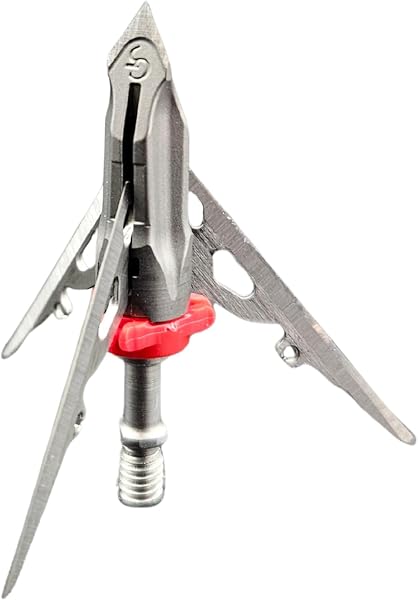
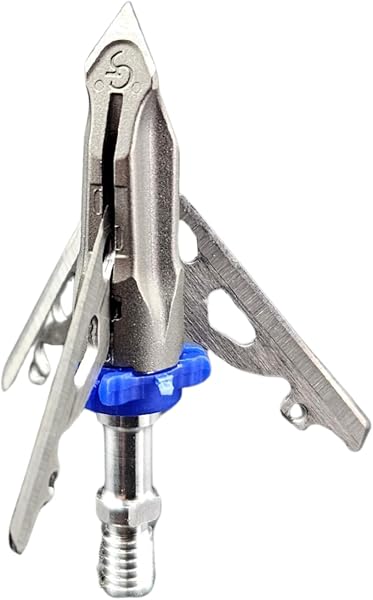
KEAUP 100-Grain Fixed
9.0Editor scoreAll steel molded construction
One hundred grain weight
Three sharpened fixed blades
Standard screw thread pitch
Find the right broadheads for 2026. We compare 10 standout options by build quality, useful features, owner feedback, value, and everyday trade-offs.
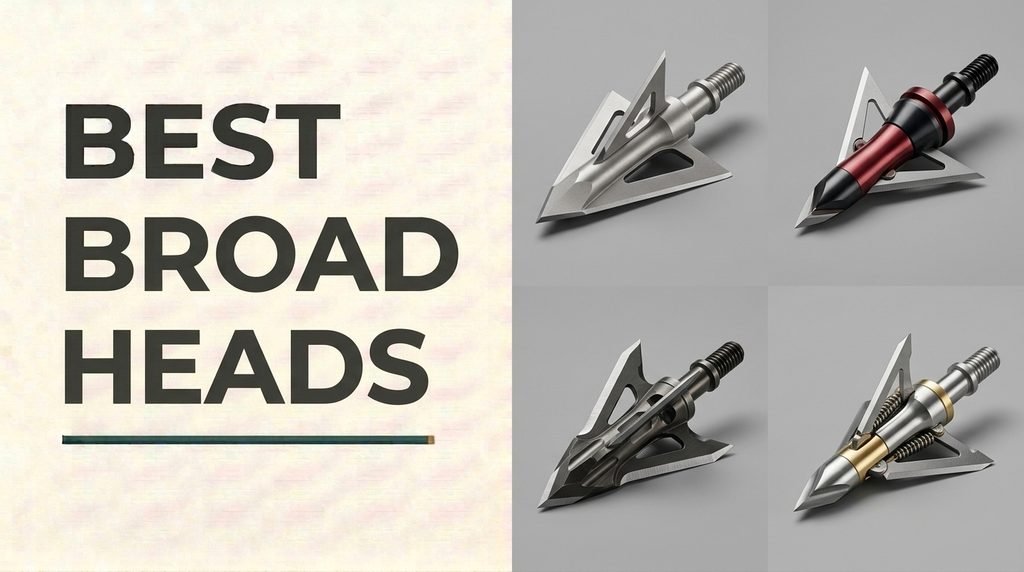
Find the right broadheads for 2026. We compare 10 standout options by the factors that matter in this category, such as blade construction, steel edge retention, cutting diameter, arrow flight stability, kinetic energy efficiency, owner feedback, and real-world recovery performance across diverse hunting conditions.
Selecting the ideal hunting arrowhead demands balancing structural durability against aerodynamic precision. Fixed-blade heads deliver uncompromising reliability when crashing through heavy bone, while modern expandable and hybrid models generate devastating entrance wounds and wide blood trails that simplify animal tracking without sacrificing true field-point trajectory.
Whether running a moderate-draw compound bow, a traditional recurve, or a high-velocity modern crossbow exceeding 400 feet per second, your chosen terminal equipment dictates your success. Understanding grain weights, ferrule strength, and retention systems ensures confident pass-through shots and clean, ethical harvests in the field.
We compared 10 hunting broadheads using the practical criteria that directly influence terminal archery performance: structural ferrule materials, blade sharpness, grain-weight consistency, mechanical retention reliability, aerodynamic flight accuracy, bone penetration capability, and overall value. The evaluation emphasizes real-world hunting trade-offs so archers can match head architecture to their bow setup and game size.


Compare key features, scores, and current prices side by side. A shorter feature list means fewer details were available, not necessarily fewer capabilities.


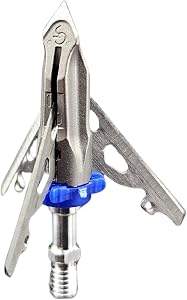


The G5 Montec stands as one of the most respected fixed broadheads ever manufactured, setting the standard for monolithic steel arrowheads. Crafted through advanced metal injection molding, the Montec pink edition retains identical mechanical prowess to the classic lineup while offering high-visibility recovery aesthetics that simplify visual spotting on the forest floor.
We may earn a commission when you buy through this link, at no additional cost to you.
At the core of the Montec’s lethal efficiency is its true cut-on-contact tip geometry. Unlike chisel-tipped broadheads that punch through hide before their blades engage, the Montec begins slicing flesh and dense cartilage the microsecond it impacts the target, radically conserving the arrow’s kinetic energy and maximizing penetration depth.
Quality control is a standout highlight, with each individual head undergoing 100 percent factory spin testing. This manufacturing precision eliminates wobble and guarantees consistent point-of-impact alignment with properly spined shafts, giving bowhunters dependable broadside and quartering-away trajectories out to extended ethical yardages.
The 60-degree triangular geometry of the Montec is engineered specifically for repeatable edge maintenance and structural rigidity. Thinner, low-angle blades may initially seem sharper but are susceptible to edge rolling upon striking solid bone.
The Montec’s robust edge angle preserves cutting integrity through dense hide and skeletal barriers, ensuring that wound channels remain fully open to facilitate heavy, continuous hemorrhaging.
Honing the 60-degree blade angles requires zero specialized guide jigs; laying the three flat sides sequentially across a flat sharpening stone effortlessly produces hair-shaving sharpness. For archers pursuing heavy game such as elk, moose, or wild boar, the G5 Montec provides unmatched structural reliability that mechanicals simply cannot replicate.
Shooters looking for ultra-wide expandable wound channels or hunters on an extremely constrained budget.
We may earn a commission when you buy through this link, at no additional cost to you.
The KEAUP 100-Grain Fixed Broadhead is targeted directly at bowhunters seeking extreme structural integrity and high value without moving parts. By utilizing a continuous one-piece metal injection molding process with 420 stainless steel, this head eliminates the screws, pins, and clips that typically serve as mechanical failure points during hard bone impact.
We may earn a commission when you buy through this link, at no additional cost to you.
In flight, the vented three-blade profile minimizes surface plane resistance, curtailing the planing effects that frequently compromise fixed arrowheads at long ranges. The 1-1/8 inch cutting diameter strikes a functional compromise between tissue disruption and forward momentum conservation, allowing moderate-poundage bows to achieve dependable pass-through penetration on North American big game.
Maintenance is remarkably straightforward compared to expandable alternatives. Because the three fixed edges form a rigid triangular pyramid, archers can quickly refresh edge sharpness on a diamond bench stone or flat file without disassembling delicate ferrules. The standard 8-32 thread pitch screws cleanly into carbon and aluminum arrow inserts across compound bows, recurves, and crossbow bolts.
Traditional multi-piece broadheads rely on roll pins or miniature setscrews to anchor their blades inside an aluminum chassis. When encountering rib bone or scapula plate, those fastening junctions can sheer, causing catastrophic deflection.
The continuous 420 stainless steel architecture of the KEAUP broadhead ensures that energy transfers linearly along the central axis of the arrow shaft, retaining alignment and driving deep into vital organs even under rigorous field conditions.
While hunters accustomed to oversized mechanical entry holes may find the cutting diameter conservative, the structural invulnerability provides immense peace of mind on quartering angles. For high-volume shooters and budget-conscious hunters who prioritize pass-through insurance over wide shock wounds, this 6-pack represents exceptional utility.
Archers demanding massive two-inch entrance wounds or those unwilling to tune their bow rest for fixed-blade aerodynamics.
We may earn a commission when you buy through this link, at no additional cost to you.
The Bloodsport Gravedigger addresses the timeless archery dilemma by combining the immediate bone-splitting certainty of a fixed cut-on-contact head with the wide internal devastation of an expandable mechanical. Designed around a 100-grain footprint, this hybrid head gives hunters dual-action lethality on big-game vitals.
We may earn a commission when you buy through this link, at no additional cost to you.
Up front, a hardened 416 stainless steel 1-inch main blade and two half-inch bleeder blades ensure an immediate cutting entry hole regardless of whether mechanical components deploy. As the ferrule enters tissue, two cross-opening mechanical wings expand smoothly to establish an impressive 1.75-inch cutting diameter, producing dramatic internal hemorrhage.
The mechanical deployment mechanism relies on Bloodsport’s patented retention structure, doing away with perishables such as elastic O-rings or collar bands. The ferrule is machined from 7075 aircraft-grade aluminum, supplying an excellent strength-to-weight ratio that maintains integrity during off-angle impacts without shifting the arrow’s natural balance point.
Hunters often struggle with rubber deployment bands cracking under cold weather exposure or catching on brush during quiet stalking maneuvers. The Gravedigger resolves this issue with internal mechanical friction detents.
The blades remain securely nested against the ferrule during high-acceleration arrow launches, expanding reliably only upon striking flesh and overcoming resistance, which prevents devastating dry fires or premature in-flight deployments.
This hybrid setup represents an outstanding choice for mid-poundage bowhunters who hesitate to shoot giant 2-inch expandables due to penetration concerns. If the arrow encounters heavy rib bone on entry, the leading fixed blade splits passage, allowing the trailing mechanical blades to sweep through the thoracic cavity with diminished resistance.
Minimalist purists who want an uncomplicated, zero-moving-parts broadhead that can be quickly sharpened on a single flat file.
We may earn a commission when you buy through this link, at no additional cost to you.
The Bowmar Archery Beast represents a remarkable mechanical broadhead evolution, designed to solve the kinetic energy loss that occurs when conventional expandable blades wedge directly into heavy skeletal structures. Using patented Bone Evading Advanced Spring Technology, this system provides unmatched penetration consistency.
We may earn a commission when you buy through this link, at no additional cost to you.
When the Beast strikes dense bone such as a heavy shoulder blade, its internal springs allow the German LUTZ surgical steel blades to temporarily yield, folding inward to let the chisel ferrule break through the obstruction before spring tension redeploys the blades into soft vital tissue. This unique mechanism preserves edge sharpness and sustains arrow momentum.
Blade opening speed is engineered to be instantaneous upon tissue impact, eliminating the entrance-hole resistance common to older rear-deploying geometries. Assembled in the United States using 7075 aluminum ferrules and stainless steel internal locks, the broadhead dispenses entirely with disposable plastic collars or rubber bands.
Traditional mechanical broadheads frequently suffer catastrophic blade breakage or total arrow stoppage when contacting heavy bone because their fixed pivot pins force the blade edges to absorb the full impact force.
The Beast’s internal dynamic springs act as a suspension system for the blades. By deflecting around hard bone contours rather than dead-stopping the shaft, the arrow retains maximum forward momentum for deep thoracic cavity penetration.
A major benefit for serious archers is the inclusion of a dedicated ballistic practice head within the package. This enables archers to verify field-point impact alignment and tune their sight pins without dulling surgical hunting blades on foam targets, making the high entry cost a worthwhile investment for exacting bowhunters.
Shooters looking for entry-level pricing or traditional hunters who prefer simple, unarticulated broadhead tips.
We may earn a commission when you buy through this link, at no additional cost to you.
Engineered specifically to tame the extreme launch forces generated by modern high-performance crossbows, the TenPoint Nemesis broadhead turns high kinetic energy into devastating terminal shock. It has been tested stable at speeds up to an astounding 900 feet per second without premature blade deployment.
We may earn a commission when you buy through this link, at no additional cost to you.
The Nemesis utilizes an aggressive four-blade layout that opens to create a massive 2-inch entry wound before finishing with a four-blade 2-inch by 1.75-inch exit matrix. This yields a cumulative cutting surface of 3.75 inches, delivering severe vascular damage that significantly shortens animal tracking distances even on marginal vital impacts.
High-speed crossbows frequently suffer from blade fluttering or premature expansion during flight, which causes severe point-of-impact drift. The Nemesis employs robust internal retention designed to lock the blades securely within the aerodynamic ferrule until hydraulic resistance from animal tissue triggers full deployment.
Two-blade mechanicals cut a single linear slit that elastic skin and muscle layers can sometimes pinch closed, slowing blood flow. A four-blade configuration, by contrast, removes a dimensional core of tissue.
By producing an exit hole measuring 2 by 1.75 inches, the Nemesis prevents internal wound clotting. The resulting continuous drainage provides prominent, ground-level blood trails that make tracking through heavy brush quick and decisive.
Because this broadhead requires substantial kinetic energy to drive its expansive four-blade profile cleanly through game, it is not recommended for light-poundage youth bows. However, for hunters wielding modern compound crossbows or aggressive draw-weight compounds, the Nemesis offers world-class knockdown trauma and tracking reliability.
Low-poundage compound setups or traditional archers lacking the kinetic energy necessary to drive a large 4-blade mechanical.
We may earn a commission when you buy through this link, at no additional cost to you.
The G5 Megameat Crossbow Broadhead is purpose-built for hunters who prioritize maximum tissue trauma and rapid hemorrhage on big game. With an expansive 2-inch three-blade cutting diameter, the Megameat creates massive, three-dimensional wound channels that produce heavy blood trails and quick, humane recoveries.
We may earn a commission when you buy through this link, at no additional cost to you.
Constructed from machined solid stainless steel, the Megameat bypasses the structural fragility that plagues many aluminum-bodied mechanicals. Its leading heavy chisel tip is designed to shatter heavy ribs on impact, opening a path for the rearward-sliding blades to glide into the vitals without shearing off at the pivot pins.
Blade retention is governed by G5’s proprietary SnapLock collar system. The user seats each blade until hearing an audible click, ensuring positive mechanical engagement that will not fling open mid-air, even when fired from hyper-velocity crossbow platforms. After impact, collars and blades can be refreshed using replacement kits.
One of the biggest anxieties hunters face with mechanical broadheads is pre-deployment in flight, which can cause arrows to veer drastically off course. The SnapLock collar eliminates this concern with an audible mechanical lock.
Once triggered upon impact, the collar gives way to allow the blades to slide backward along the ferrule. The modular design enables hunters to quickly rebuild used heads with fresh factory blades and collars, extending the product’s lifespan across multiple hunting seasons.
Given the substantial cutting diameter, driving three steel blades across a 2-inch span consumes significant arrow momentum. Archers shooting lighter setups should stick to broadside lung presentations, but hunters backed by high-kinetic-energy rigs will find the Megameat to be an absolute powerhouse on whitetail and larger game.
Low-energy bowhunters or those who prefer multi-use blade retention systems that do not require replacement collars.
We may earn a commission when you buy through this link, at no additional cost to you.
Providing an economical alternative to brand-name expandables, this 6-pack of 100-grain 2-blade mechanical broadheads delivers a wide 2-inch cutting diameter at a budget-friendly price point. It gives crossbow and compound hunters an effective option for hogs, deer, and regular target tuning without financial hesitation.
We may earn a commission when you buy through this link, at no additional cost to you.
The design features a 0.43-inch leading edge coupled with 0.035-inch thick retractable 420 stainless steel blades. This rear-deploying slip configuration allows the head to fly with the streamlined profile of a target point before flaring wide upon soft tissue impact, significantly reducing the aerodynamic cross-plane drift common in windy environments.
Rather than relying on perishable O-rings or disposable retention collars, this model incorporates an internal friction retention structure that keeps the blades closed during launch and flight. When the leading edge strikes game, the rearward mechanical force swings the dual blades wide for maximum tissue damage.
By tucking the two main cutting blades tightly against the central ferrule during flight, this broadhead minimizes drag and crosswind deflection, allowing arrows to mirror field-point ballistics.
Upon impact, target resistance forces the blades to swing backward on their pivot points, instantly opening a wide 2-inch wound path that encourages continuous, unrestricted hemorrhaging for easier recovery.
While the aluminum alloy ferrules may lack the extreme structural density of solid tool steel under direct heavy shoulder impacts, they hold up admirably through rib cages and soft vitals. For hunters managing high-volume wild hog eradication or looking for affordable back-up quiver heads, this package delivers impressive terminal utility.
Shooters seeking indestructible solid-steel broadheads designed specifically for dangerous game or severe shoulder-bone collisions.
We may earn a commission when you buy through this link, at no additional cost to you.
The Rage Crossbow X is widely considered the gold standard of rear-deploying mechanical broadheads, known across the archery community for delivering massive entry wounds and unmistakable blood trails. Tailored specifically to crossbow bolts, it includes Ferrule Alignment Technology (F.A.T.) to ensure a seamless match with larger-diameter crossbow shafts.
We may earn a commission when you buy through this link, at no additional cost to you.
At the foundation of its success is the patented SlipCam system. Unlike forward-folding over-the-top expandables that lose substantial forward momentum during deployment, the Crossbow X’s razor-sharp 0.035-inch stainless blades cam rearward on impact, entering the animal fully open to generate an immediate 2-inch entry wound.
Blade flight security is managed by Rage’s Shock Collar system. The specialized collar tabs keep blades locked during high-acceleration launches and rough quiver transport, yet instantly shear away upon impact to allow fluid, unrestricted mechanical expansion without dampening kinetic energy.
Crossbow bolts utilize thicker wall shafts and larger outside diameters than standard compound arrows. Mounting a standard thin-ferrule broadhead creates a lip that induces in-flight turbulence and robs penetration energy.
Rage’s F.A.T. ferrule expands the broadhead’s base to match bolt diameters precisely, creating a seamless aerodynamic profile that flies flat and eliminates energy loss as the arrow passes through hide and bone.
The resulting wound profiles are devastating, often leaving heavy blood trails that dramatically shorten tracking time. While archers must take care to seat the shock collar properly and replace it after every shot, the field-proven terminal lethality of the Crossbow X makes it a premier choice for North American big game.
Low-energy traditional archers or hunters looking for reusable retention clips that do not need replacement collars.
We may earn a commission when you buy through this link, at no additional cost to you.
The New Archery Products (NAP) Spitfire Maxx 100 Trophy Tip has long held an enviable reputation among bowhunters for its rugged, collar-free reliability. By using internal spring clips to hold the blades closed during flight, the Spitfire Maxx eliminates rubber bands and plastic collars entirely.
We may earn a commission when you buy through this link, at no additional cost to you.
Featuring NAP’s legendary hardened steel Trophy Tip, this broadhead is designed to smash through heavy outer bone before the trailing mechanical blades make contact. Upon impact, the three blades swing outward over the top, carving an expansive internal wound track that triggers rapid organ failure in deer and larger game.
Flight characteristics are remarkably stable. Because the blades tuck tightly into the ferrule recesses during transit, wind planing is virtually nonexistent, enabling high-velocity crossbow hunters to achieve tight, repeatable grouping at 40, 50, and 60 yards that mirrors field points.
Many mechanical broadheads suffer damage at the tip when striking dense cartilage or rib bone. The Spitfire Maxx combats this with its signature chisel-ground Trophy Tip, machined from high-tensile tool steel.
This sharp point impacts ahead of the cutting blades, fracturing bone and creating an initial pilot channel that shields the opening blades from structural shock, ensuring they pass smoothly into vital thoracic organs.
While over-the-top blade deployment designs naturally absorb slightly more kinetic energy upon entry than modern rear-deploying slip cams, the Spitfire Maxx’s hardened tip and robust ferrule compensate with exceptional structural reliability. The 4-pack configuration also provides outstanding value for gear-focused hunters.
Low-poundage bowhunters who need a rear-deploying slip cam or cut-on-contact head to ensure complete pass-through penetration.
We may earn a commission when you buy through this link, at no additional cost to you.
The G5 Outdoors Deadmeat V2 mechanical broadhead was developed to eliminate the weak points inherent in lightweight aluminum broadheads. Precision-machined entirely from premium A+ grade stainless steel, the Deadmeat ferrule offers outstanding resistance against snapping, shearing, or bending during severe angled impacts.
We may earn a commission when you buy through this link, at no additional cost to you.
Rather than chasing overly wide cutting diameters that can rob arrows of penetration momentum, the Deadmeat employs a controlled 1.5-inch three-blade cutting diameter. This size strikes an exceptional balance: it opens massive, non-clotting wound channels while preserving ample arrow momentum for complete pass-through shots on elk and large deer.
The broadhead relies on G5’s innovative SnapLock retaining collar, which produces an audible snap when each blade is properly seated. This gives bowhunters absolute confidence that blades will not pre-deploy out of high-speed bows. The package also includes a Ballistic Match Point (BMP) practice tip that matches the broadhead’s aerodynamics, protecting hunting blades from target wear.
Shooting live mechanical broadheads into target blocks quickly dulls razor edges and ruins single-use retention collars. The included BMP head duplicates the exact weight, profile, and flight dynamics of the Deadmeat.
This lets archers tune their bow sights and practice grouping at extended distances using standard foam targets, ensuring complete confidence that broadheads will impact exactly where field points hit on hunt day.
With rearward-sliding blades that deploy smoothly and an ultra-low profile in flight, the Deadmeat satisfies the demands of bowhunters who want expandable accuracy alongside the structural toughness of all-steel construction. It is a refined, devastating hunting tool built for exacting hunters.
Shooters demanding massive 2-plus-inch wound diameters or hunters looking for budget-level three-packs.
We may earn a commission when you buy through this link, at no additional cost to you.
Choosing the right broadhead is one of the most critical decisions in archery hunting. This guide breaks down the essential factors—from blade geometry to arrow kinetics—so you can match your terminal tackle to your bow setup and intended game.
The archery industry divides broadheads into three primary structural designs: fixed blade, mechanical (expandable), and hybrid. Fixed broadheads possess no moving parts and feature blades solidly affixed to, or integrally molded into, a central ferrule. Because there are no mechanical links to fail, fixed heads like the G5 Montec or KEAUP deliver unbeatable structural reliability. They excel at driving through dense muscle, heavy cartilage, and rib bones, making them the classic choice for elk, moose, and dangerous game. However, because their exposed blade wings act as small rudders in flight, they require meticulous bow tuning to prevent wind planing and point-of-impact drift.
Mechanical broadheads feature retractable blades that remain tucked flush against the ferrule throughout arrow launch and transit, opening via slip-cam or over-the-top leverage upon impact. Models such as the Rage Crossbow X, G5 Megameat, and TenPoint Nemesis deliver field-point flight characteristics even from ultra-fast bows and crossbows. Once inside tissue, their wide cutting diameters—frequently ranging from 1.5 to over 2 inches—create devastating wound tracks and rapid blood loss. The tradeoff is kinetic friction: opening large mechanical blades consumes arrow momentum, which can limit penetration depth on lower-poundage bows or hard bone hits. Hybrid models like the Bloodsport Gravedigger split the difference, pairing a small leading fixed cut-on-contact blade with trailing expandable wings.
Choose fixed-blade broadheads if your bow generates under 55 foot-pounds of kinetic energy, or if you pursue thick-skinned, heavy-boned game. Choose mechanical broadheads if you shoot a high-poundage compound or modern crossbow, hunt primarily thin-skinned whitetails or turkeys, and demand pinpoint field-point trajectory in variable crosswinds.
Broadheads are categorized by weight measured in grains, with 100-grain models being the universal industry standard, accompanied by popular 85-grain and 125-grain variants. Selecting the appropriate grain weight is not merely a question of total arrow heft; it directly dictates your arrow’s Front of Center (FOC) balance percentage. FOC describes how much forward of the arrow’s physical midpoint its center of mass lies. An optimal hunting arrow generally exhibits an FOC between 11 and 16 percent. Running a head that is too light leaves the arrow tail-heavy, which can cause destabilizing erratic flight in crosswinds, while an excessively heavy tip can soften arrow dynamic spine and cause nock-high tear during release.
When selecting between 100-grain and 125-grain versions of broadheads such as the G5 Montec or G5 Megameat, evaluate your complete arrow build. A 125-grain broadhead places more mass up front, increasing forward momentum, improving structural penetration through bone, and helping stabilize broadhead flight out of fast setups. Conversely, a 100-grain broadhead produces flatter shooting trajectories at medium yardages, which forgives minor range-estimation errors in open country. Crossbows, with their shorter, stiffer bolts, frequently benefit from heavier heads to maintain balance and avoid in-flight bolt flutter.
Match your broadhead weight to your arrow’s dynamic spine stiffness. For compound shooters with moderate draw weights under 60 pounds, a 100-grain head delivers an ideal balance of speed and penetration; for heavy-draw setups pursuing larger game, step up to a 125-grain head to maximize terminal kinetic energy.
The metallurgy of your broadhead blades determines how well they hold an edge, their resistance to chipping, and how easily they can be serviced. Manufacturers commonly use 420 stainless steel, 416 hardened stainless, or high-tensile tool steel, with premium brands occasionally incorporating surgical German LUTZ steel. Steel hardness is rated on the Rockwell C scale (HRC). Extremely hard steel holds a razor edge through coarse hide and gritty hair, maintaining cutting efficiency deep into tissue. However, steel hardened past roughly 58 HRC can become brittle, risking fractures when encountering dense bone. Softer steels absorb shock without breaking, but their edges can roll, turning a sharp blade into a dull wedge.
Maintenance is another key consideration. One-piece fixed heads like the G5 Montec allow archers to quickly restore dull edges on flat diamond bench stones without disassembling hardware. Multi-piece mechanical broadheads, such as the Bowmar Beast or Rage Crossbow X, feature replaceable razor inserts. While swapping in pre-sharpened replacement blades saves field time, it carries an ongoing consumable cost. If you hunt in remote backcountry areas where fresh blades are inaccessible, possessing a broadhead that can be maintained with a simple field file is a significant advantage.
Opt for high-grade stainless steel or German LUTZ blades if you hunt whitetail and want maximum out-of-the-box sharpness for heavy blood trails. Choose one-piece, resharpenable tool steel heads if you want multi-season durability and value the ability to re-hone your terminal gear repeatedly on a bench stone.
Hunters are continually faced with the engineering trade-off between wound-channel diameter and penetration depth. Large cutting diameters, such as the 2-inch expanses seen on the Rage Crossbow X and G5 Megameat, sever more vascular tissue, produce unmistakable blood trails, and compensate for slight shot-placement errors on soft vitals. However, the laws of physics are absolute: the wider the cutting path, the more resistance tissue exerts against the arrow, rapidly draining forward kinetic energy. If an arrow lacks adequate momentum, an oversized expandable head can stall on rib cages, failing to reach both lungs or produce an exit wound.
Conversely, compact fixed heads with cutting diameters around 1 to 1-1/8 inches encounter minimal mechanical resistance. They routinely punch cleanly through both sides of an animal, leaving two distinct drainage holes: an entrance hole and a low exit hole. Dual holes drastically enhance tracking success because gravity pools blood downward through the bottom exit, painting a clear trail on the ground even when the chest cavity is filling internally. Furthermore, complete pass-throughs ensure that the arrow shaft does not remain lodged in the animal, which can otherwise plug the wound and inhibit blood flow.
If your setup produces over 70 foot-pounds of kinetic energy, you can comfortably deploy 1.75-inch to 2-inch expandable broadheads. If your rig generates moderate energy (under 55 foot-pounds) or you are hunting thick-boned game like elk, prioritize a compact 1-inch to 1-1/8-inch fixed or hybrid head to guarantee an exit hole.
The central ferrule acts as the structural spine of the broadhead, absorbing the massive forward kinetic shock delivered by the arrow shaft upon impact. Ferrules are primarily constructed from cast aluminum, aircraft-grade 7075-T6 aluminum, or machined stainless steel. Standard cast aluminum ferrules are lightweight and cost-effective, but they can bend or snap if the arrow encounters hard bone at a quartering angle. A bent ferrule causes the broadhead to veer off course inside the animal, abruptly halting penetration before vitals are breached.
High-grade 7075 aluminum ferrules—featured on models like the Bloodsport Gravedigger and Bowmar Beast—deliver structural rigidity approaching mild steel while remaining light enough to accommodate complex internal mechanical components. However, all-steel ferrules, such as those found on the G5 Montec and G5 Deadmeat, remain the benchmark for heavy-impact durability. Steel ferrules maintain absolute straightness when crashing through heavy bone, transferring arrow momentum cleanly down the shaft’s central axis without deflecting.
For high-velocity crossbows and heavy big-game pursuits, prioritize full stainless steel ferrules or premium 7075 aircraft aluminum. Budget alloy ferrules should be reserved for smaller game, broadside whitetail presentations, or high-volume predator and wild hog management.
Modern crossbows and high-efficiency compound bows launch arrows with explosive initial acceleration. This violent launch force, coupled with severe aerodynamic air drag at speeds exceeding 350 to 450 feet per second, can cause mechanical broadhead blades to fling open prematurely if the retention system is inadequate. Pre-deployment in flight causes wild arrow deviation, missed targets, and potentially dangerous bow dry-fire dynamics. Consequently, mechanical blade retention has evolved far beyond traditional rubber O-rings into advanced, engineered systems.
Today’s leading retention designs fall into three categories: shear collars, friction clips, and internal springs. The Rage Shock Collar system uses engineered polymer tabs that hold blades securely during launch and transit, cleanly shearing upon hide contact. G5’s SnapLock system, used on the Megameat and Deadmeat, provides a tactile and audible click when the blade locks into place, ensuring reliable retention. Meanwhile, models like the Bowmar Beast and NAP Spitfire utilize internal spring friction, eliminating disposable plastic or rubber collars entirely. While band-free systems are more convenient in the field, collar-based systems often provide higher absolute retention force against ultra-fast crossbow launch shock.
If hunting with an ultra-fast crossbow shooting over 400 FPS, ensure your chosen broadhead is specifically crossbow-rated with verified retention collars or reinforced springs. For compound archers who frequently spot-and-stalk through thick brush, band-free friction detents prevent snagging branches from pulling blades open prematurely.
A broadhead is only as effective as your ability to place it accurately into an animal’s vital zone. Many hunters make the critical mistake of sighting in their bows exclusively with field points, only to discover on opening day that their broadheads impact several inches away from their aim point. Mechanical broadheads fly remarkably close to field points because their folded profile presents minimal surface area to the air. However, fixed broadheads act as terminal wings; if an arrow leaves the bow rest slightly crooked, air pushes against the blade faces, amplifying flight wobble and causing substantial point-of-impact drift.
To shoot fixed broadheads with pinpoint accuracy, hunters must conduct paper tuning, walk-back tuning, or broadhead tuning to align the bow rest and d-loop precisely with the arrow’s flight path. Furthermore, checking broadhead concentricity via a spin tester is critical. If a broadhead wobbles when spun on an arrow, it will plane erratically in flight, regardless of your sight settings. Practicing with hunting broadheads is essential, yet shooting live razor heads into foam targets rapidly dulls blades and destroys target blocks. Manufacturers such as Bowmar Archery and G5 Outdoors resolve this by including matched ballistic practice heads that mirror aerodynamic drag without dulling hunting blades.
Always verify your broadheads’ point of impact on target blocks prior to hunting. If your hunting setup cannot be tuned for fixed-blade flight due to time or equipment constraints, select an aerodynamic mechanical head with an included ballistic practice point to ensure field-point accuracy.
Proper broadhead installation begins with meticulous component alignment and spin testing. Before threading broadheads into arrow or bolt inserts, apply a drop of archery-grade thread wax or non-permanent thread sealant to the 8-32 shank threads to prevent vibration-induced loosening in the quiver. Use a dedicated broadhead wrench to screw the head firmly into the insert, avoiding bare-hand contact with razor edges. Once installed, spin the arrow tip-down on a flat surface or dedicated roller spin tester. If the tip or ferrule displays any visible wobble, remove the head, square the arrow insert face using an arrow squaring tool, and reseat. Perfect axial concentricity is mandatory for straight, drift-free arrow flight.
Tuning and sight verification require a structured, safety-conscious approach. Never shoot dull or bent broadheads; reserve pristine heads exclusively for your hunting quiver. If your broadhead package includes dedicated ballistic practice heads, such as those supplied with the Bowmar Beast or G5 Deadmeat, use them to confirm grouping and zero your sight pins at 20, 30, and 40 yards. If practice tips are not provided, designate a single hunting head as your test unit on a high-density, broadhead-rated foam target. Inspect mechanical retention clips, O-rings, or Shock Collars after every practice shot, replacing damaged consumables immediately to prevent erratic flight on subsequent shots.
Post-hunt care and quiver storage preserve the edge sharpness and structural integrity of your terminal gear. After exposure to rain, snow, or swamp humidity, remove broadheads from your arrow shafts, wipe all ferrule surfaces dry, and apply a light coating of mineral oil or food-grade silicone oil to the blade steel to prevent corrosion. For fixed-blade heads, regularly inspect cutting bevels under bright light; roll marks or dull spots should be smoothed out immediately using a fine-grit diamond sharpening stone or flat leather strop. Finally, store your hunting arrows in a protective quiver equipped with individual hood grippers that suspend the broadheads without jamming the cutting edges into dulling foam.
Fixed broadheads have rigid blades permanently anchored to the ferrule, providing unmatched structural durability and deep penetration through heavy bone without moving parts. Mechanical broadheads feature retractable blades that remain tucked during flight and expand upon impact, delivering field-point flight accuracy and wider wound channels. Fixed heads require precise bow tuning to prevent wind planing, whereas mechanicals require adequate kinetic energy to ensure full deployment through tissue.
Not always. High-speed crossbows launch bolts with violent acceleration and air friction exceeding 400 feet per second, which can force standard mechanical broadheads to open prematurely mid-flight. Always verify that mechanical heads feature crossbow-rated retention systems, such as heavy-duty shock collars or reinforced springs. Fixed-blade heads used on crossbows must be spin-tested and properly indexed to avoid aerodynamic steering.
As a general guideline, setups delivering 55 to 65 foot-pounds of kinetic energy can reliably shoot moderate mechanical broadheads with cutting diameters up to 1.75 inches on deer-sized game. For massive 2-inch or multi-blade mechanicals like the TenPoint Nemesis or G5 Megameat, a minimum of 65 to 75 foot-pounds is strongly recommended to guarantee complete pass-through penetration. Bowhunters shooting lower poundage should prioritize compact fixed-blade heads.
Cut-on-contact heads begin slicing through hide and muscle immediately upon impact, requiring significantly less kinetic energy to penetrate and maximizing performance on lower-poundage bows or heavy game. Chisel-tip broadheads use a hardened triangular or conical point to punch through tough outer bone before the trailing blades engage, reducing the risk of blade curling on direct skeletal impacts. Neither is universally superior; cut-on-contact excels in penetration efficiency, while chisel points excel at heavy bone shattering.
Collar systems, such as Rage Shock Collars and G5 SnapLock collars, are designed for single-use deployment and should be replaced every time an arrow is fired into an animal or target. Reusing sheared or stressed collars can lead to premature blade opening on subsequent launches. Friction-clip and internal-spring systems do not require disposable parts, but should still be inspected periodically for debris and spring fatigue.
When broadheads do not impact in the same spot as field points, the cause is typically aerodynamic planing exacerbated by a bow rest that is slightly out of tune. Fixed blades act as steering vanes that amplify minor arrow launch wobble, pushing the shaft off target. To correct this, perform paper tuning or broadhead micro-tuning by adjusting your arrow rest in minute increments until both tips group together.
Three-blade monobloc broadheads are among the easiest to sharpen because their 60-degree pyramid geometry sets the correct bevel angle automatically. Place two blades flat against a flat diamond bench stone or oilstone and push the broadhead forward across the stone with moderate downward pressure. Rotate the head to the next two blades and repeat an equal number of strokes per side until a razor edge is established along all three cutting faces.
For whitetail deer, cutting diameters between 1-1/8 inches and 2 inches represent the sweet spot. A 1-1/8-inch fixed head easily punches through ribs to create reliable pass-through exit wounds, while a 1.75-inch to 2-inch mechanical head produces devastating vascular trauma and heavy, easy-to-follow blood trails on broadside double-lung shots. Base your choice on your bow's kinetic energy and your comfort level with tracking through thick cover.
Yes, changing broadhead weight directly influences total arrow mass, front-of-center balance, and dynamic spine stiffness. Increasing from 100 grains to 125 grains increases forward weight, which improves arrow stability and bone penetration momentum, but creates a slightly more arched ballistic trajectory. Conversely, lighter 85-grain or 100-grain heads fly flatter at long ranges but carry marginally less penetration momentum.
Selecting the premier broadhead ultimately comes down to balancing structural durability against terminal cutting width. For the ultimate in fail-safe reliability, the G5 Montec earns top honors with its one-piece steel construction, cut-on-contact geometry, and effortless bench-stone resharpening that drives deep through heavy bone. Archers seeking maximum tissue damage and wide blood trails will find the Rage Crossbow X unmatched in mechanical cutting performance, offering pinpoint field-point accuracy alongside a proven 2-inch rear-deploying slip cam design.
Value-conscious hunters and high-volume shooters have outstanding choices as well. The KEAUP 100-Grain Fixed Broadhead 6-pack delivers monolithic stainless steel penetration at an accessible price point, while innovative designs like the Bowmar Beast introduce spring-loaded bone evasion for hunters looking to push the boundaries of mechanical penetration. Meanwhile, dedicated crossbow operators will appreciate the high-energy engineering of the TenPoint Nemesis and G5 Megameat for heavy knockdown trauma.
Before stepping into the woods this season, evaluate your bow draw weight, verify arrow spine compatibility, and always spin-test your broadheads for true concentricity. A well-placed shot with a properly tuned broadhead ensures clean, ethical harvests and confident recoveries on every hunting adventure.