VEVOR 60 lb
8.4Editor score60 lb hopper
8-inch pneumatic tires
18 adjustable settings
9.8 ft spread
Find the right broadcast spreaders for 2026. We compare 10 standout options by build quality, useful features, owner feedback, value, and everyday trade-offs.
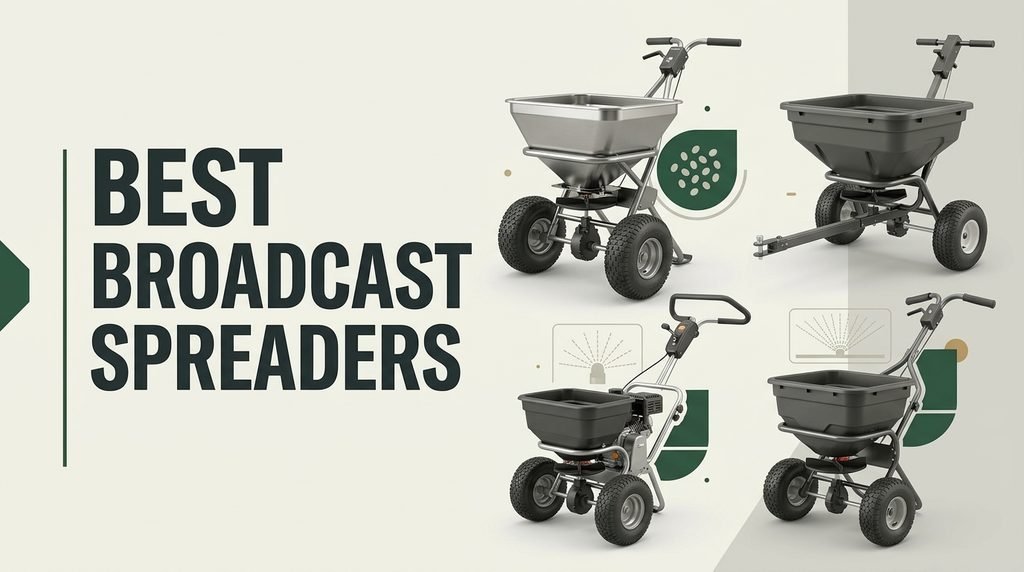
Choosing the right broadcast spreader for your property in 2026 means weighing hopper capacity, spread width, terrain compatibility, and whether you need a walk-behind, tow-behind, or handheld model. We compare 10 standout options across these categories to help you match a spreader to your lawn size and seasonal tasks.
Broadcast spreaders range from compact handheld units for small yards to heavy-duty tow-behind models covering half an acre per load. The key differences come down to how much material you need to distribute, how often you want to refill, and what type of vehicle or equipment you already own.
This guide breaks down each model by capacity, build quality, spread pattern control, tire type, and real-world versatility. Whether you are seeding a new lawn, fertilizing established grass, or managing winter ice melt, the comparisons below should help you narrow the field quickly.
We compared 10 broadcast spreaders using the details that matter most for lawn and property care: hopper capacity, spread width, tire type, frame durability, flow control precision, terrain handling, seasonal versatility, and overall value. The notes focus on practical trade-offs so each recommendation connects to how people actually seed, fertilize, and maintain lawns across different property sizes and climates.

Compare key features, scores, and current prices side by side. A shorter feature list means fewer details were available, not necessarily fewer capabilities.




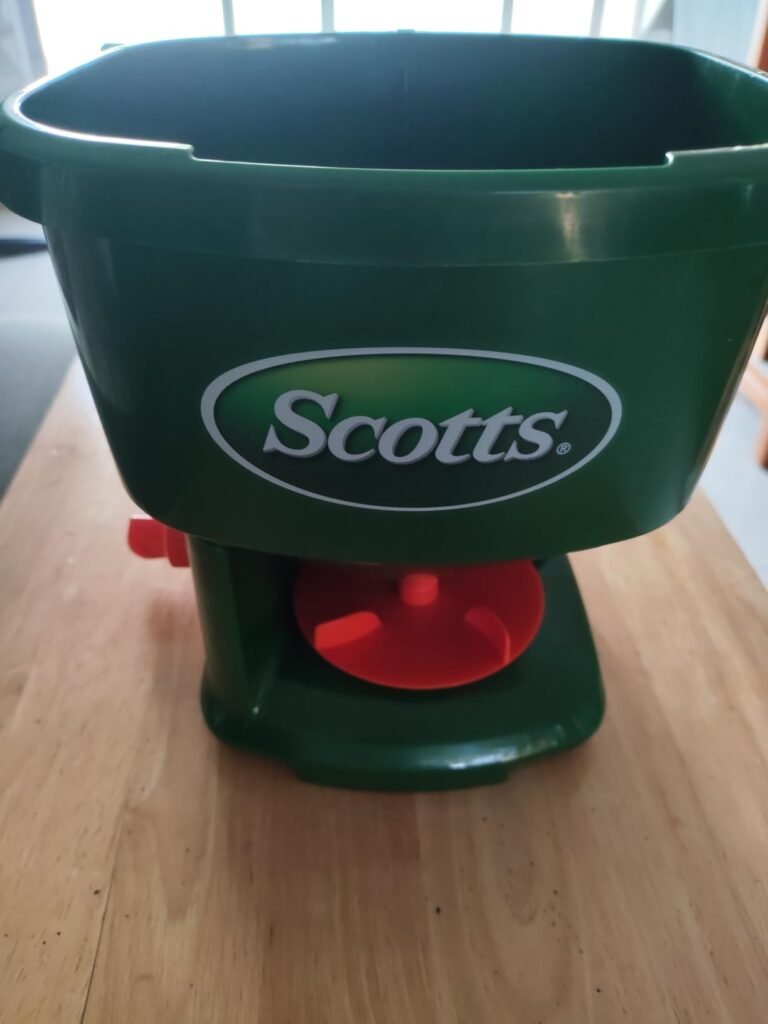
The Scotts Whirl is the simplest and most affordable option in this lineup, designed for homeowners with small yards, townhouse patches, or garden beds that need spot treatments. It covers up to 1,500 square feet per fill, which is roughly the size of a modest front lawn or a large backyard garden area.
We may earn a commission when you buy through this link, at no additional cost to you.
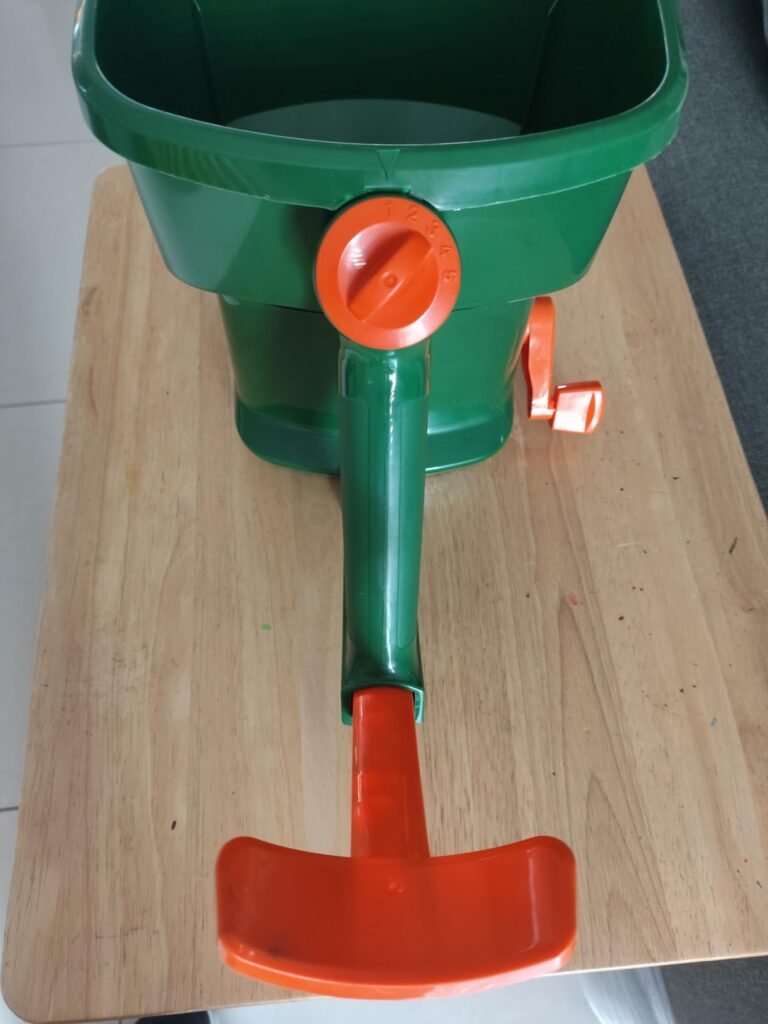
Operation is entirely hand-powered: you turn a crank to spin the broadcast disc while walking at a normal pace. The adjustable arm support helps position the unit at a comfortable height and angle, reducing strain during longer sessions. Because there are no wheels, gears, or calibration dials, there is virtually nothing to break or maintain beyond rinsing the hopper after use.
The trade-off is obvious. Covering anything larger than a small yard will take considerable time and arm effort, and the spread pattern is less uniform than what you get from a wheeled broadcast spreader. The crank mechanism works well for lightweight materials like grass seed and fine fertilizer but may struggle with heavier granules or coarse ice melt. Storage is a non-issue since the entire unit fits on a shelf or hangs from a hook.
Walk at a consistent pace and keep the crank turning at a steady rhythm to maintain a uniform fan of material. Overlap each pass by about one-third to avoid striping, and try to hold the spreader at waist height for the most predictable broadcast pattern. Starting with a half-full hopper can also help you maintain a comfortable arm position as you get used to the cranking motion.
Pick the Scotts Whirl if your lawn is under 2,000 square feet and you want a no-fuss, low-cost solution for occasional seeding and fertilizing. It is also a handy backup for spot-treating problem areas on larger properties where dragging out a full-size spreader is not worth the effort.
Not practical for lawns larger than 2,000 square feet or for anyone who needs to cover significant area quickly.
We may earn a commission when you buy through this link, at no additional cost to you.
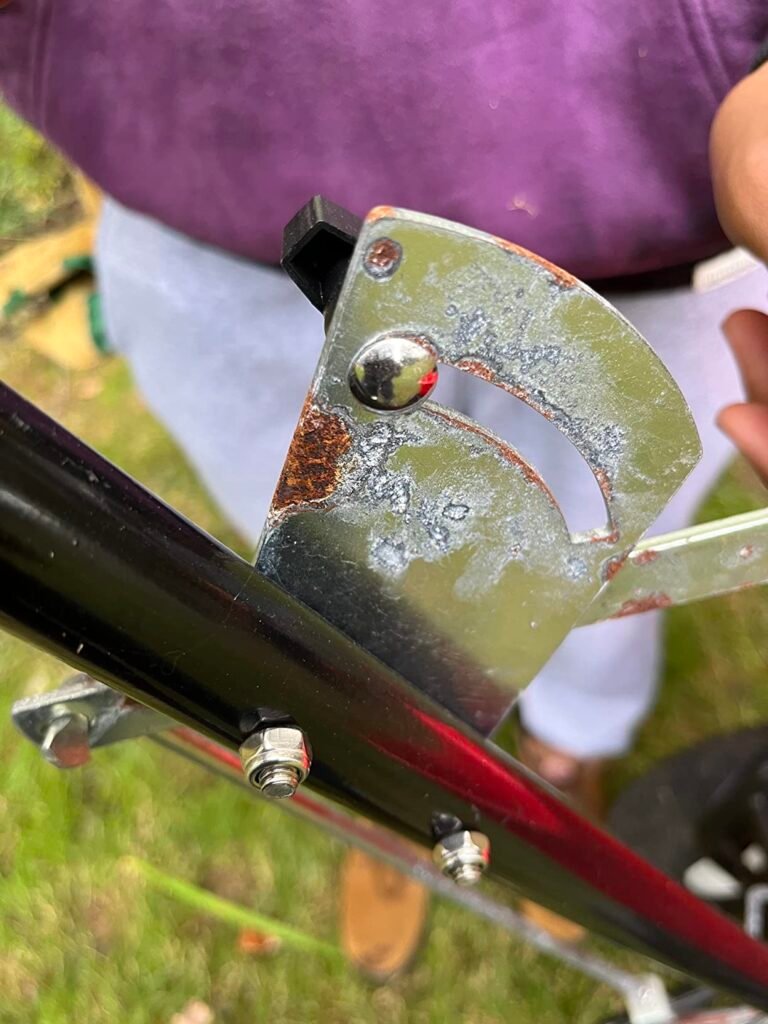
The VEVOR walk-behind spreader occupies a practical middle ground for homeowners who want more capacity than a handheld unit but do not need a commercial-grade machine. Its 60-pound hopper is large enough to hold a standard bag of grass seed or fertilizer, which means fewer trips back to the garage during a typical lawn treatment session.
We may earn a commission when you buy through this link, at no additional cost to you.
What sets this model apart at its price point is the 18-position flow adjustment combined with a disc pellet controller. That level of granularity lets you dial in a lighter rate for fine grass seed and then open the gate wider for heavier granular fertilizer or ice melt. The 9.8-foot spread width is narrower than some competitors, so you will make a few extra passes on wide-open lawns, but the trade-off is better control along garden beds and walkways.
Assembly requires no tools, which is a genuine convenience if you are not comfortable with wrenches and bolts. The 8-inch pneumatic tires roll smoothly over bumps, roots, and gravel paths, though they may struggle slightly in very deep ruts compared to the larger 13-inch wheels found on heavier-duty models. The powder-coated steel frame and UV-resistant plastic hopper should hold up through several seasons of regular use if you rinse the unit after spreading corrosive materials like salt.
Start with the lowest setting that still produces a visible fan of material, then do a short test pass on a driveway or sidewalk to check coverage density. Fine seed like Kentucky bluegrass needs a much smaller opening than coarse granular fertilizer, and the wide adjustment range on this spreader makes it easy to switch between materials without guessing. Marking your preferred settings with a permanent marker on the dial housing can save time on future applications.
This spreader is a smart pick for suburban lawns up to about a quarter acre where you want reliable coverage without a major investment. If your property is significantly larger or you frequently spread heavy ice melt in winter, you may want to step up to a model with a bigger hopper and wider spread pattern.
Not ideal for properties larger than a quarter acre or for users who need a spread width wider than 10 feet to finish jobs quickly.
We may earn a commission when you buy through this link, at no additional cost to you.
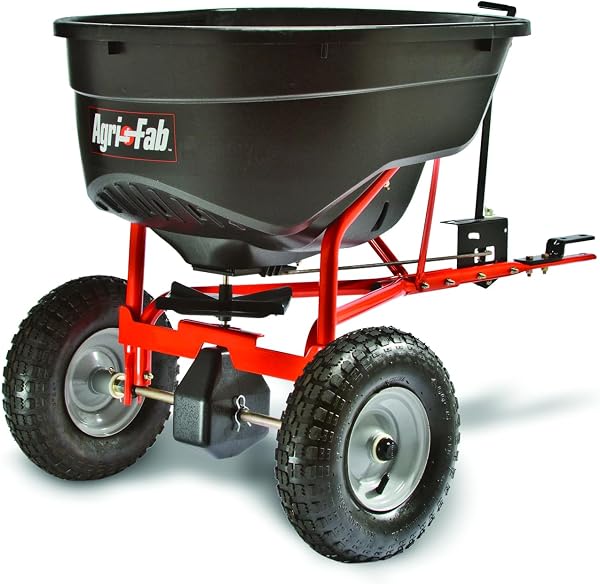
If you already own a riding lawn mower or garden tractor, the Agri-Fab 130-pound pull-behind spreader can dramatically cut the time you spend on seasonal lawn treatments. The 130-pound hopper holds enough material to cover roughly 25,000 square feet in a single fill, which means most suburban lots can be completed with just one or two loads.

We may earn a commission when you buy through this link, at no additional cost to you.
The 10-to-12-foot spread width lets you cover ground efficiently with fewer overlapping passes, and the enclosed gearbox helps keep moisture and debris away from the internal gears. That sealed design is especially valuable if you spread salt or ice melt in winter, since those materials accelerate corrosion on exposed metal components. The one-inch steel tubing frame and poly hopper add durability without making the unit excessively heavy.
Hitch compatibility is straightforward thanks to the universal mounting design that connects to most popular riding mower brands. The 13-by-4-inch pneumatic tires provide enough flotation to roll over soft or uneven turf without leaving deep ruts. One thing to keep in mind is that the spreader adds length to your mower setup, so tight turns around trees and landscape features will require a wider arc than you might expect.
Before your first pass, attach the spreader to your mower on flat ground and practice a few wide turns to gauge the turning radius. The universal hitch fits most standard clevis and pin connections, but you may need an adapter if your mower uses a proprietary attachment point. Allowing extra clearance around flower beds and fence lines will prevent the spreader from clipping obstacles during tight maneuvers.
This model is a strong all-around choice for anyone maintaining a half-acre or larger property with a riding mower. The combination of high capacity, wide coverage, and year-round versatility makes it one of the most practical tow-behind options available at this price level.
Not suitable for homeowners without a riding mower, lawn tractor, or compatible towing vehicle.
We may earn a commission when you buy through this link, at no additional cost to you.
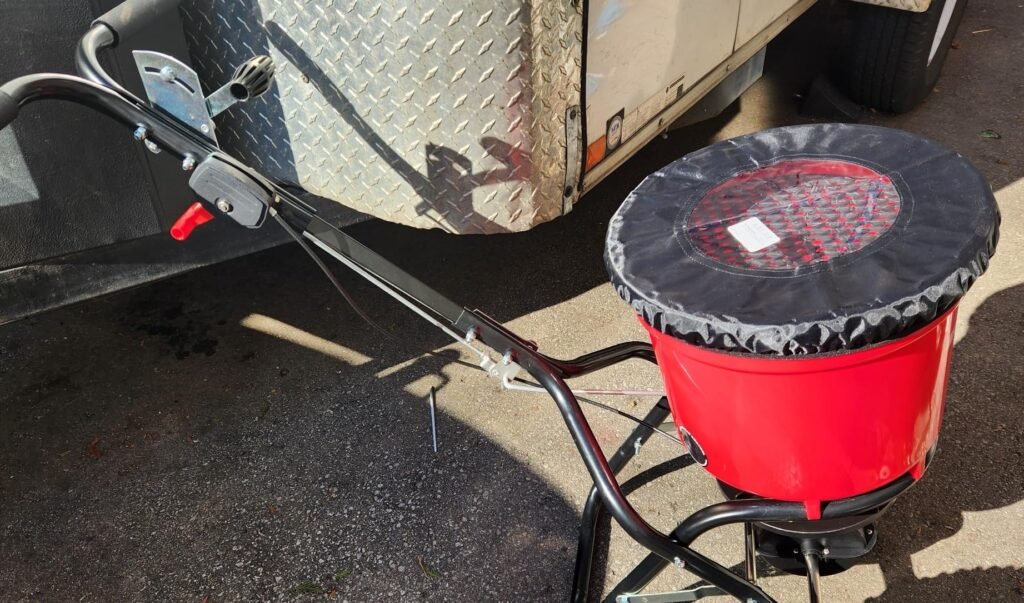
The EarthWay 2150 is built for people who deal with rough, uneven lawns where smaller wheels would get stuck or bounce material unevenly. The 13-inch high-flotation pneumatic stud tires are the standout feature here, providing traction on slopes, wet grass, and gravel that standard smooth tires simply cannot match.
We may earn a commission when you buy through this link, at no additional cost to you.
The three-hole drop system with side-spread control gives you a feathered edge pattern that helps prevent over-application along driveways and garden borders. A removable clog-free grate sits inside the hopper to break up clumps before they reach the spinner, which is particularly helpful when spreading damp fertilizer or coarse ice melt. The fully enclosed gearbox is designed to keep performing even in wet conditions, and the one-year warranty with lifetime technical support adds long-term confidence.
At 50 pounds of hopper capacity, this spreader is smaller than some competitors in the same price range. That means more frequent refills on larger properties, which can slow down your workflow. However, the trade-off is a lighter, more maneuverable unit that is easier to push up hills and around tight landscape features. The driving handle is comfortable for extended use, and the overall build quality suggests this spreader will last many seasons with basic maintenance.
Standard smooth pneumatic tires can slip on wet grass or loose gravel, causing the spreader to skid and produce uneven coverage. The aggressive tread pattern on the 2150’s stud tires bites into soft ground and maintains consistent forward motion, which keeps the spinner disc turning at a steady rate. If your lawn has significant grade changes or you frequently spread material after rain, this traction advantage translates directly into more uniform results.
Choose the EarthWay 2150 if your property has challenging terrain and you value traction and durability over maximum hopper size. It is well suited for professional landscapers or homeowners with hilly, uneven yards who need a walk-behind spreader that will not bog down in rough conditions.
Not the best choice for large flat properties where a higher-capacity hopper would reduce refill stops and save time.
We may earn a commission when you buy through this link, at no additional cost to you.
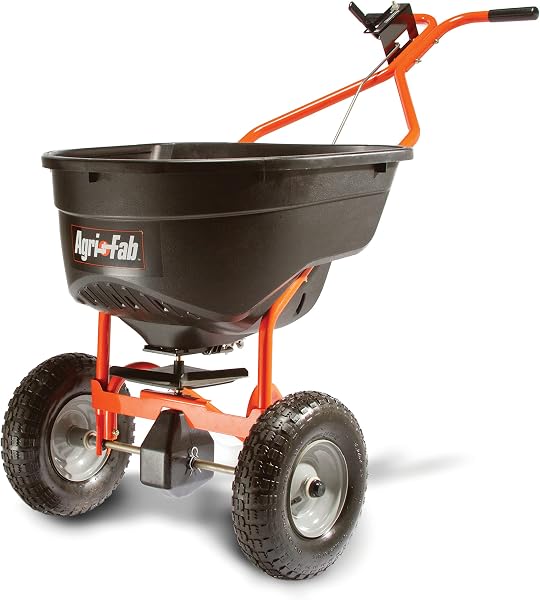
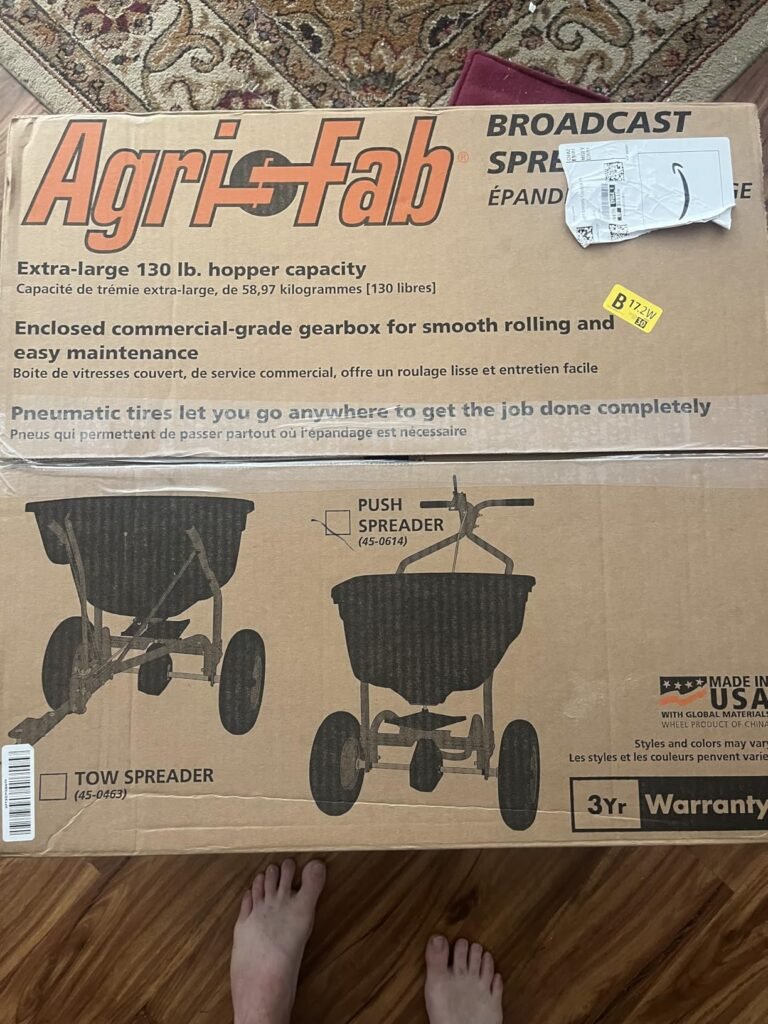
The Agri-Fab 45-0614 brings the hopper capacity normally found on tow-behind models into a walk-behind format. With room for 130 pounds of seed, fertilizer, or ice melt, you can cover up to 25,000 square feet without stopping to refill, which is a significant time saver on medium to large lawns.
We may earn a commission when you buy through this link, at no additional cost to you.
The 10-to-12-foot spread width matches the coverage of many pull-behind spreaders, and the 13-by-4-inch pneumatic tires keep the unit rolling smoothly across typical suburban terrain. The direct rod flow control lever is simple to operate with one hand while you push, though it does not offer the fine incremental adjustments you would find on models with a multi-position dial. For most standard applications like granular fertilizer and grass seed, the lever provides adequate control.
The main trade-off with a walk-behind spreader this large is weight. When the hopper is full, pushing the unit uphill or across soft ground requires real effort. If your property is mostly flat, this will not be a major issue, but steep grades can make the 130-pound load feel unwieldy. The overall construction is solid, and the unit is designed to handle year-round use including winter salt and ice melt.
If your yard has noticeable slopes, consider filling the hopper to about two-thirds capacity on your first pass and topping off for the second. This reduces the pushing effort on inclines while still giving you a generous load. Walking at a steady, moderate pace also helps maintain an even spread pattern when the hopper is heavily loaded, since sudden speed changes can cause the spinner disc to distribute material unevenly.
This spreader makes sense for homeowners with a quarter-acre to half-acre lot who do not own a riding mower but still want to minimize refill stops. It bridges the gap between compact walk-behind models and tow-behind units, offering maximum capacity in a push configuration.
Not recommended for very hilly properties where the fully loaded weight would make pushing difficult and tiring.
We may earn a commission when you buy through this link, at no additional cost to you.
The Buyers Products 3039632R stands out for its exceptionally wide 24-foot broadcast pattern, which can cut your mowing time in half on open, rectangular lawns. The 100-pound hopper handles grass seed and fertilizer during the growing season and transitions to bagged salt or ice melt in winter, making it a true four-season tool.
We may earn a commission when you buy through this link, at no additional cost to you.
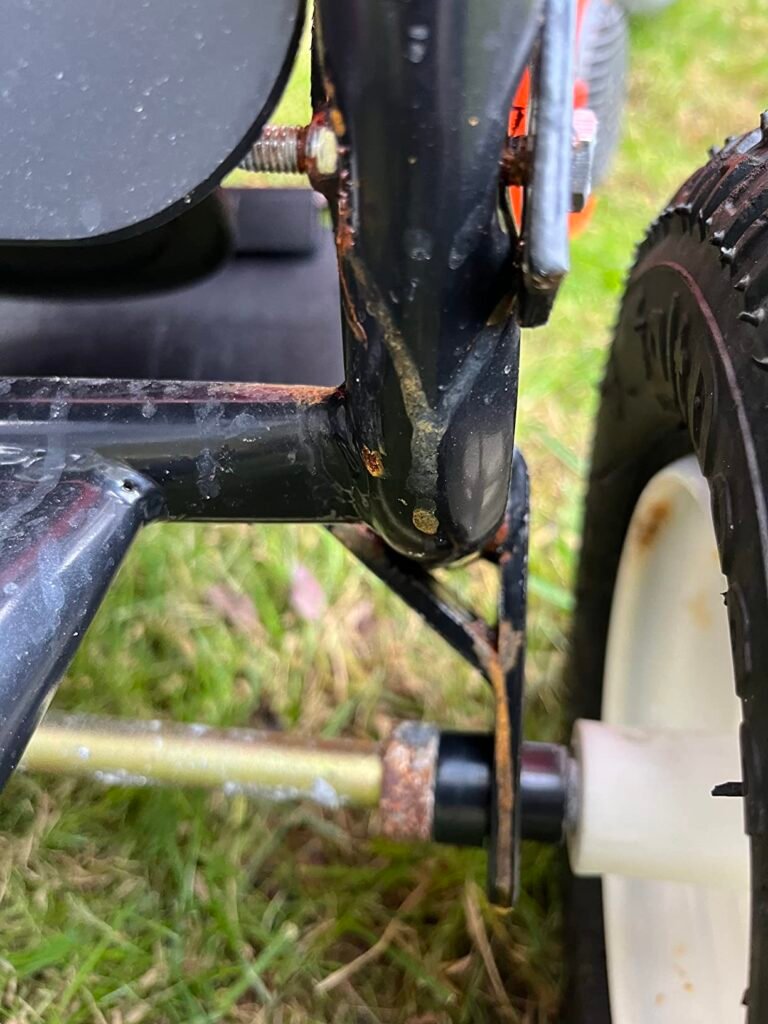
The axle-driven spinner disc is powered by an enclosed gearbox with a grease fitting, which lets you maintain the internal gears and extend their working life. Adjustable poly deflectors on the spread pattern let you direct material away from garden beds, curbs, and paved surfaces, which is a useful feature when working near delicate landscaping. The rust-resistant poly hopper will not dent if bumped against a fence post or shed wall.
The 13-inch pneumatic tires provide good flotation on soft ground, and the included hopper screen helps maintain consistent material flow by catching clumps before they reach the spinner. The nylon rain cover is a thoughtful addition for protecting leftover material during unexpected weather. The lower owner rating compared to some competitors suggests that assembly or calibration may require extra patience, so plan to spend some time fine-tuning the flow lever before your first full application.
The adjustable poly deflectors let you narrow the broadcast fan on one or both sides, which is essential when working near flower beds, water features, or freshly painted fences. Before spreading near sensitive areas, test the deflector position on a driveway to see how much the pattern shifts. Closing the deflectors partially will also reduce the overall spread width, giving you more control in confined spaces without changing the flow rate.
This spreader is best suited for open, relatively flat properties where the wide broadcast pattern can be fully utilized without wasting material on sidewalks or driveways. If your yard has a lot of narrow strips and tight corners, the 24-foot spread may be more than you need.
Not the best fit for small or heavily landscaped yards where a 24-foot spread pattern would send material onto unwanted surfaces.
We may earn a commission when you buy through this link, at no additional cost to you.
The AugFir tow-behind spreader offers the same 130-pound hopper capacity and 12-foot spread width as more expensive pull-behind models, but at a noticeably lower price point. It connects to riding mowers, ATVs, and UTVs through a universal hitch, and the included hitch extender and handle extension rod make it easier to reach the flow control lever from your seat.
We may earn a commission when you buy through this link, at no additional cost to you.
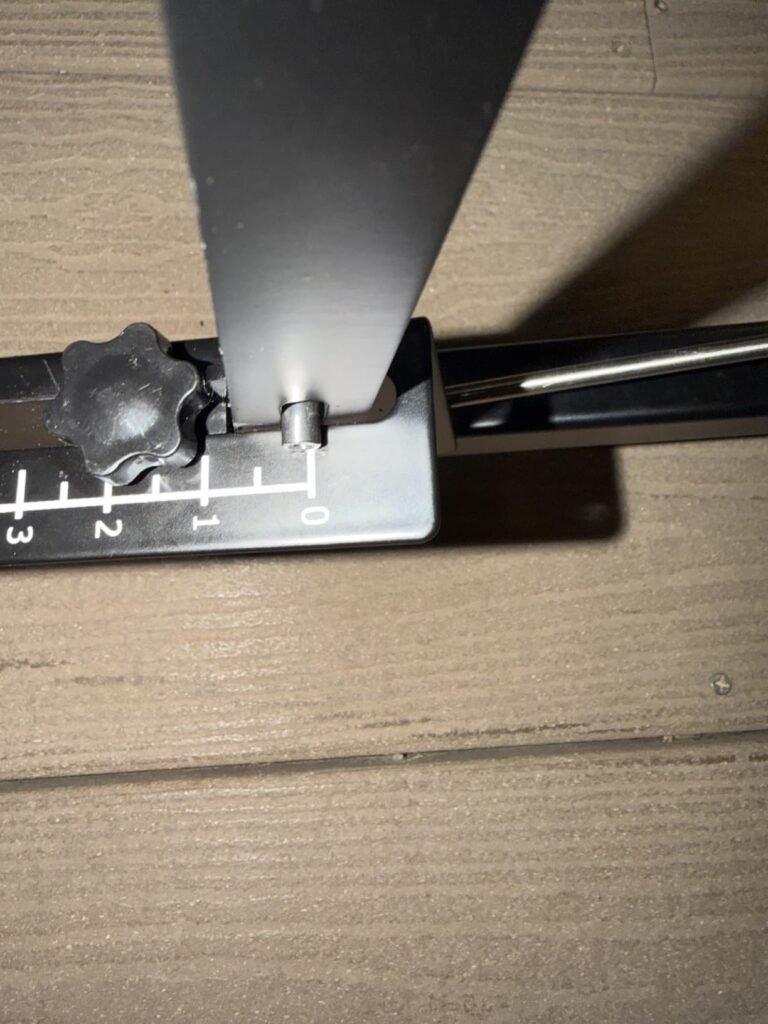
The five adjustable discharge ports work with the trapezoidal hopper shape to distribute material more evenly across the spread pattern. The 12.5-inch pneumatic tires provide adequate flotation on grass and gravel, and the powder-coated steel frame and gearbox are built to withstand seasonal use. The trapezoidal hopper design also helps material funnel toward the discharge ports more consistently as the load decreases.
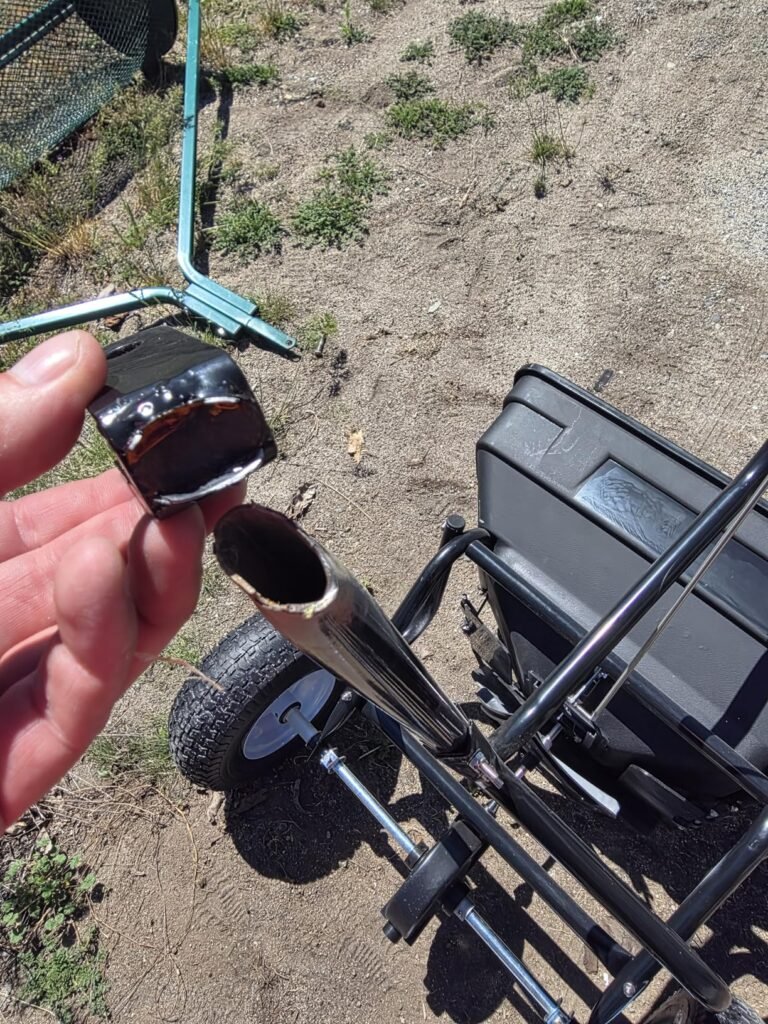
The lower owner rating reflects some common complaints about the assembly process and initial calibration. The manufacturer provides step-by-step instructions and an assembly video, which should help, but you should budget extra time for setup and a few test runs before your first real application. Overfilling the hopper can also cause flow issues, so it is worth following the capacity guidelines carefully.
Watch the manufacturer’s assembly video before you start, and lay out all hardware in labeled groups to avoid confusion. Pay special attention to the spinner disc alignment and the flow control cable routing, as these are the areas where misalignment most often causes uneven spreading. Running a test load of cheap grass seed on a paved surface will help you verify the spread pattern before you commit to a full lawn application.
This model is worth considering if you want a high-capacity tow-behind spreader on a tighter budget and are comfortable troubleshooting minor setup challenges. It covers the same ground as premium options, but the fit and finish may not match more established brands.
Not ideal for buyers who want a polished, out-of-the-box experience with minimal assembly or calibration effort.
We may earn a commission when you buy through this link, at no additional cost to you.
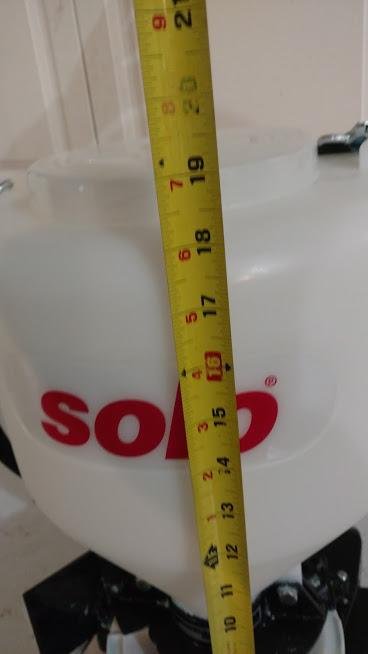
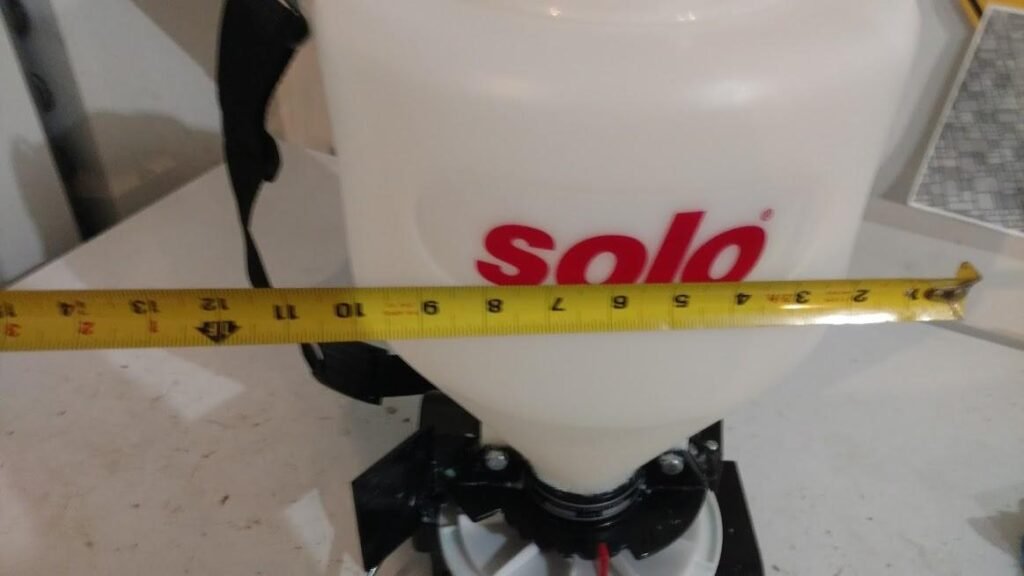
The SOLO 421 takes a different approach from every other spreader in this guide by mounting directly to your chest with a cross-shoulder strap. This hands-free design is particularly useful for irregularly shaped properties, steep slopes, or areas with dense landscaping where pushing a wheeled spreader would be impractical or impossible.
We may earn a commission when you buy through this link, at no additional cost to you.
The 20-pound hopper holds enough material for moderate-sized jobs, and the adjustable flow control combined with a directional fan gives you precise command over where the material lands. You can narrow the broadcast pattern for targeted applications along fence lines or widen it for open patches. The chemical-resistant construction handles fertilizer, seed, and ice melt without degrading, and the overall build quality is consistent with SOLO’s reputation for durable outdoor equipment.
Comfort is reasonable for shorter sessions, but a fully loaded 20-pound hopper hanging from your chest and shoulders can become tiring after 20 or 30 minutes of continuous use. Adjusting the strap to distribute weight evenly across both shoulders helps, and taking brief rest breaks during larger jobs will keep fatigue manageable. The chest-mount design also means you can navigate stairs, rocky paths, and garden beds without worrying about wheel clearance.
The directional fan on the SOLO 421 lets you angle the broadcast pattern to one side, which is invaluable when you are walking along a driveway or garden border and want to keep material off the pavement. Practice the fan adjustment on a clean surface first so you understand how the angle changes with different crank speeds. A slower crank with a deflected fan produces a gentle, targeted spread that is ideal for overseeding thin patches without wasting seed on surrounding hardscape.
This spreader is an excellent choice for landscapers and homeowners who need to treat areas that wheeled spreaders cannot reach. It works especially well on terraced yards, steep hillsides, and properties with a mix of lawn and garden beds that require precise, targeted application.
Not practical for large, open lawns where a wheeled or tow-behind spreader would cover the same area much faster with less physical effort.
We may earn a commission when you buy through this link, at no additional cost to you.
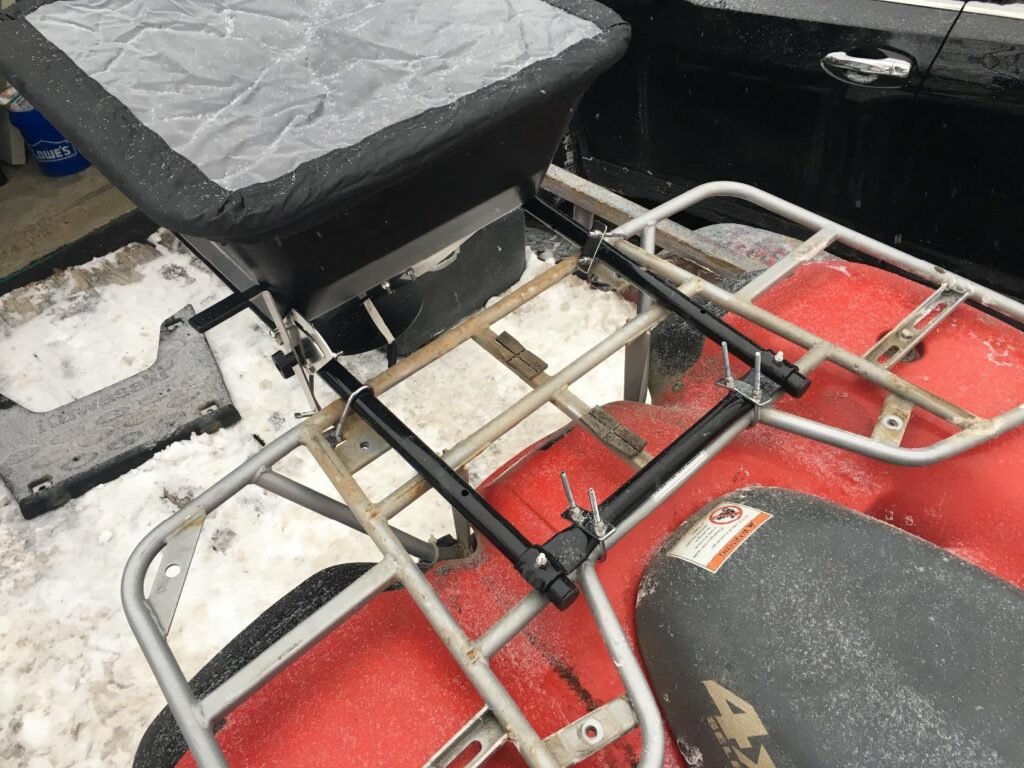
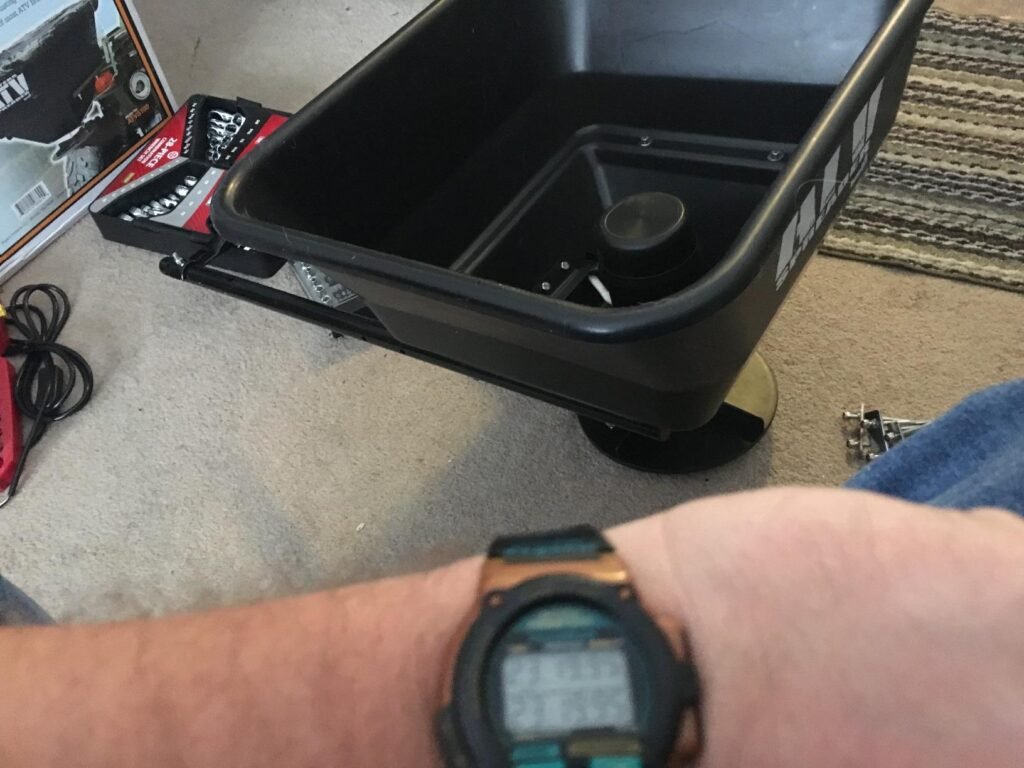
The Buyers Products ATVS100 is designed for property owners who already use an ATV or UTV for grounds maintenance and want to add broadcast spreading capability without buying a separate tow-behind unit. The 100-pound rustproof polyethylene hopper mounts directly to your ATV's rear utility rack, keeping the setup compact and maneuverable on trails and rough terrain.

We may earn a commission when you buy through this link, at no additional cost to you.
The enclosed 12V motor drives the spinner disc and produces a broadcast pattern up to 30 feet wide, which is the widest coverage in this entire guide. That kind of spread width is ideal for open fields, large pastures, and long driveways where efficiency matters more than precision edging. The manual feed-gate regulator lets you match the flow rate to different materials, from fine grass seed to coarse rock salt and ice melt.
Installation requires a compatible rear utility rack and a 12V power connection, so you will want to verify your ATV’s rack load capacity before mounting the fully loaded spreader. The included rain cover protects the hopper contents during sudden weather changes, which is especially useful when spreading fertilizer on large properties where a single pass may take an hour or more. Cleaning the unit after spreading corrosive materials like salt will help extend the life of the motor and hardware.
A fully loaded 100-pound hopper plus the weight of the spreader itself can approach 130 to 140 pounds total, so check your ATV’s rear rack rating before mounting. Exceeding the rack limit can damage the frame or affect handling on uneven ground. If your rack is rated for less than the combined weight, consider filling the hopper to a lower level or upgrading to a heavy-duty rack system designed for utility attachments.
This spreader is a practical solution for rural property owners, small farmers, and anyone who uses an ATV for seasonal grounds care. The motorized spinner and wide broadcast pattern make quick work of large areas, and the rack-mount design keeps your ATV’s towing capacity free for other attachments.
Not usable without an ATV or UTV equipped with a compatible rear utility rack and 12V power source.
We may earn a commission when you buy through this link, at no additional cost to you.
The EarthWay 2050P removes one of the biggest frustrations of buying a new spreader: assembly. It arrives pre-assembled and ready to use, which means you can unbox it, fill the hopper, and start spreading within minutes. For anyone who dreads sorting through hardware bags and deciphering instruction manuals, this convenience alone may justify the purchase.
We may earn a commission when you buy through this link, at no additional cost to you.
The 80-pound hopper provides enough capacity for most suburban lawns, and the side spread control lets you feather the broadcast pattern along edges to avoid over-application on sidewalks and driveways. The rustproof poly hopper and enclosed gearbox are built for long-term durability, and the overall design is straightforward enough that calibration is relatively intuitive even for first-time spreader users.
The 10-inch pneumatic tires are smaller than the 13-inch wheels found on some competing models, which means the 2050P may bounce more on very rough or uneven terrain. On typical suburban lawns with minor bumps and gentle slopes, the tires perform adequately. The moderate owner rating suggests that some users have experienced minor flow inconsistencies, so running a test pass on a paved surface before your first lawn application is a good idea.
Fill the hopper with a small amount of the material you plan to use and walk a 20-foot pass across your driveway at your normal spreading pace. Examine the distribution pattern on the pavement to check for evenness and adjust the drop rate accordingly. This two-minute step can prevent the striping and patchiness that often result from using the factory default setting without verification.
This spreader is a solid choice for homeowners who want a mid-capacity walk-behind unit without the hassle of assembly. It works well for standard seasonal tasks like spring seeding, summer fertilizing, and light winter ice melt on properties up to about a quarter acre.
Not the best option for very rough or hilly terrain where larger tires and higher ground clearance would provide smoother operation.
We may earn a commission when you buy through this link, at no additional cost to you.
Selecting a broadcast spreader involves more than just picking the biggest hopper you can find. The right choice depends on your property size, terrain, existing equipment, and the types of material you plan to spread throughout the year. The factors below will help you narrow down the options and avoid common buying mistakes.
Hopper capacity determines how much material you can load before needing to stop and refill, which directly affects how long a spreading session takes. Small handheld spreaders typically hold enough for 1,000 to 2,000 square feet, while walk-behind models range from 50 to 130 pounds and can cover up to 25,000 square feet per load. Tow-behind and ATV-mounted units often match or exceed the 130-pound mark, making them suitable for half-acre properties and larger.
The practical impact of hopper size depends on your lot layout. A 60-pound hopper may be perfectly adequate for a flat quarter-acre lawn with easy garage access, but the same capacity becomes frustrating on a sprawling rural property where each refill means a long walk back to the storage shed. Consider not just the total square footage of your lawn but also how many passes you are willing to make and how far your refill point is from the farthest corner of your property.
As a general guideline, choose a hopper that lets you complete at least half your lawn on a single fill. This keeps your workflow efficient without forcing you to push or tow an unnecessarily heavy load across the entire property.
Spread width refers to the total fan of material the spinner disc throws to each side of the spreader. Narrow patterns of 5 to 10 feet give you more control near garden beds, fences, and driveways, while wide patterns of 20 to 30 feet cover open areas much faster. Most walk-behind spreaders fall in the 8-to-12-foot range, which is a good compromise for typical suburban lots.
Pattern control features like side-spread deflectors, adjustable discharge ports, and directional fans let you shape the broadcast fan to match your surroundings. These features are especially valuable if your lawn borders sensitive areas like vegetable gardens, water features, or freshly seeded flower beds where over-application could cause damage. A spreader with good pattern control will save you money on material and prevent the burned edges that result from double-applying fertilizer along borders.
Match the spread width to your property shape. Long, open rectangles benefit from wide patterns, while irregular lots with many obstacles are easier to manage with a narrower, more controllable fan.
The three main spreader configurations serve different property sizes and equipment setups. Handheld and chest-mount spreaders are ideal for small yards, steep slopes, and spot treatments where wheels would be impractical. Walk-behind models are the most versatile for suburban homeowners, offering a balance of capacity, control, and maneuverability on flat to moderately sloped terrain. Tow-behind and ATV-mounted spreaders are designed for larger properties where you already own a riding mower, tractor, or utility vehicle.
A common mistake is buying a tow-behind spreader without confirming that your riding mower has the necessary hitch compatibility and turning clearance. Similarly, choosing a walk-behind model with a 130-pound hopper for a hilly yard can make pushing the fully loaded unit exhausting. Think about how you will actually use the spreader on your specific property before committing to a configuration.
If you own a riding mower and have more than a quarter acre, a tow-behind model will save you the most time. For smaller flat lawns, a walk-behind is the most practical choice. Reserve handheld units for yards under 2,000 square feet or as a secondary tool for spot work.
Tire size and tread pattern have a bigger impact on spreading performance than many buyers realize. Small solid plastic wheels work fine on smooth, flat lawns but will bounce and skid on rough ground, causing uneven material distribution. Pneumatic tires in the 8-to-10-inch range handle typical suburban terrain well, while 13-inch high-flotation tires with aggressive tread patterns are better suited for slopes, wet grass, gravel paths, and uneven ground.
The tire choice also affects how much effort is required to push a walk-behind spreader. Larger pneumatic tires roll more easily over bumps and soft spots, reducing fatigue during long sessions. If your property includes a mix of lawn, gravel driveway, and garden paths, look for a model with at least 10-inch pneumatic tires that can transition between surfaces without getting stuck or leaving ruts.
Prioritize tire quality if your terrain is anything other than flat and smooth. The extra cost of larger pneumatic tires pays off in more consistent coverage and less physical strain over the life of the spreader.
Broadcast spreaders are exposed to moisture, fertilizer chemicals, road salt, and UV radiation, all of which can degrade cheap materials quickly. Powder-coated steel frames offer the best combination of strength and corrosion resistance for walk-behind and tow-behind models. Poly hoppers resist dents and chemical damage better than metal alternatives, and enclosed gearboxes protect internal components from the corrosive dust that accumulates during fertilizer and salt applications.
Pay attention to the gearbox design when comparing models. An enclosed gearbox with a grease fitting will outlast an open gear system by years, especially if you spread salt or ice melt in winter. Rust-resistant hardware, chemical-resistant hopper materials, and UV-stabilized plastic components are all indicators of a spreader that will hold up through multiple seasons of regular use.
If you plan to use your spreader year-round including winter salting, invest in a model with an enclosed gearbox, poly hopper, and powder-coated frame. The upfront cost difference is small compared to replacing a corroded spreader after two seasons.
Flow control determines how precisely you can adjust the rate at which material exits the hopper and reaches the spinner disc. Multi-position dials with 10 or more settings give you fine-grained control for switching between fine grass seed and coarse granular fertilizer. Simple lever-style controls are easier to operate with one hand but may not offer the same level of precision for delicate applications.
Calibration is the process of matching the flow rate to the specific material you are spreading and the walking or driving speed you plan to maintain. Most fertilizer and seed bags include recommended spreader settings, but these are starting points rather than exact values. Running a short test pass on a paved surface before treating your lawn will help you verify that the actual distribution matches the expected rate.
Choose a spreader with at least five to eight flow settings if you plan to use multiple types of material throughout the year. If you primarily spread one type of granular fertilizer, a simpler lever control will be adequate and easier to operate.
A broadcast spreader that handles only grass seed is a single-use tool that sits in storage for most of the year. The most practical models are designed to handle a range of materials including grass seed, granular fertilizer, lawn treatments, herbicide pellets, rock salt, and ice melt. This versatility means you can use the same spreader for spring seeding, summer feeding, fall lawn treatments, and winter pathway maintenance.
The key requirement for seasonal versatility is a hopper and gearbox that can withstand corrosive materials like salt and ice melt without degrading. Poly hoppers, stainless steel or coated hardware, and enclosed gearboxes are all features that support year-round use. After spreading salt or other corrosive materials, a thorough rinse with clean water will help prevent buildup and extend the life of the spreader’s moving parts.
If you live in a climate with distinct seasons and plan to spread ice melt in winter, prioritize a spreader with corrosion-resistant construction. The ability to use one tool for all four seasons provides the best long-term value.
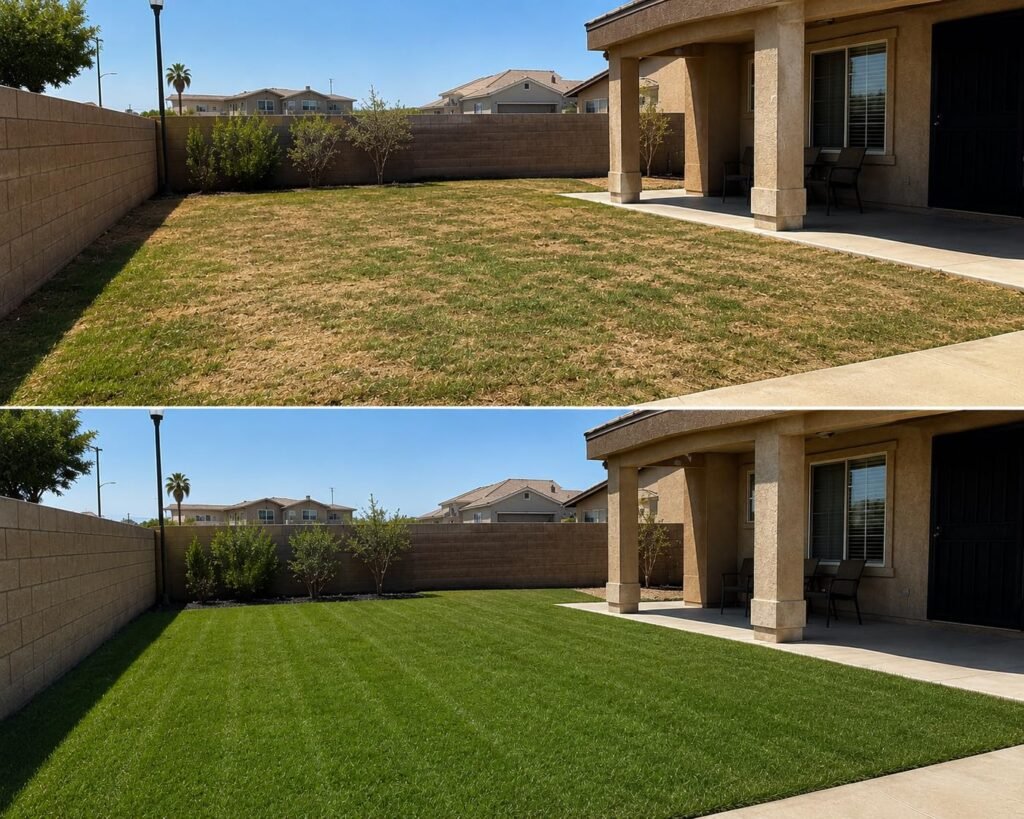
Before each use, check the flow control setting against the recommended rate on your seed or fertilizer bag, then run a short test pass on a driveway or sidewalk to verify the spread pattern. Walk or drive at a steady, moderate pace and overlap each pass by about one-third to ensure even coverage without striping. Close the flow gate before turning around at the end of each row to prevent heavy buildup at the edges of your lawn.
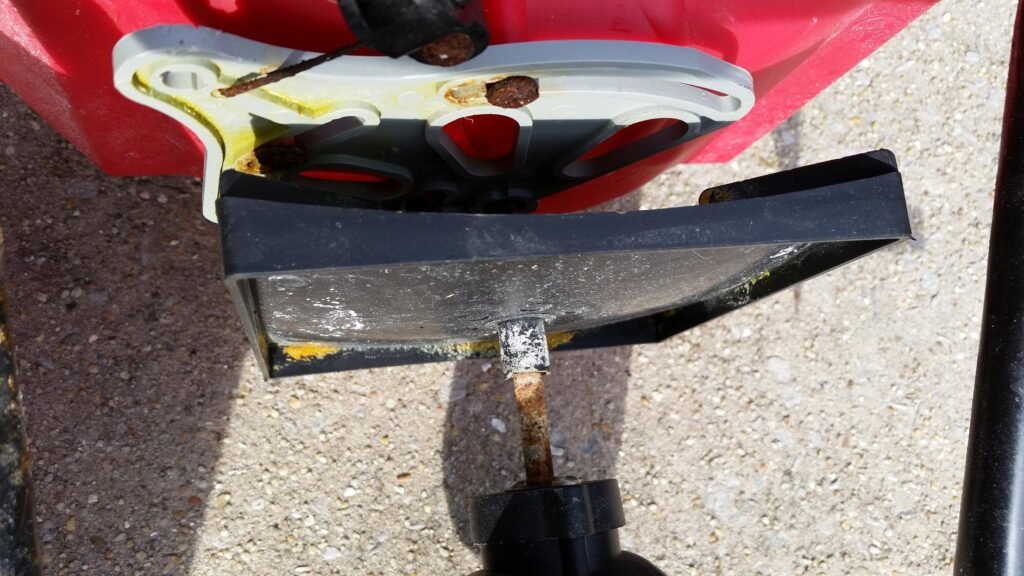
After every application, empty any remaining material from the hopper and rinse the entire spreader with a garden hose, paying special attention to the spinner disc, gearbox area, and flow gate mechanism. Fertilizer and salt residue can corrode metal parts and clog the discharge ports if left to dry, so a quick rinse immediately after use takes only a few minutes and significantly extends the life of the spreader. Allow the unit to air dry before storing it in a covered area.
At the end of the season, perform a more thorough cleaning and inspect the tires, gearbox, and frame for signs of wear or damage. Lubricate the gearbox fitting if your model has one, check tire pressure on pneumatic wheels, and tighten any loose bolts or hardware. Storing the spreader in a dry garage or shed rather than leaving it outdoors will prevent UV damage to plastic components and rust on metal parts, keeping it ready for the next season.
Match the hopper capacity to your lawn size. For yards under 2,000 square feet, a handheld or small walk-behind model with a 20-to-50-pound hopper is sufficient. Lawns between a quarter and half acre benefit from a 60-to-130-pound walk-behind spreader. Properties larger than half acre are best served by a tow-behind or ATV-mounted unit with a 100-to-130-pound hopper to minimize refill stops.
Yes, most broadcast spreaders handle both grass seed and granular fertilizer as well as ice melt and salt. The key is adjusting the flow control to match the material size and weight. Fine seed requires a smaller gate opening than coarse fertilizer granules, so check the recommended settings on the product packaging and run a test pass before treating your entire lawn.
Start with the manufacturer's recommended setting for your specific material, then spread a measured amount over a known area on a driveway or sidewalk. Weigh the remaining material to calculate the actual application rate per square foot, and adjust the flow gate up or down until the rate matches the target on the product label. This process takes about 10 minutes and prevents costly over-application.
A broadcast spreader throws material in a wide fan pattern to the sides, covering large areas quickly but with less precision near edges. A drop spreader releases material directly below the hopper in a narrow band, which gives you more control along borders but requires more passes to cover the same area. Broadcast spreaders are faster for open lawns, while drop spreaders are better for small, precisely defined areas.
Most broadcast spreaders can handle bagged rock salt and ice melt, but the corrosive nature of these materials means you should rinse the spreader thoroughly after each use. Look for models with poly hoppers, enclosed gearboxes, and corrosion-resistant hardware if you plan to spread salt regularly during winter. Avoid leaving salt residue in the hopper between uses, as it will accelerate rust on metal components.
Most lawns benefit from two to four fertilizer applications per year depending on your grass type and climate. Cool-season grasses typically need feeding in early spring and fall, while warm-season grasses benefit from applications in late spring and summer. Always follow the rate and timing recommendations on the fertilizer bag, and use your spreader's calibration settings to avoid over-application, which can burn the grass and waste product.
A tow-behind spreader requires a vehicle with a hitch, which can be a riding lawn mower, garden tractor, ATV, or UTV. If you do not own any of these vehicles, a walk-behind spreader is the better choice. Some tow-behind models include a universal hitch that adapts to multiple vehicle types, so check compatibility with your specific equipment before purchasing.
Uneven streaks usually result from inconsistent walking speed, incorrect flow settings, or insufficient overlap between passes. Walk at a steady pace, calibrate the flow rate for your specific material, and overlap each pass by roughly one-third of the spread width. Also check that the spinner disc is spinning freely and that the discharge ports are not partially clogged with dried fertilizer or seed clumps.
Clean the spreader thoroughly, removing all material from the hopper and rinsing away any fertilizer or salt residue. Let it dry completely, then store it in a dry, covered location such as a garage or shed. If possible, hang the spreader or place it on a shelf to keep the tires off concrete, which can cause flat spots on pneumatic wheels over long storage periods.
The Agri-Fab 130-pound pull-behind spreader stands out as the strongest overall choice for most property owners who have a riding mower and need to cover significant area efficiently. Its combination of high capacity, wide spread pattern, enclosed gearbox, and universal hitch compatibility makes it a reliable year-round tool for seeding, fertilizing, and winter salting.
For buyers without a riding mower, the VEVOR 60-pound walk-behind offers excellent value with its 18-position flow dial and tool-free assembly, while the Agri-Fab 130-pound push model brings tow-behind capacity to a walk-behind format for larger flat lawns. The Scotts Whirl handheld and SOLO 421 chest-mount serve smaller properties and irregular terrain where wheeled spreaders are impractical.
Start by matching the spreader type to your property size and existing equipment, then prioritize hopper capacity, spread width, and corrosion resistance based on how you plan to use the tool throughout the year. A well-chosen broadcast spreader will save you time and material on every application, paying for itself within a few seasons of regular use.