Hayabusa Pro Boxing
8.8Editor scoreMicrofiber leather build
Mid-height ankle support
Slim rubber outsole
Mesh ventilation panels
Find the right boxing shoes for 2026. We compare 10 standout options by build quality, useful features, owner feedback, value, and everyday trade-offs.
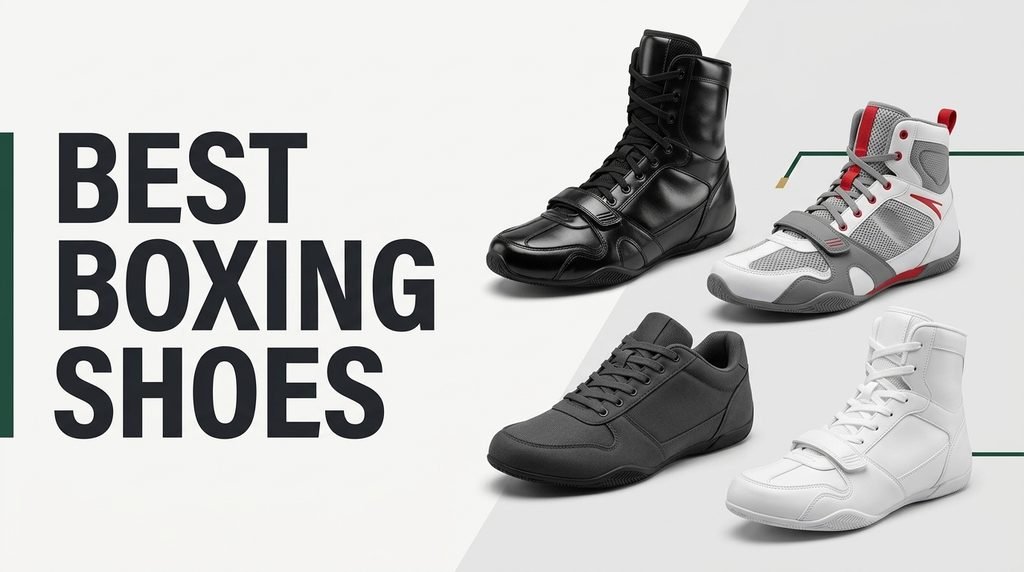
Choosing the right boxing shoes for 2026 comes down to how well the footwear balances traction on the canvas, ankle support during pivots, breathability through long rounds, and overall weight for fast footwork. We compare 10 standout options across sole grip, upper materials, height profile, closure systems, cushioning, ventilation, and value so you can match a pair to your training style and skill level.
The category spans lightweight low-profile pro shoes designed for competition, mid-height trainers built for gym versatility, and wrestling-boxing hybrids that work across combat sports. Height, sole design, and material weight vary in ways that dramatically affect how you move in the ring. Understanding these differences prevents buying shoes that either slow your feet or fail to support your ankles.
This guide breaks down each pair’s strengths and limitations, from budget-friendly training shoes under $60 to premium ring footwear near $150. Whether you compete regularly, train several times a week, or are buying your first proper pair, the comparisons below clarify which specifications truly matter and which are marketing features you can safely deprioritize.
We compared 10 boxing shoes using the details that shape a fighter’s real experience: outsole traction on canvas and mat surfaces, ankle support height, upper breathability, weight, cushioning approach, closure system security, midsole flexibility, brand track record in combat sports, sizing consistency, and owner feedback. The notes focus on how each pair performs during actual training and sparring, from pivots and shuffles to skipping and bag work, so each pick reflects the practical trade-offs that matter to boxers at every skill level.


Compare key features, scores, and current prices side by side. A shorter feature list means fewer details were available, not necessarily fewer capabilities.


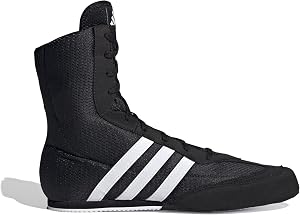


The Hayabusa Mayweather Champ earns the highest owner rating in this guide at 4.6 stars, reflecting the strong reception of this collaboration between Hayabusa's technical expertise and Floyd Mayweather's championship credibility. The mid-height design delivers the balance of agility and stability that serious boxers need for competitive training and sparring at high intensity.

We may earn a commission when you buy through this link, at no additional cost to you.
The bespoke outsole engineered for dynamic movement is the standout performance feature. Anchored traction keeps you grounded and balanced during quick pivots and powerful strikes, which is precisely the combination that Mayweather himself demonstrated across an undefeated professional career. The outsole geometry supports the specific footwork patterns that generate power in proper boxing technique.
The ergonomic drop-in midsole provides cushioning that absorbs impact while keeping you light on your feet. Drop-in midsoles can be replaced or upgraded over time, extending shoe life beyond what fixed midsoles allow. Lightweight upper construction supports explosive footwork without adding fatigue, and the mid-height build provides ankle support without restricting the mobility that quick movement requires.
Signature athlete collaborations in combat sports footwear typically combine the brand’s technical expertise with insights from the athlete’s competitive experience. The best collaborations produce shoes that reflect specific technical demands of high-level competition rather than just adding a name to existing designs. For fighters who value that pedigree, signature collaborations often justify premium pricing through refined performance characteristics.
The trade-off is the premium price near $150, which is genuinely excessive for casual boxers or beginners still developing baseline technique. For serious amateur competitors, dedicated hobbyists, and anyone who appreciates the Mayweather brand association, these shoes deliver top-tier performance from a respected combat sports brand. Casual users should choose more affordable options and reinvest the savings in other training equipment.
Beginners or casual boxers who cannot justify the premium price for entry-level use.
We may earn a commission when you buy through this link, at no additional cost to you.
The Hayabusa Pro targets competitive boxers and serious amateurs who spend most of their training time on canvas ring surfaces. The custom outsole with angled grooves and toe creases is specifically engineered for the pivots that generate power in a proper punch, delivering an anchored grip that lets you rotate through your strikes without your feet sliding out from under you.

We may earn a commission when you buy through this link, at no additional cost to you.
The lightweight construction is the most noticeable performance feature. Every ounce matters over the course of a full training session, and shoes that feel heavy after round three eventually slow your footwork whether you notice consciously or not. The slim profile keeps you close to the canvas for stable stance transitions while the flexible sole lets your foot move naturally through shuffle steps and lateral cuts.
The mid-height build provides genuine ankle support during hard pivots without restricting the range of motion needed for good footwork. Cushioned insoles conform to the foot over the first several sessions, and the mesh ventilation panels keep the interior comfortable during long training blocks. Microfiber leather construction resists the wear that ends the useful life of cheaper synthetic shoes.
Boxing rings use canvas floors that provide specific friction characteristics different from gym mats or hardwood. Shoes designed for canvas use thinner soles with specific grip patterns that maximize traction on that surface while allowing the natural sliding motion of proper footwork. Using canvas-optimized shoes on rougher surfaces accelerates outsole wear significantly.
The trade-off is that the slim rubber outsole is optimized for canvas ring surfaces and will show wear faster on rougher gym floors. The premium price also puts these outside the reach of casual buyers. For competitive boxers who spend real time in an actual ring and want equipment that supports serious technique work, this is a strong premium pick from a trusted combat sports brand.
Casual gym trainers who never step into an actual boxing ring and train primarily on rubber mats.
We may earn a commission when you buy through this link, at no additional cost to you.
The Venum Contender is designed for beginner-to-intermediate athletes building their first proper boxing footwear. Venum's strong presence in MMA and Muay Thai gyms means these shoes will be familiar to most coaches, which helps with sizing recommendations and fit feedback from training partners who have owned similar Venum products.

We may earn a commission when you buy through this link, at no additional cost to you.
The high-top silhouette is the standout structural feature. Higher ankle coverage provides more support during pivots and reduces sprain risk during quick lateral movements, which matters especially for newer boxers still developing the ankle strength that experienced fighters build over years. The trade-off is slightly less range of motion than lower-cut designs, though most beginners benefit more from the added stability.
Integrated mesh zones throughout the upper allow significant airflow, keeping feet cool during long training sessions. This matters more than beginners typically expect because hot, sweaty feet contribute to blisters and fatigue that shortens sessions. The synthetic leather upper resists wear while remaining easy to clean, which suits the maintenance realities of regular gym use.
High-top designs provide more ankle support and reduce sprain risk during pivots, favoring beginners still building ankle strength. Low-top designs offer greater range of motion and feel lighter on the foot, favoring experienced boxers with well-developed ankle stability. Most beginners should start with high-top designs and consider lower-cut options as their technique matures.
The trade-off is that the high-top design and gym-focused outsole are not ideal for road work or outdoor training. For beginners buying their first serious boxing shoes and intermediate athletes who train mostly in the gym, this is a well-priced choice from a trusted combat sports brand. Fighters who need lower-cut competition shoes should consider the Hayabusa Pro instead.
Experienced competitive boxers who prefer low-profile shoes for maximum ankle mobility.
We may earn a commission when you buy through this link, at no additional cost to you.
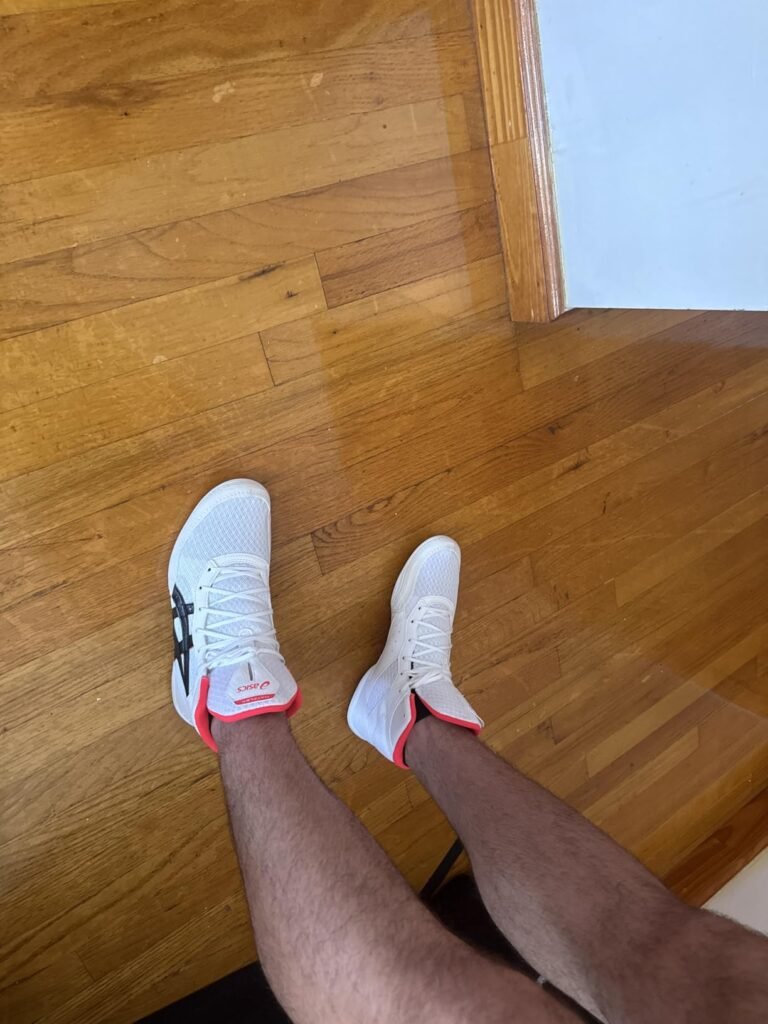
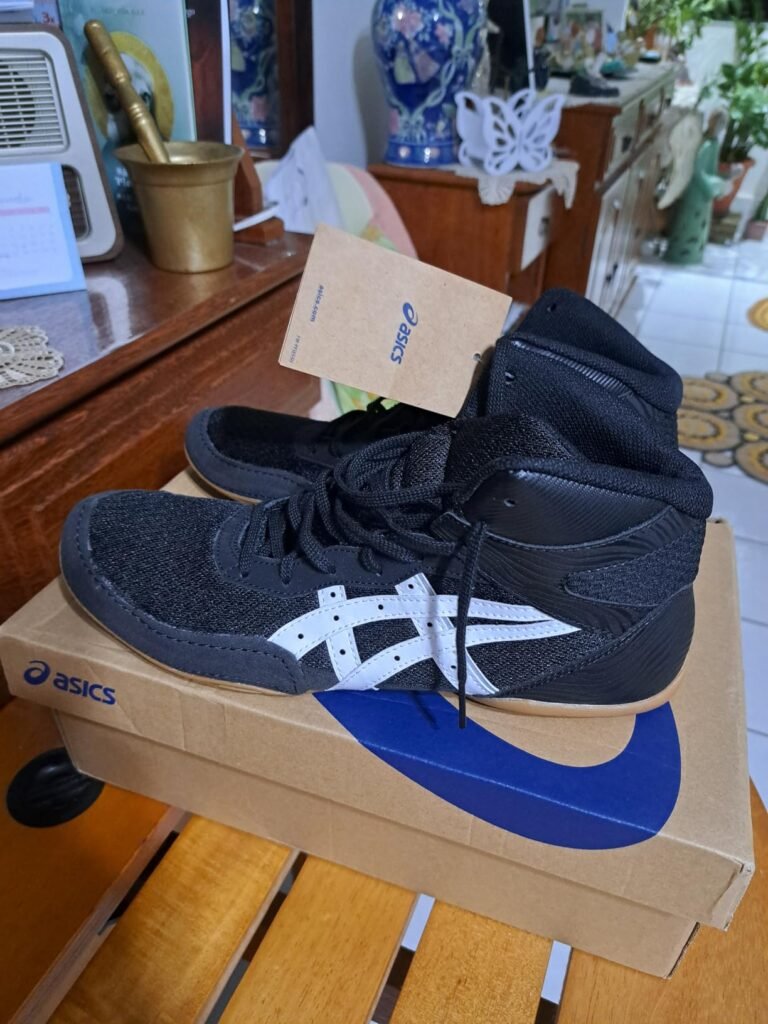
The Asics Matflex 7 is technically a wrestling shoe, but its design characteristics translate well to boxing training and appeal to fighters who cross-train across combat sports. Asics carries a strong reputation for athletic footwear quality that extends across their combat sports line, and the sustainable manufacturing approach reduces water use and carbon emissions during production.
We may earn a commission when you buy through this link, at no additional cost to you.
The E.V.A. sockliner provides cushioning that reduces foot fatigue during long training sessions, which becomes noticeable across full workouts that include shadow boxing, bag work, and pad rounds. Wrestling shoes generally emphasize low-profile fit and mat feel over the ankle support prioritized by pure boxing shoes, so these suit boxers who prefer minimal footwear that lets them feel the floor beneath them.
The low-profile design encourages proper weight distribution and stance work, which are foundational skills that benefit from shoes that do not artificially elevate the heel or restrict foot movement. Solution-dyed materials help reduce environmental impact during manufacturing, which matters to buyers who consider sustainability when making purchasing decisions.
Wrestling shoes share many design principles with boxing shoes: lightweight construction, thin soles for floor feel, and low-profile fit. The main differences are that wrestling shoes typically have less ankle support and use grip patterns optimized for wrestling mats rather than canvas rings. For gym training on rubber floors, wrestling shoes work well, but pure boxing rings favor dedicated boxing footwear.
The trade-off is that the shoes run notably small according to consistent user feedback, so sizing up a half size is generally recommended. Wrestling-focused design also means less ankle coverage than dedicated boxing shoes. For cross-training athletes, boxers who prefer minimal footwear, and buyers who value the Asics brand at a reasonable price, this is a smart choice with proven athletic pedigree.
Boxers who spend most of their training in an actual ring and need canvas-specific outsole grip.
We may earn a commission when you buy through this link, at no additional cost to you.
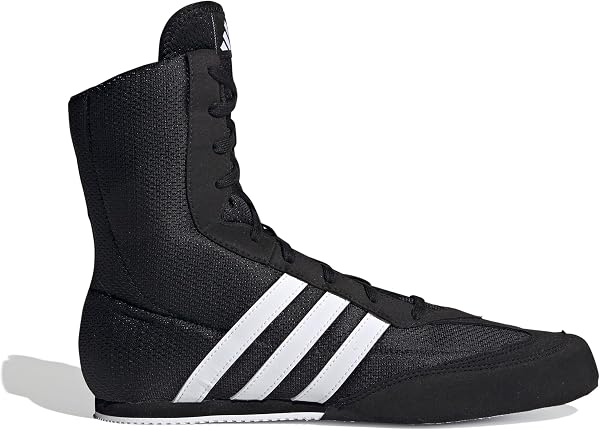
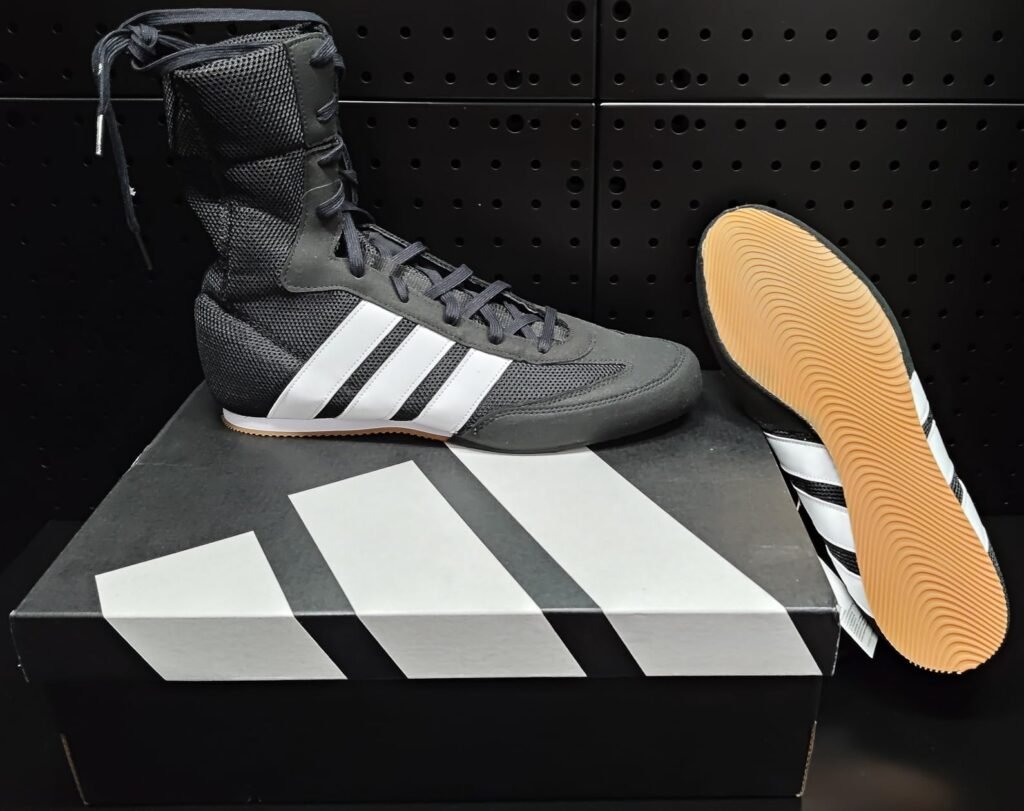
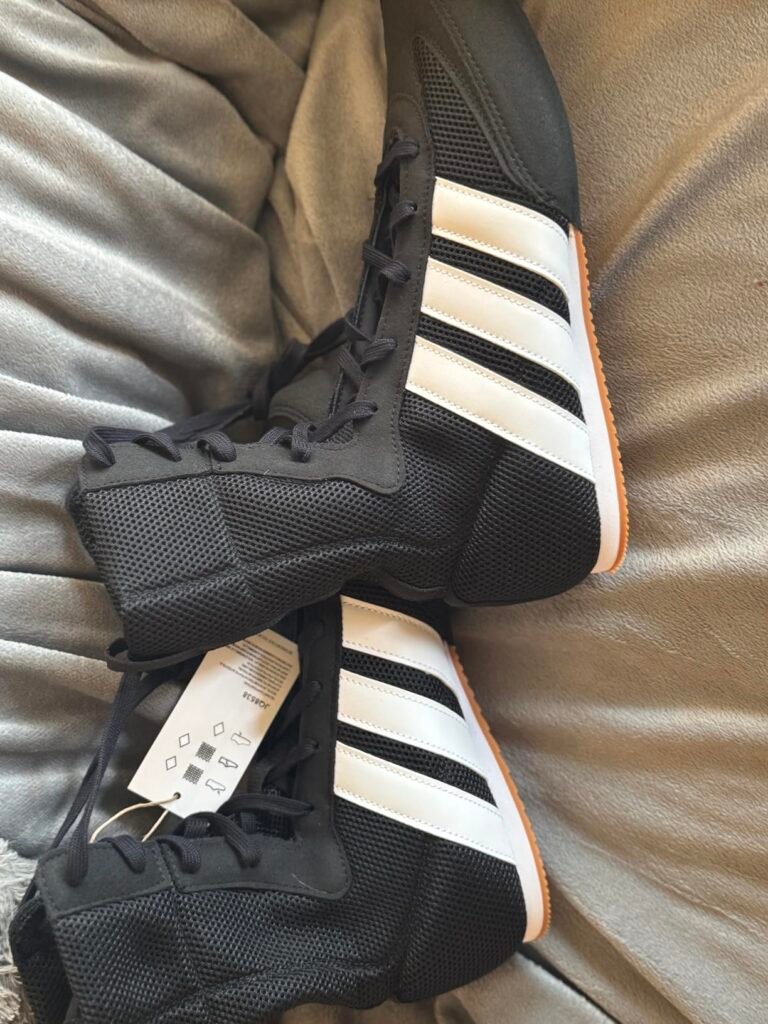
The adidas Box Hog Classic represents the brand's long-standing approach to boxing footwear, refined across multiple generations of the Hog line. The super-thin low-profile partial EVA midsole provides just enough cushioning at the midfoot and heel without adding weight or reducing floor feel, which is the balance that traditional boxing shoes have always tried to strike.
We may earn a commission when you buy through this link, at no additional cost to you.
The one-piece gum rubber outsole delivers reliable indoor traction on gym floors and boxing rings alike. Gum rubber has a long history in indoor sports because it grips well on smooth surfaces without leaving marks, and the one-piece construction eliminates the seam failures that can develop on split-sole designs over time. Mid-cut design and inner reinforcements provide meaningful stability during pivots.
The mesh upper construction provides climate control during long training sessions, and synthetic suede overlays add durability at high-wear areas like the toe and heel. This combination is well-suited to skipping rope, shadow boxing, and general boxing workouts where you need shoes that keep you quick on your feet without breaking down under repeated flexing.
Gum rubber provides excellent grip on smooth indoor surfaces without leaving black marks like harder rubber compounds. It also compresses slightly on contact, which enhances traction during quick lateral movements. The trade-off is that gum rubber wears faster on rough outdoor surfaces, so shoes with this outsole should be reserved for indoor training.
The trade-off is that the classic design predates several modern innovations found in premium competition shoes, and the white colorway shows wear from gym floors quickly. For buyers who value the adidas brand heritage in boxing, appreciate traditional design philosophy, and want reliable performance for standard boxing workouts, this is a proven choice. Fighters chasing the latest performance features should look at more recent designs.
Buyers who want the latest performance technology or plan to use their shoes outdoors.
We may earn a commission when you buy through this link, at no additional cost to you.
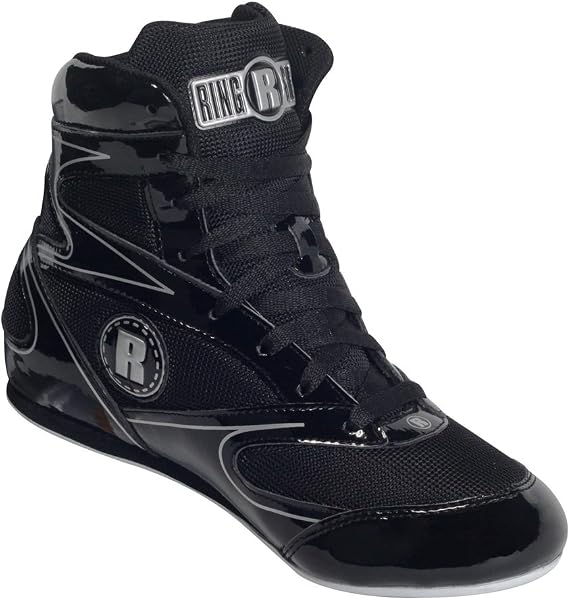
The Ringside Undefeated line targets boxers who want established brand credibility at a mid-tier price point. Ringside has been a familiar name in boxing equipment for decades, and their footwear reflects that experience with sport-specific design touches that generic athletic shoes lack. The wide size range from 2 to 13 accommodates both youth boxers and full-size adults.

We may earn a commission when you buy through this link, at no additional cost to you.
The patent leather vinyl finish gives these shoes a distinctive appearance that appeals to fighters who value the traditional look of competition boxing footwear. Beyond aesthetics, the vinyl surface wipes clean easily after sweaty sessions, which suits the maintenance realities of daily gym use. Low-top ankle design provides ease of movement while still offering meaningful support.
Breathable nylon mesh panels manage airflow during long training sessions, and the non-slip rubber sole delivers reliable traction on gym floors and ring surfaces. The combination of contemporary styling and functional design elements positions these shoes as a strong choice for boxers who want ring-ready appearance without paying premium prices for boutique brands.
Boxing shoe sizing often varies from standard athletic footwear because the low-profile fit requires a snug wrap that maximizes floor feel. Many brands run small compared to running shoes, and unisex sizing can create confusion between men’s and women’s equivalent sizes. Always check the manufacturer’s specific size chart and read recent reviews for sizing feedback before ordering.
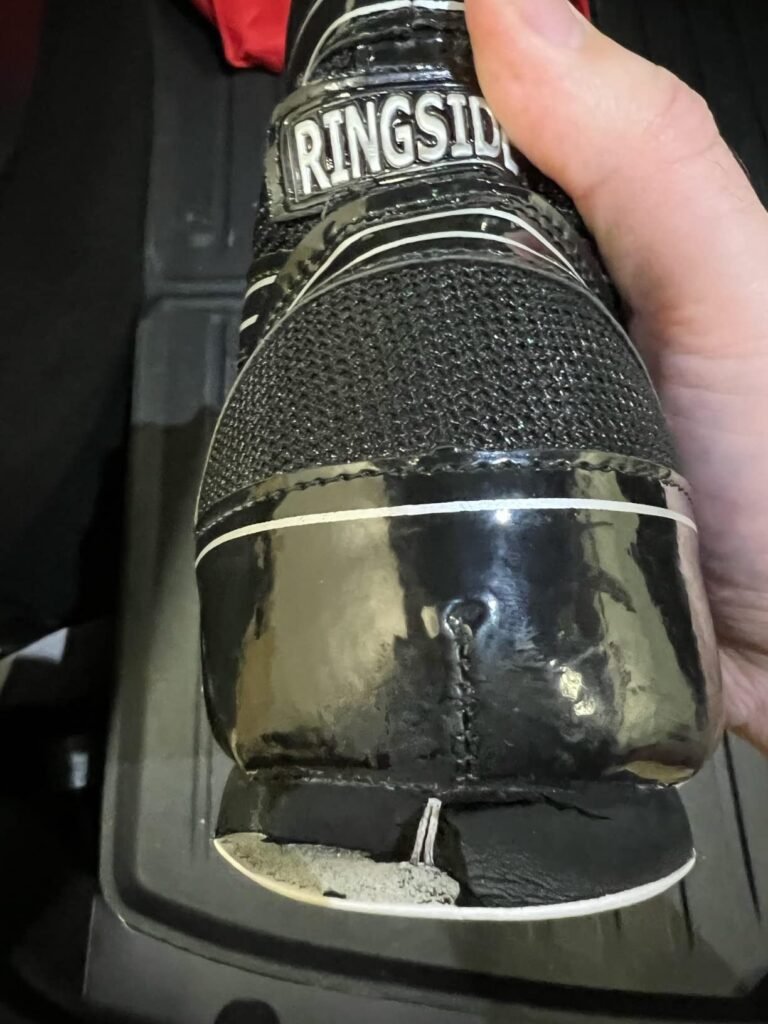
The trade-off is that the 4.2 owner rating sits below the category leaders, suggesting some variability in sizing or long-term durability that potential buyers should research before ordering. The vinyl finish also tends to develop creases over time as the material flexes repeatedly. For boxers who value an established brand at a reasonable price and prioritize appearance alongside function, this is a solid mid-range choice.
Buyers prioritizing the highest-rated options over Ringside brand heritage.
We may earn a commission when you buy through this link, at no additional cost to you.
This Sdtdid model targets athletes who cross-train across combat sports, gym work, and powerlifting. The versatile design serves multiple training styles without requiring separate shoes for each activity, which appeals to buyers who want maximum utility from a single pair. The mid-height build supports ankles during pivots while remaining low enough for weightlifting stability.

We may earn a commission when you buy through this link, at no additional cost to you.
The combined Velcro strap and traditional lace closure is the standout feature. This dual system gives you the security of laces with the quick on-and-off convenience of Velcro, and it distributes closure pressure more evenly than either system alone. For fighters who value consistent fit through hard sessions, this closure approach reduces the mid-workout adjustments that plague pure lace-up designs.
The suede microfiber upper breathes well while maintaining structure, and the flexible high-strength rubber outsole combined with EVA midsole provides both grip and shock absorption. The PU insole further cushions impact, which matters for boxers who spend time skipping rope or bouncing on their toes throughout long training sessions.
Traditional laces hold fit precisely but require full re-tying to adjust. Velcro alone is convenient but can loosen during hard use. Combining both systems lets you set laces once for baseline fit and use Velcro for quick micro-adjustments between rounds. This approach delivers the security of proper lacing with the speed of hook-and-loop convenience.
The trade-off is that cross-purpose design means these shoes are not optimized for pure boxing use the way dedicated boxing footwear is. For athletes who train across multiple disciplines and want one pair that works reasonably well for all of them, this Sdtdid model offers strong value. Boxers who focus exclusively on ring training should consider more specialized options.
Boxers who train exclusively in boxing and want purpose-built ring footwear.
We may earn a commission when you buy through this link, at no additional cost to you.
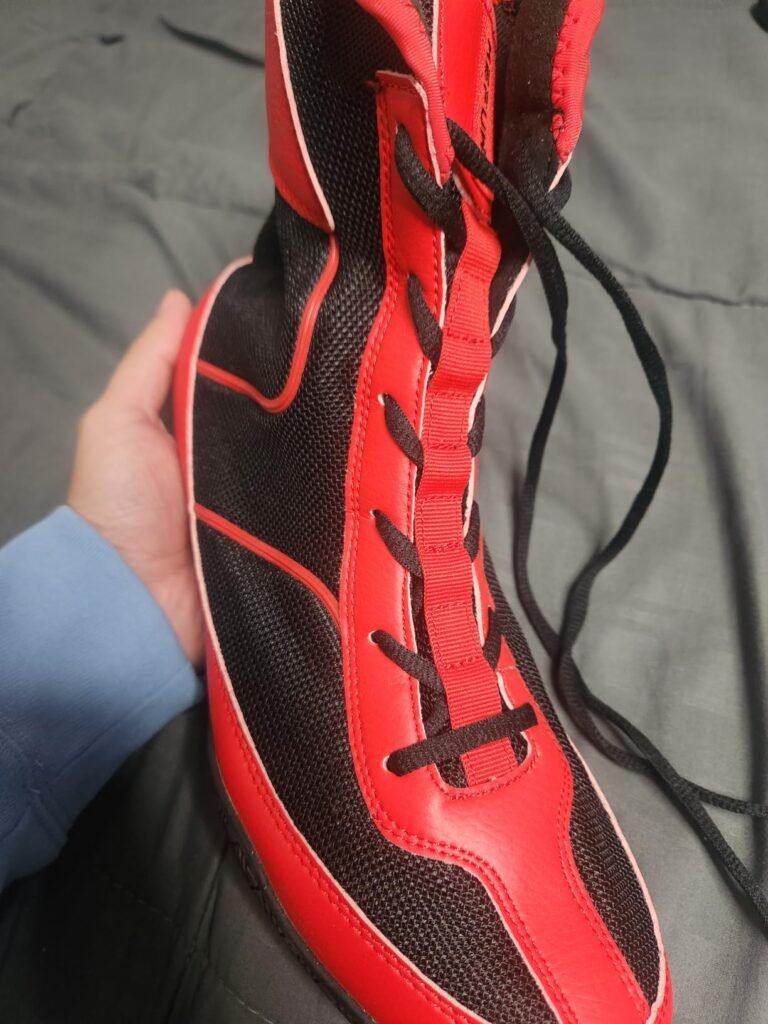
These wrestling boxing boots deliver serious features at a budget price point, making them a smart entry option for beginners or an affordable backup pair for experienced fighters. The wide fit design accommodates larger feet that struggle in standard combat sports footwear, and the youth sizing extends the appeal to younger fighters just starting their training.
We may earn a commission when you buy through this link, at no additional cost to you.
The high-density split-sole rubber outsole with aggressive grip patterns delivers explosive stability during shots, sprawls, and pivots. Split-sole designs allow the forefoot and heel to flex independently, which improves floor feel and natural foot motion during combat sport movements. The molded ankle collar locks in stability during high-impact activity.
The Flyknit mesh panels combined with supportive synthetic microfiber overlays reduce weight while enhancing natural foot flexion. The strategic mesh zones maximize airflow while the sweat-wicking microfiber lining fights moisture buildup during intense sessions. Double-stitched seams and abrasion-resistant microfiber in high-stress areas add durability that budget shoes often lack.
Split-sole shoes have separate rubber sections for the forefoot and heel, allowing independent flexion that improves floor feel and natural foot motion. Full-sole designs use one continuous outsole for maximum stability and durability. Split-sole designs favor combat sports and dance, while full-sole designs favor lifting and lateral sports.
The trade-off is that the wrestling-focused design and newer brand mean these shoes lack the pure boxing pedigree of established combat sports names. For budget-conscious buyers, athletes with wider feet, and youth fighters starting their training, these deliver genuine performance features at an accessible price. Serious competitive boxers should invest in more established boxing-specific brands.
Serious competitive boxers who need premium brand-name shoes with proven long-term durability.
We may earn a commission when you buy through this link, at no additional cost to you.
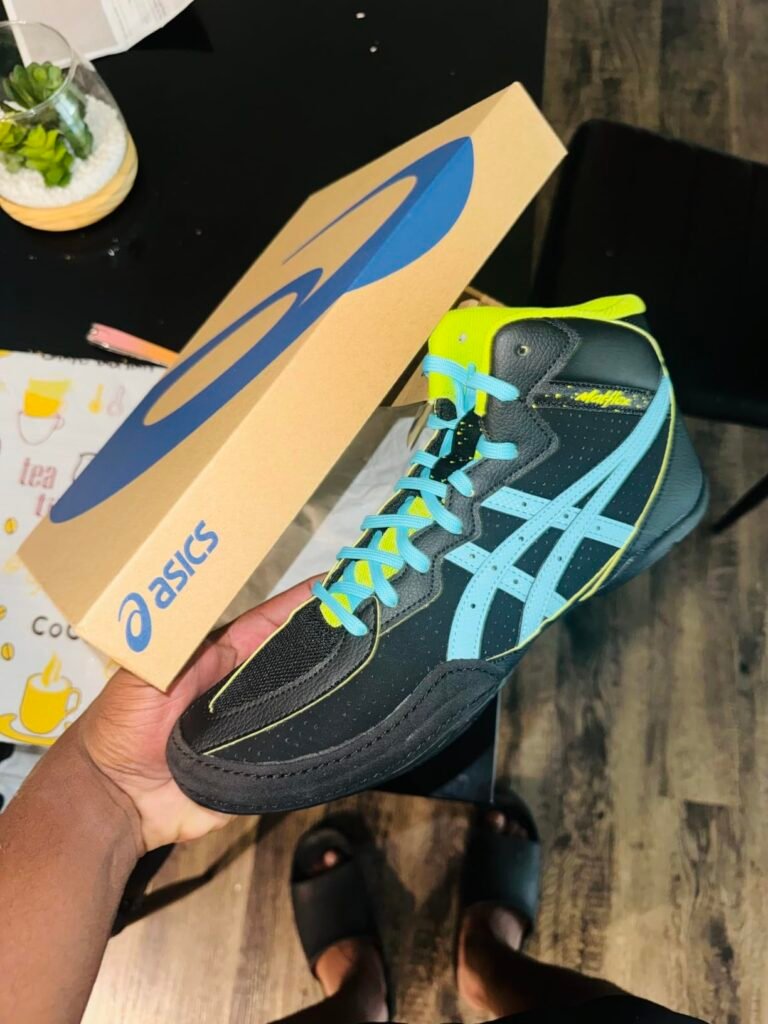
The ASICS Matflex 8 represents a refinement of the Matflex line with updated materials focused on breathability and comfort. Perforated synthetic leather in the upper provides significantly more airflow than solid leather designs, addressing the heat and moisture buildup that limits how long fighters can train in enclosed footwear.
We may earn a commission when you buy through this link, at no additional cost to you.
The breathable mesh vamp complements the perforated leather to keep feet cool and dry throughout long sessions. Airflow management matters more in wrestling and combat sports than in many other athletic activities because feet stay hot inside close-fitting shoes for extended periods without the rest breaks that other sports include. Good ventilation extends effective training time.
Soft synthetic leather at the ankle provides a gentle fit that reduces the pressure points that develop from more rigid materials during hard use. This attention to comfort details is characteristic of Asics athletic footwear across their product lines, and it translates well to combat sports use where hours of continuous wear are common.
Perforated leather uses small holes throughout the material to allow airflow while maintaining structural integrity. This approach provides significantly better breathability than solid leather while still supporting the foot. Solid leather offers slightly better durability but traps heat and moisture. For combat sports where sessions run long and feet stay enclosed, perforated designs typically provide better real-world comfort.
The trade-off is that the 4.2 owner rating suggests slightly less consistent user experience than the older Matflex 7, and wrestling-focused design means less ankle coverage than dedicated boxing shoes. For cross-training athletes who value Asics quality and prioritize breathability, this updated model delivers meaningful improvements over standard synthetic footwear. Buyers focused on pure boxing use should consider dedicated boxing designs.
Boxers who prefer dedicated boxing shoes over wrestling-focused cross-training footwear.
We may earn a commission when you buy through this link, at no additional cost to you.
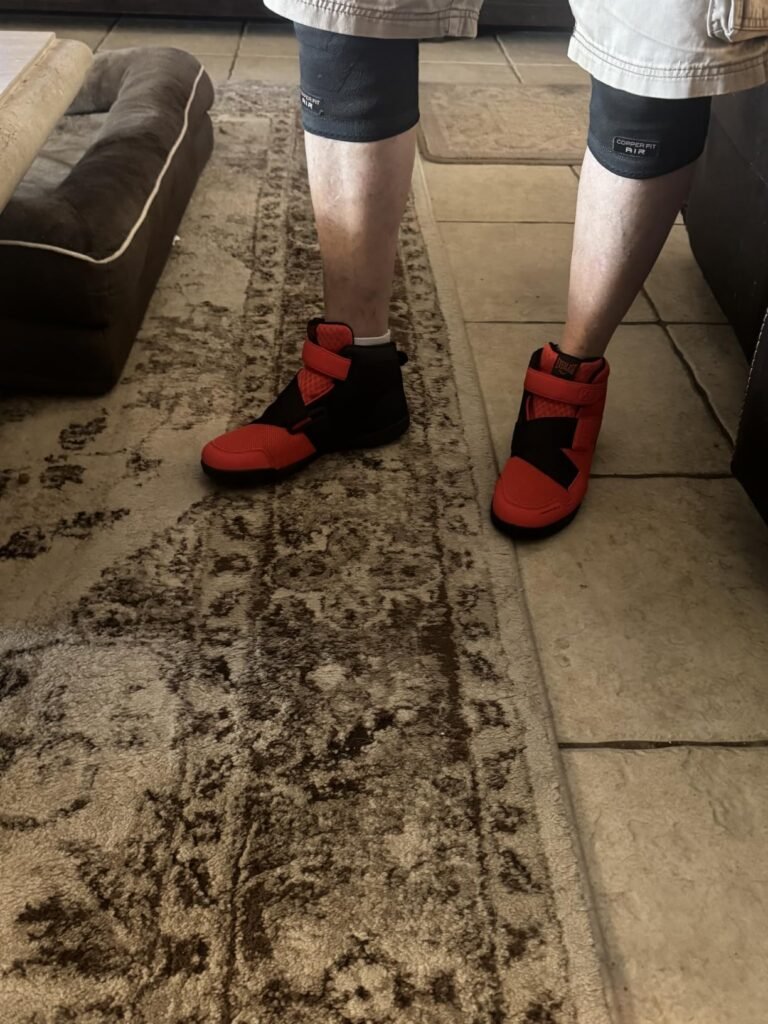
Everlast's Powerlock X-Trainer takes a distinctive approach by designing shoes that work both in the ring and for road work outside. Most dedicated boxing shoes use canvas-specific outsoles that wear quickly on rougher surfaces, but this model uses a more durable sole compound that handles both indoor training and outdoor conditioning runs.

We may earn a commission when you buy through this link, at no additional cost to you.
The dual turn-back strap system provides secure closure with easy on-and-off convenience. Turn-back straps distribute closure pressure across a wider area than single-Velcro designs, which improves fit consistency during hard sessions and reduces the pressure points that can develop from over-tightened laces. The system also stays secure through repeated flexing without loosening.
The full mesh body maximizes airflow through the entire shoe, keeping feet cool during long combined workouts that include both ring rounds and cardio conditioning. The high-quality sole with soft core provides impact absorption that reduces foot fatigue during roadwork, which is essential for boxers who include running as part of their conditioning program.
Serious boxers often own separate shoes for ring work and roadwork because the demands differ significantly. Ring shoes need thin canvas-optimized outsoles, while running shoes need thick cushioning for distance work. Cross-purpose shoes save money and gym bag space but compromise performance in both roles. Casual boxers benefit from cross-purpose designs; competitive fighters usually invest in specialized pairs.
The trade-off is that dual-purpose design inherently compromises some ring-specific performance in favor of versatility. Pure ring shoes will grip better on canvas, and pure running shoes will cushion better for distance work. For boxers who want one pair that handles both aspects of their training reasonably well, this Everlast model represents a smart consolidation. Specialized use should choose specialized shoes.
Competitive boxers who need dedicated canvas-optimized shoes for serious ring training.
We may earn a commission when you buy through this link, at no additional cost to you.
Picking the right boxing shoes means matching sole design, ankle height, materials, and closure systems to your training environment and skill level. The factors below cover the decisions that most influence real ring performance and long-term satisfaction with your purchase.
Sole design directly affects how you move in the ring. Thin low-profile outsoles keep you close to the canvas for maximum floor feel and precise weight transfer during pivots. Thicker soles provide more cushioning but reduce ground feedback and can hinder the subtle weight shifts that generate power in proper boxing technique.
Grip pattern matters as much as sole thickness. Canvas-optimized outsoles use specific grip patterns and rubber compounds designed for the friction characteristics of boxing ring surfaces. Gym-focused shoes typically use more aggressive grip patterns for rubber and hardwood floors. Split-sole designs allow independent forefoot and heel flexion for improved floor feel, while full-sole designs prioritize stability and durability.
Choose canvas-optimized thin soles if you spend significant time in an actual ring. Choose more versatile grip patterns for gym-only training on rubber or hardwood floors.
Ankle height affects both support and mobility. High-top designs provide more ankle coverage and reduce sprain risk during pivots, favoring beginners still building ankle strength and boxers with previous ankle injuries. Low-top designs offer greater range of motion and feel lighter on the foot, favoring experienced fighters with well-developed ankle stability.
Mid-height designs represent a compromise that provides meaningful support without the mobility restrictions of full high-top shoes. This middle ground suits intermediate boxers and cross-training athletes who want ankle protection during hard pivots while retaining most of the low-top range of motion. The right height depends on your skill level, injury history, and personal preference.
Beginners and boxers with weak ankles should start with high-top or mid-height designs. Experienced fighters with strong ankles can consider low-top options for maximum mobility.
Boxing shoe weight affects footwork speed and fatigue accumulation. Every ounce matters over the course of a long training session, and shoes that feel heavy in round three will eventually slow your footwork whether you notice consciously or not. Lightweight construction is a defining characteristic of pro-level boxing shoes because agile footwork is fundamental to boxing technique.
Material choice determines the weight-durability balance. Microfiber leather and synthetic uppers provide durability at lower weights than genuine leather. Mesh panels reduce weight significantly while adding breathability. Suede overlays reinforce high-wear areas without adding much overall mass. The best designs use different materials strategically for the demands of each shoe zone.
For competitive boxers, prioritize the lightest construction that provides adequate support. For casual training, some extra weight is acceptable in exchange for cost savings or added durability.
Ventilation affects both comfort and shoe longevity. Feet stay hot inside close-fitting boxing shoes for extended periods without the breaks that other sports include, and trapped moisture accelerates material breakdown from the inside while creating persistent odor problems. Mesh panels, perforated leather, and strategic ventilation zones all address these issues in different ways.
Look for shoes with significant mesh content in the upper, especially across the vamp and along the sides where heat builds up fastest. Perforated leather provides ventilation while maintaining structural integrity. Some premium shoes use zoned ventilation that places mesh where breathability matters most while using solid materials where structure is critical.
For long training sessions or hot gym environments, prioritize substantial mesh content and perforated materials. For short sessions in cool environments, breathability matters less.
Upper materials determine how long the shoes hold up under regular use. Genuine leather offers the best long-term durability but adds weight and heat retention. Microfiber leather approaches genuine leather performance at lower weight and cost. Synthetic leather and PU alternatives cost less but show wear faster and typically need replacement sooner.
Reinforcement placement matters as much as base material. Suede or microfiber overlays at the toe, heel, and midfoot protect high-wear areas that determine when the shoes ultimately fail. Double-stitched seams resist the failures that can end shoe lifespans before the materials themselves wear out. Look for construction details that indicate manufacturers thinking about durability rather than just cost.
For daily training use, invest in leather or microfiber leather with reinforcement overlays. For occasional use, quality synthetic materials offer adequate performance at lower cost.
Closure systems affect how quickly you can adjust fit and how securely shoes stay positioned during hard training. Traditional laces provide precise fit control but require full re-tying to adjust. Velcro closures allow quick adjustments but can loosen during vigorous activity. Dual closure systems that combine both approaches deliver the security of laces with the convenience of hook-and-loop.
Turn-back strap systems used on some models distribute closure pressure across wider areas than standard Velcro, reducing pressure points and improving fit consistency. High-quality closure hardware and reinforced eyelets prevent the failures that can develop over time with cheap components. Test the closure system by pulling firmly to check for security before serious training use.
For casual use, standard laces are adequate. For hard training or repeated use, dual closure systems or turn-back straps provide better real-world performance.
Boxing shoes typically fit differently from standard athletic footwear because the low-profile design requires a snug wrap that maximizes floor feel. Many brands run small compared to running shoes, and unisex sizing can create confusion between men’s and women’s equivalent sizes. Always check the manufacturer’s specific size chart and read recent user reviews for sizing feedback.
The right fit is snug without being tight. Your toes should reach the end of the shoe without cramming against it, and the shoe should hold your heel firmly without slipping during pivots. Boxing shoes generally do not need break-in periods when properly sized, though leather uppers may soften slightly with use. If your first session leaves you with hot spots or blisters, the fit is likely wrong.
Order based on your measured foot size and the manufacturer’s specific chart, not your general shoe size. When in doubt between sizes, size up because thin sock use can compensate for slightly loose fit but nothing helps a too-tight shoe.
Prices in this category range from about $45 for entry-level cross-training designs to nearly $150 for premium signature collaboration shoes. Spending more generally buys better materials, more refined design, better fit consistency, and longer useful life. However, mid-range options often deliver most of the benefit at significantly lower cost, especially for casual training.
Long-term value depends on training frequency and intensity. A $130 pair used four times a week for two years costs less per session than a $60 pair replaced every six months. Match spending to your realistic training commitment, and remember that upgrading equipment as your skill and training intensity grow is a normal part of the sport progression.
Set a budget that reflects how much you actually train, then within that budget prioritize sole quality, ankle support appropriate to your skill level, and material durability over cosmetic features.
Before your first training session, break in your new shoes gradually with light shadow boxing and basic footwork drills. This lets the materials conform to your feet and identifies any fit issues before hard use. Wear the same socks you plan to use during training, as sock thickness meaningfully affects fit. If you experience hot spots or pressure points during the break-in period, adjust the closure or consider whether the size is actually correct.
Post-session care extends shoe life significantly. Loosen the laces and remove insoles after each workout to allow the interior to dry completely, and store shoes in a well-ventilated space rather than sealed in a gym bag. Wipe down the exterior with a clean cloth to remove sweat and gym floor dust that would otherwise accumulate. Never machine wash boxing shoes because the process damages structural components and adhesives.
Long-term storage matters as much as daily care. Keep shoes in a cool, dry space away from direct sunlight, which degrades both leather and synthetic materials over time. Rotate between two pairs if you train daily to give each pair adequate drying time between sessions. Replace shoes when the outsole loses meaningful grip pattern depth or the upper shows structural damage at high-stress points. Quality boxing shoes with proper care can last one to two years of regular training use.
Dedicated boxing shoes significantly improve footwork, pivots, and power generation compared to running shoes or cross-trainers. Their thin low-profile soles provide the floor feel and grip patterns needed for proper technique, while running shoes have thick cushioning that hinders weight transfer. For serious boxing training, dedicated shoes are worth the investment. Casual gym boxers can start with any flat-soled athletic shoe.
Boxing shoes typically feature higher ankle support and canvas-optimized outsoles designed for ring pivots. Wrestling shoes prioritize mat feel with thinner soles and lower ankle coverage for takedown mobility. Many features overlap, and wrestling shoes work adequately for gym boxing training, though pure ring work benefits from dedicated boxing footwear. Wrestling shoes tend to be more affordable if budget is a concern.
High-top designs provide more ankle support and reduce sprain risk, favoring beginners and boxers with previous ankle injuries. Low-top designs offer greater mobility and lighter feel, favoring experienced fighters with strong ankles. Mid-height designs balance both approaches for intermediate athletes. Choose based on your skill level and injury history rather than personal aesthetic preference alone.
Boxing shoes should fit snugly without being tight. Your toes should reach the end without cramming, and the shoe should hold your heel firmly during pivots. The snug fit maximizes floor feel and stability but should not create pressure points that cause pain. Boxing shoes generally do not need break-in periods when properly sized, though leather may soften slightly.
Many boxing shoes run small compared to standard athletic footwear because the low-profile design requires a snug wrap. Some brands like Asics have documented sizing issues where users consistently recommend sizing up a half size. Always check the manufacturer's specific size chart and read recent reviews for sizing feedback before ordering.
Replace shoes when the outsole loses meaningful grip pattern depth, the upper develops structural damage at high-stress points, or the closure system stops holding fit reliably. Quality boxing shoes with regular care last one to two years of active training. Competitive fighters who train daily often replace shoes more frequently, while casual users can extend life significantly.
Boxing shoes work well for weightlifting because their flat thin soles provide stable ground contact for lifts. They are less suitable for running or cardio activities that require cushioning, and their thin outsoles wear quickly on rough outdoor surfaces. For general gym use combined with boxing training, cross-training designs offer more versatility.
Casual boxers can use one pair for both training and any amateur competition. Serious competitors often keep separate pairs, using older shoes for daily training and fresh shoes for competition to ensure maximum grip and clean appearance. Some fighters use different shoe styles for different training focuses, such as heavier trainers for skill work and lighter shoes for competition preparation.
Wipe down the exterior with a clean cloth after each session to remove sweat and gym floor dust. For deeper cleaning, use a mild soap solution and let shoes air-dry completely with insoles removed. Never machine wash boxing shoes because the process damages structural components and adhesives. Leather models benefit from occasional leather conditioner application.
Premium shoes justify their price through better materials, refined design, and longer useful life for serious competitive boxers who train daily. For casual training, mid-range shoes deliver similar training benefits at significantly lower cost. Match your spending to your actual training frequency and intensity rather than aspirational goals or brand appeal alone.
The Hayabusa Mayweather Champ earns our top overall recommendation because it delivers the highest owner rating in this guide alongside a thoughtfully designed mid-height build, anchored traction outsole, and cushioned drop-in midsole. For serious amateur competitors and dedicated hobbyists who want top-tier performance from a respected combat sports brand, it strikes the best balance of agility, stability, and comfort available.
Boxers focused on pure ring competition should consider the Hayabusa Pro Boxing Shoes for their canvas-optimized custom outsole and lightweight construction. Beginners looking for their first proper boxing footwear will find strong value in the Venum Contender with its familiar brand and high-top ankle support. Budget-conscious buyers or fighters with wider feet should look at the Wrestling Boxing Boots Wide for solid performance features under $45.
Start by identifying your training environment and skill level, then match those factors to sole design, ankle height, and material quality. Shoes that fit your actual training style and get used consistently for months of regular sessions deliver far more value than premium options bought for aspirational reasons. Use the comparisons above to find the pair that supports the way you actually train.