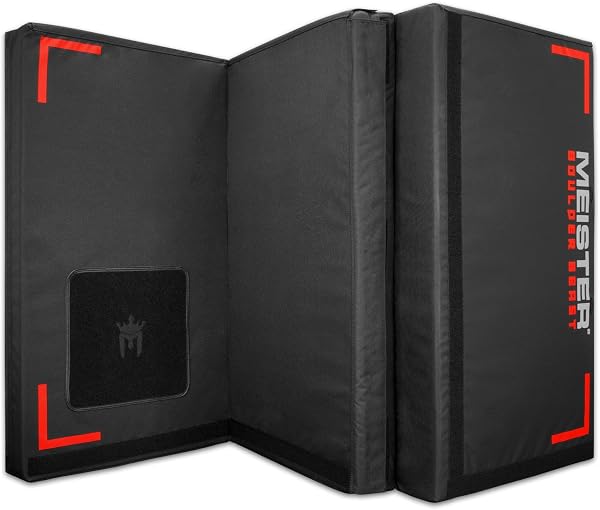
Meister Boulder Beast XL
72×44 inch landing
5 inch foam depth
Tri-fold design
All-weather polyester
10.0
Check priceCompare top bouldering crash pads by foam thickness, landing area, portability, and durability. Find the right pad for your crag sessions and highball sends.
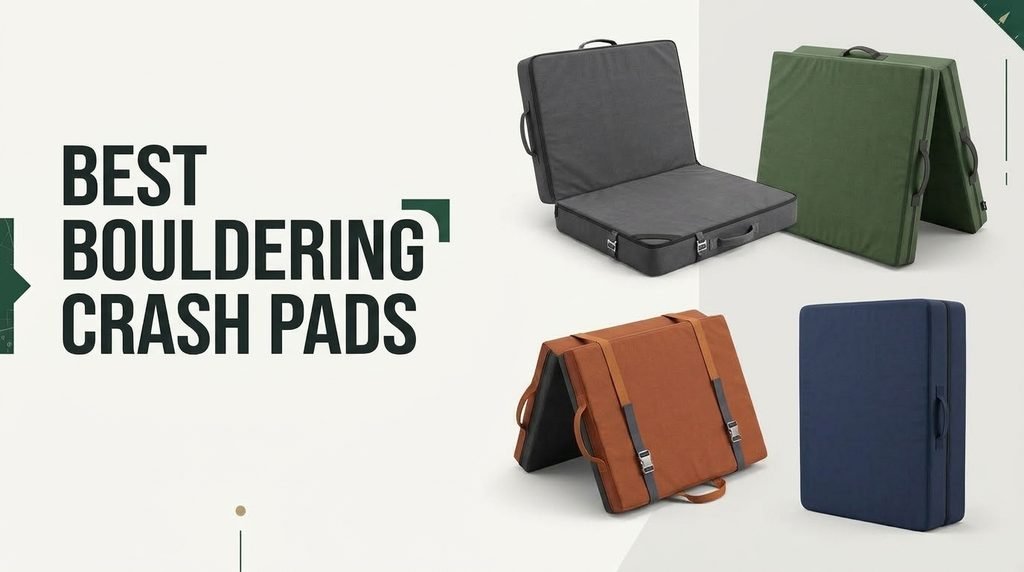
Finding the right bouldering crash pad in 2026 comes down to balancing landing surface area, foam thickness and layering, pack weight, carry comfort, and durability against the type of climbing you actually do. We compare standout options by the factors that matter most for safe, confident sends at the crag.
The differences between crash pads are more significant than they appear at first glance. A few extra inches of foam depth or a wider landing zone can meaningfully change how protected you feel on highball problems. Fold style, strap systems, and fabric toughness also shape whether a pad survives years of rocky approaches and repeated impacts.
This guide breaks each option down by ideal use case, standout strengths, and honest limitations. Whether you need an oversized pad for highball landings or a lighter supplemental pad for multi-pad setups, the reviews below deliver clear practical guidance for choosing the right protection.
We compared bouldering crash pads using the details that actually help a climber decide: unfolded landing dimensions, foam thickness and layer composition, folded size and carry weight, strap and harness comfort, fabric durability, connection systems for multi-pad setups, gear storage options, versatility beyond bouldering, owner feedback, and overall value. The notes focus on real trade-offs so each pick connects to how people actually approach, spot, and land at outdoor bouldering areas.
Compare key features, scores, and current prices side by side. A shorter feature list means fewer details were available, not necessarily fewer capabilities.

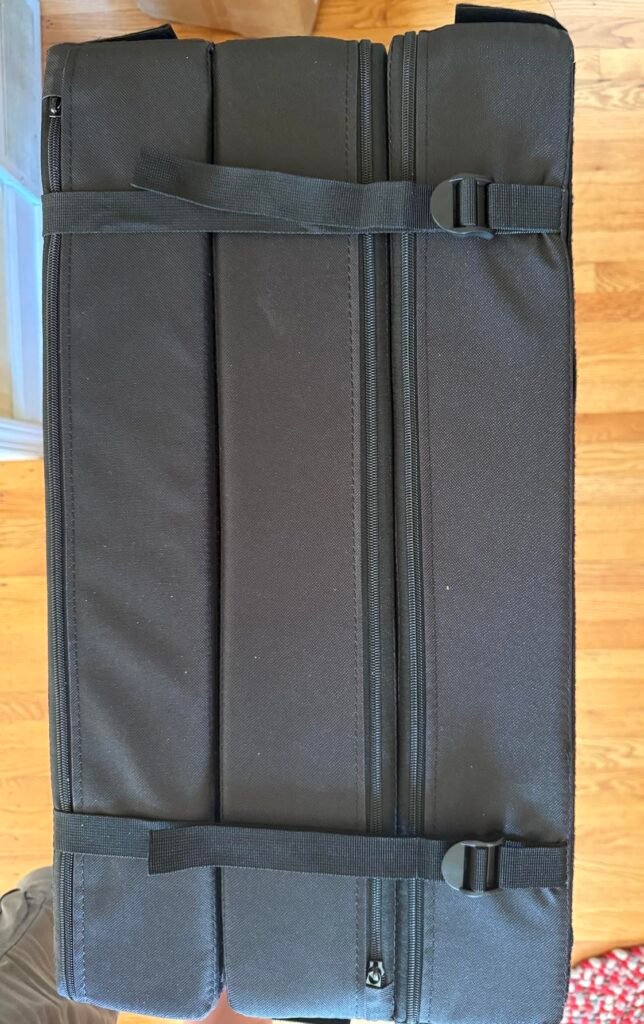
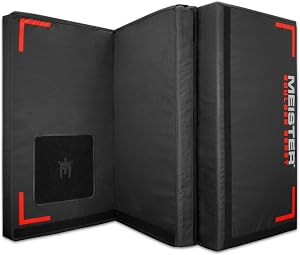
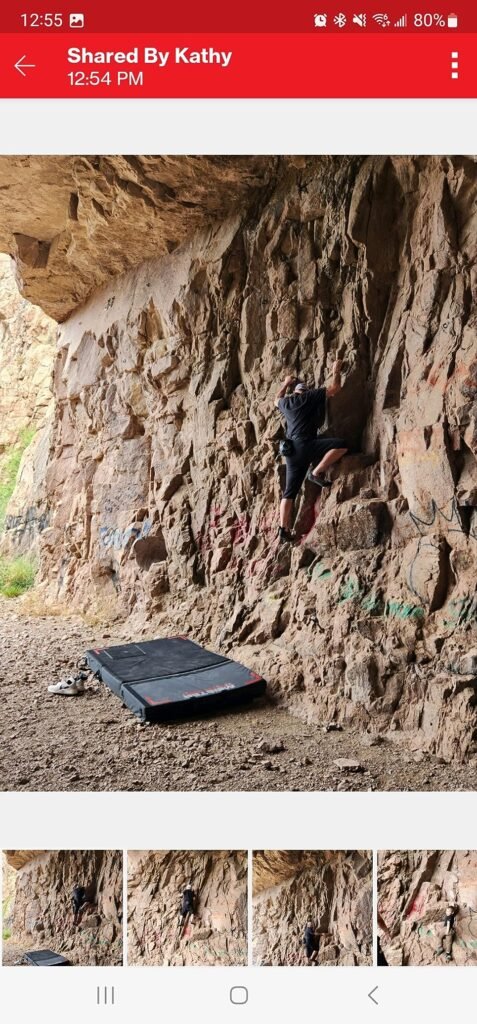
The Meister Boulder Beast XL targets climbers who want the biggest, most protective landing zone they can carry to the crag. At 72 by 44 inches when fully unfolded, this tri-fold pad provides the largest surface area in its class, which matters enormously when you are working highball problems or projecting moves with unpredictable fall trajectories. The extra coverage reduces the precision required from your spotter and gives you more margin for error on dynamic moves.
We may earn a commission when you buy through this link, at no additional cost to you.
The foam construction is where this pad genuinely separates itself. Each of the three panels contains four alternating layers of open and closed cell foam totaling 5 inches of padding depth. Open cell foam absorbs the initial impact energy from a fall, while closed cell foam prevents bottoming out on rocky or uneven ground. This layered approach delivers noticeably better protection than single-density pads, especially for falls from 15 feet or higher.
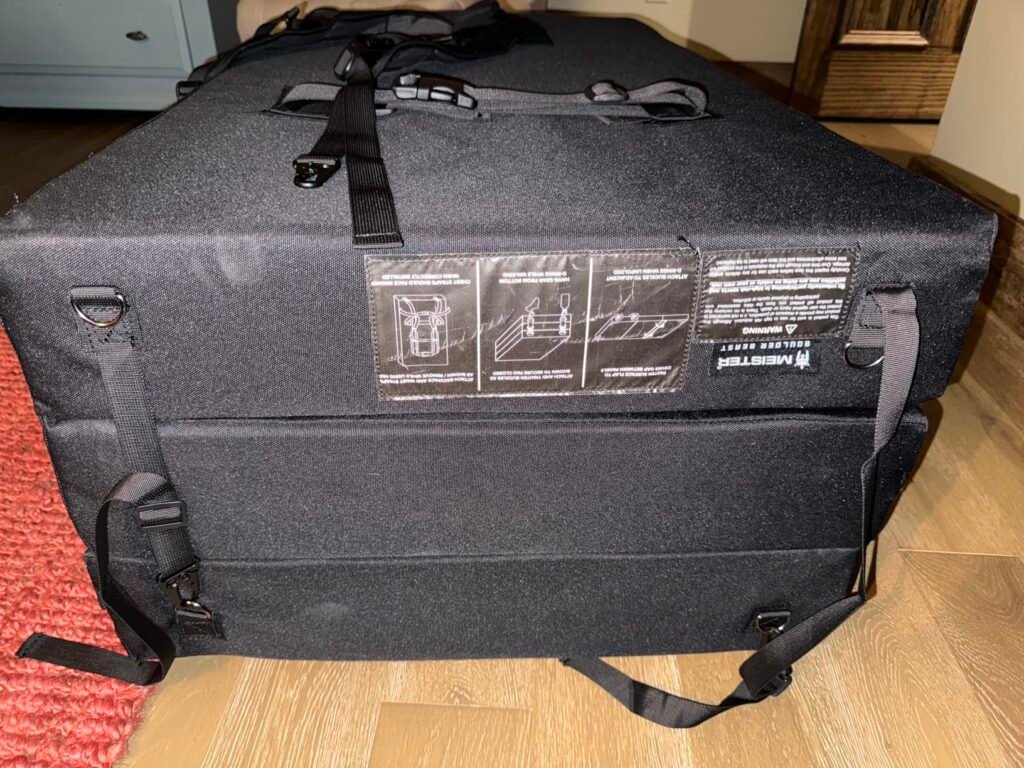
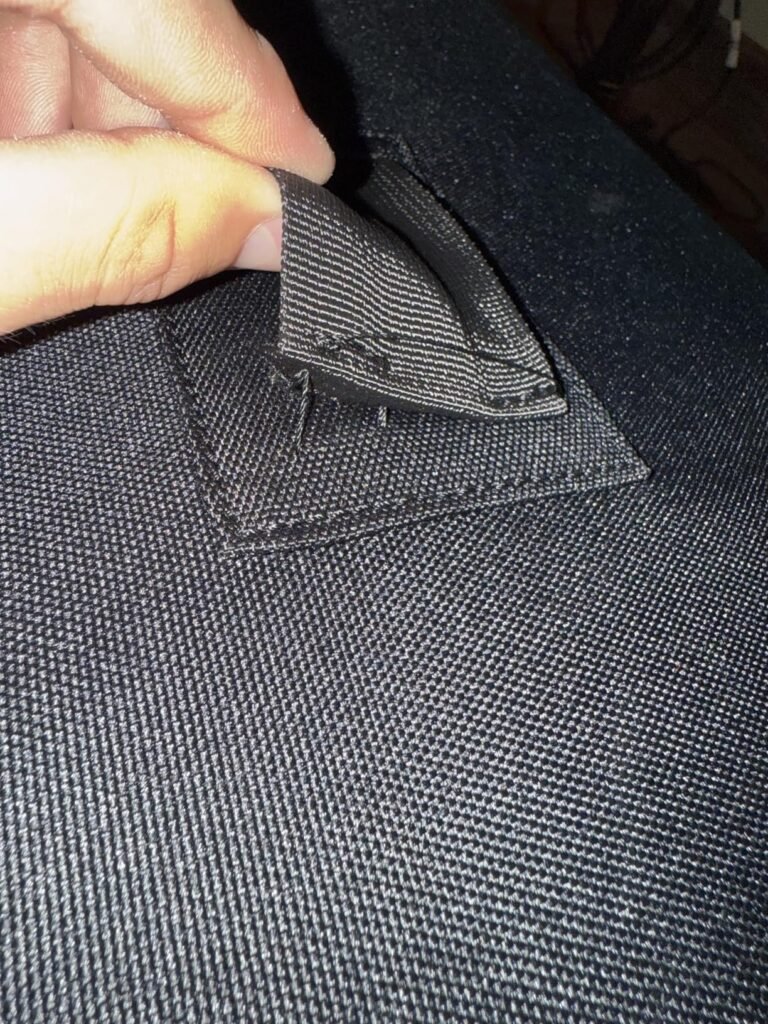
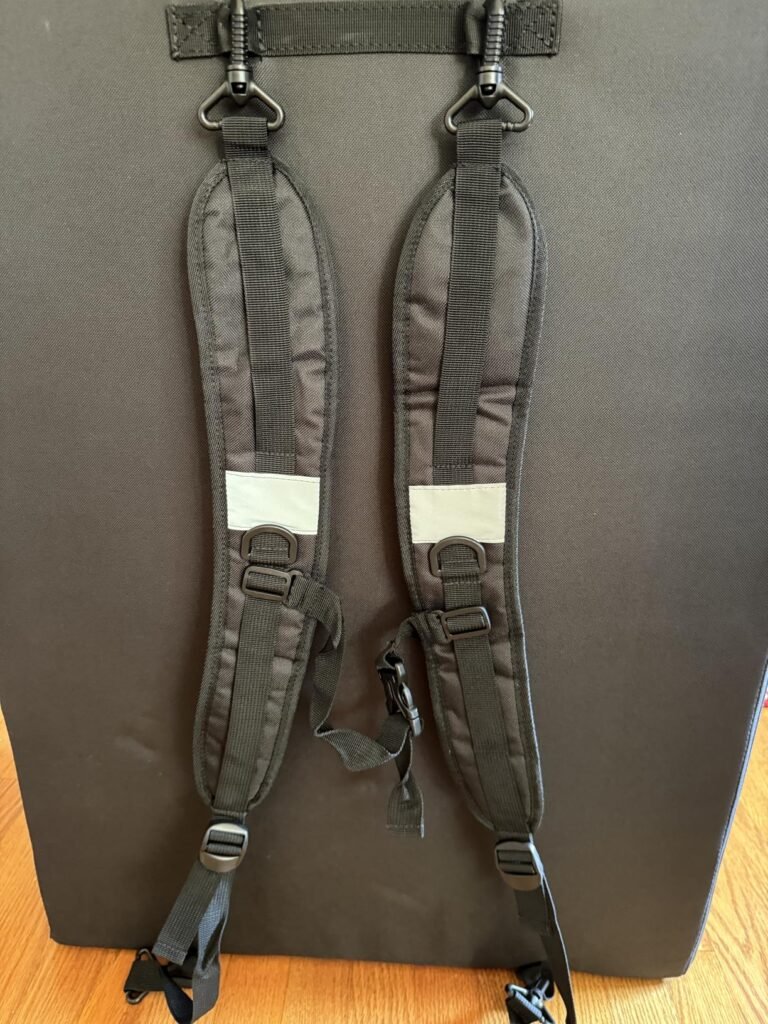
Carrying the Beast is manageable thanks to removable backpack straps with a waist belt and chest strap that distribute the pad’s substantial weight across your hips and shoulders during rocky approaches. Duffel-style handles provide an alternative carry method for shorter distances. When folded, the pad measures 44 by 24 by 15 inches, which is bulkier than lighter alternatives but still fits in most car trunks. Multiple gear loops on the top and bottom let you clip shoes, water bottles, and quickdraws to the pad for efficient approach hikes.
A 5-inch pad made from a single foam density will feel very different from a 5-inch pad with alternating open and closed cell layers. Open cell foam compresses gradually to absorb impact energy, while closed cell foam resists full compression to prevent you from hitting the ground. The four-layer construction in the Boulder Beast XL combines both properties, delivering a progressive deceleration that protects ankles and knees better than uniform foam of the same total thickness. When comparing pads, always look at layer composition, not just total depth.
Choose the Boulder Beast XL if you regularly climb highballs, want maximum protection as a primary pad, or need a single pad that can serve as a complete landing zone for smaller groups. The reinforced all-weather polyester exterior handles sharp rocks, tree roots, and wet conditions without tearing. The trade-off is the higher price and heavier carry weight compared to thinner supplemental pads. For serious outdoor boulderers who prioritize safety above all else, this delivers the most confidence-inspiring landing available.
Climbers who hike long distances to remote boulders and need to minimize pack weight should consider a lighter supplemental pad instead.
We may earn a commission when you buy through this link, at no additional cost to you.
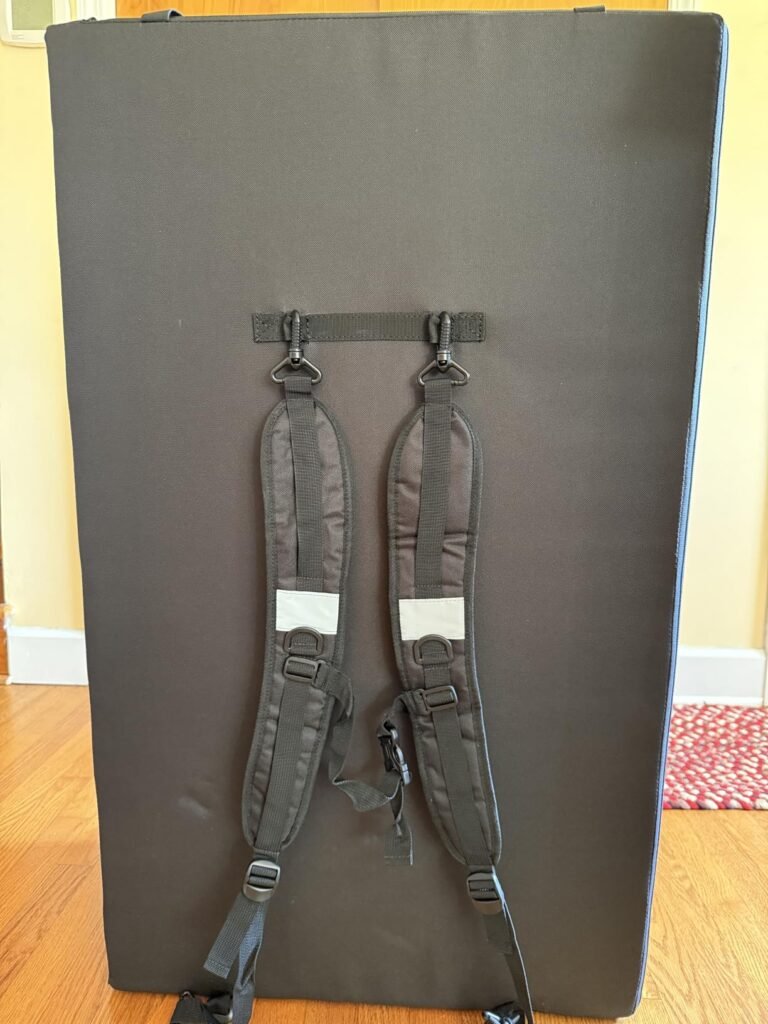
This tri-fold climbing pad targets climbers who need a lighter, more portable option for multi-pad setups or longer approach hikes. At just 9.9 pounds, it is significantly easier to carry over rocky terrain than heavier premium pads, which matters when your crag requires a 20-minute uphill hike with a pad on your back. The 71 by 39 inch unfolded landing area provides solid coverage for standard boulder problems while remaining manageable for a single person to position.
We may earn a commission when you buy through this link, at no additional cost to you.
The 600D Oxford fabric with an anti-slip surface is a practical choice for outdoor bouldering environments. The durable weave resists abrasion from rocks, gravel, and repeated folding, while the anti-slip texture helps keep the pad from sliding on smooth rock slabs or grassy slopes during falls. The 18D high-density pearl foam provides 4 inches of shock absorption with fast rebound characteristics, which helps the pad recover its shape quickly between falls during active projecting sessions.
The upgraded carrying system features wider, thicker adjustable shoulder straps and secure bands at the top and bottom that keep the pad stable during transport. This addresses a common frustration with budget pads where thin straps dig into shoulders and the pad shifts during hikes. The improved Velcro system along the fold seams keeps the pad flat and smooth when unfolded, eliminating the raised ridges that can create uneven landing surfaces on cheaper tri-fold designs.
Most experienced boulderers use two or more pads at the crag to cover larger landing zones and eliminate dangerous gaps between pads. A lighter supplemental pad like this 9.9-pound option works well as a second or third pad that extends coverage around the primary landing zone. It can also fill gaps between larger pads or cover tricky landing spots on sloped terrain. Building a multi-pad system with one thick primary pad and one or two lighter supplements often provides better overall protection than a single oversized pad.
Choose this pad if you want a lightweight supplemental crash pad for multi-pad setups, need something easy to carry on long approaches, or want a versatile mat that doubles for yoga and camping. The trade-off is the 4-inch foam depth, which provides less protection than the 5-inch Boulder Beast XL for highball falls. For standard-height bouldering problems and as a secondary pad in a group setup, this delivers strong value at a lower price point.
Climbers who exclusively project highball problems above 15 feet should prioritize a thicker primary pad with 5 inches of layered foam.
We may earn a commission when you buy through this link, at no additional cost to you.
A crash pad is the single most important piece of safety equipment for outdoor bouldering. The right pad protects your ankles, knees, and spine during falls, while the wrong one leaves you vulnerable to injury on rocky landings. The factors below break down what actually matters when selecting a pad for your climbing style and local crag conditions.
Landing surface area is the most visible specification on any crash pad and directly determines how much ground you cover beneath a boulder problem. Pads in this guide range from 71 by 39 inches to 72 by 44 inches when fully unfolded. While these numbers may seem similar on paper, the extra width on the Boulder Beast XL translates to meaningful additional coverage on either side of your expected fall zone, which becomes critical when you are working problems with lateral dynos or unpredictable swing falls.
Consider the types of problems you typically climb. Low-angle slabs and vertical faces with straightforward fall lines can be adequately covered by smaller pads. Overhanging caves, highball walls, and problems with traversing sequences benefit from the largest landing area you can practically carry. Also factor in the terrain beneath the boulder; uneven, rocky ground requires more coverage to ensure you do not land on exposed rocks at the pad edges.
Prioritize larger landing areas if you climb highballs or dynamic problems. A smaller pad is adequate for low-to-the-ground technical problems with predictable fall zones. Remember that you can always combine multiple smaller pads for larger coverage, but you cannot make a single small pad bigger.
Foam thickness determines how much impact energy the pad can absorb before you bottom out against the ground. The pads in this guide offer 4 to 5 inches of total foam depth. While one inch may not sound significant, it represents a 25 percent increase in protective material that can make the difference between a comfortable landing and a jarring impact on your joints during high falls.
Layer composition matters as much as total thickness. The Meister Boulder Beast XL uses four alternating layers of open and closed cell foam, which provides progressive deceleration during a fall. Open cell foam compresses easily to absorb initial impact energy, while closed cell foam resists full compression to prevent bottoming out. Single-density foam pads of the same thickness will feel harsher on high falls because they lack this progressive absorption characteristic.
Prioritize thicker, multi-layer foam if you regularly climb above 12 to 15 feet. For problems under 10 feet, a 4-inch single-density pad provides adequate protection. Always consider foam quality alongside thickness; a well-layered 4-inch pad can outperform a poorly constructed 5-inch pad in real fall scenarios.
Crash pads fold in three main configurations: bi-fold (two panels), tri-fold (three panels), and taco-style (single continuous fold). Both pads in this guide use tri-fold designs, which offer a good balance between compact folded size and flat unfolding. Tri-fold pads typically fold into a more manageable rectangular package for carrying but can develop slight ridges at the fold hinges that create uneven landing surfaces.
Hinge quality is critical for tri-fold pads. Poorly designed hinges create raised seams when the pad is unfolded, which can twist an ankle during a fall if you land directly on the fold line. The Tri-Fold Climbing Pad addresses this with an improved Velcro system that pulls the panels flat, while the Boulder Beast XL uses large hook-and-loop flaps along the sides to connect panels securely. When evaluating a tri-fold pad, check how flat the landing surface remains after repeated folding and unfolding cycles.
Choose tri-fold for the best balance of portability and coverage. If hinge flatness is a major concern, look for pads with robust connection systems that actively pull panels together rather than relying on gravity alone to keep the pad flat.
Carry weight directly affects how far you are willing to hike with a pad on your back. The Tri-Fold Climbing Pad at 9.9 pounds is notably lighter than the Boulder Beast XL, which trades portability for its larger size and thicker foam. For crags with short, flat approaches, weight matters less. For mountain bouldering areas with steep, rocky trails, every pound adds up over a 30-minute approach with a bulky pad on your back.
Strap quality and configuration are equally important. Thin, unpadded straps will dig into your shoulders within minutes on a steep approach, regardless of the pad’s total weight. Look for wide, padded shoulder straps with adjustable sternum and waist belts that transfer load to your hips. The Boulder Beast XL includes removable backpack straps with both waist and chest straps, while the Tri-Fold Climbing Pad features upgraded wider straps with secure top and bottom bands.
Match carry weight to your typical approach distance. If you hike more than 15 minutes to reach your boulders, prioritize lighter pads or invest in a comfortable strap system. For car-accessible crags, heavier pads with more protection are the smarter choice.
The outer fabric of a crash pad endures constant abrasion from rocks, gravel, dirt, and moisture. The Boulder Beast XL uses reinforced all-weather polyester designed to withstand harsh outdoor conditions, while the Tri-Fold Climbing Pad uses 600D Oxford fabric with an anti-slip surface. Both materials offer solid durability, but they differ in specific strengths. All-weather polyester excels at moisture resistance and UV stability, while 600D Oxford provides excellent abrasion resistance and a grippy texture that prevents the pad from sliding on smooth surfaces.
Bottom fabric durability is particularly important because the underside of the pad contacts the ground directly. Look for reinforced bottom panels or high-denier fabrics that resist tearing when dragged across sharp rocks. A pad with a worn-through bottom exposes the foam to moisture and debris, which degrades impact absorption over time and shortens the pad’s useful lifespan.
Prioritize heavy-duty fabric if you climb in areas with sharp granite, limestone, or volcanic rock. If your local crag has soft dirt or grass landings, lighter fabric is adequate. Always inspect the bottom panel periodically for wear and repair small tears before they expand.
Most experienced boulderers use two or more pads to create a continuous landing zone beneath complex problems. Pad connectivity features like hook-and-loop flaps, Velcro strips, or clip systems allow you to join multiple pads together to eliminate dangerous gaps where a foot or ankle could slip between pads during a fall. The Boulder Beast XL includes large hook-and-loop fastening flaps along the sides specifically designed for connecting to other pads.
When building a multi-pad system, consider how well your pads connect and whether the combined surface remains flat and gap-free. Mismatched pad heights or incompatible connection systems can create tripping hazards that are arguably more dangerous than no pad at all. Ideally, use pads from the same manufacturer or verify that connection systems are compatible before purchasing.
Prioritize connectivity features if you frequently climb with partners and combine pads. If you primarily solo boulder with a single pad, connectivity is less important and you can focus on maximizing the size and protection of your individual pad.
Many modern crash pads serve double duty beyond bouldering. The Boulder Beast XL doubles as a sleeping pad or camp bench during multi-day climbing trips, which adds genuine value for climbers who spend weekends at remote crags. The Tri-Fold Climbing Pad is marketed for yoga, dance practice, and camping use alongside bouldering, making it a versatile piece of gear for active lifestyles.
Gear storage features also contribute to versatility. The Boulder Beast XL includes multiple gear loops on the top and bottom for clipping shoes, water bottles, and climbing accessories, which streamlines approach hikes and keeps your gear organized at the crag. These small details add up during a full day of climbing when you are managing chalk bags, brushes, tape, and hydration.
Consider secondary uses if you camp at the crag or want a single piece of gear that serves multiple purposes. If you already have dedicated camping equipment, focus your crash pad budget purely on bouldering performance.
Position your crash pad directly beneath the crux of the boulder problem, anticipating the most likely fall trajectory rather than placing it directly under the climber’s starting position. For overhanging problems, the fall zone shifts outward from the wall, so place the pad further from the base than you might initially think. On sloped terrain, position the pad so the uphill edge is closest to the wall to catch falls that slide down the slope. Always clear the landing zone of rocks, sticks, and debris before unfolding the pad, and use the integrated shoe-cleaning carpet on the Boulder Beast XL to remove dirt from climbing shoes before getting on the rock.
When using multiple pads, overlap the edges by at least 6 to 8 inches and secure them together using the hook-and-loop connection flaps to eliminate gaps. Assign a dedicated spotter whose primary job is to guide the falling climber onto the center of the pad rather than trying to catch them. The spotter should keep their hands up and focus on redirecting the climber’s torso toward the pad center, which prevents head-first or feet-first landings at the pad edges. Never stand directly under the climber, as this puts you at risk of being crushed during a fall.
After each climbing session, shake out the pad to remove dirt, chalk, and small rocks that accumulate in the fabric and foam layers. Allow the pad to air dry completely before folding and storing it, as trapped moisture promotes mold growth and degrades foam integrity over time. Store the pad unfolded or loosely folded in a cool, dry location away from direct sunlight, which breaks down foam and fabric over extended periods. Inspect the bottom fabric and foam layers periodically for tears, compression damage, or water damage, and repair small holes promptly to prevent them from expanding.
Most quality crash pads range from 4 to 5 inches of total foam thickness. For standard bouldering problems under 12 feet, 4 inches of foam provides adequate protection. For highball problems above 15 feet, 5 inches of multi-layer foam delivers meaningfully better impact absorption and reduces the risk of bottoming out on rocky landings. Always prioritize foam layer composition alongside total thickness, as multi-layer pads outperform single-density pads of the same depth.
For most outdoor bouldering, two pads provide significantly better coverage and safety than one. A single large pad works for straightforward problems with predictable fall zones, but multi-pad setups eliminate dangerous gaps and cover wider landing areas for complex problems. Many experienced climbers use one thick primary pad and one lighter supplemental pad that extends coverage around the main landing zone.
Yes, but highball bouldering above 15 to 20 feet requires maximum protection. Use the thickest pad available with multi-layer foam construction, combine multiple pads to create a large continuous landing zone, and always have experienced spotters present. Falls from extreme heights generate significant impact force that can overwhelm thinner pads, so prioritize foam depth and landing area above all other considerations for highball sessions.
Look for pads with padded backpack straps, waist belts, and chest straps that distribute weight across your hips and shoulders rather than concentrating it on your shoulders alone. The Boulder Beast XL includes removable backpack straps with full harness features, while lighter pads like the Tri-Fold model reduce total carry weight to under 10 pounds. For very long approaches, consider a lighter supplemental pad or coordinate with climbing partners to share the carry load across multiple pads.
A quality crash pad typically lasts 3 to 7 years of regular use depending on frequency, terrain, and care. The foam gradually loses its impact absorption capacity over time, especially if the pad is stored compressed or exposed to moisture and UV light. The outer fabric usually shows wear first, particularly on the bottom panel. Replace your pad when the foam no longer rebounds after compression or when the bottom fabric develops holes that expose the foam to ground moisture.
Open cell foam compresses easily and absorbs impact energy gradually, providing a softer initial landing feel. Closed cell foam is denser and resists full compression, preventing you from bottoming out against the ground during high falls. The best crash pads combine both types in alternating layers, using open cell foam on top for energy absorption and closed cell foam on the bottom for ground protection. Single-density pads sacrifice one of these properties.
Yes, many crash pads double as camping mattresses, yoga mats, gymnastics landing pads, or general outdoor cushioning. The Boulder Beast XL specifically functions as a sleeping pad and camp bench, while the Tri-Fold Climbing Pad is designed for yoga, dance, and camping use alongside bouldering. The thick foam and durable fabric make crash pads versatile pieces of outdoor gear beyond their primary climbing purpose.
Shake out dirt and debris after each session, and wipe the fabric with a damp cloth for deeper cleaning. Avoid machine washing or submerging the pad in water, as this can saturate the foam and promote mold growth. Allow the pad to air dry completely before folding and storing. Periodically inspect the bottom fabric for tears and the foam for permanent compression damage. Store the pad loosely folded or flat in a dry, shaded location to maximize its lifespan.
The Meister Boulder Beast XL stands as the strongest overall choice for serious outdoor boulderers who prioritize maximum protection. Its 72 by 44 inch landing area, 5 inches of four-layer foam, and reinforced all-weather polyester construction deliver the most confidence-inspiring landing zone available in this comparison. The removable backpack harness, hook-and-loop pad connectors, and integrated shoe-cleaning carpet add practical features that improve the overall crag experience beyond raw impact protection.
For climbers who need a lighter, more portable option, the Tri-Fold Climbing Pad delivers solid performance at 9.9 pounds with a compact folded profile that makes long approaches more manageable. Its 600D Oxford fabric, anti-slip surface, and improved Velcro flat-lay system address common frustrations with budget pads. This pad works particularly well as a supplemental pad in multi-pad setups or as a primary pad for standard-height problems where extreme foam depth is less critical.
Your best decision starts with honestly assessing the types of problems you climb, the terrain at your local crags, and how far you typically hike with your gear. Prioritize foam thickness and landing area for highball and dynamic problems. Prioritize weight and portability for remote crags with long approaches. Either pad in this guide will meaningfully improve your safety and confidence at the crag when chosen to match your specific climbing needs.