Marfula Adjustable Beam
9.4Editor score8-foot beam length
4-inch competition width
Adjustable 9 to 17 inches
Steel triangle support
Find the right balance beams for 2026. We compare 10 standout options by build quality, useful features, owner feedback, value, and everyday trade-offs.
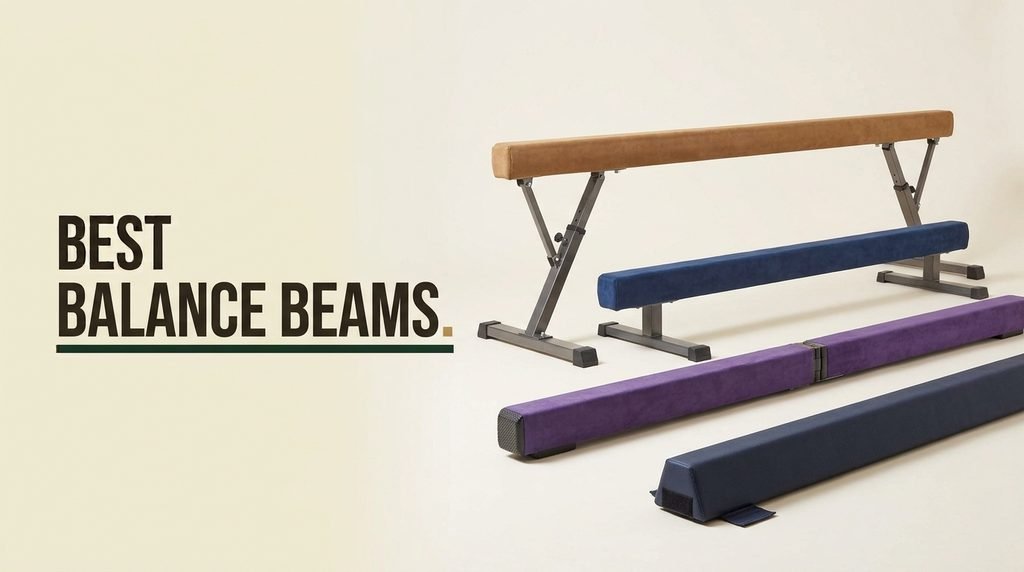
Find the right balance beams for 2026. We compare 10 standout models by the factors that matter most for home gymnastics training, including beam length and width, surface material, padding density, base stability, adjustable height options, weight capacity, portability, storage footprint, and how well each design supports the skills young gymnasts actually practice.
Balance beams for home use fall into three broad categories: low-profile folding floor beams, height-adjustable training beams with legs, and specialty beams for therapy or sensory play. The right choice depends on your gymnast’s skill level, available space, floor surface, and whether you want competition-width practice or an introduction to balance work.
This guide covers options from Marfula, FC FUNCHEER, FBSPORT, ZELUS, AIREX, and B. toys. Each review highlights real differences in construction, stability, and intended use so you can match the beam to your gymnast’s goals rather than guessing from similar-looking listings. Practical setup and safety notes are included throughout.
We compared 10 balance beams using the details that actually help a buyer decide: beam length and competition-standard 4-inch top width, core construction, padding density, cover material and grip, base stability, height adjustability, weight capacity, portability and storage, safety features like anti-slip bottoms, and overall value. The notes focus on practical trade-offs so each pick connects to how families and small gyms actually train young gymnasts at home, from first steps to competition-level skill work.

Compare key features, scores, and current prices side by side. A shorter feature list means fewer details were available, not necessarily fewer capabilities.




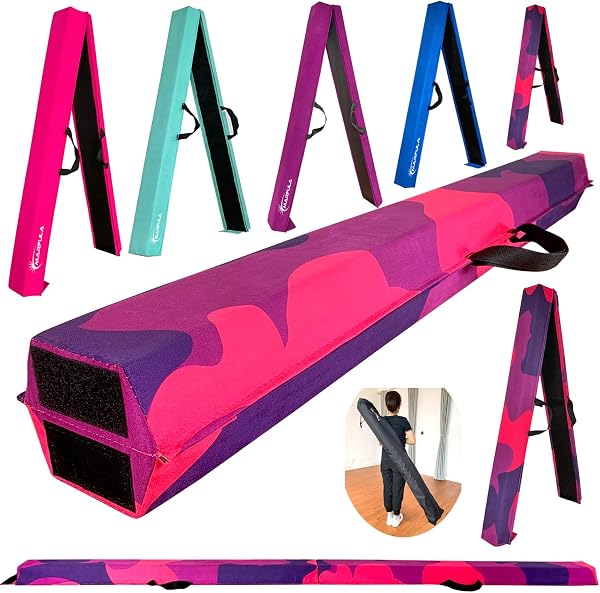
The Marfula Folding Gymnastics Beam gives families the flexibility to choose between 6, 8, and 9-foot lengths, letting you match the beam to your available training space and your gymnast's experience. The high-density EVA foam construction keeps the beam light enough for even very young children to drag out for practice, and the connectable hook-and-loop ends allow multiple beams to be joined for extended routines or group training sessions.
We may earn a commission when you buy through this link, at no additional cost to you.
The 4-inch top width matches competition standards, so skills practiced at home translate directly to the gym. A 6-inch base is wider than the top, which creates a stable triangular profile that resists tipping during active jumps and leaps. The suede cover provides consistent friction for grip, and the manufacturer notes it is designed not to fade over time, which keeps the beam looking fresh through many months of use.
The hook-and-loop system serves dual purposes. When the beam is folded for storage, the end hooks lock it closed so it does not open unexpectedly. When unfolded, the middle hook and loop keeps the sections straight and aligned. The anti-slip bottom holds the beam in place on common home flooring, and the carrying handle plus included bag make transport simple. Even very young children can move the beam without adult help.
A 6-foot beam fits in smaller rooms and works well for very young gymnasts who are just starting out with walks and poses. The 8-foot length matches most competition dimensions and provides enough space for leaps and acrobatic skills. A 9-foot beam gives extra room for extended routines and is useful when multiple children want to use the beam together. Consider ceiling height for jumps as well as floor length when planning your space.
This beam is best for buyers who want flexibility in length, easy portability, and a budget-friendly price point. The main tradeoff is that pure EVA foam is softer underfoot than a wood-core beam, which some advanced gymnasts find less realistic. For beginners, recreational gymnasts, and families who prioritize storage convenience, it delivers strong value. More serious trainees may prefer a wood-core option for the firmer landing feel.
Not the best choice for gymnasts who need the firmer landing feel of a wood-core beam.
We may earn a commission when you buy through this link, at no additional cost to you.
The Marfula Adjustable Gymnastic Balance Beam is designed to grow with a gymnast as their skills progress. Starting as a 9-inch floor beam for beginners, the structure then lifts to between 13 and 17 inches for more advanced work, which means a single purchase can serve a child from their first wobbly walks all the way through more challenging routines. For families with gymnasts who are moving beyond basic skills, this flexibility is a major advantage.
We may earn a commission when you buy through this link, at no additional cost to you.
Stability is the key difference between a budget beam and a serious training tool, and this one addresses it with a dual-triangle steel support structure. Four contact points under the beam bar help prevent the side-to-side wobble and up-and-down shake that can make raised beam work feel unsafe. The 4-inch top width matches regulation competition dimensions, so skills practiced at home translate directly to what gymnasts experience in a gym center.
The surface combines a dense wood core with a high-density EVA foam layer and a faux suede cover. The wood provides a firm, predictable landing feel, while the EVA cushions impact to protect ankles, knees, and hips during repeated practice. The suede cover offers enough friction for grip without being so rough that it causes discomfort on bare feet. Powder-coated steel legs with thick rubber coating resist rust and prevent sliding on hard floors.
Learning balance beam skills on the floor removes the fear of falling, which helps young gymnasts commit to new movements without hesitation. As confidence grows, slightly raising the beam adds a real consequence to balance errors, which sharpens focus and builds the mental toughness needed for competition. Having both heights available in a single piece of equipment means your gymnast can warm up low and progress higher within the same session.
This beam is best for families whose gymnast has outgrown pure floor beams and wants to practice at a more realistic height. The main tradeoffs are weight and storage: it does not fold flat, so you need dedicated space when it is set up and a plan for storing it when it is not. If your gymnast is still working on basic walks and poses, a lighter folding beam may be a better starting point. For intermediate skill development, this is one of the strongest home options available.
Not ideal for buyers with limited storage space who need a beam that folds compactly after use.
We may earn a commission when you buy through this link, at no additional cost to you.
The FC FUNCHEER 8FT Folding Balance Beam blends the stability of a wood core with the convenience of a folding design that stores in a closet or corner. At 7.7 pounds, it is light enough for a child to carry independently to the park, a friend's house, or a backyard practice area. The 8-foot length matches what competitive gymnasts train on, giving plenty of room for walks, turns, leaps, and basic acrobatic sequences.
We may earn a commission when you buy through this link, at no additional cost to you.
The construction uses a 50 percent wood core paired with 50 percent high-density EVA foam, which creates a firmer landing feel than pure foam beams while still offering some cushioning. The suede-like faux cover provides consistent friction for grip, and the 250-pound weight capacity means parents can also use the beam for low-impact balance work and stretching alongside their kids.
Portability features are well executed. A hidden double stainless hinge keeps the beam folding smoothly without exposed hardware that could catch on clothing or scrape bare feet. The anti-slip bottom covers the full base rather than just a few patches, so the beam stays put on carpet, hardwood, or tile. The included carrying bag makes it easy to take the beam to classes, parks, or sleepovers.
Pure foam beams compress noticeably under weight, which can mask small balance errors and build habits that do not translate to a solid competition beam. A wood core provides a firm, consistent landing surface that reflects what gymnasts feel in a gym, while the EVA foam layer on top prevents the harshness of a bare wood beam. This combination is widely preferred for home training once a gymnast moves beyond pure beginner skills.
This beam is best for families who need a dependable floor beam with a true wood core for a more realistic feel than foam-only options. The main limitation is that it only functions at floor height, so advanced gymnasts who want to practice raised beam work will need to supplement it with an adjustable model. For beginners through intermediate skill levels working on form and consistency, it delivers excellent value and portability.
Not suitable for gymnasts who need adjustable height to practice raised beam skills.
We may earn a commission when you buy through this link, at no additional cost to you.
The FBSPORT 8FT Adjustable Balance Beam addresses one of the most common frustrations in home gymnastics equipment: beams that only work at one height. This model switches between a floor mode for beginners and a raised mode with incremental adjustments, letting a single purchase cover a wide range of skill levels. For parents who do not want to buy a new beam every time their gymnast advances, this flexibility is a meaningful advantage.
We may earn a commission when you buy through this link, at no additional cost to you.
The 8-foot length and 4-inch balancing surface match what gymnasts encounter in competition and training facilities, so skills practiced at home transfer directly to the gym. The suede-like cover provides suitable grip for bare feet, and the padded surface is designed to resist flattening over time. This matters because beams that compress unevenly can throw off balance work and reduce the usefulness of the equipment within months of purchase.
The non-slip bottom keeps the beam stable on various floor surfaces, which is especially important in raised mode where any sliding could create a fall hazard. The sturdy construction supports confident practice of handsprings, cartwheels, handstands, leaps, jumps, walkovers, and kicks. The brand sells a compatible gymnastics bar for buyers who want to build a more complete home setup, which simplifies equipment matching.
Always place a landing mat or thick padding around the beam when training at raised heights, especially while a gymnast is learning new skills. Start new skills at floor level, then raise the beam only after the movement is consistent and confident. Check that all adjustment hardware is fully tightened before each session, and periodically inspect the base and legs for any loosening that could develop with repeated use.
This beam is best for families with a dedicated practice space and a gymnast who is ready to work on skills at various heights. The main consideration is that adjustable beams take more time to set up than folding floor beams, and the raised mode requires a flat, stable surface for safety. For buyers who want progression flexibility and plan to use the beam regularly, the investment pays off in training value over time.
Not suitable for buyers who need a beam that folds compactly for closet storage.
We may earn a commission when you buy through this link, at no additional cost to you.
The AIREX Balance Pad is the specialty option in this guide and serves a different purpose than traditional gymnastics beams. Designed primarily for physical therapy, rehabilitation, and clinical balance training, this foam beam is widely used by professionals working with patients recovering from foot, ankle, knee, or hip issues. It is also a solid choice for yoga, Pilates, and general core conditioning.
We may earn a commission when you buy through this link, at no additional cost to you.
The dual-sided design is clever: use the wide side down for a more stable base, or flip to the thin side for a greater proprioceptive challenge. This lets a single pad accommodate different users and progress levels without buying multiple pieces of equipment. The closed-cell foam construction repels moisture and odors, which makes it suitable for sweaty workouts and easy to clean with a quick rinse.
The non-slip, integrally molded skin surface provides reliable grip under bare feet and resists tearing over time. Unlike cheaper foam products, this pad maintains its shape through repeated use without sagging or developing curled edges, which keeps it safe and effective in commercial gyms, physical therapy clinics, and home environments. AIREX has decades of experience in specialty closed-cell foam, and the quality shows.
For adults recovering from injury, seniors working on fall prevention, athletes building ankle stability, or anyone adding proprioceptive challenge to a workout, a closed-cell foam pad like the AIREX is more appropriate than a rigid gymnastics beam. The unstable foam surface activates stabilizer muscles throughout the lower leg and core, which is exactly what therapy and conditioning programs target. Gymnastics beams are designed for a different purpose and would not provide the same training stimulus.
This pad is best for adults doing balance training, yoga, Pilates, or rehabilitation work, and for kids who benefit from vestibular and proprioceptive challenges. The important thing to understand is that it is not a replacement for a competition-style gymnastics beam. If your goal is skill development for a young gymnast, choose a dedicated balance beam. If your goal is balance training, therapy, or core work, this pad is one of the most trusted options available.
Not appropriate for young gymnasts practicing competition skills on a regulation beam surface.
We may earn a commission when you buy through this link, at no additional cost to you.
The FBSPORT 8/10ft Balance Beam offers an extended length option that is harder to find in home gymnastics equipment. The 10-foot version provides extra space for complex routines, multi-step leaps, and training sequences that need more room than a standard 8-foot beam. For older gymnasts or those preparing for competition routines that use the full beam length, this extra space is a real advantage.
We may earn a commission when you buy through this link, at no additional cost to you.
The PU leather surface is the main differentiator from suede-covered beams. It is highly durable, resists wear and tear, and wipes clean easily with a damp cloth, which keeps the beam looking fresh in sweaty training environments or households with multiple kids. The 4-inch top matches competition dimensions, and the wider 6-inch base provides a stable triangular profile that resists tipping during active practice.
Weight is a standout feature at just 5 pounds, making this one of the lightest beams in this guide. Kids can carry and set up the beam without adult help, which encourages more frequent practice. The reinforced double stitching on all sides adds durability where cheaper folding beams typically fail first, and the non-slip rubber bottom keeps the beam stationary on hard floors or low-pile carpet.
Suede-covered beams more closely replicate the feel of regulation competition beams, which is why many serious gymnasts prefer them. PU leather is more durable and significantly easier to clean, which matters for shared equipment or kids who sweat during practice. If your gymnast is training for competition, lean toward suede. If maintenance and durability matter more than exact competition feel, PU leather is a sensible choice.
This beam is best for buyers who want length options beyond the standard 8 feet, or who prefer a wipe-clean leather surface over suede. The main consideration is that PU leather provides slightly different friction than suede, which some gymnasts find less confidence-inspiring for grip. For practice environments where cleanliness is a priority and extra length is useful, this beam delivers strong value in a very portable package.
Not ideal for gymnasts who want a suede surface that exactly matches competition beam feel.
We may earn a commission when you buy through this link, at no additional cost to you.
The B. toys Balance Beam Set takes a completely different approach from traditional gymnastics beams. Rather than a single long beam, this set includes 10 modular beam sections and 6 sensory stepping stones that connect in countless combinations. For young children ages 3 and up, this flexibility turns balance practice into a creative obstacle course that keeps engagement high across many play sessions.
We may earn a commission when you buy through this link, at no additional cost to you.
Assembly is designed for kids: pieces match up and connect to the foot pads with a satisfying click, which lets children help build the course themselves. This hands-on element adds spatial reasoning and planning to the physical benefits of balance play. The modular design means the layout can change daily, preventing the boredom that often sets in with a fixed-shape beam.
The sensory stepping stones add a tactile element that complements the balance beam sections. Different textures and raised features engage the feet in ways that smooth beams cannot, which supports sensory integration development alongside motor skill building. The whole system encourages coordination, balance, and full-body movement in a format that feels like play rather than training.
Fixed balance beams teach gymnastics-specific skills like straight-line walks and standard poses. Modular sets teach broader motor planning skills because children must adapt to constantly changing layouts, which engages problem-solving along with physical coordination. For developmental play in early childhood, this variety is genuinely valuable and keeps kids engaged longer than static equipment.
This set is best for parents with young children who want to encourage active movement without a specialized gymnastics focus. It is also an excellent choice for preschool and daycare settings where multiple kids need to play together. The main limitation is that it is not a substitute for a real gymnastics beam. If your child is already working on competition skills, choose a dedicated 8-foot beam. For introducing balance and movement to younger kids, this set is one of the most engaging options available.
Not suitable for competitive gymnastics training or practicing specific beam routines.
We may earn a commission when you buy through this link, at no additional cost to you.
The FC FUNCHEER Adjustable Balance Beam offers one of the most sophisticated adjustment systems in home gymnastics equipment. Its 4-knob quick-adjust mechanism lets you change between three distinct heights without tools: 17 cm for beginners, 32 cm for intermediate skills, and 42 cm for near-competition practice. The ability to progress through heights as skills develop makes this a long-term investment rather than equipment that gets outgrown.
We may earn a commission when you buy through this link, at no additional cost to you.
Stability comes from a triangular support structure combined with fully rubber-wrapped steel legs that maximize floor contact and prevent sliding during practice. The 350-pound weight capacity is high enough to accommodate both children and adults, which means parents can use the beam for low-impact balance work alongside their kids. The powder-coated steel frame resists rust and holds up to repeated adjustment cycles.
The beam top uses a triple-layer construction: a solid wood core for stability, shock-absorbing EVA foam for impact reduction, and a premium faux suede cover for consistent grip. This combination provides the firm landing feel of competition beams while cushioning joints during repeated practice. The 8-foot length and 4-inch width match exact competition dimensions, so skills built at home transfer directly to the gym.
Each new height introduces a greater fall consequence and should be introduced gradually. Spend extensive time at each lower height building confidence and consistency before raising the beam. Keep padded mats around the beam at raised heights, and reinforce that new skills should always be learned at floor level first. The three-height system of this beam supports this progression naturally, which helps young gymnasts build mental toughness without unnecessary risk.
This beam is best for serious young gymnasts whose families want to support progressive skill development at home. The investment makes sense when a child is dedicated to gymnastics training rather than casual balance play. The main tradeoff is storage: an adjustable beam with legs takes significantly more space than a folding floor beam. If storage is tight, consider whether you can leave the beam set up in a dedicated practice area.
Not ideal for buyers with very limited storage space or casual gymnasts who do not need adjustable heights.
We may earn a commission when you buy through this link, at no additional cost to you.
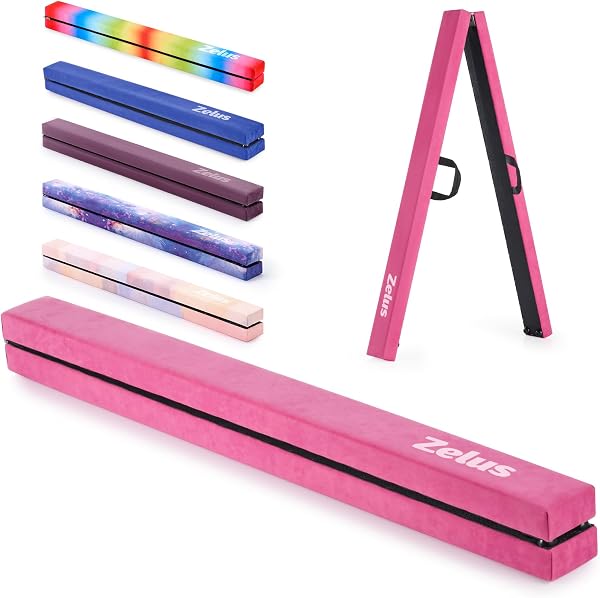
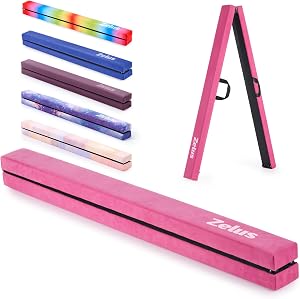
The ZELUS 8' Folding Gymnastics Balance Beam combines a solid wood core with a water-resistant suede cover, making it suitable for sweaty training sessions or environments where occasional moisture is a concern. The water-resistant surface wipes clean easily and resists damage from the inevitable spills, perspiration, and humidity that come with regular use. For families who train hard or share equipment, this durability matters.
We may earn a commission when you buy through this link, at no additional cost to you.
The construction uses a wood core wrapped in high-density EVA foam, which provides the firm landing feel of a wood beam with the joint protection of foam cushioning. This combination is widely preferred for serious practice because it closely replicates the feel of competition beams while reducing the impact that can lead to overuse injuries during repeated training. The suede cover offers consistent grip without being harsh on bare feet.
The hinge connection in the middle of the beam ensures the two folded halves lock together securely when extended, which eliminates the risk of the beam folding during use. Integrated carry handles make transport straightforward, and at 11 pounds, the beam is manageable for parents and older children to move independently. The non-slip textured bottom keeps the beam in place on common home flooring without needing additional mats.
Gymnastics training generates significant perspiration, especially during long practice sessions. Beams without water-resistant covers can develop odors, staining, and even surface degradation over time as moisture seeps into the padding. A water-resistant suede cover like the one on the ZELUS beam resists these issues and extends the useful life of the equipment, which is particularly valuable in humid climates or heavily used family practice areas.
This beam is best for buyers who want a durable floor beam that can handle regular, intense practice without showing wear quickly. The main consideration is that it is heavier than pure foam folding beams, which may matter if your gymnast needs to carry it independently. For a dedicated home practice setup where durability and realistic feel are priorities, this beam delivers strong long-term value.
Not suitable for gymnasts who need adjustable height to practice raised beam skills.
We may earn a commission when you buy through this link, at no additional cost to you.
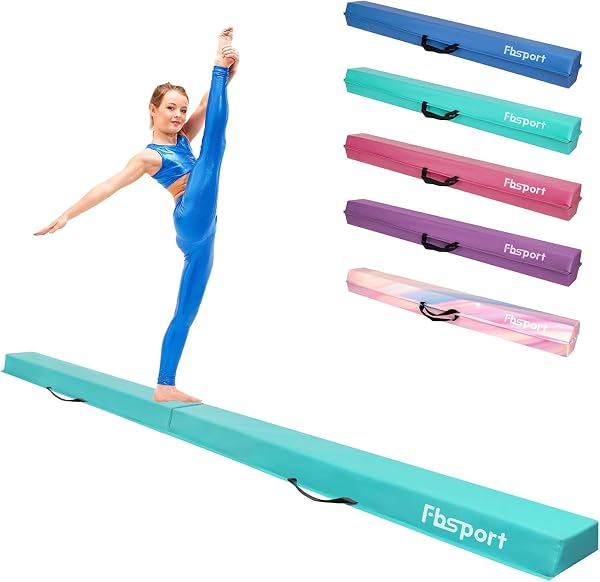
The FBSPORT Suede Folding Beam rounds out this guide with length flexibility and a competition-style suede cover at an accessible price. Available in 8, 9, and 9.5-foot lengths, this beam lets buyers match the equipment to their training space and the complexity of routines being practiced. The extra length options are particularly useful for older gymnasts who need room for extended skill sequences.
We may earn a commission when you buy through this link, at no additional cost to you.
The 4-inch top width matches regulation competition dimensions, while the 6-inch base width creates a stable triangular profile that resists tipping. The suede-like cover provides the friction and feel that gymnasts expect from competition beams, which helps home-practiced skills translate smoothly to the gym environment. The high-density EVA foam core cushions landings without compressing excessively over time.
At just 5 pounds, this beam is one of the lightest in the guide, making it easy for kids to carry and set up independently. The reinforced double stitching on all sides prevents the seam failures that often develop in cheaper folding beams, and the non-slip rubber bottom keeps the beam planted during active practice. The included carrying bag protects the beam during transport and simplifies storage when not in use.
Longer beams give gymnasts room to practice full-length routines without running out of beam partway through a sequence. For young gymnasts just learning walks and basic poses, 8 feet is plenty. For older gymnasts working on connected skills, leap combinations, or competition-style routines, 9 or 9.5 feet provides a more realistic practice environment. Just make sure your available floor space can comfortably accommodate the extra length plus safe clearance around the beam.
This beam is best for buyers who want a competition-style suede surface in a lightweight folding design with length options. The main tradeoff is that pure EVA foam is softer underfoot than a wood-core beam, which some advanced gymnasts find less realistic for landing feel. For beginners through intermediate skill levels, especially in families that need storage flexibility and portability, this beam delivers excellent value with a professional-looking surface.
Not ideal for serious trainees who need the firmer feel of a wood-core beam.
We may earn a commission when you buy through this link, at no additional cost to you.
Buying a balance beam involves more than picking the one that looks sturdiest. The right choice depends on your gymnast’s age and skill level, available space, flooring type, intended use, and budget. This section breaks down the factors that actually determine whether a beam will support real training progress or quickly end up in storage.
Floor beams sit directly on the ground and typically range from 2 to 4 inches tall. They are the safest starting point for young gymnasts and beginners because the fall consequence is minimal, which encourages confident practice of new skills. Models like the Marfula Folding Foam Beam, FC FUNCHEER Folding Beam, ZELUS Folding Beam, and FBSPORT Suede Folding Beam fall into this category and work well for the vast majority of home practice.
Adjustable beams with legs lift the practice surface anywhere from 9 to 17 inches off the ground, which more closely replicates competition conditions and introduces a greater fall consequence that sharpens focus. The Marfula Adjustable Beam, FBSPORT Adjustable Beam, and FC FUNCHEER Adjustable Beam offer this capability. These models cost more and require more storage space, but they support skill progression that pure floor beams cannot.
If your gymnast is under age 8 or just starting out, a floor beam is almost always the right choice. For gymnasts who have outgrown pure floor work and want to build competition-ready skills, an adjustable beam is worth the investment. Some families own both: a lightweight folding beam for everyday practice and an adjustable beam for serious training sessions.
Competition beams are 4 inches wide, and most quality home beams match this dimension so that skills practiced at home feel the same as skills performed in the gym. Any beam that advertises a 4-inch top width is giving your gymnast the correct surface area to build accurate muscle memory. Avoid beams significantly wider or narrower than 4 inches if your goal is skill development for competitive gymnastics.
Length options typically range from 6 to 10 feet. A 6-foot beam fits in smaller rooms and works for very young children or basic balance practice. The 8-foot length is the most popular choice because it matches common training beam dimensions and accommodates most skills young gymnasts learn. Longer 9 or 10-foot beams give room for extended routines and are useful for older gymnasts or group training situations.
Match the length to both your gymnast’s needs and your available practice space. Make sure to allow at least 2 feet of clearance on each end for safe dismounts, plus adequate ceiling height for any jumps or leaps you plan to practice.
Beam cores fall into two main categories: pure foam and wood core with foam padding. Pure foam beams, typically made of high-density EVA, are lightweight, portable, and gentle on joints during landings. They work well for beginners and casual practice but compress slightly under weight, which can mask small balance errors and feel less realistic than competition beams. The Marfula Folding Foam Beam and FBSPORT Suede Folding Beam use this construction.
Wood core beams with EVA foam padding provide a firmer, more consistent landing surface that closely replicates competition conditions. The wood prevents the compression that can affect pure foam beams, while the foam layer protects joints from excessive impact. The FC FUNCHEER Folding Beam, ZELUS Folding Beam, and the beam tops on adjustable models typically use this construction. Serious young gymnasts generally benefit from the firmer feel.
Surface materials include faux suede, PU leather, and specialty closed-cell foam. Suede provides the most authentic competition feel but shows wear faster than leather. PU leather is more durable and easier to clean but has slightly different friction characteristics. Choose suede for competition preparation and leather for maximum durability in high-use environments.
A beam that wobbles or slides during practice is both frustrating and dangerous. The base width should be wider than the top to create a stable triangular profile. Most quality beams feature a 6-inch base paired with a 4-inch top, which prevents tipping during active jumps and leaps. Beams with equal top and base widths are inherently less stable and should generally be avoided.
Anti-slip bottom coverage is equally important. Look for beams with full-length rubber or textured non-slip material rather than small pads in a few spots. Full coverage keeps the beam planted on carpet, hardwood, tile, and low-pile rugs without requiring additional mats. For adjustable beams with legs, rubber-wrapped feet are essential for both stability and floor protection on hard surfaces.
Check your intended floor surface before buying. Hardwood and tile floors generally need the best anti-slip features, while thick carpet can mask base quality issues. If you plan to use the beam on multiple surfaces, prioritize beams with proven stability across different flooring types.
Folding beams typically weigh between 5 and 15 pounds, which makes them easy to move and store. Models under 10 pounds, like the FBSPORT Suede Folding Beam at 5 pounds and the Marfula Folding Foam Beam, can be carried by young children independently, which encourages more frequent practice. Heavier models like adjustable beams require two people to move but offer stability advantages during use.
Storage footprint varies dramatically. Folding beams collapse to about half their extended length and fit in closets, under beds, or in corners when not in use. Adjustable beams with legs are generally not foldable and need dedicated storage space, which can be a problem in small homes or shared practice areas. Carrying bags, included with many folding beams, simplify both storage and transport.
If storage space is limited, prioritize a lightweight folding beam even if it means some tradeoffs in realism or adjustability. If you have a dedicated practice area where the beam can stay set up, a heavier adjustable beam becomes a more practical choice.
Weight capacity ratings range from around 150 pounds for basic beams to 350 pounds for heavy-duty adjustable models. For young gymnasts, almost any beam will support them, but higher capacity ratings generally indicate stronger construction that will hold up longer under repeated use. Parents who want to use the beam alongside their kids for balance work and stretching should look for ratings of at least 250 pounds.
Durability also depends on construction details beyond weight capacity. Double stitching, reinforced seams, powder-coated steel components, and hidden hinges all contribute to a beam that will last through years of practice. Cheaper beams often fail at seams, hinges, or anti-slip bottoms within months of heavy use, which eliminates any cost savings.
For light recreational use by a single child, basic beams are usually fine. For serious training, shared equipment, or family use that includes adults, invest in a model with higher weight capacity and reinforced construction. The additional cost typically pays off in longer product life.
Set up your beam in a space with at least 3 feet of clearance on each end and both sides for safe dismounts and avoiding furniture. For raised adjustable beams, place landing mats or thick padding around the entire perimeter, especially while new skills are being learned. Always start new skills at floor level before progressing to any raised height, and have an adult spotter present when kids are learning challenging movements like handsprings or back walkovers.
Keep the beam clean to extend its life and maintain performance. Wipe suede or leather surfaces with a slightly damp cloth after sweaty practice sessions and allow them to air dry completely before folding and storing. Avoid harsh cleaners or saturating the beam with water, which can damage the padding or cover. For folding beams, inspect the hinges and anti-slip bottom periodically for wear, and tighten any loose hardware on adjustable models before each training session.
Store folding beams flat or standing upright in a dry location away from direct sunlight and heat sources, which can degrade foam and surface materials over time. If you own an adjustable beam that stays set up, keep it in a stable location where it will not be bumped or shifted. For long-term storage, use the included carrying bag or cover the beam to protect it from dust. With proper care, a quality balance beam can serve a family for many years of practice.
Most quality home balance beams are suitable for children ages 3 and up, though specific skills should match the child's development. Very young children benefit from low floor beams or modular play sets like the B. toys system that encourage general balance and coordination. Older children ages 6 and up with gymnastics training can safely use adjustable beams with proper supervision and padding.
The standard competition balance beam is 4 inches wide, and most quality home beams match this dimension. Training on a 4-inch beam at home ensures that skills translate directly to the competition environment. Wider beams make skills easier but build habits that do not transfer, while narrower beams add unnecessary difficulty for most training purposes.
Folding beams are better for storage, portability, and beginner skill work at floor level. Adjustable beams are better for progressive skill development and competition preparation because they allow practice at raised heights. Many serious gymnasts eventually benefit from owning both types of beams for different training purposes.
For floor beams, a thin gymnastics mat or firm foam pad underneath can protect your flooring and add minor cushioning. For adjustable beams at raised heights, place thick landing mats around the entire perimeter of the beam, especially while new skills are being learned. The higher the beam, the more padding you need around it.
Yes, adults can use most home balance beams for balance training, yoga, Pilates, and physical therapy work, provided the weight capacity accommodates them. Look for beams rated at 250 pounds or higher if adults will use the equipment regularly. The AIREX Balance Pad is specifically designed for adult therapy and conditioning use.
Choose a beam with a full anti-slip bottom rather than small pads in a few spots. On very smooth floors like hardwood or tile, placing a thin yoga mat or rubber-backed rug under the beam adds extra grip. For adjustable beams, make sure the rubber-wrapped feet are in good condition and contact the floor evenly across all legs.
Beginners should start on a floor beam that is only 2 to 4 inches tall. This minimizes fall consequences and encourages confident practice of new skills without fear. As skills become consistent, gymnasts can progress to raised beams in gradual increments, typically starting around 9 inches before moving to competition heights.
Yes, most balance beams work well on carpet, and the carpet actually adds some cushioning. However, very thick or plush carpet can create slight instability by letting the beam sink unevenly. For adjustable beams, carpet usually provides good grip for the rubber feet, but check that all legs make full contact for stable raised-height practice.
For young children only, any beam with a 150-pound capacity is sufficient. For older children or if parents want to use the beam for their own balance work, look for 250 pounds or higher. Heavy-duty models like the FC FUNCHEER Adjustable Beam support up to 350 pounds, which accommodates adult use and multiple children sharing the equipment.
Wipe the suede surface with a slightly damp cloth after sweaty practice sessions and allow it to air dry completely before folding or storing. Avoid soaking the beam or using harsh cleaners, which can damage the padding and cover. For stubborn marks, a soft brush designed for suede can help lift dirt without damaging the material.
The Marfula Adjustable Gymnastic Balance Beam earns the top spot in this guide for its combination of floor and raised modes, competition-standard 4-inch width, and sturdy triangular support structure. For gymnasts who want to progress from basic skills to more challenging raised beam work without buying new equipment, this adjustable design delivers long-term value in a single purchase.
For buyers with different priorities, the Marfula Folding Foam Beam offers excellent value and multiple length options in a lightweight package that stores easily. The FC FUNCHEER Adjustable Beam provides heavy-duty construction with three distinct height levels for serious trainees. The B. toys Balance Beam Set introduces balance play to young children in an engaging modular format, while the AIREX Balance Pad serves adults doing therapy, yoga, or core work.
Your final decision should come down to your gymnast's age and skill level, the space you have available for practice and storage, and whether you need adjustable heights or just a reliable floor beam. For most families with young gymnasts under age 8, a quality folding floor beam offers the best balance of safety, portability, and value. For gymnasts advancing to competition-level skills, an adjustable beam becomes a worthwhile investment. Any beam in this guide can support real training progress when matched thoughtfully to the user and the practice environment.