Smart Steps Trend
9.2Editor scoreSeated walker design
6+ months age
Three-position height
Folds flat easily
Find the right baby walkers for 2026. We compare 10 standout options by build quality, useful features, owner feedback, value, and everyday trade-offs.
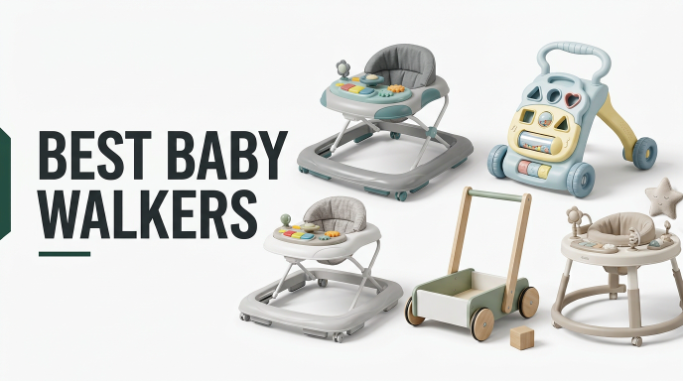
Find the right baby walker for your little one in 2026. We compare 10 standout models by the factors that matter most for early mobility: safety design, height adjustability, wheel type, activity features, developmental value, floor protection, storage convenience, materials, and everyday value for the price parents actually pay.
Baby walkers fall into two very different categories that address different developmental stages. Seated walkers give infants who can sit upright a mobile activity center with a supportive seat, while push walkers help toddlers practice their first independent steps with a stable handle to grip. The right choice depends on your baby’s age, stability, and how you plan to use it.
This guide covers seated walkers with removable trays, wooden Montessori-style push walkers, musical activity centers, and 2-in-1 designs that transition from sitting to walking play. Whether you need something for a six-month-old just starting to sit up or a one-year-old taking wobbly first steps, the picks below match different budgets and developmental goals.
We compared 10 baby walkers using the details that genuinely help a parent decide: safety features like non-slip bases and wheel design, height adjustability, seat construction on seated models, handle stability on push models, materials and finishes, developmental features and activity toys, floor protection, folding and storage design, owner ratings, and value at each price point. The notes focus on practical trade-offs so each pick connects to how babies actually use these products at different developmental stages.


Compare key features, scores, and current prices side by side. A shorter feature list means fewer details were available, not necessarily fewer capabilities.


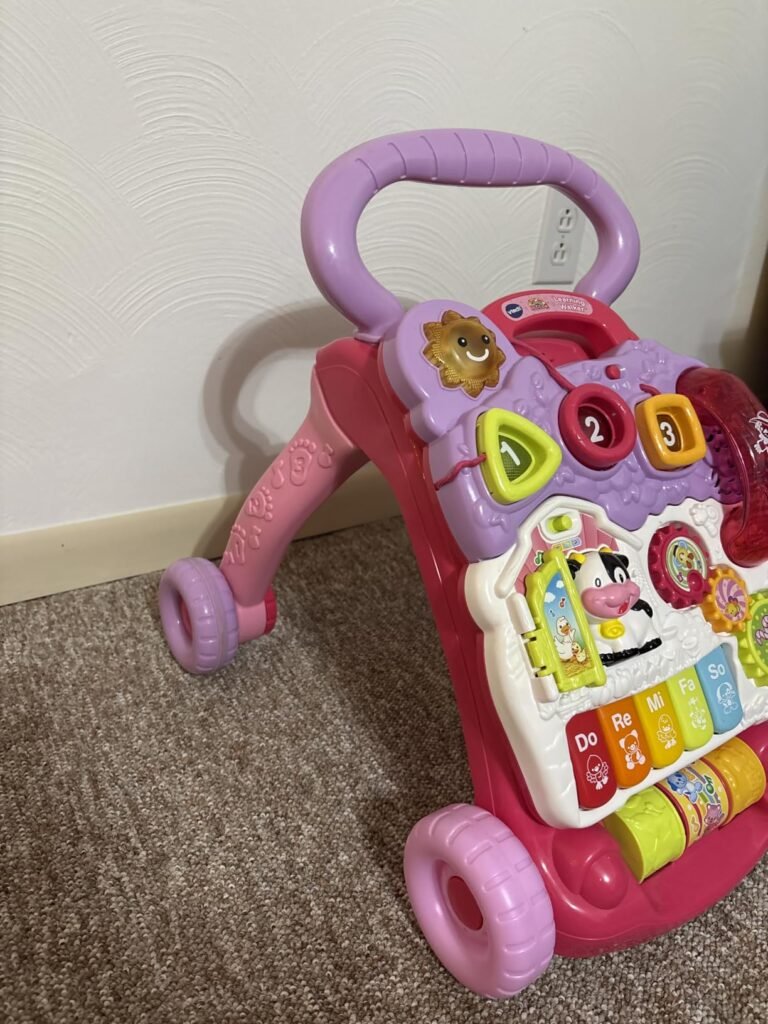
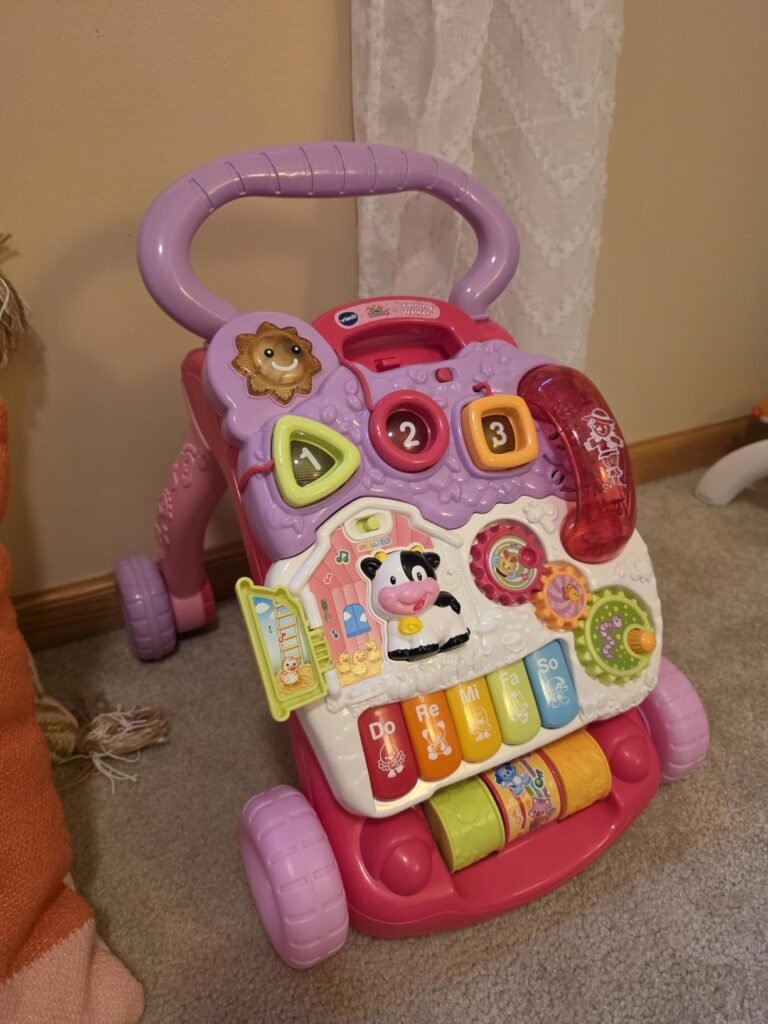
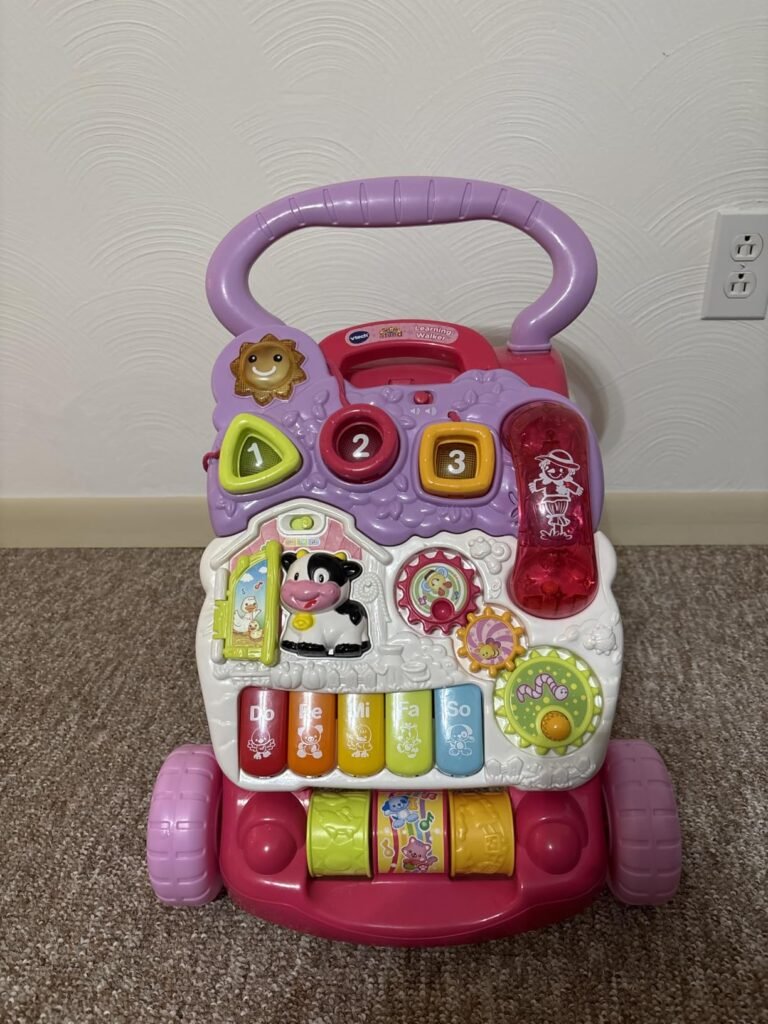
The VTech Sit-to-Stand consistently ranks as one of the highest-rated push walkers on the market, and its design shows why. It targets babies around nine months and older who have started pulling themselves up to standing and are ready to practice their first assisted steps. The two-speed control lets parents match the resistance to the baby's growing walking confidence.
We may earn a commission when you buy through this link, at no additional cost to you.
The removable activity panel is the standout feature that extends this walker’s useful life. Babies who cannot yet stand can play with the panel on the floor as a self-contained activity center featuring five piano keys, a play telephone handset, shape sorters, light-up buttons, and colorful spinning rollers. When your baby is ready to walk, the panel snaps back onto the sturdy walker frame for on-the-go entertainment.
The educational activities are well-designed for the target age range. The piano keys teach cause-and-effect while developing hand-eye coordination, the shape sorters introduce early problem-solving concepts, and the phone handset encourages imaginative role-play. This combination of physical development support and cognitive engagement makes each play session productive as well as entertaining.
First-time walkers benefit from a slower walker that provides more resistance and moves at a steadier pace. As balance and coordination improve, faster movement becomes more manageable. The two-speed control adapts to this progression, letting the same walker serve confidence-building early attempts and more energetic later cruising without requiring you to buy a different toy for each stage.
This is the top pick for parents whose babies are showing interest in pulling up and cruising along furniture. The push walker design actively encourages the transition to independent walking rather than substituting for it. If your baby is not yet cruising, consider a seated walker first and add the VTech when standing skills develop.
Babies under 9 months who cannot yet pull themselves to standing position.
We may earn a commission when you buy through this link, at no additional cost to you.
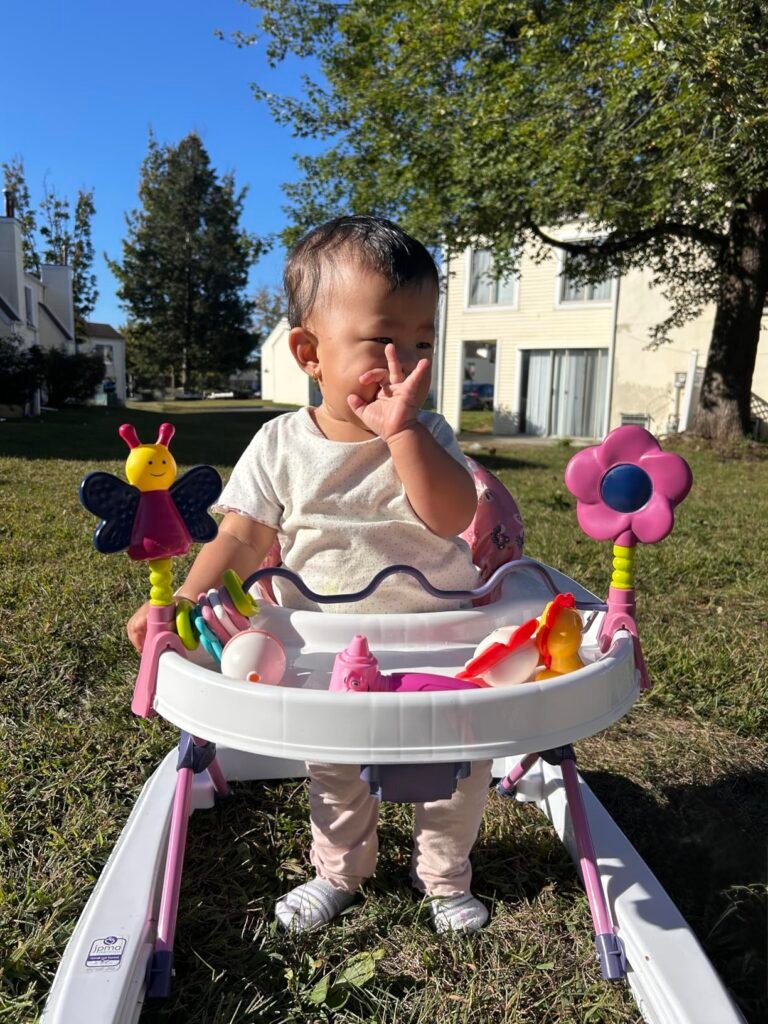
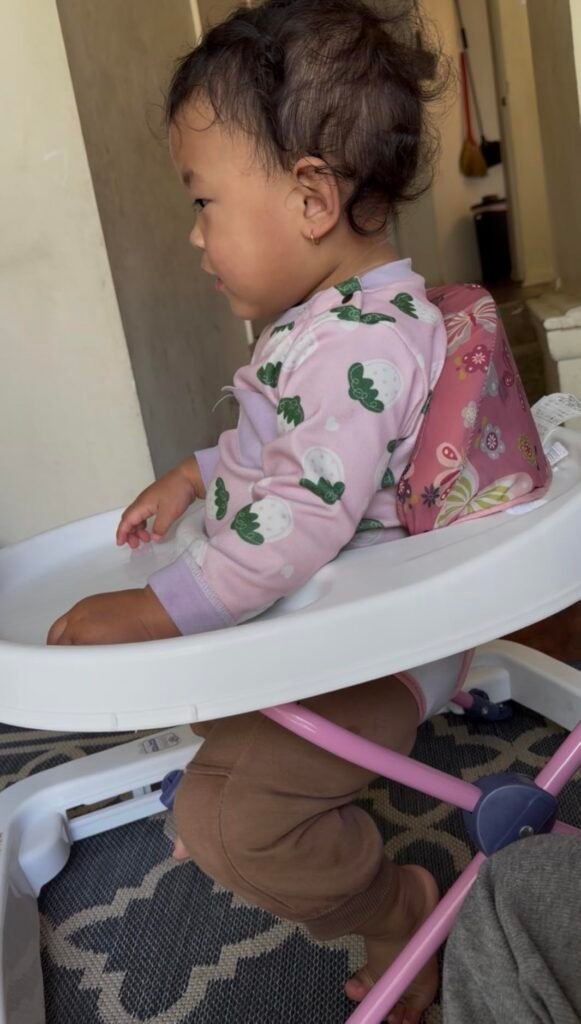
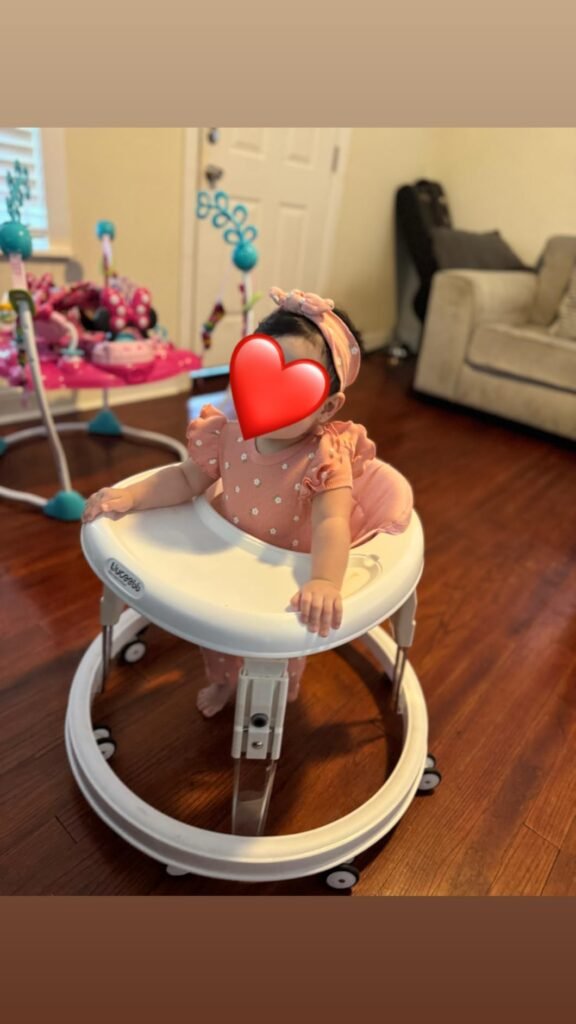
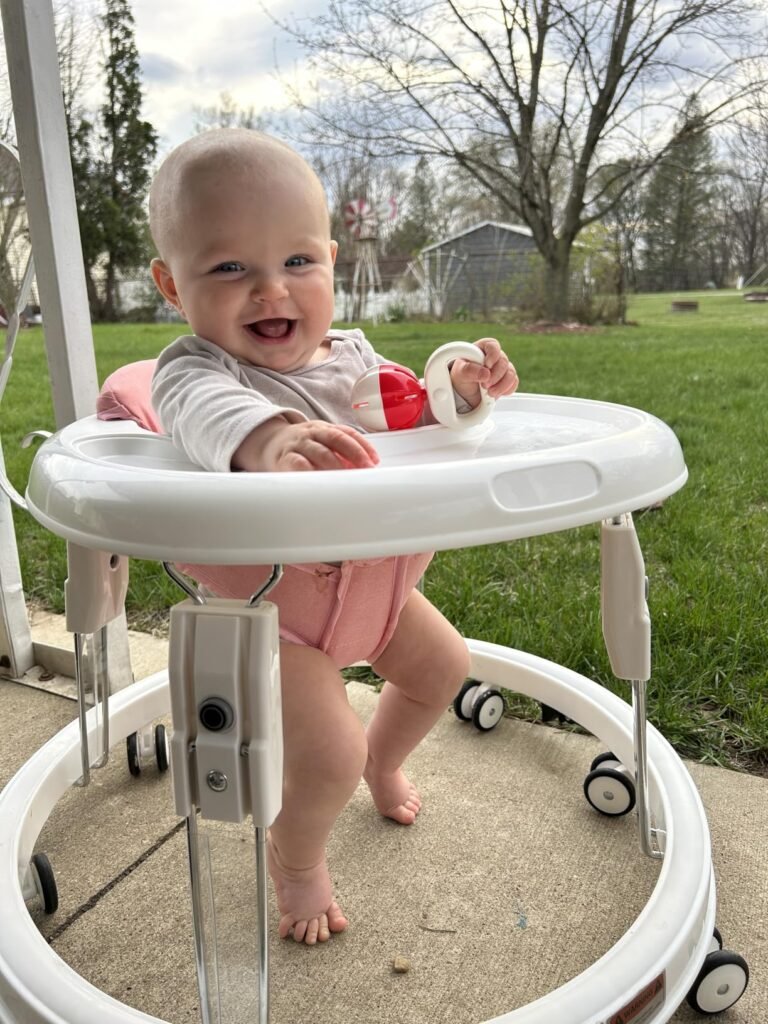
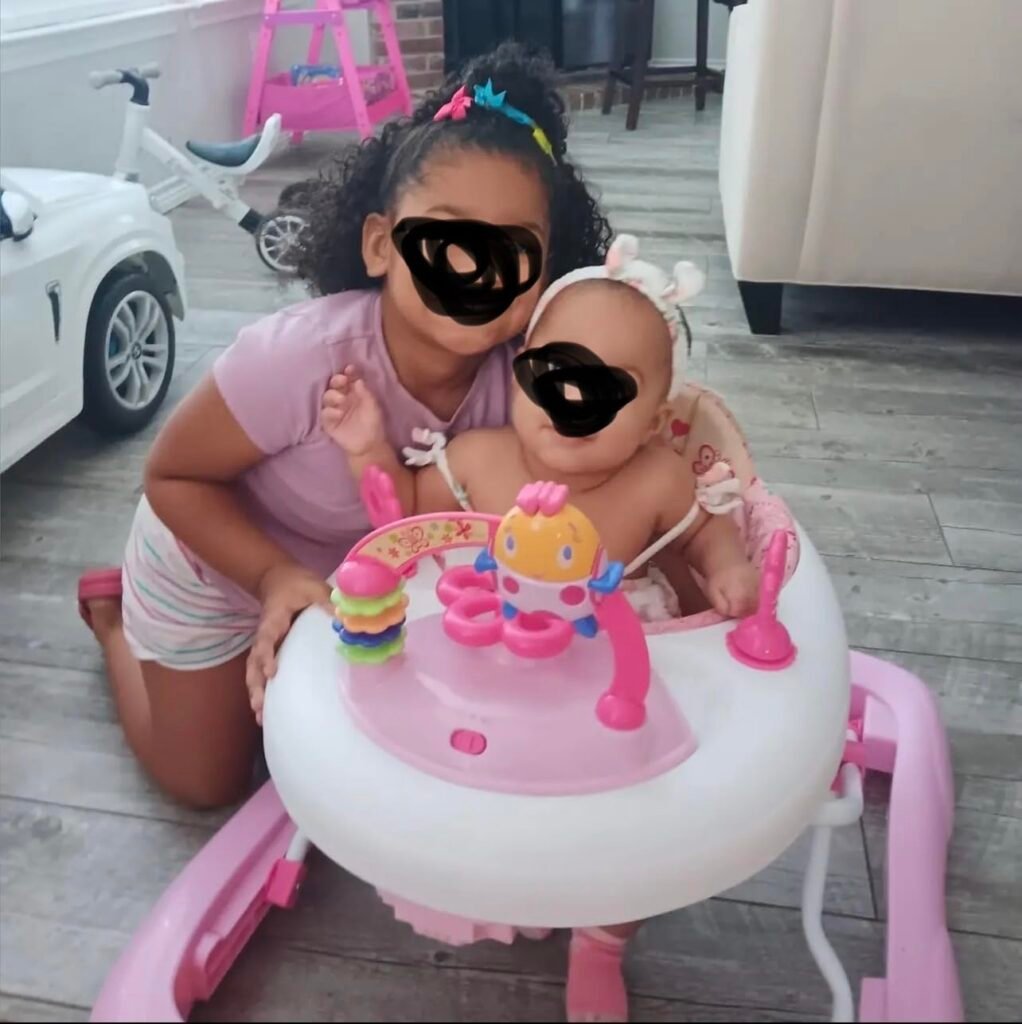
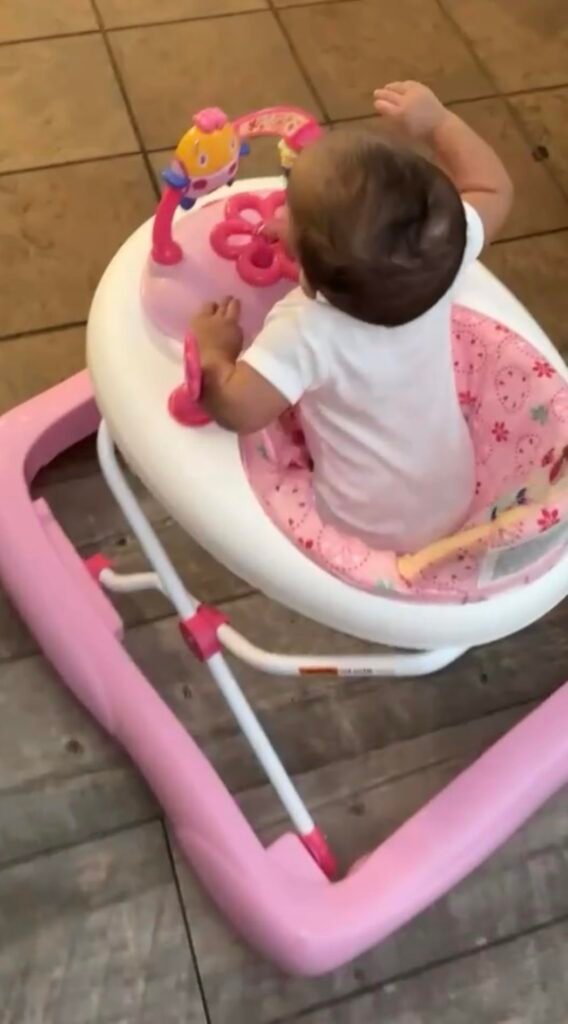
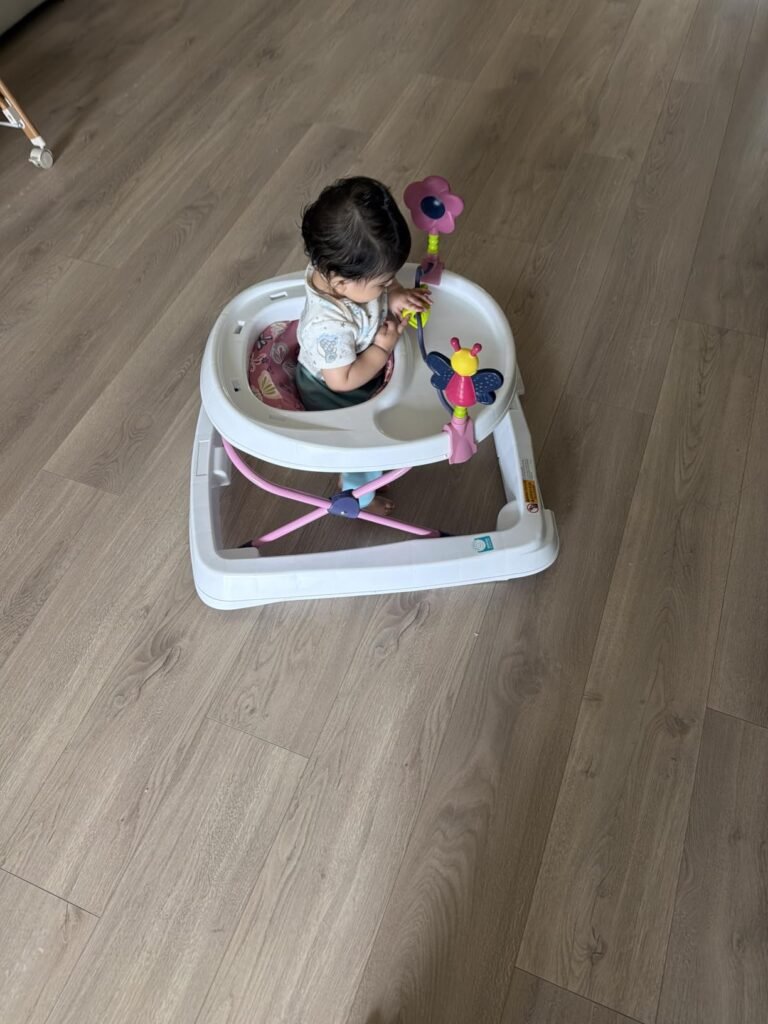
The Smart Steps Trend targets parents who want a traditional seated walker that gives babies six months and up a safe, mobile perch from which to explore their environment. The combination of a padded high-back seat, a removable toy bar, and a spacious tray delivers everything a young sitter needs for extended play sessions in one place.
We may earn a commission when you buy through this link, at no additional cost to you.
The three-position height adjustment is genuinely useful because babies grow quickly during the walker-appropriate months. Being able to raise the seat as your child gets taller extends the useful life of the walker and ensures the feet reach the ground properly for effective propulsion. The high-back padded seat provides real neck and back support for babies who are still developing their sitting strength.
The wide-based frame provides superior stability compared to narrower designs, which reduces the tipping risk when babies lean sideways or grab for something. The multi-directional front wheels let babies steer intuitively in any direction, though this also means babies can accelerate quickly on smooth hardwood floors. The removable toy bar and large tray double as a self-contained activity center when the walker is stationary.
A wider walker base creates a larger footprint that resists tipping when the baby leans forward, sideways, or backward. This is especially important on transitions between floor surfaces or when the baby reaches for something outside the tray. Extra-wide bases also help prevent the walker from fitting through narrow doorways, which is a helpful safety feature for parents worried about babies rolling into hazardous rooms.
This walker suits parents who prefer a classic seated design and have carpeted or textured floors that naturally slow the walker down. If you have all-hardwood floors or want a push walker that encourages independent standing, look at models like the VTech Sit-to-Stand or the Fisher-Price Panda that support the transition to unsupported walking.
Homes with stairs that lack proper baby gates, or parents who prefer push walkers that encourage independent standing.
We may earn a commission when you buy through this link, at no additional cost to you.
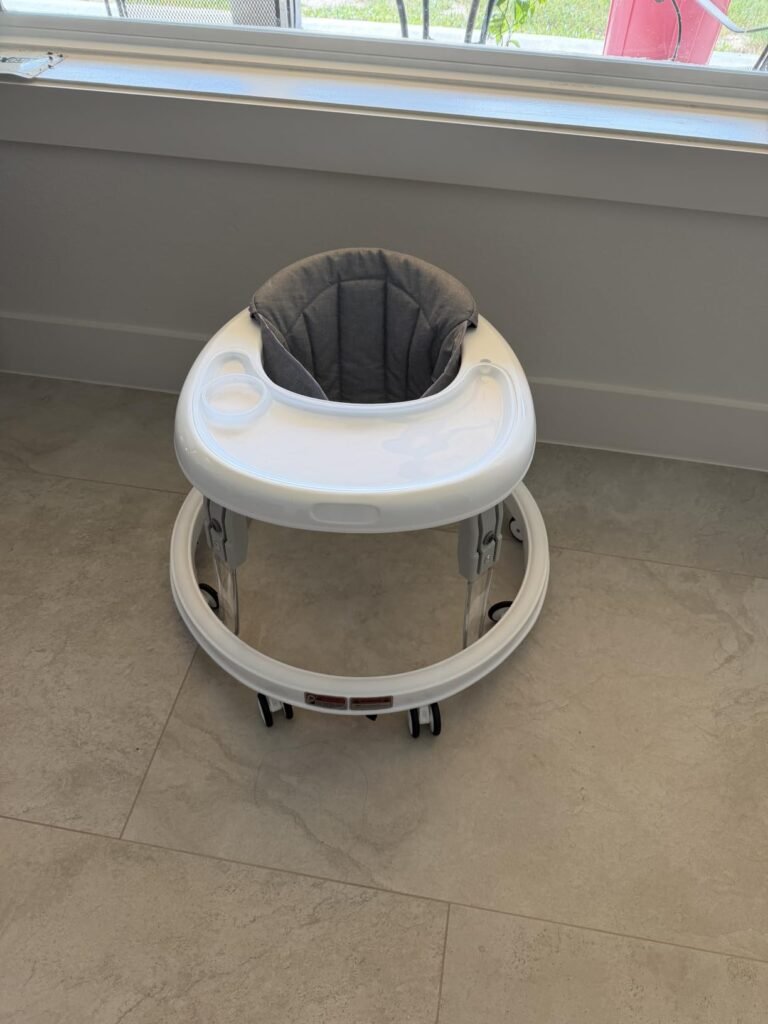
This seated walker addresses one of the biggest weaknesses of basic walker designs: limited height adjustment range. The combination of three frame heights and four seat heights gives you 12 possible configurations, ensuring your baby's feet reach the floor properly regardless of leg length or growth stage. The one-touch button design makes changes fast enough to adjust between sessions if needed.
We may earn a commission when you buy through this link, at no additional cost to you.
The safety brake feature is genuinely useful for parents who want the flexibility to convert the walker into a stationary activity center. Locking the brakes stops the walker from rolling, which is particularly helpful during mealtime when the baby uses the removable dinner plate. This dual functionality means a single purchase handles both feeding and mobile play use cases.
The full wrap-around seat cushion is a thoughtful design choice that reduces the gap between the baby’s legs and prevents slipping through. Tightly sewn construction with high load capacity supports babies as they grow, and the durable materials hold up to daily use. The 360-degree swivel wheels let babies steer in any direction with easy propulsion.
For a walker to work correctly and safely, your baby’s feet need to touch the floor with just the toes and ball of the foot, not flat-footed. This gives babies enough leverage to push off effectively while preventing them from moving too fast. Proper height adjustment also helps develop correct walking posture rather than encouraging tiptoe walking, which can become a habit if the walker is set too tall.
This walker suits parents who value maximum adjustability and want a single product that serves as both walker and activity center. The extra features add complexity compared to simpler models, but for parents planning to use the walker daily over several months, the flexibility justifies the tradeoff.
Parents who want the simplest possible setup with minimal adjustment complexity.
We may earn a commission when you buy through this link, at no additional cost to you.
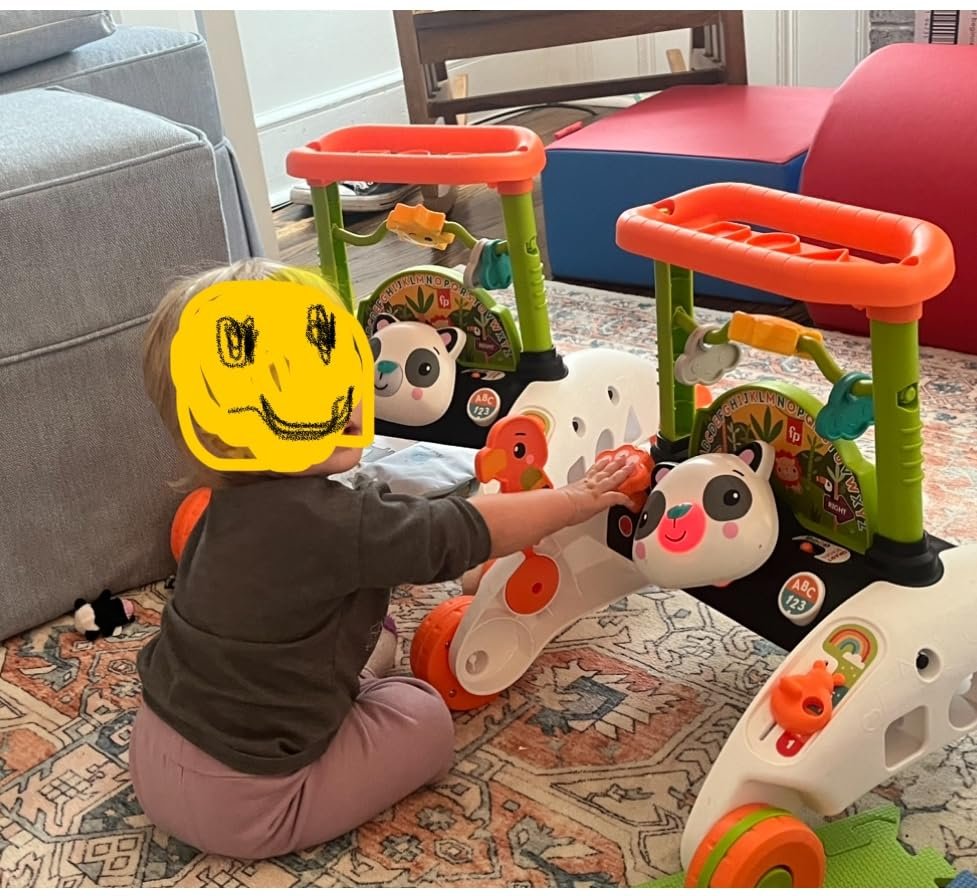
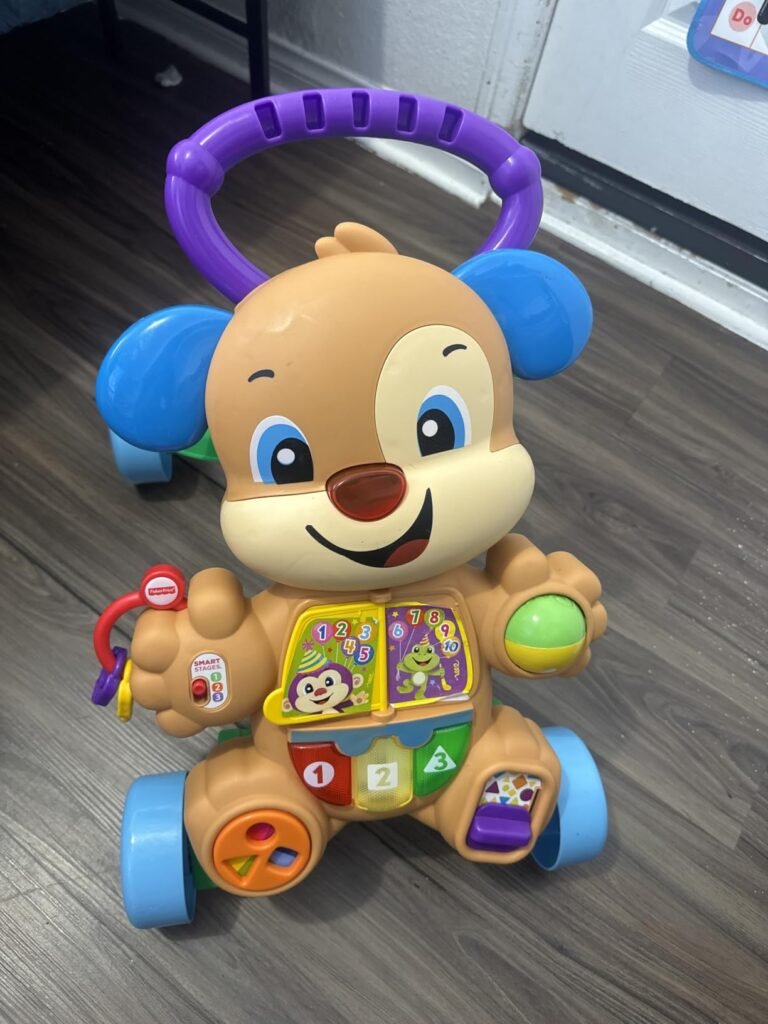
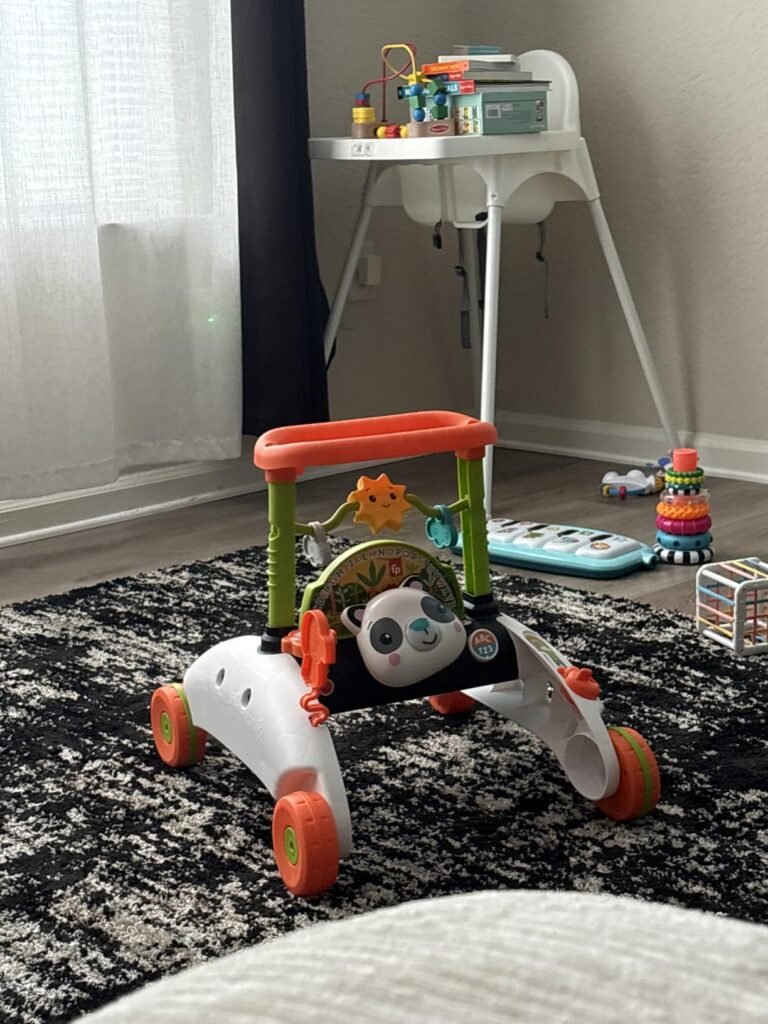
The Fisher-Price Panda walker earns its high owner rating by growing with babies from six months through age three, making it one of the longest-lasting walkers in this category. The two-sided design lets babies play from either side, so young sitters can access the activity panel while older toddlers can push the walker for cruising practice from the handle side.
We may earn a commission when you buy through this link, at no additional cost to you.
The Steady Speed wheels address one of the most common complaints about push walkers: moving too fast for beginning walkers and causing tipping or bumps. These specially designed wheels provide resistance that keeps the pace slow enough for confidence building without frustrating older toddlers who want to move faster as their balance improves.
The three Smart Stages learning levels adapt to your child’s developing abilities. Level one introduces simple sounds and phrases for young babies, level two adds more complex vocabulary and counting for toddlers, and level three encourages interactive play and imagination for older children. The panda steering wheel with a light-up nose, ABC and 123 buttons, and shape blocks provide over 10 different activities.
Smart Stages toys adapt content to different developmental levels through a simple switch on the toy. Younger babies hear basic sounds and single-word labels, while older children hear more complex phrases, questions, and interactive prompts. This means the same toy stays age-appropriate as your child develops rather than becoming too simple within a few months. Parents can also switch back to earlier levels if a child is not ready for advanced content.
This is a smart long-term investment for parents wanting maximum value from a single walker purchase. The extended age range and Smart Stages progression mean the walker stays engaging as your child develops rather than being outgrown quickly. Families with limited storage space should measure carefully since the walker footprint is larger than compact models.
Families with very limited floor space who need compact walker designs.
We may earn a commission when you buy through this link, at no additional cost to you.
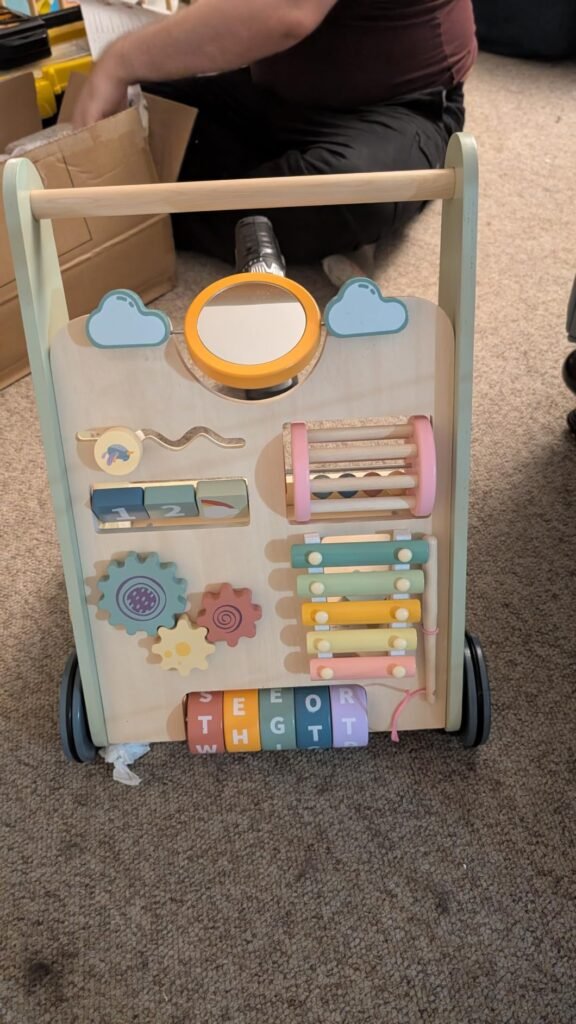
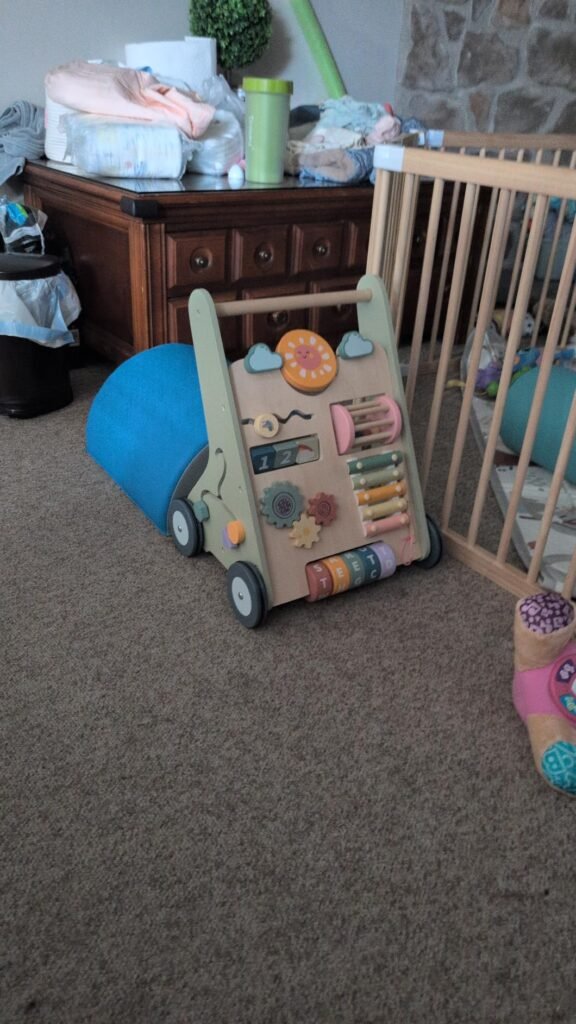
The Bautia wooden walker offers parents who prefer natural materials a solid alternative to plastic walkers without breaking the bank. Crafted from natural wood with smoothed edges and rounded corners, the design prioritizes both aesthetic warmth and physical safety for babies around ten to twelve months who are working on their first independent steps.
We may earn a commission when you buy through this link, at no additional cost to you.
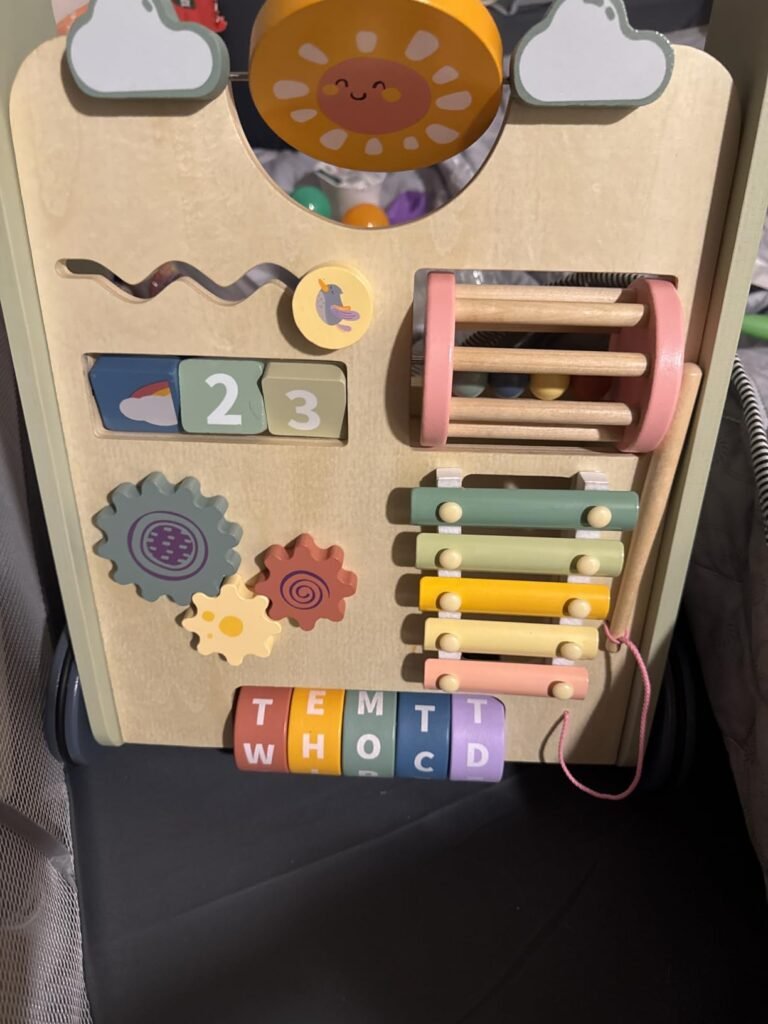
The multi-activity panel goes beyond basic learning walkers with a xylophone, rolling letter wheel, flip board, tracking game, and other interactive elements. These features engage hand-eye coordination and cognitive development without relying on electronic sounds and lights, which appeals to parents pursuing a more Montessori-inspired approach to early learning.
The silent rubber wheels are a genuinely important detail for wooden walkers that will spend time on hardwood floors. These wheels roll smoothly without scratching surfaces and produce minimal noise, which matters more with wood walkers than with plastic ones since wood has less inherent shock absorption. The sturdy construction provides stable support for babies who are just starting to walk.
Wooden walkers typically weigh more than plastic ones, which is actually a benefit for stability during first walking attempts since the added weight resists tipping. The tradeoff is less portability and slightly more difficulty storing. Wood also feels more premium visually, which matters for parents who want the walker to blend into their living space rather than stand out as brightly colored plastic.
This walker fits parents who prefer natural materials and quieter, non-electronic toys, while still needing a functional walking aid. Compared to premium wooden walkers, this one offers most of the aesthetic and material benefits at a more accessible price. If you need adjustable speed control or premium finish quality, the Tiny Land walker justifies its higher price.
Babies under 10 months, or families wanting electronic activity features.
We may earn a commission when you buy through this link, at no additional cost to you.
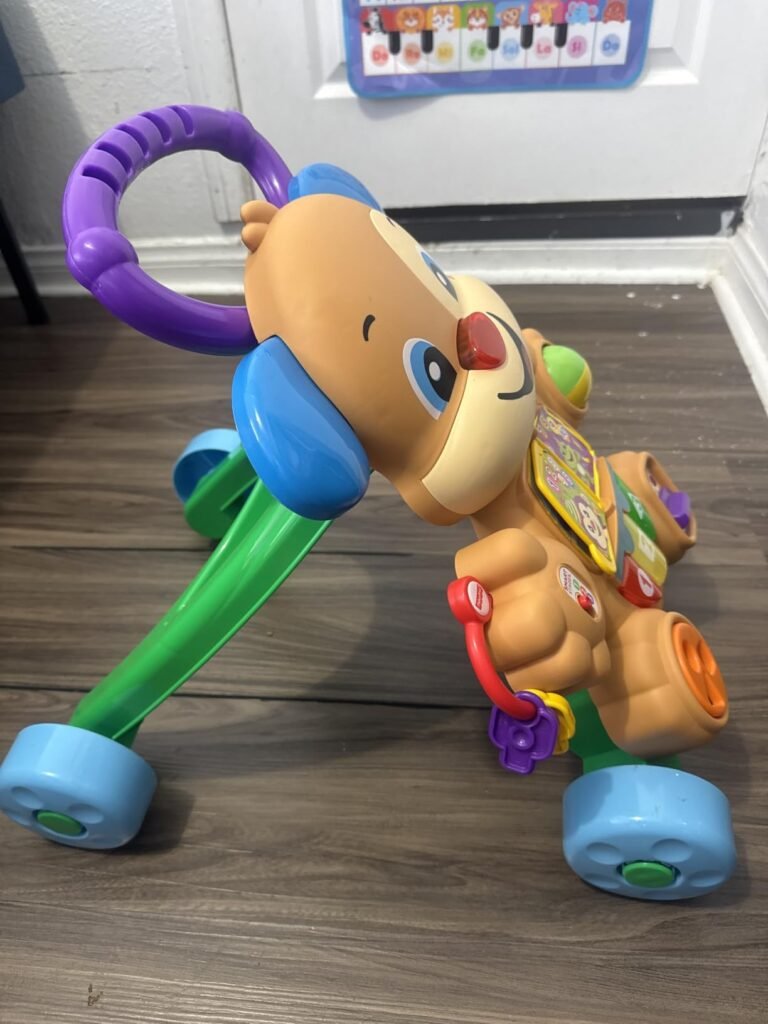
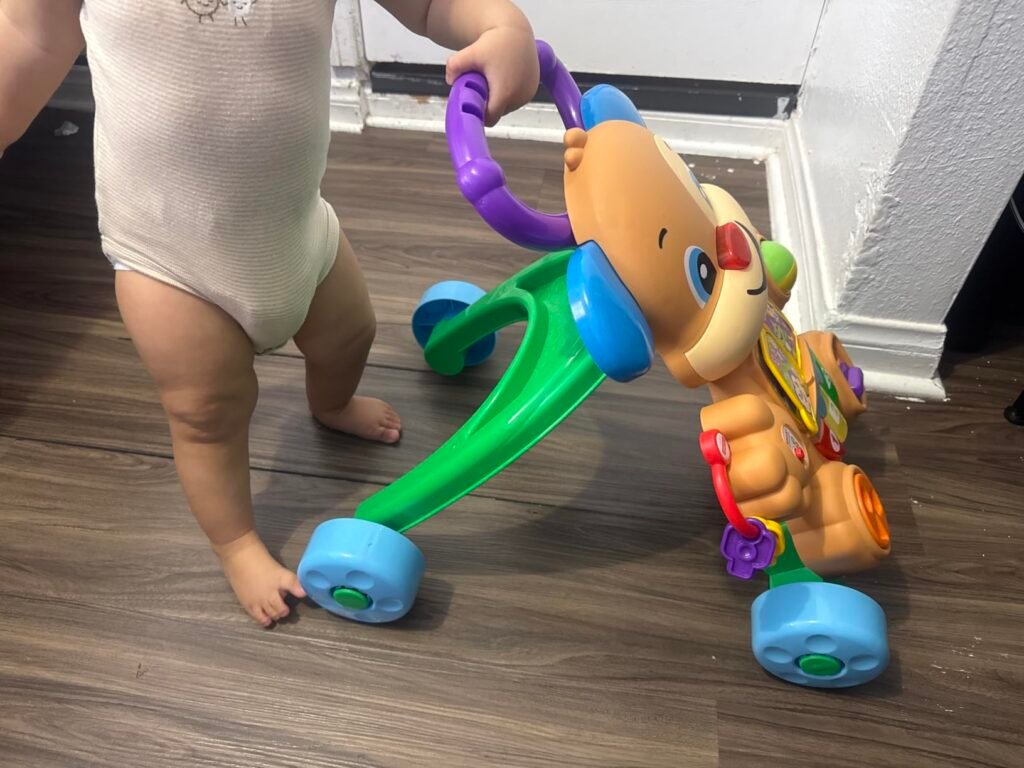
The Fisher-Price Puppy Walker delivers strong value in the push walker category by combining the two Smart Stages learning experience with a compact, budget-friendly design. Its high owner rating reflects consistent parent satisfaction with the balance of educational content, sturdy construction, and accessible price. The extensive age range from six months through three years provides significant long-term value.
We may earn a commission when you buy through this link, at no additional cost to you.
The two-way play design lets babies who can sit up engage with the activity panel while seated, then transition to standing and walking with the same toy as they develop. This flexibility means you don’t need to buy a separate stationary activity toy plus a walker. Seven hands-on activities including light-up piano keys, a nose that lights up, a roller, spinner, and flip page keep babies engaged during play sessions.
The three Smart Stages learning levels introduce content appropriate to your child’s developmental stage. Beginning content covers basic sounds and single words, middle stages introduce alphabet, shapes, colors, and numbers, and advanced levels add Spanish vocabulary and more complex phrases. This progression from simple to sophisticated content extends engagement as your child grows.
The base design of a push walker determines whether it provides safe support or becomes a tipping hazard. A wide four-wheel base like this Fisher-Price walker distributes weight evenly and resists sideways tipping when babies lean into the walker for support. Narrower bases or three-wheel designs are more prone to tipping when babies push at odd angles, which can cause falls just as they’re building walking confidence.
This walker is the smart choice for budget-conscious parents who don’t want to compromise on brand quality or educational features. The compact size fits well in smaller living spaces, and the easy-grasp handle with sturdy four-wheel base provides reliable support for first walking attempts. Parents seeking the very slowest possible walker for extremely cautious first-walkers may prefer the Panda model’s Steady Speed wheels.
Parents seeking premium wooden or aesthetic-focused designs for open living spaces.
We may earn a commission when you buy through this link, at no additional cost to you.
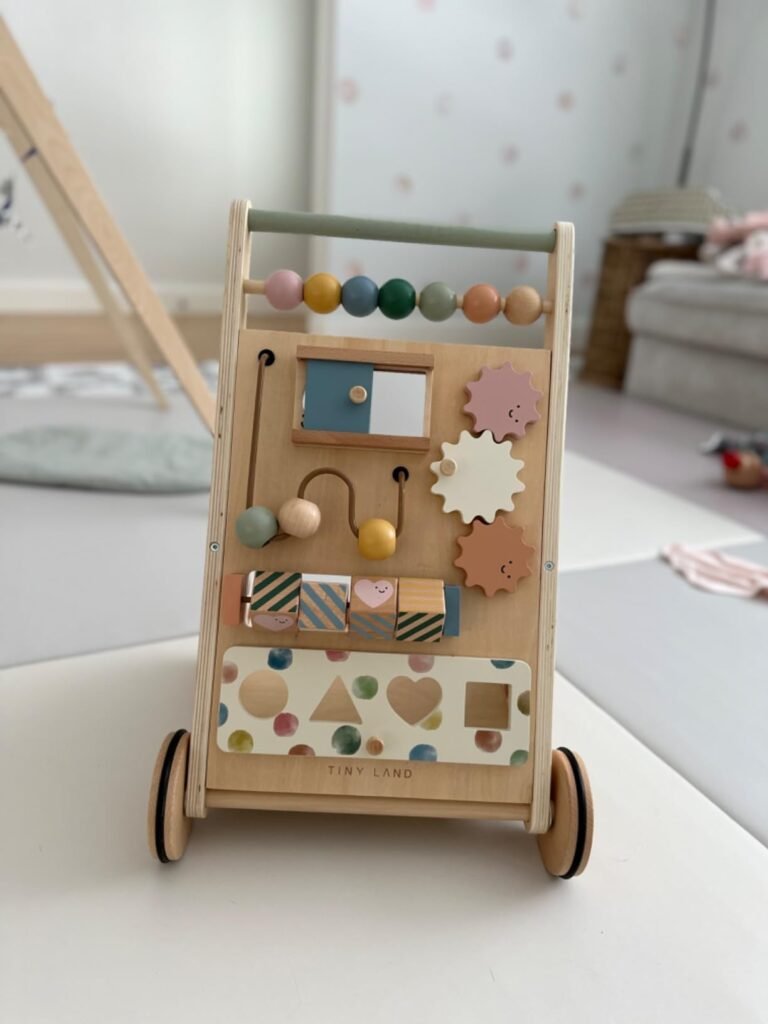
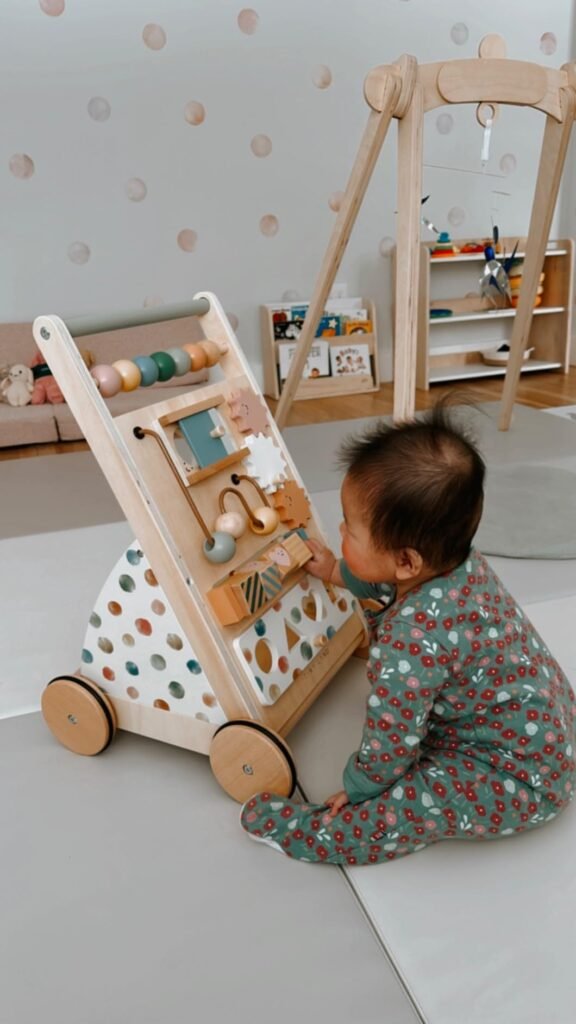
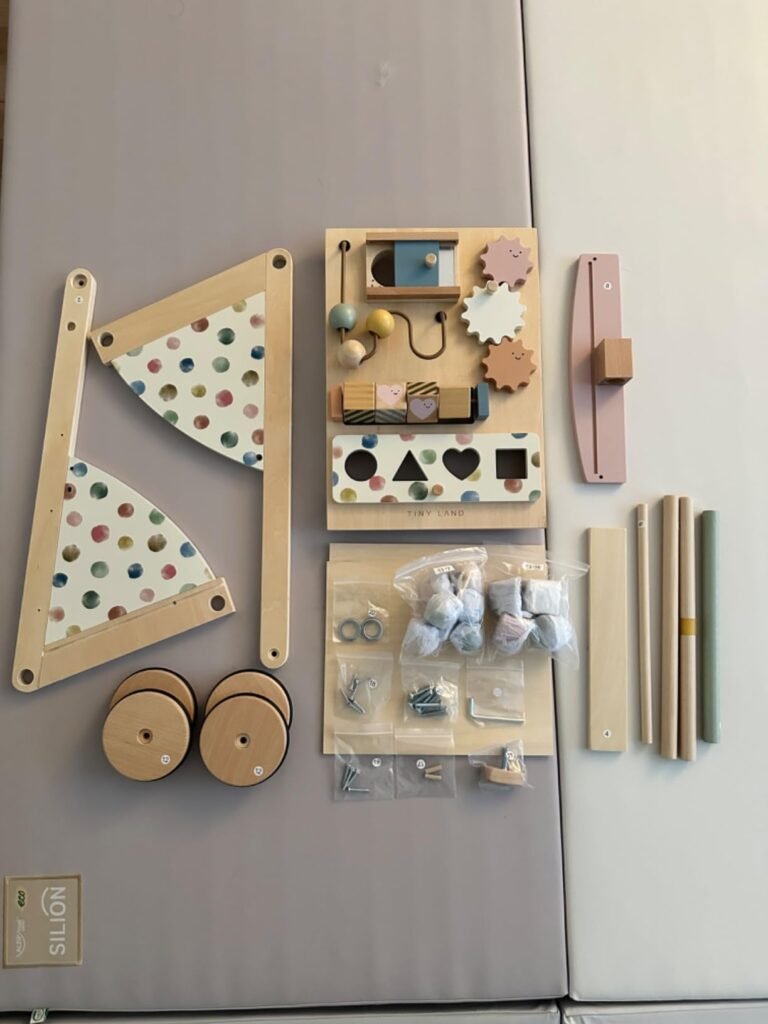
The Tiny Land wooden walker sits at the premium end of the push walker market with solid natural wood construction, thoughtful Montessori-inspired features, and adjustable speed control that rivals more expensive European brands. It targets parents who want a walker that combines developmental value with aesthetic appeal for open-plan living spaces where the walker will be visible.
We may earn a commission when you buy through this link, at no additional cost to you.
The adjustable speed control is a standout feature that many wooden walkers lack. This lets you increase resistance for early walkers who need help staying stable, then reduce resistance as balance improves and your child wants to move faster. This adaptability extends the useful life significantly and addresses the common problem of wooden walkers moving too fast on hardwood floors.
The activity center features mirrors, gears, and learning toys that engage babies through hands-on discovery rather than electronic sounds. This approach supports independent exploration and problem-solving skills that align with Montessori educational principles. The soft Morandi color tones give the walker a calm, sophisticated appearance that blends into modern living rooms and nurseries.
Montessori educational principles emphasize independent exploration, hands-on discovery, and natural materials over passive entertainment through electronic sounds and lights. Montessori-inspired walkers typically feature real materials like wood, activities that require active engagement to produce results, and designs that encourage curiosity rather than providing constant stimulation. This approach supports focus and self-directed learning skills that benefit long-term development.
This walker is the right choice for parents willing to invest in premium construction and design for a product that will be prominent in daily life. The natural wood, quiet rubber wheels, non-toxic finishes, and thoughtful details justify the higher price for buyers who value these qualities. Budget-conscious families or parents primarily focused on educational features rather than aesthetics may prefer the Bautia wooden walker or Fisher-Price plastic options.
Budget-conscious families or those who prefer electronic sounds and lights for engagement.
We may earn a commission when you buy through this link, at no additional cost to you.
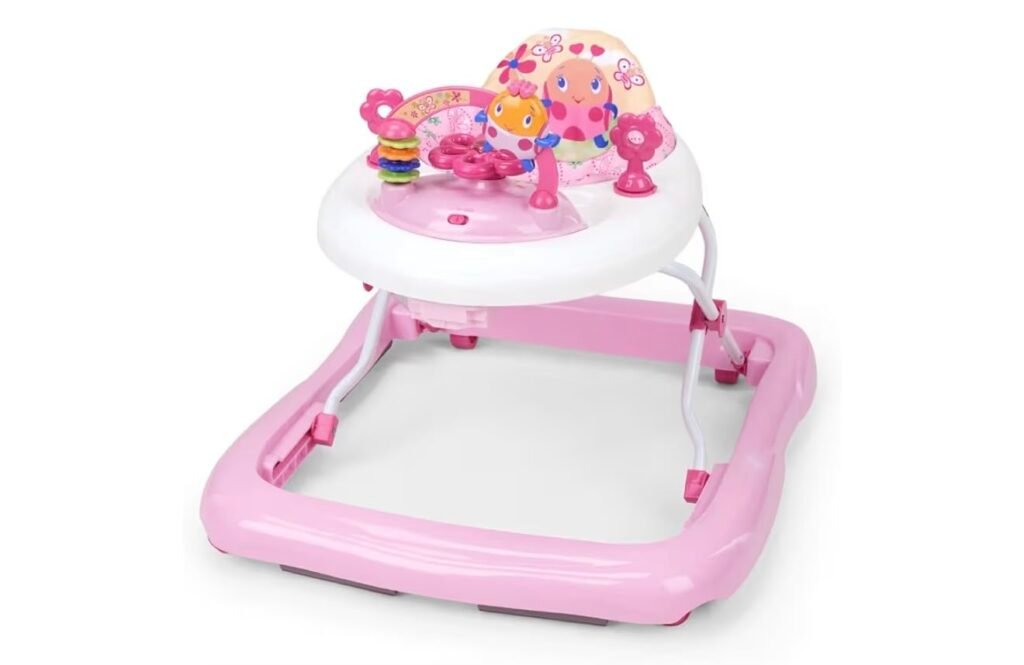
The Bright Starts JuneBerry seated walker offers a well-rounded traditional design that focuses on babies six months and older who can sit up independently. Its distinguishing feature is the removable electronic toy with lights, melodies, and sounds that can be detached and used for standalone floor play, effectively giving parents two products in one purchase.
We may earn a commission when you buy through this link, at no additional cost to you.
The high seat back provides meaningful support and comfort for babies who are still developing full sitting strength. This extra back support reduces fatigue during longer play sessions and helps babies maintain good posture rather than slouching, which becomes important as they build the core strength needed for walking. The three adjustable height positions accommodate babies from six months through approximately 12 months.
The two link loops are a small but useful design touch that lets parents attach additional favorite toys to the walker. This customization matters because babies develop preferences for specific toys and adding those familiar items to the walker can encourage more engaged play sessions. The melody variety with volume control lets parents adjust sound to the environment without turning music off completely.
Removable activity toys extend the useful life of walker purchases by working as standalone floor toys for younger siblings, during travel when the full walker is impractical, or for indoor play areas separate from where the walker lives. This dual-purpose design maximizes the return on your investment and reduces the total number of separate toys you need to buy for early development.
This walker suits parents who want a traditional seated design with genuinely useful extras beyond basic walking support. The removable toy adds standalone play value, and the seat back comfort makes longer sessions more pleasant for developing babies. The 26-pound weight limit is worth checking against your baby’s growth trajectory, since larger babies may outgrow the walker before losing interest in it.
Families with babies approaching 26 pounds who need higher weight capacity.
We may earn a commission when you buy through this link, at no additional cost to you.
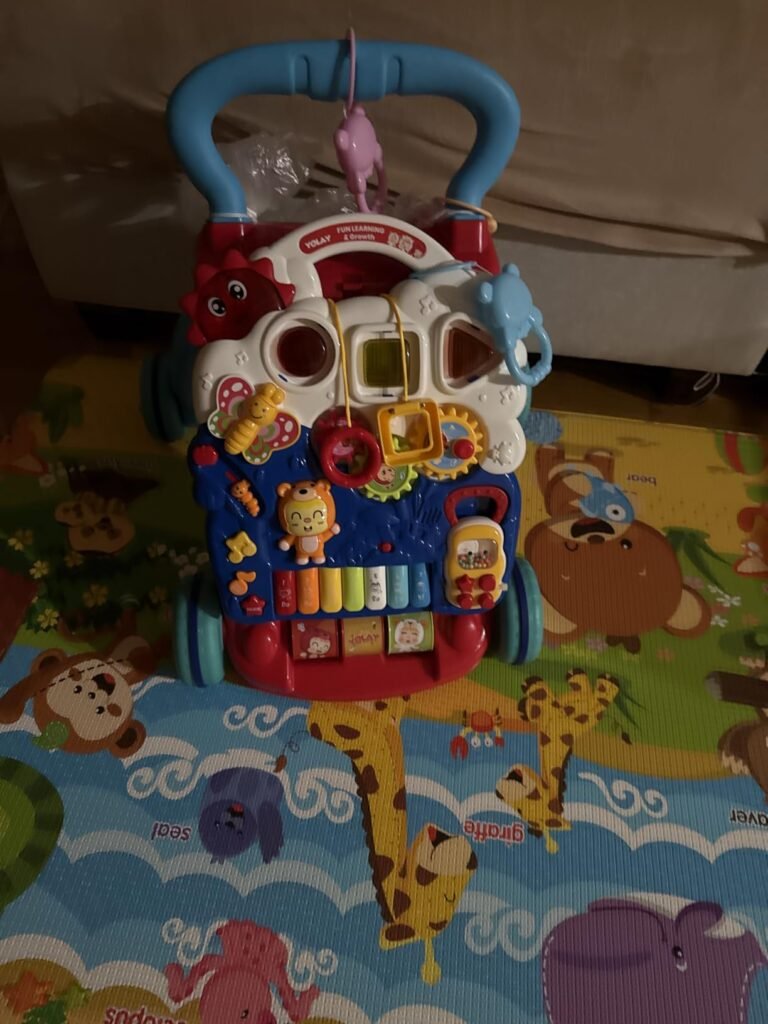
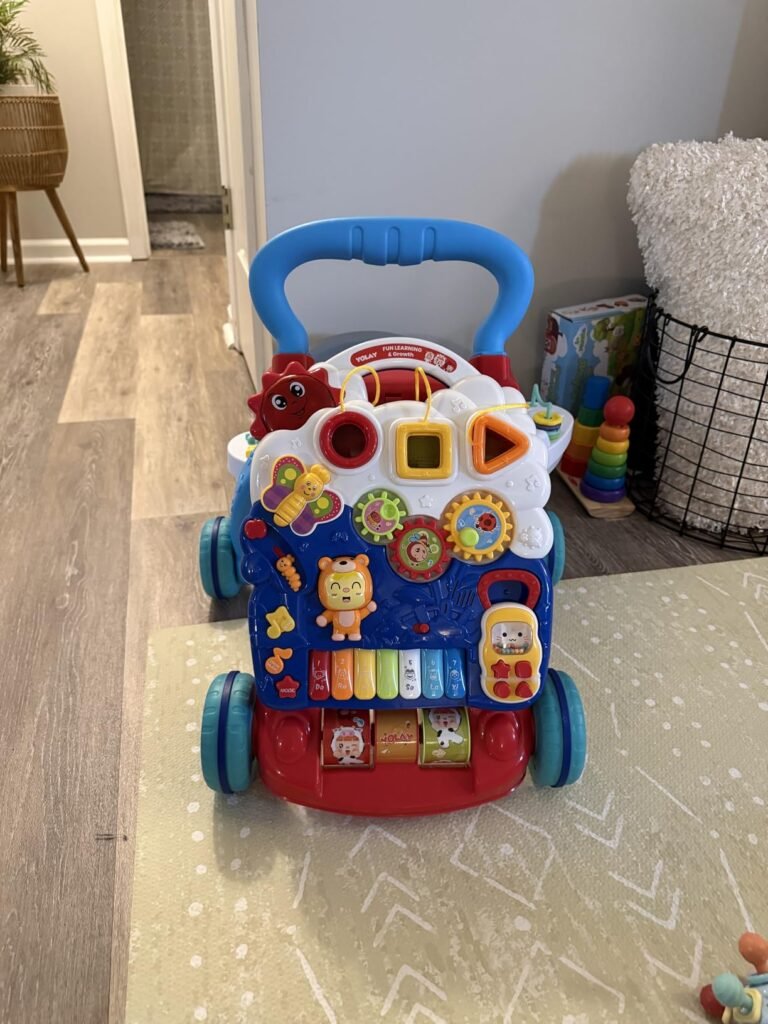
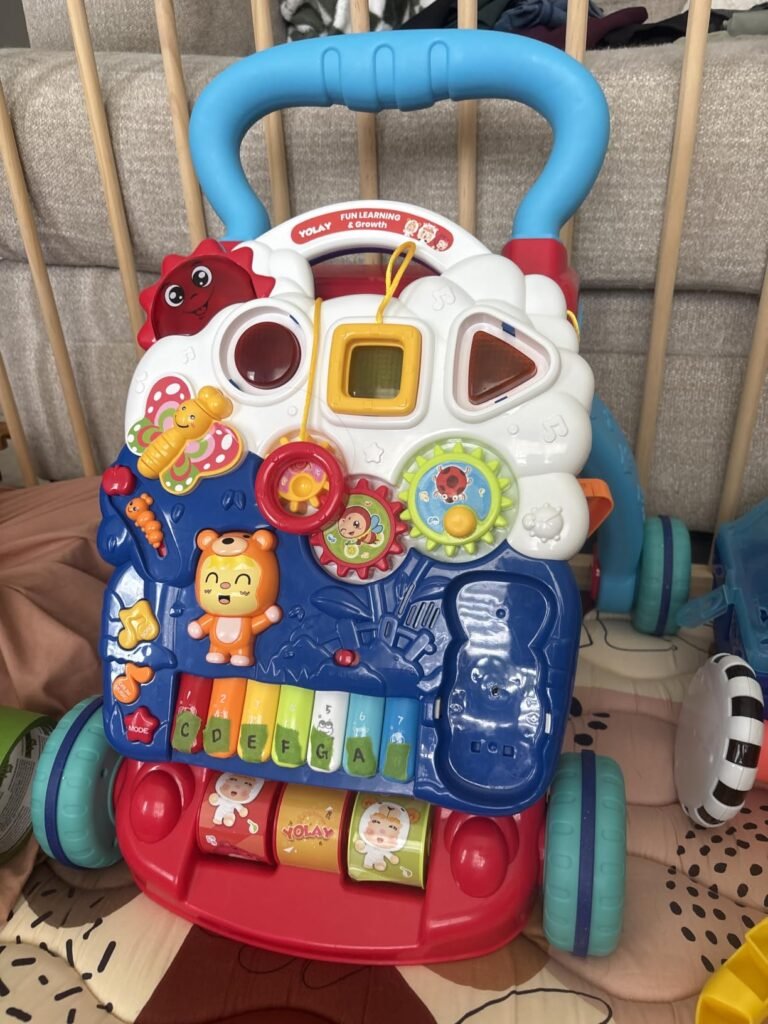
The YOLAY push walker targets babies six to twelve months who are ready to start practicing standing and walking with support. Its wide anti-slip base and durable wheels provide the stability that beginning walkers need to build confidence, while the two-speed control lets parents adjust the walker's pace to match their baby's developing skills.
We may earn a commission when you buy through this link, at no additional cost to you.
The 360-degree interactive play panel offers five piano keys, engaging buttons, flashing lights, and a fun telephone handset that stimulate sensory development and encourage exploration. Built-in shape sorters, spinning gears, colorful rollers, and light-up buttons promote fine motor skills and early problem-solving. This activity variety keeps babies engaged during play sessions on the floor or while walking.
The removable activity tray is a genuinely useful feature that gives babies who cannot yet stand a self-contained play station. When your baby is ready to walk, the panel snaps back onto the walker for on-the-go activity. Including Duracell AA batteries is a small but practical touch that lets parents start using the walker immediately without a trip to the store for batteries.
Push walkers that slide unexpectedly on hard floors can cause falls just as babies are building walking confidence. Anti-slip base designs provide friction against the floor that prevents unintended sliding when babies lean heavily on the walker. This is particularly important on hardwood, tile, or laminate floors where standard rolling wheels may create too little resistance for beginning walkers to maintain balance.
This walker fits parents who prioritize stability and don’t want to worry about their baby moving too fast on smooth floors. If your baby is already an active cruiser who wants faster movement, walkers with wider age ranges like the Fisher-Price Panda extend usefulness further. For the six to twelve month sweet spot when balance is still developing, this walker delivers solid value.
Toddlers over 12 months who have progressed beyond the walker-appropriate developmental stage.
We may earn a commission when you buy through this link, at no additional cost to you.
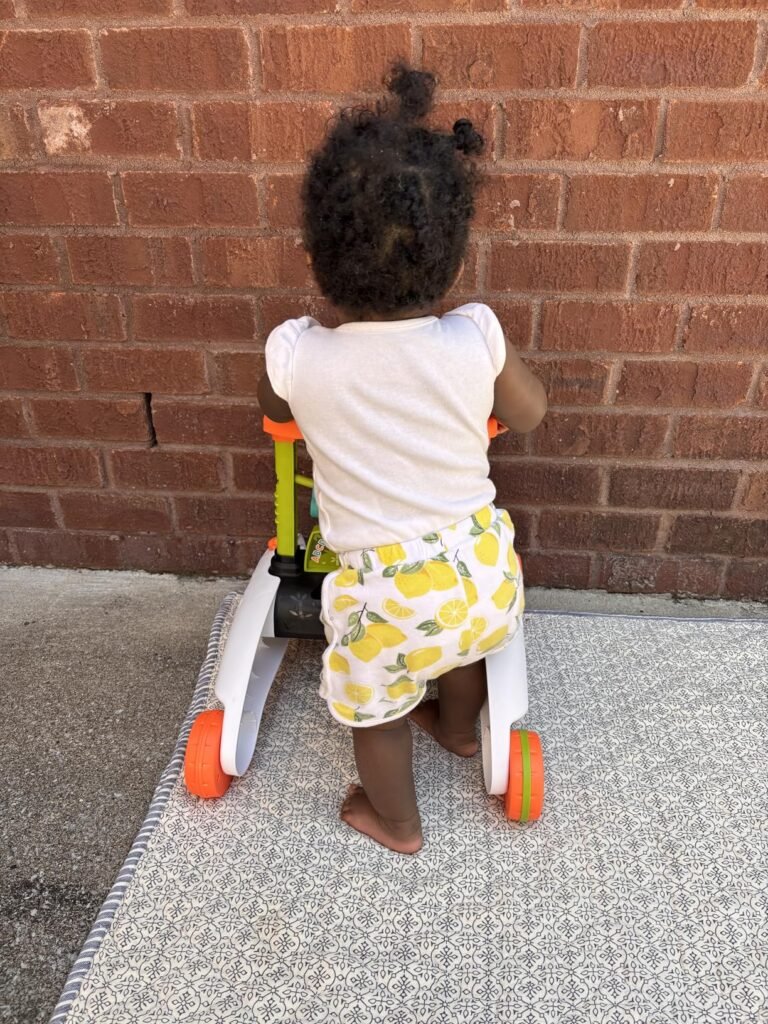
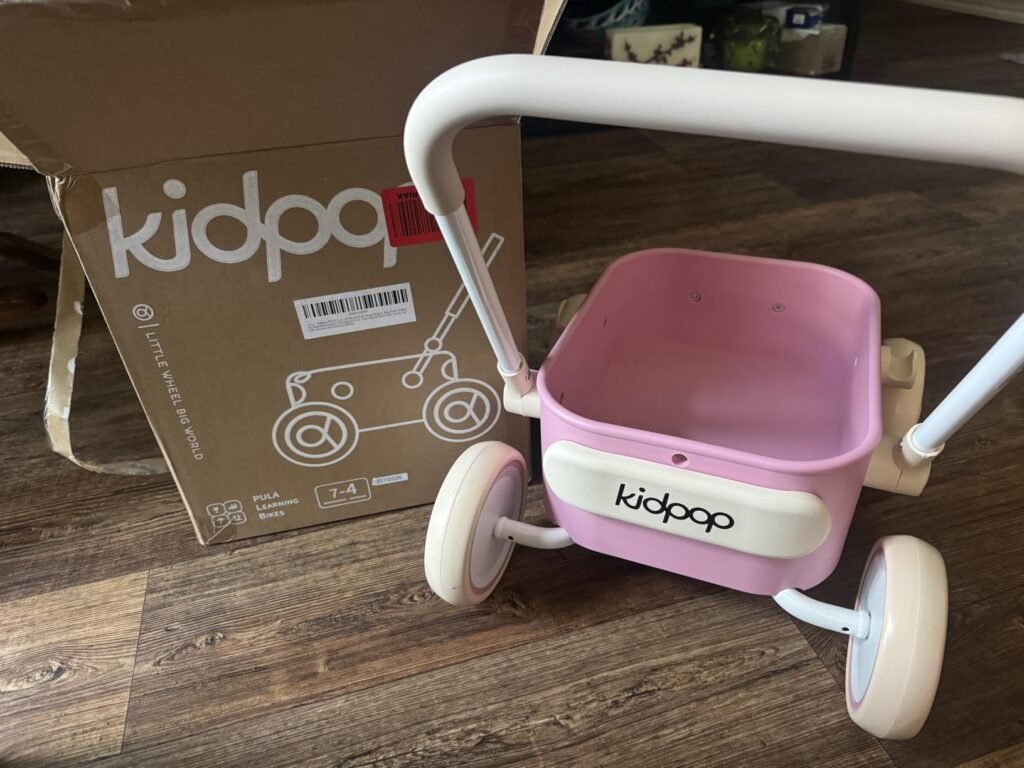
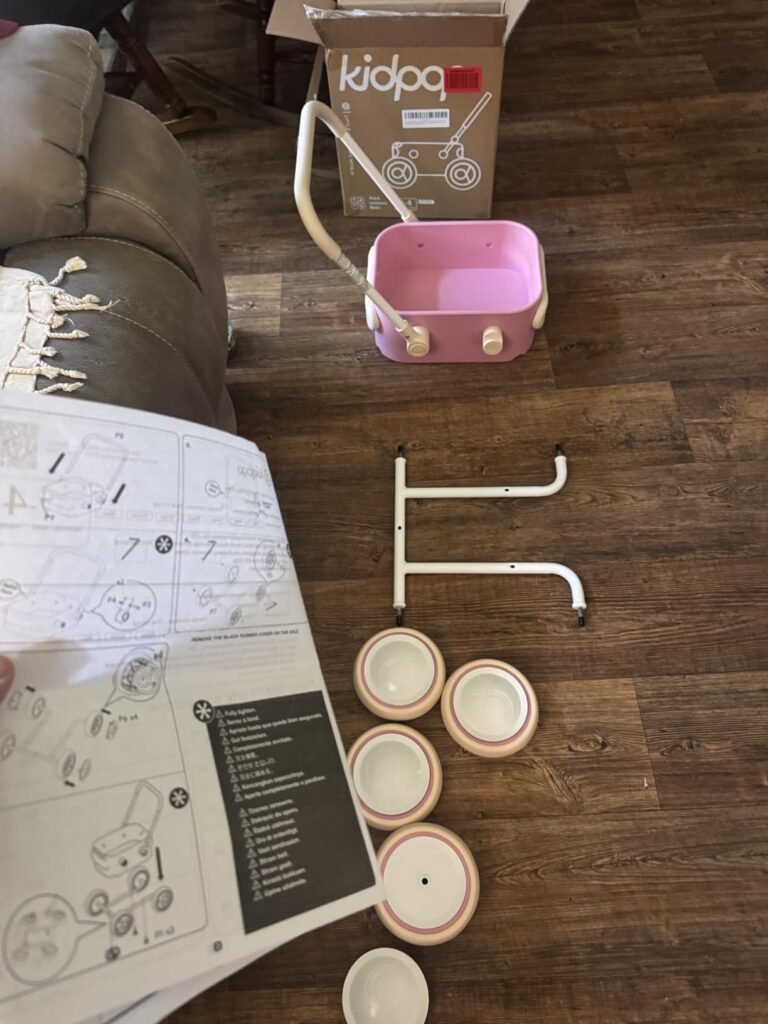
The PULA wagon walker ties for the highest owner rating in this guide by combining thoughtful safety design with genuine outdoor functionality. Its 2-in-1 configuration works as both a push walker for first steps and a play wagon for hauling toys, which extends usefulness beyond typical walker applications and encourages outdoor play as babies develop walking skills.
We may earn a commission when you buy through this link, at no additional cost to you.
The safety design details show careful consideration of real-world use. Fully enclosed wheels prevent foot injuries that can happen when babies step on standard wheel edges, and the widened wheel design provides better stability during first walking attempts. The non-slip handlebar with low center of gravity reduces the risk of side falling, which is one of the most common causes of walker-related injuries.
Food-grade polypropylene construction is genuinely useful for a walker that doubles as a wagon since babies inevitably put toys and other items into the hopper. The material is anti-fall, waterproof, and corrosion-resistant, which makes it appropriate for outdoor use in various weather conditions. The EVA wheels roll smoothly and absorb shocks for comfortable rolling on different surfaces including sidewalks and grass.
Standard walker wheels have exposed edges where babies can accidentally step, causing pinched feet or unbalanced falls. Fully enclosed wheel designs surround the wheel completely, eliminating this hazard while also preventing small toys or fingers from getting caught between the wheel and its housing. This safety detail matters most for very active babies who explore their walker enthusiastically.
This is a strong pick for parents who want to encourage outdoor exploration and don’t need electronic activity features. The award-winning design reflects thoughtful engineering, and the compact folding makes it easy to transport to parks or other outdoor locations. Families primarily focused on educational content or indoor use may prefer walkers with more activity features.
Toddlers over 12 months who need larger, more advanced walking aids.
We may earn a commission when you buy through this link, at no additional cost to you.
Choosing a baby walker requires understanding your child’s developmental stage, your living space, and safety considerations. The factors below break down what genuinely matters when comparing walker types and how to decide with confidence.
Seated walkers like the Smart Steps Trend and Bright Starts JuneBerry hold your baby in a supportive seat while wheels underneath let them propel themselves around. These work for younger babies who can sit up independently, typically starting around six months, and provide mobile access to activity toys and food trays. The tradeoff is that seated walkers don’t teach walking skills directly and may delay independent walking development according to some pediatricians.
Push walkers like the VTech Sit-to-Stand and Fisher-Price Panda have a handle and stable base that babies grip while walking behind. These work for babies who can already pull themselves to standing, typically around nine to twelve months, and actively support the development of walking skills, balance, and coordination. Some pediatricians and organizations including the American Academy of Pediatrics recommend push walkers over seated walkers for these developmental benefits.
For babies not yet standing, choose a seated walker for mobile activity and entertainment. For babies who are pulling up and cruising, choose a push walker to encourage independent walking skills.
Safety design varies significantly between walkers, and this is not an area to compromise. Look for wide bases that resist tipping when babies lean sideways, non-slip surfaces that prevent unintended sliding on hard floors, enclosed wheels that prevent foot injuries, and stable handles that don’t collapse under baby’s weight. Some walkers include safety brakes that lock the wheels in place, converting the walker to a stationary activity center for feeding or supervised play.
The most important safety consideration for seated walkers is preventing stair falls, which have been the primary cause of walker-related injuries historically. Never use a walker in a home with stairs unless every stair opening is properly gated. Push walkers eliminate this stair risk entirely since babies control their movement and typically stop at edges, though supervision remains important. Beyond stair safety, verify that all moving parts are secure and that fabric components are properly stitched to prevent unraveling.
Prioritize wide bases and enclosed wheels for seated walkers. For push walkers, focus on stable handles and appropriate wheel resistance to prevent runaway walkers on smooth floors.
Proper walker fit is essential for both safety and effectiveness. For seated walkers, your baby’s feet should touch the floor with the toes and ball of the foot, not flat-footed. This gives babies enough leverage to push off effectively while preventing them from moving too fast or developing tiptoe walking habits. Look for walkers with multiple height positions to accommodate growth over the several months of walker use.
For push walkers, the handle should be at approximately your baby’s chest to shoulder height when standing. This lets babies lean forward slightly for support without hunching over uncomfortably. Handle height that’s too low forces babies to bend awkwardly, while too high forces them onto their tiptoes for support. Some push walkers offer height adjustment, though many are designed for a single height range appropriate to their target age.
Choose walkers with at least three height positions for seated designs to accommodate growth. For push walkers, verify the fixed handle height matches your baby’s expected size range during the intended use period.
Wheel design significantly affects how walkers behave on different floor surfaces. Multi-directional swivel wheels let babies steer intuitively in any direction and work well on carpet where friction prevents runaway movement. On hardwood, tile, or laminate floors, however, swivel wheels can allow babies to move faster than they can safely control. Some walkers address this with Steady Speed wheels that provide resistance regardless of floor type.
Consider your primary use area when evaluating wheel design. If your baby will use the walker mainly on carpet, standard wheels work fine and swivel functionality adds fun exploratory movement. If your home has predominantly hard flooring, look for walkers with speed control, resistance features, or steady-speed wheel designs that prevent excessive velocity. Rubber wheels are gentler on floors than plastic wheels and produce less noise, which matters more with heavier wooden walkers.
Match wheel design to your floor type. Carpeted homes can use standard swivel wheels safely, while hard-floor homes benefit from speed control or steady-speed designs that prevent runaway movement.
Walker materials range from bright plastic to natural wood, and the choice affects both aesthetics and functionality. Plastic walkers like the Fisher-Price and VTech models are lightweight, easy to clean, and typically offer more electronic activity features with lights and sounds. Wooden walkers like the Tiny Land and Bautia models are heavier and more visually appealing but usually lack electronic features and cost more.
Verify that plastic walkers use BPA-free materials and that any fabric components are securely stitched with no small parts that could become choking hazards. Wooden walkers should have smooth, splinter-free edges and non-toxic finishes since babies will inevitably put their mouths on the surfaces. Weight matters for both stability and portability: heavier walkers resist tipping better but are harder to move between rooms or transport for travel.
Choose plastic for lightweight portability and electronic activity features at accessible prices. Choose wood for premium aesthetics, quieter operation, and Montessori-inspired natural learning materials.
Activity features significantly affect how long babies stay engaged with a walker. Basic walkers include simple trays and perhaps a few attached toys, while feature-rich walkers like the VTech Sit-to-Stand include piano keys, shape sorters, phone handsets, and interactive electronic elements that teach alphabet, numbers, and sometimes multiple languages. More activities generally mean longer engagement but also higher prices and more complex maintenance.
Consider what educational content aligns with your parenting approach. Electronic walkers with songs, phrases, and lights provide constant stimulation and can teach specific content like counting and colors. Montessori-inspired wooden walkers with mirrors, gears, and manual activities encourage independent exploration and problem-solving. Neither approach is inherently better, but each suits different family preferences and values.
Choose electronic-rich walkers for maximum engagement variety and explicit educational content. Choose wooden Montessori-inspired walkers for open-ended play that supports independent learning and focus development.
Walkers are large items that need to be stored when not in use, especially in apartments and smaller homes. Foldable designs like the Smart Steps Trend and Bright Starts JuneBerry collapse to a fraction of their in-use size, letting you slide them under beds or store them in closets between sessions. Non-folding walkers like most push walkers require dedicated floor space at all times, which may not work for tight living spaces.
Portability matters if you plan to transport the walker to grandparents’ houses, on vacation, or between rooms in your own home. Lightweight plastic walkers are easier to move than heavier wooden walkers, and folding designs fit into car trunks more easily. Some walkers include wall-mounting hooks or compact folding profiles specifically designed for portability. The PULA wagon walker’s one-click folding makes it particularly travel-friendly.
Choose folding walkers if storage space is limited, especially for seated walker designs. Prioritize lightweight materials and compact folding profiles if the walker will travel frequently between locations.
Set up the walker on a level, uncluttered surface away from stairs, fireplaces, hot appliances, and pool edges. For seated walkers, adjust the seat height so your baby’s feet touch the ground with just the toes and ball of the foot, giving enough leverage to push off without moving too fast. Never use a walker on carpeted stairs, uneven surfaces, or outdoors on rough terrain. Install proper baby gates at all stair openings before allowing walker use in multi-level homes.
Limit walker sessions to 15 to 30 minutes at a time, and always supervise your baby actively rather than treating the walker as hands-off babysitter. Even the safest walker requires adult attention because babies can move surprisingly fast and reach items on low tables or counters that they couldn’t access from the floor. Keep hazards like tablecloths that could pull items down, small objects that could be grabbed and swallowed, and hot beverages well away from areas where the walker operates. Watch for signs that your baby is becoming tired or frustrated, and end sessions before they lose interest.
Clean walkers regularly to prevent buildup of food, saliva, and dirt from floor contact. Wipe down plastic surfaces with mild soap and warm water, then dry thoroughly to prevent moisture damage to electronic components. For walkers with fabric seats, check the manufacturer’s instructions since some seat covers are machine washable while others require spot cleaning only. Inspect wheels regularly for hair, string, or debris that can wrap around axles and impair movement. Store walkers in dry locations away from extreme temperatures, and remove batteries from electronic walkers if they will be unused for extended periods to prevent battery leakage damage.
Most walkers are designed for babies six months and older who can sit up independently with good head and neck control. Push walkers typically require additional development, usually around nine to twelve months when babies can pull themselves to standing. Never use a walker before your baby can hold their head up firmly and maintain a seated position without support.
Walker safety depends on the walker design, your home environment, and adult supervision. The primary safety concern with seated walkers is stair falls, so proper baby gates are essential in multi-level homes. Push walkers are generally considered safer since babies control their own movement. Always supervise walker use actively and remove hazards like tablecloths, hot beverages, and small objects from areas the baby can reach.
Research suggests that seated walkers may actually delay independent walking slightly by not requiring babies to develop balance and coordination skills. Push walkers, by contrast, actively support walking development by requiring babies to balance and step while holding the handle for support. If early walking is your priority, push walkers align better with developmental research than seated walkers.
Seated walkers hold babies in a supportive seat with wheels underneath, letting them propel themselves around while sitting. Push walkers have a handle and stable base that babies grip while walking behind, actively supporting first steps. Seated walkers work for younger babies who can sit but not stand, while push walkers require babies who can pull themselves up to standing.
Most pediatric recommendations suggest limiting walker time to 15 to 30 minutes at a time and no more than one to two hours per day total. Extended walker use can delay development of independent movement skills and may cause fatigue in developing muscles. Balance walker time with plenty of floor play, tummy time, and other activities that support overall physical development.
Properly fitted walkers with correct height adjustment do not cause bowlegs or leg problems in typical use. Issues can arise if walkers are set too tall, forcing babies onto their tiptoes for extended periods. Ensure your baby's feet touch the ground with the toes and ball of the foot, and limit walker sessions to prevent excessive time in the same position.
Low-pile carpet provides the best combination of safety and functionality since it offers enough friction to prevent runaway walker movement while still allowing controlled propulsion. Hard floors like hardwood, tile, and laminate can be too slippery for walkers with basic wheels, causing babies to move faster than they can control. Look for walkers with speed control or steady-speed wheels for hard-floor homes.
Babies typically outgrow walkers when they can walk independently for several steps without support, usually around 12 to 18 months. Stop using seated walkers as soon as your baby is walking independently to encourage continued development of balance skills. Push walkers can continue to be useful as pull-along toys even after independent walking begins.
Wooden and plastic walkers each have advantages. Wooden walkers are typically heavier and more stable, use natural materials, and blend better into living spaces aesthetically. Plastic walkers are lighter, easier to move and store, often less expensive, and typically offer more electronic activity features. Choose based on your family's priorities regarding materials, aesthetics, features, and budget.
Walkers with electronic features like sounds, lights, and music require batteries, while simple wooden walkers and basic plastic walkers do not. Battery-powered walkers typically use AA or AAA batteries that need periodic replacement. Some walkers include batteries in the initial purchase, while others require you to supply them separately. Check the specifications before purchase if included batteries matter to you.
The VTech Sit-to-Stand Learning Walker stands out as the strongest overall pick for most families. Its high owner rating reflects consistent parent satisfaction with the combination of a removable activity panel that works for floor play, two-speed control that adapts to baby's growing walking confidence, and educational content that supports motor and cognitive development. As a push walker, it also aligns with pediatric recommendations that prioritize independent walking skill development over seated walker use.
For budget-conscious families, the Fisher-Price Puppy Walker delivers strong value with its Smart Stages learning content and durable construction at an accessible price. Parents wanting premium natural materials should consider the Tiny Land wooden walker for its Montessori-inspired design and adjustable speed control. Families primarily interested in seated walkers will find the Smart Steps Trend or Bright Starts JuneBerry provide comprehensive activity features with proper safety design, while the PULA wagon walker offers unique 2-in-1 functionality for outdoor play.
Match your choice to your baby's current developmental stage: choose a seated walker if your baby can sit but not stand, or a push walker if your baby is already pulling up and cruising. Prioritize safety features like wide bases, enclosed wheels, and proper height adjustment regardless of walker type. Consider your floor type when evaluating wheel design, and budget for a walker in a category and price range that matches how much use you realistically expect. With the right walker matched to your baby's needs and your home environment, walker time becomes a valuable addition to overall developmental play.