Windtrace Pill Dispenser
8.8Editor scoreCheck priceCompare 10 top automatic pill dispensers for seniors with alarms, locks, large compartments, app alerts and reliable medication reminders.
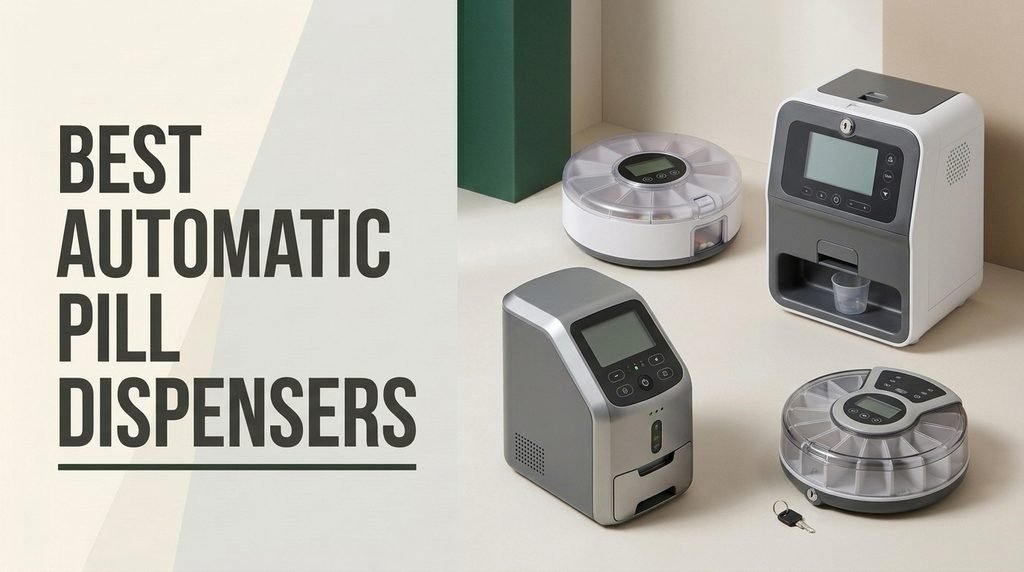
Find the right automatic pill dispensers for 2026 to help prevent missed doses, accidental double doses and medication confusion at home. We compare 10 standout models by the factors that matter most for this category including compartment capacity, alert volume, locking security, dosing flexibility, battery power, moisture protection, caregiver support and long-term value for seniors and caregivers.
Automatic pill dispensers solve one of the biggest at-home health problems by delivering the correct medications at the correct time with both audio and visual reminders. The biggest differences between models come down to how many doses they support per day, whether they rotate for weekly or monthly cycles and how secure they are for dementia or Alzheimer’s care situations.
This guide breaks down in-home medication organizers designed for elderly users with clear tradeoffs for each option. Whether you need a simple alarm-based dispenser for independent living, a locked unit for added safety or a Bluetooth app-connected model for remote caregiver monitoring, the right choice depends on the medication schedule and level of care required.
We compared 10 automatic pill dispensers using the details that actually help a buyer decide: compartment count and pill capacity, daily dose flexibility, alarm and light alerts, lock and tamper protection, moisture control, display readability, power source, ease of refilling, caregiver usability, owner ratings and price-to-value. The notes focus on practical tradeoffs for seniors, arthritis sufferers, dementia care, independent living and at-home medication management.


Compare key features, scores, and current prices side by side. A shorter feature list means fewer details were available, not necessarily fewer capabilities.


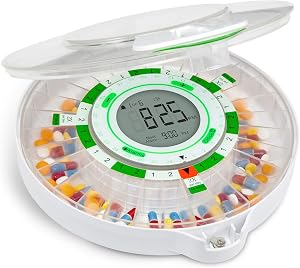


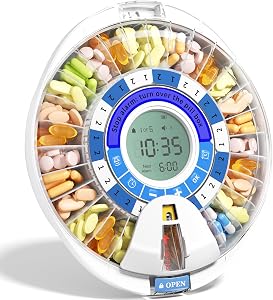
An automatic pill dispenser is far more than a pill box. Its job is to prevent missed doses, stop accidental double doses and reliably remind the user at the correct time. The right model depends heavily on the medication schedule, dexterity, memory level and whether caregiver oversight is needed.
Automatic pill dispensers are rated by how many compartments they hold and how many doses they dispense per day. A 28-compartment carousel typically covers 28 days of once-a-day medications or 7 to 14 days of multiple daily doses. Models with 31 compartments or expandable 42-day trays are better for complex regimens with more pills throughout the day. Larger compartments also matter significantly if the user takes multiple tablets or larger capsules in a single dose.
Before choosing a model, count both the number of medications and how many times they must be taken per day. Multiplying those numbers determines your minimum compartment requirement. Many buyers underestimate this and find their dispenser requires refilling far more often than expected. Choosing a slightly larger capacity greatly reduces caregiver workload over time.
Match compartment count to the full medication schedule first. Refilling frequency is one of the largest long-term quality-of-life differences for caregivers.
The biggest reason pill dispensers fail is that the alert is never noticed. Models with both a loud alarm and a flashing light dramatically increase the chance a dose is taken on time. Seniors with hearing loss benefit greatly from strong visual alerts, while those in noisy homes benefit from higher volume settings. Some advanced models allow voice recordings, multiple ringtones and adjustable volume levels to fit individual needs.
Alerts should continue for a reasonable time or repeat until the pills are dispensed to prevent missed doses when the user is in another room. Models that allow enabling or disabling sound and light separately give more flexibility for different households. An easy-to-read jumbo LCD display is equally important for seniors with reduced vision when programming and checking the time.
Prioritize dual audio and visual alerts with adjustable volume. For hearing-impaired users, a bright flashing light should be non-negotiable.
For independent seniors taking routine medications, a simple lock may not be necessary. However, for those living with dementia, Alzheimer’s disease or households with young children, a secure locking lid becomes extremely important. Fingerprint locks, mechanical key locks and digital locks prevent unauthorized access and help stop accidental overdoses or pill mixing.
Secure dispensers also provide peace of mind for caregivers who worry about medication wandering or double access. Some models use mix-proof tray designs that prevent pills from shifting between compartments during rotation, which greatly improves dosing accuracy. These safety features are among the most valuable for memory care at home.
Choose a locked model when safety, supervision concerns or cognitive impairment are present. For fully independent users, ease of access may outweigh maximum security.
Many seniors struggle with small pill organizer lids, tight compartments and complicated button menus. Oversized buttons, one-function controls, voice-guided setup, arthritis-friendly retrieval windows and smooth slide-door releases make a tremendous difference in daily use. A dispenser that is too complicated often leads to caregivers programming it entirely, defeating user independence.
Clear lid visibility allows quick visual confirmation of remaining pills before refilling. Removable trays drastically simplify weekly loading and reduce the chance of dropping pills. Jumbo LCD screens with high contrast are far easier to read than small text displays, especially for users who do not wear glasses consistently.
Always consider the user’s hand strength, vision and comfort with electronics. The easiest dispenser to consistently use is almost always the best dispenser.
Bluetooth and app-connected dispensers allow family caregivers to set dosing schedules remotely, review medication history and receive notifications about missed doses. This is especially helpful for adult children caring for parents from another city or managing care between siblings. Models with no subscription fees for their companion apps provide long-term savings compared to monitored services.
Not every user needs smart features. Many seniors prefer simple on-device programming with large buttons and spoken prompts. Smart features add convenience for caregivers, but can add complexity for seniors who primarily interact with the device itself. Choose based on who will be managing the dispenser day-to-day.
If remote oversight is a priority, choose a Bluetooth or app-enabled model. If the user manages their own medications independently, a simple alarm-based dispenser is often more reliable.
Before first use, carefully sort medications into the correct compartments according to your prescribed schedule and double check dose times during programming. Always verify the dosage rings match how many times per day medications must be taken. Test the alarm, flashing light and pill release at least once after setup to confirm everything is working correctly before relying on it for live medications.
Keep the dispenser in a dry, stable location away from direct sunlight and excess humidity. Many models include desiccant slots to help protect pills from moisture, but medications should still be stored as directed by your pharmacy. Clean the removable tray regularly with a dry or slightly damp cloth and never submerge the electronic carousel unit in water. Replace batteries promptly when the low-battery indicator appears.
Perform a weekly medication refill check to confirm compartments are filled correctly and no pills are stuck between slots. For locked models, keep keys in a secure but known location for caregivers. Review missed-dose alerts regularly and speak with a pharmacist or provider if doses are consistently missed to adjust the schedule safely.
Most 28-compartment dispensers hold between 12 and 24 pills per slot depending on pill size. Smaller tablets fit significantly more than large calcium tablets or gel capsules. Always check the compartment dimensions against your specific medications before purchasing, especially if you take large supplements.
Yes. Many models support 1 to 6 or even 9 daily doses using interchangeable dosage rings or programmable alarm times. Higher dose counts reduce the total days covered per refill, so a 42-day expandable model is often better for twice or three times daily regimens.
Locked automatic pill dispensers can be very helpful for dementia care by preventing accidental access, reducing double doses and providing consistent reminders. However, they work best as part of a caregiver plan. Models with mix-proof trays, digital locks or fingerprint locks provide the highest level of safety for memory care at home.
Many dispensers run on AA batteries or include built-in rechargeable batteries with backup power. Battery-powered models continue to keep time and trigger alerts during outages. Always check for battery backup and low-battery indicators when comparing models.
App connectivity is most helpful for caregivers monitoring a loved one from another location or tracking medication adherence over time. If the senior programs and uses the dispenser independently, an on-device model with large buttons and voice prompts is often easier and more reliable.
Many models fit standard tablets and capsules, but soft gel capsules, gummy vitamins and unusually shaped supplements can stick to trays. Look for models that specifically list compartment capacity by tablet size and avoid dispensers that do not provide this information.
Refill frequency depends on capacity and doses per day. A 28-day once-a-day dispenser needs monthly refilling. The same dispenser needs refilling every 9 to 14 days for twice or three times daily medications. Expandable 42-day models significantly reduce this caregiver workload.
Some Medicare Advantage plans or long-term care benefits may cover medication management devices in certain cases, but most automatic pill dispensers are purchased out of pocket. Check with your specific insurance provider, pharmacy or durable medical equipment supplier for coverage eligibility.
The most common mistake is buying based on price instead of matching the dispenser to the actual medication schedule. Many buyers count compartments incorrectly and end up refilling too often. Counting total daily doses first and calculating required compartments prevents this problem entirely.
Yes. Once the carousel rotates to the correct dose slot at the scheduled time, only that compartment is accessible. Locked models and mix-proof trays further reduce the risk. However, the dispenser only works correctly if pills are loaded accurately during each refill.
The LiveFine 28-Day Automatic Pill Dispenser stands out as the strongest overall choice for most families due to its excellent balance of capacity, up to nine daily doses, clear jumbo display, strong alerts and lockable security. For budget-conscious buyers, the Windtrace Pill Dispenser delivers impressive functionality including six dosage rings, loud alerts and a highly readable interface at an affordable price point.
For caregivers who need remote oversight or advanced security, the Colorwing Smart Dispenser offers fingerprint and mechanical dual locking with Bluetooth app control and custom voice reminders. The Bluetooth 31-Slot model also provides excellent caregiver convenience with smart alerts, while the 42-day expandable app model is ideal for complex multi-dose regimens that require less frequent refilling.
Your best purchase decision comes down to matching compartment capacity to your exact medication schedule, prioritizing alerts the user will actually notice and choosing the correct level of security for memory or safety concerns. An automatic pill dispenser that fits the user's dexterity and routine will dramatically improve medication adherence, reduce caregiver stress and provide greater peace of mind for the entire family.