Fortress 50 Cal
9.4Editor scoreAll steel construction
Rubber sealed lid
Solid hinged lid
Single carry handle
Find the right ammo cans for 2026. We compare 10 standout options by build quality, useful features, owner feedback, value, and everyday trade-offs.
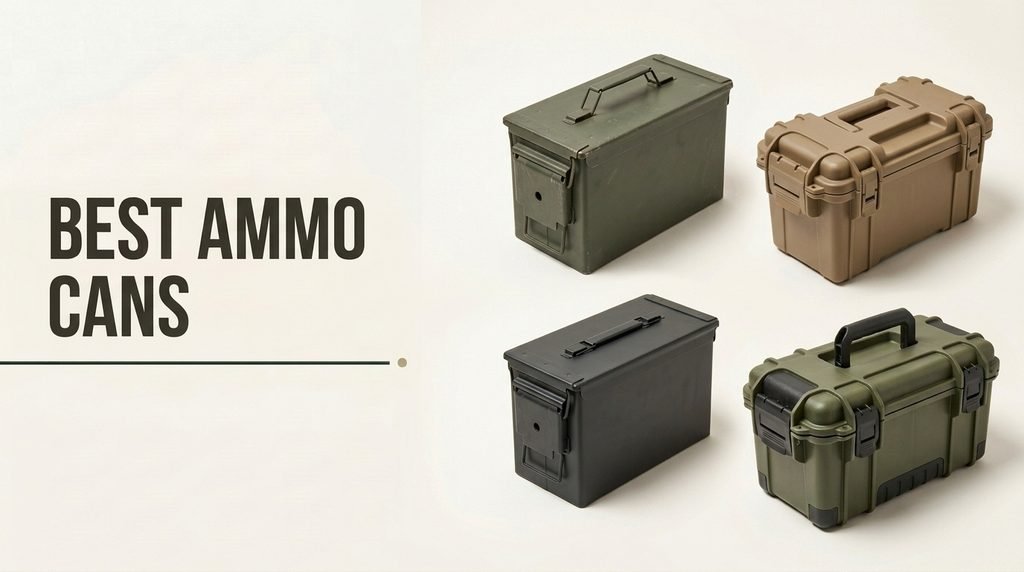
Finding the right ammo cans for 2026 means balancing seal integrity, material durability, capacity, and stackability against how you actually store and transport your ammunition. We compare 10 standout options across the factors that matter most: gasket quality, steel versus polymer construction, interior dimensions, latch reliability, weather resistance, and real-world value for long-term storage.
The difference between a surplus military steel can and a modern polymer box is more significant than many buyers realize. Steel offers unmatched crush resistance and fire protection, while polymer delivers lighter weight and consistent seals at a lower price. Understanding which trade-off fits your storage situation will save you from buying the wrong type.
Pay close attention to the rubber gasket, latch mechanism, and interior dimensions before purchasing. A can with a compromised seal will let moisture destroy your ammunition over time, and a can that is too small for your chosen caliber creates frustrating packing problems. The reviews below break down what each option delivers and where it falls short.
We compared 10 ammo cans using the details that actually help a buyer decide: seal type and quality, steel or polymer construction, interior dimensions, latch mechanism, handle design, stackability, water resistance, included accessories like desiccant packs, multi-pack value, owner feedback, and overall cost per can. The notes focus on practical trade-offs so each pick connects to how shooters actually store, organize, and protect ammunition for the long term.


Compare key features, scores, and current prices side by side. A shorter feature list means fewer details were available, not necessarily fewer capabilities.

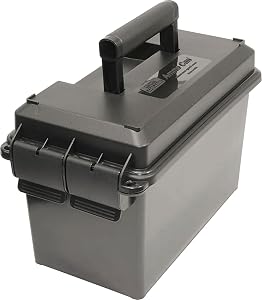


The MTM AC4C Ammo Crate earns the highest rating in this comparison at 4.8 stars, and the design explains why. Rather than a single large container, this system includes four individual 30-caliber ammo cans housed in a reinforced polymer crate, which gives you the organizational flexibility of separate containers with the transport convenience of a single unit. For shooters who use multiple calibers at the range, this setup eliminates the need to dig through one large can to find the right ammunition.
We may earn a commission when you buy through this link, at no additional cost to you.
Each can features an O-ring water-resistant seal that keeps moisture and dust out more effectively than the tongue-and-groove designs found on simpler polymer boxes. The reinforced polymer construction is both lightweight and impact-resistant, which makes the crate practical for field use where it may be tossed into a truck bed or strapped to an ATV. The four tie-down spots are specifically designed for ATV attachment, which is a unique feature that hunters and outdoor shooters will appreciate.
The 23.5 by 11.3 by 7.5 inch overall dimensions fit easily in most vehicle trunks, truck beds, and storage closets. US manufacturing provides quality assurance that imported alternatives cannot always match, and the dark earth and army green color scheme blends naturally into outdoor environments. The individual cans can be removed from the crate for separate use, which adds versatility beyond the integrated system.
A single large ammo can forces you to sort through mixed calibers every time you need a specific round, which wastes time and increases the risk of grabbing the wrong ammunition. A multi-can system like the AC4C lets you dedicate one can per caliber or per firearm, so you grab the right can and go. This organizational advantage becomes even more valuable when multiple shooters share the same range setup and each person needs quick access to their own ammunition.
The main trade-offs are that polymer construction does not match the crush resistance of steel, and the 30-caliber can size limits capacity for larger calibers or bulk storage. For long-term deep storage of thousands of rounds, steel 50-cal cans are more appropriate. For range-day organization, multi-caliber shooters, and hunters who need a portable system that straps to an ATV, the MTM AC4C delivers the best combination of features, quality, and owner satisfaction in this comparison.
Buyers who need maximum capacity for bulk long-term storage of a single caliber.
We may earn a commission when you buy through this link, at no additional cost to you.
The Fortress 50 Caliber Metal Ammo Can is a straightforward, no-nonsense steel storage container for buyers who want a single reliable can without the complexity of multi-pack bundles. The all-steel construction provides the kind of crush resistance and fire protection that polymer alternatives cannot match, making it a practical choice for garage storage, basement stockpiling, or vehicle transport.
We may earn a commission when you buy through this link, at no additional cost to you.
The rubber gasket seal creates an airtight closure that keeps moisture and dust away from your ammunition, which is the single most important function of any ammo can. The solid hinged lid stays connected to the body at all times, eliminating the risk of losing a separate lid during transport or in a cluttered storage area. For long-term storage where humidity is the primary threat to ammunition integrity, this seal design does the job effectively.
The carry handle is simple and functional, making it easy to move the can from storage to the range and back. The 50 caliber dimensions accommodate a wide range of ammunition types beyond just .50 BMG, including bulk 5.56, 9mm, .308, and shotgun shells. The steel body also provides a degree of security against casual tampering that plastic boxes cannot offer.
Steel ammo cans provide crush resistance that protects ammunition from being damaged under heavy loads, which matters when you stack multiple cans or store them under other gear. Steel also offers a degree of fire resistance that polymer cannot match, buying precious minutes in an emergency. For buyers who store ammunition in garages, sheds, or other environments where temperature swings and physical impacts are possible, steel construction remains the gold standard.
The main trade-offs are that this is a single can rather than a multi-pack, which means the per-unit cost is higher than bulk options, and no desiccant pack is included for moisture control inside the sealed container. If you are building a large ammunition storage system, a multi-pack like the HOMESTEAD 6-Pack or MTM AC4C crate will deliver better value per can. For a single, dependable steel can for a modest ammunition collection, the Fortress is a solid pick.
Buyers building a large storage system who need multi-pack value or those who prioritize lightweight portability.
We may earn a commission when you buy through this link, at no additional cost to you.
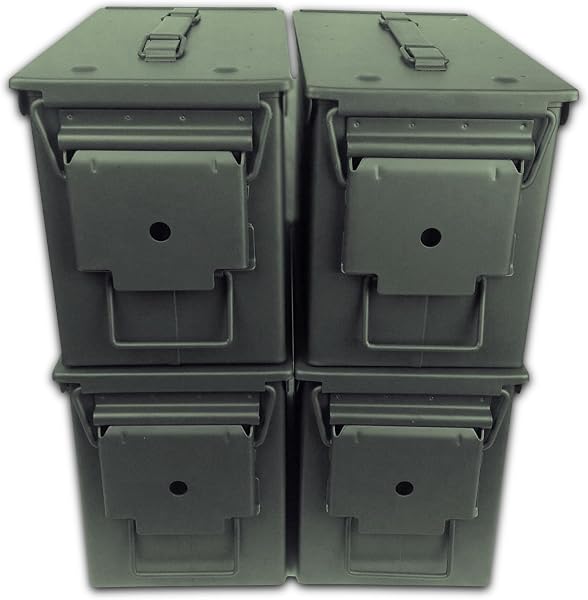
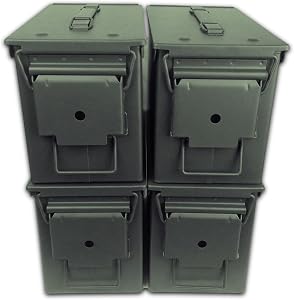
The HOMESTEAD 6-Pack targets buyers who want to build a complete ammunition storage system in a single purchase. Six identical M2A1-style steel cans let you organize by caliber, purpose, or family member, transforming a scattered collection of loose boxes into a structured, stackable storage solution. For serious shooters, preppers, and hunters who accumulate significant ammunition reserves, this kind of organization pays dividends quickly.
We may earn a commission when you buy through this link, at no additional cost to you.
Each can features an airtight rubber seal that is individually tested before shipping, which provides more confidence than bulk surplus cans where seal condition is a gamble. The reinforced hinges and double-latched lids handle repeated opening and closing without the loosening that affects cheaper cans over time. The powder-coated finish resists corrosion and scratches, keeping the cans looking clean even after years of garage or basement storage.
The inclusion of desiccant packs is a thoughtful detail that many competing multi-packs omit. Moisture trapped inside a sealed steel can will corrode ammunition over months and years, and a desiccant pack absorbs that residual humidity to extend shelf life. The 12 by 6.1 by 7.3 inch dimensions accommodate most common calibers, and the stackable design makes efficient use of vertical shelf space.
Storing different calibers in separate, clearly labeled cans reduces the risk of loading the wrong ammunition into a firearm, which is a genuine safety concern in households with multiple guns. A six-can system lets you dedicate one can per caliber or per purpose, such as range practice, hunting, and home defense. This organizational structure also makes inventory management easier when tracking how much ammunition you have on hand.
The main trade-offs are the higher upfront cost and the combined weight of roughly 34 pounds for the empty set. For buyers who only need one or two cans, a single-can option like the Fortress or U.S. G.I. M2A1 makes more financial sense. For anyone building a serious long-term storage system who wants new, tested cans with consistent quality across the entire set, the HOMESTEAD 6-Pack delivers a complete solution that justifies the investment.
Casual shooters who only need one or two cans for a small ammunition collection.
We may earn a commission when you buy through this link, at no additional cost to you.
The Ammo Can Man M2A1 4-Pack appeals to buyers who value authentic military heritage and want genuine surplus cans rather than newly manufactured reproductions. These M2A1 cans are sourced from actual military inventory and refurbished with a fresh powder-coated olive drab green finish, which gives them the look and feel of original issue equipment while addressing the rust and wear that raw surplus cans often show.
We may earn a commission when you buy through this link, at no additional cost to you.
The carbon steel SUS304 and aluminum 5052 construction provides genuine military-grade durability that has already proven itself in field conditions. The waterproof rubber seal keeps moisture out effectively, and the 11 by 5.5 by 7 inch interior dimensions accommodate up to 840 rounds of 5.56 NATO or equivalent volumes of other calibers. For shooters who store bulk rifle ammunition, that capacity per can is substantial.
The refurbished finish eliminates the dents, scratches, and surface rust that characterize unrefurbished surplus cans, which matters if the cans will be visible in a display or living space rather than hidden in a basement. The powder coating also adds a layer of corrosion resistance that extends the useful life of the steel body. Four cans provide enough capacity for a meaningful storage system without the commitment of a six-pack.
Refurbished surplus cans offer authentic military construction at a lower price than new-production steel cans, but condition can vary from unit to unit. New-production cans deliver consistent quality and flawless finishes but may use thinner steel or less robust hardware than original military specifications. If cosmetic perfection matters, go new. If you want genuine military-grade steel and accept minor character marks, refurbished surplus is the practical choice.
The main trade-off is the 4.4-star rating, which is the lowest in this comparison and likely reflects the inherent variability of refurbished surplus goods. Some buyers may receive cans with minor cosmetic imperfections despite the refurbishment process. For buyers who prioritize guaranteed consistency and pristine condition, a new-production option like the HOMESTEAD 6-Pack is a safer bet. For those who appreciate military authenticity and accept minor cosmetic variation, this 4-pack offers genuine surplus quality at a reasonable price.
Buyers who demand flawless cosmetic condition or want guaranteed consistency across every can.
We may earn a commission when you buy through this link, at no additional cost to you.
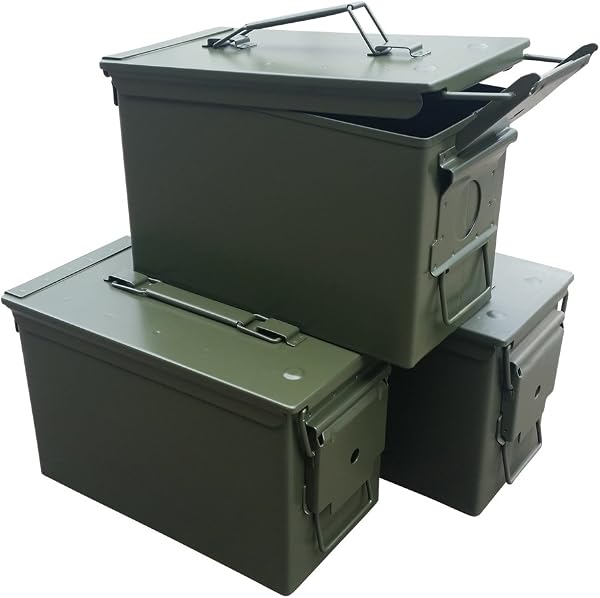
The Ammo Can Man 3-Pack of PA108 Fat 50 Cal cans targets buyers who need more interior volume than a standard M2A1 can provides. The PA108 Fat 50 design is wider and deeper than the traditional M2A1, which means each can holds significantly more ammunition or larger gear items. For shooters who store bulk quantities of rifle ammunition or want to consolidate multiple smaller boxes into fewer containers, the extra capacity per can is a meaningful advantage.
We may earn a commission when you buy through this link, at no additional cost to you.
These cans are new-production mil-spec units rather than refurbished surplus, which means the seals, hinges, and latches have not been subjected to years of military field use before reaching your hands. The carbon steel construction meets military specifications for durability and impact resistance, and the olive drab green finish provides the classic military aesthetic that many buyers prefer.
The three-pack configuration strikes a balance between the single-can options and the larger six-pack bundles. Three cans provide enough capacity for a moderate ammunition collection while keeping the total investment and storage footprint manageable. The US military surplus origin ensures that the design and construction standards meet genuine military requirements rather than commercial approximations.
The standard M2A1 ammo can measures approximately 11 by 5.5 by 7 inches and holds around 840 rounds of 5.56 NATO. The PA108 Fat 50 is noticeably wider and deeper, which increases capacity substantially for bulk storage. The trade-off is that Fat 50 cans take up more shelf space and weigh more when loaded. If your storage area is tight, standard M2A1 cans stack more efficiently. If you have ample space and want fewer cans holding more rounds, the Fat 50 is the better choice.
The main trade-offs are the larger physical footprint compared to standard M2A1 cans, which may not fit on narrower shelves or in tighter storage spaces, and the heavier loaded weight that comes with the increased capacity. Before purchasing, measure your intended storage area to confirm the Fat 50 dimensions will fit. For buyers who need maximum capacity per can and have the shelf space to accommodate the wider profile, this 3-pack delivers excellent value.
Buyers with limited shelf space or those who need the compact footprint of standard M2A1 cans.
We may earn a commission when you buy through this link, at no additional cost to you.
The Plano Field Ammo Box .30 is the most affordable option in this comparison by a wide margin, and it serves a specific purpose extremely well: transporting a few boxes of ammunition to the range and back. At under eight dollars, this polymer box provides organized, water-resistant storage for six to eight boxes of .30 caliber ammunition, which covers a typical range session for most shooters.
We may earn a commission when you buy through this link, at no additional cost to you.
The tongue and groove connection between the lid and body creates a water-resistant seal that protects against moisture, dust, and dirt during transport. While this seal is not as robust as the rubber gaskets on steel cans, it is more than adequate for the short-term exposure that occurs during range trips. The snap-down latch secures the lid firmly, and the padlock tab adds a layer of security for vehicle storage or compliance with local transport regulations.
The stackable design is a practical feature that lets you organize multiple Plano boxes vertically on a shelf or in a vehicle without them sliding or crushing each other. The heavy-duty handle provides a comfortable grip even when the box is fully loaded. For shooters who already own several firearms in different calibers, buying a handful of these inexpensive boxes to organize each caliber separately is a cost-effective approach to range-day logistics.
Polymer ammo boxes excel in situations where weight and cost matter more than maximum protection. A polymer box weighs a fraction of a steel can, which makes a real difference when you are carrying multiple boxes to the range. Polymer also will not rust, dent, or scratch the way steel can, and the lower price means you can buy several boxes for the cost of one steel can. For casual range use and short-term transport, polymer is often the smarter choice.
The main trade-offs are that polymer construction provides less crush and fire protection than steel, and the smaller capacity limits each box to a few retail ammunition boxes rather than bulk loose rounds. For long-term storage of valuable ammunition reserves, a sealed steel can is the better investment. For affordable, lightweight range-day transport and basic organization, the Plano Field box is nearly impossible to beat on value.
Buyers who need long-term airtight storage or maximum crush and fire protection for valuable ammunition reserves.
We may earn a commission when you buy through this link, at no additional cost to you.
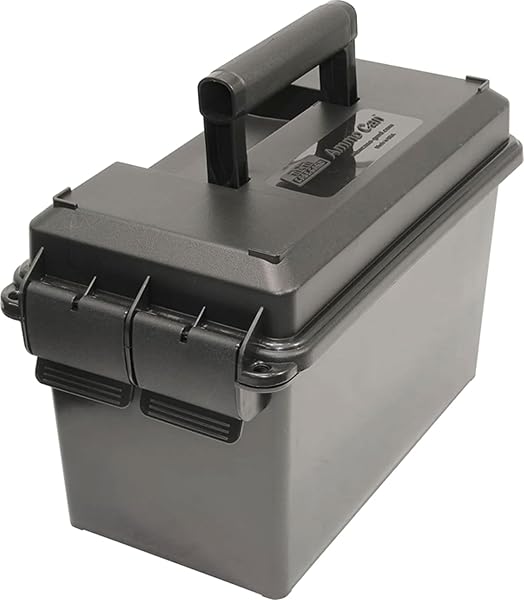
The MTM AC50C-40 delivers 50-caliber storage capacity in a polymer package at a price that undercuts most steel cans by a significant margin. The 4.8-star rating matches the highest in this comparison, which is remarkable for a product at this price point. For buyers who want the internal volume of a 50-cal can without the weight and cost of steel, this polypropylene design is one of the smartest purchases available.
We may earn a commission when you buy through this link, at no additional cost to you.
The dual latching system is the standout feature. Two independent latches create a more secure seal than single-latch designs and dramatically reduce the chance of the lid popping open during transport, which is a common frustration with cheaper polymer boxes. The O-ring seal works in conjunction with the dual latches to provide water-resistant protection that keeps moisture and dust away from your ammunition during storage and transport.
The double padlock tabs accept standard padlocks for security compliance during vehicle transport or storage in shared spaces. The 13.5 by 7.4 by 8.5 inch exterior dimensions provide generous 50-caliber capacity while the 11 by 5.8 by 7.2 inch interior accommodates bulk ammunition, emergency gear, medical supplies, batteries, or tools. The strong carry handle and stackable design make this can practical for both transport and organized storage.
Single-latch ammo boxes are notorious for popping open when jostled in a vehicle or dropped from a short height, scattering ammunition across the truck bed or range floor. A dual-latch system requires both latches to release simultaneously for the lid to open, which virtually eliminates accidental openings during normal handling. For shooters who transport ammunition in vehicles over rough roads, this feature alone justifies choosing the AC50C-40 over single-latch alternatives.
The main trade-offs are inherent to polymer construction: less crush resistance and no fire protection compared to steel. For long-term storage of valuable ammunition in a garage or basement where fire risk is a concern, a steel can provides better peace of mind. For everyday range transport, vehicle storage, and general-purpose organization at an unbeatable price, the MTM AC50C-40 is the best value in this comparison and a smart addition to any shooter’s gear collection.
Buyers who need fire-resistant storage or maximum crush protection for high-value ammunition reserves.
We may earn a commission when you buy through this link, at no additional cost to you.
The HARDROCK Metal Ammo Can addresses a problem that many buyers overlook when purchasing steel cans: the moisture that gets trapped inside when you seal the lid. Even in a dry environment, the air sealed inside a steel can contains enough humidity to promote corrosion over months and years. The included desiccant pack absorbs that residual moisture, which extends the shelf life of your ammunition and protects other stored valuables from rust and degradation.
We may earn a commission when you buy through this link, at no additional cost to you.
The steel construction with a front latch and rubber seal gasket creates a dust-tight and watertight closure that keeps external moisture from entering the can. The 7.5 by 11.8 by 6.1 inch dimensions are slightly more compact than a standard M2A1 can, which makes this model a good fit for smaller storage spaces like drawers, under-bed storage, or compact shelving units where a full-size 50-cal can would not fit.
The foldable flat handle is a practical design choice that reduces the overall profile when the can is stored on a shelf, eliminating the protruding handle that catches on adjacent items. The hinged lid stays attached to the body, and the locking latch provides a secure closure that resists accidental opening. The money-back satisfaction guarantee reduces the risk of trying a less-established brand.
When you close and seal a steel ammo can, the air trapped inside contains whatever humidity was present at that moment. In a humid climate, that trapped moisture can condense on metal surfaces inside the can during temperature swings, promoting corrosion on ammunition primers and casings. A desiccant pack absorbs this residual moisture and maintains a dry internal environment, which is especially important for long-term storage in garages, basements, and other spaces with fluctuating humidity levels.
The main trade-offs are the higher price for a single can compared to multi-pack options and the slightly smaller interior dimensions that limit total capacity. For buyers building a large storage system, the per-unit cost makes multi-packs more economical. For a single, well-equipped steel can that includes moisture control out of the box and fits in compact storage spaces, the HARDROCK delivers a thoughtful package that addresses real-world storage concerns.
Buyers building a large storage system who need multi-pack pricing and maximum per-can capacity.
We may earn a commission when you buy through this link, at no additional cost to you.
The U.S. G.I. M2A1 is a previously issued military ammunition can that brings genuine battlefield-proven construction to civilian storage use. For collectors, veterans, and shooters who value authentic military hardware, there is a tangible satisfaction in owning a can that was actually issued and used by the US armed forces. The heavy gauge steel body and classic olive drab green finish deliver the look and durability that reproduction cans struggle to replicate.
We may earn a commission when you buy through this link, at no additional cost to you.
The watertight rubber lid gasket creates a reliable seal that keeps moisture, dust, and debris out of the interior. The hinged lid and secure latch provide quick access while maintaining a positive closure that will not pop open during transport. The 11 by 5.5 by 7 inch interior dimensions match the standard M2A1 specification, which means this can is compatible with all the standard accessories, organizers, and foam inserts designed for the M2A1 form factor.
Beyond ammunition storage, this can serves equally well for first aid supplies, survival gear, tool kits, and emergency preparedness items. The heavy gauge steel protects contents from crushing, impacts, and environmental exposure in ways that plastic alternatives cannot. The folding carry handle makes transport straightforward, and the compact profile fits on standard shelving units.
The M2A1 ammo can has been the standard US military ammunition container for decades, which means an enormous ecosystem of compatible accessories exists. Foam inserts, divider kits, label holders, and mounting brackets are all designed around the M2A1 dimensions. Choosing an M2A1 can over a non-standard size gives you access to this accessory ecosystem, which makes customizing your storage setup easier and more affordable over time.
The main trade-offs are that previously issued cans may show minor cosmetic wear despite being in good functional condition, and this is a single can without included accessories like desiccant packs. Buyers who want pristine condition should look at new-production options. For those who value military authenticity, proven heavy-gauge construction, and the satisfaction of owning genuine surplus gear, the U.S. G.I. M2A1 is a compelling choice at a reasonable price.
Buyers who demand flawless new condition or want a multi-pack bundle for large storage systems.
We may earn a commission when you buy through this link, at no additional cost to you.
The Ammo Can Man 5-Pack of PA108 Fat 50 Cal cans is the highest-capacity bundle in this comparison, combining five oversized steel cans into a single purchase for buyers with serious storage needs. The Fat 50 PA108 design provides more interior volume per can than standard M2A1 cans, which means fewer total cans are needed to store the same volume of ammunition. For high-volume shooters, competitive teams, or preppers building a substantial reserve, this capacity advantage is significant.
We may earn a commission when you buy through this link, at no additional cost to you.
The carbon steel construction with a powder-coated finish provides long-term corrosion resistance and the structural durability to withstand stacking, transport, and rough handling. The waterproof metal seal keeps moisture out effectively, and the mil-spec construction ensures that the cans meet genuine military standards for material thickness and hardware quality. The olive drab green finish provides the classic military appearance.
Five cans provide enough capacity to organize a large ammunition collection by caliber, purpose, or location while maintaining the flexibility to dedicate individual cans to non-ammunition uses like tools, medical supplies, or emergency gear. The per-can cost in this 5-pack is competitive with smaller bundles, making it one of the more economical ways to acquire multiple Fat 50 cans.
Before investing in a large multi-pack, estimate how much ammunition you realistically need to store. A single Fat 50 PA108 can hold significantly more rounds than a standard M2A1, so five Fat 50 cans may provide more capacity than most recreational shooters will ever fill. Consider your shooting frequency, the calibers you use most, and your long-term storage goals. Buying more capacity than you need ties up money and space that could be used more effectively elsewhere.
The main trade-offs are the substantial storage footprint required for five oversized cans and the total weight when loaded, which can be considerable. Before purchasing, confirm that your storage area can accommodate the wider Fat 50 profile across five units. For buyers with the space and the ammunition volume to justify it, this 5-pack delivers the most storage capacity per dollar in this comparison and represents a serious long-term storage investment.
Casual shooters with modest ammunition collections or those with limited storage space.
We may earn a commission when you buy through this link, at no additional cost to you.
Selecting the right ammo can depends on how much ammunition you store, where you store it, and how long you need it to remain protected. This section walks through the factors that make the biggest practical difference so you can choose a can that preserves your ammunition reliably for years.
Steel ammo cans have been the military standard for decades because they offer unmatched crush resistance, fire protection, and long-term durability. A steel can will protect ammunition from being crushed under heavy loads, resist deformation from impacts, and provide a degree of fire resistance that can buy critical minutes in an emergency. The weight of steel also makes the cans harder to steal quickly, which is a minor but real security consideration. The trade-off is that steel cans are heavier, more expensive, and susceptible to surface rust if the protective coating is damaged.
Polymer ammo cans, like the MTM AC50C-40 and Plano Field Box, offer significant advantages in weight, cost, and corrosion immunity. A polymer can will never rust, weighs a fraction of its steel equivalent, and costs significantly less per unit. Modern polymer designs with O-ring seals provide water resistance that rivals many steel cans for typical storage conditions. The trade-off is less crush protection and no meaningful fire resistance, which matters for long-term storage of valuable ammunition reserves.
Choose steel for long-term storage, high-value ammunition, and environments where fire or crushing risk exists. Choose polymer for range transport, vehicle storage, and situations where weight and cost are primary concerns. Many serious shooters own both types, using steel for deep storage and polymer for active range use.
The seal is the single most important feature of any ammo can because moisture is the primary threat to ammunition longevity. A compromised seal allows humid air to enter the can, where temperature fluctuations cause condensation that corrodes primers, degrades powder, and ruins brass casings over time. Rubber gasket seals, found on most steel cans like the Fortress and U.S. G.I. M2A1, provide the most reliable long-term moisture barrier when the gasket is in good condition.
O-ring seals, used on MTM polymer cans, provide effective water resistance for typical storage and transport conditions. Tongue-and-groove designs like the Plano Field Box offer basic splash protection but are less effective against sustained humidity exposure. Regardless of seal type, the critical factor is that the gasket or O-ring is intact, pliable, and free of cracks or compression set that would prevent a full seal when the lid is closed.
Inspect the seal before loading ammunition into any can, and replace worn gaskets promptly. For long-term storage, add a desiccant pack inside the sealed can to absorb residual moisture trapped during closing. A good seal plus a desiccant pack provides the best protection for ammunition stored over months and years.
Ammo can sizes are designated by the caliber they were originally designed to hold, but the actual interior dimensions determine what fits in practice. Standard M2A1 50-cal cans measure approximately 11 by 5.5 by 7 inches and hold around 840 rounds of 5.56 NATO or equivalent volumes of other calibers. The PA108 Fat 50 cans are wider and deeper, providing substantially more capacity per can for bulk storage. Smaller 30-cal cans, like those in the MTM AC4C crate, are more compact and suited to pistol calibers or smaller quantities.
Matching can size to your actual storage needs prevents wasted space and unnecessary expense. A single M2A1 can holds more ammunition than most recreational shooters fire in a year, while competitive shooters and hunters may need multiple cans per caliber. Consider not just the ammunition itself but also whether you want to store cleaning supplies, tools, or accessories in the same can, which requires additional interior volume.
Measure your intended storage space before purchasing, especially for Fat 50 cans that have a wider footprint than standard M2A1 models. Choose the smallest can that comfortably holds your ammunition with room for a desiccant pack, and buy multiple smaller cans rather than one oversized can for better organization and easier handling.
The latch mechanism determines how securely the lid stays closed during transport and how easily you can access the contents. Single-latch designs are simple and quick to operate but can pop open when jostled, which is a common frustration with budget polymer boxes. Dual-latch systems, like the one on the MTM AC50C-40, require both latches to release simultaneously, which virtually eliminates accidental openings during vehicle transport or rough handling.
Handle design affects carrying comfort and storage efficiency. Fixed handles provide a strong grip but protrude from the can body, which can interfere with stacking or shelf placement. Foldable handles, like the one on the HARDROCK Metal Can, lay flat against the can when not in use, reducing the overall profile for compact storage. The folding carry handles on military-style steel cans are a proven design that balances carrying comfort with storage efficiency.
Prioritize dual latches if you transport ammunition in vehicles over rough roads. Choose foldable handles if storage space is tight and you need cans to stack flush against each other. For stationary storage where the can rarely moves, latch and handle design matter less than seal quality and construction material.
New-production ammo cans offer consistent quality, flawless finishes, and reliable seals straight from the factory. Brands like MTM and HOMESTEAD manufacture cans to military specifications with modern quality control, which means every can in a multi-pack will look and perform identically. The trade-off is that new-production cans may use slightly thinner steel or less robust hardware than original military-issue cans, depending on the manufacturer.
Military surplus cans, like the U.S. G.I. M2A1 and Ammo Can Man options, offer genuine military-grade construction that has already proven itself in field conditions. Surplus cans are typically built to more demanding specifications than commercial reproductions, with heavier gauge steel and more robust hardware. The trade-off is that surplus condition varies, and even refurbished cans may show minor cosmetic imperfections that do not affect function but may bother buyers who want pristine appearance.
Choose new production when consistency and cosmetic perfection matter most. Choose surplus when you want genuine military-grade materials and accept minor character marks. Either option will protect your ammunition effectively when the seal is in good condition.
Stackability determines how efficiently you can use vertical shelf space, which matters when your ammunition collection outgrows a single shelf. Steel M2A1 cans stack naturally due to their flat tops and rectangular profiles, but they can slide sideways without a retaining system. Polymer crates like the MTM AC4C include integrated tie-down points and interlocking features that keep stacked cans secure during transport and storage.
Organization extends beyond stacking to include how you label and arrange cans by caliber, purpose, or date of purchase. Multi-can systems like the HOMESTEAD 6-Pack and MTM AC4C make it easy to dedicate one can per caliber, which reduces the risk of grabbing the wrong ammunition in a hurry. Some buyers use colored tape, stenciled labels, or dedicated label holders to identify can contents at a glance without opening the lid.
If you store more than three or four cans, invest in a system that supports both stacking and labeling. A well-organized storage setup saves time at the range and reduces safety risks from ammunition mix-ups. Start with a multi-pack that matches your caliber variety and expand as your collection grows.
Before loading ammunition into a new or surplus can, inspect the rubber gasket or O-ring seal for cracks, flat spots, or debris that could prevent a full seal. Wipe the gasket clean with a damp cloth and apply a thin coat of silicone grease to keep the rubber pliable and extend its useful life. For steel cans, check the interior for any signs of rust or sharp edges that could damage ammunition packaging, and address any issues before loading. Place a fresh desiccant pack inside the can to absorb residual moisture, especially if you are sealing the can for long-term storage in a humid environment.
When loading ammunition, arrange boxes or loose rounds to minimize shifting during transport, which can damage primers and casings over time. Avoid overfilling the can to the point where the lid compresses the contents when closed, as this pressure can deform ammunition and compromise the seal. For mixed-caliber storage, use cardboard dividers or separate zip-lock bags to keep different rounds organized and prevent brass-on-brass contact that accelerates tarnishing. Close the lid firmly and verify that the latch engages fully and the seal compresses evenly around the entire perimeter.
Store loaded ammo cans in a cool, dry location with stable temperature and humidity, such as an interior closet or climate-controlled basement. Avoid garages, sheds, and attics where temperature swings promote condensation inside sealed containers. Periodically open stored cans to inspect the desiccant pack and replace it when it has changed color or become saturated. Check the gasket condition annually and replace any seals that show signs of hardening or cracking. With proper care, a quality ammo can will protect your ammunition for decades.
The designation refers to the original military caliber the can was designed to hold, but it primarily indicates physical size. A 50 cal can like the standard M2A1 measures roughly 11 by 5.5 by 7 inches and holds significantly more ammunition than a 30 cal can, which is more compact. Both sizes can store any caliber of ammunition that fits within the interior dimensions, so choose based on the volume you need to store.
Steel ammo cans with intact rubber gasket seals are highly water-resistant and can keep ammunition dry in heavy rain and humid conditions. However, they are not designed for prolonged submersion in water. The seal quality varies by manufacturer and condition, so inspect the gasket before relying on any steel can for moisture protection. Adding a desiccant pack inside provides additional insurance against trapped humidity.
Yes, polymer ammo cans with O-ring seals like the MTM AC50C-40 provide adequate moisture protection for long-term storage in climate-controlled environments. For storage in garages, basements, or other areas with significant humidity fluctuations, steel cans with rubber gaskets offer a more robust moisture barrier. Regardless of material, always include a desiccant pack and inspect the seal periodically during long-term storage.
A desiccant pack is strongly recommended for any sealed ammo can, especially for long-term storage. When you close the lid, the air trapped inside contains moisture that can condense during temperature changes and promote corrosion on ammunition components. A desiccant pack absorbs this residual humidity and maintains a dry internal environment. Replace the pack when it becomes saturated, typically every six to twelve months depending on your climate.
A standard M2A1 50 cal ammo can holds approximately 840 rounds of 5.56 NATO in linked belts or loose-packed configuration. For boxed ammunition, capacity varies by box size, but a typical M2A1 can hold roughly 20 to 30 standard retail boxes of rifle ammunition. The actual count depends on the caliber, packaging, and how efficiently you arrange the contents inside the can.
Yes, surplus ammo cans are safe and effective for ammunition storage as long as the seal is intact and the interior is clean and dry. Inspect surplus cans for rust, dents that compromise the seal, or damaged gaskets before loading ammunition. Refurbished surplus cans like those from Ammo Can Man have been cleaned, repainted, and fitted with new seals, which makes them functionally equivalent to new cans for storage purposes.
Absolutely. Ammo cans are popular for storing tools, first aid supplies, emergency cash, important documents, batteries, medical supplies, and survival gear. The waterproof seal and rugged construction make them ideal for protecting any valuables from moisture, dust, and physical damage. Many preppers and outdoor enthusiasts use ammo cans as general-purpose dry boxes for camping, boating, and emergency preparedness.
Clean the rubber gasket periodically with a damp cloth to remove dirt and debris that could prevent a full seal. Apply a thin coat of silicone grease to keep the rubber pliable and prevent cracking from age and UV exposure. Inspect the gasket annually for signs of hardening, flattening, or cracking, and replace it if the seal no longer compresses evenly when the lid is closed. Replacement gaskets are available from most military surplus and shooting supply retailers.
In most jurisdictions, storing ammunition in ammo cans at home is perfectly legal and is considered a responsible storage practice. However, local laws regarding ammunition storage quantities and locations vary, so check your state and municipal regulations if you plan to store large quantities. Some homeowners insurance policies also have specific requirements for ammunition storage that may affect your coverage.
The MTM AC4C 4-Can Ammo Crate earns the top overall pick for its combination of the highest 4.8-star rating, four individual 30-caliber cans with O-ring seals, ATV tie-down capability, and US manufacturing. The multi-can system provides the organizational flexibility that single-can options cannot match, making it ideal for multi-caliber shooters and range-day logistics. For anyone who values a complete, portable storage system over individual cans, the AC4C is the strongest choice in this comparison.
For buyers on a budget, the MTM AC50C-40 delivers 50-caliber capacity with dual latches and an O-ring seal at under fifteen dollars, making it the best value per can in this comparison. The HOMESTEAD 6-Pack is the premium choice for buyers building a complete steel storage system with tested seals and included desiccant packs. The U.S. G.I. M2A1 and Ammo Can Man surplus options appeal to buyers who value authentic military construction and proven heavy-gauge steel.
Your final choice should come down to three questions: how much ammunition do you need to store, will the cans stay in one location or travel frequently, and do you need steel-level protection or is polymer sufficient? Answer those honestly and the right pick from this comparison will stand out. Any of these 10 ammo cans will protect your ammunition reliably when matched to your storage situation and paired with a fresh desiccant pack.