Philips OnSite Slim
9.4Editor scoreSlim carry case
8-second shock delivery
Daily self-test diagnostics
4-year battery life
Find the right aed defibrillators for 2026. We compare 10 standout options by build quality, useful features, owner feedback, value, and everyday trade-offs.
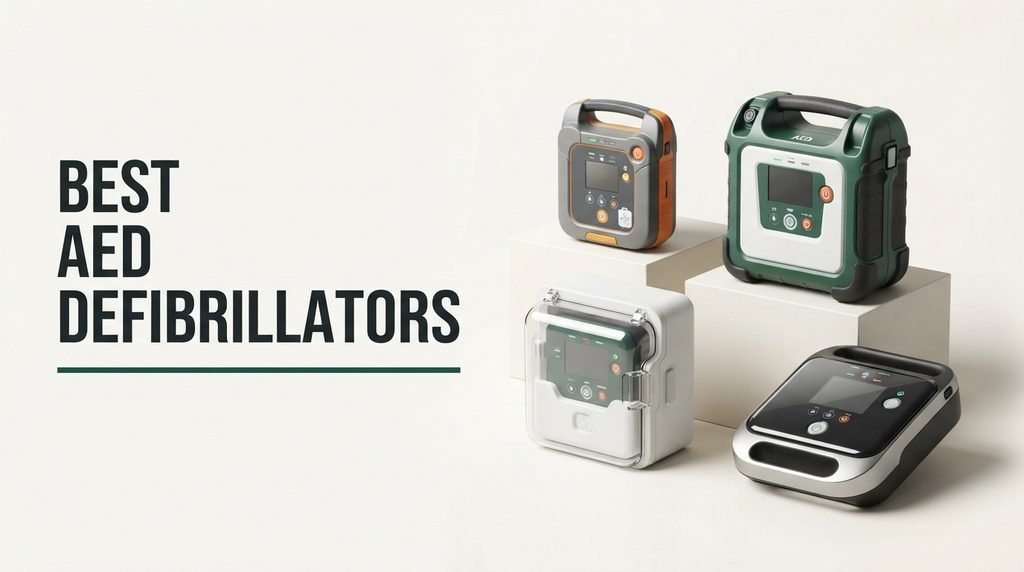
Find the right AED defibrillators for 2026. We compare 10 standout options by the factors that matter most in emergency cardiac care, including shock delivery speed, voice guidance clarity, self-testing reliability, battery longevity, pad compatibility, portability, and overall readiness for public or home use.
Automated external defibrillators vary significantly in bundled accessories, carry case design, and intended environment. Some models ship with wall cabinets and response kits for workplace compliance, while others focus on compact home storage with training accessories for family preparedness.
Choosing the right unit means balancing upfront cost against long-term maintenance expenses like battery and pad replacements. This guide breaks down each option so you can match a defibrillator to your specific setting, budget, and user experience level.
We compared 10 AED defibrillators using the details that actually help a buyer decide: shock delivery speed, voice prompt clarity, self-test frequency, battery lifespan, pad expiration windows, carry case options, included accessories, warranty length, owner ratings, and total cost of ownership. The notes focus on practical trade-offs so each pick connects to how organizations and families actually deploy, store, and maintain emergency cardiac equipment.


Compare key features, scores, and current prices side by side. A shorter feature list means fewer details were available, not necessarily fewer capabilities.


At the lowest price point in this comparison, this portable AED offers an accessible entry point for organizations and individuals who need defibrillator coverage but face tight budgets. The unit is designed for dry indoor environments such as offices, schools, gyms, and retail spaces, and its lightweight construction makes it easy to relocate between rooms or floors as needed. For small businesses that have been putting off an AED purchase due to cost, this model removes a significant financial barrier.
We may earn a commission when you buy through this link, at no additional cost to you.
The device is engineered to operate within defined technical specifications that align with standard emergency cardiac response protocols. A quick visual inspection before each use is recommended to confirm that all components appear intact and undamaged. While this manual check requires slightly more diligence than the fully automated self-test systems found on premium models, it is a straightforward process that takes only a few seconds.
Storage and handling are straightforward: keep the unit in a clean, dry location within the recommended temperature range and perform regular visual checks to confirm readiness. The compact form factor means it fits easily on a shelf, in a closet, or mounted on a wall bracket. Cleaning involves wiping surfaces with a damp lint-free cloth, avoiding harsh chemicals or excessive moisture that could damage internal electronics.
The initial purchase price is only part of the equation. Before committing to any AED, research the cost and availability of replacement batteries and electrode pads, which are consumable items that expire on a regular schedule. A lower upfront price can sometimes be offset by higher ongoing supply costs or limited availability of certified replacements, so factor in at least five years of maintenance when comparing total cost of ownership.
This AED is best suited for buyers who prioritize affordability and are comfortable performing basic visual inspections rather than relying on automated diagnostics. It may not carry the same long-term service infrastructure as established brands like Philips, so consider whether local technical support and replacement part availability matter for your situation. For many smaller venues, however, the cost savings are compelling.
Buyers in wet or outdoor environments, or those who require automated self-testing and an established manufacturer service network.
We may earn a commission when you buy through this link, at no additional cost to you.
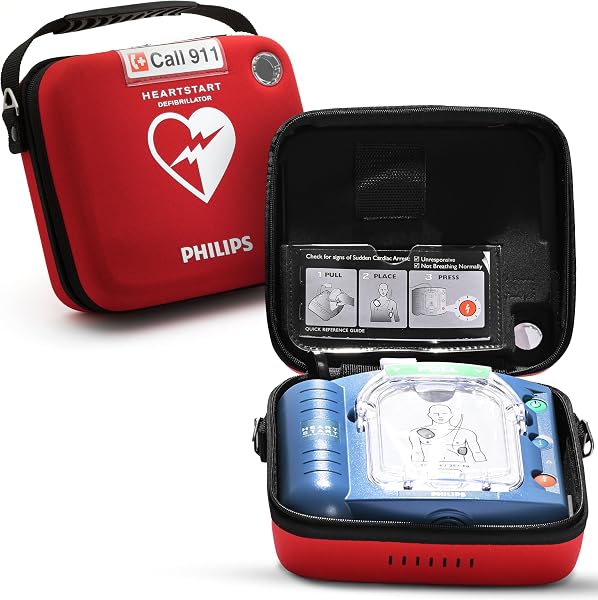
The Philips HeartStart OnSite with the slim carry case is a straightforward choice for organizations that need a no-fuss defibrillator ready for immediate deployment. It ships with the battery and adult SMART Pads Cartridge already installed, so the device is functional the moment you remove it from the box. This makes it well suited for small offices, retail shops, or community centers where a dedicated safety manager may not be on staff.
We may earn a commission when you buy through this link, at no additional cost to you.
Performance centers on the Quick Shock feature, which can deliver a shock within eight seconds of completing CPR pauses. The built-in SMART Analysis algorithm evaluates the patient’s heart rhythm before advising whether a shock is appropriate, reducing the chance of user error during a high-stress event. Voice prompts guide the rescuer through every step, including real-time CPR coaching, which is critical when bystanders have no medical background.
Maintenance is largely hands-off thanks to automated daily, weekly, and monthly self-tests that verify the device is operational without requiring manual calibration. The slim carry case keeps the footprint small, which is helpful for wall-mounted installations or tight storage closets. However, the slim design means there is no room inside the case for a spare battery or extra pad cartridge, so you will need to store backups separately.
The slim carry case is ideal when wall space or storage room is limited and you plan to mount the AED in a visible, easily accessible location. Because the case is narrower than the standard version, it fits more discreetly into hallways, reception areas, and small break rooms. Just remember to keep a spare battery and pad set in a nearby supply closet so you are not caught without replacements after an emergency use.
This model is a strong fit for buyers who want a reliable Philips defibrillator at a relatively accessible price point within the OnSite lineup. If you anticipate needing spare components stored alongside the unit or want a more complete compliance package with signage and a cabinet, one of the bundled options further down this list may serve you better.
Buyers who need a spare battery and extra pads stored inside the carry case should look at the standard case version instead.
We may earn a commission when you buy through this link, at no additional cost to you.
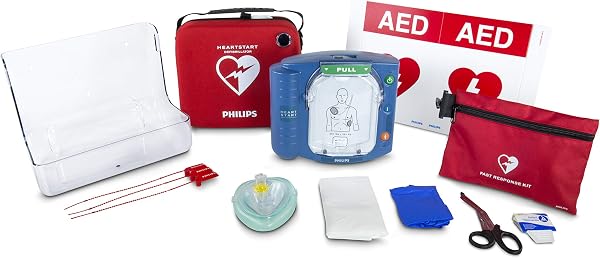
The Philips HeartStart OnSite Business Package is designed for organizations that want a turnkey AED solution without sourcing individual components. Alongside the defibrillator itself, this bundle includes a basic wall cabinet, an AED wall sign for visibility, and a Fast Response Kit containing items typically needed during a cardiac emergency. For facility managers handling compliance requirements, having everything arrive in a single shipment simplifies procurement considerably.
We may earn a commission when you buy through this link, at no additional cost to you.
The underlying defibrillator is the same proven OnSite platform found in other Philips models, featuring Quick Shock delivery within eight seconds and SMART Analysis for accurate rhythm assessment. Voice prompts walk the rescuer through pad placement, CPR timing, and shock delivery in plain language. The device performs daily, weekly, and monthly self-tests automatically, which reduces the administrative burden on whoever is responsible for safety equipment checks.
The included wall cabinet provides a dedicated, visible storage location that helps meet many workplace safety guidelines. The Fast Response Kit typically contains items like gloves, a razor for chest hair, and a breathing barrier, which can save precious seconds during an actual event. One consideration is that the cabinet dimensions may not suit every hallway or break room, so measuring your intended installation spot before ordering is a smart move.
Purchasing a cabinet, wall sign, and response kit separately can add several hundred dollars to the total cost and requires coordinating multiple vendors. The Business Package consolidates these items into one order, which is particularly convenient for organizations outfitting multiple floors or locations. The bundled approach also ensures that the accessories are compatible with the specific AED model you are deploying.
This package makes the most sense for medium to large workplaces, gyms, or public-facing businesses that need a visible, code-compliant AED station. The higher price reflects the bundled accessories rather than a different defibrillator, so if you already have a cabinet and response supplies, the standalone model could save you money.
Home users or small offices that already have mounting hardware and response supplies will pay extra for accessories they do not need.
We may earn a commission when you buy through this link, at no additional cost to you.
The Philips HeartStart OnSite Ready-Pack addresses a real operational concern: what happens after the first set of pads is used? This configuration ships with a spare Adult SMART Pads Cartridge already pre-installed inside the standard carry case alongside the primary set on the device. For high-traffic environments like airports, large gyms, or event venues, having an immediate backup means the AED can be redeployed quickly without waiting for a supply reorder.
We may earn a commission when you buy through this link, at no additional cost to you.
The defibrillator itself delivers the same Quick Shock capability and SMART Analysis rhythm assessment as other OnSite models. Voice instructions guide untrained bystanders through the entire rescue sequence, and the device adjusts its prompts based on the rescuer’s actions. This responsive guidance is especially valuable in chaotic public settings where the person grabbing the AED may be under extreme stress.
The standard carry case is larger than the slim version, which gives it room for the spare cartridge and also leaves space for a spare battery if you choose to add one later. The tradeoff is slightly more bulk and weight, which matters less when the unit is wall-mounted but could be a factor if you plan to carry it between locations. The self-test regimen runs daily, weekly, and monthly to confirm readiness without manual intervention.
AED pads are single-use consumables. Once they are applied to a patient, they cannot be reused even if no shock was delivered. In a busy public venue, a second cardiac event could occur before replacement pads arrive from a supplier. The Ready-Pack eliminates this gap by keeping a fresh set sealed and ready inside the same case, which can be a critical advantage during multi-hour events or in remote locations with slow supply chains.
This Ready-Pack is a practical choice for any setting where response time between successive emergencies could be short. If your location sees heavy foot traffic or hosts large gatherings, the built-in redundancy provides peace of mind that a standalone unit simply cannot match. Buyers on tighter budgets who can manage spare supplies separately may prefer the basic OnSite model.
Low-traffic offices or homes where the likelihood of consecutive emergencies is minimal and spare supplies can be stored nearby.
We may earn a commission when you buy through this link, at no additional cost to you.
The Philips HeartStart Home defibrillator is purpose-built for residential use, making it the right choice for families with members who have known cardiac risk factors. Unlike the OnSite models designed for public environments, this version is configured and labeled for private home deployment. The slim carry case stores easily in a bedroom closet, kitchen cabinet, or hallway shelf, keeping the device accessible without dominating limited living space.
We may earn a commission when you buy through this link, at no additional cost to you.
The core technology mirrors the OnSite platform, including SMART Analysis for rhythm evaluation and Quick Shock delivery within eight seconds. Voice prompts are calibrated for layperson use, walking a family member through pad placement, CPR compressions, and shock administration in calm, clear language. This is critical in a home setting where the rescuer is likely a spouse, parent, or adult child with no medical training.
Daily, weekly, and monthly self-tests run automatically, so the device confirms its own readiness without requiring the homeowner to perform technical checks. The battery carries a four-year warranty, and the device itself is covered for eight years, which provides long-term confidence for a product you hope never to use. Pads are warrantied until their printed expiration date, so tracking that date is the main ongoing maintenance task.
In a cardiac emergency, every minute counts. Store the defibrillator in a central, ground-floor location that all family members know about and can reach within seconds. Avoid locking it in a safe or placing it on a high shelf. Many families keep it near the primary bedroom or in a main living area, and it helps to briefly review the location and basic operation with every household member at least once a year.
This model is ideal for households where a family member has a history of arrhythmia, heart attack, or other cardiac conditions that elevate the risk of sudden cardiac arrest. The residential focus means it may not meet certain public access defibrillator regulations, so it should not be substituted for a workplace or public venue AED. For home peace of mind, however, it is one of the most trusted options available.
Public venues, workplaces, or any environment that requires a public access defibrillator compliant with local AED placement laws.
We may earn a commission when you buy through this link, at no additional cost to you.
The Philips HeartStart OnSite with the standard carry case earns the highest owner rating in this comparison, and the reason is practical versatility. The standard case provides enough interior space to store a spare battery and an extra SMART Pads Cartridge alongside the primary unit, which means you can keep the AED fully stocked and ready for repeated use without hunting for supplies in a separate location. This balance of portability and preparedness makes it a reliable all-around choice.
We may earn a commission when you buy through this link, at no additional cost to you.
Under the hood, the device leverages the same Quick Shock and SMART Analysis technology found across the HeartStart OnSite range. The rhythm assessment algorithm evaluates the patient’s cardiac activity and advises shock delivery only when appropriate, while voice prompts guide the rescuer through CPR and shock administration in real time. The eight-second shock delivery window after a CPR pause is among the fastest in the category, which can meaningfully improve survival odds.
The automated self-test regimen covers daily, weekly, and monthly intervals, providing continuous readiness confirmation without manual calibration. The standard carry case is slightly larger than the slim version, but the extra room is a worthwhile tradeoff for most buyers who want the option to carry spares. The device is suitable for restaurants, offices, gyms, airports, and businesses of any size, and no prior training is required to operate it effectively.
Take advantage of the extra interior space by keeping a fresh spare battery and a sealed pad cartridge in the case at all times. This is especially important in environments where the AED may be used and then need to be redeployed before a supply order arrives. Label the spares with their expiration dates and set calendar reminders to replace them proactively, so the case is never carrying expired consumables.
This model hits the sweet spot for most public access buyers. It offers the reliability and brand reputation of Philips, the convenience of onboard spare storage, and a price that sits in the middle of the OnSite range. If you need a full compliance bundle with a cabinet and signage, consider one of the business packages. If space is extremely tight, the slim case version may be preferable. For everyone else, this is the default recommendation.
Buyers who need a wall-mounted compliance station with cabinet and signage should choose a business package instead.
We may earn a commission when you buy through this link, at no additional cost to you.
The Philips HeartStart OnSite Business Package with Ready-Pack is the most complete AED solution in this comparison, combining the redundancy of pre-installed spare pads with the compliance accessories of a full business bundle. You receive the defibrillator, a standard carry case with spare pads already loaded, a wall cabinet, an AED wall sign, and a Fast Response Kit. For facility managers who want to check every box in a single purchase, this package eliminates the guesswork.
We may earn a commission when you buy through this link, at no additional cost to you.
The defibrillator itself features the familiar Quick Shock delivery and SMART Analysis rhythm assessment that define the HeartStart OnSite line. Voice prompts guide untrained rescuers through the entire process, and the device adapts its instructions based on user actions. The automated self-test schedule runs daily, weekly, and monthly, providing continuous readiness verification that simplifies compliance documentation for safety audits.
The Ready-Pack component is the key differentiator here. Because the spare Adult SMART Pads Cartridge is pre-installed in the carry case, the AED can be used and immediately redeployed with a fresh set of pads without waiting for a supply delivery. This level of redundancy is particularly valuable in large facilities, multi-story buildings, or venues that host high-capacity events where the probability of a cardiac incident is statistically higher.
Large corporate campuses, university buildings, sports arenas, and transportation hubs are the environments where this level of preparedness pays off. In these settings, emergency medical services may take several minutes to arrive, and the AED could be the only life-saving intervention available during that window. Having spare pads on hand and a visible, cabinet-mounted station ensures that the device is both accessible and ready for repeated use if necessary.
This bundle is the right investment for organizations that prioritize maximum preparedness and want to minimize any gap in AED availability. The premium price reflects the comprehensive accessory package rather than a different underlying defibrillator. Smaller offices or single-location businesses may find the standard Business Package or the standalone OnSite with standard case to be more cost-effective while still meeting their safety requirements.
Small offices or home users who do not need a wall cabinet, signage, or redundant pad storage and would prefer a lower-cost option.
We may earn a commission when you buy through this link, at no additional cost to you.
The Philips HeartStart Home with Training Pads Cartridge adds a valuable preparedness layer to the standard Home defibrillator: the ability to practice without consuming live pads. The included training pads and training DVD allow family members to walk through the full AED sequence, from opening the case to following voice prompts, in a low-pressure environment. This hands-on familiarity can reduce hesitation and panic during an actual cardiac emergency.
We may earn a commission when you buy through this link, at no additional cost to you.
The live defibrillator functions identically to the standard Home model, with SMART Analysis rhythm evaluation, Quick Shock delivery within eight seconds, and clear voice-guided instructions designed for untrained rescuers. The device performs its own daily, weekly, and monthly self-tests, so you do not need to worry about manual calibration. The slim carry case stores easily in a residential setting without taking up significant space.
The training component is what sets this package apart. By plugging in the training pads cartridge, the device enters a practice mode that simulates the rescue sequence without delivering an actual shock. Family members can take turns practicing pad placement and following the CPR coaching prompts, which builds muscle memory and confidence. The training DVD reinforces proper technique and helps household members understand what to expect during a real event.
Schedule a brief practice session every six months to keep the rescue sequence fresh in everyone’s mind. Have each capable family member run through the full drill using the training pads, paying attention to pad placement on the chest and the rhythm of CPR compressions guided by the voice prompts. These short sessions take only a few minutes but can make a significant difference in response speed and composure during a real emergency.
This edition is particularly well suited for families where a cardiac risk is known and multiple household members may need to act as rescuers. The additional cost over the basic Home model is modest relative to the confidence that practice provides. If your household consists of a single caregiver who feels comfortable with the voice prompts alone, the standard Home model may be sufficient.
Public or workplace settings, as this model is configured and labeled specifically for residential home use.
We may earn a commission when you buy through this link, at no additional cost to you.
The Philips HeartStart OnSite Value Package sits between the standalone models and the full Business Package in both price and included accessories. You get the defibrillator with a slim carry case, a wall mount for visible installation, an AED wall sign, and a Fast Response Kit. This combination provides the essentials for workplace compliance at a lower cost than the Business Package, making it attractive for small to mid-size businesses that need a mounted AED station without the full cabinet setup.
We may earn a commission when you buy through this link, at no additional cost to you.
The defibrillator delivers the same Quick Shock performance and SMART Analysis rhythm assessment as other OnSite models. Voice prompts guide the rescuer through every step, and the automated self-test schedule confirms readiness on a daily, weekly, and monthly basis. The eight-year device warranty and four-year battery warranty provide long-term protection for your investment.
The wall mount is a practical inclusion that many standalone buyers end up purchasing separately. Having a dedicated mounting point ensures the AED is visible, accessible, and less likely to be misplaced in a storage closet. The Fast Response Kit adds essential emergency supplies that complement the defibrillator during a cardiac event. The slim carry case keeps the overall footprint compact, though it does limit onboard spare storage.
A wall mount keeps the AED visible and accessible but leaves it exposed to dust, accidental bumps, and potential tampering. A cabinet provides physical protection and can include an alarm that sounds when the door is opened, which deters theft and alerts nearby staff. Check your local AED placement regulations to determine whether a simple wall mount satisfies compliance requirements or whether a cabinet is mandated for your type of facility.
This Value Package is a smart choice for businesses that want a wall-mounted AED station with basic compliance accessories but do not need a full cabinet or redundant pad storage. If your local regulations require a locked or alarmed cabinet, you may need to upgrade to the Business Package or purchase a cabinet separately. For most small offices, retail stores, and community spaces, this bundle covers the essentials at a reasonable price.
Environments that require a locked or alarmed cabinet for regulatory compliance, or high-traffic venues that benefit from spare pad redundancy.
We may earn a commission when you buy through this link, at no additional cost to you.
This portable AED stands out with its bright LED display, which provides step-by-step visual prompts alongside the standard audio instructions. In noisy environments like factory floors, crowded gyms, or outdoor event venues, voice prompts alone can be difficult to hear. The visual display adds a critical communication channel, showing heart rhythm graphics, device status, and operating sequence information that helps the rescuer stay oriented even when ambient noise is high.
We may earn a commission when you buy through this link, at no additional cost to you.
The high-visibility orange housing and ergonomic carry handle make the device easy to locate and grab quickly during an emergency. Clearly marked power and shock indicators with illuminated buttons help users identify essential controls without fumbling. The compact, lightweight construction supports convenient placement in offices, schools, gyms, and other designated locations where space may be limited but rapid access is essential.
Built-in readiness indicators simplify routine status checks, allowing staff to confirm at a glance that the device is operational without powering it on or running a manual diagnostic. The complete system includes the essential operating components needed for prompt setup and use. Following the supplied manual for battery replacement, pad changes, cleaning, and storage schedules will help maintain long-term reliability.
Consider the noise level of your intended deployment location. Manufacturing plants, swimming pool areas, school gymnasiums during events, and busy restaurant kitchens can all generate enough ambient sound to drown out voice instructions. In these settings, a visual display provides a redundant communication path that can keep the rescuer on track even when audio cues are partially obscured. The combination of visual and audio guidance offers the most robust user experience across diverse environments.
This AED is a compelling option for environments where visual guidance adds meaningful value over voice-only models. The LED display is particularly useful in loud industrial settings, busy public venues, or any location where hearing the audio prompts clearly may be a challenge. As with any newer brand, verify the availability and cost of replacement batteries and pads before purchasing to ensure sustainable long-term ownership.
Buyers who prioritize an established manufacturer service network and widely available replacement parts over visual display features.
We may earn a commission when you buy through this link, at no additional cost to you.
Selecting an automated external defibrillator involves more than comparing prices. The right choice depends on your environment, the people who will use it, local regulations, and the long-term costs of keeping the device operational. The factors below cover the most important decision points.
The primary function of any AED is to analyze the patient’s heart rhythm and deliver a defibrillation shock as quickly as possible when indicated. Most modern units can assess a rhythm and advise a shock within eight to fifteen seconds after CPR pauses. Faster shock delivery reduces the time the heart spends in a non-perfusing rhythm, which is directly correlated with improved survival outcomes. When comparing models, look for specific shock delivery times rather than vague claims about speed.
Rhythm analysis algorithms vary between manufacturers. Advanced systems like the SMART Analysis technology found in Philips HeartStart models continuously evaluate the cardiac rhythm and adjust their recommendations based on the rescuer’s actions. This responsive approach helps prevent inappropriate shocks and provides more accurate guidance during the chaotic moments of a cardiac emergency. The algorithm quality is difficult to evaluate from a spec sheet alone, so choosing a well-established manufacturer with extensive clinical validation is a practical shortcut.
Prioritize shock delivery speed and proven rhythm analysis when comparing models. In a real emergency, the difference of a few seconds can matter, and a reliable algorithm reduces the cognitive burden on an untrained rescuer.
Most AED users will have little or no medical training, which makes the quality of voice prompts one of the most important factors in a successful rescue. Effective prompts are calm, clear, and paced appropriately for someone under extreme stress. They should cover pad placement, CPR compression rate and depth, shock delivery warnings, and post-shock instructions. Some models also adjust their prompts based on the rescuer’s actions, providing faster or slower guidance depending on how quickly the user is responding.
Consider the environments where the AED will be deployed. In noisy settings like gymnasiums, factory floors, or outdoor venues, voice prompts alone may not be audible. Models with visual displays or LED indicators provide a redundant communication channel that can keep the rescuer on track when audio cues are compromised. If your deployment location is consistently loud, a unit with both audio and visual guidance offers the most robust user experience.
Listen to demo recordings of the voice prompts if available, and consider whether your deployment environment is quiet enough for audio-only guidance or whether visual prompts would add meaningful value.
An AED that fails during an emergency is worse than having no AED at all, which is why automated self-testing is a critical feature. Most quality defibrillators perform internal diagnostics on a daily, weekly, and monthly basis, checking battery charge, circuit integrity, and pad connectivity without requiring any action from the owner. A visible status indicator, usually a green light or icon, confirms at a glance that the device passed its most recent self-test and is ready for use.
Some lower-cost models rely on manual visual inspections rather than automated diagnostics. While this approach can work for diligent owners, it introduces the risk of human error and may not satisfy workplace compliance requirements that mandate automated readiness verification. If you choose a model without automated self-testing, establish a strict inspection schedule and assign responsibility to a specific staff member to ensure consistency.
Choose an AED with automated self-testing for any public or workplace deployment. For home use, automated testing is still strongly preferred, but a manual inspection routine can be acceptable if you are confident in your ability to maintain a consistent schedule.
AED batteries are long-life consumables that typically last between four and seven years in standby mode, depending on the model and environmental conditions. The battery warranty is a useful proxy for expected lifespan, but real-world performance can vary based on temperature extremes, humidity, and the frequency of self-test cycles. When the battery approaches its expiration date, the device will usually alert you through a status indicator or audible chirp.
Replacement battery costs vary significantly between brands and models, and they represent a recurring ownership expense that many first-time buyers overlook. Before purchasing an AED, research the current price of a replacement battery and factor it into your five-year or ten-year cost projection. A defibrillator with a lower upfront price but expensive replacement batteries may cost more over its lifetime than a pricier model with affordable consumables.
Check the battery warranty period and the current replacement cost before buying. Factor in at least two battery replacements over a ten-year ownership horizon to get a realistic picture of total cost.
AED electrode pads are single-use consumables with a finite shelf life, typically two to five years from the date of manufacture. Once the pads are applied to a patient, they cannot be reused regardless of whether a shock was delivered. Expired pads may not adhere properly to the skin or may deliver inconsistent electrical contact, which can compromise the rhythm analysis and shock delivery. Tracking pad expiration dates is one of the most important ongoing maintenance tasks for any AED owner.
Some models use proprietary pad cartridges that are specific to the device brand and model, while others use more widely available universal pads. Proprietary cartridges tend to be more expensive but often integrate more seamlessly with the device’s self-test system, allowing the AED to verify pad connectivity and expiration status automatically. Universal pads may be cheaper but may not trigger the same level of automated monitoring.
Set calendar reminders for pad expiration dates and keep at least one spare set on hand at all times. If your AED uses proprietary cartridges, verify that replacements are readily available from multiple suppliers to avoid supply chain delays.
The carry case affects how quickly the AED can be retrieved and transported to a patient. Slim cases minimize the storage footprint and work well for wall-mounted installations in tight spaces, but they typically lack room for spare batteries or extra pad cartridges. Standard cases are slightly bulkier but provide interior compartments for spare components, which can be critical in high-traffic environments where the AED may be used and need immediate redeployment.
Consider the weight of the complete unit, including the case and any stored accessories. Most AEDs weigh between three and seven pounds, which is manageable for most adults, but lighter models are easier to carry over longer distances in large facilities or outdoor venues. An ergonomic handle and high-visibility color can also improve retrieval speed by making the device easier to grab and carry under stress.
Match the case size to your storage location and redundancy needs. If you plan to keep spares inside the case, choose a standard or larger case. If space is tight and spares are stored nearby, a slim case is sufficient.
AEDs designed for public access and those intended for home use differ in labeling, regulatory configuration, and sometimes in the accessories included. Public access models are built to withstand a wider range of environmental conditions and are often paired with wall cabinets, signage, and response kits to meet workplace safety regulations. Home models are typically configured for residential environments and may include training accessories like practice pads and instructional DVDs.
Using a home-labeled AED in a public setting may not satisfy local compliance requirements, and vice versa. Before purchasing, check your state or local AED placement laws to confirm which type of device is appropriate for your intended environment. Some jurisdictions require registration, medical oversight, or specific signage for public access defibrillators, and the wrong model may not meet those standards.
Choose a public access model for any workplace, school, gym, or commercial venue. Reserve home-labeled models for residential use. When in doubt, consult your local health department or a certified AED program coordinator.
AED warranties typically cover the device itself for five to eight years, the battery for four to five years, and the pads until their printed expiration date. Accessories like carry cases, cabinets, and response kits usually carry shorter one-year warranties. The device warranty is the most important to evaluate, as it reflects the manufacturer’s confidence in the unit’s long-term reliability and provides financial protection against premature failure.
Read the warranty terms carefully to understand what is and is not covered. Some warranties require registration within a specific timeframe after purchase, and others may be voided by improper storage conditions or unauthorized modifications. Manufacturer support availability is also worth considering, as you may need technical assistance during the device’s lifespan for firmware updates, troubleshooting, or replacement part ordering.
Prioritize models with at least an eight-year device warranty and a four-year battery warranty. Register your AED promptly after purchase and keep the warranty documentation in an accessible location for future reference.
Some AED packages include training pads, training cartridges, or instructional DVDs that allow users to practice the rescue sequence without consuming live pads or delivering actual shocks. These training tools are particularly valuable for home users and small organizations that want to build confidence among potential rescuers before an emergency occurs. Practice sessions with training pads help familiarize users with pad placement, voice prompt timing, and the overall flow of a rescue.
For larger organizations, dedicated AED trainer units that replicate the look and feel of the live device may be a better investment than training pads alone. Trainer units can be used in group CPR and AED courses without tying up the actual emergency device. Consider whether your organization already conducts regular CPR training and whether the AED training accessories would complement or duplicate existing programs.
If your household or organization has limited experience with AEDs, choose a package that includes training accessories. The modest additional cost can translate into faster, more confident response during a real emergency.
AED placement regulations vary by state, county, and even individual building codes. Some jurisdictions require public access defibrillators to be registered with local emergency medical services, inspected on a regular schedule, and accompanied by specific signage and cabinet requirements. Others mandate that a designated AED coordinator oversee maintenance and training. Failing to meet these requirements can result in fines or liability exposure in the event of an emergency.
Before purchasing an AED, research the specific regulations that apply to your location and facility type. Contact your local health department, fire marshal, or a certified AED program coordinator to confirm what is required. In some cases, the compliance requirements will dictate which model or package you need, as certain bundles include the cabinet, signage, and documentation that regulators expect to see.
Do not assume that any AED will automatically satisfy your local regulations. Invest a few hours in researching compliance requirements before purchasing, and choose a model or bundle that meets or exceeds the standards for your specific environment.
When a cardiac emergency occurs, turn on the AED and follow the voice prompts exactly as they are delivered. Most devices guide you through exposing the patient’s chest, applying the electrode pads in the positions shown on the pad illustrations, and standing clear while the device analyzes the heart rhythm. If a shock is advised, ensure no one is touching the patient before pressing the shock button. After the shock, the device will instruct you to resume CPR until emergency medical services arrive or the patient shows signs of recovery.
For ongoing maintenance, check the device status indicator at least once a month to confirm that the self-test has passed and the unit is ready for use. Inspect the electrode pads and battery for expiration dates, and replace them before they expire. Keep the carry case clean and free of debris, and store the AED in a location that is protected from extreme temperatures, direct sunlight, and excessive humidity, all of which can degrade battery life and pad adhesion over time.
After any emergency use, the AED will need new electrode pads and possibly a new battery, depending on the model and the duration of the event. Contact the manufacturer or your AED supplier promptly to order replacements, and document the incident according to your organization’s emergency response protocol. Regular training refreshers for all potential rescuers, even brief annual sessions, help maintain confidence and ensure that the device can be deployed quickly and correctly when it matters most.
No. Modern AEDs are designed for use by untrained bystanders. The device provides step-by-step voice prompts that guide you through every action, from pad placement to shock delivery. While formal CPR and AED training is always beneficial, it is not a prerequisite for operating the device in an emergency.
AED batteries typically last four to seven years in standby mode, depending on the model. Electrode pads generally expire two to five years from the manufacture date. Both components should be replaced before their expiration dates, and any pads used during an actual emergency must be replaced immediately regardless of their printed expiration.
No. The AED analyzes the patient's heart rhythm before advising a shock. If the rhythm is not one that can be corrected by defibrillation, the device will not charge or deliver a shock, even if the rescuer presses the button. This built-in safety feature prevents inappropriate shocks and protects both the patient and the rescuer.
Store the AED in a visible, accessible location that all occupants know about. In a home, a central ground-floor location near the main living area or bedroom is ideal. In a workplace, mount the AED in a high-traffic area with clear signage, such as a lobby, break room, or near an elevator bank. Avoid locking the device in a drawer or placing it in an obscure storage closet.
Home AEDs are configured and labeled for residential use and may include training accessories like practice pads. Public access AEDs are designed for deployment in workplaces, schools, and commercial venues and often come with compliance accessories like wall cabinets and signage. Using a home-labeled AED in a public setting may not satisfy local regulatory requirements.
Plan for replacement batteries every four to seven years and replacement pads every two to five years. Battery costs typically range from around one hundred to two hundred dollars, while pad sets can cost fifty to one hundred dollars or more depending on the brand. Over a ten-year period, expect to spend several hundred dollars on consumable replacements beyond the initial purchase price.
Yes, but with important considerations. For children under eight years old or under approximately 55 pounds, pediatric pads or a pediatric mode should be used if available. These reduce the shock energy to a level appropriate for a smaller body. If pediatric pads are not available, adult pads can be used as a last resort, with one pad placed on the front of the chest and the other on the back to avoid pad overlap.
Most modern AEDs perform automated self-tests on a daily, weekly, and monthly basis, eliminating the need for manual calibration. As long as the status indicator shows the device is ready and the battery and pads are within their expiration dates, no professional servicing is typically required. Some manufacturers recommend periodic professional inspections, so check the owner's manual for specific guidance.
After an emergency use, the electrode pads must be replaced because they are single-use consumables. The battery may also need replacement depending on the model and the duration of the event. Download any event data from the device if it supports data retrieval, as this information can be valuable for medical professionals and emergency responders. Contact the manufacturer or your AED supplier to order replacement consumables promptly.
Coverage varies by insurance provider and jurisdiction. Some health insurance plans may cover an AED for home use if a physician prescribes it for a patient with a documented cardiac risk. For businesses, AED purchases may qualify as deductible safety equipment expenses. Consult your insurance provider and a tax professional to determine whether you are eligible for any reimbursement or deduction.
The Philips HeartStart OnSite with the standard carry case stands out as the strongest overall choice for most buyers. Its combination of Quick Shock delivery, SMART Analysis rhythm assessment, automated self-testing, and onboard spare storage provides a reliable, versatile solution for workplaces, gyms, schools, and public venues. The highest owner rating in this comparison reflects its practical balance of performance, convenience, and long-term value.
For buyers with specific needs, the alternatives are compelling. The Portable AED Emergency Unit and the LED Display Portable AED offer lower price points for budget-conscious organizations, while the Philips HeartStart Home models provide purpose-built residential solutions with optional training accessories. The Business Package bundles deliver turnkey compliance for larger facilities that need cabinets, signage, and response kits in a single order.
Your final decision should be guided by your deployment environment, local regulatory requirements, and long-term maintenance budget. An AED is a device you hope never to use, but when the moment comes, having the right unit properly maintained and easily accessible can make the difference between life and death. Choose the model that fits your setting, register it with local authorities if required, and commit to a consistent maintenance schedule so it is ready when seconds count.