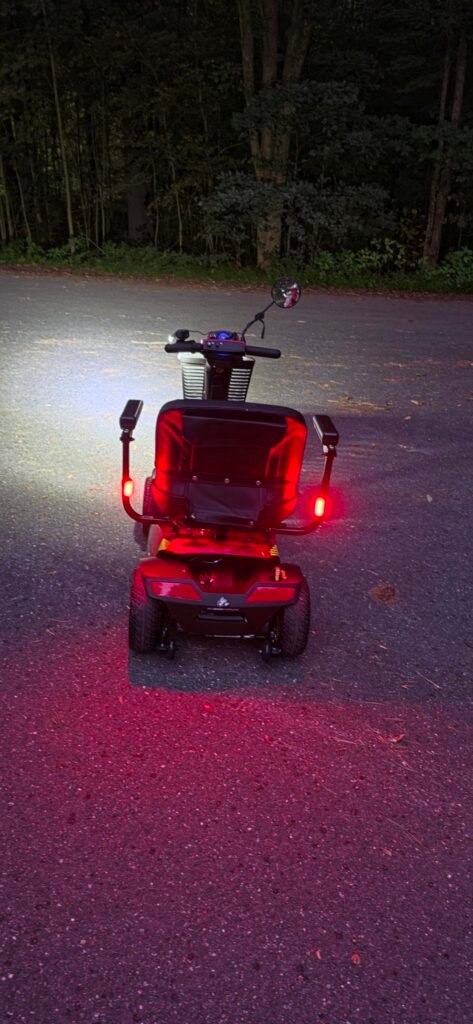
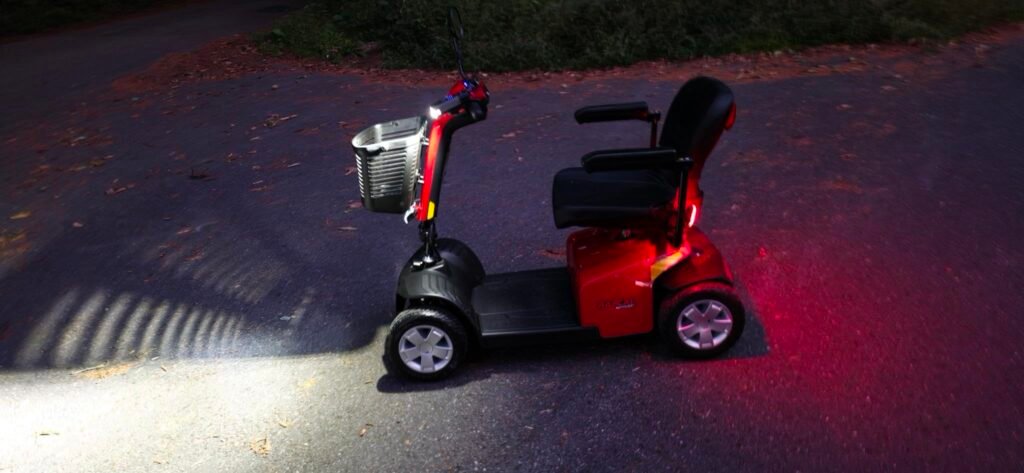
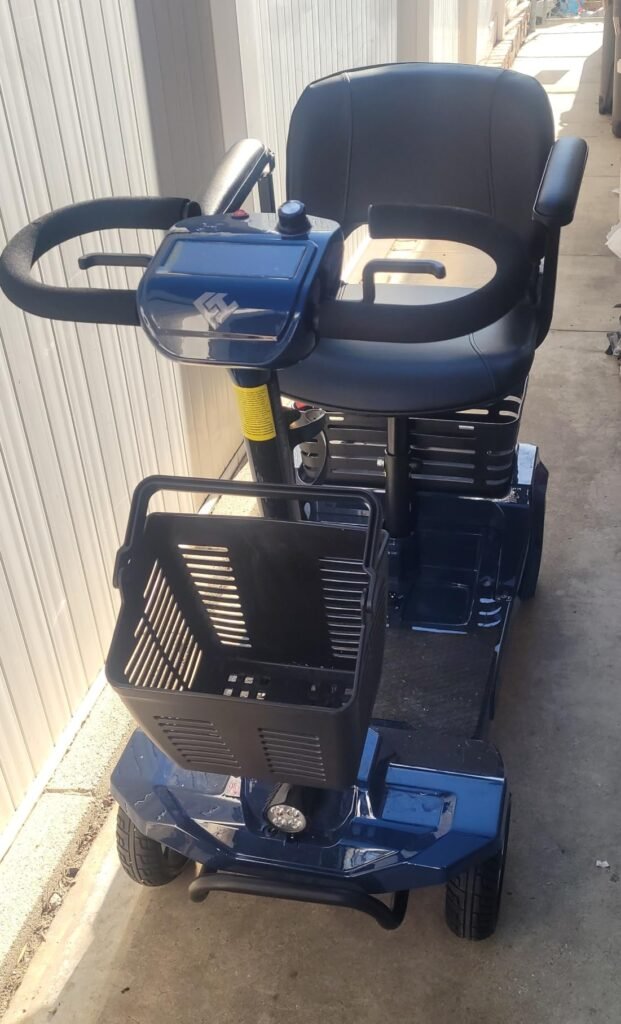
Rascal Conquest Heavy-Duty
8.8Editor score17 mile range
6 mph top speed
350 lb capacity
FDA Class II
Compare 9 top-rated 4-wheel mobility scooters by range, capacity, portability, and comfort to find the right fit for daily independence.

Find the right 4-wheel mobility scooter for 2026. We compare 9 standout models by the factors that matter most in this category, including weight capacity, battery range, portability, seat comfort, terrain handling, safety features, and everyday usability for real-world independence.
Four-wheel scooters offer greater stability than three-wheel designs, making them a practical choice for both indoor errands and outdoor paths. The models in this guide span compact travel-friendly options to heavy-duty all-terrain machines, so matching the scooter to your daily routine is essential.
Pay close attention to weight capacity, disassembly weight, and battery range before deciding. A scooter that is technically impressive on paper may still be impractical if the heaviest piece is too heavy for you to lift into a car trunk or if the range falls short of your typical daily route.
We compared 9 four-wheel mobility scooters using the details that actually help a buyer decide: weight capacity, battery range per charge, top speed, disassembly weight and piece count, seat adjustability, tire type, braking systems, terrain capability, safety features, and overall value. The notes focus on practical trade-offs so each pick feels connected to how people actually use a mobility scooter for errands, travel, and daily independence.


Compare key features, scores, and current prices side by side. A shorter feature list means fewer details were available, not necessarily fewer capabilities.


The Rascal Venture is a strong starting point for anyone who needs a dependable everyday mobility scooter that can also travel with you. Its FDA Class II designation signals that the unit has been tested to medical-device safety standards, which provides an extra layer of confidence for buyers who prioritize verified build quality over flashy extras. With a 300-pound weight capacity, it accommodates a wide range of users without feeling overbuilt or excessively heavy.

We may earn a commission when you buy through this link, at no additional cost to you.
Performance-wise, the Venture covers up to 10 miles on a single charge and reaches a top speed of 4 mph. That range is well-suited for grocery runs, medical appointments, and neighborhood errands, though it may fall short if you plan to spend an entire day out without recharging. The combination of regenerative and electromechanical braking gives the scooter a controlled, predictable stopping feel, which is particularly reassuring in crowded indoor spaces like pharmacies or shopping centers.
Where the Venture really shines is portability. It breaks down into five pieces, with the heaviest section weighing just 34.5 pounds. That is light enough for most caregivers or family members to lift into a car trunk without strain, and the compact footprint means it will not dominate your storage space at home. The adjustable seat height, armrest position, and steering tiller let you dial in a comfortable driving posture, and the front basket keeps essentials within arm’s reach.
FDA Class II classification means the scooter has undergone regulatory testing for safety and effectiveness as a medical device, not just as a consumer product. For buyers who rely on their scooter daily, this designation offers meaningful peace of mind. It indicates that the braking system, structural integrity, and electrical components have been evaluated against established medical-device benchmarks, which is a distinction not every mobility scooter on the market can claim.
This scooter is best suited for users who value ease of transport and proven safety credentials over raw speed or extended range. If your typical day involves a few short trips and you need something that disassembles quickly for car travel, the Rascal Venture is a well-rounded choice. Buyers who regularly cover longer distances may want to consider a model with a larger battery, but for everyday independence, the Venture delivers a practical, trustworthy package.
Riders who need more than 10 miles of range per charge or who want speeds above 4 mph for longer outdoor routes.
We may earn a commission when you buy through this link, at no additional cost to you.
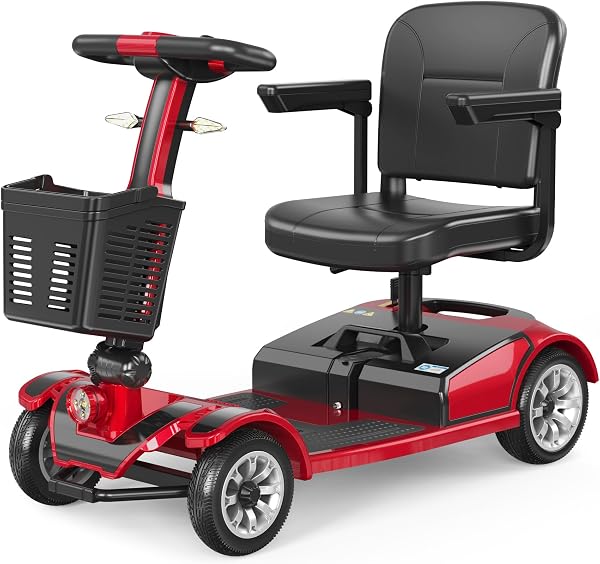
The Rascal Conquest steps up from the Venture in almost every performance category, making it a natural fit for users who spend more time outdoors and need a scooter that can keep up with longer, faster routes. With a 350-pound weight capacity and a 17-mile range, it handles full-day outings without the range anxiety that shorter-range models can create. The jump to 6 mph also makes a noticeable difference when navigating sidewalks, park paths, or parking lots where keeping pace with foot traffic matters.

We may earn a commission when you buy through this link, at no additional cost to you.
Visibility and awareness features set the Conquest apart from many competitors in this price range. The included rearview mirror helps you monitor approaching pedestrians or cyclists without turning your head, and the high-intensity LED headlight extends usability into early morning or evening hours. These are practical additions that go beyond cosmetic upgrades, especially for riders who share pathways with joggers, dog walkers, and other scooters in busy public areas.
Comfort adjustments mirror the Venture’s setup, with seat height, armrest position, and tiller angle all customizable to your body. The swivel seat function simplifies transfers, which is a critical detail for users with limited hip or knee mobility. Like the Venture, the Conquest carries FDA Class II status and uses regenerative plus electromechanical braking, so the stopping performance remains predictable and smooth even at the higher top speed.
A rearview mirror may seem like a small accessory, but it significantly improves situational awareness on shared paths and in crowded parking areas. Riders who frequently navigate bike lanes, park trails, or busy store entrances will appreciate the ability to check for approaching traffic without twisting their torso. For users with limited neck or upper-body mobility, this feature reduces physical strain and helps prevent sudden stops caused by surprise encounters from behind.
Choose the Conquest if your daily routine involves longer outdoor distances and you want the confidence of a higher speed ceiling. The tradeoff is a heavier, less portable build compared to compact travel scooters, so this model is better suited for users who primarily drive the scooter from home rather than frequently disassembling it for car transport. If range and outdoor capability are your top priorities, the Conquest delivers a meaningful upgrade.
Users who need to frequently disassemble and load the scooter into a compact car trunk due to its heavier outdoor-oriented build.
We may earn a commission when you buy through this link, at no additional cost to you.
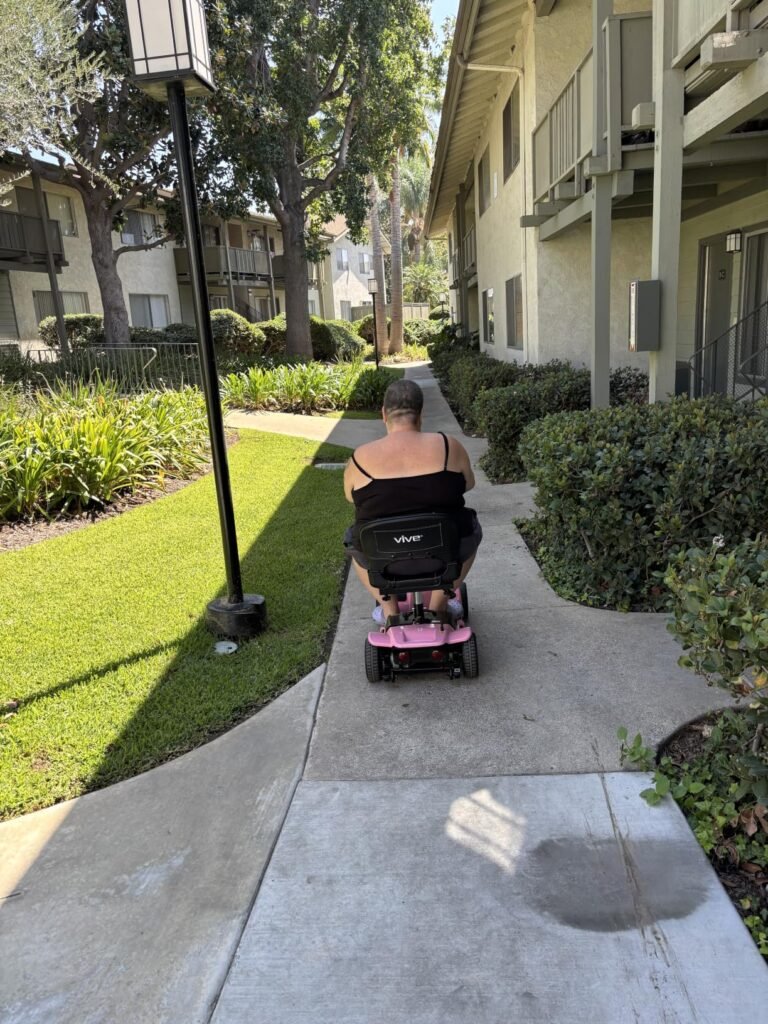
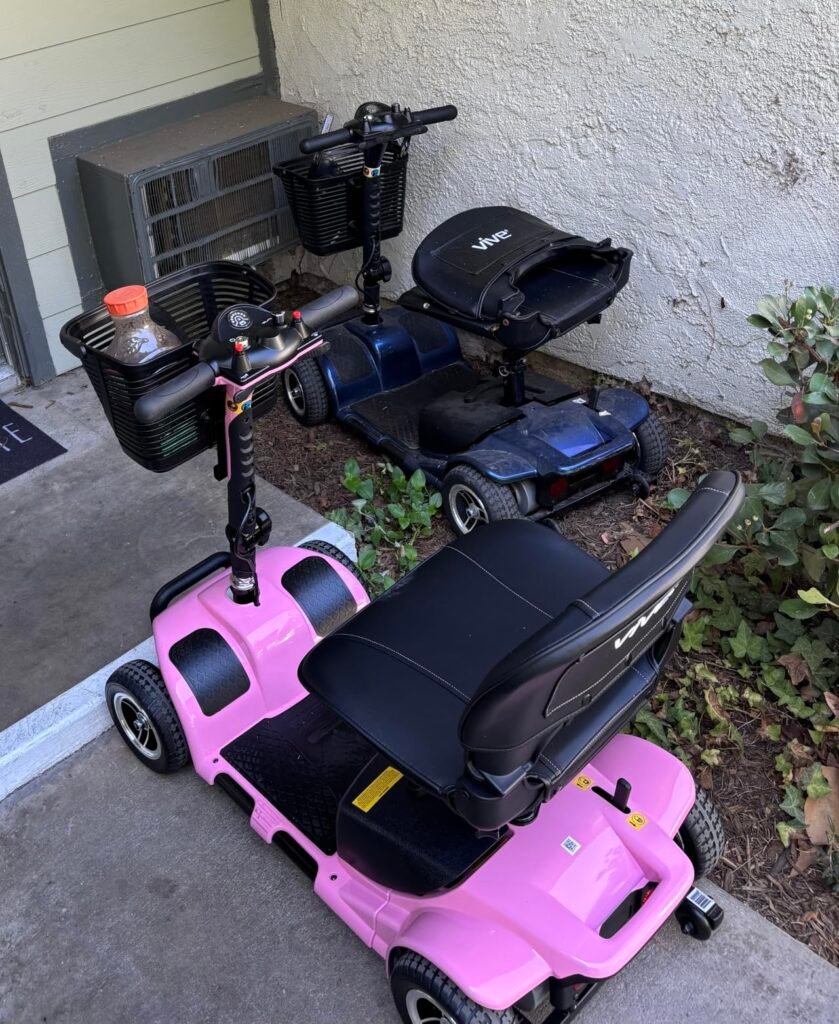
At a price point well below most competitors in this guide, this foldable pink scooter delivers a surprisingly complete feature set for the money. The 330-pound weight capacity and 15-mile range put it in the same ballpark as scooters costing nearly twice as much, and the 250W motor handles moderate inclines up to 15 degrees with variable speed control from 0 to 4.3 mph. For budget-conscious buyers who do not want to sacrifice core performance, this model makes a compelling case.

We may earn a commission when you buy through this link, at no additional cost to you.
The detachable battery is one of the most practical features at this price. Instead of needing to park the entire scooter near an outlet, you can remove the battery pack and charge it indoors, which is ideal for apartment dwellers or anyone who stores the scooter in a garage or shed without convenient power access. A full charge takes approximately six hours, so planning overnight charging keeps the scooter ready for morning errands.
Daily convenience details are where this scooter punches above its weight. Dual removable baskets, a built-in cup holder, and a phone holder mean you can carry groceries, a water bottle, and your phone without juggling items on your lap. The frame design also provides eight additional inches of legroom compared to similar compact scooters, which makes a noticeable comfort difference for taller riders or anyone who finds standard footwells cramped.
A removable battery eliminates the need to position the entire scooter next to a wall outlet, which is a genuine convenience for users who live in apartments, park in detached garages, or store the scooter in a hallway. Simply unclip the battery pack, carry it inside, and plug it into any standard outlet. This flexibility also makes it easier to charge the battery while traveling, since you can bring the pack into a hotel room or relative’s home without needing to maneuver the full scooter indoors.
The main tradeoff is the 50-pound heaviest piece when disassembled, which is heavier than some competing travel scooters. If you or your caregiver can manage that weight, the overall package is hard to beat at this price. This scooter is best suited for users who want a capable daily driver with modern conveniences and do not mind a slightly heavier breakdown weight in exchange for significant savings.
Users who cannot lift a 50-pound component or who regularly encounter steep inclines above 15 degrees.
We may earn a commission when you buy through this link, at no additional cost to you.
The Vive 4-Wheel Mobility Scooter is built around one clear advantage: effortless portability. The heaviest section weighs just 29 pounds when disassembled, making it one of the lightest breakdown weights in this entire guide. For users who rely on a caregiver or family member to load the scooter into a vehicle, that difference of even five to ten pounds can be the deciding factor between independence and frustration.
We may earn a commission when you buy through this link, at no additional cost to you.
On the performance side, the Vive covers up to 12.4 miles per charge at a maximum speed of 3.7 mph. The speed is on the conservative end, which may feel limiting on longer outdoor stretches but provides a controlled, steady pace that many users actually prefer in crowded indoor environments like medical offices, grocery stores, and shopping malls. The flat-free, non-marking 8-inch tires roll smoothly on smooth surfaces and handle light outdoor terrain without leaving scuff marks on indoor floors.
The control panel is straightforward and well-organized, with a variable speed dial, forward-reverse toggle, headlight switch, and a color-coded battery indicator that lets you check remaining charge at a glance. The wide 15.75-inch padded seat swivels for easier transfers, and the height-adjustable seat post lets you find a comfortable position without tools. Flip-up armrests further simplify getting on and off the scooter, which is a detail that matters more than many first-time buyers realize.
A color-coded battery display gives you an immediate visual snapshot of remaining charge without needing to interpret numbers or percentages. Green typically indicates a full or near-full charge, yellow signals that you should plan to recharge soon, and red warns that the battery is nearly depleted. This simple visual system helps users who may not be comfortable with digital readouts stay aware of their remaining range and avoid being caught far from home with a dead battery.
The Vive is best suited for lighter users who prioritize easy transport and long-term warranty coverage over raw power or extended range. The five-year guarantee from a family-owned brand adds genuine long-term value, and the 29-pound heaviest piece makes car travel manageable for most caregivers. If you weigh under 265 pounds and your daily routes are relatively short, the Vive offers a lightweight, worry-free package.
Riders who weigh more than 265 pounds or who need higher speeds for longer outdoor commutes.
We may earn a commission when you buy through this link, at no additional cost to you.
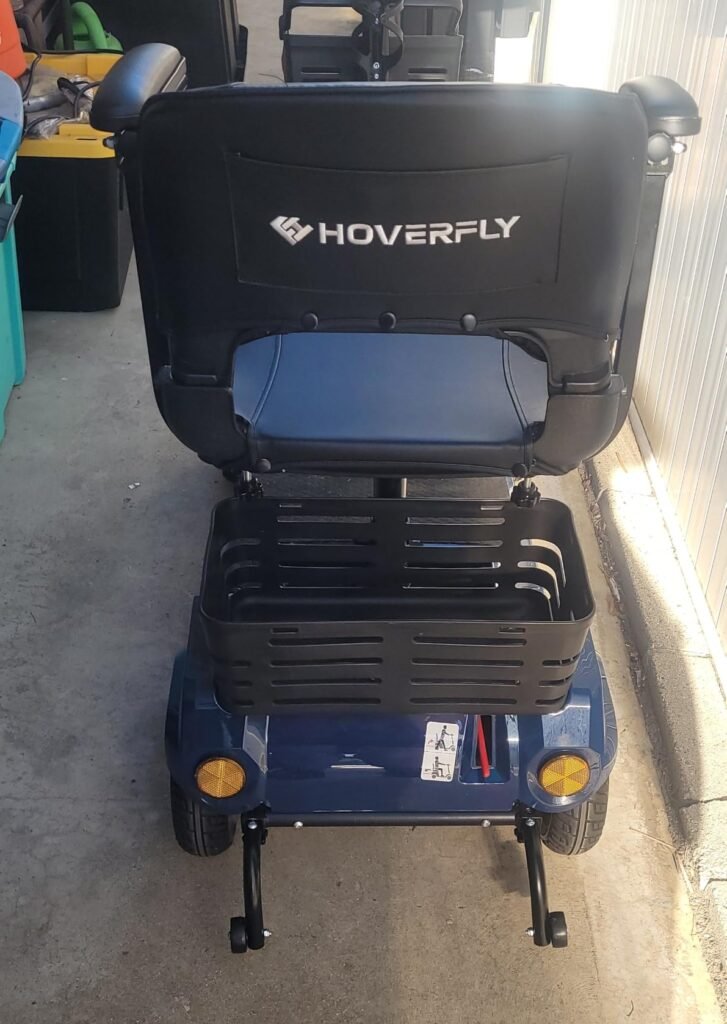
The Hoverfly NFC Keyless scooter brings a genuinely modern convenience to the mobility category: tap-to-start ignition. Instead of fumbling with a physical key, you simply tap the included NFC card against the console to power on and ride. For users with arthritis, reduced grip strength, or limited dexterity in their hands, eliminating the key-turning motion is a meaningful quality-of-life improvement that goes beyond novelty.

We may earn a commission when you buy through this link, at no additional cost to you.
The 250W motor supports up to 330 pounds and delivers a 12.4-mile range at speeds up to 4.7 mph. The 12Ah removable battery weighs just 21 pounds, making it one of the lightest detachable batteries in this guide and easy to carry indoors for charging. A rear lever lets you switch between electric and manual modes, which is useful if the battery runs low and you need to push the scooter short distances or if a caregiver needs to maneuver it without power.
Comfort and storage are well-handled. The 360-degree swivel seat adjusts between 20 and 22 inches in height, and the flip-up armrests make boarding and exiting straightforward. The extra-wide foot platform accommodates different leg lengths, and the dual baskets can each hold up to 55 pounds, which is more than enough for a full grocery run. A built-in USB port lets you charge your phone while riding, and the cup holder keeps a drink within reach.
NFC keyless start is particularly valuable for users who struggle with fine motor tasks like inserting and turning a small key. Conditions such as arthritis, Parkinson’s disease, or neuropathy can make traditional key ignition frustrating or even painful. A simple tap gesture removes that barrier entirely, allowing the rider to focus on steering and navigation rather than the mechanics of starting the scooter. It also eliminates the risk of losing a physical key, which can leave a user stranded.
This scooter is an excellent match for tech-comfortable users who want modern conveniences without paying a premium price. The NFC start, USB port, and lightweight removable battery create a daily experience that feels more intuitive than traditional key-operated models. The main limitation is the modest 10-degree incline rating, so riders in hilly areas should verify that their typical routes fall within that gradient before committing.
Riders in hilly areas where inclines regularly exceed 10 degrees.
We may earn a commission when you buy through this link, at no additional cost to you.
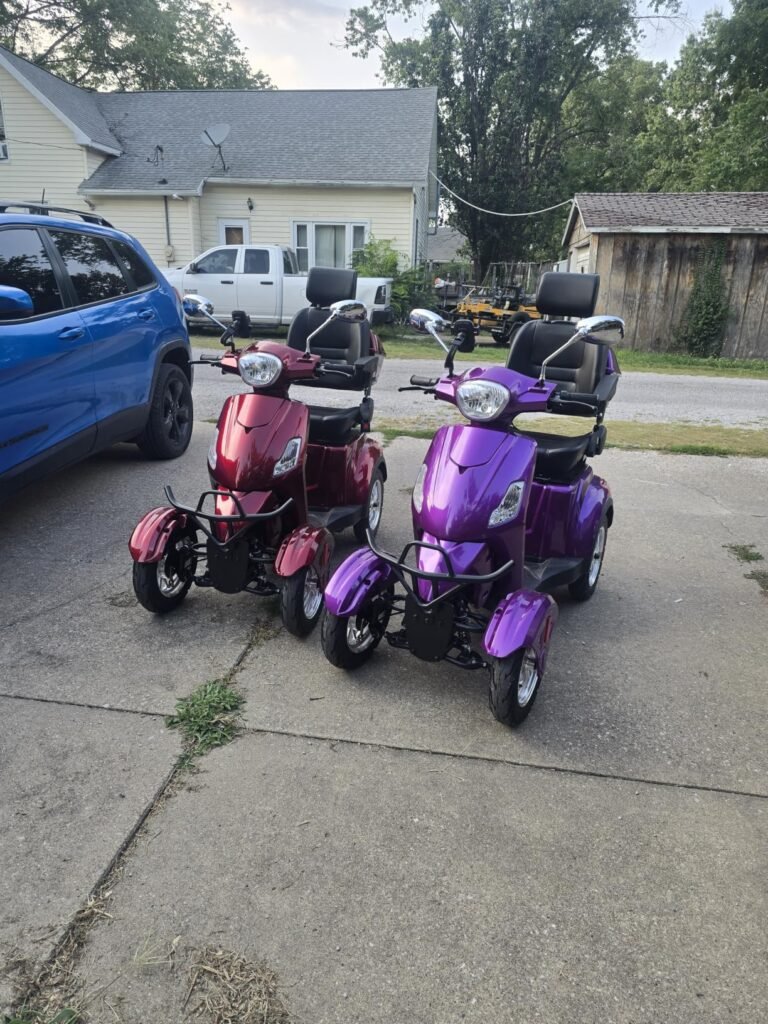
The 800W Heavy Duty scooter is built for riders who need serious capability without compromise. With a 500-pound weight capacity and an 800W brushless motor, it handles steep 20-degree inclines and rough terrain that would stall lighter models. The 25-mile range is the longest in this guide, making it a practical choice for users who spend most of their day on the scooter and cannot afford to stop and recharge mid-afternoon.
We may earn a commission when you buy through this link, at no additional cost to you.
Speed is where this scooter truly separates itself from the pack. The three-speed variable control lets you cruise anywhere from 1 mph to 15 mph, which is fast enough to keep up with bicycle traffic on shared paths. The lower speed settings are useful for indoor use or crowded areas, while the higher settings open up genuine transportation potential for longer outdoor commutes. Fat tires and dual rear shock absorbers smooth out bumps, gravel, grass, and uneven pavement.
The scooter comes fully equipped with road-ready features: high and low beam headlights, rear running and brake lights, turn signals, a horn, rearview mirrors, and an LCD monitor screen. This level of equipment makes the scooter more visible to drivers and pedestrians, which is an important safety consideration if you plan to ride near roadways or in mixed-traffic environments. A remote key and parking brake add convenience and security when the scooter is parked.
An incline rating tells you the steepest slope the scooter can climb under load. A 20-degree rating is significantly more capable than the 10 to 15-degree ratings found on lighter models, and it covers most residential driveways, parking garage ramps, and ADA-compliant curb cuts. However, actual performance on inclines also depends on rider weight, battery charge level, and surface conditions. If you live in a hilly area, choosing a scooter with a generous incline margin above your steepest regular route is a smart precaution.
This model is best suited for heavier riders or anyone who needs maximum range, power, and terrain versatility. The tradeoff is size and weight: this is not a scooter you will easily break down and toss into a car trunk. Think of it as a primary daily vehicle rather than a travel companion. If your lifestyle demands long distances, steep hills, and all-weather capability, the 800W Heavy Duty delivers the performance to match.
Users who need a portable, car-transportable scooter for frequent travel or who are uncomfortable with speeds above 6 mph.
We may earn a commission when you buy through this link, at no additional cost to you.
The VEVOR 1000W is the most powerful scooter in this guide, and its specification sheet reads more like a small electric vehicle than a traditional mobility aid. The 1000W brushless motor tackles 20-degree slopes with a 500-pound load, and the 60V 20Ah battery delivers up to 21.5 miles of range. If you need a scooter that can function as a genuine daily transportation replacement rather than just a short-distance aid, the VEVOR has the raw capability to deliver.

We may earn a commission when you buy through this link, at no additional cost to you.
The all-terrain setup is equally impressive. Four 16-inch tubeless tires paired with spring suspensions absorb shocks from gravel, grass, dirt paths, and cracked pavement, providing a ride quality that smaller-tire scooters simply cannot match. The three-speed control offers 6, 10, and 15 mph settings, letting you match your speed to the environment. At 6 mph, the scooter feels stable and relaxed for neighborhood cruising, while 15 mph opens up faster commuting on paved paths.
Storage and security are standout features. The lockable rear trunk provides a secure space for groceries, a purse, or medical supplies, which is a significant upgrade over open baskets that leave belongings exposed. The under-seat storage and large front basket add further carrying capacity. On the safety side, the VEVOR includes front and rear disc brakes, a 360-degree lighting system, anti-tip wheels, protective bumpers, rearview mirrors, and a built-in anti-theft alarm.
Disc brakes provide more consistent and powerful stopping force than the drum or electromagnetic brakes found on lighter scooters, especially at higher speeds or on wet surfaces. When a scooter weighs several hundred pounds and carries a rider at 15 mph, the braking system needs to dissipate a significant amount of kinetic energy quickly and reliably. Front and rear disc brakes distribute that braking force across both axles, reducing stopping distances and giving the rider more confidence in emergency situations.
The VEVOR is best suited for buyers who need maximum power, terrain versatility, and secure storage, and who are willing to invest in a premium build. The 4.0-star rating suggests that some owners have encountered issues worth researching before purchasing, so reading recent customer feedback is advisable. If your daily life demands a heavy-duty, all-weather scooter that can handle serious distances and rough surfaces, the VEVOR’s specification sheet is difficult to match.
Budget-conscious buyers or those who need a lightweight, easily portable scooter for frequent car transport.
We may earn a commission when you buy through this link, at no additional cost to you.
Pride Mobility is one of the most recognized names in the mobility industry, and the Go-Go Sport 4-Wheel reflects the brand's focus on practical engineering over flashy specifications. The standout feature is the feather-touch disassembly system, which allows the scooter to separate into five lightweight pieces using just one hand. For users with limited grip strength or dexterity, this one-hand operation is a genuine accessibility advantage that many competing scooters do not offer.

We may earn a commission when you buy through this link, at no additional cost to you.
The dual voltage charging system adds flexibility to your daily routine. You can charge the battery pack while it remains installed on the scooter, or remove it and charge it separately using the off-board charger. The charging port is conveniently located on the tiller, so you do not need to bend down or reach awkwardly to plug in. This dual approach means the scooter adapts to your living situation rather than forcing you to rearrange your space around a fixed charging setup.
The front frame-mounted seat post is an engineering detail that improves overall stability, particularly when the scooter is in motion or when the rider shifts weight during turns. By anchoring the seat directly to the front frame rather than the rear section, Pride reduces the flex and wobble that can occur on scooters with rear-mounted seat posts. The result is a more planted, confident ride that feels secure even on uneven surfaces.
Choosing a scooter from a well-known brand like Pride Mobility often means easier access to authorized service centers, replacement parts, and warranty support. While newer brands may offer impressive specifications at lower prices, they may not have the same service infrastructure if something goes wrong after the first year. For users who depend on their scooter daily, the ability to get a quick repair from a local dealer can be worth the premium over a less-established brand.
The Go-Go Sport is best suited for buyers who value brand reputation, long-term parts availability, and one-hand disassembly above cutting-edge specifications. Pride Mobility’s established dealer network and service infrastructure can be a significant advantage if you need repairs or replacement parts down the road. If you prioritize a proven platform with thoughtful accessibility features, the Go-Go Sport remains a reliable choice despite its higher price point.
Buyers who want the highest specifications per dollar and are comfortable with newer, less-established brands.
We may earn a commission when you buy through this link, at no additional cost to you.
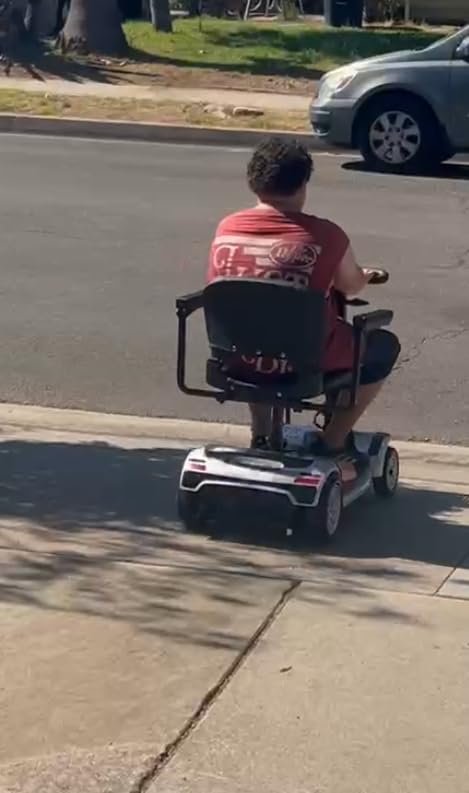
This folding scooter bridges the gap between compact travel models and full-size heavy-duty machines, offering a 22-mile range and 418-pound capacity in a package that still folds for transport. The 24V 20Ah battery is the key to that extended range, providing enough power for a full day of errands, appointments, and social outings without needing a midday recharge. For users who have outgrown the 10 to 15-mile range of lighter scooters but do not want to step up to a non-folding heavy-duty model, this is a practical middle ground.
We may earn a commission when you buy through this link, at no additional cost to you.
The ride quality benefits from front and rear suspension combined with solid puncture-proof tires, which smooth out speed bumps, cracked sidewalks, and uneven parking lot surfaces. The electromagnetic braking system engages instantly when you release the throttle, preventing rollback on slopes and providing predictable stopping in crowded areas. Anti-tip wheels and bright front and rear lights round out a safety package that feels appropriate for the scooter’s size and capability.
Comfort is a clear priority in the design. The wider seat and expanded legroom accommodate taller and larger riders who find standard scooter dimensions restrictive. The 360-degree swivel seat and adjustable height make transfers easier, and the reinforced steel frame provides the structural rigidity needed to support the 418-pound capacity without flex or creaking. The enlarged footboard allows natural foot placement, which reduces fatigue on longer rides.
Suspension systems absorb the impact of bumps, cracks, and uneven surfaces before that energy reaches the rider’s body. On a scooter without suspension, every pothole and sidewalk joint transmits a jolt directly through the frame and into the seat, which can cause discomfort and fatigue over the course of a day. Front and rear suspension distributes that shock absorption across both axles, resulting in a noticeably smoother ride that is easier on the back, hips, and joints, especially for users who spend several hours on the scooter daily.
This scooter is best suited for larger riders or anyone who needs a longer range without giving up the ability to fold and transport the unit. The 4.8 mph top speed is moderate, so it is not the right choice if you want to cover long distances quickly, but the combination of range, capacity, and folding convenience makes it a versatile daily driver. If you need a scooter that can handle a full day of varied activities and still fit in your vehicle, this model deserves serious consideration.
Users who need high speeds above 5 mph or who want the lightest possible folding scooter for frequent air travel.
We may earn a commission when you buy through this link, at no additional cost to you.
Selecting a mobility scooter involves more than comparing price tags. The right choice depends on your body weight, daily travel distance, living situation, terrain, and how you plan to transport the scooter. This guide breaks down the most important factors so you can make a confident decision.
Weight capacity is the single most important specification to check before narrowing your choices. Mobility scooters in this guide range from 265 pounds to 500 pounds, and exceeding the rated capacity can compromise braking performance, battery range, motor longevity, and structural safety. Always choose a scooter with a capacity that exceeds your body weight by a comfortable margin, ideally 30 to 50 pounds, to account for clothing, bags, and any items you carry in the baskets.
Frame construction directly supports the weight capacity rating. Heavy-duty models use reinforced steel frames and wider wheelbases to maintain stability under higher loads, while lighter travel scooters use thinner tubing and compact designs to reduce overall weight for portability. A heavier frame generally provides a more stable, planted ride on uneven surfaces, but it also makes the scooter more difficult to disassemble and transport. Consider your daily environment and whether you need to lift the scooter into a vehicle regularly.
If you are close to the upper limit of a scooter’s weight capacity, choose the next size up rather than pushing the boundary. A scooter operating near its maximum rating will experience faster battery drain, reduced incline performance, and increased wear on the motor and tires over time.
Battery range determines how far you can travel on a single charge, and the numbers in this guide span from 10 miles to 25 miles. To estimate your real-world needs, think about your typical daily route rather than the maximum distance you might occasionally travel. A scooter with a 10-mile range is sufficient for short neighborhood errands and medical appointments, while a 20-plus mile range is better suited for users who spend most of the day on the scooter or who live in sprawling suburban areas where distances between destinations add up quickly.
Charging flexibility is equally important. Scooters with removable or detachable batteries let you charge the pack indoors without needing to park the entire unit near an outlet, which is a major convenience for apartment dwellers or anyone who stores the scooter in a garage without power. Dual voltage charging systems, like the one on the Pride Go-Go Sport, offer both on-board and off-board options for maximum flexibility. A full charge typically takes six to eight hours, so planning overnight charging is the most practical approach for daily users.
Keep in mind that advertised range figures are based on ideal conditions: flat terrain, moderate speed, and a rider well within the weight capacity. Real-world range will be lower if you frequently climb hills, ride at top speed, or carry heavy loads. Budget for about 70 to 80 percent of the stated range to avoid running out of power unexpectedly.
If you plan to transport your scooter by car, the disassembly weight and piece count are critical factors. Travel-oriented models break down into four or five pieces, with the heaviest section ranging from about 29 pounds to 50 pounds. The difference between a 29-pound heaviest piece and a 50-pound heaviest piece may not sound dramatic, but it can be the difference between a caregiver loading the scooter independently and needing a second person to help.
Folding scooters offer an alternative to full disassembly, collapsing into a more compact footprint that may fit in a car trunk without separating into individual components. However, folding models are often heavier overall than their disassembling counterparts, so the total weight you need to lift may be higher even though the process is simpler. Consider your physical capabilities and those of anyone who will help you load the scooter before choosing between a folding and a disassembling design.
Before purchasing, measure your car trunk or cargo area and compare it to the scooter’s folded or disassembled dimensions. A scooter that technically fits but requires precise positioning every time you load it will become frustrating in daily use. Look for a model that leaves some margin for error in your vehicle’s cargo space.
Motor power, measured in watts, directly affects a scooter’s ability to climb hills, accelerate, and maintain speed under load. The scooters in this guide range from 250W to 1000W, and the right choice depends on your terrain and speed expectations. A 250W motor is adequate for flat urban environments and indoor use, while 800W or 1000W motors are necessary for steep hills, rough terrain, and heavier riders who need consistent power output.
Top speed varies widely, from a conservative 3.7 mph to a brisk 15 mph. Higher speeds are useful for outdoor commuting on paved paths, but they also require more advanced braking systems and greater rider confidence. If you primarily use your scooter indoors or in crowded areas like grocery stores and medical facilities, a lower top speed with smooth acceleration is often more practical and safer than a high-speed model.
Match the motor and speed to your actual environment. If your neighborhood is flat and your routes are short, a 250W motor with a 4 mph top speed will serve you well and preserve battery life. If you live in a hilly area or plan to use the scooter as a primary outdoor transportation method, invest in a more powerful motor with a higher incline rating and speed range.
The seat is the primary contact point between you and the scooter, and its comfort directly affects how long you can ride without fatigue or pain. Look for a wide, well-padded seat with a supportive backrest, and pay attention to the seat width measurement if you have broader hips or prefer extra room. Swivel functionality is another important feature, as it allows you to rotate the seat toward the open side for easier boarding and exiting without twisting your body.
Adjustability options vary between models. Basic scooters offer seat height adjustment, while more advanced models add adjustable armrest width, armrest flip-up mechanisms, tiller angle adjustment, and even seat back recline. Each of these adjustments helps you find a natural, relaxed driving position that reduces strain on your back, shoulders, and wrists during extended use. If you plan to spend several hours on the scooter daily, these comfort features are worth prioritizing.
Test the seat height range against your own leg length before buying. A seat that is too high will leave your feet dangling and reduce stability, while a seat that is too low will compress your knees and cause discomfort. Most scooters offer at least two to three inches of height adjustment, which is sufficient for most body types.
Tire choice affects ride smoothness, traction, and maintenance requirements. Most mobility scooters use either solid puncture-proof tires or pneumatic air-filled tires. Solid tires eliminate the risk of flats and require zero maintenance, making them the practical choice for most users. Pneumatic tires provide a softer, more cushioned ride on rough surfaces but require periodic pressure checks and are vulnerable to punctures from sharp debris.
Tire size also matters. Smaller 8-inch tires are common on compact travel scooters and work well on smooth indoor floors and paved sidewalks. Larger 9-inch to 16-inch tires provide better ground clearance, improved traction on grass and gravel, and a smoother ride over bumps and cracks. If you regularly traverse uneven outdoor terrain, larger tires with deeper tread patterns will provide a more stable and comfortable experience.
Consider the surfaces you encounter most frequently. If your daily routine is mostly indoor and paved outdoor paths, standard solid tires will serve you well. If you need to cross grass, gravel driveways, or unpaved park trails, prioritize a scooter with larger tires and suspension to maintain stability and comfort on those surfaces.
Braking systems on mobility scooters range from simple electromagnetic brakes to advanced front and rear disc brake setups. Electromagnetic brakes engage automatically when you release the throttle, providing hands-free stopping that is intuitive and reliable for most daily situations. Disc brakes offer more powerful and consistent stopping force, especially at higher speeds or on wet surfaces, and are typically found on heavy-duty models with top speeds above 10 mph.
Additional safety features to look for include anti-tip wheels, which prevent the scooter from tipping backward on steep inclines, and bright LED headlights and taillights for visibility in low-light conditions. Rearview mirrors, turn signals, and horns are valuable additions if you plan to ride near vehicle traffic or on shared paths with cyclists and pedestrians. A built-in anti-theft alarm provides peace of mind when parking the scooter in public areas.
Prioritize safety features based on your riding environment. Indoor-only users may not need turn signals or rearview mirrors, but anyone who rides outdoors, especially near roads or in mixed-traffic areas, should choose a scooter with comprehensive lighting and braking systems to maximize visibility and stopping power.
Storage capacity affects how practical your scooter is for everyday tasks like grocery shopping, pharmacy runs, and carrying personal items. Most scooters include at least one front basket, but some models add dual baskets, under-seat storage compartments, cup holders, phone holders, and even lockable rear trunks. Consider what you typically carry and choose a scooter with enough storage to handle your daily load without requiring a separate bag on your lap.
Convenience features like USB charging ports, NFC keyless ignition, and remote key fobs may seem like luxuries, but they can meaningfully improve the daily experience for users who rely on their scooter for hours at a time. A USB port keeps your phone charged during long outings, keyless ignition eliminates the need to manipulate small keys, and a remote fob lets you lock and unlock the scooter from a distance.
Think about your typical daily carry items before choosing a scooter. If you regularly transport groceries, medical supplies, or a handbag, a model with dual baskets and a lockable trunk will serve you better than a minimalist design with a single small basket.
Before your first ride, fully charge the battery according to the manufacturer’s instructions and familiarize yourself with the control panel, braking system, and speed settings in a safe, open area. Start at the lowest speed setting and practice turning, stopping, and reversing until you feel confident. Adjust the seat height, armrest position, and tiller angle to achieve a comfortable, upright posture with your feet flat on the footboard and your hands resting naturally on the controls.
Regular maintenance keeps your scooter reliable and extends its lifespan. Check the tire condition monthly for signs of wear, cracking, or embedded debris, and wipe down the frame and seat with a damp cloth to remove dust and dirt. If your scooter has a removable battery, inspect the battery contacts periodically for corrosion and clean them gently with a dry cloth. Store the scooter in a dry, temperature-controlled environment when not in use, and avoid leaving the battery fully discharged for extended periods, as this can reduce its overall capacity over time.
For safe daily operation, always use the lowest appropriate speed setting in crowded indoor spaces and increase speed only in open outdoor areas where you have clear visibility. Engage the parking brake whenever you stop on an incline, and avoid exceeding the scooter’s rated incline limit to prevent motor strain or loss of traction. If your scooter includes lighting and signal features, use them consistently when riding near vehicle traffic or in low-light conditions to maximize your visibility to drivers and pedestrians.
Range varies significantly between models, from about 10 miles on compact travel scooters to 25 miles on heavy-duty models with large battery packs. Real-world range depends on rider weight, terrain, speed, and temperature, so expect to achieve roughly 70 to 80 percent of the advertised figure under typical conditions. Plan your routes accordingly and recharge overnight for daily use.
Many 4-wheel scooters are designed for car transport and break down into four or five pieces that fit in a standard sedan trunk or SUV cargo area. The heaviest piece typically weighs between 29 and 50 pounds, so consider whether you or a caregiver can comfortably lift that weight. Folding models offer an alternative that collapses without full disassembly but may be heavier overall.
Choose a scooter with a weight capacity that exceeds your body weight by at least 30 to 50 pounds to account for clothing, bags, and carried items. Operating a scooter near its maximum rated capacity reduces battery range, motor performance, and overall longevity. Models in this guide range from 265 to 500 pounds, so there is an option for most body types.
Yes, 4-wheel scooters can be used indoors, though their wider wheelbase requires more turning space than a 3-wheel model. Compact travel scooters with smaller dimensions are better suited for tight indoor environments like narrow hallways and small retail stores. Always use the lowest speed setting indoors and be mindful of door widths and aisle clearances.
Most mobility scooter batteries require six to eight hours for a full charge from empty. Some models with larger battery packs may take longer, while smaller batteries on compact scooters may charge slightly faster. Charging overnight is the most practical approach for daily users, and removable batteries allow you to charge the pack indoors without needing to park the scooter near an outlet.
Hill performance depends on the motor power and incline rating of the specific model. Lighter scooters with 250W motors typically handle gentle slopes up to 10 to 15 degrees, while heavy-duty models with 800W or 1000W motors can climb steeper inclines up to 20 degrees. If you live in a hilly area, prioritize a scooter with a higher incline rating and a more powerful motor to maintain consistent performance on slopes.
Routine maintenance includes checking tire condition, cleaning the frame and seat, inspecting battery contacts, and ensuring all bolts and fasteners remain tight. Solid puncture-proof tires require less upkeep than pneumatic tires, which need periodic pressure checks. Store the scooter in a dry location and avoid leaving the battery fully discharged for long periods to preserve its capacity and lifespan.
Most mobility scooters can handle light rain and damp conditions, but they are not fully waterproof. Avoid riding through deep puddles or heavy downpours, as water can damage the electrical components, motor, and battery connections. If your scooter gets wet, dry it thoroughly with a clean cloth and allow it to air dry in a covered area before charging or storing it.
In most areas of the United States, mobility scooters are classified as medical devices or pedestrian aids and do not require a driver's license, registration, or insurance to operate on sidewalks and pedestrian paths. However, local regulations vary, and some municipalities may have specific rules about where scooters can be ridden. Check with your local transportation authority if you plan to use the scooter near roadways or in public transit areas.
Four-wheel scooters offer greater stability, higher weight capacities, and better performance on uneven outdoor terrain, making them the safer choice for most users. Three-wheel scooters have a tighter turning radius and are generally more maneuverable in confined indoor spaces. If you plan to use the scooter primarily outdoors or on mixed surfaces, a 4-wheel model is the more versatile and stable option.
The Rascal Venture stands out as the strongest overall choice for most buyers, combining FDA Class II safety credentials, a manageable 34.5-pound heaviest piece, and reliable everyday performance at a reasonable price. Its 10-mile range and 4 mph speed are well-matched to typical daily errands, and the five-piece disassembly makes car travel straightforward for most caregivers and family members.
For buyers with different priorities, the Hoverfly NFC Keyless offers modern conveniences like tap-to-start ignition and a USB charging port at an attractive mid-range price, while the VEVOR 1000W delivers unmatched power and all-terrain capability for riders who need a heavy-duty daily transportation solution. Budget-conscious shoppers should look closely at the foldable pink scooter, which provides a 15-mile range and 330-pound capacity at the lowest price point in this guide.
Ultimately, the right mobility scooter depends on your specific combination of weight, daily distance, terrain, and transport needs. Use the buying guide factors above to identify which specifications matter most for your situation, then compare the models that meet those criteria. A scooter that aligns with your actual daily routine will provide far more value than one that simply has the highest numbers on a specification sheet.