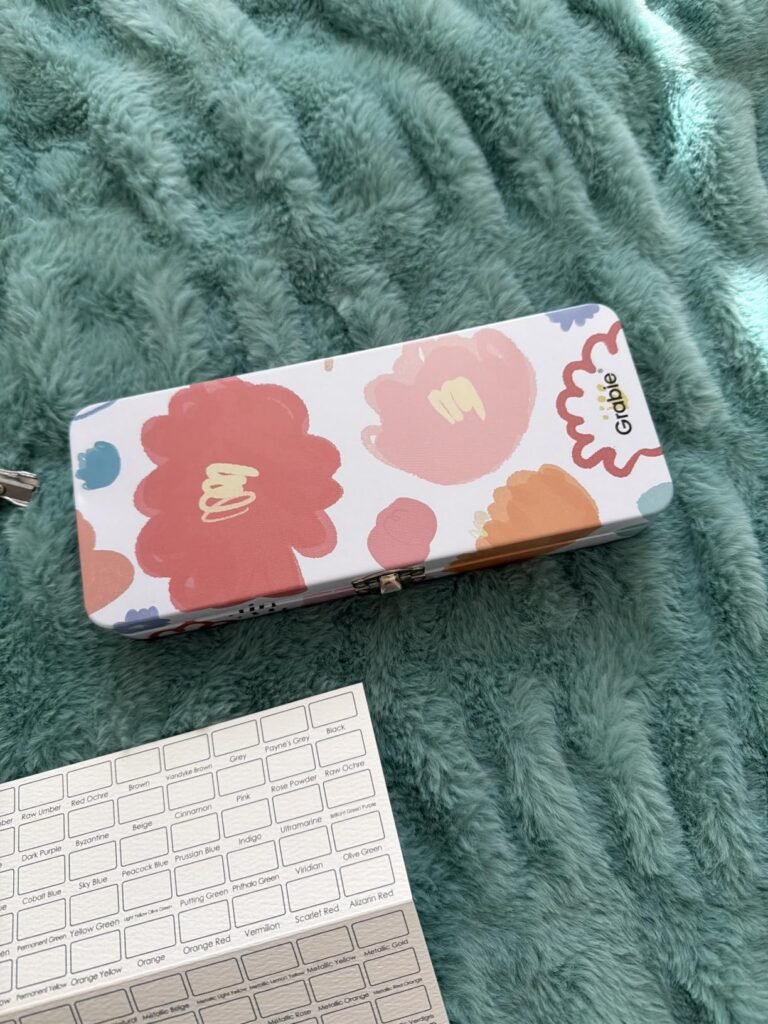
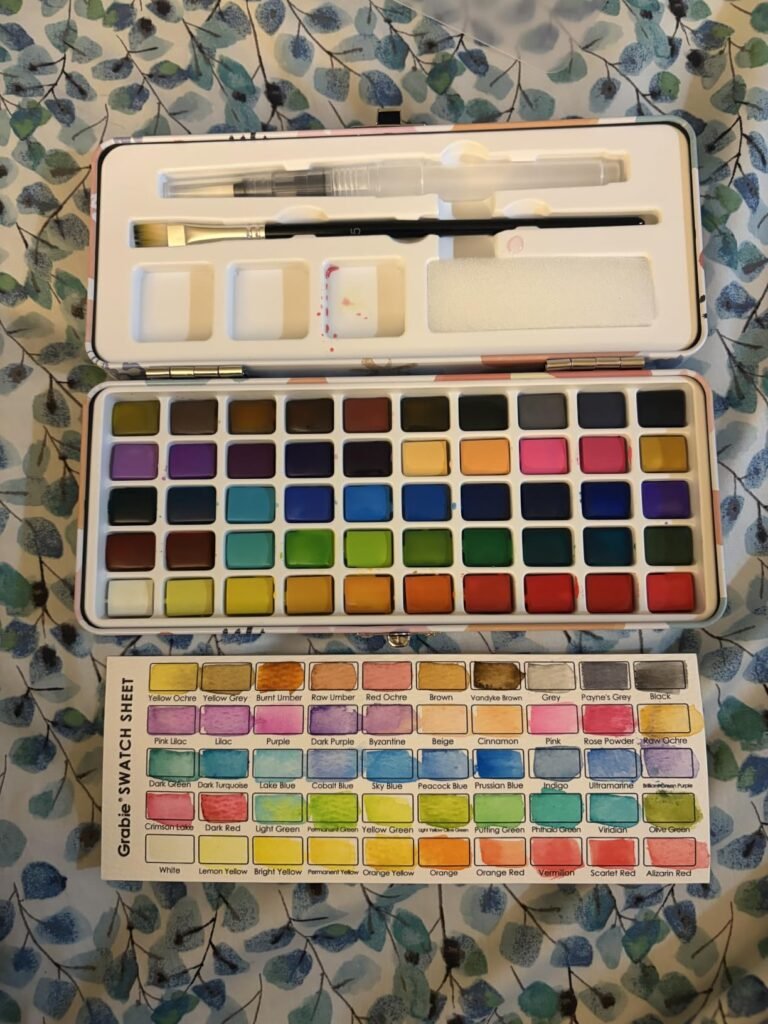
Grabie 50 Color
9.4Editor score50 vibrant colors
Six nylon brushes
Built-in mixing tray
Portable metal case
Compare 10 top watercolor paint sets by pigment quality, color range, portability, and value. Find the right kit for beginners, travel, or professional stu...
Find the right watercolor paint sets for 2026. We compare 10 standout options by the factors that matter most in this category, such as pigment concentration, color range, pan size, lightfastness, included accessories, portability, and everyday value for different skill levels.
Watercolor kits vary widely in quality and purpose. A compact 12-pan pocket set serves a traveling sketcher very differently than a 100-color tin packed with metallics and fluorescents. Understanding these differences helps you avoid overspending on features you will not use or underinvesting in pigment quality you will notice immediately.
This guide breaks down each set by real buying criteria: how the paints handle on paper, what comes in the box, how well the case travels, and which skill level benefits most. Use the comparison table and detailed reviews to narrow your choice quickly.
We compared 10 watercolor paint sets using the details that actually help a buyer decide: pigment richness, color count and variety, pan size, transparency and blending behavior, included brushes and accessories, case durability, portability, safety certifications, lightfastness ratings, and overall value. The notes focus on practical trade-offs so each pick connects to how people actually paint, travel, and build their art supplies over time.


Compare key features, scores, and current prices side by side. A shorter feature list means fewer details were available, not necessarily fewer capabilities.


Kuretake Gansai Tambi paints occupy a unique space between traditional Japanese watercolor and gouache. The 24 colors in this Art Nouveau edition are formulated to be vivid and opaque, drying with a subtle sheen that gives finished paintings a distinctive luminous quality. Unlike many Western watercolor sets that prioritize transparency, Gansai Tambi pigments lay down bold, saturated color that works beautifully for illustration, calligraphy, and decorative art.
We may earn a commission when you buy through this link, at no additional cost to you.
The oversized round pans are one of the most practical features in this set. They are significantly larger than standard half pans, which means you can load a wide brush fully without scraping the edges or contaminating neighboring colors. The paint surface is smooth rather than granulated, so it reactivates evenly with water and produces flat washes with minimal streaking. You can also use the paints with less water for a gouache-like opacity, giving you two painting styles from a single set.
Kuretake has been manufacturing art supplies in Japan since 1902, and that heritage shows in the pigment quality. The colors blend cleanly and maintain their vibrancy when diluted, which is not always the case with opaque watercolors. Individual pans are replaceable, so you can replenish your most-used shades without buying an entirely new set. The Art Nouveau color selection is balanced enough to handle a wide range of subjects without needing supplemental paints.
Traditional transparent watercolors rely on the white of the paper to create luminosity, building depth through layered glazes. Opaque watercolors like Gansai Tambi cover the paper surface more fully, producing bold, flat areas of color that resemble gouache or poster paint. This makes them especially effective for illustration, lettering, and graphic styles where clean, saturated shapes matter more than atmospheric layering. Many artists keep both types on hand and switch between them depending on the project.
The main drawbacks are the price and the packaging. At roughly thirty-three dollars for 24 colors, the cost per pan is higher than the large-count sets in this guide. The cardboard box with its green washi overlay is elegant for gifting but less protective than a metal tin for travel. For artists who value pigment quality, opacity, and a distinctive finish over sheer color count, the Gansai Tambi 24 is the standout choice in this comparison.
Plein air painters who need a rugged, waterproof metal case and a lightweight travel setup for outdoor conditions.
We may earn a commission when you buy through this link, at no additional cost to you.
New watercolorists often face a frustrating cycle of buying paints, then brushes, then a palette, only to discover the pieces do not work well together. The Grabie 50 Color set eliminates that problem by bundling 50 semi-transparent watercolor pans with six nylon brushes ranging from size 3/0 to 3 and a built-in mixing tray inside the lid. Everything fits into a compact metal case that doubles as a sturdy toolbox, so a beginner can sit down and start painting within minutes of opening the box.
We may earn a commission when you buy through this link, at no additional cost to you.
The 50-color palette covers a broad spectrum of warm and cool tones, giving new painters enough variety to practice color mixing without feeling overwhelmed. The pigments activate quickly with a small amount of water and lay down smoothly on standard watercolor paper. While these are student-grade paints rather than professional formulations, the tinting strength is respectable for the price, and the transparency allows for effective layering once you learn basic wash techniques.
The included brushes are a notable upgrade over the flimsy water brush pens that many competing kits provide. The fine-pointed tips hold a decent amount of water and maintain their shape through a full painting session, which matters when you are practicing detail work like botanical stems or lettering. The metal case keeps everything organized and protects the pans during storage, though it does add a bit more weight than a plastic alternative would.
Many budget watercolor kits include a single water brush pen or a tiny wooden-handled brush that frays after a few uses. The Grabie 50 set provides six nylon brushes in graduated sizes, which lets a new painter experiment with broad washes and fine details without buying additional tools. Having the right brush size for each technique accelerates the learning curve and reduces early frustration, making this one of the more thoughtful inclusions in the set.
This set makes the most sense for someone who is just starting out and wants a single purchase that covers all the basics. If you already own quality brushes and a separate palette, you may prefer a paint-only set with a higher pigment load. But for a first watercolor kit that balances affordability, convenience, and enough color variety to keep you engaged, the Grabie 50 is a strong starting point.
Experienced artists who need professional-grade pigment concentration and lightfastness for archival work.
We may earn a commission when you buy through this link, at no additional cost to you.
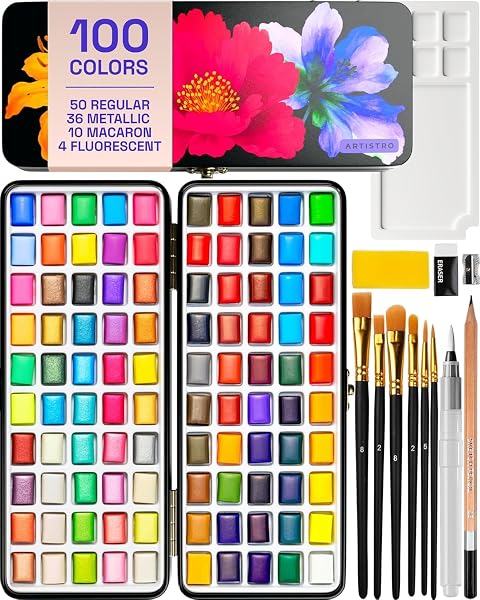
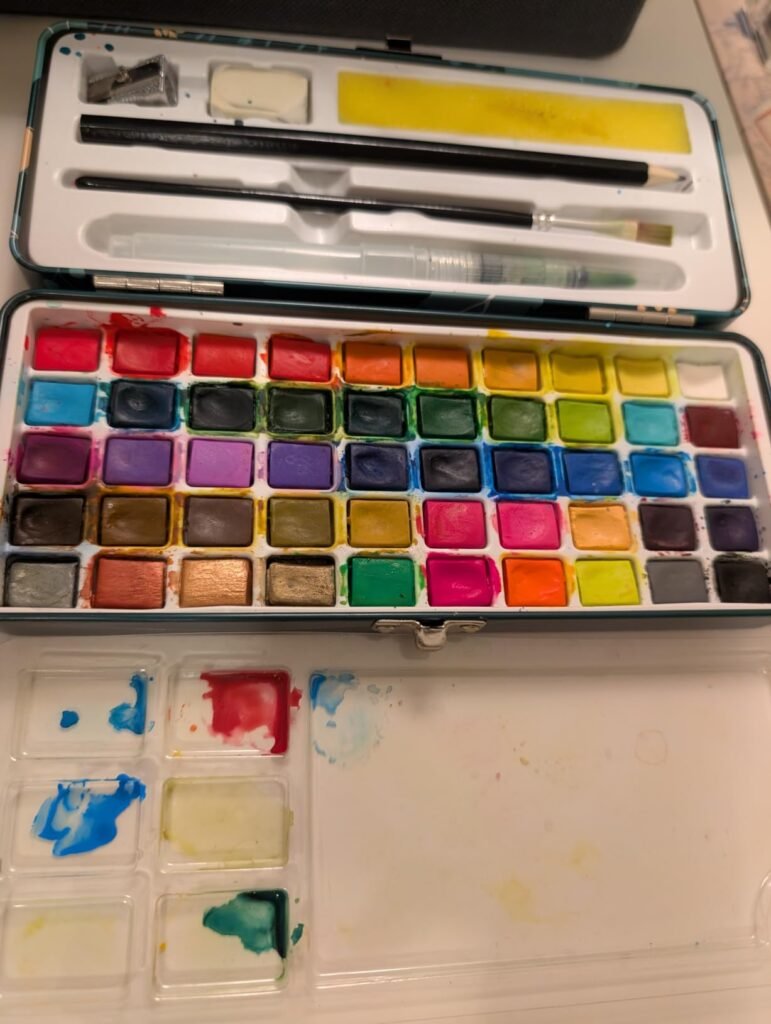
Getting 100 distinct watercolor shades for under twenty dollars is unusual, and the Artecho set manages it by packing 51 classic colors, 35 metallics, four fluorescents, and 10 macaron pastels into a single tin case. The sheer variety makes this set appealing for journaling, card making, illustration, and mixed-media projects where you want quick access to specialty finishes without buying separate metallic or neon palettes.
We may earn a commission when you buy through this link, at no additional cost to you.
The classic colors deliver rich, clear washes that blend smoothly for gradients and layering. The metallic shades add a luminous quality to lettering and decorative accents, though they tend to require a bit more water and agitation to pick up fully from the pan compared to the standard pigments. The fluorescent and macaron tones are softer and more pastel-oriented, which works well for whimsical illustrations and greeting card designs but may feel less versatile for traditional landscape or portrait work.
Beyond the paints themselves, the kit includes a water brush pen, a nylon brush, a sketching pencil, a sharpener, a color chart, two sheets of watercolor paper, and a natural sponge. The velvet storage bag is a nice addition for keeping the tin protected in a backpack or tote. The entire package conforms to ASTM D-4236 safety standards, making it suitable for younger artists as well as adults.
Metallic watercolors behave differently from standard transparent pigments. They contain fine reflective particles that settle quickly, so stirring the pan with a wet brush before loading helps achieve an even, shimmering wash. Fluorescent shades tend to be less lightfast than traditional pigments, so they are best suited for projects that will be photographed or scanned rather than displayed in direct sunlight for extended periods.
The main tradeoff is pan size. Fitting 100 colors into a portable case means each pan is quite small, which can be limiting if you work on large-format paintings that require heavy pigment pickup. For smaller projects, sketchbook work, and creative experimentation, however, the Artecho 100 offers remarkable breadth at a price that is hard to beat.
Artists who work on large canvases or full-sheet watercolor paper and need generous pan sizes for heavy washes.
We may earn a commission when you buy through this link, at no additional cost to you.
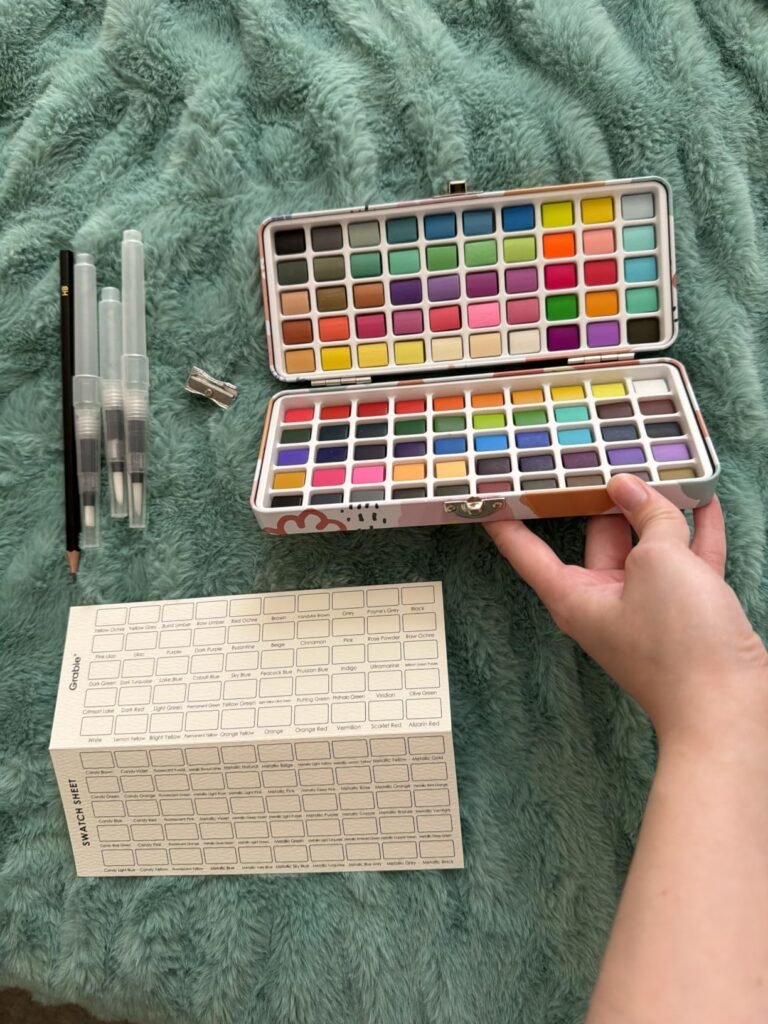
The Grabie 100 Color set splits its palette between 50 regular watercolors and 50 specialty shades spanning metallic, macaron, and fluorescent finishes. This arrangement gives painters a solid foundation of mixable primaries and secondaries alongside eye-catching accent colors that would otherwise require purchasing separate sets. The result is a versatile collection that handles everything from traditional washes to modern illustration styles.
We may earn a commission when you buy through this link, at no additional cost to you.
The regular pigments offer good transparency and tinting strength, blending easily on paper for smooth gradients and layered glazes. The specialty colors add visual interest for decorative projects, bullet journaling, and mixed-media work. The paints are formulated to resist fading and cracking once dry, which is a welcome feature at this price point, though long-term archival lightfastness should not be expected from student-grade formulations.
The kit ships with three water brush pens, a drawing pencil, a natural sponge, and a swatch sheet for testing colors before committing to a piece. The compact metal case measures roughly 8.2 by 4.9 inches and weighs about 15 ounces, making it light enough to carry on location for plein air sessions or travel sketching. The snug layout keeps pans secure but leaves little room for adding extra brushes or a small water cup.
The included swatch sheet is more than a novelty. Painting out each pan and letting the swatches dry gives you an accurate reference for how the colors look at full strength versus diluted. This is especially helpful with the metallic and fluorescent shades, which can appear quite different wet versus dry. Keeping the swatch sheet in the case lid lets you plan color combinations before starting a painting, saving time and reducing wasted paper.
This set is a strong choice for hobbyists and intermediate painters who want maximum color variety without assembling a collection from multiple brands. If you prefer traditional round brushes over water brush pens, plan to supplement with your own. For sketchbook-scale work and creative exploration, the Grabie 100 delivers a lot of painting potential in a single, portable package.
Plein air painters who need a rugged, weather-resistant case and traditional brush options for outdoor conditions.
We may earn a commission when you buy through this link, at no additional cost to you.
Winsor & Newton has been a staple in the watercolor world for nearly two centuries, and the Cotman line represents their student-grade offering that maintains strong working properties at an accessible price. This pocket set contains 12 half pans in a thoughtfully curated selection of warm and cool primaries, earth tones, and a Chinese White for lifting and highlights. The color choices reflect decades of practical use by sketchers and field painters who need a reliable limited palette.
We may earn a commission when you buy through this link, at no additional cost to you.
Cotman paints are known for good transparency and excellent tinting strength, meaning a small amount of pigment goes a long way on paper. The half pans reactivate quickly with water and produce clean, predictable mixes without muddying. The palette includes staples like Ultramarine, Alizarin Crimson Hue, Sap Green, and Burnt Sienna, which together can produce a surprisingly wide range of naturalistic colors through simple two-paint mixtures.
The plastic case is small enough to slip into a coat pocket or the side compartment of a camera bag, and the lid folds open to reveal an integral mixing surface. A pocket brush is included, though many artists prefer to carry a separate travel brush with a water reservoir for more control. The compact footprint makes this set ideal for urban sketching, travel journaling, and quick plein air studies where carrying a full palette is impractical.
Working with 12 colors forces you to mix rather than reach for a pre-mixed convenience shade, which builds color theory skills faster than a 100-pan set ever will. A limited palette also creates natural color harmony across a painting because every hue shares common pigments. Many professional watercolorists deliberately restrict their palettes to six or eight colors for this reason, so the Cotman Pocket Set aligns well with established painting practice.
The tradeoff is obvious: 12 colors limit your ability to paint straight from the pan without mixing, and the plastic housing lacks the durability of a metal tin. For artists who value pigment quality and portability over sheer color count, however, the Cotman Pocket Set remains one of the most dependable options available. It is also a natural stepping stone to the larger Cotman studio sets if you decide to expand later.
Artists who want a wide range of ready-to-use specialty colors like metallics, fluorescents, or pastels without mixing.
We may earn a commission when you buy through this link, at no additional cost to you.
The ARTISTRO Deluxe 100 stands out immediately for its limited-edition travel case, which gives the set a polished, gift-ready appearance that most competing watercolor kits lack. Inside, you will find 100 watercolor pans alongside brush pens and a built-in mixing palette, all organized in a compact layout that keeps each shade accessible without feeling cluttered. The presentation makes this a particularly appealing choice for holiday gifts, birthday presents, or art supply surprises.
We may earn a commission when you buy through this link, at no additional cost to you.
The paint formula is described as creamy, which translates to smooth pickup from the pan and easy blending on paper. The pigments produce soft transitions and strong coverage for both beginner washes and more detailed illustration work. While the set targets a broad audience from kids to professionals, the color quality is most at home in the hands of hobbyists and intermediate painters who want variety and convenience without a steep investment.
Portability is a key strength. The lightweight case holds everything securely and fits easily into a backpack or carry-on bag, making it practical for vacation painting, classroom use, or weekend workshops. The dual safety certifications (ASTM D-4236 and EN71) provide peace of mind for households with younger artists, and the non-toxic formula washes cleanly from skin and most fabrics.
When buying watercolors for someone else, presentation and completeness matter as much as pigment quality. A set that includes brushes, a palette, and a sturdy case means the recipient can start painting immediately without additional purchases. The ARTISTRO Deluxe 100 checks those boxes while offering enough color variety to suit a wide range of artistic interests, from botanical illustration to abstract experimentation.
The main consideration is pan size, which is necessarily small to accommodate 100 colors in a travel-friendly footprint. Artists who work on large sheets of paper or prefer generous washes may find the pans limiting. For sketchbook-scale projects, journaling, illustration, and casual painting sessions, the ARTISTRO Deluxe 100 delivers an impressive amount of creative range in a package that looks as good as it performs.
Professional watercolorists who prioritize individual pigment lightfastness ratings and single-pigment formulations over color count.
We may earn a commission when you buy through this link, at no additional cost to you.
The ARTISTRO Professional 48 targets a more experienced audience than most sets in this guide, and the specifications reflect that focus. The 48 colors carry an ASTM-I lightfastness rating, which indicates excellent resistance to fading over time. For artists who sell original work or exhibit in galleries, lightfastness is a critical factor that separates archival-quality paints from student-grade alternatives that may shift or dull within a few years of display.
We may earn a commission when you buy through this link, at no additional cost to you.
The XL half pans are noticeably larger than the standard pans found in 100-color sets, providing enough surface area to load a large round or flat brush without repeated dipping. The pigments offer strong tinting strength, meaning a small amount of paint produces vivid color on paper. The formulation is designed to blend seamlessly and produce smooth flat washes without leaving hard edges when dry, which is essential for techniques like wet-on-wet skies and soft gradient backgrounds.
The case includes a removable mixing palette, a practical feature that lets you pull the palette out for easier cleaning or use it as a separate mixing surface while the main case stays closed. The compact design still manages to feel comprehensive, and the sturdy construction protects the pans during transport. The set is positioned as a travel-friendly professional option, bridging the gap between a full studio palette and a minimal pocket set.
The ASTM lightfastness scale rates pigments from I (excellent) to V (very poor) based on accelerated aging tests that simulate decades of light exposure. An ASTM-I rating means the pigment is expected to remain stable for over 100 years under normal display conditions. This matters if you plan to frame and sell your paintings, as collectors and galleries expect archival materials. Student-grade sets rarely carry this rating, making the ARTISTRO Professional 48 a meaningful step up for artists transitioning to professional practice.
The tradeoff is color count and variety. With 48 shades and no metallic or fluorescent options, this set prioritizes pigment quality over novelty. Artists who need specialty finishes will want to supplement with a separate set. For serious watercolor work where color permanence, blending behavior, and pan size matter more than having 100 shades to choose from, the ARTISTRO Professional 48 is the most technically capable option in this lineup.
Casual hobbyists or children who want a wide variety of fun specialty colors like metallics and neons for craft projects.
We may earn a commission when you buy through this link, at no additional cost to you.
Most watercolor sets stop at paints and brushes, leaving you to source paper, pens, and other accessories separately. The Grabie 50 Premium kit goes further by including a 140lb watercolor paper pad with a pre-printed swatch sheet, a waterproof fineliner pen for sharp outlines, an art sponge for textural effects, five detail brushes, and a medium water brush pen alongside the 50-color palette. The result is a genuinely self-contained studio that fits inside a single tin.
We may earn a commission when you buy through this link, at no additional cost to you.
The 50 colors are curated as a foundational palette of essential shades rather than an overwhelming rainbow of novelty tones. The pigments are described as high-concentration, producing bright, true-to-color results that dissolve easily and lay down transparently for smooth blending. This approach makes the set particularly useful for artists who want to learn color mixing from a solid base rather than relying on pre-mixed convenience shades for every hue.
The inclusion of 140lb paper is a practical touch that many beginners overlook. Watercolor paper weight matters enormously: lighter paper buckles and warps under wet washes, while 140lb stock handles moderate water loads without excessive distortion. Having a pad ready to go means you can start painting immediately without a separate shopping trip. The fineliner pen is useful for adding crisp outlines to botanical illustrations, architectural sketches, and lettering projects.
Watercolor paper is measured in pounds per ream, and the difference between 90lb and 140lb stock is immediately noticeable. Thinner paper absorbs water quickly and buckles, creating uneven washes and frustrating puddles. The 140lb pad included in this set provides enough thickness to handle wet-on-wet techniques and multiple layers without significant warping, giving new painters a much more forgiving surface to practice on.
The premium price reflects the additional accessories, and the paper pad is relatively small, so you will eventually need to buy full-size sheets for larger projects. For someone who wants a complete, no-compromise starter kit or a travel setup that truly requires nothing else, the Grabie 50 Premium delivers a level of completeness that few competing sets match.
Experienced artists who already own premium brushes, paper, and pens and only need replacement paints.
We may earn a commission when you buy through this link, at no additional cost to you.
Travel watercolor sets need to balance color variety with durability, and the ARTISTRO Travel 50 leans into the rugged side of that equation. The metal case is designed to protect the 50 watercolor pans, brushes, and built-in mixing palette from the bumps and compression that come with backpack travel, airplane carry-ons, and outdoor excursions. The layout keeps everything organized and accessible, so you can set up quickly at a park bench, café table, or scenic overlook.
We may earn a commission when you buy through this link, at no additional cost to you.
The 50 colors are richly pigmented and blend smoothly for gradients, washes, and fine details. The palette covers a practical range of landscape-friendly greens and blues, warm earth tones, and vibrant primaries that handle most plein air subjects without requiring extensive mixing. The creamy paint texture reactivates easily with water, which is important when you are working outdoors and may not have time to wait for stubborn pans to soften.
The included brushes and mixing palette round out the kit for basic field painting, though the brush quality is functional rather than exceptional. Many traveling artists prefer to carry one or two high-quality collapsible brushes separately, using the included options as backups or for broad washes. The dual safety certifications make this set appropriate for family trips where younger painters want to join in.
When painting on location, bring a small collapsible water cup and a paper towel or cloth for blotting brushes. Pre-wet your pans a few minutes before you start to soften the paint and speed up pigment pickup. Work from light to dark and let washes dry between layers, which can take longer outdoors in humid conditions. A metal case like the one included here doubles as a wind-resistant palette holder, which is a practical advantage over flimsy plastic alternatives on breezy days.
If your primary goal is a dependable travel companion that can handle real-world conditions without babying, the ARTISTRO Travel 50 is a strong choice. The metal case provides genuine protection, the color selection is practical for outdoor subjects, and the overall package is light enough to carry all day. Artists who need metallic or fluorescent accents will want to bring a small supplemental palette, but for traditional landscape and urban sketching, this set covers the essentials well.
Studio artists who work exclusively at a desk and would benefit more from larger pans and a wider color range than a travel case can provide.
We may earn a commission when you buy through this link, at no additional cost to you.
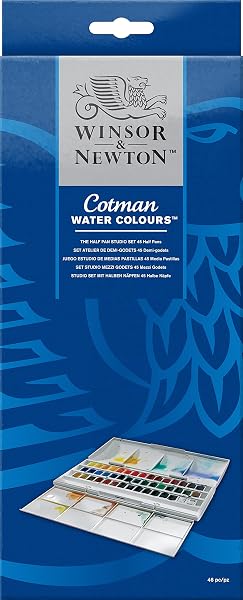
The Winsor & Newton Cotman 45 Half Pan Studio Set is the largest and most comprehensive Cotman offering in this comparison, providing 45 colors in a compact case with a built-in mixing tray. This set bridges the gap between the minimal 12-pan pocket set and professional-grade tube paints, giving intermediate and advancing artists a broad palette that supports complex mixing without the expense of a full professional set.
We may earn a commission when you buy through this link, at no additional cost to you.
The Cotman formulation maintains the brand’s reputation for good transparency and excellent tinting strength, using economical pigment alternatives to keep costs manageable while preserving reliable working properties. The 45-color selection includes a wide range of primaries, secondaries, earth tones, and convenience mixes that cover most painting subjects from landscapes to portraits. The half pans reactivate consistently and produce clean, predictable blends that behave well on quality watercolor paper.
The compact case is designed for studio or classroom use, with a mixing tray that provides ample space for blending custom hues. Unlike some of the smaller sets in this guide, the 45-pan layout gives you enough room to work with multiple colors simultaneously without constantly opening and closing the lid. The case is sturdy enough for occasional travel, though it is primarily intended as a stationary studio palette.
Student-grade paints like the Cotman line use less expensive pigment alternatives to keep prices accessible, which means some colors may have slightly lower lightfastness or tinting strength than their professional counterparts. The right time to upgrade is when you start selling work, entering exhibitions, or noticing that your paintings are not holding up over time. Until then, a well-curated student set like the Cotman 45 provides more than enough quality for skill development and personal projects.
The main considerations are price and accessories. At over fifty dollars, this is the most expensive set in the guide, and it does not include brushes or paper. You will need to supply your own tools, which adds to the total investment. For artists who are serious about developing their watercolor practice and want a reliable, broad palette from a trusted manufacturer, the Cotman 45 is a worthwhile long-term investment that will serve you well as your skills grow.
Budget-conscious beginners who need brushes, paper, and accessories included in a single affordable purchase.
We may earn a commission when you buy through this link, at no additional cost to you.
Selecting a watercolor set involves more than counting colors. The factors below will help you match a kit to your skill level, painting style, and practical needs so you spend your money on features you will actually use.
Pigment quality is the single most important factor in how watercolors perform on paper. Higher-quality pigments produce cleaner washes, more predictable mixes, and stronger tinting strength, meaning you need less paint to achieve vivid color. Student-grade sets like the Winsor & Newton Cotman line use economical pigment alternatives that still deliver good transparency and working properties, while professional-grade formulations use single-pigment colors with superior lightfastness and saturation.
Transparency refers to how much light passes through a layer of paint to reflect off the white paper beneath. Transparent watercolors create luminous, glowing effects through layered glazes, while opaque watercolors like the Kuretake Gansai Tambi produce bold, flat coverage that resembles gouache. Neither approach is inherently better; the right choice depends on your painting style. Botanical illustrators and traditional landscape painters typically prefer transparency, while calligraphers and graphic illustrators often favor opacity.
When comparing sets, look for mentions of tinting strength, transparency ratings, and lightfastness grades. A set with ASTM-I rated pigments will resist fading far longer than one with no lightfastness information. If you plan to display or sell your work, investing in higher pigment quality pays off in longevity.
A 100-color set looks impressive on paper, but fitting that many pans into a portable case means each pan is quite small. Small pans hold less paint, require more frequent reloading, and can be difficult to use with larger brushes. A 24- or 48-color set with larger pans often provides a better painting experience because you can load your brush fully and work more efficiently across the page.
Color count also affects mixing habits. A limited palette of 12 to 24 well-chosen colors encourages you to mix custom hues, which builds color theory skills and creates natural harmony across your paintings. A 100-color set offers convenience for quick projects and specialty effects like metallics and fluorescents, but it can also lead to a reliance on pre-mixed shades rather than developing your mixing intuition.
Decide what matters more for your current stage: variety and convenience, or pan size and mixing depth. Beginners and hobbyists often enjoy the creative freedom of a large palette, while advancing artists tend to gravitate toward smaller, higher-quality selections that they can expand deliberately over time.
Watercolor pans come in several standard sizes: full pans, half pans, and quarter pans. Full pans offer the most surface area and are ideal for large brushes and generous washes, but they take up significant space in a case. Half pans are the most common format in portable sets, striking a balance between paint capacity and compactness. Quarter pans appear in ultra-compact travel kits and are best suited for detail work and small sketches.
Some sets use non-standard pan shapes, such as the oversized round pans in the Kuretake Gansai Tambi set. These larger pans accept any brush size comfortably and reduce the risk of contaminating adjacent colors, which is a genuine practical advantage during active painting sessions. When evaluating a set, consider the largest brush you typically use and whether the pans can accommodate it without awkward scraping.
If you primarily paint on full sheets of watercolor paper or work on large-format pieces, prioritize sets with full or XL half pans. For sketchbook work, journaling, and travel painting, standard half pans or even quarter pans provide enough pigment for smaller compositions without adding unnecessary bulk to your kit.
Some watercolor sets include only the paint pans, while others bundle brushes, water brush pens, sponges, fineliner pens, paper pads, and mixing palettes. A comprehensive kit like the Grabie 50 Premium set can be ideal for beginners who want to start painting immediately without making additional purchases. However, the included accessories in budget kits are often basic quality, and experienced artists typically prefer to choose their own brushes and paper.
Brushes are the most impactful accessory. A set that includes real nylon or sable brushes in multiple sizes offers more practical value than one that provides only a single water brush pen. Water brush pens are convenient for travel but lack the water capacity and spring of a traditional brush, which can limit your technique range. Check the brush sizes and materials before assuming the included tools will meet your needs.
Consider what you already own. If you have a collection of quality brushes and a preferred watercolor paper, a paint-only set may be the better investment. If you are starting from scratch or buying a gift for someone new to watercolor, a complete kit with paper and tools provides a smoother entry point and better overall value.
The case that holds your watercolor pans affects both protection and usability. Metal tins offer the best durability for travel, resisting crushing and impact that would crack a plastic case. Plastic cases are lighter and less expensive but can become brittle over time, especially if exposed to heat or sunlight. Cardboard packaging, like the box used for the Kuretake Gansai Tambi set, is elegant for gifting but provides minimal protection for regular transport.
Portability also depends on weight and dimensions. A 100-color metal tin will be heavier and bulkier than a 12-pan pocket set, which can make a significant difference if you plan to carry your paints on long hikes or through airport security. Consider where and how you will paint most often. A studio artist who rarely leaves the desk can prioritize pan count over weight, while a plein air painter should choose the lightest, most compact option that still meets their color needs.
Look for cases with secure closures, internal dividers that prevent pans from shifting, and a lid that doubles as a mixing palette. A built-in mixing surface eliminates the need to carry a separate palette, which simplifies your setup and reduces the number of items you need to pack for outdoor sessions.
Watercolor paints intended for general use should carry safety certifications such as ASTM D-4236 (the American standard for art material labeling) or EN71 (the European toy safety standard). These certifications confirm that the product has been reviewed by a toxicologist and is safe for its intended use, including by children. Most sets in this guide carry at least one of these certifications, but it is always worth verifying before purchasing for younger artists.
Non-toxic does not mean edible, and watercolor paints should still be used with basic precautions: avoid ingestion, wash hands after painting, and keep paints away from very young children who may put brushes or pans in their mouths. Acid-free formulations are also worth noting, as they indicate that the paints will not degrade or yellow the paper over time, which matters for any work you intend to keep or display.
If you are buying for a classroom, camp, or family with children of varying ages, prioritize sets with clear safety certifications and washable formulas. For adult artists working in a home studio, safety is less of a differentiating factor, and you can focus more on pigment quality and lightfastness.
Lightfastness measures how well a pigment resists fading when exposed to light over time. The ASTM scale rates pigments from I (excellent, expected to last over 100 years) to V (very poor, fading within a few years). Professional-grade watercolors typically carry ASTM-I or ASTM-II ratings, while student-grade sets may not provide lightfastness information at all or may include a mix of ratings across the palette.
If you create work that will be framed, displayed in sunlight, or sold to collectors, lightfastness should be a primary buying criterion. A painting made with fugitive pigments may look vibrant when fresh but can fade noticeably within a decade, which is disappointing for both the artist and the buyer. The ARTISTRO Professional 48 set in this guide explicitly carries an ASTM-I rating, making it one of the more reliable choices for archival work.
For practice pieces, sketchbook studies, and projects that will be photographed or scanned rather than displayed, lightfastness is less critical. In those cases, you can prioritize color variety, price, and convenience without worrying about long-term pigment stability.
Before your first painting session, open all the pans and add a few drops of water to each one, letting the paint soften for five to ten minutes. This initial rehydration makes the pigments easier to pick up with your brush and produces smoother, more even washes from the start. When painting, work from light to dark and let each layer dry before applying the next to maintain clean, luminous color. Use a separate container of clean water for rinsing your brush and another for picking up fresh paint to avoid muddying your palette.
After each session, wipe excess pigment from the mixing palette and lid with a damp cloth or paper towel, then leave the case open until the pans and palette are completely dry. Closing a wet case traps moisture, which can lead to mold growth on the paint surface and corrosion of metal tins over time. If a pan develops a hard, cracked surface from repeated drying, simply add a few drops of water and let it sit for a few minutes before your next session to restore smooth pickup.
Store your watercolor set in a cool, dry place away from direct sunlight and extreme temperatures. Heat can cause the binder in the paint to soften and the pans to shift or melt within the case, while freezing temperatures can crack the paint cakes. If you travel frequently, consider wrapping your metal tin in a cloth or placing it inside a padded bag to prevent dents and keep the pans secure. With basic care, a quality watercolor set can last for years of regular use.
A limited palette of 12 to 24 well-chosen colors can produce a surprisingly wide range of hues through mixing, and many professional artists work with fewer than 10 colors. Larger sets of 50 or 100 colors offer convenience and specialty shades like metallics, but the individual pans are smaller and the pigment quality may be lower. Start with a set that matches your current skill level and expand as your needs become clearer.
Student-grade watercolors use less expensive pigment alternatives and a higher ratio of filler to pigment, which keeps costs down but may reduce tinting strength, transparency, and lightfastness. Professional watercolors use single-pigment formulations with higher pigment loads, producing cleaner mixes and more durable results. Student sets are excellent for learning and practice, while professional paints are better suited for work that will be displayed or sold.
Regular printer paper is too thin and absorbent for watercolor techniques. It will buckle, pill, and tear when exposed to wet washes. Use watercolor paper rated at 140lb or heavier for the best results. Cold-pressed paper provides a versatile texture for most techniques, while hot-pressed paper offers a smoother surface for detailed illustration work.
Metallic watercolors contain fine reflective particles suspended in the binder, which gives them a shimmering, luminous quality that standard transparent pigments cannot replicate. They tend to be more opaque and may require more water and agitation to pick up from the pan. Metallic shades are popular for calligraphy, greeting cards, and decorative accents but are generally less lightfast than traditional pigments.
Rinse your brushes thoroughly in clean water immediately after painting, gently reshaping the bristles with your fingers. For a deeper clean, use a mild brush soap or baby shampoo once a week to remove pigment buildup near the ferrule. Never leave brushes sitting bristle-down in water, as this will bend and damage the tips. Lay them flat to dry or store them upright with the bristles facing up.
Watercolor paints in pan form have an extremely long shelf life and can remain usable for decades if stored properly. The binder may dry out over time, but adding a few drops of water will usually reactivate the paint without any loss of quality. Tube watercolors can dry out and harden if the caps are not sealed tightly, but even hardened tube paint can often be reconstituted with water and used as a makeshift pan.
A beginner benefits most from a set that includes everything needed to start painting: paints, brushes, a mixing palette, and ideally some watercolor paper. Sets in the 24- to 50-color range provide enough variety to explore without being overwhelming. Look for non-toxic certifications, a sturdy case, and brushes that hold their shape. A complete kit eliminates the confusion of assembling supplies separately and lets you focus on learning technique.
Yes, watercolors from different brands and sets can be mixed freely on your palette. The pigments will blend regardless of the manufacturer, though you may notice slight differences in how quickly each brand reactivates or how transparent the resulting mix appears. Many artists build custom palettes by combining pans from multiple sets to get exactly the colors they need.
Use paints with high lightfastness ratings (ASTM-I or ASTM-II), display finished work behind UV-protective glass, and avoid hanging paintings in direct sunlight or brightly lit rooms. You can also apply a UV-resistant fixative spray designed for watercolors, though this may slightly alter the surface appearance. Proper framing and display conditions are the most effective long-term protection against fading.
Metal cases offer superior durability and protection, especially for travel and outdoor use. They resist crushing, do not become brittle with age, and often provide a better mixing surface on the lid. Plastic cases are lighter and less expensive, making them a practical choice for studio use or casual painting where the case will not be subjected to rough handling. For serious travel and plein air work, a metal tin is the more reliable option.
The Kuretake Gansai Tambi 24 earns the top spot in this guide for its exceptional pigment quality, oversized pans, and distinctive opaque finish that sets it apart from every other set on the list. With the highest customer rating and a heritage of Japanese craftsmanship dating back over a century, it offers the most refined painting experience for artists who value color performance over sheer quantity.
For buyers on a tighter budget or those who want maximum variety, the Artecho 100 Colors set delivers an impressive 100 shades including metallics and fluorescents at a remarkably low price. Beginners who want a complete, no-fuss starter kit should consider the Grabie 50 Color or the Grabie 50 Premium, both of which include quality brushes and accessories that eliminate the need for separate purchases. Serious artists focused on archival longevity will find the ARTISTRO Professional 48 and its ASTM-I lightfastness rating the most technically capable option.
Your best choice ultimately depends on how you plan to paint, where you will paint, and how much you want to invest in pigment quality versus color variety. Use the comparison table and buying guide above to weigh the tradeoffs that matter most to your situation, and pick the set that aligns with your current goals rather than the one with the highest color count. A well-chosen 24-pan set will serve you better than a 100-pan kit that sits unused because the pans are too small or the pigments too weak.