DMI Sliding Transfer
8.4Editor score400 lb capacity
Sliding seat mechanism
Removable cutout access
FSA HSA eligible
Find the right transfer benches for 2026. We compare 10 standout options by build quality, useful features, owner feedback, value, and everyday trade-offs.
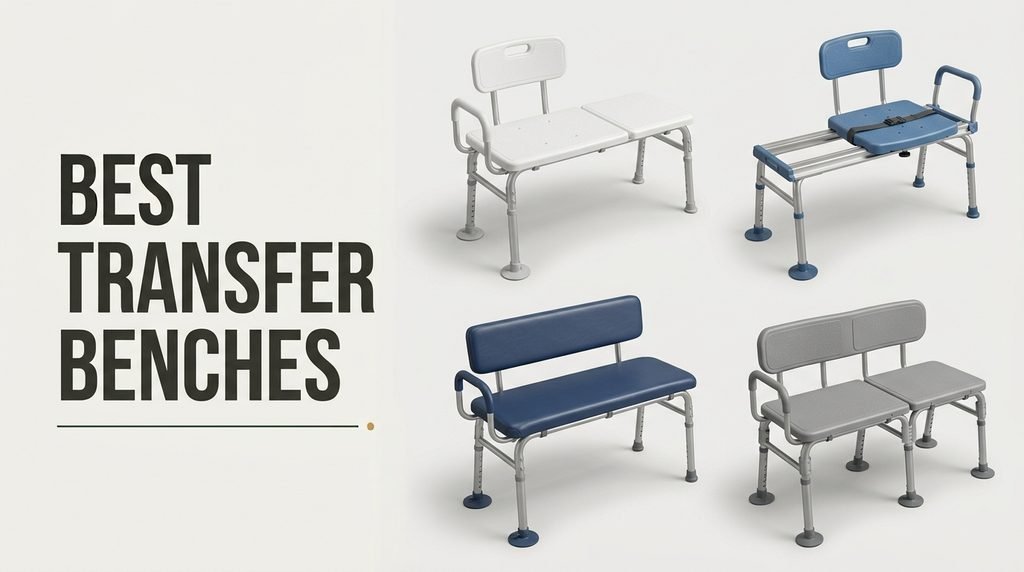
Find the right transfer benches for 2026. We compare 10 standout options for safe bathtub and shower access, evaluating weight capacity, seat dimensions, height adjustability, backrest support, suction foot stability, frame materials, assembly ease, and overall value for seniors, caregivers, and anyone managing mobility challenges in the bathroom.
Transfer benches differ meaningfully in design, from basic reversible models that bridge the tub edge to sliding seats that minimize caregiver effort. Weight capacities range from 350 to 600 pounds, and features like padded surfaces, U-shaped water cutouts, swivel designs, and perineal access openings significantly affect comfort and practical usability during daily bathing.
Choosing the right bench depends on tub dimensions, user weight and mobility level, whether a caregiver will assist, and how much comfort features matter. This guide breaks down the practical differences across the lineup so you can match a transfer bench to your bathroom and the user’s actual needs rather than overpaying for features you may not use.
We compared 10 transfer benches using the details that actually help a buyer decide: weight capacity, seat width and depth, height adjustment range, backrest configuration, suction foot stability, frame material, tool-free assembly, sliding versus stationary design, cutout and drainage features, warranty signals, owner feedback, and overall value. The notes focus on practical trade-offs so each pick connects to how seniors, caregivers, and post-surgical users actually transfer safely in and out of bathtubs at home.

Compare key features, scores, and current prices side by side. A shorter feature list means fewer details were available, not necessarily fewer capabilities.


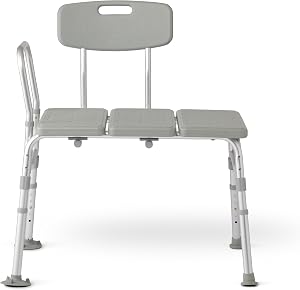


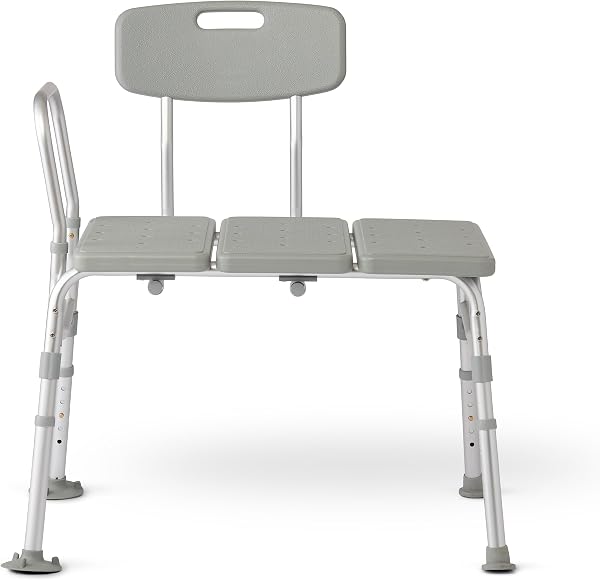
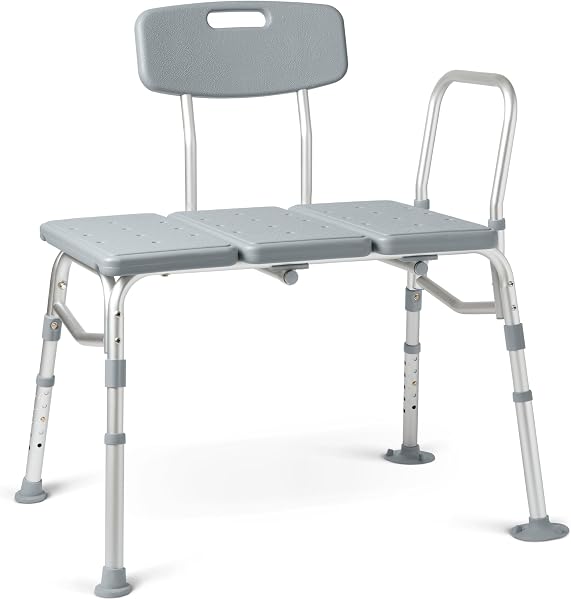
The Medline Transfer Bench earns its editor's choice position by delivering the core features most buyers need in a transfer bench at a reasonable price with reliable build quality. The high-strength rust-resistant aluminum frame handles the daily moisture exposure that would corrode lesser materials, and the 400-pound weight capacity accommodates most adult users with a meaningful safety margin for shifting positions during the transfer process.
We may earn a commission when you buy through this link, at no additional cost to you.
The push-button height adjustment system allows the seat to adjust from 17.5 to 22 inches without tools, which matters because the correct seat height makes a significant difference in how safely the user can slide across the tub edge. Setting the bench slightly higher than the tub wall creates a smooth downward slide path that reduces the muscle effort required. The reversible backrest can be positioned on either side of the seat, which is critical because bathroom layouts dictate whether the user will enter from the left or right.
The stationary arm rest provides important support when sitting down or standing up, which are the two moments during a transfer when fall risk is highest. The slip-resistant feet work both inside and outside the tub, with wide suction cup feet adding extra security on the slick tub surface. The 32-inch overall width and 18-inch overall depth fit most standard bathrooms, and the entire bench weighs only 11 pounds for easy repositioning or storage.
Bathroom layouts vary significantly, and the direction a user approaches the tub depends on which side the tub faucet, shower controls, and bathroom door are located. A reversible backrest allows the bench to work in any bathroom configuration without needing a left-handed or right-handed specific model. This flexibility is particularly valuable when buying a bench for a rental property or when the user may eventually move to a different bathroom with a mirrored layout.
This transfer bench is the right choice for most buyers who want a proven, reliable product from a trusted medical equipment brand without paying for premium padded surfaces or specialty features. The 4.6-star rating from a large pool of owners confirms consistent satisfaction. The main consideration is that the arm rest is stationary on one side, so if your bathroom layout changes or the user prefers arm support on the opposite side, you cannot reconfigure it like the backrest.
Buyers who need the convenience of a sliding seat for easier wheelchair transfers or who require a padded surface for extended seated bathing sessions.
We may earn a commission when you buy through this link, at no additional cost to you.
The DMI Sliding Tub Transfer Bench addresses one of the most physically demanding aspects of assisted bathing: moving a user across the tub edge without requiring them to lift or shift their body weight substantially. The sliding seat mechanism allows the user to sit down on the outside portion of the bench, then slide smoothly over the tub wall and into the shower area with minimal muscular effort. This is especially valuable for caregivers who assist larger users or those with very limited mobility.
We may earn a commission when you buy through this link, at no additional cost to you.
The removable cutout provides perineal access that can be essential for personal hygiene assistance, which is a thoughtful feature that distinguishes this model from basic transfer benches. The integrated safety features include a hook and loop safety belt, nylon strap locks that hold the seat in place during use, and suction cup rubber anti-slip feet that keep the device firmly anchored. Together these features create a comprehensive safety system that addresses multiple risk points.
The 400-pound weight capacity accommodates most adult users with a reasonable margin, and the rust-resistant aluminum frame paired with a blow-molded plastic seat provides durability without excessive weight. The seat can be configured for right or left installation, which allows the bench to work in any bathroom layout. The overall 39-inch width is wider than fixed-seat alternatives, so measure your bathroom carefully before purchasing to confirm adequate clearance.
Transferring a limited-mobility user across a traditional transfer bench requires the caregiver to help lift and reposition the user, which can cause significant physical strain over time, especially for older spouse caregivers. A sliding seat mechanism allows the user to remain seated throughout the entire transfer, with only a smooth lateral slide required to move across the tub wall. This dramatically reduces caregiver effort and can prevent the back injuries that unfortunately become common for long-term caregivers managing daily transfers.
This bench is the right choice for caregivers who regularly assist users with significant mobility limitations and want to reduce the physical strain of transfers. The FSA and HSA eligibility also provides a meaningful financial advantage for buyers using tax-advantaged medical spending accounts. The main considerations are the larger footprint and the slightly lower 4.2-star rating compared to simpler models, which likely reflects some owner frustration with the more complex setup required for the sliding mechanism.
Buyers with smaller bathrooms where the 39-inch footprint will not fit, or those who want the simplest possible setup without a sliding mechanism to learn.
We may earn a commission when you buy through this link, at no additional cost to you.
The Drive Medical Tub Transfer Bench stands out for its exceptionally precise height adjustment capability, allowing seat height changes in 0.5-inch increments rather than the typical 1-inch steps found on most competitors. This matters more than it might initially seem because the ideal transfer height depends on the specific tub wall height, the user's leg length, and personal comfort preferences. The ability to fine-tune to half-inch increments means you can dial in the exact position that works best for the user.
We may earn a commission when you buy through this link, at no additional cost to you.
The dual column extending legs provide meaningful stability advantages over single-column designs, as the paired support structure resists both forward-backward and side-to-side movement during transfers. The sturdy aluminum frame handles the 350-pound weight capacity reliably and resists the corrosion that would compromise lesser materials over time. The drainage openings in the seat prevent water from pooling and keep the user more comfortable during the bathing session.
The supportive backrest provides important stability during the bathing session, and the suction cup feet create a secure foundation that prevents the bench from shifting on the slick tub surface. Drive Medical has decades of experience in home medical equipment, and their established reputation means replacement parts, warranty support, and user manuals are typically well-handled compared to lesser-known brands.
The transfer process depends on being able to slide the user across the tub edge with minimal muscular effort. If the bench is too high, the user has to lift their body weight to clear the tub wall. If it is too low, they slide uphill into the tub. The ideal height places the bench seat about half an inch above the tub wall, creating a slight downward slope that makes the slide almost effortless. Half-inch precision adjustment allows you to achieve this exact position, which can dramatically improve transfer safety and reduce physical strain.
This bench is the right choice for buyers who want precise height adjustment to fine-tune the fit for a specific user and tub combination, and who value the trust that comes with a well-established medical equipment brand. The main consideration is the 350-pound weight capacity, which is on the lower end of this comparison and may be insufficient for larger users. For users within the capacity range who want precision adjustment, this is an excellent option.
Users approaching or exceeding the 350-pound weight capacity who need the 400 or 600-pound ratings offered by competing models.
We may earn a commission when you buy through this link, at no additional cost to you.
The Medical King MK7140 Transfer Bench focuses on delivering the essential functionality most buyers need without the complexity or premium features of higher-end alternatives. The straightforward design provides a generous seat with backrest support, adjustable height for proper fit, and a 400-pound weight capacity that accommodates most adult users. For buyers who want a bench that simply works without a learning curve, this uncomplicated approach has real appeal.
We may earn a commission when you buy through this link, at no additional cost to you.
The adjustable seat height allows the bench to be configured for different tub wall heights and user preferences, which is essential for safe transfers. The supportive backrest provides stability during the bathing session, reducing the risk of backward falls that can occur with backless alternatives. The plastic seat construction keeps the overall weight manageable for repositioning and storage while maintaining durability under normal use.
The 4.6-star rating reflects consistent owner satisfaction with the product’s core functionality. Transfer benches do not need to be complicated to be effective, and sometimes the best choice is simply a well-designed basic model that reliably performs the fundamental job of safely bridging the tub edge. The affordable price point makes this bench accessible to budget-conscious buyers who need a solution quickly.
Not every user needs the premium features of top-tier transfer benches. For a user with moderate mobility who can self-transfer with the help of a well-positioned bench, basic adjustability, a stable backrest, and reliable weight capacity cover all the essential needs. Paying for sliding mechanisms, padded surfaces, or specialty cutouts you will not use adds cost without benefit. Starting with a basic model and upgrading only if specific needs emerge is often the most sensible approach for first-time buyers.
This bench is the right choice for buyers who want proven basic functionality without paying for sliding mechanisms, padded surfaces, or specialty features they may not need. The main consideration is that the published specifications are more limited than premium competitors, so if you need to verify specific dimensions or features before purchasing, you may want to look at models with more detailed documentation. For straightforward reliability at an accessible price, this is a solid choice.
Buyers who need advanced features like sliding seats, padded surfaces, or extended weight capacities beyond 400 pounds.
We may earn a commission when you buy through this link, at no additional cost to you.
The Loyoda Sliding Shower Chair introduces an unusual swivel design that addresses one of the most common complaints about transfer benches: they take up significant floor space in bathrooms that are often already tight. The swivel mechanism allows the bench to rotate closely along the tub or wall, which the manufacturer describes as saving 50 percent of the space required by traditional non-swiveling designs. For compact bathrooms, this engineering can be the difference between a workable solution and a non-starter.
We may earn a commission when you buy through this link, at no additional cost to you.
The combination of swivel capability with a sliding seat mechanism provides the caregiver-friendly transfer benefits of a sliding bench while addressing the space constraints that typically limit where these larger benches can fit. The 33-inch length by 20-inch width keeps the overall footprint reasonable, and the adjustable seat height from 20 to 28 inches provides a wider range than most competitors, which accommodates users with different leg lengths or unusually tall tub walls.
The rust-resistant aluminum frame handles the 350-pound weight capacity and withstands daily moisture exposure. The FSA and HSA eligibility provides a meaningful financial advantage for buyers using medical spending accounts, as the pre-tax funding can effectively reduce the cost by the user’s marginal tax rate. The design is specifically marketed as suitable for seniors, disabled users, and post-surgical patients who need dependable transfer assistance.
In many older homes and apartment bathrooms, the space between the tub and the opposite wall is just 36 to 48 inches, which barely accommodates a standard transfer bench and leaves no room for a caregiver to assist. A swivel design can rotate out of the way between uses or during caregiver positioning, effectively doubling the usable floor space in the bathroom. For users who live in tight bathroom layouts, this engineering can transform an impossible installation into a practical one.
This bench is the right choice for buyers with compact bathrooms where traditional transfer benches would not fit comfortably, and who want the caregiver benefits of a sliding seat design. The main considerations are the 350-pound weight capacity on the lower end of this comparison and the higher price than basic non-swiveling alternatives. For the right bathroom and user combination, the space savings justify the premium.
Buyers with spacious bathrooms where swivel capability is unnecessary, or users approaching the 350-pound capacity limit.
We may earn a commission when you buy through this link, at no additional cost to you.
The HOMLAND Tub Transfer Bench differentiates itself through its reinforced A-frame structural design, which uses thicker tubing than standard transfer benches to deliver enhanced stability and strength. The A-frame geometry distributes user weight more evenly across the base than straight-leg designs, which translates to a more stable platform during the critical transfer motion. For users who feel apprehensive about bench movement during transfers, this additional structural rigidity provides meaningful peace of mind.
We may earn a commission when you buy through this link, at no additional cost to you.
The 400-pound weight capacity accommodates most adult users with a reasonable safety margin, and the lightweight aluminum construction keeps the overall bench manageable for repositioning or storage. The non-slip rubber feet create a secure grip on wet bathroom surfaces, which is essential for safety when water inevitably splashes onto the floor around the tub during bathing. The drainage holes in the seat prevent water from pooling and keep the user more comfortable during the session.
The adjustable seat height from 17.5 to 22.5 inches uses a simple push-button system that requires no tools, and the reversible backrest easily switches sides to accommodate different bathtub and shower setups. The spacious seat measures 16.14 inches deep by 27 inches wide, providing generous seating area that works well for users of various body sizes. The button-lock assembly design makes initial setup quick and straightforward.
The diameter and wall thickness of the aluminum tubing used in a transfer bench frame directly affects its rigidity and long-term durability. Thicker tubing resists flexing under load and creates a more stable platform during transfers, which is particularly important for larger users or those who need to shift position significantly during the transfer process. Thicker tubing also resists dents and deformation if the bench is accidentally dropped or struck during installation, extending the practical lifespan of the device.
This bench is the right choice for buyers who prioritize structural stability and want the reassurance of thicker-tubing construction compared to standard models. The 4.5-star rating is slightly below the leading competitors but still represents strong satisfaction. The main consideration is the slightly larger assembled footprint, so measure your bathroom carefully to ensure adequate clearance. For stability-focused buyers who want reinforced construction without a premium price, this is a solid option.
Buyers with the smallest bathrooms where every inch of clearance matters, or those who need the premium 600-pound capacity of heavy-duty alternatives.
We may earn a commission when you buy through this link, at no additional cost to you.
The Caring Transfer Bench leads this comparison with an industry-leading 600-pound weight capacity, making it the only option in the lineup suitable for users whose weight exceeds the 400-pound limit of most standard benches. For larger users who have struggled to find appropriate medical equipment, this bench addresses a critical need that smaller-capacity alternatives simply cannot meet. The reinforced aluminum frame construction uses heavier-gauge materials to achieve this extended capacity rating.
We may earn a commission when you buy through this link, at no additional cost to you.
The extra-wide ergonomically designed seat provides the generous seating area that larger users need for comfortable, stable positioning during the bath. A seat that is too narrow forces the user to balance precariously, which increases fall risk during the transfer and makes the bathing session uncomfortable. The widened design here directly addresses this concern and provides a stable platform appropriate to the heavier weight capacity.
The tool-free adjustable legs allow custom height configuration for different tub walls, and the reversible design means the bench works in any bathroom orientation. The rubber-tipped suction cup feet create a strong grip on both the tub surface and the bathroom floor, which is especially important for a bench that may support users at the upper end of its weight range. The supportive backrest adds stability for extended bathing sessions.
Medical equipment manufacturers typically test and rate weight capacities for static loads under controlled conditions. During actual use, dynamic forces from shifting positions, leaning for stability, or being assisted by a caregiver can temporarily exceed the user’s static weight. A bench rated for 600 pounds provides meaningful safety margin for a 400-pound user, whereas a 400-pound bench supporting the same user has essentially no margin for the dynamic forces that occur during real transfers. Choosing capacity with margin is a safety-critical decision.
This bench is the right choice for larger users who exceed the 400-pound capacity of standard models and for caregivers who need confidence that the equipment can handle the actual load without concerns about failure. The main considerations are the larger assembled footprint and the premium price compared to standard-capacity alternatives. For users who need the extended capacity, this is the only viable option in this lineup.
Users well below the 400-pound range who do not need the extra capacity and would benefit from the lower price and smaller footprint of standard-capacity alternatives.
We may earn a commission when you buy through this link, at no additional cost to you.
The Dr. Dunley Tub Transfer Bench delivers the full 400-pound weight capacity of premium models at the lowest price point in this comparison, making it an exceptional value for budget-conscious buyers who need reliable transfer assistance without stretching their budget. For families who need to equip a bathroom quickly after an unexpected medical event or those who need multiple benches for different care locations, this affordability makes a real difference.
We may earn a commission when you buy through this link, at no additional cost to you.
The anti-slip suction feet are notably large, which creates a strong grip on the tub or shower surface and helps prevent the shifting that can occur with smaller suction cups when the user transfers their weight. The lightweight frame design is specifically engineered for easier handling by caregivers or users with limited strength, which matters for repositioning the bench between showering positions or storing it between uses.
The tool-free quick assembly uses a click-together design that eliminates the frustration of lost hardware or confusing instructions. Users can set up the bench and start using it within minutes of unboxing, which is especially valuable when a transfer bench is needed urgently after a hospital discharge or sudden mobility change. The generously sized seat and supportive backrest promote comfort during bathing without the complexity of adjustable arms or specialty cutouts.
When a transfer bench is needed, it is often needed urgently. Hospital discharges can happen with little advance notice, and sudden mobility changes from a fall or surgery can create an immediate safety concern. A bench that assembles in minutes without tools can be functional on the day of arrival, which may matter more than premium features that require research and comparison. For urgent needs, prioritize fast setup over feature complexity.
This bench is the right choice for budget-conscious buyers who want reliable 400-pound capacity and basic comfort features without paying for premium add-ons they may not need. The 4.6-star rating confirms that owners find it meets their expectations consistently. The main consideration is that the feature set is intentionally simpler than premium alternatives, so if you need padded surfaces, sliding mechanisms, or specialty cutouts, you will need to spend more. For straightforward value, this is the top pick.
Buyers who want padded seat surfaces, sliding seat mechanisms, or specialty features like perineal cutouts or U-shaped water barriers.
We may earn a commission when you buy through this link, at no additional cost to you.
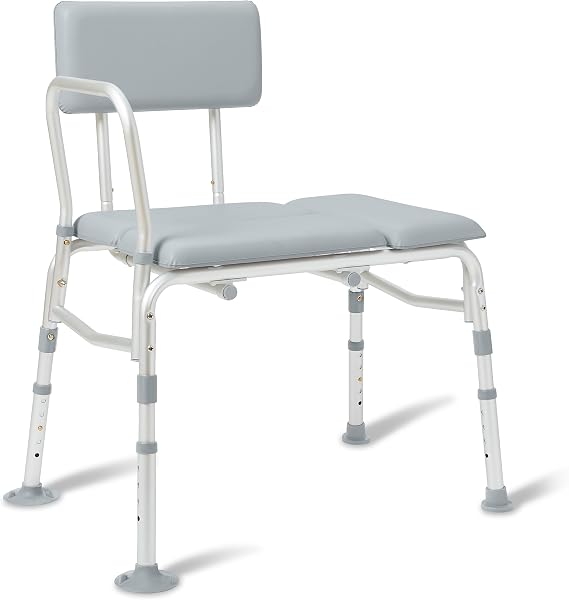
The Medline Padded Transfer Bench addresses a specific comfort concern that affects users who spend extended time seated during their bathing routine: hard plastic seats can become uncomfortable surprisingly quickly, especially for thinner users whose body weight concentrates on narrow contact points. The padded seat and backrest significantly improve comfort during longer bathing sessions, making the device more pleasant to use day after day.
We may earn a commission when you buy through this link, at no additional cost to you.
The high-strength rust-resistant aluminum frame handles the 400-pound weight capacity and resists the corrosion that would compromise lesser materials under daily moisture exposure. The included side arm provides additional stability during the critical sitting and standing moments when fall risk is highest. The reversible backrest can be positioned on either side of the bench, which is essential for adapting to different bathroom layouts.
The push-button height adjustment allows the seat to adjust from 18 to 22 inches without tools, providing adequate range for most standard tubs. The slip-resistant feet work both inside and outside the tub, with wide suction cup feet adding extra security on the slick tub surface. At only 11 pounds, the bench remains manageable for repositioning or storage despite the added padding, which can add weight to competing padded models.
Padded transfer bench surfaces require more frequent and thorough cleaning than hard plastic alternatives because the softer materials can absorb moisture and provide a surface where mold or mildew can develop over time. Plan to wipe down the padded surfaces after each use with a disinfecting wipe or mild soap solution, and allow the bench to air dry completely before the next use. Deeper periodic cleaning every few weeks helps maintain hygiene and extends the lifespan of the padded surfaces.
This bench is the right choice for users who find hard plastic seats uncomfortable during extended bathing sessions or who have sensitive skin that benefits from the softer surface. The main considerations are the slightly higher price than non-padded alternatives and the additional cleaning attention that padded surfaces require to prevent mold or mildew growth. For comfort-focused buyers who prioritize a pleasant bathing experience, the padding justifies the premium.
Buyers who prefer the easier cleaning of hard plastic seats or those who want to minimize cost by choosing a basic non-padded transfer bench.
We may earn a commission when you buy through this link, at no additional cost to you.
The Drive Medical Splash Defense Tub Transfer Bench introduces a thoughtful engineering solution to a common frustration with traditional transfer benches: water spilling onto the bathroom floor during use. The U-shaped cutout in the seat allows the shower curtain to drop inside the tub rather than draping over the bench, which keeps water contained in the tub where it belongs rather than puddling on the bathroom floor around the bench.
We may earn a commission when you buy through this link, at no additional cost to you.
This splash containment design matters more than it might initially seem because wet bathroom floors create slip hazards for everyone in the household, not just the transfer bench user. Over time, repeated water spillage can also damage flooring, baseboards, and subfloors in older homes. The U-shaped cutout addresses this problem elegantly without requiring any changes to showering routines or additional accessories.
The pinch-free lever system is another thoughtful detail that distinguishes this bench from competitors. Traditional push-button height adjustments can occasionally pinch fingers during setup, which is particularly concerning for elderly users with fragile skin or arthritis. The lever design eliminates this risk while providing dual-column extending legs that allow precise 0.5-inch incremental height adjustments. The 400-pound weight capacity and reversible design accommodate most bathroom layouts and users.
Water spilling from the bathtub during transfer bench use seems like a minor inconvenience, but the long-term costs can be significant. Wet bathroom floors create slip hazards that can lead to falls for the user, caregivers, or other household members. Over months and years, repeated water exposure can warp hardwood flooring, loosen tile grout, and damage drywall at the baseboards. A U-shaped cutout that keeps water contained in the tub prevents these cumulative problems and protects your home as well as improving safety.
This bench is the right choice for buyers who struggle with water spillage during traditional transfer bench use and want an engineered solution rather than ongoing floor cleanup. The main considerations are the slightly lower 4.4-star rating and the higher price than basic benches without the U-shaped cutout. For buyers in homes with hardwood or other water-sensitive bathroom flooring, the splash containment feature justifies the premium.
Buyers in homes with waterproof tile bathroom floors where water spillage is a minor concern, or those who prefer basic benches without specialty cutout features.
We may earn a commission when you buy through this link, at no additional cost to you.
Selecting a transfer bench involves matching the bench’s dimensions, capacity, and features to your specific bathroom and the user’s mobility level. The following factors cover the most important decision points to help you choose a bench that genuinely improves bathing safety and independence.
Weight capacity is the most critical specification when choosing a transfer bench, and the right choice should always include meaningful safety margin above the user’s actual weight. Most transfer benches in this comparison offer 400-pound capacities, which comfortably accommodates users up to about 350 pounds with reasonable margin. For larger users, the Caring Transfer Bench at 600 pounds is the only option in this lineup suitable for weights exceeding the standard 400-pound limit.
Beyond raw capacity, consider the seat width and depth relative to the user’s body size. Standard transfer bench seats run about 16 inches deep by 24 to 27 inches wide, which works for average-sized adults. Larger users benefit from extra-wide seats like those found on the Caring 600-pound bench, which provides more stable support and reduces side-to-side shifting during the transfer process. Measuring the user’s hip width and comparing to the seat specifications prevents the discomfort of a bench that is too narrow.
Choose a bench rated at least 25 to 50 percent above the user’s actual weight to account for dynamic forces during transfers. A 300-pound user is best served by a 400-pound capacity bench, while users approaching 400 pounds should step up to the 600-pound Caring model for appropriate margin.
Transfer benches come in two fundamental designs: stationary benches where the user slides across a fixed seat surface, and sliding benches where the entire seat moves along a rail system to carry the user across the tub edge. Stationary benches like the Medline, Drive Medical, and Dr. Dunley models are simpler, less expensive, and work well for users with moderate mobility who can self-transfer with the bench providing a stable platform.
Sliding benches like the DMI and Loyoda models dramatically reduce the physical effort required for transfers because the user does not need to lift their body weight to shift across the bench. Instead, they remain seated while the sliding mechanism carries them over the tub wall. This caregiver-friendly design is particularly valuable for users with very limited mobility or for older spouse caregivers who cannot physically lift or reposition the user.
For users who can self-transfer with moderate assistance, a stationary bench is simpler and less expensive. For users with significant mobility limitations or when caregiver strain is a concern, invest in a sliding bench despite the higher cost and larger footprint.
Transfer benches typically offer height adjustment ranges from 17 to 23 inches, which accommodates most standard bathtubs. The ideal seat height places the bench slightly above the tub wall, creating a gentle downward slope that makes the slide across the edge nearly effortless. If the bench is too low, the user must slide uphill into the tub, which requires significantly more effort and increases fall risk.
Precision of adjustment matters as much as range. Benches like the Drive Medical and Drive Splash Defense models offer 0.5-inch incremental adjustments, which allows precise dialing in of the optimal height for a specific user and tub combination. Most benches use 1-inch or push-button increment adjustments, which are adequate for most users but may not achieve the perfect fit possible with half-inch precision. Measure your tub wall height from the outside bathroom floor to the top edge before purchasing.
For most tubs under 20 inches tall, any bench in this guide will work. For deeper tubs or users with specific comfort preferences, prioritize benches with precision half-inch adjustment capabilities.
Transfer bench frames are predominantly made from aluminum, which combines light weight with excellent corrosion resistance in the humid bathroom environment. Rust-resistant aluminum like that used in the Medline, HOMLAND, and Loyoda models will serve reliably for many years of daily use without degrading. Standard aluminum is adequate for home use, while reinforced or thicker-gauge aluminum like the HOMLAND A-frame design provides additional stability for users who want extra rigidity.
Seat materials are typically plastic (polyethylene or similar) for durability and easy cleaning. Padded seats like those on the Medline Padded Transfer Bench provide extra comfort but require more thorough cleaning to prevent mold or mildew growth over time. Non-padded hard plastic seats are easier to clean and dry more quickly between uses. The best choice depends on how much time the user spends seated and whether comfort or ease of maintenance matters more.
For general home use, standard aluminum with hard plastic seats delivers excellent durability and easy cleaning. For users with sensitive skin or who prefer longer bathing sessions, invest in padded surfaces despite the additional cleaning effort required.
Several safety features significantly affect how secure a transfer bench feels and performs during use. Suction cup feet are essential for inside-tub stability, as they create a strong grip on the slick tub floor that prevents the bench from shifting during the transfer. Larger suction cups like those on the Dr. Dunley model provide more grip surface than smaller alternatives. Slip-resistant feet on the outside legs prevent sliding on the bathroom floor.
Backrests and arm rests provide important stability support during the sitting and standing moments when fall risk is highest. Reversible backrests like those on the Medline, HOMLAND, and Caring models can be positioned on either side of the bench to accommodate different bathroom layouts, which is critical because tub orientations vary significantly between bathrooms. Side arm rests provide additional grip points for self-transfers.
Prioritize benches with both inside-tub suction cups and outside-tub slip-resistant feet, and strongly prefer reversible backrests for installation flexibility. Side arm rests are particularly valuable for users who perform self-transfers without caregiver assistance.
Tool-free assembly is now standard across quality transfer benches, with most models using push-button or click-together designs that allow setup in minutes without any tools or hardware. This matters more than it might seem because transfer benches are often needed urgently after a hospital discharge or sudden mobility change, and a bench that can be assembled immediately is more valuable than one requiring tools or complex instructions.
Portability affects how practical the bench is for households that need to move it between bathrooms, clean around it, or store it when not in use. Most transfer benches weigh between 10 and 15 pounds, which is manageable for most caregivers. Benches like the Medline Transfer Bench at 11 pounds and the DMI Sliding at 10.7 pounds are particularly light and easy to reposition. Heavier reinforced models like the Caring 600-pound bench trade some portability for extra stability.
For urgent needs or multi-bathroom households, prioritize lightweight benches with tool-free assembly. For stable permanent installation in a single bathroom, weight matters less than other features.
Before each use, inspect the suction cup feet to ensure they are clean and firmly adhered to the tub floor. Clean the tub surface and the bottom of the suction cups with a damp cloth to remove soap residue, hair, or debris that could compromise the seal. Press down firmly on each corner of the bench to confirm it is securely anchored. Check that the height adjustment pins are fully engaged and the backrest is locked in position before the user transfers onto the seat. If the bench has arm rests, confirm they are properly secured.
During use, the user should sit down on the outside portion of the bench facing forward, then slide across the seat toward the tub side while the caregiver provides stability or assistance as needed. Keep hands and clothing clear of the sliding mechanism on sliding bench models. Once the user is positioned inside the tub area, the shower curtain should be positioned to keep water contained within the tub. The user remains seated throughout the showering session, and the exit transfer reverses the entry process by sliding back toward the outside portion.
After each use, wipe down the bench seat, backrest, and arm rests with a soft cloth to remove soap residue and water. Allow the bench to air dry fully before the next use to prevent mold or mildew growth, especially on padded surfaces. Periodically inspect the suction cup feet for wear and replace them if they lose adhesion. Check the height adjustment pins and other hardware for any signs of corrosion or loosening, and address issues promptly. Clean the aluminum frame with mild soap and water to prevent soap scum buildup, and store any removable accessories in a consistent location where they will not be lost.
A transfer bench extends from inside the bathtub to outside the tub, allowing the user to sit down safely outside the tub and slide across the edge into the bathing area. A shower chair sits entirely inside the shower or tub and does not help with the transfer process. Transfer benches are better for users who struggle to step over the tub wall, while shower chairs work well for users who can enter the tub themselves but need seated support during bathing.
Most transfer benches require 32 to 39 inches of total width, with half the bench inside the tub and half outside. Measure the distance from the inside tub wall to the opposite bathroom wall or fixture to confirm adequate clearance. Also measure your tub width to ensure the inside legs will fit between the tub walls. For compact bathrooms, consider space-saving designs like the Loyoda swivel bench that can rotate to minimize floor space when not in use.
This depends on the user's individual mobility, strength, and balance. Many users can self-transfer safely using a transfer bench with a stable backrest and arm rest for support. Users with significant mobility limitations, balance issues, or cognitive impairments may require caregiver assistance for safe transfers. Sliding bench designs like the DMI and Loyoda models reduce caregiver physical strain significantly. Consult with a physical therapist to assess whether independent use is appropriate for your specific situation.
Original Medicare typically does not cover transfer benches because they are considered convenience items rather than medically necessary durable medical equipment. Some Medicare Advantage plans and private insurance policies may provide coverage with proper documentation and a prescription. FSA and HSA accounts generally qualify transfer benches as eligible medical expenses, especially models explicitly marked as FSA and HSA eligible like the DMI and Loyoda benches. Check with your specific insurance provider for coverage details.
Measure from the outside bathroom floor to the top edge of the tub wall. The transfer bench seat should be positioned at or slightly above this height, creating a gentle downward slope that makes sliding across the tub edge easier. Benches with wider adjustment ranges like the Loyoda model at 20 to 28 inches accommodate taller tubs, while standard benches with 17.5 to 22-inch ranges work for most typical tubs. Measure before purchasing to ensure the bench will adjust to your required height.
Choose a transfer bench rated at least 50 pounds above the user's actual weight to account for dynamic forces during transfers. Most benches in this guide offer 400-pound capacities, which comfortably accommodates users up to about 350 pounds. For larger users approaching or exceeding 400 pounds, the Caring Transfer Bench at 600 pounds is the only option suitable for extended capacity needs. Larger capacity benches also provide greater overall structural rigidity.
Water spillage is a common challenge with transfer benches because the shower curtain cannot drape over the bench legs that extend outside the tub. The Drive Splash Defense bench addresses this with a U-shaped cutout that allows the curtain to drop inside the tub, keeping water contained. For other transfer benches, you can use a shower curtain with weights to help contain water, or place absorbent mats on the bathroom floor around the bench to catch minor spillage.
Transfer benches are specifically designed for bathtubs where the user needs to cross over a tub wall. For walk-in showers, a standard shower chair or bath seat is typically more appropriate because there is no barrier to transfer across. Some transfer benches can be used in roll-in showers with a sloped threshold, but their main benefit comes from bridging the tub wall barrier. For walk-in shower stalls, look at shower chairs with suction cup feet and backrests instead.
Suction cup feet typically last several years with regular use but should be inspected monthly for signs of wear, hardening, or loss of adhesion. Replace them immediately if you notice they are not creating a strong seal with the tub surface, as compromised suction increases fall risk during transfers. Most manufacturers sell replacement suction cup feet separately. Clean the suction cups and tub surface regularly with soap and water to maximize their effective lifespan.
Padded transfer benches like the Medline Padded Transfer Bench provide significantly more comfort during extended bathing sessions, which matters particularly for thinner users whose body weight concentrates on narrow contact points on hard plastic seats. The padding also feels warmer than cold plastic, which is more pleasant in the brief moments between sitting down and the shower water warming up. The trade-off is that padded surfaces require more thorough cleaning to prevent mold or mildew growth.
The Medline Transfer Bench stands out as the strongest overall choice for most households because of its combination of rust-resistant aluminum construction, 400-pound capacity, reversible backrest, stationary arm rest, and reasonable price. The push-button height adjustment and tool-free assembly make initial setup fast and painless, and the 4.6-star rating from a large pool of owners confirms consistent reliability. For buyers who want proven performance from a trusted medical equipment brand without paying for premium features they may not need, this is the top recommendation.
For buyers with specific needs, several alternatives excel in their respective niches. The Caring Transfer Bench offers the industry-leading 600-pound capacity for larger users. The DMI Sliding Transfer and Loyoda Sliding Swivel benches reduce caregiver physical strain through their sliding mechanisms. The Medline Padded Transfer Bench provides maximum comfort for extended bathing sessions. The Drive Splash Defense bench addresses water spillage concerns with its U-shaped cutout. The Dr. Dunley Bench delivers 400-pound capacity at the lowest price for budget-conscious buyers.
Your best choice ultimately depends on bathroom dimensions, user weight and mobility level, whether caregiver assistance is needed, and how much specialty features matter. Measure your bathroom carefully before buying any bench, confirm the weight capacity exceeds the user's weight by at least 50 pounds, and consider whether sliding mechanisms or padded surfaces justify the premium over basic designs. Any of the ten options in this guide can meaningfully improve bathing safety and independence when matched to the right user and bathroom setup.