Free Country Grand
9.2Editor scoreST225/75R15 radial
10-ply load E
7mm tread depth
88 mph rated
Find the right trailer tires for 2026. We compare 10 standout options by build quality, useful features, owner feedback, value, and everyday trade-offs.
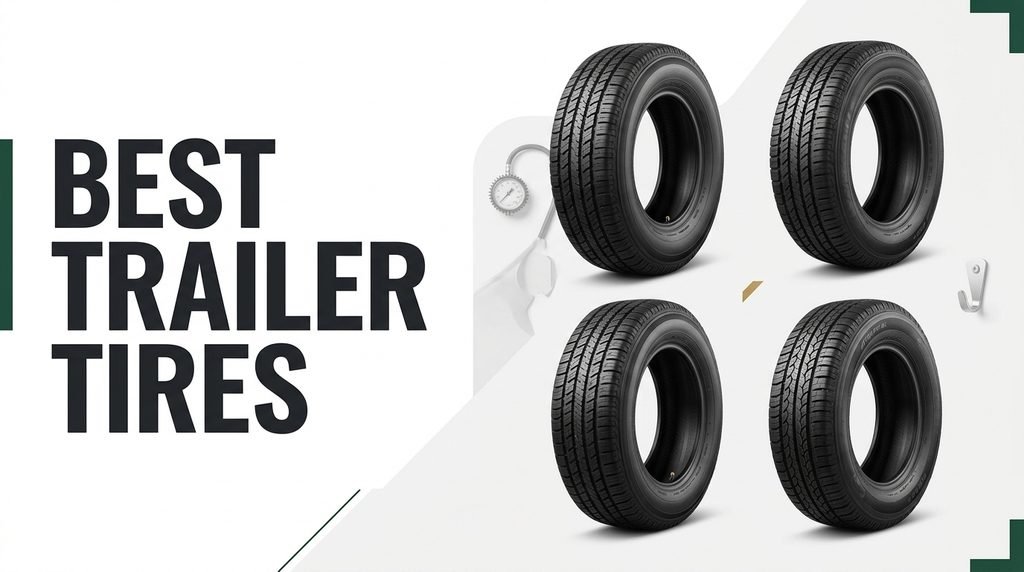
Find the right trailer tires for 2026. We compare 10 standout options by the factors that matter most for towing, including load range, ply rating, tread depth, sidewall construction, speed rating, and real-world durability across different trailer types.
Trailer tires carry heavy static loads at highway speeds, which makes construction quality far more important than brand name alone. Choosing the wrong load range or ply count can lead to premature wear, blowouts, or unsafe handling on long hauls.
This guide breaks down radial versus bias-ply designs, explains load capacity ratings, and highlights which tire sizes fit common trailer applications. Use the comparison below to match a set to your trailer’s weight, axle configuration, and typical driving conditions.
We compared 10 trailer tires using the specifications that directly affect towing safety and longevity: load range, ply rating, tread depth, construction type, speed rating, sidewall reinforcement, bolt pattern compatibility, and owner feedback. The notes focus on practical trade-offs so each pick connects to how people actually load, tow, and maintain their trailers across seasons and road conditions.


Compare key features, scores, and current prices side by side. A shorter feature list means fewer details were available, not necessarily fewer capabilities.


With a 4.9-star rating, this GarveeTech assembly stands out as one of the highest-rated trailer tire options in the compact 4.80-12 size. The 12-inch wheel diameter and 5-lug 4.5-inch bolt pattern make it compatible with a broad range of small utility trailers, boat trailers, and light cargo haulers that use this common fitment.
We may earn a commission when you buy through this link, at no additional cost to you.
The construction combines nylon cord layers with double steel belts, which is a notable upgrade for a tire in this size class. The steel belts help the tire resist punctures and maintain its shape under load, while the nylon cords provide flexibility for shock absorption on rough gravel roads or uneven job sites. The 990 lb per-tire capacity at 90 PSI is appropriate for trailers carrying moderate loads.
Installation is straightforward since the tires arrive pre-mounted and inflated on white spoke wheels. The bias-ply design delivers stiff sidewalls that resist sway on lightweight trailers, and the overall ride quality tends to be smoother than many competing 12-inch options. This makes the assembly a good match for weekend warriors who tow lawn equipment, ATVs, or small boats on a regular basis.
The 90 PSI maximum pressure on this tire may seem high compared to passenger car tires, but trailer tires require higher inflation to support their rated loads safely. Running a trailer tire below its recommended pressure increases sidewall flex, generates excess heat, and dramatically raises the risk of a blowout. Always inflate trailer tires to the maximum PSI listed on the sidewall when the trailer is loaded.
Choose this set if you need a compact, highly rated replacement for a 12-inch trailer and your loads stay within the 990 lb per-tire limit. For heavier cargo or larger trailers, you will need to step up to a 13-inch or 15-inch tire with a higher load range.
Not suitable for trailers requiring more than 990 lb per-tire capacity or wheel sizes larger than 12 inches.
We may earn a commission when you buy through this link, at no additional cost to you.
This four-tire set targets owners of larger travel trailers, fifth wheels, and heavy cargo haulers that demand load range E capacity. The ST225/75R15 sizing fits a wide range of dual-axle trailers, and the 10-ply construction provides a substantial safety margin for long highway trips with fully loaded rigs.
We may earn a commission when you buy through this link, at no additional cost to you.
The standout engineering detail is the full nylon cap ply that extends across the entire tread area rather than stopping at the shoulder. This design helps resist tread separation under sustained heat, which is one of the most common failure modes for trailer tires on extended summer drives. The steel-belted radial construction also promotes even wear and stable tracking at highway speeds up to 88 mph.
A 7mm tread depth gives these tires a meaningful mileage advantage over budget alternatives that start at around 5.6mm. The built-in scuff guard ring along the sidewall adds a layer of protection against curb damage during tight campground maneuvers or boat ramp approaches. Since rims are not included, you will need to confirm that your existing wheels match the 225/75R15 fitment before ordering.
Trailer tires endure high static loads and limited suspension travel, which generates more internal heat than passenger car tires. A full cap ply overlay distributes stress across the entire tread surface, reducing the risk of belt-edge separation during prolonged highway towing. Budget tires often limit nylon reinforcement to the shoulder area, leaving the center tread more vulnerable to heat-related failure.
This set makes the most sense for trailer owners who tow frequently at or near maximum capacity and want a radial tire with reinforced internal construction. If your trailer uses a smaller wheel diameter or a lighter load range, a lower-ply option will save money without sacrificing safety.
Not suitable for trailers requiring 13-inch or 14-inch wheels or load ranges below E.
We may earn a commission when you buy through this link, at no additional cost to you.
If you need a complete tire-and-wheel assembly that bolts straight onto your hub without a trip to the tire shop, this eCustomrim package is a practical solution. The ST205/75D15 sizing is one of the most common fitments for single-axle utility trailers, boat trailers, and smaller campers, and the 5-lug on 4.5-inch bolt pattern covers a wide range of hub configurations.
We may earn a commission when you buy through this link, at no additional cost to you.
The bias-ply construction uses a reinforced square shoulder tread that maximizes road contact under load, which helps maintain stability when your trailer is fully packed. A variable tread pitch reduces road noise compared to older bias-ply designs, making highway towing noticeably quieter. The 1820 lb per-tire capacity at 50 PSI is adequate for most light-to-medium-duty trailer applications.
One of the strongest practical advantages is the domestic mounting. Because the tires are mounted and inflated in the United States, they arrive without the sidewall creases and bead-seating issues that sometimes affect imported assemblies shipped flat. The corrosion-resistant rim coating is a useful bonus for boat trailer owners who frequently back their rigs into saltwater or brackish ramps.
Bias-ply tires like this one use crisscrossing cord layers that create stiff sidewalls, which resist sway on lighter trailers and handle rough terrain well. Radial tires flex more at the contact patch, generating less heat at sustained highway speeds. For short trips and moderate loads, bias-ply assemblies offer a cost-effective and durable solution without the complexity of radial construction.
This assembly is ideal for trailer owners who value convenience and want a dependable bias-ply option with a warranty. If you regularly tow at highway speeds above 65 mph or carry loads near the upper limit, consider upgrading to a radial tire with a higher speed rating for improved heat management.
Not ideal for heavy-duty trailers exceeding load range C requirements or sustained high-speed highway towing.
We may earn a commission when you buy through this link, at no additional cost to you.
This set delivers load range E capacity in the popular ST205/75R15 size, making it a strong choice for dual-axle travel trailers and enclosed cargo trailers that need serious load support without stepping up to a larger wheel diameter. The 2400 lb per-tire rating provides a comfortable margin for fully loaded rigs that weigh in around 8,000 to 9,000 pounds gross.
We may earn a commission when you buy through this link, at no additional cost to you.
Like the larger Grand Ride model, these tires use a full nylon cap ply overlay that spans the entire tread area for improved heat resistance and tread stability. The radial construction helps the tires run cooler on long highway stretches, which is critical because heat buildup is the leading cause of trailer tire blowouts. The scuff guard ring adds practical sidewall protection for tight parking situations.
The ST205 width is narrower than the 225/75 option, which can be an advantage for trailers with limited wheel well clearance or closely spaced tandem axles. The narrower profile also tends to produce slightly less rolling resistance, which can improve fuel economy on long hauls. Keep in mind that you will need to source compatible 15-inch rims separately.
Wider tires like the 225/75 series distribute weight across a larger contact patch, which can improve stability on heavy loads. Narrower 205/75 tires fit more easily into tight wheel wells and reduce the risk of tire-to-frame contact on trailers with minimal clearance. Always check your trailer manufacturer’s recommended tire size before switching widths, even within the same rim diameter.
Choose this set if your trailer calls for ST205/75R15 tires and you want the highest load rating available in that size. The combination of radial construction and full cap ply reinforcement makes it one of the most durable options for frequent long-distance towing in this fitment.
Not suitable for trailers that require a wider 225/75 footprint or a 16-inch wheel diameter.
We may earn a commission when you buy through this link, at no additional cost to you.
Many mid-size travel trailers and boat trailers use 14-inch wheels, and finding a radial option with modern safety features in this size can be challenging. This Free Country assembly fills that gap with an 8-ply load range D radial mounted on a clean white spoke wheel, ready to bolt on with a standard 5-lug 4.5-inch pattern.
We may earn a commission when you buy through this link, at no additional cost to you.
The 7mm tread depth matches the deeper-tread design found on Free Country’s larger models, giving you more usable rubber before the tire reaches its wear limit. The full nylon cap ply and scuff guard ring carry over as well, providing the same heat resistance and sidewall protection that make the brand popular among frequent towers. The 88 mph speed rating is higher than many budget trailer tires, which often top out at 65 or 75 mph.
Because these arrive pre-mounted on wheels, installation is straightforward and does not require a tire machine or balancing equipment. The white spoke design is a classic look that matches most trailer aesthetics, and the zero offset keeps the wheel centered on the hub for even load distribution across the bearings.
Most trailer tires carry a speed rating of L (75 mph) or M (81 mph), which is adequate for legal highway speeds in most states. A higher N rating (88 mph) provides an extra thermal buffer, meaning the tire generates less internal heat at typical cruising speeds. This additional margin can extend tire life and reduce the likelihood of heat-related failures on long summer trips.
This assembly is a smart pick for anyone replacing worn 14-inch trailer tires who wants radial construction without the hassle of sourcing separate rims. If your trailer is loaded near the upper limit of load range D, consider stepping up to a load range E option in a larger diameter for additional safety margin.
Not appropriate for trailers requiring load range E or higher, or wheel sizes other than 14 inches.
We may earn a commission when you buy through this link, at no additional cost to you.
Thirteen-inch trailer wheels are common on small utility trailers, pop-up campers, and lightweight boat trailers, and this eCustomrim assembly provides a dependable replacement option with minimal installation effort. The ST175/80D13 sizing is a standard fitment for trailers with 13-inch hubs, and the 5-lug 4.5-inch bolt pattern covers the majority of light-duty trailer axles.
We may earn a commission when you buy through this link, at no additional cost to you.
The bias-ply tire uses a reinforced square shoulder tread that maximizes ground contact for stable tracking, even when the trailer is lightly loaded. A variable tread pitch helps dampen road noise, which is a welcome improvement over the loud, choppy ride that older bias-ply designs can produce. The 1360 lb per-tire capacity at 50 PSI is sufficient for trailers with a gross weight up to about 2,700 pounds on a single axle.
The corrosion-resistant rim coating is particularly valuable for boat trailer owners who regularly submerge their wheels in water. Combined with the domestic mounting process, which ensures the tires arrive fully inflated and properly seated, this assembly eliminates many of the headaches associated with budget imported alternatives. The two-year warranty with roadside assistance adds peace of mind for occasional towers.
Thirteen-inch wheels keep the trailer deck lower to the ground, which improves loading ease and reduces the center of gravity for better stability on small rigs. They are also lighter and less expensive to replace than larger sizes. However, the smaller diameter means the tires rotate more times per mile, which can accelerate wear on long trips. Reserve 13-inch tires for trailers that stay under 3,000 pounds gross and travel moderate distances.
This is a practical choice for light-duty trailer owners who need a reliable 13-inch replacement and want the convenience of a pre-mounted assembly. If you tow heavier loads or frequently travel at sustained highway speeds, a larger wheel size with radial construction will provide better heat management and load capacity.
Not designed for trailers exceeding 2,700 pounds gross weight or requiring radial construction.
We may earn a commission when you buy through this link, at no additional cost to you.
At under $100 for a pair of pre-mounted assemblies, this Garvee set offers one of the most affordable entry points for replacing worn 12-inch trailer tires. The 4.80-12 sizing is a direct match for many small utility trailers, garden trailers, and lightweight boat trailers, and the 5-lug 4.5-inch bolt pattern ensures broad compatibility.
We may earn a commission when you buy through this link, at no additional cost to you.
The bias-ply construction uses crisscrossing nylon cords that provide strong sidewall stiffness, which helps prevent sway on lightly loaded trailers. A variable tread pitch design reduces the humming noise that older bias-ply tires often produce at highway speeds. The DOT-approved stamp confirms that the tires meet federal safety standards, which is an important baseline for any tire you trust with your cargo.
One tradeoff to note is the 5mm tread depth, which is shallower than the 7mm found on some competing options. This means the tires may reach their wear limit sooner if you tow frequently or cover long distances. The 990 lb per-tire capacity and 90 PSI maximum pressure are standard for this size class and adequate for most light-duty applications.
Trailer tires should be replaced when tread depth reaches 2/32 of an inch, but many experts recommend replacement at 4/32 for better wet-weather traction. A tire starting at 5mm of tread will reach the replacement threshold sooner than one starting at 7mm, especially if you tow on abrasive asphalt in hot weather. Check your tread depth at the start of each towing season to plan replacements proactively.
This set is a practical budget pick for trailer owners who need an affordable, ready-to-install replacement and do not tow heavy loads on a daily basis. If you put significant miles on your trailer each season, investing in a deeper-tread option may provide better long-term value despite the higher upfront cost.
Not recommended for high-mileage towers or trailers carrying loads near the upper limit of load range C.
We may earn a commission when you buy through this link, at no additional cost to you.
This two-tire set from the WANDA Free Country line offers a deep-tread bias-ply design in the widely used ST205/75D15 size. The 6-ply load range C construction supports up to 1,820 lb per tire at 50 PSI, making it suitable for single-axle utility trailers, boat trailers, and smaller campers that fall within this weight class.
We may earn a commission when you buy through this link, at no additional cost to you.
The deeper tread is the primary selling point, as it provides more usable rubber before the tire reaches its wear limit. For trailer owners who log moderate mileage each year and want to stretch the interval between replacements, the additional tread depth can translate into meaningful savings over time. The bias-ply construction also provides stiff sidewalls that resist sway on lighter trailers.
Since these are tires only, you will need to have them mounted on your existing 15-inch rims or purchase rims separately. This approach can save money if your current wheels are in good condition, but it does add the cost and time of a trip to the tire shop for mounting and balancing. The one-year limited warranty from the distributor provides basic coverage against manufacturing defects.
Buying tires without rims is typically less expensive upfront, but you will need to factor in mounting and balancing costs at a local shop, which can add $15 to $30 per tire. Pre-mounted assemblies arrive ready to bolt on and eliminate the need for specialized equipment. If your existing rims are corroded, bent, or have damaged bead seats, a complete assembly is the safer and more cost-effective choice.
This set works well for budget-conscious trailer owners who need a straightforward replacement in a common size and prefer the simplicity of bias-ply construction. If you tow at highway speeds for extended periods or carry loads near the upper limit of load range C, a radial tire with a higher ply rating will offer better heat resistance and durability.
Not ideal for high-speed highway towing or trailers requiring load range D or E capacity.
We may earn a commission when you buy through this link, at no additional cost to you.
The Transeagle ST 14-ply radial is engineered for heavy-duty trailers that demand serious load capacity and long-haul durability. The ST235/80R16 sizing fits larger travel trailers, fifth wheels, horse trailers, and equipment haulers that use 16-inch wheels, and the load range G rating provides a substantial safety margin for gross weights exceeding 10,000 pounds.
We may earn a commission when you buy through this link, at no additional cost to you.
All-steel construction sets this tire apart from standard polyester-cord trailer tires. Steel belts and steel body plies resist punctures, maintain their shape under extreme loads, and dissipate heat more effectively than fabric-reinforced alternatives. The highway-optimized tread pattern promotes even wear and stable tracking at sustained speeds, which is essential for cross-country towing.
The 235mm section width creates a broad contact patch that distributes weight evenly across the tread surface, reducing the localized stress that can cause irregular wear patterns on heavily loaded trailers. The all-season compound maintains flexibility in cooler temperatures while resisting heat buildup during summer towing. Since this is a tire-only listing, you will need compatible 16-inch rims rated for load range G pressures.
Standard trailer tires use polyester or nylon body plies with steel belt reinforcement under the tread. All-steel tires replace the fabric plies with steel, creating a significantly stronger carcass that resists deformation under heavy loads. The tradeoff is increased weight and a stiffer ride, but for trailers carrying livestock, heavy equipment, or large fifth-wheel campers, the additional strength and heat resistance are well worth the investment.
This tire is the right choice for owners of heavy trailers who need a 16-inch radial with all-steel construction and load range G capacity. If your trailer uses 15-inch wheels or operates well within load range E limits, a lighter and less expensive option will serve you just as well.
Not appropriate for trailers with 13-inch, 14-inch, or 15-inch wheels or loads within load range C or D.
We may earn a commission when you buy through this link, at no additional cost to you.
When your trailer demands the absolute highest load capacity available in a 16-inch size, this 16-ply Transeagle ST delivers with a load range H rating and a 4,189 lb per-tire capacity. That figure makes it suitable for the heaviest gooseneck trailers, large fifth wheels, and commercial equipment haulers that push the limits of conventional trailer tire ratings.
We may earn a commission when you buy through this link, at no additional cost to you.
The all-steel radial construction provides maximum resistance to punctures, sidewall damage, and heat-related failure under extreme loads. The 16-ply rating indicates a carcass strength equivalent to 16 layers of bias-ply cord, though the actual construction uses fewer steel plies that are far stronger than fabric. The all-season tread compound maintains grip in wet and dry conditions throughout the year.
One important specification to note is the L speed rating, which limits the tire to 75 mph. This is standard for ultra-heavy-duty trailer tires because the extreme loads generate significant internal heat at higher speeds. If you plan to tow at speeds above 75 mph, you will need to select a tire with a higher speed rating, though options at this load range are limited.
Load range H tires are designed for trailers that routinely carry 14,000 to 16,000 pounds or more on dual-axle configurations. At these weights, even a small margin of additional capacity per tire can make a significant difference in safety and tire longevity. Always calculate your actual loaded trailer weight at a certified scale before selecting a load range, and aim for at least a 10 to 15 percent reserve capacity above your measured weight.
This tire is purpose-built for the most demanding trailer applications where load capacity is the top priority. If your trailer operates within load range E or G limits, the 14-ply Transeagle or one of the Free Country options will provide ample strength at a lower cost and with a higher speed rating.
Not necessary for trailers under 10,000 pounds gross weight or those limited to 15-inch wheel fitments.
We may earn a commission when you buy through this link, at no additional cost to you.
Selecting trailer tires involves more than matching a size number on the sidewall. Load capacity, construction type, ply rating, and speed rating all interact to determine how safely and how long a tire will perform under your specific towing conditions.
Load range is the single most important specification on a trailer tire because it determines how much weight each tire can safely support at its maximum inflation pressure. Trailer tires are rated from load range B (lightest) through load range H and beyond (heaviest). Each step up in load range adds ply strength and increases the maximum load per tire, but it also requires higher inflation pressure and typically costs more.
To determine the correct load range, start by weighing your fully loaded trailer at a certified scale. Divide the total weight by the number of tires to find the per-tire load, then select a tire whose rated capacity exceeds that figure by at least 10 to 15 percent. This reserve margin accounts for uneven weight distribution, dynamic forces during braking and cornering, and the additional stress that heat places on the tire during long drives.
A common mistake is choosing a load range that matches the empty trailer weight rather than the fully loaded weight. Always calculate based on your heaviest typical load, including water, fuel, cargo, and propane. If you are close to the boundary between two load ranges, choose the higher one for added safety and longevity.
Radial trailer tires use steel belts that run perpendicular to the direction of travel, which allows the sidewall and tread to flex independently. This design generates less internal heat at highway speeds, promotes more even tread wear, and provides a smoother ride over long distances. Radial tires are the preferred choice for travel trailers, fifth wheels, and any trailer that regularly covers highway miles.
Bias-ply tires use diagonal cord layers that create a stiffer overall structure. The stiff sidewalls resist sway on lightweight trailers and handle rough terrain well, making bias-ply tires popular for utility trailers, boat trailers, and farm equipment that travels at lower speeds on varied surfaces. Bias-ply tires are also generally less expensive and easier to find in smaller sizes like 12-inch and 13-inch diameters.
If you tow primarily on highways at speeds above 60 mph, radial construction is the safer and more durable choice. If your trailer stays on back roads, job sites, or boat ramps at moderate speeds, bias-ply tires offer a cost-effective and reliable alternative. Never mix radial and bias-ply tires on the same axle, as the different flex characteristics can cause unpredictable handling.
Trailer tire sizes follow a standardized format such as ST205/75R15, where ST indicates a special trailer tire, 205 is the section width in millimeters, 75 is the aspect ratio (sidewall height as a percentage of width), R indicates radial construction (D indicates bias-ply), and 15 is the wheel diameter in inches. Matching all of these numbers to your trailer’s specifications is essential for proper fitment and safe operation.
Changing tire size can affect your trailer’s ground clearance, wheel well clearance, speedometer accuracy on tow vehicles with integrated trailer monitoring, and overall load capacity. Even a small change in overall diameter can alter the trailer’s ride height and affect how weight distributes across the axles. Always consult your trailer’s owner manual or the tire placard on the frame before switching to a different size.
If you are replacing tires on an existing trailer, the simplest approach is to match the exact size printed on the current tire sidewall. If you want to upgrade to a wider or taller tire for additional load capacity, verify that the new size will fit within the wheel wells without rubbing against the frame, fenders, or brake lines during full suspension travel.
Trailer tire speed ratings indicate the maximum sustained speed at which the tire can safely carry its rated load. Common ratings include L (75 mph), M (81 mph), and N (88 mph). Many older or budget trailer tires carry a J rating (62 mph) or no published speed rating at all, which limits their suitability for modern highway towing.
Exceeding a tire’s speed rating generates excess internal heat, which accelerates rubber degradation and increases the risk of tread separation or blowout. Even if you never plan to drive at the rated maximum, a higher speed rating provides a thermal safety margin that helps the tire run cooler at typical cruising speeds of 65 to 70 mph. This additional margin is especially valuable during summer towing in hot climates.
Choose a tire with a speed rating that matches or exceeds the highest speed you plan to maintain while towing. If you frequently travel on interstates with 70 or 75 mph speed limits, select a tire rated for at least M or N to ensure adequate heat dissipation. For local towing at lower speeds, an L-rated tire is generally sufficient.
New trailer tires typically start with between 5mm and 8mm of tread depth, depending on the manufacturer and price point. Deeper tread provides more usable rubber before the tire reaches the legal wear limit of 2/32 inch, which translates into more miles of service life. However, tread depth alone does not determine longevity, as rubber compound quality, load conditions, and inflation pressure also play significant roles.
Trailer tires often age out before they wear out, especially on recreational trailers that sit unused for months at a time. UV exposure, ozone, and temperature fluctuations cause the rubber to crack and harden over time, even if the tread looks nearly new. Most tire manufacturers recommend replacing trailer tires every five to seven years regardless of tread depth, and many experienced RV owners follow a five-year replacement cycle as a safety precaution.
When comparing tread depth between options, consider your annual mileage and expected ownership period. If you tow 10,000 miles per year, a deeper tread will provide a measurable advantage. If you tow a few thousand miles each season and plan to replace the tires within five years due to age, the difference between 5mm and 7mm of starting tread is less significant.
Tire-only listings are less expensive upfront but require you to have the tires mounted and balanced at a tire shop, which adds time and cost. Pre-mounted assemblies arrive with the tire already installed on a steel or aluminum rim, ready to bolt directly onto your trailer hub. The convenience of a pre-mounted assembly is especially valuable if you lack access to a tire machine or need a quick roadside replacement.
When choosing a pre-mounted assembly, verify that the wheel’s bolt pattern, center bore, and offset match your trailer’s hub specifications. A mismatched bolt pattern will not fit at all, while an incorrect center bore can cause vibration and uneven bearing wear. Also check the rim’s load rating to ensure it matches or exceeds the tire’s load capacity, as the assembly is only as strong as its weakest component.
For most trailer owners replacing a full set of tires, pre-mounted assemblies offer the best combination of convenience and value. If you have high-quality custom wheels that you want to keep, or if your trailer uses an uncommon bolt pattern that limits assembly availability, purchasing tires only and having them mounted locally is the better approach.
Trailer tires must be inflated to the maximum cold pressure listed on the sidewall to carry their rated load safely. Unlike passenger car tires, which are often inflated below their maximum for comfort, trailer tires rely on full inflation to maintain their structural integrity under heavy static loads. Underinflation is the leading cause of trailer tire failure, as it allows excessive sidewall flex that generates destructive internal heat.
Check your trailer tire pressure at least once a month and before every long trip, using a quality gauge rather than a visual inspection. Trailer tires can lose 1 to 3 PSI per month through natural permeation, and a tire that appears fully inflated may actually be 10 to 15 percent below the recommended pressure. Invest in a tire pressure monitoring system if your trailer does not have one built in, as it provides real-time alerts before a low-pressure situation becomes dangerous.
In addition to pressure checks, inspect your trailer tires for sidewall cracking, uneven wear patterns, and embedded debris before each towing season. Rotate the tires if your trailer’s axle configuration allows it, and store the trailer on jack stands or tire cradles during extended periods of non-use to prevent flat-spotting and reduce UV exposure on the sidewalls.
Before every trip, perform a quick visual inspection of each trailer tire and check the cold inflation pressure with a reliable gauge. Inflate all tires to the maximum PSI printed on the sidewall, as trailer tires require full pressure to support their rated loads safely. Verify that the lug nuts are torqued to your trailer manufacturer’s specification, especially after the first 50 miles on a new set of tires or wheels.
During long highway drives, plan rest stops every two to three hours to allow the tires to cool and to check for any signs of abnormal wear, bulging, or embedded objects. Avoid sudden braking and sharp turns when towing, as these maneuvers place extreme lateral forces on trailer tires that can accelerate sidewall damage. If you notice unusual vibration or pulling, stop safely and inspect the tires and wheel bearings before continuing.
When storing your trailer for the off-season, inflate the tires to their maximum pressure and cover them with UV-blocking tire covers to slow rubber degradation. If possible, move the trailer slightly every few weeks to prevent flat-spotting, or place the axles on jack stands to take the weight off the tires entirely. Replace trailer tires every five to seven years regardless of tread condition, as aged rubber loses its structural integrity even when it looks new on the outside.
Most trailer tires should be replaced every five to seven years regardless of tread depth, as the rubber compound degrades over time due to UV exposure, ozone, and temperature cycling. In terms of mileage, a quality trailer tire can last 10,000 to 25,000 miles depending on load, inflation, road conditions, and storage practices. Always check the DOT date code on the sidewall to determine the tire's manufacturing age.
Passenger car tires are not designed for the high static loads and limited suspension travel of trailers, and using them can create dangerous handling and failure risks. Trailer tires, marked with an ST prefix, have stiffer sidewalls and higher load ratings specifically engineered for towing applications. Always use ST-rated tires on trailers to ensure safe load support and predictable handling.
Load range D tires are rated for 8-ply strength and typically support around 2,200 to 2,500 lb per tire at 65 PSI, while load range E tires are rated for 10-ply strength and support 2,400 to 3,000 lb per tire at 80 PSI. The higher load range provides a greater safety margin for heavy trailers but requires higher inflation pressure and may produce a stiffer ride. Choose the load range that matches your trailer's gross weight with an appropriate reserve margin.
Yes, trailer tires should be inflated to the maximum cold pressure listed on the sidewall to carry their rated load safely. Unlike passenger car tires, which are often inflated below their maximum for ride comfort, trailer tires depend on full inflation to maintain structural integrity under heavy loads. Underinflation is the most common cause of trailer tire blowouts and premature failure.
Mixing radial and bias-ply tires on the same trailer is not recommended because the two construction types flex differently under load, which can cause unpredictable handling and uneven tire wear. If you must use different construction types temporarily, place them on separate axles rather than on the same axle. For the best safety and performance, use matching tires on all wheel positions.
ST stands for Special Trailer, which indicates that the tire is designed specifically for trailer use rather than for passenger vehicles or light trucks. ST tires feature stiffer sidewalls, higher load ratings, and construction optimized for the unique demands of towing, including high static loads and limited suspension travel. Never use ST tires on a drive or steer axle of a motor vehicle.
The DOT date code is a four-digit number found on the tire sidewall, usually near the DOT marking. The first two digits represent the week of manufacture, and the last two digits represent the year. For example, a code of 2324 means the tire was manufactured in the 23rd week of 2024. Use this code to verify that your tires are not older than five to seven years.
Balancing trailer tires is recommended but not always required, especially for trailers that travel at lower speeds on short trips. However, unbalanced tires can cause vibration that accelerates wear on wheel bearings, suspension components, and the tire itself. If you tow at highway speeds or notice vibration through the tow vehicle, having the tires balanced is a worthwhile investment in longevity and ride quality.
Boat trailer tires should be inflated to the maximum cold PSI listed on the tire sidewall, just like any other trailer tire. The added weight of a waterlogged boat and the stress of launching and retrieving on steep ramps make proper inflation especially critical. Check pressure before every trip to the ramp, as boat trailers are often stored outdoors and lose pressure more quickly due to temperature fluctuations.
Replace trailer tires when tread depth reaches 2/32 inch, when sidewall cracking becomes visible, when the tire is more than five to seven years old, or when you notice bulges, blisters, or uneven wear patterns. Use a tread depth gauge or the penny test to check tread, and inspect the DOT date code to verify the tire's age. When in doubt, err on the side of replacement, as a blowout while towing can cause serious damage and safety hazards.
The Free Country Grand Ride ST225/75R15 set earns the top spot for its combination of full cap ply reinforcement, deep 7mm tread, and load range E capacity across a complete set of four radial tires. For heavy-duty travel trailers and cargo haulers that see regular highway miles, this set provides the construction quality and safety margins that matter most when towing at or near maximum weight.
For lighter trailers and budget-conscious buyers, the Garvee 4.80-12 assemblies offer excellent value with pre-mounted convenience and strong owner ratings at a fraction of the cost of heavy-duty options. The eCustomrim assemblies in 13-inch and 15-inch sizes are also worth considering for anyone who wants a complete DOT-approved package with a warranty and domestic mounting. On the premium end, the Transeagle all-steel radials in 14-ply and 16-ply configurations deliver the load capacity that the heaviest trailers demand.
The right choice ultimately depends on your trailer's weight, wheel size, and typical towing conditions. Start by confirming your loaded trailer weight and required tire size, then select the load range and construction type that match your needs. Proper inflation, regular inspections, and timely replacement based on age rather than tread alone will keep your trailer rolling safely for years to come.