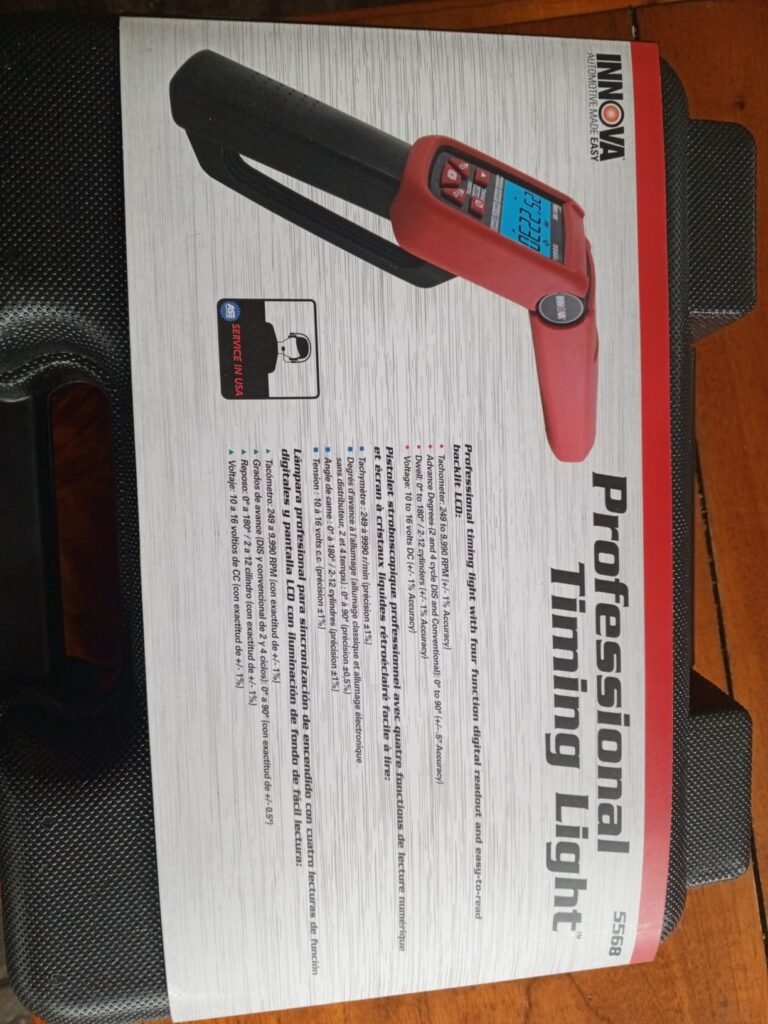
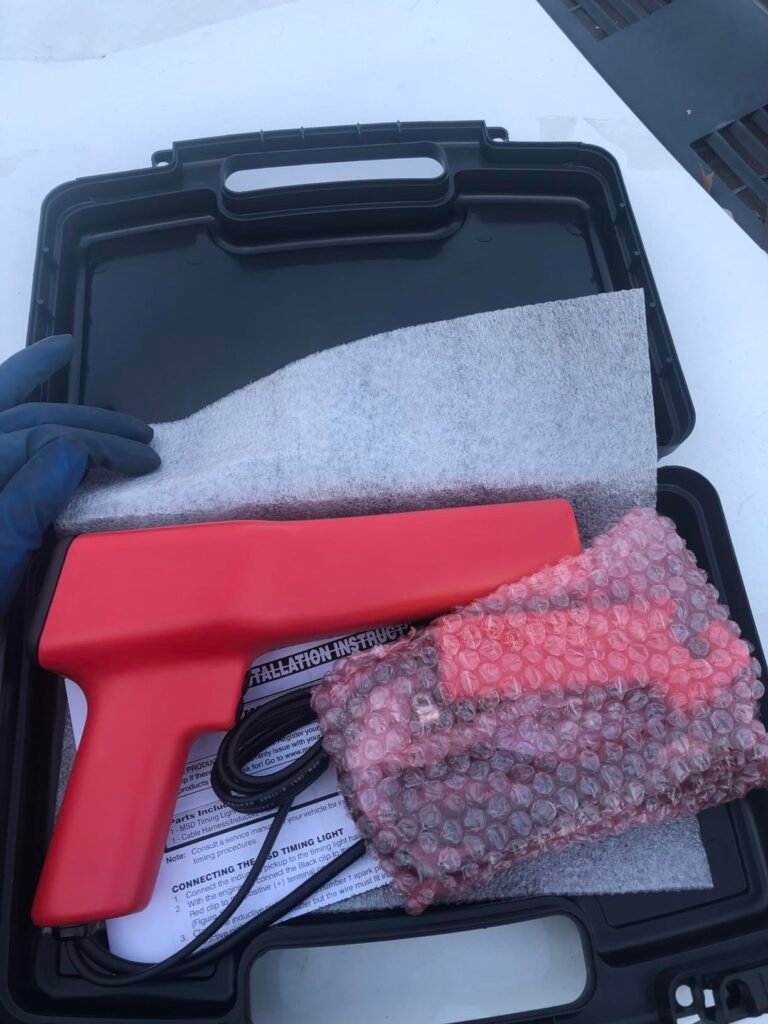
Innova 5568 Pro
9.0Editor scoreFour-function digital display
Up to 9990 RPM
Shock-proof housing
6-foot detachable leads
Find the right timing lights for 2026. We compare 9 standout options by build quality, useful features, owner feedback, value, and everyday trade-offs.
Find the right timing light for 2026. We compare 9 standout options by the factors that matter for ignition tuning: strobe brightness, RPM range, advance dial precision, digital readout clarity, engine compatibility, build durability, lead length, and real-world value for both weekend mechanics and professional shops.
Timing lights range from basic inductive strobe guns to advanced digital units with tachometers, dwell meters, and adjustable advance dials. The gap between a $20 basic model and a $200 professional tool is significant in both capability and longevity, and the right choice depends heavily on the engines you work on and how often you tune them.
Compatibility is the first filter. Most timing lights work with conventional distributor-based ignition systems, but coil-on-plug setups, diesel engines, and hybrid powertrains require different approaches entirely. This guide focuses on inductive timing lights for gasoline engines and clarifies which models handle electronic ignition, DIS systems, and older points-based setups.
We compared 9 timing lights using the details that actually help a buyer decide: strobe brightness and visibility, RPM measurement range, advance adjustment capability, digital display clarity, ignition system compatibility, build quality and housing durability, lead length and clamp design, warranty coverage, owner feedback, and price-to-feature value. The notes focus on practical trade-offs so each pick connects to how mechanics and DIYers actually set ignition timing in real garage conditions.


Compare key features, scores, and current prices side by side. A shorter feature list means fewer details were available, not necessarily fewer capabilities.


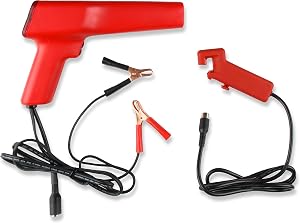


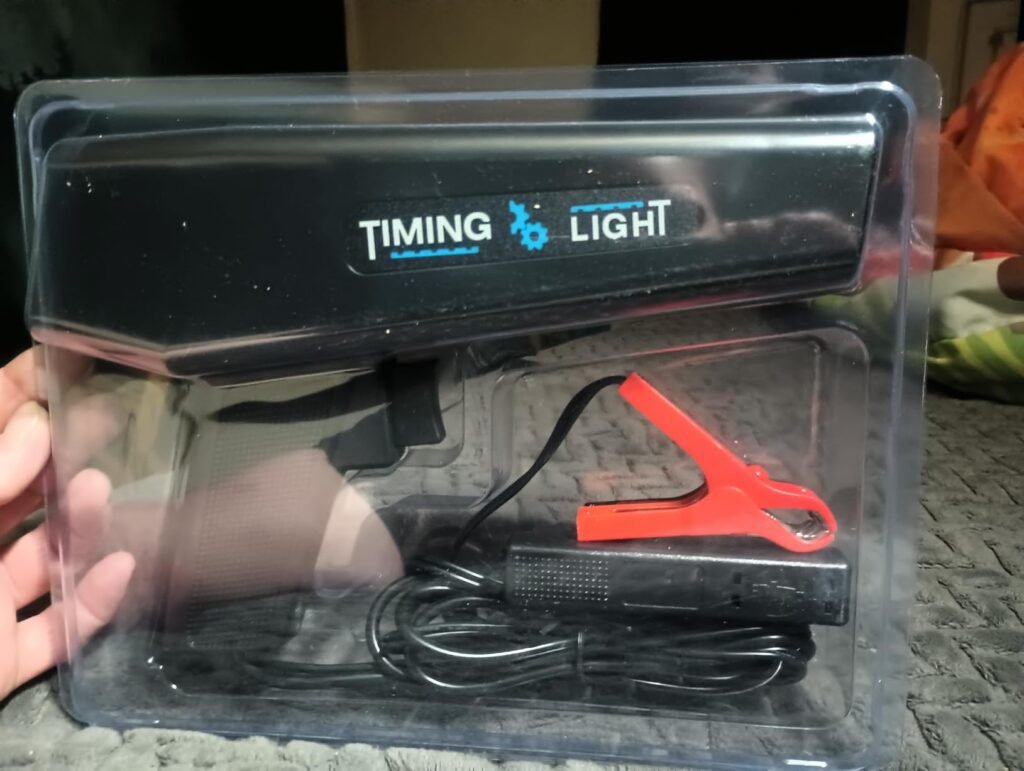
This digital timing light earns the highest owner rating in the entire comparison at 4.8 stars, and the feature set explains why. The combination of a built-in RPM tachometer reading up to 9,990 RPM and a 0-90 degree dial-back advance with 1-degree increments gives you precise control over ignition timing verification without guesswork or timing tape calculations.
We may earn a commission when you buy through this link, at no additional cost to you.
The ultra-bright xenon strobe provides clear visibility of timing marks in both bright daylight and dark engine bays, which is the single most important performance characteristic of any timing light. A dim strobe makes reading timing marks frustrating and inaccurate, while a bright xenon flash freezes the mark sharply so you can read it confidently. The directional inductive pickup clamp on the number one spark plug wire captures ignition signals consistently.
The 1.4-meter color-coded leads provide ample reach from the battery to the engine bay, and the ergonomic pistol-grip design makes one-handed operation comfortable during extended tuning sessions. The advance dial-back function lets you set initial timing and then verify total advance by dialing back the strobe until the timing mark returns to zero, which is the standard method for checking mechanical and vacuum advance curves.
Dial-back advance lets you measure total ignition timing without needing timing tape on the harmonic balancer. You set the advance dial to zero and note where the timing mark appears, then increase the dial until the mark returns to the zero reference point. The number on the dial is your total advance at that RPM. This method is faster and more accurate than trying to read small degree markings on a spinning balancer, especially at higher RPM where the marks blur.
Choose this timing light if you want the best combination of digital features, strobe brightness, and owner satisfaction at a mid-range price. It works with conventional ignition coils and accessible plug wires on gasoline-powered cars, trucks, motorcycles, and boats. The explicit incompatibility with coil-on-plug systems, diesel engines, and hybrid vehicles is important to note before purchasing.
Vehicles with coil-on-plug ignition, diesel engines, or hybrid powertrains.
We may earn a commission when you buy through this link, at no additional cost to you.
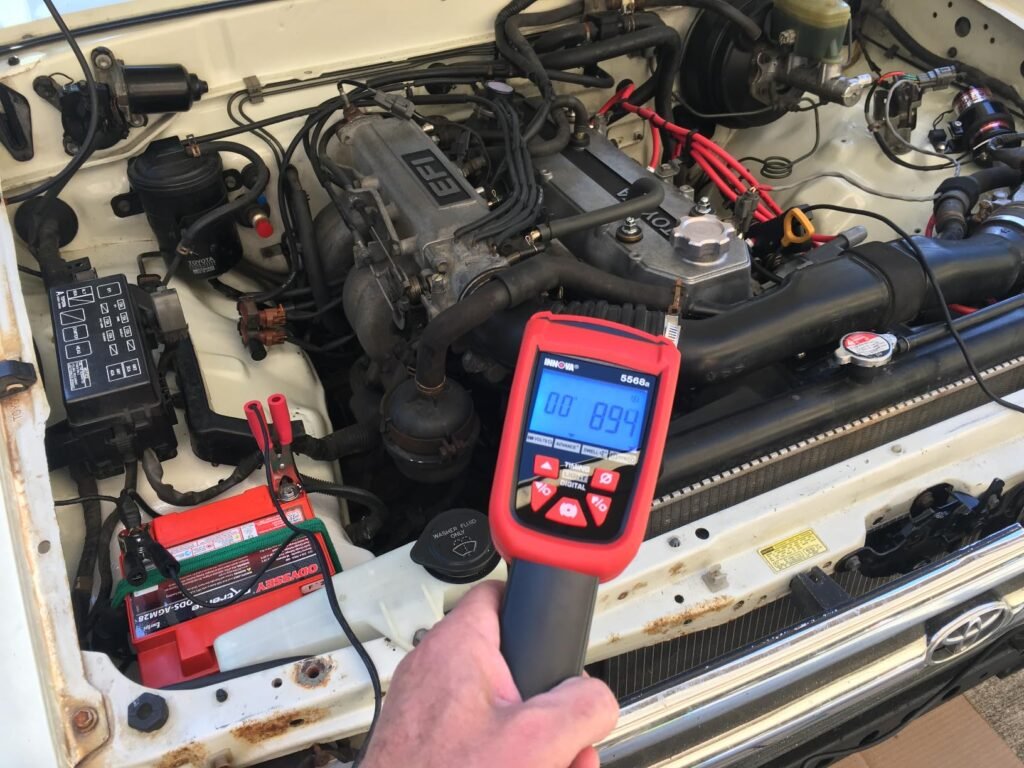
The Innova 5568 Pro is the most feature-rich timing light in this comparison, combining four diagnostic functions into a single tool. If you regularly tune engines and want to check tachometer readings, ignition advance, dwell angle, and system voltage without swapping between separate instruments, this unit consolidates everything into one handheld device.
We may earn a commission when you buy through this link, at no additional cost to you.
The digital LED readout provides clear numerical values for all four functions, and the patented skip circuitry allows accurate readings up to 9,990 RPM. This RPM ceiling covers virtually every gasoline engine you will encounter, from low-revving V8s to high-revving four-cylinder performance motors. The skip circuitry is particularly useful on multi-cylinder engines where signal interference can confuse simpler timing lights.
Build quality is a genuine strength here. The heavy-duty shock-proof housing with a molded boot protects the unit from accidental drops and contact with spinning fan blades, which is a real hazard in cramped engine bays. The detachable 6-foot leads provide enough reach to connect to the battery and spark plug wire without stretching, and the included molded plastic storage case keeps everything organized between uses.
Dwell angle measures the duration that ignition points remain closed, and it directly affects coil saturation and spark energy. On older points-based ignition systems, incorrect dwell causes weak sparks, misfires, and poor fuel economy. Having dwell measurement built into your timing light eliminates the need for a separate dwell meter and lets you set both timing and dwell during the same tune-up session, which is faster and more accurate than adjusting each parameter independently.
Choose the 5568 Pro if you are a serious DIY mechanic or professional who values comprehensive diagnostic capability in a single tool. The four-function readout justifies the premium price for anyone who would otherwise need separate tachometer and dwell meters. For casual users who only check base timing once or twice a year, a simpler model will serve you well at a lower cost.
Casual users who only need basic timing checks and do not require dwell or voltage readings.
We may earn a commission when you buy through this link, at no additional cost to you.
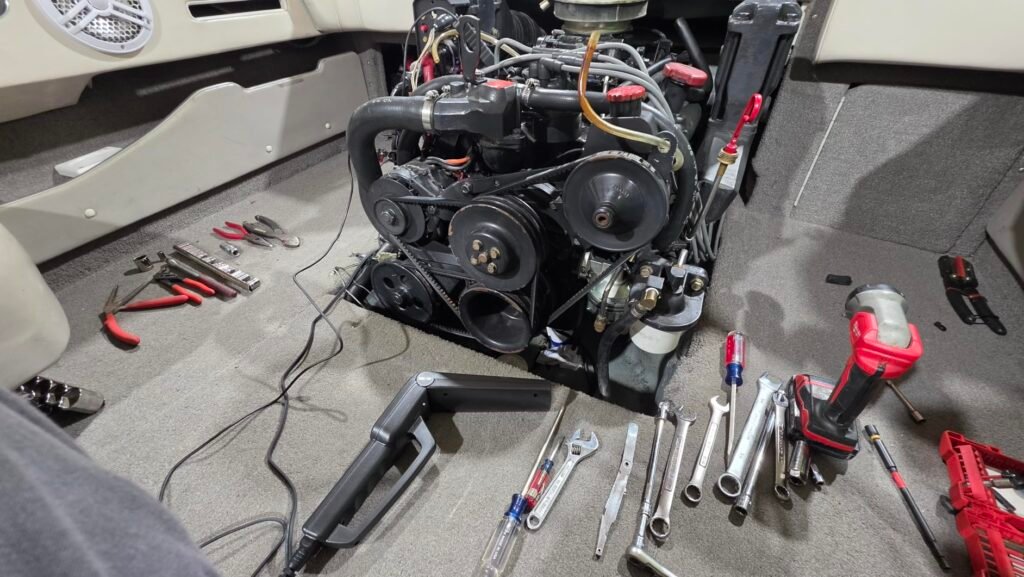
The Innova 3568 sits in the sweet spot between basic inductive timing lights and the full-featured 5568 Pro. Its split-screen LCD readout displays both tachometer and advance readings simultaneously, which means you can watch RPM and timing advance change in real time as you adjust the distributor. This simultaneous display is genuinely useful during tuning because you can see the relationship between engine speed and timing without toggling between modes.
We may earn a commission when you buy through this link, at no additional cost to you.
The 0-90 degree advance range covers the full spectrum of ignition timing adjustments you will encounter on gasoline engines, from conservative base timing settings to aggressive total advance curves on performance motors. The direct-reading advance scale eliminates the need to calculate timing from timing tape marks on the harmonic balancer, which speeds up the tuning process considerably.
Compatibility is broad. The 3568 works with conventional points ignition, electronic ignition, distributorless ignition systems, and computer-controlled systems on both domestic and import vehicles. The slim rotating barrel lets you aim the strobe precisely at the timing mark even in tight engine bays where access to the harmonic balancer is restricted.
A split-screen display showing both RPM and advance simultaneously lets you monitor how timing changes as engine speed increases, which is essential for verifying mechanical and vacuum advance curves. Single-display models require you to toggle between modes, making it harder to observe the relationship between RPM and timing in real time. For serious tuning work, the split-screen advantage is worth the modest price premium over basic digital models.
Choose the 3568 if you want digital advance capability without paying for the dwell and voltage functions of the 5568 Pro. It is well suited for enthusiasts who regularly tune carbureted or early fuel-injected engines and need accurate advance readings. If you only need to verify base timing on modern vehicles, a simpler inductive light may be all you need.
Users who need dwell measurement for points-based ignition systems.
We may earn a commission when you buy through this link, at no additional cost to you.
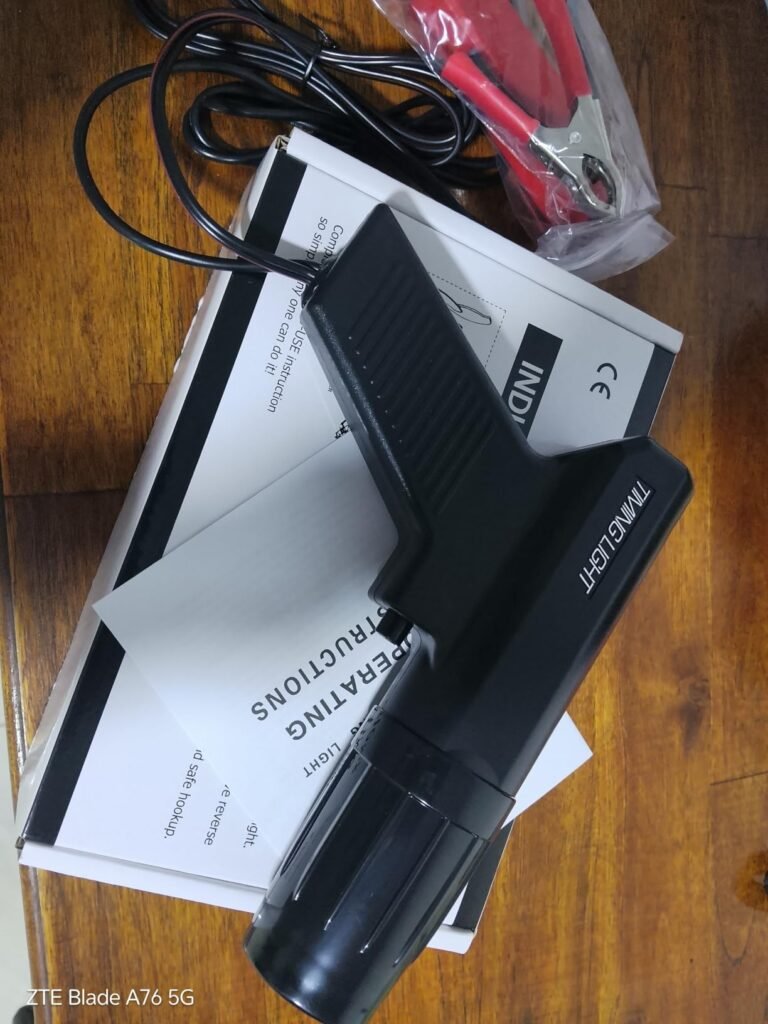
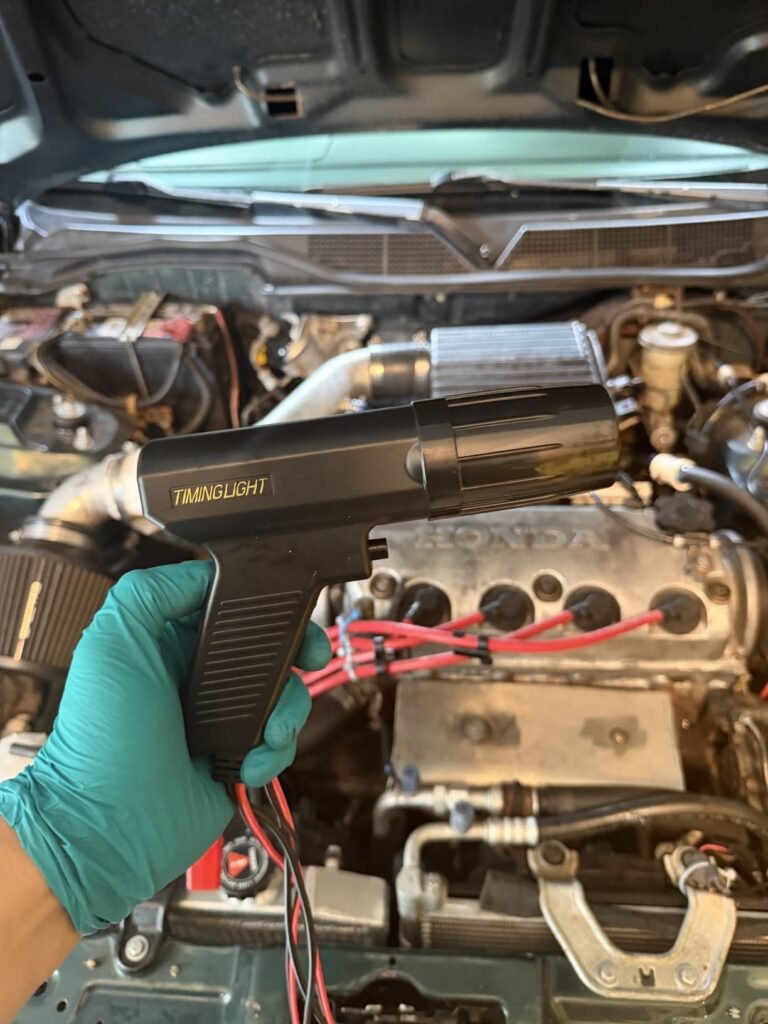
This generic 12V timing light targets budget-conscious classic car and motorcycle owners who need a basic inductive strobe for occasional timing checks. At a fraction of the cost of branded digital models, it provides the essential function of flashing a strobe in sync with the ignition spark so you can read timing marks on the harmonic balancer or flywheel.
We may earn a commission when you buy through this link, at no additional cost to you.
The pistol-grip design with comfortable press keys makes one-handed operation straightforward, which matters when your other hand is adjusting the distributor or holding a tachometer. The color-coded red and black sensor clips clearly distinguish positive and negative connections, reducing the risk of reverse-polarity hookup that can damage the unit or the vehicle’s electrical system.
The advance function allows you to check ignition timing scale on the engine flywheel or belt pulley and observe how the advance angle changes with engine speed. This is useful for verifying that the mechanical and vacuum advance mechanisms are functioning correctly on older distributor-based engines. The sliding clamp-on inductive pickup makes hookup quick and safe.
If you only check ignition timing a few times per year on a classic car or lawn equipment engine, a basic inductive timing light provides everything you need. The core function of any timing light is simply to flash a strobe synchronized with the spark plug firing, which freezes the timing mark visually. Digital readouts, tachometers, and advance dials are helpful additions but not strictly necessary for verifying that your timing is within specification.
Choose this timing light if you need a basic functional tool for occasional use on classic cars, motorcycles, or small engines and do not want to invest in a premium unit. It handles the fundamental job of illuminating timing marks adequately. For frequent tuning or professional use, the lower build quality and lack of digital readout will become limitations quickly.
Professional mechanics or enthusiasts who need precise digital advance readings and RPM data.
We may earn a commission when you buy through this link, at no additional cost to you.
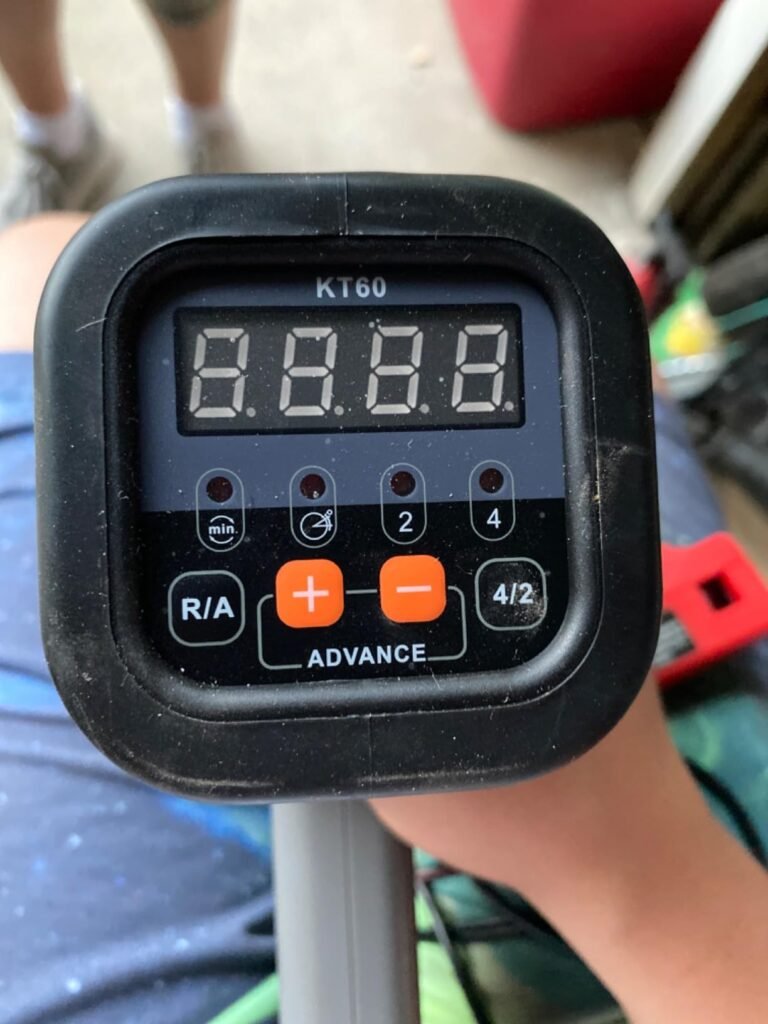
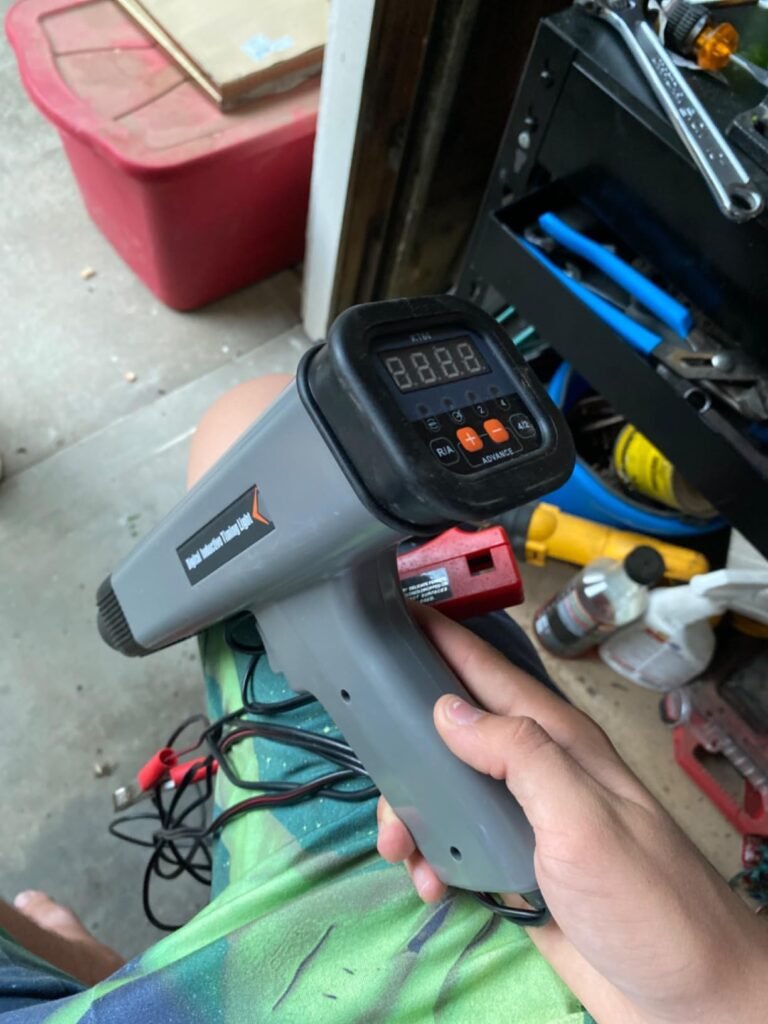
The KZYEE KT60 offers digital timing and tachometer functionality at a price point between basic inductive lights and premium Innova models. The built-in LCD display shows real-time RPM and adjustable 0-90 degree advance, giving you the two most important tuning parameters on a single screen without needing separate instruments.

We may earn a commission when you buy through this link, at no additional cost to you.
The xenon strobe produces a bright flash that keeps timing marks visible even in dim engine bays, which is the minimum requirement for any useful timing light. The directional inductive clamp captures ignition signals from the number one spark plug wire with reasonable consistency, though the 4.0 star rating suggests some owners experience less stable readings than they would with higher-rated alternatives.
Reverse-polarity protection is a practical safety feature that prevents damage if you accidentally swap the positive and negative battery connections. The 60-day money-back guarantee and 1-year warranty provide reasonable buyer protection for a tool in this price range. The unit works with most distributor-equipped 2-stroke and 4-stroke gasoline engines including cars, motorcycles, marine engines, and tractors.
Reverse-polarity protection prevents the timing light from being damaged if you accidentally connect the red clamp to the negative battery terminal and the black clamp to positive. Without this protection, reversed connections can blow internal fuses, damage the strobe circuit, or even harm the vehicle’s electrical system. This feature is especially valuable for less experienced users who may not double-check connections every time, and it adds meaningful peace of mind at minimal cost.
Choose the KT60 if you want digital advance and tachometer features without paying Innova prices, and you are willing to accept a slightly lower owner satisfaction rating. It is a reasonable option for home mechanics who tune their own vehicles a few times per year. For daily professional use or critical precision work, the higher-rated Innova models or the top-rated digital alternative may be worth the additional investment.
Users with coil-on-plug ignition systems or those who need the most stable RPM readings available.
We may earn a commission when you buy through this link, at no additional cost to you.
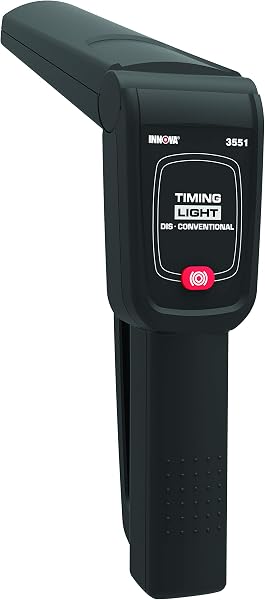
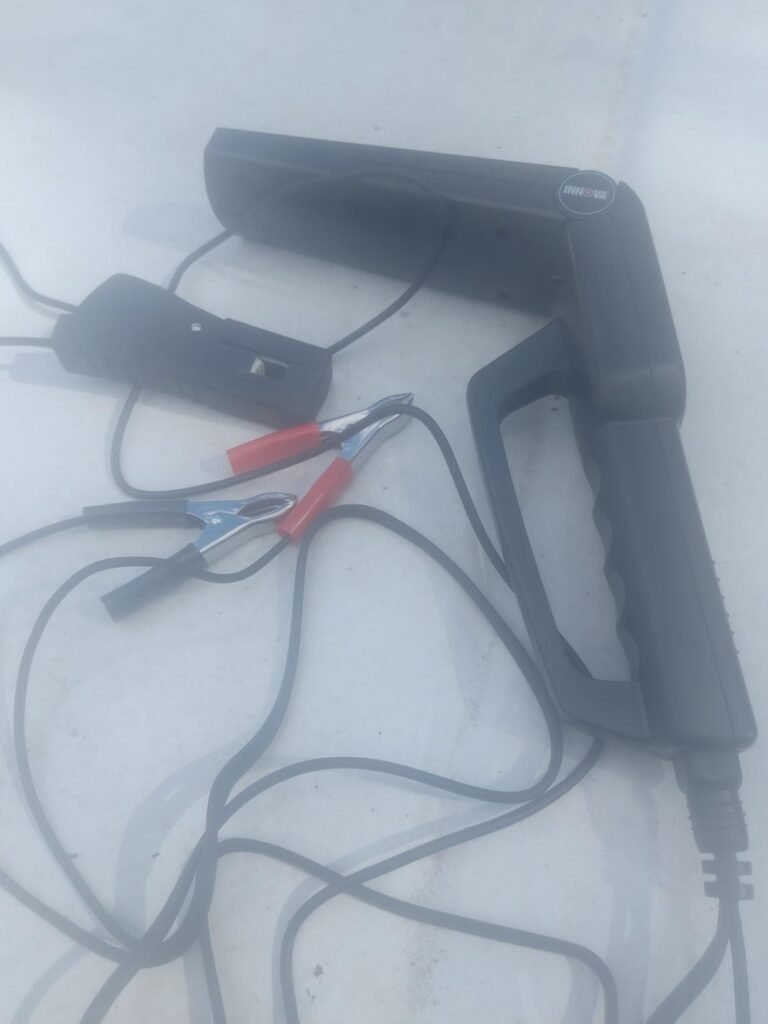
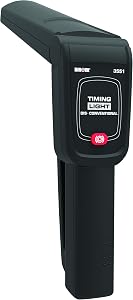
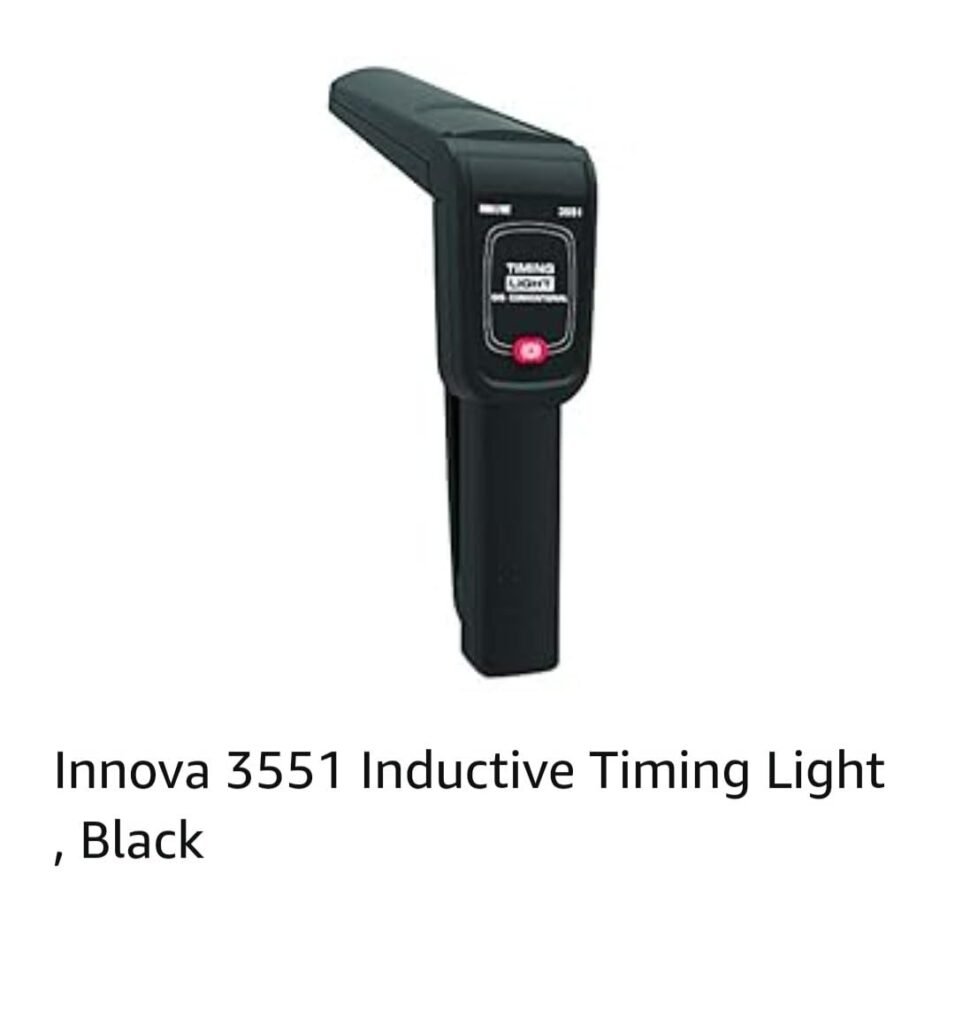
The Innova 3551 is the straightforward workhorse of this comparison. It does one thing well: it flashes a bright strobe synchronized with your ignition system so you can read timing marks on the harmonic balancer. There is no digital display, no tachometer, and no advance dial, which keeps the price low and the operation simple.
We may earn a commission when you buy through this link, at no additional cost to you.
Despite its simplicity, the 3551 includes Innova’s patented skip circuitry that allows accurate operation up to 9,990 RPM. This is the same circuitry found in the more expensive Innova models, and it ensures reliable strobe synchronization even on high-revving engines where cheaper timing lights may miss-fire or double-flash. The compatibility list covers DIS, conventional, electronic, and computer-controlled ignition systems on both domestic and import vehicles.
The slim rotating barrel lets you aim the strobe precisely at the timing mark, which is particularly helpful in cramped engine bays where the harmonic balancer is partially obscured by accessories or body panels. The protective hand guard allows safe one-handed operation near spinning cooling fans and belt drives, which is a genuine safety feature that matters in real garage conditions.
A basic inductive timing light with no digital features has fewer components that can fail, simpler operation that requires no learning curve, and a lower price that makes replacement painless if the tool is damaged. For mechanics who already have a tachometer or who use a scan tool for RPM data, a dedicated strobe-only timing light eliminates redundancy and keeps the tool kit focused. Sometimes the simplest tool is the most practical choice.
Choose the 3551 if you want reliable Innova quality at the lowest price point in the brand’s lineup. It is ideal for DIY mechanics who check timing a few times per year and do not need digital advance or tachometer functions. The simplicity is an advantage for users who want a tool that is easy to use and hard to break. Pair it with a separate tachometer if you need RPM data during tuning.
Enthusiasts who need digital advance readings or integrated tachometer data during tuning sessions.
We may earn a commission when you buy through this link, at no additional cost to you.
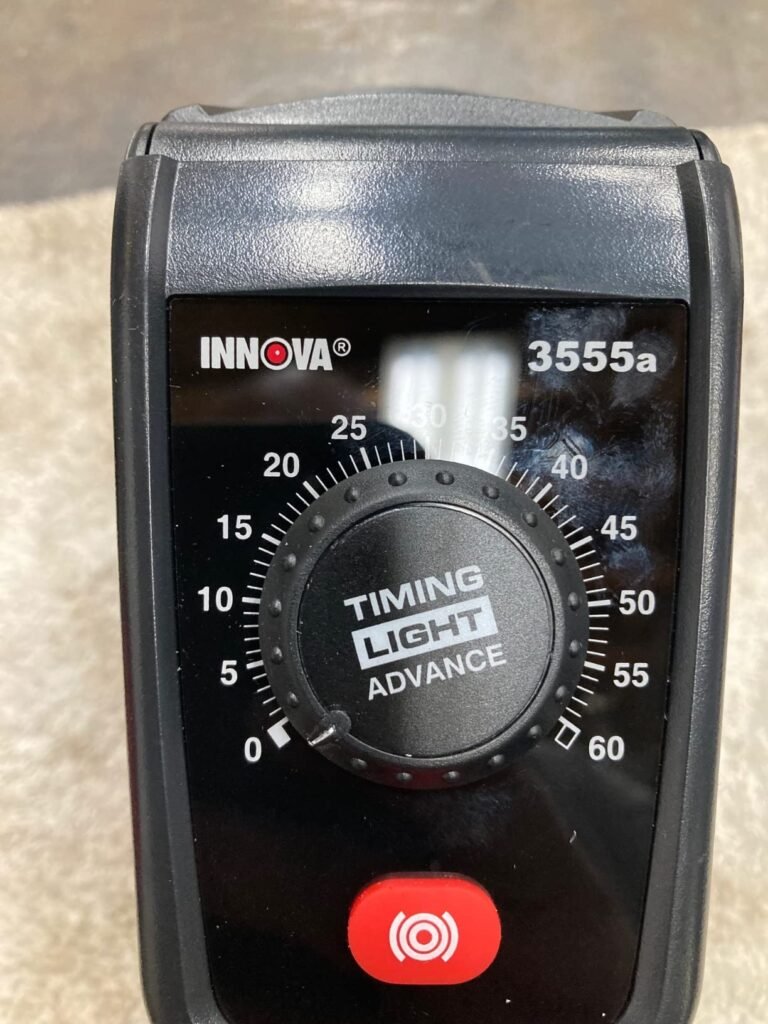
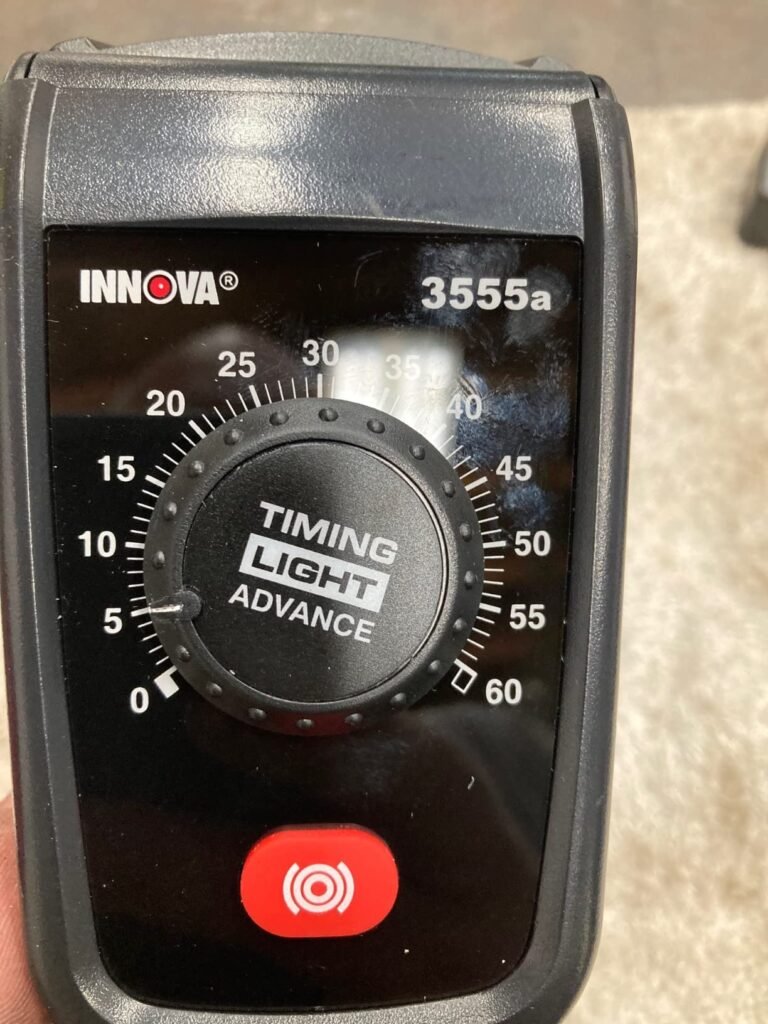
The Innova 3555 adds an analog advance dial to the basic inductive timing light formula, giving you the ability to check base timing, mechanical advance, and electronic advance without needing a digital display. The direct-reading advance scale adjusts from 0 to 60 degrees, which covers the timing range of most stock and mildly modified gasoline engines.
We may earn a commission when you buy through this link, at no additional cost to you.
The advance dial works by delaying the strobe flash relative to the ignition signal, effectively shifting the apparent position of the timing mark. You dial in advance until the timing mark aligns with the zero reference on the timing tab, then read the advance value directly from the dial. This analog approach is intuitive and fast for mechanics who are comfortable with traditional tuning methods.
Like other Innova models, the 3555 features patented skip circuitry for accurate operation up to 9,990 RPM and compatibility with conventional, electronic, and computer-controlled ignition systems. The slim rotating barrel and protective hand guard carry over from the 3551, providing the same aiming precision and safety during use.
Analog advance dials use a physical rotating scale that some mechanics find faster and more intuitive to adjust by feel during tuning. Digital advance displays show numerical values on an LCD screen, which provides more precise 1-degree increments but requires button presses to adjust. Neither approach is objectively superior; the choice comes down to personal preference and whether you also want integrated tachometer data, which typically requires a digital display.
Choose the 3555 if you want advance capability in a simple analog format without the complexity or cost of a digital display. The 60-degree advance range is sufficient for most stock engines but may fall short for heavily modified motors with aggressive timing curves. If you need advance beyond 60 degrees or want simultaneous RPM data, the Innova 3568 digital model is the logical step up.
Engines requiring more than 60 degrees of total advance or users who want digital RPM readout.
We may earn a commission when you buy through this link, at no additional cost to you.
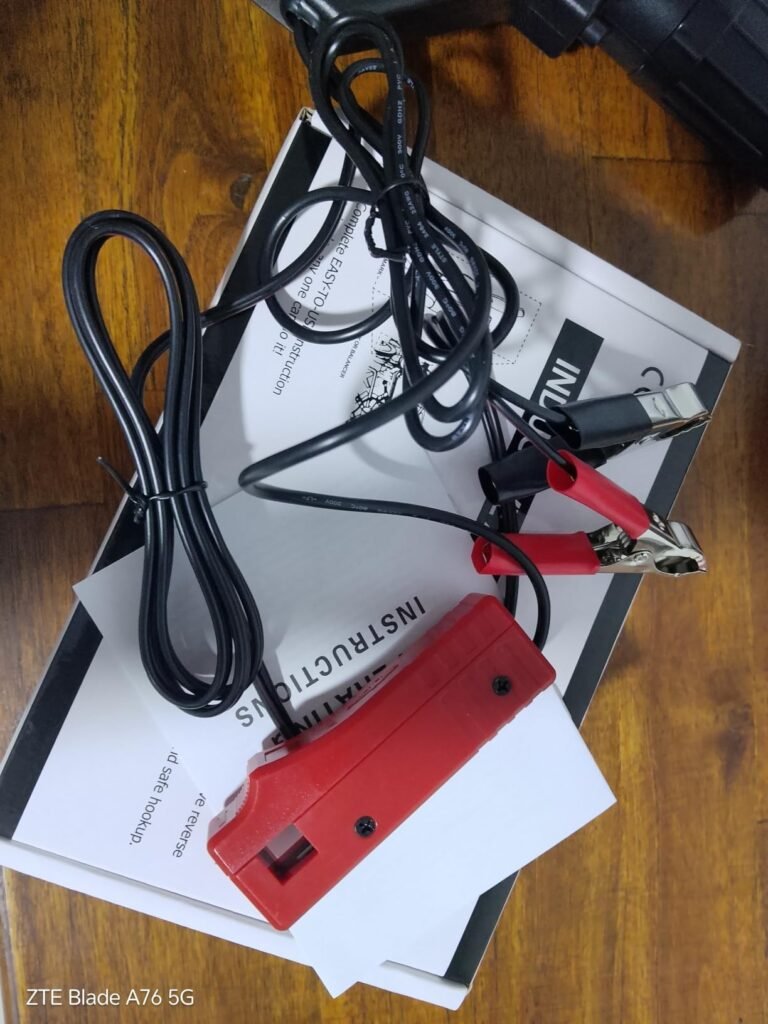
This budget timing light is the least expensive option in the comparison and targets users who need a functional strobe for very occasional timing checks on small engines, motorcycles, or classic cars. The 10-foot test leads provide generous reach from the battery to the engine, which is helpful on larger vehicles or when the battery is mounted in the trunk.
We may earn a commission when you buy through this link, at no additional cost to you.
The blue-white xenon tube produces a strong flash that the manufacturer claims is visible even in daylight, and the sliding clamp-on inductive pickup makes hookup straightforward. Reverse polarity protection and overload protection help prevent damage from incorrect connections, and the rubber-sleeved alligator clips add a layer of safety during use.
The pistol-grip ABS housing is comfortable to hold and reasonably durable for the price point. The advance function allows basic timing scale checks on the flywheel or belt pulley. However, the 3.8-star rating is the lowest in this comparison, which suggests that some owners experience inconsistent performance, dimmer-than-expected strobes, or durability issues over time.
A timing light that is only accurate up to 1,000 RPM is severely limited for automotive use because most engines idle at 600-900 RPM and timing specifications often require verification at 2,000-4,000 RPM or higher. This limitation means the strobe may flash erratically or miss ignition events at normal operating speeds, producing unreliable timing readings. For any engine work beyond idle checks, a timing light rated to at least 5,000 RPM is the practical minimum.
Choose this timing light only if budget is the primary constraint and you need a tool for very occasional use on simple engines. The 1,000 RPM speed limitation is a significant constraint that rules out use on most modern automotive engines at operating RPM. For anything beyond basic idle timing checks on small engines, investing in a higher-rated model will provide a much better experience.
Any tuning work above idle RPM or users who need reliable, repeatable timing readings.
We may earn a commission when you buy through this link, at no additional cost to you.
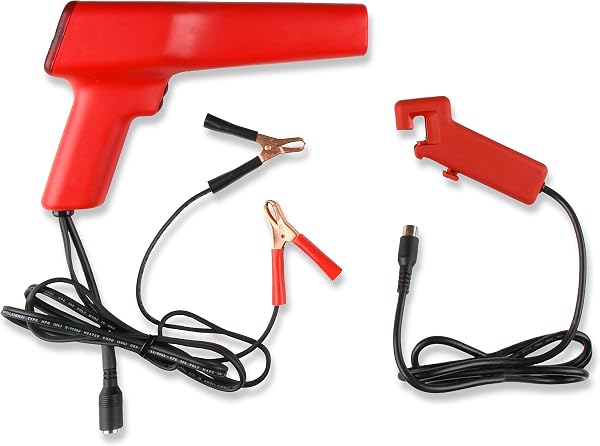
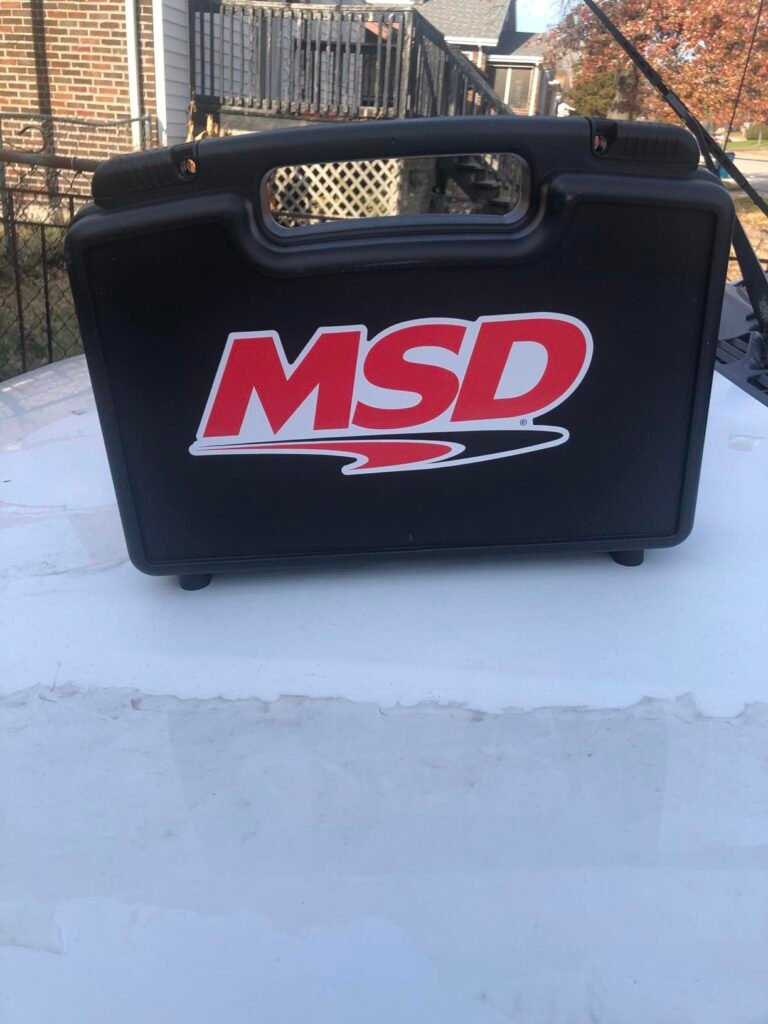
The MSD 8992 Timing Pro comes from one of the most respected names in performance ignition systems, and it targets professional mechanics and serious racers who demand reliable timing verification at the track or in the shop. MSD's reputation in the racing world means this tool is built to withstand the demanding conditions of competition environments.
We may earn a commission when you buy through this link, at no additional cost to you.
The secure pickup clamp is designed to stay locked onto the spark plug wire even during high-RPM runs, which is critical when you are checking timing on a running engine at the drag strip or dyno. Detachable leads simplify storage and transport, and the no-retard characteristic means the strobe timing remains accurate as RPM increases rather than drifting at higher engine speeds.
The professional-grade construction justifies the premium price for users who rely on accurate timing data for competitive performance. MSD products are engineered for the racing environment where a timing error of a few degrees can mean the difference between a winning pass and a damaged engine. The 4.5-star rating reflects consistent satisfaction among the performance-oriented buyers who choose this brand.
Timing lights from established ignition brands like MSD and Innova benefit from decades of engineering experience with the specific electrical signals they are designed to read. This expertise translates into more reliable trigger circuits, better noise rejection on multi-cylinder engines, and strobe timing that remains accurate across the full RPM range. Generic timing lights may work adequately at idle but can produce erratic readings at higher RPM where signal noise increases.
Choose the MSD 8992 if you are a professional mechanic, drag racer, or performance engine builder who values brand heritage and race-proven reliability above all else. The premium price is significant, and the feature list is less detailed than some competitors, but MSD’s reputation in ignition systems provides confidence that the tool performs accurately under demanding conditions. For street-driven vehicles and casual tuning, less expensive options deliver comparable functionality.
Casual DIY mechanics who do not need race-grade precision and want more features per dollar.
We may earn a commission when you buy through this link, at no additional cost to you.
Selecting a timing light requires matching the tool to your ignition system type, the engines you work on, and how precisely you need to measure timing. This section covers the factors that genuinely affect performance and usability in real garage conditions.
The most critical factor in choosing a timing light is whether it works with your vehicle’s ignition system. Conventional points-based ignition, electronic ignition with a distributor, and distributorless ignition systems all produce the high-voltage spark signal that inductive timing lights detect through the spark plug wire. Most timing lights in this comparison work with these systems. However, coil-on-plug ignition systems, which are standard on most modern vehicles, do not have accessible spark plug wires for the inductive clamp to attach to, rendering traditional timing lights unusable.
Diesel engines do not use spark plugs at all, so inductive timing lights cannot function on diesel powertrains. Hybrid and electric vehicles also fall outside the scope of conventional timing lights. Before purchasing, verify that your vehicle has accessible spark plug wires or a conventional distributor. If your vehicle uses coil-on-plug ignition, you will need a scan tool or specialized diagnostic equipment to check timing rather than a traditional timing light.
Check your vehicle’s ignition type before buying. If you work on a mix of older and newer vehicles, choose a timing light with broad compatibility across conventional, electronic, and DIS systems like the Innova models.
The RPM range of a timing light determines the engine speeds at which it can accurately synchronize its strobe flash with the ignition signal. Most quality timing lights operate up to 9,990 RPM, which covers virtually every gasoline engine you will encounter. Budget models may have lower effective RPM limits, and some ultra-cheap options are only reliable up to 1,000 RPM, which restricts them to idle-speed timing checks.
Skip circuitry is a feature found on Innova timing lights that improves accuracy on multi-cylinder engines by filtering out signal noise from adjacent cylinders. Without skip circuitry, the inductive pickup may trigger on stray electromagnetic interference from nearby spark plug wires, causing the strobe to double-flash or produce erratic timing readings. This feature becomes increasingly important on V6 and V8 engines where spark plug wires run close together.
For any serious tuning work, choose a timing light rated to at least 5,000 RPM with skip circuitry. The 9,990 RPM ceiling on most quality models ensures you can verify timing at the engine speeds where total advance typically peaks.
Basic timing lights simply flash a strobe synchronized with the spark, allowing you to read the timing mark on the harmonic balancer. Models with advance dials, whether analog like the Innova 3555 or digital like the Innova 3568, let you measure total ignition advance by dialing back the strobe until the timing mark returns to the zero reference. This eliminates the need for timing tape on the balancer and provides more precise advance readings.
The advance range varies between models. The Innova 3555 offers 0-60 degrees, which covers most stock engines. Digital models like the Innova 3568 and the top-rated digital timing light extend to 0-90 degrees, which accommodates heavily modified performance engines with aggressive timing curves. The 1-degree increment adjustment on digital models provides finer precision than analog dials.
If you only check base timing at idle, a basic strobe light without advance is sufficient. If you tune performance engines or need to verify advance curves, invest in a model with at least 60 degrees of dial-back advance.
Digital timing lights with LCD displays show RPM, advance angle, and sometimes dwell and voltage as numerical values on a screen. This provides precise, easy-to-read data that eliminates guesswork. The Innova 5568 Pro and 3568 are examples of digital models with clear readouts. The trade-off is higher cost and the need for batteries or power to operate the display electronics.
Analog timing lights rely on the strobe flash alone or use a physical rotating dial for advance measurement. The Innova 3555 uses an analog advance scale that some experienced mechanics find faster to adjust by feel during tuning. Analog models are simpler, more durable in harsh environments, and less expensive, but they cannot display RPM or other diagnostic data.
Choose digital if you want integrated tachometer and precise advance readings. Choose analog if you prefer simplicity, lower cost, and already have a separate tachometer for RPM data.
Strobe brightness is the most fundamental performance characteristic of a timing light. A dim strobe makes timing marks difficult to read, especially in bright daylight or well-lit shop environments. Xenon strobe tubes produce the brightest flash and are standard on most quality timing lights. The intensity of the flash determines how clearly the timing mark appears frozen on the spinning harmonic balancer.
Blue-white xenon tubes, as found on some budget models, claim daylight visibility but may not match the brightness of premium xenon strobes in practice. The strobe brightness also affects how well the timing light works at higher RPM, where the timing mark moves faster and requires a more intense flash to appear sharp and readable.
Prioritize xenon strobe brightness when comparing models, especially if you work outdoors or in well-lit environments. A timing light with a weak strobe will frustrate you regardless of its other features.
Timing lights operate in harsh environments near hot engines, spinning fans, and exposed electrical connections. Build quality determines whether the tool survives repeated use in these conditions. Heavy-duty housings with shock-proof construction, like the Innova 5568 Pro, resist damage from drops and impacts. Molded boots and hand guards protect against contact with moving engine components.
Lead quality and clamp design also affect durability. Detachable leads, as found on the Innova 5568 Pro and MSD 8992, allow replacement if the wires become damaged and simplify storage. Color-coded clamps reduce connection errors, and rubber-sleeved alligator clips protect against accidental short circuits. The inductive pickup clamp should grip the spark plug wire securely without slipping during use.
For professional or frequent use, invest in a timing light with proven build quality from an established brand. For occasional home use, a less expensive model may last years if handled carefully.
Lead length determines how easily you can connect the timing light to the battery and spark plug wire in cramped engine bays. Standard leads are around 4 to 6 feet, which is adequate for most passenger vehicles. The budget 12V model offers 10-foot leads, which provide extra reach for vehicles with trunk-mounted batteries or tightly packed engine compartments.
Ergonomic design affects comfort during extended tuning sessions. Pistol-grip handles with comfortable trigger buttons allow one-handed operation, freeing your other hand to adjust the distributor or hold a tachometer. Rotating barrels, as found on Innova models, let you aim the strobe at the timing mark from different angles without repositioning your entire body.
Consider the vehicles you work on most frequently. If you regularly work on compact engine bays or vehicles with unusual battery locations, longer leads and a rotating barrel will make the job significantly easier.
Before using your timing light, locate the number one spark plug wire and the timing marks on the harmonic balancer or flywheel. Clean the timing marks with a wire brush and mark them with white chalk or paint for better visibility under the strobe. Connect the red clamp to the positive battery terminal and the black clamp to the negative terminal, then clip the inductive pickup onto the number one spark plug wire with the arrow pointing toward the spark plug. Start the engine and let it reach normal operating temperature before checking timing.
Aim the strobe at the timing marks while the engine is running at the specified RPM for your timing check. The strobe flash will make the timing mark appear stationary, allowing you to read its position relative to the timing tab. If your timing light has an advance dial, you can measure total advance by dialing back until the mark returns to zero and reading the value from the display or dial. Always disconnect the vacuum advance hose and plug it before checking base timing, then reconnect it to verify that the advance mechanism is functioning correctly.
After use, disconnect the timing light from the battery and spark plug wire, and store it in a dry location away from extreme temperatures. Wipe down the housing and leads to remove grease and dirt from the engine bay. If your timing light has a storage case, use it to protect the unit from damage. Periodically inspect the leads and clamps for fraying, corrosion, or loose connections, and replace damaged components before they cause inaccurate readings or safety hazards.
Most modern fuel-injected vehicles with computer-controlled ignition do not require manual timing adjustment, and many use coil-on-plug systems that are incompatible with traditional timing lights. Timing is managed by the engine control unit and adjusted through the OBD-II port using a scan tool. Timing lights remain essential for older vehicles with distributors, carbureted engines, and performance applications where manual timing adjustment is part of the tuning process.
A timing light flashes a strobe synchronized with the ignition spark to visually freeze the timing mark on the harmonic balancer, allowing you to read ignition timing. A tachometer measures and displays engine RPM. Some digital timing lights include a built-in tachometer, combining both functions in one tool. If your timing light lacks a tachometer, you will need a separate one to verify engine speed during timing checks.
No. Traditional inductive timing lights detect the high-voltage spark from the ignition system, which diesel engines do not have because they rely on compression ignition rather than spark plugs. Diesel timing is checked using specialized diagnostic equipment that reads injection pump timing or camshaft position sensor data through the vehicle's computer system.
Budget timing lights can provide adequate accuracy for basic idle timing checks on simple engines, but they may produce less stable readings at higher RPM due to simpler trigger circuits and less effective noise filtering. Premium timing lights from established brands like Innova and MSD use patented circuitry that maintains strobe synchronization across the full RPM range, providing more reliable and repeatable readings for serious tuning work.
Dial-back advance is a feature that delays the strobe flash by a precise number of degrees, effectively shifting the apparent position of the timing mark. By increasing the dial-back until the timing mark returns to the zero reference point, you can read the total ignition advance directly from the dial or digital display without needing timing tape on the harmonic balancer. This method is faster and more accurate than reading small degree markings on a spinning balancer.
Traditional inductive timing lights require a spark plug wire for the pickup clamp to detect the ignition signal. Coil-on-plug systems mount the ignition coil directly on the spark plug with no external wire, making them incompatible with standard timing lights. Some specialized timing lights use alternative pickup methods, but most models in this comparison will not work with COP systems. Check your vehicle's ignition type before purchasing.
The number one spark plug wire connects to the number one cylinder, which is identified in your vehicle's service manual. On most inline engines, cylinder number one is at the front of the engine closest to the accessory belts. On V-type engines, the numbering varies by manufacturer. The firing order and cylinder numbering are typically printed on the intake manifold or available in the owner's manual. Connecting the timing light to the wrong cylinder will produce inaccurate readings.
For modern vehicles with electronic ignition and computer-controlled timing, manual timing checks are rarely necessary unless you experience symptoms like pinging, poor fuel economy, or hard starting. For older vehicles with distributors, checking timing during every tune-up or oil change interval is good practice. Performance engines that are regularly modified or tuned should have timing verified after any changes to the ignition system, fuel delivery, or engine internals.
A properly functioning timing light connected correctly to the battery and spark plug wire will not damage your vehicle's electronics. The inductive pickup reads the electromagnetic field around the spark plug wire without making direct electrical contact, so it does not interfere with the ignition signal. However, reverse-polarity connections or damaged leads could potentially cause issues, which is why models with reverse-polarity protection are a safer choice for less experienced users.
The digital timing light with RPM tachometer and 0-90 degree advance earns the Editor's Choice position thanks to its 4.8-star owner rating, precise 1-degree advance increments, bright xenon strobe, and competitive price point. For most DIY mechanics and enthusiasts who tune gasoline engines with conventional or electronic ignition, it delivers the best combination of digital features, strobe performance, and real-world reliability without the premium cost of professional-grade tools.
For different buyer profiles, several strong alternatives stand out. The Innova 3551 provides trusted brand quality and skip circuitry at the lowest Innova price, making it the Best Value for users who need a reliable basic strobe. The Innova 5568 Pro is the Premium Pick for mechanics who want four-function diagnostics including dwell and voltage in a single tool. The Innova 3568 digital is ideal for enthusiasts who need split-screen advance and tachometer data. The MSD 8992 serves professional racers who demand race-proven accuracy.
The right timing light for you depends on your ignition system type, the engines you work on, and how precisely you need to measure timing. Verify compatibility with your vehicle's ignition before purchasing, prioritize strobe brightness and RPM range for reliable readings, and choose advance capability only if your tuning work requires it. Use the comparison table and reviews above to match a timing light to your specific needs rather than defaulting to the most expensive or most feature-packed option available.