SKIL 3540-02 7-Inch
8.8Editor score7-inch blade diameter
Stainless steel top
7.75-inch crosscut capacity
0-45 degree bevel
Find the right tile saws for 2026. We compare 10 standout options by build quality, useful features, owner feedback, value, and everyday trade-offs.

Choosing the right tile saw for 2026 comes down to matching the tool to the tile size, material, and volume of cuts you plan to make. This guide compares 10 standout options by blade diameter, motor power, cutting capacity, water containment, portability, precision features, and value across professional and DIY use cases.
Tile saws range from compact handheld units for small backsplash jobs to full-size stationary saws with stands that handle 36-inch porcelain planks. The right choice depends on whether you need occasional weekend use or daily jobsite reliability. Motor amperage, arbor size, and rip capacity all affect what you can realistically cut in one pass.
This guide breaks down each saw with a focus on practical differences that affect real projects. You will find clear comparisons of wet versus dry cutting, corded versus cordless designs, and the water management features that determine how clean and dust-free your work area stays during extended cutting sessions.
We compared 10 tile saws using the specifications that actually help a buyer decide: blade diameter, motor amperage and horsepower, maximum cut depth and rip capacity, bevel range, water containment system, cutting accuracy features, portability, included accessories, and value across skill levels. The notes focus on practical trade-offs so each pick connects to how people actually cut ceramic, porcelain, and stone tiles on real remodeling and construction jobs.


Compare key features, scores, and current prices side by side. A shorter feature list means fewer details were available, not necessarily fewer capabilities.



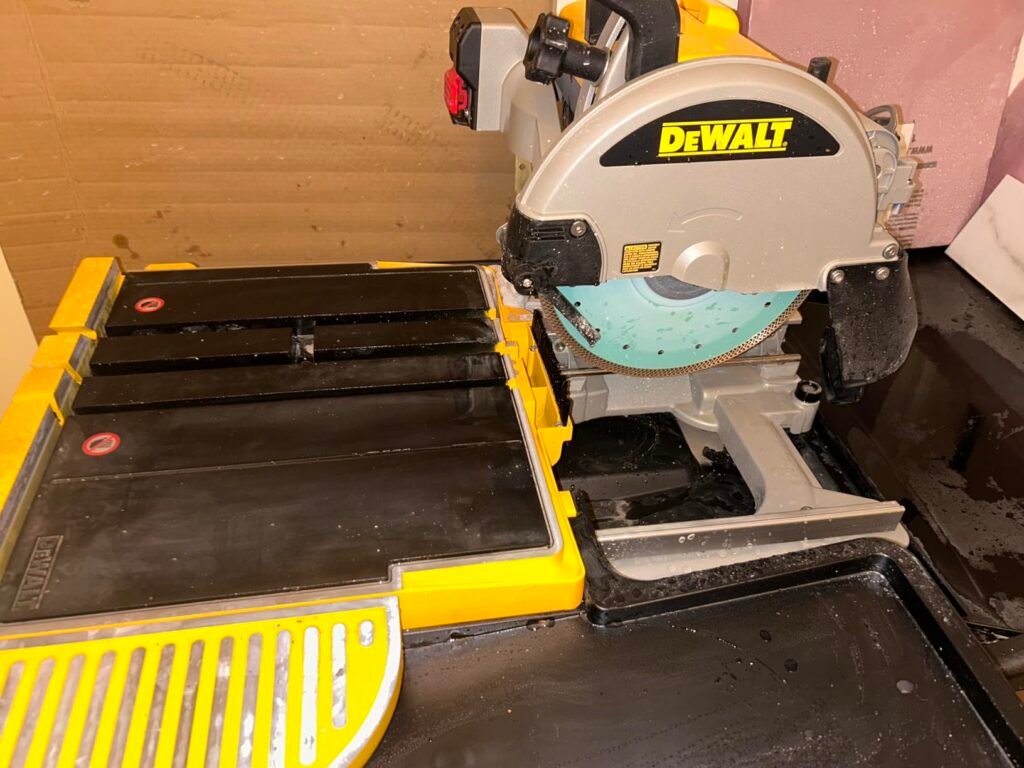
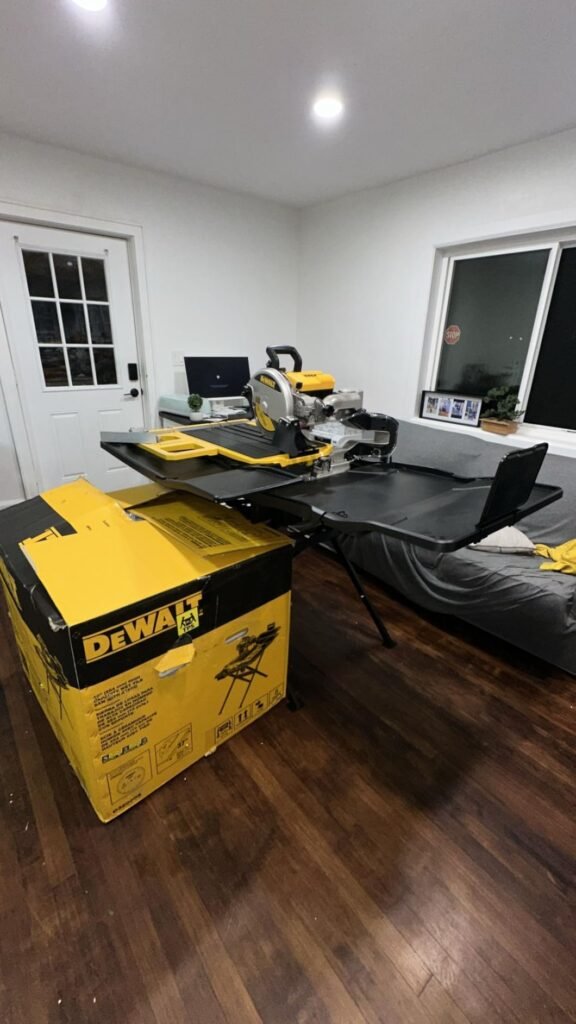
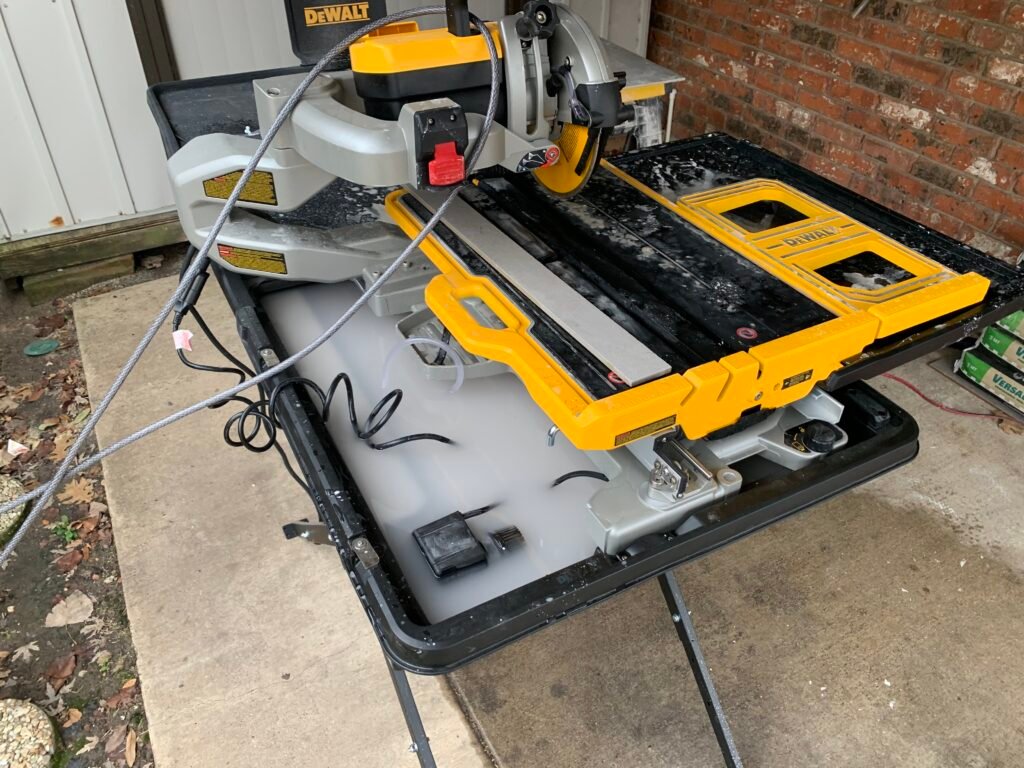
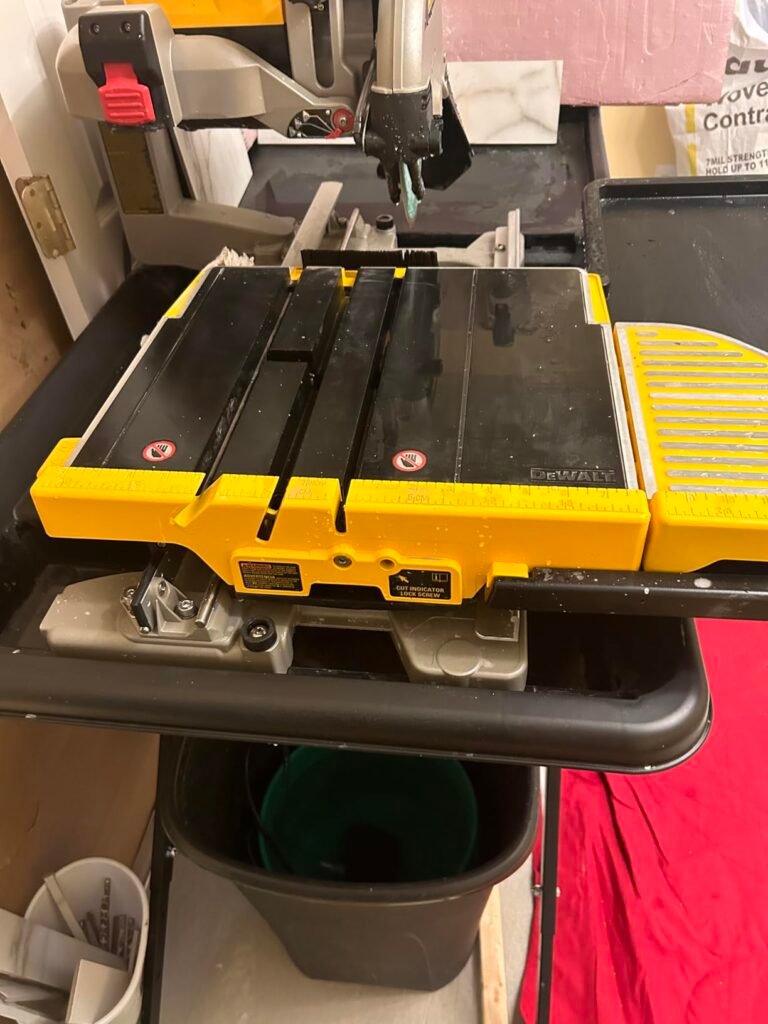
The DEWALT D24000S is the go-to full-size wet saw for serious tile installers who need consistent accuracy across a wide range of cut sizes. With a 28-inch rip capacity and 18-inch diagonal capability, it handles standard 12×12 and 18×18 porcelain tiles without repositioning, which saves time and reduces the chance of cracked edges from midcut adjustments.
We may earn a commission when you buy through this link, at no additional cost to you.
A 1.5 peak horsepower motor drives the 10-inch blade through porcelain and natural stone with minimal bogging, and the included XP4 porcelain blade is ready to cut out of the box. Stainless steel rollers on the cutting cart glide smoothly with almost no lateral play, which is what allows the cutline indicator to maintain accuracy within 1/32 inch over 18-inch cuts. That precision matters when you are matching grout lines across a large floor.
The full package includes the saw, rolling stand, submersible pump, water pan, side and rear water trays, cutting cart side extension, angle and rip guide, and blade wrenches. Setup takes about 20 minutes the first time and much less after that. At 69 lbs the saw itself is heavy, but the compact frame folds into a footprint that fits in most vehicle beds and cargo areas.
Marking your cut line on the tile and lining it up with the blade is easy in theory but often frustrating in practice because water spray obscures pencil marks. The cutline indicator on this DEWALT projects a physical reference above the blade so you can align the cut without relying on a mark that may wash away. For repetitive cuts like a row of 6-inch cove pieces, this feature dramatically speeds up the workflow while keeping cuts consistent.
This saw is the right choice for tile contractors, remodelers, and serious DIYers tackling entire bathrooms or kitchen floors. The upfront investment pays off through faster, more accurate cuts and the ability to handle larger format tiles that would exceed the capacity of 7-inch tabletop models. Casual users doing a single backsplash job will not need this much saw.
Not necessary for small backsplash or single-room projects where a compact 7-inch saw would suffice.
We may earn a commission when you buy through this link, at no additional cost to you.
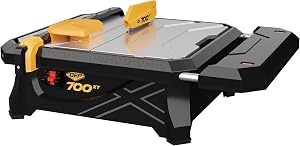
The SKIL 3540-02 delivers the essential features of a wet tile saw at a price that makes sense for homeowners tackling a single project. The stainless steel top resists corrosion from repeated water exposure and supports tiles up to 12×12 inches, which covers most standard bathroom floor and wall tiles found in home renovation projects.
We may earn a commission when you buy through this link, at no additional cost to you.
A 7-inch blade with a 7.75-inch crosscut capacity handles the vast majority of residential tile work, and the diagonal cut capacity of 7.25 inches covers most miter cuts needed for corners and transitions. The adjustable rip fence and miter gauge provide the guidance needed for straight cuts and 45-degree angles, and the bevel adjustment from 0 to 45 degrees allows for edge treatments and coping cuts.
The water reservoir keeps the blade cool during cutting, which extends blade life and reduces the dust cloud that dry cutting produces. This is a meaningful benefit for indoor work in occupied homes where dust containment matters. The tabletop design keeps the footprint small enough to fit on a workbench or sturdy folding table without dedicated stand space.
The blade that ships with entry-level tile saws is usually adequate but not exceptional. Upgrading to a higher-quality continuous rim diamond blade rated specifically for porcelain will dramatically improve cut quality and reduce chipping on glazed surfaces. Feed the tile slowly and let the blade do the work rather than pushing hard, which prevents overheating and premature blade wear. Refill the water reservoir when the level drops noticeably to keep cooling consistent.
This saw makes sense for weekend warriors, first-time tile installers, and anyone with an occasional need for tile cutting. It is not built for the punishing demands of daily jobsite use, but for a bathroom remodel or backsplash installation it delivers reliable performance at a fraction of the cost of professional-grade saws.
Not suitable for large-format tiles beyond 12 inches or for high-volume professional installation work.
We may earn a commission when you buy through this link, at no additional cost to you.
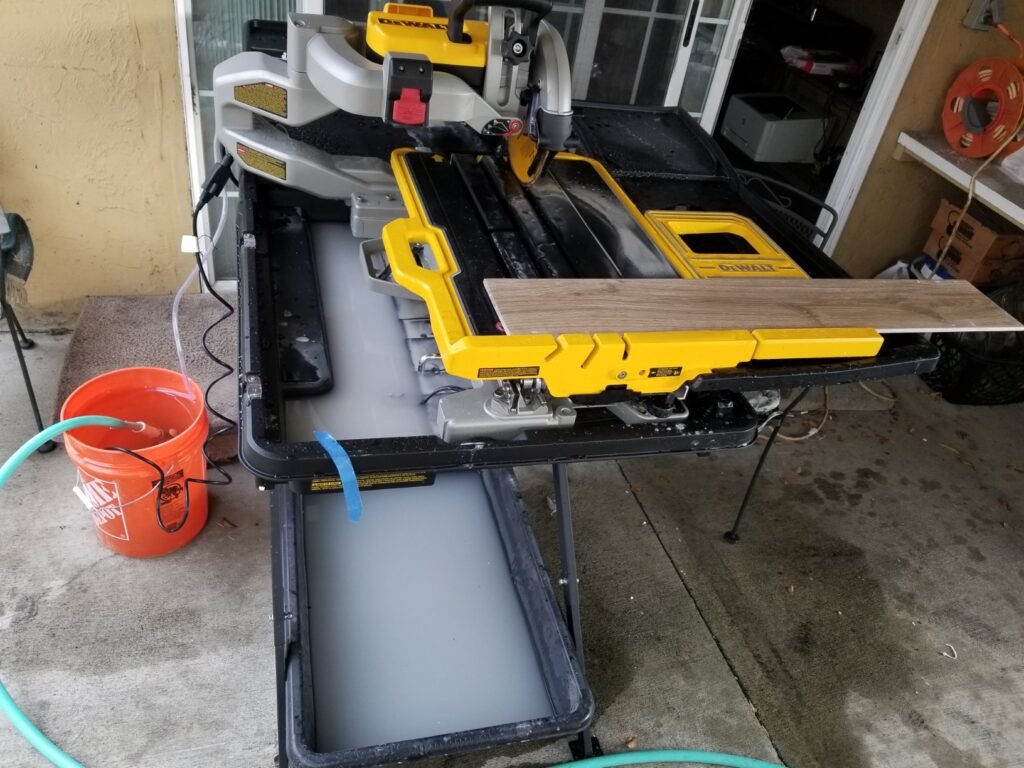
The DEWALT D36000S targets professional tile installers working with modern large-format tiles that have become standard in high-end residential and commercial projects. Its 37-inch rip capacity, or 41 inches with plunge cutting, lets you slice 36×36 inch tiles cleanly in half in a single pass, which is a capability few other saws on this list can match.
We may earn a commission when you buy through this link, at no additional cost to you.
The 15-amp motor delivers 1,220 max watts out, giving it the power to push through dense porcelain and natural stone without struggling. The cutline indicator, rigid frame, and stainless steel rollers combine to maintain cutting accuracy within 1/32 inch over 30-inch cuts, which is critical when your finished floor will show any misalignment across long grout lines.
The 8.5-inch crosscut capacity handles 8-inch by 48-inch planks at a 30 percent offset, a common installation pattern for wood-look porcelain planks. Water containment is a major strength here, with the tray system fully capturing spray from 18×36 and 24×24 tiles to keep the work area cleaner than open-tray designs. Integrated storage for the cart extension, miter guide, and wrenches means accessories travel with the saw between jobs.
Large-format tiles are increasingly common in modern design, with 24×48 and 36×36 sizes appearing in bathrooms, kitchens, and commercial spaces. Cutting these tiles requires either an oversized saw or awkward score-and-snap methods that risk cracking expensive material. If your project list regularly includes tiles larger than 24 inches on any side, a saw with 30-plus inches of rip capacity pays for itself quickly through faster cuts and fewer damaged tiles.
At 91 lbs the saw is heavier than the D24000S, but the 28-7/8 inch width still fits through standard 30-inch door frames for interior transport. This is the right choice for professional installers who regularly work with large-format tile and need the accuracy, capacity, and durability to justify the higher investment. Occasional users will find the D24000S more than adequate.
Not necessary for residential DIY work with standard 12×12 or 18×18 tiles.
We may earn a commission when you buy through this link, at no additional cost to you.
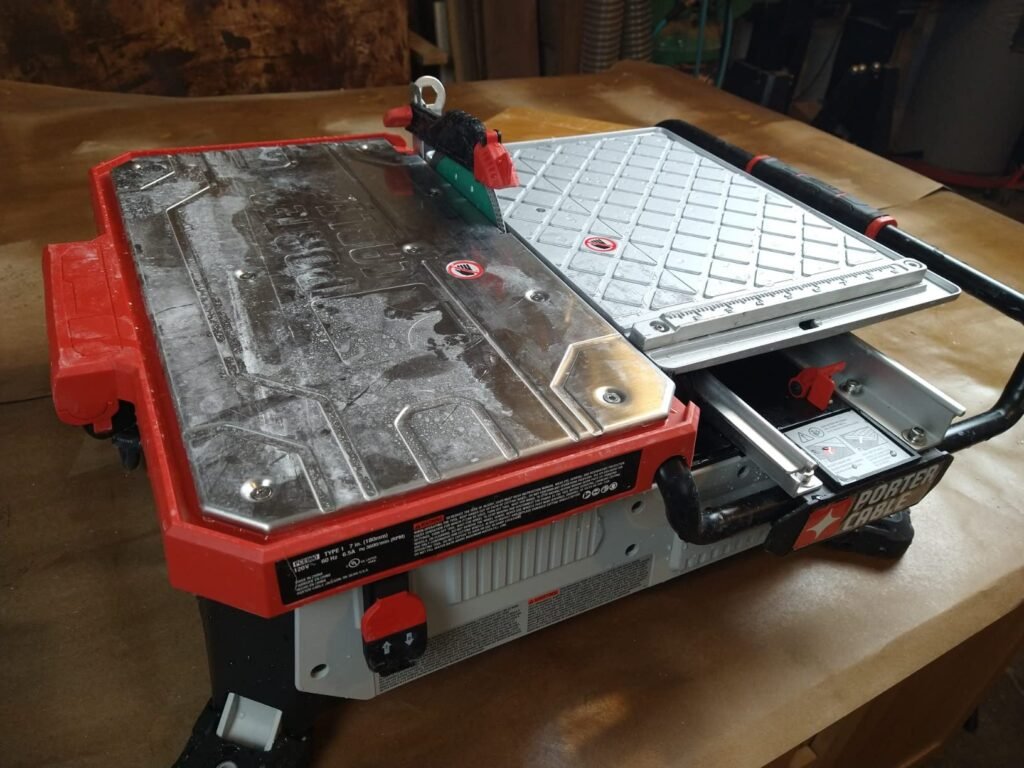
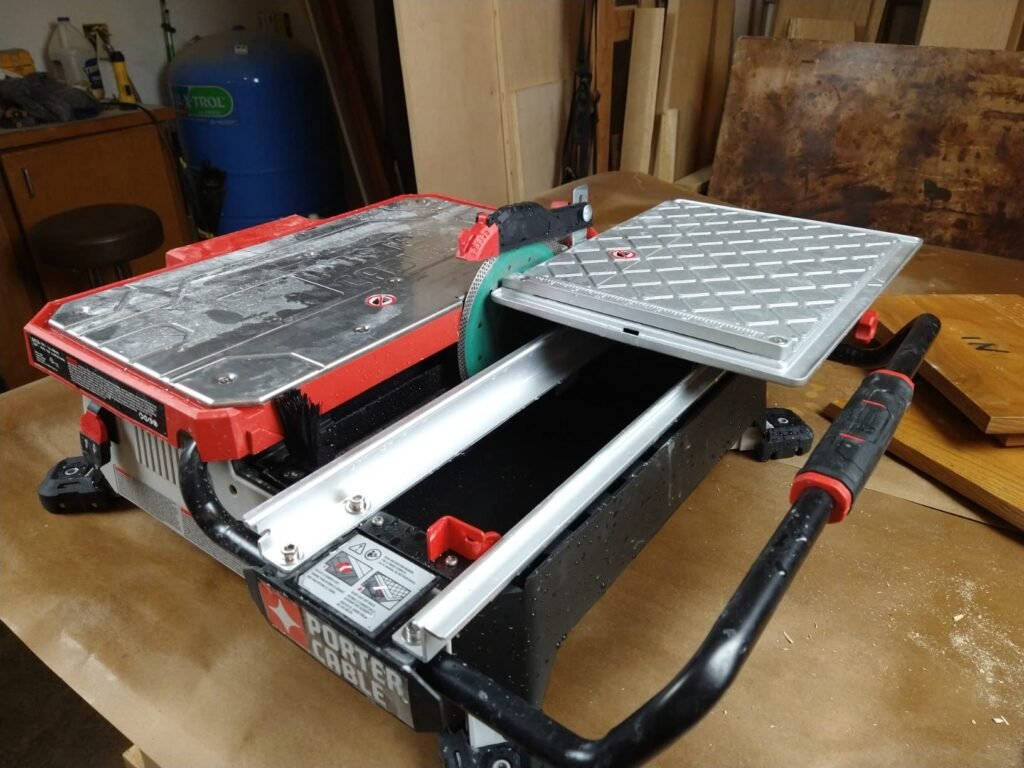
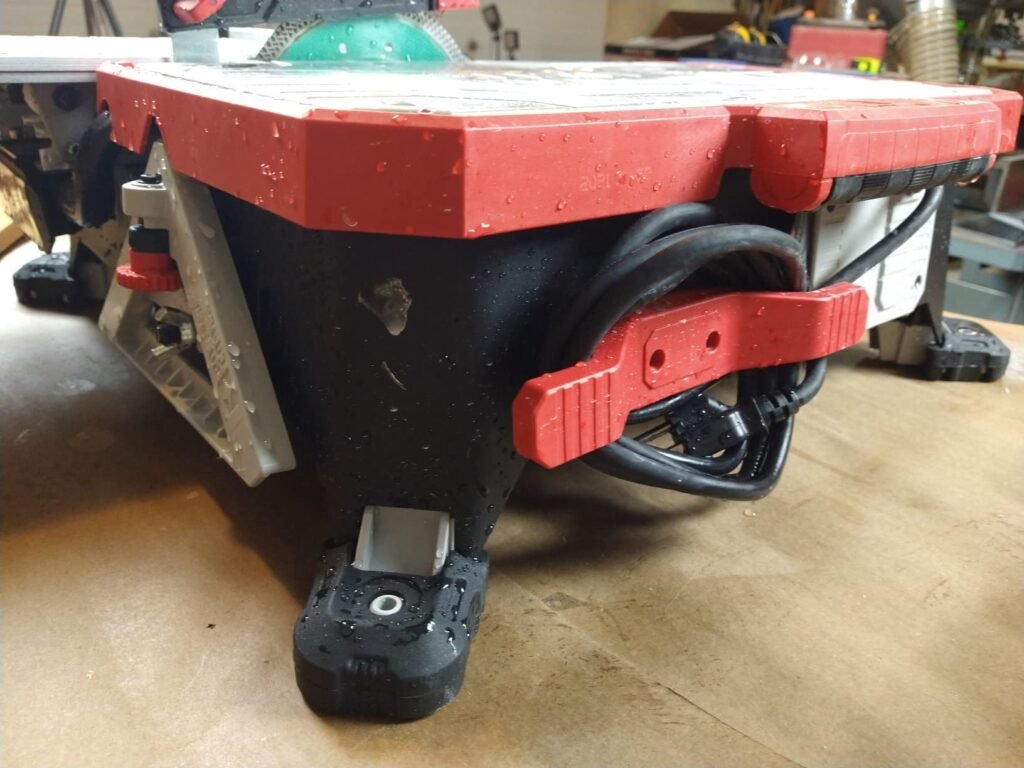
The PORTER-CABLE PCE980 sits in the middle of the tile saw market, offering more durability and jobsite-friendly features than entry-level tabletop saws without stepping up to the price of full-size professional units. The integrated roll cage is the standout feature, protecting the cutting cart and motor housing from the bumps and drops that happen when saws travel between trucks and worksites.
We may earn a commission when you buy through this link, at no additional cost to you.
A 2,850 RPM motor drives the 7-inch blade for smooth cuts through ceramic, porcelain, and stone. The onboard miter square helps line up angled cuts and repeatable rip cuts without requiring separate accessories, which speeds up the workflow when you are cutting a series of similar pieces. The stainless steel fixed deck resists corrosion from continuous water exposure and holds up to jobsite abuse better than painted steel or plastic tops.
Practical features like the splash guard and drain plug show that this saw was designed with real usage in mind. The splash guard reduces water spray reaching the operator, which matters during long cutting sessions. The drain plug empties the water reservoir over a bucket without tipping the entire saw, keeping cleanup quick and mess-free between projects.
Cutting tile creates a fine mist of water and tile particles that coats the operator’s arms, face, and clothing during extended use. A splash guard redirects that spray away from the operator, which not only keeps you cleaner but also improves visibility of the cut line. If you plan to spend hours cutting tile for a large project, the difference between a saw with a proper splash guard and one without becomes immediately noticeable in how tired and irritated you feel by the end of the day.
This saw is a strong middle-ground choice for handymen, small contractors, and serious DIYers who need durability without the size or cost of a full-format saw. The 7-inch capacity handles most residential tile work, and the roll cage design means the saw survives transport in a truck bed or van without careful padding.
Not designed for large-format tiles that exceed the 7-inch cutting capacity.
We may earn a commission when you buy through this link, at no additional cost to you.
The DEWALT DWC860W fills a different role than the tabletop saws in this guide. Instead of pulling tile through a stationary blade, you bring this handheld saw to the workpiece, which makes it ideal for cuts that are impractical to make on a table saw. Notching around outlets, trimming installed tile, and making L-cuts around obstacles are all easier with a handheld unit.

We may earn a commission when you buy through this link, at no additional cost to you.
The 10.8-amp motor delivers 1,300 watts of power and spins the 4-3/8 inch diamond blade at up to 13,000 RPM. That combination cuts through granite, porcelain, concrete, and ceramic up to 1-3/8 inches deep. The 12-foot water line connects to any water source with adequate pressure and feeds cooling water to the blade, cutting dust production and extending blade life during masonry work.
At just 6.6 lbs the saw is light enough to control with one hand for precision cuts, and the rubber overmold grip reduces fatigue during production runs. A lock-on button lets you make long cuts without maintaining trigger pressure, and the adjustable depth-of-cut allows shallower passes for controlled work on thin materials. The dust-sealed switch protects the internal components from the abrasive slurry produced during cutting.
Freehand cuts on tile rarely produce straight edges without practice, so clamp a straight edge to the tile surface as a guide fence for the saw’s base. Score the cut line with a shallow initial pass before making the full-depth cut to prevent chipping on the glazed surface. Keep water flowing steadily to the blade and move at a consistent pace rather than starting and stopping, which produces the cleanest cuts and extends the life of the diamond edge.
This saw is best used as a complement to a stationary tabletop saw rather than a replacement. Serious tile installers often keep both, using the handheld for onsite trimming and notch work while relying on a table saw for high-volume straight cuts. If your projects mostly involve modifying installed tile or working in tight spaces, this handheld unit earns its place in the tool bag.
Not ideal for high-volume production cutting where a stationary tabletop saw would be faster and more accurate.
We may earn a commission when you buy through this link, at no additional cost to you.
The Stens 12-Amp 4-Inch Wet Tile Saw is a compact handheld option for buyers who need occasional cutting capability without investing in a premium branded tool. The 12-amp corded motor provides consistent power without the runtime limitations of cordless models, making it suitable for extended cutting sessions when connected to a standard outlet.
We may earn a commission when you buy through this link, at no additional cost to you.
The 4-inch blade is best suited for smaller cuts on ceramic and stone materials commonly found in residential tile work. Wet cutting keeps the blade cool and dramatically reduces the dust that dry cutting produces, which matters when working indoors or in occupied spaces. The compact form factor makes the saw easy to store between projects and portable enough to bring to any workspace.
As a replacement-parts brand primarily serving lawn and landscape professionals, Stens offers this saw at a price point below premium alternatives. The tradeoff is fewer refined features and less brand support than you would get from a name-brand tool, but for occasional use the basic cutting capability is what matters most.
A 4-inch blade limits your maximum cut depth to roughly 1 inch or less, depending on the specific saw design. That is adequate for standard ceramic and porcelain wall and floor tiles, which typically range from 3/8 inch to 1/2 inch thick. Thicker materials like natural stone slabs, thick paver tiles, or countertop material may require deeper cuts than a 4-inch blade can achieve in a single pass, so verify the thickness of your specific tile before assuming a compact saw will handle the job.
This saw fits budget-conscious buyers who need a wet cutter for a single project or infrequent home improvement work. If you install tile professionally or expect to use the saw regularly, invest in one of the branded handheld or tabletop options in this guide. For a weekend backsplash job or occasional trim work, this compact unit gets the job done at a lower cost.
Not suitable for thick natural stone or countertop materials that require deeper cutting depth.
We may earn a commission when you buy through this link, at no additional cost to you.
The VEVOR 10-Inch Wet Tile Saw offers full-size cutting capacity at a price meaningfully below equivalent DEWALT models, which makes it interesting for serious DIYers and smaller contractors who want big-tile capability without the premium brand cost. The 36-inch tile capacity and 24-inch diagonal cut rival much more expensive saws on paper.
We may earn a commission when you buy through this link, at no additional cost to you.
A 15-amp motor spins the 65Mn steel blade at 4,500 RPM, delivering the power needed for continuous cuts through ceramic, porcelain, and marble. The 3.8-inch maximum cutting depth handles thicker natural stone that would exceed the capacity of smaller saws. Bevel adjustment from 0 to 45 degrees, with marked stops at 0, 22.5, and 45 degrees, covers the common angles needed for edge treatments and coping cuts.
The infrared guide line is a notable feature at this price point, projecting a laser reference to help align cuts precisely without relying on pencil marks that wash away during wet cutting. A detachable PP water reservoir and pump system contains slurry and simplifies cleanup between projects. Two non-slip rubber wheels on the base make repositioning the saw between garage and jobsite much easier than lifting the full weight.
Traditional cutline indicators use a physical arm or mark on the saw’s frame to reference where the blade will cut. Infrared or laser guides project a visible line onto the tile surface, which many operators find easier to follow especially in bright shop lighting. The tradeoff is that laser modules can drift out of alignment over time and may need occasional recalibration to remain accurate. For most residential work the visual reference improves both speed and confidence during cutting.
This saw is worth considering for buyers who need large-tile capability but cannot justify the DEWALT price. Brand support and long-term parts availability are less established than with major American brands, so factor that into your decision if reliability over many years matters. For projects where you need the capacity now at a manageable price, this VEVOR offers a solid balance.
Not the choice for buyers who prioritize established brand support and long-term parts availability.
We may earn a commission when you buy through this link, at no additional cost to you.
The VEVOR 7-Inch Wet Tile Saw takes a different approach to motor design by using an induction motor with no carbon brushes. This type of motor typically runs quieter and has better starting torque than brushed motors at the same power rating, and it eliminates the need to replace worn brushes over the tool's lifespan.
We may earn a commission when you buy through this link, at no additional cost to you.
A 3,500 RPM spindle speed drives the 65Mn steel blade through ceramic, porcelain, and stone up to 1.25 inches deep. The bevel range covers 0 to 45 degrees with marked positions at 0, 22.5, and 45 degrees for repeatable angle cuts. The galvanized work surface resists rust and scratches from repeated water exposure, which extends the useful life of the saw compared to painted surfaces that chip over time.
Safety features include a reset switch that prevents accidental restart after a power interruption, which is a meaningful consideration when working with a blade spinning at thousands of RPM. The removable PP water reservoir catches slurry and simplifies cleanup, and the induction motor’s smoother operation reduces vibration transmission to the tile during cutting.
Brushed motors are lighter and can spin at higher RPMs, but the carbon brushes wear out and need replacement over time. Induction motors run cooler and quieter, have no brushes to wear, and typically last longer, but they add weight and cost more to manufacture. For a home DIY saw that will be used occasionally, either design works well. For daily professional use, the longer lifespan of an induction motor can be worth the added weight.
This saw appeals to DIY buyers who prioritize the quieter operation of an induction motor over the higher speeds of brushed alternatives. The 3.8-star average rating suggests some quality variability, so factor that into your purchase decision. For occasional home projects and budget-conscious buyers who want to try the induction motor approach, this VEVOR offers a distinctive option at a low price.
Not suitable for thick stone or paver work that exceeds the 1.25-inch cut depth.
We may earn a commission when you buy through this link, at no additional cost to you.
The Makita XCC01Z brings tile and masonry cutting into the cordless era for tradespeople already invested in the 18V LXT battery platform. The tool-only configuration allows you to add this saw to an existing Makita battery ecosystem without paying for redundant batteries and chargers, which makes it a cost-effective addition for pros who already own the platform.
We may earn a commission when you buy through this link, at no additional cost to you.
A brushless motor eliminates carbon brushes for longer motor life and cooler running temperatures during extended use. It delivers 8,800 RPM at the 5-inch blade, and the Automatic Speed Change technology adjusts speed and torque based on the load. This means the saw runs at a lower speed during light cuts to conserve battery and ramps up when it encounters denser material.
The integrated water delivery system with adjustable flow keeps the blade cool and complies with OSHA Table 1 requirements for silica dust control during masonry cutting, which is increasingly important on commercial jobsites. The 1-9/16 inch cut depth at 90 degrees, combined with 45-degree bevel capability, handles typical masonry work. An electric brake stops the blade quickly for faster repositioning between cuts.
Cutting masonry materials like tile, concrete, and stone releases respirable crystalline silica dust, which OSHA regulations require employers to control on jobsites. Water-fed cutting is one of the approved control methods under OSHA Table 1, and tools designed for compliance feature integrated water delivery systems. For contractors working on commercial projects or in regulated environments, using a compliant saw is not just a preference but a legal requirement.
This saw is the right choice for professionals already using the Makita 18V LXT platform who need cordless mobility for tile and masonry work. The freedom from cord management on ladders, scaffolds, and outdoor sites is a genuine productivity gain. Buyers not invested in the Makita platform will find corded alternatives more cost-effective since batteries and chargers add substantial cost.
Not cost-effective for buyers who do not already own Makita 18V LXT batteries and chargers.
We may earn a commission when you buy through this link, at no additional cost to you.
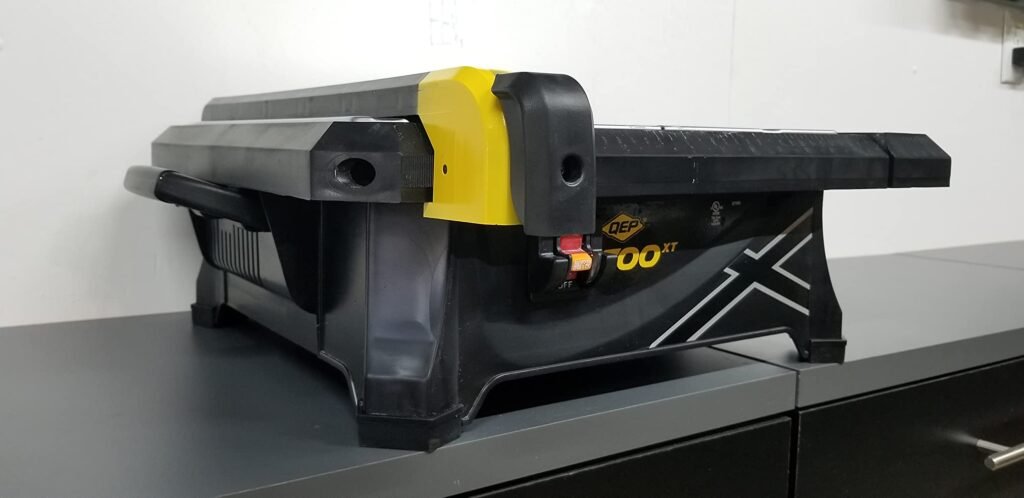
The QEP 22700Q rounds out the guide as a practical portable tabletop saw designed for DIYers and light professional use. The built-in carrying handle and compact footprint make it easy to transport from garage to jobsite and back without a dedicated cart or stand. QEP has a long history in tile tools, and this model reflects the brand's focus on straightforward functionality.
We may earn a commission when you buy through this link, at no additional cost to you.
A 3/4 peak horsepower motor drives the 7-inch blade through ceramic, marble, stone, travertine, and porcelain up to 1.25 inches thick. The table extension adds surface area for supporting larger tiles during cutting, which improves stability and reduces the chance of the tile tipping mid-cut. Rip and diagonal cuts are possible on any tile size that fits within the extended surface.
The water recirculation channel captures water below the blade and returns it to the reservoir for reuse. This reduces the volume of water needed for a project and simplifies cleanup by containing slurry in one location. The compact design fits on standard workbenches and stores easily between projects without dedicated space.
A tile that hangs off the edge of a cutting table wants to tip during the cut, which can bind the blade and produce inaccurate cuts or damaged tiles. Table extensions provide additional support surface for the leading and trailing edges of larger tiles, keeping them flat throughout the cutting motion. If you regularly cut 12-inch or larger tiles, having a saw with an extension or a way to add temporary support to either side of the blade makes a noticeable difference in cut quality.
This saw is a fair choice for weekend DIY tile projects where portability and simple operation matter more than professional-grade features. The 3/4 HP motor handles residential tile without issue, though cutting through thick natural stone repeatedly may push it beyond its comfort zone. For a bathroom remodel or backsplash project, this portable unit delivers the essential capability at a reasonable price.
Not suitable for high-volume professional installation work or continuous heavy cutting.
We may earn a commission when you buy through this link, at no additional cost to you.
The right tile saw depends on the size of tiles you plan to cut, the material hardness, the volume of work, and where the cutting will happen. Matching these factors to the correct saw type saves money and prevents the frustration of running into capacity or power limits partway through a project.
Tile saws come with blade diameters ranging from about 4 inches on handheld models up to 10 inches on full-size tabletop saws. Blade size directly determines maximum cut depth and, combined with the cart and fence design, sets the maximum rip and diagonal capacities. A 7-inch saw typically handles tiles up to 12×12 inches for straight cuts and slightly less for diagonal cuts, which covers most standard residential tile work.
For large-format tiles that have become popular in modern design, you need a 10-inch saw with rip capacity of 24 inches or more. The DEWALT D24000S offers 28 inches of rip and 18 inches of diagonal capacity, while the D36000S extends that to 37 inches of rip capacity for tiles up to 36×36 inches. Trying to cut oversized tiles on a small saw leads to awkward workarounds like score-and-snap methods that risk breaking expensive material.
Measure the largest tile you plan to cut before choosing a saw. Add at least an inch of clearance on the rip capacity to account for offset cuts, and match the diagonal capacity to your largest tile’s diagonal dimension if you plan miter cuts.
Wet tile saws use water to cool the blade during cutting, which dramatically extends blade life and reduces the fine dust cloud produced by dry cutting. The water also helps carry away debris from the cut line, producing cleaner edges with less chipping on glazed surfaces. Nearly all tabletop and full-size tile saws are wet saws for these reasons.
Dry cutting is faster to set up since there is no water reservoir to fill and no slurry to clean up afterward, but it produces significant airborne dust that becomes a health concern with silica-containing materials like porcelain and stone. OSHA regulations now require dust control measures for commercial cutting operations, and wet cutting is one of the approved methods. For any project involving more than a few cuts, wet cutting is the safer and cleaner choice.
If you must cut dry occasionally, wear a properly fitted respirator rated for silica dust and work outdoors or in a well-ventilated area. For any regular tile work, invest in a wet saw and factor cleanup time into your project schedule.
Motor power in tile saws is measured in amps, horsepower, or watts, and higher numbers translate to more consistent cutting speed under load. A 15-amp motor in a saw like the DEWALT D36000S can push through dense porcelain and thick stone without slowing noticeably, while smaller motors in budget saws may bog down or overheat during extended cutting.
For occasional residential use with standard ceramic and porcelain tile, a 7-inch saw with a 3/4 to 1 HP motor provides adequate power. For continuous professional use or cutting hard materials like natural granite and dense porcelain, step up to a 15-amp full-size saw with 1.5 HP or more. Underpowered saws not only slow you down but also produce lower quality cuts because the blade heats up and dulls faster when it struggles.
Match motor power to your material hardness and cutting volume. Buying more power than you need adds cost and weight, but underpowered saws create frustration and lower quality results on demanding materials.
Water management varies widely between tile saws and significantly affects the mess your project creates. Basic tabletop saws use an open reservoir under the blade that catches most water but allows spray to escape during cutting. Higher-end saws add water trays around the cutting cart, splash guards to redirect spray away from the operator, and containment systems that capture slurry from the full cutting path.
The DEWALT D36000S is designed to fully contain water from 18×36 and 24×24 tiles within its tray system, keeping the work area cleaner than open designs. Handheld wet saws like the DEWALT DWC860W feed water through a hose directly to the blade rather than dunking the blade in a reservoir. Each approach has tradeoffs in complexity, cleanup time, and how well it contains slurry.
If you work indoors or in occupied spaces, prioritize saws with comprehensive water containment. For outdoor work or dedicated shop spaces, simpler reservoir designs are adequate and easier to clean between projects.
Tile saw weight ranges from under 10 lbs for handheld units to over 90 lbs for full-size professional saws with rip capacities of 30-plus inches. Weight directly affects how easily you can transport and set up the saw, which matters for contractors working across multiple jobsites and DIYers moving the saw between garage storage and the work area.
Wheel-equipped stands like the one included with the DEWALT D24000S make heavy saws manageable for a single person to move on smooth surfaces. Compact tabletop saws in the 30-45 lb range fit on standard workbenches without dedicated stands, which suits home DIY use. Handheld saws under 10 lbs are the most portable option for onsite trim work but require a stable surface or clamped guide for straight cuts.
Consider both the transport situation and the workspace when evaluating portability. A saw that fits through a 30-inch door frame like the DEWALT D36000S is much easier to use in interior remodel work than one that requires disassembly to move indoors.
Accurate cuts require both a stable cutting platform and reliable guides to align the tile with the blade. Cutline indicators, laser or infrared guide lines, adjustable rip fences, and miter gauges all contribute to precision. The DEWALT D24000S and D36000S maintain accuracy within 1/32 inch over their full cutting length thanks to rigid frames, stainless steel rollers, and precision cutline indicators.
Bevel adjustment capability matters for edge treatments and coping cuts where two tiles meet at an angle. All quality tile saws offer 0 to 45 degree bevel range, often with detent stops at common angles like 22.5 and 45 degrees for repeatable settings. For most residential tile work these features are essential; for basic straight cuts on plain floor tile they matter less.
Prioritize accuracy features if you plan visible work like backsplashes, feature walls, or intricate patterns where misaligned cuts will show. For utilitarian work in less visible areas, basic guides are usually sufficient.
Set up your tile saw on a level, stable surface with adequate space around the cart for the tile to travel through the full cut. Fill the water reservoir before starting and verify that water is flowing to the blade once the saw is running. Position the rip fence for your desired cut width, and always feed the tile slowly and steadily through the blade rather than forcing it. Let the blade cut at its own pace to prevent overheating and premature dulling of the diamond edge.
After each cutting session, drain the water reservoir and rinse the cart, blade, and cutting deck to remove tile slurry before it dries. Dried slurry cakes onto surfaces and becomes difficult to remove, and it can gum up moving parts like sliding cart rails and bevel adjustments. Wipe the blade with a soft cloth to remove residue, and inspect it for chips or missing diamond segments that would indicate replacement is needed.
Store the saw in a dry location with the blade removed if the storage period will exceed a few weeks, which prevents corrosion around the arbor and bearings. Keep spare blades and accessories in a dedicated storage box or the saw’s integrated storage compartments so they travel with the tool. For cordless models like the Makita XCC01Z, remove the battery during long-term storage and follow the manufacturer’s charging recommendations to preserve battery life.
A wet saw is strongly recommended for any project involving more than a handful of cuts. Water cooling extends blade life, produces cleaner cuts with less chipping, and dramatically reduces the silica dust that dry cutting creates. Dry cutting is faster to set up but produces significant airborne dust that becomes a serious health concern. For occasional trim cuts on a single tile, a manual score-and-snap cutter can work, but for actual tile installation a wet saw is the right tool.
A 7-inch tabletop saw like the SKIL 3540-02 or PORTER-CABLE PCE980 handles most standard bathroom tiles, which are typically 12×12 inches or smaller. If you plan to use larger format tiles like 18×18 inches or subway tiles longer than 8 inches, step up to a 10-inch saw with more cutting capacity. Measure the diagonal of your largest tile and add clearance before choosing a saw.
Yes, most wet tile saws can cut natural stone with the appropriate diamond blade. Stone-specific blades are formulated differently than ceramic blades and typically feature a continuous rim design rather than segmented edges. Cutting stone requires slower feed rates and consistent water flow to prevent overheating. Verify that your saw's motor is powerful enough for the stone thickness you plan to cut, since dense granite demands more power than softer marble.
Diamond blade life varies widely based on the material being cut, the quality of the blade, and how consistently water cooling is maintained. A quality blade cutting standard ceramic tile with proper water flow can last through hundreds of cuts, while cutting dense porcelain or stone shortens that lifespan considerably. Signs a blade needs replacement include increased chipping, visibly worn diamond segments, and noticeably slower cutting speed.
Modern cordless tile saws like the Makita XCC01Z deliver enough power for most masonry and tile cutting tasks, but they are typically smaller in cutting capacity than full-size corded units. The tradeoff is mobility versus maximum capability. Cordless saws work best for onsite trim cuts and light installation work, while corded tabletop and full-size saws handle high-volume production cutting more efficiently.
A stand improves cutting accuracy by keeping the saw at a comfortable working height and providing stable footing during use. Full-size saws like the DEWALT D24000S and D36000S come with stands designed specifically for the saw. Tabletop saws can be used on any sturdy workbench or table but benefit from a dedicated stand if you use the saw frequently. Cutting on the ground is possible but leads to back strain and reduced accuracy.
Most tabletop and full-size wet saws use recirculating water systems that hold between 1 and 5 gallons in the reservoir. The water is pumped continuously to the blade and returns to the reservoir, so consumption is minimal aside from evaporation and what leaves with the cut tile. Handheld saws with hose connections use fresh water throughout the cut and consume more, so plan for a nearby water source.
Yes, but the quality of the cut depends heavily on the blade rather than the saw itself. Standard blades that ship with entry-level saws may struggle with dense porcelain and produce chipped edges. Upgrading to a porcelain-specific diamond blade with a fine, continuous rim dramatically improves results. Feed the tile slowly to prevent chipping and let the blade do the work without applying excessive pressure.
Safety glasses are essential to protect against water spray and small tile chips. Hearing protection is recommended for extended cutting sessions since motor and cutting noise can exceed safe exposure levels. Waterproof gloves protect your hands and improve grip on wet tiles, and a rubber mat under the saw reduces slipping. If cutting dry, add a properly fitted respirator rated for silica dust to your protective equipment.
Chipping on glazed surfaces typically comes from feeding the tile too fast, using a dull or wrong-type blade, or cutting without adequate water cooling. Use a fine-toothed porcelain blade for glazed tiles, feed the tile slowly and evenly, and verify water flow throughout the cut. Some installers score the glazed surface with a light initial pass before making the full-depth cut, which reduces chipping at the entry point of the blade.
The DEWALT D24000S earns the top overall recommendation for its combination of 28-inch rip capacity, precision cutline indicator, rolling stand, and complete accessory package. It delivers the accuracy and capacity that professional tile installers rely on while remaining transportable and usable for serious DIY projects. The included porcelain blade and multiple water trays mean it is ready to work out of the box.
Buyers with different needs have several strong alternatives. The SKIL 3540-02 offers a compact tabletop design at a budget-friendly price for occasional home projects. The DEWALT D36000S extends cutting capacity to 37 inches for professional installers working with large-format tiles. The Makita XCC01Z brings cordless freedom to tradespeople already invested in the 18V LXT platform, and handheld saws like the DEWALT DWC860W complement stationary saws for onsite trim work.
Before deciding, identify your largest expected tile size, the volume and frequency of cutting you will do, and whether you need portability between jobsites. Match those requirements to the blade capacity, motor power, water containment, and mobility features that fit your workflow. Investing in the right saw for your actual work saves money and produces better results than buying too much or too little capacity.