Hopwell 13" 15-Note
9.2Editor scoreThirteen inch shell diameter
Fifteen D Major notes
Fade resistant painted finish
Includes mallets and bag
Find the right steel tongue drums for 2026. We compare 10 standout options by build quality, useful features, owner feedback, value, and everyday trade-offs.
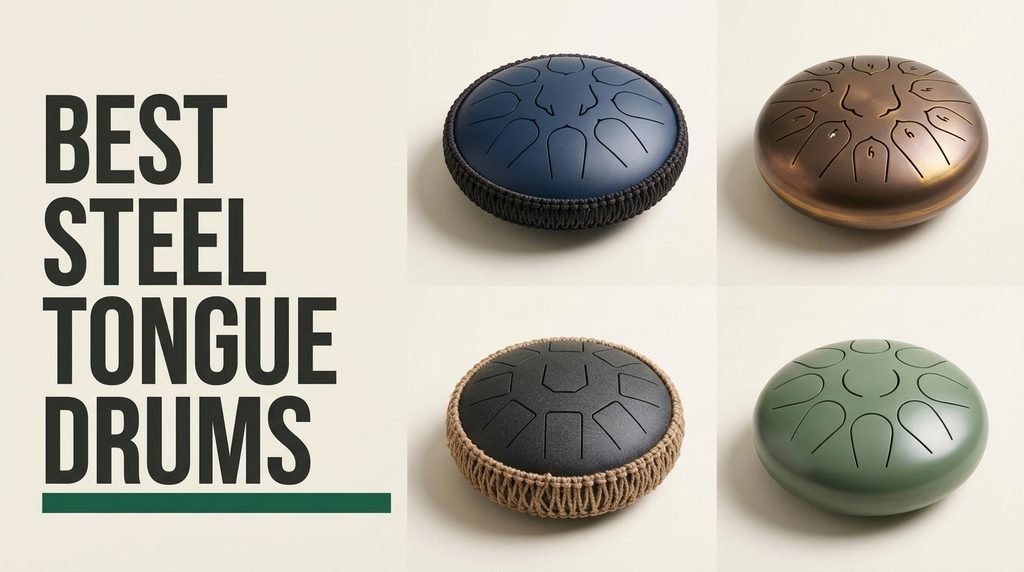
Find the right steel tongue drums for 2026. We compare 10 standout options by the factors that matter in this category, such as scale tuning, note capacity, shell diameter, alloy metallurgy, overtone resonance, mallet response, portability, and everyday trade-offs between intuitive meditation instruments and wide-range melodic percussion.
Choosing between a compact eight-note minor drum and an expansive fifteen-note or seventeen-note vessel dramatically changes what you can play. While smaller pentatonic models prevent discordant notes during eyes-closed mindfulness sessions, larger diatonic shells unlock complex sheet music, fuller bass resonance, and responsive finger-striking ergonomics for expressive solo performances.
Material composition and acoustic engineering also separate lasting instruments from tinny novelties. Whether you prioritize weather-resistant stainless steel for outdoor sound baths, titanium alloy for crisp melodic articulation, or dual-octave tongue cuts that emulate a handpan, our comparison breaks down the specifications that shape tone, sustain, and playability.
We compared 10 steel tongue drums using the acoustic and physical details that actually help a buyer decide: musical scale and key, total note count, shell diameter, steel alloy composition, octave overtone engineering, mallet versus finger playability, included travel accessories, and overall value. The notes focus on practical trade-offs so each pick feels connected to how beginners, sound healers, educators, and percussionists actually practice, perform, and transport their instruments.


Compare key features, scores, and current prices side by side. A shorter feature list means fewer details were available, not necessarily fewer capabilities.


Many shoppers buy a steel tongue drum hoping for the lush, multi-layered harmonic shimmer of an artisan handpan, only to discover that standard single-pitch tongue drums sound closer to a metal xylophone or wind chime. The Meinl Sonic Energy 10-Inch Octave Steel Tongue Drum bridges that acoustic gap directly. Engineered by Meinl—a family-owned German percussion specialist founded in 1951—this instrument shapes each of its eight stainless steel tongues to resonate at two simultaneous octaves (one fundamental low pitch and one matched high octave) with every single strike.
We may earn a commission when you buy through this link, at no additional cost to you.
Tuned precisely to the deeply evocative F# Minor scale (F#3, A3, B3, C#4, D4, E4, F#4, A4), the drum eliminates any learning curve or fear of hitting a sour note. Every pitch naturally harmonizes with its neighbors, allowing sound therapists, yoga instructors, ASMR creators, and complete musical beginners to play hypnotic, immersive patterns within minutes. A major acoustic highlight is the mallet design: rather than hard bare rubber balls that create a sharp click on impact, Meinl includes wooden mallets topped with soft yarn-wrapped rubber heads that draw warm, blooming swells from the dual-octave tongues.
Physical construction and acoustic customization are equally thoughtful. Measuring 10 by 10 by 5.5 inches and weighing a substantial 4.1 pounds, the coated stainless steel vessel sits securely on integrated rubber feet on any hardwood floor or table. On the underside, a circular sound port comes fitted with a removable silicone plug, letting you switch between a focused, controlled decay (plug inserted) and a louder, more open low-end projection (plug removed).
The underside silicone sound plug acts as an instant acoustic filter. Leave the plug inserted when recording close-mic ASMR tracks or practicing in a small, reflective room to keep overtones tight and focused; pull the plug out when placing the drum on its feet in a larger yoga studio or classroom to let the F#3 bass fundamental breathe and project outward.
While an 8-note minor scale cannot play every chromatic pop song the way a 15-note D Major drum can, that limitation is intentional. By dedicating its 10-inch stainless steel surface to eight dual-octave F# Minor tongues and pairing them with yarn-wrapped mallets and a padded travel bag, Meinl delivers the richest, most authentic handpan-like voice in our comparison.
Players who want to follow numbered 15-note pop songbooks rather than intuitive minor-scale improvisation and sound healing.
We may earn a commission when you buy through this link, at no additional cost to you.
Players who want to progress beyond simple ambient improvisation into playing recognizable folk melodies, pop arrangements, and structured music scores need at least two octaves of diatonic notes. The Hopwell 13-Inch 15-Note Steel Tongue Drum sits in an appealing middle ground between standard 12-inch models and heavy 14-inch drums. Tuned in the bright, uplifting key of D Major, it gives beginners and experienced musicians alike the note variety required to perform complete songs without running into missing scale degrees.
We may earn a commission when you buy through this link, at no additional cost to you.
Stepping up to a 13-inch diameter shell provides a noticeable acoustic advantage when crowding 15 individual tongues onto the top playing surface. On smaller drums, squeezing 15 notes together can leave the high-pitch tongues feeling cramped and overly stiff, whereas this 13-inch acoustic chamber gives each cut tongue slightly more surface area and air volume underneath. The result is a fuller low-end resonance on the central bass notes and clearer separation when striking rapid melodic passages with the included mallets.
Day-to-day usability is straightforward even if you do not read traditional musical staff notation. Because the D Major tuning is harmonious and clearly laid out across the handcrafted navy blue shell, newcomers can follow the included music book right out of the box to build muscle memory. The exterior is coated in a pollution-free, fade-resistant paint finish that protects the metal from skin oils and household humidity while maintaining a clean aesthetic on a meditation altar or living room stand.
When a drum houses 15 tongues, striking accuracy matters—especially while learning with rubber mallets that have a wider bounce radius than bare fingertips. The extra inch of shell width over a 12-inch drum widens the target zone for each note and slows the decay of the higher octave pitches so melodies sound balanced from bottom to top.
The primary trade-off to consider is how you intend to play. Because a 15-note D Major scale includes every note of the diatonic major scale rather than a five-note pentatonic subset, striking two adjacent notes at random can occasionally produce mild musical tension if you are not paying attention. However, for learners who want an expressive, song-capable instrument with a resonant 13-inch body and included travel bag at a modest price, this Hopwell model hits an impressive sweet spot.
Travelers seeking an ultra-light backpack drum or meditative players who prefer a compact 8-note minor scale with zero chance of dissonant intervals.
We may earn a commission when you buy through this link, at no additional cost to you.
Musicians and sound practitioners who want the fullest acoustic body and the most comfortable spacing for bare-finger playing within the D Major scale should look closely at the Hopwell 14-Inch 15-Note Steel Tongue Drum. While it shares the same 15-note D Major scale architecture as Hopwell's 12-inch and 13-inch models, upgrading to a 14-inch diameter shell crafted from titanium alloy changes both the tactile feel under your hands and the depth of the acoustic cavity.
We may earn a commission when you buy through this link, at no additional cost to you.
Titanium alloy is prized in higher-end tongue drums because its metallurgical density dampens the sharp, overly bright metallic clink sometimes heard on thin carbon steel shells, yielding a smoother, bell-like attack and a warm harmonic bloom. Combined with the 14-inch chamber volume, the lower register notes project with noticeably more warmth that fills a yoga studio or quiet living room without needing forceful mallet strikes. Furthermore, larger tongues have lower physical stiffness, which makes it much easier to coax clear tones using your fingertips or thumb pads.
Visually, the handcrafted malachite green surface is coated in pollution-free, non-fading paint that stands out as a decorative centerpiece when not in use. The package arrives ready for practice with paired drum mallets, a beginner-friendly music book, and a fitted carrying bag with handles for protected storage and transport to classes or acoustic jam sessions.
Because a 14-inch drum acts as a large Helmholtz resonator, notes continue ringing long after the initial mallet tap. When playing rapid melodic lines from the included songbook, resting the side of your palm gently near the outer rim or playing on a soft cloth pad helps tighten the decay so individual chord changes remain crisp and articulate.
Before choosing a 14-inch instrument, factor in two practical realities: physical bulk and acoustic sustain. A 14-inch steel vessel commands substantial lap space and carries more weight in your shoulder bag than a 10-inch or 12-inch drum. Additionally, because the large titanium alloy shell rings out for several seconds after each strike, playing very fast melodies with mallets can cause overlapping notes to blur together unless you lightly dampen the shell with your free hand. For players who value deep, enveloping sustain and roomy tongue spacing, this 14-inch model is a standout choice.
Young children with small laps or backpackers who need a compact, lightweight instrument for hiking.
We may earn a commission when you buy through this link, at no additional cost to you.
Practitioners who want to transition seamlessly between indoor mindfulness rooms, classroom music circles, and outdoor garden or patio sessions often worry about moisture damaging a standard carbon steel drum. The Plus 11-Inch Steel Tongue Drum in black is specifically built for inside and outside versatility, utilizing high-quality stainless steel sealed beneath a protective weather-resistant coating so morning dew, humid air, and outdoor gatherings do not immediately threaten the shell with oxidation.
We may earn a commission when you buy through this link, at no additional cost to you.
Measuring 11 inches across, this instrument occupies a golden ergonomic zone that many players prefer over both tiny 6-inch drums and bulky 14-inch vessels. An 11-inch shell rests comfortably on the knees of adults and older kids alike, yet provides enough internal acoustic volume to produce pure, hollow tones reminiscent of gongs, chimes, and marimbas. Stainless steel naturally sustains longer than basic carbon steel, lending an ethereal, floating quality to slow rhythmic patterns during yoga savasana or group sound baths.
Everything required to explore both mallet and hand playing styles comes in the box. Alongside a pair of mallets for effortless, resonant projection and a printed music book for structured learning, the kit includes finger picks that slip over your fingertips to help articulate notes without the calluses required for bare-hand percussion. A fitted travel bag keeps the black coated shell safe from scratches when moving from home to the park or therapy studio.
Standard carbon steel tongue drums can develop surface rust around the laser-cut tongue slots if exposed to damp outdoor air or garden moisture. By combining a stainless steel core with a protective outer coating, this 11-inch drum withstands patio retreats, camping trips, and outdoor yoga classes with far less maintenance anxiety.
The main trade-off here is price versus specification density: while you can find larger 12-inch or 14-inch painted drums for less money, you are paying here for corrosion-resistant stainless steel construction and a refined, hollow tonal profile suited for indoor/outdoor mindfulness work. If you prioritize durability across changing environments and a balanced 11-inch form factor, the Plus drum delivers dependable acoustic calm.
Strict sheet-music players who require a 15-note or 17-note extended diatonic layout for complex classical or pop transcriptions.
We may earn a commission when you buy through this link, at no additional cost to you.
Shoppers searching for the strongest balance of melodic capability, metallurgy quality, portability, and price will find our top value pick in the Hopwell 12-Inch 15-Note Steel Tongue Drum. While entry-level 6-inch or 8-note drums often leave burgeoning players wishing for missing scale notes once they learn a few melodies, this 12-inch drum provides the complete 15-note D Major arrangement at a price that barely exceeds basic mini drums.
We may earn a commission when you buy through this link, at no additional cost to you.
What sets this 12-inch model apart from generic carbon steel competitors is its titanium alloy shell construction. Handcrafted by master artisans, the titanium alloy resists corrosion while imparting a clean, bell-like purity to the D Major scale. With 15 notes spanning two full octaves, you can play both single-note melodies and two-mallet harmonic intervals, making it equally rewarding for absolute beginners following the included music book and experienced players arranging acoustic covers.
At 12 inches in diameter, the drum strikes an ideal portability balance. It fits comfortably into the included padded carrying case without weighing down your shoulder on commutes to music lessons, parks, or wellness gatherings, yet maintains enough internal chamber volume to produce a soothing, resonant voice. The pollution-free navy blue finish stays vibrant over years of handling and resists chipping under repeated mallet taps.
Because the shortest, highest-pitched tongues on a 12-inch 15-note drum have high metal tension, avoid pressing the mallet head down into the tongue. Instead, use a loose wrist flick so the rubber mallet bounces immediately off the outer third of the tongue tip, allowing the high pitch to ring clearly.
When comparing this 12-inch version against Hopwell’s 13-inch and 14-inch 15-note drums, the key trade-off is individual tongue size. Fitting 15 tongues onto a 12-inch top shell means the highest-pitched tongues are relatively compact, so you will get much cleaner, more consistent volume playing with the included rubber mallets than with bare fingers. For mallet players who want full 15-note song versatility in an easy-to-carry 12-inch titanium alloy shell, it is an exceptional value.
Percussionists who exclusively play with bare fingers and thumbs without mallets, who will prefer the wider tongues of a 14-inch shell.
We may earn a commission when you buy through this link, at no additional cost to you.
If you want an ultra-compact, low-cost musical companion for a garden patio, a child's music corner, or a camping backpack, this 6-Inch 11-Note Steel Tongue Drum offers an unbeatable entry price. Whereas most 6-inch mini drums only cut 8 tongues into the shell, this model arranges 11 notes in the key of D Major across its compact carbon steel body, expanding the number of simple nursery rhymes, folk tunes, and meditative riffs you can play.
We may earn a commission when you buy through this link, at no additional cost to you.
Acoustic physics dictate that a 6-inch carbon steel vessel sounds fundamentally different from a 12-inch or 14-inch handpan-style drum. Rather than deep, booming low-end resonance, this 6-inch drum produces bright, delicate, crystalline tones that mimic falling raindrops and tranquil wind chimes. That higher-register acoustic voice is why 6-inch carbon steel models have become famous as outdoor garden rain drums as well as soothing desk instruments for quick mental breaks between tasks.
Because 11 tongues are arranged around a 6-inch top surface, each individual tongue is quite slender. You will want to play this instrument using the two included narrow-head drumsticks rather than bare fingers, as the small rubber mallet tips let you target individual notes accurately without striking neighboring tongues. The box includes everything a beginner or young learner needs: the 6-inch drum, paired drumsticks, a convenient mallet stand holder, a printed music book, and a soft drawstring carrying pouch.
When placing this 6-inch drum outdoors in a garden or patio to catch heavy raindrops under eaves or foliage, set it on a flat, slightly elevated stone or wood surface where water cannot pool around the base. Once the rain stops, tip out any water collected inside the bottom sound hole and wipe the carbon steel shell dry with a soft cloth to preserve its finish and tuning.
Shoppers should keep expectations aligned with the 6-inch scale: it will not deliver the long, low-frequency chest vibration of a 10-inch Meinl or 14-inch Hopwell drum, and carbon steel should be wiped dry after outdoor rain exposure to prevent moisture spotting. As an ultra-portable, budget-friendly 11-note chime drum for kids, travelers, and garden spaces, however, it packs surprising fun into a tiny footprint.
Adults looking for deep, low-frequency bass resonance or bare-hand finger drumming.
We may earn a commission when you buy through this link, at no additional cost to you.
Many compact mini tongue drums suffer from two flaws: inconsistent pitch tuning and overcrowded tongues that make clean mallet strikes frustrating. The Meinl Sonic Energy 7-Inch Steel Tongue Drum solves both problems through smart acoustic restraint and high-grade materials. Instead of cramming 11 or 13 tiny tongues onto a small body, Meinl pairs a 7-inch coated stainless steel shell with eight well-proportioned tongues tuned to a serene G Minor scale (G4, Bb4, C5, D5, F5, G5, Bb5, C6).
We may earn a commission when you buy through this link, at no additional cost to you.
Because every note in this G Minor progression harmonizes effortlessly with the rest of the scale, there are literally no wrong notes regardless of the sequence you tap. Striking the tongues with the included rubber-headed wooden mallets produces a delicate, airy, wind-chime-like voice that shimmers without harsh metallic overtones. Operating in the fourth, fifth, and sixth octaves, the sound cuts gently through quiet spaces, making it a favorite for yoga instructors cueing transitions, classroom teachers calming students, and therapists guiding mindfulness exercises.
Portability and build refinement are top-tier. Measuring just 7 by 7 by 2.6 inches and weighing a mere 1.3 pounds, it slips effortlessly into a tote bag, desk drawer, or carry-on suitcase inside its included drawstring travel bag. The underside features a fitted protective cap so you can set the stainless steel body down on glass desks, hardwood tables, or studio floors without scratching surfaces or choking the resonance.
Limiting a 7-inch drum to eight tongues preserves enough metal mass and width on every single tongue to maintain true pitch stability and pleasing sustain. It also makes the instrument far more approachable for children, seniors, and eyes-closed meditators who want effortless mallet accuracy.
The main distinction to keep in mind is acoustic register: a 7-inch vessel tuned from G4 to C6 delivers a light, celestial bell tone rather than the deep, grounding chest tones of Meinl’s 10-inch drums. If you want precision German tuning, stainless steel longevity, and foolproof G Minor tranquility in an ultra-portable 1.3-pound package, this 7-inch Meinl is the finest compact drum available.
Players who want deep 3rd-octave bass notes or a 15-note diatonic major scale for playing complex melodies.
We may earn a commission when you buy through this link, at no additional cost to you.
Sound bath facilitators, Reiki practitioners, and meditation teachers frequently build their instrument kits around the A4 = 432 Hz pitch standard—a slightly lower, warmer reference tuning than modern orchestral 440 Hz that pairs seamlessly with 432 Hz crystal singing bowls and chimes. The Meinl Sonic Energy 10-Inch Steel Tongue Drum in C Minor is purpose-built for this wellness community, combining 432 Hz calibration with a lush, introspective eight-note C Minor scale (G3, Bb3, C4, Eb4, F4, G4, Bb4, C5).
We may earn a commission when you buy through this link, at no additional cost to you.
Compared to Meinl’s smaller 7-inch G Minor drum (which starts at G4), this 10-inch wide by 4.7-inch high vessel drops the lowest note a full octave down to G3. That larger stainless steel acoustic chamber produces a much deeper, rounder fundamental tone that fills a room with warmth. Because all eight tongues are pre-tuned to complement one another within the C Minor scale, players of any background can weave tranquil, contemplative soundscapes intuitively without worrying about discordant intervals.
To ensure every strike sounds soothing rather than percussive, Meinl includes a pair of wooden mallets fitted with soft wrapped rubber heads that mute initial stick click and coax a gentle, sustained swell from the stainless steel tongues. Three protective rubber feet on the bottom elevate the shell slightly off hard floors or tables so the sound port can project freely, and a soft drawstring bag is included for storage and transport.
Because most standard tongue drums are tuned to A4 = 440 Hz, playing them alongside 432 Hz quartz crystal bowls or Tibetan singing bowls creates an audible wavering dissonance. Choosing this 432 Hz C Minor drum ensures your melodic percussion locks into pure harmonic alignment with 432 Hz sound healing setups.
When choosing between this 10-inch Meinl and the 10-inch Meinl Octave model, consider two factors: budget and tuning needs. This C Minor drum saves you half the cost and gives you true 432 Hz tuning, whereas the Octave model costs twice as much to add dual-octave overtone cuts in F# Minor. If you want an authentic 432 Hz stainless steel instrument with deep G3-to-C5 warmth for sound baths and meditation, this model is purpose-made for your practice.
Ensemble musicians who plan to play alongside standard 440 Hz guitars, keyboards, or orchestral instruments.
We may earn a commission when you buy through this link, at no additional cost to you.
Buyers shopping for a thoughtful, ready-to-play musical gift or a 12-inch 15-note instrument that is genuinely comfortable to carry on foot will appreciate the Donner 12-Inch 15-Note Steel Tongue Drum. Known widely for accessible musical instruments, Donner constructs this 12-inch shell from thickened carbon steel that undergoes a specialized double heat-treatment process. That metallurgical treatment relieves internal metal stress created during stamping and laser cutting, helping the 15 tongues hold stable pitch and resonate with a warm, lingering sustain.
We may earn a commission when you buy through this link, at no additional cost to you.
With 15 clearly arranged notes spanning an expanded tonal range, the drum bridges the gap between simple relaxation and full melodic performance. Beginners can apply the included adhesive note stickers directly onto the tongues and follow the songbook step by step, while more experienced players have the note density needed to play two-handed chords and expressive melodies using either the paired rubber mallets or the included fingertip picks.
Where Donner excels in everyday convenience is the transport and accessory bundle. Because the thickened 12-inch steel drum weighs a substantial 2.62 kg (nearly 5.8 pounds), carrying it long distances in a thin single-strap tote bag can tire your shoulder. Donner solves this by including a dedicated carry backpack equipped with dual shoulder straps and a top grab handle, alongside a mallet rest holder and even a blank greeting card for gifting. The subtle white shimmer finish gives the instrument a clean, modern look that fits bright home decor and wellness studios.
Untreated carbon steel shells often exhibit uneven sustain or harsh overtones because forming the curved bowl creates tension inconsistencies across the metal. Subjecting the thickened steel shell to double heat treatment anneals the metal grain, softening shrill high-frequency ring and extending the fundamental note decay.
Compared to the 12-inch Hopwell titanium alloy drum, the Donner is slightly heavier and built from double heat-treated carbon steel rather than titanium alloy, but it upgrades your carrying experience to a true dual-strap backpack and presents a distinctive white shimmer aesthetic. For gift givers, educators, and commuting players, it is a remarkably complete package.
Outdoor players who plan to leave the drum exposed to damp patio weather where carbon steel requires moisture care.
We may earn a commission when you buy through this link, at no additional cost to you.
Most multi-note tongue drums on the market are tuned to bright D Major or C Major scales—which work well for cheerful folk songs, but lack the mystical, emotionally stirring minor tonality that makes traditional handpan music so captivating. The MOOZICA 14-Inch 17-Note Steel Handpan Tongue Drum is engineered specifically for players who want that authentic minor handpan voice combined with a massive 17-note melodic compass.
We may earn a commission when you buy through this link, at no additional cost to you.
At the heart of this instrument is the celebrated D-Kurd (D Minor) scale, anchored by a deep central D3 bass note (D3, A3, Bb3, C4, D4, E4, F4, G4, A4 and extending across 17 total pitches). Used by thousands of handpan performers worldwide, the D-Kurd heptatonic scale blends soulful minor warmth with versatile chord progressions. Better still, MOOZICA incorporates an octave overtone design into every individual metal tongue: an internal secondary cut within each tongue allows it to vibrate at both its fundamental pitch and an octave harmonic simultaneously, supercharging the shell’s Helmholtz resonance.
Because the drum measures a full 14 inches across, the tongues have enough physical length and responsiveness to be played expressively with your bare fingers and thumbs as well as with the included drumsticks. Whether you are a seasoned musician composing intricate two-handed finger grooves or a non-musician tapping out intuitive, meditative patterns after work, the D-Kurd tuning keeps every combination sounding cohesive. The kit arrives complete with a padded carrying case, learning manual, drumsticks, and finger sleeves.
Unlike cheerful major scales that can sometimes feel overly bright during deep meditation, the D-Kurd natural minor scale evokes a grounded, cinematic atmosphere while still containing major chord triads (like Bb Major, C Major, and F Major) within its 17 notes. That harmonic duality lets you shift effortlessly from contemplative minor moods to uplifting resolutions on a single instrument.
Choosing between the MOOZICA 14-inch 17-note D-Kurd and the Meinl 10-inch 8-note Octave drum comes down to scale breadth versus simplicity. While the 8-note Meinl is smaller and completely effortless for compact travel, the 14-inch MOOZICA gives you more than double the notes (17 vs. 8) and a deeper D3 bass fundamental at the exact same price point. For serious learners and expressive players, it is the premier melodic minor instrument in our lineup.
Minimalist travelers who want a small, lightweight 7-inch or 10-inch drum with only 8 notes to memorize.
We may earn a commission when you buy through this link, at no additional cost to you.
Finding the ideal steel tongue drum requires matching the instrument’s scale tuning, note capacity, shell size, and metal alloy to whether you plan to improvise during meditation or play structured melodies from sheet music.
The musical scale and key of a steel tongue drum dictate its emotional character long before you learn your first rhythm pattern. Broadly, tongue drums fall into two tonal families: Major scales (most commonly D Major or C Major) and Minor scales (such as D-Kurd / D Minor, F# Minor, C Minor, and G Minor). Major-key drums—like the Hopwell 12-inch, 13-inch, and 14-inch D Major models—produce a bright, cheerful, and familiar sound profile. Because Western music education, folk tunes, hymnals, and popular songs are predominantly written in major keys, a D Major drum is the most practical choice if your goal is playing recognizable songs from numbered music books.
Minor-key drums—such as the Meinl Sonic Energy F# Minor Octave, Meinl G Minor, Meinl C Minor, and the MOOZICA 17-Note D-Kurd—deliver a completely different emotional palette. Minor scales sound introspective, dreamy, grounding, and cinematic, which is why sound therapists, yoga teachers, and handpan enthusiasts overwhelmingly favor minor tunings for meditation and stress relief. Beyond the scale mode, pay attention to the reference pitch standard: most drums are calibrated to standard concert pitch (A4 = 440 Hz) so they can play in tune with guitars and pianos, whereas specialized sound-healing instruments like the Meinl 10-inch C Minor are tuned to A4 = 432 Hz to blend harmoniously with 432 Hz crystal singing bowls.
To make the right choice, ask yourself what you want to hear when you strike the drum. Choose a D Major model if you want an upbeat tone and plan to play familiar songs from sheet music, or select a Minor scale (F# Minor, G Minor, C Minor, or D-Kurd) if you want a deeply tranquil, cinematic soundscape for meditation, yoga, or handpan-style improvisation.
Shoppers often assume that more notes automatically make a better steel tongue drum, but note count involves a direct trade-off between melodic range and intuitive, mistake-free playability. Drums with 8 notes—like the Meinl Sonic Energy 7-inch and 10-inch models—typically omit semitone intervals that clash against one another. Because every single tongue harmonizes with every other tongue on the shell, an 8-note drum has zero wrong notes. You can play with your eyes closed during meditation, hand the instrument to a young child, or record ambient ASMR swells without ever accidentally striking a dissonant interval.
Stepping up to 11, 15, or 17 notes expands the instrument into a full diatonic scale spanning one and a half to more than two octaves. Having 15 notes (as found on the Hopwell and Donner drums) or 17 notes (on the MOOZICA D-Kurd) unlocks complex melodies, chord accompaniments, and complete musical arrangements that simply cannot be played on an 8-note drum. However, packing 15 or 17 notes onto a steel shell means adjacent scale degrees sit right next to each other, requiring more visual focus and mallet control so you strike the exact note your song requires.
Prioritize an 8-note drum if your primary goal is effortless, eyes-closed mindfulness, sound therapy, or stress-free improvisation. Choose an 11-note, 15-note, or 17-note drum if you want to learn structured songs, follow numbered notation books, or compose wide-ranging musical pieces.
A steel tongue drum functions as an acoustic Helmholtz resonator: when you strike a laser-cut metal tongue on top, the sound wave bounces inside the hollow steel belly and projects outward through the bottom sound hole. Because of this physical principle, shell diameter (ranging from 6 inches to 14 inches in our guide) directly governs bass depth, sustain duration, and tongue size. Compact 6-inch and 7-inch drums have small internal air chambers that naturally emphasize upper-register frequencies (4th to 6th octaves), producing a delicate, wind-chime or raindrop tone that never overwhelms a quiet bedroom or apartment.
Mid-sized 10-inch, 11-inch, and 12-inch drums expand the internal air cavity enough to support warm 3rd-octave fundamental notes (like F#3 and G3) while remaining compact enough to carry comfortably in a backpack or shoulder bag. Large 13-inch and 14-inch vessels (such as the Hopwell 14-inch and MOOZICA 14-inch D-Kurd) deliver the deepest bass resonance, longest sustain, and widest individual tongues. Tongue width is especially critical if you want to play with your bare hands and fingertips rather than mallets: smaller tongues on 6-inch to 12-inch multi-note drums have high metal tension that responds best to rubber mallets, whereas the longer, wider tongues on a 14-inch drum flex easily under finger taps and slaps.
Match the diameter to your travel habits and playing style. Pick a 6-inch or 7-inch drum for ultra-light travel and high chime tones, a 10-inch to 12-inch drum for an all-around balance of warm resonance and portability, or a 13-inch to 14-inch drum for deep studio sustain and responsive bare-finger playing.
The metal alloy used to form a tongue drum shapes both its acoustic timbre and its resistance to environmental wear. Across the market, you will encounter three primary materials: carbon steel, titanium-steel alloy, and stainless steel. Standard carbon steel—used in the budget 6-inch 11-note drum and thickened, double heat-treated in the Donner 12-inch drum—offers a bright, clear attack and accessible pricing. When carbon steel is thickened and double heat-treated, internal manufacturing stresses are relaxed, yielding warm sustain; however, carbon steel relies on its outer paint coating to prevent rust and should always be kept dry.
Titanium alloy—featured in the Hopwell 12-inch, 13-inch, and 14-inch drums—blends titanium with steel to increase corrosion resistance and refine the overtone spectrum. Titanium alloy naturally dampens the sharp metallic ring that can accompany hard mallet strikes, producing a smooth, velvety melodic voice. Coated stainless steel—used across all three Meinl Sonic Energy models and the Plus 11-inch indoor/outdoor drum—represents the pinnacle for longevity and long, shimmering sustain. Stainless steel naturally resists oxidation and humidity shifts, making it the safest metallurgy for outdoor patios, humid climates, and intensive professional sound bath use.
If you plan to play strictly indoors on a budget, painted carbon steel or titanium alloy offers outstanding tonal value. If you practice outdoors, live in a humid coastal region, or want maximum corrosion protection with long sustain, invest in a coated stainless steel model.
One of the most important technical distinctions among modern steel tongue drums is whether each tongue is cut for a single pitch or engineered with an octave overtone profile. On a traditional steel tongue drum, each U-shaped or lotus-shaped tongue vibrates primarily at one fundamental frequency. While clean and melodic—especially when playing multi-note songs where excessive overtones could muddy fast passages—a single-pitch tongue lacks the complex harmonic chorus of a hand-hammered handpan.
To recreate that authentic handpan shimmer in a laser-cut tongue drum, advanced instruments like the Meinl Sonic Energy 10-Inch Octave Drum and the MOOZICA 14-Inch 17-Note D-Kurd use dual-octave tongue engineering. By cutting a precise secondary geometry inside each tongue, a single strike excites both the fundamental lower note and a matched octave overtone above it, enriching the Helmholtz resonance inside the shell. Additionally, features like the Meinl Octave drum’s removable underside silicone plug allow you to physically adjust the size of the bottom sound port to tighten or open up the low-end decay for different room acoustics.
If you want crisp, individual note clarity for playing sheet music melodies, a standard single-pitch 15-note drum is clean and articulate. If you crave the lush, multi-layered harmonic wash of a handpan for meditation and solo expression, choose a drum engineered with dual-octave overtone tongues.
The accessories included with a steel tongue drum have an immediate impact on how the instrument sounds and how easily you can learn and transport it. Pay particular attention to the mallets: small, firm rubber mallet heads (standard on compact 6-inch and 12-inch 15-note drums) provide pinpoint accuracy on narrow tongues and produce a bright, bell-like articulation. By contrast, larger wooden mallets with soft yarn-wrapped rubber heads—included with the Meinl 10-inch drums—soften the initial contact sound, drawing out a warm, gong-like bloom ideal for sound baths and ASMR.
For beginners and gift buyers, learning aids and carry bags add significant practical value. Numbered note stickers, printed songbooks, and fingertip picks (included with the Donner, Hopwell, Plus, and MOOZICA sets) allow non-musicians to start playing structured songs on day one and experiment with finger striking techniques. When evaluating carry bags on heavier 12-inch to 14-inch drums that weigh between 4 and 6 pounds, look for padded protection and consider whether you prefer a dual-strap carry backpack—like the one bundled with the Donner 12-inch model—over a basic drawstring pouch or single-handle tote.
Always match the included kit to the recipient: choose a complete bundle with note stickers, songbook, and backpack or padded case for beginners and students, or prioritize specialized yarn-wrapped mallets and protective rubber feet for professional meditation and sound healing work.
To get the richest acoustic resonance from your steel tongue drum, pay close attention to both placement and striking technique. Never place a drum with an open bottom sound hole flat onto a thick pillow, plush carpet, or blanket unless the drum has elevated rubber feet, as blocking the underside port chokes the airflow and deadens the bass response. Instead, rest the drum across your knees while seated or set it on its integrated rubber feet on a hard surface. When playing with mallets, hold the sticks loosely between your thumb and index finger and let the mallet head bounce immediately off the outer tip third of the tongue—pressing the mallet down into the steel stops the vibration and mutes the note.
If you want to transition from mallets to bare-hand or finger playing on a larger 11-inch to 14-inch drum, use a quick, snapping tap with the fleshy pad of your index finger or the side of your thumb near the tip of the tongue, pulling your finger away the instant you make contact. Beginners who find bare-finger striking quiet at first can slip on the silicone finger picks included with many kits to gain brighter projection while developing wrist snap and finger agility. If your drum includes adhesive number stickers, clean the tongue surface with a dry microfiber cloth before applying them near the base of the tongue where they will not dampen the vibrating tip.
Routine maintenance keeps the steel shell tuned and corrosion-free for decades. After every playing session—especially if you played with bare hands or used the drum outdoors—wipe the entire shell down with a clean, dry microfiber cloth to remove skin oils, sweat, and moisture. Even coated carbon steel and titanium alloy drums should be stored indoors in their padded carrying bag away from extreme heat or damp basements, and if you ever desire extra surface protection on a carbon steel drum after months of use, rubbing two drops of mineral oil or sewing machine oil onto a cloth and buffing a microscopic film across the shell helps repel humidity.
No prior musical training is required to play a steel tongue drum. Because the tongues are pre-tuned to a specific harmonious scale, tapping notes in almost any order produces pleasant, soothing sounds—especially on 8-note minor drums where dissonant intervals are completely absent. For 11-note, 15-note, and 17-note drums that include music books, the songs are written using simple numbered notation that matches the numbers on the tongues, allowing total beginners to play complete songs within minutes.
The scale determines the mood and musical repertoire of the instrument. A D Major drum has a bright, uplifting, and cheerful sound that matches most traditional folk songs, nursery rhymes, hymns, and pop melodies found in beginner songbooks. A Minor scale drum (such as D-Kurd, F# Minor, C Minor, or G Minor) creates a deep, dreamy, introspective, and mysterious atmosphere that is heavily favored for meditation, yoga, sound healing, and handpan-style improvisation.
Both techniques work well, depending on the size of the drum and the sound you want. Playing with rubber mallets is easiest for beginners and works across every drum size from 6 inches to 14 inches, producing a loud, pure, bell-like sustain with minimal effort. Bare-finger and hand playing offers more rhythmic nuance and percussive expression, and works best on larger 12-inch to 14-inch drums—especially models with octave overtone tongues like the MOOZICA 14-inch D-Kurd—where the longer tongues vibrate easily under finger taps.
While a steel tongue drum placed under falling raindrops produces soothing, chime-like tones, you should pay close attention to the metal material and moisture exposure. Coated stainless steel models (like the Plus 11-inch Indoor/Outdoor drum or Meinl Sonic Energy drums) resist moisture far better than standard painted carbon steel drums. Regardless of the material, avoid letting water pool inside the drum for days on end; after a rain shower, empty any accumulated water out of the sound hole, wipe the shell dry, and bring it under cover to preserve the finish and tuning.
An 8-note drum is intentionally designed for simplicity and mistake-free harmony: by limiting the scale to eight complementary pitches, every tongue remains wide and easy to strike, and you can improvise freely with your eyes closed without ever hitting a clashing note. A 15-note or 17-note drum spans two full octaves of a diatonic scale, giving musicians the complete range of notes required to play complex melodies and structured sheet music, though it requires more accuracy when targeting specific tongues.
On a standard steel tongue drum, each tongue vibrates primarily at one single pitch. On an octave steel tongue drum—such as the Meinl Sonic Energy 10-Inch Octave Drum or the MOOZICA 14-Inch 17-Note D-Kurd—each tongue features a specialized double-cut geometry tuned so that a single strike sounds both the fundamental note and a matching octave overtone above it. That dual-frequency vibration mimics the compound harmonic tuning of a traditional hand-hammered handpan.
Most modern musical instruments are tuned to the international standard where the note A4 vibrates at 440 Hz. A 432 Hz drum is calibrated slightly lower (with A4 at 432 Hz), resulting in a softer, warmer pitch center that many sound healers, yoga teachers, and meditation practitioners find deeply relaxing. It also allows the drum to play perfectly in tune alongside 432 Hz quartz crystal singing bowls and chimes during sound baths.
Steel tongue drums hold their factory tuning remarkably well for years because the pitch is set by the physical length and thickness of the laser-cut steel tongues. The only way to knock a tongue out of tune is by dropping the drum onto a hard floor, striking it excessively hard with bare wooden sticks or metal objects, or bending a tongue upward. Always play exclusively with your fingers or the included soft rubber mallets, and transport the drum inside its padded bag.
For young children, a compact 6-inch or 7-inch drum—like the 6-inch 11-note D Major drum or the 1.3-pound Meinl 7-inch G Minor drum—is light enough to carry effortlessly and fits comfortably on a small lap or desk. For teens and adults, a 10-inch to 14-inch drum provides a much warmer, deeper acoustic tone and wider tongue spacing that feels natural for adult hands and extended practice sessions.
For players seeking the richest, most authentic handpan-like meditative tone right out of the box, the Meinl Sonic Energy 10-Inch Octave Steel Tongue Drum in F# Minor earns our top overall recommendation. By engineering each of its eight coated stainless steel tongues to resonate across two simultaneous octaves and pairing the shell with soft yarn-wrapped mallets and a removable underside sound plug, it produces an enveloping harmonic voice with zero learning curve.
Shoppers with different musical goals have compelling alternatives across our lineup. Musicians who want an expansive minor handpan scale capable of complex melodies and bare-finger expression will love the MOOZICA 14-Inch 17-Note D-Kurd with its octave overtone tongues, while buyers looking for a full two-octave D Major instrument to play songbooks will find standout value in the Hopwell 12-Inch, 13-Inch, and 14-Inch titanium alloy drums or the backpack-ready Donner 12-Inch 15-Note kit. For dedicated sound bath practitioners, the Meinl 10-Inch 432 Hz C Minor drum locks effortlessly into 432 Hz healing setups, the Plus 11-Inch stainless steel drum handles indoor and outdoor sessions reliably, and the Meinl 7-Inch G Minor and budget 6-Inch 11-Note drums deliver ultra-portable chime tones.
Before making your final choice, decide whether you prefer effortless minor-scale improvisation for mindfulness or a 15-to-17-note layout for learning structured melodies. Matching the scale mode, shell diameter, and steel alloy to how and where you plan to play guarantees a resonant, inspiring instrument you will reach for every day.