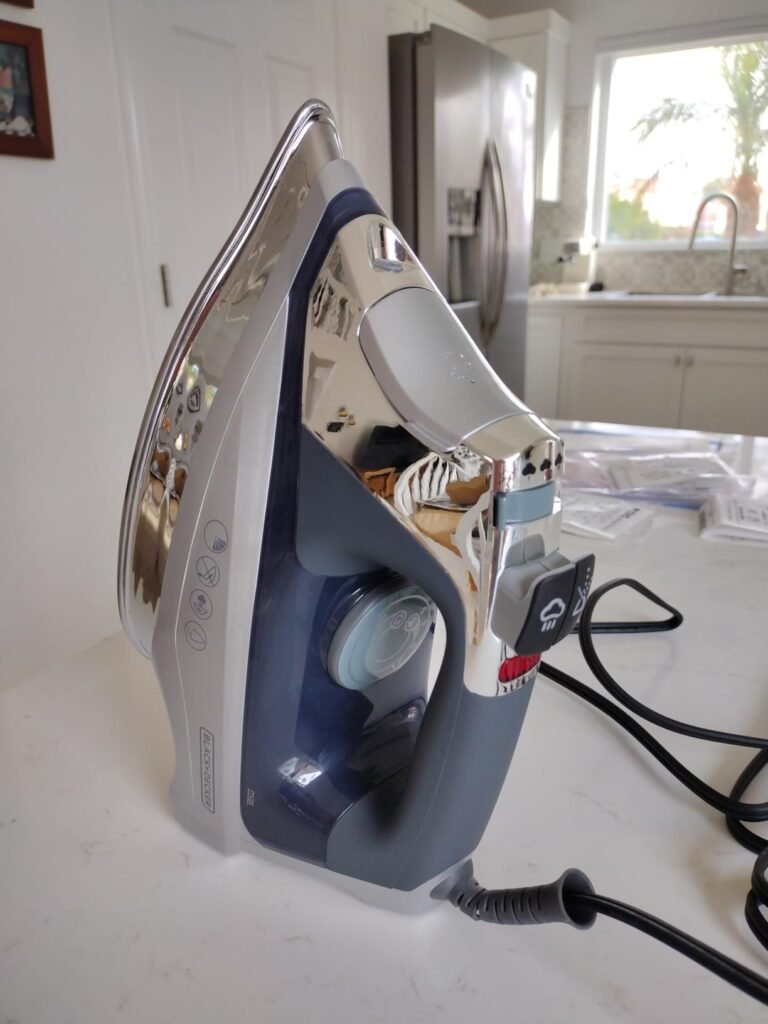
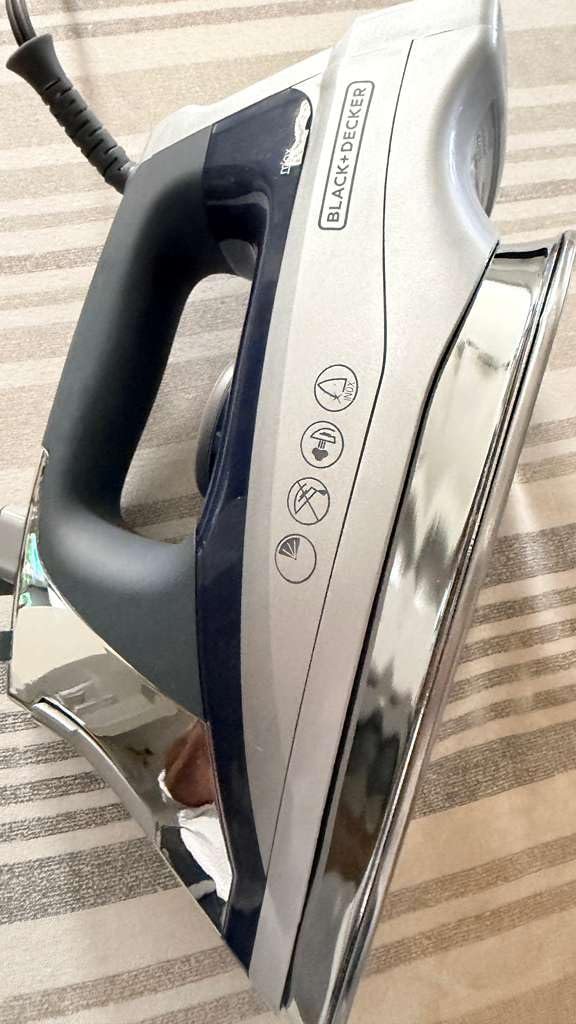
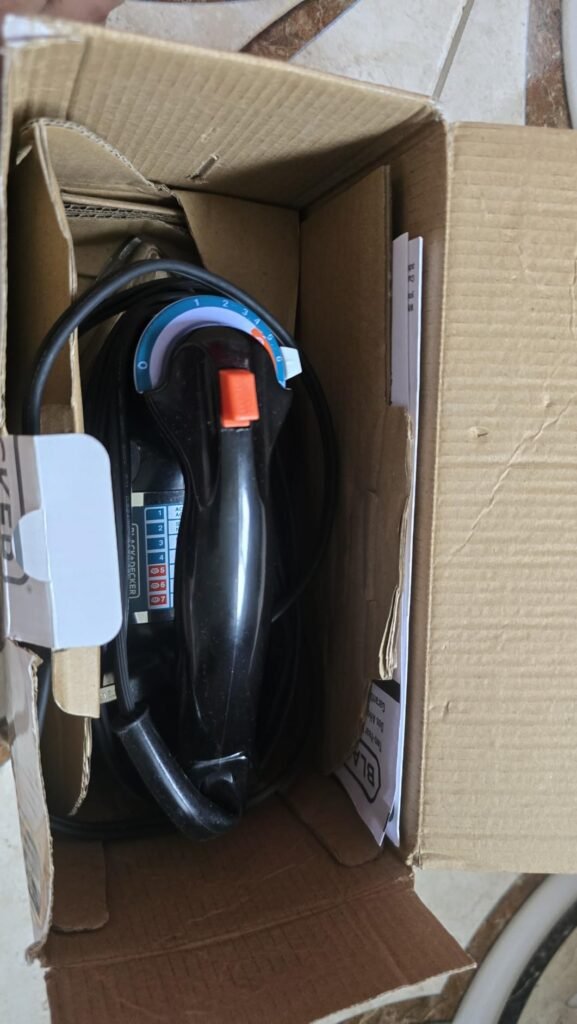
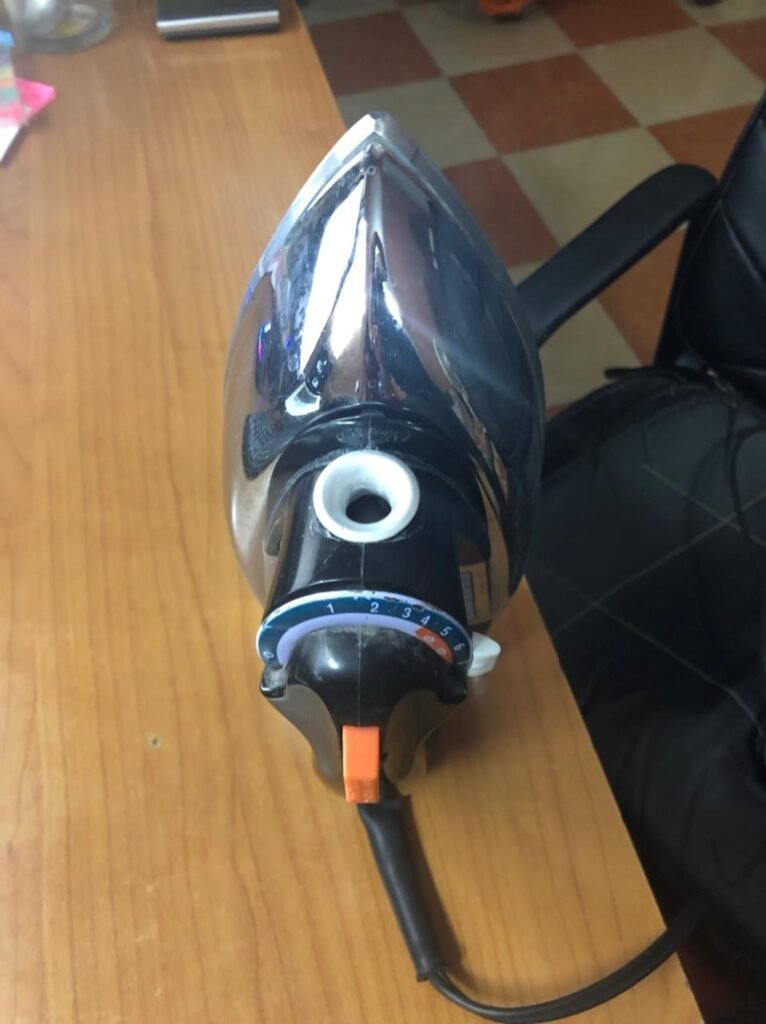
BLACK+DECKER TrueGlide
8.6Editor score1200W heating power
TrueGlide nonstick plate
3-way auto shutoff
Spray mist button
Find the right steam irons for 2026. We compare 10 standout options by build quality, useful features, owner feedback, value, and everyday trade-offs.
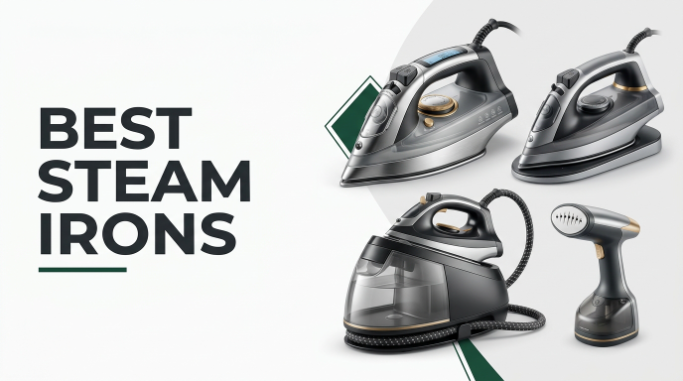
Find the right steam iron for your wardrobe in 2026. We compare 10 standout models by the factors that matter most: soleplate glide, steam output, wattage, water tank size, safety shutoff, fabric versatility, cord convenience, and everyday durability.
Not every iron handles heavy linen the same way it handles delicate silk. Wattage determines how fast the soleplate recovers heat, while steam hole count and burst strength affect how quickly stubborn creases release from thick fabrics.
Whether you iron a full basket of dress shirts each week or just need quick touch-ups before heading out, this guide breaks down the real trade-offs so you can pick a model that matches your routine and fabric mix.
We compared 10 steam irons using the details that actually help a buyer decide: soleplate material, steam output and burst rate, wattage, water tank capacity, auto-shutoff behavior, fabric settings, cord length, weight, anti-drip and anti-calc systems, and owner ratings. The notes focus on practical trade-offs so each pick connects to how people actually press clothes, linens, and delicates at home.

Compare key features, scores, and current prices side by side. A shorter feature list means fewer details were available, not necessarily fewer capabilities.




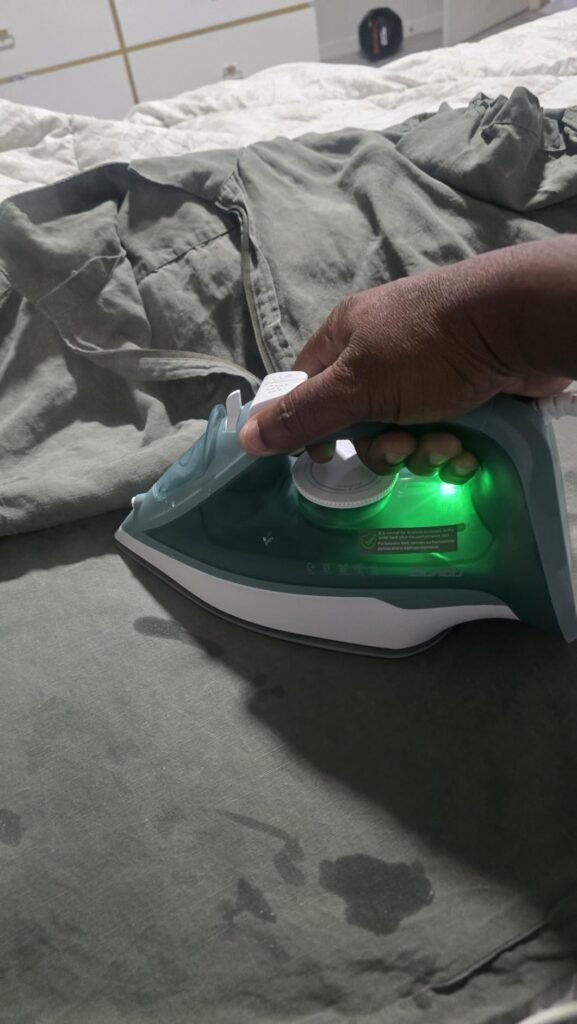
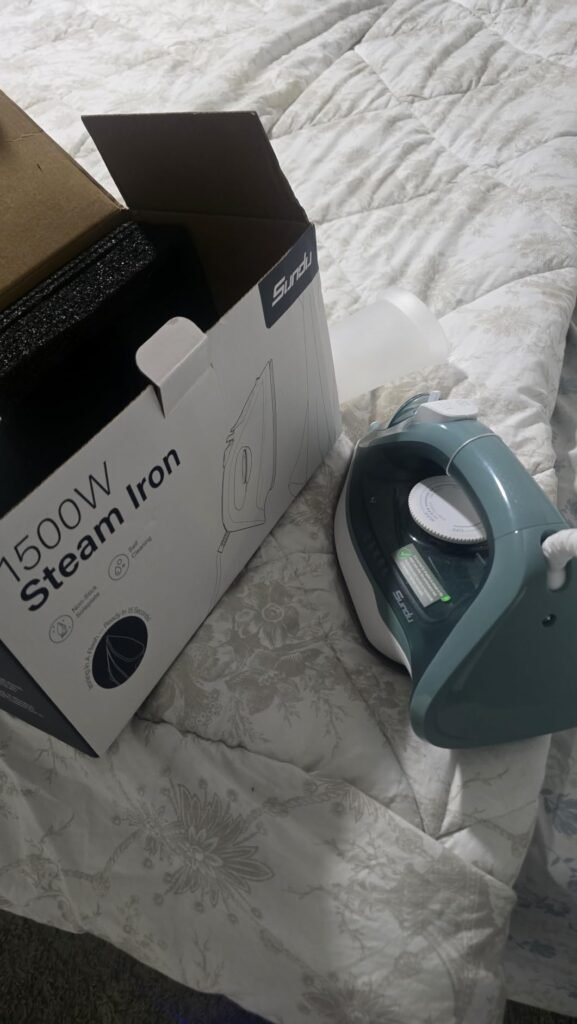
The Sundu 1500W model earns the highest owner rating in this comparison, and its feature set helps explain why. The 350ml water tank is among the largest in this group, which means fewer refills during extended ironing sessions. If you regularly work through a full basket of laundry in one sitting, a bigger tank reduces interruptions.

We may earn a commission when you buy through this link, at no additional cost to you.
The ceramic soleplate glides smoothly across a range of fabrics, and the precision pointed tip makes it easier to press around buttons, collars, and narrow pleats without catching. The burst of steam function delivers a concentrated shot of moisture for stubborn creases that continuous steam alone cannot fully relax.
Maintenance is simplified by the self-cleaning, anti-calc, and anti-drip systems that work together to prevent mineral buildup and water spotting. These features are typically found on higher-priced irons, so their inclusion at this price point adds meaningful long-term value, especially in areas with hard water.
A larger water tank means longer continuous steam time before you need to stop and refill. If you iron five or six garments in a row, a 350ml tank can last the entire session, while a smaller 200ml tank may require a mid-session refill. The trade-off is that larger tanks add a small amount of weight when full, which may matter if you prefer a very light iron.
The main consideration is the 1200W heating element, which is lower than the 1700-1800W range of premium models. For most household fabrics, the difference is subtle, but heavy linen or thick denim may require slower passes to allow the soleplate to maintain temperature. For everyday cotton, polyester, and blends, this iron performs well above its price.
Not the best match for users who need maximum wattage for heavy daily pressing of thick fabrics like canvas or denim.
We may earn a commission when you buy through this link, at no additional cost to you.
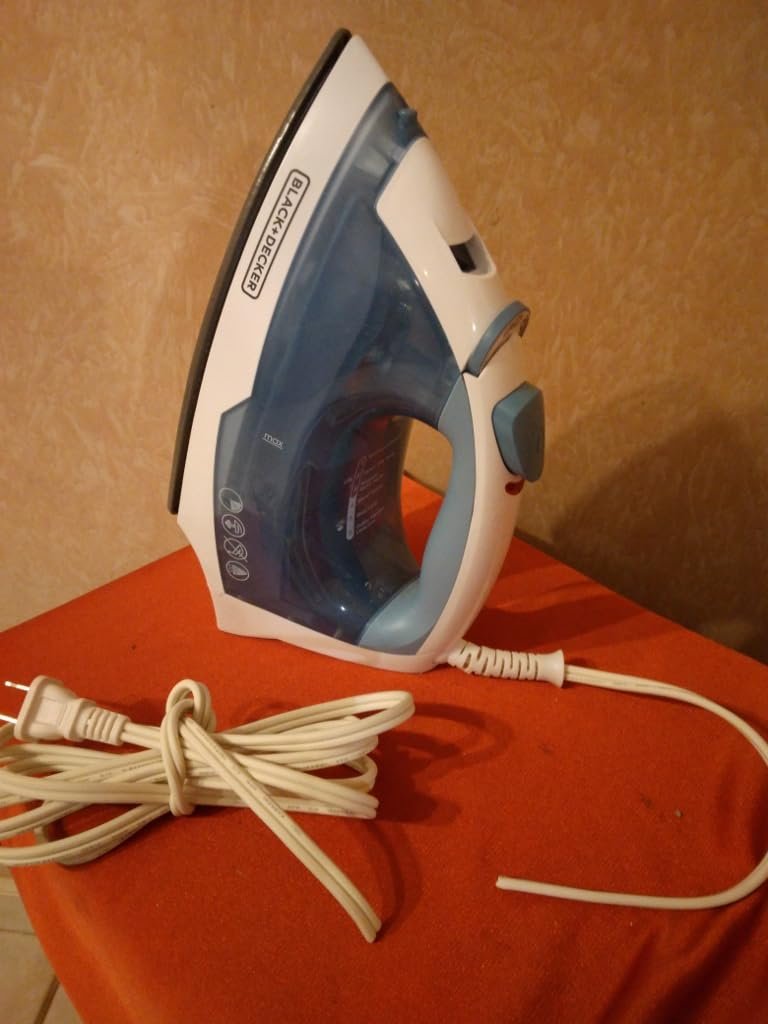
If you iron a few dress shirts or casual garments each week and want a straightforward machine without a steep investment, this BLACK+DECKER model covers the basics well. The 1200W element brings the soleplate up to temperature quickly enough for lighter loads, and the translucent water tank lets you see at a glance when it is time to refill.

We may earn a commission when you buy through this link, at no additional cost to you.
The TrueGlide nonstick soleplate moves easily across cotton, polyester, and blends without catching on seams or buttons. A built-in spray mist button adds targeted moisture to stubborn wrinkles before you press, which can make a noticeable difference on heavier weaves that resist dry heat alone.
Safety is handled by a 3-way auto shutoff that powers the iron down when it sits flat on the soleplate or tips onto its side for 30 seconds, and after eight minutes resting on the heel. The 360-degree pivoting cord reduces wrist strain during longer sessions, and the contoured handle sits comfortably in most hand sizes.
Shoppers who iron occasionally or mainly press lightweight fabrics will get the most value here. The lower wattage is less of a limitation when you are working with thin cottons, rayon, and polyester blends that do not demand sustained high heat. Students, apartment dwellers, and anyone building a first laundry setup will appreciate the low cost and simple controls.
The main trade-off is the modest wattage. If you regularly iron thick linen tablecloths or heavy denim, the soleplate may lose heat between passes and require brief recovery pauses. For everyday cotton and synthetic garments, though, this iron delivers consistent results at one of the lowest price points in the lineup.
Not ideal for heavy daily ironing of thick fabrics like linen or denim due to the 1200W heating element.
We may earn a commission when you buy through this link, at no additional cost to you.
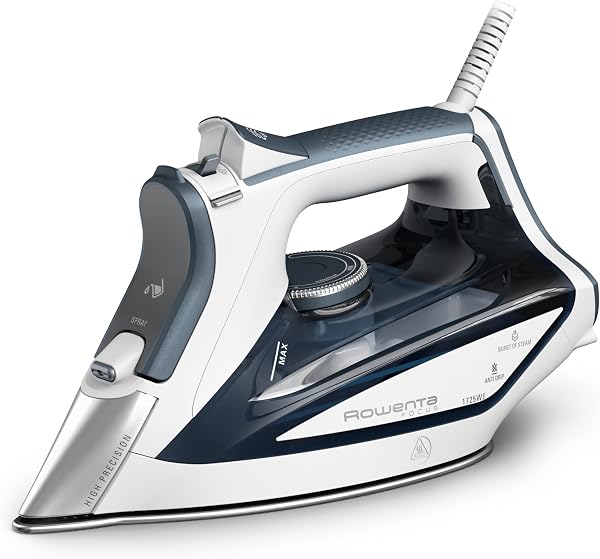
Rowenta has long been associated with high-output steam, and the Focus Excel DW5280 continues that tradition with a 1725W heating element and a steam boost that reaches 135 grams per minute. That level of output is particularly useful when you are pressing deep creases out of cotton dress shirts or tackling wrinkled linen that lighter irons struggle to flatten.
We may earn a commission when you buy through this link, at no additional cost to you.
The soleplate features over 400 active steam holes spread across its surface, which distributes moisture more evenly than irons with concentrated hole clusters near the tip. Even steam distribution means fewer dry spots and fewer repeat passes, saving time on larger garments like bedsheets and tablecloths.
Variable steam settings let you dial the output up or down depending on the fabric. Delicate silk and synthetics need far less moisture than heavy cotton, and the ability to fine-tune the flow helps prevent water spotting on sensitive materials. The built-in anti-calc system and self-cleaning function also reduce mineral buildup over time, which is a practical advantage if your tap water is hard.
More steam holes spread moisture across a wider area of the soleplate, reducing the chance of dry patches that leave wrinkles behind. An iron with 400-plus holes can cover a shirt front in fewer strokes than one with 100 holes concentrated at the tip. If you iron large flat surfaces like curtains or table linens, high hole count translates directly into faster results.
The trade-off is weight and cost. This iron sits in a higher price bracket and feels more substantial in the hand than budget options. If you iron frequently and value speed and wrinkle-removal power, the extra investment pays off. Casual users who press a single shirt now and then may find the output more than they need.
Not the best choice for buyers seeking a lightweight travel iron or the lowest possible price.
We may earn a commission when you buy through this link, at no additional cost to you.
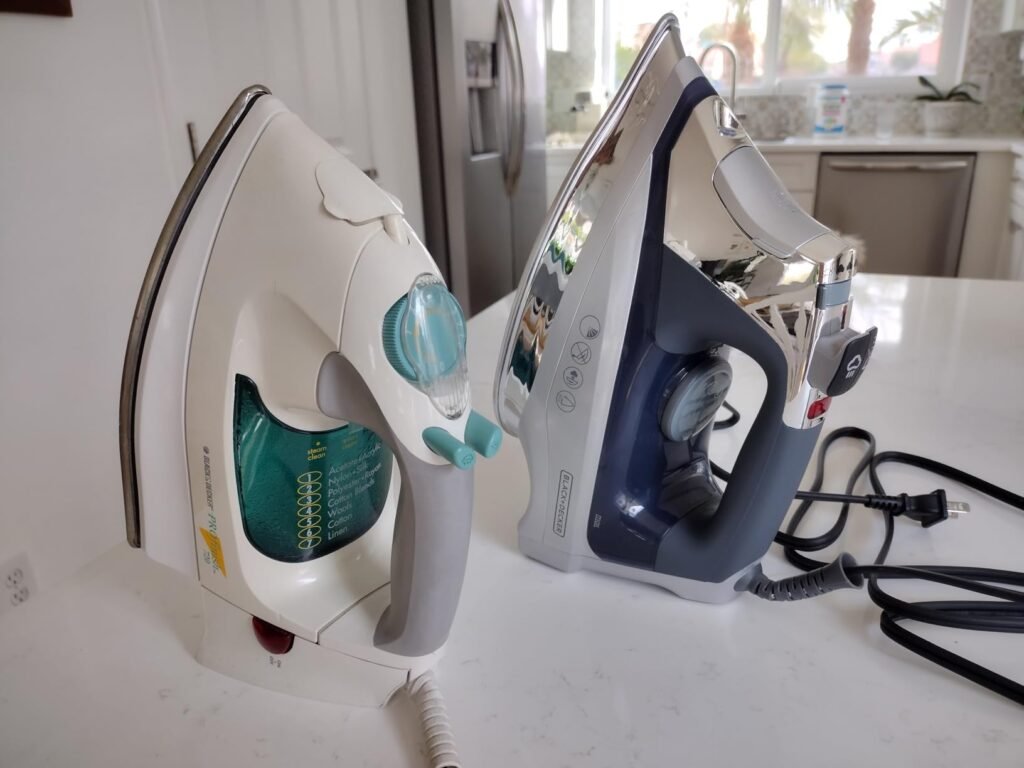
The Allure Professional stands out in the BLACK+DECKER lineup for its stainless steel soleplate, which tends to outlast nonstick coatings over years of regular use. Stainless steel resists scratches from zippers and buttons better than ceramic or coated aluminum, making it a practical pick for households that iron a wide variety of garments.
We may earn a commission when you buy through this link, at no additional cost to you.
This model produces roughly 30 percent more steam than comparable irons in its class, which helps relax wrinkles faster on medium-weight fabrics. The separate temperature and steam dials give you independent control over heat and moisture, so you can run high heat with low steam for synthetics or combine both for heavy cotton.
The Auto Clean system flushes mineral deposits from the internal chamber, which is especially helpful in areas with hard tap water. Running the cleaning cycle every few weeks can prevent the white chalky residue that sometimes appears on dark fabrics when scale builds up inside the steam channels.
Stainless steel offers superior scratch resistance and long-term durability, while ceramic coatings tend to glide more effortlessly at lower temperatures. If you iron heavy fabrics and want a plate that will not degrade after years of use, stainless steel is a strong choice. If you mainly press delicate fabrics and prioritize a frictionless glide, ceramic may feel smoother day to day.
One consideration is that stainless steel soleplates require more attention to temperature settings than nonstick alternatives. If the dial is set too high for a synthetic fabric, the plate can grab or leave a slight sheen. Taking a moment to match the heat to the garment label avoids this issue and keeps results consistent.
Not the best option for users who primarily iron delicate synthetics and want a forgiving nonstick glide at any temperature.
We may earn a commission when you buy through this link, at no additional cost to you.
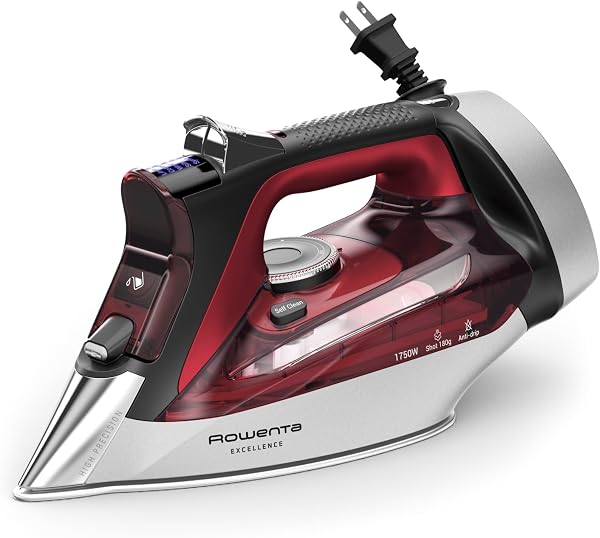
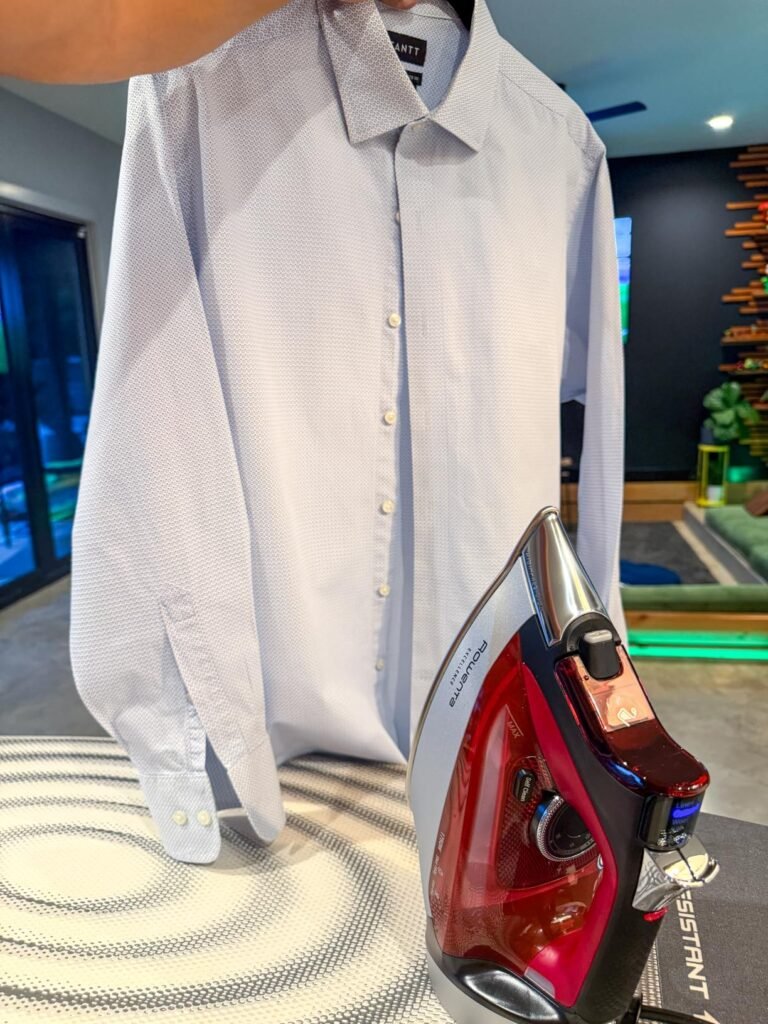
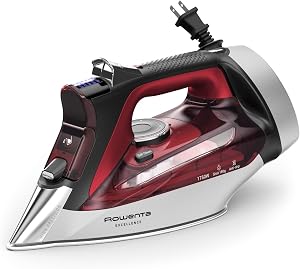
The Rowenta Focus Excellence DW5433 combines the highest wattage in this guide at 1750W with a 180 g/min steam boost, making it one of the most capable irons for tackling heavily wrinkled garments. The LED display with five fabric presets removes guesswork from temperature selection, which is a genuine convenience when you switch between silk blouses and cotton trousers in the same session.

We may earn a commission when you buy through this link, at no additional cost to you.
Over 400 microsteam holes in the stainless steel soleplate deliver broad, even steam coverage that reduces the number of passes needed on large surfaces. The anti-drip system maintains proper water temperature to prevent spotting on lighter fabrics, a common frustration with lower-wattage irons that struggle to convert water to steam at lower settings.
A standout feature is the retractable 8-foot cord, which pulls out for full reach during ironing and reels back into the housing at the press of a button for compact storage. This eliminates the tangle of a loose cord in a laundry closet and is a detail that becomes surprisingly appreciated over weeks of daily use.
A retractable cord solves one of the most common annoyances in laundry rooms: cord tangles. Instead of wrapping and unwrapping a long cord around the iron after every use, the reel mechanism stores it neatly inside the body. This also reduces wear on the cord jacket over time, since the cable is not repeatedly bent at sharp angles during storage.
The main consideration is the premium price, which places this model well above budget and mid-range options. For households that iron several times a week and value speed, convenience, and consistent results across all fabric types, the investment is easy to justify. Occasional users may find a less expensive model sufficient for their needs.
Not the best fit for buyers on a tight budget or those who iron only a few garments per month.
We may earn a commission when you buy through this link, at no additional cost to you.
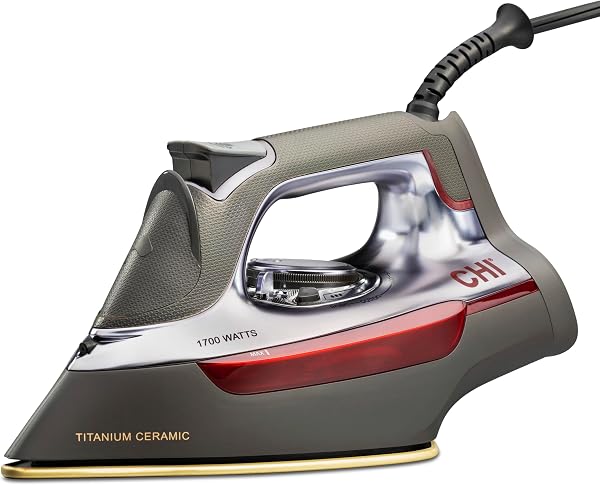
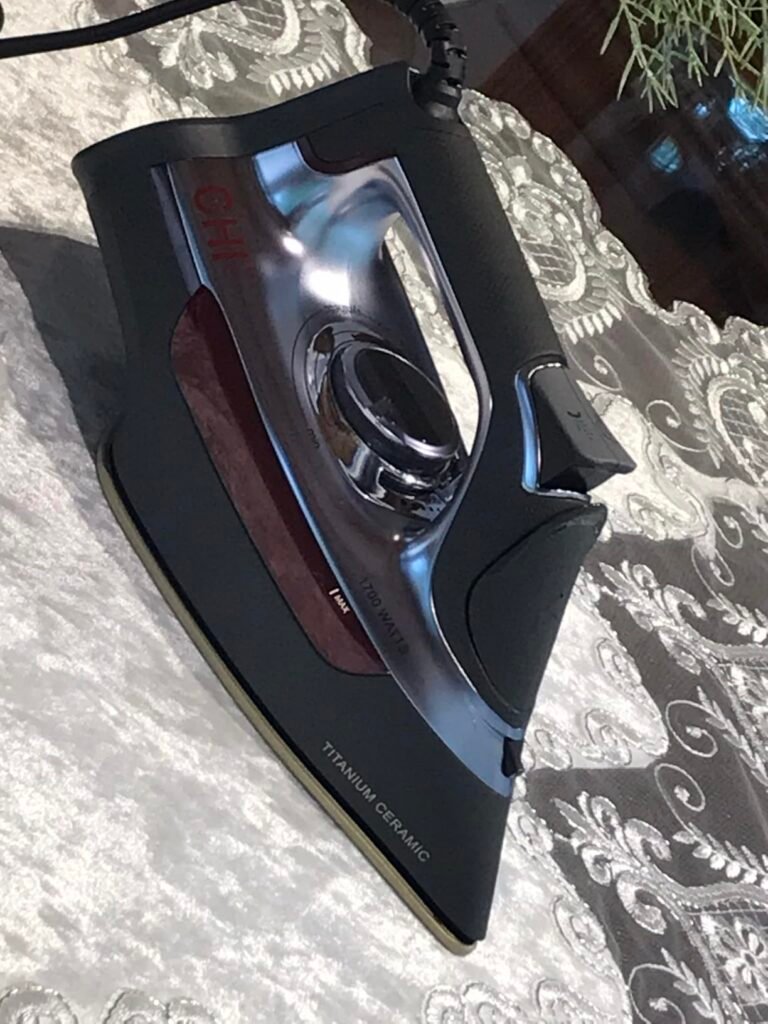
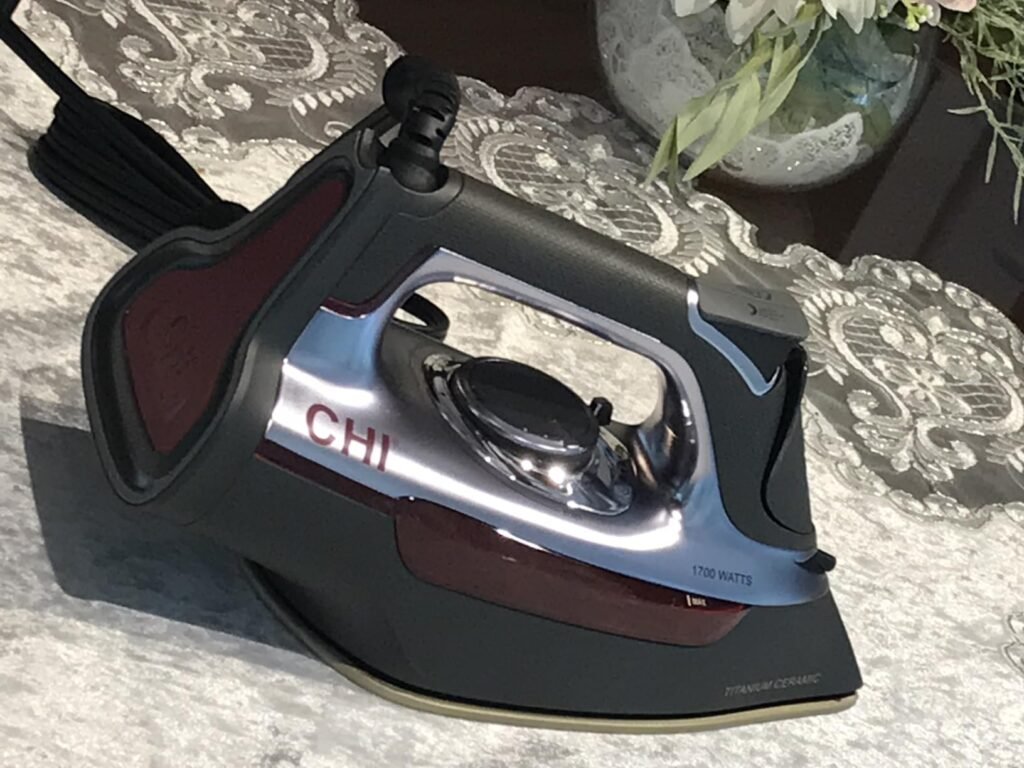
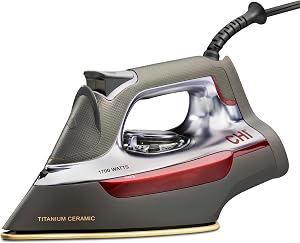
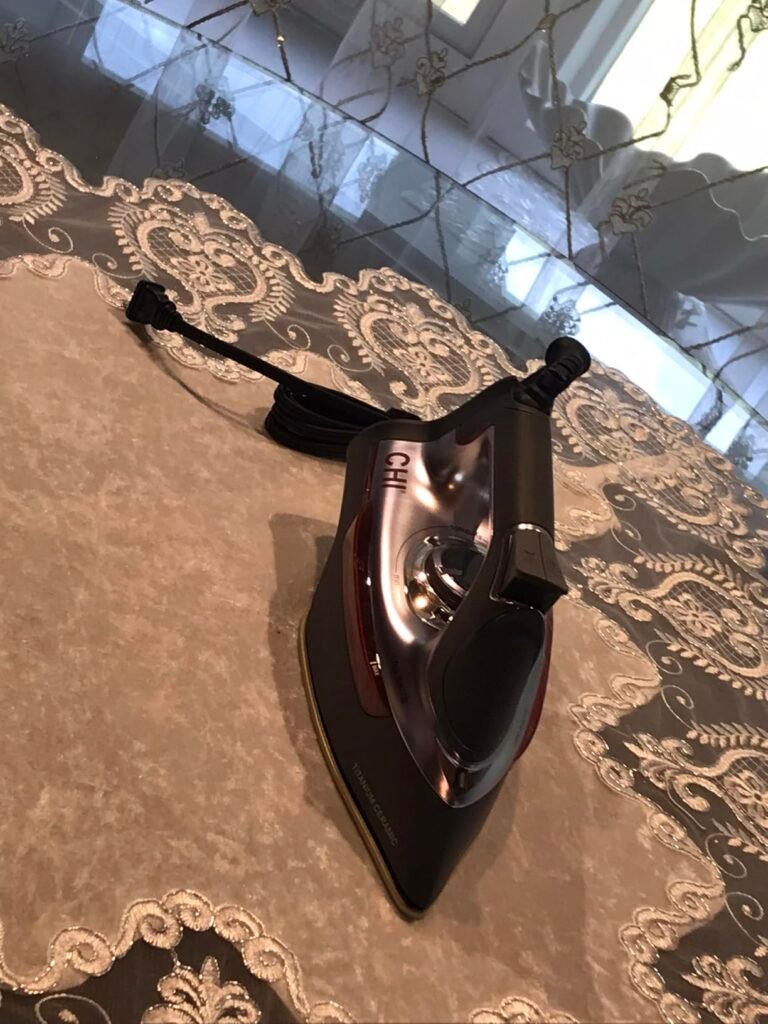
CHI brings its well-known hair styling technology into the garment care space with a titanium-infused ceramic soleplate that delivers an exceptionally smooth glide across all fabric types. The 1700W heating element and 300-plus steam holes produce enough moisture to relax deep wrinkles in cotton and linen while the ceramic surface protects delicate synthetics from scorching.
We may earn a commission when you buy through this link, at no additional cost to you.
The adjustable steam lever lets you move from no steam for dry pressing to full power for heavy fabrics, and the vertical steam burst function refreshes hanging suits, drapes, and dresses without needing an ironing board. This versatility is useful for quick touch-ups on garments that are difficult to lay flat, such as pleated skirts or structured jackets.
An extra-long 10-foot cord provides generous reach from the outlet, which is helpful in laundry rooms where the ironing board may not sit right next to a wall socket. The heavy-duty construction and scratch-resistant soleplate coating suggest this iron is built to hold up under frequent use without the glide quality degrading over time.
Vertical steam is most useful for refreshing garments that are already on hangers, such as suits, dresses, and curtains. Instead of setting up an ironing board and pressing each section flat, you can hold the iron upright and direct a burst of steam at the wrinkled area. This is faster for light touch-ups but will not replace flat ironing for deep creases.
The price reflects the premium materials and brand positioning. If you value a silky-smooth glide and want an iron that transitions easily between heavy cotton and delicate silk, the CHI Professional is a compelling choice. Buyers who mainly press casual cotton garments may not notice a significant advantage over a mid-priced model.
Not the most cost-effective choice for casual users who iron only basic cotton garments a few times a month.
We may earn a commission when you buy through this link, at no additional cost to you.
The Vitessa ICR2020 takes a different approach to steam management with its SmartSteam technology, which automatically adjusts steam output based on the temperature you select. This removes the need to coordinate two separate dials and reduces the chance of accidentally sending too much moisture to a delicate fabric.

We may earn a commission when you buy through this link, at no additional cost to you.
The TrueGlide nonstick soleplate handles everyday cotton, polyester, and blends with minimal friction, and the vertical steam mode lets you freshen hanging garments or curtains without an ironing board. The retractable cord is a welcome addition at this price point, keeping the laundry area tidy between uses.
Safety features include the familiar 3-way auto shutoff that deactivates the iron after 30 seconds on its side or soleplate and eight minutes on the heel. The combination of automatic steam regulation and auto shutoff makes this a low-fuss option for users who want to set the temperature and start pressing without fine-tuning multiple controls.
Automatic steam systems simplify the ironing process by linking steam output to the temperature dial, which reduces the risk of water spotting on delicate fabrics. Manual systems give you independent control, which is useful when a fabric needs high heat but low moisture. If you iron a wide range of fabrics and enjoy precise control, manual may be preferable. If you want simplicity, automatic is the better fit.
The trade-off is less granular control over steam output. Experienced ironers who prefer to manually adjust steam for specific fabrics may find the automatic system limiting. For most everyday users, however, the convenience of SmartSteam outweighs the loss of manual adjustment.
Not ideal for advanced users who want independent control over steam volume and temperature for specialty fabrics.
We may earn a commission when you buy through this link, at no additional cost to you.
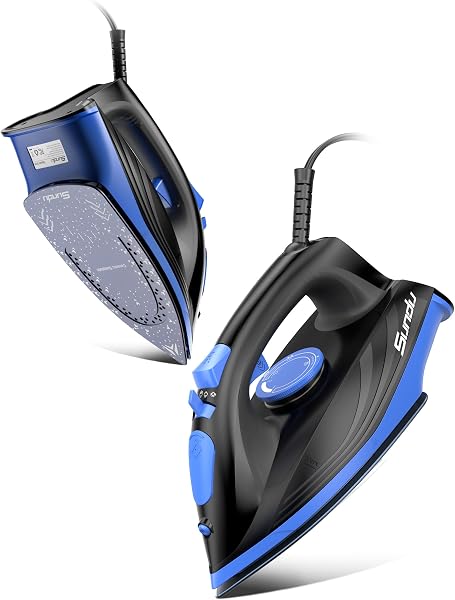
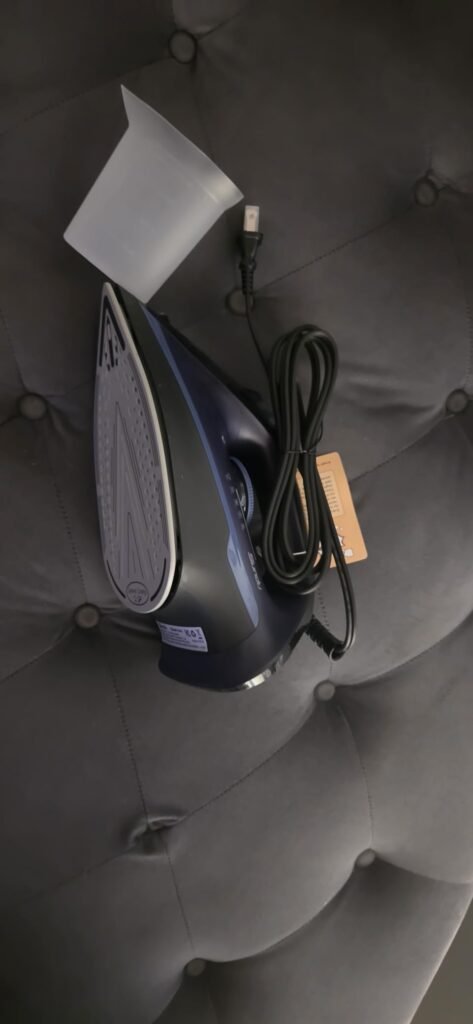
At one of the lowest prices in this guide, the Sundu Ceramic Burst offers a surprisingly complete feature set for budget-conscious shoppers. The constant-temperature anti-drip system stabilizes water temperature inside the chamber, which helps prevent the dripping and spotting that can occur when an iron struggles to generate steam at lower heat settings.
We may earn a commission when you buy through this link, at no additional cost to you.
The ceramic-coated nonstick soleplate glides easily across cotton, wool, polyester, rayon, and synthetic blends without snagging. The 360-degree rotating power cord prevents tangles during use and allows you to iron from any angle without the cord dragging across freshly pressed fabric.
The vertical steam mode and precision pointed tip add versatility for quick touch-ups on hanging garments and detailed work around collars and cuffs. The one-touch spray button provides an instant moisture boost for stubborn creases, which is a useful complement to the continuous steam output.
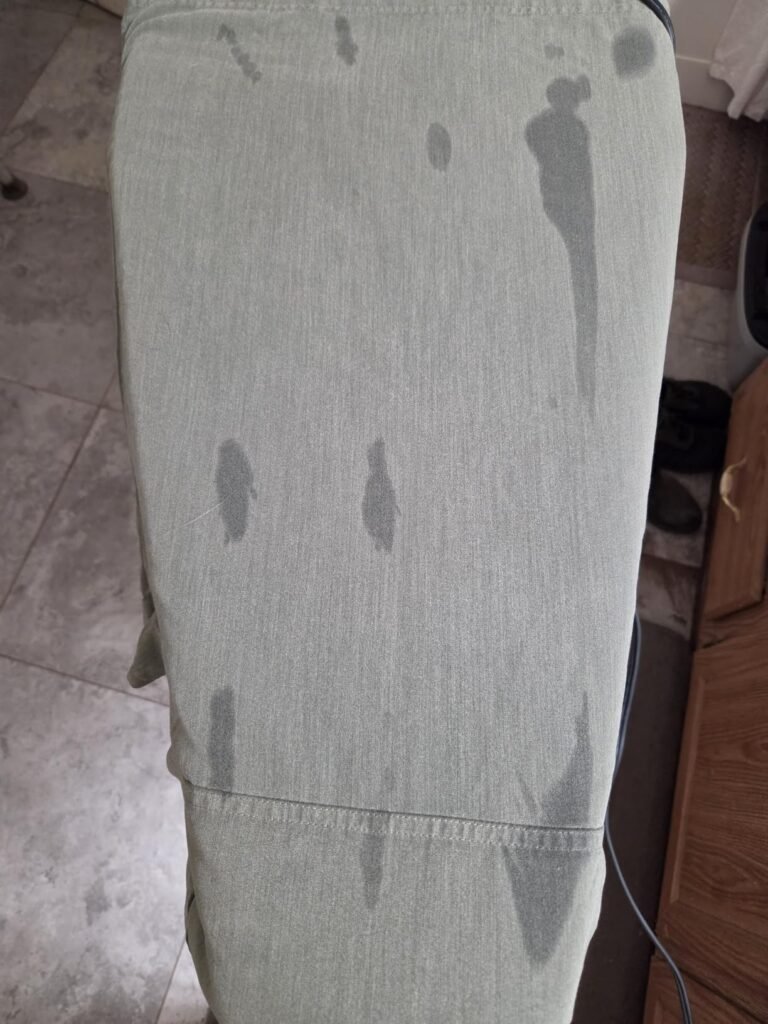
Water spotting on dark garments is usually caused by mineral deposits in tap water or by the iron dripping at low temperatures. Using distilled or filtered water reduces mineral buildup, and an anti-drip system prevents liquid water from reaching the fabric before it converts to steam. If your current iron leaves white marks on dark clothes, switching to distilled water is the simplest first fix.
The main limitations are the smaller water tank and the absence of a self-cleaning cycle. If you live in an area with hard water, you may need to use distilled water or descale the iron manually more often than with models that include an anti-calc system. For the price, however, this iron covers the essentials well.
Not recommended for users with very hard tap water who want a built-in anti-calc system to minimize maintenance.
We may earn a commission when you buy through this link, at no additional cost to you.
The Martisan 1800W model delivers the highest wattage in this comparison, which translates to faster heat-up times and quicker soleplate recovery between passes. The Dynamic Steam Burst system produces 140 g/min of steam during bursts and 40 g/min continuously, giving you the power to penetrate thick fabrics like denim, canvas, and heavy cotton.

We may earn a commission when you buy through this link, at no additional cost to you.
The nano ceramic soleplate is 1.3 times wider than standard ceramic panels and features 400 microsteam holes for broad, even coverage. The thicker ceramic coating is designed to resist scratches and provide a smooth glide across delicate fabrics without the risk of sticking that can occur with bare metal plates at high temperatures.
The 4-in-1 design supports horizontal and vertical ironing in both wet and dry modes, which adds flexibility for different garment types and situations. The 3-way auto shutoff, self-cleaning function, and anti-calc and anti-drip systems round out a comprehensive safety and maintenance package. ETL certification provides an additional layer of confidence in the electrical safety of the unit.
Higher wattage primarily affects how quickly the soleplate heats up and how fast it recovers temperature after a burst of steam. For thick fabrics that absorb a lot of heat, a 1700-1800W iron maintains consistent temperature more effectively than a 1200W model. For lightweight synthetics and cotton blends, the difference is less noticeable because these fabrics require lower temperatures and less sustained heat.
The trade-off is weight. At 3.0 pounds, this iron is noticeably heavier than budget models, which can cause wrist fatigue during long sessions. The heavier weight does provide natural downward pressure that can reduce the effort needed for each press, but buyers with hand or wrist concerns should consider whether the extra mass is a benefit or a burden.
Not ideal for users with wrist or hand strength concerns due to the 3.0-pound weight.
We may earn a commission when you buy through this link, at no additional cost to you.
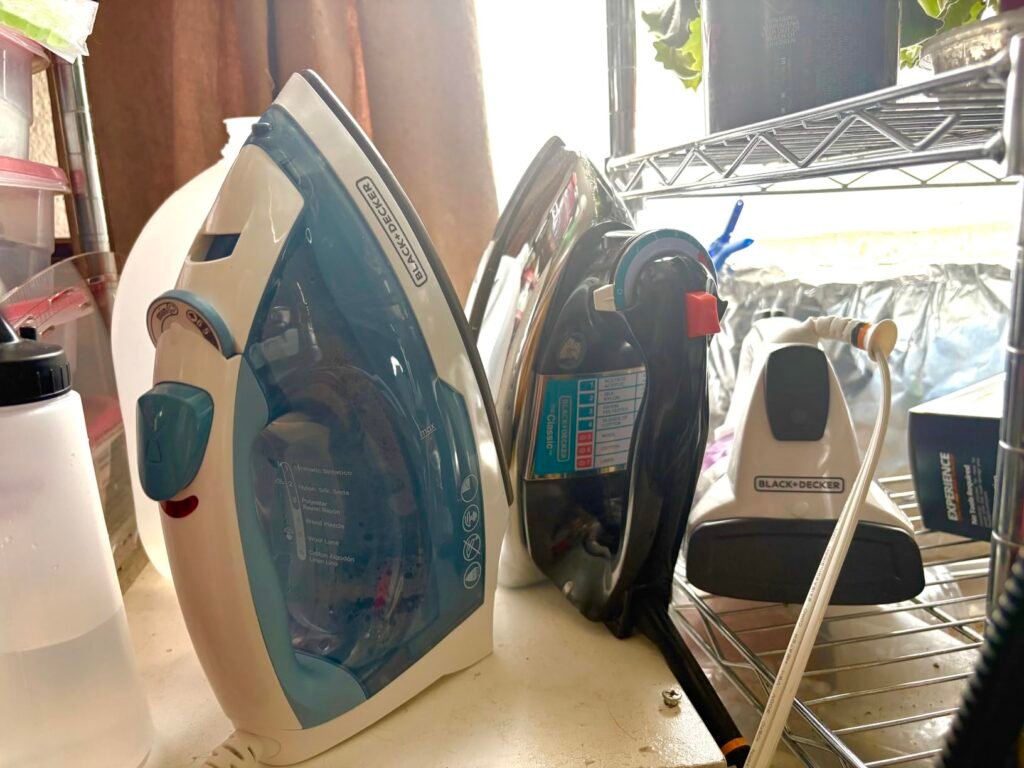
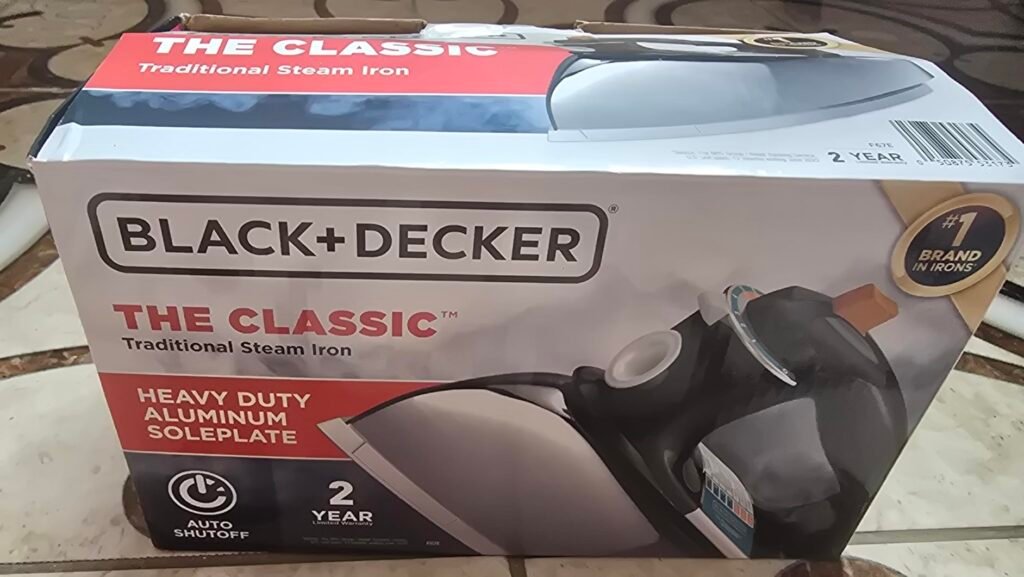
The BLACK+DECKER Classic is one of the most straightforward irons available, with a clear temperature dial, eight fabric settings, and a simple switch between steam and dry modes. If you prefer an iron that does exactly what you expect without extra features or digital displays, this model delivers reliable performance at a very low cost.
We may earn a commission when you buy through this link, at no additional cost to you.
The aluminum soleplate has a nonstick finish that glides smoothly over linen, cotton, wool, rayon, polyester, silk, and nylon. A dedicated groove near the tip helps navigate around buttons and collars, and the pivoting cord allows easy maneuverability during use. The anti-drip design regulates water temperature to prevent leaking at lower settings.
The 3-way auto shutoff provides the same safety coverage as more expensive models, powering down after 30 seconds on the soleplate or side and eight minutes on the heel. A power indicator light confirms when the iron is plugged in and active, which is a small but useful safety detail.
Dry ironing is useful for delicate fabrics like silk, acetate, and certain synthetics that can water-spot or develop a sheen when exposed to steam. It is also the preferred method for pressing fusible interfacing during sewing projects, where moisture can interfere with the adhesive. Having an iron that easily switches between steam and dry modes gives you flexibility for these specialized tasks.
The main limitation is the aluminum soleplate, which is more prone to scratching and wear over time compared to stainless steel or ceramic alternatives. If you iron frequently and want a soleplate that will maintain its glide quality for years, a stainless steel or ceramic model may be a better long-term investment. For occasional use, the Classic remains a dependable and affordable option.
Not the best long-term choice for heavy daily ironing due to the less durable aluminum soleplate.
We may earn a commission when you buy through this link, at no additional cost to you.
Selecting a steam iron involves more than comparing wattage numbers. The right model depends on the fabrics you press most often, how frequently you iron, and which conveniences will genuinely improve your routine. The factors below cover the most important decision points.
The soleplate is the part of the iron that contacts your clothing, and its material has a direct impact on glide smoothness, heat distribution, and long-term durability. The three most common materials are aluminum, stainless steel, and ceramic-coated plates. Aluminum is lightweight and affordable but scratches more easily over time. Stainless steel resists scratches and handles high heat well, though it can grab delicate synthetics if the temperature is set too high. Ceramic coatings offer the smoothest glide at lower temperatures and are gentle on sensitive fabrics, but the coating can wear down after years of heavy use.
Beyond the base material, the shape and size of the soleplate affect how efficiently you can cover large garments. Wider plates press more fabric per stroke, which saves time on bedsheets and tablecloths. A pointed tip with a button groove helps navigate around collars, cuffs, and button plackets without creating new creases. Some premium models use nano-ceramic or titanium-infused coatings that combine the scratch resistance of metal with the smooth glide of ceramic.
If you iron a mix of heavy and delicate fabrics, a stainless steel or high-quality ceramic soleplate offers the best balance of durability and glide. If you mainly press casual cotton garments and want to keep costs low, an aluminum or basic nonstick plate will handle the job adequately.
Steam output is measured in grams per minute and indicates how much moisture the iron delivers to the fabric. Continuous steam output typically ranges from 20 to 40 g/min on household irons, while burst or boost functions can reach 130 to 180 g/min for short intervals. Higher continuous output relaxes wrinkles faster on medium-weight fabrics, and a strong burst is essential for deep creases in heavy cotton, linen, and denim.
The number and distribution of steam holes on the soleplate also matter. An iron with 400-plus holes spread across the full plate delivers more even moisture coverage than one with 100 holes concentrated near the tip. Even distribution reduces the need for repeat passes and helps prevent dry spots that leave wrinkles behind. If you frequently iron large flat items like curtains or table linens, high hole count and broad distribution will noticeably speed up your routine.
For everyday cotton and synthetic garments, a continuous output of 25 to 35 g/min is usually sufficient. If you regularly press heavy fabrics or want professional-quality results on dress shirts, look for a burst function above 130 g/min and a soleplate with at least 300 steam holes.
Wattage determines how quickly the soleplate reaches the target temperature and how fast it recovers after a burst of steam cools the surface. Most household steam irons fall between 1200W and 1800W. A 1200W iron heats up adequately for light loads but may lose temperature during sustained pressing of thick fabrics, requiring brief pauses between passes. A 1700-1800W iron maintains consistent heat even during rapid, continuous use.
Heat recovery is especially important when you are ironing multiple heavy garments in a row. Each burst of steam draws heat from the soleplate, and a higher-wattage element replenishes that heat faster. If you have ever noticed an iron that starts strong but seems to lose effectiveness after a few minutes of continuous use, the wattage is likely the cause.
For occasional ironing of lightweight fabrics, 1200W is perfectly adequate and keeps the price down. If you iron several times a week or regularly press heavy cotton, linen, or denim, investing in a 1700W or higher model will deliver more consistent results and a faster overall workflow.
Water tank sizes on household steam irons typically range from about 200ml to 350ml. A larger tank provides longer continuous steam time before you need to stop and refill, which is a genuine convenience during extended ironing sessions. A 350ml tank can often last through an entire basket of laundry, while a 200ml tank may require one or two refills.
The tank design also affects usability. Translucent or transparent tanks let you monitor the water level at a glance, which prevents the iron from running dry mid-session. A wide fill opening makes refilling easier and reduces spills. Some models have a removable tank, though this is more common on steam generator systems than on standalone irons.
If you iron a few garments at a time, tank size is a minor consideration. If you regularly tackle large loads in a single session, a tank above 300ml will reduce interruptions and keep your workflow smooth.
Auto shutoff is now standard on most steam irons and is one of the most important safety features to look for. A 3-way shutoff system deactivates the iron when it sits flat on the soleplate or tips onto its side for about 30 seconds, and after several minutes when resting upright on the heel. This protects against fire risk if you walk away and forget to unplug the iron.
Beyond auto shutoff, look for anti-drip technology that prevents water from leaking onto fabrics at lower temperatures. Dripping is most common when the iron is set to a delicate fabric setting that does not generate enough heat to fully convert water to steam. Anti-drip systems regulate the water temperature inside the chamber to prevent this issue, which is especially important when pressing silk, satin, and other water-sensitive materials.
All 10 irons in this guide include auto shutoff, so you can choose based on other factors without sacrificing safety. If you have children or pets in the home, the 30-second shutoff on the soleplate provides an extra layer of protection against accidental burns.
Iron weight affects comfort during extended sessions. Lightweight irons under 2 pounds are easy to maneuver and cause less wrist fatigue, but they may require more downward pressure from your arm to press out stubborn wrinkles. Heavier irons around 3 pounds use gravity to provide natural pressing force, which can reduce effort on thick fabrics but may tire your hand during long sessions.
Handle design also plays a role in comfort. Ergonomic grips that contour to the hand reduce strain during repetitive motions, and a well-balanced weight distribution prevents the iron from feeling front-heavy or back-heavy during use. A 360-degree pivoting or rotating cord prevents tangles and reduces the pulling force on your wrist as you change direction.
If you iron for more than 20 minutes at a time, try to find a model that balances weight and pressing power. A medium-weight iron around 2.5 pounds with an ergonomic handle is often the most comfortable compromise for regular use.
Cord length determines how much freedom of movement you have around the ironing board. Most household irons have cords between 6 and 10 feet. A shorter cord may require an extension cord or limit where you can set up the ironing board, while a longer cord provides more flexibility but can become tangled if not managed properly.
Retractable cord systems, available on several models in this guide, solve the storage problem by reeling the cord into the iron body at the press of a button. This keeps the laundry area tidy and reduces wear on the cord jacket from repeated wrapping and unwrapping. If your ironing setup is in a shared space like a laundry room or closet, a retractable cord is a genuinely useful convenience.
Check the distance from your nearest outlet to your ironing board before choosing. If the outlet is more than 6 feet away, look for an iron with an 8-foot or 10-foot cord to avoid relying on an extension cord, which can be a tripping hazard.
Different fabrics require different heat and moisture levels, and a good steam iron should handle everything from delicate silk to heavy linen without scorching or under-pressing. Most irons offer a temperature dial with fabric guides that indicate the appropriate setting for common materials like cotton, wool, polyester, rayon, and nylon. Some premium models add LED displays with preset fabric programs that take the guesswork out of selection.
Variable steam control is equally important. The ability to adjust steam output independently from temperature lets you use high heat with low steam for synthetics that wrinkle easily but are sensitive to moisture, or high heat with high steam for heavy cotton that needs deep penetration. Models with automatic steam regulation simplify this process but offer less manual control.
If your wardrobe includes a wide range of fabrics, look for an iron with both variable temperature and variable steam controls. If you mainly press cotton and polyester, a simpler model with preset fabric guides will handle your needs without the extra complexity.
Always fill the water tank before plugging in the iron, and use distilled or filtered water if your tap water is hard. Hard water contains minerals that build up inside the steam channels over time, reducing steam output and potentially leaving white residue on dark fabrics. If your iron has a self-cleaning function, run it every few weeks according to the manufacturer instructions to flush out mineral deposits and keep the steam holes clear.
Start ironing with the lowest temperature fabrics first, such as silk and synthetics, then increase the heat for cotton and linen. This approach prevents accidental scorching and reduces the waiting time for the soleplate to cool down between garments. Use the spray mist or burst function on stubborn creases rather than pressing harder, which can stretch fabric fibers and create shiny marks on dark materials.
After each use, empty any remaining water from the tank and leave the iron upright to dry completely before storing. Wipe the soleplate with a damp cloth while it is still slightly warm to remove any starch or fabric residue. Store the iron in a dry location with the cord loosely coiled or retracted to prevent damage to the internal wiring over time.
For most household use, 1500W to 1750W provides a good balance of fast heating and consistent steam output. Lower-wattage irons around 1200W work well for light loads and delicate fabrics, while 1800W models are better suited for heavy daily pressing of thick materials like linen and denim.
Distilled or filtered water is recommended, especially if you live in an area with hard tap water. Hard water contains calcium and magnesium that build up inside the steam channels, reducing output and potentially leaving white marks on clothing. If your iron has an anti-calc system, tap water may be acceptable, but distilled water extends the life of any iron.
If your iron has a self-cleaning function, running it every two to four weeks is a good practice. For irons without self-cleaning, you can flush the tank with a mixture of distilled water and white vinegar every few months to dissolve mineral deposits. Always check the manufacturer guidelines before using any cleaning solution.
Ceramic soleplates offer a smoother glide at lower temperatures and are gentler on delicate fabrics, but the coating can wear over years of heavy use. Stainless steel soleplates are more scratch-resistant and durable, handling zippers and buttons without damage, but they require more careful temperature control to avoid sticking on synthetics.
Many modern steam irons include a vertical steam function that lets you direct steam at hanging garments, curtains, and upholstery. Vertical steaming is effective for light touch-ups and refreshing wrinkles, but it will not replace flat ironing for deep creases or heavily wrinkled fabrics that need direct pressure.
Leaking usually occurs when the iron is set to a temperature too low to convert water into steam. The water remains in liquid form and drips through the steam holes onto the fabric. Using the anti-drip feature, if available, and allowing the iron to fully preheat before pressing can prevent this issue.
A well-maintained steam iron can last five to ten years or more. Regular descaling, proper storage, and avoiding ironing over zippers and buttons help extend the life of the soleplate and internal components. Higher-quality soleplate materials like stainless steel and titanium ceramic tend to hold up longer than basic aluminum or coated plates.
A heavier iron provides more natural downward pressure, which can help flatten stubborn wrinkles with less arm effort. However, excessive weight can cause wrist fatigue during long sessions. Most users find a medium-weight iron around 2 to 3 pounds offers the best balance of pressing power and comfort.
Auto shutoff automatically powers down the iron when it is left unattended. Most 3-way systems shut off after 30 seconds when the iron is flat on the soleplate or tipped on its side, and after about eight minutes when resting upright on the heel. This feature reduces fire risk and is standard on most modern irons.
Yes, but use the lowest temperature setting and minimal or no steam. Place a thin pressing cloth between the iron and the silk to prevent water spots and shine marks. Some irons have a dedicated silk preset that automatically adjusts both temperature and steam output for safe pressing of delicate fabrics.
The Rowenta Focus Excellence DW5433 stands out as the strongest overall choice for most households, combining 1750W of heating power, a 180 g/min steam boost, an LED display with fabric presets, and a retractable cord that simplifies storage. It handles everything from delicate silk to heavy linen with consistent results and minimal guesswork.
For buyers on a tighter budget, the BLACK+DECKER TrueGlide and the Sundu Ceramic Burst deliver reliable everyday performance at a fraction of the cost. The CHI Steam Professional is worth considering if you want a premium titanium ceramic soleplate and the highest owner satisfaction rating in the lineup, while the Martisan 1800W model offers the most raw power for heavy-duty pressing.
Start by identifying the fabrics you iron most often and how frequently you press them. Match those needs to the wattage, soleplate material, and steam output that will make the biggest difference in your routine, and you will end up with an iron that makes laundry day noticeably easier.