Drive Medical Premium
9.2Editor scoreContoured backrest design
Padded armrest support
Ten pound weight
One-inch height increments
Compare 10 top shower chairs by weight capacity, seat width, adjustability, grip, and comfort to find the safest option for your bathroom.
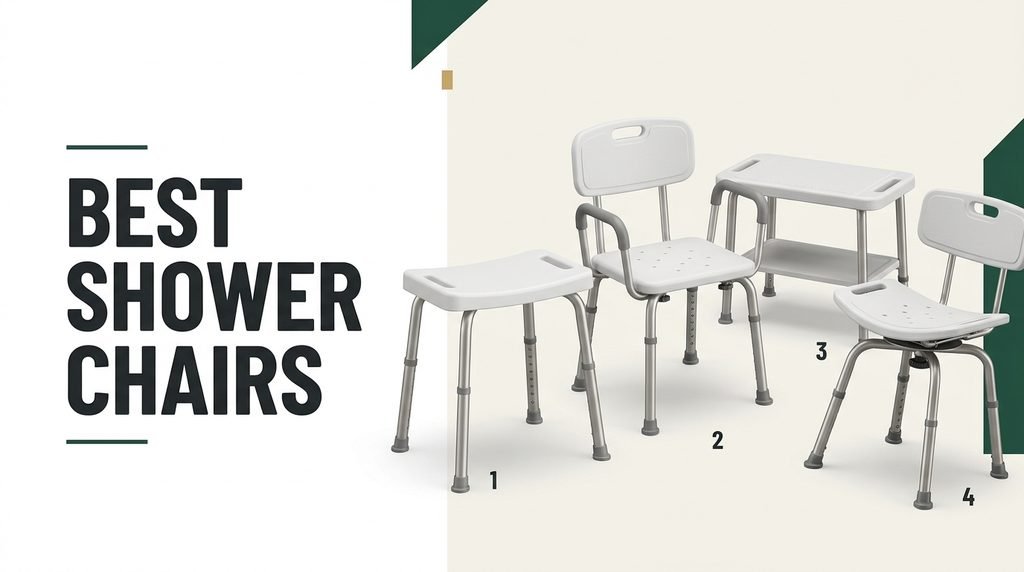
Find the right shower chair for safer bathing in 2026. We compare 10 standout options by the factors that matter most in this category, including weight capacity, seat dimensions, frame materials, grip stability, height adjustability, comfort padding, and everyday ease of use.
Shower chairs range from compact stools for tight stalls to heavy-duty models with padded armrests and swivel bases. The best choice depends on your bathroom layout, the user’s mobility needs, and how much support is required during transfers and bathing.
This guide breaks down each model’s strengths and limitations so you can match the right features to your situation. Whether you need a basic budget seat or a fully configurable chair for post-surgery recovery, the comparison below covers the most important differences.
We compared 10 shower chairs using the details that actually help a buyer decide: weight capacity, frame material, seat width, height range, foot grip design, backrest and armrest configurability, drainage, assembly difficulty, comfort padding, and overall value. The notes focus on practical trade-offs so each pick connects to how people actually use a bath seat for safety, independence, and daily comfort.
Compare key features, scores, and current prices side by side. A shorter feature list means fewer details were available, not necessarily fewer capabilities.




This HOMLAND model stands out for anyone who needs the highest possible weight capacity without sacrificing comfort. The aluminum alloy frame is rated for up to 500 pounds, and the recommended user weight of 400 pounds still exceeds most competing chairs. If you are shopping for a larger user or simply want the widest safety margin, this is one of the strongest options available at a mid-range price point.
We may earn a commission when you buy through this link, at no additional cost to you.
The padded armrests and backrest make a noticeable difference during longer showers or for users who need extra stability when sitting down and standing up. The integrated frame design uses a push-and-click connection system, which means the main structure locks together without screws or wrenches. Height adjusts in one-inch increments, so you can dial in the exact seat position that allows the user’s feet to rest flat on the shower floor.
One of the more practical features is the modular configuration. You can attach or remove the backrest and either armrest independently, which lets you adapt the chair as mobility needs change over time. The skid-resistant feet are reinforced with stainless steel washers to prevent rust staining on tile or acrylic surfaces, a small detail that matters after months of daily use in a wet environment.
The ability to remove the back and arms individually means this chair can start as a full-support seat during recovery and later transition to a simpler configuration as the user regains strength. This flexibility can save money compared to buying separate chairs for different stages of rehabilitation.
This chair is best suited for buyers who want a single, do-everything bath seat that handles heavier users and still offers the comfort of padding and arm support. The tradeoff is a slightly larger footprint compared to compact stools, so measure your shower or tub before ordering to confirm it will fit comfortably alongside any existing grab bars or shower doors.
Very small shower stalls where a compact stool would be a better fit.
We may earn a commission when you buy through this link, at no additional cost to you.
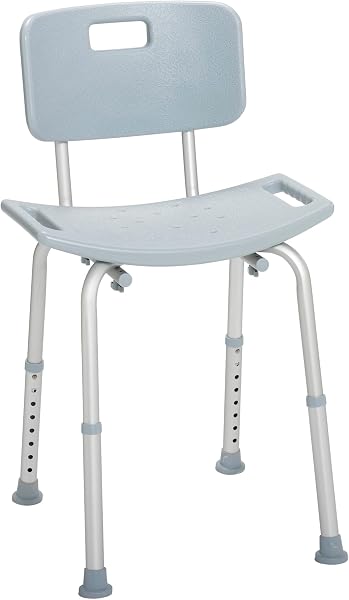
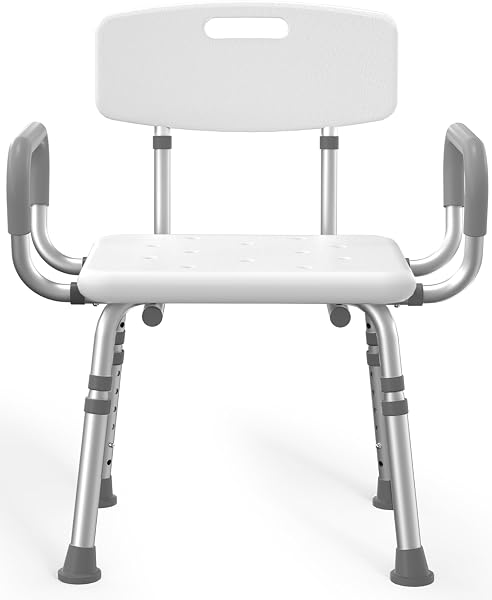
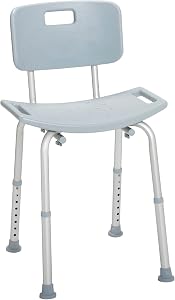
Drive Medical is one of the most recognized names in home medical equipment, and this premium shower chair reflects that experience. The contoured backrest and padded armrests provide a comfortable, supportive seating position that helps users maintain better posture while bathing. For caregivers and family members who want a product from a brand with a long track record, this is a reassuring choice.
We may earn a commission when you buy through this link, at no additional cost to you.
The aluminum construction keeps the total weight around 10 pounds, making it manageable for a caregiver to lift in and out of the tub as needed. Rubber feet grip wet surfaces, and the seat includes drainage holes to prevent water from pooling underneath the user. Height adjusts in one-inch increments without tools, so you can fine-tune the fit for different users or different bathroom setups.
Both the arms and backrest are removable, which gives you the option to simplify the chair if the user only needs basic seated support. The tool-free assembly is straightforward, and the lightweight build means the chair can be repositioned or stored without much effort. This is particularly useful in shared bathrooms where the chair may need to be moved between showers.
When you are buying a product that directly affects fall prevention, choosing a manufacturer with extensive experience in medical devices can provide additional peace of mind. Drive Medical has been producing mobility and bathing aids for decades, which often translates to more refined engineering and better quality control compared to newer entrants in the market.
Choose this model if brand reputation and proven reliability matter most to you. It may not have the highest weight rating or the widest seat on this list, but it delivers dependable daily performance from a company that specializes in medical mobility products. It is a solid middle-ground option for most standard bathroom layouts.
Users who need a weight capacity above 350 pounds or a wider seat for larger body types.
We may earn a commission when you buy through this link, at no additional cost to you.
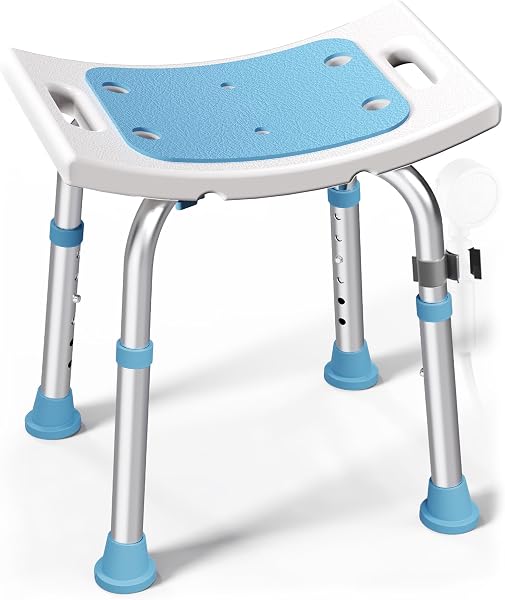
At under thirty dollars, this HOMLAND stool is the most affordable option in our comparison, and it still offers a 400-pound maximum capacity with a reinforced aluminum alloy frame. The compact 16.3 by 10.5 inch seat is designed specifically for narrow bathtubs and small shower stalls where a full-size chair simply will not fit. If space is your primary constraint, this stool solves that problem without requiring a major investment.
We may earn a commission when you buy through this link, at no additional cost to you.
Height adjusts from 14 to 19 inches in one-inch steps, which covers a useful range for users of different heights. The wide non-slip rubber feet grip smooth tile and acrylic surfaces, and the included anti-slip seat cushion adds a layer of security that basic stools often lack. Drainage is handled through the open seat design, keeping water from collecting during use.
HOMLAND includes a few thoughtful extras that add real value at this price point. A soft nylon bath sponge is provided for gentle skin cleaning, and a clip holder lets you attach a handheld showerhead within easy reach. These accessories are small but practical, especially for users who shower independently and need everything positioned close by.
A backless stool works well for users who have good upper-body balance and primarily need a stable seat to reduce fatigue during showers. If the user can sit and stand independently and only needs a resting place, a compact stool like this one provides the essential safety benefit without taking up extra room.
This stool is ideal for buyers on a budget or anyone whose bathroom simply cannot accommodate a wider chair with arms. The tradeoff is the absence of a backrest and armrests, which means users who need upper-body support for balance should look at a full chair instead. For straightforward seated bathing in a tight space, however, this is hard to beat on value.
Users who need back support or armrests for safe transfers and balance.
We may earn a commission when you buy through this link, at no additional cost to you.
Medline is a major supplier of medical products to hospitals and care facilities, and this shower chair brings that institutional reliability into a home bathroom. The 350-pound weight capacity is sufficient for most users, and the slip-resistant soles provide confident grip on wet tile and fiberglass surfaces. If you or a family member are transitioning home after a hospital stay, this is the type of chair that occupational therapists commonly recommend.
We may earn a commission when you buy through this link, at no additional cost to you.
The padded armrests and backrest deliver comfortable support during bathing, and the aluminum frame resists rust even with daily exposure to water and humidity. At 16.3 inches wide and 13.4 inches deep, the seat is compact enough for most standard tubs while still offering adequate room for comfortable sitting. Height adjusts in one-inch increments to match the user’s leg length and the tub’s depth.
Assembly requires no tools and follows a clear step-by-step manual, which is helpful when a caregiver is setting up the bathroom quickly after a discharge. The lightweight aluminum construction also makes it easy to lift the chair out of the tub for cleaning or to reposition it between the shower and a separate bathtub. Maintenance is minimal since the materials resist corrosion and the design avoids hard-to-clean crevices.
After hip or knee surgery, patients often need a stable seated position for showering during the first several weeks of recovery. A chair with padded arms gives the user something solid to grip when lowering themselves down and pushing back up, reducing strain on healing joints. The Medline’s combination of padding, slip-resistant feet, and tool-free setup makes it a practical short-term or long-term solution.
This Medline chair is a strong choice for buyers who value clinical credibility and straightforward functionality over premium features. The 350-pound capacity is lower than some competitors on this list, so heavier users should consider a higher-rated model. For most standard home care situations, however, it provides reliable, no-nonsense performance at a fair price.
Users who weigh more than 350 pounds or need an extra-wide seat.
We may earn a commission when you buy through this link, at no additional cost to you.
This HOMLAND model occupies a useful middle ground between a basic stool and a fully padded chair. The removable backrest lets you configure the seat as a simple stool or a supported chair depending on the user's current needs, and the 400-pound capacity provides a comfortable safety margin for most adults. At around forty dollars, it delivers solid versatility without the higher cost of premium models.
We may earn a commission when you buy through this link, at no additional cost to you.
The aluminum alloy frame is reinforced for durability, and the non-slip rubber feet are reinforced with stainless steel washers to prevent rust marks on your shower floor. The seat height ranges from 14 to 19 inches, which accommodates both shorter users and taller individuals who need a higher seat for easier standing. Built-in drainage holes and a seat handle make daily use and cleaning more convenient.
A showerhead clip holder is included, which is a small but genuinely useful addition for users who rely on a handheld showerhead while seated. The tool-free assembly takes only a few minutes, and the lightweight frame is easy to reposition between uses. The backrest attaches and detaches quickly, so you can switch configurations without any hassle.
One advantage of a removable backrest is the ability to adapt the chair as the user’s mobility changes. During early recovery from an injury or surgery, the backrest provides extra support and confidence. As strength and balance improve, removing the back can create a more open seating arrangement that is easier to transfer in and out of.
This chair works well for buyers who want the option of back support without paying for padded armrests they may not need. The tradeoff is a firmer, less cushioned seating experience compared to fully padded models. If comfort padding is a priority, consider upgrading to a model with EVA cushions and padded arms. For flexible, everyday use at a reasonable price, this is a dependable option.
Users who need padded armrests for safe lateral transfers or extended bathing comfort.
We may earn a commission when you buy through this link, at no additional cost to you.
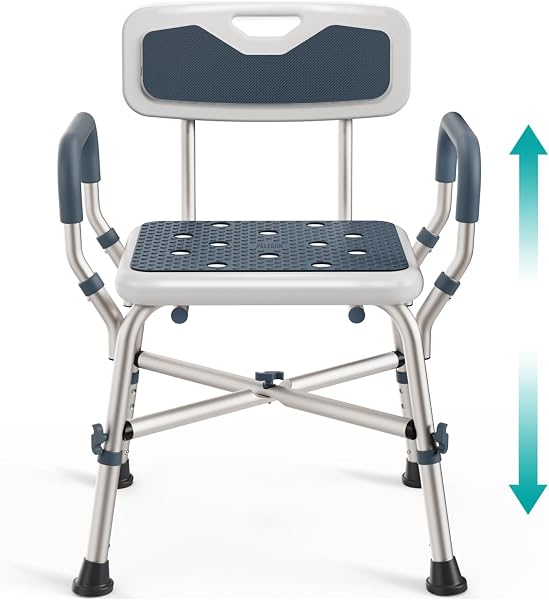
The PELEGON shower chair differentiates itself with a crossbar design that adds structural reinforcement between the legs, reducing flex and wobble on uneven or slick shower floors. Combined with a 450-pound weight capacity and non-slip feet, this construction approach gives users and caregivers extra confidence during transfers. If stability is your top concern, the crossbar design is a meaningful engineering advantage.
We may earn a commission when you buy through this link, at no additional cost to you.
The seat height adjusts from 17 to 21 inches, which is a higher range than many competing chairs and particularly useful for taller users or deeper tubs where a lower seat would make standing difficult. The 18-inch seat width provides generous room, and the ergonomic padded armrests give the user a comfortable, secure grip when sitting down or pushing up. The backrest adds further support for users who tire easily during bathing.
Assembly is tool-free and straightforward, which matters when a caregiver needs to set up the bathroom quickly. The chair is designed to work both inside a shower stall and in a bathtub, and the non-slip feet grip a variety of wet surfaces. The overall build quality feels substantial without being excessively heavy to move when needed.
Standard shower chairs rely on the leg joints alone to resist lateral forces when a user shifts their weight. A crossbar connects the legs at a lower point, creating a triangulated structure that significantly reduces side-to-side movement. This is especially important on wet, sloped shower floors where even a small amount of wobble can undermine a user’s confidence.
This model is best suited for buyers who want maximum structural rigidity and a higher seat range for easier transfers. The price is above the budget options on this list, but the crossbar reinforcement and padded comfort features justify the investment for users who need dependable daily support. The blue color is a matter of personal preference and may not blend with every bathroom palette.
Buyers on a tight budget or those who prefer a neutral white or gray color.
We may earn a commission when you buy through this link, at no additional cost to you.
With a 22-inch wide seat and a 550-pound lab-tested capacity, the VFAUOSIT chair is designed for users who need extra room and the highest level of structural support. The anodized aluminum frame resists rust and corrosion even after prolonged exposure to moisture, and the reinforced crossbar construction provides a stable foundation on wet floors. If you have been struggling with chairs that feel too narrow or flimsy, this model addresses both issues directly.
We may earn a commission when you buy through this link, at no additional cost to you.
The four configuration options let you use the chair as a simple stool, a chair with arms only, a chair with a back only, or a fully assembled seat with both arms and back. This flexibility is valuable for households where multiple users with different needs share the same bathroom, or for a single user whose requirements change during recovery. The seat includes 12 quick-drain holes and an EVA cushion for comfort.
Height adjusts across six positions from 15 to 20 inches, accommodating users from roughly 5 feet 3 inches to 6 feet 5 inches tall. The padded armrests and showerhead holder add everyday convenience, and the rounded anti-collision corners reduce the risk of bumps in a tight space. The chair is also FSA and HSA eligible, which can help offset the cost if you have a flexible spending or health savings account.
Many shower chairs qualify as medical expenses under flexible spending accounts and health savings accounts. If you have an FSA or HSA, check with your plan administrator to confirm eligibility before purchasing. Using pre-tax funds can effectively reduce the out-of-pocket cost by 20 to 35 percent depending on your tax bracket, making a higher-quality chair more affordable.
This is the right pick for larger users or anyone who values a spacious, stable seat above all else. The 22-inch width does require a larger shower or tub, so measure your space carefully before ordering. For buyers who can accommodate the footprint, the combination of width, capacity, and configurability makes this one of the most versatile chairs on the market.
Small shower stalls or narrow bathtubs where a 22-inch seat will not fit.
We may earn a commission when you buy through this link, at no additional cost to you.
The KingPavonini swivel chair solves one of the most challenging aspects of showering with limited mobility: getting in and out of the seat safely. The 32-ball bearing swivel system lets the user rotate a full 360 degrees from a seated position, and the seat locks securely at each 90-degree interval. This means a user can face outward to sit down, then rotate to face the showerhead without standing up or twisting their body, which is especially valuable after hip or back surgery.
We may earn a commission when you buy through this link, at no additional cost to you.
The 550-pound capacity is supported by 1.3mm-thick flat aluminum tubing, which provides a wider contact surface and greater rigidity than round tubes of similar weight. The M-shaped seat follows the natural contour of the hips to prevent forward sliding, and a central V-groove channels water away from the seating surface. Height adjusts across five settings from 17 to 21 inches, and the armrest width can be adjusted from 21 to 23 inches for a customized fit.
Like several other chairs on this list, the KingPavonini offers four configuration modes by attaching or removing the backrest and armrests. The snap-on connections use ball-detent buttons for quick changes without tools. The textured seat surface and soft EVA cushion provide comfortable, secure seating even when fully wet, and the non-slip rubber feet are puncture-resistant for long-term durability.
Traditional shower chairs require the user to twist their torso while standing to lower themselves onto the seat, which can be painful or dangerous after surgery or for those with limited spinal mobility. A swivel seat allows the user to sit down facing outward, then smoothly rotate into the shower position while fully seated. This reduces the risk of falls during the most vulnerable moment of the bathing routine.
This chair is ideal for users who struggle with lateral transfers or who need to rotate between the shower area and a tub wall. The swivel mechanism adds a layer of mechanical complexity compared to a fixed chair, so buyers should be comfortable with the additional moving parts. For those who need the rotation feature, however, it can make a dramatic difference in daily independence and safety.
Users who prefer a simple, fixed-position chair with fewer moving parts.
We may earn a commission when you buy through this link, at no additional cost to you.
The Vaunn Medical Deluxe achieves an impressive balance between low weight and high capacity. At just six pounds without the backrest and eight pounds fully assembled, it is one of the lightest full-featured shower chairs available, yet it supports up to 450 pounds thanks to its anodized aluminum frame. This makes it an excellent option for caregivers who need to move the chair in and out of the tub frequently or for users who travel between homes.
We may earn a commission when you buy through this link, at no additional cost to you.
The high-density polyethylene seat is durable and easy to clean, and the padded armrests add comfort without significant weight. The arms are removable, which allows you to widen the seating area or simplify the chair for storage. The backrest is also removable, giving you the flexibility to adjust the configuration as the user’s needs evolve over time.
Height-adjustable legs let you set the seat at the right level for your tub or shower, and the tool-free assembly means you can have the chair ready in minutes. The lightweight construction does not compromise stability during use, though the chair may feel less substantial when you first pick it up compared to heavier steel-framed models. The clean white and light gray color scheme blends well with most bathroom decor.
A shower chair that weighs only six to eight pounds is significantly easier for a caregiver to handle, especially when lifting it over a tub wall or carrying it up stairs. If the user spends part of the week at a family member’s home, a lightweight chair can travel with them rather than requiring a second purchase.
Choose this chair if portability and ease of handling are priorities alongside solid weight capacity. It is particularly well suited for caregivers who need to lift and reposition the chair daily, or for users who split time between two residences. The tradeoff is a slightly less hefty feel compared to heavier models, but the 450-pound rating provides ample structural confidence for most users.
Users who prefer a heavier, more solid-feeling chair for psychological reassurance.
We may earn a commission when you buy through this link, at no additional cost to you.
This Drive Medical model offers a practical combination of back support, a wide seat, and suction-cup feet at one of the lowest prices in our comparison. The 300-pound weight capacity is the most modest on this list, but it is adequate for many users who primarily need a stable, comfortable seat rather than heavy-duty structural support. The suction feet provide an additional layer of grip on smooth, non-textured shower floors.
We may earn a commission when you buy through this link, at no additional cost to you.
The 19.5-inch wide seat is surprisingly generous for a chair at this price point, giving users more room to sit comfortably without feeling confined. The contoured seat and supportive backrest help maintain a natural sitting posture, and drainage holes prevent water from pooling during use. Push-button height adjustment makes it easy to change the seat level without fumbling with pins or knobs.
The removable backrest adds flexibility, allowing you to use the chair as a simple stool when the back is not needed. The aluminum frame is sturdy yet lightweight enough to reposition easily, and the gray color offers a more modern look than the standard white medical equipment aesthetic. Assembly is quick and requires no tools.
Suction-cup feet create a vacuum seal on smooth, non-porous surfaces like glazed tile or acrylic, providing excellent grip in those conditions. However, they may not adhere well to textured, pebbled, or porous surfaces where air can leak under the cup. Rubber-tipped feet, by contrast, rely on friction and tend to perform more consistently across a wider variety of floor textures. Check your shower floor type before choosing between the two.
This chair is best suited for lighter users who want back support and a wide seat without spending much. The suction feet work best on smooth, flat surfaces and may not grip as effectively on heavily textured or pebbled shower floors. If your bathroom has a textured floor, consider a model with rubber-tipped feet instead. For smooth-floor bathrooms on a budget, this is a smart, functional choice.
Users over 300 pounds or bathrooms with heavily textured shower floors.
We may earn a commission when you buy through this link, at no additional cost to you.
Selecting a shower chair involves more than picking the highest weight rating or the lowest price. The right choice depends on your bathroom dimensions, the user’s physical needs, and the specific features that will make daily bathing safer and more comfortable. This section walks through the most important decision factors so you can narrow down the options with confidence.
Weight capacity is the single most important safety specification on any shower chair. Most models range from 300 to 550 pounds, and the rating reflects the maximum static load the frame can support. It is wise to choose a chair with a capacity that exceeds the user’s actual weight by a comfortable margin, typically at least 50 to 100 pounds, to account for dynamic forces when sitting down and shifting position.
Frame material plays a direct role in both capacity and longevity. Anodized aluminum is the most common choice because it resists rust, keeps weight low, and provides strong structural integrity. Some chairs add crossbar reinforcement between the legs or use flat tubing instead of round tubing to increase rigidity and reduce lateral wobble. These design details matter more than the raw capacity number alone, especially for users who shift their weight frequently during bathing.
Start by confirming the user’s weight and then look for a chair rated at least 50 pounds above that figure. If the user is close to the upper limit of a given model, step up to the next capacity tier for added safety and peace of mind.
Seat width determines both comfort and compatibility with your shower or tub. Compact stools may have seats as narrow as 10 to 12 inches, while full-size chairs range from 16 to 22 inches wide. A wider seat provides more room for larger users and reduces the feeling of being cramped, but it also requires more floor space inside the shower enclosure.
Before ordering, measure the interior width of your shower stall or the flat area of your bathtub where the chair will sit. Account for any grab bars, shower doors, or built-in shelves that may reduce the usable space. A chair that technically fits but leaves no room for the user’s elbows or a caregiver’s hands will be frustrating and potentially unsafe in daily use. Also consider the depth of the seat, which typically ranges from 10 to 14 inches and affects how close the chair sits to the shower wall.
Measure your shower space first, then compare those dimensions against the chair’s overall footprint, not just the seat width. Allow at least a few inches of clearance on each side for comfortable movement and safe transfers.
Proper seat height is critical for safe transfers and comfortable bathing. If the seat is too low, the user will struggle to stand up. If it is too high, their feet may dangle, which reduces stability and increases the risk of sliding forward. Most shower chairs offer height adjustment in one-inch increments, but the total range varies significantly between models.
The ideal seat height allows the user’s feet to rest flat on the shower floor with their knees bent at roughly a 90-degree angle. For most adults, this falls somewhere between 17 and 21 inches from the floor, but shorter users may need a seat as low as 14 inches, and taller users or those with deep tubs may need 21 inches or more. Check the chair’s minimum and maximum height range to confirm it covers the user’s needs.
Have the user sit on a standard chair and measure from the floor to the back of their knee. Use that measurement as a starting point when setting the shower chair height, then adjust up or down based on comfort and the depth of the tub or shower pan.
Backrests and armrests provide essential support for users with limited core strength, balance issues, or post-surgical restrictions. A backrest helps maintain an upright posture and reduces fatigue during longer showers, while armrests give the user something solid to grip when lowering themselves into the seat and pushing back up to stand.
Many modern shower chairs offer removable or modular components, allowing you to configure the chair as a full seat with back and arms, a stool with arms only, a back-only chair, or a simple backless stool. This flexibility is valuable for households where the user’s needs are changing over time, such as during post-surgery recovery. Padded armrests add comfort but also add a small amount of width and weight to the overall chair.
If the user has good upper-body strength and balance, a basic stool may be sufficient. For anyone recovering from surgery, managing a chronic condition, or at elevated fall risk, choose a chair with both a backrest and armrests for the safest possible setup.
The feet of a shower chair are the primary interface between the chair and the wet floor, making them one of the most important safety features. Most chairs use rubber-tipped feet that rely on friction to grip tile, acrylic, or fiberglass surfaces. Some models add suction cups for extra holding power on smooth floors, while others use wide, flared feet to distribute weight and reduce the chance of tipping.
The effectiveness of any foot design depends heavily on the shower floor surface. Suction feet work best on smooth, non-textured surfaces but may fail to seal on pebbled or heavily textured floors. Rubber tips perform more consistently across different textures but can wear down over time and may need periodic replacement. Stainless steel washer reinforcement around the feet helps prevent rust stains on light-colored tile and extends the life of the foot assembly.
Inspect your shower floor texture before choosing a chair. For smooth surfaces, either rubber tips or suction feet will work well. For textured or pebbled floors, prioritize wide rubber-tipped feet and avoid suction-cup designs that may not seal properly.
Water management is an often-overlooked factor that affects both comfort and the longevity of the chair. Seats with drainage holes allow water to pass through rather than pooling underneath the user, which reduces the cold, uncomfortable sensation of sitting in standing water and helps prevent skin irritation during longer showers.
Rust resistance is equally important for a product that will be exposed to water and humidity every day. Anodized aluminum frames resist corrosion far better than untreated steel, and stainless steel hardware at critical joints helps prevent rust stains from bleeding onto your shower floor. Some manufacturers also apply additional surface treatments to further protect against fading and corrosion in humid environments.
Look for a chair with multiple drainage holes in the seat and an anodized aluminum frame at minimum. If your bathroom has poor ventilation and stays humid for long periods, prioritize models with additional corrosion-resistant coatings or stainless steel hardware at all connection points.
Most shower chairs are designed for tool-free assembly, but the actual ease of setup varies between models. Push-and-click connections and snap-on components are the simplest, while chairs with multiple adjustable parts may take a few extra minutes to configure correctly. If a caregiver will be assembling and disassembling the chair regularly, look for intuitive connection systems with clearly labeled parts.
Portability matters more than many buyers initially expect. A chair that will be moved in and out of the tub daily should be light enough for the caregiver or user to lift comfortably. Models under 10 pounds are easy for most adults to handle, while heavier chairs with crossbar reinforcement or swivel mechanisms may weigh 15 pounds or more. Consider who will be moving the chair and how often when evaluating weight.
If the chair will stay in the shower permanently, weight and portability are less critical. If it needs to be moved after each use to allow other household members to shower standing up, prioritize a lightweight model with a simple carry handle or built-in grip points.
Premium shower chairs may include features like 360-degree swivel bases, EVA foam seat cushions, adjustable-width armrests, showerhead holders, and M-shaped ergonomic seats. A swivel base is particularly valuable for users who need to rotate between a tub wall and the shower area without standing, while EVA cushions add comfort for users who spend extended time seated during bathing.
Accessories like showerhead clips, bath sponges, and anti-slip seat cushions can enhance the daily experience but should not be the primary reason for choosing one chair over another. Focus first on the core safety features — capacity, grip, stability, and fit — and then consider comfort extras as tiebreakers between otherwise comparable models.
Identify the one or two features that would make the biggest practical difference for the specific user. A swivel base is transformative for someone with limited spinal mobility but unnecessary for a user who transfers easily. Spend your budget on the features that address real daily challenges rather than nice-to-have extras.
Before the first use, assemble the chair on a dry, flat surface and verify that all connections are fully locked. Adjust the seat height so the user’s feet rest flat on the shower floor with knees at approximately a 90-degree angle. Place the chair in the shower and press down firmly on the seat to ensure the feet grip the floor securely. If the chair has suction feet, press each foot down individually to create a proper seal on the smooth surface.
After each shower, rinse the chair with clean water to remove soap residue and mineral deposits that can build up over time. Wipe down the frame and seat with a soft cloth or towel to speed drying and prevent water spots. Periodically inspect the rubber feet for wear, cracking, or flattening, and replace them if they no longer grip the floor effectively. Check all connection points and height adjustment pins monthly to confirm they remain secure.
Store the chair in a well-ventilated area when not in use to allow it to dry completely and reduce the risk of mold or mildew on the seat and padding. If the chair has removable padding or cushions, take them off occasionally to clean underneath and allow both the cushion and the seat surface to air dry. Avoid using harsh chemical cleaners or abrasive scrubbers on the frame, as these can damage the anodized finish and reduce corrosion resistance over time.
Choose a chair rated at least 50 to 100 pounds above the user's actual body weight to account for dynamic forces during sitting and standing. For example, a 250-pound user should look for a chair rated for 300 to 350 pounds minimum. Higher-capacity chairs also tend to have more robust frame construction, which improves overall stability.
Most shower chairs with seat widths between 16 and 19 inches will fit inside a standard 30-inch wide bathtub. Measure the flat interior width of your tub at the narrowest point to confirm. Compact stools under 12 inches wide work in even tighter spaces, while extra-wide models at 22 inches may require a larger tub or walk-in shower.
Many shower chairs qualify as eligible medical expenses under flexible spending accounts and health savings accounts, especially when prescribed by a doctor for a specific medical condition. Traditional health insurance coverage varies by plan, so check with your provider. Keep your receipt and any doctor's recommendation for reimbursement purposes.
Ensure the rubber feet are clean and in good condition, and place the chair on a flat section of the shower floor. Suction-cup feet work well on smooth surfaces but may not grip textured floors. For extra security, consider placing a non-slip bath mat under the chair legs, and always test the chair's stability before the user sits down.
A full chair with arms and a back is recommended for users with limited balance, reduced core strength, or post-surgical mobility restrictions. The arms provide grip points for safe transfers, and the backrest supports posture during bathing. Users with good balance and strength may be comfortable with a simpler backless stool.
A well-maintained aluminum shower chair can last several years with daily use. Inspect the frame, feet, and connection points regularly for signs of wear, corrosion, or looseness. Replace the chair if the frame shows visible bending, the feet no longer grip effectively, or the height adjustment mechanism becomes unreliable.
Yes, but choose a chair with wide rubber-tipped feet rather than suction cups, which may not seal properly on textured surfaces. Rubber tips rely on friction and perform more consistently across different floor textures. Test the chair's grip on your specific floor before relying on it for daily use.
A shower stool is a simple backless seat, often without armrests, designed for basic seated support in tight spaces. A shower chair typically includes a backrest and may include armrests for additional stability and comfort. Stools are lighter and more compact, while chairs provide more comprehensive support for users with greater mobility challenges.
A swivel chair is particularly valuable for users who have difficulty twisting their torso during transfers, such as after hip or spinal surgery. The rotating seat allows the user to sit down facing outward and then pivot into the shower position without standing. If the user transfers easily without rotation, a fixed chair will provide the same safety at a lower price.
Wipe padded armrests and seat cushions with a damp cloth and mild soap after use, then allow them to air dry completely. Avoid soaking the padding for extended periods, as trapped moisture can lead to mold or deterioration. If the padding is removable, take it off periodically to clean both the cushion and the underlying seat surface.
The HOMLAND 500 lb padded chair earns our top recommendation for its combination of high weight capacity, modular configuration, and comfortable padded support at a reasonable price. It handles the widest range of users and bathroom situations, making it the safest all-around choice for most households looking to improve bathing safety.
For buyers with specific needs, the alternatives are strong. The HOMLAND compact stool delivers excellent value for tight spaces and tight budgets, the KingPavonini swivel chair transforms transfer safety for post-surgery users, and the VFAUOSIT wide-seat model provides the most room for larger individuals. The Drive Medical and Medline options bring trusted medical brand reliability at accessible price points.
Start by measuring your shower space and confirming the user's weight and mobility requirements. Use those two data points to narrow the list to two or three models, then compare the specific features that will make the biggest difference in daily use. The right shower chair should feel stable, comfortable, and easy to manage every single day, not just on the first use.