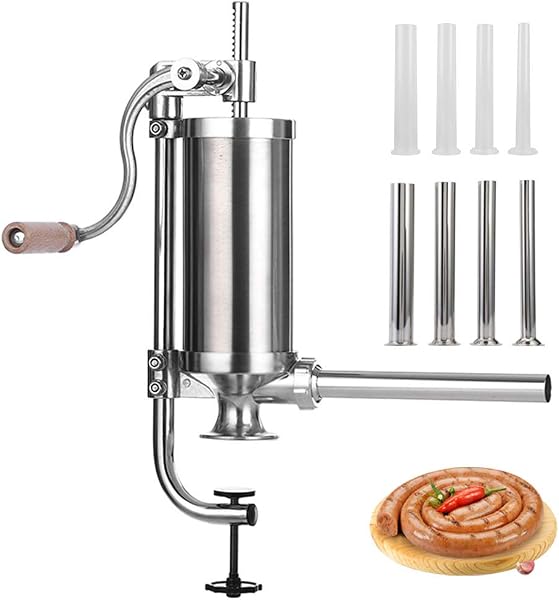
2.5LB Vertical Stainless
9.0Editor score2.5 lb capacity
Vertical stainless design
Eight stuffing tubes
Ergonomic handle grip
Find the right sausage stuffers for 2026. We compare 10 standout options by build quality, useful features, owner feedback, value, and everyday trade-offs.
Choosing a sausage stuffer in 2026 means weighing capacity, orientation, gear quality, stuffing tube variety, air release design, and how much volume you actually make in a session. We compare 10 standout manual and electric models from Hakka, LEM, VEVOR, and CLIVIA so you can match build quality, tube sizes, and speed control to your kitchen and typical batch size.
Sausage stuffers vary widely. Compact 2 to 3-pound units suit occasional home use, mid-range 5 to 7-pound vertical machines handle serious hobbyist batches, and 15 to 22-pound commercial or electric models take on butcher-shop volume. Dual-speed gearing, air release valves, all-stainless construction, and tube diameter range all shape how enjoyable the process actually feels.
This roundup covers budget horizontal fillers, mid-tier stainless verticals, professional LEM machines, and heavy-duty VEVOR electric units. Each entry highlights ideal use, real tradeoffs, and who benefits most, so whether you make holiday breakfast links, hunt-season bratwurst, or run a small food business, you’ll find a match that fits your kitchen and workflow.
We compared 10 sausage stuffers using the criteria that shape real kitchen use: capacity, orientation (vertical or horizontal), gear material and durability, stuffing tube variety and material, air release design, base stability, cylinder removability for cleaning, warranty coverage, owner feedback, and value at each price point. The notes focus on practical tradeoffs so each pick connects to how home cooks, hunters, and small operations actually make sausage in real conditions.

Compare key features, scores, and current prices side by side. A shorter feature list means fewer details were available, not necessarily fewer capabilities.


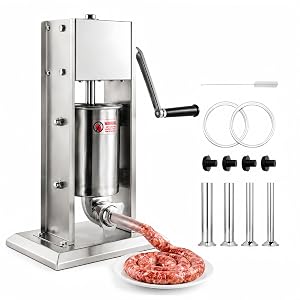


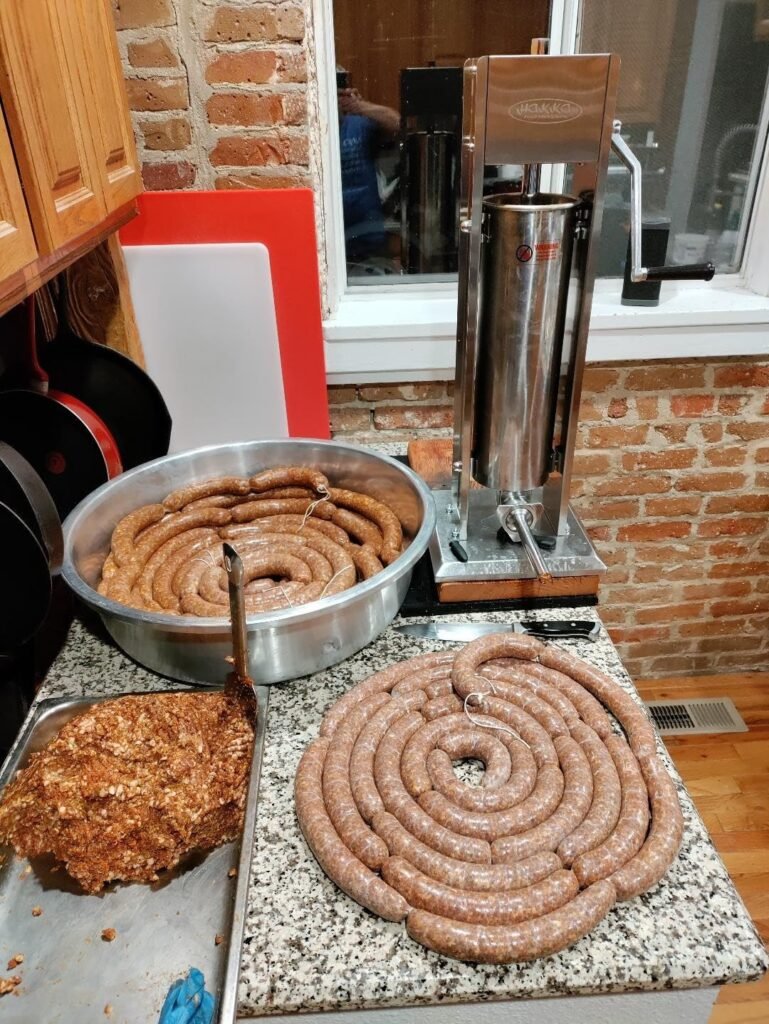
The Hakka 7-pound vertical stuffer earns its editor's choice status through a combination of proven reliability, all-stainless construction, and one of the highest owner ratings in the category. The 3-liter cylinder accepts about 7 pounds of ground meat, which hits a sweet spot for serious home cooks, hunters processing game, and small-batch smokehouse hobbyists.
We may earn a commission when you buy through this link, at no additional cost to you.
The two-speed gear system makes real practical sense. High speed lowers the piston quickly between fills, while low speed provides the controlled pressure needed to feed casings evenly without bursting. Combined with an air-release piston, this design produces the tight, well-shaped sausages that separate professional-looking results from lumpy, air-pocketed home attempts.
Every part that touches food is stainless steel, including the base plate, cylinder, stuffing tubes, and canister, and materials meet SGS food hygiene standards. Four different nozzle diameters (16mm, 22mm, 32mm, and 38mm) cover breakfast links, Italian sausages, bratwurst, and larger summer sausages. The vertical design uses gravity to help meat feed smoothly and takes up less horizontal counter space than a comparable horizontal filler.
Two-speed gearing dramatically speeds up sausage making. High speed lifts the piston back to the top quickly between meat loads, while low speed delivers slow, controlled pressure during actual stuffing. Single-speed units force you to crank at the same rate for both operations, which turns a 30-minute session into an hour of frustration.
Choose the Hakka if you want a serious home or hunt-season stuffer that will handle years of use without complaint. It costs more than budget horizontal units, but the build quality and 4.8-star track record justify it. For occasional 2-pound batches, cheaper vertical models can work; for anyone graduating past the basics, this is the natural target.
Occasional users who only make one or two pounds of sausage a year.
We may earn a commission when you buy through this link, at no additional cost to you.
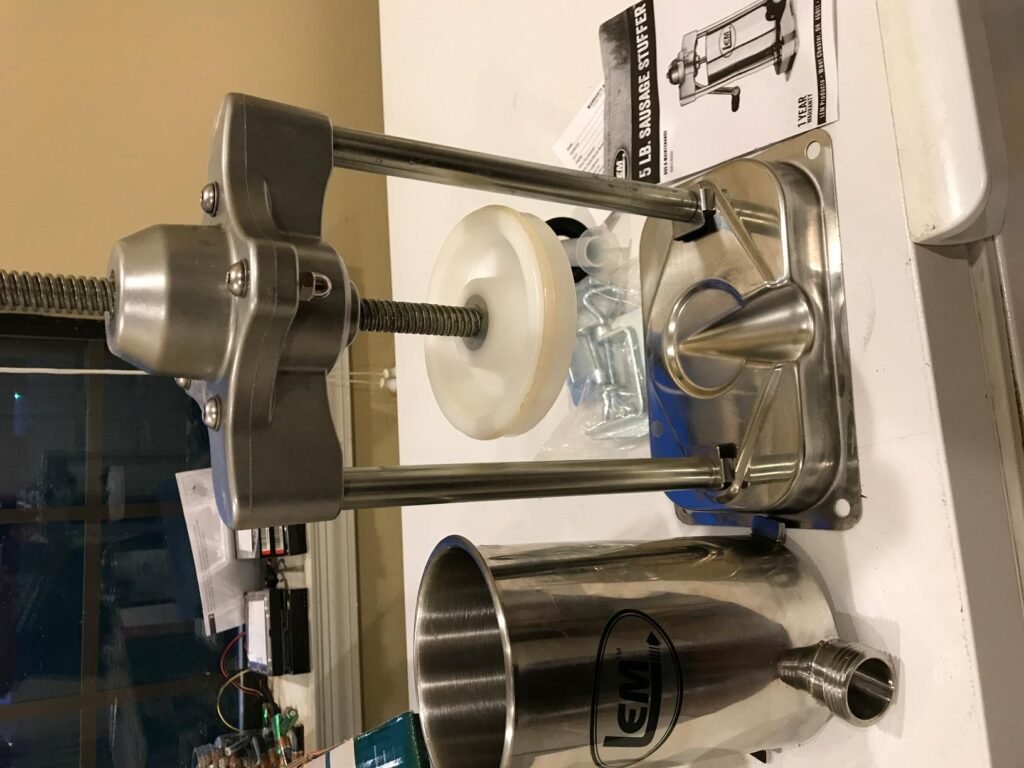
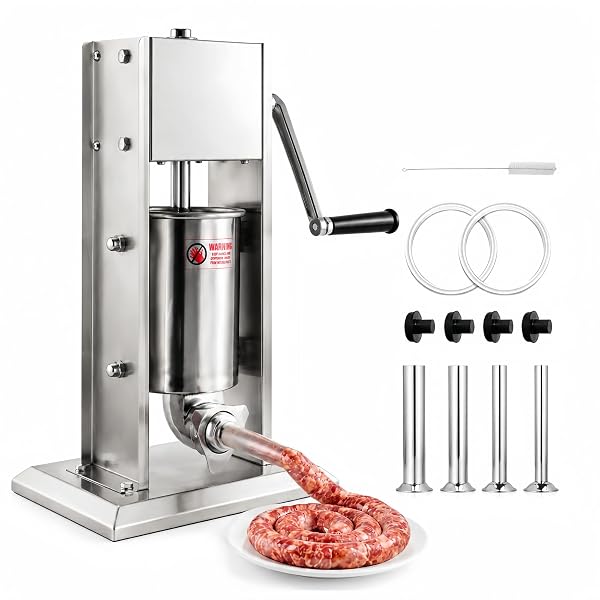
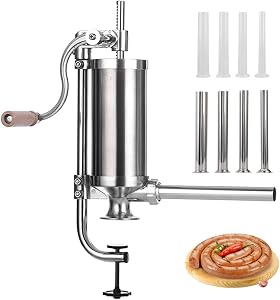
This 2.5-pound vertical stuffer targets home cooks who want the ergonomic advantages of a vertical design without the space demands of a larger machine. The stainless steel build handles the corrosive nature of salt cures and brines that come with sausage making, and the vertical orientation lets gravity work with you as the piston pushes meat down and out through the tubes.
We may earn a commission when you buy through this link, at no additional cost to you.
The standout feature is the eight-tube kit. Most stuffers in this price range include three or four tubes, so eight sizes covers essentially every casing diameter you’re likely to encounter, from thin snack sticks to thick summer sausage. That flexibility matters more than it sounds when you want to experiment with different sausage styles without buying separate accessories.
The sturdy base and ergonomic handle make one-person operation practical, which is important since sausage stuffing traditionally benefits from having a second set of hands. The compact footprint tucks away in a cabinet between uses, unlike larger 5 to 7-pound stuffers that often need dedicated shelf space. For apartment kitchens or infrequent users, that compactness matters.
Vertical stuffers use gravity to help meat feed smoothly and require less countertop space than horizontal units. Horizontal models like the Lawei can offer slightly faster stuffing because you push meat directly toward the tube, but they need more depth on the counter and don’t stabilize as reliably during heavy work.
Choose this stuffer if you make small batches occasionally and value tube variety and space efficiency over raw capacity. The 2.5-pound cylinder means more refills for larger projects, so it’s not ideal for hunt-season game processing or holiday-scale batches. For weekly breakfast links or weekend brat runs, it’s a smart, practical pick.
Serious hunters, large-batch producers, or anyone processing more than a few pounds at a time.
We may earn a commission when you buy through this link, at no additional cost to you.
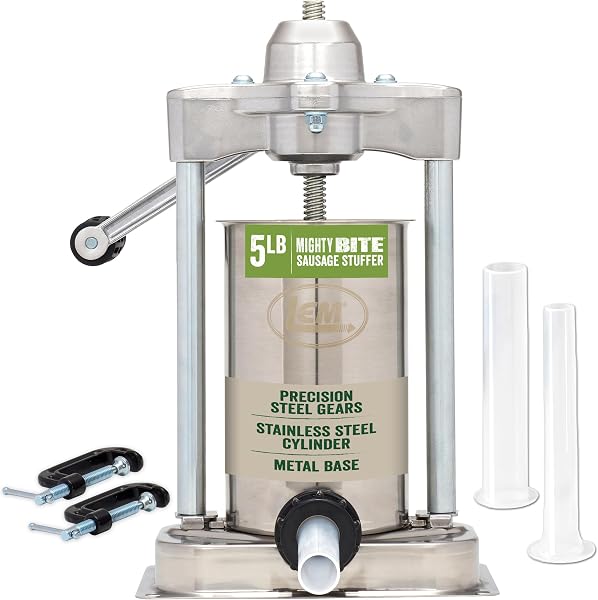
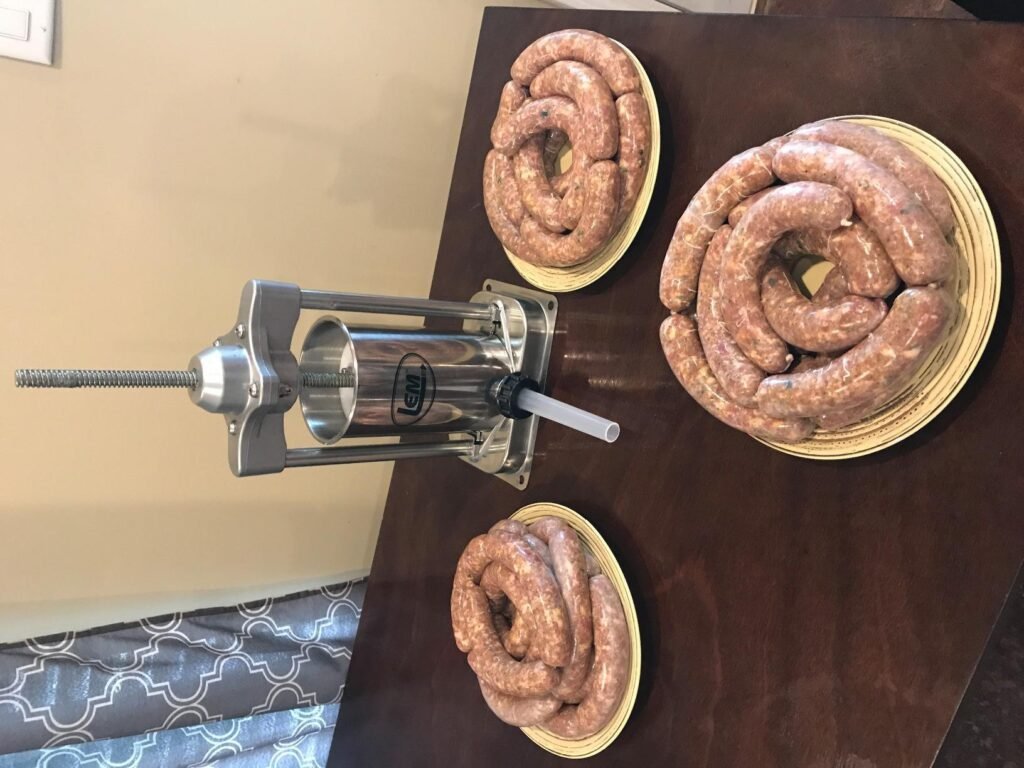
The LEM MightyBite is the pick for buyers who want serious durability from a brand known specifically for meat processing equipment. The precision-machined metal gears set it apart from stuffers that use plastic or nylon gears, which can wear down or slip under heavy loads. For anyone planning to make sausage regularly for years, that engineering choice pays off in longevity.
We may earn a commission when you buy through this link, at no additional cost to you.
The 5-pound cylinder hits a practical middle ground: enough capacity for meaningful batches without the bulk of 7 or 15-pound units. Included clamps let you secure the base to a countertop for one-person operation, which is a real advantage since sausage stuffing traditionally requires steady base pressure. A built-in air release valve reduces trapped air pockets that ruin sausage texture.
The removable stainless steel cylinder makes filling and hand-cleaning straightforward, and a protective gearbox cover shields food from contaminants. Three included plastic stuffing tubes (11/16-inch, 7/8-inch, and 1-inch OD) cover bratwurst, Italian sausage, and summer sausage. Plastic tubes are the main compromise for this price; buyers who prefer stainless can source them separately.
Metal gears cost more upfront but resist wear far better than plastic under repeated heavy use. If you process 20 or 30 pounds a year, plastic gears may serve you fine; if you’re running through 100+ pounds annually or working stiff meat mixtures, metal gears prevent slippage and premature failure that plastic can’t match.
LEM’s two-year factory warranty and lifetime customer support back the investment meaningfully. Replacement parts are available for a wide range of LEM products, which matters for a machine you plan to keep and repair rather than replace. Choose the MightyBite if long-term reliability and brand support matter as much as immediate features.
Casual users who only make sausage once or twice a year and don’t need commercial-grade durability.
We may earn a commission when you buy through this link, at no additional cost to you.
The Lawei horizontal stuffer is the entry-level pick for cooks who want to try sausage making without a $100+ commitment. At about $25 and 2-pound capacity, it's perfect for testing the craft, making occasional breakfast links, or dedicated small-batch cooks who prefer horizontal operation. The all-stainless body handles the sanitation demands of meat work reliably.
We may earn a commission when you buy through this link, at no additional cost to you.
Horizontal design has real practical merits. You push meat directly toward the tube on a flat plane, which some users find intuitive and physically comfortable compared to cranking a vertical unit. The suction cup base secures the stuffer to the countertop, giving you the stability needed for one-person use without additional clamps or holders.
Three stuffing tubes (15mm, 19mm, and 22mm) cover breakfast sausage, Italian sausage, and thicker brats or hot dogs. The included piston is designed to expel air from casings, which is essential for producing sausages that don’t burst or develop air pockets. Cleanup is straightforward: the entire body disassembles for hand washing, and the stainless surfaces resist staining.
Horizontal stuffers work well for small batches where you want direct visual control of the meat feeding into the tube. They take more counter depth than vertical units but eliminate the vertical crank mechanism, which some users find easier physically. For 2 or 3-pound batches, the design is perfectly practical.
Choose the Lawei if you want to explore sausage making on a budget or need a compact backup stuffer for occasional use. The 2-pound capacity means frequent refills for anything beyond a few pounds of finished product, so serious hunters or holiday-batch cooks should look at 5-pound or larger units. For casual weekend cooks, it’s a smart, low-risk pick.
Buyers who need larger capacity, faster fill times, or professional-grade construction.
We may earn a commission when you buy through this link, at no additional cost to you.
The VEVOR 15-pound stuffer targets hunters processing game, home butchers doing whole-hog projects, or small food operations that need serious throughput without stepping up to electric. The 7-liter barrel holds about 15 pounds of meat in a single fill, dramatically reducing refill downtime compared to 5 or 7-pound machines.
We may earn a commission when you buy through this link, at no additional cost to you.
Dual-speed gearing handles the practical reality of large-batch work. Fast speed lifts the piston quickly between fills, and slow speed provides the controlled pressure needed for even casing feeding. Ergonomically designed handles reduce hand fatigue during extended sessions, which matters when you’re processing 30 or 40 pounds of sausage in an afternoon.
Five stuffing tubes cover a broad range of sausage styles from thin breakfast links to thick summer sausages, and the air-release valve on the pressure plate expels trapped air without requiring you to puncture casings. Food-contact components use SUS304 stainless steel, which meets the same hygiene standards as commercial food-service equipment. The detachable design supports thorough cleaning between batches.
Capacity affects workflow more than shoppers often realize. A 15-pound stuffer handles a typical deer’s worth of sausage meat in one load; a 5-pound stuffer needs three refills for the same job, each requiring stopping, reloading, and re-priming. For batch-heavy sessions, larger capacity dramatically speeds the process.
Consider this VEVOR if you regularly work with 10-plus pounds of meat and want manual operation without the price and complexity of electric models. It’s overkill for casual cooks and takes significant counter space when in use. For hunters, small farmers, and serious hobbyists, the capacity earns its footprint.
Casual users who make small batches or lack space for a full-size stuffer.
We may earn a commission when you buy through this link, at no additional cost to you.
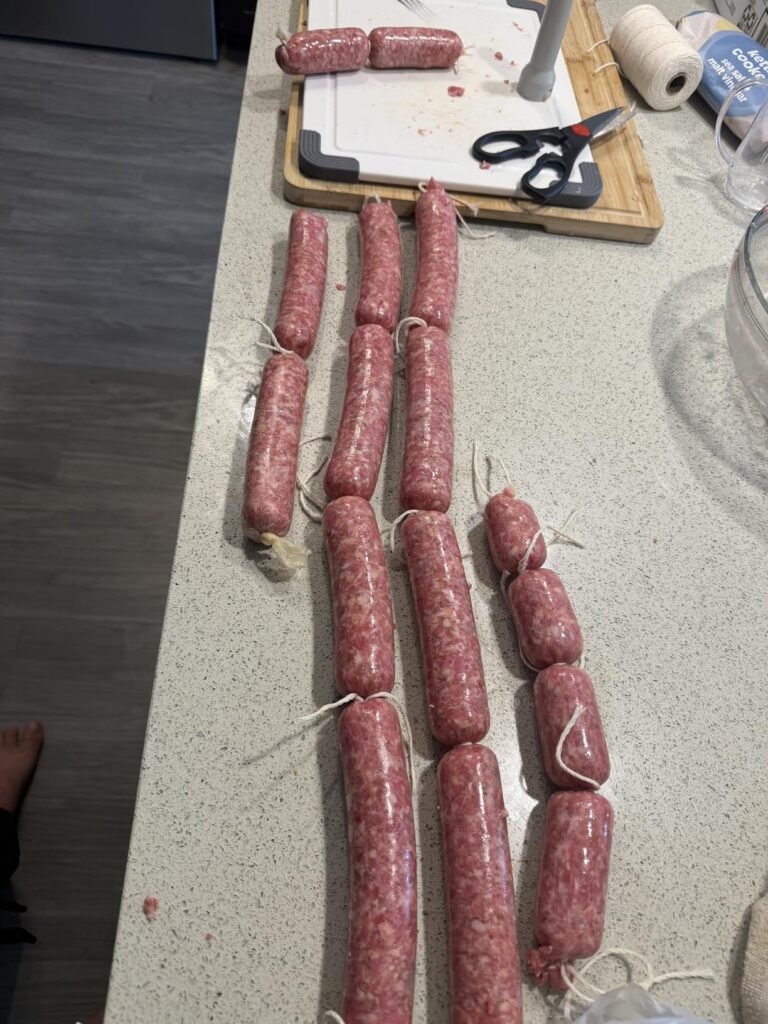
This budget 2.2-pound stuffer takes the simplest possible approach: load the barrel with seasoned meat, attach a tube, and press the piston down by hand. No gears, no cranks, no complex mechanisms to break or maintain. For pure entry-level use where you want to try sausage making before investing in a mechanical stuffer, it's the lowest-friction option available.
We may earn a commission when you buy through this link, at no additional cost to you.
Four different tube diameters (0.51-inch, 0.71-inch, 0.91-inch, and 1.1-inch) cover the main sausage styles including breakfast links, snack sticks, bratwurst, and Italian sausage. Tubes swap in seconds without extra tools, which makes it easy to work through different recipes in one session. The 2.2-pound barrel handles typical family-batch prep.
Food-contact parts use BPA-free plastic and 304 stainless steel for safe daily use, and a sturdy non-slip base keeps the stuffer steady during the pressing motion. The vertical design uses gravity to help meat feed smoothly toward the tube, and the simple piston design means fewer parts to clean or wear out over time.
Simple press stuffers rely entirely on your hand strength, which becomes tiring quickly on larger batches. Geared units multiply your force through mechanical advantage, letting you fill casings with less effort and more control. For batches over 2 pounds, geared operation becomes noticeably more comfortable.
The 3.9-star rating reflects the tradeoffs of ultra-simple design: it works, but requires physical effort and won’t match the smooth operation of geared stuffers. Consider it if you want the absolute cheapest entry point or if you value mechanical simplicity over speed. For anyone planning to make sausage regularly, stepping up to a geared unit like the Hakka delivers meaningfully better results.
Regular sausage makers or anyone processing more than a couple of pounds at a time.
We may earn a commission when you buy through this link, at no additional cost to you.
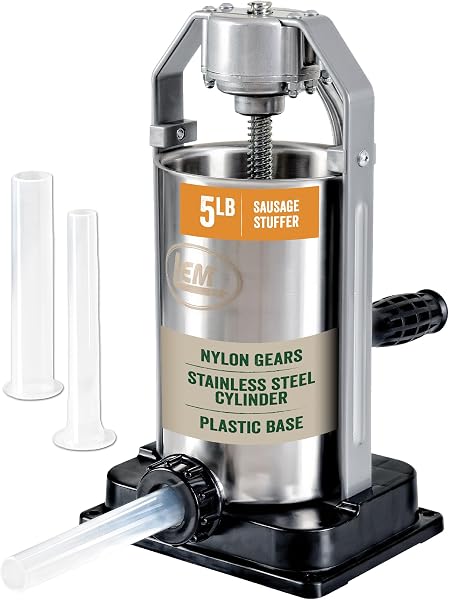
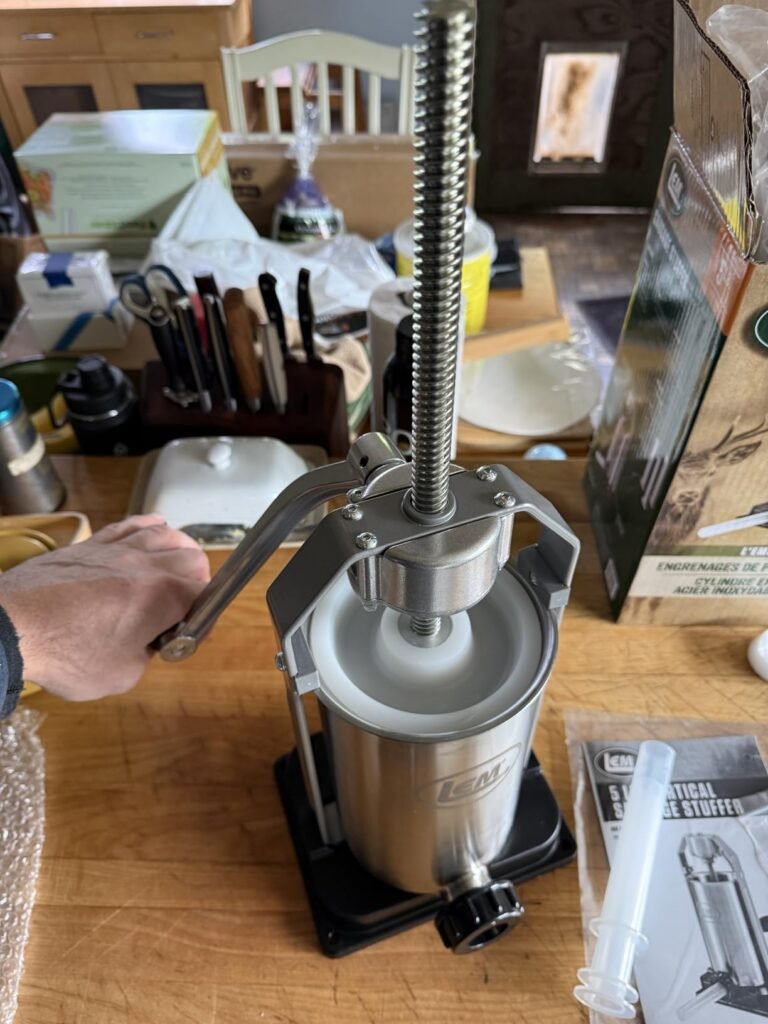
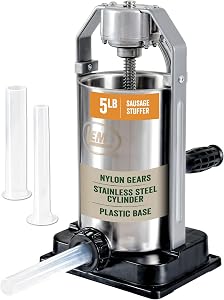
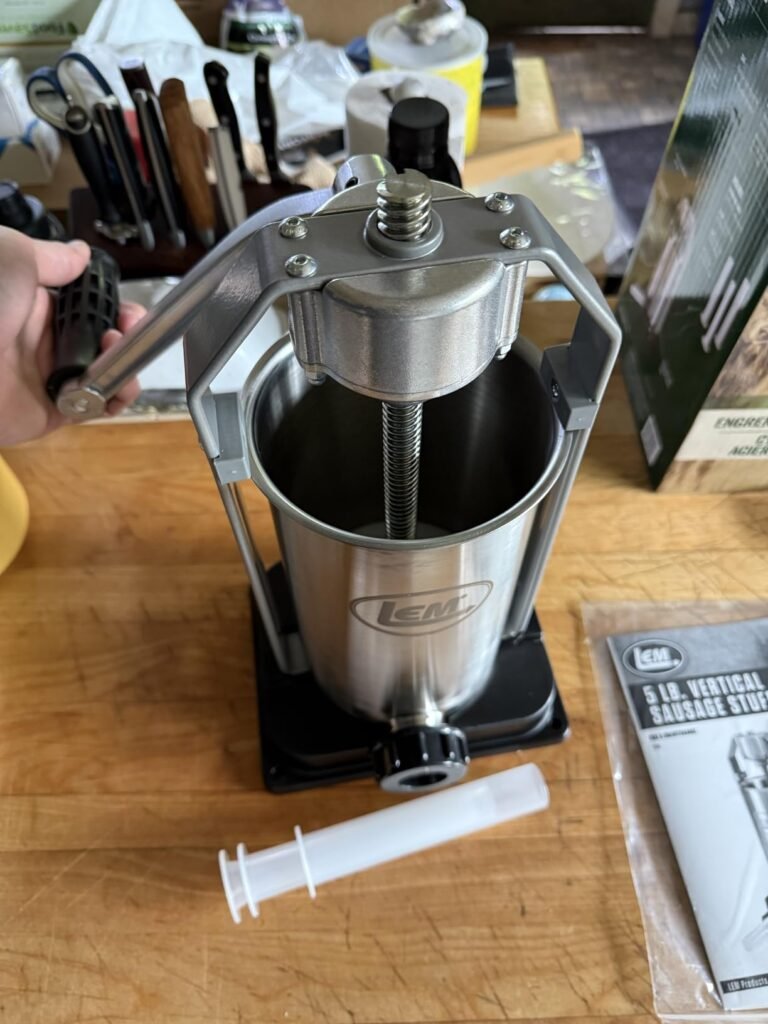
The LEM 5-pound beginner stuffer offers the LEM brand's trusted design at a lower entry price than the metal-geared MightyBite. Reinforced nylon gears prevent slippage under typical home-batch loads, and the lightweight base has bolt-down options if you want to secure it permanently to a workbench (though clamps are not included in the box).
We may earn a commission when you buy through this link, at no additional cost to you.
The 5-pound cylinder matches what most beginners can comfortably handle in a single session, and the removable stainless steel design simplifies both filling and cleanup. A built-in air release valve reduces trapped air pockets that plague amateur sausage attempts, and the protective gearbox cover keeps food debris away from the mechanical parts.
Three included plastic stuffing tubes (11/16-inch, 7/8-inch, and 1-inch OD) cover the main sausage styles, and all tubes are hand-wash only. The user manual walks through assembly, safety, and basic sausage-making guidance, which is genuinely helpful for first-time buyers who may not have made sausage before. LEM’s one-year warranty and lifetime customer support add long-term peace of mind.
Reinforced nylon gears handle typical home-batch loads without issue and cost less than metal alternatives. For occasional users making 20 or 30 pounds a year, nylon lasts many seasons with normal care. Heavy users or those working stiff mixtures benefit more from metal gears, but the difference matters mainly at higher production volumes.
Choose this beginner LEM if you want the brand’s ecosystem and support without the metal-gear price premium. For occasional small-batch use, nylon gears hold up fine, and you can upgrade to the MightyBite later if you find yourself making sausage more regularly. It’s the safest entry point into the LEM ecosystem.
Heavy users, hunters processing significant game, or buyers who want metal-gear longevity.
We may earn a commission when you buy through this link, at no additional cost to you.
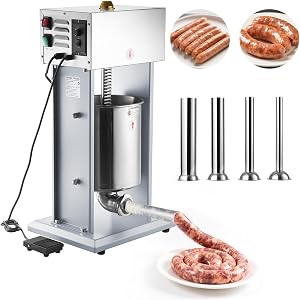
The VEVOR electric stuffer targets small food businesses, serious hobbyist producers, and hunters who process significant volume and want hands-free operation. The 22-pound capacity handles large-batch work with minimal refills, and the 200-watt motor combined with a foot pedal frees both hands to guide casings and manage the sausage as it's produced.
We may earn a commission when you buy through this link, at no additional cost to you.
Stepless speed adjustment matches motor output to the type of meat and casing you’re working with, which matters more than fixed high-low speeds when different sausage styles require different pressures. The vented pressure plate improves output efficiency by releasing trapped air during pressing, producing firm sausages without the internal air pockets that cause bursting or texture problems.
The tilting barrel simplifies loading large amounts of ground meat, and the stainless steel construction resists rust and cleans up easily. Four included stuffing tubes (0.63-inch, 0.87-inch, 1.26-inch, and 1.50-inch outer diameter) cover the main sausage sizes, and all removable components including the barrel, piston, and tubes are dishwasher-safe.
Electric stuffers earn their price when you regularly process 20-plus pounds per session and need hands-free operation to manage casings. For occasional home users or hunt-season batches, manual stuffers deliver equivalent results with less complexity and lower long-term maintenance risk. Reserve electric for genuine production needs.
The 3.6-star rating is lower than most competitors, suggesting quality control or motor reliability may be inconsistent for some buyers. Consider this electric model if hands-free operation and large capacity are must-haves for your workflow. For most home users, a manual 7-pound stuffer like the Hakka or CLIVIA delivers better ownership value; the electric approach makes sense mainly for genuine commercial or high-volume applications.
Casual home users or anyone processing under 15 pounds of meat per session.
We may earn a commission when you buy through this link, at no additional cost to you.
This VEVOR 7-pound stuffer competes directly with the Hakka and CLIVIA in the mid-size vertical space, offering similar capacity with five tube sizes and dishwasher-safe components. The tilting barrel is a genuinely useful design touch: it makes loading ground meat noticeably easier than lifting meat over a fixed-position barrel edge.
We may earn a commission when you buy through this link, at no additional cost to you.
Dual-speed gearing handles both fast piston lifting between fills and controlled slow pressing during actual stuffing, which are the two operations that dominate real sausage-making time. The ergonomic handle reduces hand strain during extended sessions, and the air-release holes in the pressure plate expel excess air during pressing without requiring you to puncture casings repeatedly.
Five stuffing tubes (0.47-inch, 0.63-inch, 0.87-inch, 1.26-inch, and 1.50-inch OD) cover the widest range of sausage styles in this lineup, from tiny snack sticks to thick summer sausages. All food-contact components meet food-grade standards with smooth burr-free interiors that don’t tear casings. The stainless steel body, base, and cylinder resist rust and clean easily.
Dishwasher-safe components save real time on cleanup, especially after a long stuffing session. Not all sausage stuffers can go in the dishwasher; some require hand washing only. If your workflow benefits from throwing parts in the dishwasher between batches, this is a meaningful convenience factor to prioritize.
Consider this VEVOR if you want the largest tube variety in a mid-size manual stuffer and value dishwasher-safe cleanup. It’s a direct alternative to the Hakka; the Hakka has a slightly higher star rating and longer brand track record, while this VEVOR offers more tubes and a tilting barrel. For hunt-season use or serious hobbyist batches, both are strong choices.
Buyers who prioritize the strongest brand ecosystem like LEM’s long history.
We may earn a commission when you buy through this link, at no additional cost to you.
The CLIVIA 7-pound vertical stuffer is a direct competitor to the Hakka editor's pick and earns nearly identical owner ratings. It shares the same 7-pound capacity, two-speed gearbox, and four stuffing tube configuration, so the choice between them often comes down to price and availability more than functional difference.
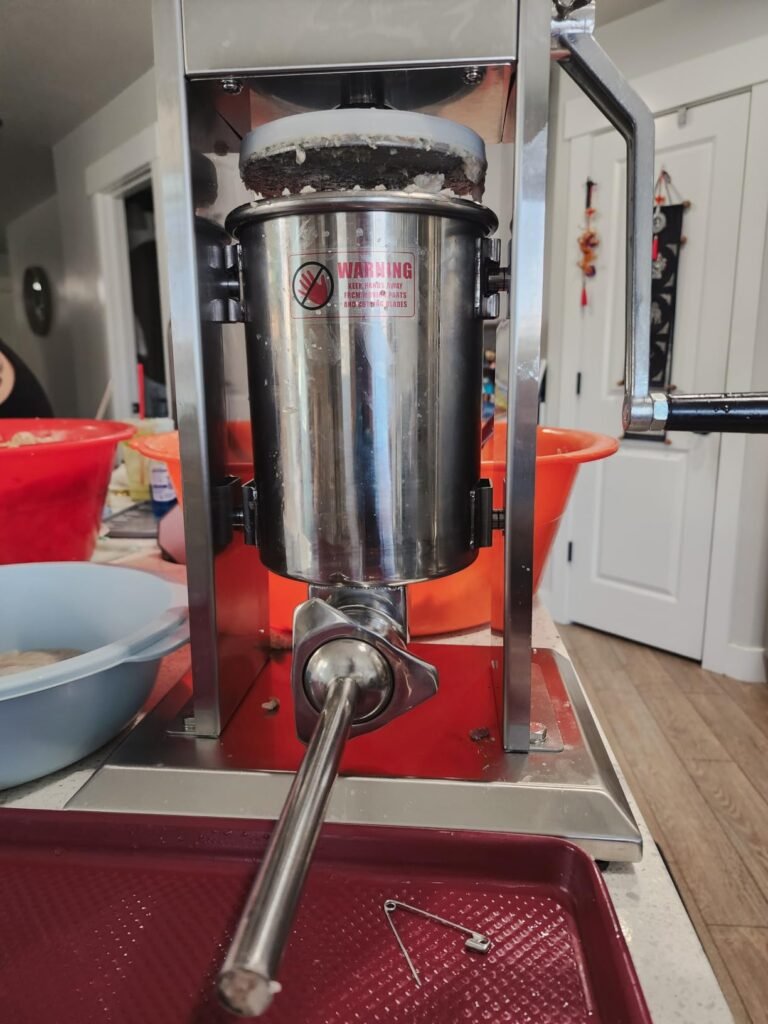
We may earn a commission when you buy through this link, at no additional cost to you.
The two-speed professional gearbox handles both fast piston movement and controlled slow stuffing, matching what serious sausage makers need for efficient batch work. Four stainless steel tubes (16mm, 22mm, 32mm, and 38mm) cover breakfast links, Italian sausages, bratwurst, kielbasa, chorizo, and salami, which is the same set that makes the Hakka so versatile.
The upgraded stainless steel piston with integrated air release valve automatically minimizes trapped air during stuffing, producing tighter and denser sausages without requiring casing puncturing. The entire construction uses food-grade stainless steel including the cylinder, base plate, canister, and stuffing tubes, all rust-resistant and easy to sanitize between batches.
Hakka has a longer track record in the meat processing space and slightly higher star ratings. CLIVIA offers essentially identical functionality at a competitive price. Both are solid choices; buy whichever you find at a better price on the day you’re shopping, since the practical differences are minor for most users.
Choose CLIVIA if you find it at a better price than the Hakka or if you prefer its specific design touches. Both are backed by a one-year warranty and share essentially the same core specifications. For serious home cooks and commercial small-batch operations, either delivers the durability and features that separate professional-quality results from home-kitchen frustration.
Buyers who insist on the longest-established brand history or need capacity beyond 7 pounds.
We may earn a commission when you buy through this link, at no additional cost to you.
Sausage stuffers range from $25 horizontal budget units to $300 electric commercial machines. The right pick depends on how much you make per session, whether you value manual craft or motorized speed, and how serious you are about long-term ownership. Here are the factors that shape a smart buying decision.
Capacity is measured in pounds or liters and directly affects how many refills you need per session. Small 2 to 2.5-pound units like the Lawei and 2.5LB Vertical suit occasional cooks making one or two pounds of breakfast links. Mid-size 5 to 7-pound stuffers like the LEM MightyBite, Hakka, VEVOR 7 LB, and CLIVIA handle serious home batches and typical hunt-season work. Large 15-pound and 22-pound units like the VEVOR manual and electric target hunters processing entire animals and small food operations.
Choose capacity based on your typical session, not your maximum ambition. A 15-pound stuffer is overkill if you usually make 3-pound batches, and a 2-pound stuffer becomes frustrating if you regularly need 10-pound outputs. Larger stuffers also take more counter space and are heavier to move, so factor in your kitchen layout too.
For most home cooks, 5 to 7 pounds hits the sweet spot. Small households can start smaller; hunters and enthusiasts benefit from larger.
Vertical stuffers like most of the models in this roundup use gravity to help meat feed smoothly toward the tubes, and they take less horizontal counter space than horizontal designs. The crank mechanism uses mechanical advantage to make stuffing easier on your arms and hands, which matters especially on larger batches. Vertical designs also tend to be more stable because the weight sits low over a wider base.
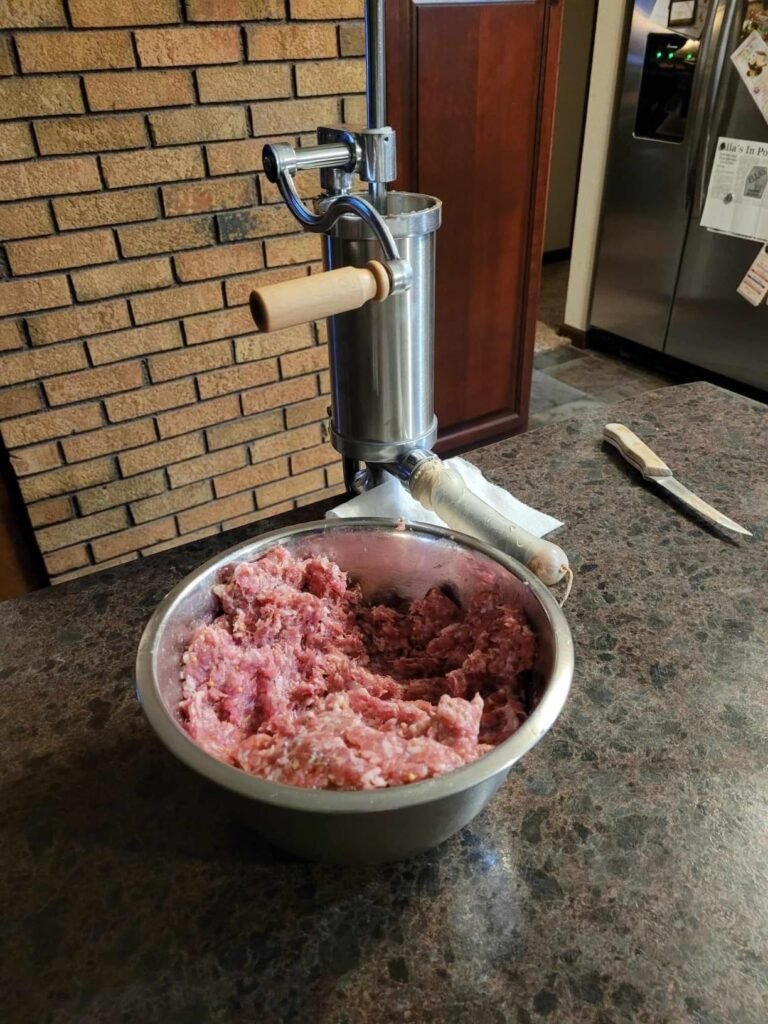
Horizontal stuffers like the Lawei push meat directly toward the tube on a horizontal plane. They can be intuitive for beginners because the motion mirrors squeezing a piping bag, and they don’t require the vertical crank arm swing. The tradeoffs are more countertop depth needed and typically smaller capacities. Horizontal units also require a very stable surface or suction cups to prevent sliding during use.
For batches over 3 pounds, vertical designs generally win. For very small or occasional use, horizontal can be perfectly comfortable.
Gears drive the piston that pushes meat through the tubes, and their material affects long-term durability significantly. Precision-machined metal gears (like the LEM MightyBite’s) resist wear and slippage under heavy loads and can last for decades of regular use. Reinforced nylon gears (like the LEM beginner unit and many Hakka-style stuffers) handle typical home use well but wear faster than metal under intense duty.
For occasional home users making 20 to 30 pounds a year, nylon gears usually last many seasons without issue. For heavy users processing 100+ pounds annually, dealing with stiff meat mixtures, or running semi-commercial operations, metal gears prevent premature failure and slippage. The upfront cost difference pays off in longevity for serious users.
For most home cooks, nylon gears are sufficient. For hunters, small businesses, or dedicated enthusiasts, invest in metal gears.
Tube diameter determines what kinds of sausages you can make, and having the right sizes matters more than most first-time buyers realize. Small tubes around 16mm to 19mm suit breakfast links and snack sticks. Medium tubes around 22mm to 25mm handle standard bratwurst and Italian sausage. Larger tubes at 32mm to 38mm produce summer sausage, kielbasa, and thick-cased varieties. Most stuffers include three to five tubes; the 2.5LB Vertical stands out with eight.
Tube material matters too. Stainless steel tubes (found on the Hakka, CLIVIA, and 2.5LB Vertical) are more durable, easier to sanitize, and less likely to warp under pressure than plastic tubes (found on both LEM models). Plastic tubes are typically dishwasher-safe on the low rack and cost less to replace if damaged, so it’s less of a critical downside than it sounds.
For maximum flexibility across sausage styles, prioritize stuffers with four or more tube sizes and stainless steel construction.
Air trapped inside sausages causes bursting during cooking and creates unappealing air pockets in the finished product. Modern stuffers include air release valves or vented pistons that let excess air escape during stuffing. All the premium options in this roundup (Hakka, LEM, CLIVIA, VEVOR models) include air release designs; budget stuffers sometimes omit this feature or implement it less effectively.
An effective air release system saves real time. Without it, you need to puncture each casing repeatedly with a needle to release air pockets, which is tedious and risks tearing the casing. With a proper air release valve, the vast majority of air escapes automatically as the piston presses down. Look specifically for stuffers that mention this feature in their design.
For anyone taking sausage making seriously, air release capability is non-negotiable. Skip stuffers without it.
Two-speed gearing is a major upgrade over single-speed operation. Fast speed lifts the piston back to the top quickly between refills, and slow speed provides the controlled pressure needed for consistent casing filling. Single-speed stuffers force you to crank at one rate for both operations, which dramatically slows the workflow, especially on larger batches.
Every mid-range and higher stuffer in this roundup (Hakka, VEVOR models, CLIVIA) includes dual-speed gearing. The LEM MightyBite and beginner units are single-speed but their overall build quality compensates. The VEVOR 22 LB electric offers stepless speed adjustment, which lets you fine-tune output rate to different meat types and casing sizes.
For batches over 3 pounds, prioritize dual-speed operation. For very small occasional batches, single-speed is manageable.
Sausage stuffing is messy work, so cleanup design matters enormously. Removable cylinders (found on most premium models) let you empty and clean the barrel separately from the mechanism, which is critical for thorough sanitation. Look for stainless steel construction throughout, since it resists rust and stains from salt cures and meat proteins.
Some stuffers are dishwasher-safe for removable components (VEVOR models advertise this), while others require hand washing only (LEM units, tube sets on most models). Dishwasher-safe designs save significant time between batches, but hand washing isn’t a dealbreaker if you’re willing to invest 10 minutes of scrubbing time after each session. Avoid stuffers with tight crevices or complex parts that trap meat residue.
For frequent use, prioritize dishwasher-safe components. For occasional use, hand washing works fine with any well-designed unit.
Warranty coverage is a genuine signal of manufacturer confidence. LEM stands out with its two-year factory warranty on the MightyBite plus lifetime customer support and availability of replacement parts. VEVOR and CLIVIA offer one-year warranties, and budget brands often provide less clear coverage or shorter windows. For a machine you expect to keep for years, warranty and parts availability matter.
Brand ecosystem also affects long-term ownership. LEM has decades of experience specifically in meat processing equipment, and finding tubes, replacement piston seals, or repair parts is straightforward. Hakka has a solid track record in the space with good parts availability. Newer or lesser-known brands may offer competitive features but less certainty about long-term support.
For a lifetime purchase, favor LEM or established brands. For casual use, budget brands work fine as long as you accept the tradeoffs.
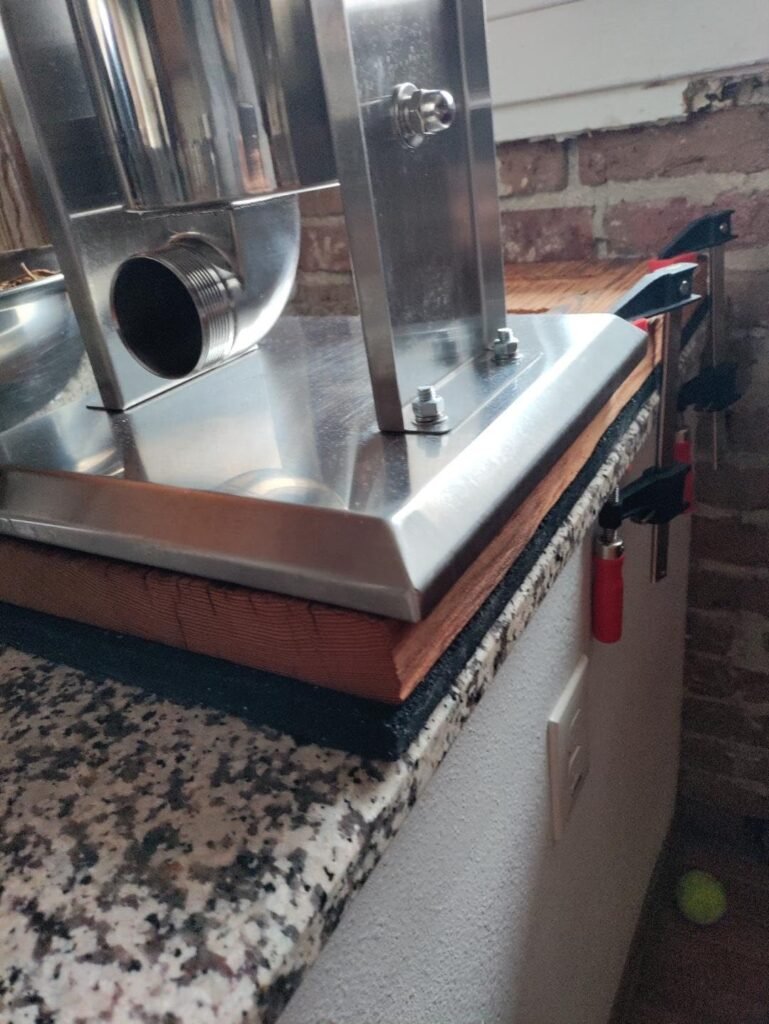
Sausage stuffing generates significant downward force through the crank arm and piston, and unstable base design turns the whole process into a wrestling match. Look for stuffers with weighted bases, non-slip feet, suction cups, or included clamps that let you secure the unit to a countertop. The LEM MightyBite includes clamps specifically to enable one-person operation.
Some stuffers rely on their own weight for stability, which works well for larger units but can be problematic for lighter machines during hard cranking. Suction cup bases (like the Lawei’s) work on smooth counters but not textured surfaces. Bolt-down mounting options (like the LEM beginner unit) enable permanent installation on a workbench, which is ideal for dedicated processing spaces.
For solo operation, prioritize weighted bases or included clamps. For casual use, weight and non-slip feet are usually adequate.
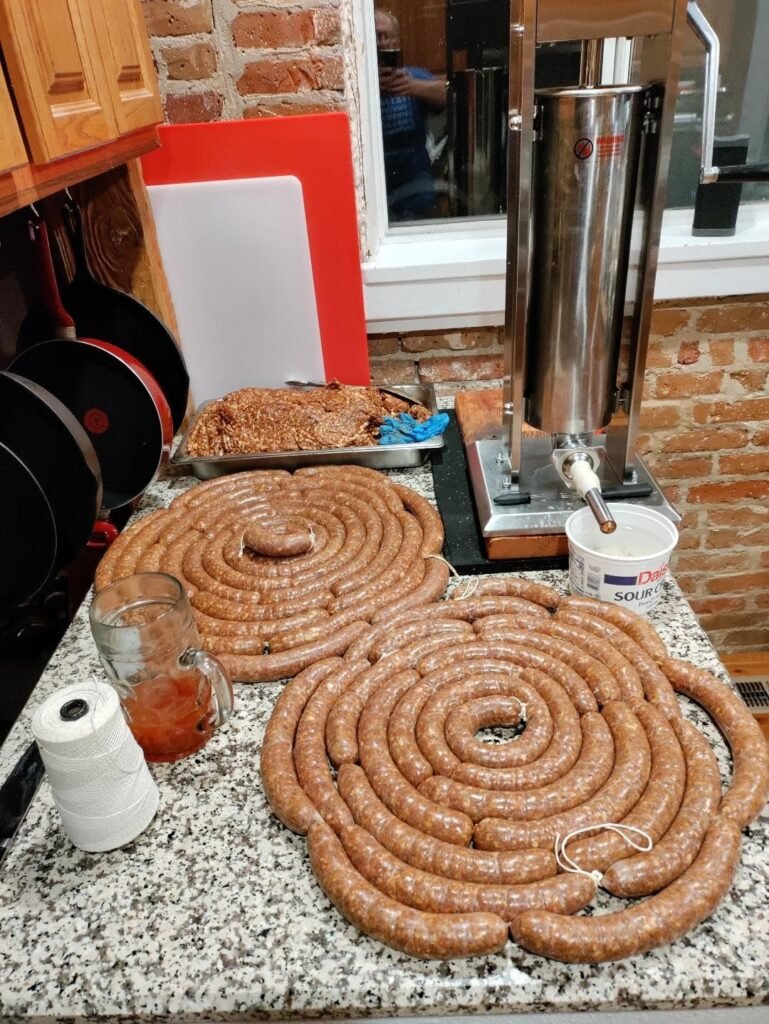
Before your first use, wash all components in hot soapy water and rinse thoroughly to remove any manufacturing residue. Assemble the stuffer following the included instructions, and verify that the piston moves smoothly through the cylinder without binding. Load your seasoned ground meat mixture into the cylinder in small batches, pressing down firmly with a spoon or the piston itself to eliminate as many air pockets as possible before beginning to stuff. Attach the tube size that matches your casing diameter, and slide pre-soaked casings onto the tube up to the base, leaving a small tail to knot after filling begins.
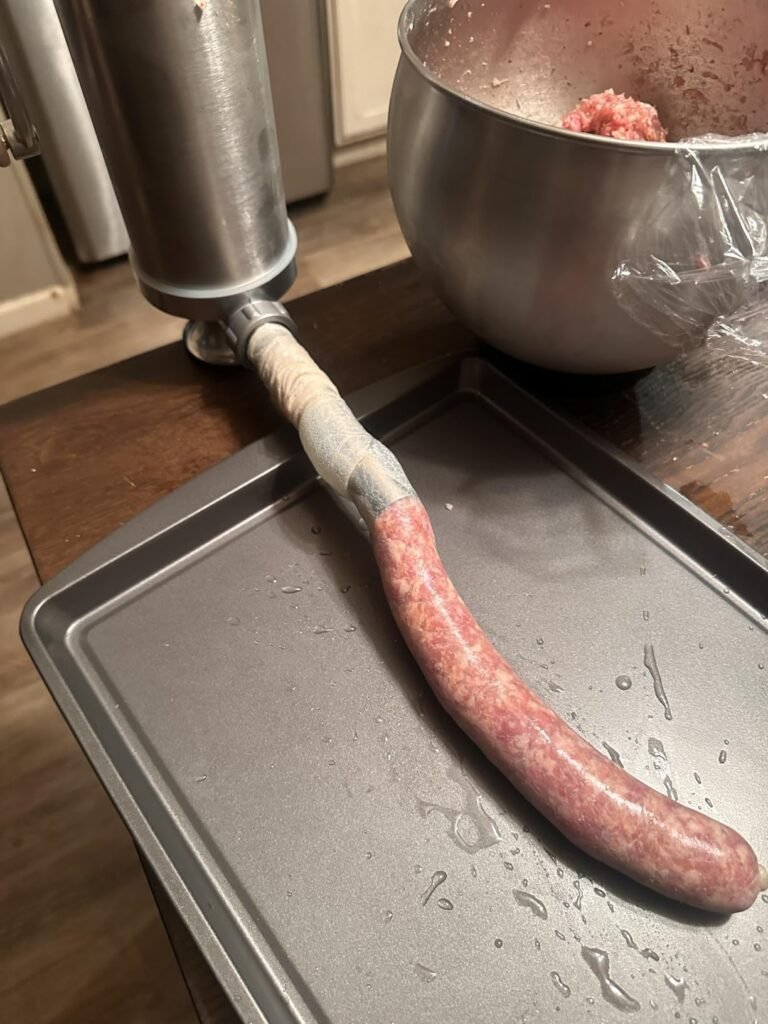
For the actual stuffing process, start with slow speed (or slow cranking on single-speed units) to maintain consistent casing pressure and produce evenly filled sausages. Support the emerging sausage with your non-cranking hand to guide it and prevent tears. Twist links every 4 to 6 inches for links, or leave the meat as one long rope to be twisted after stuffing. Air release valves work best when you press the piston steadily; if you see the casing swelling with air pockets, stop, back off the piston slightly, and let the air escape before continuing.
Clean immediately after each session to prevent meat proteins from drying into hard-to-remove residue. Disassemble the stuffer completely and wash cylinder, piston, tubes, and any removable parts in hot soapy water. Some units are dishwasher-safe for these components; hand washing with a bottle brush works for those that aren’t. Dry all parts thoroughly to prevent rust, especially on the gearbox and any exposed metal. Store the stuffer with the piston at the top of the cylinder to preserve seal integrity, and keep it in a dry cabinet. For long-term storage between seasons, lightly oil the gears with food-grade mineral oil to prevent corrosion.
Meat grinders with stuffing attachments can produce basic sausages, but they compact and force meat through the grinder mechanism first, which can smear fat and affect texture. A dedicated stuffer pushes pre-ground and seasoned meat gently through the tube without additional grinding, preserving proper sausage texture. For occasional single-pound batches, a grinder attachment works; for regular sausage making or better results, a dedicated stuffer is meaningfully better.
For occasional home cooks making 2 to 3 pounds of breakfast links or brats a few times a year, a 2 to 2.5-pound stuffer works fine. For regular hobbyists or small families making 5 to 10 pounds per session, a 5 to 7-pound unit like the Hakka, LEM MightyBite, or CLIVIA is the sweet spot. Hunters processing entire animals or small food businesses benefit from 15-pound or larger units to minimize refills.
Vertical stuffers dominate the category for good reason: gravity helps meat feed smoothly, they take less counter space, and mechanical advantage from the crank reduces effort. Horizontal designs like the Lawei work well for very small batches and can feel intuitive for beginners, but they need stable bases and more counter depth. For anything beyond occasional use, vertical is generally the better choice.
Breakfast links and snack sticks use small tubes around 16 to 19mm. Standard bratwurst, Italian sausage, and hot dogs use medium tubes around 22 to 25mm. Summer sausage, kielbasa, and thick-cased varieties use larger tubes at 32 to 38mm. Most stuffers include three to five tubes covering the main range. The 2.5LB Vertical stuffer stands out with eight tubes for maximum flexibility.
Yes, the same machine works for churros, snack sticks, pet food logs, and other extruded preparations. The vented pressure plate and air release valves that make sausages consistent also help with other applications. Just be aware that flavors can transfer between uses, so thoroughly clean the machine between sweet and savory preparations to avoid cross-contamination of tastes.
Stainless steel is highly recommended for anything that contacts food or salt cures. It resists rust, doesn't react with acidic ingredients, and sanitizes reliably. Aluminum parts can pit and react with salt over time, and plastic components may absorb odors or degrade with heat. Look for stainless steel cylinders, bases, and tubes as the standard; plastic tubes on units like the LEM models are acceptable tradeoffs for their price and brand support.
Electric stuffers make sense for genuine commercial or high-volume production where hands-free operation and speed matter. For most home users, manual stuffers deliver equivalent quality results at lower cost with less complexity and fewer things that can break. Reserve electric for buyers processing 20+ pounds regularly. For occasional home use, manual is the smarter investment.
Start by packing your seasoned meat mixture tightly into the cylinder to eliminate air before stuffing. Use a stuffer with an air release valve or vented piston, which lets excess air escape during pressing. Support the casing gently as it fills and pierce any visible air bubbles with a sterilized needle. Stuffing at slow speed with steady pressure also helps produce tighter, air-free links.
It depends on the model. VEVOR advertises dishwasher-safe components on several units. LEM tubes and pistons are hand-wash only. Most stainless steel cylinders and tubes can survive the dishwasher's top rack, but check the specific manufacturer's instructions before assuming. Hand washing with hot soapy water works for all models and gives you better control over sanitation.
A well-built stuffer with proper care can last decades. Metal-geared units like the LEM MightyBite are designed for lifetime use with normal home cooking. Nylon-geared stuffers typically last many years of casual use but wear faster under heavy loads. Stainless steel cylinders don't wear out; the mechanical parts (gears, seals, piston) are what eventually need replacement. LEM and other reputable brands offer replacement parts for long-term maintenance.
For most serious home cooks and hobbyist sausage makers, the Hakka 7Lb/3L vertical stuffer stands out as the strongest overall choice. Its combination of 7-pound capacity, dual-speed gearing, all-stainless construction, four included tubes, and category-leading 4.8-star rating delivers the reliability and versatility that separate a good stuffer from one you'll regret. It hits the practical sweet spot for hunt-season work, holiday batches, and dedicated hobbyist use.
Different priorities point to different picks. The LEM MightyBite is the top choice for buyers who value metal-gear durability and LEM's respected brand support with a two-year warranty. The Lawei horizontal stuffer offers an unbeatable entry price for cooks trying sausage making for the first time. The VEVOR 15-pound manual and 22-pound electric models serve hunters and small operations processing large volumes. The CLIVIA 7-pound vertical is a direct alternative to the Hakka at a similar price point, and the LEM beginner 5-pound offers the LEM ecosystem at a more approachable cost.
Start by defining your typical batch size, whether you value manual craft or motorized speed, and how much space you have for storage and use. Prioritize air release design, dual-speed gearing, and stainless construction for anything beyond occasional casual use. Match capacity to real needs rather than maximum ambition, and factor in warranty coverage for machines you plan to keep for years. Any stuffer in this roundup can serve the right buyer well, and the picks above should help you match capability to your workflow without overspending on features you won't use.