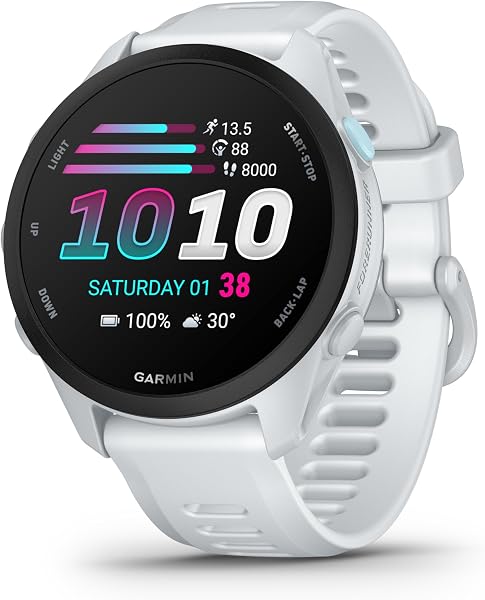
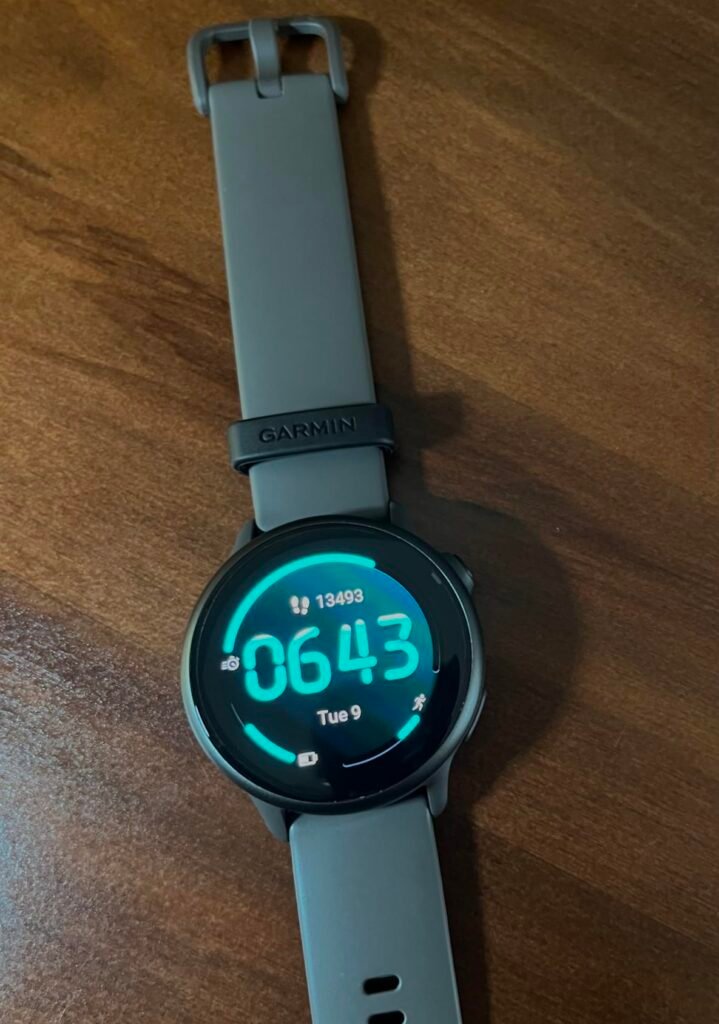
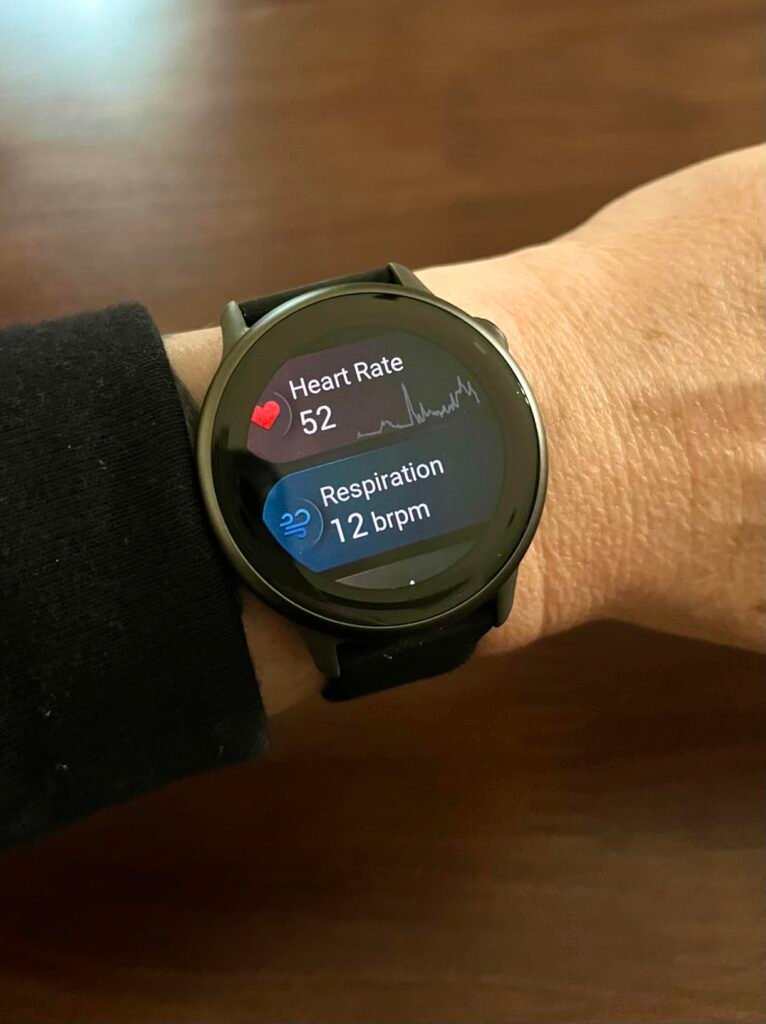
Garmin Forerunner 165
9.2Editor scoreAMOLED touchscreen display
11-day smartwatch battery
19-hour GPS battery
25+ activity profiles
Find the right running watches for 2026. We compare 10 standout options by build quality, useful features, owner feedback, value, and everyday trade-offs.
Find the right running watch for your 2025 training. We compare 10 standout Garmin options by the factors that matter most, including GPS accuracy, battery life in smartwatch and GPS modes, AMOLED display quality, training metrics like readiness and recovery, activity profiles, and overall value.
Battery life splits these watches into distinct tiers, from 18 hours of GPS tracking on the lightest models to over 30 hours on premium options. Training features vary just as widely, with daily suggested workouts and race widgets appearing across price points while advanced tools like training readiness and full-color maps sit at the top.
For most runners, the right choice comes down to display type, battery endurance, and how much coaching you want on your wrist. Beginner-friendly models handle pace, distance, and heart rate reliably, while performance-focused watches add recovery insights, multisport profiles, and positioning accuracy for more demanding training blocks.
We compared 10 Garmin running watches using the details that actually shape a training decision: GPS and battery endurance, AMOLED versus standard displays, daily suggested workouts, training readiness and recovery metrics, race widgets, activity profile counts, multisport support, size and weight, smart features like Garmin Pay and voice calls, and price. The notes focus on practical trade-offs so each pick connects to how runners actually train, race, and recover week to week.


Compare key features, scores, and current prices side by side. A shorter feature list means fewer details were available, not necessarily fewer capabilities.


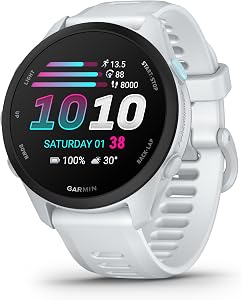


The Forerunner 570 earns the top spot for most buyers thanks to the highest rating in this comparison and a feature set that covers nearly every runner's needs. The 42mm aluminum-bezel case fits smaller wrists comfortably, and Garmin calls it the brightest AMOLED touchscreen in the lineup, paired with traditional button controls for reliable operation in any conditions. Training readiness and adaptive Garmin Coach plans for running and triathlon sit at the heart of the experience.
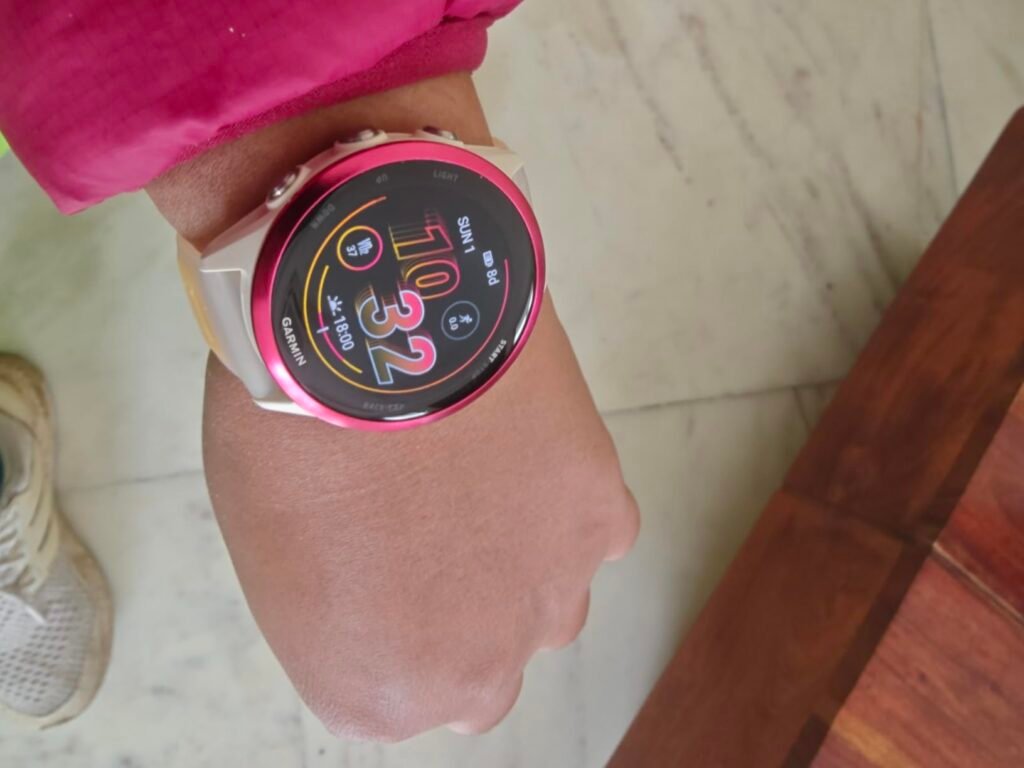
We may earn a commission when you buy through this link, at no additional cost to you.
The performance features read like a wish list. Training readiness weighs sleep quality, recovery, training load, and HRV status to tell you when to go hard. Training status draws on HRV status, recent exercise history, and VO2 max to show whether your training is productive, peaking, or strained. Personalized daily suggested workouts adapt to match performance and recovery, and the morning report delivers sleep, recovery, and training outlook with HRV status and weather before you start your day.
Daily usability keeps pace with the training tools. Ten days of smartwatch battery and 18 hours of GPS recording suit most training weeks, and the built-in microphone and speaker let you make and take phone calls from your wrist when the watch is paired with your smartphone, with voice assistant support for responding to messages. An evening report previews sleep needs, tomorrow’s workout, weather, and events, and more than 30 activity profiles cover running, triathlon, track runs, cycling, and open-water swimming.
The morning report consolidates sleep, recovery, training outlook, HRV status, training readiness, and weather into a quick pre-run briefing. The evening report looks ahead instead, reminding you of sleep needs, the next day’s workout, weather, and scheduled events. Together they create a rhythm around training, helping you plan harder sessions on days your body is ready and easier ones when it is not. Runners who check both consistently get the most from the adaptive coaching features.
The main trade-off is endurance at the top end: 18 hours of GPS recording trails several cheaper models for ultra-distance efforts, and the 42mm case may feel small for runners who prefer a larger display. For everyone else, the 570 blends premium hardware, deep training intelligence, and communication features in a package that justifies its rating. It is the model we would recommend first to most runners.
Not for ultrarunners who need maximum GPS battery life or runners who prefer larger case sizes.
We may earn a commission when you buy through this link, at no additional cost to you.
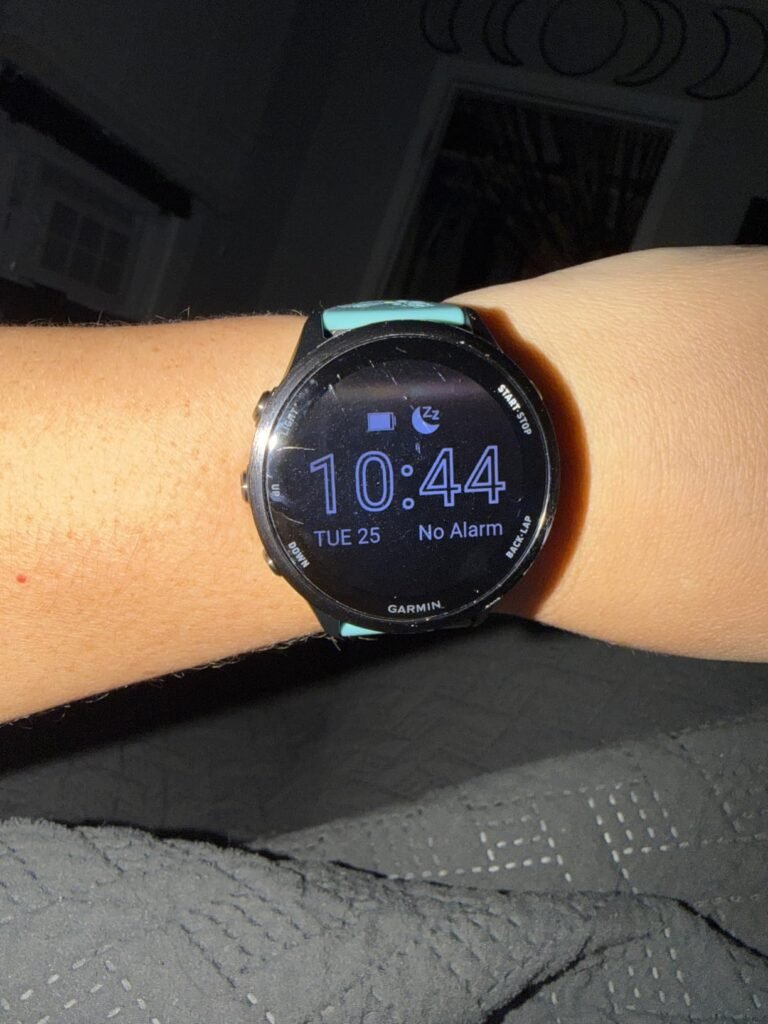
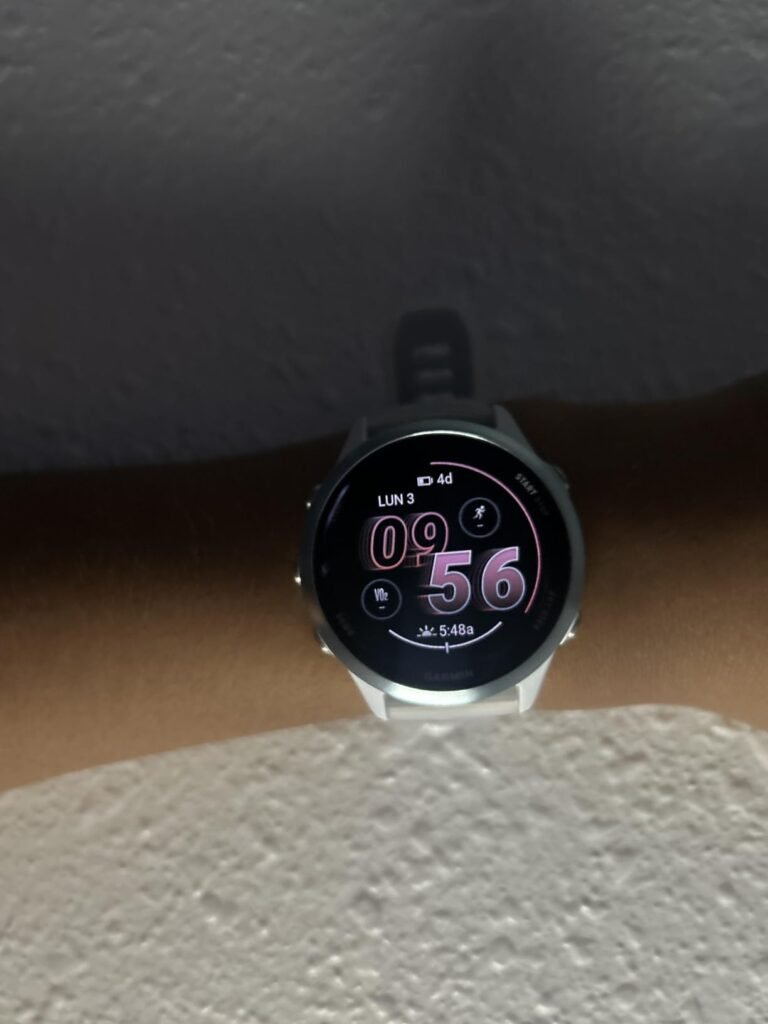
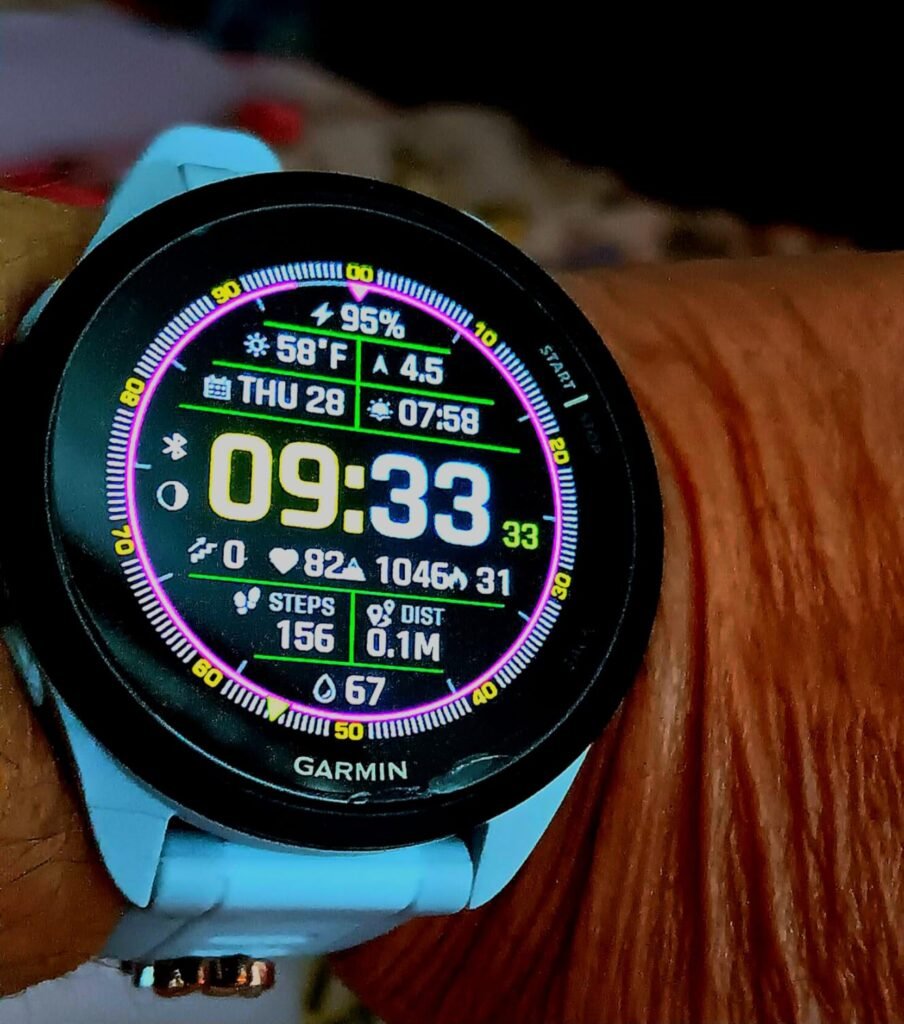
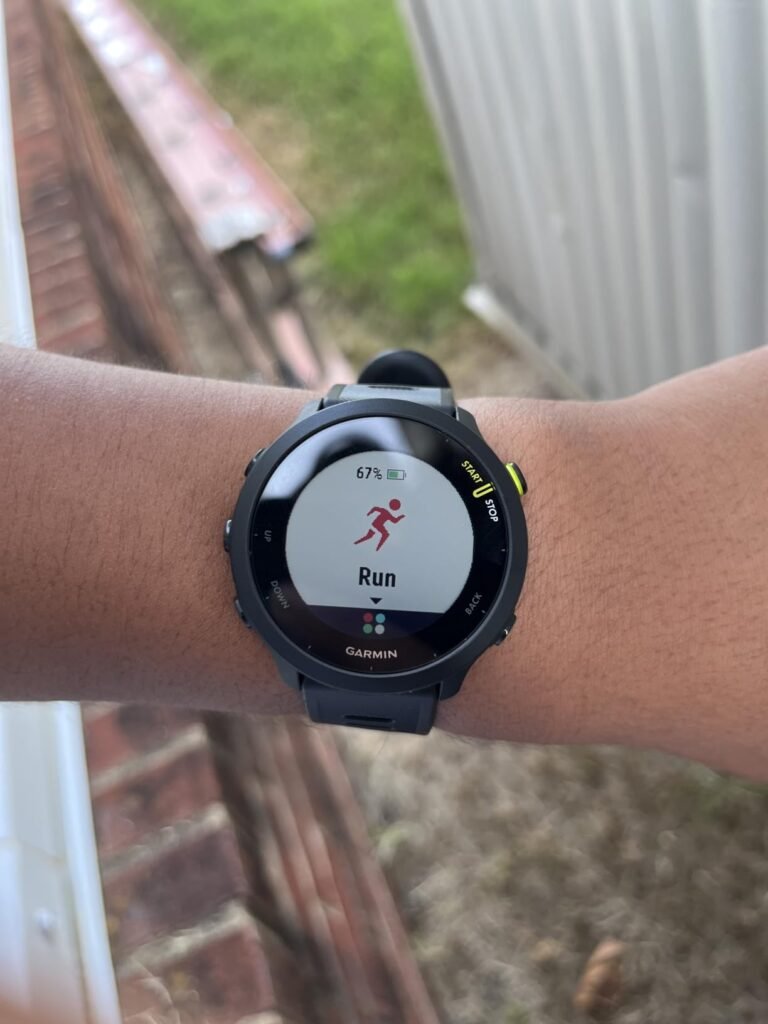
The Forerunner 165 is the model to consider if you want a modern AMOLED display and genuine training guidance without crossing the $200 mark. Its 43mm case stays light on the wrist, and the combination of built-in GPS, wrist-based heart rate, and on-watch button controls covers the essentials that matter on every run, from easy recovery jogs to structured interval sessions.
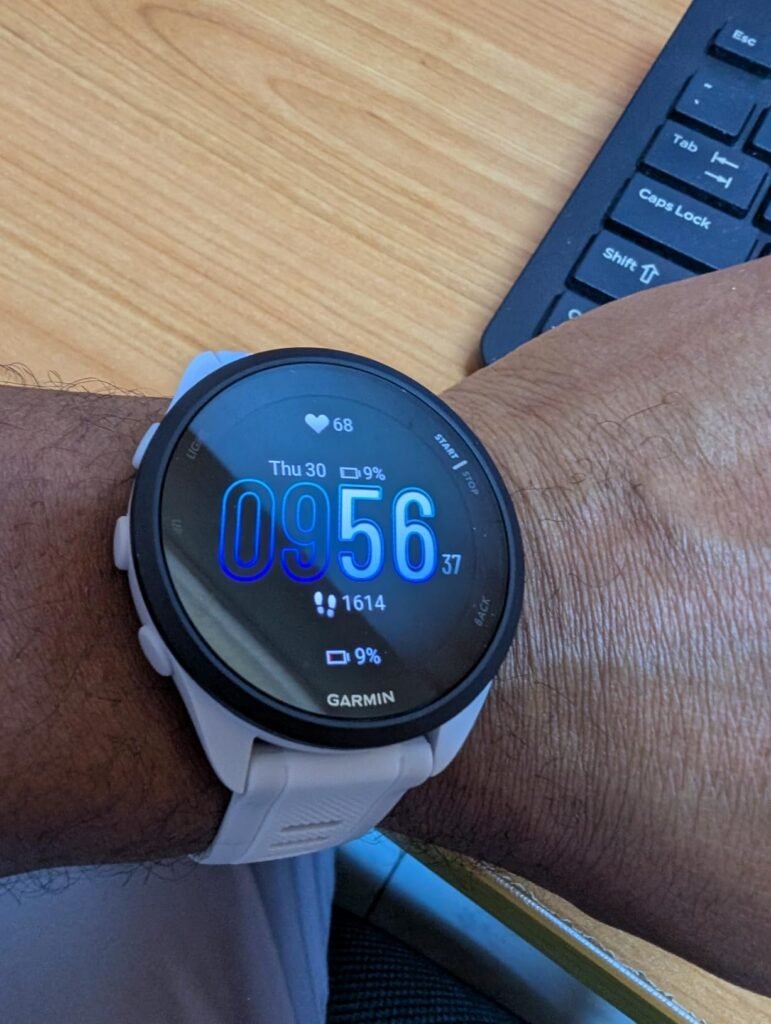
We may earn a commission when you buy through this link, at no additional cost to you.
What elevates it above a basic tracker is the coaching layer. Personalized daily suggested workouts adapt based on your recent performance and recovery, and Garmin Coach plus race adaptive training plans give structure to runners preparing for an event. The morning report bundles sleep, recovery, training outlook, weather, and HRV status into one glance when you wake, while training effect labels explain what each session accomplished for your fitness, with recovery time telling you how long to wait before the next hard effort.
Battery life is a practical strength. You get up to 11 days in smartwatch mode and up to 19 hours with GPS running, which comfortably covers marathon training weeks without nightly charging. More than 25 activity profiles mean the watch earns its place on rest days too, covering cycling, strength work, or HIIT sessions. Smart notifications, Garmin Pay contactless payments, and safety features including incident detection and Assistance round out the everyday experience.
A wide profile list means the watch can log far more than runs. Cycling, strength training, and HIIT sessions all get dedicated tracking with appropriate metrics, so cross-training weeks stay organized in one history. For runners, that matters because the daily suggested workouts respond to your full training load, not just mileage. The more honestly you log your non-running work, the better the recovery guidance lines up with how you actually feel.
The trade-offs are about the ceiling, not the floor. There is no multi-band GPS, no training readiness score, and no built-in mapping, so runners pushing into ultramarathon territory or demanding the highest positioning accuracy should look higher in the lineup. But for beginners, casual racers, and anyone who wants a bright display paired with smart, adaptive coaching, the 165 is the value leader in this group.
Not for runners who need multi-band GPS accuracy, built-in maps, or advanced training readiness metrics.
We may earn a commission when you buy through this link, at no additional cost to you.
The Forerunner 55 remains the sensible first running watch. It does the fundamentals well: built-in GPS tracks how far, how fast, and where you run, while wrist-based heart rate gives you effort data without a chest strap. The design is unobtrusive, the battery stretches up to two weeks between charges in smartwatch mode, and 20 hours of GPS tracking covers everything from daily 5Ks to a marathon.
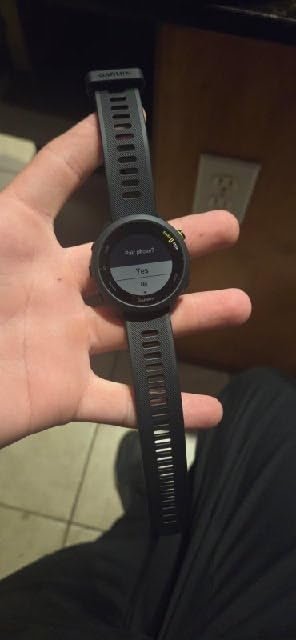
We may earn a commission when you buy through this link, at no additional cost to you.
Training support is more capable than the price suggests. Suggested workouts adjust to your training history, fitness level, and recovery, so you get a sensible plan even without a coach. PacePro provides GPS-based pace guidance for a chosen course or distance, and race time predictions with finish time estimates help you set realistic goals and pace your event day.
The activity list reaches well beyond running, with profiles for cycling, track runs, virtual runs, pool swims, Pilates, HIIT, and breathwork. Wellness features such as intensity minutes, fitness age, and all-day respiration keep the watch useful around the clock. The Connect IQ store adds free watch faces, data fields, apps, and widgets, so you can tune the display to show exactly the numbers you care about mid-run.
PacePro delivers GPS-based pacing guidance for a selected course or distance, which helps you avoid starting too fast on race day. Note that it is not compatible with on-device courses, so use it for target distances or routes rather than turn-by-turn navigation. Race predictions estimate finish times from your training data, giving you a baseline to train toward and a reality check on goal times. Together, they turn simple pace and distance tracking into something closer to race preparation.
The compromises are display and depth. This is not an AMOLED model, and it lacks the training readiness and recovery analytics of pricier options. If you want a dependable, lightweight training companion and nothing more, the Forerunner 55 is hard to argue with. If a bright touchscreen or advanced recovery data matters to you, budget for the Forerunner 165 or 265 instead.
Not for runners who want an AMOLED display, multi-band GPS, or deep recovery analytics.
We may earn a commission when you buy through this link, at no additional cost to you.
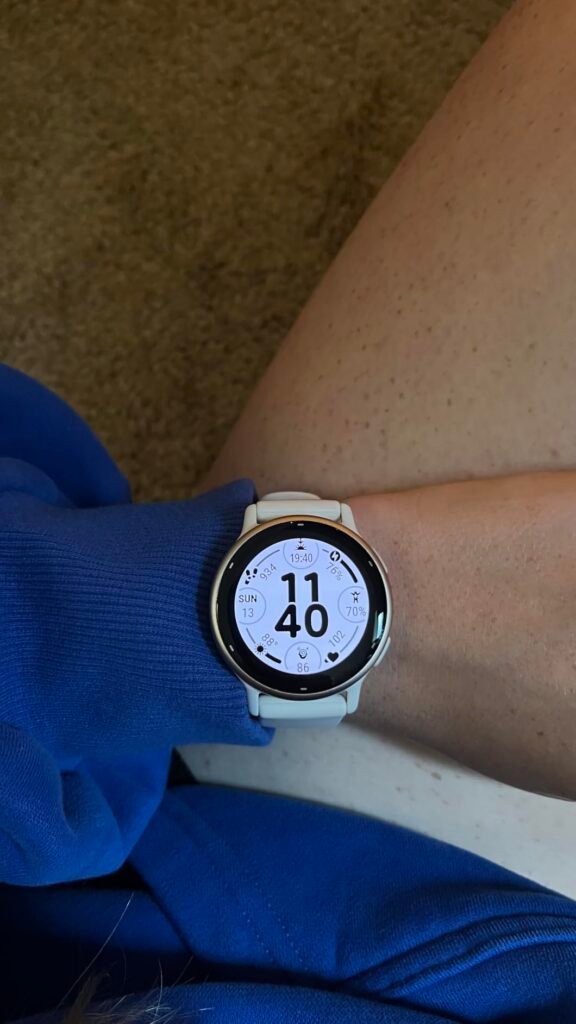
The vívoactive 5 is a health-focused smartwatch that happens to run well. It suits runners who care about sleep quality, stress, and daily energy as much as pace and distance. The 42mm case with its AMOLED display hits a comfortable balance for all-day wear, and up to 11 days of battery in smartwatch mode, or five with the display always on, means charging stays a weekly chore rather than a nightly one.
We may earn a commission when you buy through this link, at no additional cost to you.
Body Battery energy monitoring is the centerpiece. It estimates when you are charged up or need rest, drawing on sleep, naps, stress levels, and workouts, which helps you decide whether to push a session or take it easy. Sleep gets similar treatment with a sleep score and personalized coaching, plus HRV status for a deeper look at recovery, and automatic nap detection logs daytime sleep and shows how it affects your energy.
Beyond running, more than 30 built-in indoor and GPS sports apps cover walking, cycling, HIIT, swimming, and golf, and wheelchair mode tracks pushes instead of steps with dedicated activities and preloaded workouts. Health monitoring includes wrist-based heart rate, morning report, fitness age, stress tracking, menstrual cycle and pregnancy tracking, and meditation. You can also download playlists from Spotify, Amazon Music, or Deezer and listen through wireless headphones without your phone.
Body Battery estimates your energy reserves on a scale that rises with rest and sleep and falls with stress and exertion. The value is in the pattern, not a single number. A morning reading that stays low despite a full night of sleep may signal accumulated strain worth addressing, while a high reading on a planned workout day suggests your body can handle intensity. Treat the metric as a conversation starter about recovery habits rather than a medical measurement.
The trade-offs are running specificity and positioning accuracy. There is no multi-band GPS here, and the training analytics stop short of the structured tools found on Forerunner models like the 265 or 965. For runners who want wellness tracking woven into daily life, though, the vívoactive 5 is a compelling package. Structured racers should look at the Forerunner line first.
Not for runners who need multi-band GPS, advanced training status, or race-specific tools.
We may earn a commission when you buy through this link, at no additional cost to you.
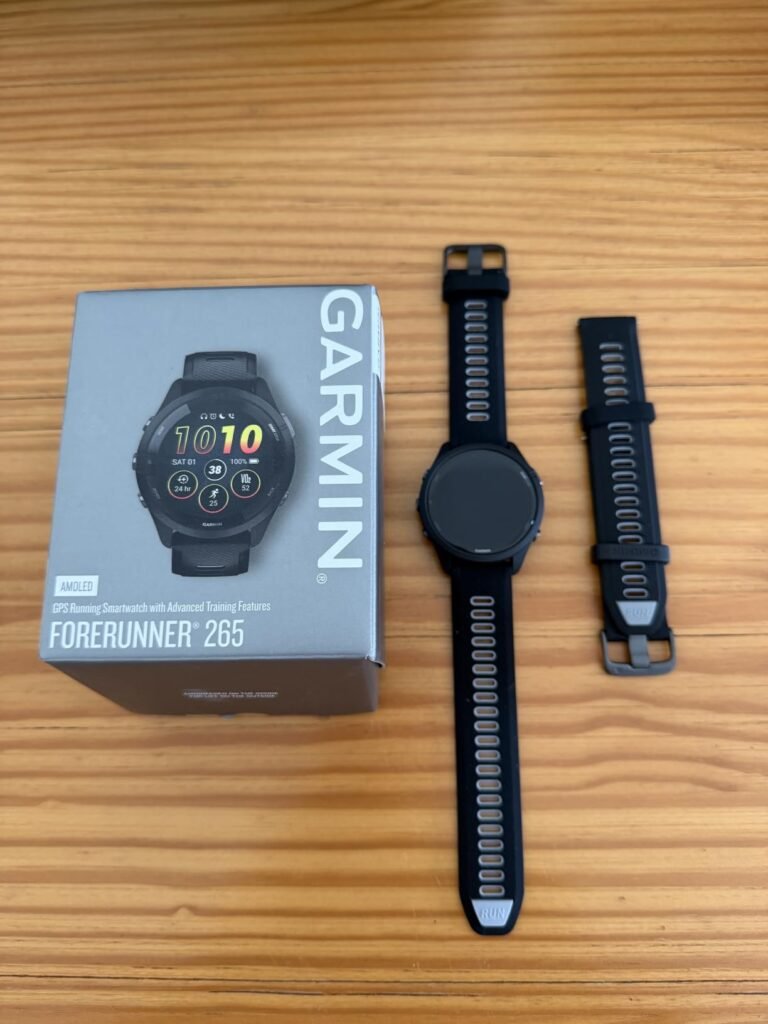
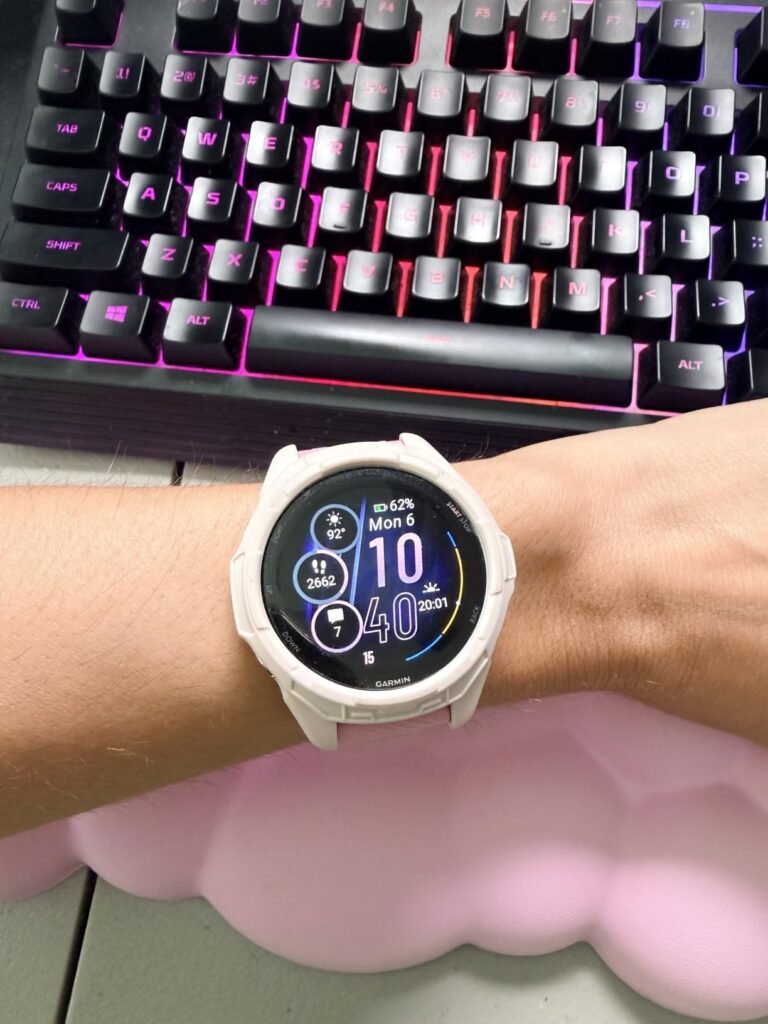
The Forerunner 265 is the sweet spot for committed runners who want serious training tools without flagship pricing. The 46mm case houses an AMOLED touchscreen that stays readable in bright sun, with physical buttons for sweaty or gloved hands. Up to 13 days in smartwatch mode and 20 hours in GPS mode give it the endurance for long training blocks, and multi-band GNSS with SatIQ brings a meaningful accuracy upgrade over standard GPS.
We may earn a commission when you buy through this link, at no additional cost to you.
The training suite is where the 265 separates itself from cheaper models. A training readiness score weighs sleep quality, recovery, training load, and HRV status to tell you whether you are primed to go hard. Training status interprets your recent history to show whether you are being productive, peaking, or strained. Personalized daily suggested workouts adapt after every run, and if you enter a race and course in the Garmin Connect app, the race widget keeps your strategy visible on the watch.
Multisport athletes get over 30 activity profiles, including triathlons, cycling, and open-water swimming, so brick sessions and race days are covered without swapping devices. Safety features, including incident detection and Assistance, share your live location with emergency contacts when paired with a compatible smartphone. Smart notifications keep messages and calls within reach, and Garmin Pay lets you leave your wallet at home.
Multi-band GNSS with SatIQ uses multiple satellite frequency bands to improve positioning accuracy in difficult environments like dense tree cover, canyons, and city streets lined with tall buildings. The SatIQ system also manages which configuration to use, balancing accuracy against battery drain. Better positioning shows up as smoother pace and distance graphs during interval sessions and more trustworthy map traces after trail runs. If you train among obstacles, this feature alone can justify the upgrade.
The main trade-offs against the Forerunner 965 are the absence of built-in full-color maps and a shorter battery rating, though 20 hours of GPS recording covers the vast majority of races. Runners who want premium positioning accuracy, deep recovery guidance, and a bright display without flagship pricing will find the 265 delivers nearly everything the top model does in a slightly smaller package.
Not for runners who need built-in maps for navigation or the longest possible GPS battery for ultra distances.
We may earn a commission when you buy through this link, at no additional cost to you.
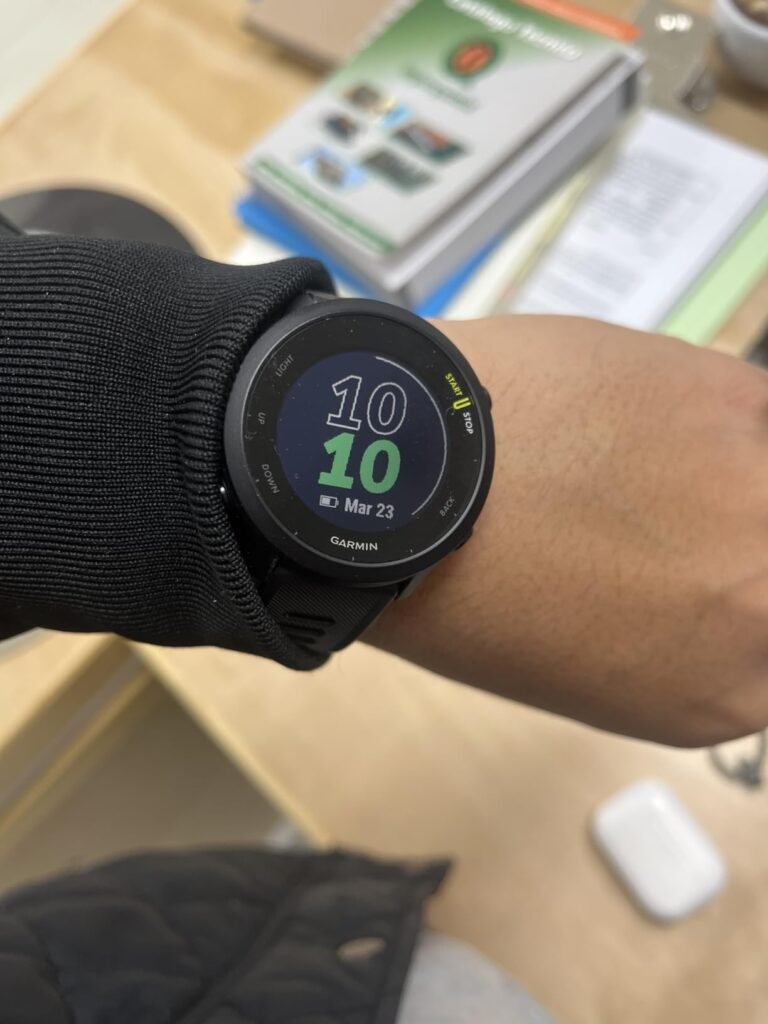
This renewed Forerunner 55 delivers the same training experience as a new unit for less money. You get wrist-based heart rate, GPS tracking for distance, pace, and location, up to two weeks of smartwatch battery life, and 20 hours in GPS mode. For someone buying a first watch or a dependable backup, the savings make an already affordable package more accessible.
We may earn a commission when you buy through this link, at no additional cost to you.
The training features carry over unchanged. Suggested workouts adapt to your history, fitness level, and recovery time, so weekly structure appears without a subscription. PacePro adds GPS-based pace guidance for a chosen course or distance, and race time predictions plus finish time estimates help you plan event day with realistic numbers. For runners training mostly by feel with a little guidance, that toolbox is enough.
Activity profiles cover running, cycling, track runs, virtual runs, pool swims, Pilates, HIIT, breathwork, and more, while wellness features include intensity minutes, fitness age, and all-day respiration. Connect IQ remains available for free watch faces and data fields. As a renewed item, the experience depends on the specific unit, so review the seller’s condition notes and confirm which accessories are included before ordering.
Renewed electronics are inspected, restored to working condition, and resold, typically with a limited seller warranty rather than full retail packaging. Condition descriptions usually note minor scratches or wear on the body and confirm which accessories are included. Before buying, read the specific listing’s condition and return policy carefully, and confirm that the watch, charging cable, and any promised extras are all part of the package. A little diligence up front avoids disappointment later.
The trade-offs are those of any renewed purchase: possible cosmetic wear, packaging that may differ from retail, and warranty terms set by the seller rather than the factory. The watch itself, however, delivers the same reliable fundamentals that make the standard Forerunner 55 a favorite starter model. Budget-focused buyers comfortable with renewed electronics will find this the cheapest route into a capable Garmin running watch.
Not for buyers who insist on new-in-box condition and full factory warranty coverage.
We may earn a commission when you buy through this link, at no additional cost to you.
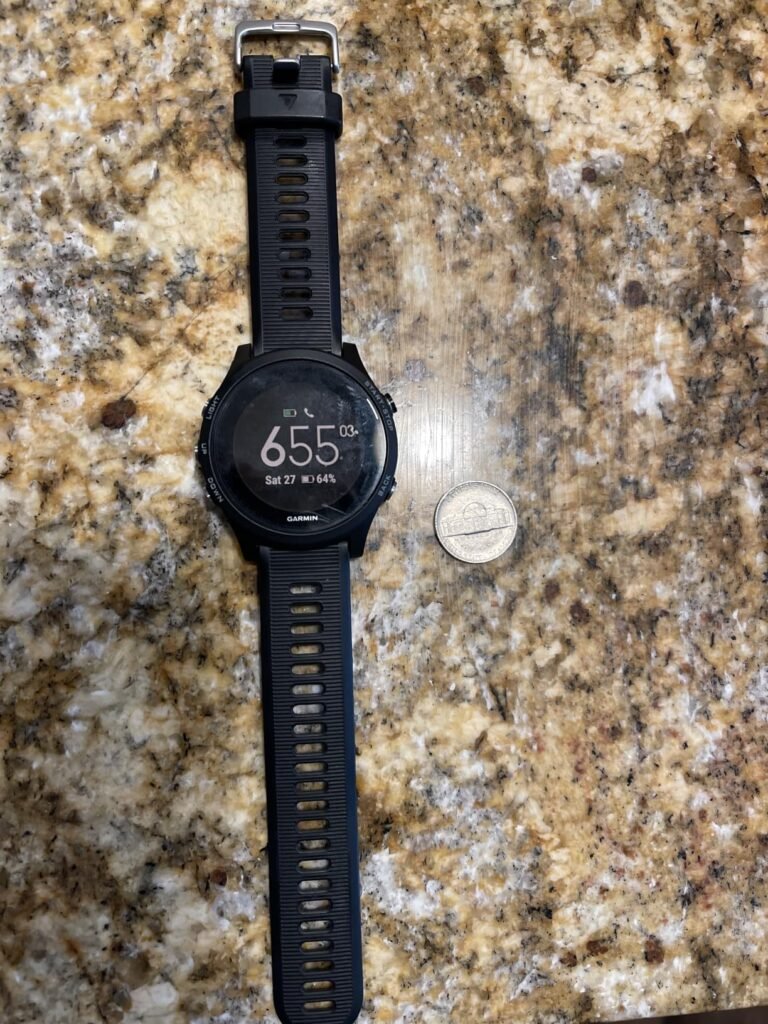
The Forerunner 935 was once Garmin's flagship triathlon watch, and this renewed version makes that hardware accessible for around the price of a basic starter watch. It pairs wrist-based heart rate with advanced running and multisport features in a body that weighs just 49 grams, light enough to wear around the clock. For triathletes building their first serious setup, it offers proven capabilities without the modern flagship price.
We may earn a commission when you buy through this link, at no additional cost to you.
Multisport is the headline. The watch handles the transitions between swim, bike, and run that define triathlon training, and the feature set extends well beyond single-sport tracking. A built-in barometer records elevation changes, and the altimeter and electronic compass help you keep your bearings on unfamiliar routes. A barometric altimeter generally responds faster to short climbs and descents than GPS-only elevation data, which matters when you analyze hilly courses.
Training status evaluates your workload to indicate whether you are undertraining or overdoing it, adding context to raw numbers so you can adjust before fatigue accumulates. As a renewed unit, the hardware has been restored to working order, and the 49-gram weight keeps it comfortable for daily wear. Long-standing Garmin reliability and a full multisport feature set make it a practical choice for athletes who value function over the latest screens.
Elevation data shapes how you interpret training load, especially on rolling or mountainous routes. GPS-derived elevation can lag behind quick gradient changes, while a barometric altimeter measures air pressure directly and responds faster to short climbs. That responsiveness produces cleaner elevation profiles and more accurate climb totals, which helps when you compare sessions on the same route over time or prepare for a race with known hills. It is one of the details that made the 935 a favorite among serious multisport athletes.
The trade-offs are generation and condition. This is older hardware without AMOLED display technology or the newest training metrics, and renewed status means cosmetic imperfections are possible. Still, for multisport athletes who want triathlon-capable tracking plus barometric elevation and compass navigation at an entry-level price, the renewed 935 represents one of the better values in this guide.
Not for buyers who want AMOLED displays or the newest training readiness features.
We may earn a commission when you buy through this link, at no additional cost to you.
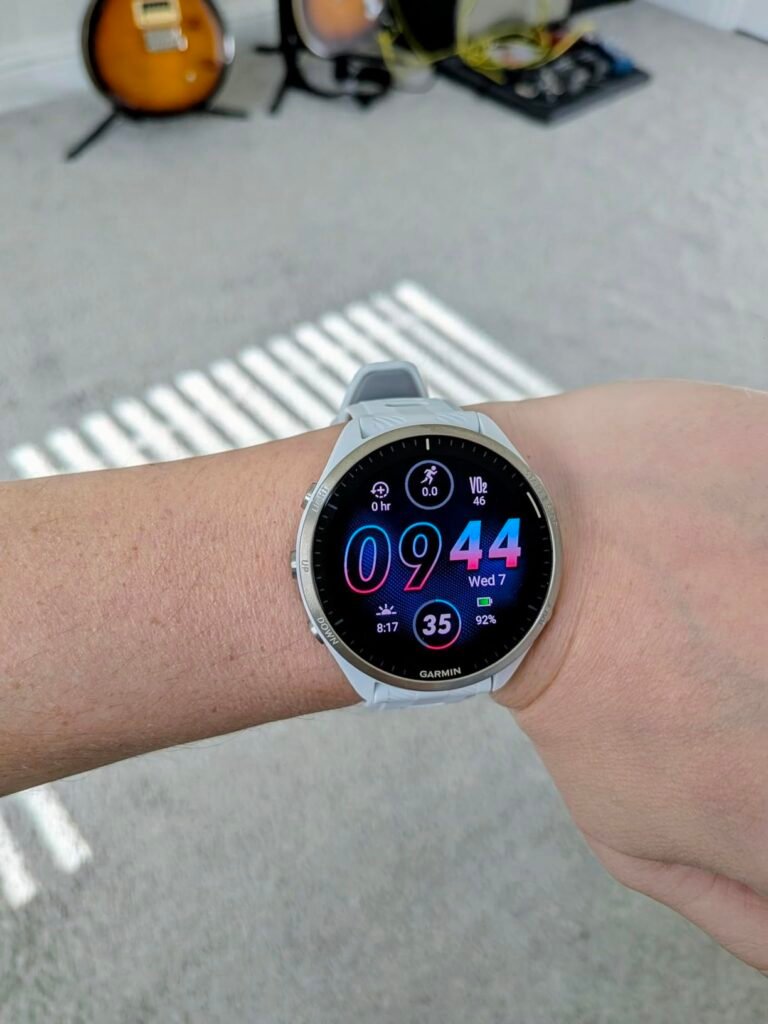
The Forerunner 965 is Garmin's flagship running watch, built for athletes who train with structure and want every advantage on race day. A lightweight titanium bezel frames an AMOLED touchscreen that pairs with physical buttons, and the battery ratings lead this group: up to 23 days in smartwatch mode and up to 31 hours in GPS mode. For ultrarunners and long-course triathletes, that endurance changes what is possible.
We may earn a commission when you buy through this link, at no additional cost to you.
Navigation and positioning are where the 965 pulls ahead. Full-color built-in maps let you follow routes on your wrist without pulling out a phone, and multi-band GPS with SatIQ improves accuracy in challenging environments while managing battery draw. Training readiness combines sleep quality, recovery, training load, and HRV status into a single go-or-rest signal, while training status interprets your trends across weeks to flag productive training, peaking, or strain.
For multisport athletes, built-in profiles switch between triathlons, duathlons, brick workouts, and swimruns with a button press, and custom multisport profiles are available. Wrist-based running dynamics deliver cadence, stride length, ground contact time, and more without a chest strap, plus running power for a continuous measure of output. The morning report summarizes sleep, recovery, training outlook, HRV status, training readiness, and weather the moment you wake.
Running dynamics describe how your body moves through each stride. Cadence, stride length, and ground contact time are now measurable from the watch alone, without a chest strap or foot pod, which removes friction from using them. Tracking these numbers over weeks can reveal fatigue patterns, like a cadence drop late in long runs, or form changes as pace increases. Wrist-based running power adds a live output measure that pairs naturally with structured interval work.
The trade-offs are price and size. At $569, it costs over $100 more than the Forerunner 265, and the 47mm case is larger than the 42mm and 43mm options in this lineup, which some smaller-wristed runners will notice. For athletes who want maps, top-tier battery life, and the deepest training analytics Garmin offers on the Forerunner platform, the 965 justifies its premium. Runners with simpler needs can save substantially with the 265.
Not for casual runners or buyers who do not need built-in maps, multi-band GPS, or 31-hour GPS battery life.
We may earn a commission when you buy through this link, at no additional cost to you.
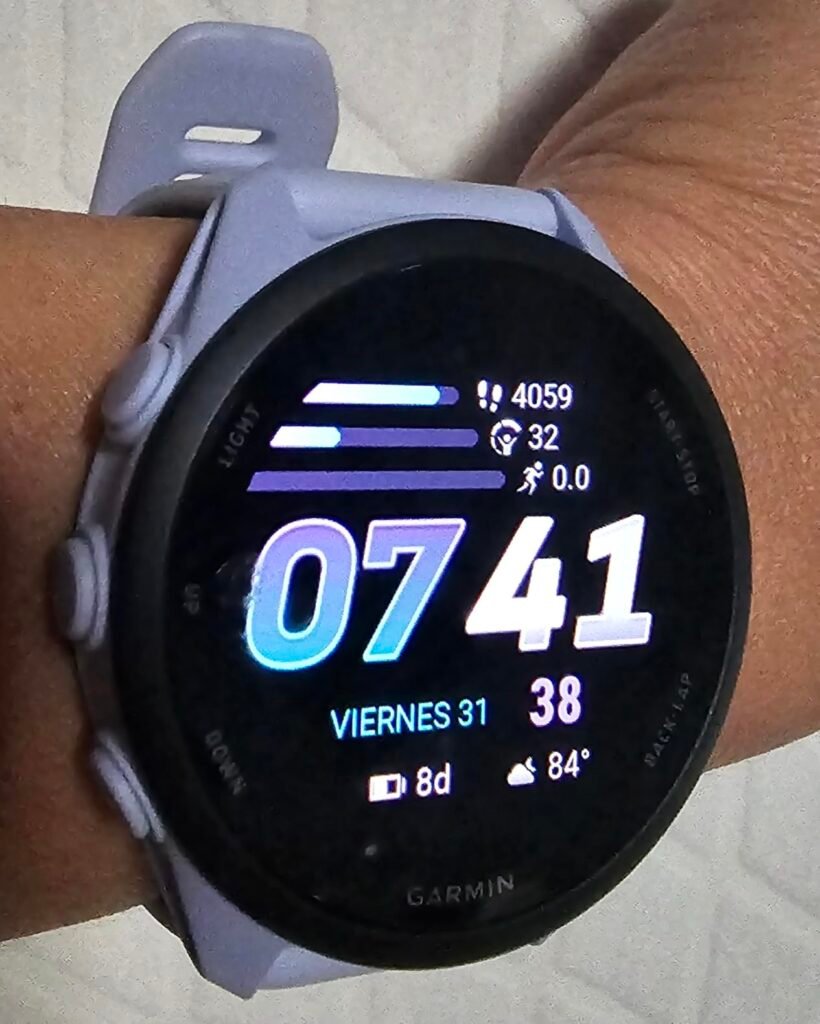
The Forerunner 70 is a light, 43mm runner's watch that splits the difference between the entry-level 165 and the mid-range 265. Its AMOLED touchscreen with button controls is easy to read at a glance, GPS and wrist-based heart rate handle the essentials, and battery ratings of up to 13 days in smartwatch mode and 23 hours in GPS mode give it more staying power than several pricier models.
We may earn a commission when you buy through this link, at no additional cost to you.
Coaching is clearly the focus. Garmin Coach training plans adapt to your performance and recovery, and they span the full range from beginner-friendly run and walk workouts to higher-volume, higher-intensity plans for experienced runners. Daily suggested workouts keep the structure going between plans, and the quick workout feature lets you create a session directly on the watch based on a target time and intensity, which is handy when plans change mid-day.
Recovery and readiness data go deeper than the price suggests. Training readiness uses sleep quality, recovery, training load, and HRV status to indicate when you are primed for a hard effort, while training status, training effect, and recovery time frame each session in the context of your overall fitness. Sleep tracking includes a score, sleep stages, and insights for improvement, with energy-level tracking that responds to naps, stress, and activity.
Not every run fits a plan. The quick workout feature lets you build a session on the watch by choosing a desired time and intensity level, so impromptu tempo runs or timed intervals are ready in seconds. This pairs well with daily suggested workouts, since you can accept the recommendation when it fits your schedule or roll your own when it does not. Logging those sessions consistently keeps the adaptive coaching accurate.
With more than 80 activity profiles, the 70 covers nearly any workout you can log, and safety features let you share your live location with chosen contacts through a paired smartphone. The trade-offs are the absence of multi-band GPS and built-in maps, which keeps it behind the 265 for demanding environments and navigation. As a daily trainer with adaptive coaching, though, it hits a compelling middle ground.
Not for runners who need multi-band GPS positioning or on-watch maps for navigation.
We may earn a commission when you buy through this link, at no additional cost to you.
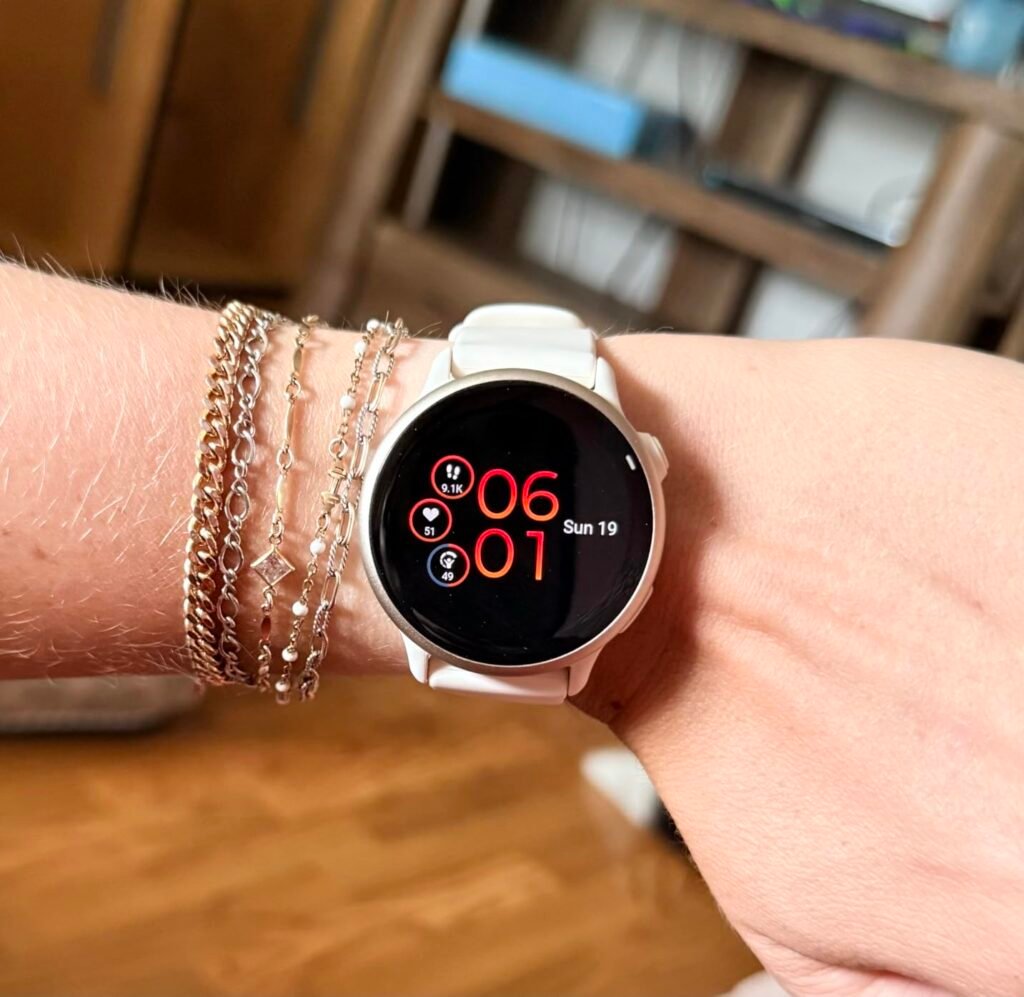
The vívoactive 6 is the everyday fitness watch in this lineup, designed for people who run as part of a broader activity mix. Its 42mm case and AMOLED display look at home in any setting, and up to 11 days of battery life keeps charging off your daily to-do list. A smart wake alarm gently vibrates to wake you at an optimal point in your sleep cycle, a small touch that improves mornings.
We may earn a commission when you buy through this link, at no additional cost to you.
Health tracking is comprehensive. Body Battery energy monitoring provides personalized insights based on sleep, naps, stress levels, and workouts, while sleep score and personalized sleep coaching explain how much rest you need and how to improve it. HRV status adds a deeper recovery signal, and automatic nap detection logs daytime sleep and its effect on your energy. More than 80 indoor and GPS sports apps cover running, walking, cycling, HIIT, mobility, swimming, and golf.
Training features are more capable than the fitness-first positioning suggests. Workout benefit explains how each session affects your body, recovery time tells you how long to rest before the next hard effort, and animated workouts for cardio, yoga, strength, HIIT, and Pilates demonstrate correct form on screen. Daily suggested workouts provide tailored walking workouts to keep motivation up, and Garmin Coach adaptive training plans adjust daily based on your health and recovery data.
Animated workouts turn the watch into a form coach for strength, yoga, HIIT, and Pilates sessions. The on-screen animations demonstrate each movement so you can follow along without pausing to check a video. For runners, this matters because strength and mobility work directly supports injury prevention, and correct form is what makes those sessions effective. It also makes off-day training easier to start when you are not sure what to do.
The trade-offs sit in running-specific depth. The vívoactive 6 does not offer the race-day tooling or advanced analytics of the Forerunner line, and there is no multi-band GPS listed. Runners chasing personal records will want the 265 or 570 instead. For anyone building an active lifestyle with running as one ingredient, the vívoactive 6 delivers a well-rounded, health-focused experience at a fair price.
Not for competitive runners who need race widgets, multi-band GPS, or advanced training readiness analytics.
We may earn a commission when you buy through this link, at no additional cost to you.
Selecting a running watch comes down to matching battery endurance, display preference, positioning accuracy, and training depth to the way you actually run. The factors below cover the decision points that matter most before you buy.
Every running watch lists two battery figures, and both matter for different reasons. Smartwatch mode describes how long the device lasts as a daily wearable with notifications and health tracking active, while GPS mode describes how long it records activities with satellite positioning engaged. In this group, smartwatch ratings span from 10 days on the Forerunner 570 to two weeks on the Forerunner 55, and GPS ratings range from 18 hours to 31 hours.
For daily training, the smartwatch figure sets your charging rhythm. Ten to 14 days means charging roughly once a week, which fits most routines without thought. The GPS figure becomes critical for long events. A marathon typically takes under five hours, so even the shortest rating here covers it comfortably, but ultramarathons and long-course triathlons can stretch past 18 hours, making the Forerunner 965’s 31-hour rating a genuine advantage rather than a spec-sheet luxury.
Estimate your longest event of the year, then add a safety margin before choosing. If your longest run stays under 15 hours, almost any watch here qualifies, and battery should not drive your decision. If you run ultras or plan all-day adventures, prioritize the highest GPS rating you can afford.
AMOLED has become the headline display technology in Garmin’s lineup, appearing on the Forerunner 165, 265, 70, and 570 as well as both vívoactive models. These screens produce rich colors, deep contrast, and sharp graphics that make data screens and maps easier to read, and they look brighter in indoor settings and shaded environments. The trade-off has traditionally been higher power draw, which is why AMOLED watches in this guide publish shorter battery ratings than some older designs.
Models without AMOLED in their specifications, like the Forerunner 55 and the renewed Forerunner 935, tend to prioritize always-on visibility and efficiency. These displays remain readable in direct sunlight and sip power, which shows in the Forerunner 55’s two-week smartwatch rating. For runners who glance at pace mid-stride, both approaches work, but the visual experience differs noticeably, especially for map use and media-rich watch faces.
Decide by asking how much you value screen quality versus maximum battery life. If you want vivid maps and a premium look, choose an AMOLED model. If you want the simplest possible ownership experience with the longest possible time between charges, a standard display still has merit. Either way, both technologies now support adjustable always-on settings on many models.
Standard GPS tracks pace, distance, and route with enough accuracy for most road running. Multi-band GNSS with SatIQ, found on the Forerunner 265 and 965, adds support for multiple satellite frequency bands and intelligently switches between configurations. The practical benefit appears in challenging environments: dense forests, canyon trails, urban corridors between tall buildings, and anywhere reflections distort satellite signals. In those places, multi-band tracking produces cleaner pace curves and more accurate route traces.
Accuracy matters most when you depend on exact pacing. Interval sessions on tree-lined paths, trail runs with tight switchbacks, and races in city centers all expose the weaknesses of single-band GPS. If most of your running happens on open roads and simple bike paths, standard GPS performs well and the upgrade may not change your experience noticeably. It is a situational advantage rather than a universal one.
Consider the environments you actually run in before paying for multi-band positioning. If trees, buildings, or canyon walls regularly interrupt your signal, the upgrade is worth it. If your routes are open and straightforward, spend that budget on battery life or training features instead.
Training metrics are where running watches differentiate most. At the entry level, expect daily suggested workouts that adapt to your training history, fitness level, and recovery, plus race time predictions and PacePro pacing guidance. Step up a tier and training readiness enters the picture, combining sleep quality, recovery, training load, and HRV status into a single signal about whether you are primed for a hard session. Training status interprets longer trends to show whether you are training productively, peaking, or strained.
Recovery tracking rounds out the picture. Training effect labels explain what each workout accomplished, whether it built aerobic base or improved VO2 max, and recovery time tells you how many hours to wait before the next hard effort. Body Battery on the vívoactive models and energy-level tracking on the Forerunner 70 present similar data in a different format. These metrics matter most for runners who follow structured plans and are prone to overtraining.
If you train by feel and race occasionally for fun, daily suggested workouts and pace guidance provide plenty of value, and the extra analytics may go unused. If you follow a plan, monitor recovery carefully, or have a history of burnout, the mid-range and premium models earn their price. Be honest about which runner you are before paying for data you will not consult.
Activity profile counts range from 25 or more on the Forerunner 165 to 80 or more on the Forerunner 70 and vívoactive 6. Each profile configures the watch to display and record data appropriate to that sport, from pool swim laps to strength set logging to breathwork sessions. A generous profile list keeps all your training in one history, which improves the accuracy of adaptive coaching that draws on total workload.
Multisport support matters specifically for triathletes and duathletes. The Forerunner 265 and 965 offer dedicated triathlon, duathlon, brick workout, and swimrun profiles, with the ability to switch sports at the press of a button during a session. The renewed Forerunner 935 also carries multisport functionality. Without these profiles, athletes must log each discipline separately and stitch the data together later, losing transition times and combined analytics.
Count the sports you genuinely practice, not the ones you might try someday. Runners who cross-train with cycling and strength work are covered by nearly every watch here. Triathletes should confirm that dedicated multisport profiles are included, since that feature is limited to specific models.
Case sizes in this comparison span from 42mm to 47mm. The vívoactive 5, Forerunner 570, and vívoactive 6 use 42mm cases, the Forerunner 165 and 70 use 43mm, the Forerunner 265 uses 46mm, and the Forerunner 965 uses 47mm. Weight varies too, with the renewed Forerunner 935 listed at 49 grams. Smaller cases generally suit smaller wrists and sleep tracking comfort, while larger cases fit more data on screen without scrolling.
Fit affects more than looks. A watch that slides around during runs produces unreliable heart rate readings, and a heavy watch becomes annoying during sleep, which undermines the recovery data you bought it for. Runners with wrists under about 170mm usually find 42mm and 43mm cases most comfortable, while 46mm and 47mm models suit larger frames and offer easier mid-run readability.
Measure your wrist or try equivalent sizes before ordering, especially if you are choosing between the 42mm Forerunner 570 and the 47mm Forerunner 965. Both are excellent watches, but they feel very different on the wrist, and comfort determines whether you wear the watch all day and night.
Smart features have become a meaningful part of the running watch experience. The Forerunner 165, 265, and 965 support contactless payments through Garmin Pay, so you can buy a post-run coffee without carrying a card. The vívoactive 5 can store music playlists from major streaming services for phone-free listening with wireless headphones, and the Forerunner 570 adds a built-in microphone and speaker for taking calls from the wrist when paired to a smartphone.
Safety tools deserve attention too. Incident detection and Assistance, available on several models here, can notify emergency contacts with your live location when paired to a compatible smartphone with network coverage. The Forerunner 70 and vívoactive 6 support live location sharing with chosen contacts. On the software side, the Garmin Connect app consolidates health data, training history, and challenges, while Connect IQ adds free watch faces, data fields, and apps.
Think about which smart features you will actually use. Runners who carry a phone anyway may not need wrist calling or music storage. Runners who prefer to leave the phone behind gain real value from payments, music, and safety features. Make sure the trade-offs, such as the Forerunner 570’s shorter battery rating, are ones you can accept.
Start by pairing the watch with the Garmin Connect app on your smartphone, which handles initial setup, software updates, and syncing. Wear the watch snugly on your wrist, about a finger’s width above the wrist bone, so the optical heart rate sensor maintains steady contact without pinching. Set your personal details and training goals during setup, because features like daily suggested workouts and race predictions depend on accurate age, weight, and activity data to produce useful guidance.
Before your first run, spend a few minutes customizing data screens so the metrics you care about appear at a glance. GPS mode takes a moment to acquire satellites, so start your activity a minute before you begin running, especially in new locations. After each session, review the summary in Garmin Connect to understand training effect and recovery time, which helps you plan the next few days. Charge the watch when the battery dips below roughly 20 percent rather than waiting for a full discharge, and top it up before long runs or races.
Keep the watch clean by rinsing the case and band with fresh water after sweaty sessions, since salt and sunscreen buildup can irritate skin and interfere with the heart rate sensor. Dry the back of the case before charging. If you use the watch for swimming, follow your model’s guidance on the correct button use in water and rinse thoroughly afterward. Install firmware updates when prompted, as they often add features and improve GPS and heart rate accuracy, and periodically confirm that your emergency contact settings are current.
A phone can track pace and distance, but it stays in your pocket or armband, which makes mid-run feedback awkward. A running watch puts live pace, heart rate, and workout guidance on your wrist where you can glance at it without breaking stride. Watches also measure data phones cannot, like wrist-based heart rate, training load, and recovery. If you run mostly for general health, a phone may be enough, but anyone following a training plan will benefit from a dedicated watch.
AMOLED screens produce richer colors, deeper contrast, and a more premium look, and they tend to appear brighter indoors. Standard displays without AMOLED typically emphasize always-on visibility and battery efficiency, which is why the Forerunner 55 achieves up to two weeks of smartwatch battery. Both are readable in daylight, but AMOLED models generally draw more power. Your choice comes down to how much you value screen quality versus maximum time between charges.
Most marathoners finish in three to five hours, and every watch in this guide provides at least 18 hours of GPS recording, so battery life is rarely a limiting factor for marathon training. Where it matters is ultrarunning and long-course triathlons, where events can exceed 15 or even 20 hours. If you have ultra ambitions, the Forerunner 965's 31-hour rating gives you the most headroom. Otherwise, choose based on other features.
Training readiness is a score that combines sleep quality, recovery, training load, and HRV status to estimate whether your body is primed for a hard workout. It appears on the Forerunner 265, 965, 70, and 570, but not on entry models like the Forerunner 55 or vívoactive 5. Runners following structured plans, training for races, or prone to overtraining get the most value from it because it adds a daily go-or-rest signal to their schedule.
Multi-band GNSS with SatIQ, available on the Forerunner 265 and 965, improves positioning accuracy in environments where satellite signals reflect or weaken, such as dense forests, cities with tall buildings, and deep canyons. If you train in those conditions, the upgrade produces smoother pace data and cleaner route traces. If you run on open roads and simple paths, standard GPS performs well, and the money may be better spent on battery life or other features.
Renewed Garmin watches are inspected and restored to working condition, and both renewed models in this guide carry strong ratings. The savings can be significant, particularly on the Forerunner 935's multisport hardware. The trade-offs are possible cosmetic wear, packaging that may differ from retail, and warranty terms set by the seller rather than the factory. Read the specific listing's condition description and return policy before ordering, and confirm which accessories are included.
For wrists under roughly 170mm, 42mm and 43mm cases generally sit most comfortably. The vívoactive 5, vívoactive 6, and Forerunner 570 use 42mm cases, while the Forerunner 165 and 70 use 43mm. Larger 46mm and 47mm models like the Forerunner 265 and 965 offer more screen space but can overwhelm smaller wrists and feel heavy during sleep. Fit matters because a loose watch produces less reliable heart rate readings.
Several models here include pool swim and open-water swim activity profiles, including the Forerunner 55, 265, 965, and 570, which indicates they are designed for swim tracking. If swimming is part of your routine, choose a model with the swim profiles you need and follow the manufacturer's guidance for button use in water. Rinse the watch with fresh water after pool sessions to remove chlorine and salt residue.
Daily suggested workouts draw on your training history, current fitness level, and recovery data to propose a session each day, and the recommendation changes as your performance and recovery change. If you log a hard effort, the next suggestion may ease off. If you skip sessions or recover well, intensity may increase. The system works best when you log most of your activities on the watch, including cross-training, so it can see your full workload.
The Garmin Forerunner 570 earns the top recommendation for most runners. It holds the highest rating in this comparison at 4.8, pairs the brightest AMOLED display in the lineup with an aluminum bezel in a 42mm case, and adds wrist-based phone calling plus training readiness and adaptive Garmin Coach plans. It covers training, recovery, and daily smartwatch duties in one polished package.
For different priorities, the Forerunner 165 delivers AMOLED visuals and adaptive coaching at the best value in the group, while the Forerunner 965 brings full-color maps, a titanium bezel, and 31 hours of GPS battery for ultrarunners and data-driven athletes. Budget-conscious buyers can choose the renewed Forerunner 55 or the triathlon-capable renewed Forerunner 935, and health-focused runners will appreciate the vívoactive 5 and vívoactive 6.
To decide, start with your longest event and your typical training environments. Battery needs and multi-band GPS requirements narrow the field quickly. Then weigh display preference, case size, and the training metrics you will actually use. Any watch on this list handles the fundamentals well, so the best choice is the one that fits your wrist, your routine, and the data you will genuinely consult.