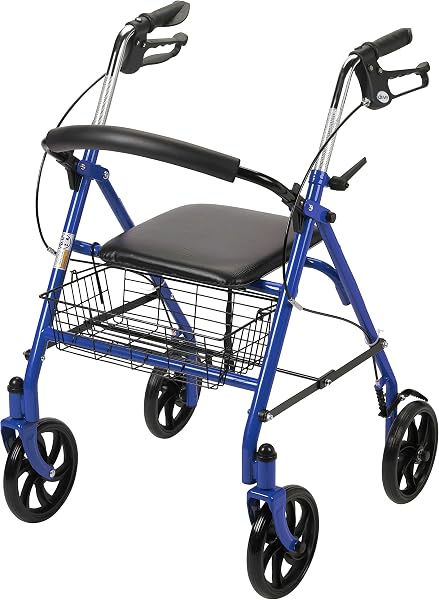
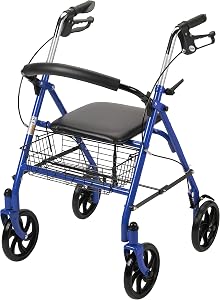
Drive Medical Steel
9.2Editor scoreSteel frame construction
7.5-inch wheels
Padded seat backrest
Fold-down backrest included
Compare 10 top rollators with seats by weight capacity, wheel size, comfort, foldability, brakes, and value to find the right mobility aid for daily use.
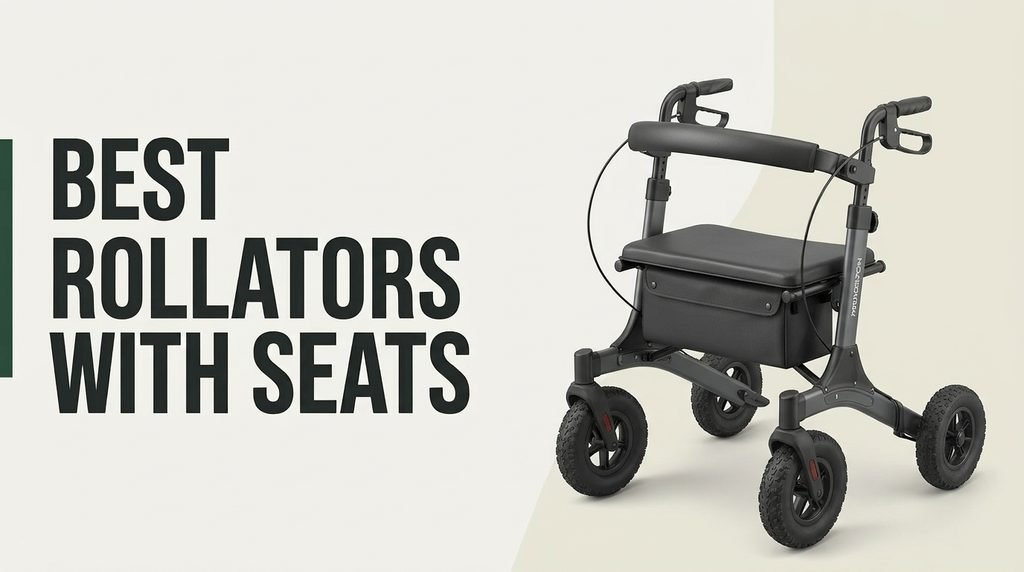
Choosing the right rolling walker with a built-in seat in 2026 means weighing weight capacity, wheel size, seat comfort, frame material, brake type, and how easily the unit folds for transport. This guide compares 10 standout mobility aids across price tiers so you can match seat width, handle height, and terrain capability to the user’s height, weight, and daily routine.
Rollators vary significantly in what they do well. Larger wheels handle uneven outdoor surfaces better, while compact 6-inch wheels excel indoors. Aluminum frames stay lightweight for lifting into a car, while steel frames offer higher weight ratings. Seat padding, backrest design, and brake style all shape how comfortable and safe daily use feels.
The picks below span budget-friendly steel models under $70 to premium bariatric and all-terrain options above $170. Each review focuses on what the specs mean in real daily use, who the model suits best, and where it falls short so you can make a confident purchase without wading through confusing product marketing.
We evaluated 10 rollators with seats by the factors that shape daily mobility use: weight capacity, frame material and weight, wheel size and terrain performance, seat width and cushioning, backrest support, handle height range, brake type and ease of operation, folding mechanism, storage features, warranty coverage, and owner feedback. The notes focus on real trade-offs so each pick connects with how people actually walk, rest, shop, and navigate homes, sidewalks, and outdoor paths with a rolling mobility aid.


Compare key features, scores, and current prices side by side. A shorter feature list means fewer details were available, not necessarily fewer capabilities.



The Drive Aluminum Rollator earns the highest star rating in this comparison, reflecting years of proven reliability from an established medical brand. At just 15.6 pounds with an aluminum frame, it's among the easiest options to lift into a car trunk, which matters for daily transport to appointments, errands, or family visits.

We may earn a commission when you buy through this link, at no additional cost to you.
The one-handed side-to-side folding design deserves attention because most rollators require two hands to fold, which is impractical when the other hand is holding a door, keys, or another item. Being able to fold with one hand while stabilizing the unit with the other simplifies daily use significantly. The rollator stands upright when folded, making it easy to park in tight spaces at home or in vehicle trunks.
The padded seat with hinged fold-up backrest and under-seat storage pouch cover basic comfort and organization needs. Ergonomic handles with a simple lever height adjustment let users or caregivers dial in the right fit quickly. The 6-inch wheels handle indoor and smooth outdoor surfaces reliably, though they aren’t the best choice for gravel or grass.
Many users need to fold a rollator while managing a door, purse, or car keys simultaneously. One-handed folding designs solve this everyday challenge and make the rollator practical for solo users rather than requiring caregiver assistance every time.
Choose this rollator if you want the highest-rated model in a lightweight aluminum design from a trusted brand. The tradeoffs are the 300-pound weight capacity (lower than some alternatives) and 6-inch wheels that suit indoor use better than rough outdoor terrain. For most users who primarily walk indoors or on smooth sidewalks, it’s an easy recommendation.
Not the best pick for users needing 350-pound-plus capacity or those who spend significant time on outdoor terrain.
We may earn a commission when you buy through this link, at no additional cost to you.
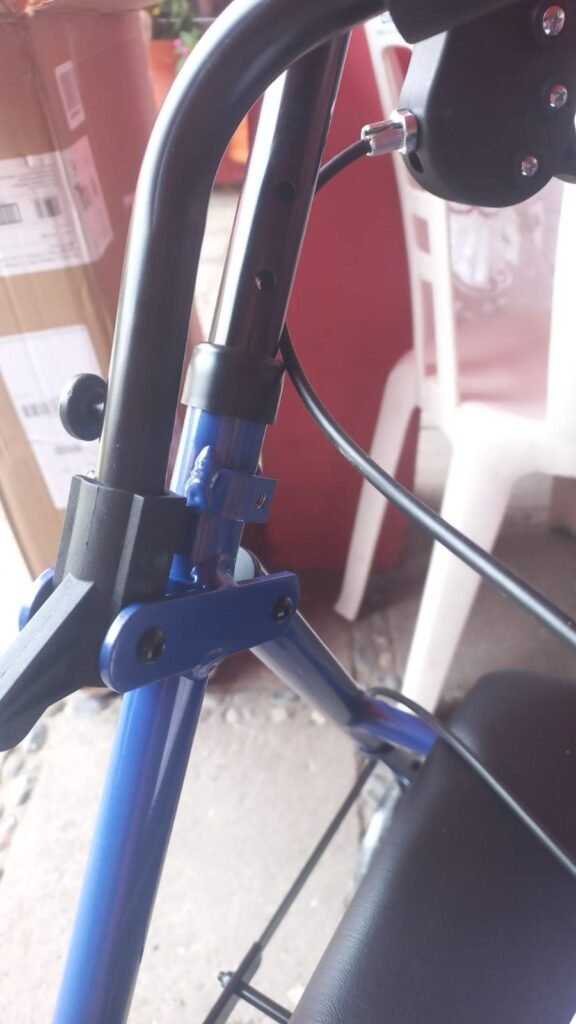
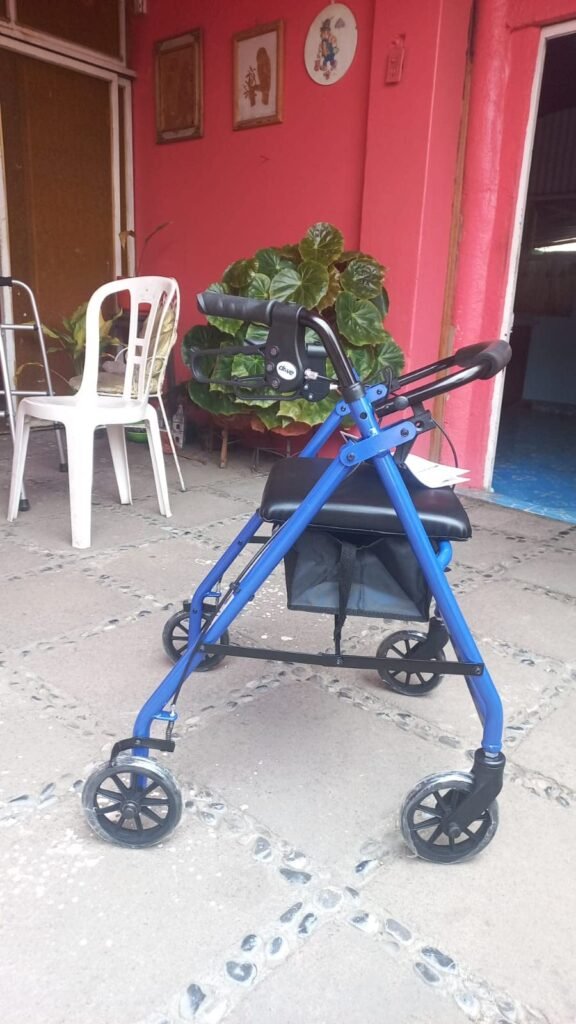
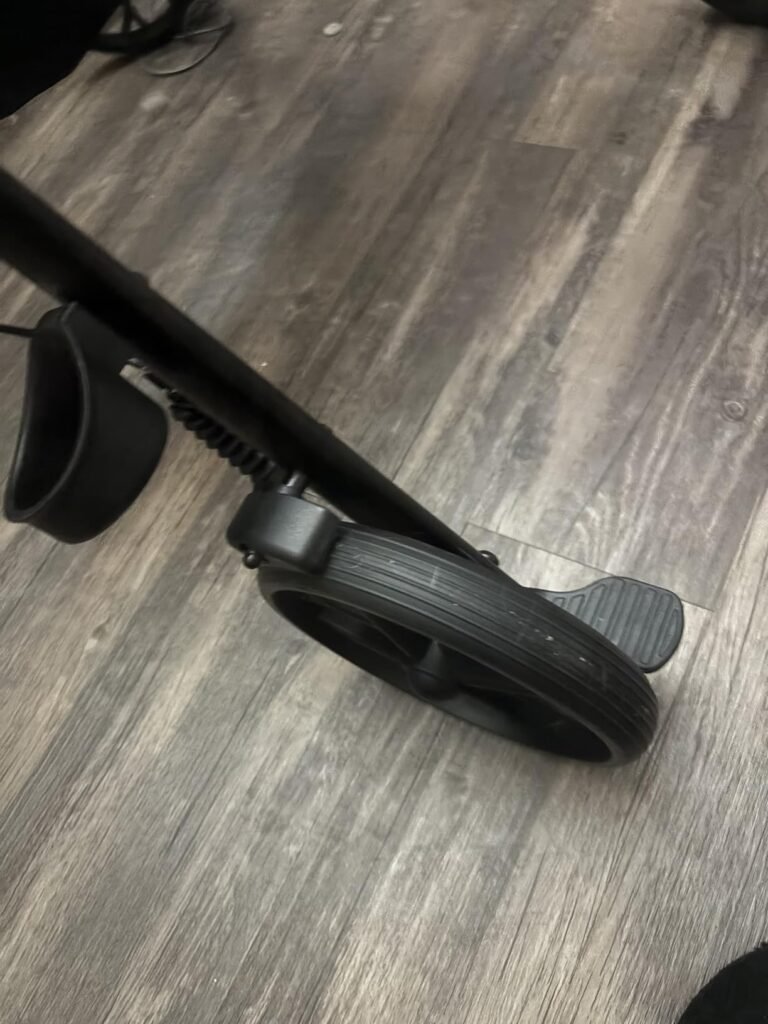
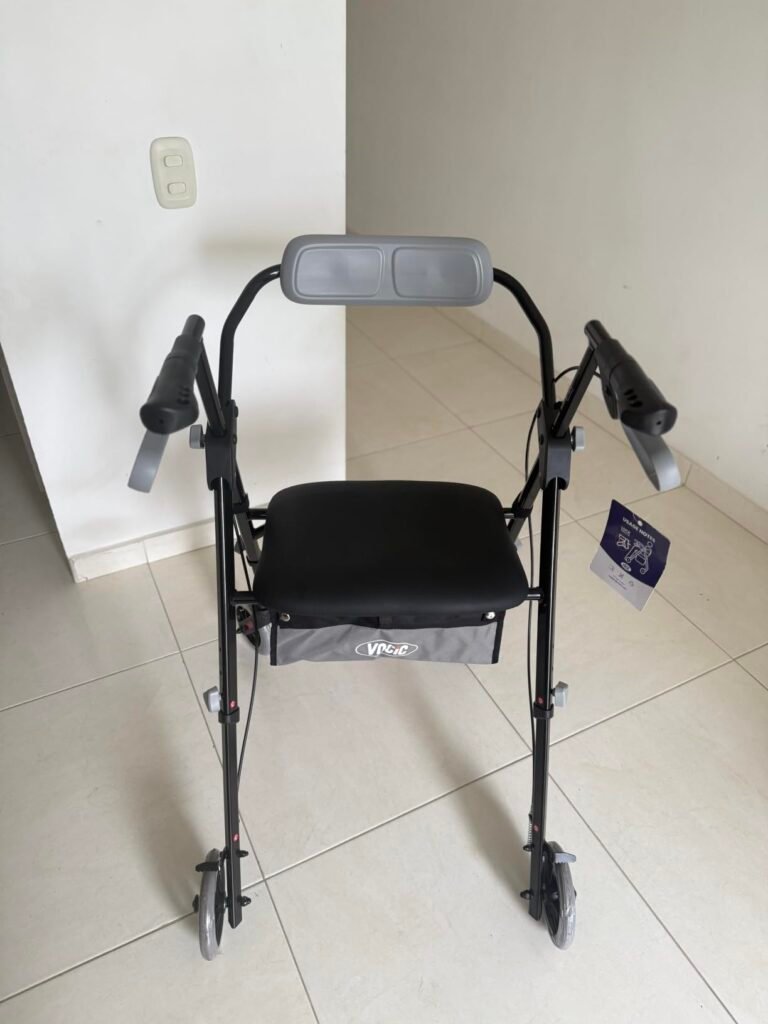
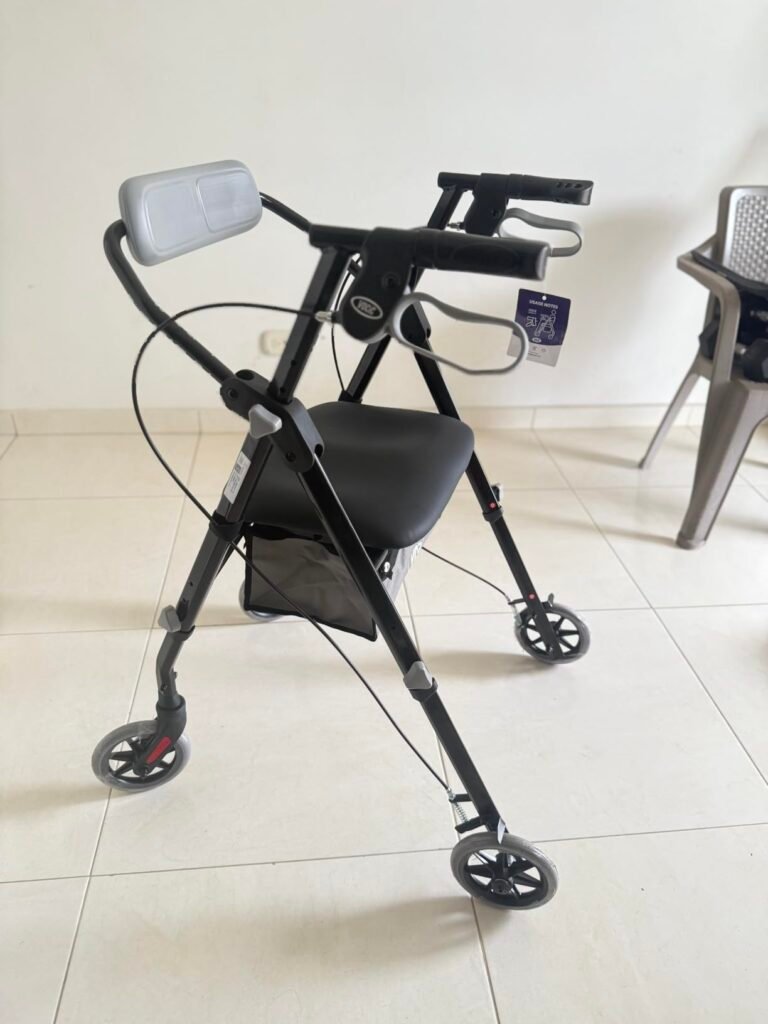
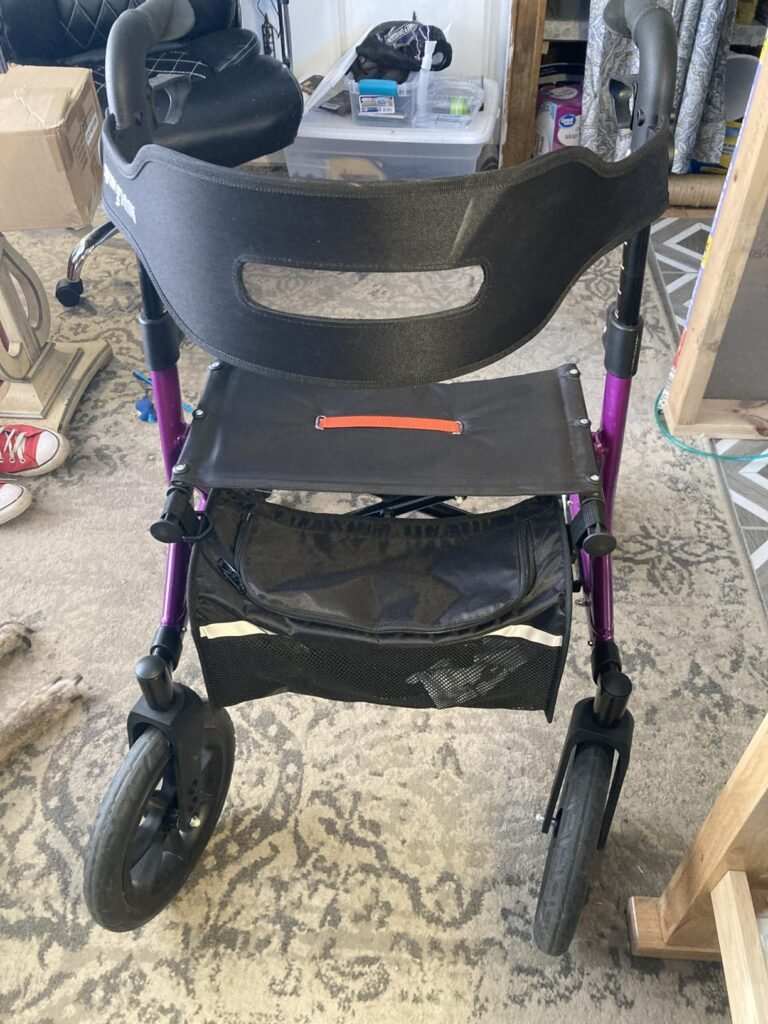
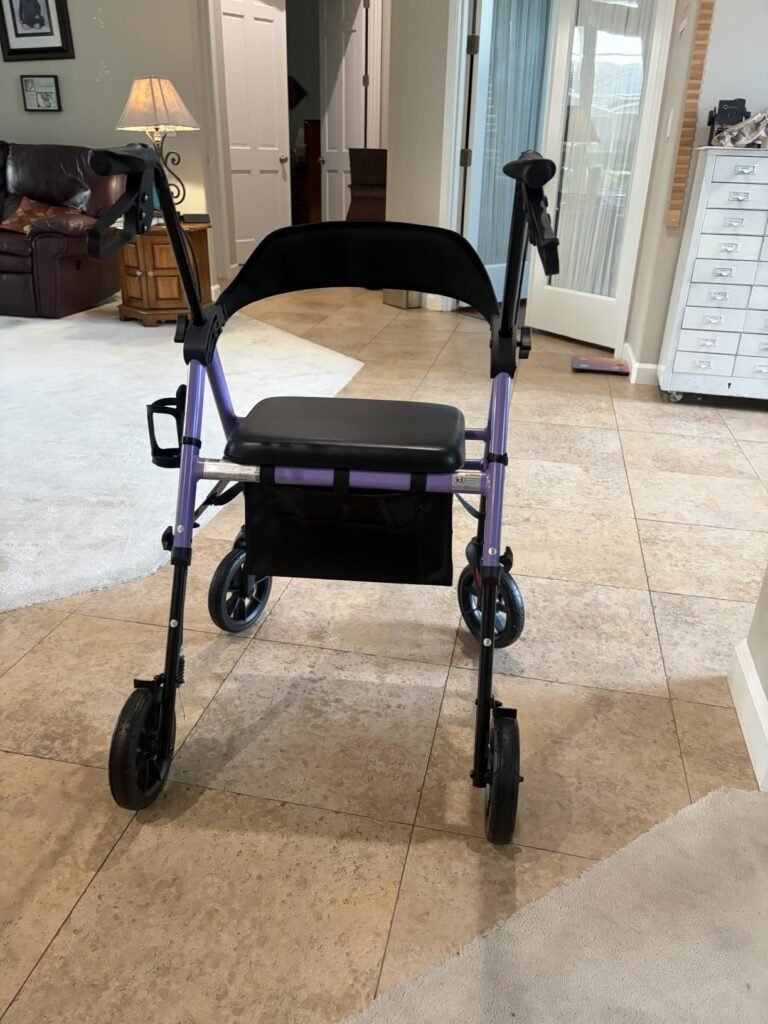
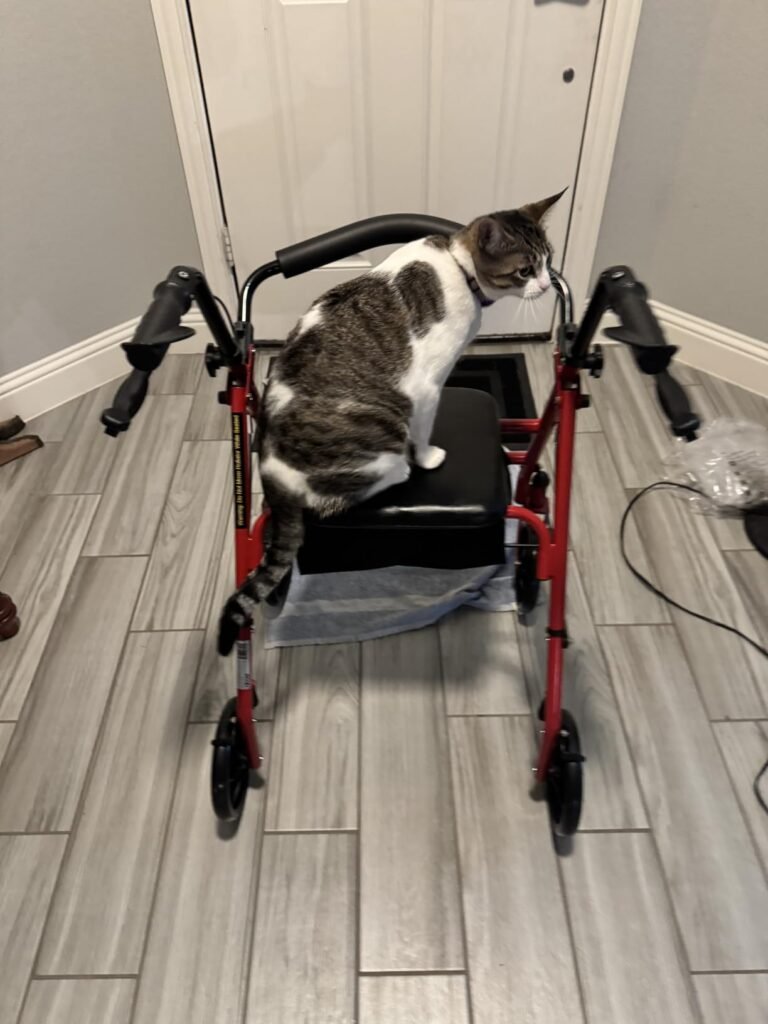
The Drive Medical Steel Rollator sits in a value sweet spot for buyers who want a dependable mobility aid without spending on premium features. A steel frame delivers real durability at this price point, and 7.5-inch wheels handle most indoor thresholds and typical outdoor sidewalks without the awkwardness of tiny 6-inch versions.
We may earn a commission when you buy through this link, at no additional cost to you.
The padded seat and fold-down backrest let the user rest during errands, appointments, or longer walks. Locking hand brakes secure the wheels in place when the user sits down, which is essential safety on any rollator. The height adjustment lever accommodates different users, making this a practical option for shared household use or gradual growth as needs change.
The compact folding design and under-seat storage pouch address the two things most owners actually care about after basic function: portability for car trips and a place to stash keys, phone, or shopping. Drive Medical’s long-standing reputation in the mobility category adds confidence for buyers who prefer sticking with a known brand rather than a newer entrant.
Steel frames cost less than aluminum and often support higher weight ratings, which matters for heavier users. They add extra weight to lift but stay planted during use, which some people prefer to lighter aluminum designs that can feel less substantial.
Choose this rollator if you want proven reliability from a well-known brand at an accessible price. The tradeoff is a heavier steel frame compared to aluminum alternatives, so buyers who need to lift the unit into a car trunk repeatedly might want to look at lighter options. For home-based daily use or occasional outings, it delivers everything most users need.
Not the best pick for users who need to lift the rollator into a car trunk frequently or who require premium comfort features.
We may earn a commission when you buy through this link, at no additional cost to you.
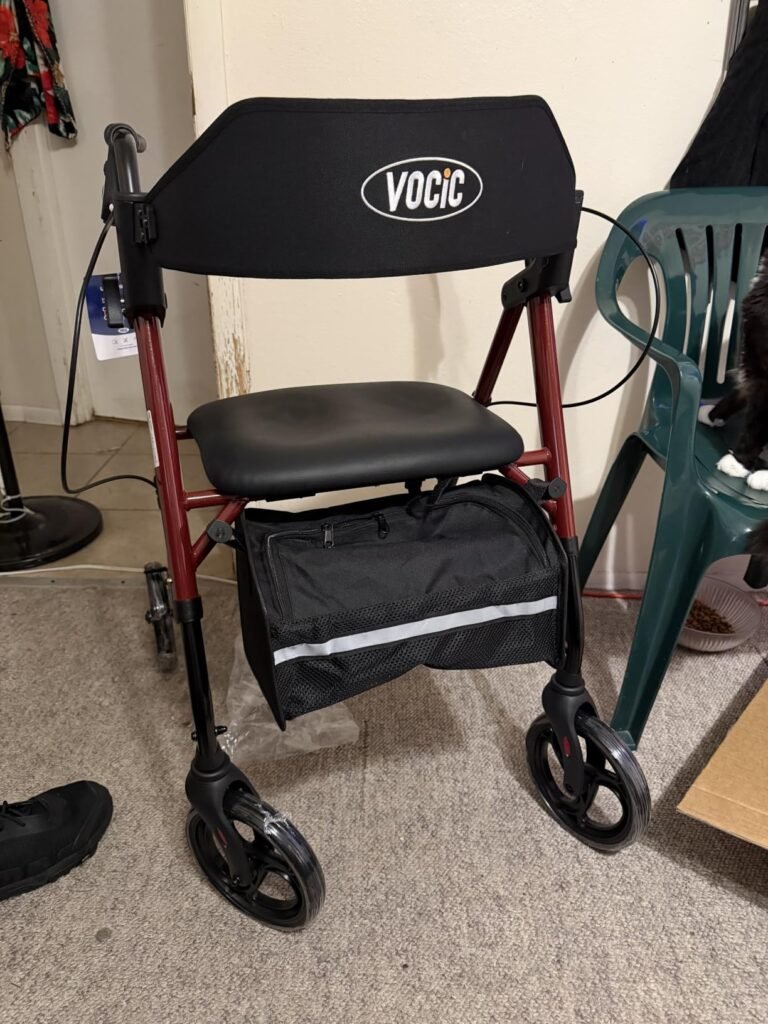
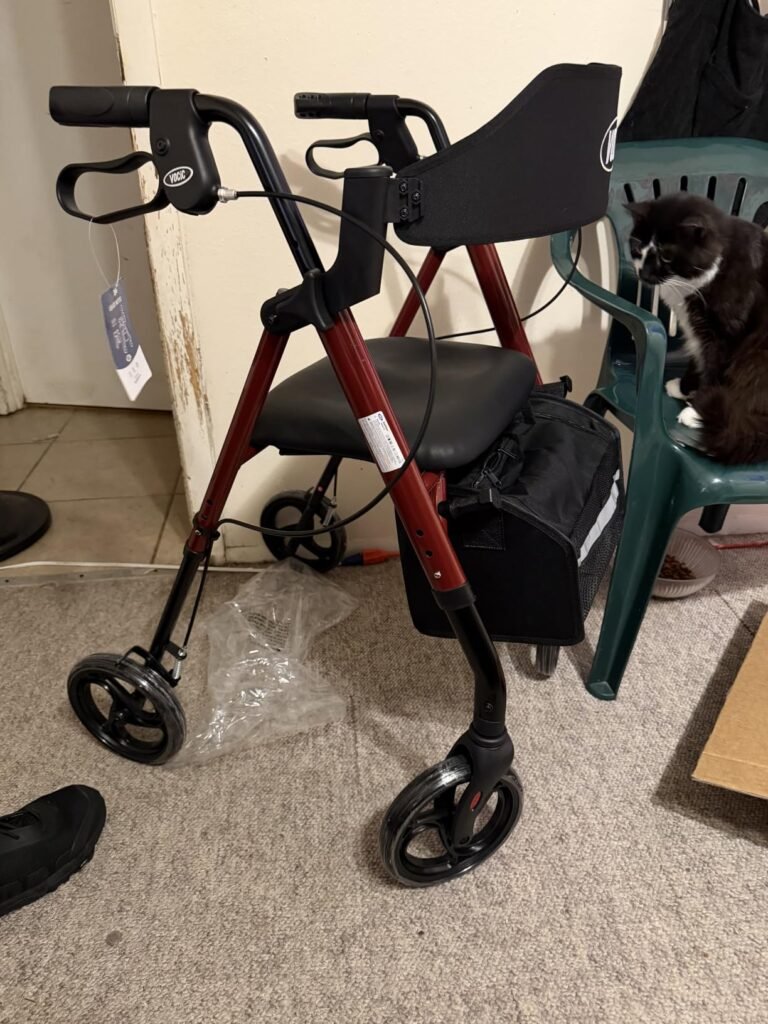
The VOCIC Z21 targets active users who want a mobility aid that actually handles outdoor conditions rather than one built primarily for indoor use. The 8-inch puncture-proof tires with textured tread give real grip on gravel, uneven sidewalks, and outdoor paths that would challenge smaller 6-inch wheels found on cheaper alternatives.
We may earn a commission when you buy through this link, at no additional cost to you.
The bionic seat design is a genuine comfort upgrade. Ergonomically shaped to relieve hip pressure with 1.6 inches of thickness and waterproof construction, it beats the flat, thin seats common on entry-level rollators. The widened breathable backrest gives real lumbar support during rest breaks, which matters more than most buyers appreciate until they actually sit for a while.
The 3-mode braking system offers free rolling, deceleration, and full stop modes for different walking speeds and terrain conditions. Ergonomic handles help users with weaker grip strength operate the brakes safely, and reflective strips on the wheels and storage bag improve visibility during evening walks. The dual adjustment system fits users from 4’11” to 6’3″ with 5-level handle heights and 3-level seat heights.
Larger wheels clear cracks, small stones, and uneven pavement more easily than small wheels. An 8-inch wheel rolls smoothly over obstacles that would jar or stop a 6-inch wheel, making outdoor walks more comfortable and less tiring.
Pick this rollator if you want to remain active outdoors and value comfort during rest breaks. The 22-pound weight stays manageable for most caregivers to lift, and the 3-second quick fold makes car storage practical. For strictly indoor use, a smaller-wheeled model may work just as well at a lower price.
Not the best pick for users who never leave paved indoor surfaces or who want the absolute lowest price.
We may earn a commission when you buy through this link, at no additional cost to you.
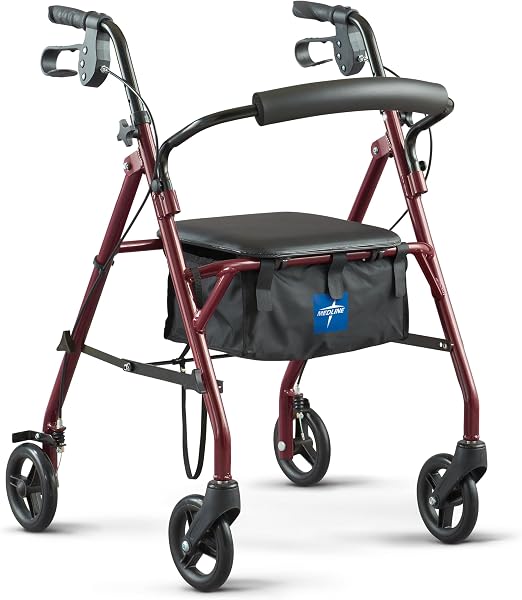
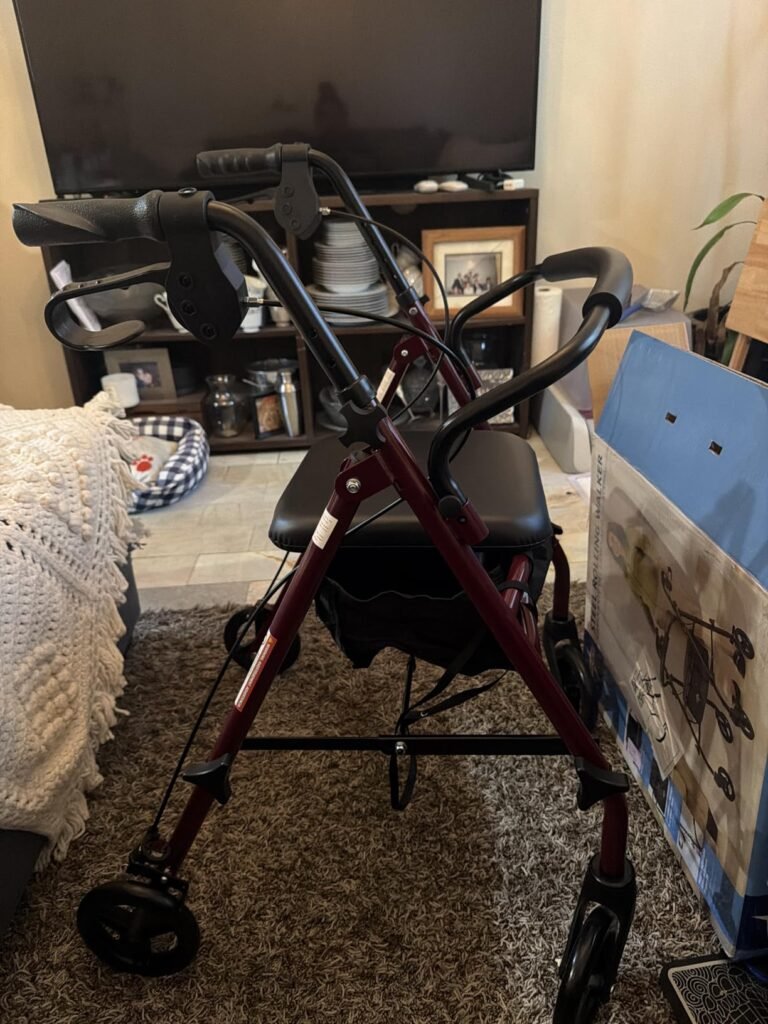
The Medline rollator brings a well-known medical supply brand to the entry-level mobility category. The 350-pound weight capacity is generous for a budget model and provides a real safety margin for average-weight users plus any groceries or belongings loaded into the under-seat storage.
We may earn a commission when you buy through this link, at no additional cost to you.
Ergonomic push-up-to-brake and push-down-to-lock handles are easy for seniors and fragile hands to grip without slipping. This is a genuinely important feature that separates well-designed rollators from cheap ones where users struggle to operate brakes consistently. The 12-by-12 inch padded seat with backrest provides basic but adequate support for short rest breaks.
Adjustable handles from 31 to 35 inches accommodate a reasonable height range, and the 16.5-pound folding frame lifts easily for car storage. The 6-inch wheels are the most obvious limitation, working fine indoors and on smooth sidewalks but requiring more effort on uneven surfaces or when crossing thresholds.
Six-inch wheels keep the rollator compact and lightweight, which suits indoor navigation and car transport. The downside is reduced ability to handle outdoor obstacles, so consider your primary use environment before deciding.
Choose this rollator if you want a trusted medical brand at an accessible price and your use is primarily indoor or on smooth surfaces. Users who need outdoor performance on rougher terrain should consider models with 8-inch wheels, but for typical home and appointment use, the Medline delivers reliable service without unnecessary extras.
Not suitable for users who spend significant time on gravel paths, grass, or rough outdoor terrain.
We may earn a commission when you buy through this link, at no additional cost to you.
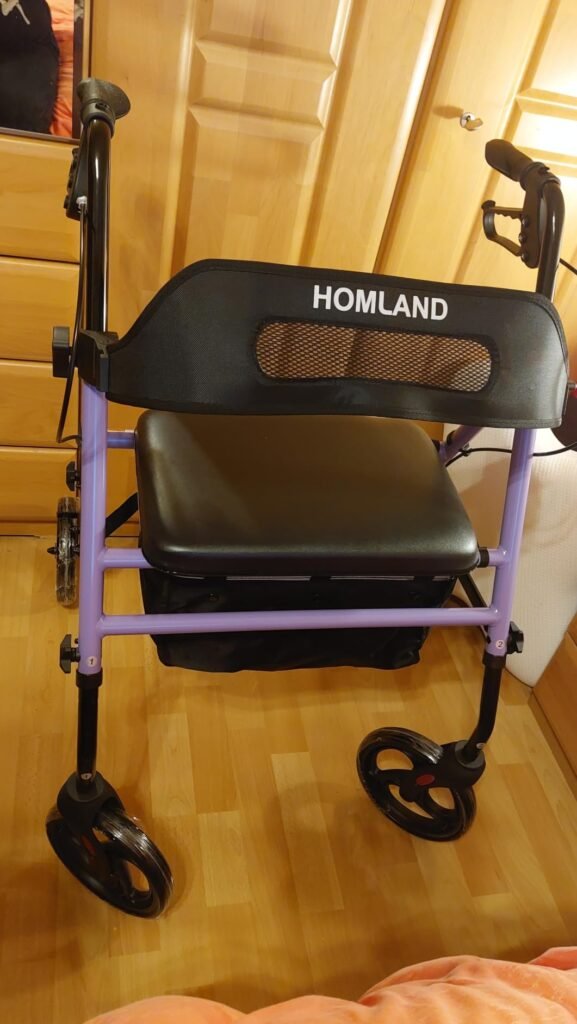
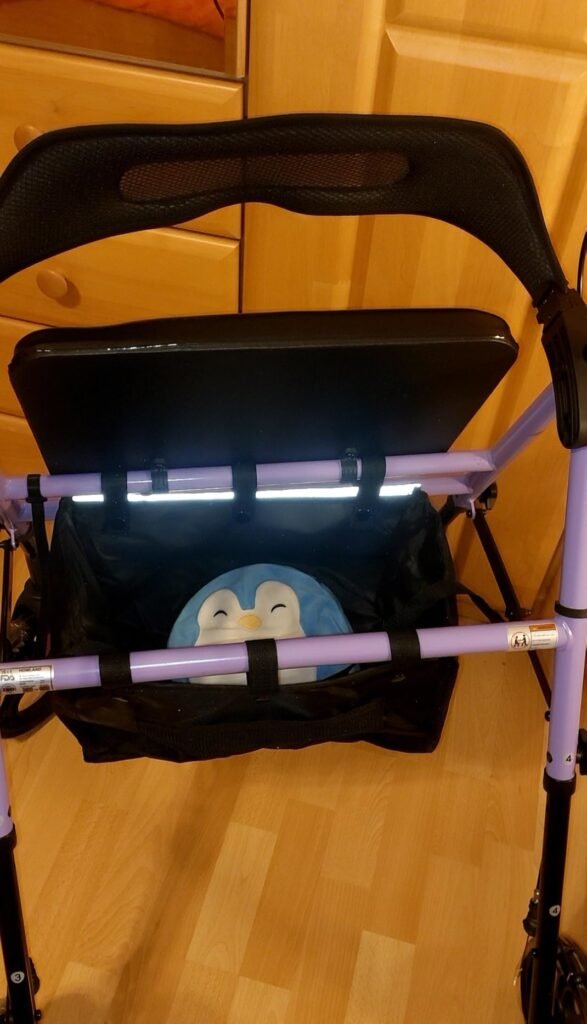
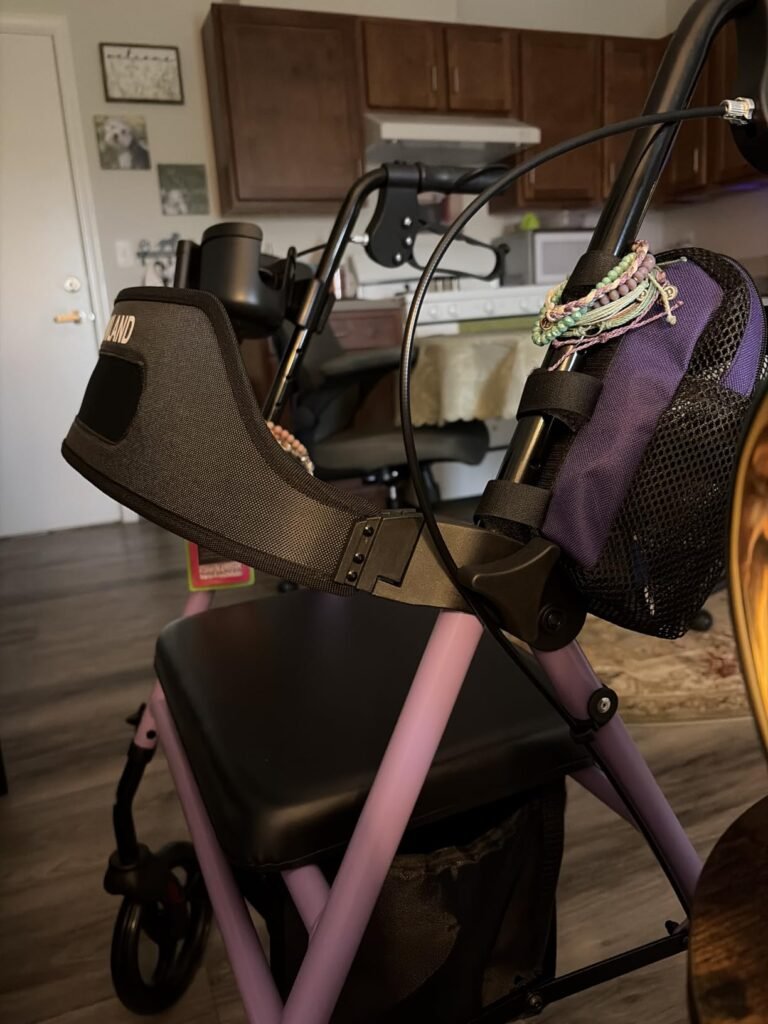
The HOMLAND stands out as the top overall pick by combining meaningful comfort upgrades with strong warranty coverage. The 16-by-12 inch seat is genuinely larger than the 14-by-10 inch industry standard, and the 1.6-inch thick cushion beats the hard, slippery seats found on cheaper models. For anyone who plans to actually sit on their rollator regularly, this is transformative.
We may earn a commission when you buy through this link, at no additional cost to you.
The Tri-Angle Load-Bearing Geometry and Dual-Reinforced Front Supports address wobble complaints common with budget rollators. High-strength alloy tubing keeps the frame stable during normal use and rest breaks, and the 3-mode braking system with easy-squeeze loop brakes reduces effort compared to trigger-style brakes that stress arthritic hands.
Fully adjustable seat height from 20 to 23 inches and handle height from 33 to 40 inches accommodate an unusually wide range of users, from 4’7″ petite individuals to 6’6″ tall walkers. The 8-inch puncture-proof wheels handle common thresholds and outdoor surfaces well, and the pinch-proof folding design prevents finger injuries during setup and breakdown.
Loop brakes require squeezing the entire handle rather than pulling a small trigger, which distributes force across multiple fingers. Physical therapists often recommend loop brakes for users with arthritis or weak grip strength because they reduce hand strain during braking.
Choose this rollator if you want the best combination of comfort, adjustability, and warranty coverage. The lifetime frame warranty and 2-year non-metal parts coverage back the purchase with real support, which is uncommon in this category. For users prioritizing seat comfort or accommodating an unusual height range, this is the pick to beat.
Not the best fit for users on the tightest budgets or those who need the absolute lightest possible frame.
We may earn a commission when you buy through this link, at no additional cost to you.
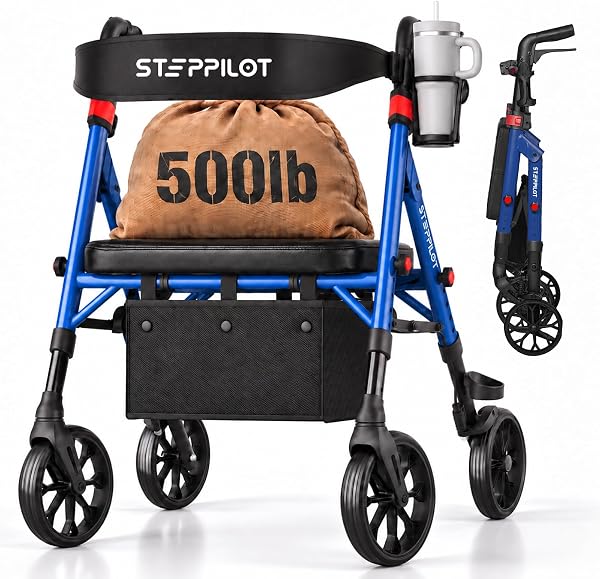
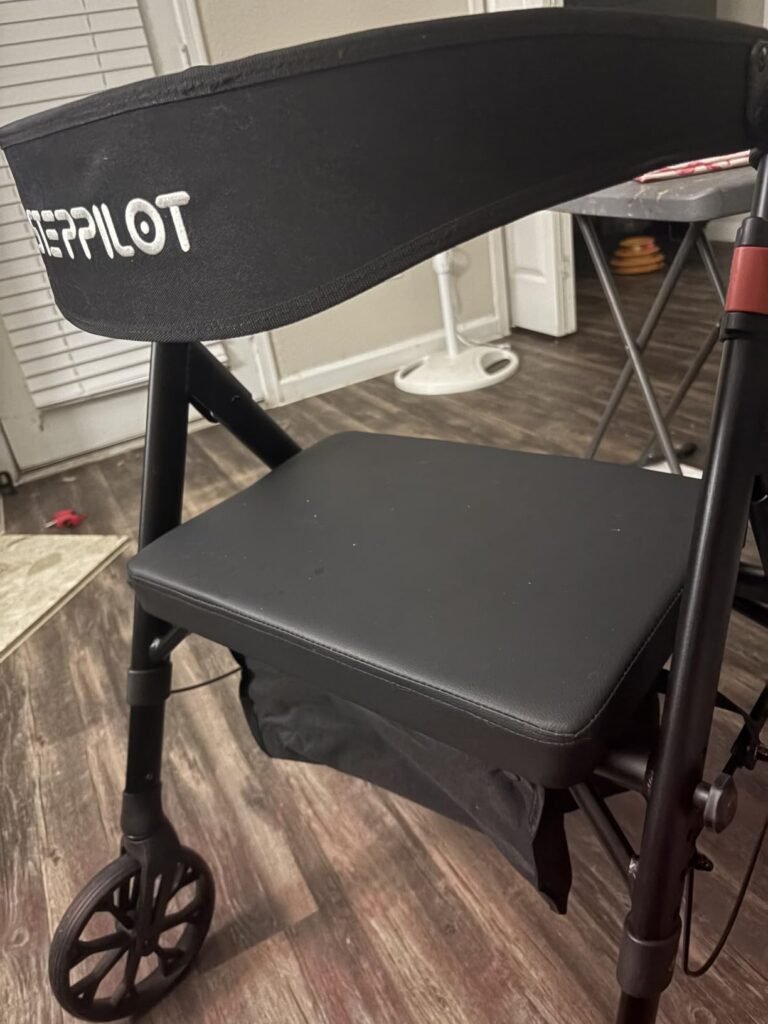
The QX03 addresses a real gap in the rollator market: heavy-duty capacity in a lightweight package. Supporting up to 500 pounds while weighing only 16.4 pounds itself, it provides genuine bariatric support without the massive frame weight typical of high-capacity mobility aids. The reinforced triangular aluminum frame stays stable across the full weight range.
We may earn a commission when you buy through this link, at no additional cost to you.
The 18-by-14 inch memory foam seat is substantially larger than standard rollator seats, comfortably fitting bariatric and tall users who find standard 14-by-10 inch seats too narrow. Memory foam cushioning conforms to the user’s shape during rest breaks, which matters more with higher body weight since flat seats create pressure points quickly.
The dual 5-level adjustable height system fits users from 4’10” to 6’11” and includes a key ergonomic advantage: the backrest moves with the handle height, so the lumbar support always reaches the user’s back regardless of stature. This solves a common problem with fixed-backrest rollators that leave tall users unsupported. The 8-inch TPR all-terrain wheels with puncture-proof, anti-slip tires perform well across floors, sidewalks, gravel, and uneven ground.
Using a rollator beyond its rated weight capacity creates serious safety risks including frame failure and brake issues. Bariatric-rated rollators use reinforced frames, wider seats, and stronger brakes to safely support heavier users during walking and rest.
Choose this pick if you or a family member needs higher weight capacity than typical rollators provide. Standard 300 to 350 pound rated units may not be safe for heavier users, and this delivers real bariatric support while remaining light enough to lift into a car trunk. Measure doorway widths carefully before ordering to confirm fit.
Not necessary for users well under 350 pounds who can save money with standard-capacity models.
We may earn a commission when you buy through this link, at no additional cost to you.
The VOCIC Z11 targets users who want a rollator that doesn't look like traditional medical equipment. The modern X-line frame design with faceted tubing gives it a more contemporary appearance while the multi-triangular carbon steel structure delivers real stability. This matters for users who feel self-conscious about using visible mobility aids.
We may earn a commission when you buy through this link, at no additional cost to you.
The Ergo Cushion, dual-arc back support, and butterfly-style grips form what the maker calls a triple-link comfort system. The butterfly grips are particularly notable for reducing wrist strain during braking, which is helpful for users with joint issues in the hands or wrists. The 380-pound capacity gives more margin than typical 300-pound rollators without stepping into full bariatric territory.
The 5-position handle adjustment from 30.7 to 38.2 inches fits users from 4’11” to 6’3″, covering most household needs. The 11-pound capacity storage bag holds phones, water bottles, and daily essentials, and the high-sensitivity dual-brake system provides reliable stopping and parking. VOCIC’s 24/7 customer support is a reassuring safety net for buyers uncertain about setup or troubleshooting.
Users who feel embarrassed about mobility aids sometimes avoid using them, which reduces safety. A rollator that feels stylish or modern can encourage consistent use, ultimately supporting better mobility outcomes than a plain-looking alternative left in the closet.
Pick this rollator if visual design matters to you or the user, and the 380-pound capacity fits your needs. It sits between basic budget models and premium picks, offering a modern aesthetic without the highest price tag. Users prioritizing lowest weight for lifting should look at aluminum-framed alternatives.
Not the best pick for buyers focused solely on lowest weight or maximum medical-grade features.
We may earn a commission when you buy through this link, at no additional cost to you.
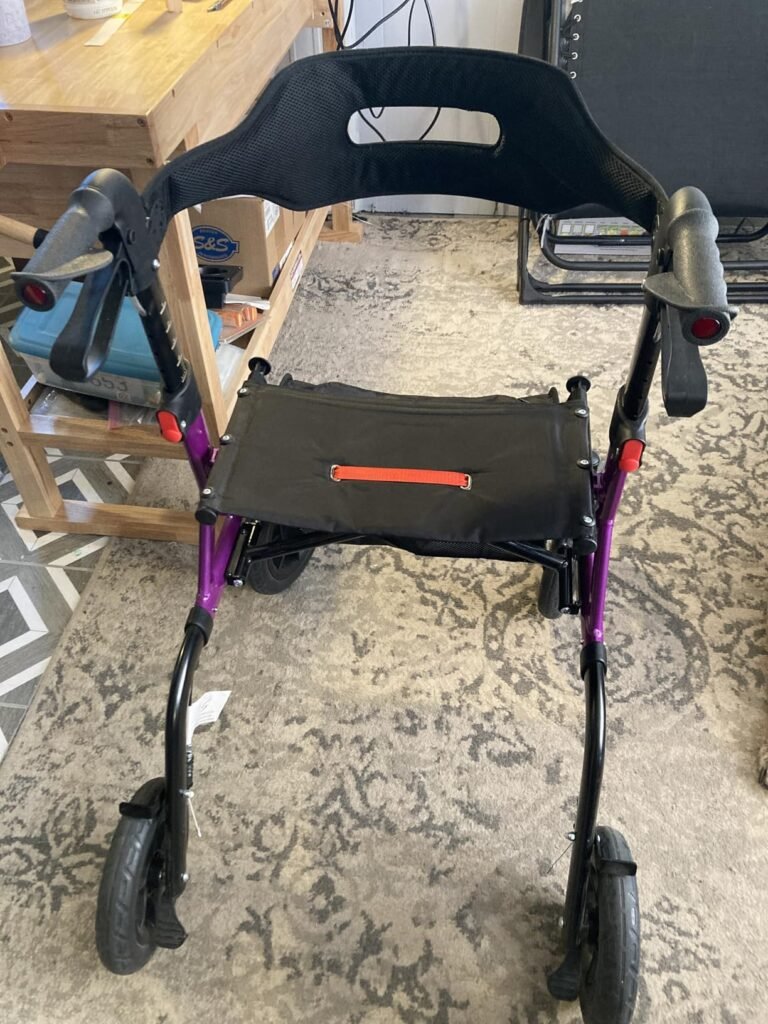
The MAXWALK stands out for its unusually large 12-inch front wheels paired with 10-inch rear wheels, giving genuine off-road capability that other rollators can't match. If the user walks on gravel driveways, uneven sidewalks, park paths, or grass, these oversized wheels make navigation dramatically easier than standard 6- or 8-inch alternatives.
We may earn a commission when you buy through this link, at no additional cost to you.
The built-in brake cable design is a thoughtful safety upgrade. Traditional external brake cables can catch on obstacles or tangle during folding, while the internal routing eliminates these hazards and creates a cleaner appearance. The dual braking system supports both speed control and full locking for safe seating.
The triangular aluminum frame keeps weight at 20.3 pounds despite the larger wheels, which is impressive given the size increase. Included accessories address common mobility aid pain points: a removable cup holder for hydration, a cane holder for users who need a backup mobility aid, and a storage pouch for personal items. The 5-level handle adjustment from 33.5 to 37.4 inches fits users from 5 to 6.5 feet tall.
Twelve-inch wheels roll over obstacles that would stop smaller wheels entirely. This means the user can maintain walking pace on uneven terrain instead of stopping to lift or maneuver the rollator around every crack or bump, reducing fatigue significantly.
Choose this rollator if outdoor walking on varied terrain is central to the user’s routine. The 12-inch wheels are transformative for gravel, grass, and rough sidewalks, though they add some bulk indoors. For strictly indoor use, standard smaller-wheeled models save space and money without losing significant function.
Not the best pick for users who rarely leave paved indoor surfaces or need the most compact folded profile.
We may earn a commission when you buy through this link, at no additional cost to you.
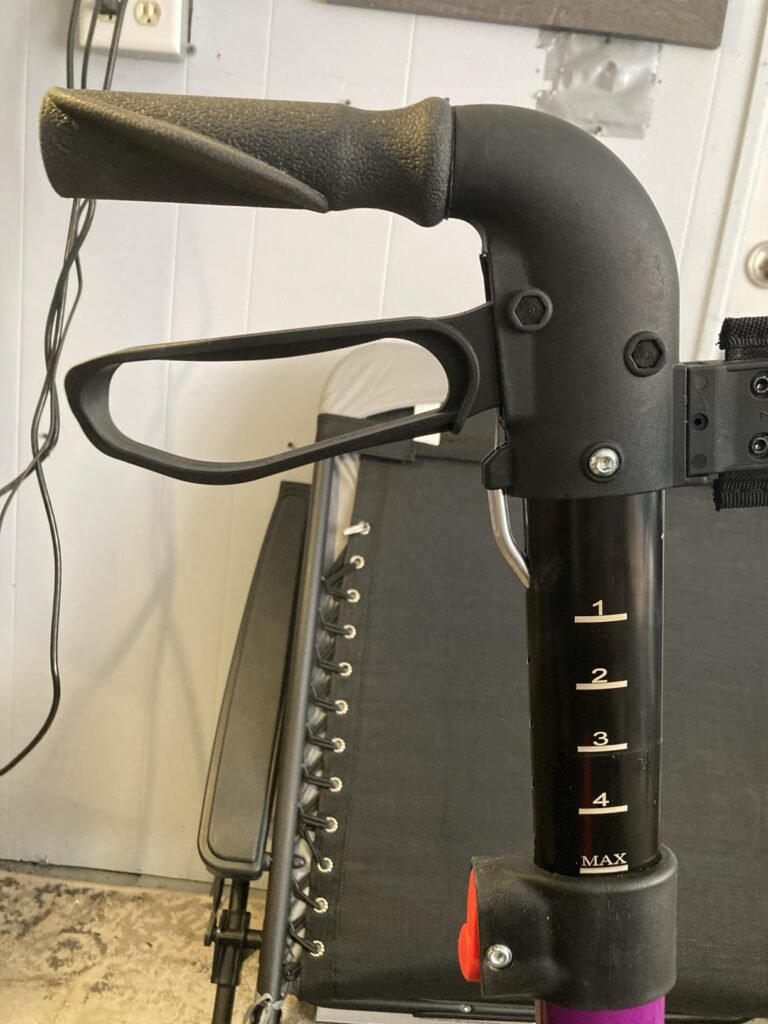
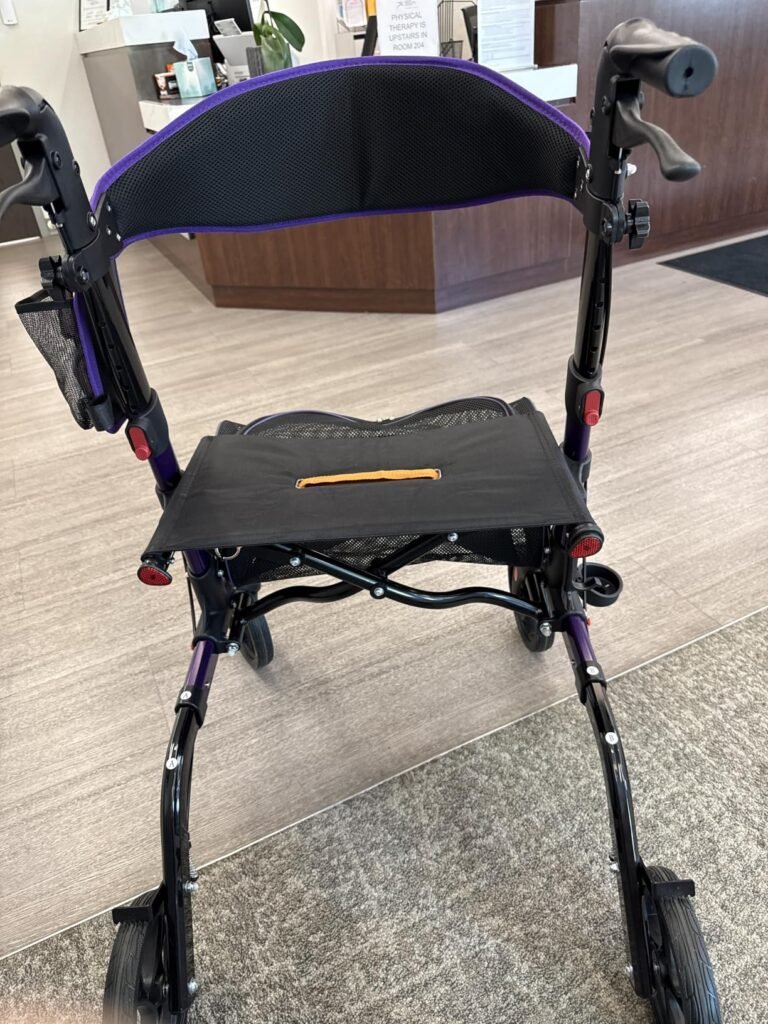
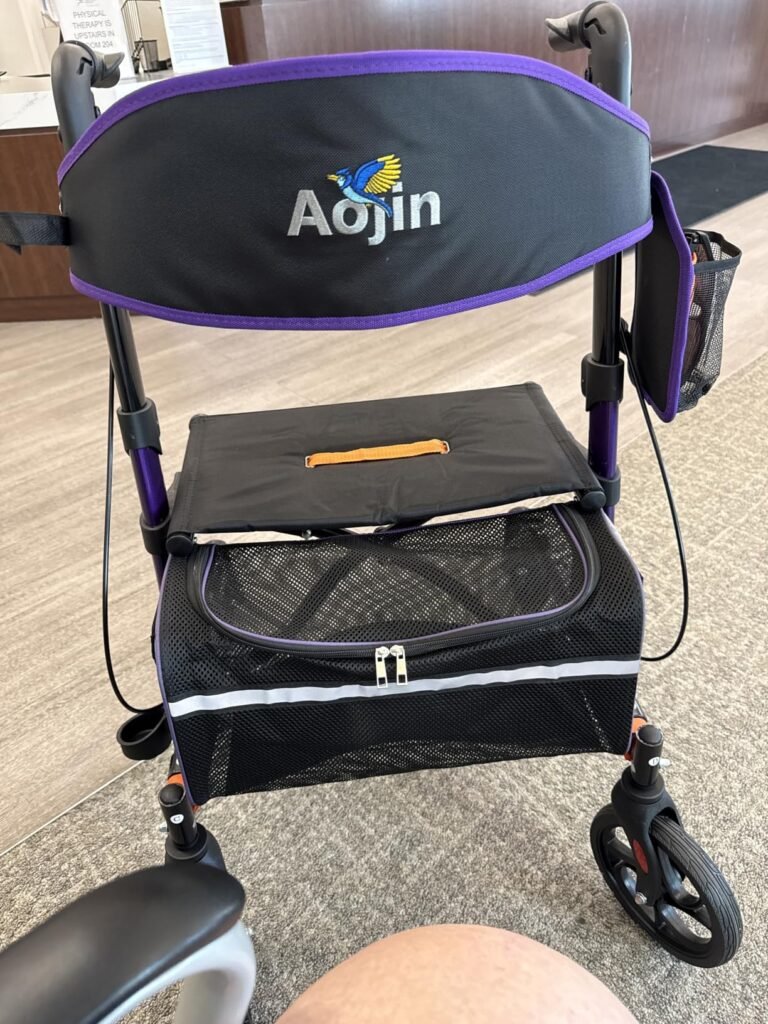
The Aojin rollator provides the most granular handle height adjustment in this comparison with six distinct positions, making it particularly good for households where multiple users of different heights might share the equipment or where the user's needs may change over time. The 4'7" to 6'5" range covers essentially all adult users.

We may earn a commission when you buy through this link, at no additional cost to you.
The 15-degree angled non-slip handles are a small but meaningful ergonomic detail. Angling the grips reduces wrist strain during walking, which the maker claims cuts strain by 65 percent. Combined with the ergonomic thumb rest for brake operation, the grip system suits users with wrist or hand issues that make traditional straight handles uncomfortable.
The 18-inch padded seat and breathable mesh backrest provide comfortable rest breaks, and the 3-mode brake with Free, Slow, and Lock settings gives real control across different situations. Eight-inch puncture-proof all-terrain wheels with slip-resistant tread handle wet surfaces and uneven ground, while reflective safety strips add visibility during evening walks.
Handles set too high force users to shrug their shoulders during walking, causing fatigue and neck pain. Handles set too low cause hunched posture that strains the back. Proper height should let arms hang naturally with a slight bend at the elbow.
Pick this rollator if handle height flexibility is a priority or if wrist comfort with angled grips matters. It’s a versatile option for shared use or for anticipating future needs. The slightly lower rating than category leaders suggests some quality control variance, so review recent owner feedback before ordering.
Not the ideal pick for buyers wanting the highest-rated model or the absolute lightest frame.
We may earn a commission when you buy through this link, at no additional cost to you.
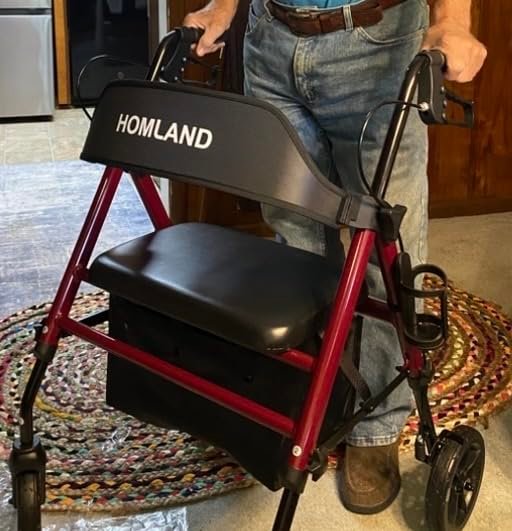
This HOMLAND model balances lightweight portability with meaningful comfort features. At only 17.6 pounds with a reinforced aluminum alloy frame plus double support bars, it lifts easily into car trunks while still supporting up to 350 pounds. Caregivers who load and unload the rollator multiple times daily will appreciate every ounce of weight savings.
We may earn a commission when you buy through this link, at no additional cost to you.
The widened breathable backrest and extra-wide memory foam seat address the two most common comfort complaints about entry-level rollators. Memory foam conforms to the user during rest breaks, and the wider seat accommodates users who find standard rollator seats too narrow. Ergonomic handles improve grip security during walking.
The 8-inch premium rubber wheels handle both indoor and outdoor surfaces smoothly, splitting the difference between the tiny 6-inch wheels of budget models and the massive 12-inch wheels of true off-road options. The 3-second quick folding design and adjustable height ranges (33 to 40 inches for handles, 20 to 23 inches for seat) fit users from 4’7″ to 6’6″.
Every pound of frame weight matters when lifting a rollator into a car trunk multiple times per day. Users or caregivers with shoulder, back, or grip issues especially benefit from lighter aluminum frames that reduce physical strain during transport.
Choose this rollator if weight and portability matter most while still requiring good comfort features. The 17.6-pound frame is genuinely easy to lift, and the memory foam seat and adjustable dimensions deliver premium comfort without stepping up to the most expensive options. Removable cup holder and storage pouch complete a well-rounded package.
Not the right pick for buyers on the tightest budgets who can accept a heavier steel frame.
We may earn a commission when you buy through this link, at no additional cost to you.
The best rolling walker for you depends on the user’s size, weight, primary walking environment, and how often the unit needs to be transported. This guide walks through each key buying factor with clear tradeoffs.
Weight capacity is the single most important spec to verify before buying. Standard rollators typically support 300 to 350 pounds, which suits most users. The Drive Aluminum Rollator supports 300 pounds, the Medline and VOCIC Z21 support 350 pounds, the VOCIC Z11 supports 380 pounds, and the QX03 Bariatric supports 500 pounds. Using a rollator beyond its rated capacity creates serious safety risks including frame failure, brake problems, and dangerous instability during rest breaks.
Consider the user’s actual weight plus any belongings loaded into the storage pouch. If someone weighs 280 pounds and typically carries a few pounds of groceries or personal items, a 300-pound rated rollator leaves little safety margin. Choose a unit rated at least 20 to 30 pounds above the user’s weight, and consider bariatric models like the QX03 for anyone approaching or exceeding standard capacity limits.
Match capacity conservatively to the user’s needs. Underspending on capacity risks injury and property damage; overspending on unnecessary bariatric features costs money without adding real value for lighter users.
Wheel size dramatically affects where the rollator works well. Small 6-inch wheels like those on the Drive Aluminum and Medline models are lightweight and maneuverable indoors, working fine on smooth floors, thin carpets, and typical sidewalks. They struggle with door thresholds, cracks, gravel, and grass. Standard 7.5 to 8-inch wheels on models like the Drive Steel, VOCIC Z21, HOMLAND, and Aojin handle most indoor and outdoor conditions reasonably well. Massive 12-inch wheels on the MAXWALK deliver real outdoor capability on gravel, grass, and rough sidewalks.
Wheel material matters too. Puncture-proof rubber or TPR tires resist damage from debris and provide consistent grip. Pneumatic tires roll smoother but require occasional pressure checks and can puncture. Textured tread patterns improve traction on wet or slippery surfaces, which matters year-round in areas with rain, snow, or dew-covered morning sidewalks.
Assess the user’s actual walking environment before choosing wheel size. Indoor users can save money with smaller wheels; outdoor walkers benefit from larger wheels even if they cost more.
Frame material creates a real tradeoff between weight and cost. Steel frames like the Drive Steel and Medline are more affordable and often support higher weight capacities, but they add several pounds compared to aluminum alternatives. Aluminum frames like the Drive Aluminum, HOMLAND, VOCIC, and QX03 are significantly lighter (15 to 22 pounds versus 20 to 28 pounds for steel) but generally cost more.
For users who leave the rollator at home or move it short distances, steel frames work fine. For users or caregivers who lift the rollator into a car trunk daily, aluminum’s weight savings matter significantly. A 10-pound difference in frame weight becomes real physical strain when repeated multiple times daily, especially for caregivers with their own physical limitations.
Prioritize aluminum if daily transport matters. Choose steel for stationary or occasional-transport use where the weight difference is acceptable and cost matters more.
Seat quality varies enormously across the category and directly affects how much the user actually rests during outings. Standard rollator seats measure around 12 by 12 inches with thin padding, which is adequate for brief rest breaks but uncomfortable for longer sits. Larger seats like the HOMLAND 16-inch, the Aojin 18-inch, or the QX03 18-by-14 inch memory foam design provide dramatically better comfort for regular use.
Seat cushioning matters as much as size. Hard vinyl or thin foam creates pressure points quickly, while thicker padding (1.6 inches or more) or memory foam conforms to the user during rest. Waterproof or wipeable materials simplify cleaning after outdoor use. Backrests are essential for real comfort during rest breaks, and wider, breathable designs beat thin tubular alternatives.
Prioritize seat comfort if the user plans to sit regularly during outings. Users who only use the seat briefly can accept standard sizes to save money.
Brake design determines both safety and daily usability. Standard trigger-style brakes require finger strength to squeeze and hold, which challenges users with arthritis or weak grip. Loop brakes like those on the HOMLAND Extra-Wide distribute force across the entire hand and require less effort, which physical therapists often recommend for users with hand or wrist issues. Butterfly grips like the VOCIC Z11 offer another ergonomic alternative.
Multi-mode braking systems (free rolling, deceleration, and full lock) give more control than simple on-off brakes. The parking lock is essential safety when the user sits down, since a rollator that rolls away during seating causes falls. Verify the parking brake engages firmly and holds under the user’s weight during rest breaks.
Test the brake mechanism if possible before buying, or read owner feedback carefully. For users with hand or grip issues, prioritize loop or butterfly-style brakes over standard triggers.
Handle and seat height adjustments determine whether the rollator actually fits the user. Handle heights should let arms hang naturally with a slight elbow bend rather than forcing shrugged shoulders or hunched posture. Look for handle ranges that comfortably include the user’s ideal height with room above and below for fine-tuning. Common ranges span 31 to 38 inches, though extended options like the HOMLAND Extra-Wide (33 to 40 inches) accommodate taller users.
Seat height matters for safe seating and standing. Users should be able to sit down and stand up without straining knees or hips. Adjustable seat heights (typically 20 to 23 inches) let you match the user’s comfortable seating height, which varies significantly by leg length and joint condition. Some models like the QX03 include backrests that adjust with the handle height to always support the user’s back.
Measure the user’s ideal handle height (standing with arms relaxed) and comfortable seating height before ordering. Choose a rollator with adjustment ranges that comfortably include both measurements with margin for fine adjustment.
Fold design shapes how easily the rollator moves between home and car or storage. Side-to-side folding designs like the Drive Aluminum’s collapse into narrow profiles that stand upright when folded, making them easy to store in tight spaces. Front-to-back folding designs like the QX03’s simple two-step process reduce to compact shapes that fit most car trunks. Quick-fold designs (3 seconds on several models) simplify daily use compared to fumbling with complex latches.
One-handed folding matters more than most buyers realize. Being able to fold with one hand while managing a door, keys, or personal items simplifies solo use significantly. Pinch-proof folding mechanisms prevent finger injuries during operation, which is especially valuable for users with arthritis or reduced dexterity. Check the folded dimensions against your car trunk and home storage space before ordering.
Prioritize quick and one-handed folding for daily transport users. Users with dedicated storage space and infrequent transport can accept more complex folding mechanisms if other features are stronger.
Warranty coverage varies significantly and reveals how the manufacturer stands behind the product. The HOMLAND Extra-Wide offers a lifetime frame warranty plus 2-year non-metal parts coverage, which is exceptional in this category. The MAXWALK includes an 18-month warranty with lifetime support, and VOCIC provides 24/7 customer support. Established brands like Drive Medical and Medline offer standard warranties backed by long-established support infrastructure.
For a mobility aid that will see daily use for years, warranty coverage translates directly into peace of mind. Frame failures under warranty get replaced free; failures outside coverage require full replacement purchases. US-based customer support matters if you need help with assembly, replacement parts, or troubleshooting, since language barriers and time zone issues can complicate problem resolution with overseas support.
Weight warranty coverage as part of value, not just an afterthought. A cheaper rollator with weak support can cost more over time than a slightly pricier option with comprehensive coverage.
Setup and adjustment come first. Read the assembly instructions carefully and confirm all bolts and knobs are fully tightened before use. Adjust the handle height so the user’s arms hang naturally with a slight bend at the elbow when gripping the handles; handles too high force shrugged shoulders, while handles too low cause hunched posture. Test the brakes by rolling the rollator and applying stopping pressure, and verify the parking lock holds firmly under the user’s full body weight before relying on it for seating.
Daily use should follow consistent safety habits. Always engage the parking brake before sitting down, and confirm the wheels are fully locked before shifting weight onto the seat. Approach the seat by backing up until the seat contacts the backs of the user’s legs, then lower down carefully using the handles for support. When walking, keep the rollator close to the body rather than pushing it far ahead, which can cause the user to lean forward and lose balance. Take shorter, more controlled steps when navigating slopes or uneven surfaces.
Maintenance keeps the rollator safe and lasting. Wipe the frame and seat regularly with a damp cloth to remove dirt and moisture. Check the wheels periodically for embedded debris and clean any hair or fibers that wrap around the axles. Inspect brake cables and adjustments every few months, testing that both brakes engage evenly and hold firmly. Store the rollator in a dry space to prevent rust on metal frames, and lubricate the folding mechanisms occasionally if they become stiff. Report any frame damage, loose connections, or brake issues immediately rather than continuing to use a compromised unit.
Standard walkers have four legs without wheels and must be lifted with each step, which suits users needing maximum stability. Rollators have wheels and roll continuously, requiring less effort and moving faster, but they need brakes for control. Rollators also include seats for resting during outings, which standard walkers don't offer. Choose based on the user's balance, strength, and typical activities.
Stand with the user in normal shoes and let their arms hang naturally at their sides. The handles should reach the crease of the wrist when the arms hang relaxed. This positions the arms with a slight bend at the elbow when gripping, which prevents shoulder shrugging or hunched posture. Adjust in small increments if needed for comfort during actual walking.
Yes, but wheel size matters. Small 6-inch wheels handle sidewalks and smooth surfaces but struggle on gravel, grass, or uneven ground. Larger 8-inch wheels handle most outdoor conditions well, and massive 12-inch wheels like the MAXWALK's tackle serious rough terrain. Match wheel size to your actual walking environment to avoid unnecessary struggle.
Standard rollators typically support 300 to 350 pounds, with bariatric models like the QX03 supporting up to 500 pounds. Consider the user's weight plus any belongings loaded into storage pouches when choosing. Using a rollator beyond its rated capacity creates serious safety risks including frame failure and brake problems, so choose a unit rated at least 20 pounds above the user's actual weight.
Aluminum frames are significantly lighter, typically 15 to 22 pounds versus 20 to 28 pounds for steel, which matters if you lift the rollator into a car frequently. Steel frames cost less and often support higher weight capacities. For daily transport users, aluminum's weight savings justify the higher price; for stationary use, steel works fine and saves money.
Always engage the parking brake fully before sitting down. Back up until the seat contacts the backs of your legs, then lower down carefully using the handles for support. Never sit on a rollator that isn't locked in place. When standing back up, use the handles to push yourself up rather than pulling on the frame. Keep sessions brief and don't rock or lean sideways while seated.
Yes, most rollators fold to fit standard car trunks. Folded dimensions vary from about 11 by 25 by 33 inches to 14 by 25 by 40 inches depending on model. Measure your car trunk before ordering to confirm fit. Aluminum models with quick-fold designs are easiest to load and unload, while heavier steel models require more effort to lift.
Most rollators include an under-seat storage pouch or basket for keys, phone, water bottle, and small purchases. Some models include additional accessories like cup holders and cane holders. Storage capacity varies significantly, so if you plan to carry substantial items like groceries, look for models with larger baskets or dedicated shopping capacity.
Wipe the frame and seat regularly to remove dirt. Check the brakes monthly to confirm they engage evenly and hold firmly under the user's weight. Inspect wheels periodically for embedded debris and clean hair or fibers from axles. Store in a dry space to prevent rust on metal frames, and address any frame damage or brake issues immediately rather than continuing to use a compromised unit.
No, rollators are available over the counter without a prescription. However, if you want insurance coverage or Medicare reimbursement, a prescription from your doctor is typically required. Consulting with a physical therapist can also help identify the right features for your specific mobility needs before purchasing.
The HOMLAND Extra-Wide Rollator stands out as the strongest overall pick for most buyers. Its 16-inch extra-wide seat with 1.6-inch cushion, 8-inch puncture-proof wheels, PT-recommended loop brakes, and unusually wide 4'7" to 6'6" height range combine into a package that genuinely improves daily mobility. The lifetime frame warranty and comprehensive US-based support back the purchase with real long-term value that few competitors match.
For different priorities, several alternatives deserve serious consideration. The Drive Medical Steel Rollator delivers proven reliability at a friendly price for value-focused buyers. The QX03 Bariatric Rollator provides essential 500-pound capacity for heavier users in a surprisingly lightweight frame. The Drive Aluminum Rollator earns the highest rating with class-leading portability and one-handed folding, while the MAXWALK 12-Inch Wheels model tackles serious outdoor terrain that would defeat standard rollators. The VOCIC Z21 offers strong all-terrain value at a mid-tier price with premium seat comfort.
Match your choice to the user's real needs. Honest assessment of weight, primary walking environment, transport requirements, and comfort priorities matters more than chasing the most feature-packed model. A well-matched budget rollator used consistently outperforms a premium unit that intimidates the user or doesn't fit their actual routine. Use the buying guide above to weigh capacity, wheel size, frame weight, seat comfort, and brake type against how the rollator will actually be used, and you'll end up with a mobility aid that genuinely supports independence and daily activity for years to come.