RC16B 1000W
8.4Editor score5/8-inch capacity
1000W copper motor
1-1.5 second cuts
Cr12MoV blades
Find the right rebar cutters for 2026. We compare 5 standout options by build quality, useful features, owner feedback, value, and everyday trade-offs.
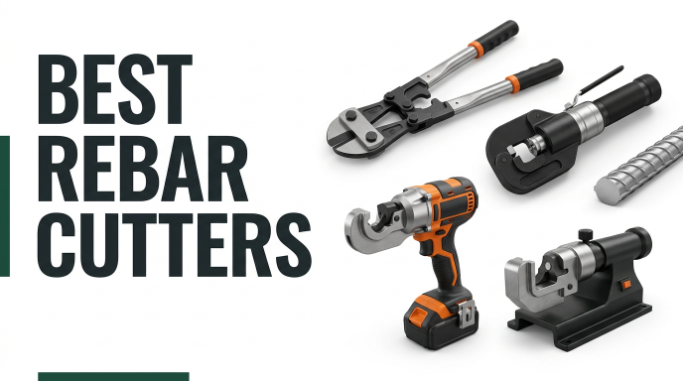
Find the right rebar cutter for your construction and fabrication projects in 2026. We compare 5 standout options by the factors that matter most on the job site: cutting capacity, motor wattage, cutting speed, blade material, portability, noise level, and how each tool handles different rebar grades and diameters.
The differences between a $200 electric hydraulic cutter and a $390 manual bender-cutter combo are significant and application-dependent. Electric models deliver fast, spark-free cuts through thick rebar with minimal effort, while manual tools provide bending capability and independence from power sources. Matching the tool to your workload is the critical decision.
This guide covers compact electric hydraulic cutters for residential construction, high-capacity models for bridge and infrastructure work, and manual bender-cutter combos for versatile field use. Use the comparison table, reviews, and buying guide below to match a rebar cutter to your typical bar size, volume, and job site conditions.
We compared 5 rebar cutters using the specifications that actually help a buyer decide on the job site: maximum cutting diameter, motor power and type, cutting speed per cycle, blade material and design, hydraulic system configuration, weight and portability, noise output, spark generation, and owner feedback. The notes focus on practical trade-offs so each pick connects to how contractors and ironworkers actually cut rebar in residential, commercial, and infrastructure applications.

Compare key features, scores, and current prices side by side. A shorter feature list means fewer details were available, not necessarily fewer capabilities.


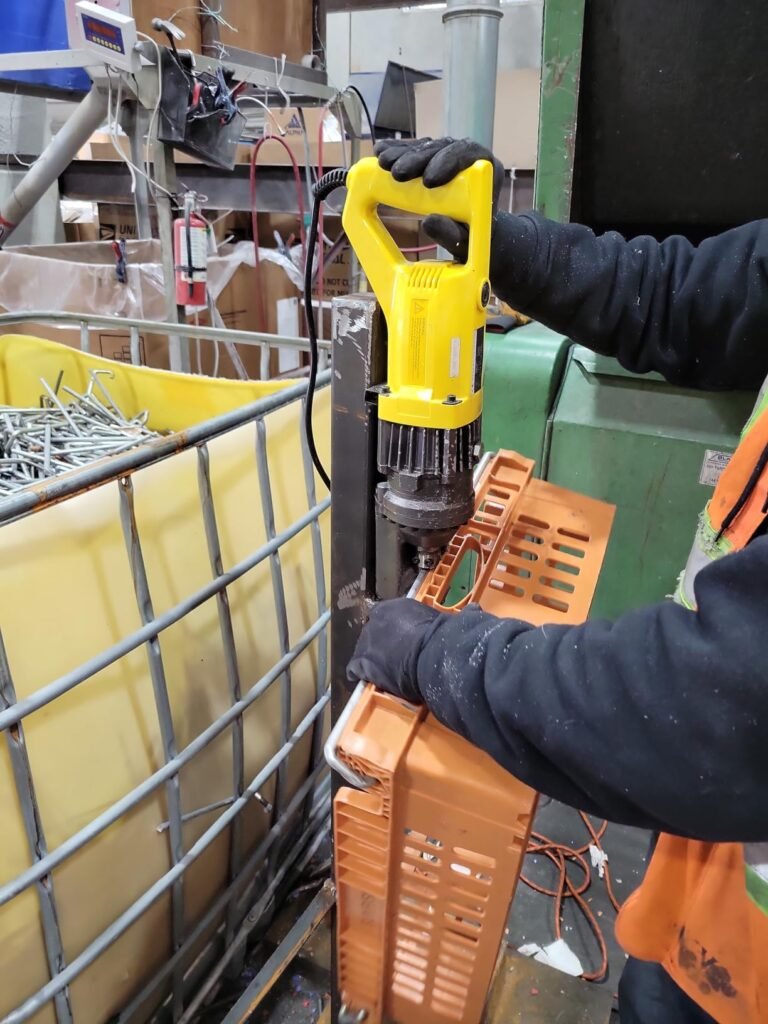
The Happybuy RC-16 earns the highest owner rating in this comparison at 4.7 stars, reflecting consistent satisfaction from contractors and DIY users who appreciate its balance of performance, portability, and included accessories. The 900W pure copper coil motor cuts #3 through #5 rebar in 2.5 to 3 seconds without sparks, sediment, or odor, making it safe for use in confined spaces and occupied buildings.
We may earn a commission when you buy through this link, at no additional cost to you.
The four-sided reversible cutter jaws are a practical design advantage that extends blade life significantly. When one cutting edge dulls, you can rotate the jaw to present a fresh edge, effectively quadrupling the service interval compared to single-edge blades. The adjustable bolt design accommodates various rebar sizes within the 4mm to 16mm range, and the multiple-screw fixed head provides stability and hydraulic seal integrity during repeated cuts.
The included stainless steel carry case is a genuine value-add that protects the tool during transport between job sites and provides organized storage for the cutter and its accessories. The compact body and one-button operation make this cutter easy to use for operators of all experience levels, and the 110V power requirement means it plugs into any standard outlet without needing a generator or special wiring.
Cutter jaws are the primary wear component on any rebar cutter, and replacement jaws can be expensive and difficult to source for lesser-known brands. Four-sided reversible jaws let you rotate to a fresh cutting edge three times before needing a replacement, which can extend the time between jaw purchases by a factor of four. For contractors who cut rebar daily, this design feature translates to meaningful cost savings over the life of the tool.
This is the strongest overall pick for general-purpose rebar cutting in residential and light commercial construction. The combination of reliable performance, reversible jaws, and the included carry case makes it the most complete package at its price point. If you need faster cut cycles for high-volume production, the RC16B completes cuts in half the time. If you need to cut larger rebar, the RC-22 handles up to 7/8 inch.
Users who need to cut rebar larger than 5/8 inch or who require the fastest possible cut cycle.
We may earn a commission when you buy through this link, at no additional cost to you.
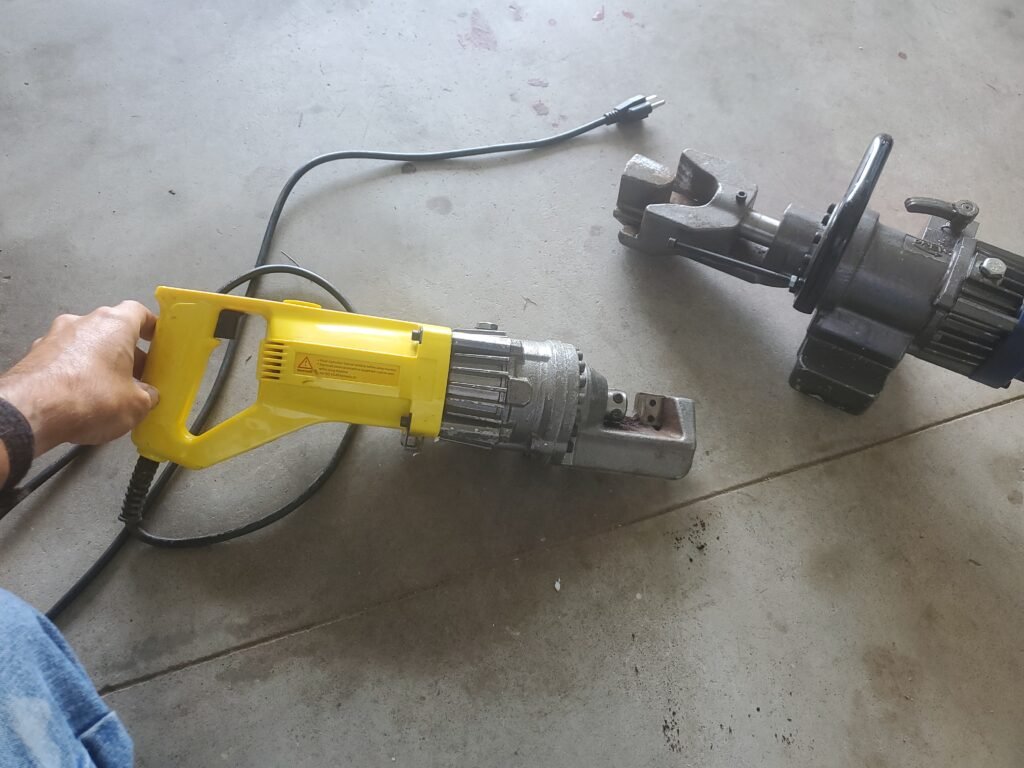
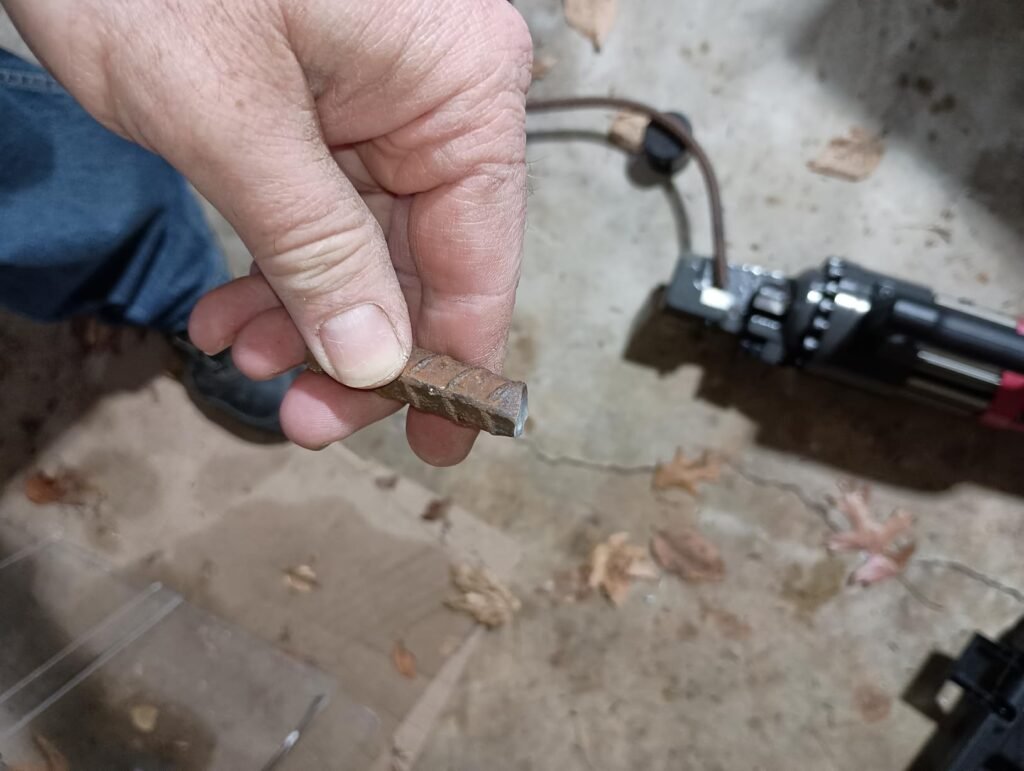
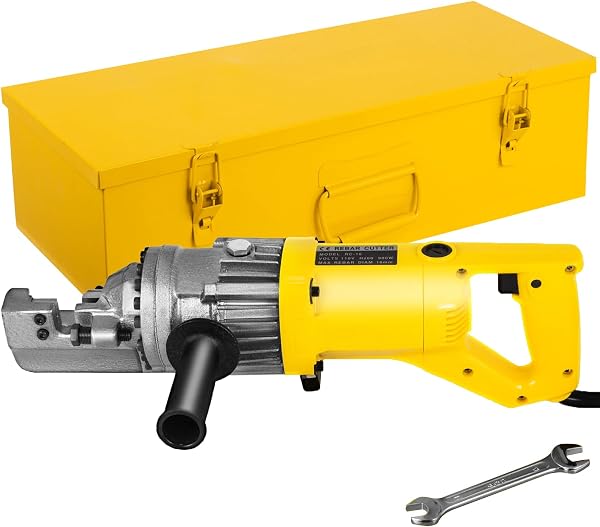
The RC16B electric hydraulic rebar cutter targets contractors and ironworkers who need fast, repetitive cuts on rebar up to 5/8 inch in diameter. Its standout specification is the 1 to 1.5 second cutting cycle, which is among the fastest in this comparison and directly translates to higher productivity when processing large quantities of rebar on a busy job site.

We may earn a commission when you buy through this link, at no additional cost to you.
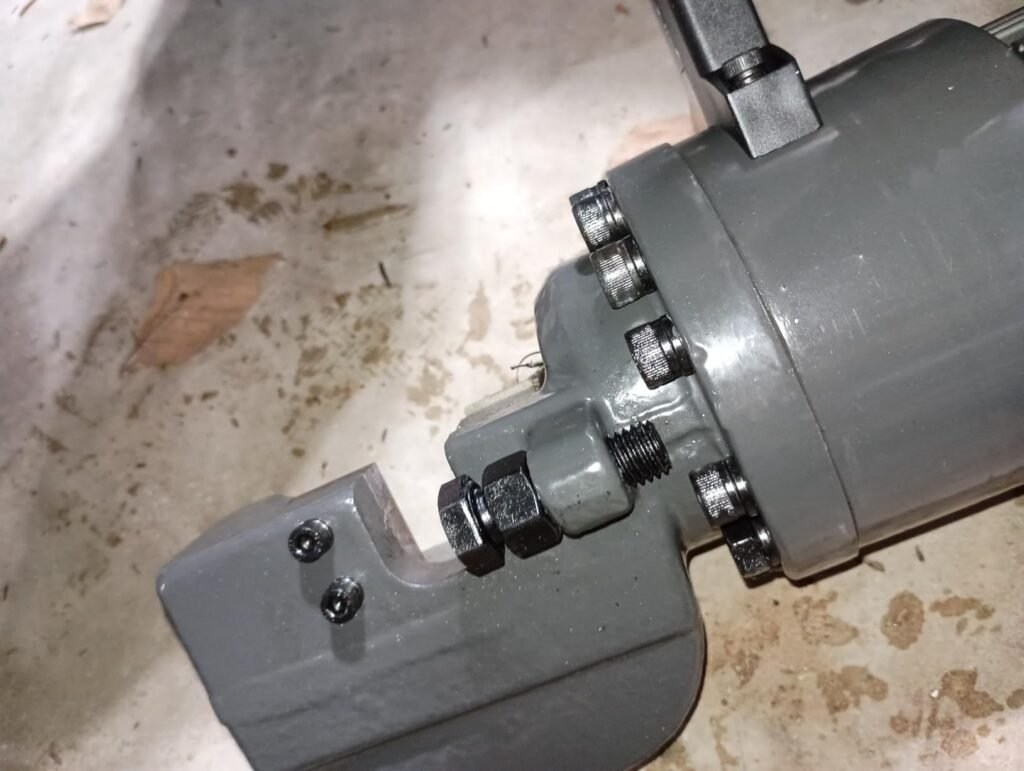
The four-plunger pump body generates the hydraulic pressure needed for clean cuts through medium-carbon and low-carbon rebar, round bar, and threaded rebar. The 1000W pure copper coil motor drives the hydraulic system with low noise and a low failure rate compared to brushed alternatives. The Cr12MoV blade steel is a significant upgrade over standard carbon steel blades, resisting deformation and maintaining a sharp cutting edge through extended use.
Operation is straightforward: press the single button on the ergonomically designed handle and the hydraulic system completes the cut in about a second. The multiple-screw fixed head design provides stability and sealability during the cutting stroke, reducing the chance of hydraulic fluid leaks under sustained use. The spark-free and dust-free cutting process is a genuine safety advantage in environments where hot work permits are required or flammable materials are nearby.
When a crew needs to cut hundreds of rebar ties or dowels in a single shift, the difference between a 1.5-second and a 3-second cut cycle adds up to significant labor savings. A cutter that processes twice as many cuts per minute lets a two-person crew do the work that would otherwise require three or four workers with slower tools. For high-volume production work, cutting speed is the single most impactful specification.
This cutter is the right choice for crews that cut high volumes of 5/8-inch and smaller rebar daily and prioritize speed above all else. The sub-$200 price point makes it accessible for smaller contractors. If you need to cut 7/8-inch rebar or larger, the RC-22 1400W model handles bigger diameters. If you also need bending capability, the manual H.K. Porter or MBC-16B tools add that function.
Users who need to cut rebar larger than 5/8 inch or who require bending capability.
We may earn a commission when you buy through this link, at no additional cost to you.
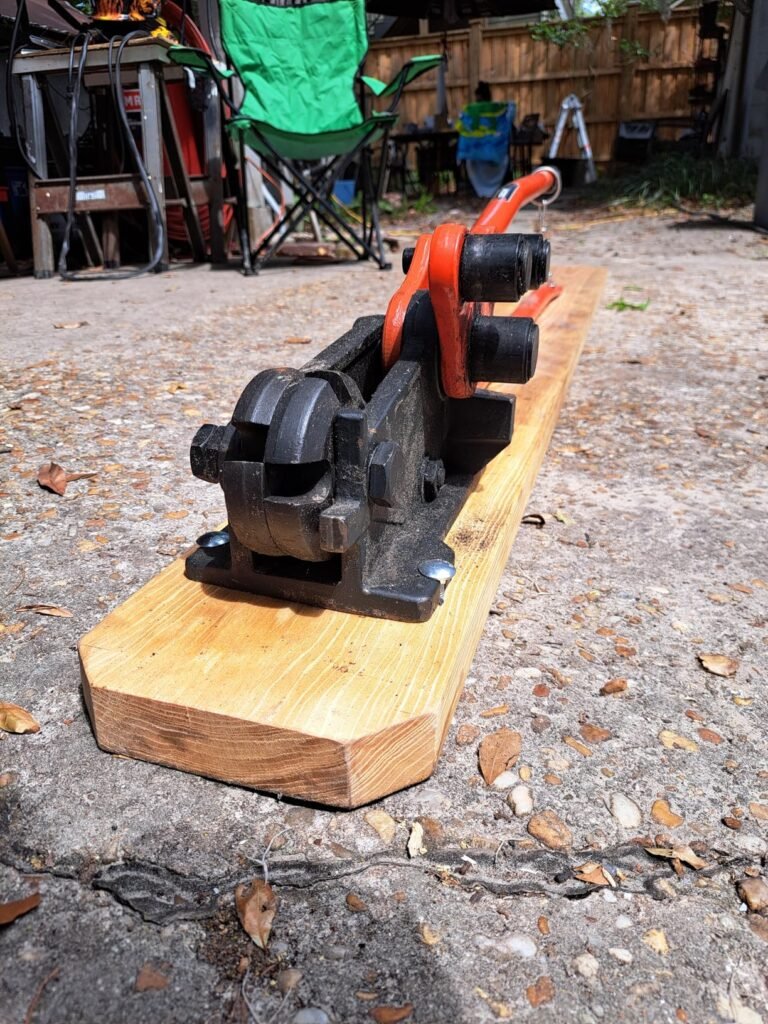
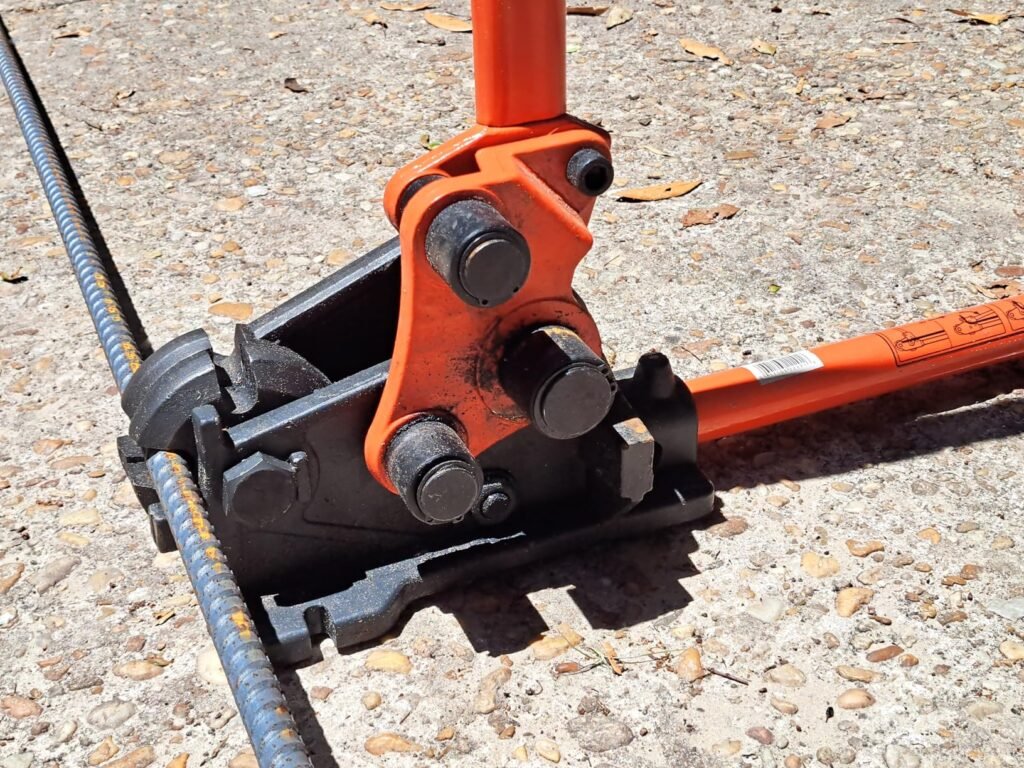
The Crescent H.K. Porter 0590RBJN is a dual-purpose manual tool that both cuts and bends rebar up to 5/8 inch, making it one of the most versatile options in this comparison. For ironworkers and concrete contractors who need to make field bends and cuts without access to electricity or generators, this tool provides complete rebar processing capability from a single piece of equipment.
We may earn a commission when you buy through this link, at no additional cost to you.
The shear-cut blade design produces clean cuts through rebar without the crushing deformation that some manual cutters create. The bending function handles 90-degree and 180-degree bends, which covers the vast majority of field bending requirements for stirrups, hooks, and offset bends. The steel construction provides the durability needed for daily job site abuse, and the tool mounts to most flat surfaces to enhance leverage and improve operator safety during heavy cuts.
Mounting capability is a practical advantage that sets this tool apart from handheld manual cutters. By bolting the cutter to a workbench, truck bed, or temporary platform, operators gain significant mechanical leverage that reduces the physical effort required for each cut and bend. The 12-inch no-slip handle grip provides secure hand placement during forceful operations.
Manual cutters excel in situations where power is unavailable, unreliable, or impractical to run. Remote bridge sites, underground construction, and disaster response scenarios often lack the electrical infrastructure needed for hydraulic cutters. Manual tools also eliminate the risk of motor burnout from continuous heavy use and require virtually no maintenance beyond occasional blade replacement. The trade-off is significantly slower processing speed and greater physical demand on the operator.
This is the right choice for field crews, remote job sites without power, and contractors who need both cutting and bending from a single tool. The manual operation means no batteries to charge, no motors to burn out, and no hydraulic fluid to leak. If you process high volumes of rebar daily and have power available, an electric hydraulic cutter will dramatically reduce labor time and operator fatigue.
High-volume production cutting or crews that need to process hundreds of cuts per shift.
We may earn a commission when you buy through this link, at no additional cost to you.
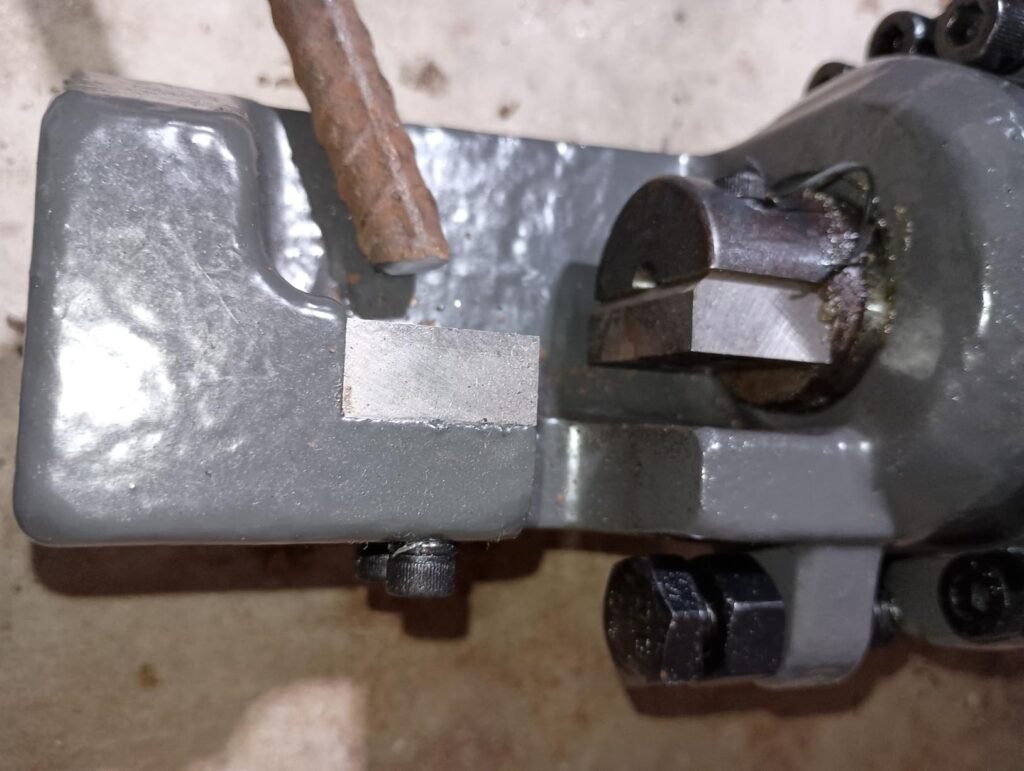
The RC-22 electric hydraulic rebar cutter handles the largest rebar diameter in this comparison at 7/8 inch, making it the go-to choice for infrastructure projects, bridge construction, and commercial foundations that use #7 rebar and larger. The 1400W commercial-grade pure copper motor provides the hydraulic pressure needed to shear through heavy-gauge steel that smaller cutters cannot handle.
We may earn a commission when you buy through this link, at no additional cost to you.
The 9CrSi blade steel is specifically chosen for its hardness and wear resistance when cutting high-strength construction rebar. The four-plunger cylinder pump body delivers consistent hydraulic force across the full cutting stroke, and the 2 to 3 second cut cycle is reasonable for the increased material thickness. The cutter handles all standard construction steel grades, from 4mm residential ties up to 22mm bridge-building rods.
The manufacturer recommends resting the tool for 10 to 15 minutes after continuous cutting of several dozen bars and tightening all bolts and screws every 300 to 500 cuts, particularly the sealing bolts between the headstock and cylinder body. This maintenance schedule is important for long-term reliability and preventing hydraulic leaks. The 3-year warranty on the cutter and 1-year warranty on accessories provide solid coverage for a tool in this price range.
Rebar sizes are designated by numbers that correspond to the bar diameter in eighths of an inch. A #4 bar is 4/8 or 1/2 inch, a #5 bar is 5/8 inch, a #6 bar is 6/8 or 3/4 inch, and a #7 bar is 7/8 inch. Most residential construction uses #3 through #5 rebar, while commercial and infrastructure projects frequently use #6 through #8. Match your cutter capacity to the largest bar size you expect to encounter on your typical projects.
This cutter is the right choice for contractors working on commercial and infrastructure projects that regularly encounter #6 and #7 rebar. The larger capacity and more powerful motor justify the higher price and slightly slower cut cycle. If your work stays at #5 rebar and below, the RC16B or Happybuy RC-16 models offer faster cuts and lower cost for smaller diameters.
Residential contractors who only work with #5 rebar and smaller and do not need the extra capacity.
We may earn a commission when you buy through this link, at no additional cost to you.
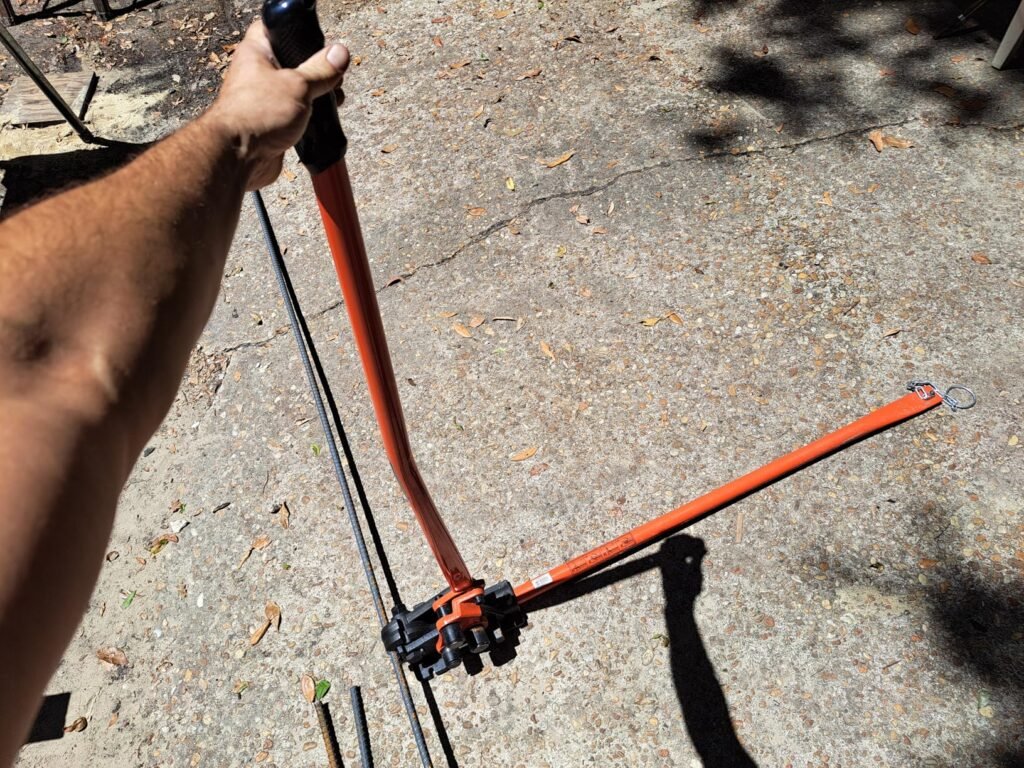
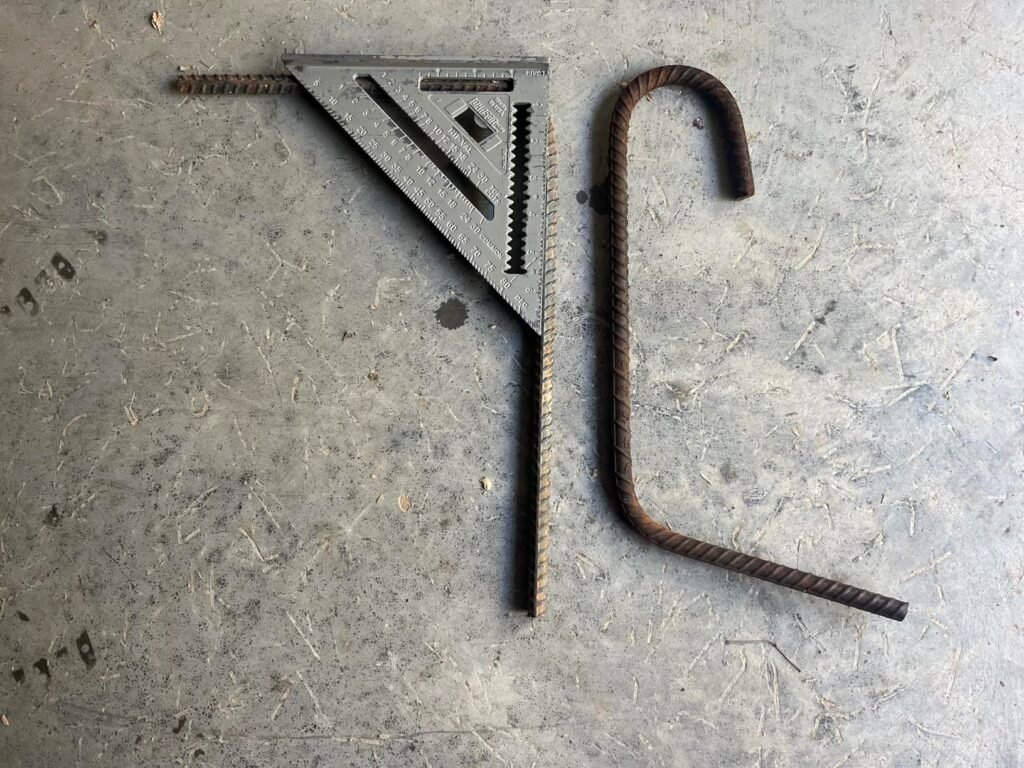
The MBC-16B manual bender and cutter is engineered for one specific advantage: the ability to process grade 60 rebar without any power source. Grade 60 is the most common rebar grade used in structural concrete, and many budget manual cutters struggle with its higher yield strength. The MBC-16B's longer handle and cam mechanism provide the mechanical leverage needed to cut and bend this tough material reliably.
We may earn a commission when you buy through this link, at no additional cost to you.
The adjustable 2.5-inch diameter bending roller allows operators to dial in precise bend radii for different rebar sizes and bend specifications. The replaceable cutting jaws feature two open slots with shaped blades designed to prevent chipping, which extends jaw life and maintains clean cut quality over time. The 12-inch no-slip handle grip provides secure hand placement during the high-force cutting stroke.
Portability is addressed by the included lifting chain, which makes it easier to move the tool around a job site or load it onto a truck. The all-mechanical design means there are no motors, hydraulic pumps, electrical cords, or batteries to maintain or fail. This simplicity translates to exceptional reliability in harsh field conditions where dust, moisture, and rough handling would damage powered tools.
Grade 60 rebar has a minimum yield strength of 60,000 PSI compared to 40,000 PSI for grade 40, making it roughly 50 percent harder to cut and bend. Most modern structural construction specifies grade 60, so any cutter you buy should be rated for this grade. Using a cutter designed only for grade 40 on grade 60 rebar can damage the blades, deform the cutting jaws, and create dangerous kickback during the cutting stroke.
This tool is the right choice for remote job sites, emergency repair work, and contractors who need a dependable backup cutter that works regardless of power availability. It is also well-suited for small crews that need occasional bending capability alongside cutting. For high-volume daily cutting with power available, electric hydraulic cutters will dramatically reduce labor time and physical strain on operators.
High-volume production cutting or operators who cannot exert the physical force required for manual operation.
We may earn a commission when you buy through this link, at no additional cost to you.
A rebar cutter is a specialized tool that must match the specific demands of your construction projects. Choosing the wrong type or capacity leads to slow work, damaged equipment, and potential safety hazards. Use the factors below to match a cutter to your rebar sizes, volume requirements, and job site conditions.
Cutting capacity is the single most important specification when choosing a rebar cutter, and it must exceed the largest bar diameter you expect to encounter. Rebar sizes are designated by number, where the number equals the diameter in eighths of an inch. A #4 bar is 1/2 inch, a #5 bar is 5/8 inch, a #6 bar is 3/4 inch, and a #7 bar is 7/8 inch. Most residential construction uses #3 through #5 rebar, while commercial foundations, bridges, and retaining walls frequently require #6 through #8.
A common mistake is buying a cutter that exactly matches your current maximum rebar size with no headroom. If your projects occasionally use #6 rebar but you typically cut #5, a 5/8-inch cutter will leave you unable to handle the larger bars when they appear. Choosing a cutter rated one size above your typical maximum provides flexibility and prevents the need for a second tool. The RC-22 handles up to 7/8 inch for infrastructure work, while the RC16B and Happybuy RC-16 max out at 5/8 inch for residential and light commercial use.
Match your cutter capacity to the largest rebar you will realistically encounter, plus one size of headroom. For residential contractors, a 5/8-inch cutter covers most needs. For commercial and infrastructure work, step up to a 7/8-inch model.
Electric hydraulic rebar cutters use a motor-driven hydraulic pump to generate the force needed to shear through steel. They complete cuts in 1 to 3 seconds with minimal operator effort, making them ideal for high-volume production work. The trade-offs are the need for a power source (110V outlet or generator), higher initial cost, and more complex maintenance involving hydraulic fluid and motor components.
Manual rebar cutters rely on mechanical leverage through long handles and cam mechanisms to generate cutting force. They require significant physical effort and take longer per cut, but they work anywhere without electricity, have virtually no maintenance requirements, and typically cost less. Manual combo tools like the H.K. Porter and MBC-16B add bending capability that most electric cutters lack, making them more versatile for field work where both operations are needed.
Choose electric hydraulic for high-volume cutting with power available. Choose manual for remote sites, low-volume work, or when you need combined cutting and bending capability. Many professional crews keep both types on hand, using the electric cutter for production work and the manual tool as a backup and for field bends.
Motor power measured in watts determines how quickly the hydraulic pump can build the pressure needed to shear through rebar. Higher wattage motors generate pressure faster, resulting in shorter cut cycles. The 900W Happybuy RC-16 cuts in 2.5 to 3 seconds, the 1000W RC16B cuts in 1 to 1.5 seconds, and the 1400W RC-22 handles thicker rebar in 2 to 3 seconds despite the larger material.
The hydraulic pump design also affects performance. Four-plunger pump systems, found on the RC16B and RC-22, generate more consistent pressure across the cutting stroke compared to simpler single or dual-plunger designs. Pure copper coil motors run cooler and last longer than aluminum-wound alternatives, which is important for tools that operate continuously throughout a workday.
For occasional use, a 900W motor is adequate. For daily high-volume cutting, prioritize 1000W or higher with a multi-plunger pump system. Always verify the motor uses pure copper windings rather than aluminum, as copper provides better heat dissipation and longer service life under sustained loads.
Blade material determines how long the cutting edges stay sharp and how well they resist deformation when cutting hardened rebar. Standard carbon steel blades dull quickly and may chip when encountering grade 60 rebar. Upgraded tool steels like Cr12MoV and 9CrSi provide significantly better wear resistance and edge retention, extending the interval between blade replacements or rotations.
Blade design also matters. Four-sided reversible jaws, like those on the Happybuy RC-16, allow you to rotate the cutting edge three times before replacement, effectively quadrupling blade life. Shear-cut blades, found on the H.K. Porter manual cutter, produce cleaner cuts with less deformation of the rebar end compared to crushing-type cutters. Multiple-screw fixed head designs provide better alignment and seal integrity than single-bolt configurations.
Prioritize Cr12MoV or 9CrSi blade steel for electric cutters that will see daily use. Look for reversible jaw designs to maximize blade life. For manual cutters, replaceable jaw inserts are essential since manual cutting places more stress on the blade edges.
Cutting speed is measured in seconds per cut and directly affects job site productivity. The RC16B completes cuts in 1 to 1.5 seconds, the RC-22 in 2 to 3 seconds, and the Happybuy RC-16 in 2.5 to 3 seconds. While these differences seem small, they compound significantly over hundreds of cuts per day. A crew cutting 500 bars per shift saves roughly 12 to 25 minutes of pure cutting time with a 1.5-second cutter versus a 3-second cutter.
Duty cycle is equally important but often overlooked. The RC-22 manufacturer recommends resting the tool for 10 to 15 minutes after continuous cutting of several dozen bars to prevent motor overheating. Ignoring duty cycle limits can lead to premature motor failure, hydraulic seal damage, and voided warranties. Higher-wattage motors generally sustain longer continuous operation before requiring a cool-down period.
For high-volume production, prioritize the fastest cut cycle that your rebar size allows. Always follow the manufacturer’s duty cycle recommendations and plan rest breaks into your workflow to maximize the tool’s service life.
Rebar cutters range from compact handheld units weighing 15 to 25 pounds to heavy manual bender-cutters that weigh 50 pounds or more. Electric hydraulic cutters are generally lighter than manual combo tools because the hydraulic system multiplies force without requiring massive lever arms. Portability matters when you need to move the cutter between floors, carry it up scaffolding, or transport it between job sites daily.
The included carry case on the Happybuy RC-16 provides protection during transport and organized storage for accessories. The lifting chain on the MBC-16B manual tool makes it easier to hoist the heavy unit onto trucks or elevated work platforms. Consider how you will transport and position the cutter on your typical job sites when evaluating weight and handling features.
For multi-story construction and frequent site changes, prioritize lighter electric cutters with carry cases. For ground-level work on a single site, weight is less critical and you can prioritize capacity and durability over portability.
Electric hydraulic rebar cutters produce clean, spark-free cuts because the hydraulic blade shears the metal rather than grinding or abrading it. This is a critical safety advantage in environments where sparks could ignite flammable materials, trigger explosions in confined spaces, or violate hot work permit requirements. Manual cutters also produce minimal sparks compared to abrasive cutoff saws and angle grinders.
Additional safety features to look for include one-button operation that prevents accidental activation, ergonomic handles that reduce hand fatigue and improve grip security, and mounting capability that stabilizes the tool during heavy cuts. The H.K. Porter and MBC-16B manual cutters can be bolted to flat surfaces, which significantly reduces the risk of the tool shifting during a high-force cutting stroke.
Always prioritize spark-free cutting methods in confined spaces, near flammable materials, or on sites with strict hot work protocols. Electric hydraulic cutters are the safest option for these environments. Ensure all operators wear appropriate PPE including eye protection, gloves, and steel-toed boots regardless of cutter type.
Before each use, inspect the cutting blades or jaws for chips, cracks, or excessive wear that could compromise cut quality or create dangerous metal fragments during operation. Verify that all hydraulic connections are tight and free of leaks on electric models, and check that manual cutter bolts and pivot points are secure. Position the rebar squarely in the cutting jaws at the correct depth, ensuring the bar is perpendicular to the blade for a clean cut. Never attempt to cut rebar that exceeds the tool’s rated capacity, as this can damage the blades, overload the motor, and create a serious safety hazard.
For electric hydraulic cutters, follow the manufacturer’s duty cycle recommendations to prevent motor overheating and hydraulic seal damage. The RC-22, for example, should rest for 10 to 15 minutes after cutting several dozen bars continuously. After every 300 to 500 cuts, tighten all bolts and screws, paying special attention to the sealing bolts between the headstock and cylinder body where hydraulic pressure is highest. Keep the hydraulic fluid at the recommended level and replace it according to the maintenance schedule to maintain cutting performance.
Store your rebar cutter in a dry, protected location when not in use, ideally in the included carry case or a dedicated tool box. Wipe down the cutting jaws and hydraulic components after each workday to remove concrete dust, metal shavings, and moisture that can cause corrosion. For manual cutters, lubricate the pivot points and cam mechanism periodically to maintain smooth operation. Replace worn blades and jaw inserts promptly rather than continuing to use dull edges, which require more force and produce rougher cuts that may not meet structural specifications.
Most residential construction uses #3 through #5 rebar, which corresponds to 3/8 inch through 5/8 inch diameter. A cutter rated for 5/8 inch maximum capacity, like the RC16B or Happybuy RC-16, handles all standard residential rebar sizes. If your projects occasionally include #6 rebar for foundation walls or retaining structures, consider a 3/4-inch or 7/8-inch cutter for added flexibility.
Most hydraulic rebar cutters handle standard grade 40 and grade 60 rebar without issues, including epoxy-coated bars. However, hardened or heat-treated rebar may exceed the cutter's rated capacity even if the diameter is within range. Check the manufacturer's specifications for the maximum rebar grade the cutter can handle, and never exceed the rated capacity. Epoxy coating does not significantly affect cutting performance but may leave residue on the blades that should be cleaned after use.
Blade life depends on the blade material, rebar grade, cutting volume, and maintenance practices. Standard carbon steel blades may need replacement after a few hundred cuts on grade 60 rebar, while upgraded Cr12MoV or 9CrSi blades can last significantly longer. Four-sided reversible jaws like those on the Happybuy RC-16 effectively quadruple the service interval by providing four cutting edges per jaw set. Regular inspection and timely rotation or replacement maintain cut quality and prevent damage to the cutter head.
Electric hydraulic rebar cutters rated for 110V operation can plug into standard construction site power outlets, temporary power panels, or portable generators. The 900W to 1400W motors draw moderate current that most 15-amp or 20-amp circuits can handle. If your job site lacks electrical service, you will need a generator rated for at least 2000W continuous output to safely power the cutter with adequate headroom for startup surge.
Manual rebar cutters are safe when used correctly with proper PPE and technique. The main risks are hand and wrist strain from repetitive high-force cutting, kickback if the rebar shifts during the cut, and flying metal fragments from the cut ends. Mounting the cutter to a stable surface, wearing eye protection and heavy gloves, and keeping hands clear of the cutting zone during the stroke minimize these risks. Manual cutters produce fewer sparks than abrasive cutoff tools, which is a safety advantage in many environments.
Most electric hydraulic rebar cutters are designed exclusively for cutting and cannot bend rebar. Manual combo tools like the H.K. Porter 0590RBJN and MBC-16B provide both cutting and bending capability in a single unit, with the H.K. Porter handling 90-degree and 180-degree bends and the MBC-16B featuring an adjustable 2.5-inch bending roller. If your work requires frequent field bends alongside cuts, a manual combo tool or a separate dedicated bender is necessary.
Electric hydraulic rebar cutters require periodic maintenance including checking hydraulic fluid levels, tightening bolts and fittings every 300 to 500 cuts, inspecting and replacing worn blades, and keeping the motor vents clean of dust and debris. The hydraulic seals and pump components should be inspected annually or after heavy use periods. Following the manufacturer's maintenance schedule prevents costly repairs and extends the tool's service life significantly compared to neglecting routine upkeep.
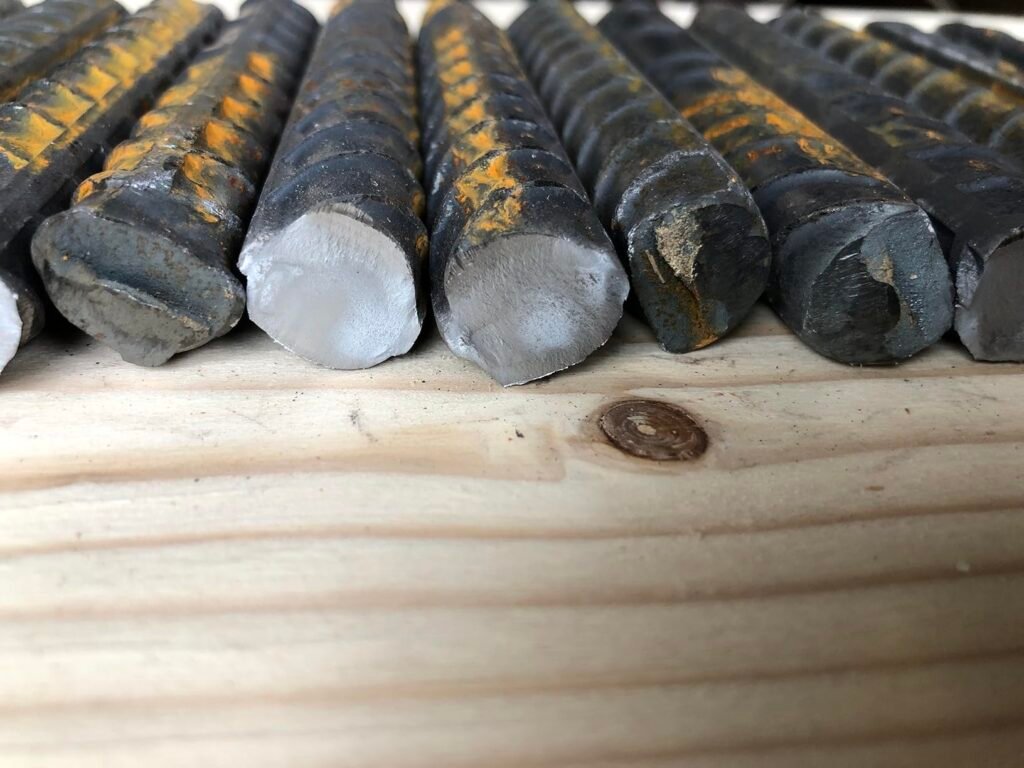
Shear-cut blades slice through the rebar with a clean scissor-like action that produces a flat, square cut end with minimal deformation. Crush-cut designs compress the rebar until it fractures, which creates a deformed end that may not meet structural specifications for certain applications. The H.K. Porter uses shear-cut blades for clean cuts, while some lower-quality manual cutters use crush-cut designs. For structural concrete work where rebar end condition matters, shear-cut tools produce superior results.
The Happybuy RC-16 stands out as the strongest overall choice for most contractors and construction professionals who need a reliable, versatile rebar cutter for daily use. Its combination of the highest owner rating, four-sided reversible jaws for extended blade life, included stainless steel carry case, and clean spark-free cutting at a competitive price makes it the most complete package for residential and light commercial rebar work up to 5/8 inch.
For buyers with different priorities, the RC16B offers the fastest cutting speed at 1 to 1.5 seconds for high-volume production work, the RC-22 1400W handles the largest rebar diameters up to 7/8 inch for infrastructure and commercial projects, and the H.K. Porter and MBC-16B manual combo tools provide cutting and bending capability without requiring any power source for remote job sites and field work.
Start by identifying the largest rebar diameter you regularly encounter and the volume of cuts your crew processes per shift. Match those requirements to a cutter with adequate capacity and the speed or manual versatility your workflow demands. Use the buying guide factors above to weigh trade-offs between electric speed and manual independence, blade longevity and replacement cost, and choose the rebar cutter that will keep your projects on schedule and your crew productive for years of reliable service.