Trailgo Pro Pump
9.4Editor score1.5 liters per minute
3-stage ultrafiltration
3000-liter lifespan
Hand-pump operation
Compare 10 top portable water purifiers for camping, hiking, and emergencies. Find the right filter for backcountry trips and prepper kits.
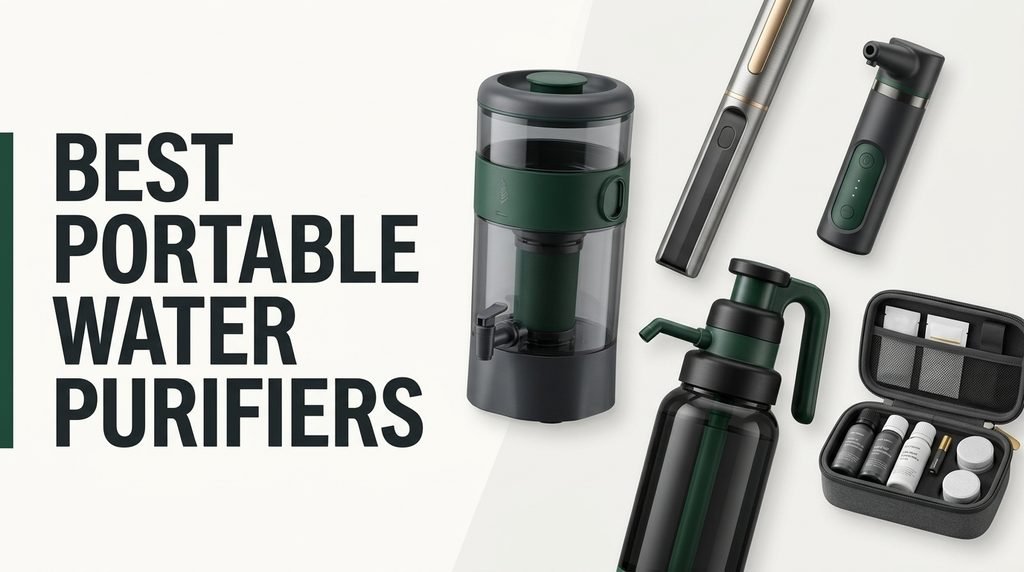
Find the right portable water purifiers for 2026. We compare 10 standout options by the factors that matter most in this category, including filtration precision, contaminant removal, flow rate, cartridge lifespan, weight, ease of use, and how each design fits real trips like backpacking, group camping, international travel, and emergency preparedness kits.
Water purifiers vary widely in how they work. Some use hollow-fiber membranes, others rely on UV light, chemical tablets, or press-style cartridges that neutralize viruses. The right choice depends on where you draw water, how many people you serve, and whether you need protection against viruses in addition to bacteria and protozoa.
This guide breaks down each pick by its strongest use case, real limitations, and the trade-offs that matter before you buy. Whether you need a two-ounce straw for a summit hike or a hand pump that supplies a whole family, the comparisons below will help you narrow the field with confidence.
We compared 10 portable water purifiers using the criteria that shape real buying decisions: filtration precision in microns, verified contaminant removal, flow rate, cartridge or lamp lifespan, weight and packability, power source, ease of field maintenance, and value across trip length. The notes focus on genuine trade-offs so each pick connects to how people actually collect, treat, and drink water on trails, in campsites, during travel, and in emergency situations at home.

Compare key features, scores, and current prices side by side. A shorter feature list means fewer details were available, not necessarily fewer capabilities.
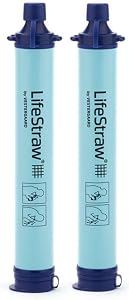


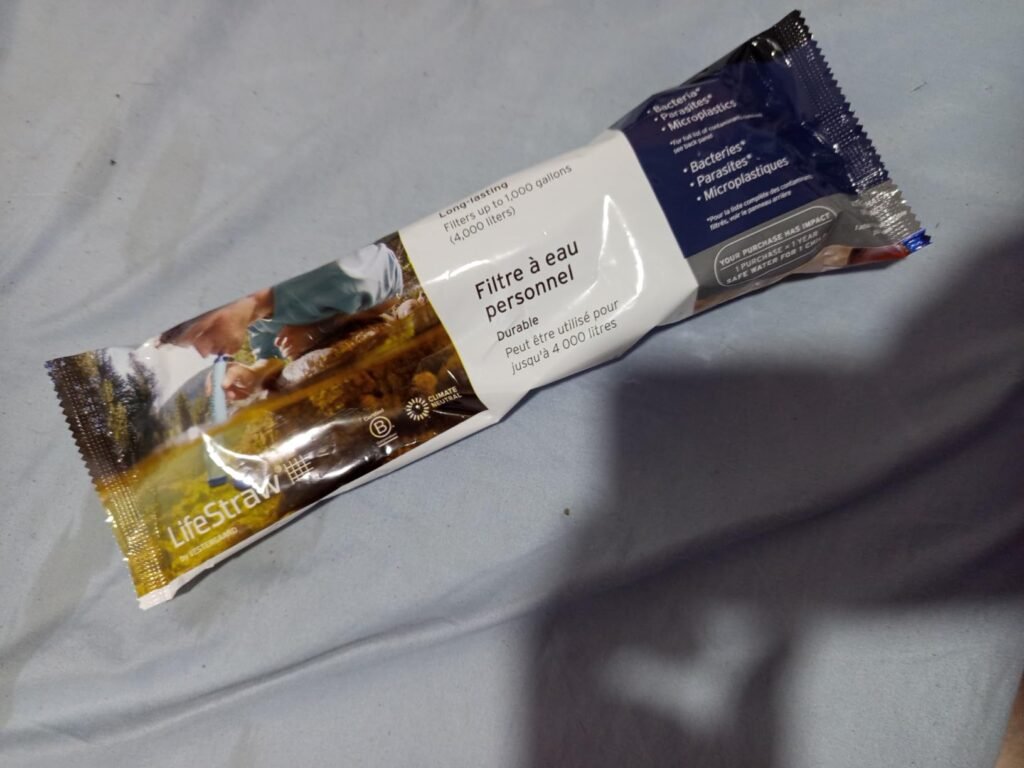
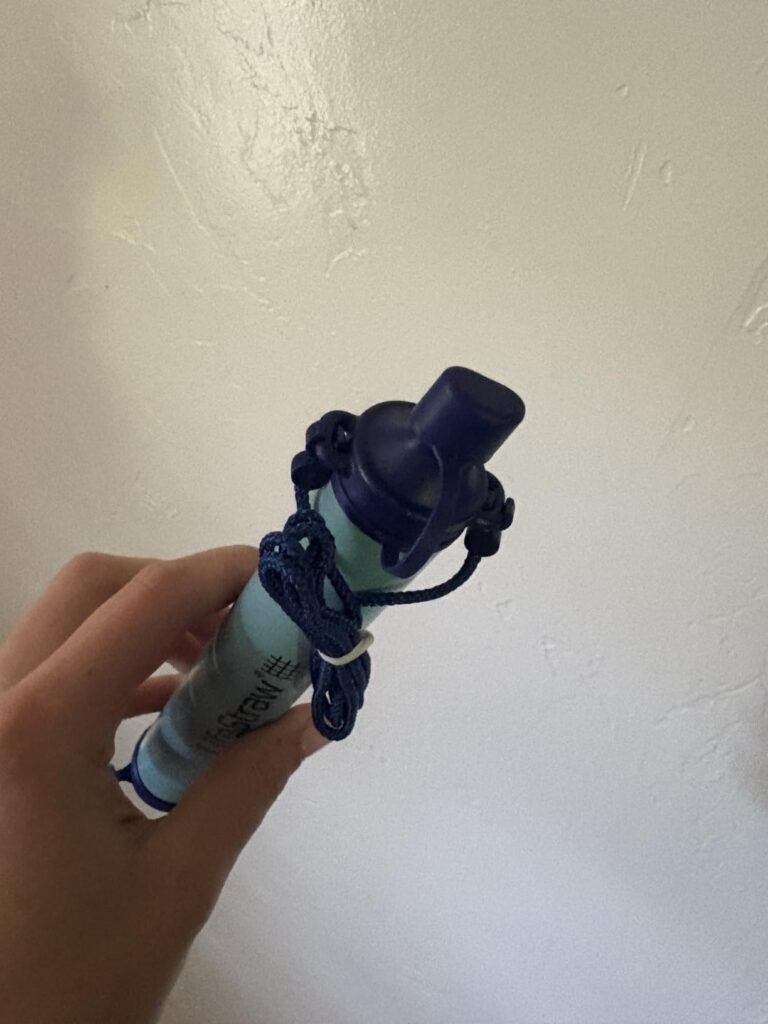
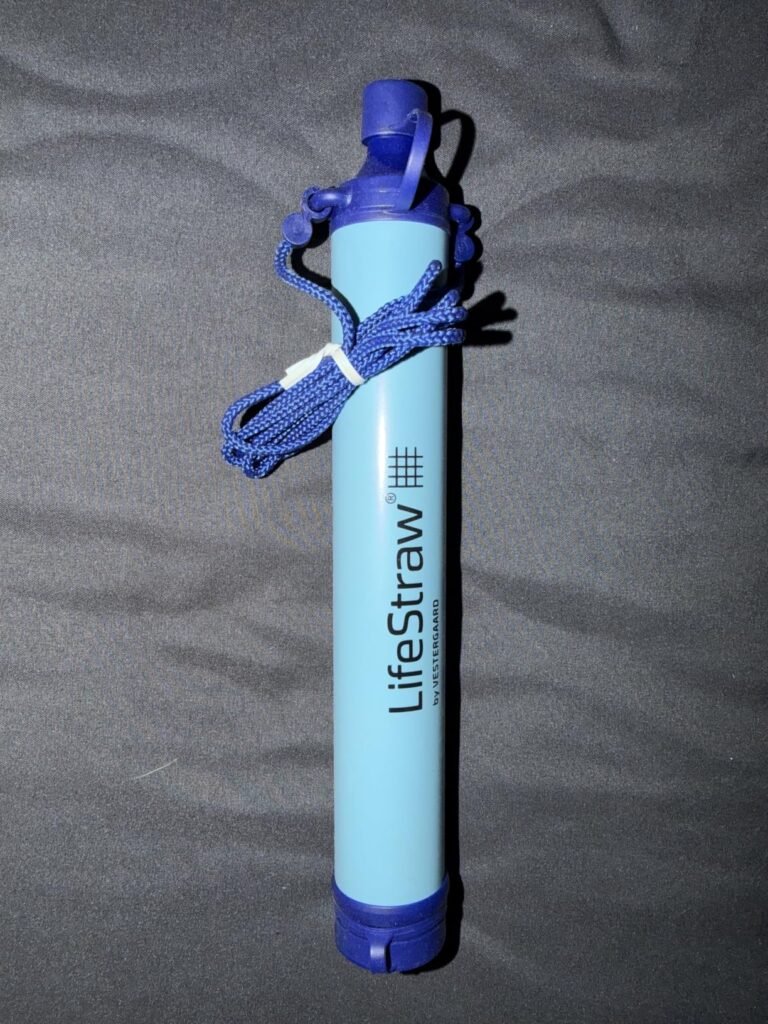
The LifeStraw Personal is one of the most recognized emergency filters on the market, and the two-pack format makes it especially practical for households that want redundancy. Drop one in a car kit, keep another in a bug-out bag, and you have a proven filter ready wherever you happen to be when things go wrong. Its widespread use in disaster relief speaks to its reliability under real conditions.
We may earn a commission when you buy through this link, at no additional cost to you.
The microfiltration membrane removes 99.999999% of waterborne bacteria including E. coli and salmonella, and 99.999% of waterborne parasites like giardia and cryptosporidium. Microplastics down to 1 micron are also captured, and turbidity is reduced to 0.2 microns. All claims are verified through standardized testing protocols, which gives buyers a solid basis for trusting the numbers.
There is no setup, no batteries, no chemicals, and no waiting. You simply place the intake end in water and drink through the mouthpiece. For hikers, travelers, and emergency users, that simplicity is a significant strength: there is very little that can go wrong or that needs learning. The 4,000-liter lifespan means one straw can serve years of occasional use.
For every LifeStraw product purchased, a school child in need receives safe drinking water for an entire school year. That social impact component is a genuine reason many buyers choose LifeStraw over otherwise similar filters, and it adds meaning to a purchase that would already make practical sense on its own.
The core limitation is that this is a drink-through straw, so it does not fill bottles or work for cooking water without additional workarounds. It also does not remove viruses, which limits its usefulness in regions with heavy viral contamination or in floodwater emergencies where sewage may be present. For clear-water hiking and general emergency preparedness in most environments, it remains a top-tier value.
International travelers who need virus removal or anyone who wants to fill bottles for cooking or shared use.
We may earn a commission when you buy through this link, at no additional cost to you.
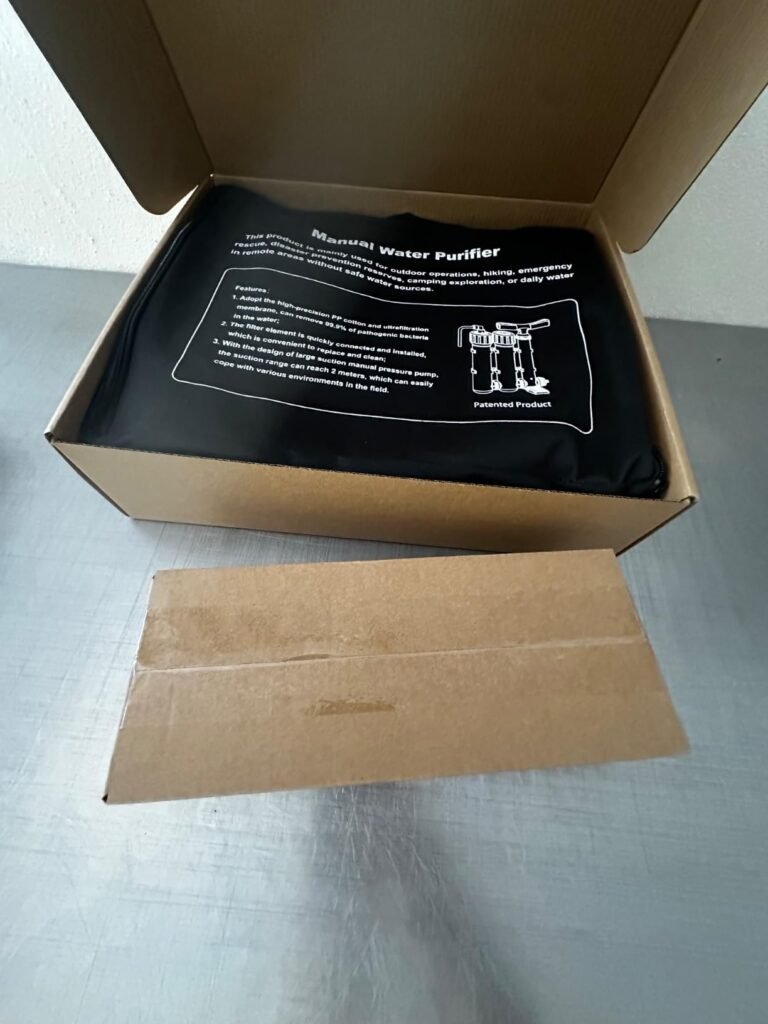
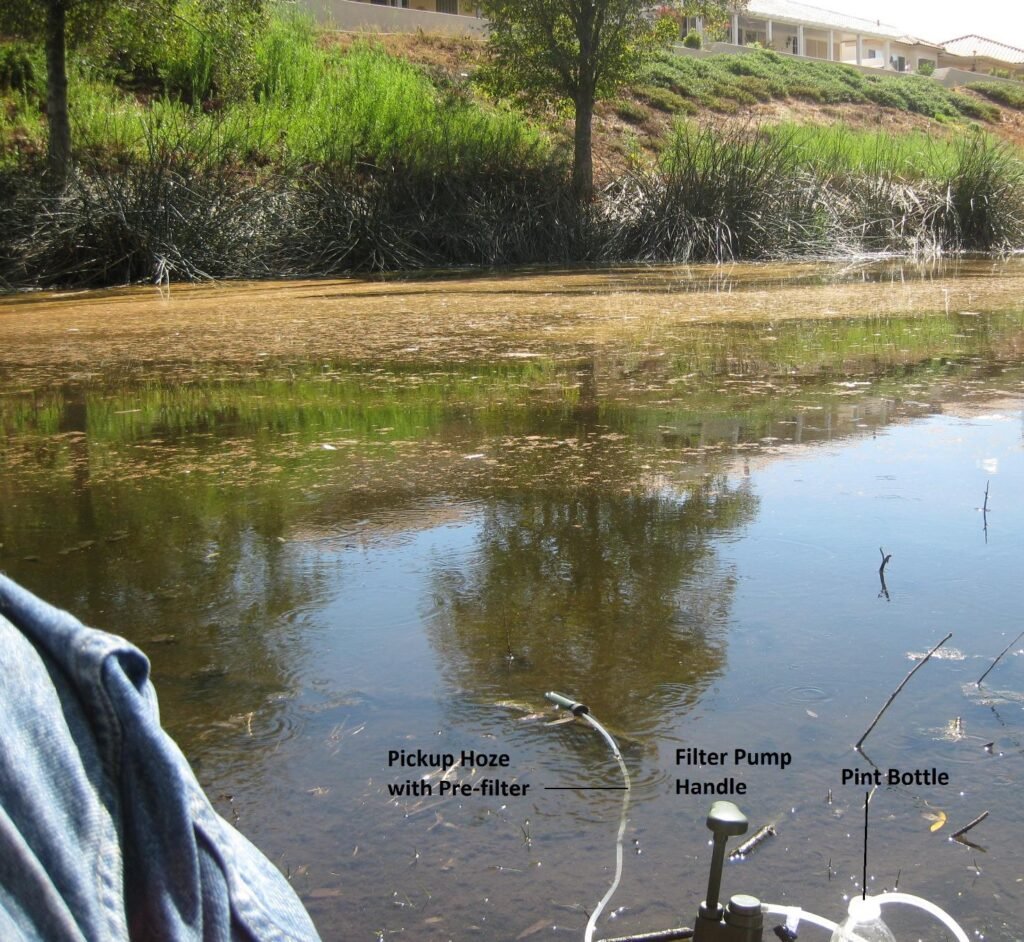
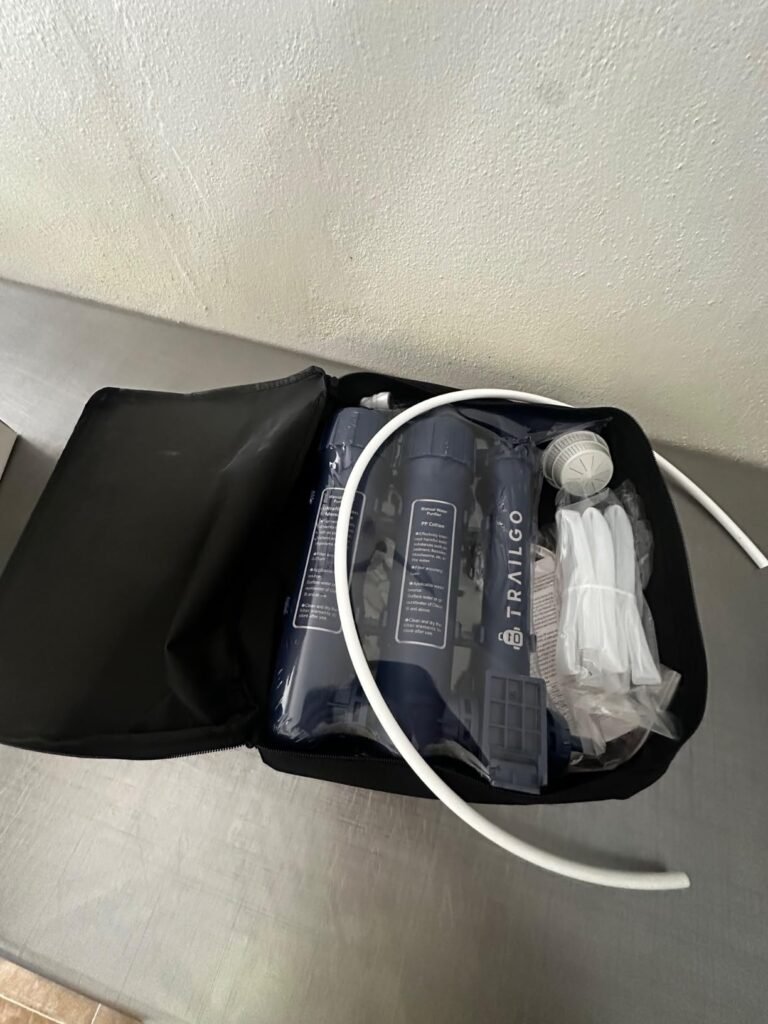
The Trailgo Pro Pump is built for group scenarios where a personal filter simply cannot keep up. Its 1.5 liters per minute output is enough to fill bottles for four to six people in the time it takes to set up camp, which makes it particularly useful for family trips, base camp operations, hunting parties, and emergency preparedness at home. If you are the person who ends up filtering water for everyone else, this pump saves a lot of standing around.
We may earn a commission when you buy through this link, at no additional cost to you.
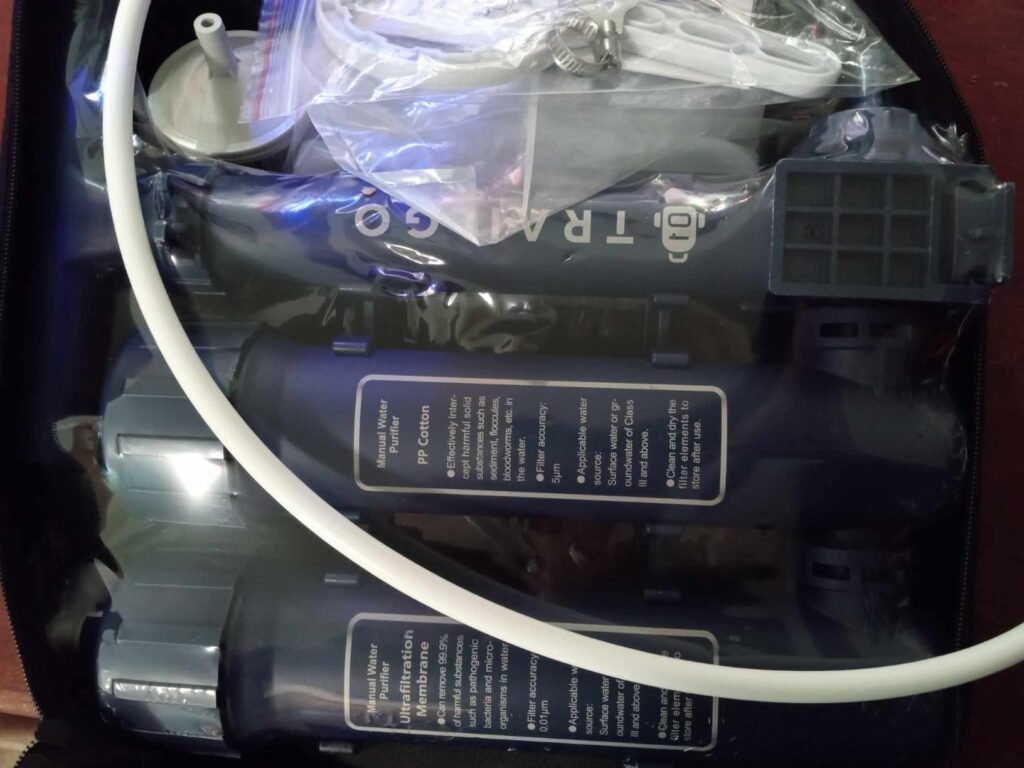
The three-stage filtration combines a 5-micron pre-filter, a PP cotton stage, and an ultrafiltration membrane. That layered approach handles the cloudy, silty, or organic-heavy water you actually find in the backcountry, not just clear streams. Bacteria, protozoa, cysts, microplastics, and sediment are all addressed, which makes it a genuine step up from single-stage straws when your source water looks questionable.
The complete kit includes the filter body, reusable pre-filter, inlet and outlet tubes, clamps, a carry bag, and instructions, so there is nothing else to buy before your first trip. The 3,000-liter cartridge rating means one setup covers multiple seasons of outings or a fully stocked emergency shelf. Replacement cartridges are available when you eventually need them, extending the useful life of the pump indefinitely.
Electric filters are convenient, but they depend on batteries or solar recharge. In a genuine emergency, having a hand-operated pump means you never worry about power. The Trailgo Pro Pump can run indefinitely as long as you can move the handle, which makes it a reliable core piece of a hurricane, wildfire, or extended outage preparedness kit alongside stored water.
The trade-off is size and effort. This pump is bulkier than a straw or squeeze filter, so it earns its space in a car camping kit or bug-out bag more than a minimalist backpacking load. Manual pumping also requires some muscle, especially at higher output. For solo ultralight hikers, a lighter option makes more sense. For anyone filtering for two or more people on a regular basis, this is a strong choice.
Ultralight solo backpackers who count every ounce and only need to filter water for one person.
We may earn a commission when you buy through this link, at no additional cost to you.
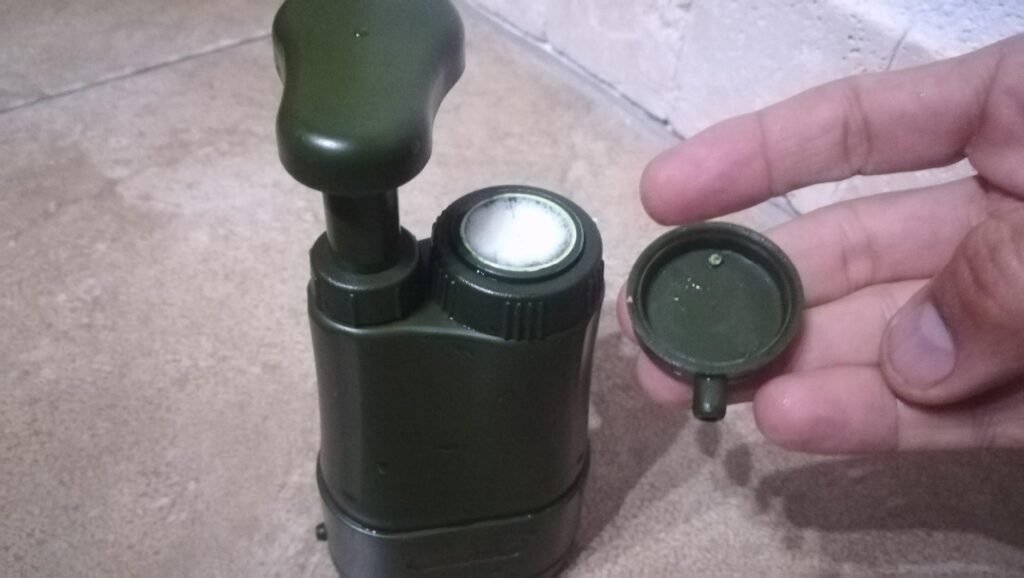
The Survivor Filter PRO sits in a useful middle ground between minimalist straws and full group pumps. At 12.8 ounces, it is compact enough to pack for backpacking, but its three-stage design and 0.01-micron ultrafiltration reach a level of contaminant reduction that most personal filters cannot match. It is a strong option for solo hikers who want more than a straw without stepping up to a full-size pump.
We may earn a commission when you buy through this link, at no additional cost to you.
The three stages include a 0.1-micron pre-filter, a carbon filter for reducing heavy metals and chemicals, and a 0.01-micron ultra filter. The carbon stage is particularly valuable if you are drawing from water that may have picked up metals from old plumbing, mining runoff, or agricultural chemicals. The 0.01-micron rating is tight enough to address a wider range of contaminants than the more common 0.1-micron membranes.
A flow rate of 500ml per minute is respectable for a hand-operated unit and enough to fill a standard bottle in about two minutes. The kit comes with a cup, bag, filters, tubes, and instructions, so it is ready for use straight out of the box. All filters are replaceable and reusable, which keeps ongoing costs manageable over years of trips.
Most portable filters use a 0.1-micron membrane, which handles bacteria and protozoa but does not remove viruses. A 0.01-micron ultrafilter tightens that pore size significantly and adds a layer of protection against smaller pathogens. If you travel internationally or draw water from sources where viral contamination is a possibility, the tighter membrane offers a meaningful step up over standard microfiltration.
The main trade-off is that pumping is slower than a group-scale filter and requires a bit more setup than a straw. For solo or duo trips where you value depth of filtration over speed, this is one of the better-rounded picks. If you routinely draw from sources with visible sediment or suspected chemical contamination, the added stages provide real peace of mind.
Backpackers who need the absolute lightest possible filter or gravity setups that require no active pumping.
We may earn a commission when you buy through this link, at no additional cost to you.
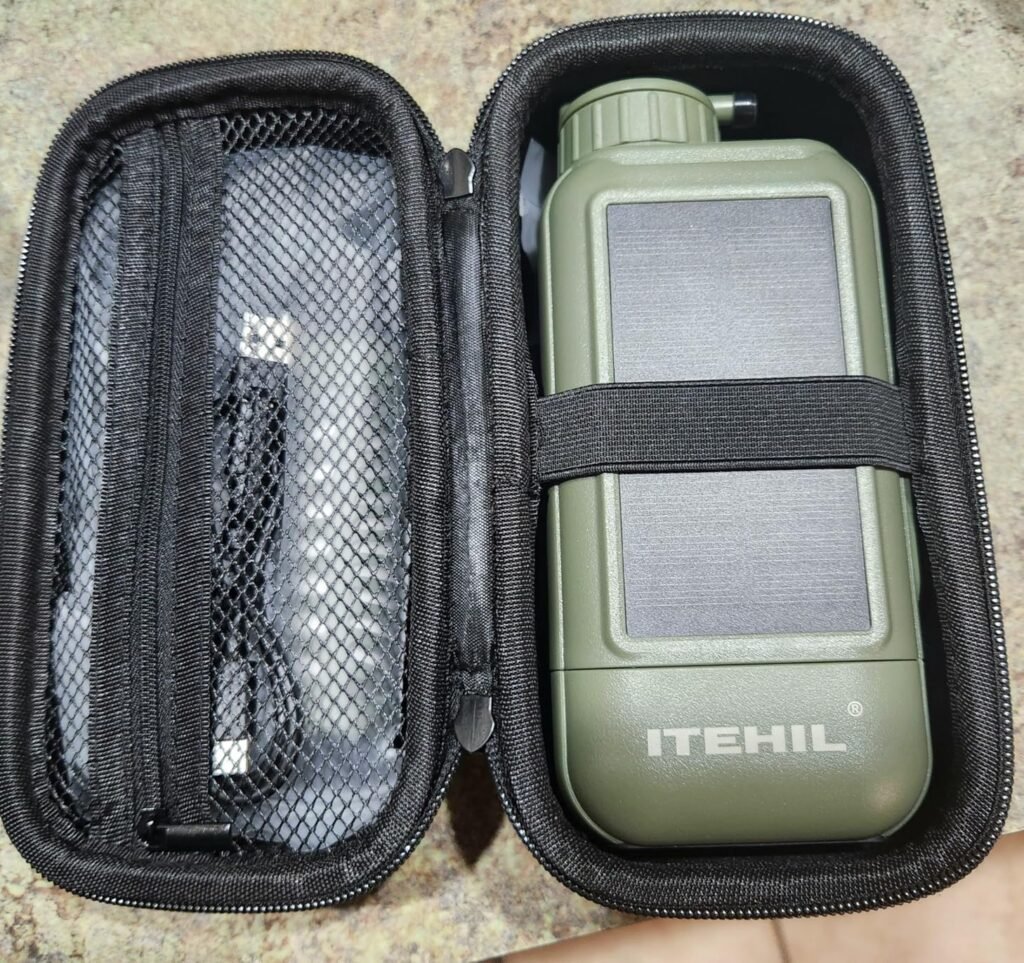
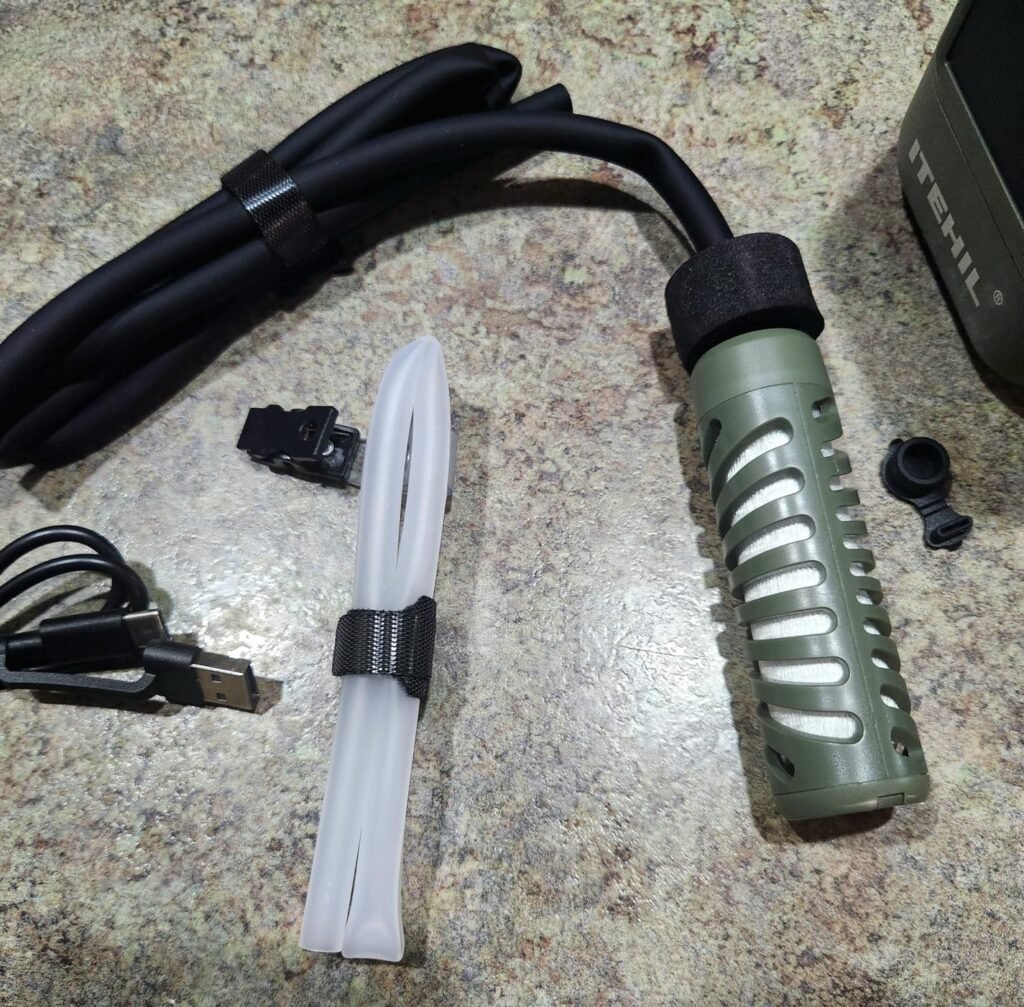
The ITEHIL Electric Filter blends portable water filtration with off-grid power features that make it particularly useful for extended trips and emergency scenarios. The 5,200mAh battery not only powers the filter for up to four hours of continuous purification but can also serve as a backup power bank and includes an integrated emergency light. That multi-function design earns its place in a bug-out bag where every item ideally does more than one job.
We may earn a commission when you buy through this link, at no additional cost to you.
Filtration precision reaches 0.01 microns through an Ahlstrom filtration membrane combined with pre-stage ultrafiltration. That level of tightness addresses heavy metals, bacteria, viruses, chlorine, odors, parasites, and turbidity. Independent testing standards including SGS, NSF, and FDA references are cited by the manufacturer, giving buyers a sense of the validation behind the claims.
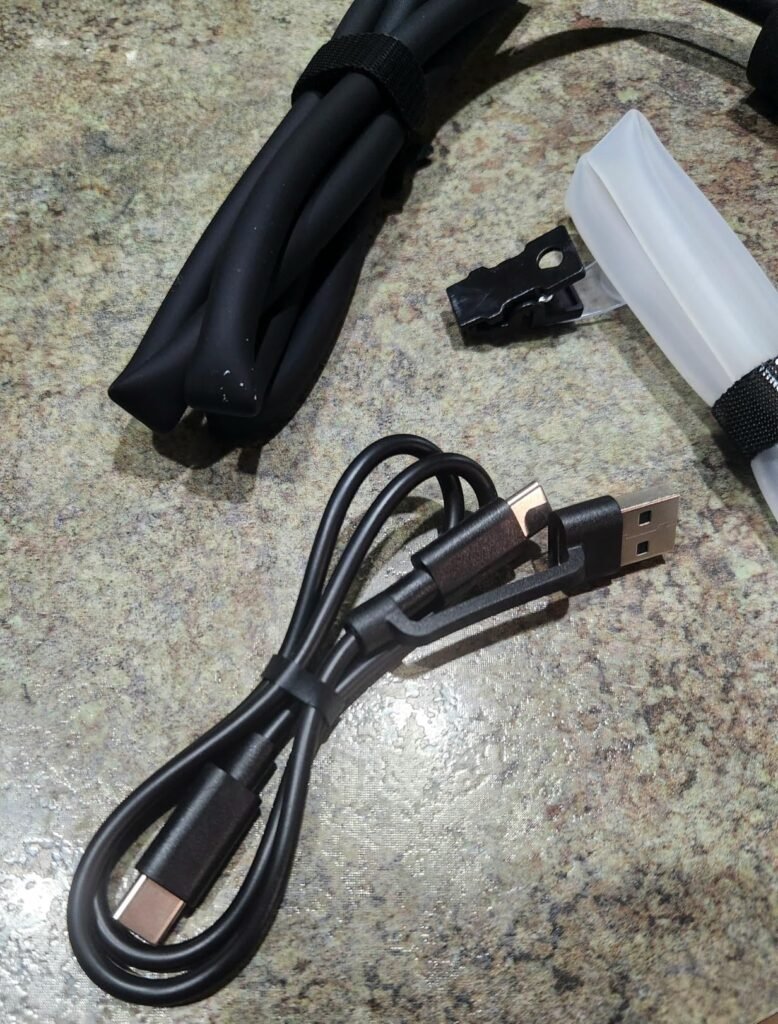
Two charging paths keep the unit ready to work: USB-C for topping up at home or from a portable power source, and integrated solar for genuine off-grid recharge. The manufacturer notes that even 30 minutes of solar exposure is enough to produce roughly one liter of drinking water, which is a practical figure for daytime emergency use. A carabiner-friendly hook makes it easy to clip to a backpack.
Most electric water filters die once their battery runs out, leaving you dependent on wall power. An integrated solar panel means the unit can regenerate its own charge indefinitely under daylight conditions. For extended emergencies or off-grid living, that self-sufficiency turns the filter from a short-term convenience into a long-term water security tool.
Flow rate of 700ml per minute sits between manual straws and dedicated group pumps. The filter cartridge is rated for around 1,000 liters, with the recommendation to replace it roughly every six months depending on water quality. For solo travelers and small groups who want the convenience of a button-press electric filter with legitimate off-grid capability, this is a well-thought-out choice.
Ultralight backpackers focused strictly on weight or people who never leave the grid and prefer manual simplicity.
We may earn a commission when you buy through this link, at no additional cost to you.
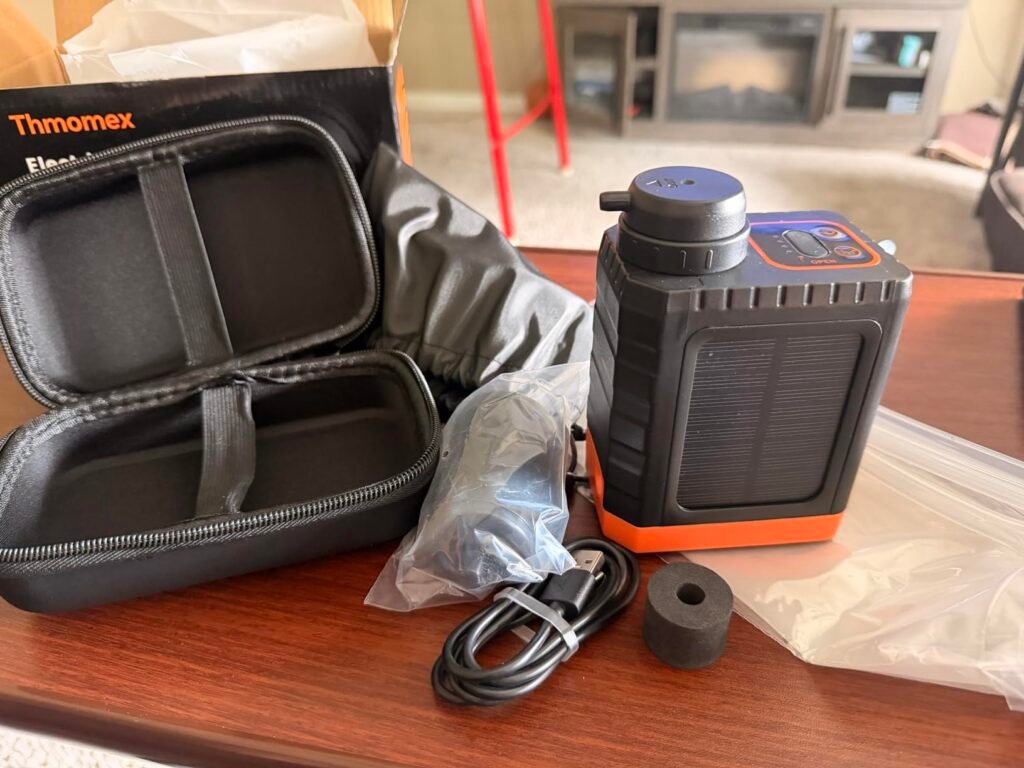
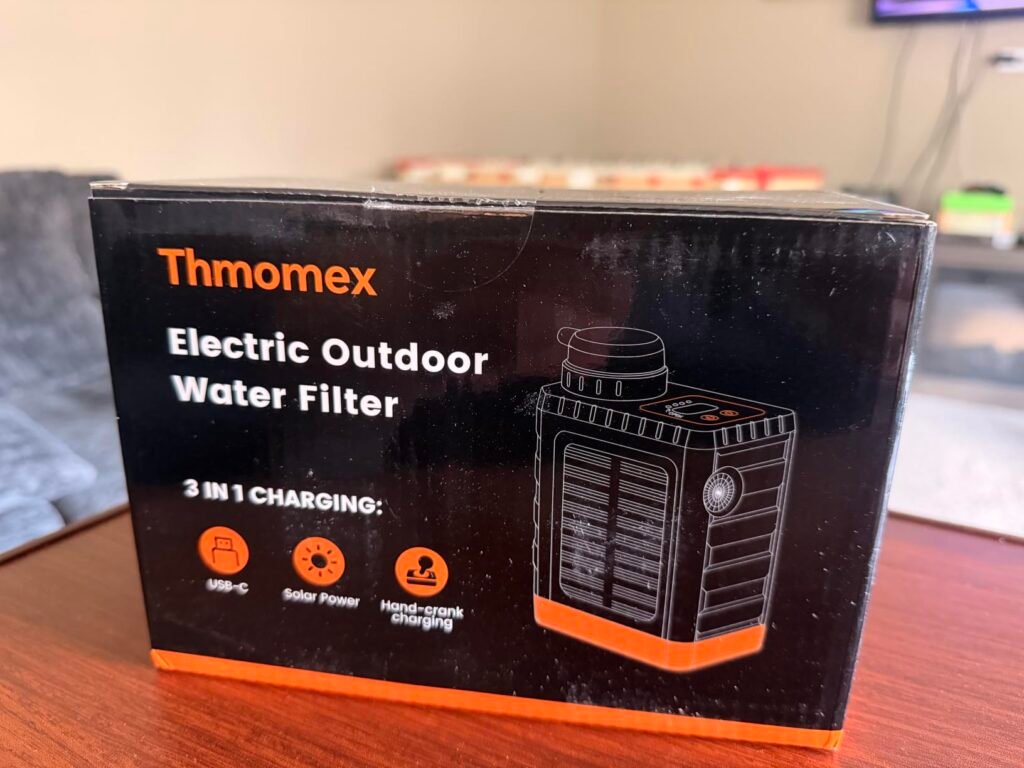
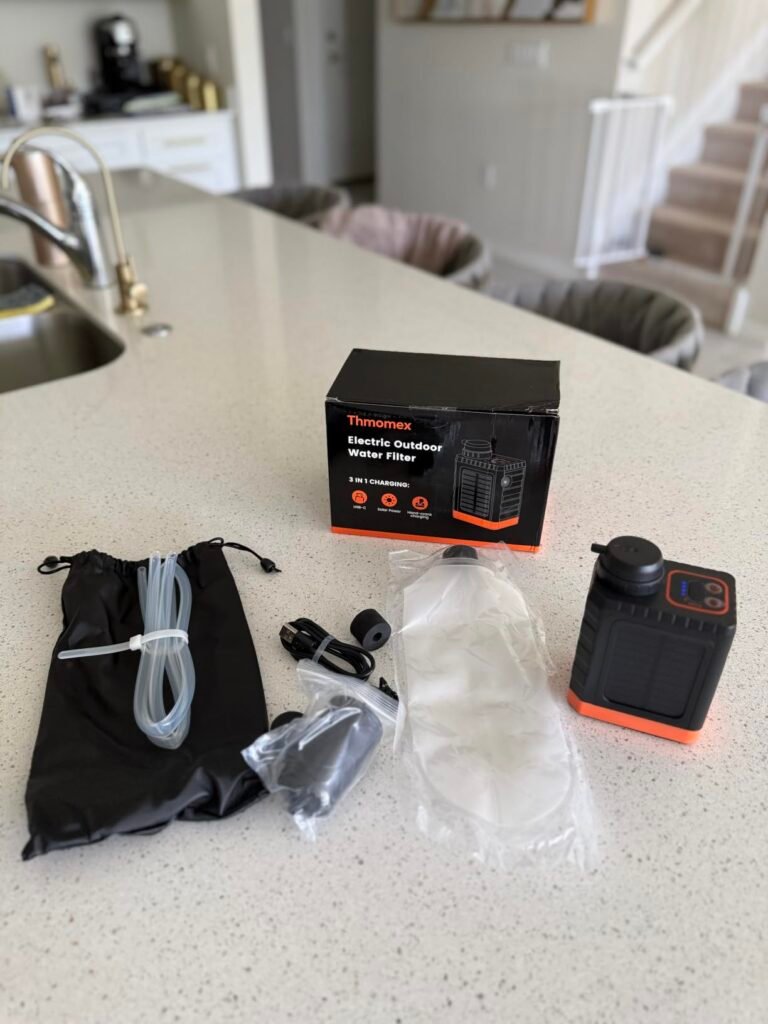
The 3-in-1 Electric Filter takes redundancy seriously. USB-C, integrated solar, and a hand-crank dynamo all feed the internal battery, which means the unit can keep working even in scenarios where sunlight is limited and no outlet is available. For preppers and long-trip travelers, that layered charging strategy removes the single biggest concern with any electric filter.
We may earn a commission when you buy through this link, at no additional cost to you.
Water output reaches 800ml per minute at the press of a button, filling a standard one-liter bottle in about 75 seconds. The 8-layer filtration system combines PP cotton, activated carbon, and ultrafiltration membranes to reduce heavy metals, chlorine taste, and organic sediment. The filter core is washable, which helps sustain flow performance across multiple uses before eventual cartridge replacement.
Filter capacity of 5,000 liters is generous, equivalent to roughly 10,000 standard 500ml bottles from a single core. That kind of longevity makes the unit realistic as a multi-season backcountry tool or as an emergency shelf item that will not need frequent servicing. A built-in LED light is a small but genuinely useful addition for nighttime water collection or campsite tasks.
In a genuine emergency, cloudy weather can stretch on for days and phone-style USB power banks eventually run flat. A hand-crank dynamo lets you generate power directly with muscle input, which is slow but never fails. For preparedness kits, that third power option acts as an insurance policy against the failure modes that make electric-only filters risky.
At 360 grams, it is heavier than a straw but still light enough for realistic backpacking. The included storage pouch attaches directly to catch filtered water, making the workflow straightforward without extra bottles. For buyers who want a modern electric filter with backup power paths and a long service life, this is one of the more feature-complete options available.
Minimalist users who want the simplicity of a manual straw with no batteries or moving parts.
We may earn a commission when you buy through this link, at no additional cost to you.
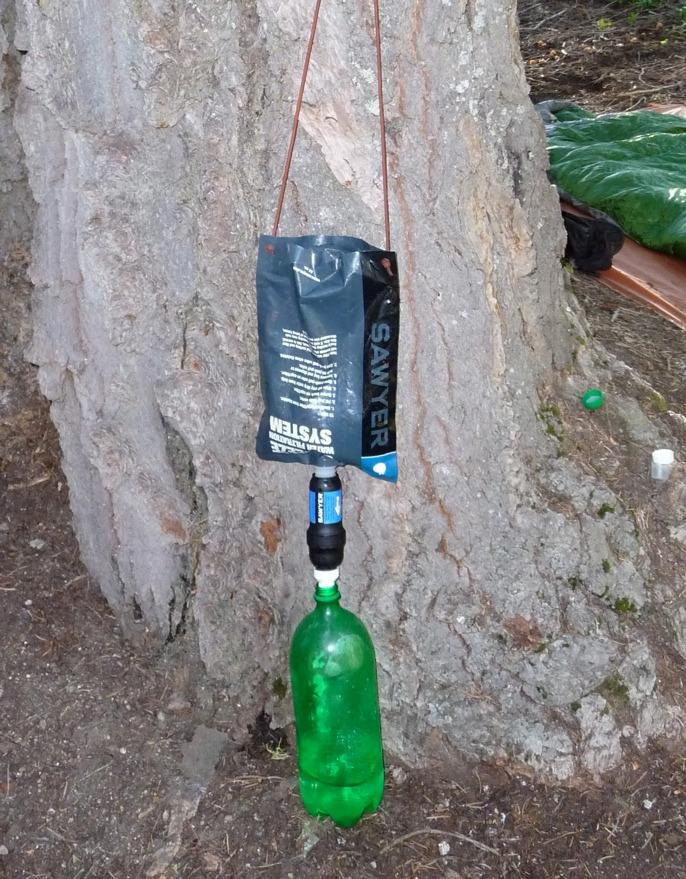
The Sawyer Mini is a staple of the ultralight backpacking community, and for good reason. At just 2 ounces, it barely registers in a pack, yet it delivers the same 0.1-micron absolute filtration used in much larger systems. For thru-hikers, weekend backpackers, and international travelers who prioritize a minimal footprint, this filter delivers exceptional value.
We may earn a commission when you buy through this link, at no additional cost to you.
Filter performance covers 99.99999% of bacteria including salmonella, cholera, and E. coli, along with 99.9999% of protozoa such as giardia and cryptosporidium. It also removes 100% of microplastics, which has become a more meaningful concern in recent years. Every Mini unit is individually tested three times against performance standards, which is a level of quality control that not every competitor offers.
Attachment flexibility is one of the Mini’s strongest practical advantages. It threads onto the included squeeze pouch, standard 28mm disposable water bottles, and most hydration bladders. You can also use it inline on a hydration hose or drink directly from the source through the included straw. That versatility means one filter fits nearly any water workflow you prefer.
The Sawyer Mini’s flow rate drops over time as sediment collects in the membrane, but the included cleaning plunger reverses this by flushing the filter backward with clean water. Doing this regularly, especially after filtering from cloudy sources, restores flow and dramatically extends the useful life of the unit. Skipping this maintenance is the most common reason users think their Mini has failed prematurely.
The 100,000-gallon rating is genuinely extraordinary and, with proper backflushing, one filter can last through years of hard use. The main trade-offs are the eventual wear of the included squeeze pouch and a flow rate that is slower than dedicated pump systems. For the price and weight, the Sawyer Mini is one of the most well-rounded personal filters available.
Group scenarios where you need to filter several liters quickly or trips where virus removal is required.
We may earn a commission when you buy through this link, at no additional cost to you.
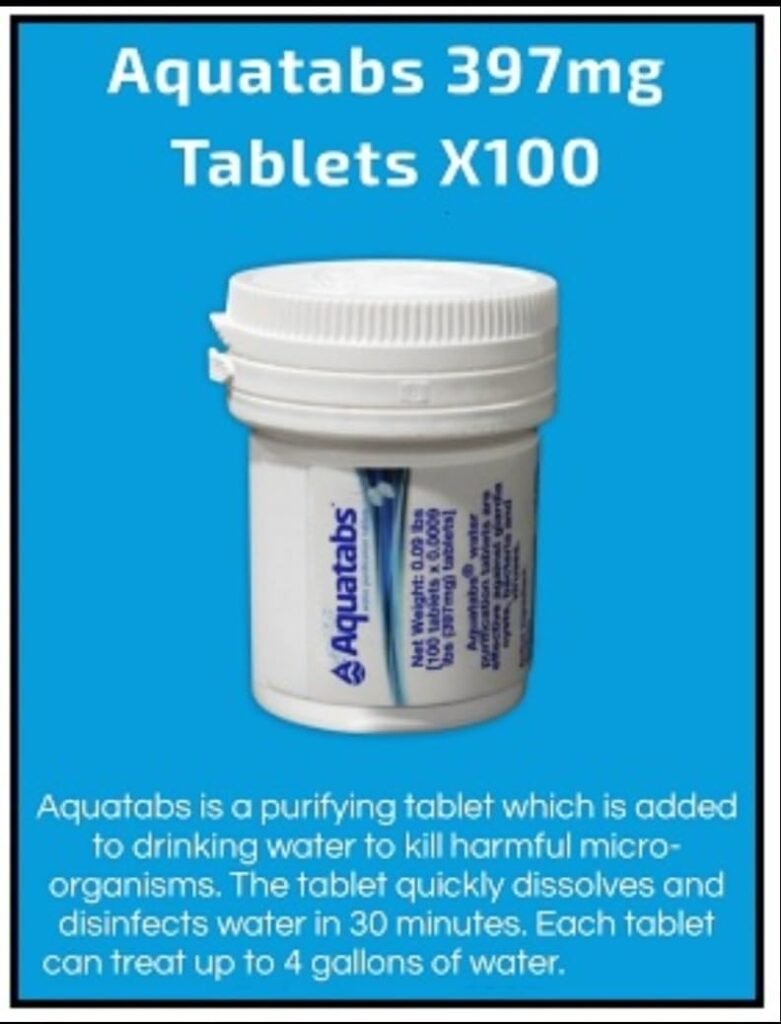
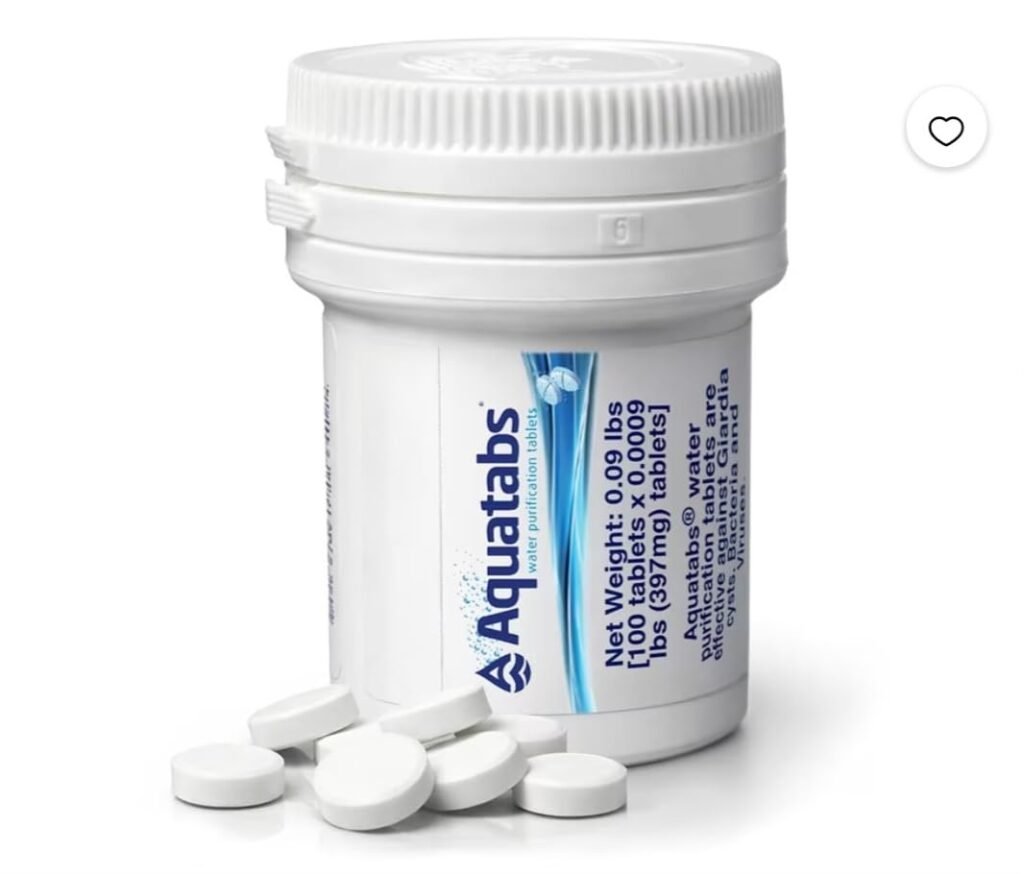
Aquatabs are one of the most trusted chemical water purification products worldwide, and this 100-tablet pack provides serious backup capacity for a bug-out bag, RV, or long backcountry trip. Each 397mg tablet purifies up to 4 gallons in about 30 minutes, killing 99.9999% of bacteria, 99.99% of viruses, and 99.9% of cysts including giardia. That virus removal is especially important for international travel and floodwater scenarios.
We may earn a commission when you buy through this link, at no additional cost to you.
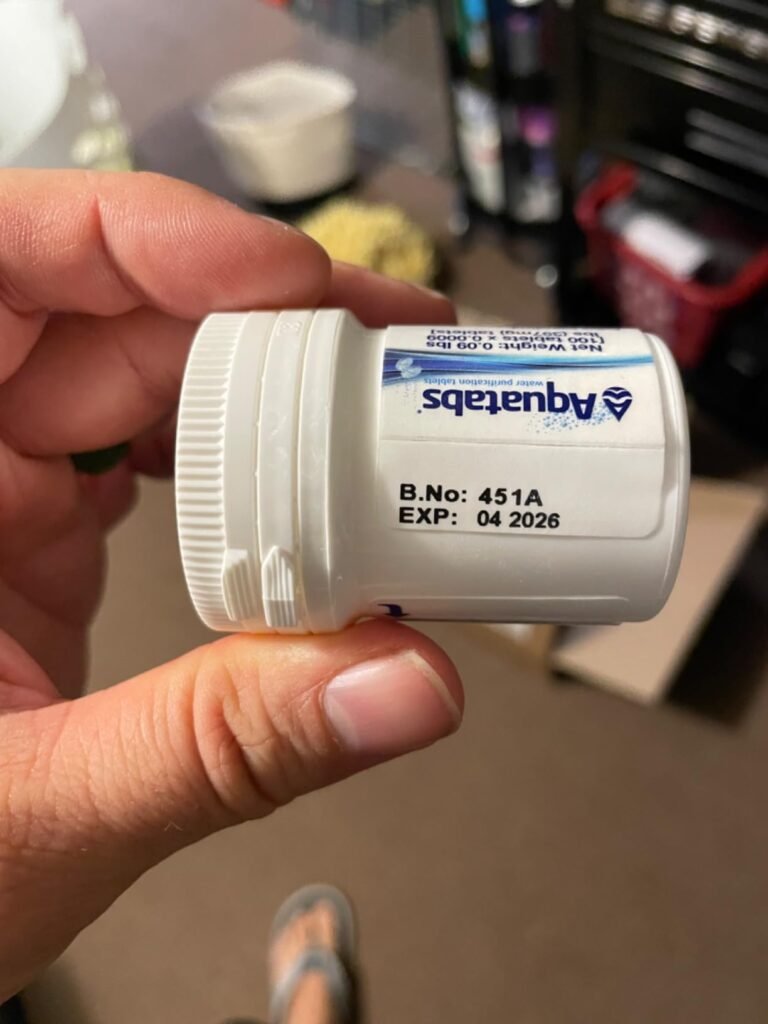
The biggest practical advantage of tablets is that they weigh almost nothing and require no mechanical parts, batteries, or moving components. Drop a pack in every kit you own and you have a reliable secondary purification method that will still work if your primary filter fails, clogs, or gets lost. The shelf life extends to early 2029 for this batch, making them suitable for long-term storage.
Unlike iodine-based tablets, Aquatabs leave no unpleasant taste, color, or odor in the treated water. That palatability difference matters more than you might expect when you are drinking treated water day after day. Pair the tablets with a filter bag or a straw to handle sediment first, and you have a workflow that addresses both particulates and pathogens.
Filters and tablets do different jobs. Membranes remove sediment, protozoa, and often bacteria, while tablets neutralize viruses that most microfilters cannot catch. Using both in sequence, filter first and then treat with a tablet, gives you the broadest possible protection. This layered approach is standard practice for international travelers and serious preppers.
The main considerations are the 30-minute contact time, which requires planning ahead, and the fact that chemicals do not remove sediment or heavy metals. For clear water sources that need pathogen treatment, tablets are ideal. For murky or chemically contaminated water, use them as a second stage after a filter. Every serious outdoor or emergency kit benefits from having chemical backup on hand.
Buyers who want instant drinking water without a wait time or need to filter visibly cloudy sources without a pre-filter.
We may earn a commission when you buy through this link, at no additional cost to you.
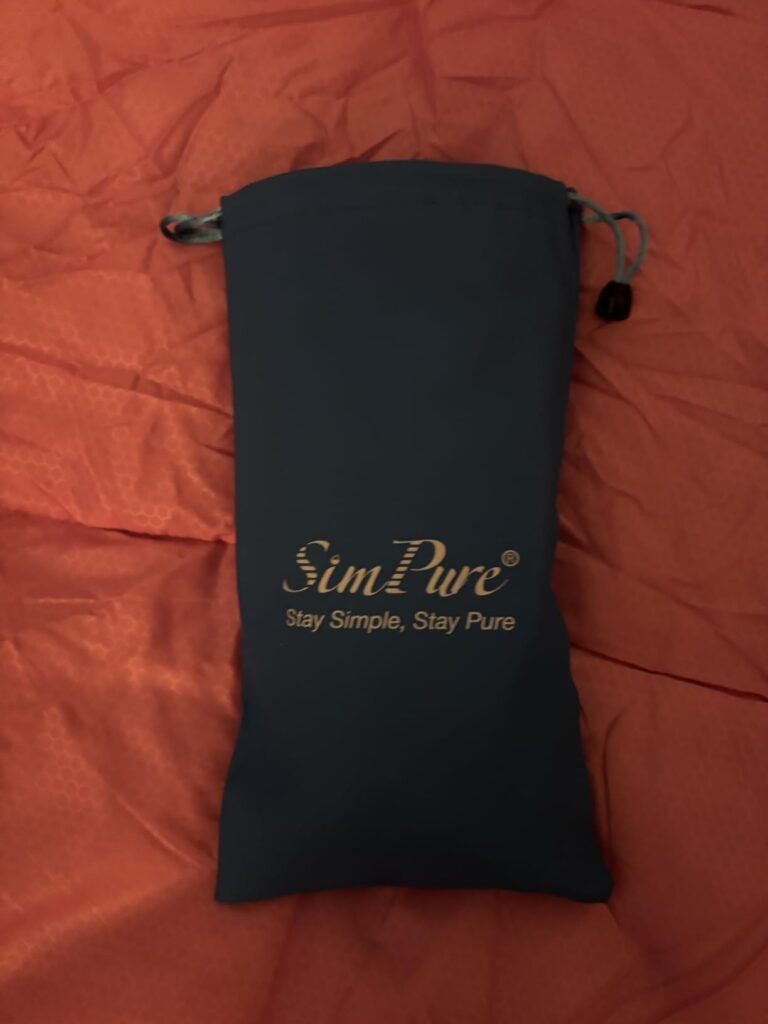
The SimPure Gravity Filter is designed for people who would rather set up a filter and walk away than pump, squeeze, or drink through a straw. The included 3-liter TPU bag hangs from a tree with the included strap, and gravity does all the work while you cook dinner or set up camp. For basecamp and family scenarios, that hands-free workflow is a real quality-of-life improvement.
We may earn a commission when you buy through this link, at no additional cost to you.
The filter itself uses a 0.1-micron hollow fiber ultrafiltration membrane combined with a 5-micron coconut shell activated carbon filter and a 0.2-micron PP fiber filter. That layered approach removes more than 99.99999% of contaminants, along with chlorine and odors. Flow rate of about 27 liters per hour is more than enough for a family or small group’s needs without any active effort.
Versatility is another strength. The included filter can be used with the gravity bag, as a personal filter, with an extension tube for distance drinking, or connected to a standard water bottle. That flexibility means one setup can adapt to different trip styles or emergency scenarios without buying additional accessories. The 5,000-liter lifespan supports a family of four for roughly 3.5 years of regular use.
At a basecamp, you are stationary for hours at a time and rarely need water urgently. A gravity system takes advantage of that stability by producing clean water passively while you do other things. Once set up, you can refill bottles, cook, and stay hydrated without ever thinking about your filter, which is genuinely liberating after trips spent pumping or squeezing.
The whole filter weighs just 2.8 ounces and rolls up compactly for packing. The trade-off is that gravity is slower than active pumping and requires a place to hang the bag, which is not always available in every environment. For basecamp use, family trips, and emergency household setups, this is one of the most convenient options available at a genuinely reasonable price.
Ultralight thru-hikers who want to drink and go without stopping to set up a gravity system.
We may earn a commission when you buy through this link, at no additional cost to you.
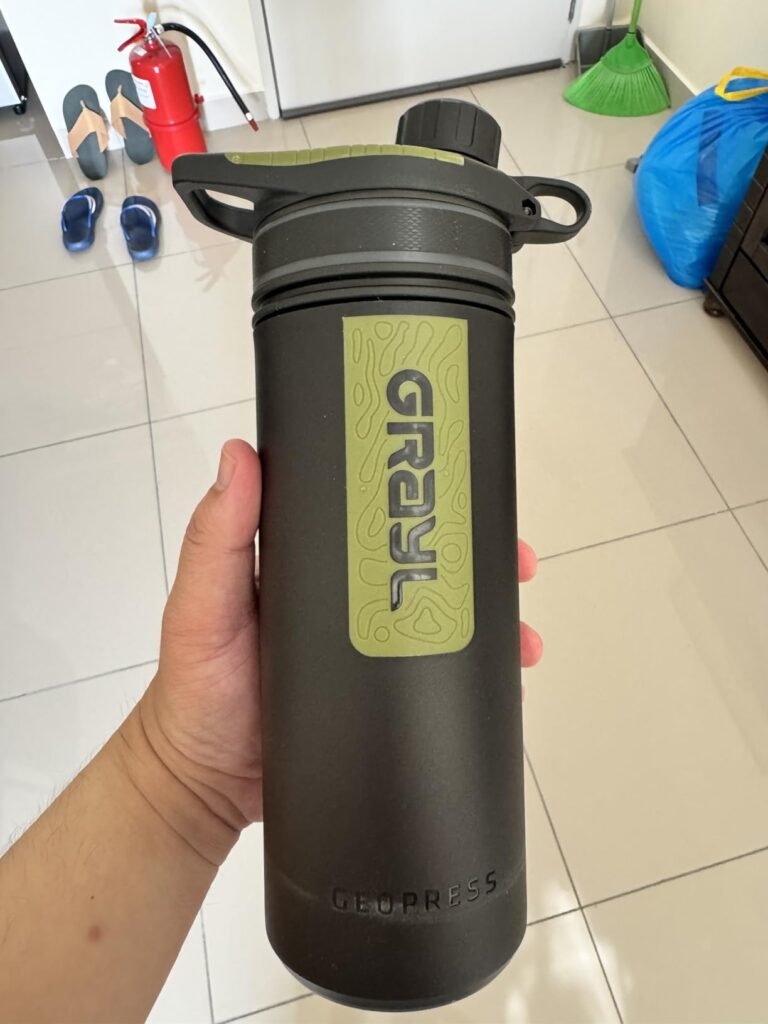
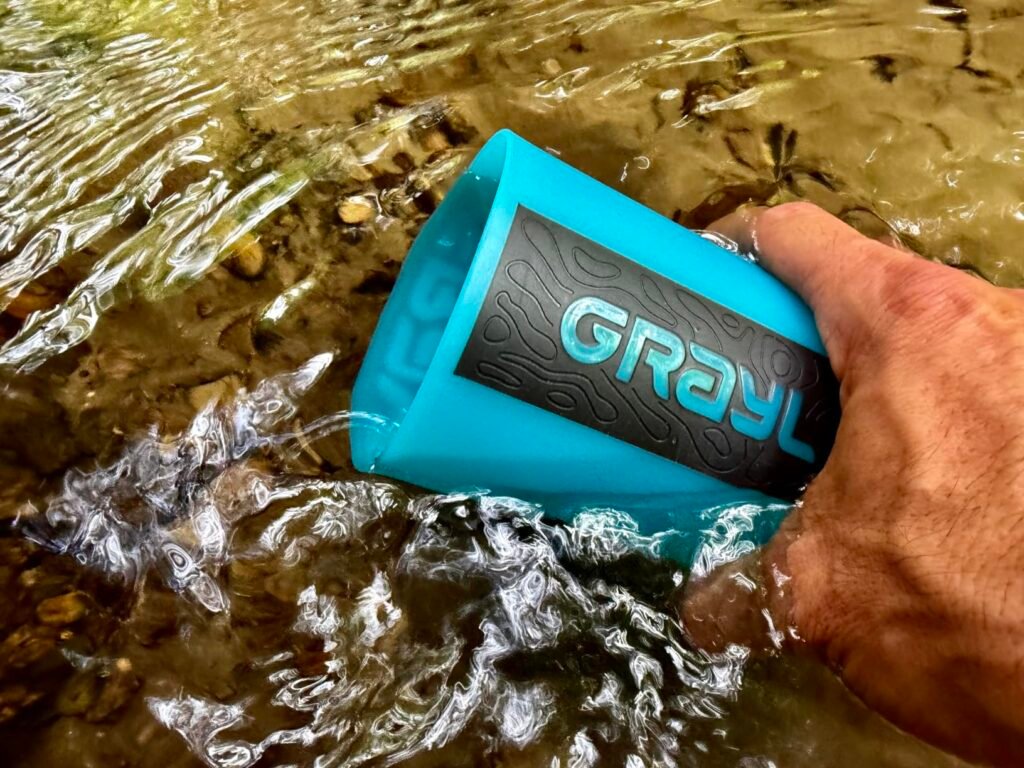
The GRAYL GeoPress solves a problem most portable filters cannot: reliably removing viruses in a fast, simple form factor. You fill the outer chamber from any source, press the inner cylinder down, and the water inside is purified in about 10 seconds. For international travelers, that virus-removal capability makes it genuinely different from microfilter-only options and well worth its higher price.
We may earn a commission when you buy through this link, at no additional cost to you.
The purifier cartridge removes viruses like rotavirus, norovirus, and hepatitis A, bacteria including E. coli and salmonella, and protozoa such as giardia and cryptosporidium. It also filters particulates and microplastics while adsorbing volatile organic compounds, PFAS, chemicals, pesticides, herbicides, heavy metals, and flavors. That comprehensive coverage is unusual in a portable format and reflects the more advanced media used in the cartridge.
Convenience is the other major selling point. There is no setup, no pumping, no batteries, and no waiting. You can purify from a spigot, a hotel sink, a murky river, or a well with the same routine. The 24-ounce capacity per press is enough for immediate hydration, and the sealed bottle format doubles as your everyday drinking container.
In many parts of the world, viral contamination in water is a genuine concern that standard microfilters cannot address. A press-style purifier with a cartridge rated for virus removal lets you refill from hotel sinks, restaurant taps, and roadside sources without worrying about getting sick. That freedom is transformative for extended travel and eliminates the constant expense and waste of bottled water.
The replaceable cartridge is rated for 65 gallons or 250 liters, which is enough for most travel and preparedness scenarios but shorter than the multi-thousand-liter ratings on some microfilters. The whole unit is heavier than a straw and adds noticeable bulk. For travelers heading to places where tap water is questionable and for anyone who wants a single tool that handles nearly any water source, this is the top all-around choice.
Ultralight hikers focused on minimum weight or buyers who need to filter many liters at once for a large group.
We may earn a commission when you buy through this link, at no additional cost to you.
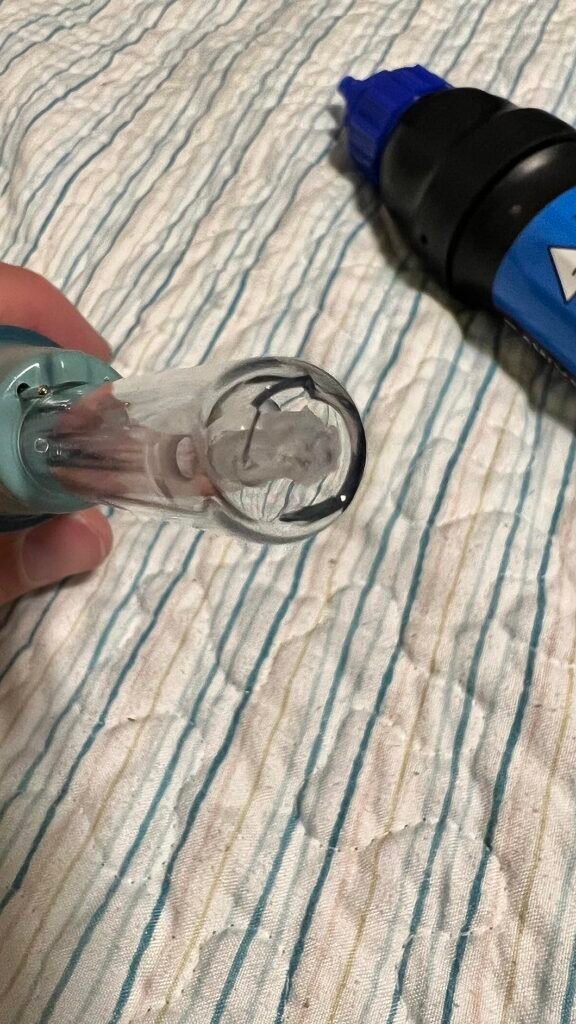
The SteriPen Ultra uses ultraviolet light to neutralize viruses, bacteria, and protozoa without adding chemicals or requiring a filter membrane. Stir the wand in a bottle of clear water for the recommended time and pathogens are inactivated on contact. For travelers who want virus protection without the wait time of chemical tablets or the ongoing cost of press cartridges, this is an appealing alternative approach.
We may earn a commission when you buy through this link, at no additional cost to you.
Lamp life is rated at 8,000 treatments, and a full charge treats up to 50 liters, which is enough for multi-day trips between recharges. The internal lithium-ion battery is included with purchase and charges via USB, so it plays nicely with the same power banks and solar panels you likely already carry. The minimum bottle diameter of 20mm covers virtually any standard water bottle.
Because there is no filter membrane, there is nothing to clog, backflush, or replace beyond the eventual lamp end of life. That simplicity is a genuine advantage in the field, particularly if you have had bad experiences with filters slowing down or freezing. The unit is also compact enough to slip into a jacket pocket for quick treatments on the go.
UV is at its best when your water source is already visually clear, such as treated municipal water in questionable countries, hotel sinks, or clear alpine streams. It shines in scenarios where you want fast virus protection without changing the taste or adding anything to the water. Pair it with a simple pre-filter for cloudy sources and it becomes far more versatile.
The critical limitation is that UV purification requires clear water to work effectively. Suspended sediment can shield pathogens from the UV light, so cloudy sources must be pre-filtered through a bandana or coffee filter first. Battery dependence also means it is not the right primary tool for extreme long-term emergency planning. For travelers and hikers with access to clear water and USB power, it remains a strong specialized choice.
Buyers who draw from murky water sources or need a filter that works without any power source at all.
We may earn a commission when you buy through this link, at no additional cost to you.
Choosing the right portable water purifier means matching the technology to your specific water sources, group size, and trip style. The factors below cover what actually matters when comparing filters, purifiers, tablets, and UV devices so you can spend once and get a system that fits your real needs.
The words filter and purifier are often used interchangeably, but they have distinct meanings in the water treatment world. A filter uses a physical membrane to remove particles, and most portable filters are rated at 0.1 to 0.2 microns, which handles bacteria, protozoa, and sediment. A purifier goes further and also removes or neutralizes viruses, either through a tighter membrane, a chemical treatment, UV light, or specialized cartridge media.
The distinction matters because viruses are much smaller than bacteria and can slip through standard microfilters. In North American backcountry water, viruses are relatively rare and a good filter is usually sufficient. In international travel, floodwater emergencies, or areas with agricultural runoff, virus removal becomes important. The GRAYL GeoPress and SteriPen Ultra are true purifiers in this sense, while the Sawyer Mini and LifeStraw Personal are filters.
If your trips stay in developed backcountry regions, a filter is likely enough. If you travel internationally or want maximum peace of mind in unpredictable conditions, choose a purifier or pair a filter with chemical tablets for virus coverage.
Flow rate determines how long you spend standing at the water source, and it should match how many people you filter for. A personal straw or squeeze filter producing 500ml per minute is fine for one hiker who drinks as needed, but it quickly becomes tedious when filling multiple bottles for a family. Pump filters like the Trailgo Pro Pump at 1.5 liters per minute or gravity systems like the SimPure at 27 liters per hour make far more sense for group scenarios.
Consider not just the peak flow rate but how it holds up in the field. Squeeze and straw filters slow down significantly as the membrane accumulates sediment, and cloudy water sources drop performance further. Pump and gravity systems tend to be more forgiving because they can be back-flushed or cleaned easily. Electric filters offer consistent flow but depend on battery life to sustain it.
For solo trips, prioritize weight and simplicity over raw flow. For duos, a versatile filter like the Sawyer Mini or a purifier bottle covers both bases. For families or emergency household use, invest in a pump or gravity system that can serve everyone without becoming a full-time chore.
Weight matters more the farther you carry your filter. Ultralight backpackers count every gram, which is why 2-ounce filters like the Sawyer Mini and the SimPure gravity setup dominate the thru-hiker world. Personal straws like the LifeStraw sit in the same weight class and pack into almost any bag without notice. These minimalist options assume you filter as you go and do not need to store large quantities of clean water.
Heavier filters make sense when their extra capability justifies the weight. A press-style purifier like the GRAYL GeoPress is bulkier than a straw, but it eliminates the need for a separate bottle, adds virus removal, and works from any water source. Electric filters and pump systems add several ounces or pounds but pay it back with speed, hands-free operation, or off-grid power features. For car camping, RV trips, and home emergency kits, weight barely factors in and capability wins.
Match the filter to how you actually travel. Aggressive ounce-counters should look at the lightest options. Comfort-focused campers and preparedness-minded households can prioritize features and capacity over minimalism.
Filter lifespan varies dramatically across products, from 250 liters on the GRAYL cartridge to 100,000 gallons on the Sawyer Mini. That difference translates directly into long-term cost, so consider not just the sticker price but how much clean water each dollar delivers. Cartridge-based purifiers require regular replacements that add up over years, while ultrafiltration membranes with proper maintenance can last for the lifetime of typical outdoor use.
Longevity also depends on how you use and care for the filter. Filtering from cloudy sources without a pre-filter clogs membranes much faster. Freezing a wet filter can crack the internal fibers and destroy it permanently. Backflushing after each trip and storing filters dry between uses can dramatically extend service life. Chemical tablets have shelf lives measured in years and should be rotated periodically as part of emergency kit maintenance.
For occasional use, almost any filter will last long enough that price and features matter more than lifespan. For heavy or long-term use, calculate the cost per liter or per gallon and choose accordingly. Ultra-long-life filters like the Sawyer Mini and 3-in-1 electric models offer the strongest economics over years of use.
Modern portable water purifiers use several power sources: manual force through pumps or squeezing, gravity, UV lamps with rechargeable batteries, and electric motors powered by USB, solar, or hand-crank dynamos. Each approach has failure modes and reliability characteristics that matter more or less depending on your use case.
Manual and gravity systems are the most reliable in absolute terms because they have no batteries to die and no electronics to fail. They will work as long as the membrane is intact. Electric filters offer convenience and speed but introduce dependence on a power source. For serious emergency preparedness, filters with multiple power paths, such as the 3-in-1 with solar, USB, and hand-crank options, provide meaningful redundancy that battery-only devices lack.
For recreational use where you can plan around charging, electric filters are convenient and fast. For emergency kits, prioritize manual or multi-power options that will keep working when the grid is down and the sun is behind clouds for days on end.
Different filters handle different water sources with different levels of grace. Clear alpine streams are the easiest input and work well with any technology, including UV devices like the SteriPen. Cloudy or silty water challenges membranes and requires pre-filtering to avoid rapid clogging. Water with heavy metal contamination from mining runoff or old pipes needs a filter with a carbon stage, such as the Survivor Filter PRO or SimPure.
For international travel and disaster scenarios, water quality can be unpredictable. A press-style purifier like the GRAYL handles muddy sources, tap water, and everything in between with the same routine. Pump systems with multi-stage filtration also excel in mixed conditions. UV purifiers require clear water to work, so they are less versatile as sole primary treatment in variable conditions.
Think about the worst water you might realistically encounter, not just the best. If any of your likely sources include cloudiness, chemical contamination, or virus risk, choose a filter or purifier system that handles those conditions rather than assuming you will always find pristine sources.
The best filter is one you will actually use. Complicated setups with many parts, fragile components, or difficult maintenance routines get left at home. Straws and press purifiers score highest on simplicity because they involve almost no technique or upkeep. Pump filters require assembly and cleaning but are straightforward. Gravity systems need a hanging point but otherwise take care of themselves.
Field maintenance mostly means backflushing membrane filters and drying them between trips. Backflushing removes accumulated sediment and restores flow, and it is one of the most important habits for prolonging filter life. Some units include built-in backflush syringes or plungers, while others rely on standard water bottle threads for improvised backflushing. Check the included accessories before buying so you know what you need on hand.
If you know you tend to skip maintenance, choose a filter with generous lifespan margins and forgiving membranes, or use chemical tablets as a backup. If you enjoy caring for gear and want maximum performance, a maintenance-friendly pump or gravity system will serve you well for years.
Before your first trip, read the instructions and prime the filter as directed. Most hollow-fiber membranes need to be wetted before they achieve their rated flow, and running a liter or two of clean water through the system helps flush out any residual manufacturing taste. If you are using a purifier with a virus-removal cartridge, follow the initial rinse steps carefully to prep the cartridge for use.
In the field, choose the cleanest source you can find. Look for moving water rather than stagnant pools, and try to draw from below the surface where floating debris and organic matter are less concentrated. If your source is cloudy, use a bandana or coffee filter as a pre-filter to remove large particles before they reach your main membrane. This simple habit dramatically extends the life of your filter and speeds up flow.
After each trip, backflush filter membranes with clean water to remove accumulated sediment, then allow the filter to air-dry completely before long-term storage. Never let a wet filter freeze, as ice crystals can rupture the internal fibers and permanently reduce or destroy performance. Store chemical tablets in a cool, dry place and check expiration dates annually as part of your kit maintenance. UV purifiers should be stored with a partial charge rather than fully depleted to preserve battery health.
A water filter uses a physical membrane to remove bacteria, protozoa, and sediment, but it typically does not remove viruses. A water purifier goes a step further by neutralizing or removing viruses through tighter membranes, chemical treatment, UV light, or specialized cartridges. For most North American backcountry use, a filter is sufficient. For international travel or emergency scenarios with potentially contaminated water, a purifier or a filter paired with tablets offers broader protection.
Only some do. True purifiers like the GRAYL GeoPress, SteriPen UV, and chemical tablets such as Aquatabs are designed to remove or neutralize viruses. Standard microfilters like the Sawyer Mini and LifeStraw remove bacteria and protozoa but not viruses. If virus removal matters for your trips, look specifically for products labeled as purifiers or plan to pair a microfilter with chemical treatment.
Filter lifespan varies dramatically by product and design. Personal straws like the Sawyer Mini can last up to 100,000 gallons with proper maintenance, while purifier cartridges like the GRAYL are rated for around 65 gallons. Gravity and pump filters typically fall somewhere in between. Actual lifespan depends heavily on water quality, maintenance habits, and whether the filter is protected from freezing. Cloudy sources shorten filter life significantly.
Yes, but choose one that removes viruses. International tap water and questionable sources often carry viral contamination that standard microfilters miss. Press purifiers like the GRAYL, UV devices like the SteriPen, or chemical tablets like Aquatabs are appropriate for international travel. Some travelers combine a microfilter with tablets for layered protection and to handle both sediment and viruses.
Most membrane filters benefit from backflushing after each use, which pushes clean water backward through the filter to dislodge accumulated sediment. Many units include a syringe or plunger for this purpose. After backflushing, allow the filter to air-dry completely before storage, and never let a wet filter freeze. For long-term storage, some manufacturers recommend a light bleach solution rinse to prevent bacterial growth inside the membrane.
Yes, when used as directed. Aquatabs and similar chlorine-dioxide or sodium-dichloroisocyanurate tablets have been used safely for decades by aid organizations, militaries, and outdoor enthusiasts worldwide. They kill bacteria, viruses, and most protozoa, though they may be less effective against cryptosporidium unless given extended contact time. The taste is much less noticeable than older iodine-based products, and shelf life typically extends several years when stored properly.
Flow rate varies from about 500ml per minute for basic straws and squeeze filters to 1.5 liters per minute for group pumps. Gravity systems can produce upwards of 27 liters per hour hands-free. Electric filters generally deliver 700 to 800ml per minute. Real-world flow drops as filters accumulate sediment, so cloudy water sources produce slower results than clear ones.
Not effectively. UV light needs to penetrate the water to neutralize pathogens, and suspended sediment shields microorganisms from the light. For cloudy sources, you should pre-filter the water through a bandana, coffee filter, or dedicated pre-filter before treating with UV. This limitation makes UV devices best suited for clear tap water, alpine streams, or already-filtered water rather than as a standalone solution for murky sources.
A well-rounded emergency kit combines multiple purification methods for redundancy. Include at least one primary filter or purifier, a backup pack of chemical tablets, and ideally something with alternative power such as a hand-crank or solar unit. Add pre-filters like bandanas or coffee filters for cloudy sources. This layered approach means no single failure point leaves you without safe drinking water during an extended emergency.
The GRAYL GeoPress earns our top overall recommendation because it combines true virus removal, chemical adsorption, and immediate press-to-drink convenience in a single self-contained bottle. Whether you are traveling internationally, preparing for emergencies at home, or heading into unfamiliar backcountry, its versatility across water sources and its lack of setup, batteries, or waiting time make it one of the most practically capable purifiers available.
For different needs, the Sawyer Mini remains an exceptional value pick for solo hikers who want ultralight weight and enormous filter lifespan. The Trailgo Pro Pump handles family and group scenarios with speed a personal filter cannot match. Aquatabs deserve a place in every emergency kit as backup or virus insurance, and the SimPure gravity setup transforms basecamp hydration into a hands-free background task. Each of these products excels in the situation it was designed for.
Your best choice comes down to three questions: where will you draw water, how many people do you filter for, and how likely is virus exposure in your scenarios. Answer those honestly, cross-reference the picks above, and you will land on a purifier that fits your real life rather than a compromise chosen on features alone. Stock a backup treatment method regardless, since redundancy is the single most reliable form of water security.