Albott 7000 LBS
8.2Editor score7000 lb capacity
28-inch max height
Q235B steel frame
Foldable with casters
Find the right portable car lifts for 2026. We compare 10 standout options by build quality, useful features, owner feedback, value, and everyday trade-offs.
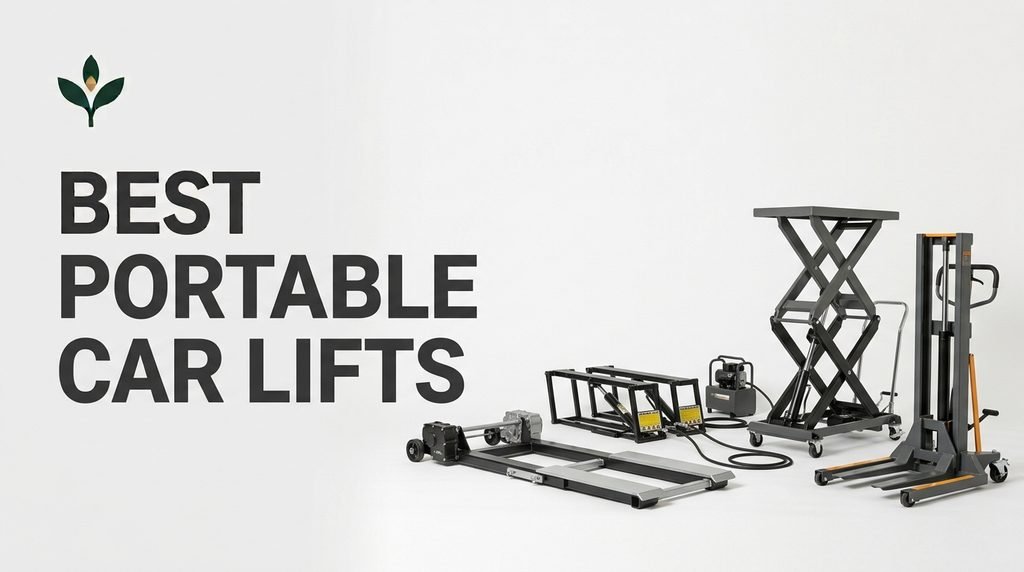
Find the right portable car lift for 2026. We compare 10 standout options across the specifications that matter most in this category: lifting capacity, maximum height, frame construction, safety lock systems, power source, extension plates, mobility features, and the overall value you get for your garage budget.
Portable lift options range from compact hydraulic scissor lifts and electric jacks for roadside repairs to full 4-post storage lifts that double your garage parking capacity. The right choice depends on vehicle weight, how often you need to work underneath, available ceiling clearance, and whether a 110V power unit or air compressor fits your setup.
This guide breaks down each lift so you can match a model to your vehicle size, workspace, and typical maintenance tasks. Whether you want a quick-lift scissor for oil changes, a cordless electric jack for emergencies, or a full ALI-certified lift for serious shop work, the picks below cover the practical choices worth considering.
We compared 10 portable car lifts using the details that actually drive a smart purchase: lifting capacity, maximum and minimum height, frame steel grade, safety lock design, power source, extension plate coverage, foldability, caster quality, setup complexity, certification signals, and owner feedback. The notes focus on real garage trade-offs so each pick connects to the way DIYers, enthusiasts, and professionals actually lift vehicles for maintenance, tire changes, undercarriage work, and storage.

Compare key features, scores, and current prices side by side. A shorter feature list means fewer details were available, not necessarily fewer capabilities.





The QuickJack 8000TL earns the premium spot in this guide thanks to its combination of ALI (Automotive Lift Institute) safety certification, 8000-pound lifting capacity, and perfect 5.0 star rating. ALI certification is a meaningful distinction in this category because it indicates independent third-party verification of safety and structural performance, which many lower-priced lifts do not carry.
We may earn a commission when you buy through this link, at no additional cost to you.
The 8000-pound capacity exceeds every scissor lift in this comparison and covers full-size pickups, large SUVs, and even light-duty commercial trucks that would exceed the limits of 7000-pound units. The design focuses on compact portability despite the heavy-duty capacity, with the frame rails storing flat when not in use so you can roll a vehicle over them or push them under a workbench.
The 110V power unit means setup requires only a standard household outlet, with no need for a dedicated 220V circuit or an air compressor. The quick-connect fittings make initial setup fast, and the overall design prioritizes ease of use for both professional shops and serious home enthusiasts. The lift’s compact form factor makes it practical for garages that cannot accommodate a traditional 4-post installation.
The Automotive Lift Institute operates an independent certification program that tests lifts to established ANSI safety standards. ALI-certified lifts carry a gold label indicating they have passed structural, hydraulic, and safety-lock testing by a third-party lab. For professional shops, ALI certification is often required by insurance providers or local regulations. For home garages, it provides significantly higher confidence in the lift’s long-term safety under real-world use.
The premium price tag of around $2250 is a significant investment compared to budget scissor lifts, but the ALI certification, higher capacity, and brand reputation justify the cost for buyers who prioritize safety and long-term reliability. For professional mechanics, enthusiast garages, and anyone working with high-value vehicles, this is the strongest lift in the comparison. For occasional DIY use on light sedans, the extra capacity may be more than needed.
Occasional DIYers on a tight budget who only service a single light sedan.
We may earn a commission when you buy through this link, at no additional cost to you.
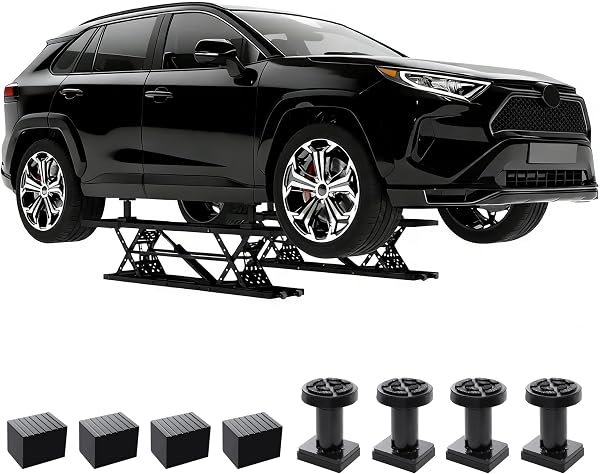
This mid-rise scissor lift is aimed at DIY mechanics and home garage owners who want serious lifting capacity without committing to a floor-mounted installation. The 7000-pound capacity covers most sedans, pickups, and SUVs, and the 28-inch maximum height is among the tallest in the portable scissor category. That extra clearance makes underbody work significantly less cramped than lower-rise alternatives.
We may earn a commission when you buy through this link, at no additional cost to you.
The Q235B carbon steel construction provides the frame rigidity needed for a lift of this size, and the anti-corrosion coating helps protect against the oil, degreaser, and moisture that collect in any working garage. Four height increments plus adjustable column extensions and two extension plates let you dial in the setup to match different wheelbases and lift point locations.
Operation uses standard No. 46 hydraulic oil and relies on multiple mechanical locking levers for safety during work underneath the vehicle. The upgraded spring design helps the lift recover height more quickly between uses, which saves time if you cycle vehicles up and down during a repair session. The four casters make it practical to roll into position and store against a wall when not needed.
Working under a vehicle at 18 inches of clearance versus 28 inches is a dramatically different experience. The extra height lets you sit comfortably rather than lying on a creeper, which reduces fatigue and improves access to the underbody. For jobs like exhaust work, transmission service, or extensive undercarriage inspection, the taller lift pays dividends in both speed and comfort.
The main operational quirk is that the lift requires at least 220 pounds of load to descend, meaning you cannot simply push the empty unit back down after use. That is a common characteristic of hydraulic scissor lifts, but worth knowing before purchase. For garage owners with level concrete flooring and vehicles in the 3000 to 7000-pound range, this lift delivers strong clearance and solid construction at a reasonable price point.
Garages with sloped floors, limited ceiling clearance, or users who need a full drive-on 4-post lift.
We may earn a commission when you buy through this link, at no additional cost to you.
This 7000-pound scissor lift targets owners of long-wheelbase trucks, full-size SUVs, and other vehicles where the lift pad spacing on shorter units simply does not reach the frame's designated lift points. The 11-inch extension plates increase the effective contact area and give you more flexibility when positioning the lift under vehicles that fall outside typical sedan dimensions.
We may earn a commission when you buy through this link, at no additional cost to you.
The four adjustable columns provide up to 3.2 inches of additional height trim, with lift pads adjustable between 6.5 and 20 inches. Combined with the main lift travel, this gives a working range from 10.24 to 26.8 inches, which covers most routine maintenance scenarios from tire rotation to brake and exhaust work. The Q235B carbon steel frame delivers the rigidity needed for stable support at this capacity.
Four high-strength nylon wheels let you roll the folded lift into position without excessive effort, and the two included wall-mount handles give you an organized storage solution once work is done. You do need to supply your own hooks or nails to use the wall-mount system, which is a minor extra step but worth setting up for garages where floor space is tight.
Trucks and SUVs often have lift point locations that fall outside the standard pad spacing on shorter scissor lifts. The 11-inch extension plates included here let you span the gap, which prevents the risky workaround of lifting on non-reinforced sections of the frame. Always consult your vehicle’s service manual for designated lift points before positioning any portable car lift.
As with other hydraulic scissor lifts, the unit requires at least 220 pounds of load to initiate descent, and the manufacturer recommends surfaces no steeper than 4 degrees. Buyers who regularly service long-wheelbase pickups or SUVs will appreciate the extension plates and height trim, while owners of only compact cars may not need the extra coverage. For a mid-rise lift that can accommodate larger vehicles, this unit is a solid choice.
DIYers who only work on compact sedans and do not need extended lift pad coverage.
We may earn a commission when you buy through this link, at no additional cost to you.
This scissor lift earns the top editor's spot because it combines the highest practical lifting range in the portable scissor category with a complete out-of-the-box kit and a slightly higher 4.2 rating than its direct competitors. The 6.26 to 27-inch range gives you both low-profile access for sports cars and sedans and nearly full mid-rise clearance for underbody work on taller vehicles.
We may earn a commission when you buy through this link, at no additional cost to you.
The 7000-pound capacity handles the vast majority of consumer vehicles including sedans, SUVs, and most half-ton trucks. The Q235B carbon steel frame provides zero-wobble stability on flat concrete, and the 11-inch extension plates expand pad coverage for long-wheelbase models. Mechanical safety locks engage at multiple positions to prevent accidental lowering while you work.
The rubber-padded lifting pads are a small but meaningful detail. Direct metal-to-pinch-weld contact can crush or deform factory pinch welds over time, while rubber padding distributes the load and protects the vehicle’s structure. The complete kit includes four rubber pads, four lifting columns, two hoses, two extension plates, four casters, and all necessary hardware, so there are no surprise extras to purchase.
Factory pinch welds and reinforced lift points are designed to handle vertical loads but not point-source metal contact. Rubber pads spread the load across a wider area and absorb minor misalignment, which reduces the risk of denting or deforming the vehicle’s structure. If your lift comes with hard plastic or bare metal pads, consider upgrading to rubber as an inexpensive insurance policy.
The lift uses No. 46 hydraulic oil, which should be available at any auto parts store. As with other mid-rise scissors, use is restricted to flat surfaces with a slope of 4 degrees or less. For home mechanics who want a well-equipped lift with broad height flexibility and reliable safety features at a reasonable price, this is the strongest overall scissor pick in this comparison.
Shop owners who need higher 4-post lift heights for extended ergonomic work or vehicle storage.
We may earn a commission when you buy through this link, at no additional cost to you.
The VEVOR portable lift uses a pneumatic hydraulic pump rather than manual hydraulic action, which appeals to buyers who already have an air compressor in their shop and want faster, less labor-intensive lifting cycles. The 5000-pound capacity covers sedans, compact SUVs, and mini trucks, though it falls short of the capacity needed for full-size trucks or large SUVs.
We may earn a commission when you buy through this link, at no additional cost to you.
The lift uses reinforced alloy steel construction and provides a lifting range of 5.1 to 18.5 inches with pads alone, extending to 9.1 to 25.6 inches when the columns are added. This range covers most routine maintenance tasks, and the flow divider valve helps keep the four lift points synchronized during the lifting cycle. The sealed hydraulic cylinder provides fast lifting with controlled lowering.
Operation requires an air compressor capable of 0.5 to 1.0 MPa output with a tank larger than 180 liters, so this is not a plug-and-play solution unless you already have shop air available. Before first use, you also need to open the bleeder valve and fill the system with ISO 46 hydraulic oil. The mechanical lock engages at each height position for secure support during work.
Manual hydraulic lifts require pumping a lever to raise the vehicle, which works fine but takes effort and time. Pneumatic lifts use shop air to drive the hydraulic pump, cutting the physical effort and often speeding up the lift cycle. The trade-off is the dependency on an adequate air compressor and the extra setup complexity. For high-volume shops the time savings add up; for occasional home use, manual lifts are usually fine.
The 3.8 rating is the lowest in this comparison and suggests some owners have experienced inconsistent performance or quality control issues. For shops that already have adequate compressed air and want faster cycle times than manual hydraulic lifts, this unit can be practical. For home garages without existing shop air infrastructure, the hydraulic manual lifts in this guide are more straightforward choices.
Home garages without a 180-liter air compressor or buyers who want the highest customer ratings.
We may earn a commission when you buy through this link, at no additional cost to you.
This DNA Motoring trolley jack is the budget champion of this comparison, delivering a usable 2-ton floor jack at a price that most DIYers can justify for occasional tire rotations, brake jobs, and oil changes. The 5.1-inch minimum height is low enough to slide under most sedans and sports cars, and the 13-inch maximum lift handles routine wheel-off work with ease.
We may earn a commission when you buy through this link, at no additional cost to you.
The heavy-duty steel construction provides decent rigidity for a jack in this price range, and the swivel casters make positioning the jack under the vehicle much easier than fixed-wheel alternatives. The built-in safety release valve triggers when the jack is overloaded, which helps prevent catastrophic failure if you accidentally try to lift more than the rated capacity.
The large saddle provides a stable contact point with the vehicle’s lift point, and the hydraulic pump action is smooth enough for comfortable use without excessive effort. For the price, the overall build quality is reasonable, though you should not expect the precision machining or longevity of professional-grade jacks that cost five to ten times as much.
Hydraulic jacks of any price point can fail without warning due to seal degradation, overloaded pressure, or operator error. The safe practice is to use the jack only to lift the vehicle, then immediately place quality jack stands under reinforced frame points before any part of your body goes under the vehicle. This single discipline prevents the vast majority of serious garage injuries.
The most important safety reminder is that this is a lifting jack only, not a jack stand. Never work under a vehicle supported solely by any floor jack, including this one. Always transfer the load to proper jack stands before going underneath. For simple wheel-off work on sedans and compact SUVs under 4000 pounds, this budget jack delivers remarkable value for the money.
Owners of pickups, large SUVs, or any vehicle over 4000 pounds.
We may earn a commission when you buy through this link, at no additional cost to you.
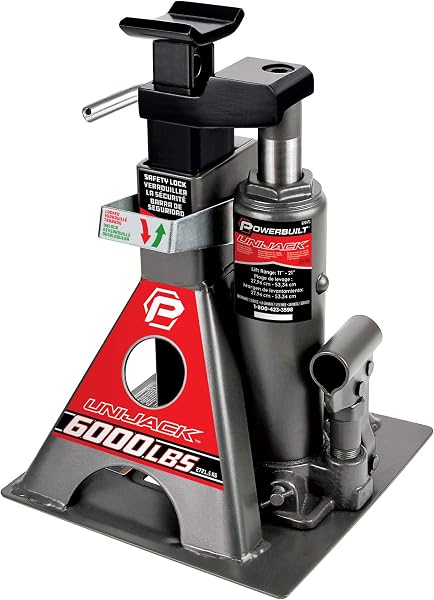
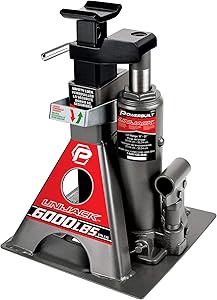
The Powerbuilt Unijack solves one of the biggest headaches of basic jacks: the need to separately position jack stands after lifting. This clever design integrates a bottle jack and a jack stand into a single unit with a ratcheting safety bar that locks the vehicle in place once raised. For roadside tire changes, trail recovery, or quick driveway work, that integration saves time and reduces the number of items you need to carry.
We may earn a commission when you buy through this link, at no additional cost to you.
The 6000-pound capacity handles pickup trucks, SUVs, vans, and Jeeps comfortably, which is a significant step up from the common 2-ton floor jack. The 11 to 21-inch lifting range targets taller vehicles rather than low-slung sports cars, so this is clearly a truck and off-road oriented tool rather than a universal garage jack. The wide base reduces the sinking that plagues narrow bottle jacks on soft ground.
The design meets or exceeds ANSI standards and comes with a one-year factory warranty, which is a reasonable commitment for a tool at this price point. Off-roaders, RV owners, and overlanders will appreciate the wide stance and ability to level trailers and recreational vehicles on uneven terrain where a traditional floor jack would be impractical.
Separate jacks and stands provide maximum flexibility but add complexity and time to every lift. Integrated units like the Unijack trade some flexibility for speed and simplicity, which matters most during roadside emergencies, off-road recovery, or RV leveling where carrying extra gear is a burden. For home garage use with ample space and multiple jack stands already on hand, a traditional jack-plus-stand setup usually offers more versatility.
The main limitations are the taller minimum height that prevents use under low cars, and the bottle-jack format that lacks the lateral stability of a wide-footprint floor jack. For truck and SUV owners who want a single-unit solution that lifts and supports in one step, however, the Unijack is a practical and well-regarded tool backed by ANSI certification.
Sports car owners or anyone needing low-profile access under vehicles below 11 inches of clearance.
We may earn a commission when you buy through this link, at no additional cost to you.
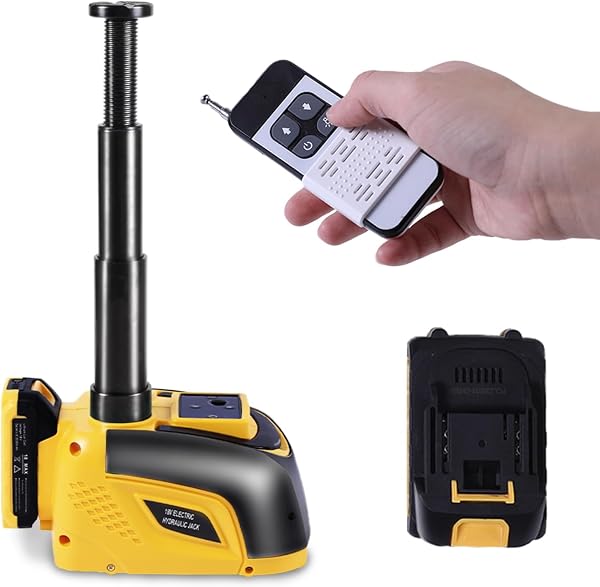
The STANDTALL electric jack is designed for drivers who want a tool that eliminates the physical effort of pumping a manual jack. The 5-ton capacity covers nearly any passenger vehicle, and the all-copper motor can lift a car or SUV in approximately two minutes. For roadside tire changes in difficult weather or for drivers with limited physical strength, that automation is a genuine quality-of-life improvement.
We may earn a commission when you buy through this link, at no additional cost to you.
The 5.9 to 17.7-inch lifting range handles most sedans, SUVs, and light trucks, though extremely low sports cars may not clear the minimum height. The heavy-duty steel pressure rods provide the load-bearing capacity needed for the rated 11023-pound maximum, and the self-locking power supply structure helps prevent uncontrolled descent if power is interrupted during use.
The 328-foot wireless remote is a surprisingly useful feature because it lets you watch the vehicle from a safe distance during lifting and lowering, rather than crouching near the jack where visibility is poor. The remote also means you can operate the jack from the driver’s seat if needed, which is helpful for solo roadside tire changes. Controls are available both on the jack body and via the remote.
Changing a flat tire on the shoulder of a highway in rain or cold is miserable work with a manual scissor jack. An electric jack cuts the lifting phase to a couple of minutes with no physical effort, which gets you back on the road faster and reduces the time you spend exposed to passing traffic. Pair it with a cordless impact wrench and the entire tire change becomes a much safer, faster operation.
The critical safety reminder for any electric jack is the same as for manual jacks: never work under a vehicle supported solely by the jack. Always transfer the load to proper jack stands before any body part goes underneath. For emergency roadside use, trunk-storage preparedness, and routine wheel-off work without the fatigue of manual pumping, this electric jack delivers meaningful convenience at a reasonable price.
Users who need extended ergonomic height for undercarriage work rather than quick wheel-off lifting.
We may earn a commission when you buy through this link, at no additional cost to you.
The E-HEELP kit bundles the three tools most commonly needed for roadside tire problems into a single portable package: a 5-ton electric hydraulic jack, a cordless impact wrench for lug nuts, and a digital air pump for inflation. For drivers who want to be genuinely prepared for flat tires or roadside emergencies, this combination addresses the complete workflow rather than just the lifting step.
We may earn a commission when you buy through this link, at no additional cost to you.
The hydraulic jack uses a lithium battery for cordless operation, eliminating the need to run a cable from the vehicle’s 12V outlet or carry an inverter. The reinforced steel construction supports the rated 5-ton capacity, and the smooth hydraulic action lifts most sedans, SUVs, and light trucks without strain. The included cordless impact wrench loosens stubborn lug nuts that would otherwise require a long breaker bar.
The LCD-equipped air pump handles tire inflation with a digital pressure display, and you can preset target pressures to prevent overinflation. This matters because a flat tire often needs air immediately after repair or replacement, and carrying a separate inflator doubles the gear burden. The included carrying case keeps everything organized so you can grab the complete kit in an emergency without hunting for individual pieces.
Lithium battery tools lose charge slowly over months of storage, so a jack kit stored in your trunk may be dead when you actually need it. Set a quarterly reminder to check the battery level and recharge if needed. Store the kit in a temperature-stable area when possible, since extreme heat and cold both accelerate battery degradation over time.
The main consideration is that this kit is optimized for emergency and occasional use rather than extended garage work. The battery requires periodic recharging to stay ready, and the hydraulic jack is designed for quick wheel-off tasks rather than hours of undercarriage work. For drivers who want comprehensive roadside preparedness in one organized package, this kit is one of the strongest options available.
Buyers who need a stationary garage lift for routine mechanical repairs.
We may earn a commission when you buy through this link, at no additional cost to you.
The KATOOL 4-post lift is the heaviest-duty option in this comparison and takes the portable lift concept to a full drive-on, full-height format. The 8500-pound capacity and 70.8-inch maximum lifting height make it suitable both as a service lift for extensive mechanical work and as a storage lift that effectively doubles your garage parking capacity by stacking vehicles vertically.
We may earn a commission when you buy through this link, at no additional cost to you.
The dual mechanical lock system puts both primary and secondary safety locks on each of the four posts, giving the lift four total locking points and eight engagement positions. This redundancy is a significant safety feature for a lift that holds vehicles at head height or above. The single-point manual safety lock release lets you lower all four posts in sync with a single lever action.
The included caster kit is unusual in the 4-post category, where most lifts are intended to be permanently positioned. The casters let you reposition the lift when needed, which matters for garage layouts that might change over time or for shops that occasionally need to clear floor space. Operation runs on standard 110V household power, so no special electrical work is required.
A 4-post lift can double your garage parking capacity by lifting one vehicle overhead while another parks beneath it. This is particularly valuable for collectors, enthusiasts with multiple vehicles, or anyone with a single-bay garage who wants to add a second parking spot without expanding the structure. Verify your ceiling height before purchasing, since the lift plus the vehicle plus clearance can easily exceed 10 feet of vertical requirement.
The main logistical consideration is delivery and setup. The lift is heavy and requires a forklift or local terminal pickup for unloading, which many buyers overlook. You also need adequate ceiling clearance to use the full lifting height, which generally means at least 11 to 12 feet of overhead space. For enthusiasts, collectors, or shops that need both service capability and parking storage, this is the only option in this guide that delivers both at full ergonomic height.
Buyers with low garage ceilings, limited budget, or no way to handle freight unloading.
We may earn a commission when you buy through this link, at no additional cost to you.
Choosing a portable car lift involves matching lifting capacity, height range, power type, and physical footprint to your garage space and the vehicles you actually work on. The factors below cover the most important decision points so you can invest confidently in a lift that will serve you for years.
Lifting capacity is the single most important specification because exceeding it is dangerous and can cause catastrophic lift failure. Capacities in this comparison range from 4000 pounds for budget trolley jacks up to 8500 pounds for the heaviest 4-post lift. Check your vehicle’s curb weight in the owner’s manual or on the driver’s door jamb, and choose a lift rated at least 20 to 30 percent above that figure.
The margin matters because dynamic forces during lifting, imbalanced load distribution, and real-world wear can briefly exceed static vehicle weight. A 5000-pound truck should generally use a 7000-pound or higher lift, not a 5000-pound unit operating at its stated maximum. The extra capacity provides safety reserves and extends the usable life of the lift.
Match the lift capacity to the heaviest vehicle you plan to service, plus the safety margin. If your household includes a mix of sedans and pickups, size the lift for the pickup, not the sedan.
Portable lifts come in several distinct categories. Floor jacks and bottle jacks lift one point of the vehicle at a time and must be used with separate jack stands for safety. Scissor lifts raise the entire vehicle on four pads and are the most common portable option for mid-rise work. Pneumatic lifts use shop air for faster operation but require an adequate compressor. Full 4-post lifts raise the entire vehicle on drive-on runways and provide the highest working height.
The right type depends on how you work. For occasional tire rotations and brake jobs, a quality floor jack plus two jack stands is often sufficient and takes up minimal space. For regular maintenance where you want to stand upright under the vehicle, a scissor lift provides proper mid-rise clearance. For professional-grade work or vehicle storage, a 4-post lift is the appropriate choice.
Think honestly about your typical use case. A $2500 lift that sits unused most of the year is a worse investment than a $100 jack that gets used every month. Buy the lift that matches your realistic work frequency and complexity.
The usable height range determines what kind of work you can comfortably perform. Low-profile floor jacks typically lift to 13 inches, which is enough to remove wheels but not enough to work under the vehicle. Mid-rise scissor lifts reach 25 to 28 inches, which allows you to sit comfortably under the vehicle on a creeper or stool. Full 4-post lifts reach 70 inches or more, allowing you to stand upright beneath the vehicle.
The minimum height also matters, especially for low-slung sports cars or lowered vehicles. A jack with a 5.1-inch minimum will slide under most cars, while a bottle jack with an 11-inch minimum will not fit under anything with modest ground clearance. Measure your lowest vehicle’s actual ground clearance at the lift points before choosing a jack or scissor lift.
Choose a height range that matches both your tallest and lowest vehicles, as well as the type of work you plan to perform. Standing-height access is a major quality-of-life upgrade over creeper work, but only if your garage ceiling supports it.
Mechanical safety locks are the single most important safety feature on any lift because they engage automatically at each height position and prevent hydraulic failure from dropping the vehicle. Look for lifts with multiple locking positions and clear visual indicators that show when locks are engaged. Dual locks per post, as found on the KATOOL 4-post lift, provide redundancy that single-lock systems lack.
ALI (Automotive Lift Institute) certification is the gold standard in the industry and indicates independent testing to ANSI safety standards. ALI-certified lifts carry a visible gold label and are often required for professional shop use by insurance companies and local regulations. For home use, ALI certification provides significantly higher confidence in long-term safety.
Prioritize safety features over marginal cost savings. A lift that fails under load can cause serious injury or death, and the price difference between a basic and a certified lift is small compared to the consequences of a failure.
Portable lifts use several different power sources, each with trade-offs. Manual hydraulic lifts use a lever that you pump by hand and require no external power, but they take physical effort and time. Pneumatic lifts use shop air for faster operation but require an air compressor rated for continuous use. Electric lifts plug into standard 110V outlets and operate at the push of a button. Cordless battery-powered jacks eliminate cables entirely but require periodic recharging.
Verify what power infrastructure you already have before buying. A pneumatic lift is impractical if you lack a 180-liter air compressor. An electric lift that needs 220V may require electrician work if your garage only has 110V service. Battery-powered tools need to be kept charged and ready, which is easy to forget during long storage periods.
Choose the power type that matches your existing infrastructure or that you are willing to add. For most home garages, manual hydraulic or 110V electric lifts are the simplest options.
True portability varies dramatically between lift types. Floor jacks weigh 50 to 80 pounds and roll on casters, making them easy to move between locations. Scissor lifts weigh several hundred pounds but typically include casters and a foldable design for storage against a wall. Full 4-post lifts are not practically portable in daily use even when caster kits are included.
Consider how often you will actually move the lift. If it will live in one spot in your garage, portability features matter less than stability and height. If you share the lift between buildings, need to clear floor space regularly, or work on vehicles in multiple locations, prioritize low weight, good casters, and a compact folded footprint.
Measure the folded dimensions and compare them to your available storage space before purchase. A lift that cannot be stored out of the way becomes a daily obstacle in a working garage.
Extension plates increase the effective coverage of lift pads and allow a single lift to service vehicles with widely varying wheelbases. The 11-inch extension plates found on several scissor lifts in this guide make the difference between accommodating a long-wheelbase pickup and only fitting compact sedans. Without extensions, you may find that your lift pads do not reach the vehicle’s designated lift points.
Always consult the service manual or manufacturer documentation for your specific vehicle to identify proper lift points. Lifting on non-reinforced sections of the frame can bend sheet metal, damage pinch welds, or cause the vehicle to shift unexpectedly. The extension plates let you position the lift pads precisely at the designated points regardless of wheelbase.
If you own multiple vehicles with different wheelbases, choose a lift that includes extension plates in the standard kit. Buying extensions as an aftermarket upgrade is often more expensive than selecting the right lift initially.
Portable lifts require flat, solid flooring for safe operation. The scissor lifts in this comparison typically specify a maximum slope of 4 degrees, which rules out driveways with significant grade. Most manufacturers also require concrete flooring of adequate thickness, usually 4 inches or more of reinforced concrete, since the point loads at the lift pads can crack thinner slabs.
Check your garage floor’s condition and specifications before buying a lift. Expansion joints, significant cracks, or thin slabs can create hazards. For 4-post lifts in particular, the four support columns concentrate thousands of pounds of load at specific points, which demands adequate flooring to prevent sinking or cracking.
If your floor is marginal, consider having an engineer or qualified contractor evaluate the slab before investing in a heavy lift. The cost of floor remediation is far less than the cost of a lift failure caused by inadequate support.
Before every use, inspect the lift for signs of hydraulic leaks, cracked welds, worn rubber pads, or damaged safety locks. Verify that the hydraulic oil is at the correct level using the specified grade, typically ISO 46, which is widely available at auto parts stores. Position the lift on flat, solid concrete and never operate on surfaces with more than a 4-degree slope. Always identify the vehicle’s designated lift points from the service manual or driver’s door placard before positioning the lift pads.
During operation, lift the vehicle slowly and watch for any shifting or imbalance. Once at working height, lower the vehicle onto the mechanical safety locks before any part of your body goes underneath. Never rely solely on hydraulic pressure to hold the vehicle, since seal failure or operator error can cause sudden descent. For jack-only tools like floor jacks and bottle jacks, always transfer the load to properly rated jack stands at reinforced frame points before working underneath.
After use, lower the lift completely and check for any residual issues before storing. Scissor lifts typically need to be unlocked manually before descent, so follow the manufacturer’s procedure to avoid damaging the locking mechanism. Store the lift in a dry area to prevent corrosion, and periodically check the hydraulic oil level and condition. For battery-powered electric jacks, recharge the battery every few months even during storage to keep it ready for emergency use.
A scissor lift raises the vehicle on four pads placed under the frame or pinch welds, giving you access to the wheels and most of the underbody. A 4-post lift uses drive-on runways supported by four vertical columns, lifting the entire vehicle while keeping the wheels loaded. Scissor lifts are more portable and cheaper. 4-post lifts offer higher lifting height, support vehicle storage, and allow wheel-off work with additional jack accessories.
Choose a lift rated at least 20 to 30 percent above your heaviest vehicle's curb weight. A 4000-pound sedan should use a 5000-pound or higher lift, while a 6000-pound full-size pickup needs 7500 pounds or more. The margin provides safety reserves for dynamic forces, uneven weight distribution, and real-world wear. Never operate a lift at its stated maximum capacity for routine use.
Yes, most portable lifts are designed for home garage use as long as you have flat concrete flooring of adequate thickness and sufficient ceiling clearance. Mid-rise scissor lifts typically need standard 8-foot ceilings, while 4-post lifts generally require 11 to 12 feet or more. Verify your garage dimensions and floor condition before purchasing, and ensure you have an appropriate power source for electric or pneumatic models.
ALI certification indicates independent third-party testing to industry safety standards and provides significantly higher confidence in long-term reliability. For professional shops, ALI certification is often required by insurance providers. For serious home enthusiasts working on valuable vehicles or lifting frequently, ALI certification is worth the premium. For occasional light-duty use, non-certified lifts from reputable manufacturers can be acceptable if you follow all safety precautions.
Absolutely not. Floor jacks and bottle jacks are lifting tools only, not support devices. Hydraulic seals can fail, overpressure valves can trigger, and operator error can cause sudden descent. Always transfer the load to properly rated jack stands at designated frame points before any part of your body goes under the vehicle. This single discipline prevents the vast majority of serious garage injuries.
Most portable scissor lifts specify ISO 46 or No. 46 hydraulic oil, which is widely available at auto parts stores and online. Always check your specific lift's manual before adding or changing oil, since using the wrong grade can damage seals and reduce lifting performance. Check the oil level periodically and top off as needed to maintain proper hydraulic function.
Only pneumatic lifts require an air compressor. Manual hydraulic lifts use a pump handle you operate by hand, electric lifts plug into standard outlets, and battery-powered jacks are self-contained. If you choose a pneumatic lift like the VEVOR model, you need a compressor rated for continuous use at 0.5 to 1.0 MPa output with a tank of at least 180 liters. Verify your compressor's specifications before buying a pneumatic lift.
For mid-rise scissor lifts reaching 25 to 28 inches, standard 8-foot garage ceilings are sufficient as long as the vehicle itself fits beneath. For 4-post lifts with 70-inch lifting height, you need at least 11 to 12 feet of total ceiling clearance to accommodate the lift, the vehicle, and working space above. Measure your garage ceiling before purchasing any lift to avoid an expensive mistake.
Quality electric jacks from reputable manufacturers are safe for the lifting function they are designed for, which is primarily emergency tire changes and routine wheel-off work. However, like all jacks, they are lifting devices only and must not be used as supports while you work under the vehicle. Always transfer the load to proper jack stands before going underneath, regardless of whether the jack is manual, hydraulic, or electric.
Yes, 4-post lifts like the KATOOL 8500 lb model can lift one vehicle overhead while allowing another to park beneath it, effectively doubling your parking capacity in a single bay. This is popular with collectors, enthusiasts with multiple vehicles, and anyone with limited garage space. Verify your ceiling height supports the stacked configuration, which typically requires 11 feet or more of total vertical clearance.
The QuickJack 8000TL earns the premium pick position with its 8000-pound capacity, ALI safety certification, and perfect 5.0 star rating. For serious enthusiasts, professional mechanics, and anyone working with high-value vehicles, the combination of independent safety certification, 110V plug-and-play operation, and compact storage design makes it the strongest overall choice. The investment is substantial but delivers long-term reliability and the peace of mind that comes with certified safety.
For buyers with different needs, the 7000LBS Portable Scissor Lift provides excellent value as a mid-rise option with the widest height range in its class. The DNA Motoring Trolley Jack is unbeatable for budget-conscious DIYers who just need to swap wheels and change oil on sedans. The Powerbuilt Unijack solves the integrated jack-and-stand problem for truck and off-road use, and the KATOOL 4-post lift stands alone for anyone who needs full standing-height access or wants to double garage parking capacity.
The most important step is matching the lift to your actual vehicles and the work you plan to do. A 2-ton floor jack suits a sedan owner who changes brake pads twice a year. A mid-rise scissor lift transforms a weekend mechanic's capabilities. A 4-post lift is a serious investment but delivers professional-grade work and storage. Choose based on your realistic use pattern, verify your garage can accommodate the lift's dimensions and power requirements, and never compromise on safety features like mechanical locks and adequate weight capacity.