Silver Spring Hitch
8.0Editor score350 lb capacity
20-second lift time
Class II+ hitch
38×27.5 inch platform
Compare 10 top mobility scooter lifts for cars and SUVs. Covers hitch carriers, portable electric lifts, weight capacity, and vehicle compatibility.
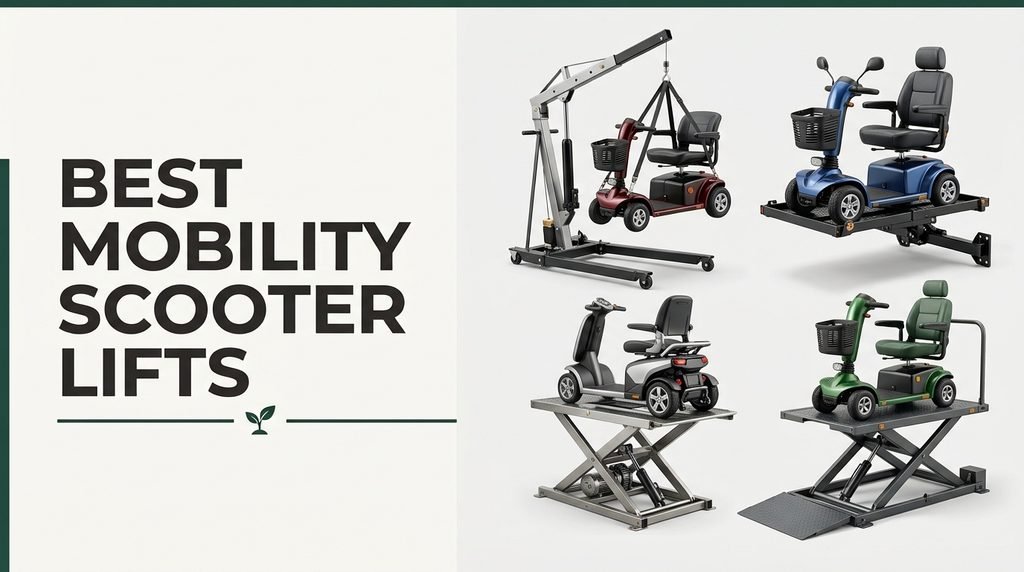
Finding a reliable mobility scooter lift can transform daily travel for anyone who depends on a scooter or power chair. We compare 10 standout options by weight capacity, vehicle compatibility, lift mechanism, platform dimensions, power source, and real-world convenience factors that affect everyday use.
Hitch-mounted carriers handle heavier devices and keep the cabin free, while portable electric lifts offer flexibility for smaller vehicles and tighter budgets. Understanding which style matches your scooter’s weight and your vehicle’s hitch class is the most important first step before comparing individual models.
This guide breaks down the key specifications and practical trade-offs so you can narrow the field quickly. Whether you need a heavy-duty platform for a full-size scooter or a compact foldable lift for occasional trips, the right choice depends on a handful of measurable factors we outline below.
We compared 10 mobility scooter lifts using the details that matter most to buyers: weight capacity, hitch class compatibility, platform dimensions, lift speed, power source, folding mechanism, construction materials, safety tie-downs, and overall value. The notes focus on practical trade-offs so each pick connects to how people actually load, transport, and store their scooters and power chairs on a daily basis.


Compare key features, scores, and current prices side by side. A shorter feature list means fewer details were available, not necessarily fewer capabilities.


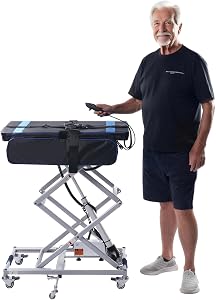


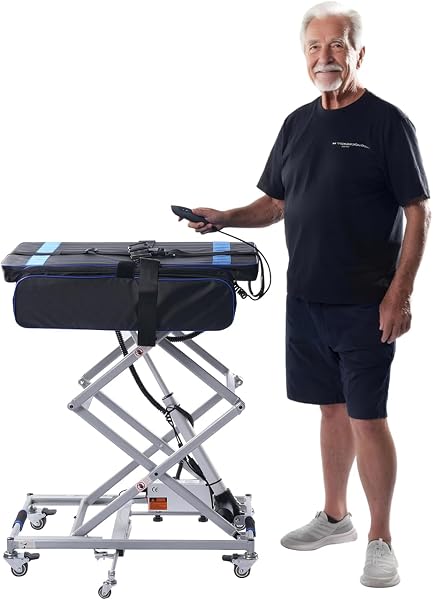
This electric scissor lift earns the highest customer rating in the comparison, and its combination of motor power and quiet operation explains the strong feedback. The 5000N motor is the most powerful among the portable lifts reviewed here, providing smooth and steady elevation from 9.2 inches up to 35 inches. If you need precise height control for loading into vehicles with varying cargo floor heights, the wide adjustment range is a genuine advantage.
We may earn a commission when you buy through this link, at no additional cost to you.
The scissor-lift mechanism operates at roughly 30 decibels under no load and about 50 decibels at full capacity, which is quiet enough to use in residential areas early in the morning or late at night without disturbing neighbors. The remote control lets you operate the lift from a comfortable distance, and pressing any key stops the platform immediately at its current height. This level of control is especially useful when aligning the scooter with a vehicle’s trunk lip or cargo floor.
Four multi-directional PU casters with locking brakes allow you to roll the lift into position and then secure it firmly before loading. The steel frame is rustproof and wear-resistant, supporting up to 130 pounds with stable, shake-free operation. The carrier plate provides a flat, secure surface for the mobility device, and the overall design doubles as a general-purpose lift table for other household or workshop tasks.
Beyond mobility device loading, the scissor design and flat carrier plate make this lift useful as a pet grooming table, an elevated work surface, or a photography platform. If you need a single lift that serves multiple roles around the home or garage, the adjustable height range and stable base give it an edge over single-purpose portable lifts.
The 130-pound capacity is higher than the 110-pound limit on several competing portable lifts, but it still falls short of what full-size scooters require. The scissor mechanism also adds some bulk compared to folding arm-style lifts, so storage space is a consideration. For users with lightweight to mid-weight scooters who value quiet operation, precise height control, and the versatility of a multi-purpose lift table, this model is an excellent choice.
Full-size scooters exceeding 130 pounds or buyers who need a hitch-mounted exterior carrier.
We may earn a commission when you buy through this link, at no additional cost to you.
This hitch-mounted electric carrier is built for users who want a powered loading solution without the complexity of a full hoist system. The high-strength aluminum platform and steel frame handle scooters and power chairs up to 350 pounds, making it suitable for most mid-size and some full-size mobility devices. If your daily routine involves loading and unloading at multiple stops, the electric mechanism saves significant time and physical effort compared to manual ramp carriers.
We may earn a commission when you buy through this link, at no additional cost to you.
The standout feature is the 20-second lift cycle, which raises the platform from ground level to travel height with a single key press. When you arrive at your destination, the platform lowers just as quickly. The adjustable cradle extends to 46 inches, accommodating longer scooter wheelbases, while the 38-by-27.5-inch platform provides enough room for stable positioning. Four self-tensioning retractors secure the device during transit, reducing the risk of shifting on uneven roads.
Usability is a strong point here. The one-key control eliminates complicated switch sequences, and the manual backup hand crank gives you a fail-safe if the electrical system ever loses power on the road. The carrier folds against the rear of the vehicle in roughly six seconds when not in use, which helps maintain rear visibility and keeps your driveway or garage accessible. The included license plate holder and LED warning light address common compliance and safety concerns that hitch carriers sometimes overlook.
Electric lift mechanisms are dependable under normal conditions, but battery drain or a blown fuse can leave you stranded. The hand crank on this model lets you raise or lower the platform manually, which is a genuinely useful safety net for long road trips or rural travel where roadside assistance may be slow to arrive. Before any extended trip, test the crank mechanism at home so you are comfortable using it if needed.
The main trade-off is that this model requires a Class II or higher hitch receiver, so it will not work with vehicles that only have a Class I setup. It is also substantially heavier than portable electric lifts, which means installation and removal are best handled with a second person. For buyers who already have the correct hitch and want a fast, reliable powered carrier, this Silver Spring model delivers consistent performance at a mid-range price point.
Vehicles with only a Class I hitch receiver or buyers who need a lift they can store inside the trunk.
We may earn a commission when you buy through this link, at no additional cost to you.
The Culver portable lift targets buyers who need a lightweight, go-anywhere solution for smaller mobility scooters and power wheelchairs. At just 25 pounds, it is one of the lightest electric lifts available, which means a single caregiver can carry it from the trunk to the curb without strain. If your primary concern is portability rather than raw lifting power, this model deserves a close look.
We may earn a commission when you buy through this link, at no additional cost to you.
The 4000N motor provides enough force to raise devices up to 110 pounds, which covers many travel-size scooters and lightweight power chairs. Operation is straightforward: lock the caster brakes on the mobility device, secure the safety belt, and press the up or down button. Releasing the button stops the lift immediately, giving you precise control over the loading height. The foldable frame collapses small enough to fit in most car trunks, hatchbacks, or even a backseat.
One practical advantage is the FSA and HSA eligibility, which allows buyers to use pre-tax medical spending accounts for the purchase. This can meaningfully reduce the out-of-pocket cost for anyone with available account balances. The package includes a one-year spare parts warranty and a six-month battery warranty, which is reasonable for the price range. Setup requires no vehicle modifications, making it a good fit for people who switch between vehicles or use ride-share services.
Because this lift qualifies as a medical device, you can pay directly with an FSA or HSA card at checkout. This is a meaningful financial benefit that many buyers overlook. Check with your plan administrator if you are unsure whether mobility equipment purchases are covered under your specific account, but most standard plans include assistive devices of this type.
The 110-pound capacity is the main limitation. Full-size scooters and heavier power chairs will exceed this limit, so you need to confirm your device’s weight before ordering. The manufacturer also advises against using the lift on sloped or uneven ground, which can be restrictive in parking lots with poor drainage or gravel driveways. For lightweight scooters and level loading surfaces, however, the Culver offers an affordable and highly portable solution.
Full-size scooters or power chairs that weigh more than 110 pounds.
We may earn a commission when you buy through this link, at no additional cost to you.
This portable electric lift strikes a strong balance between battery endurance and everyday convenience. The lithium-ion battery delivers up to 30 complete lift cycles on a single charge, which is enough for most users to go several days between top-ups even with frequent outings. If you regularly make multiple stops in a single day, the extended cycle count reduces the anxiety of running out of power mid-trip.
We may earn a commission when you buy through this link, at no additional cost to you.
The 30-pound aluminum frame folds down to 29 by 21 by 10 inches, small enough to slide into a compact car trunk alongside groceries or luggage. Adjustable straps and a customizable platform accommodate a range of wheelchair and scooter shapes up to 110 pounds. Non-slip grips and safety locks help keep the device stable during the lifting process, which is especially important when loading on slightly uneven pavement.
Charging is quick by portable lift standards, reaching a full charge in roughly two to three hours. The built-in overload protection and auto-shutoff features add a layer of safety that protects both the motor and the user if the load exceeds the rated capacity or if the mechanism encounters an obstruction. These safeguards are particularly valuable for caregivers who may not always be able to judge the exact weight of the device being lifted.
Lithium-ion batteries last longest when you avoid fully depleting them before recharging. If you typically use 10 to 15 cycles per day, plugging in overnight will keep the battery in a healthy charge range and extend its overall lifespan. Store the lift in a cool, dry place when not in use, as extreme heat can degrade battery cells over time.
The two-year frame warranty and two-year motor and battery coverage provide longer protection than many competing portable lifts. The main constraint remains the 110-pound capacity, which rules out heavier full-size scooters. For users with lightweight travel scooters or folding power chairs who prioritize battery longevity and compact storage, this model offers a well-rounded package at a competitive price.
Scooters or power chairs exceeding 110 pounds or buyers who need a hitch-mounted solution.
We may earn a commission when you buy through this link, at no additional cost to you.
The Silver Spring electric carrier is the highest-rated hitch-mounted option in this comparison, and its American-made aluminum construction is a major reason. Crafted from high-strength, lightweight aluminum, the platform supports up to 350 pounds while adding less dead weight to your vehicle's hitch than many steel alternatives. If build quality and long-term durability are your top priorities, this model stands out.
We may earn a commission when you buy through this link, at no additional cost to you.
Compatibility is broad, fitting Class II, III, and IV hitch receivers on most cars, trucks, and vans without any drilling or permanent modifications. The 39-by-27-inch platform with an adjustable cradle extending to 46 inches handles a wide range of scooter and power chair dimensions. Four self-tensioning retractors keep the device locked in place during highway driving, and the included wiring harness simplifies the electrical connection to your vehicle.
When you are not hauling a scooter, the carrier folds vertically against the back of the vehicle. This space-saving design helps maintain rear visibility through the back window and prevents the platform from protruding into tight parking spaces. The manual backup hand crank provides the same peace of mind as the other Silver Spring model, and the license plate holder ensures you stay compliant with local traffic regulations.
This carrier works with Class II, III, and IV receivers, which covers the vast majority of SUVs, trucks, and larger sedans. Class II hitches are typically rated for 3,500 pounds of towing and 350 pounds of tongue weight, which aligns closely with the carrier’s own 350-pound capacity. Always verify your vehicle’s specific tongue weight rating in the owner’s manual before loading a fully occupied carrier.
The higher price reflects the domestic manufacturing and premium materials. Buyers on a tighter budget may prefer the non-electric ramp carriers also made by Silver Spring, which sacrifice powered lifting but retain the solid construction. For those who want a powered, American-built carrier that installs in minutes and handles most mid-size scooters with ease, this model is the strongest overall choice in the lineup.
Vehicles without a Class II or higher hitch receiver or buyers seeking a sub-$500 solution.
We may earn a commission when you buy through this link, at no additional cost to you.
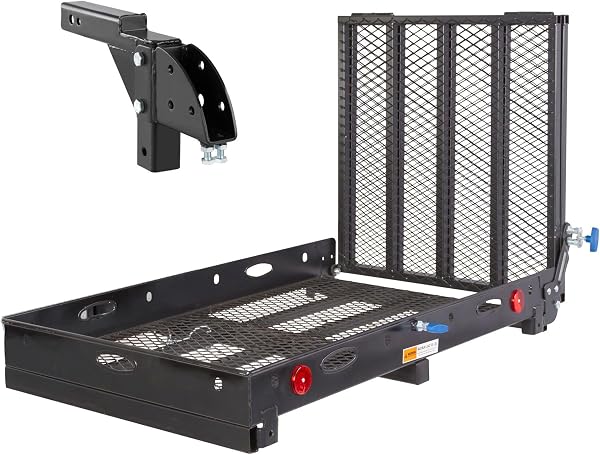
The ECOTRIC hitch carrier is the most affordable option in this guide, and it delivers a surprisingly high 500-pound weight capacity for the price. This is a manual ramp carrier rather than a powered lift, which means you roll the scooter up the ramp yourself instead of pressing a button. For buyers who are physically able to guide a scooter up a gentle incline, the savings over an electric model can be substantial.
We may earn a commission when you buy through this link, at no additional cost to you.
The 46.2-by-26.8-inch platform provides ample room for most mobility devices, and the 38.7-inch folding ramp offers a manageable incline for loading and unloading. The ramp locks in three positions: flat for storage, L-shaped for loading, and fully extended for the gentlest slope. Heavy-duty steel construction with a black powder-coated finish resists rust and road debris, which matters for a carrier that lives on the back of your vehicle year-round.
Installation is straightforward on any 2-inch Class III or IV hitch receiver. The 3-inch safety rails help keep wheels from drifting off the edge during transport, and the tie-down holes along the sides of the ramp let you secure straps at multiple anchor points. At 67.3 pounds, the carrier itself is manageable for one person to install, though a second set of hands makes the process easier.
Hitch-mounted carriers can develop a noticeable wobble if the receiver has any play around the shank. A simple hitch tightener or anti-rattle plate, available for under $20, clamps the shank firmly against the receiver walls and dramatically reduces vibration. This small investment improves stability and protects both the carrier and your vehicle’s hitch from premature wear.
The biggest limitation is the lack of an electric lift mechanism, which means this carrier is best suited for users or caregivers who can physically push a scooter up the ramp. The manufacturer also notes that an anti-wobble plate is not included, so you may want to purchase a hitch tightener separately to minimize sway on rough roads. For budget-conscious buyers with a compatible hitch and the physical ability to use a ramp, the ECOTRIC offers exceptional value.
Users who cannot physically push a scooter up a ramp or vehicles with only a Class I or II hitch.
We may earn a commission when you buy through this link, at no additional cost to you.
This Silver Spring ramp carrier combines a generous 500-pound capacity with a surprisingly low carrier weight of just 56 pounds, thanks to its aluminum and powder-coated steel construction. The lighter build makes installation and removal easier than many competing steel carriers, which is a practical advantage if you only mount the carrier for occasional trips rather than leaving it on the vehicle permanently.
We may earn a commission when you buy through this link, at no additional cost to you.
The 48-by-27.75-inch inner basket gives scooters and power chairs plenty of room to sit securely, and the 7.5-inch side rails prevent wheels from rolling off the edge during transit. The built-in loading ramp features 3-inch-wide rungs that provide solid traction for rubber tires while allowing dirt and debris to fall through rather than accumulating on the surface. This open-rung design is a small detail that makes a real difference in wet or muddy conditions.
The included anti-rattle device addresses one of the most common complaints about hitch carriers: the clanking and swaying that develops when the shank shifts inside the receiver. By tightening the connection, the device keeps the platform stable on highways and rough roads alike. Four aluminum ring tie-down points let you anchor straps at the corners of the basket for a secure, balanced hold.
Solid-surface ramps trap mud, gravel, and rainwater, creating a slippery film that can compromise traction over time. The open-rung design on this carrier lets debris fall through naturally, keeping the loading surface cleaner with minimal maintenance. A quick rinse with a hose after a muddy outing is usually all that is needed to keep the ramp in good condition.
Like all manual ramp carriers, this model requires the user or caregiver to guide the scooter up the incline. The ramp angle is manageable for most mid-size scooters, but very heavy devices may require two people for safe loading. If you have a Class III or IV hitch and want a lightweight, high-capacity carrier with thoughtful stability features, this Silver Spring model is one of the strongest values in the lineup.
Vehicles with a Class I or II hitch or users who need powered lifting assistance.
We may earn a commission when you buy through this link, at no additional cost to you.
The AL100 occupies a different category than the hitch carriers and portable lifts in this guide. It is a vehicle-mounted hoist system designed to lift full-size mobility scooters and power chairs into the cargo area of an SUV, van, or truck. If you need to transport a heavy device inside the vehicle rather than on an exterior platform, a hoist lift like the AL100 is the standard solution.
We may earn a commission when you buy through this link, at no additional cost to you.
Because hoist systems are engineered for specific vehicle makes and models, compatibility is the most critical factor before purchasing. The seller notes that they are not responsible for verifying fitment, and returns due to compatibility issues may incur shipping and restocking fees. This means you should confirm your vehicle’s cargo dimensions, roof height, and electrical system compatibility before ordering. Consulting with a mobility equipment dealer for professional installation is strongly recommended.
The AL100 is built for long-term, heavy-duty use. Hoist systems of this type typically feature steel cable mechanisms, reinforced mounting brackets, and wired remote controls that allow a single operator to lift and lower the scooter with minimal physical effort. The trade-off is a significantly higher price and a more involved installation process compared to hitch carriers that bolt on in minutes.
Vehicle-mounted hoist lifts require precise alignment with the cargo area and a secure electrical connection to the vehicle’s battery. Professional installation ensures the mounting brackets are anchored to structural points rather than sheet metal, which is essential for safe operation at full load. Budget an additional $300 to $600 for professional installation depending on your vehicle and local labor rates.
This lift is best suited for buyers who regularly transport a full-size scooter and have a vehicle with adequate cargo space. The investment makes sense when daily independence depends on reliable loading and unloading, and when exterior hitch mounting is not practical due to vehicle type or local regulations. For lighter scooters or occasional use, a hitch carrier or portable lift will be more cost-effective.
Buyers who want a quick-install solution or who drive vehicles with limited cargo space.
We may earn a commission when you buy through this link, at no additional cost to you.
This Silver Spring carrier distinguishes itself with a three-position folding ramp that extends to nearly 60 inches, creating a gentler loading angle than shorter ramps. The longer ramp is particularly helpful for heavier scooters that require a gradual incline to prevent the caster wheels from catching on the transition point. If you have struggled with steep ramps in the past, the extra length makes a noticeable difference.
We may earn a commission when you buy through this link, at no additional cost to you.
The 48-by-28-inch platform accommodates a wide range of scooter and wheelchair sizes, and the 10 tie-down points provide more anchoring options than any other carrier in this comparison. More tie-down points mean you can distribute strap tension evenly across the device, reducing the chance of shifting during sudden stops or sharp turns. The included anti-rattle device and 5/8-inch hitch pin round out a comprehensive hardware package.
A particularly useful feature is the hitch adapter, which lets you raise or lower the carrier by up to 4.5 inches. This adjustability helps you match the platform height to your specific vehicle’s hitch position, which can vary significantly between a lifted truck and a low-riding SUV. Proper height alignment reduces the ramp angle and makes loading smoother and safer for both the operator and the mobility device.
Before your first trip, measure the distance from the ground to the top of your hitch receiver and compare it to the platform height of the loaded carrier. If the carrier sits too high or too low, the ramp angle will be steeper than necessary. Use the included adapter to bring the platform as close to level as possible, which makes loading easier and reduces stress on the scooter’s frame and wheels.
When not in use, the ramp folds flat into the carrier, and the entire assembly folds against the rear of the vehicle for extra clearance in parking garages and tight driveways. The main limitation is the lack of a powered lift mechanism, so this carrier is best for users or caregivers who can manage manual loading. For the versatility of its adjustable height and extended ramp, it is one of the most adaptable manual carriers available.
Users who require powered lifting assistance or vehicles without a 2-inch Class III or IV receiver.
We may earn a commission when you buy through this link, at no additional cost to you.
The MALISA portable lift stands out for its warranty coverage, which includes three years on the frame and one year on spare parts and the battery. This level of protection is uncommon in the portable lift category and signals confidence in the aluminum construction. If long-term ownership costs and peace of mind are important to you, the extended warranty makes this model worth considering despite its moderate customer rating.
We may earn a commission when you buy through this link, at no additional cost to you.
The lift handles devices up to 110 pounds and raises them from a collapsed height of 9.2 inches to a maximum of 35 inches, which covers most car trunk and SUV cargo floor heights. The lithium-ion battery charges quickly and is designed to last multiple days between charges under normal use. Operation is as simple as pressing a button, with no complicated setup or calibration required before each use.
At 31 by 23.5 inches when folded, the MALISA stores easily in a trunk or closet. The aluminum frame keeps the overall weight manageable for a single person to carry and position. The manufacturer emphasizes that the lift is engineered to hold the mobility device securely during the entire lifting cycle, which is a critical safety consideration when loading an expensive scooter or power chair.
The three-year frame warranty covers structural defects in the aluminum frame, while the one-year battery and parts warranty covers the motor, battery, and electronic components. Keep your proof of purchase and register the product with the manufacturer if possible, as this can streamline the claims process. Contact the seller promptly if any parts arrive missing, as they offer quick replacement for incomplete shipments.
The 110-pound capacity and 3.9-star rating suggest that this lift performs best with lighter travel scooters and in controlled loading environments. Buyers with heavier devices or who frequently load on uneven surfaces may want to look at the higher-capacity options in this guide. For lightweight scooter owners who value warranty protection and straightforward operation, the MALISA offers a reliable and well-supported portable solution.
Scooters or power chairs weighing more than 110 pounds or buyers who need a hitch-mounted carrier.
We may earn a commission when you buy through this link, at no additional cost to you.
Selecting a mobility scooter lift involves matching your device’s weight and dimensions to a carrier or lift that fits your vehicle and your physical capabilities. The following factors will help you narrow the options and avoid costly compatibility mistakes.
Hitch-mounted carriers attach to your vehicle’s trailer hitch receiver and carry the scooter on an exterior platform behind the vehicle. They are available in manual ramp versions, where you roll the scooter up an incline, and electric versions, where a motor raises the platform automatically. Hitch carriers are ideal for heavier scooters and for keeping the vehicle’s interior cargo area free for passengers and luggage. The main requirements are a compatible hitch class and sufficient tongue weight capacity on your vehicle.
Portable electric lifts are freestanding devices that you position next to the vehicle and use to raise the scooter to trunk or cargo floor height. They are lightweight, foldable, and require no vehicle modifications, making them perfect for people who switch between vehicles or who do not have a hitch receiver. The trade-off is a lower weight capacity, typically between 110 and 130 pounds, which limits them to travel-size scooters and lightweight power chairs.
Vehicle-mounted hoist lifts are installed inside the cargo area of an SUV, van, or truck and use a cable or arm mechanism to lift the scooter from the ground into the vehicle. They handle the heaviest devices and provide the most protection from weather, but they require professional installation and are the most expensive option. Choose a hoist if you need to transport a full-size scooter daily and your vehicle has adequate interior clearance.
The single most important specification is the lift’s weight capacity relative to your scooter’s actual weight. Scooter weights vary dramatically, from around 60 pounds for a folding travel model to over 300 pounds for a full-size heavy-duty unit. Always weigh your scooter with the battery installed, as the battery alone can add 20 to 50 pounds. Choosing a lift with a capacity that barely matches your scooter’s weight leaves no margin for accessories, bags, or future upgrades.
A good rule of thumb is to select a lift rated at least 20 to 30 percent above your scooter’s loaded weight. If your scooter weighs 250 pounds, a 350-pound carrier provides a comfortable safety margin. Exceeding the rated capacity can damage the lift mechanism, void the warranty, and create a serious safety hazard during transport. Check the manufacturer’s specifications for both the lift and the scooter before making a purchase.
Hitch-mounted carriers require a trailer hitch receiver that matches the carrier’s shank size and class rating. Most carriers in this category use a 2-inch receiver compatible with Class III or IV hitches, though some lighter models fit Class II receivers. Class I hitches, commonly found on compact cars, are generally not suitable for mobility scooter carriers due to their limited tongue weight rating of around 200 pounds.
Tongue weight is the downward force the carrier and scooter exert on the hitch. To calculate the total tongue weight, add the carrier’s own weight to the scooter’s weight. For example, a 60-pound carrier holding a 280-pound scooter creates roughly 340 pounds of tongue weight. Your vehicle’s owner’s manual lists the maximum tongue weight rating, and exceeding it can damage the suspension, affect steering, and create a dangerous driving condition. Always verify this number before loading.
The platform or basket size must accommodate your scooter’s length, width, and wheelbase. Measure your scooter from the front of the front wheel to the back of the rear wheel, and from the outside edge of one tire to the other. Compare these measurements to the carrier’s inner platform dimensions, not the outer dimensions, which include the frame and side rails. A platform that is too narrow can cause the scooter’s wheels to overhang, creating an unstable load.
Many carriers feature adjustable cradles or extendable platforms that add several inches of length for longer wheelbases. If your scooter has an extended seat or a rear storage basket, factor in the total length including these accessories. When in doubt, choose a carrier with a platform that is at least two to three inches longer and wider than your scooter’s footprint to allow room for secure tie-down placement.
Electric lifts and powered hitch carriers draw power from either a built-in rechargeable battery or the vehicle’s electrical system. Portable lifts typically use lithium-ion batteries that charge from a standard wall outlet and provide anywhere from 15 to 30 lift cycles per charge. Hitch-mounted electric carriers usually connect to the vehicle’s wiring harness, which provides unlimited power as long as the engine is running but requires a proper electrical connection during installation.
For portable lifts, consider how many loading cycles you typically need per day and whether you will have access to a charging outlet between trips. A lift that provides 30 cycles per charge is more than sufficient for most daily routines, but if you take long road trips with multiple stops, a model with a quick-charge capability of two to three hours is more practical than one that requires an overnight charge.
A carrier or lift that folds when not in use is a significant convenience for everyday driving. Hitch carriers that fold vertically against the vehicle reduce the overall length of your car or SUV, making it easier to park in garages and tight spaces. Some models fold in as little as six seconds, while others require manual pin removal and repositioning. Consider how often you will need to fold and unfold the carrier, as a simpler mechanism saves time and frustration.
Portable lifts should fold compactly enough to fit in your vehicle’s trunk alongside other cargo. Look for folded dimensions that match your available trunk space, and check the weight of the lift itself to ensure you can carry it comfortably. A 25-pound lift is manageable for most adults, while a 60-pound unit may require two people or a rolling cart for transport.
Secure tie-downs are essential for preventing the scooter from shifting, tipping, or falling off the carrier during transit. Look for carriers that include self-tensioning retractors or multiple tie-down anchor points, ideally at least four and preferably more. Retractors automatically maintain tension as the vehicle moves over bumps, which is more reliable than manual straps that can loosen over long distances.
Additional safety features to consider include anti-rattle devices that stabilize the hitch connection, side rails that prevent wheels from rolling off the platform, LED warning lights that improve visibility to following drivers, and license plate holders that keep your plate visible and legal. For portable lifts, safety belts, overload protection, and auto-shutoff mechanisms protect both the device and the user during the lifting process.
Hitch carriers generally require minimal installation: slide the shank into the receiver, insert the hitch pin, and connect the wiring harness if the model is electric. Most can be installed in under 30 minutes with basic hand tools. Portable lifts require no installation at all, just unfold, position, and operate. Vehicle hoist lifts, by contrast, typically require professional installation that involves drilling, wiring, and structural mounting, which adds both cost and time.
Consider who will be operating the lift on a daily basis. If a caregiver or family member will handle loading and unloading, choose a model with simple one-button or one-key controls rather than a multi-step process. Manual ramp carriers require the most physical effort, while electric hitch carriers and portable lifts minimize the strain on the operator. Match the complexity of the lift to the physical capabilities of the person who will use it most often.
Before each trip, inspect the carrier or lift for loose bolts, worn straps, and any visible damage to the platform or ramp. For hitch-mounted carriers, verify that the hitch pin is fully seated and the anti-rattle device is tightened. For portable electric lifts, check the battery charge level and ensure the safety belt or straps are in good condition. A quick two-minute inspection before loading can prevent serious problems on the road.
When loading a scooter onto a hitch carrier, center the device on the platform and engage the parking brake before attaching tie-downs. Use all available anchor points and tighten straps evenly to distribute the load. For portable lifts, position the lift on a flat, stable surface and lock the caster brakes before raising the scooter. Never exceed the rated weight capacity, and avoid loading on slopes or uneven ground where the lift could tip.
After each use, rinse the carrier or lift with clean water to remove road salt, mud, and debris that can accelerate corrosion. Lubricate moving parts such as folding hinges, ramp pivots, and hitch shanks with a light silicone spray every few months. Store portable lifts in a dry, temperature-controlled environment to protect the battery and electronics. For electric models, charge the battery fully before long-term storage and recharge it every two to three months to maintain cell health.
Most mobility scooter carriers require a Class II, III, or IV hitch receiver with a 2-inch opening. Class III and IV hitches are the most common on SUVs and trucks and offer the highest tongue weight ratings. Check your vehicle's owner's manual for the specific hitch class and tongue weight limit before purchasing a carrier.
No. Mobility devices should never be occupied during loading or unloading. Always dismount before driving the scooter up a ramp or onto a lift platform. Riding the scooter during loading creates a serious tipping hazard and can exceed the dynamic load rating of the carrier or ramp.
Add the weight of the empty carrier to the weight of your scooter with the battery installed. The combined total must not exceed your vehicle's rated tongue weight capacity, which is listed in the owner's manual. For example, a 60-pound carrier plus a 280-pound scooter equals 340 pounds of tongue weight.
Portable electric lifts are designed for use on flat, stable surfaces such as paved parking lots and driveways. Using them on slopes, gravel, or uneven ground increases the risk of tipping and can damage the lift mechanism. Always position the lift on level ground and lock the caster brakes before operating.
Most portable electric lifts provide between 15 and 30 complete lift cycles on a full charge, depending on the battery capacity and the weight of the load. Lighter loads consume less power per cycle, so actual performance may vary. A full charge typically takes two to four hours from a standard wall outlet.
Most hitch-mounted carriers can be installed at home in under 30 minutes using basic hand tools. The process involves sliding the carrier shank into the hitch receiver, securing it with a hitch pin, and connecting the wiring harness for electric models. Vehicle-mounted hoist lifts, however, typically require professional installation.
Yes, most hitch carriers can remain mounted on the vehicle. Many models fold vertically against the rear of the vehicle to reduce protrusion and maintain rear visibility. However, leaving the carrier mounted adds weight and may slightly reduce fuel efficiency, so some buyers prefer to remove it for extended periods of non-use.
Coverage varies by plan and provider. Some Medicare Advantage plans and private insurance policies cover mobility equipment accessories, including lifts, when prescribed by a physician. FSA and HSA accounts can also be used for eligible medical devices. Contact your insurance provider or plan administrator to confirm coverage before purchasing.
A ramp carrier requires you to physically push or drive the scooter up an inclined ramp onto the platform. An electric lift carrier uses a motor to raise the platform from ground level to travel height automatically. Electric carriers reduce physical effort but cost more and require an electrical connection to the vehicle.
Charge the lithium-ion battery fully before first use and avoid letting it drain completely before recharging. Store the lift in a cool, dry place and recharge the battery every two to three months during periods of non-use. Avoid exposing the battery to extreme heat or cold, as temperature extremes can reduce capacity and shorten lifespan.
The Silver Spring Electric Mobility Scooter Carrier stands out as the strongest overall choice for most buyers, combining American-made aluminum construction, a 350-pound capacity, and broad hitch compatibility with a powered lift mechanism that eliminates the physical strain of manual loading. Its vertical folding design and comprehensive safety features make it a reliable daily driver for mid-size scooter owners.
For buyers on a tighter budget, the ECOTRIC and Silver Spring ramp carriers deliver impressive 500-pound capacities at a fraction of the cost of electric models, provided you are comfortable with manual ramp loading. On the portable side, the rechargeable electric lift with 30 cycles per charge and the ultra-light Culver model offer genuine freedom for travel-scooter owners who need a compact, vehicle-agnostic solution.
Start by confirming your scooter's weight and your vehicle's hitch class, then match those two numbers to the lift type that fits your physical capabilities and budget. A well-chosen mobility scooter lift pays for itself in convenience and independence within the first few weeks of use, so invest the time to get the specifications right before ordering.