72.5 in Folding
7.6Editor score1500 lb pair capacity
72.5-inch length
Folding alloy construction
Includes safety straps
Find the right loading ramps for 2026. We compare 10 standout options by build quality, useful features, owner feedback, value, and everyday trade-offs.
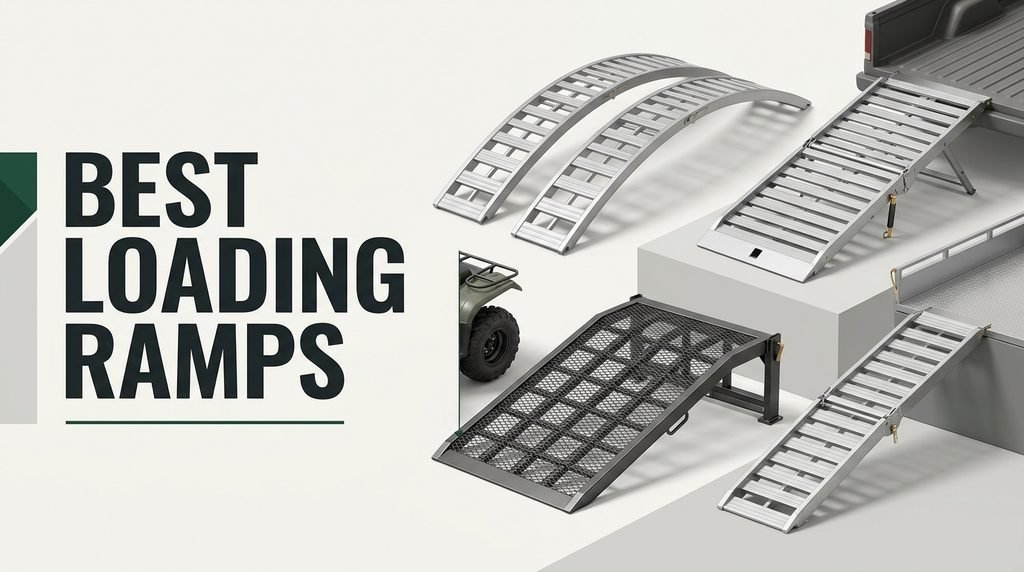
Find the right loading ramps for your truck, trailer, or shed in 2026. We compare 10 standout options by the factors that matter most for safe loading: weight capacity, ramp length, surface traction, material durability, folding convenience, wheel path width, and real-world value across different equipment types.
Loading ramps range from compact 35-inch steel sets for light shed use to heavy-duty 7.5-foot aluminum pairs rated for full-size ATVs and riding mowers. The best choice depends on what you are loading, how high you need to reach, and how often you plan to set up and break down the ramps.
This guide breaks down each model’s strengths and practical limitations so you can match the right ramp to your specific equipment and loading situation. Whether you need a budget pair for occasional mower storage or a premium set for weekly ATV hauling, the comparison below covers the key differences.
We compared 10 loading ramps using the details that actually help a buyer decide: per-ramp and combined weight capacity, ramp length and incline angle, surface traction design, aluminum versus steel construction, folding mechanism, wheel path width, included safety straps, portability, and overall value. The notes focus on practical trade-offs so each pick connects to how people actually load ATVs, mowers, motorcycles, and other equipment into trucks, trailers, and sheds.
Compare key features, scores, and current prices side by side. A shorter feature list means fewer details were available, not necessarily fewer capabilities.
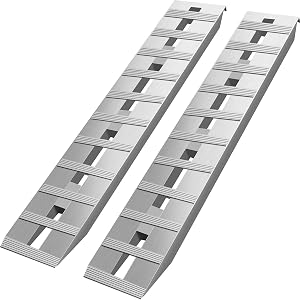





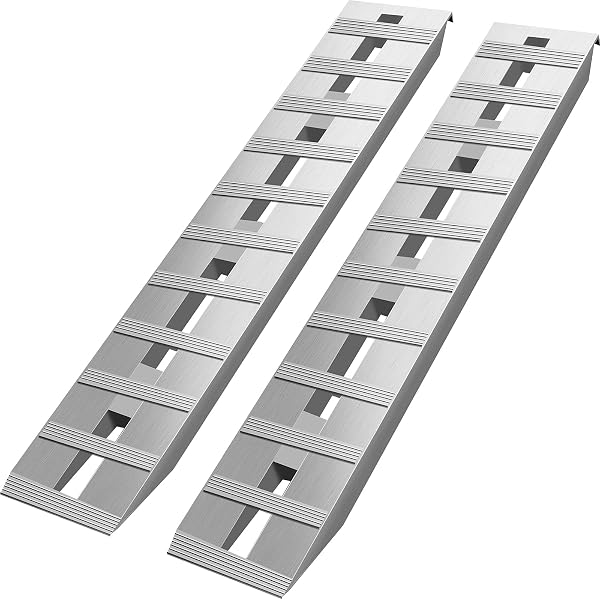
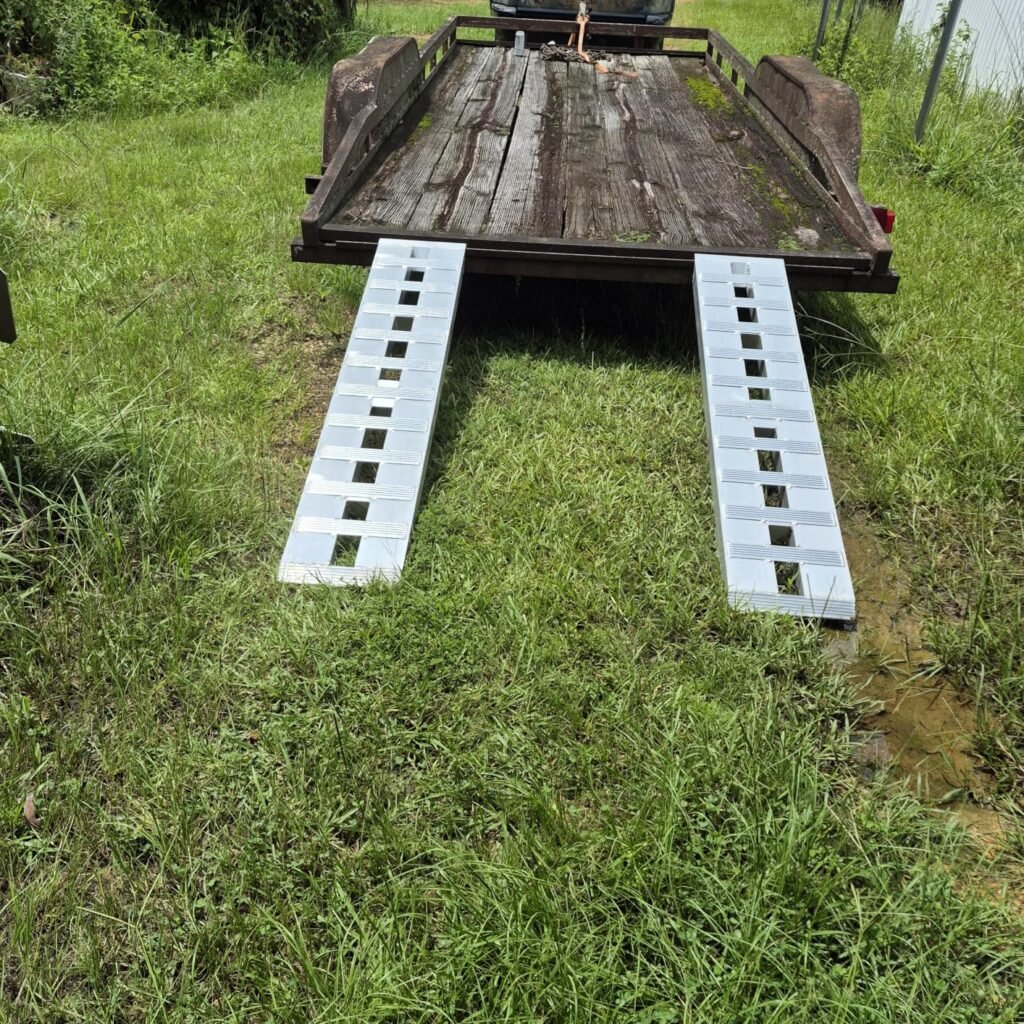
The VEVOR 60-inch ramps offer a remarkable 6000-pound combined capacity in a package that weighs only 26 pounds for the pair. This capacity-to-weight ratio is exceptional and makes these ramps suitable for heavy farm tractors, large riding mowers, and other substantial equipment that would exceed the limits of standard 1500-pound sets. If you need serious load-bearing capability without wrestling with heavy steel ramps, this aluminum set delivers.
We may earn a commission when you buy through this link, at no additional cost to you.
The 2.36-inch thick main beam provides the structural backbone that prevents bending and sagging under extreme loads, and the stair-step design distributes weight evenly across the ramp surface. Serrated cross rungs deliver maximum traction for tires and tracks, while the half-knife foot design creates a secure ground contact point. The expertly welded joints and smooth, burr-free edges reflect careful manufacturing quality.
Despite the massive capacity, the hollow stair-step construction keeps the ramps light enough for one person to carry and position. The 60-inch length is shorter than the 89-inch truck ramps elsewhere on this list, which means the incline will be steeper at the same loading height. This makes the VEVOR ramps better suited for lower loading situations like shed doors, low trailers, and ground-level transitions rather than tall pickup truck beds.
Higher-capacity ramps often use shorter, thicker beams to maximize structural strength, which can result in steeper incline angles at a given loading height. Before buying a high-capacity short ramp, calculate the incline angle for your specific loading situation to confirm your equipment can safely navigate the slope. A general guideline is to keep the angle below 25 degrees for most wheeled equipment.
Choose these ramps if you need to load heavy equipment like compact tractors or large commercial mowers and want the highest possible safety margin. The shorter length is the main tradeoff, so verify that the incline angle will work for your specific loading height. For lower-height applications with heavy loads, this set provides unmatched capacity in a surprisingly portable package.
Loading into high pickup truck beds where the shorter length creates an excessively steep incline.
We may earn a commission when you buy through this link, at no additional cost to you.
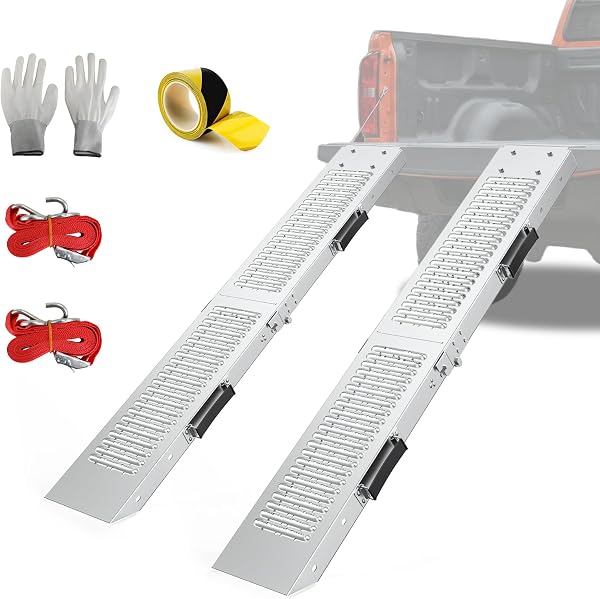
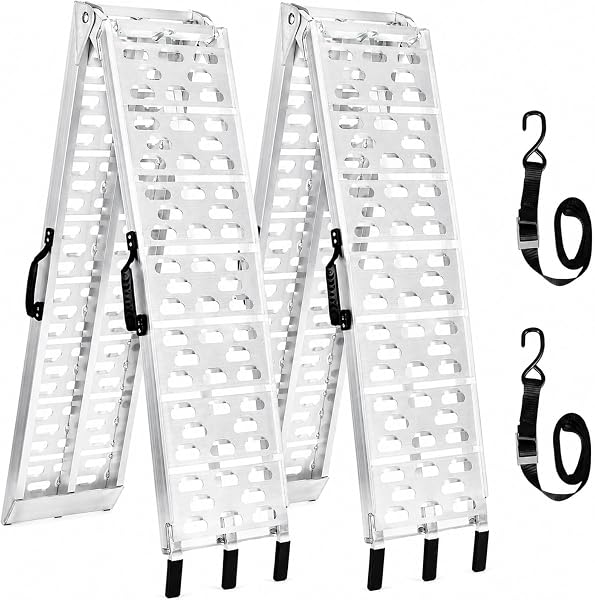
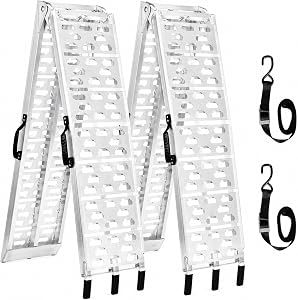
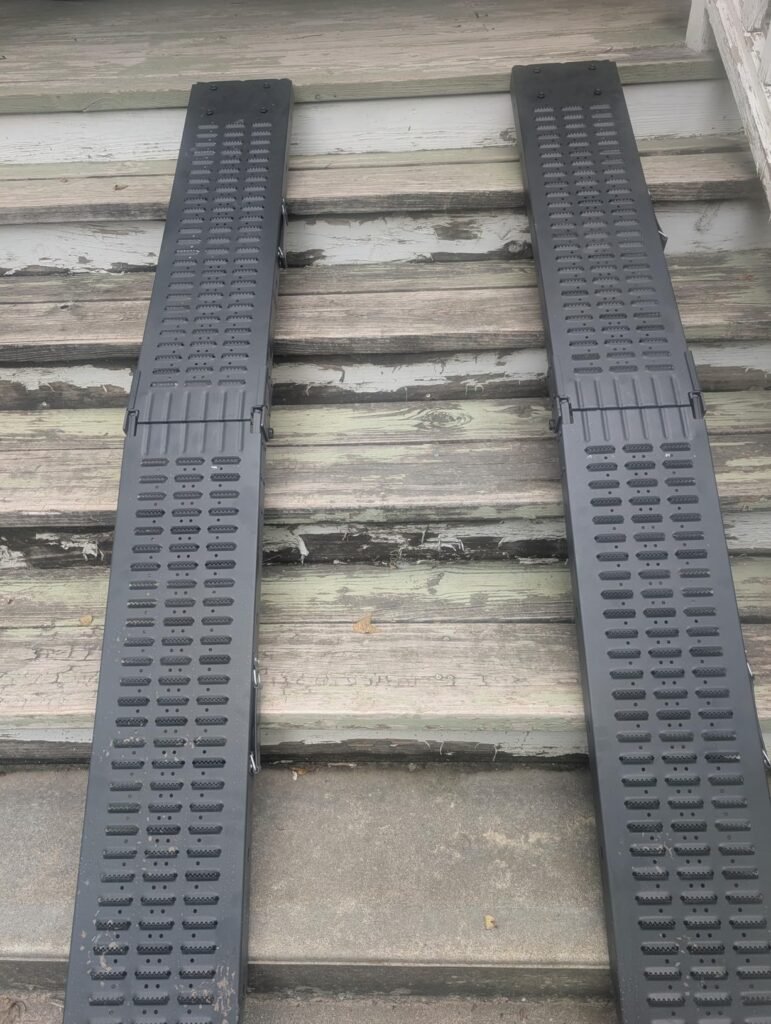
This 72.5-inch folding ramp set stands out for including everything you need right out of the box. Along with the two ramps, you get four safety straps and a pair of protective gloves, which eliminates the common frustration of buying ramps and then realizing you need to source tie-downs separately. For a first-time buyer assembling a complete loading setup, the bundled accessories add genuine convenience.
We may earn a commission when you buy through this link, at no additional cost to you.
Each ramp supports 750 pounds for a combined 1500-pound rating, which covers most ATVs, riding mowers, motorcycles, and UTVs. The dense perforated surface provides solid traction in wet conditions, and the integrated tailplate at the base creates stable ground contact that helps prevent the ramp from kicking out during loading. The alloy construction with a rust-resistant finish should hold up well through seasons of outdoor use.
At 17 pounds per ramp, these are light enough for one person to carry and position, and the built-in handles make transport straightforward. The foldable design reduces each ramp to roughly 38 inches for trunk or garage storage. One important limitation is the recommended maximum incline height of 31.5 inches, which means these ramps work best with standard pickup tailgates and low trailers rather than high-bed trucks.
Safety straps prevent the ramp from sliding away from the tailgate or trailer edge during loading, which is one of the most common causes of ramp-related accidents. Having four straps included means you can secure both the top and bottom of each ramp, providing redundant attachment points. Buying straps separately can add twenty to thirty dollars to your total cost, so the bundled approach saves both money and a trip to the hardware store.
This set is best suited for buyers who want a turnkey loading solution with all accessories included and do not need to load equipment into high-bed trucks. The lower average user rating suggests some variability in long-term durability, so inspect the hinges and welds upon arrival. For moderate-height loading of mid-weight equipment, the complete kit approach offers solid value.
High-bed trucks requiring loading heights above 31.5 inches.
We may earn a commission when you buy through this link, at no additional cost to you.
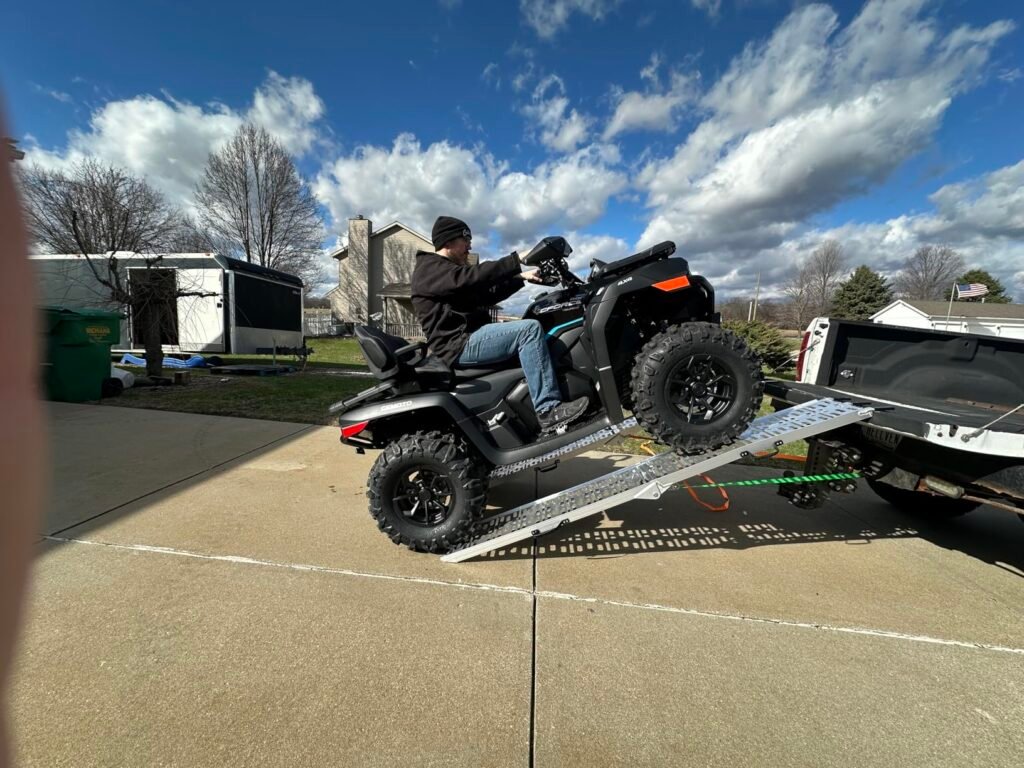
At 89 inches extended, these aluminum ramps provide one of the longest loading surfaces in this comparison, which translates to a gentler incline when loading into standard-height pickup trucks. A longer ramp reduces the angle your equipment has to climb, making it easier on low-clearance machines like riding mowers and reducing the risk of high-centering ATVs on the tailgate edge. For anyone who regularly loads into a full-size truck, the extra length is a meaningful safety advantage.
We may earn a commission when you buy through this link, at no additional cost to you.
Each ramp is rated for 750 pounds with a 1500-pound combined capacity, and the 12-inch width provides an 11-inch usable wheel path between the side rails. The punch plate traction surface creates multiple tire contact points while allowing mud and debris to fall through rather than building up on the ramp. Rubber-tipped upper fingers protect your tailgate paint and provide secure contact against the truck bed edge.
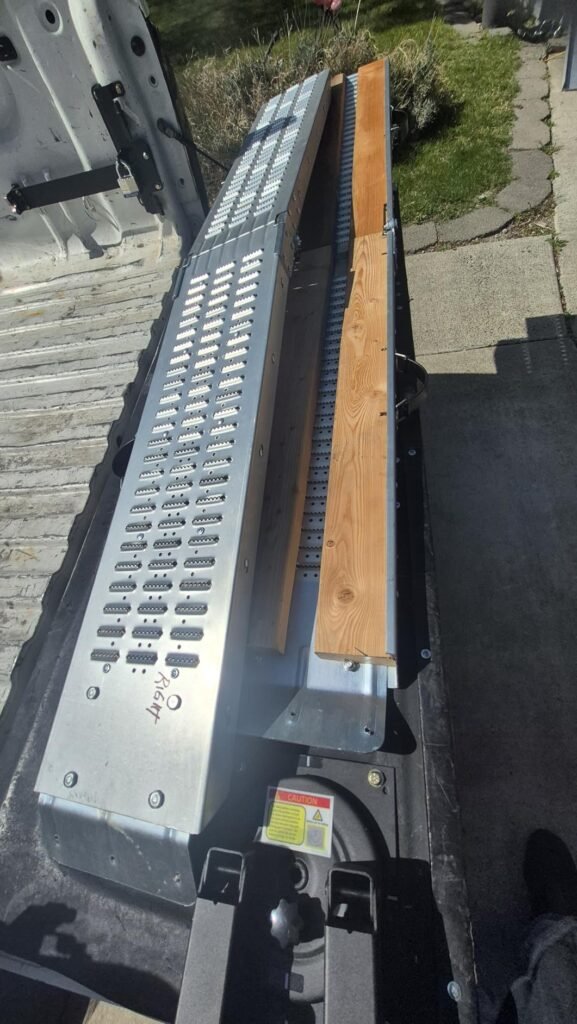
The folding design collapses each ramp to approximately 44.5 inches for storage in a truck bed, garage, or shed, and built-in carry handles make transport manageable despite the longer overall length. Two safety straps are included for securing the ramps to your vehicle before loading. The aluminum construction keeps weight reasonable while providing the structural strength needed for repeated use with heavy equipment.
Ramp length directly determines the incline angle for a given loading height. A 7.5-foot ramp reaching a 30-inch tailgate creates roughly a 23-degree angle, while a 5-foot ramp at the same height creates a steeper 30-degree angle. The gentler slope reduces the effort required to drive equipment up the ramp, lowers the risk of losing traction, and prevents low-clearance vehicles from scraping on the transition point.
Choose these ramps if you primarily load into pickup trucks and want the gentlest possible incline for your equipment. The 89-inch length is the key differentiator, and the higher price reflects the additional material. If you only load into low trailers or shed doors, a shorter ramp will save money and storage space without sacrificing safety.
Buyers who need compact storage or only load into low-height trailers.
We may earn a commission when you buy through this link, at no additional cost to you.
The Stalwart 35.5-inch ramp set is the most affordable option in this comparison and serves a specific, practical purpose: bridging short height differences like shed door thresholds, low trailer lips, and garage step-overs. At just 9 pounds per ramp and under three feet long, these are the easiest ramps to handle, store, and deploy for quick loading tasks around the property.
We may earn a commission when you buy through this link, at no additional cost to you.
Each ramp supports 600 pounds for a 1200-pound combined rating, which is sufficient for most push mowers, small riding mowers, dirt bikes, and garden carts. The skid-resistant tread and angled foot plates create smooth transitions at both the ground and loading surface ends, reducing the jarring bump that can cause small wheels to catch. The steel construction is sturdy for the price, though it requires more attention to rust prevention than aluminum alternatives.
An interesting feature is the ability to bolt the two ramps together side by side for a 17-inch wide single track, which can be useful for loading narrow-wheelbase equipment like scooters or wheelbarrows. The integrated handles make carrying effortless, and the compact size means you can store them hanging on a garage wall or tucked behind a workbench without sacrificing meaningful space.
Short ramps excel at bridging small height differences where a long ramp would be overkill and physically awkward to position. A 35-inch ramp is perfect for a 6 to 10 inch shed threshold but would create a dangerously steep angle at a 24-inch truck tailgate. Match the ramp length to your actual loading height rather than defaulting to the longest option available.
This set is ideal for homeowners who need an occasional ramp for low-height loading and want to spend as little as possible. The short length means these ramps are not suitable for pickup truck loading or any situation where the height difference exceeds about 10 to 12 inches. For shed doors and low trailers, however, they solve the problem effectively at a very accessible price.
Pickup truck loading or any situation requiring a height difference greater than 12 inches.
We may earn a commission when you buy through this link, at no additional cost to you.
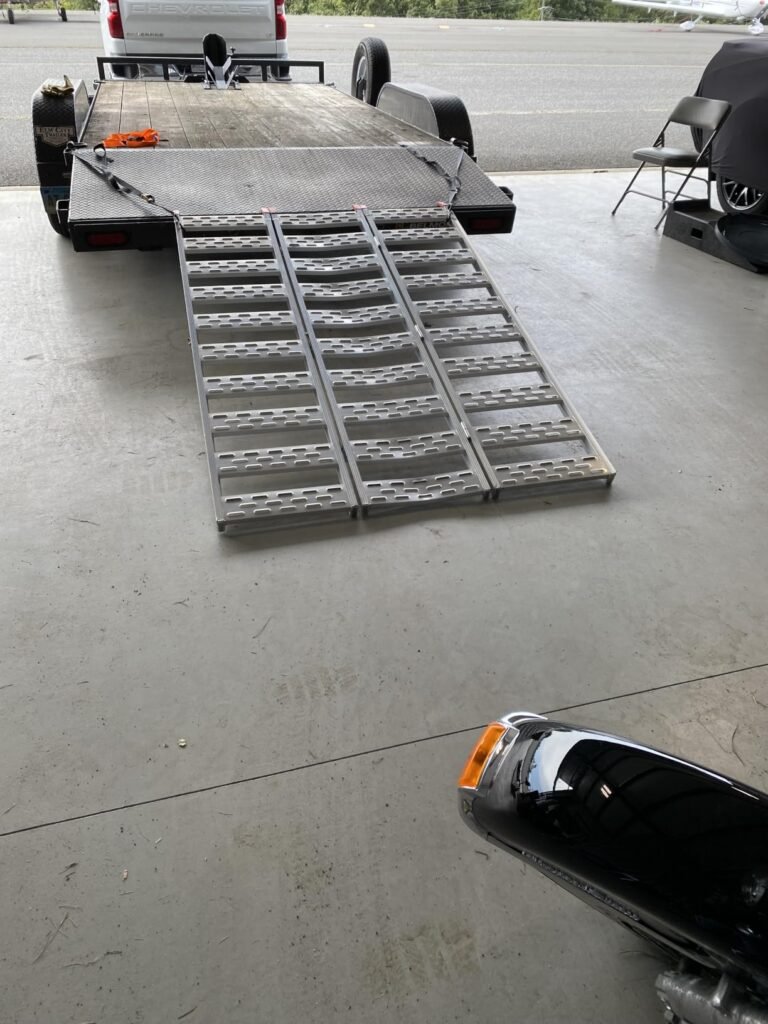
This tri-fold ramp takes a fundamentally different approach from the dual-ramp sets that dominate this category. Instead of two narrow ramps that you space apart to match your equipment's wheel track, it provides a single 50-inch wide surface that lets you drive equipment up the center without worrying about precise wheel alignment. For riders who find dual-ramp positioning stressful or who load a variety of equipment with different track widths, the single wide surface removes a significant source of loading anxiety.
We may earn a commission when you buy through this link, at no additional cost to you.
The 76-inch length provides a reasonable incline for standard pickup trucks and trailers, and the 1500-pound total capacity handles most ATVs, motorcycles, riding mowers, and garden tractors. The large tread design with traction cutouts provides solid grip for rubber tires while allowing water and debris to drain through the surface. The aluminum construction resists rust and corrosion through years of outdoor exposure.
The tri-fold mechanism collapses the ramp to roughly one-third of its extended size for transport and storage, which is a clever solution to the challenge of storing a 50-inch wide panel. The single-piece design means setup takes seconds rather than the minutes required to position and strap two separate ramps. However, the wider folded package may not fit in all truck beds or storage spaces as easily as a pair of narrow folding ramps.
Dual ramps let you adjust the spacing to match your equipment’s exact wheel track, which provides precise tire alignment and can feel more secure for narrow-track vehicles. A single wide ramp eliminates spacing adjustments entirely and gives you a forgiving target area, but it may feel less stable for very heavy loads since the weight is distributed across a single structure rather than two independent supports. Consider your comfort level and equipment variety when choosing between the two approaches.
Choose this ramp if you prefer the simplicity of a single wide loading surface and want to eliminate the hassle of spacing dual ramps for different equipment. The tradeoff is less flexibility in wheel-track positioning and a bulkier stored package. For riders who load the same ATV or mower every time and value quick, stress-free setup, the tri-fold design is a practical alternative to traditional dual-ramp configurations.
Buyers who need to adjust ramp spacing for multiple vehicles with different wheel tracks.
We may earn a commission when you buy through this link, at no additional cost to you.
This 75-inch ramp set differentiates itself with stainless steel construction, which offers superior corrosion resistance compared to standard carbon steel and even some aluminum alloys in harsh environments. If you live in a coastal area, use road salt in winter, or frequently load equipment in wet conditions, the stainless steel build provides long-term durability that justifies the material choice. The 1500-pound combined capacity handles most common loading tasks with confidence.
We may earn a commission when you buy through this link, at no additional cost to you.
The spring-supported hinge is a thoughtful engineering detail that helps the ramp unfold into a flatter, more stable configuration when deployed. This reduces the slight bow that can occur at the fold point of cheaper ramps and creates a smoother transition for tires crossing the hinge area. The textured tread surface with perforated patterns provides reliable traction in wet and muddy conditions.
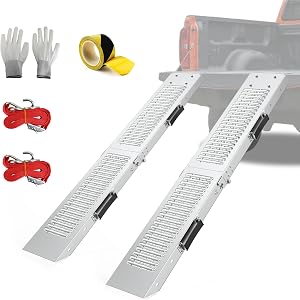
The package includes work gloves, two tie-down straps, and high-visibility hazard tape, which adds practical value beyond the ramps themselves. At 75 inches extended, these ramps provide a comfortable loading angle for most pickup trucks and trailers, and the folded dimensions of roughly 38 by 9 inches are compact enough for trunk storage. The built-in handles make single-person carrying manageable despite the heavier stainless steel construction.
Aluminum ramps are lighter and naturally resist rust, making them the popular choice for most buyers. Stainless steel ramps are heavier but offer superior strength and corrosion resistance in extreme conditions like saltwater exposure or chemical contact. If weight is your primary concern, aluminum is the better choice. If you need maximum durability in a harsh environment, stainless steel provides an edge that aluminum cannot match.
Choose these ramps if corrosion resistance is a priority due to your climate or usage conditions. The stainless steel construction adds weight compared to aluminum alternatives, so if you frequently carry the ramps long distances from storage to the loading site, the extra heft may become noticeable. For buyers in harsh environments who want a ramp set that will look and perform well for years, the stainless steel investment pays off.
Buyers who prioritize the lightest possible ramp weight for frequent carrying.
We may earn a commission when you buy through this link, at no additional cost to you.
This 7.5-foot folding aluminum set earns our top overall recommendation by combining the longest ramp length in the comparison with the highest user rating among full-size truck ramps. The 89-inch extended length creates the gentlest possible incline for standard pickup truck loading, which is the single most important safety factor when driving heavy equipment up a slope. The 4.7-star rating reflects consistent satisfaction from buyers who use these ramps for regular ATV, UTV, and riding mower loading.
We may earn a commission when you buy through this link, at no additional cost to you.
The open crossbar rung design provides excellent tire traction while allowing mud, gravel, and water to pass through the ramp surface rather than accumulating and creating a slippery layer. Each ramp accommodates tire tread widths up to 10.5 inches within an 11-inch usable wheel path, which covers the vast majority of ATV and UTV tires. The 1500-pound combined capacity with 750 pounds per ramp provides a comfortable safety margin for most recreational and utility vehicles.
Rubber-tipped upper fingers grip the tailgate or trailer edge securely while protecting the vehicle’s paint from scratches, and the two included safety straps provide essential backup attachment. The folding design reduces each ramp to approximately 44.5 by 12 inches for storage in a truck bed, garage corner, or shed wall. The aluminum construction keeps the ramps light enough for one person to handle while providing the structural rigidity needed for repeated loading cycles.
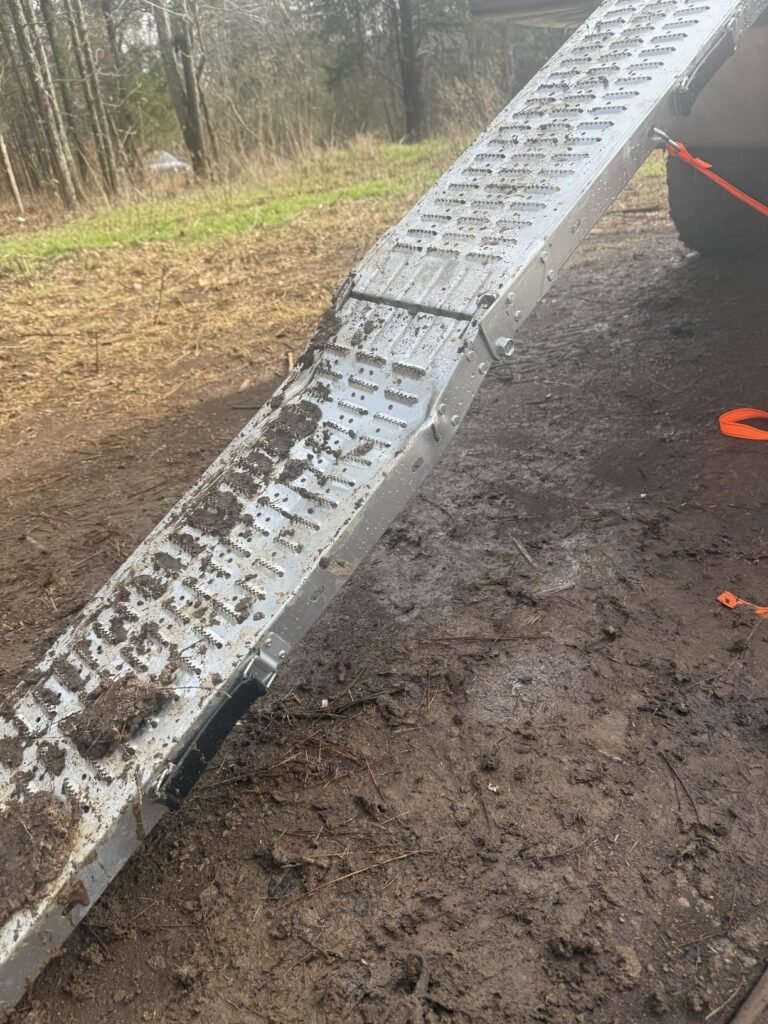
Open crossbar rungs allow water, mud, and debris to fall through the ramp rather than pooling on the surface, which maintains traction in wet and dirty conditions. Solid or punch-plate surfaces can accumulate a slick layer of mud that reduces tire grip over successive loads. If you frequently load equipment with muddy tires after trail riding or field work, open rungs provide a self-cleaning advantage that solid surfaces cannot match.
This is the right choice for most buyers who need reliable, full-length ramps for regular pickup truck or trailer loading. The premium price reflects the combination of length, build quality, and user satisfaction, and it is a worthwhile investment if you load equipment frequently. For occasional use or lower loading heights, a shorter and less expensive set may be sufficient, but for anyone who values safety and ease of loading above all else, this set delivers.
Equipment with tire widths exceeding 10.5 inches or very low-budget buyers.
We may earn a commission when you buy through this link, at no additional cost to you.
These 47.2-inch ramps are designed specifically for the most common home loading scenario: getting a riding mower, motorcycle, or small ATV over a shed threshold or low trailer lip. The recommended maximum height of 13 inches matches the typical shed door sill or single-axle trailer deck, and the moderate length creates a manageable incline at those heights without the unwieldy footprint of a full-size truck ramp.
We may earn a commission when you buy through this link, at no additional cost to you.
The 880-pound combined capacity is sufficient for most residential lawn equipment, dirt bikes, and smaller ATVs, though it falls short for heavier UTVs and large garden tractors. The anti-slip perforated surface provides reliable traction in wet conditions while allowing rainwater to drain through rather than pooling on the ramp. The sloping foot plates at both ends create smooth transitions that prevent small wheels from catching on the ramp edge.
Portability is a clear strength of this set. The lightweight construction and compact size make it easy for one person to carry, position, and store the ramps without assistance. The sturdy structure maintains stability during use despite the low weight, and the waterproof design handles outdoor storage without degradation. Setup takes less than a minute, which encourages consistent use rather than the temptation to skip the ramps and risk a dangerous manual lift.
Most shed doors sit 4 to 12 inches above the surrounding ground, which requires a much shorter ramp than a pickup truck tailgate at 30 inches. A 47-inch ramp at a 10-inch height creates a gentle 12-degree incline that is easy for any wheeled equipment to navigate. Using an unnecessarily long ramp for a low height wastes storage space and creates an awkward setup without improving safety.
Choose these ramps if your primary need is loading equipment into a shed or low trailer and your equipment weighs under 800 pounds. The limited capacity and height range make them unsuitable for truck loading or heavy commercial equipment, but for the specific job of bridging a shed threshold with a riding mower, they are a practical, well-priced solution that does exactly what it needs to do.
Pickup truck loading or equipment weighing more than 800 pounds.
We may earn a commission when you buy through this link, at no additional cost to you.
This 7.5-foot aluminum ramp set shares many of the same core specifications as the Editor's Choice pick above, including the 89-inch length, 1500-pound combined capacity, and 12-inch overall width with an 11-inch usable wheel path. The punch plate traction surface uses raised punched openings to create tire grip while allowing dirt and debris to pass through, which is a proven design that performs well across a range of weather and terrain conditions.
We may earn a commission when you buy through this link, at no additional cost to you.
The rubber-tipped upper fingers protect your truck’s tailgate from scratches and dents while providing secure contact that resists slipping during loading. Two included load straps help reduce ramp movement when properly attached to the vehicle, and the folding design collapses each ramp to approximately 44.5 inches for storage in a truck bed or garage. The aluminum construction keeps weight manageable while providing the strength needed for regular use.
Where this set differs from its close competitor is in the specific traction pattern and minor design details. The punch plate approach creates a slightly different tire contact feel compared to open crossbar rungs, and some buyers prefer the more aggressive grip of raised punch holes over open rungs for certain tire types. The 4.4-star rating is solid but slightly below the 4.7 stars of the crossbar-rung model, which may reflect subtle differences in user experience.
Punch plate surfaces feature raised holes punched through the aluminum, creating small raised edges that bite into tire rubber for grip. Crossbar rungs use horizontal bars spaced apart, providing larger contact points and better self-cleaning in muddy conditions. Punch plates tend to offer more consistent grip across the entire ramp surface, while crossbar rungs excel in wet and muddy environments where debris clearance matters most.
This is a strong alternative for buyers who want a full-length 89-inch ramp set and prefer punch plate traction over open rungs. The price is comparable to similar long-ramp options, and the build quality is reliable for regular loading of ATVs, UTVs, and riding mowers. If you can find this set at a lower price than the crossbar-rung alternative, it represents equally good value for the same core functionality.
Buyers who specifically want open-rung drainage for extremely muddy loading conditions.
We may earn a commission when you buy through this link, at no additional cost to you.
The VEVOR 39-inch ramp set delivers an extraordinary 3000-pound combined capacity at a price under one hundred dollars, making it the best value proposition in this entire comparison. Each individual ramp is rated for 1500 pounds, which exceeds the combined rating of many full-length ramp sets. For buyers who need serious load-bearing capability for low-height applications like shed doors, barn thresholds, and low trailers, this capacity-to-price ratio is difficult to match.
We may earn a commission when you buy through this link, at no additional cost to you.
The dense perforated surface provides firm traction even in wet conditions while allowing quick drainage, and the wide claw plates at the top edge grip securely onto steps and ledges for stable positioning. The beveled entry end at the ground side creates a smooth transition that minimizes wobbling and prevents small wheels from catching on the ramp lip. These design details reflect thoughtful engineering for the ramp’s intended low-height use cases.
The 39-inch length is the key limitation to understand before buying. These ramps are designed for loading heights between roughly 7 and 11 inches, which covers most shed thresholds and low trailer decks but makes them unsuitable for pickup truck tailgates. The compact size makes storage and transport effortless, and the included gloves add a practical touch for handling the aluminum surfaces during setup.
Every ramp has an optimal height range where the incline angle is safe for wheeled equipment. The VEVOR 39-inch ramps are recommended for heights between 7 and 11 inches, which creates an incline of roughly 10 to 16 degrees. Exceeding the recommended height steepens the angle beyond what is safe for most equipment, increasing the risk of loss of traction, high-centering, or tip-over during loading.
Choose these ramps if you need high-capacity loading for low-height applications and want to maximize your budget. The 3000-pound rating provides an enormous safety margin for riding mowers, farm tractors, ATVs, and other heavy equipment at shed and barn heights. Just be clear that these are not truck-loading ramps, and pair them with a longer set if you also need to load into pickup beds.
Pickup truck loading or any application requiring a loading height above 11 inches.
We may earn a commission when you buy through this link, at no additional cost to you.
Selecting the right loading ramp means matching three critical variables: the weight of your heaviest equipment, the height you need to reach, and the type of surface your tires will grip. Getting any of these wrong can create a dangerous loading situation, so it is worth spending a few minutes understanding the key factors before you buy.
Weight capacity is the most important specification on any loading ramp, and it is also the most commonly misunderstood. Most ramp sets list both a per-ramp rating and a combined pair rating. The per-ramp number tells you the maximum load each individual ramp can support, while the combined rating assumes the load is evenly distributed across both ramps. For four-wheeled equipment like ATVs and riding mowers, the combined rating is the relevant number. For two-wheeled equipment like motorcycles that ride up a single ramp, the per-ramp rating is what matters.
Always build in a safety margin of at least 25 to 50 percent above your equipment’s actual weight. A 1000-pound UTV on ramps rated for exactly 1000 pounds combined leaves no room for dynamic forces created by acceleration, braking, or uneven weight distribution during the loading process. Choosing ramps rated for 1500 pounds for that same UTV provides a comfortable buffer that accounts for real-world loading conditions and extends the lifespan of the ramps.
Check the fully-loaded weight of your heaviest piece of equipment, including fuel, attachments, and cargo, then choose ramps with a combined rating at least 25 percent above that figure. If you plan to load multiple types of equipment, size the ramps for the heaviest item you expect to handle.
Ramp length determines the incline angle for a given loading height, and the incline angle is the single biggest factor in loading safety and ease. A longer ramp creates a gentler slope, which reduces the effort required to drive equipment uphill, lowers the risk of tire slippage, and prevents low-clearance vehicles from scraping on the tailgate or trailer edge. A shorter ramp at the same height creates a steeper angle that can be dangerous for heavy or low-profile equipment.
As a practical guideline, most experts recommend keeping the incline angle below 25 degrees for wheeled equipment and below 20 degrees for tracked or low-clearance machines. To estimate the angle, divide the loading height by the ramp length and use a basic angle calculator. For a standard 30-inch pickup tailgate, an 89-inch ramp creates roughly a 20-degree angle, while a 60-inch ramp at the same height creates a steeper 27-degree angle that may be problematic for some equipment.
Measure your actual loading height from the ground to the top of the tailgate or trailer deck, then choose the longest ramp that is practical for your storage and transport needs. If you load into both a low trailer and a tall pickup truck, size the ramp for the taller loading height to ensure safety in all situations.
The traction surface of a loading ramp is what keeps your tires from spinning on wet, muddy, or icy aluminum. The three most common designs are punch plate perforations, open crossbar rungs, and solid tread patterns with cutouts. Each approach has strengths depending on your typical loading conditions. Punch plate surfaces provide consistent grip across the entire ramp face and work well in most conditions. Open crossbar rungs excel in muddy environments because debris falls through the gaps rather than building up on the surface.
Serrated or textured tread patterns offer aggressive grip but can be harder to clean and may collect packed snow in winter conditions. Regardless of the tread type, look for ramps that include drainage holes or open areas that allow water to pass through rather than pooling on the surface. A ramp that holds standing water becomes dangerously slick regardless of the tread pattern.
If you primarily load in dry conditions, any quality tread design will work well. If you frequently load muddy ATVs after trail rides or wet mowers after morning dew, prioritize open crossbar rungs or heavily perforated surfaces that self-clean during use.
Aluminum is the most popular ramp material because it offers an excellent strength-to-weight ratio and natural corrosion resistance. A typical aluminum ramp set weighs 20 to 40 pounds for the pair, making it manageable for one person to carry and position. Aluminum ramps resist rust without any special maintenance, which is important for equipment that lives outdoors or in damp garages. The tradeoff is a higher price compared to steel and slightly lower ultimate strength for the same physical dimensions.
Steel ramps are heavier and less expensive, making them a practical choice for permanent or semi-permanent installations where the ramps stay in place and do not need to be carried long distances. However, steel requires regular maintenance to prevent rust, especially in humid or coastal environments. Stainless steel ramps, like the 75-inch set in this comparison, offer the strength of steel with corrosion resistance closer to aluminum, but at a premium price and weight.
Choose aluminum if you need to transport and store the ramps frequently. Choose standard steel if the ramps will stay in one location and you want to minimize cost. Consider stainless steel only if you face extreme corrosion conditions and need the additional structural strength.
Folding ramps collapse to roughly half or one-third of their extended length for storage and transport, which is a significant convenience for anyone who does not have a dedicated loading dock or permanent ramp installation. Bi-fold designs are the most common and fold in half at a central hinge, while tri-fold designs collapse into thirds for even more compact storage. The folding mechanism should lock securely in both the open and closed positions to prevent accidental collapse during use or transport.
The tradeoff with folding ramps is the hinge point, which creates a slight bump or flex area that can affect the smoothness of the loading surface. Higher-quality folding ramps use spring-supported hinges or reinforced hinge plates to minimize this transition, while cheaper designs may have a noticeable dip or bump at the fold. Inspect the hinge quality carefully, as this is the most common failure point on folding ramps after years of repeated use.
If you need to store the ramps in a vehicle or small garage, a folding design is essential. If the ramps will stay permanently attached to a trailer or loading dock, a non-folding design provides a smoother surface and eliminates the hinge as a potential failure point.
Ramp width determines whether your equipment’s tires will fit comfortably between the side rails. Most dual-ramp sets offer 11 to 12 inches of usable wheel path between the rails, which accommodates standard ATV, UTV, and riding mower tires up to about 10.5 inches wide. If your equipment has oversized tires, wide tracks, or dual wheels, verify the usable width before purchasing to avoid a situation where the tires ride on the side rails rather than the ramp surface.
For dual-ramp setups, you also need to consider the wheel track of your equipment, which is the distance between the center of the left tire and the center of the right tire. The ramps must be spaced to match this track width, and your truck bed or trailer must be wide enough to accommodate the spacing. Most full-size pickup trucks can handle standard ATV and UTV track widths, but compact trucks and narrow trailers may require careful measurement.
Measure your equipment’s tire width and wheel track before buying. If your tires exceed 10.5 inches wide or your track is unusually narrow or wide, look for ramps with adjustable spacing or consider a single wide ramp that eliminates the track-matching challenge entirely.
Safety straps are the critical backup that prevents a ramp from sliding away from the vehicle during loading. Without straps, the forward force of a vehicle driving up the ramp can push the ramp away from the tailgate, creating a catastrophic gap. Always use straps to secure the top of each ramp to a solid anchor point on the vehicle, such as a tie-down hook, bumper, or trailer frame.
Some ramp sets include straps in the package, while others require you to purchase them separately. The quality of included straps varies, and some buyers prefer to upgrade to heavier-duty ratchet straps for added security. Look for straps with a working load limit that exceeds the weight of your equipment, and inspect them regularly for fraying, UV damage, and worn buckles.
Never load equipment onto an unsecured ramp, regardless of how stable it appears. Budget for quality straps if they are not included, and replace any strap that shows signs of wear or damage. The cost of a strap is negligible compared to the cost of a dropped vehicle or a serious injury.
Your specific loading scenario should drive your ramp selection more than any single specification. Loading a riding mower into a ground-level shed requires a short, moderate-capacity ramp. Loading a full-size UTV into a lifted pickup truck demands a long, high-capacity set with aggressive traction. Loading a motorcycle into a van calls for a narrow, lightweight ramp that one person can deploy quickly. Each scenario has different priorities, and the best ramp for one situation may be poorly suited to another.
Consider the full range of equipment you expect to load over the next few years, not just what you own today. If you currently have a small ATV but plan to upgrade to a heavier UTV, buying ramps sized for the future vehicle avoids a second purchase. Similarly, if you load in varied weather conditions, prioritize traction and drainage features that perform well in rain, mud, and snow.
Write down your three most common loading scenarios, including the equipment weight, loading height, and typical weather conditions. Use those three scenarios as your buying criteria, and choose the ramp that handles all three safely rather than optimizing for just one.
Before every loading session, place the ramps on firm, level ground and verify that the upper fingers or plates are fully seated against the tailgate or trailer edge. Attach the safety straps to solid anchor points on the vehicle and pull them taut to eliminate any slack. Walk up and down the ramps yourself to confirm stability before driving any equipment onto them, and check that the ground contact point is not sitting on loose gravel, mud, or ice that could shift under load.
When loading equipment, drive slowly and steadily up the center of each ramp with a spotter watching from the side to confirm tire alignment. Avoid sudden acceleration or braking on the ramp, as dynamic weight shifts can exceed the static load rating and create dangerous instability. For four-wheeled equipment, ensure both ramps are spaced to match the wheel track and that each tire is centered on its ramp before beginning the climb. Never exceed the published weight capacity under any circumstances.
After use, clean the ramp surfaces with water to remove mud, grass clippings, and debris that can accumulate in the traction pattern and reduce grip over time. Inspect the hinges, welds, and straps for signs of wear, cracking, or corrosion before each use, and replace any damaged components immediately. Store the ramps in a dry location when possible, and if they must remain outdoors, position them so water drains off the surface rather than pooling in the folds or channels.
For a standard full-size pickup with a tailgate height of 28 to 34 inches, a ramp length of 72 to 89 inches provides a safe incline angle of roughly 18 to 25 degrees. Longer ramps create gentler slopes that are easier on low-clearance equipment. Measure your specific tailgate height from the ground and aim for the longest ramp that is practical for your storage situation.
Most recreational ATVs weigh between 400 and 700 pounds, while larger utility UTVs can exceed 1000 pounds. Choose ramps with a combined capacity at least 25 percent above your vehicle's fully-loaded weight, including fuel, cargo, and accessories. A 1500-pound combined rating covers most ATVs and smaller UTVs with a comfortable safety margin.
Yes, loading ramps work well for riding mowers as long as the capacity and incline angle are appropriate. Most riding mowers weigh 400 to 700 pounds and have relatively low ground clearance, so a gentle incline is important to prevent the mower deck from scraping on the tailgate edge. A longer ramp with at least 1200 pounds of combined capacity is a safe choice for most residential riding mowers.
Yes, safety straps are essential for preventing the ramps from sliding away from the vehicle during loading. The forward force of a vehicle driving up the ramp can push the top edge away from the tailgate, creating a dangerous gap. Always secure each ramp to a solid anchor point on the vehicle before loading, and never rely on friction alone to hold the ramps in place.
A dual ramp set includes two separate narrow ramps that you space apart to match your equipment's wheel track, providing precise tire alignment for four-wheeled vehicles. A single wide ramp provides one broad loading surface that eliminates the need for spacing adjustments and is easier to set up quickly. Dual ramps offer more flexibility for different vehicle widths, while single ramps simplify the loading process.
Modern aluminum ramps made from high-grade alloy can support substantial loads, with some sets rated for 3000 to 6000 pounds combined. The key is to verify the specific weight rating rather than assuming all aluminum ramps are lightweight and low-capacity. Aluminum offers an excellent strength-to-weight ratio that makes it the preferred material for most loading applications, including heavy farm and construction equipment.
Ensure the ground contact point is on a firm, flat surface and clear of mud, ice, or loose gravel. Use ramps with aggressive traction patterns and drainage holes to prevent water buildup on the surface. Safety straps at the top and rubber-tipped fingers help secure the ramp to the vehicle, while some ramps include ground anchors or claw plates for additional grip at the base.
Most aluminum ramp sets weigh 15 to 30 pounds per ramp and can be positioned by a single person using the built-in carry handles. Heavier steel ramps or wide single-panel designs may require two people for safe handling. If you frequently load alone, prioritize lightweight aluminum construction and folding designs that are easy to carry and deploy without assistance.
Folding ramps collapse to half or one-third of their extended length and can be stored in a truck bed, garage corner, or shed wall. Non-folding ramps require more space but can be hung on wall brackets or laid flat under a workbench. Store ramps in a dry location when possible, and avoid stacking heavy items on top of them to prevent bending or deformation of the traction surface.
Most equipment manufacturers recommend keeping the incline angle below 25 degrees for safe loading. Low-clearance vehicles like riding mowers and sports ATVs may require angles below 20 degrees to prevent scraping. To calculate the angle, divide the loading height by the ramp length and use an angle calculator or reference chart. When in doubt, choose a longer ramp to reduce the angle.
The 7.5 ft Folding ATV ramps earn our top overall recommendation for their combination of 89-inch length, 1500-pound capacity, open crossbar traction, and consistently high user satisfaction. The long reach creates the gentlest incline for standard pickup truck loading, which is the most common and most safety-critical use case for loading ramps. If you load ATVs, UTVs, or riding mowers into a truck on a regular basis, this set provides the best balance of safety, convenience, and durability.
For buyers with different needs, the alternatives are compelling. The VEVOR 39-inch 3000-pound set delivers extraordinary capacity at a budget-friendly price for shed and low-trailer loading. The VEVOR 60-inch 6000-pound ramps handle the heaviest farm and commercial equipment. The Stalwart 35.5-inch steel set solves basic shed threshold problems at the lowest price in the comparison. Each of these options addresses a specific loading scenario more effectively than a one-size-fits-all approach.
Start by identifying your heaviest piece of equipment, your tallest loading height, and your most challenging weather condition. Use those three data points to narrow the list to two or three models, then compare the specific features that will make the biggest difference in your daily routine. The right loading ramp should give you confidence every time you drive equipment up the slope, not just on the first use.