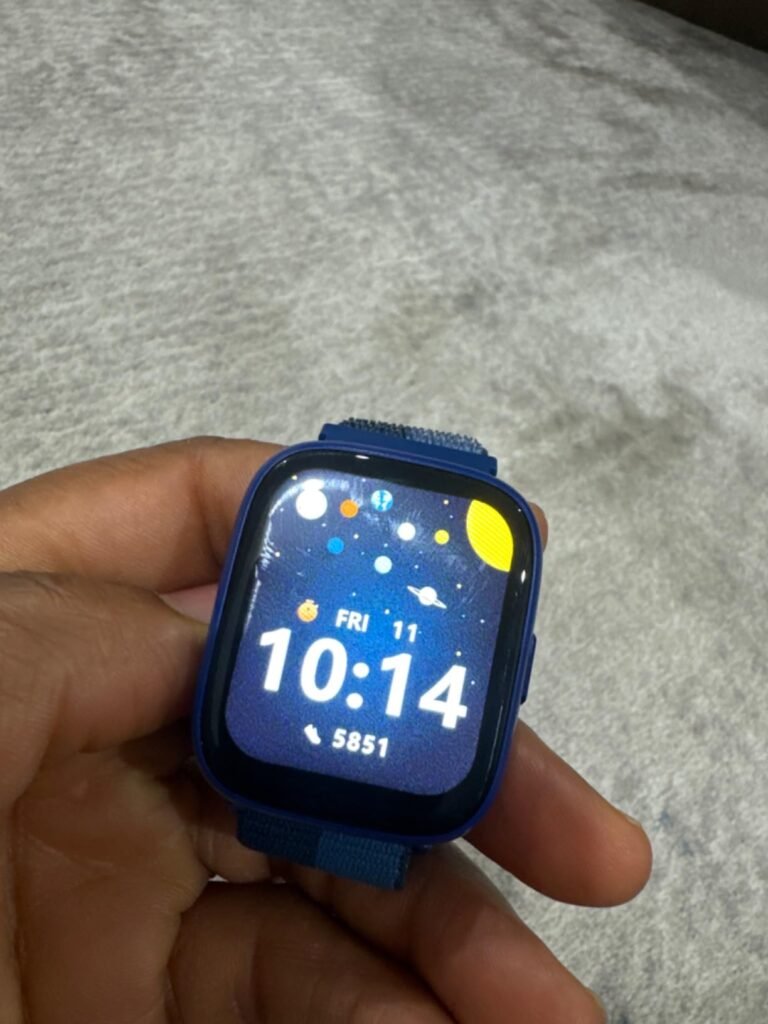
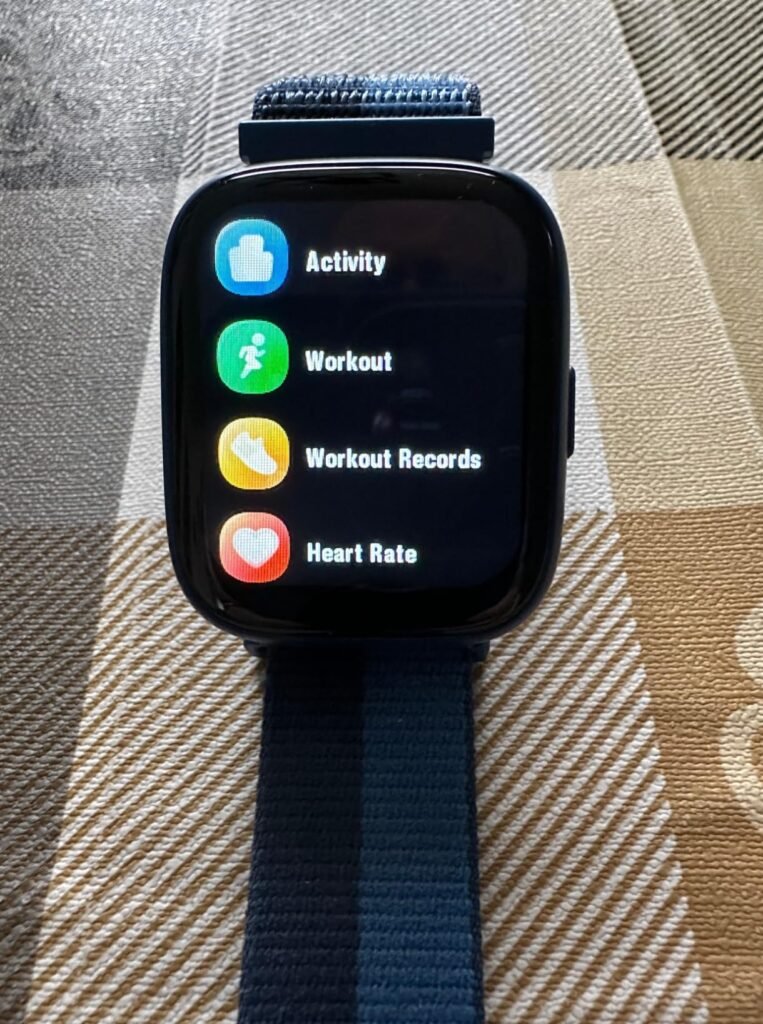
BIGGERFIVE BRAVE 2
8.6Editor score80 sport modes
1.8-inch HD touchscreen
Real-time heart rate
Sleep pattern tracking
Find the right kids smartwatches for 2026. We compare 10 standout options by build quality, useful features, owner feedback, value, and everyday trade-offs.
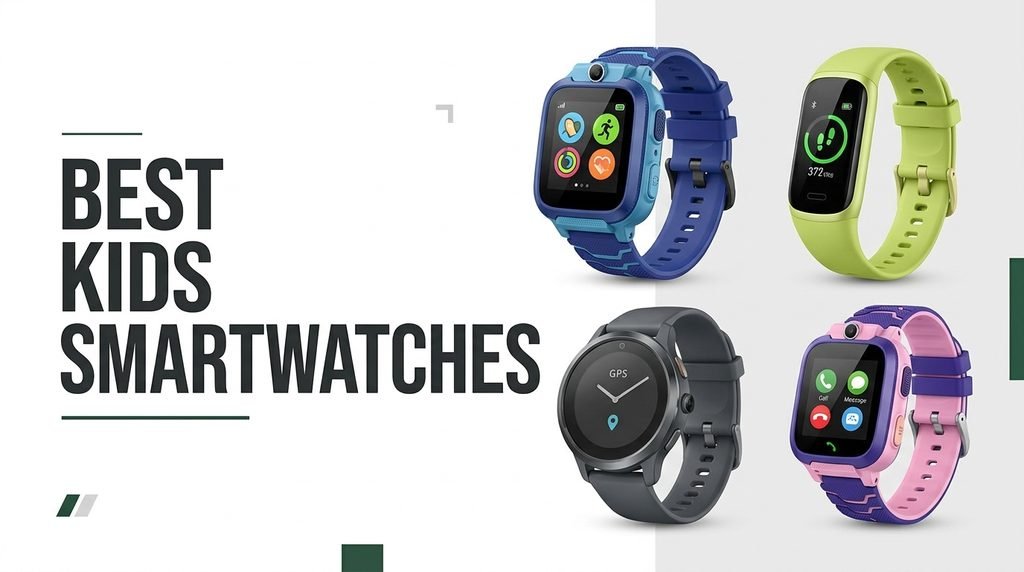
Finding the right kids smartwatch in 2026 means balancing safety, durability, and age-appropriate features. We compare 10 standout options by GPS accuracy, communication tools, battery life, water resistance, parental controls, health tracking, and everyday value for growing kids.
The biggest split in this category is between simple activity trackers and full cellular watches with calling and GPS. Younger children often benefit from standalone devices with games and step counting, while older kids may need real-time location tracking and two-way messaging for independence.
Pay close attention to subscription costs, waterproof ratings, and screen durability before deciding. A watch that looks feature-rich on paper may require a monthly plan or struggle to survive a week of playground use. The right choice depends on your child’s age, activity level, and your safety priorities.
We compared 10 kids smartwatches using the details that matter most to parents: GPS tracking accuracy, calling and messaging capabilities, battery longevity, water resistance ratings, parental control depth, health monitoring sensors, screen quality, durability, subscription requirements, and overall value. The notes focus on practical trade-offs so each pick connects to how families actually use these devices during school days, outdoor play, and everyday routines.

Compare key features, scores, and current prices side by side. A shorter feature list means fewer details were available, not necessarily fewer capabilities.


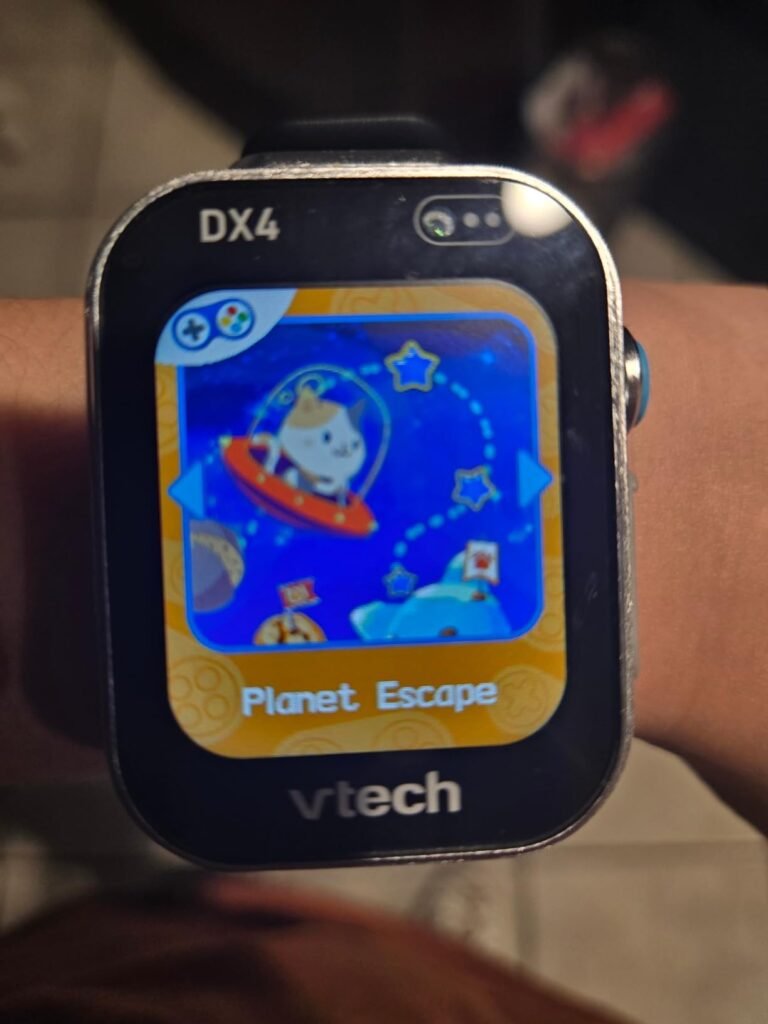
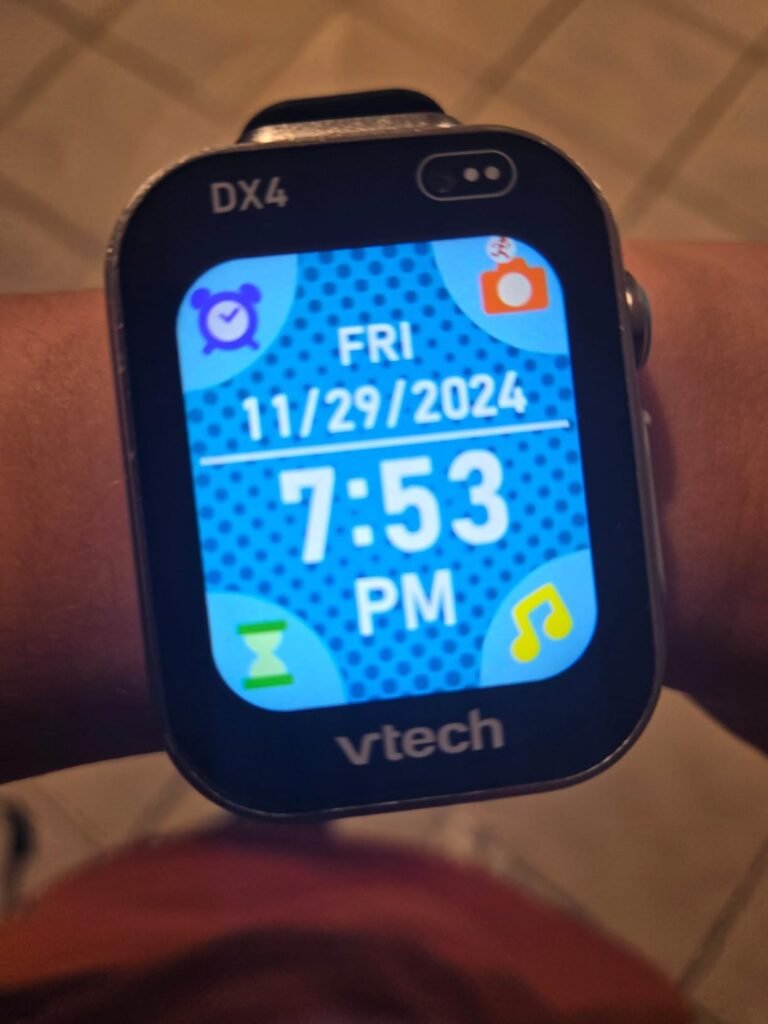
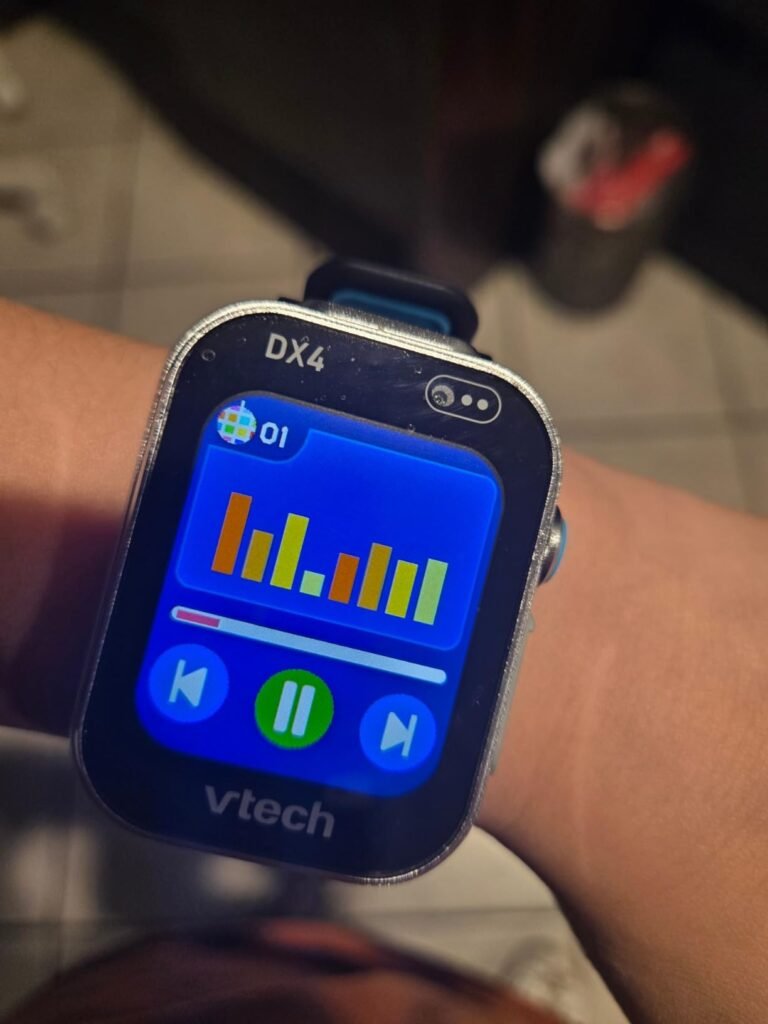
The VTech KidiZoom DX4 sits at the top of this list because it delivers the most well-rounded experience for the youngest smartwatch users. Designed for children ages four and up, it combines dual cameras, a music player, motion-based games, and 50 built-in clock faces into a single device that does not require a phone, SIM card, or monthly subscription. For parents who want their child to enjoy a smartwatch without worrying about cellular connectivity or screen-time battles, this is a strong starting point.
We may earn a commission when you buy through this link, at no additional cost to you.
The dual cameras are the standout feature at this price. Kids can snap photos, record short videos, and apply creative effects directly on the watch. The motion-activated challenges and reaction games encourage physical activity rather than passive screen use, which is a meaningful distinction compared to watches that only offer tap-based puzzles. The shake-to-hear-the-time function also helps younger children practice telling time in a playful way.
Battery life is handled by a rechargeable lithium-ion cell charged via the included micro-USB cable. VTech specifically warns against third-party adapters, so stick with the supplied cable to avoid charging issues. The splash-proof construction handles hand washing and light rain, but this watch is not designed for swimming or full submersion. The metal body gives it a more premium feel than many competing plastic models in this price range.
Most budget kids watches include a single low-resolution camera, if they include one at all. The DX4’s dual-camera setup lets children switch between selfie mode and outward-facing shots without physically flipping the watch. This small detail encourages more creative play and makes the camera feature feel less like a gimmick. The built-in effects and video recording give kids a reason to keep exploring the device beyond the first week of ownership.
Choose the KidiZoom DX4 if your child is between four and seven years old and you want a self-contained device with no ongoing costs. It will not track your child’s location or allow phone calls, so it works best as a fun, educational toy rather than a safety tool. If GPS and communication are your priorities, look at the cellular options further down this list.
Families who need GPS location tracking or two-way calling will need a cellular-enabled watch instead.
We may earn a commission when you buy through this link, at no additional cost to you.
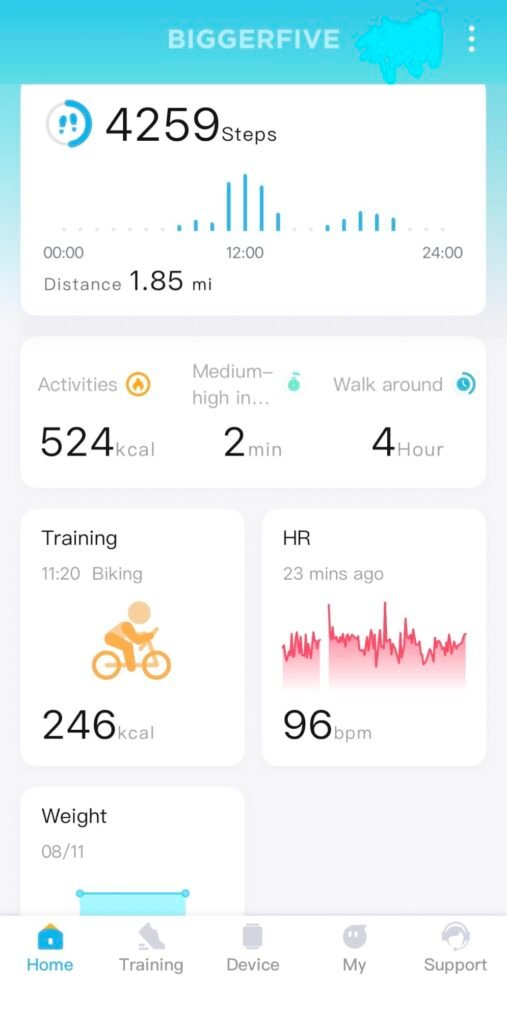
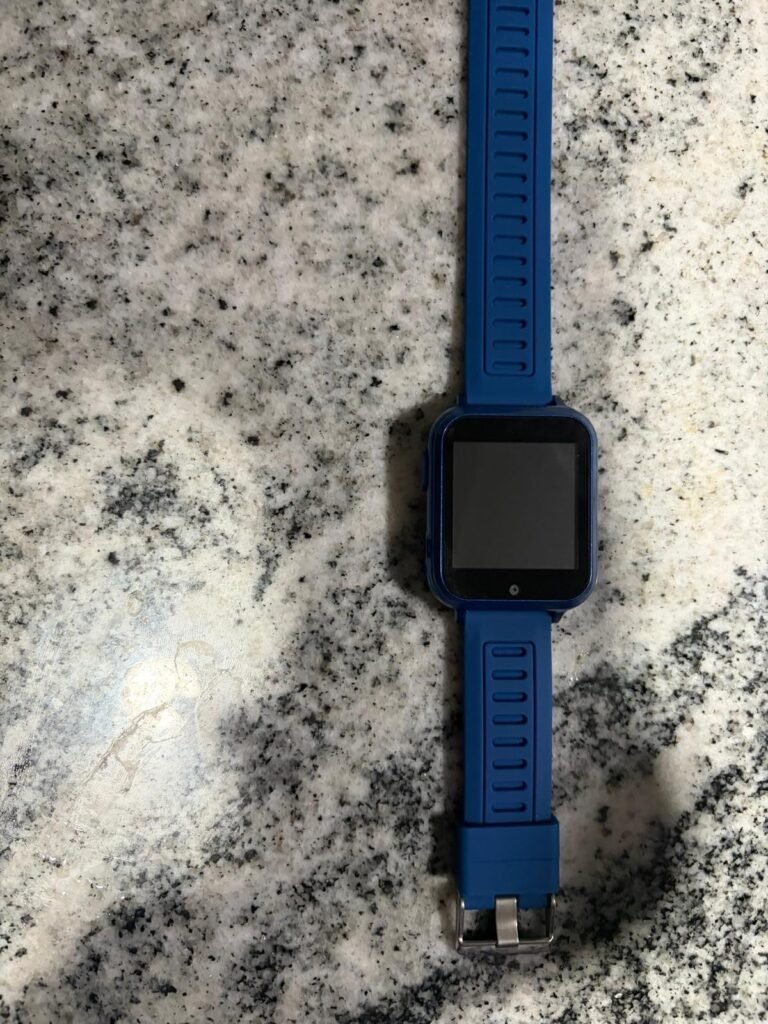
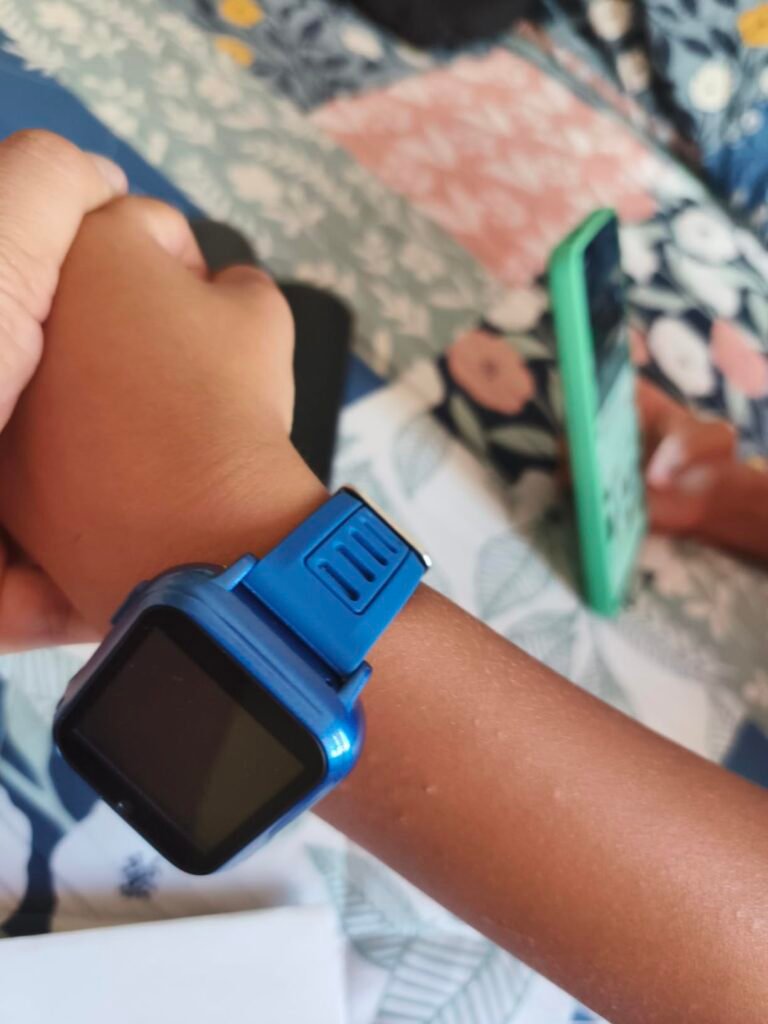
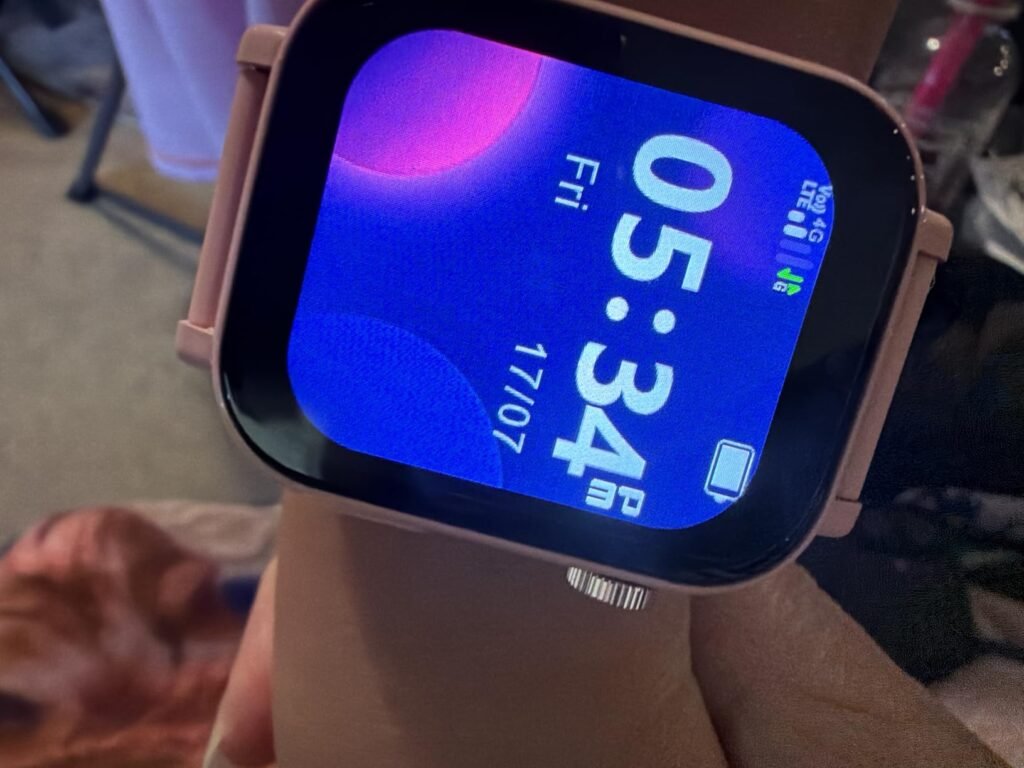
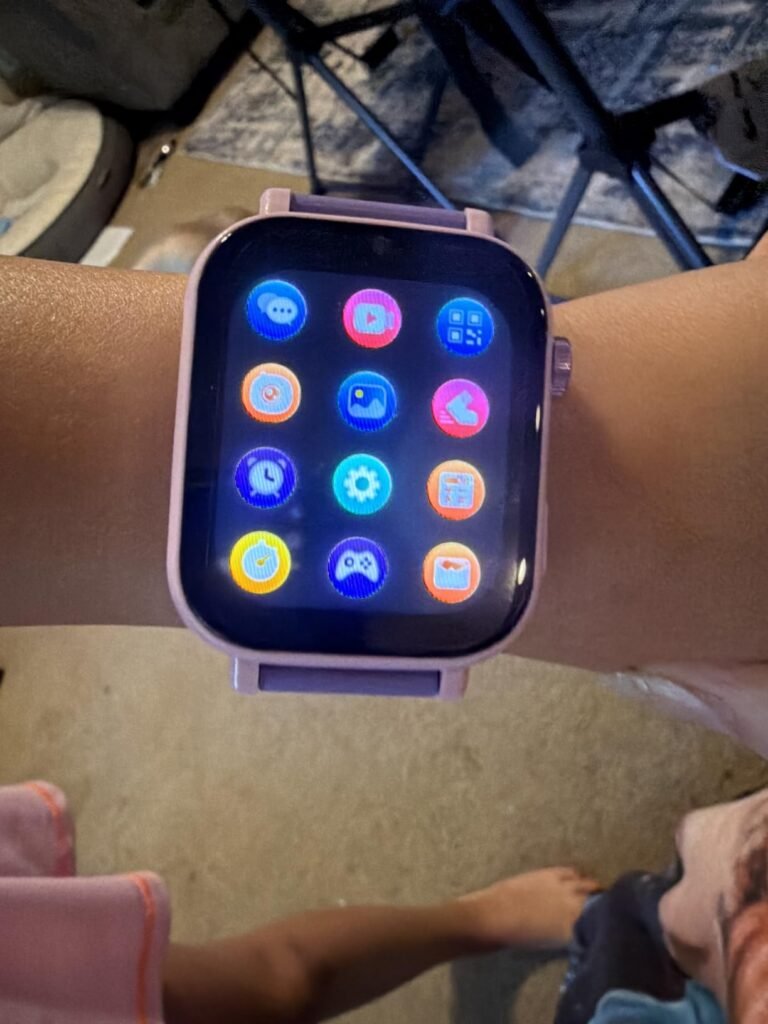
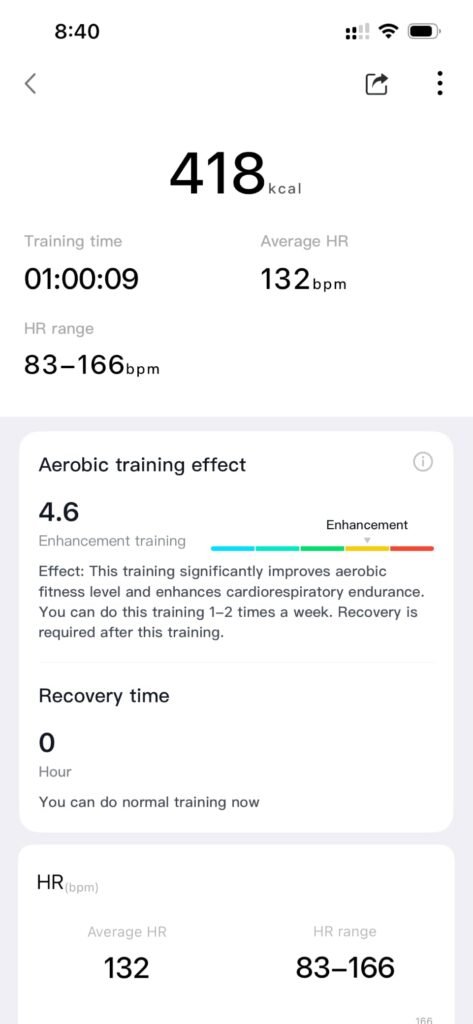
The BIGGERFIVE BRAVE 2 targets families who want genuine fitness tracking for their children without adding another connected device to the household. It counts steps, distance, calories, and active minutes across 80 sport modes, from walking and running to basketball and cycling. The watch functions completely on its own, so your child does not need a smartphone to use the core features, which simplifies daily routines significantly.
We may earn a commission when you buy through this link, at no additional cost to you.
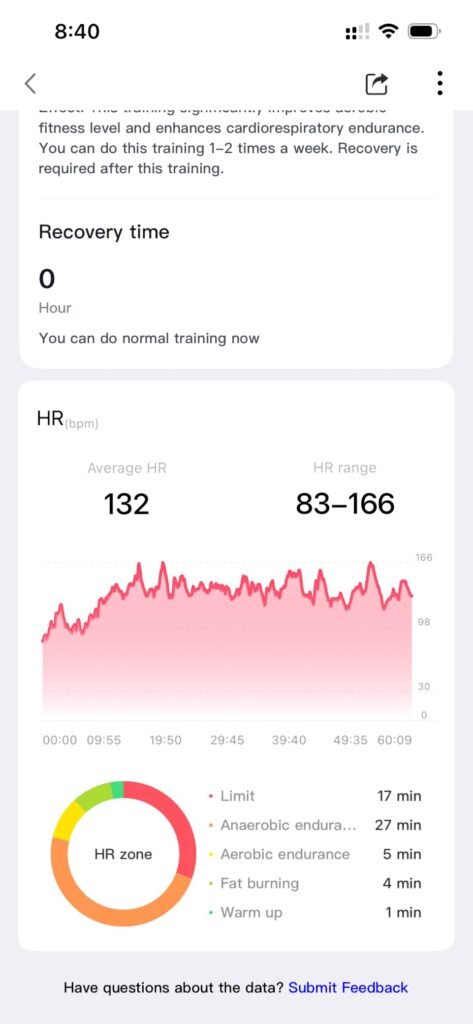
Health monitoring goes beyond basic step counting. The built-in heart rate sensor provides real-time readings, and the sleep tracker logs patterns to help you understand whether your child is getting adequate rest. These features are more commonly found on adult fitness bands, so having them in a kid-friendly package at this price is notable. The 1.8-inch HD touchscreen is large enough for small fingers to navigate comfortably.
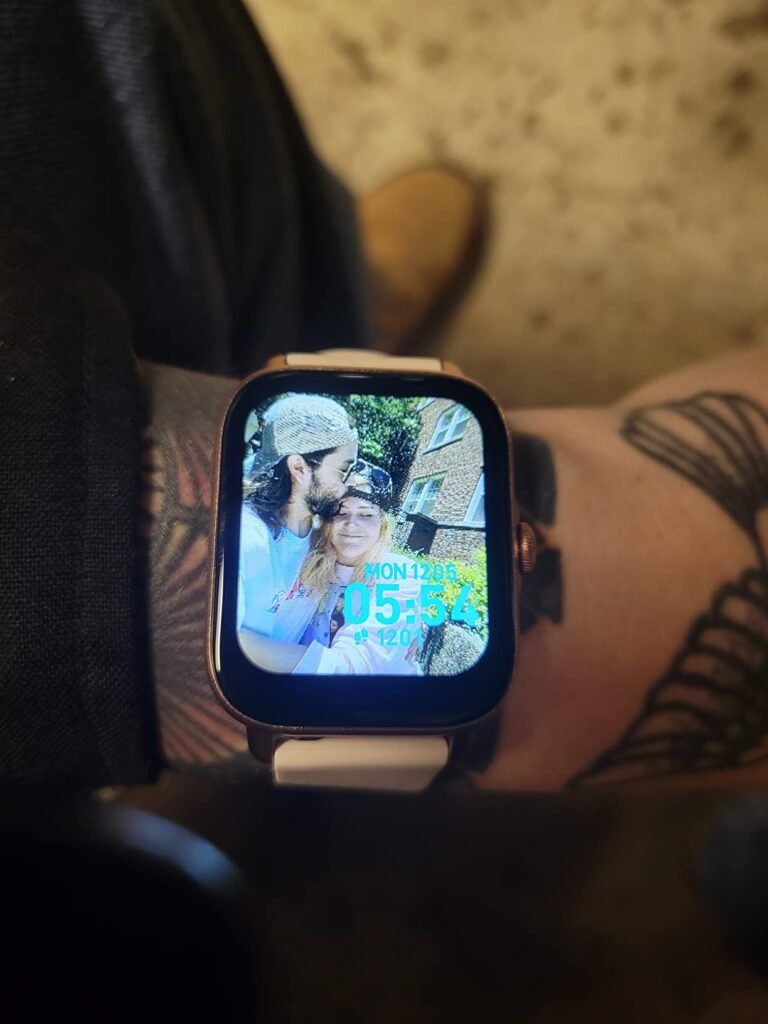
When paired with the optional BIGGERFIVE app on Android 6.0 or iOS 9.0 and above, additional features unlock, including over 100 cloud-based watch faces and the ability to create custom dials from your child’s own photos. The five built-in puzzle games can be locked entirely or restricted to specific hours through the app, which is helpful during school days. Just be aware that the games have no sound effects, which may disappoint some kids.
One of the most practical aspects of the BRAVE 2 is that it does not force you into an app ecosystem. All core fitness tracking, heart rate monitoring, and sleep logging work without any phone pairing. The app adds cosmetic customization and parental game controls, but the watch remains fully functional on its own. This is a significant advantage for younger children who do not yet have a phone or for parents who prefer to limit connected devices.
This watch is ideal for active children ages six to twelve who participate in sports or outdoor activities and want to track their progress. It will not provide location tracking or allow phone calls, so it works best as a health and fitness companion rather than a communication device. The standalone operation and reasonable price make it a low-risk investment for families exploring whether a smartwatch will actually get regular use.
Parents who need real-time GPS location tracking or voice calling should look at the cellular models in this guide.
We may earn a commission when you buy through this link, at no additional cost to you.
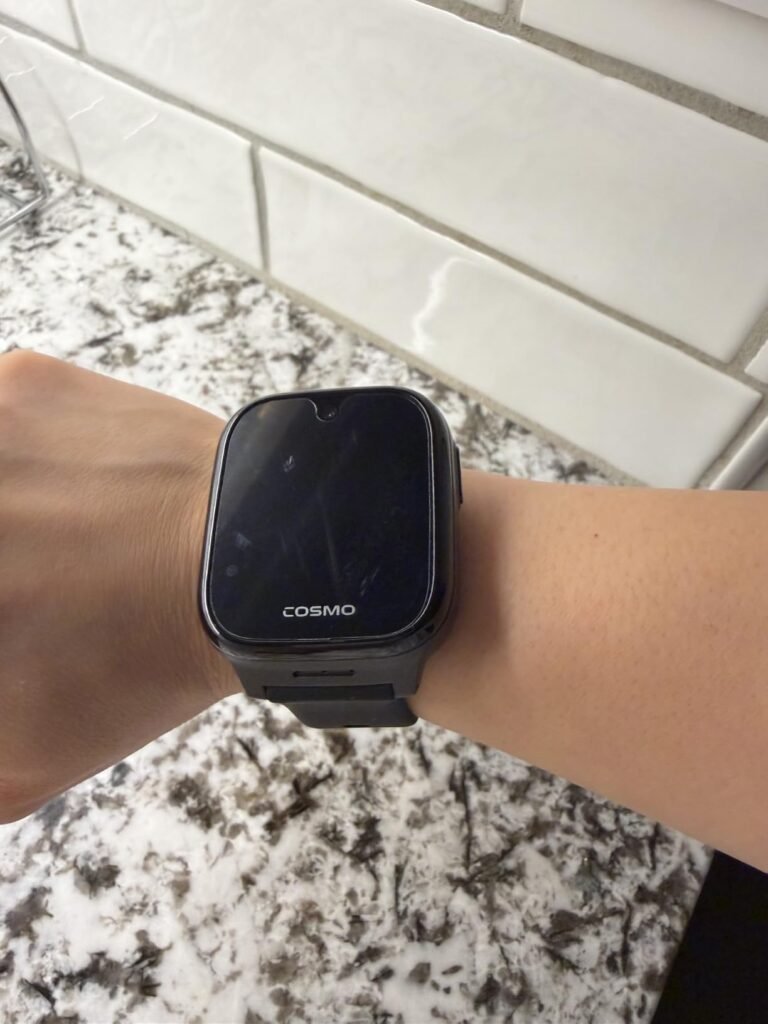
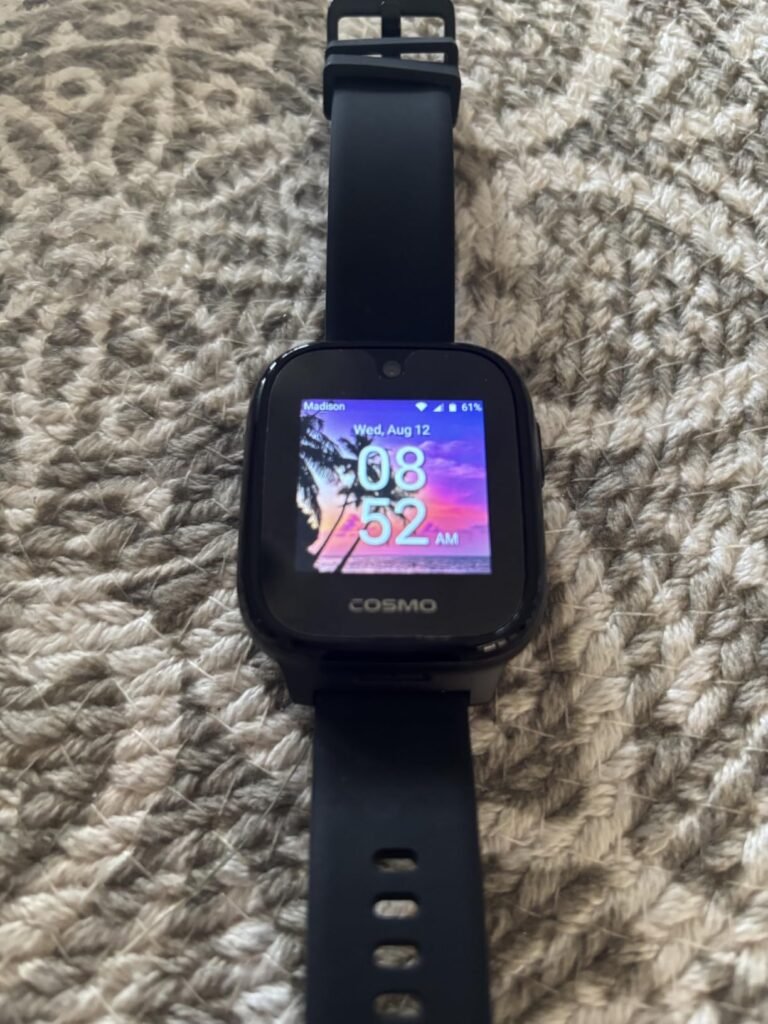
The JrTrack 5 by Cosmo is the most ambitious watch in this roundup, functioning as a full phone replacement for children ages six and up. It offers real calling, true texting with pictures and audio, real-time GPS tracking powered by the HaloGPS chip, and an SOS alert system. For parents who want their child to have reliable communication without handing over a smartphone, this is the most comprehensive option available.
We may earn a commission when you buy through this link, at no additional cost to you.
The HaloGPS technology uses a dedicated location chip for pinpoint accuracy, which Cosmo describes as the fastest and most precise tracking on a kids watch. The SafeCore safety system adds four layers of protection, including SOS alerts, geofence notifications, and emergency calling. Parent-approved contacts ensure that no unknown numbers can reach your child, and there is no access to the open internet or social media platforms.
The Focus Mode lets parents lock the device during school hours, and the growing library of kid-safe apps gives the watch room to evolve as your child gets older. Spotify integration is a unique addition that lets kids listen to age-appropriate music and podcasts, though it requires a separate Spotify Family subscription. The eSIM activates out of the box, and Cosmo’s prepaid plans start at roughly ten dollars per month.
Unlike every other watch in this guide, the JrTrack 5 requires an active Cosmo Mobile service plan to function. The eSIM is built in and cannot be swapped to another carrier, so you are locked into Cosmo’s network. Prepaid plans start around ten dollars per month, which is competitive for a dedicated kids line, but it is an ongoing cost that adds up over time. Factor this into your total budget before purchasing, and confirm that Cosmo’s coverage is reliable in your area.
The lower customer rating suggests that some families have experienced connectivity or setup challenges, which is worth considering before committing to a subscription. This watch makes the most sense for families who prioritize communication and location tracking above all else and are comfortable with an ongoing monthly cost. If your primary goal is fitness tracking or simple entertainment, a standalone model will serve you better at a fraction of the price.
Budget-conscious families or those who do not want a recurring monthly subscription should choose a standalone watch instead.
We may earn a commission when you buy through this link, at no additional cost to you.
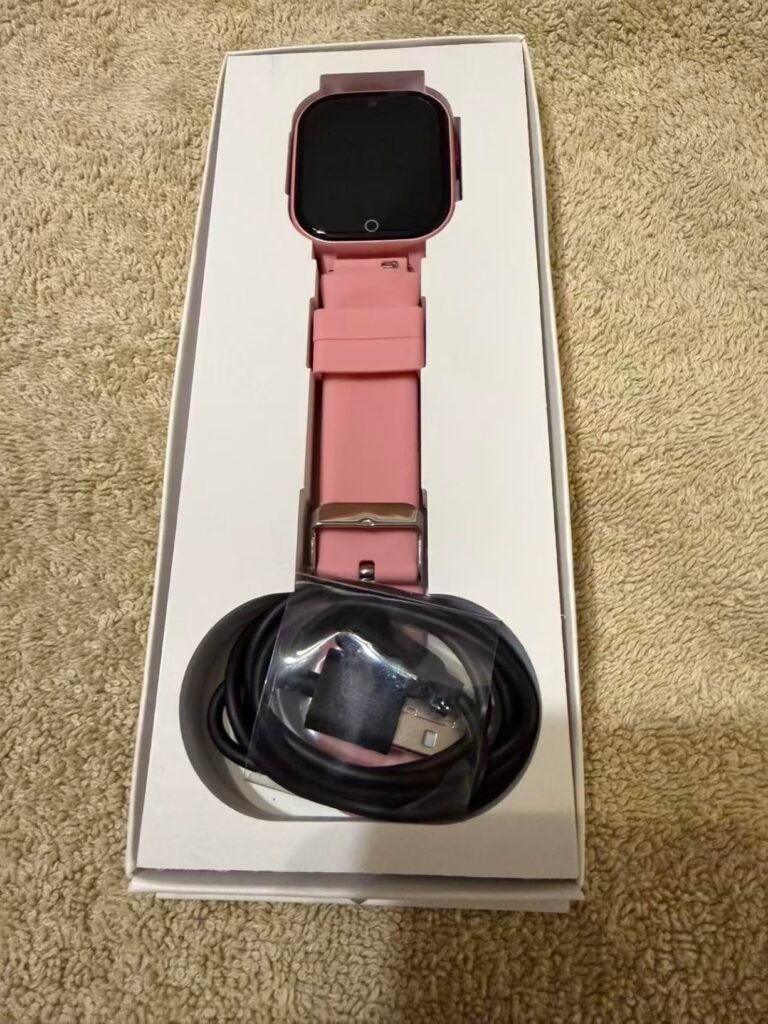
This 4G kids smartwatch stands out for its multi-satellite GPS approach, combining GPS, GLONASS, Galileo, BeiDou, QZSS, and NavIC systems to deliver more reliable location data than single-system trackers. For parents who live in areas with inconsistent cell coverage or tall buildings that can interfere with positioning, the additional satellite constellations can make a meaningful difference in tracking accuracy.
We may earn a commission when you buy through this link, at no additional cost to you.
Communication features include 4G video calls, voice calls, instant messaging, and family group chat. The SignalBooster antenna technology and Wi-Fi support help maintain a stable connection in varied environments. Parents can view location history, set multiple geofences, and receive instant alerts when their child enters or leaves designated safe zones. The SOS button lets kids trigger an emergency call to preset contacts with a single press and hold.
Durability is a strong point. The IP68 waterproof rating means the watch can handle swimming and heavy rain, not just splashes. Battery life reaches five days of typical daily use and up to seven days on standby, which reduces the frequency of charging battles. The AI voice assistant, translation tools, and image recognition features add an educational layer that goes beyond the standard calculator and stopwatch found on simpler models.
Most budget GPS watches rely on a single satellite system, which can struggle in urban canyons, dense tree cover, or indoor environments near windows. By tapping into six different satellite constellations simultaneously, this watch increases the number of visible satellites at any given moment, reducing the chance of location dropouts. While no consumer GPS is perfect, the multi-system approach provides a noticeable improvement in consistency over single-system alternatives.
This watch is a strong choice for families who want robust GPS tracking and cellular communication without the premium price of the JrTrack 5 or Garmin Bounce. Keep in mind that it only supports US networks, so it will not work for international travel. The included SIM card simplifies initial setup, but you will need to activate a data plan for ongoing use.
Families who travel internationally with their children should verify network compatibility, as this watch only supports US carriers.
We may earn a commission when you buy through this link, at no additional cost to you.
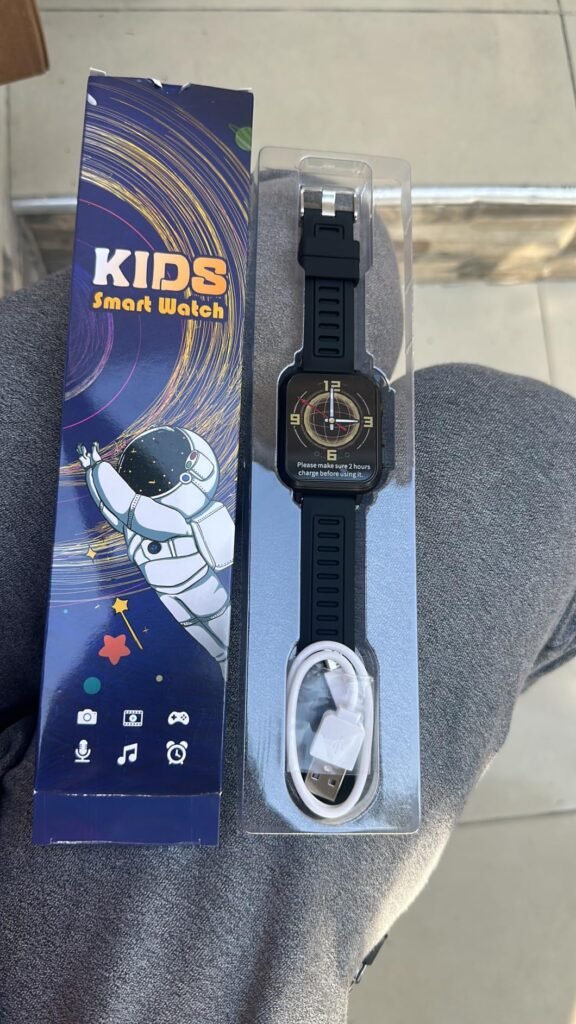
The Phyulls smartwatch takes a different approach from most competitors by prioritizing entertainment and simplicity over connectivity and health tracking. With 39 built-in puzzle games, a selfie camera, video recorder, MP3 player, voice recorder, flashlight, and pedometer, it functions more like a compact multimedia device than a traditional smartwatch. For children ages three to seven who are not ready for GPS tracking or phone features, this is one of the most engaging options available.
We may earn a commission when you buy through this link, at no additional cost to you.
The camera system supports both photos and video, and the included SD card provides storage for over 10,000 HD photos or roughly six hours of video. Kids can set their favorite pictures as wallpapers, which adds a personalization element that younger children enjoy. The five-language support and audiobook feature give the watch some educational value beyond the puzzle games, though the learning tools are basic compared to dedicated educational devices.
Battery life ranges from three to seven days depending on usage patterns, and the watch charges fully in about two hours via the included USB cable. The silicone band is soft and comfortable, and the environmentally friendly materials are a nice touch for parents concerned about skin sensitivity. No app download or phone pairing is required, which means setup takes minutes rather than hours.
It is important to understand that the Phyulls watch is fundamentally a toy with smartwatch styling. The 39 games and multimedia features will keep a young child entertained, but there is no GPS, no SOS button, and no way to contact your child through the device. If your primary motivation for buying a kids smartwatch is safety or location tracking, this model will not meet those needs. Think of it as a step up from a basic digital watch, not a replacement for a phone or GPS tracker.
This watch is best suited for younger children who want a fun gadget to wear and play with during downtime. It will not help you track your child’s location or monitor their health metrics, so it serves a different purpose than the GPS and fitness models in this guide. At its price point, it is a low-risk gift that most young kids will enjoy, even if they eventually outgrow the game selection.
Parents who need GPS tracking, SOS alerts, or two-way communication should choose a cellular-enabled model.
We may earn a commission when you buy through this link, at no additional cost to you.
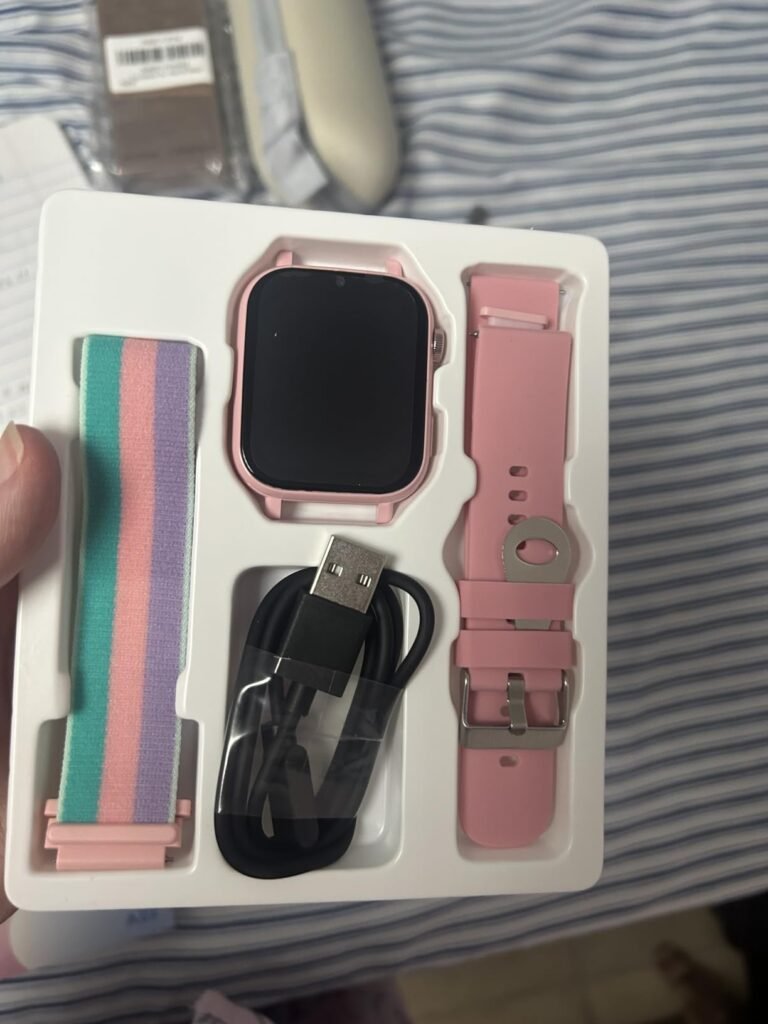
This 4G kids smartwatch strikes a practical balance between communication features and ease of use. The setup process is notably straightforward: download the Junicare app, scan the QR code displayed on the watch, and pairing is complete in seconds. For parents who have struggled with complicated smartwatch configurations in the past, this simplified onboarding is a genuine advantage that reduces frustration right out of the box.
We may earn a commission when you buy through this link, at no additional cost to you.
Location tracking uses a combination of dual GPS and LBS positioning to provide real-time updates on your child’s whereabouts. The geofence feature lets you draw custom safe zones around home, school, or other frequented locations, and the app sends instant alerts when your child crosses those boundaries. The 24-hour route playback function lets you review where your child has been throughout the day, which adds an extra layer of reassurance for concerned parents.
The Class Mode is managed remotely through the app, allowing you to disable games, calculator, pedometer, and stopwatch functions during school hours while keeping positioning and emergency calling active. The 1.7-inch curved HD IPS screen delivers clear visuals, and the included silicone and woven straps give kids options for different occasions. The front-facing camera supports two-way HD video chat, so you can see your child during calls.
Class Mode is one of the most practical features for school-age children. Rather than confiscating the watch each morning, you can schedule specific time windows when entertainment functions are automatically disabled. The watch continues to track location and accept emergency calls during these periods, so safety is not compromised. This remote management approach reduces daily negotiations and helps teachers feel more comfortable with students wearing smartwatches in the classroom.
This watch is a solid mid-range choice for families who want GPS tracking and video calling without the higher cost of the JrTrack 5 or Garmin Bounce. The included Speedtalk SIM card must be activated on the Speedtalk website with a chosen data plan, and it only works within the United States. Budget for the ongoing data plan when calculating the total cost of ownership.
Families outside the United States will not be able to use the included SIM card or cellular features.
We may earn a commission when you buy through this link, at no additional cost to you.
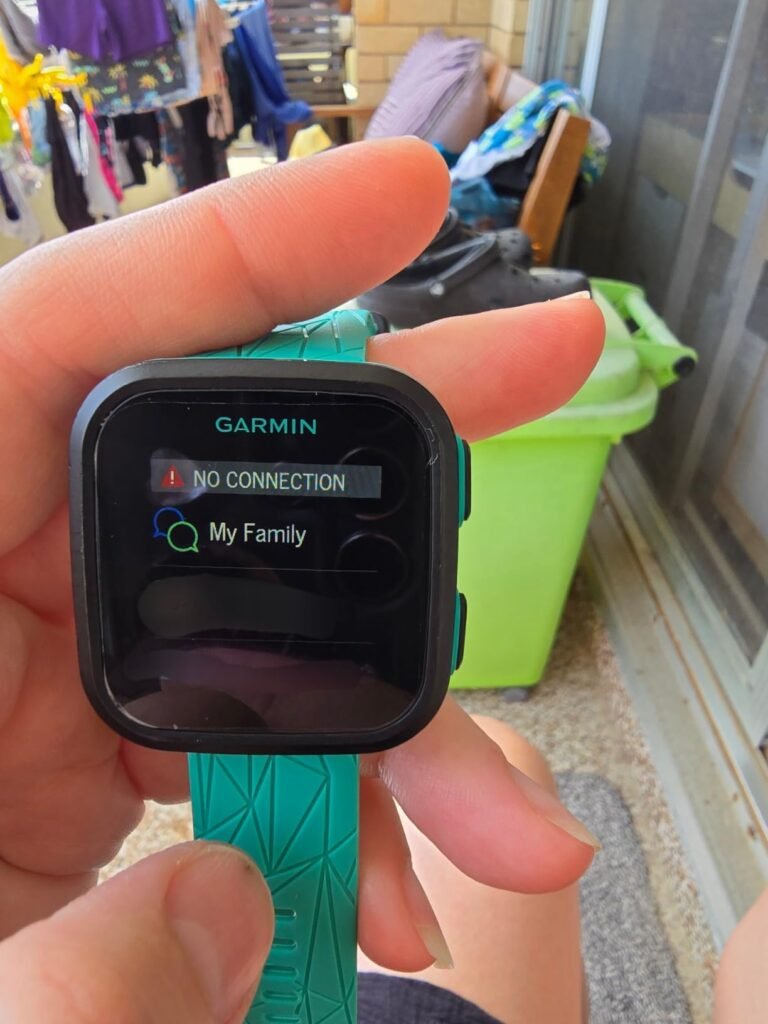
The Garmin Bounce brings the brand's well-known durability and fitness heritage to the kids smartwatch market. It is the only watch in this roundup explicitly described as swim-friendly, which means it can handle pool days and water play without the anxiety that comes with splash-proof-only models. For active families who spend time at the pool, lake, or beach, this distinction is more than a marketing detail.
We may earn a commission when you buy through this link, at no additional cost to you.
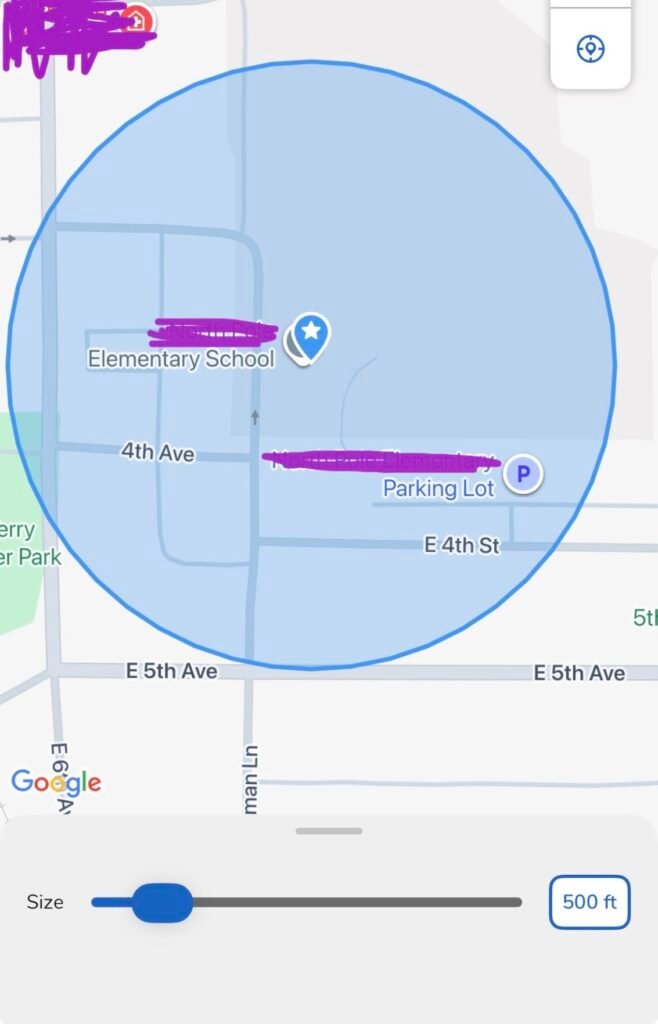
Communication happens through the Garmin Jr. app, which supports two-way text and voice messaging between the watch and a parent’s smartphone. The LTE-based location tracking provides real-time position updates, and parents can set geofence boundaries that trigger notifications when a child enters or leaves a defined area. The Assistance feature lets kids send a message with their live location to family contacts in urgent situations, though it requires network coverage to function.
Battery life reaches up to two days between charges under typical use, though Garmin notes that connected features and LTE network conditions will significantly impact this estimate. In practice, heavy use of messaging and location tracking will drain the battery faster, so plan on nightly charging if your child uses the communication features frequently throughout the day.
While several watches in this guide carry IP68 ratings that technically allow submersion, Garmin’s swim-friendly designation suggests the Bounce has been specifically tested and validated for repeated swimming use. IP68 ratings vary by manufacturer and do not always account for the dynamic pressure of swimming strokes or prolonged pool exposure. If your child swims regularly and you want confidence that the watch will survive, the Bounce’s explicit swim-friendly rating provides stronger assurance than a generic IP68 label.
The Garmin Bounce is the most expensive option in this guide, and it requires an active LTE subscription to unlock its core features. It makes the most sense for families who already trust the Garmin ecosystem, want swim-proof durability, and are willing to pay a premium for brand reliability and long-term software support. If budget is a primary concern, the other cellular options offer similar core functionality at lower prices.
Budget-conscious buyers or families who do not need cellular connectivity will find better value in standalone fitness trackers.
We may earn a commission when you buy through this link, at no additional cost to you.
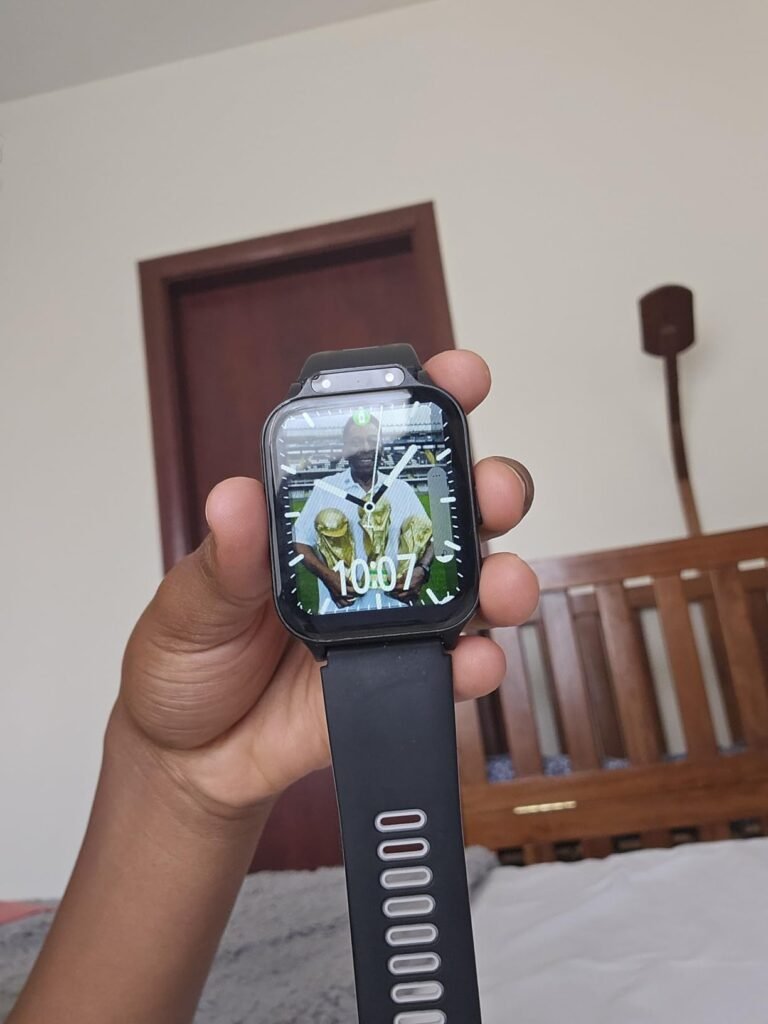
This 1.85-inch kids smartwatch offers the most comprehensive health sensor suite in this price range, monitoring heart rate, blood oxygen levels, and stress indicators alongside standard step counting and sleep tracking. The 24/7 detection mode provides continuous readings, and the sleep monitor breaks down light and deep sleep stages with tips for improvement. For parents who want visibility into their child's overall wellness without a medical-grade device, this is a useful starting point.
We may earn a commission when you buy through this link, at no additional cost to you.
The 1.85-inch HD touchscreen is the largest display in this roundup, making it easier for children to read notifications, navigate menus, and interact with the 160-plus customizable watch faces. The HanFit app lets kids create custom dials from their own photos, which adds a personalization element that encourages consistent wear. The stainless steel case provides better impact resistance than the plastic housings found on many competing models.
The watch supports 20 languages, including English, Spanish, Portuguese, and Arabic, which makes it a practical choice for multilingual households. The IP68 waterproof rating and sturdy construction handle active play and water exposure well. The SOS alarm function triggers a loud sound when the side button is held for three seconds, which can attract attention in emergencies even without cellular connectivity.
Consumer-grade health sensors on kids smartwatches are useful for spotting trends over time, but they are not medical devices. Heart rate readings may fluctuate during vigorous play, and blood oxygen measurements can be affected by how tightly the watch fits on a small wrist. Use the data as a conversation starter about healthy habits rather than a diagnostic tool. If you have specific health concerns about your child, consult a pediatrician rather than relying on smartwatch readings alone.
This watch is best for families who want detailed health and fitness data without paying for cellular features. The health sensors provide useful trends rather than clinical-grade measurements, so treat the readings as general indicators rather than medical diagnostics. At its price point, it offers impressive functionality for health-conscious parents who want to encourage better sleep and activity habits in their children.
Families who need real-time location tracking or phone-like communication should choose a cellular-enabled model.
We may earn a commission when you buy through this link, at no additional cost to you.
Battery anxiety is one of the most common complaints parents have about kids smartwatches, and this model addresses it directly with a seven-day battery life under typical use and a 30-day standby time. The ultra-fast charging system replenishes the battery in just 30 minutes, which means a quick charge during breakfast can power the watch through an entire school week. For families who struggle to keep devices charged, this is a significant practical advantage.

We may earn a commission when you buy through this link, at no additional cost to you.
The health monitoring suite includes heart rate, blood oxygen, stress tracking, and sleep stage analysis backed by a pediatric database of over 2,000 entries. Vibration alerts flag potential health irregularities and prompt sedentary and hydration reminders throughout the day. The SOS alarm activates with a three-second button press, producing a loud sound to attract nearby attention during emergencies.
The Reward Coins system is a clever motivational tool that lets kids earn virtual currency by completing fitness goals and learning tasks. These coins can be exchanged for games or audio stories, creating a positive feedback loop that encourages consistent activity. The watch also includes weekly free storybooks, learning cards, and eight puzzle games with parent-controlled access. The 1.85-inch IPS HD touchscreen is responsive and easy for small fingers to navigate.
Gamification is one of the most effective ways to motivate children to build healthy habits, and the Reward Coins system puts this principle into practice. Rather than simply displaying step counts that kids may ignore, the watch ties physical activity and learning tasks to tangible in-device rewards. Children earn coins for reaching daily goals and can spend them on games or stories, which creates a sense of ownership over their progress. While the novelty may fade over time, the initial engagement boost can help establish routines that persist even after the reward system becomes less exciting.
This watch is ideal for families who want a low-maintenance fitness tracker that will not die halfway through the week. The standalone operation means no phone pairing is required for basic use, though connecting to the app on Android 9.0 or iOS 13.0 and above unlocks additional features. The IP68 rating and 1.5-meter drop survival specification provide confidence that the watch can withstand the realities of childhood.
Parents who need GPS location tracking or two-way calling will need to look at the cellular models in this guide.
We may earn a commission when you buy through this link, at no additional cost to you.
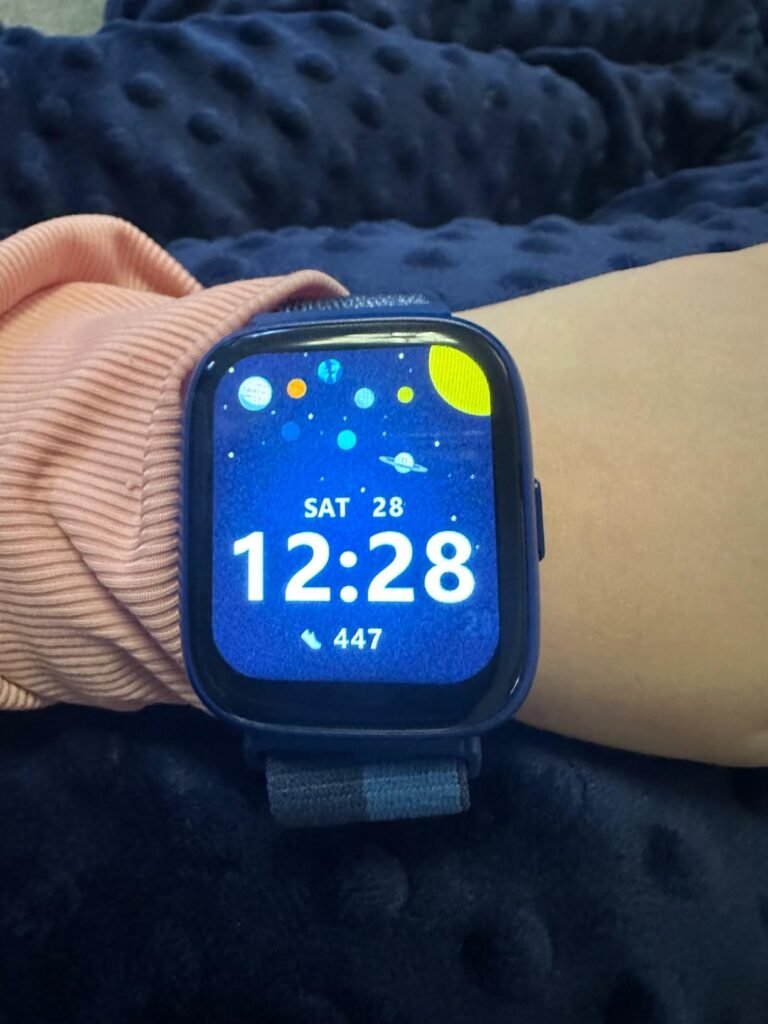
The BIGGERFIVE Pedometer Watch shares much of its DNA with the BRAVE 2 model reviewed earlier, offering 80 sport modes, heart rate monitoring, sleep tracking, and a 1.8-inch HD touchscreen in a standalone package. It is included here because its slightly different design and colorway appeal to older kids and tweens who may prefer a more mature aesthetic. The core functionality remains focused on all-day activity tracking without requiring a phone or subscription.
We may earn a commission when you buy through this link, at no additional cost to you.
Step counting, distance measurement, calorie tracking, and active minute logging work automatically in the background, while the 80 sport modes provide more granular data for specific activities like basketball, cycling, and running. The real-time heart rate monitor and sleep pattern tracker give parents useful insights into their child’s daily health trends through the optional BIGGERFIVE app.
The 100-plus cloud-based watch faces and custom photo dials let older kids express their personal style, which becomes increasingly important as children approach their preteen years. The five built-in puzzle games can be restricted or fully locked through the app, giving parents control over screen time during school hours. The watch operates independently for all core features, so your child does not need a smartphone to benefit from the fitness tracking.
The BRAVE 2 and this Pedometer Watch share nearly identical specifications, so the decision between them largely comes down to design preference and color availability. If your child has a strong opinion about how their watch looks, let them choose between the two. Functionally, both deliver the same 80 sport modes, health monitoring, and standalone operation. There is no meaningful performance advantage to either model, so pick the one that your child is more likely to wear consistently.
This model is best suited for active kids and tweens ages eight to twelve who want a fitness-focused device that looks and feels more grown-up than the toy-oriented options designed for younger children. Like all standalone trackers in this guide, it lacks GPS and communication features, so it serves as a health and activity companion rather than a safety device. The reasonable price and strong feature set make it a practical choice for families exploring the smartwatch category.
Families who need location tracking, SOS alerts, or voice calling should select a cellular-enabled smartwatch instead.
We may earn a commission when you buy through this link, at no additional cost to you.
The kids smartwatch market has expanded rapidly, and the differences between models are more significant than the similar-looking designs might suggest. This buying guide breaks down the key factors that will help you match a watch to your child’s age, activity level, and your family’s safety priorities.
Kids smartwatches are designed for a wide age range, typically from three to twelve years old, but a watch that delights a four-year-old will likely bore a ten-year-old within a week. Younger children benefit from simple interfaces with large icons, colorful clock faces, and tactile buttons that are easy to press with small fingers. Models like the VTech KidiZoom DX4 and Phyulls watch prioritize entertainment and basic time-telling skills, which align well with preschool and early elementary needs.
Older kids and tweens tend to prefer watches that look more like adult fitness trackers and offer genuine sport tracking, health monitoring, and customizable watch faces. A device that feels too childish will end up in a drawer, regardless of how many features it includes. Pay attention to the manufacturer’s recommended age range and consider whether the interface and styling will appeal to your child’s current developmental stage and personal taste.
Before purchasing, think about your child’s tech comfort level. Some kids adapt to touchscreens instantly, while others struggle with swipe gestures and small menus. A watch with physical buttons alongside the touchscreen can provide a helpful fallback for younger or less tech-savvy users.
GPS tracking is the single biggest differentiator between basic kids smartwatches and cellular-enabled models. If your primary reason for buying a smartwatch is to know where your child is during the school day, after-school activities, or neighborhood play, you will need a watch with built-in GPS and a cellular or LTE connection. Standalone fitness trackers and toy watches do not include GPS hardware and cannot report your child’s location.
GPS accuracy varies significantly between models. Single-system GPS watches may struggle in urban environments with tall buildings or in areas with dense tree cover. Multi-satellite systems that combine GPS with GLONASS, Galileo, or BeiDou constellations generally provide more reliable positioning. Geofencing features, which alert you when your child leaves a designated area, add an extra layer of safety that many parents find invaluable for peace of mind.
Keep in mind that GPS tracking requires a cellular data connection, which means a monthly subscription plan. Factor this ongoing cost into your budget and verify that the watch’s carrier provides reliable coverage in your area before committing to a purchase.
Cellular kids smartwatches offer varying levels of communication, from basic voice calling to full two-way texting with photos, audio messages, and even video chat. The most important safety feature in this category is contact management: the best watches allow only parent-approved contacts to reach your child, blocking all unknown numbers and preventing spam calls or unwanted interactions.
Video calling is a newer feature that lets you see your child during conversations, which can be reassuring during after-school hours or when they are at a friend’s house. However, video calls consume more data and battery than voice calls, so frequent use may require more frequent charging and a larger data plan. Consider whether your family actually needs video capability or if voice calls and text messaging are sufficient for your use case.
SOS functionality is another critical communication feature. Most cellular watches include a dedicated SOS button that automatically calls preset emergency contacts when pressed and held. Some models also send location data along with the SOS alert, which can be extremely helpful in urgent situations. Verify that the SOS feature is easy for your child to activate under stress and that the preset contacts are configured correctly before your child wears the watch unsupervised.
Battery life varies dramatically across this category, from roughly two days on LTE-connected models like the Garmin Bounce to a full week on standalone fitness trackers. Cellular watches consume significantly more power because they maintain a constant data connection for GPS tracking, messaging, and voice calls. If you choose a cellular model, plan on nightly charging as a standard routine.
Standalone fitness trackers and toy watches typically last three to seven days on a single charge because they do not maintain a cellular connection. Some models offer fast charging that replenishes the battery in 30 minutes, which is a practical advantage for busy mornings when you realize the watch was not charged overnight. Check the charging connector type as well, since micro-USB cables are becoming less common and may be harder to find in the future.
When comparing battery specifications, pay attention to the distinction between standby time and active use time. A watch that claims seven days of standby may only last two or three days with heavy GPS tracking and frequent messaging. Look for real-world usage estimates rather than best-case standby numbers.
Kids are rough on devices, and a smartwatch that cannot survive a trip through the washing machine or a fall from a playground structure will not last long in real-world use. Water resistance ratings range from splash-proof, which handles hand washing and light rain, to IP68, which allows full submersion in shallow water, to swim-friendly designs that have been specifically tested for pool use.
The distinction between IP68 and swim-friendly is more important than it may appear. IP68 is a standardized rating that indicates the device can withstand submersion at a specified depth for a limited time, but it does not account for the dynamic pressure of swimming strokes, diving, or prolonged exposure to chlorinated water. If your child swims regularly, look for a watch that explicitly states swim-friendly compatibility rather than relying on an IP68 rating alone.
Physical durability also depends on the case material and screen protection. Stainless steel cases resist dents and scratches better than plastic housings, and some models include raised bezels that protect the screen from direct impacts. Consider purchasing a screen protector or protective case if the watch does not include one, especially for younger children who are more prone to drops and bumps.
Parental controls are essential for managing how and when your child uses their smartwatch. The most useful controls include contact whitelisting, app restrictions, screen time limits, and Class Mode, which disables non-essential features during school hours while keeping GPS tracking and SOS calling active. Without these controls, a smartwatch can quickly become a classroom distraction or an unsupervised gaming device.
Class Mode is particularly valuable for school-age children. Rather than requiring your child to remove the watch each morning, you can schedule automatic lockdowns during school hours through the companion app. The watch continues to track location and accept emergency calls, so safety is maintained while distractions are minimized. Some schools have policies about smartwatches, so check with your child’s school before relying on Class Mode as a solution.
Look for parental control features that are managed remotely through a smartphone app rather than on the watch itself. Remote management lets you adjust settings without physically accessing the device, which is much more practical for daily use. The best apps also provide activity reports and usage summaries so you can monitor how your child is interacting with the watch over time.
The upfront price of a kids smartwatch is only part of the total cost of ownership. Cellular-enabled models require a monthly data plan to support GPS tracking, calling, and messaging. These plans typically range from ten to twenty dollars per month depending on the carrier and features, which adds up to a significant annual expense on top of the initial purchase price.
Some watches, like the JrTrack 5, use a built-in eSIM that locks you into a specific carrier, while others include a removable SIM card that may offer more flexibility. Before purchasing a cellular watch, research the available plans, confirm coverage in your area, and calculate the total cost over at least a year of use. A watch that seems affordable upfront may become expensive over time if the subscription costs are higher than expected.
Standalone fitness trackers and toy watches have no ongoing subscription costs, which makes them a more predictable expense. If your budget is tight or you are unsure whether your child will consistently wear a smartwatch, starting with a standalone model is a lower-risk approach. You can always upgrade to a cellular model later if GPS tracking and communication become necessary.
Many kids smartwatches now include health sensors that track heart rate, blood oxygen levels, sleep stages, and stress indicators. While these features sound impressive, it is important to understand that consumer-grade sensors on children’s wrists are less accurate than medical devices or adult fitness trackers. Small wrists, loose-fitting bands, and constant movement during play can all affect sensor readings.
That said, health monitoring features are still useful for identifying general trends and encouraging healthy habits. A sleep tracker that shows your child is consistently getting less deep sleep than recommended can prompt a conversation about bedtime routines. A step counter that motivates your child to reach a daily goal can help build lifelong activity habits. Treat the data as directional guidance rather than precise medical measurements.
If health monitoring is a priority, look for watches with continuous tracking modes rather than on-demand readings. Continuous monitoring provides more useful trend data over time, while single-point measurements can be misleading. Also consider whether the companion app presents health data in a way that is easy to understand and act on, since raw numbers without context are not particularly helpful for most parents.
Start by fully charging the watch before your child wears it for the first time, and take the time to configure all parental controls, emergency contacts, and geofence boundaries before handing it over. For cellular models, activate the SIM card or eSIM and test the calling, texting, and GPS features in your home environment to confirm everything works correctly. Walk your child through the SOS function and make sure they understand when and how to use it in a real emergency.
Establish a consistent charging routine to avoid battery-related frustrations. Most families find that plugging the watch in at bedtime and removing it in the morning works well for standalone models, while cellular watches with heavier battery drain may benefit from a quick top-up after school as well. Keep the charging cable in a designated spot to prevent it from getting lost, and use only the manufacturer-recommended charger to avoid damaging the battery or voiding the warranty.
Clean the watch band regularly with mild soap and water, especially after swimming or sweaty outdoor play, to prevent skin irritation and odor buildup. Check the charging port for debris periodically, and avoid exposing the watch to extreme heat or direct sunlight for extended periods, as high temperatures can degrade the battery and damage the screen. If the watch includes a removable SIM card, power off the device before inserting or removing the card to prevent data corruption.
Most kids smartwatches are designed for children ages four to twelve, but the ideal starting age depends on the type of watch. Simple toy-style watches with games and cameras are suitable for children as young as three, while cellular models with GPS tracking and calling features are better suited for kids ages six and up who are beginning to spend time away from parents independently.
Only cellular-enabled models with GPS tracking, calling, and messaging require a monthly data plan. Standalone fitness trackers and toy watches work without any subscription. If you choose a cellular model, expect to pay roughly ten to twenty dollars per month for the data plan, and factor this into your total budget before purchasing.
It depends on the specific model's water resistance rating. Splash-proof watches can handle hand washing and light rain but should not be submerged. IP68-rated watches can withstand shallow submersion, and swim-friendly models like the Garmin Bounce are specifically designed for pool use. Always check the manufacturer's guidelines before allowing your child to swim with the watch.
GPS accuracy varies by model and environment. Multi-satellite systems that combine GPS with GLONASS, Galileo, or BeiDou generally provide more reliable positioning than single-system trackers. In open outdoor areas, most GPS watches can locate your child within a few meters, but accuracy may decrease in dense urban environments, inside buildings, or under heavy tree cover.
Yes, many standalone fitness trackers and toy watches function completely independently without a smartphone. Cellular models require a data connection for GPS and calling features, but the watch itself operates as a standalone device with its own SIM card or eSIM. Your child does not need to carry a phone to use either type of watch.
Battery life ranges from about two days on cellular models with active GPS and messaging to seven days or more on standalone fitness trackers. Usage patterns significantly affect battery life, with frequent GPS tracking, video calls, and screen-on time draining the battery faster. Check the manufacturer's estimates for both active use and standby time to set realistic expectations.
Most kids smartwatches are made from skin-friendly silicone and lightweight materials designed for all-day wear. However, it is a good practice to have your child remove the watch during sleep if the sleep tracking feature is not needed, and to check the wrist periodically for any signs of irritation. Ensure the band is snug but not too tight, especially during growth spurts.
Yes, most kids smartwatches include parental controls that let you manage contacts, restrict app access, set screen time limits, and enable Class Mode to disable entertainment features during school hours. Cellular models typically offer the most comprehensive controls through a companion smartphone app, while standalone watches may have more limited but still useful restriction options.
Most SOS features require a sustained press of three to five seconds to activate, which reduces the likelihood of accidental triggers. If an accidental SOS does occur, you will typically receive a call or notification that you can quickly dismiss. It is still a good idea to talk to your child about when to use the SOS button so they understand its purpose and do not treat it as a toy.
Most kids smartwatches sold in the United States are designed for US cellular networks and may not function internationally. Some models explicitly state that they only support US carriers. If you travel internationally with your child, check the watch's network compatibility and roaming capabilities before relying on it for GPS tracking or communication abroad.
The VTech KidiZoom DX4 earns the top spot in this guide because it delivers the most engaging and well-rounded experience for the youngest smartwatch users at an unbeatable price. With dual cameras, 50 clock faces, motion-based games, and no subscription requirements, it provides genuine value for families who want a fun, educational device without the complexity or cost of cellular connectivity.
For families who need GPS tracking and two-way communication, the 4G GPS Kids Watch with multi-satellite positioning offers the best combination of location accuracy, durability, and value among the cellular options. The JrTrack 5 and Garmin Bounce provide more premium features like Spotify integration and swim-friendly construction, respectively, but come with higher upfront costs and mandatory subscription plans that increase the total investment.
Ultimately, the right kids smartwatch depends on your child's age, your safety priorities, and your budget. Start by deciding whether you need GPS and calling features or whether a standalone fitness tracker will meet your needs. From there, focus on durability, battery life, and parental controls to narrow your choice. Any of the ten watches in this guide can be a solid purchase when matched to the right use case and family situation.