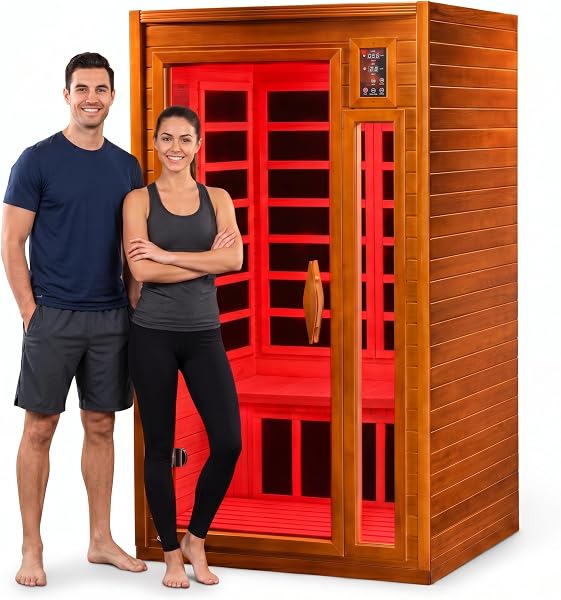
Dynamic Saunas Barcelona
9.2Editor scoreSix carbon panels
One to two person
Up to 135°F
Standard 15-amp plug
Find the right infrared saunas for 2026. We compare 10 standout options by build quality, useful features, owner feedback, value, and everyday trade-offs.

Find the right infrared sauna for your home in 2026. We compare 10 standout models by the factors that matter most: cabin materials, heating panel technology, seating capacity, red light therapy features, temperature range, installation requirements, and everyday value. Whether you want a compact solo unit or a spacious two-person cabin, this guide helps you prioritize what counts.
Infrared saunas differ meaningfully in construction, power draw, and intended use. Traditional wooden cabins offer a permanent spa-like experience, while portable steam tents provide flexibility at a lower cost. Understanding the distinction between far infrared carbon panels and steam generators is essential before you commit, because it affects everything from heat-up time to maintenance and electrical needs.
Use this comparison to match a sauna to your space, budget, and wellness routine. We break down each model’s strengths and tradeoffs, then explain the buying factors that separate a satisfying long-term investment from a purchase that sits unused. The goal is a decision you can feel confident about.
We compared 10 infrared saunas using the details that actually help a buyer decide: wood species and construction, heating panel type and wattage, interior capacity, maximum temperature, red light therapy inclusion, electrical requirements, assembly complexity, warranty coverage, and owner feedback. The notes focus on practical trade-offs so each pick connects to how people actually use a sauna at home, from daily recovery sessions to occasional weekend relaxation.

Compare key features, scores, and current prices side by side. A shorter feature list means fewer details were available, not necessarily fewer capabilities.





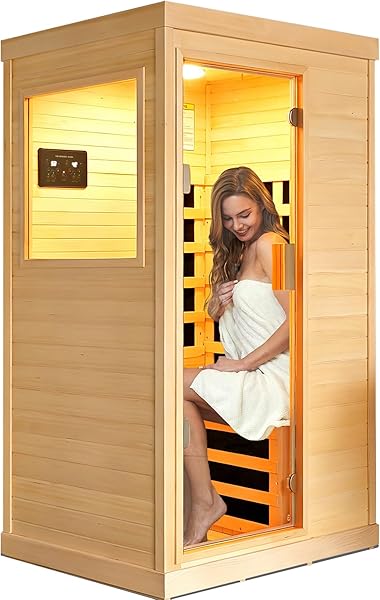
The springspa is for the buyer who wants red light therapy to be a primary feature rather than an afterthought. Its dedicated panel packs 140 LEDs across a 14.17-by-10.62-inch area, combining 660nm red light for the skin surface with 850nm near-infrared light for deeper tissue. That is a more substantial red light array than the small chromotherapy lights found on many saunas, and it positions this cabin for users focused on skin care, recovery, and joint comfort alongside traditional sauna benefits.
We may earn a commission when you buy through this link, at no additional cost to you.
Heating comes from seven far-infrared mica panels powered by a 1340W system that reaches the ideal temperature in roughly 15 minutes. Mica panels are known for efficient heat transfer, and the seven-panel array provides even coverage around the body. Exclusive foot heating adds comfort, and the adjustable temperature range of 93°F to 149°F with a timer up to 99 minutes gives you room to customize sessions. The recommended comfort range of 115°F to 130°F is a reasonable starting point for new users.
The cabin is built from natural Canadian hemlock wood with a 6mm tempered glass door, and the interior includes a towel rack, cup holder, and LCD control panel. A built-in Bluetooth speaker lets you play music, and the one-person dimensions of 31.5 by 30.3 by 67 inches keep the footprint manageable for bedrooms, home gyms, closets, or garages. Assembly and power requirements follow the familiar 110V plug-in pattern, making it accessible without an electrician.
Red light therapy is a complementary add-on, not a replacement for the infrared heat itself. Consistent, regular sessions tend to matter more than occasional long ones. Position yourself so the panel faces the area you want to target, and follow the manufacturer’s guidance on session length. Results vary by individual, so treat it as part of a broader wellness routine.
The tradeoff is that this is a single-person sauna with a specific heating technology. Mica panels heat up quickly and evenly, but some users prefer the gentler radiant feel of carbon. The 4.7-star rating is among the highest in this comparison, suggesting strong owner satisfaction. For a solo user who wants a robust red light panel, fast heat-up, and a high-quality wood cabin, the springspa is a compelling choice. Check the interior height against your seated posture, and plan for a nearby outlet.
Couples or shoppers who prefer carbon-panel heat over mica should look at a two-person carbon cabin.
We may earn a commission when you buy through this link, at no additional cost to you.
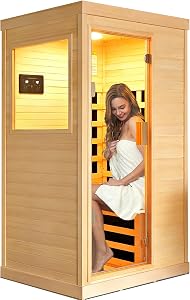
The Barcelona is aimed at shoppers who want a genuine wooden cabin without a major construction project. Its natural Canadian hemlock construction gives it a warm, furniture-like presence, and the six low EMF carbon PureTech panels surround the occupant with infrared heat. For a single user or a couple who wants a shared session, this is a well-rounded starting point that fits into a bedroom, basement, or office wellness corner.
We may earn a commission when you buy through this link, at no additional cost to you.
The 360-degree panel layout is the headline here. Carbon panels tend to produce a gentler, more diffuse heat than rod-style emitters, and having six of them means warmth reaches your front, back, and sides rather than concentrating on one area. The operating ceiling of 135°F is lower than some competitors, but the recommended comfort band of 115°F to 130°F is where most people will spend their sessions anyway. Heat-up is quick enough that a 20-minute preheat is usually sufficient.
Day-to-day use is straightforward. LED controls sit inside the cabin, and the included Bluetooth and MP3 auxiliary input let you play music through the built-in speakers with pre-amp. Chromotherapy lighting adds a calming visual element, and an optional white reading light is handy if you like to read during a session. Installation is genuinely simple: the cabin assembles in about an hour on any indoor surface, including carpet, and runs on a standard 15-amp, 120-volt household plug with no special wiring.
This sauna suits first-time buyers who want a permanent wooden cabin without an electrician’s visit. It is also a good match for anyone who prefers gentle, evenly distributed carbon heat over the sharper intensity of traditional steam. If you plan to use it alone most days and occasionally with a partner, the one-to-two-person sizing is realistic rather than optimistic.
The main tradeoff is temperature headroom and interior space. If you crave sessions above 135°F or regularly host two broad-shouldered adults, the Barcelona may feel limiting. But for a solo user or a couple of average build who value easy installation, low-EMF heating, and a polished cabin aesthetic, it is a compelling choice. The five-year limited warranty for indoor use adds peace of mind. Just confirm your doorway and room dimensions before ordering, because the assembled cabin is not something you want to move frequently.
Buyers who want temperatures above 135°F or a genuinely roomy two-person experience should look at larger, higher-wattage cabins.
We may earn a commission when you buy through this link, at no additional cost to you.
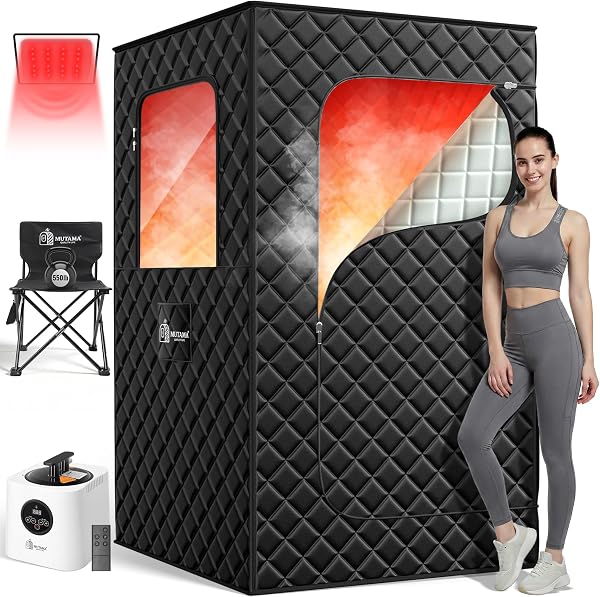
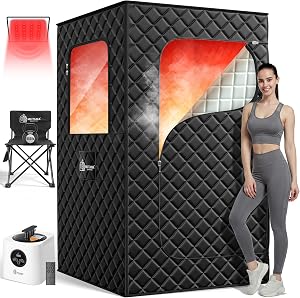
This portable sauna box is for renters, apartment dwellers, or anyone who wants steam sessions without dedicating a permanent corner of a room to a wooden cabin. The 71-inch height means taller users can stand or sit without feeling compressed, and the heavy-duty steel pipe frame gives it a stability that inflatable or pop-up tents often lack. It is a practical entry point into home sauna use at a fraction of the cost of a wooden unit.
We may earn a commission when you buy through this link, at no additional cost to you.
The 1400W steamer heats up in roughly 10 to 15 minutes, and the three-liter tank is generously sized for extended sessions. A remote control offers 15 heat levels and a 99-minute timer, so you can dial in intensity without reaching out of the cabin. The built-in 660nm red light panel adds a second wellness dimension alongside the steam, and the five-layer heat-insulating fabric is designed to lock in warmth while keeping the exterior dry and protecting your floor.
Usability details matter with portable saunas, and this one handles them well. The extra-large panoramic window reduces any sense of confinement, and the intelligent boil-dry protection automatically cuts power when water runs low, which is a meaningful safety feature for a device that generates steam unattended. Setup is quick, though you will want to position the steamer close enough to an outlet that the hose reaches comfortably. The fabric wipes clean, and the whole unit collapses for storage when not in use.
Fill the tank before you settle in, and keep a towel nearby for condensation. Position the steamer on a level surface and ensure the hose is not kinked. Because steam raises humidity quickly, crack the window or vent briefly between sessions to let moisture escape and prevent mildew. Wipe down the interior fabric after each use and let it air-dry fully before folding it away.
The honest tradeoff is the nature of steam versus infrared. Steam heat is humid and enveloping, while carbon infrared is dry and radiant; neither is inherently better, but they suit different preferences. This unit also depends on a power connection for the steamer, so cord placement matters. For buyers who want a spacious, tall steam sauna that stores away between uses and includes red light therapy, this is a strong value. Just manage expectations: it is a portable experience, not a built-in cabin.
Shoppers who want dry infrared heat or a furniture-grade cabin should choose a wooden carbon-panel model instead.
We may earn a commission when you buy through this link, at no additional cost to you.
This hemlock cabin is for the shopper who wants a real wooden sauna but needs to stay closer to a mid-range budget. The natural Canadian hemlock construction is a genuine heat insulator, and the tempered glass adds both safety and a sense of openness. With a temperature range stretching from 68°F to 149°F, it accommodates users who want gentle warmth as well as those who prefer a hotter, more intense session.
We may earn a commission when you buy through this link, at no additional cost to you.
Six low-EMF carbon heating panels surround the body, and the independently controlled bottom heating plate is a thoughtful touch. Cold feet are a common complaint in saunas, so the ability to keep the floor warm without cranking the whole cabin is a practical comfort win. The temperature control system is designed to hold a steady set point rather than swinging up and down, which makes sessions more predictable. The seven-color light adds ambiance without complicating operation.
Construction quality is the main reason this model earns a value badge. Hemlock is a durable, attractive wood, and the water-based paint on the seats and foot grids avoids harsh chemicals. The entertainment system includes two speakers, and the control panel supports timer and power adjustment plus several protection systems. Setup is described as simple, though as with most wooden cabins, budget a couple of hours and a helper for the panel alignment.
Infrared panels warm the body directly, but feet can remain cool because they are farther from the primary emitters and often rest on a cooler floor. An independently controlled foot heater solves that without raising the overall cabin temperature. If you tend to feel cold in your extremities, prioritize a model with this feature.
The tradeoff is that this sauna skips red light therapy, which several competitors include. If chromotherapy lighting is enough for you and you prioritize a wide temperature range plus foot heating at a reasonable price, this is an easy recommendation. The seven-year after-sales service is longer than many rivals offer, which adds confidence for a long-term purchase. Check the exterior dimensions against your intended room before ordering, and confirm the electrical outlet location.
Buyers who specifically want red light therapy built into the cabin should choose a model that includes a dedicated LED panel.
We may earn a commission when you buy through this link, at no additional cost to you.
The Andora is the larger sibling of the Barcelona, and it is aimed squarely at couples or anyone who wants a sauna that does not feel cramped. Interior dimensions of 43 by 37 by 68 inches give two adults room to sit without shoulder-to-shoulder contact, which is the difference between a shared ritual you look forward to and one you tolerate. The natural Canadian hemlock cabin looks at home in a wellness room or finished basement.
We may earn a commission when you buy through this link, at no additional cost to you.
Heating comes from six dynamic low-EMF carbon PureTech panels arranged for 360-degree coverage. That layout is what allows two occupants to both receive meaningful infrared exposure rather than one person sitting directly in front of the hottest emitter. The system is designed for faster heat-up and energy-saving operation, and the 135°F ceiling with a recommended 115°F to 130°F comfort range is typical for carbon-panel cabins. Red light chromotherapy and an optional white reading light round out the interior experience.
Controls are simple LED panels, and the Bluetooth plus MP3 auxiliary input feeds built-in speakers with a pre-amp, so you can stream a playlist or podcast during sessions. Assembly takes about an hour and, importantly, the cabin runs on a standard 15-amp, 120-volt plug on any indoor surface including carpet. That plug-and-play setup removes the electrician cost that surprises some first-time sauna buyers.
If you mostly sauna alone, a two-person cabin still offers benefits: more interior elbow room, the option to stretch out, and the flexibility to share sessions when guests visit. The cost is floor space and a slightly higher price. Solo users in small apartments are usually better served by a compact one-person model.
The tradeoff is the same one that applies to the Barcelona: 135°F is not the hottest ceiling on the market, and the larger footprint means you need to plan the room layout. For couples who value space, even heating, and easy installation over extreme temperatures, the Andora is a polished choice. The five-year limited warranty for indoor use is reassuring. Measure your doorway carefully, because moving an assembled cabin through a narrow hall is not practical.
Shoppers with limited floor space or a preference for very high temperatures should consider a compact single-person cabin instead.
We may earn a commission when you buy through this link, at no additional cost to you.
The X-Vcak stands out for shoppers who dislike waiting for a sauna to warm up. Its 1800W heating system and six large panels are designed to minimize preheat time, which matters if you want to squeeze a session into a busy evening. The interior is also notably tall at 73 inches, so taller users can sit upright without ducking, and the one-to-two-person sizing is realistic for a couple of average build.
We may earn a commission when you buy through this link, at no additional cost to you.
Temperature tops out at 150°F, giving it more headroom than the Dynamic cabins. The manufacturer suggests new users start at lower settings and build up, which is sensible advice for any infrared sauna. The timer runs from 1 to 99 minutes, though the suggested session length of 10 to 15 minutes is shorter than many users expect; treat that as a starting point and adjust to your comfort. Hydration before and after is worth taking seriously at these temperatures.
The feature set is unusually complete for the price band. Seven light modes cover red, blue, green, yellow, purple, cyan, and natural light, and the audio system supports Bluetooth, MP3, and radio through dual stereo speakers. Practical touches include a bookshelf, towel rack, and cup holder, plus a top ventilation opening to keep the air from feeling stale. The tempered glass door has a protective film on both sides as an extra safety measure, and the three-prong plug includes leakage protection.
A 1800W sauna should ideally run on a dedicated circuit or at least an outlet that is not shared with a space heater, hair dryer, or kitchen appliance. Check your breaker panel and avoid extension cords. If the breaker trips during a session, move the sauna to a different circuit rather than repeatedly resetting it.
The tradeoff is electrical. A 1800W draw is higher than many competitors, so avoid sharing the circuit with other high-demand appliances. The shorter recommended session length also means this sauna rewards users who prefer brief, intense sessions over long, gentle ones. For taller users, couples who want faster heat-up, and anyone who values built-in storage and entertainment, the X-Vcak is a strong contender. Confirm your outlet’s capacity and the cabin’s footprint before buying.
Buyers with limited electrical capacity or a preference for long, low-temperature sessions may find the high wattage and short suggested sessions less ideal.
We may earn a commission when you buy through this link, at no additional cost to you.
This SOARFLY tent is designed for couples or families who want a shared steam sauna without spending four figures. The 75-by-50-by-38-inch footprint is genuinely large for a portable unit, and the inclusion of two folding chairs means two adults can sit comfortably rather than crouching. It is a practical way to test whether a sauna routine fits your lifestyle before committing to a permanent cabin.
We may earn a commission when you buy through this link, at no additional cost to you.
The dual steam generator setup is the key differentiator. Running two generators simultaneously fills the cabin faster and maintains a more consistent steam output than a single unit, and the manufacturer notes the cabin can reach around 130°F in a few minutes. For best performance, each generator should be plugged into an independent socket, which is an important installation detail to plan for. The red light panel combines 660nm visible red light with 850nm near-infrared, adding a skin-care and recovery dimension to the steam session.
The five-layer satin cotton fabric is paired with a stainless steel frame that is reinforced and corrosion-resistant. Built-in pockets hold a phone and glasses, the double zipper makes entry and exit easier, and the transparent zipper window provides ventilation. A remote control handles temperature and timing. Setup follows a three-step process: assemble the frame, pull on the cover, and fill the generators. The fabric is easy to clean and described as odor-resistant.
Before your first session, identify two outlets that are not on the same circuit if possible. Position the generators on level surfaces with their hoses reaching the cabin without tension. Keep the area around the generators dry and avoid placing them where they could be bumped during a session.
The main caveats are power and heat type. Two generators mean two outlets, ideally on separate circuits, so check your room layout before buying. And like all steam tents, this delivers humid heat rather than the dry radiant warmth of a carbon-panel cabin. For couples who want an affordable, spacious shared sauna with red light therapy and are willing to manage the outlet setup, this is a well-equipped option. Let the tent dry thoroughly before folding it away to avoid mildew.
Buyers who want dry infrared heat or who only have access to a single outlet in the intended space should choose a different model.
We may earn a commission when you buy through this link, at no additional cost to you.
The Albott is for the shopper who wants a real wooden cabin but has limited floor space. At just six square feet, it fits into apartments, bedrooms, and home gyms where a two-person unit would dominate the room. The Finnish spruce construction has a clean, fine-grained look, and the safety-tempered glass door with a seal strip helps retain heat. For a solo user who wants a permanent sauna without a permanent footprint, this is a sensible match.
We may earn a commission when you buy through this link, at no additional cost to you.
Four carbon infrared panels provide full-body coverage, and the exclusive foot heating zone addresses the cold-feet problem that plagues many compact cabins. The unit reaches temperatures up to 149°F, which is respectable for its size, though the manufacturer notes that cold winter conditions may require extra preheating time. A roof vent ensures proper airflow, which helps prevent the stuffy feeling that small cabins can develop.
Assembly is a genuine highlight. At 107 pounds with modular panels, one person can set it up in about 20 minutes with basic tools, and it runs on a standard 110V outlet. That combination of lightweight construction and simple power requirements makes it unusually renter-friendly for a wooden sauna. The compact interior still offers spacious seating, and the low-EMF panel design is a consideration for buyers who prioritize that specification.
In a compact sauna, position yourself centrally rather than pressed against one panel so heat reaches you evenly. Use the roof vent briefly if the air feels stale, and consider a small towel on the floor to catch perspiration. Preheating for 20 to 25 minutes in colder months helps the cabin reach its set temperature more consistently.
The tradeoff is heating coverage. Four panels are fewer than the six found on larger cabins, so the heat distribution is less enveloping, and the single-person capacity is absolute. If you are a solo user in a small space who values quick assembly, foot warmth, and a high temperature ceiling, the Albott is a practical pick. The 4.3-star rating reflects generally positive feedback with some room for improvement, so read recent owner reviews for current assembly and heating experiences.
Couples or anyone who wants to share sessions regularly should choose a two-person model, as this cabin is strictly for one.
We may earn a commission when you buy through this link, at no additional cost to you.
The HOSAUNA is aimed at buyers who want a compact cabin that does not look like a budget afterthought. The Chilean pine construction with a walnut finish gives it a richer appearance than the light-wood cabins that dominate this price range, and the 28.4-by-32.3-by-61.4-inch footprint suits apartments, bedrooms, and basements. It is a single-person sauna, but the six-panel heating array is more extensive than some larger competitors offer.
We may earn a commission when you buy through this link, at no additional cost to you.
The 1090W system uses carbon heating panels on the left, right, back, front, and foot areas, which is a comprehensive layout for a cabin this size. The manufacturer states it can reach 149°F in 20 to 25 minutes, and the timer runs up to 90 minutes with an operating range from 59°F to 149°F. The low-EMF panel design is a plus for health-conscious buyers, and the intelligent auto shut-off powers the unit down after 30 minutes of inactivity or when the preset time ends.
Practical amenities include a seven-color LED strip for ambiance, two speakers for music or podcasts, and an intelligent control panel. A wooden cover and tempered glass door complete the package. Assembly is described as straightforward but takes one to two hours, and the unit runs on a standard 15A/110V outlet with no special wiring. Maintenance is simple: wipe down the interior with a towel after use.
Unbox and inventory all panels and hardware against the manual before starting. Clear a flat indoor surface near a 110V outlet, and have a second person available for lifting the larger panels. Allow more time than you think you need; rushing panel alignment can lead to gaps that affect heat retention.
The tradeoff is capacity and assembly time. This is strictly a one-person cabin, and the 61.4-inch height means very tall users should check whether they can sit comfortably. The one-to-two-hour assembly is longer than the quickest competitors but reasonable for a wooden cabin. For a solo user who wants a compact, attractive sauna with thorough panel coverage and a high temperature ceiling, the HOSAUNA is a solid choice. The 24/7 customer service line is a helpful backstop if you encounter missing parts or installation questions.
Tall users who need generous seated headroom or anyone who wants to sauna with a partner should consider a taller or two-person model.
We may earn a commission when you buy through this link, at no additional cost to you.
The Viconor is aimed at the budget-conscious shopper who wants to try steam sauna sessions at home without a significant financial commitment. It is a portable tent with a stainless steel frame and an ultrasonic composite cover that traps heat, and it folds away when not in use. For renters, students, or anyone unsure whether a sauna habit will stick, this is a low-risk entry point that still includes red light therapy.
We may earn a commission when you buy through this link, at no additional cost to you.
The 1200W steam generator with a three-liter tank fills the 33-by-33-by-71-inch cabin with steam within minutes, and the triple safety protection covers dry-burn prevention, leak protection, and explosion resistance. The red light panel is more sophisticated than a simple light strip: it uses 120 LEDs at 660nm plus 105 LEDs that combine visible red and invisible 850nm near-infrared. That dual-wavelength approach targets both the skin surface and deeper layers, and the manufacturer positions it for skin firmness, post-workout recovery, and sleep quality.
Controls are handled by a remote with nine temperature settings and a 95-minute timer. The generator can be used with herbs, ginger, or essential oils for a more spa-like experience, though you should follow the manufacturer’s guidance on what is safe to add. Thoughtful details include a temperature and humidity meter, an internal storage pocket, hooks for towels or robes, ventilation windows, and a scrubbing pad for cleaning. The upgraded folding chair is included, and setup is tool-free.
Empty the water tank after every session and wipe down the interior fabric. Leave the tent fully open to air-dry before folding it. Periodically clean the generator according to the manual to prevent mineral buildup, especially if you have hard water. A diluted vinegar solution can help with scaling, but check the manufacturer’s recommendations first.
The honest caveat is the 4.1-star rating, which is lower than most models here. That does not make it a bad choice, but it does mean you should read recent owner feedback carefully, particularly regarding frame stability and steam output. As with any steam tent, moisture management is essential: dry it thoroughly after each session to prevent mildew. For a first-time buyer on a tight budget who wants red light therapy and does not mind a portable setup, the Viconor is a practical starting point. Manage expectations and care for it diligently.
Shoppers who want a long-lasting wooden cabin or who are unwilling to manage regular moisture control should save for a different style of sauna.
We may earn a commission when you buy through this link, at no additional cost to you.
The right infrared sauna depends on your space, your power supply, your budget, and how you plan to use it. This guide walks through the factors that separate a satisfying long-term purchase from one that disappoints.
The wood used in a sauna cabin affects durability, appearance, heat retention, and even indoor air quality. Canadian hemlock is a common choice because it is a strong insulator with a tight grain that resists warping in humid conditions. Finnish spruce is lighter in color and weight, and Chilean pine offers a distinctive look with a walnut finish on some models. None of these woods is inherently superior for every buyer, but hemlock and spruce are well-established in sauna construction for good reason.
Construction details matter as much as the species. Tempered glass doors are safer than ordinary glass and help the cabin feel less enclosed. Check whether the manufacturer uses water-based finishes on seats and foot grids, especially if you are sensitive to chemicals. Panel fit and seal quality affect heat retention; a cabin with gaps will struggle to hold temperature and waste energy. If you plan to place the sauna on carpet, confirm that the floor panel and heating elements are compatible with soft surfaces.
Prioritize solid, well-fitted construction over cosmetic extras. A cabin with fewer features but tight joinery will outperform a feature-heavy unit with drafts. Before ordering, ask about the door seal, panel thickness, and whether replacement parts are available.
Infrared saunas typically use carbon or mica heating panels. Carbon panels emit a gentle, diffuse radiant heat that many users find comfortable for longer sessions. Mica panels heat up quickly and transfer heat efficiently, which can shorten preheat times. Some cabins combine panel types or add a dedicated foot heater. The right choice depends on whether you prioritize fast heat-up, gentle even warmth, or a specific temperature ceiling.
Steam saunas are a different category altogether. Portable steam tents use a generator to fill an enclosed space with humid heat, which feels more like a traditional Finnish sauna experience than dry infrared. Steam can be more intense and is often preferred by users who want a thorough sweat, but it requires careful moisture management to prevent mildew in fabric tents. Steam generators also need a water supply and a nearby outlet, whereas carbon and mica cabins simply plug in.
Decide first whether you want dry infrared heat or humid steam. If you want the classic radiant warmth associated with infrared therapy, choose carbon or mica panels. If you enjoy steam rooms and want a lower-cost portable option, a steam tent can work well. Do not assume one is universally better; they serve different preferences.
Sauna capacity claims can be optimistic. A cabin described as one-to-two-person may be comfortable for one and snug for two, especially if both occupants are larger adults. Pay attention to interior dimensions rather than just the label. A two-person cabin with 43 inches of width gives each occupant noticeably more shoulder room than a 36-inch cabin. Height matters too: taller users should check that they can sit upright without their head touching the ceiling.
Think about how you will actually use the sauna. If you plan to lie down or stretch, a larger single-person cabin may serve you better than a cramped two-person unit. If you mainly sit upright and listen to music, a compact cabin is efficient. Also consider the exterior footprint, because the cabin needs clearance for the door to open and for ventilation.
Measure your intended space, including doorway width for delivery and assembly. A cabin that fits the room but cannot navigate the hallway is a costly mistake. When in doubt, favor a slightly larger interior for comfort, but do not sacrifice your available floor space.
Infrared saunas vary in maximum temperature and how quickly they reach it. Carbon-panel cabins often top out around 135°F to 149°F, while some high-power models reach 150°F or slightly higher. Steam tents can reach around 130°F. The recommended comfort range for most users is lower than the maximum, often between 115°F and 130°F, so a cabin with a 135°F ceiling may be perfectly adequate even if a rival advertises 149°F.
Heat-up time depends on wattage, panel count, and insulation. A 1800W cabin with six large panels will generally preheat faster than a 1090W cabin with the same panel count. If you plan to sauna on a tight schedule, prioritize a higher-wattage model or one with a well-insulated cabin. If you enjoy a longer ritual, a slower heat-up is less of a drawback. Some manufacturers recommend specific preheat times in cold weather, so factor that into your routine.
Match the temperature ceiling to your preference. New users often do best starting at lower temperatures and gradually increasing. If you already know you love intense heat, choose a model with headroom. If you are unsure, a mid-range cabin with a wide adjustable range gives you room to experiment.
Most wooden infrared cabins are designed to run on a standard 15-amp, 120-volt household outlet, which is a major convenience. Some higher-wattage models draw more power and may require a dedicated circuit or at least an outlet that is not shared with other high-demand appliances. Portable steam tents often need one outlet for the generator; dual-generator tents may need two independent sockets. Always check the manufacturer’s electrical specifications before purchase.
Installation complexity varies widely. Some cabins assemble in about an hour with two people, while others take two hours or more. Portable tents are usually the fastest to set up, often in minutes. Wooden cabins are heavy and awkward to move once assembled, so plan the final location carefully. If you are not comfortable with basic assembly, factor in the cost of professional help or choose a model with a reputation for simple setup.
Avoid extension cords with high-wattage saunas, and never plug a sauna into a circuit that is already loaded. If you are unsure about your home’s electrical capacity, consult a licensed electrician. A little planning here prevents tripped breakers and safety hazards.
Red light therapy has become a common feature in home saunas, but the implementation varies enormously. Some cabins include a small chromotherapy light strip that cycles through colors for ambiance. Others include a dedicated LED panel with specific wavelengths, typically 660nm red light and 850nm near-infrared light. A dedicated panel with a larger surface area and more LEDs is generally more substantial than a simple color light.
If red light therapy is a priority for you, look for a sauna that specifies the wavelengths and LED count. A panel described as 660nm and 850nm with a meaningful LED count is a different proposition from a seven-color ambiance light. Chromotherapy can still be enjoyable for relaxation, but do not confuse it with targeted red light therapy. Some buyers are happy with ambiance lighting alone; others want the dedicated panel.
Decide how much you value red light therapy relative to other features. A sauna with a strong red light panel may cost more or sacrifice other features. If you are mainly interested in heat and relaxation, chromotherapy lighting may be sufficient. If skin care and recovery are central to your routine, prioritize a model with a clearly specified red light panel.
Portable steam saunas offer flexibility and a low entry price. They can be set up in a spare room, folded away between uses, and moved if you relocate. They are a good choice for renters, people who are unsure about committing to a permanent cabin, or those with limited space. The tradeoff is that portable tents feel less like a spa and more like a piece of equipment, and they require more moisture management to keep fresh.
Permanent wooden cabins provide a more furniture-like presence and a drier, more consistent heat. They are heavier, harder to move, and usually more expensive, but they can become a lasting part of a home wellness space. If you have a dedicated room and plan to use the sauna regularly for years, a wooden cabin is often the more satisfying long-term investment.
Consider your living situation and your tolerance for maintenance. If you move frequently or have limited space, a portable tent is the pragmatic choice. If you own your home and want a built-in feel, save for a wooden cabin. Neither choice is wrong; they simply suit different lifestyles.
The sticker price is only part of the cost of owning a sauna. Wooden cabins may require a dedicated outlet or circuit, assembly tools, and possibly professional installation. Portable steam tents consume water and may need replacement parts over time, such as hoses or generator components. Red light panels and electronic controls can fail and may or may not be covered by warranty. Factor these potential costs into your budget.
Energy consumption is another consideration. A 1800W sauna run for 30 minutes uses less electricity than you might expect, but frequent long sessions add up. Steam generators also use electricity and water. If you plan to sauna daily, check your local electricity rates and estimate the monthly cost. It is rarely prohibitive, but it is worth knowing.
Finally, consider warranty and customer support. Warranty periods range from one year to seven years depending on the brand and model. A longer warranty is not a guarantee of quality, but it does indicate confidence. Read the warranty terms carefully, especially exclusions for indoor versus outdoor use, and keep your purchase receipt.
Before your first session, read the manufacturer’s manual and follow its guidance on preheating and session length. Most infrared saunas benefit from a 15-to-25-minute preheat, depending on the model and room temperature. Start with a lower temperature and a shorter session than you think you need, then gradually increase as you learn how your body responds. Hydrate before and after, and keep a water bottle within reach if your sauna has a cup holder.
During sessions, position yourself so the heating panels reach you evenly. In a compact cabin, avoid pressing directly against one panel for the entire session. Use the ventilation opening if the air feels stale, and take breaks if you feel lightheaded. Red light therapy panels should be used according to the manufacturer’s recommendations, and consistent, regular use tends to be more beneficial than occasional long sessions. Never use a sauna while under the influence of alcohol or medications that affect sweating or heart rate.
After each session, wipe down the interior surfaces with a towel to remove perspiration. For wooden cabins, avoid soaking the wood; a damp wipe followed by a dry cloth is usually sufficient. For steam tents, empty the water tank, wipe the interior fabric, and allow the tent to air-dry completely before folding it away. Periodically clean the steam generator to prevent mineral buildup, and inspect electrical cords for wear. With routine care, a quality sauna can provide years of reliable use.
Traditional saunas heat the air to high temperatures, often 160°F to 190°F, and rely on humidity from water poured on rocks. Infrared saunas use radiant panels to warm the body directly at lower air temperatures, typically 115°F to 150°F. Many users find infrared heat more tolerable for longer sessions, while traditional sauna enthusiasts often prefer the intense humid heat. Both styles offer a relaxing experience; the choice comes down to personal preference and how much heat you enjoy.
Most home infrared saunas are designed to run on a standard 15-amp, 120-volt household outlet, so no special wiring is needed. However, higher-wattage models, such as those around 1800W, may draw enough power to require a dedicated circuit or at least an outlet not shared with other high-demand appliances. Always check the manufacturer's electrical specifications and consult an electrician if you are unsure about your home's capacity.
Many manufacturers suggest starting with 10 to 15 minutes and gradually increasing to 20 or 30 minutes as you become accustomed to the heat. The ideal length depends on the temperature, your personal tolerance, and your health. It is better to end a session feeling refreshed than depleted. If you feel dizzy or uncomfortable, exit immediately and cool down. Hydration before and after is important regardless of session length.
Yes, portable steam saunas are popular in apartments because they are compact, collapsible, and usually run on standard outlets. You will need enough floor space to set up the tent and access to a nearby outlet for the steam generator. Because steam adds moisture to the air, crack a window or use ventilation to prevent condensation buildup. Always dry the tent thoroughly after use to avoid mildew, especially in small spaces with limited airflow.
Red light therapy is a complementary feature that some users value for skin care and recovery, but results vary by individual and consistency matters. A dedicated LED panel with specified wavelengths, such as 660nm and 850nm, is more substantial than a simple color light. Treat red light therapy as an addition to the infrared or steam heat rather than a replacement. Follow the manufacturer's guidance on session length and positioning for the best experience.
Wipe down interior surfaces with a towel after each session to remove perspiration. For wooden cabins, avoid excessive moisture; a damp wipe followed by a dry cloth is usually enough. Steam tent owners should empty the water tank, wipe the interior fabric, and allow the tent to air-dry completely before folding it. Periodically clean the steam generator to prevent mineral buildup, and inspect electrical cords and connections for wear. A little routine care goes a long way.
Measure your intended space and doorway clearance, confirm the electrical requirements and outlet location, and decide whether you want a permanent wooden cabin or a portable tent. Check the interior dimensions rather than relying on capacity labels, and review the warranty terms. If red light therapy matters to you, verify the wavelength and LED specifications. Reading recent owner reviews can also reveal real-world experiences with assembly, heat-up time, and durability.
Infrared saunas are generally considered safe for healthy adults, but they are not appropriate for everyone. People who are pregnant, have cardiovascular conditions, are taking medications that affect sweating or heart rate, or have other health concerns should consult a healthcare provider before use. Never use a sauna under the influence of alcohol. Always follow the manufacturer's safety instructions, including time limits and hydration guidance.
Operating costs depend on the wattage, session length, and your local electricity rate. A 1500W sauna run for 30 minutes uses about 0.75 kWh, which is typically a modest cost per session. Daily use adds up over a month, but most users find it comparable to other household appliances. Steam generators also use electricity and water. Check your electricity rate and estimate your typical usage to get a realistic picture.
Many wooden infrared saunas are designed for DIY assembly with modular panels and labeled components. Assembly times range from about 20 minutes for a compact single-person cabin to two hours or more for larger units. Having a second person available helps with lifting and aligning panels. If you are not comfortable with basic assembly, consider professional installation or choose a model with a reputation for simple setup. Always follow the manual carefully.
The Dynamic Saunas Barcelona stands out as the strongest overall choice for most buyers. It combines a genuine wooden cabin, six low-EMF carbon panels, red light chromotherapy, Bluetooth audio, and a genuinely simple plug-in installation at a mid-range price. For a solo user or a couple of average build who want a permanent sauna without an electrician's visit, it hits the sweet spot between features, build quality, and ease of use.
Buyers with different priorities have worthy alternatives. The Far Infrared Sauna Hemlock offers a wider temperature range and foot heating at a lower price, making it a strong value pick. The Dynamic Saunas Andora provides more interior room for couples who want to share sessions comfortably. The springspa Full Spectrum Sauna is the best choice for red light therapy enthusiasts, while the Albott One-Person Sauna suits small spaces and quick assembly. Portable steam tents like the SOARFLY and Viconor serve renters and budget-conscious shoppers who want flexibility.
Make your decision by matching the sauna to your space, your power supply, and your routine. Measure twice, confirm the electrical requirements, and prioritize the features you will actually use. Whether you choose a compact cabin or a portable tent, the right sauna is one that fits your lifestyle and makes regular relaxation easy to maintain.