Garmin Forerunner 165
9.2Editor score43mm lightweight case
AMOLED touchscreen display
11-day smartwatch mode
25+ activity profiles
Find the right gps running watches for 2026. We compare 10 standout options by build quality, useful features, owner feedback, value, and everyday trade-offs.
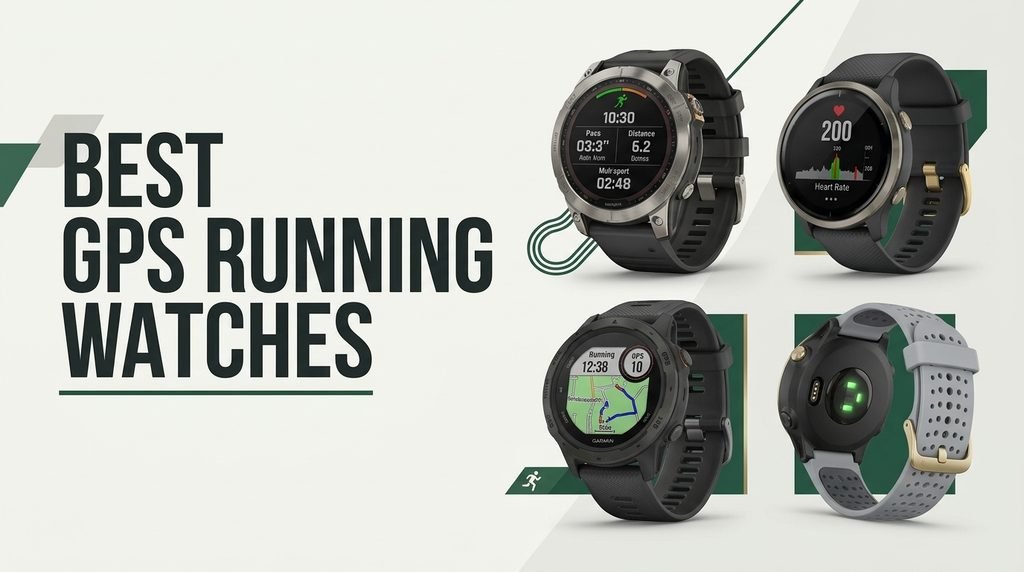
Choosing the right GPS running watch in 2026 means balancing satellite accuracy, battery life, training analytics, display quality, and price against how you actually train. We compare 10 standout models spanning entry-level runners to ultra-endurance flagships with solar charging so you can match the right hardware to your race goals, weekly mileage, and lifestyle needs.
The differences between these watches matter more than shared brand names suggest. Multi-band GPS delivers sharper accuracy in cities and forests while consuming more battery. Training readiness scores translate physiological data into daily decisions, and built-in maps enable phone-free exploration. Case size, sensor depth, and Garmin Coach integration also shape long-term daily use.
This guide breaks each option down by ideal buyer, standout strengths, and honest limitations. Whether you want an affordable first watch, a compact 42mm option for smaller wrists, a rugged trail companion with flashlight, or an ultra-marathon flagship with solar charging, the reviews below deliver clear practical guidance for choosing with confidence.
We compared 10 GPS running watches using the factors that shape real training: satellite accuracy including multi-band support, battery life in smartwatch and GPS modes, training analytics like readiness and recovery scores, built-in map depth, display type and readability, case size for wrist fit, sport profile variety, connectivity features including music and calls, build materials and durability, price positioning, and owner feedback. The notes focus on real trade-offs so each pick connects to how people actually train, race, and recover with a GPS running watch.


Compare key features, scores, and current prices side by side. A shorter feature list means fewer details were available, not necessarily fewer capabilities.


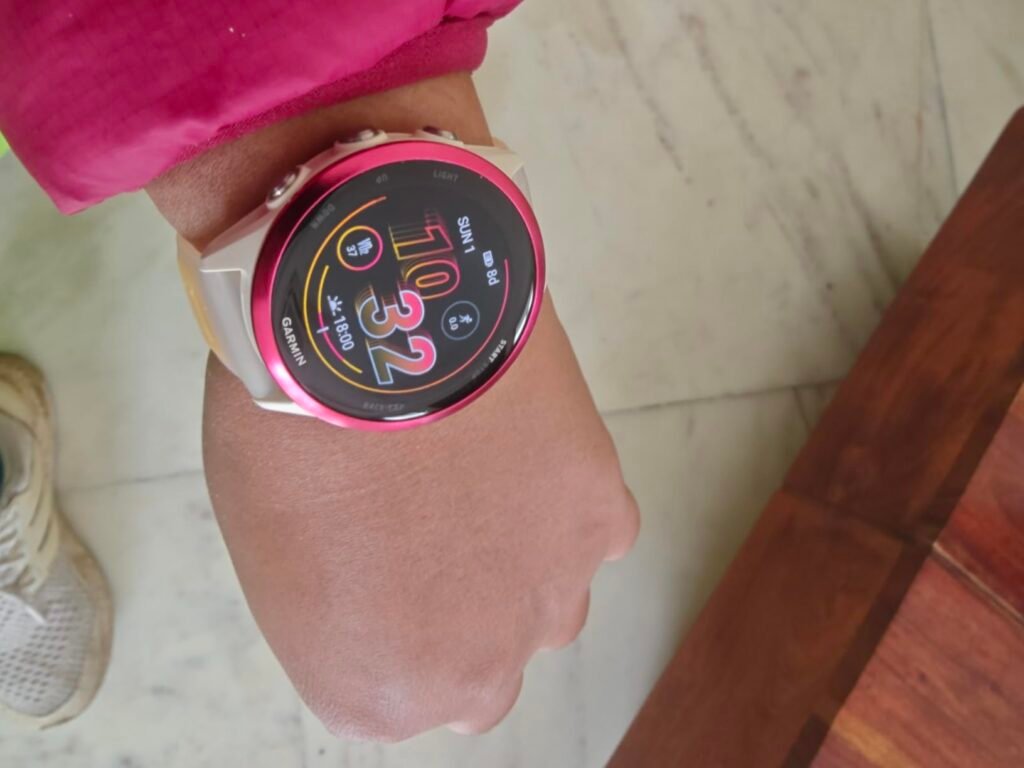
The Forerunner 570 earns the highest owner rating in this guide at 4.8 stars, reflecting its position as Garmin's most refined compact flagship running watch. The 42mm aluminum bezel construction combined with Garmin's brightest AMOLED touchscreen delivers premium build quality and outdoor visibility in a size that fits smaller wrists comfortably. This addresses the common complaint that flagship features usually require larger case sizes.
We may earn a commission when you buy through this link, at no additional cost to you.
Training readiness score is the standout analytical feature, combining sleep quality, recovery, training load, and HRV status into a single actionable number. Personalized daily suggested workouts adapt based on your race goals and performance. Morning and evening reports bookend your day with training and recovery context, plus tomorrow’s workout preview and weather. This closed-loop coaching system genuinely improves training decisions.
The built-in microphone and speaker enable phone calls directly from your wrist when paired with your smartphone, plus voice assistant access for text replies and other commands. This is unusual at the 42mm size and adds meaningful daily convenience during runs and errands. Garmin Coach training plans, 30+ built-in activity profiles, and comprehensive safety features round out the platform.
Being able to answer calls from your wrist during runs eliminates the need to pull out your phone during exercise, which is genuinely useful for coaches, on-call professionals, and parents. The built-in microphone and speaker on the 570 leverage your paired smartphone’s cellular connection, so call quality depends on your phone’s signal strength. For a running watch, this is a premium convenience feature worth having if you take calls frequently.
Choose the Forerunner 570 if you want Garmin’s most polished compact running watch with premium features and don’t mind paying flagship prices. The 10-day battery is shorter than the 965’s 23 days but adequate for weekly charging routines. For runners with smaller wrists who want the latest analytics and don’t need built-in topographic maps, this earns its highest-rated status through exceptional daily experience.
Buyers who need built-in topographic maps or want maximum battery life should choose the Forerunner 965 or 970.
We may earn a commission when you buy through this link, at no additional cost to you.
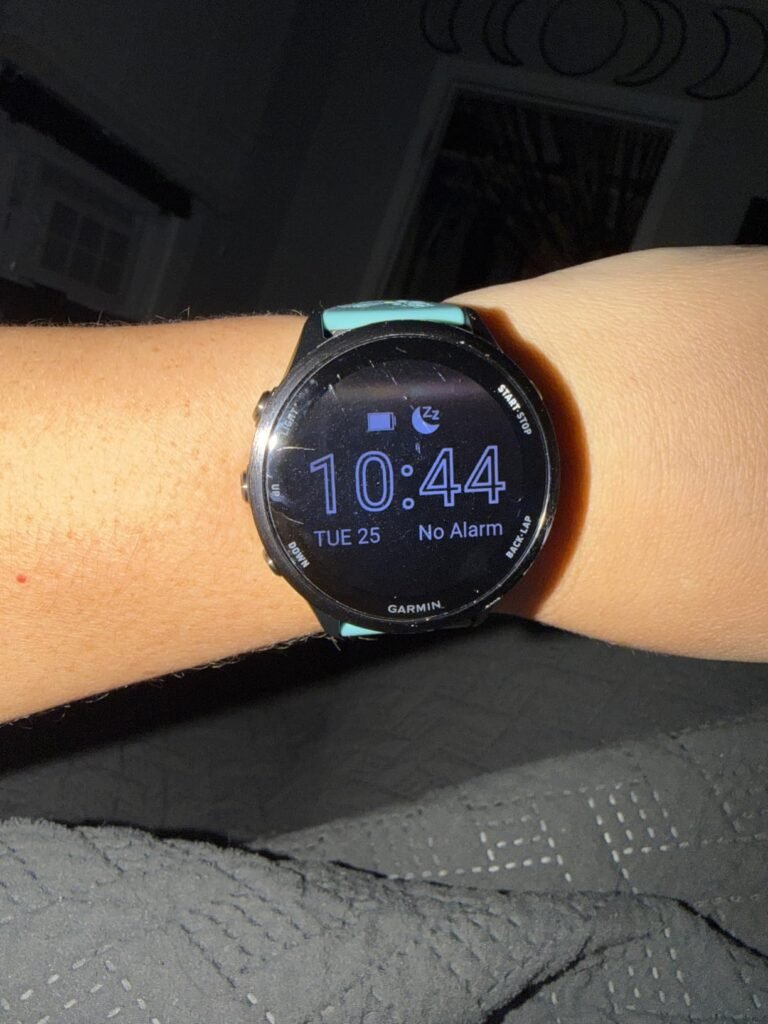
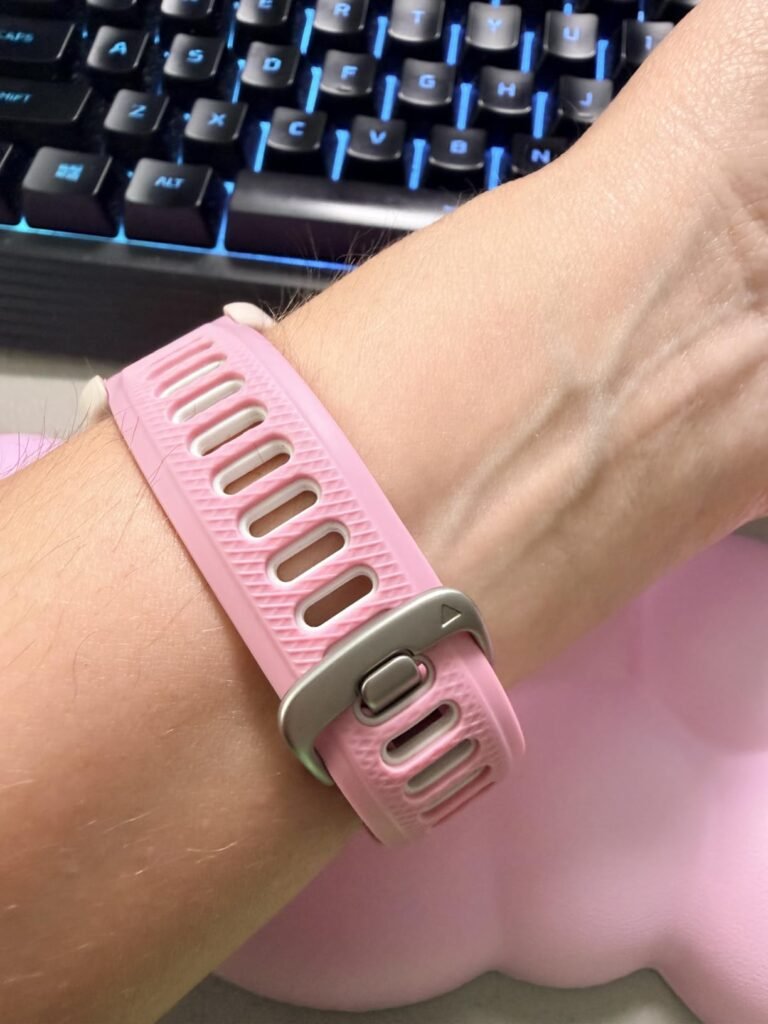
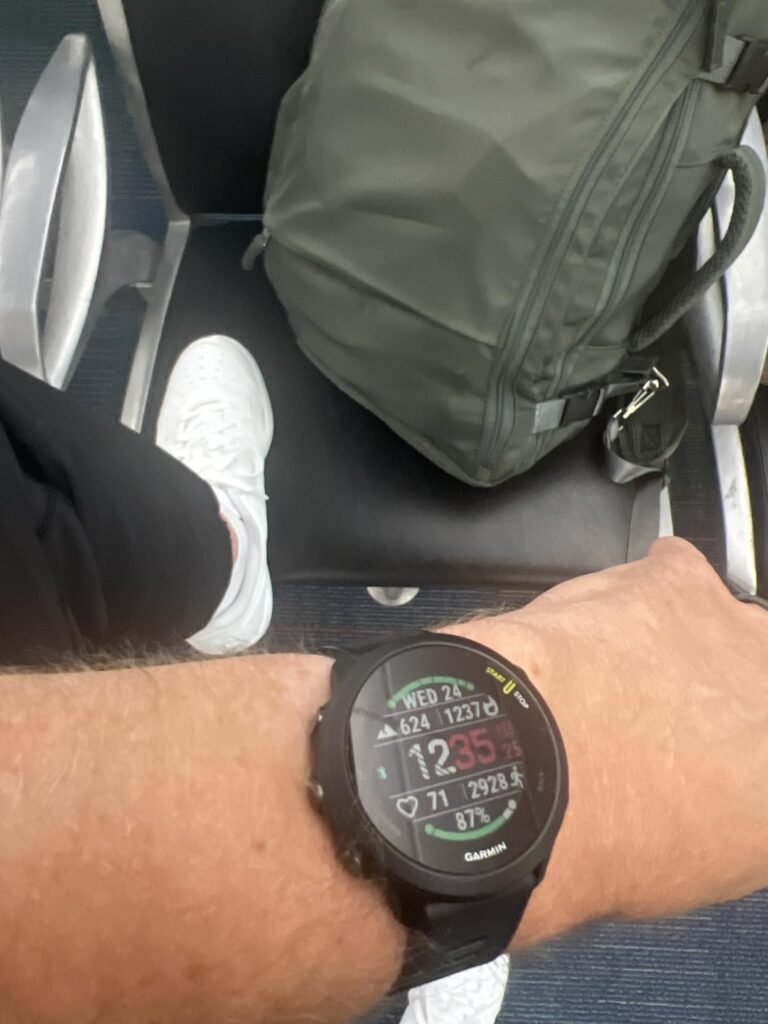
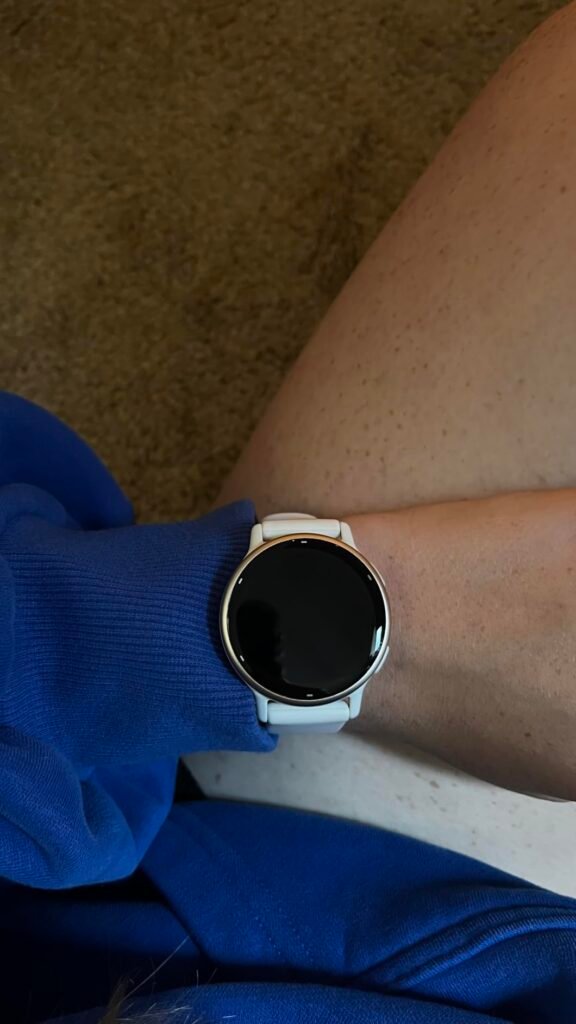
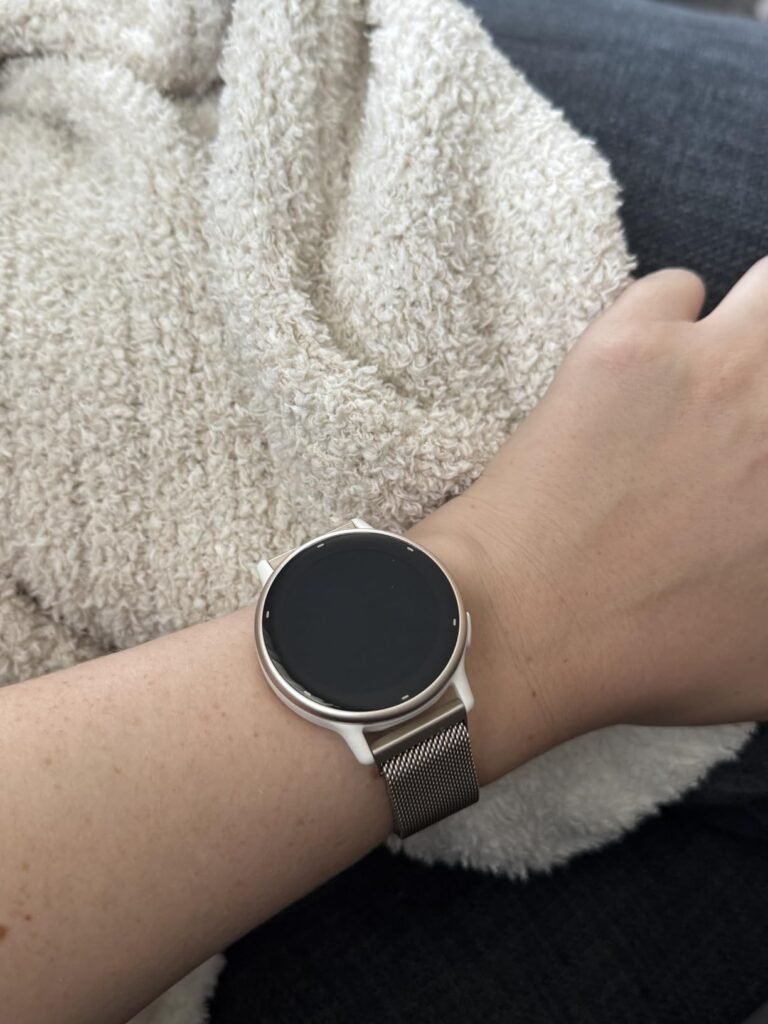
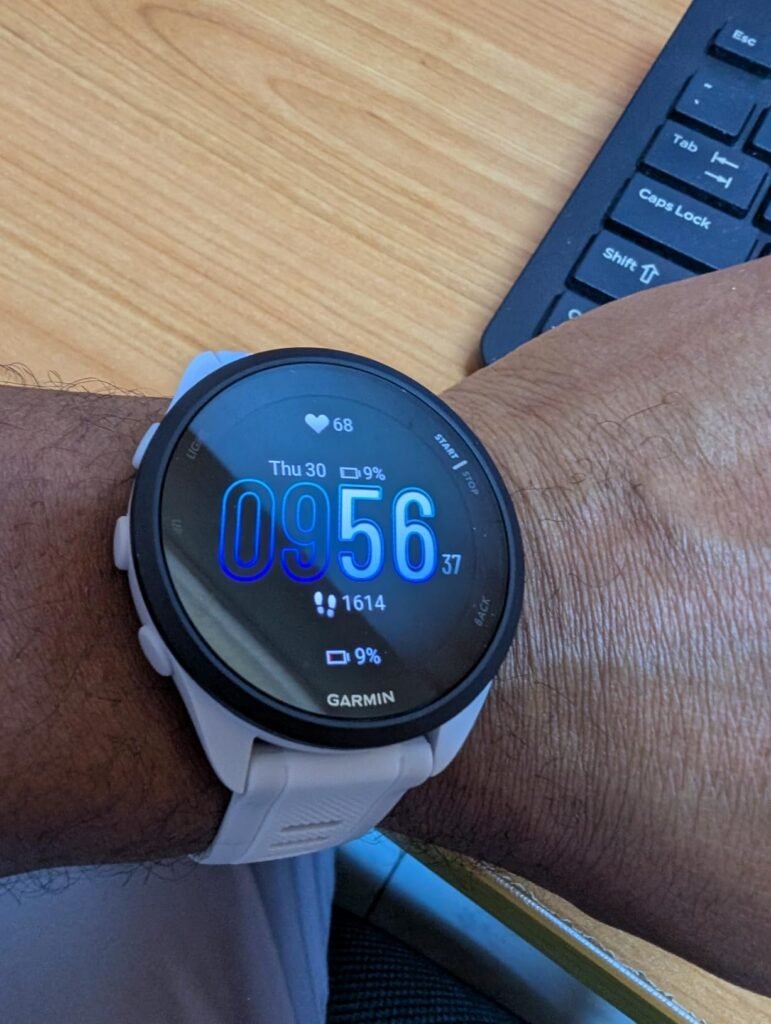
The Forerunner 165 targets new and intermediate runners who want a purpose-built running watch without the complexity or cost of Garmin's flagship models. The AMOLED touchscreen delivers crisp visuals outdoors, while traditional button controls remain reliable during sweaty runs when touch inputs become unreliable. The 43mm case sits comfortably on most wrists for daily wear.
We may earn a commission when you buy through this link, at no additional cost to you.
Personalized daily suggested workouts are the standout feature at this price. The watch adapts each session based on your recent performance and recovery, effectively delivering a smart coach on your wrist. Combined with Garmin Coach and race adaptive training plans for events like 5K, 10K, and half marathon, this makes the 165 particularly strong for runners training toward a specific goal.
Battery life reaches 11 days in smartwatch mode or 19 hours with GPS running active, comfortably covering most training weeks without daily charging. Morning report gives you a quick overview of sleep, recovery, HRV status, and weather to start each day. Training effect and recovery time metrics help you understand how each workout impacts your body and when to push again.
Static training plans assume your body responds identically week after week, which rarely matches reality. Adaptive plans like those on the Forerunner 165 adjust based on your actual performance, recovery status, and HRV trends. If you had a rough night’s sleep, the next workout eases off. If you’re recovering well, intensity ramps up. This produces smarter training progression than fixed calendar-based programs.
Choose the 165 if you’re a runner who wants meaningful training features without paying premium prices. The trade-off is single-band GPS instead of multi-band, so accuracy in dense urban canyons or heavy tree cover will trail higher-tier options. Built-in maps are also absent, so complex trail navigation requires a different watch. For most road runners logging training miles, this delivers exceptional value.
Trail runners who need topographical maps or ultra-athletes who prioritize multi-band GPS accuracy should choose a higher-tier Forerunner.
We may earn a commission when you buy through this link, at no additional cost to you.
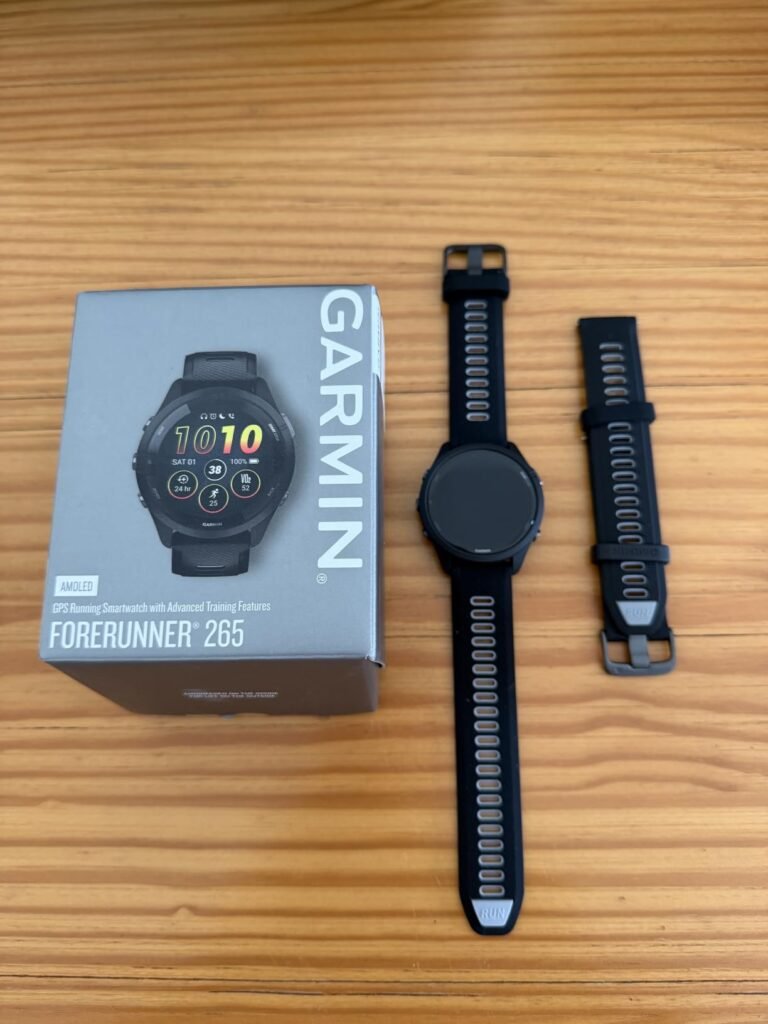
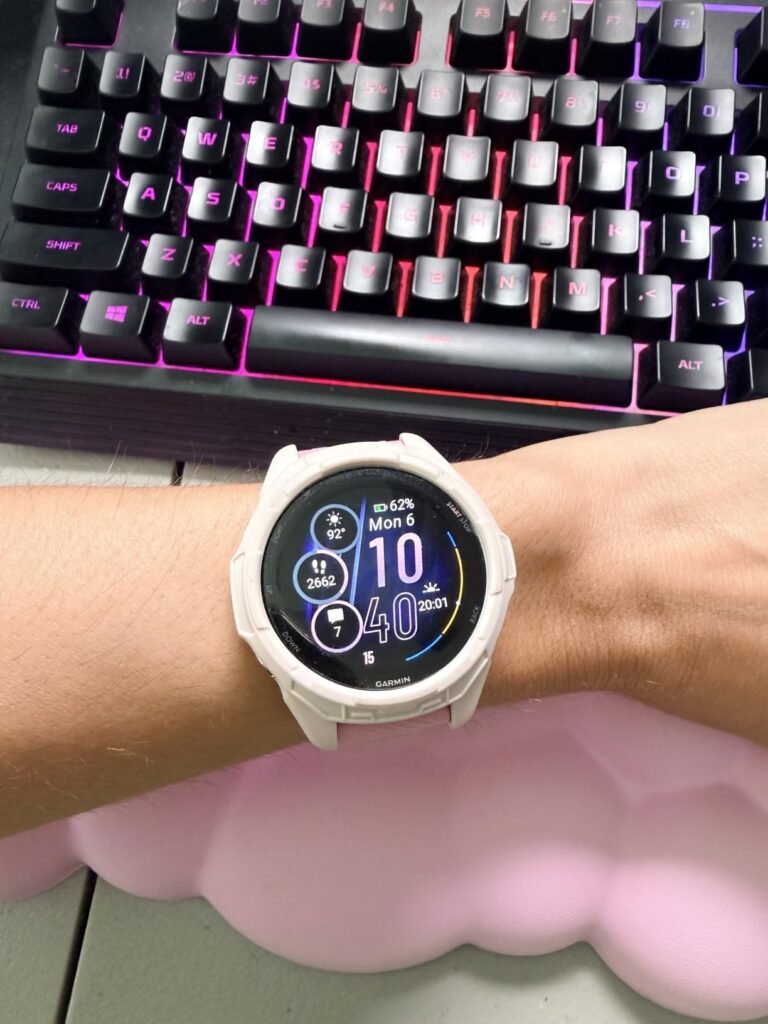
The Forerunner 265S delivers Garmin's premium training analytics in a compact 42mm case designed specifically for smaller wrists. The brilliant AMOLED touchscreen combined with traditional button controls provides the best of both input methods, and the lightweight construction makes this comfortable for all-day wear including overnight sleep tracking without the bulk of larger flagships.
We may earn a commission when you buy through this link, at no additional cost to you.
Multi-band GNSS with SatIQ technology delivers superior positioning accuracy in challenging environments like dense forests, urban canyons, and near tall buildings while intelligently managing battery consumption. This matters significantly for city runners and trail athletes who train in environments where standard single-band GPS drifts. The improved accuracy translates to trustworthy pace and distance data during hard efforts and races.
Training readiness score combines sleep quality, recovery, training load, and HRV status into a single actionable number that tells you when to push versus back off. Morning report delivers a comprehensive overview of sleep, recovery, and training outlook alongside weather. Personalized daily suggested workouts adapt based on your race goals and performance, providing structured training progression toward specific events.
Larger 45-47mm watches can feel bulky and intrusive during sleep, typing, and daily activities. Compact 42mm cases like the 265S provide comfortable all-day wear including overnight tracking without pressure points. For runners with smaller wrists, a well-fitted watch improves both comfort and heart rate accuracy because the optical sensor stays in consistent contact with your skin. Compact doesn’t mean compromised on features.
Choose the 265S if you have smaller wrists and want Garmin’s serious training analytics with multi-band GPS accuracy. The trade-off is the higher price compared to the 165, and the absence of built-in topographic maps that appear on premium 47mm alternatives. For competitive runners who value compact fit and don’t need extensive navigation features, this delivers exceptional performance in a wearable package.
Buyers who need built-in topographic maps for trail running should choose the Forerunner 965 or 970.
We may earn a commission when you buy through this link, at no additional cost to you.
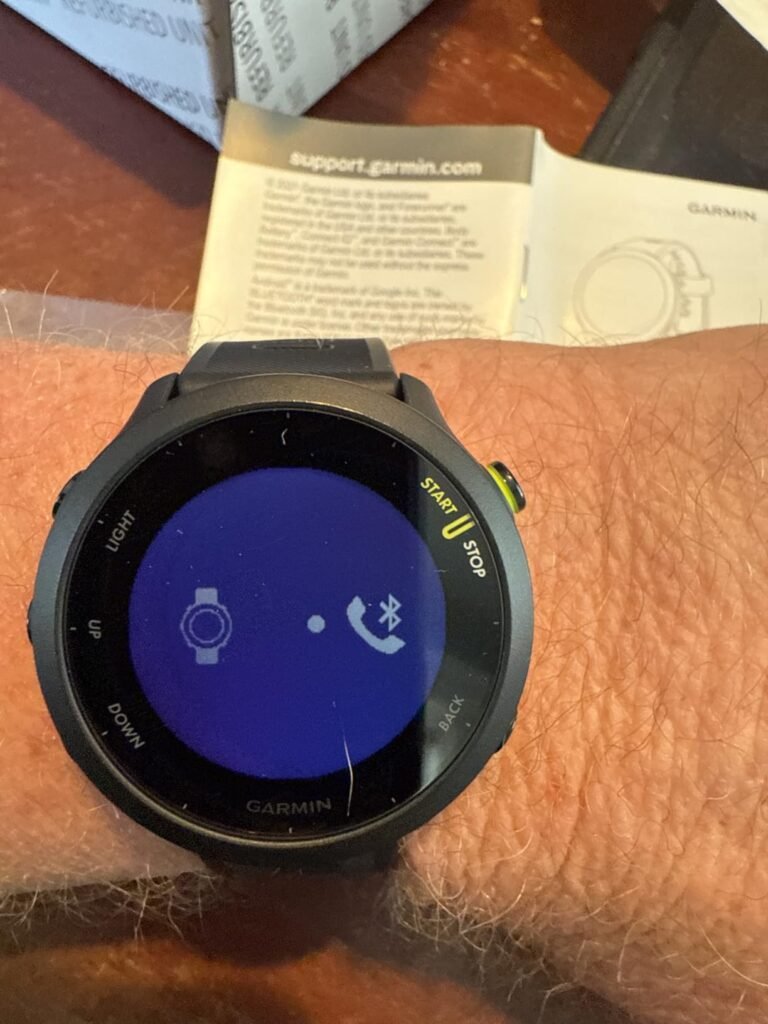
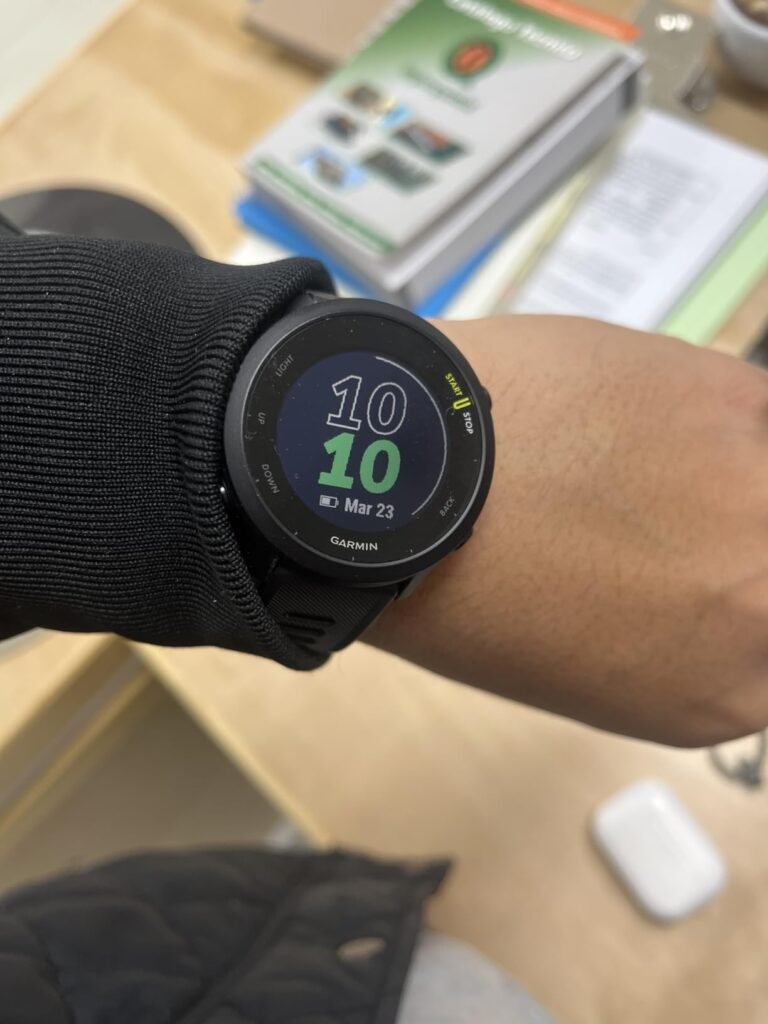
The Forerunner 55 delivers Garmin's core running features at an accessible price point through the renewed program. This entry-level watch provides wrist-based heart rate monitoring and GPS tracking for pace, distance, and route data in a straightforward package designed for runners who want essential features without paying for advanced analytics they may not use.
We may earn a commission when you buy through this link, at no additional cost to you.
PacePro is the standout feature that helps you plan race day strategy with GPS-based pace guidance for selected distances. Race time predictions and finish time estimates give you realistic performance goals based on your recent training history. Suggested workouts of varying intensities adjust automatically based on your training history, fitness level, and recovery time, providing smart training guidance.
Battery life reaches an impressive 2 weeks in smartwatch mode or 20 hours with GPS active, meaningfully outlasting many pricier watches with AMOLED displays. Built-in activity profiles cover running, cycling, track run, virtual run, pool swim, Pilates, HIIT, breathwork, and more. Advanced wellness features including intensity minutes, fitness age, and all-day respiration provide health context beyond pure running metrics.
Amazon Renewed products are professionally inspected and tested to work like new. This program gives you access to proven Garmin watches at reduced prices while maintaining functionality. Physical condition may show minor cosmetic wear, but performance meets original specifications. Garmin’s software and battery quality typically hold up well in renewed products, making this a smart way to enter the Garmin ecosystem affordably.
Choose the Forerunner 55 through the renewed program if you want proven Garmin running functionality at meaningfully lower cost. The trade-off is renewed condition variability and a non-AMOLED memory-in-pixel display that’s less vibrant than newer alternatives but excellent for outdoor visibility and battery preservation. For budget-conscious runners who want reliable training data, this delivers exceptional value.
Buyers who prefer AMOLED displays or want new-in-box condition should choose a current-generation Forerunner.
We may earn a commission when you buy through this link, at no additional cost to you.
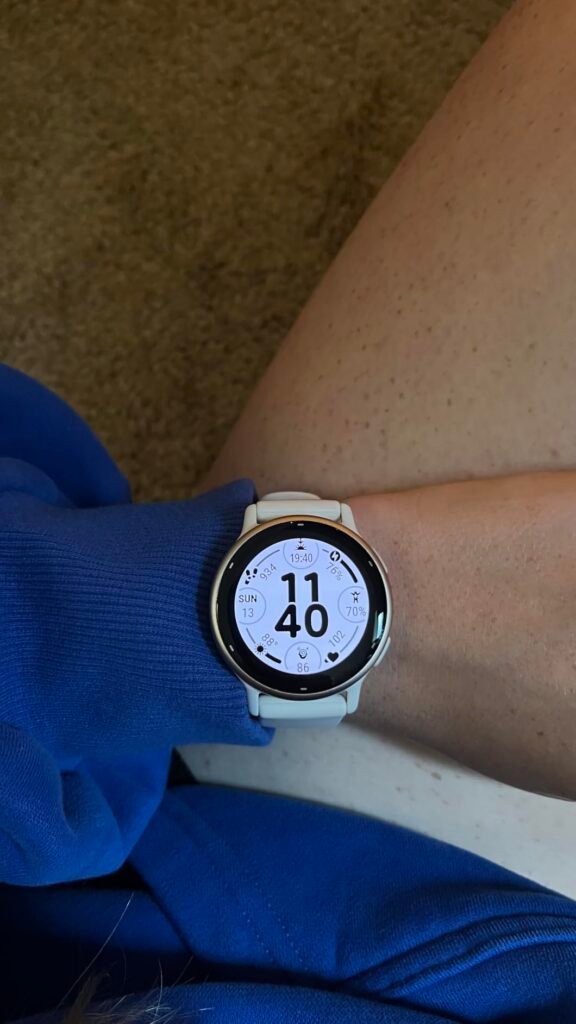
The vivoactive 5 targets buyers who run casually but also want strong daily health tracking and cross-training features. The 42mm AMOLED display works well for both workouts and office wear, and 11 days of battery life eliminates daily charging routines. This is more of a general fitness watch that handles running well rather than a running-first design.
We may earn a commission when you buy through this link, at no additional cost to you.
Body Battery energy monitoring combines sleep quality, stress levels, activity, and workout intensity into a single readiness score that guides daily decisions. Sleep coaching with HRV status adds meaningful depth for anyone focused on recovery. Automatic nap detection tracks daytime rest and its impact on Body Battery, which is useful for shift workers and parents.
The 30+ built-in sport apps cover walking, running, cycling, HIIT, swimming, golf, and more, with preloaded workouts for cardio, yoga, strength, HIIT, and Pilates. Wheelchair mode tracks pushes rather than steps and includes specific workouts and challenges. Onboard music storage for Spotify, Amazon Music, and Deezer supports phone-free running when you don’t want to carry your phone.
The vivoactive line prioritizes daily health tracking and cross-training features, while Forerunner watches prioritize running-specific metrics like training readiness, race prediction, and running dynamics. For dedicated runners, a Forerunner delivers more actionable running data. For fitness enthusiasts who run 2-3 times weekly alongside other activities, the vivoactive provides better all-around value. Match watch family to your primary use case.
Choose the vivoactive 5 if you want a versatile fitness watch that handles running alongside cross-training and daily health tracking. The trade-off is that the running-specific analytics of dedicated Forerunners are absent, and the owner rating trails premium alternatives. For runners who also do yoga, strength training, and general fitness, this delivers a well-balanced platform.
Serious runners who want deep training analytics should choose a Forerunner model instead.
We may earn a commission when you buy through this link, at no additional cost to you.
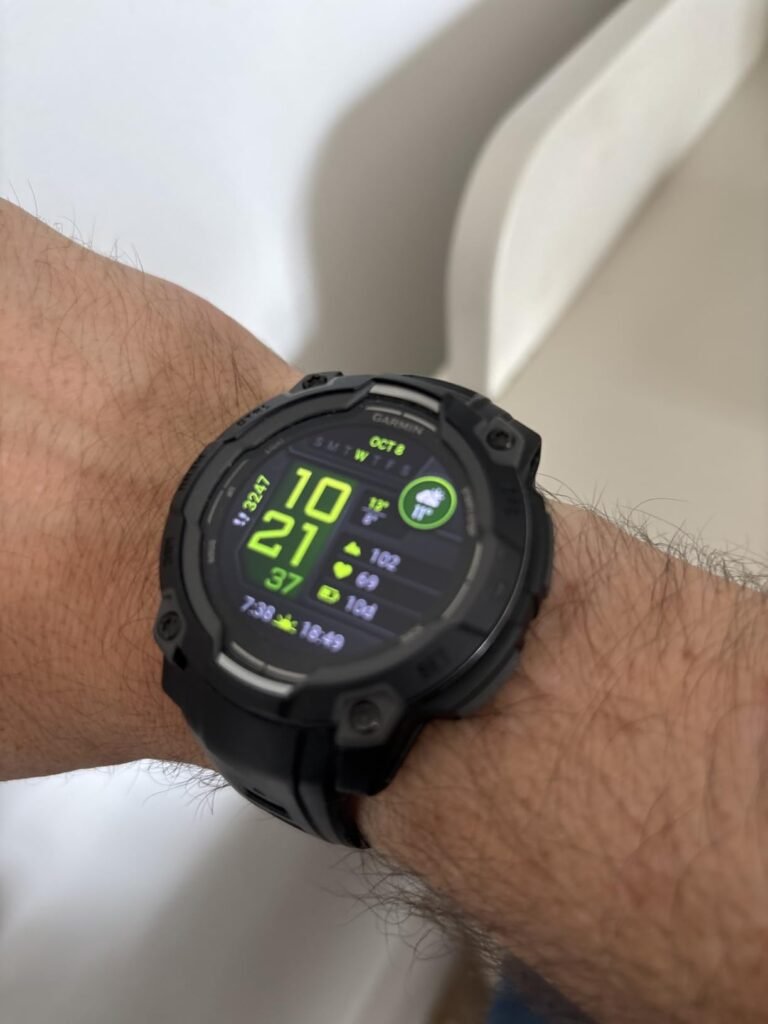
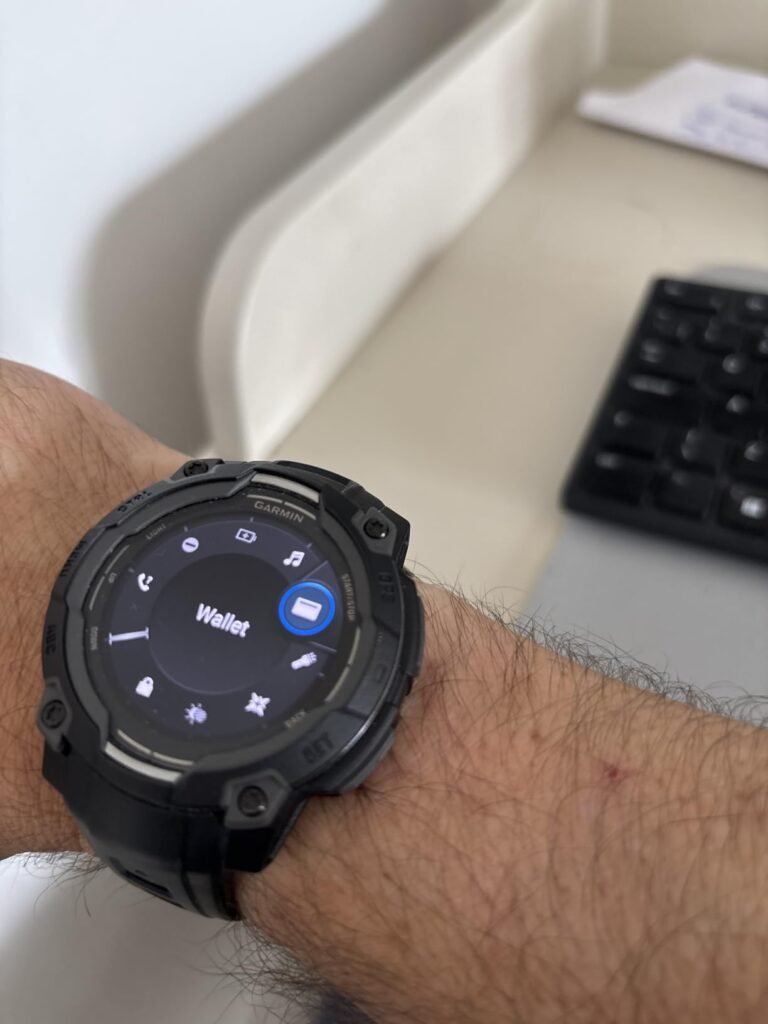
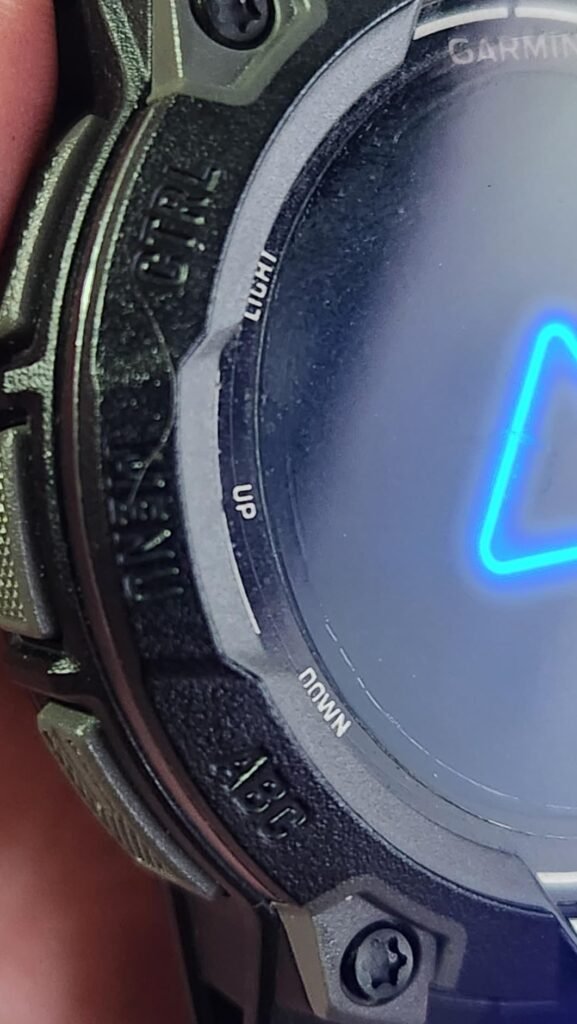
The Instinct 3 AMOLED brings vibrant color display to Garmin's toughest smartwatch line for the first time, appealing to trail runners who want rugged durability without sacrificing modern screen quality. The supertough fiber-reinforced polymer case with metal-reinforced bezel handles trail bumps, rock scrapes, and worksite impacts that would crack lesser watches.
We may earn a commission when you buy through this link, at no additional cost to you.
The built-in LED flashlight with variable intensities and strobe modes is genuinely practical for early morning runs, evening trail sessions, and camping trips. Multi-band GPS with SatIQ technology provides superior positioning accuracy in challenging environments like canyons, dense forests, and urban areas while intelligently managing battery to extend runtime. This is particularly valuable for trail runners in tricky terrain.
Battery life reaches 18 days in smartwatch mode, which is well above what most AMOLED watches deliver. Health monitoring includes wrist-based heart rate, advanced sleep monitoring, and Pulse Ox for altitude and recovery insights. The 3-axis compass and barometric altimeter round out the outdoor navigation toolkit for hikers, hunters, and adventure runners who venture beyond marked trails.
Standard single-band GPS relies on one frequency and struggles in dense tree cover, canyon walls, and steep terrain where signals bounce or get blocked. Multi-band GPS receives signals on multiple frequencies simultaneously, dramatically improving accuracy in challenging trail environments. SatIQ technology intelligently switches between modes to preserve battery when conditions are clear and boost accuracy when needed. For trail runners tracking splits and distance accurately, this is a meaningful upgrade.
Choose the Instinct 3 AMOLED if you spend significant time on trails and want a watch that handles abuse without complaint. The trade-off is that the 45mm case wears large on smaller wrists, and the running-specific analytics of Forerunners are less refined. For trail runners, ultra-athletes, and adventurers who prioritize durability and outdoor capability, this delivers class-leading ruggedness.
Runners with smaller wrists or those wanting a sleek dress-friendly design should choose a smaller Forerunner.
We may earn a commission when you buy through this link, at no additional cost to you.
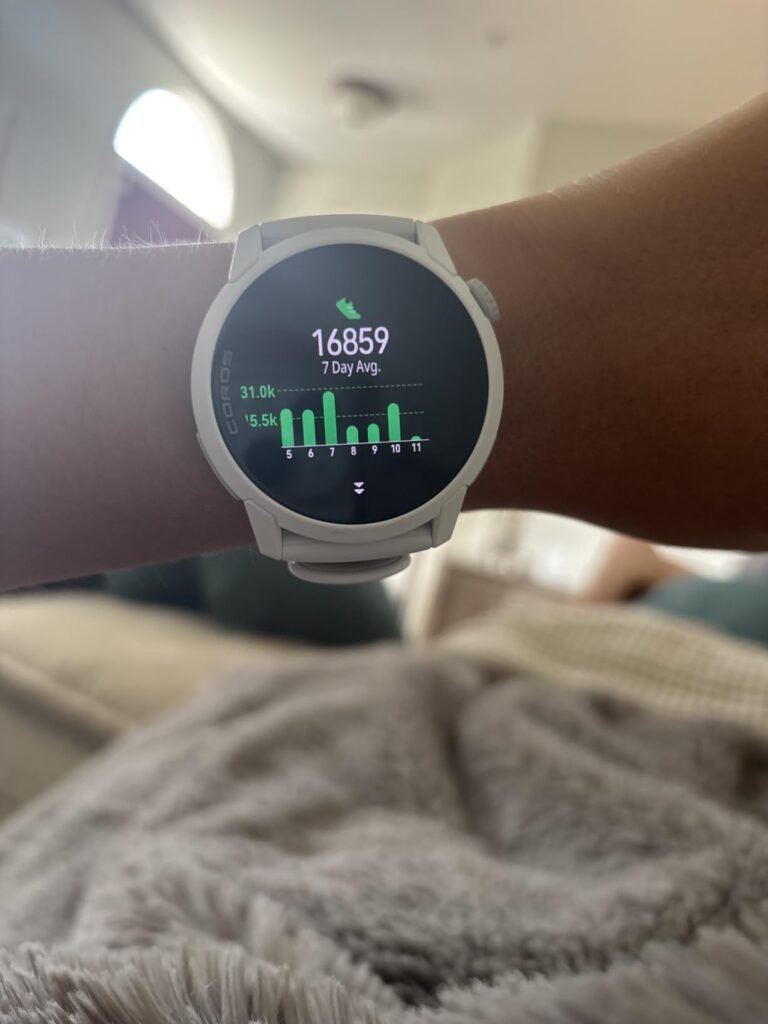
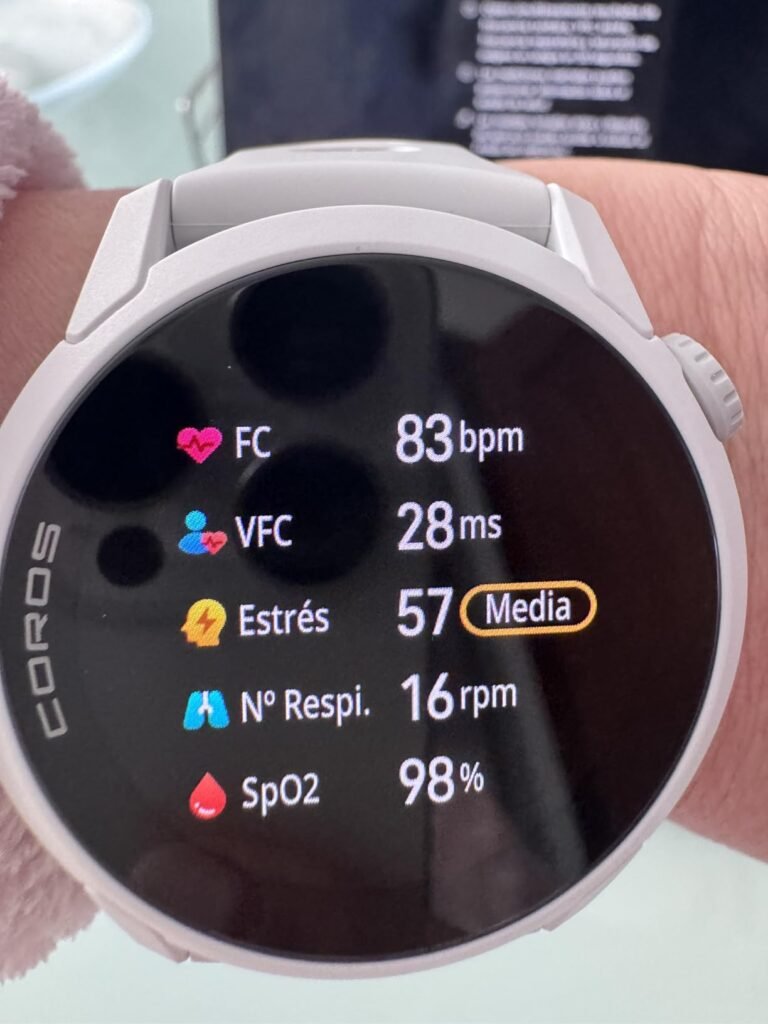
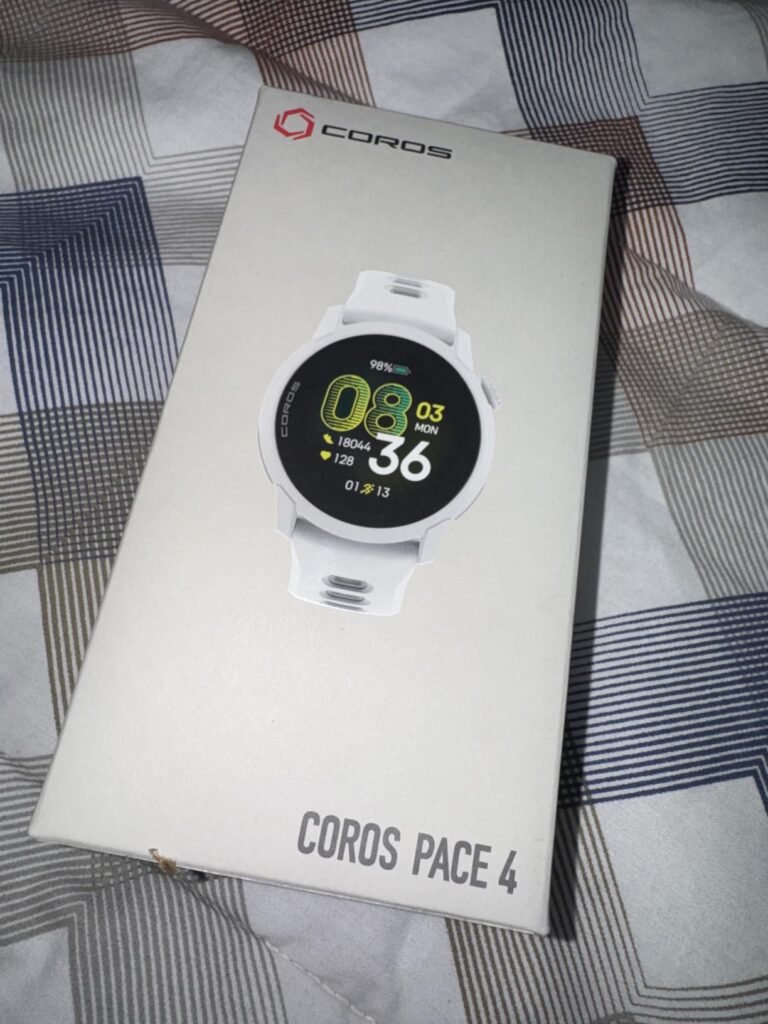
The COROS PACE 4 competes directly with entry and mid-tier Garmin Forerunners while offering a genuinely different approach centered on lightweight construction and long GPS battery life. Weighing just 32 grams with the nylon band and only 11.8mm thin, this watch is lighter than an energy gel and disappears on your wrist during long runs and everyday wear.
We may earn a commission when you buy through this link, at no additional cost to you.
The 1.2-inch touchscreen AMOLED display delivers vibrant colors and sharp lines with auto-adjusting brightness for readability in all environments. Resolution is 164 percent higher than the previous PACE 3 model, meaningfully improving readability of small text and graph details during workouts. Battery life reaches 41 hours of continuous GPS use or 19 days of daily use, which is exceptional for a watch this light.
Voice recording is a distinctive feature not found on Garmin watches. During workouts, you can record thoughts about where you were, what you saw, and how you felt, then review these voice pins with your training logs at activity completion. Voice control lets you set alarms, create workouts, and access features hands-free. The customizable action button provides one-tap access to media controls, breadcrumb navigation, or voice pin recording.
Recording voice notes during runs captures details you’d otherwise forget, like how a section of trail felt, what you noticed about your form, or ideas that came to mind. COROS’s voice pins get attached to your workout log, creating a richer training journal than just numbers. This is particularly valuable for runners working on mental game, race strategy, or coaching notes. It’s a small feature that changes how you interact with your training data.
Choose the COROS PACE 4 if you want an ultralight running watch with long GPS battery life at a competitive price. The trade-off is COROS’s smaller ecosystem compared to Garmin, with less extensive third-party app support and fewer specialized coaching features. For runners who prioritize lightweight comfort and don’t need Garmin’s specific ecosystem, this delivers strong value with distinctive voice features.
Runners committed to the Garmin ecosystem or those who need extensive third-party app support should choose a Forerunner.
We may earn a commission when you buy through this link, at no additional cost to you.
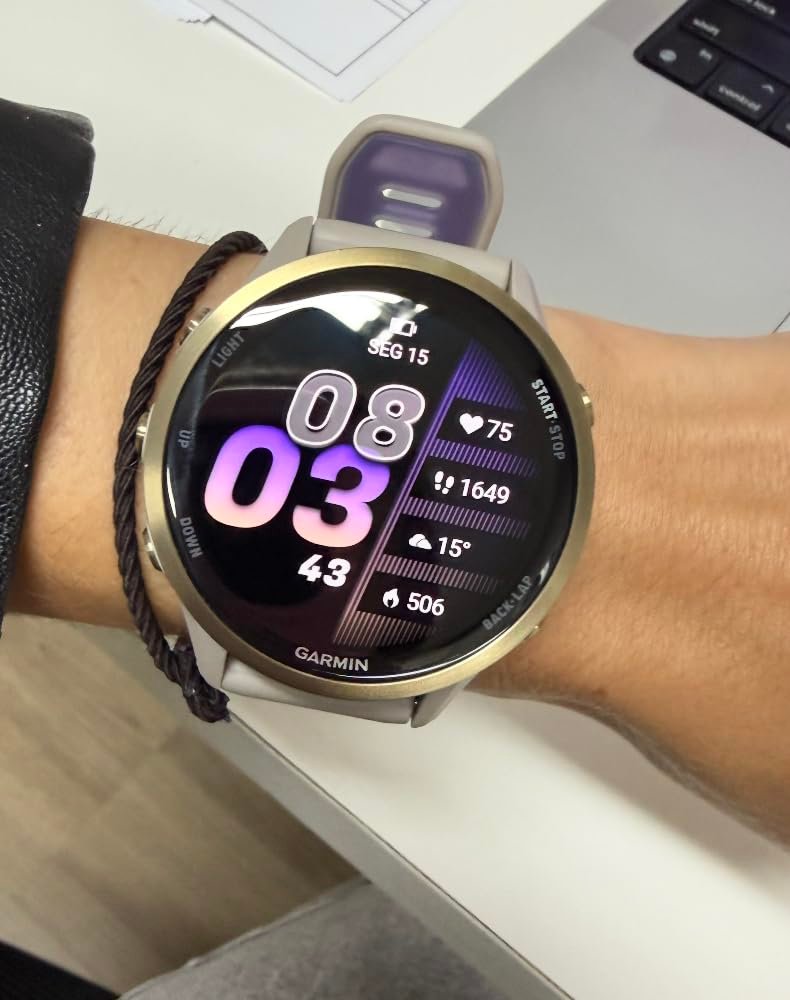
The Forerunner 970 represents Garmin's top running watch, targeting serious runners and triathletes who want the deepest training analytics available. Premium construction includes a lightweight titanium bezel and scratch-resistant sapphire lens, upgrades that meaningfully improve long-term durability over standard glass and plastic construction found on less expensive models.
We may earn a commission when you buy through this link, at no additional cost to you.
Advanced running metrics set this apart from lower-tier Forerunners. Running economy measures overall energy efficiency, step speed loss shows how much you slow when your foot hits the ground (requires the HRM 600 monitor sold separately), and running tolerance quantifies real impact on your body to help avoid overload. Wrist-based running dynamics and continuous running power measurements provide training feedback previously requiring separate sensors.
The built-in speaker and microphone enable phone calls directly from the wrist when paired with your smartphone, plus voice assistant access for text replies. Full-color built-in maps combined with multi-band GPS deliver confident navigation on any route, and dynamic round-trip routing generates new paths when you deviate from planned courses. The ECG app can record heart rhythm and check for atrial fibrillation signs.
Running dynamics measure how you actually run, not just how fast. Cadence, stride length, ground contact time, vertical oscillation, and running power provide insight into form efficiency and injury risk. Better cadence (typically 170-180 steps per minute) reduces overstriding and impact. Consistent ground contact balance suggests symmetric form. This data helps runners identify form issues that limit performance and increase injury risk over long training blocks.
Choose the Forerunner 970 if you’re a competitive runner or triathlete who wants the most sophisticated training platform available. The trade-off is the premium price and the fact that some advanced metrics like running economy require the separate HRM 600 chest monitor. For dedicated runners who value data depth and premium construction, this is the definitive Forerunner choice below the Fenix line.
Casual runners or budget-conscious buyers should consider the Forerunner 165 or 265S instead.
We may earn a commission when you buy through this link, at no additional cost to you.
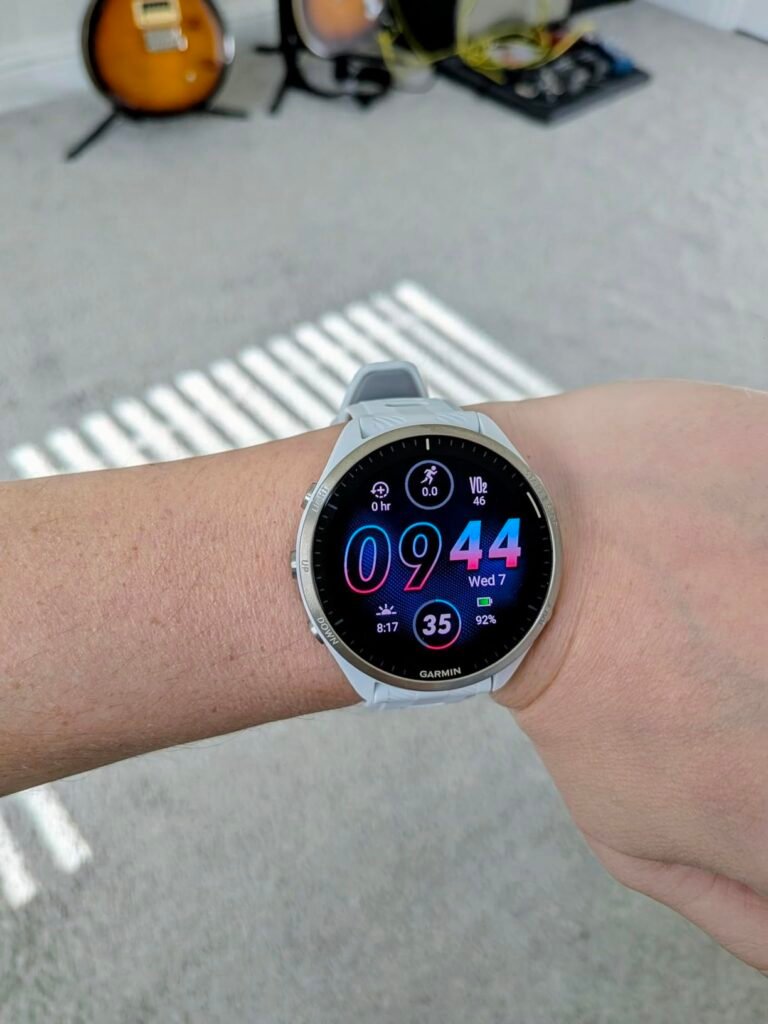
The Forerunner 965 remains a top choice for competitive runners and triathletes who want premium performance without stepping up to the newer 970's higher price. The brilliant AMOLED touchscreen combined with the lightweight titanium bezel delivers premium construction, and the 23-day battery in smartwatch mode is exceptional for a watch of this class.
We may earn a commission when you buy through this link, at no additional cost to you.
Multi-band GNSS with SatIQ technology provides superior GPS accuracy in challenging environments while intelligently managing battery. This matters most in urban canyons, dense forests, and near tall buildings where standard GPS drifts significantly. For race-day pacing accuracy and workout data integrity, the accuracy difference from single-band GPS is genuinely meaningful.
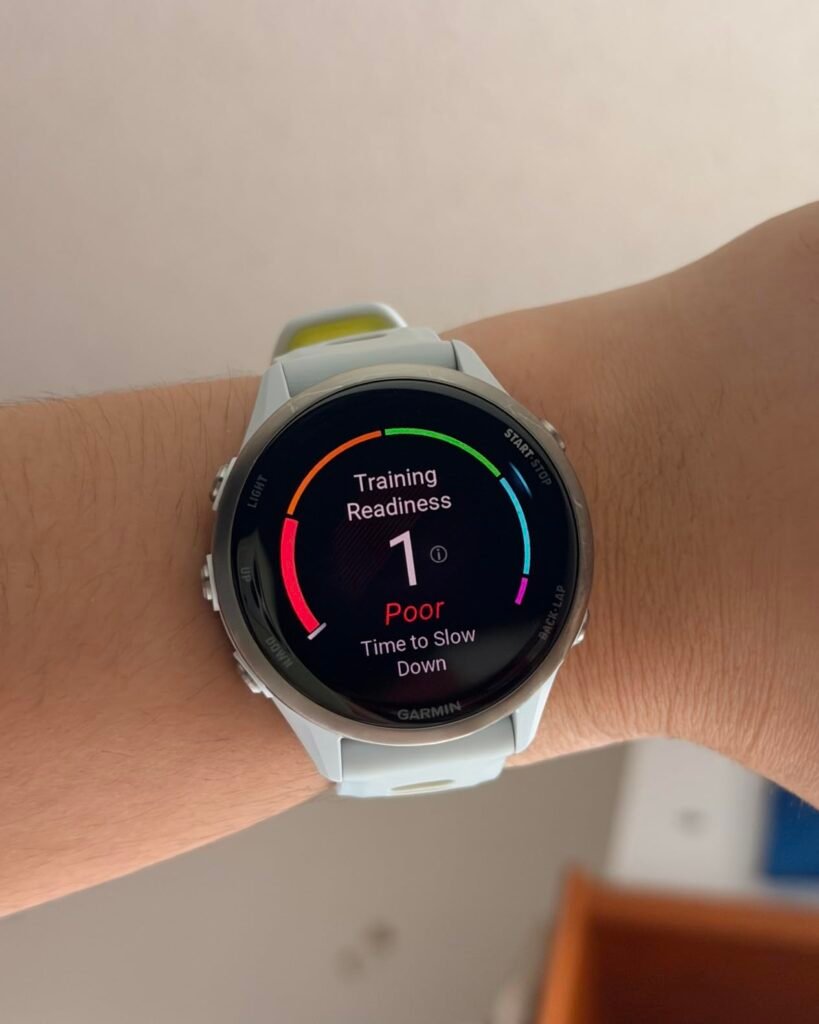
Training readiness scores combine sleep quality, recovery, training load, and HRV status to tell you when you’re primed for hard sessions versus when you should back off. Full-color built-in maps enable confident navigation on any route, and multisport profiles for triathlons, duathlons, brick workouts, and swimruns let you switch sports with a button press. Race widget planning helps you strategize event day pacing.
Recovery time tells you how long until your body has recovered from a specific workout, useful but limited. Training readiness score integrates multiple factors including sleep quality, HRV trends, recent training load, and stress levels into a single actionable number from 0-100. Higher scores mean you can push hard, lower scores suggest active recovery. This holistic approach captures your total physiological state better than recovery time alone.
Choose the Forerunner 965 over the 970 if you want most of the training features at a lower price point. The 970 adds running economy metrics, built-in speaker and mic, and even brighter display. For most competitive runners and triathletes who don’t need the absolute newest features, the 965 delivers exceptional value at a still-premium level with the standout 23-day battery life.
Buyers with smaller wrists should consider the Forerunner 265S or 570 for compact fit.
We may earn a commission when you buy through this link, at no additional cost to you.
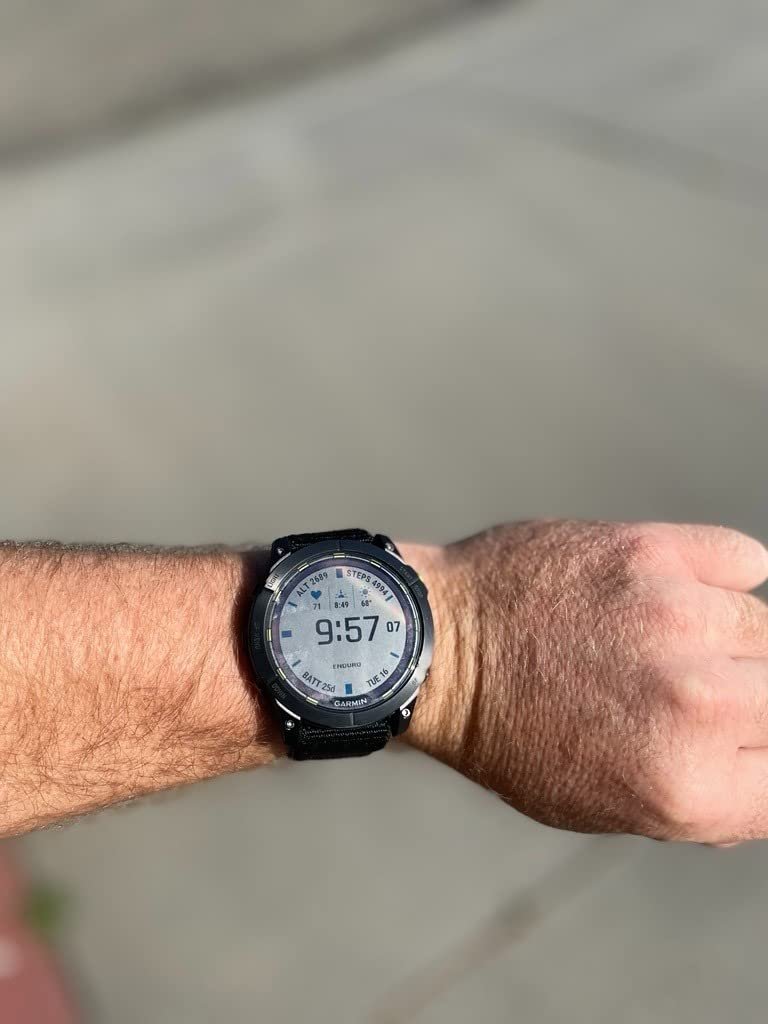
The Enduro 2 targets ultra-marathon runners, thru-hikers, and adventure racers who need extreme battery life for multi-day events. The 1.4-inch Power Sapphire lens harvests solar energy to extend battery life beyond what any standard watch can offer, reaching 46 days in smartwatch mode and 150 hours in GPS mode under sunny conditions. This eliminates charging concerns during expeditions.
We may earn a commission when you buy through this link, at no additional cost to you.
AutoSelect mode uses SatIQ technology to dynamically determine the GPS mode necessary to maximize battery life without compromising positional accuracy. The watch intelligently switches between single-band and multi-band based on environmental conditions, delivering accuracy when needed and battery preservation when possible. This is particularly valuable for point-to-point ultra events where charging isn’t feasible.
The superbright LED flashlight is twice as bright as the Fenix 7X and offers variable intensities with strobe modes matched to running cadence. Red safety light mode helps maintain awareness of immediate surroundings during night running. Preloaded TopoActive and ski maps provide comprehensive navigation. The NextFork map guide shows distance to the next trail intersection, and grade-adjusted pace helps you understand pace changes over varying terrain.
Power Sapphire lens technology captures solar energy through the watch face and converts it to electricity that trickles into the battery during outdoor use. In sunny conditions (50,000 lux), this can add hours of runtime to daily use and meaningfully extend GPS tracking during long events. Solar charging doesn’t fully recharge the watch on its own but reduces how often you need to plug in, which is transformative for multi-day expeditions.
Choose the Enduro 2 if you compete in ultra-endurance events or take multi-day adventures where charging is impractical. The Adventure Racing World Series-approved app plus endurance and stamina metrics take training to a specialized level. The trade-off is the large case size and premium price positioned for a specific ultra-athlete niche. For most runners, other Forerunners deliver better value, but ultra athletes get unmatched capability.
Casual runners or urban athletes should choose a standard Forerunner for better value and appropriate features.
We may earn a commission when you buy through this link, at no additional cost to you.
The right GPS running watch depends on your race goals, weekly mileage, environments, and how deeply you engage with training data. The factors below break down what actually matters when narrowing your choice across Garmin’s Forerunner and Instinct families, plus alternatives like COROS.
GPS accuracy directly affects pace, distance, and route data quality. Standard single-band GPS works well in open environments but struggles in urban canyons, dense forests, and near tall buildings. Multi-band GPS uses multiple frequencies simultaneously, dramatically improving accuracy in challenging conditions. Watches like the Forerunner 265S, 570, 965, 970, and Instinct 3 AMOLED all include multi-band GPS with SatIQ technology that intelligently balances accuracy against battery consumption.
Entry-level watches like the Forerunner 165 use single-band GPS, which is sufficient for road running and general outdoor use but may show meaningful drift on trails through dense tree cover or through downtown city grids. For serious training data integrity, race-day pacing accuracy, and trail navigation, multi-band GPS becomes worth the price premium.
Choose single-band if you mainly run on open roads or open trails. Choose multi-band if you train in urban environments, dense forests, or need precise data for competitive analysis and race pacing.
Watches publish two battery numbers: smartwatch mode (with continuous heart rate, notifications, and periodic use) and GPS mode (with active GPS tracking for workouts). Smartwatch modes range from 10 days on the Forerunner 570 to 46 days on the solar-charged Enduro 2. GPS modes vary from 18 hours on the Forerunner 570 to 150 hours on the Enduro 2.
Battery reserves matter differently based on your usage. Casual users doing occasional workouts can comfortably manage with 10-day watches. Daily runners logging hour-long sessions benefit from longer reserves that stretch charging cycles to weekly rather than daily. Ultra-runners and multi-day athletes need the longest possible GPS mode battery to complete events without charging breaks.
Match battery expectations to your training volume. Prioritize longer smartwatch battery if you dislike frequent charging. Prioritize longer GPS mode battery if you do long workouts, ultra events, or multi-day adventures.
Case size affects both comfort and daily wearability. Compact 42mm watches like the Forerunner 265S, 570, and vivoactive 5 fit smaller wrists comfortably and work well for overnight sleep tracking without pressure points. Larger 47mm watches like the Forerunner 965 and 970 provide more display real estate for maps and menus but can feel bulky on smaller wrists.
Consider that Garmin often offers premium features across multiple case sizes. The Forerunner 570 delivers most of the flagship experience in a compact 42mm case that suits smaller wrists, while the 970 provides similar features in the larger 47mm size for those who prefer bigger displays. Try-on considerations matter significantly here.
Match case size to your wrist and daily lifestyle. Prioritize compact designs for overnight sleep tracking comfort and versatility. Prioritize larger cases if you want maximum display area for maps and detailed menus.
Training feature depth varies dramatically across the lineup. Entry-level watches like the Forerunner 55 and 165 include personalized daily workouts, Garmin Coach adaptive plans, and basic recovery guidance. Mid-tier watches like the Forerunner 265S and 570 add training readiness scores, race widgets, and morning report. Premium watches like the Forerunner 965 and 970 add running dynamics, running power, and running economy metrics.
Consider whether you’ll actually use advanced features before paying for them. Running economy requires the HRM 600 chest monitor sold separately. Some metrics need weeks of consistent wear to calibrate. If you won’t use these features, save money on a simpler watch. Beginners often benefit more from adaptive training plans and race predictions than from advanced running dynamics they don’t yet understand.
Prioritize deep training analytics if you’re a competitive athlete tracking specific performance goals. Choose simpler platforms if you want general running data without data overwhelm.
Built-in topographic maps enable confident navigation on trails and unfamiliar routes without pulling out your phone. The Forerunner 965 and 970 include full-color built-in maps with turn-by-turn navigation and dynamic round-trip routing that generates new paths when you deviate from planned courses. The Enduro 2 adds preloaded TopoActive and ski maps for wilderness use.
Watches without built-in maps like the Forerunner 165 and 265S still support breadcrumb navigation, which shows your path traced on the screen. This works well for out-and-back runs but doesn’t help when you’re genuinely lost. If you regularly explore new routes or trails, built-in maps meaningfully improve safety and confidence.
Prioritize built-in maps if you frequently explore new routes or run on unmarked trails. Skip maps if you run familiar roads and don’t want to pay for features you won’t use.
Modern GPS running watches primarily use bright AMOLED displays that deliver vibrant colors and excellent readability. All 10 watches in this guide use AMOLED technology, though brightness levels vary. The Forerunner 570 features Garmin’s brightest AMOLED for maximum outdoor visibility, while the Forerunner 970 delivers similar peak brightness with premium sapphire lens protection.
The Forerunner 55 uses a memory-in-pixel (MIP) display rather than AMOLED. MIP displays are less vibrant but excellent for outdoor visibility in direct sunlight and provide meaningfully better battery life than AMOLED. Some runners actually prefer MIP for its always-on visibility during workouts without the AMOLED battery drain.
Choose AMOLED for vibrant modern aesthetics and rich menu graphics. Choose MIP if you prioritize maximum battery life and outdoor readability over color richness.
Modern GPS running watches include comprehensive health tracking beyond pure running metrics. Wrist-based heart rate, sleep tracking, HRV status, and stress monitoring appear across virtually all current models. Premium watches add features like ECG heart rhythm monitoring (Forerunner 970), Pulse Ox blood oxygen tracking, and detailed sleep architecture analysis.
Recovery tracking specifically helps runners avoid overtraining. Training readiness scores on the Forerunner 265S, 570, 965, and 970 integrate sleep quality, HRV status, and training load into actionable daily guidance. Body Battery on the vivoactive 5 combines these factors into a simple 0-100 energy score. These metrics translate physiological data into clear decisions about when to push and when to rest.
Prioritize watches with training readiness or Body Battery if you struggle with overtraining or want structured recovery guidance. Basic recovery time works fine for casual runners who intuitively know when to rest.
Many current GPS running watches include onboard music storage for phone-free running. The vivoactive 5, Forerunner 265S, 570, 965, and 970 all support downloading Spotify, Amazon Music, or Deezer playlists (premium subscription required for these services). Combined with wireless headphones, this enables complete phone-free workouts.
Garmin Pay contactless payments let you leave cash and cards at home during runs. Support depends on your bank participating with Garmin Pay. Built-in speaker and microphone on the Forerunner 570 and 970 enable wrist-based phone calls when paired with your smartphone, plus voice assistant access for text replies and other commands.
Prioritize music storage if you regularly run without your phone. Prioritize speaker and mic if you take calls or use voice assistants frequently. Consider these features based on your actual daily habits.
Start by installing the Garmin Connect app on your smartphone and creating a Garmin account before turning on the watch for the first time. Complete the initial pairing, sign in, and let the watch download any pending firmware updates before your first workout. Wear the watch about a finger’s width above your wrist bone with a snug but comfortable fit, which keeps the optical heart rate sensor in constant skin contact for accurate readings. Loose fit produces noisy heart rate data, particularly during high-intensity workouts. Consider using a chest strap heart rate monitor for interval training if wrist-based readings prove inconsistent.
Charge the watch consistently to develop a routine that fits your battery reserve. Watches with 10-15 day batteries work well with weekly charging during showers or workouts. Watches with 20+ day reserves can charge every 2-3 weeks during weekend maintenance. The Enduro 2’s solar charging extends intervals significantly under sunny outdoor use. Avoid leaving watches plugged in continuously for weeks at a time, and try to keep the battery between 20-80 percent for daily use when possible to preserve long-term battery health.
Clean the watch case, back sensor, and band regularly with a slightly damp microfiber cloth to remove sweat, sunscreen, and skin oils that accumulate during workouts. Silicone bands rinse easily under running water. Leather and metal bands need dry cleaning with a soft cloth. Avoid harsh chemicals, perfumes, and cleaning solvents that degrade seals and coatings. For watches with Pulse Ox sensors, keep the back optical array clean for accurate readings. If you swim regularly with the watch, rinse it under fresh water after saltwater or chlorine exposure to preserve gasket integrity over time.
The Garmin Forerunner 165 is the strongest choice for beginners who want a purpose-built running watch. It combines an AMOLED touchscreen, personalized daily workouts, Garmin Coach adaptive plans, and 25+ activity profiles at an approachable price. The Forerunner 55 through Amazon Renewed provides similar functionality at even lower cost if you're comfortable with renewed condition. Both deliver essential training features without overwhelming complexity.
Multi-band GPS delivers meaningfully better accuracy in urban canyons, dense forests, and challenging terrain. If you run mostly on open roads or open trails, single-band GPS on watches like the Forerunner 165 provides adequate accuracy. City runners, trail athletes, and competitive runners who need precise pace data for race pacing should invest in multi-band models like the Forerunner 265S, 570, 965, 970, or Instinct 3 AMOLED.
Battery life varies significantly by model. Smartwatch mode ranges from 10 days on the Forerunner 570 to 46 days on the solar-charged Enduro 2. GPS mode reduces battery to 18-31 hours on most models, with the Enduro 2 reaching 150 hours in sunny conditions. Choose based on how frequently you're willing to charge and how long your typical workouts run. Ultra-runners should prioritize maximum GPS mode battery.
Forerunners are purpose-built for running with running-focused analytics, training plans, and lighter designs at generally lower prices. Fenix watches deliver premium multi-sport capability with the deepest feature sets, most rugged construction, and highest prices. If running is your primary sport, choose a Forerunner. If you cross-train across many disciplines and want dive capability, satellite communication, or extreme durability, consider a Fenix instead.
Case size doesn't directly affect GPS accuracy since all Garmin watches use the same underlying GPS hardware within their tier. However, case size affects comfort and fit consistency, which indirectly impacts heart rate accuracy. A well-fitted 42mm watch on a small wrist may provide better heart rate data than a poorly-fitted 47mm watch. Choose case size for comfort first, then evaluate GPS tier separately.
Most Garmin running watches handle pool and open-water swimming without issue thanks to 5 ATM or higher water resistance ratings. Watches with specific swim profiles like the Forerunner 265S, 570, 965, and 970 track pool laps, strokes, and open-water distance. Avoid hot tubs and saunas as extreme temperatures can degrade gasket seals over time. Rinse the watch under fresh water after saltwater or chlorine exposure.
Modern wrist-based heart rate sensors on Garmin watches are accurate for most training situations including easy runs, tempo work, and long runs. Chest straps like the HRM 600 provide more accurate readings during high-intensity intervals where wrist-based readings can lag or spike. Serious runners tracking specific heart rate zones during intervals benefit from chest straps. The HRM 600 also unlocks running economy metrics on the Forerunner 970.
Training readiness scores integrate multiple physiological metrics into a single actionable number, providing genuinely useful daily guidance when calibrated. Accuracy improves after 2-3 weeks of consistent wear as the watch establishes your baselines. The scores work best as directional guidance rather than absolute rules. If the score suggests rest but you feel great, trust your body. If the score suggests you're ready but you feel exhausted, rest anyway.
No, the Forerunner 165 does not include built-in maps. It supports breadcrumb navigation that traces your path on the screen for out-and-back routes but cannot display topographic maps or provide turn-by-turn navigation. For built-in full-color maps, you need to upgrade to the Forerunner 965, 970, or Enduro 2. Consider whether you actually need mapping before paying for it.
Quality Garmin running watches typically last 3-5 years of daily use with proper care. Premium models with sapphire lenses and titanium bezels often exceed this significantly. The rechargeable battery is usually the first component to show degradation, typically after 2-4 years of daily charging. Garmin provides software updates for many years, extending useful life. Trade-in programs make it easier to upgrade when new generations launch.
The Garmin Forerunner 570 stands as the strongest overall choice for most serious runners, earning the highest owner rating in this guide at 4.8 stars. Its compact 42mm aluminum bezel construction, brightest AMOLED touchscreen, training readiness score, and built-in microphone and speaker deliver Garmin's most polished running experience in a wearable package. For runners who want premium features without the bulk of 47mm flagships, this delivers exceptional daily value.
For different priorities, the Forerunner 165 is the best entry point for runners who want purpose-built training features at an approachable price. The Forerunner 265S provides multi-band GPS accuracy in a compact case at mid-range pricing. Trail runners benefit from the Instinct 3 AMOLED's rugged construction and built-in flashlight. Ultra-athletes should invest in the Enduro 2 for its solar charging and 150-hour GPS mode. Budget shoppers get strong value from the renewed Forerunner 55, while the COROS PACE 4 offers a genuine Garmin alternative with distinctive voice recording features.
Your best decision starts with clarifying your training volume, race goals, and how deeply you engage with training data. Match watch tier to your actual needs rather than paying for features you won't use. Prioritize multi-band GPS if you train in cities or forests, built-in maps if you explore new routes, and premium construction if you want years of daily wear. Any of these 10 watches will deliver reliable GPS tracking and running data; the right one for you matches your specific training style, budget, and lifestyle.