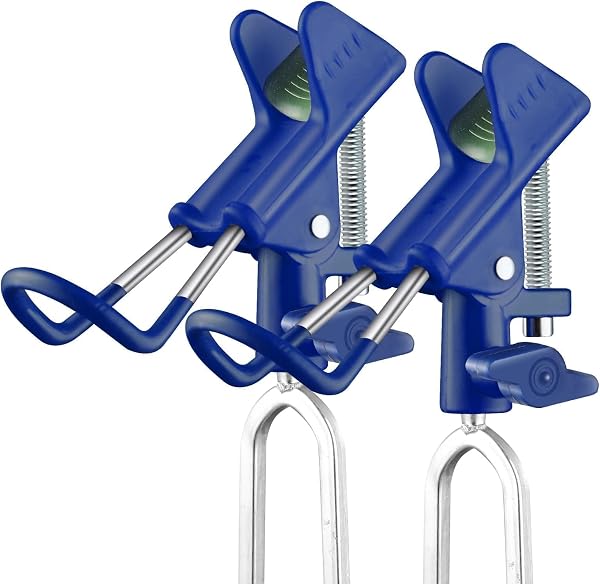
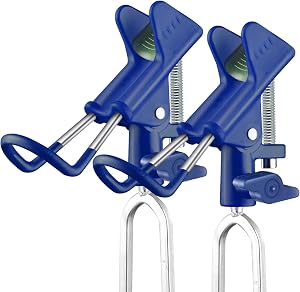
PLUSINNO Boat Clamp
9.0Editor scoreDouble V-shaped clamp
Aluminum alloy body
360° rotation adjustment
Anti-slip silicone grip
Find the right fishing rod holders for 2026. We compare 10 standout options by build quality, useful features, owner feedback, value, and everyday trade-offs.
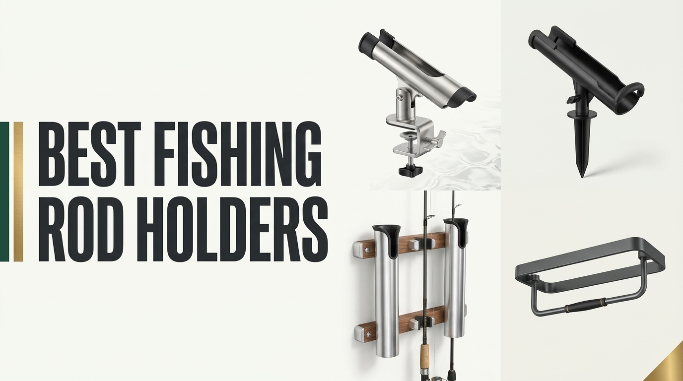
Finding the right fishing rod holders for your setup in 2026 means sorting through boat clamps, wall racks, ground spikes, and rolling carts. We compare 10 standout options by mounting style, rod capacity, material durability, adjustability, grip protection, and real-world value to help you choose confidently.
Rod holders serve very different purposes depending on where and how you fish. A bank angler needs a sturdy ground spike, while a garage organizer requires high-capacity wall storage. Understanding these distinctions upfront saves time and prevents buying a holder that does not match your actual fishing routine.
This guide covers clamp-on boat mounts, vertical wall racks, ground stakes, ceiling systems, and mobile storage carts. Each review highlights the practical tradeoffs that matter most, from corrosion resistance in saltwater environments to reel clearance in tight garage corners, so you can match a holder to your needs.
We compared 10 fishing rod holders using the details that actually help anglers decide: mounting type, rod capacity, material quality, adjustability range, grip protection, corrosion resistance, installation effort, and overall value. The notes focus on practical tradeoffs so each pick connects to how people actually store, transport, and deploy rods on boats, banks, and in garages throughout the fishing season.


Compare key features, scores, and current prices side by side. A shorter feature list means fewer details were available, not necessarily fewer capabilities.




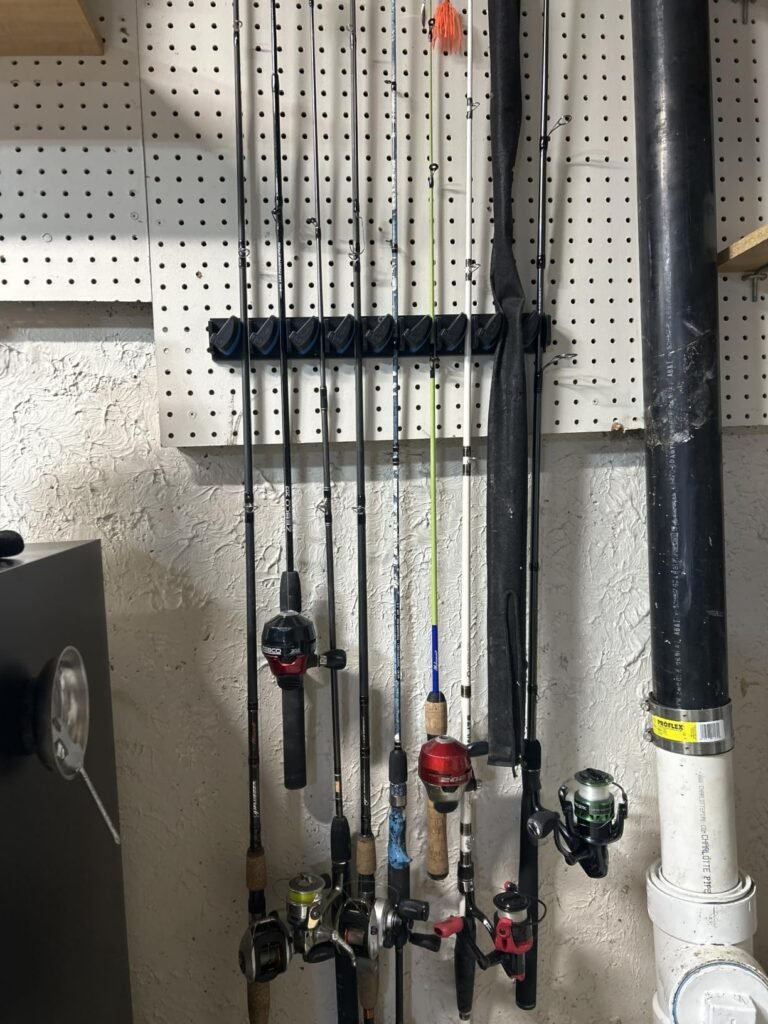
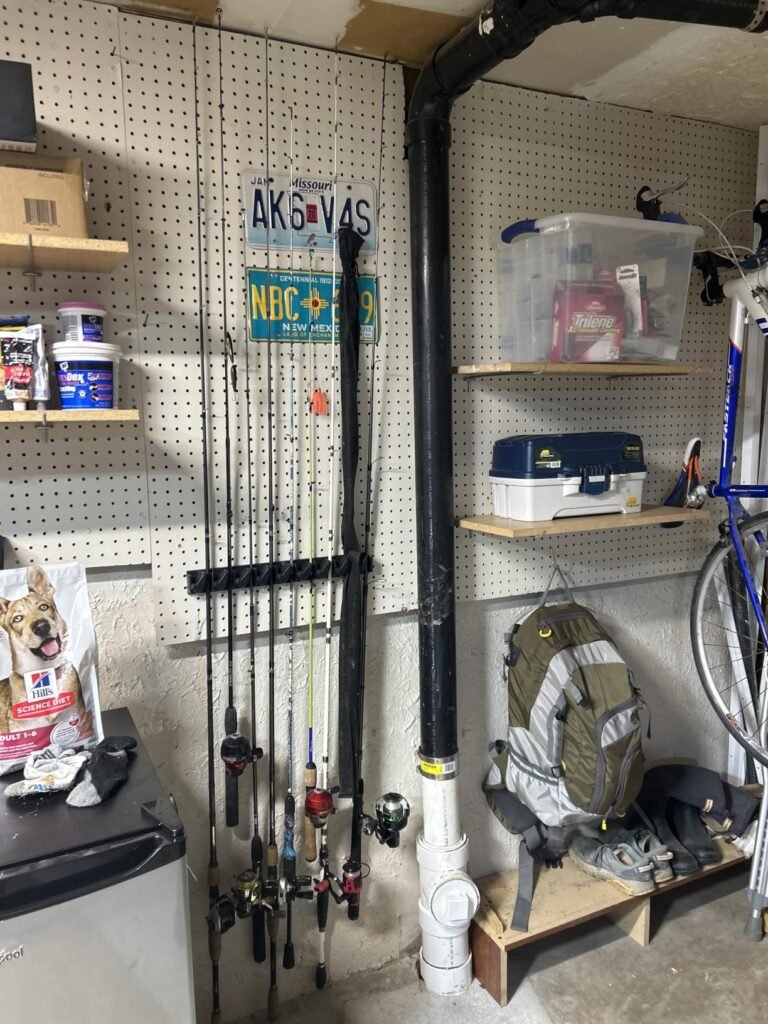
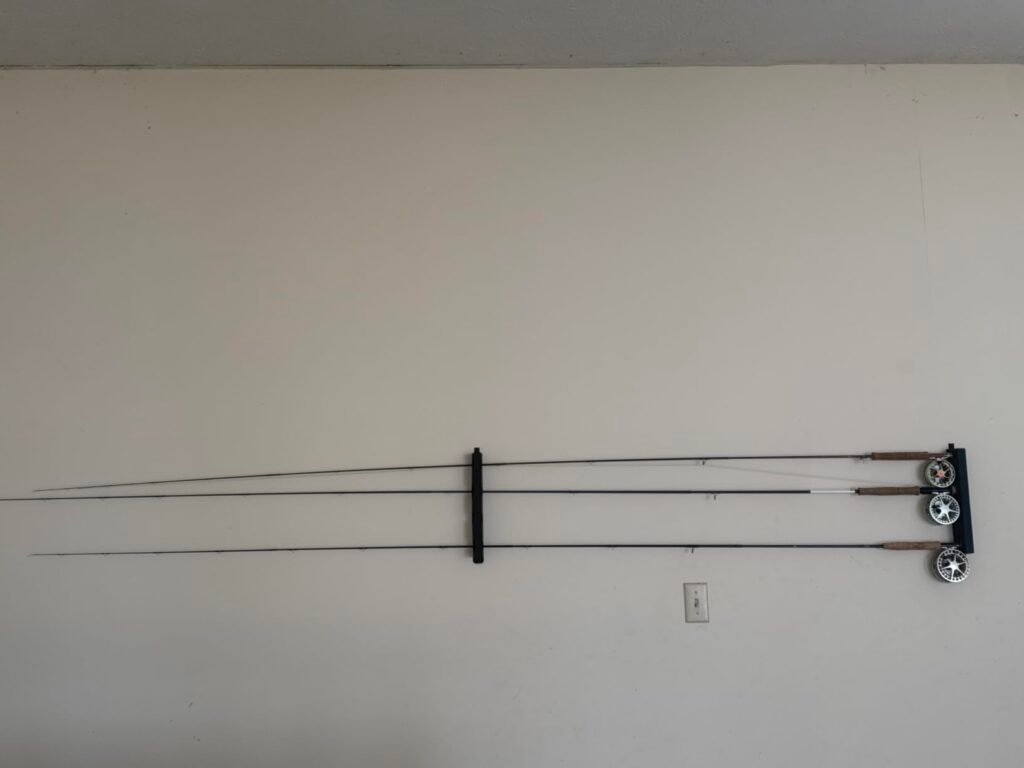
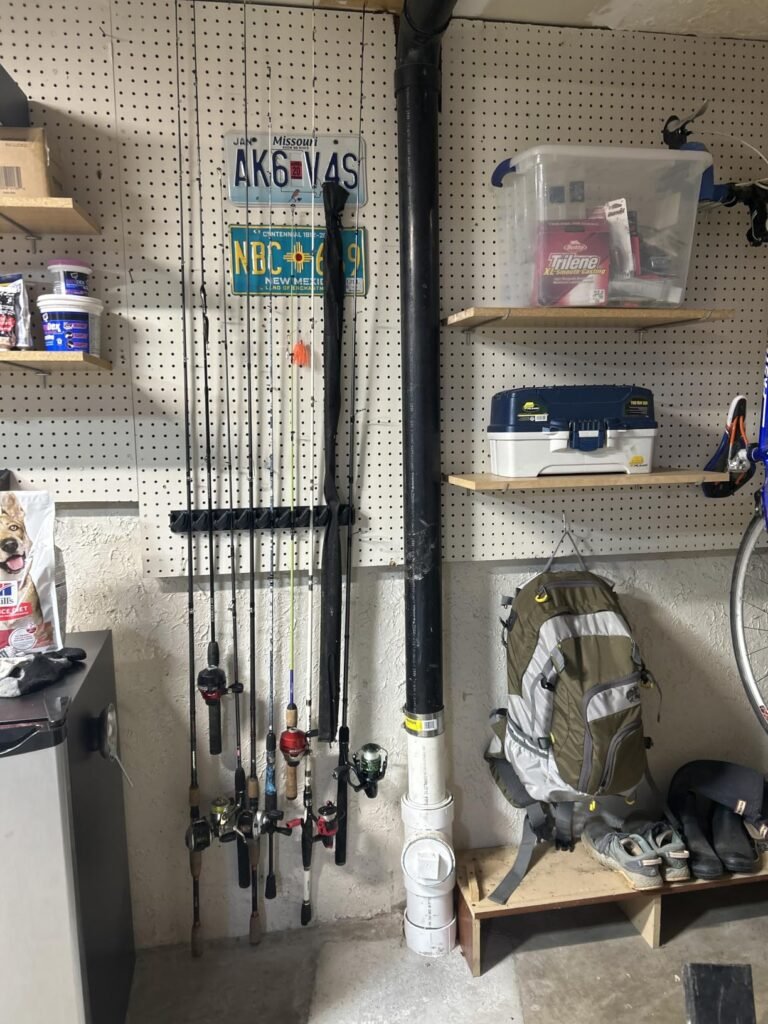
The PLUSINNO V9 wall rack solves one of the most common garage storage problems: how to keep a growing rod collection organized without consuming an entire wall. This vertical rack stores up to nine rods or rod-and-reel combos in less than 16 inches of horizontal wall space, which is a significant improvement over traditional horizontal racks that can eat up four to six feet of linear space for the same number of rods.
We may earn a commission when you buy through this link, at no additional cost to you.
What sets this rack apart mechanically is the patented eccentric-circle grip roller. Instead of relying on a fixed-diameter slot that only fits one rod size well, the arc-shaped roller adjusts its contact angle based on the rod blank diameter. This means ultralight spinning rods and heavier casting combos can sit side by side in the same rack without the thinner rods slipping through or the thicker ones being squeezed too tightly. The acceptable diameter range of 0.12 to 0.75 inches covers the vast majority of freshwater and light saltwater rods.
Installation is straightforward with five mounting holes that distribute the load across a wider section of wall. The tough polymer construction resists bending and deformation even when fully loaded, and the soft silicone grip pads with raised-dot texture add friction to keep rods from sliding. The rack can support more than 2.2 pounds per position, which handles most rod-and-reel combos without issue.
When loading nine combos onto a vertical rack, reel handles and bail arms can overlap if all rods face the same direction. A practical approach is to alternate the reel orientation left and right, and stagger the vertical insertion height so that larger spinning reels sit higher or lower than adjacent baitcasting reels. This simple arrangement trick lets you use the full nine-rod capacity without reels pressing against each other or the wall.
The practical tradeoff is that getting nine reels to fit without interference requires some deliberate staggering. You will likely need to alternate reel heights or orient some combos butt-up and others tip-up to maximize clearance. This takes a few minutes of rearranging the first time but becomes second nature quickly. For anglers with a moderate to large collection who want a clean, space-efficient garage setup, the V9 is one of the most effective wall-mounted solutions available.
Not ideal for very heavy offshore trolling rods that exceed the 0.75-inch diameter limit or weigh significantly more than standard combos.
We may earn a commission when you buy through this link, at no additional cost to you.
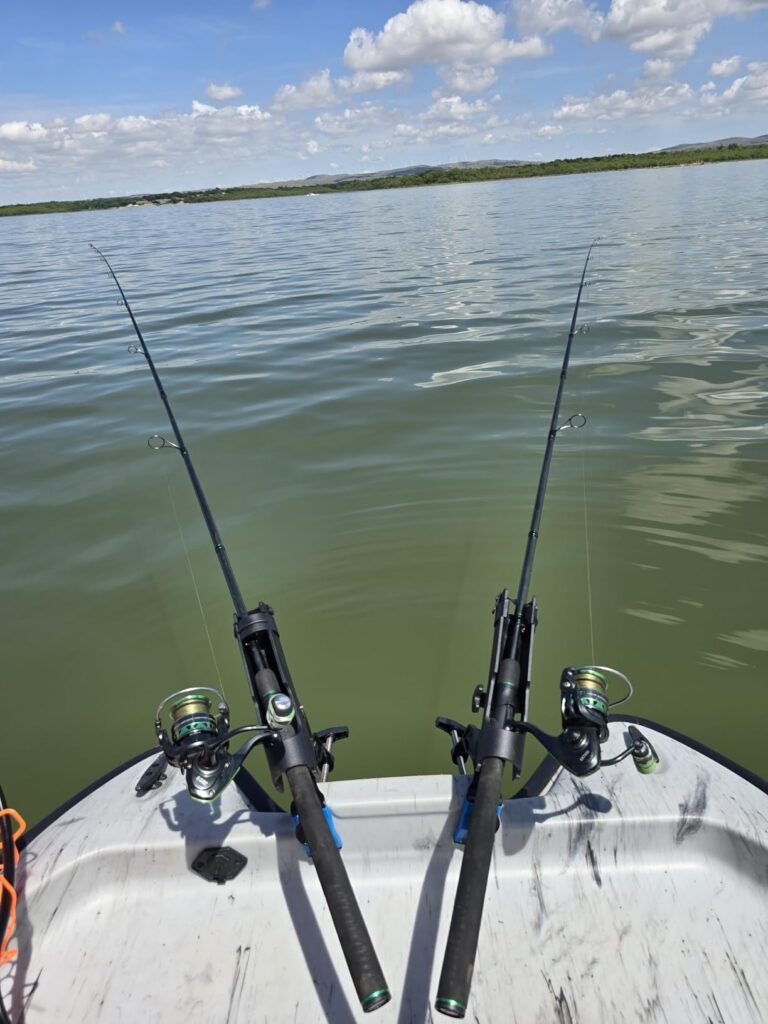
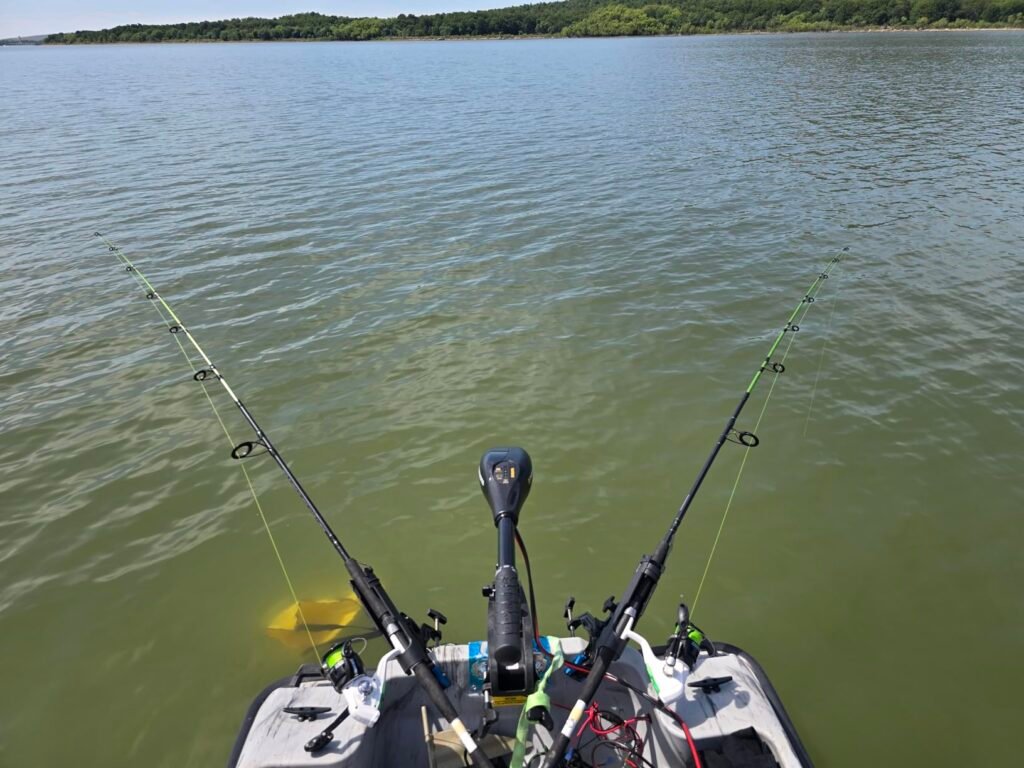
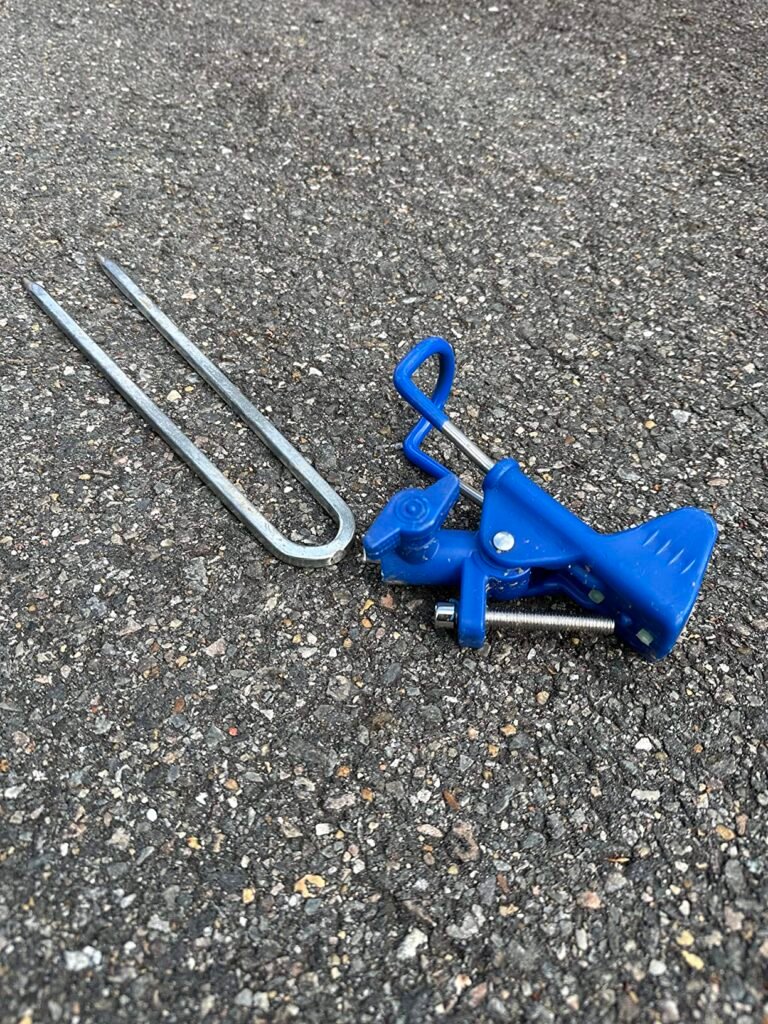
The PLUSINNO boat clamp holder is built for anglers who need a reliable rod mount that attaches to a wide variety of boat railings and surfaces. Its double V-shaped thread design creates four contact points simultaneously, which gives it noticeably more stability than single-point clamp holders. If you fish from a jon boat, pontoon, or kayak with rail accessories, this versatile mounting approach means you are less likely to need a separate adapter for each vessel.
We may earn a commission when you buy through this link, at no additional cost to you.
The clamp opens from 0.59 inches to 3.94 inches, covering most common boat rail diameters as well as square tubing and flat gunwale edges. Once tightened, the anti-slip silicone pads grip firmly without marring the boat’s finish. The holder also offers 360-degree rotation in both vertical and horizontal planes, plus 10-degree micro-adjustments, so you can dial in the exact rod angle for drifting, casting, or still fishing without repositioning the clamp itself.
One of the more thoughtful additions is the integrated rod safety strap. This quick-release strap loops around the rod blank above the reel seat, preventing the entire setup from being pulled overboard during an aggressive strike. It is a small feature, but it addresses one of the most expensive mistakes an angler can make on the water. The aluminum alloy die-cast body and marine-grade stainless steel hardware also hold up well in both freshwater and saltwater environments.
Losing a rod and reel overboard is one of the most frustrating and costly experiences in fishing. The integrated protective strap on this PLUSINNO holder wraps around the rod blank and locks in place with a quick-release buckle. When a fish strikes hard enough to yank the rod from its cradle, the strap keeps the combo tethered to the boat. This is especially valuable when fishing alone or when multiple rods are deployed and you cannot react instantly to every bite.
The main limitation is that this holder is not designed for trolling, where sustained high-speed drag forces demand a more rigid mounting system. If your primary use is trolling for walleye or salmon, a dedicated flush-mount or heavy-duty gimbal holder would be a better fit. For general-purpose boat fishing where you want quick setup and removal, however, this PLUSINNO clamp delivers strong versatility at a reasonable price point.
Not suited for high-speed trolling applications where sustained drag forces exceed clamp-style mounting limits.
We may earn a commission when you buy through this link, at no additional cost to you.
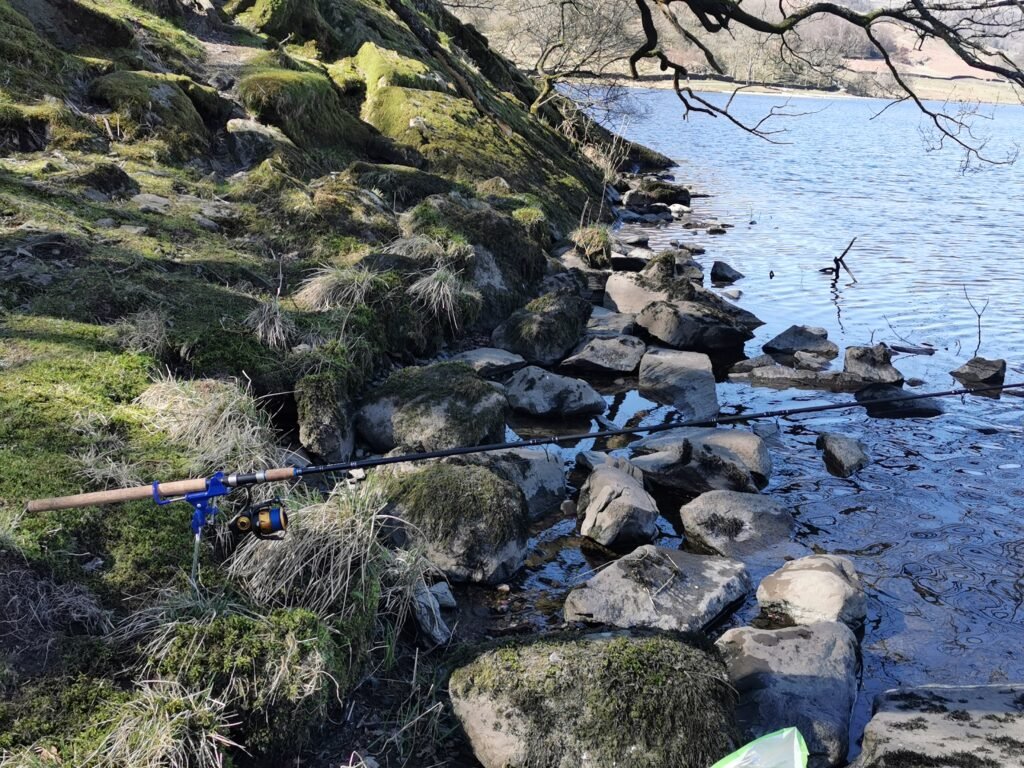
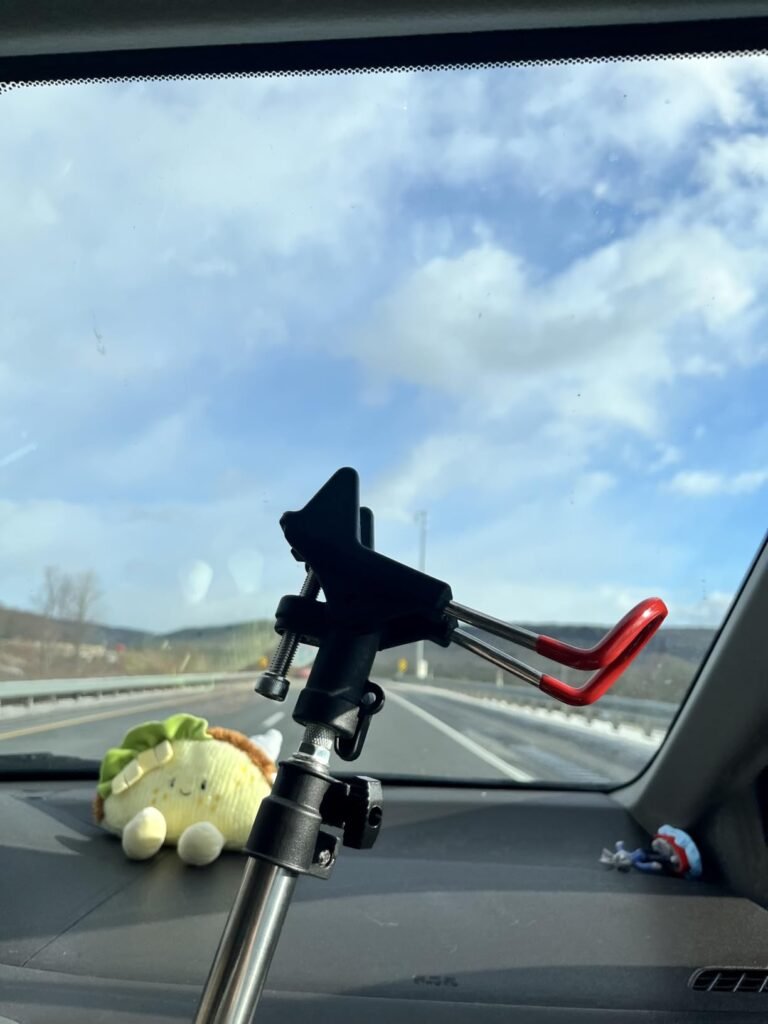
Bank and shoreline anglers who fish from muddy banks, sandy beaches, or grassy lake edges will appreciate the height adjustability of this two-pack ground holder. The ability to extend the stake from 22.4 to 34.3 inches means you can raise your rod tips above tall grass or lower them for a more horizontal presentation when targeting catfish along a river bottom. This kind of flexibility is difficult to find in single-length ground spikes.
We may earn a commission when you buy through this link, at no additional cost to you.
The three-pronged chrome-plated drill rod provides a wider footprint than a single spike, which improves stability in softer substrates like mud and sand. The nylon and stainless steel construction balances toughness with reasonable weight, and the 360-degree horizontal rotation combined with 130 degrees of vertical tilt lets you point the rod in nearly any direction without pulling the stake from the ground. A hand-tightened set screw locks the head in position once you find the right angle.
The U-shaped rubber cradle at the top is a practical touch that prevents the rod blank from rubbing directly against metal or hard plastic. This matters more than many anglers realize, especially with graphite rods that can develop surface wear from repeated friction against a bare holder. The rubber cushion also adds grip, reducing the chance of the rod sliding out during a strong strike.
Higher rod positions keep your line above weeds and debris, which is useful when fishing over lily pads or tall shoreline grass. Lower positions create a more horizontal rod angle that works well for bottom-bouncing rigs and catfish setups where you want the rod tip closer to the water surface. The 12-inch adjustment range on this holder lets you adapt to both scenarios without carrying separate stakes.
The main consideration is that the three-prong spike design excels in soft ground but can be harder to drive into compacted clay or rocky terrain compared to a single thick spike. If you frequently fish on hard-packed shorelines, you may need to pre-drill a pilot hole with a separate tool. For the majority of bank fishing scenarios involving mud, sand, and loamy soil, however, this two-pack offers excellent versatility at a competitive price.
Not well suited for extremely rocky or hard-packed shorelines where a three-prong spike cannot penetrate effectively.
We may earn a commission when you buy through this link, at no additional cost to you.
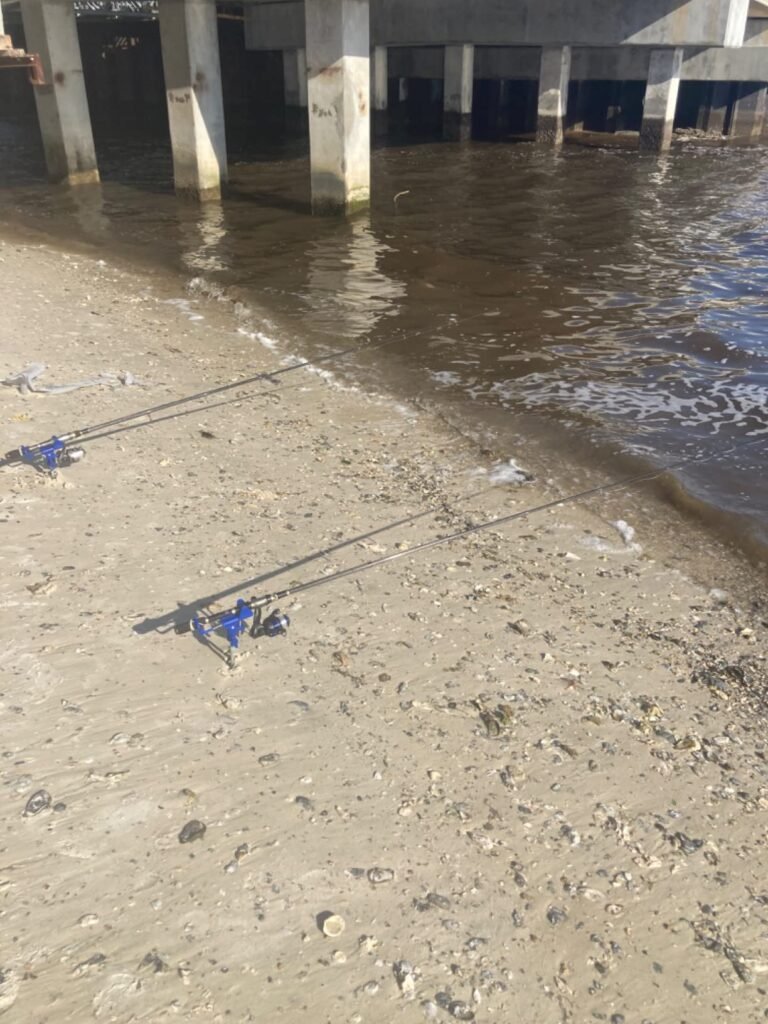
When you need a ground spike that anchors deeply and holds firm against powerful strikes from catfish, carp, or striped bass, the 10.6-inch extra-long spike on this two-pack holder provides a meaningful advantage. The additional depth compared to standard six- or eight-inch spikes gives the holder significantly more holding power in soft mud, loose sand, and even cracked rocky surfaces where a shorter spike might spin or pull free.
We may earn a commission when you buy through this link, at no additional cost to you.
The thickened reinforced nylon construction is designed to resist the cracking and brittleness that cheaper plastic holders develop after a season of UV exposure and repeated ground impacts. The enlarged U-shaped cradle opening accommodates spinning, casting, and spincast rods of varying handle diameters, and the elongated rest area distributes the rod’s weight across a broader contact surface to reduce pressure points on the blank.
The 360-degree horizontal and 130-degree vertical adjustment range matches what you would expect from a premium ground holder, and the set screw locks the head firmly once positioned. The built-in rubber cushion pad lines the cradle to prevent scratches and dampen vibration, which is particularly helpful when using sensitive graphite rods that transmit every bump and scrape through the blank.
A longer ground spike resists the rotational torque that a large fish generates when it runs parallel to the shoreline. Short spikes tend to pivot in soft ground, which can change your rod angle or even pull the holder free entirely. The 10.6-inch spike on this holder reaches deeper soil layers that are typically more compact, giving you a more secure anchor point when fighting fish that pull hard and fast.
The tradeoff is that this holder has a fixed height rather than a telescoping extension, so you are limited to the stake’s natural standing height above ground. If you need to elevate rod tips well above tall grass or reeds, a height-adjustable model may serve you better. For anglers who prioritize deep anchoring and brute holding strength over vertical flexibility, this reinforced nylon two-pack is a dependable choice for demanding bank fishing conditions.
Not ideal for anglers who need adjustable rod height to clear tall shoreline vegetation or reeds.
We may earn a commission when you buy through this link, at no additional cost to you.
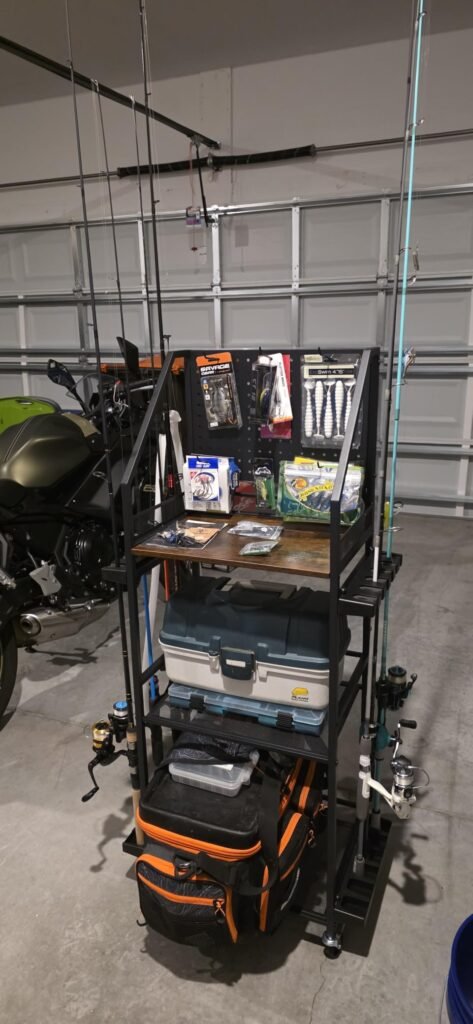
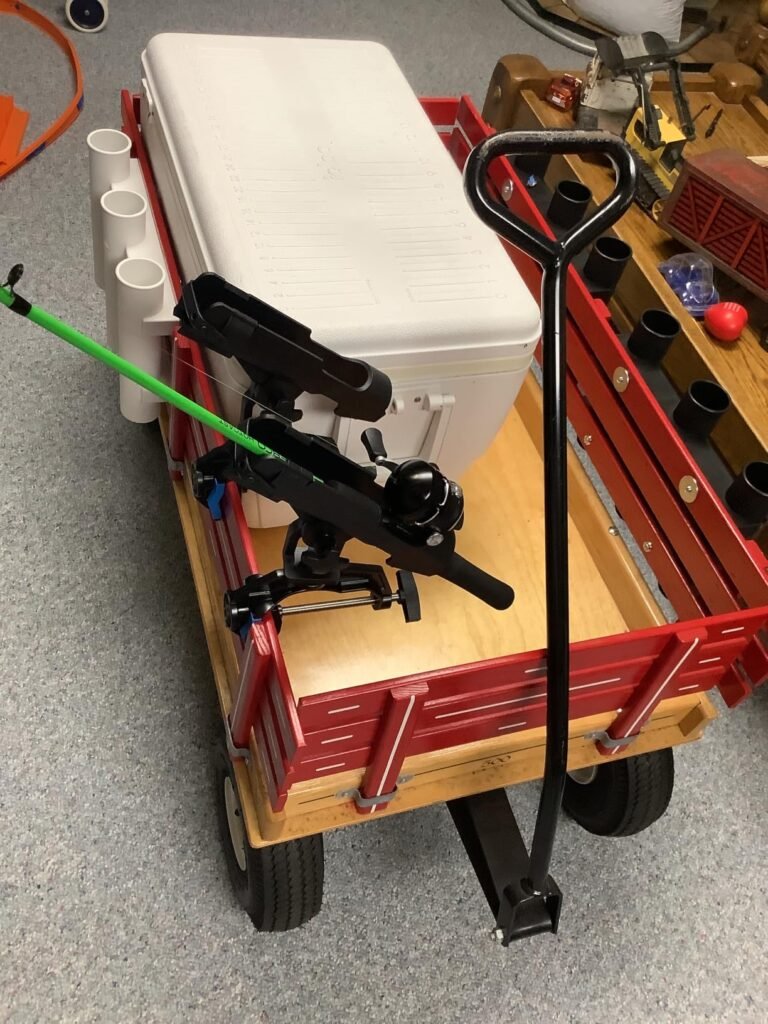
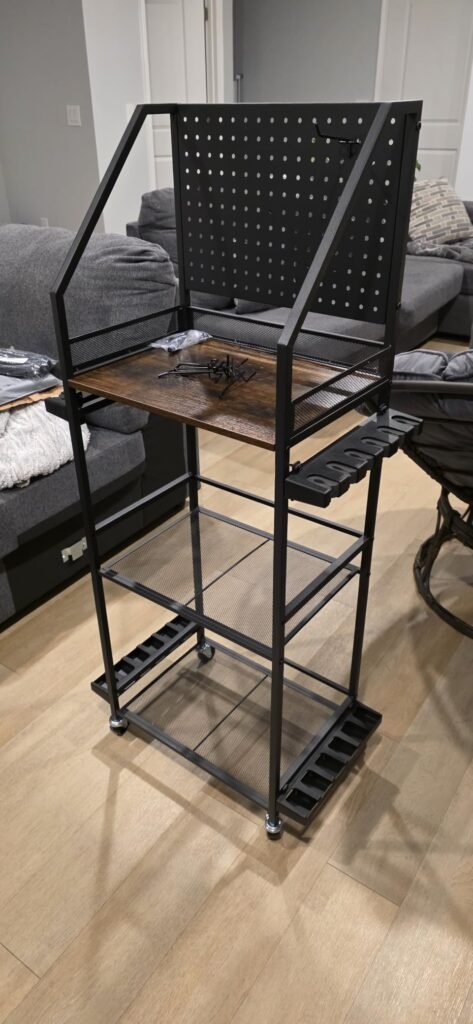
The SOYEEZE rolling cart is the most comprehensive storage solution in this guide, combining rod holding, tackle organization, and mobile convenience into a single unit. If your garage or workshop doubles as a fishing prep area, having your rods, tackle boxes, reels, and tools on one movable station eliminates the back-and-forth trips that waste time before and after every fishing trip.
We may earn a commission when you buy through this link, at no additional cost to you.
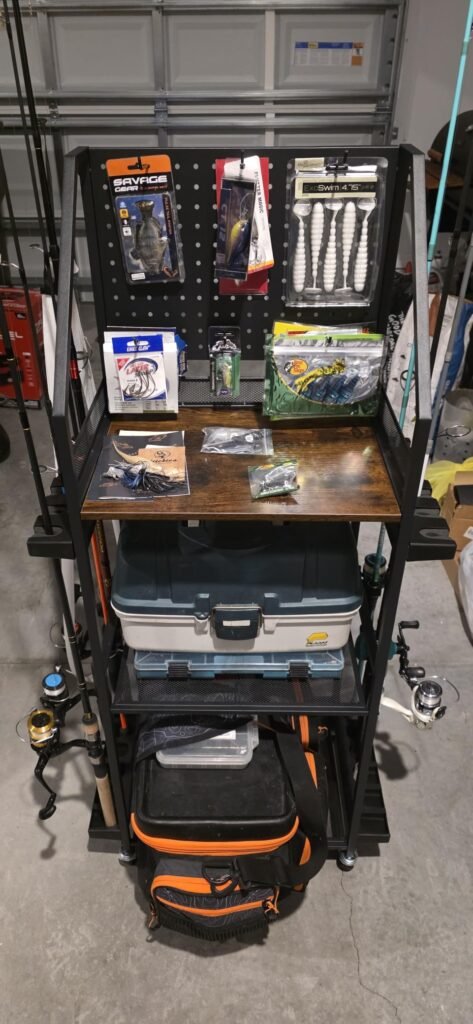
The three-tier shelf system provides ample room for tackle boxes, bait containers, and electronics, with protective rails on three sides to prevent items from sliding off during movement. The rod holders on each side accommodate up to 12 rods total, with EVA foam-lined slots that protect rod finishes from scratches. The 28.3-inch vertical spacing between upper and lower rod holders gives enough clearance for most reel sizes, and the slots accept rod diameters up to 0.45 inches.
The middle-tier pegboard with 10 hooks is a practical addition that many competing storage racks lack. It gives you a dedicated spot for pliers, line spools, lure wallets, and other small accessories that otherwise end up scattered across shelves. The four 360-degree swivel wheels make it easy to roll the entire station out of the way when you need floor space for other projects.
The included pegboard and hooks transform the middle shelf from a flat storage surface into a vertical organization panel. Grouping frequently used items like hook removers, line cutters, and split-ring pliers on the pegboard keeps them visible and within reach, rather than buried inside a tackle box. You can also hang small mesh bags of terminal tackle or soft-plastic lure packs from the hooks to speed up rig changes before heading out.
The obvious tradeoff is cost and footprint. At a higher price than simple wall racks and with a floor-standing design that occupies more square footage, this cart is best suited for anglers with a dedicated garage or workshop area and a large collection of gear. If you only own three or four rods and minimal tackle, a wall-mounted rack will serve you just as well at a fraction of the cost. For serious gear collectors, however, the SOYEEZE cart consolidates everything into one organized, mobile station.
Not practical for small garages or apartments where floor space is limited and a wall-mounted solution would be more appropriate.
We may earn a commission when you buy through this link, at no additional cost to you.
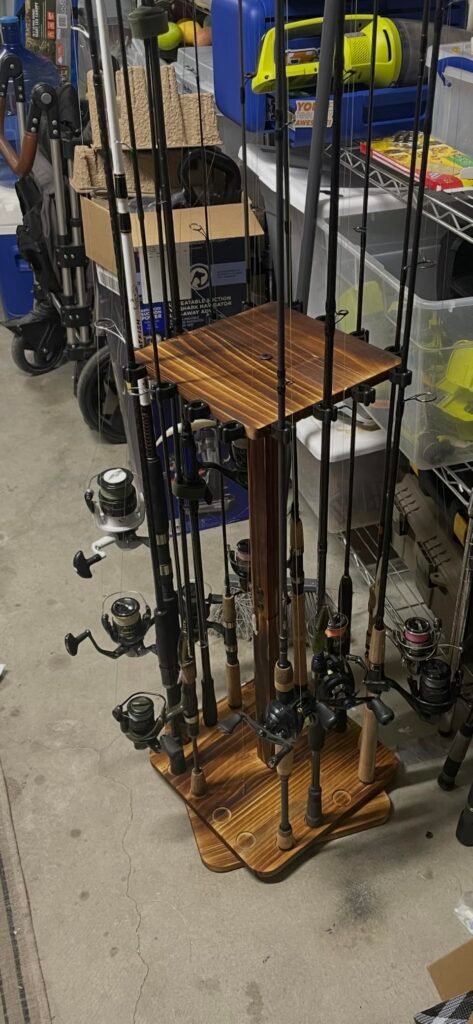
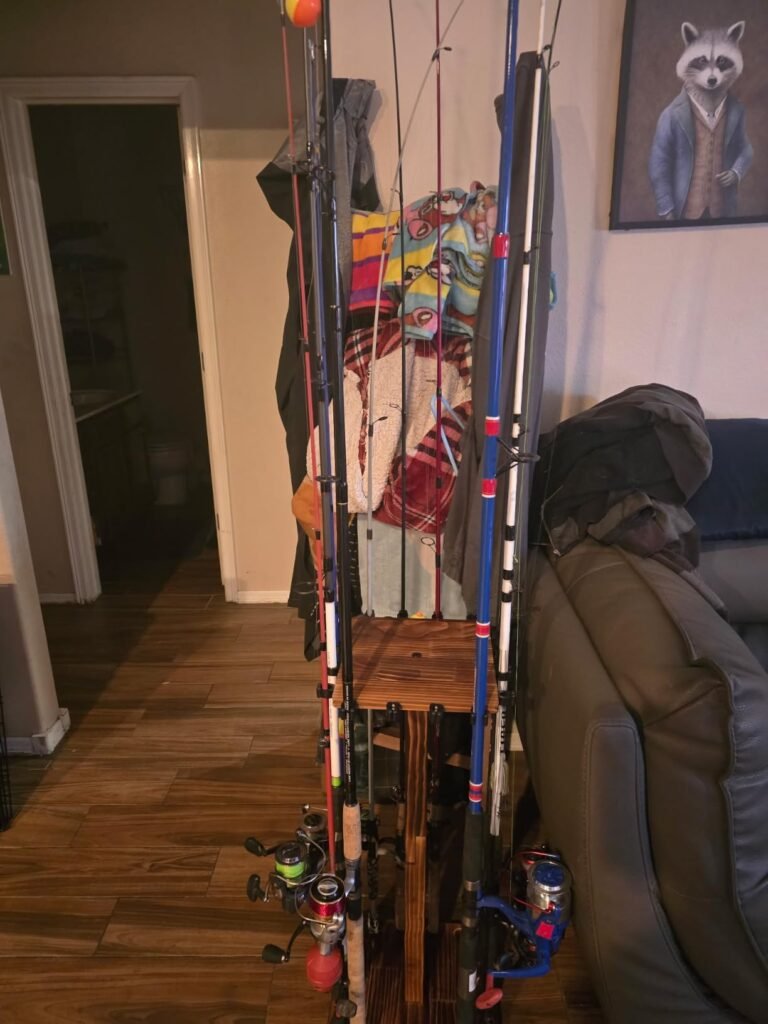
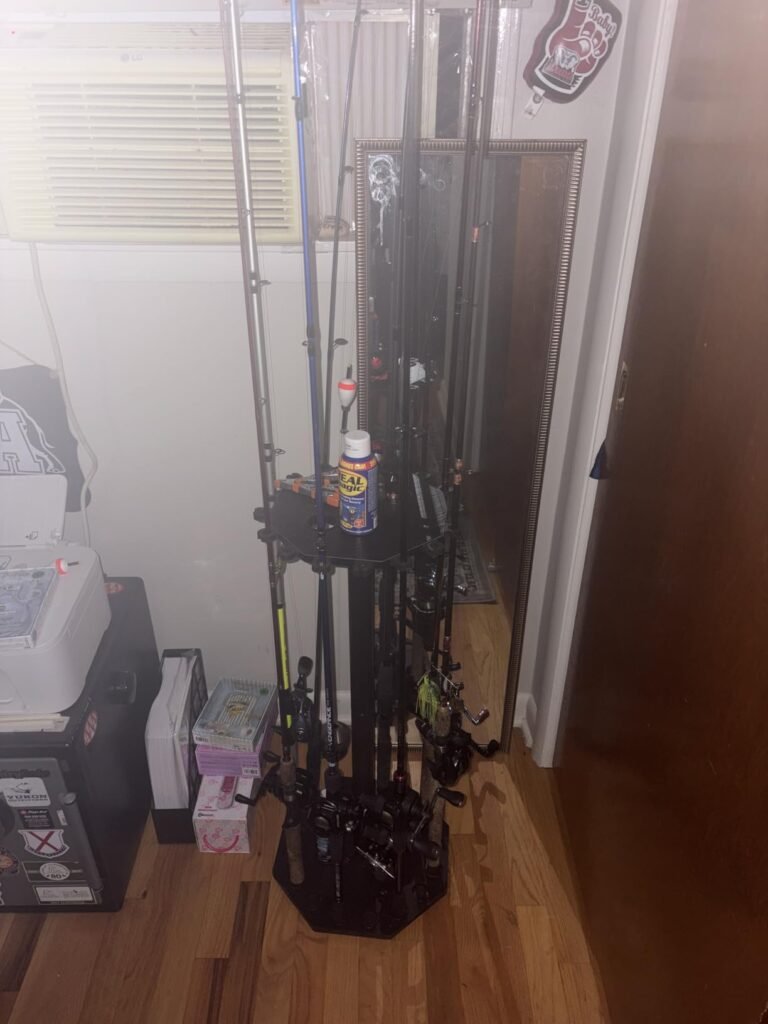
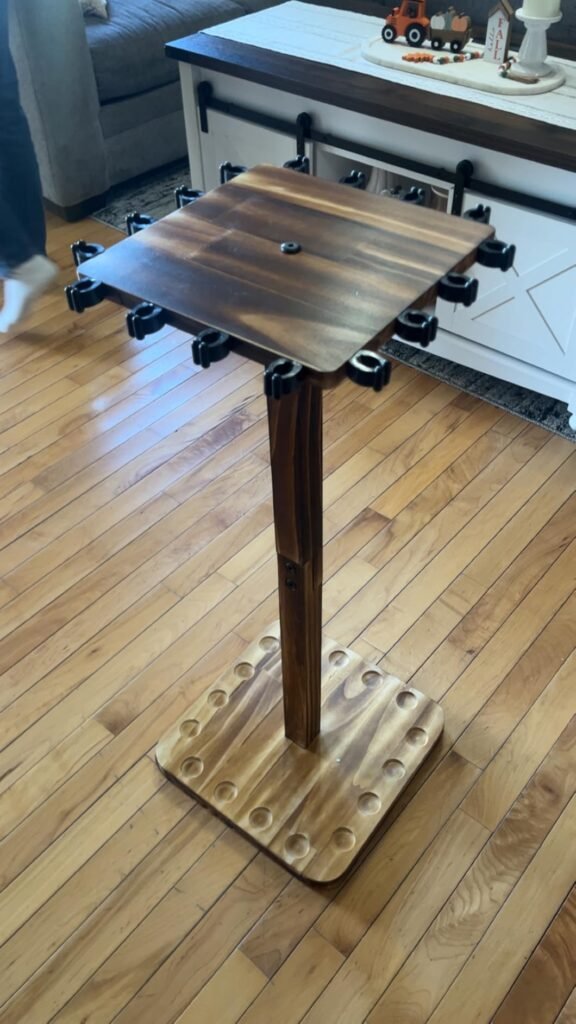
The Ghosthorn rotating floor stand is designed for anglers who want quick access to a large rod collection without reaching across a wall or digging through a closet. The smooth 360-degree rotation mechanism lets you spin the entire rack to the rod you need, which is especially convenient when you keep different setups rigged for different species or techniques and want to grab the right combo in seconds.
We may earn a commission when you buy through this link, at no additional cost to you.
With a 16-rod capacity and a square clip layout that spaces the holders farther apart than round designs, this rack accommodates larger reels without interference. The solid rod clips accept diameters up to 0.68 inches, which covers most inshore saltwater rods, trolling combos, fly rods, and standard spinning and casting setups. The thickened wood center post and wide base provide stability even when the rack is fully loaded.
Assembly is minimal, requiring only four screws and no specialized tools. The four anti-slip foam pads on the base protect hard floors and prevent the rack from sliding when you spin it. The neutral wood finish blends into most garage, basement, or cabin interiors without looking out of place, and the overall build quality suggests a service life well beyond a decade with basic care.
A floor stand like this Ghosthorn model offers the advantage of portability and zero wall damage, which is ideal for renters or anyone who rearranges their garage frequently. Wall racks save floor space but require drilling into studs and are essentially permanent once installed. If your rod collection is still growing and your storage layout may change, a freestanding rotating rack gives you more flexibility to adapt over time.
The main consideration is that a floor-standing rack occupies a circular footprint of roughly 13 by 13 inches at the base, plus the overhang of the rods themselves. In a cramped garage, this may compete with other storage needs. If you have the floor space, however, the convenience of spinning access and the high 16-rod capacity make this Ghosthorn stand one of the most practical freestanding options for serious rod collectors.
Not ideal for very small storage areas where a 13-inch floor footprint plus rod overhang would obstruct walkways or vehicle parking.
We may earn a commission when you buy through this link, at no additional cost to you.
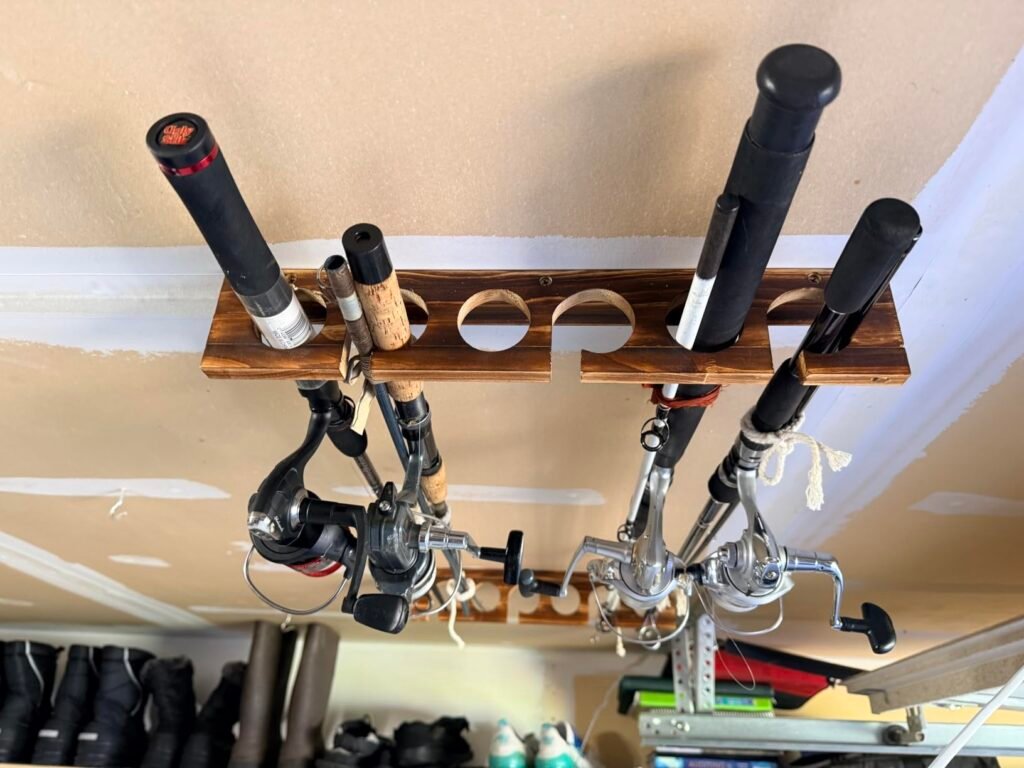
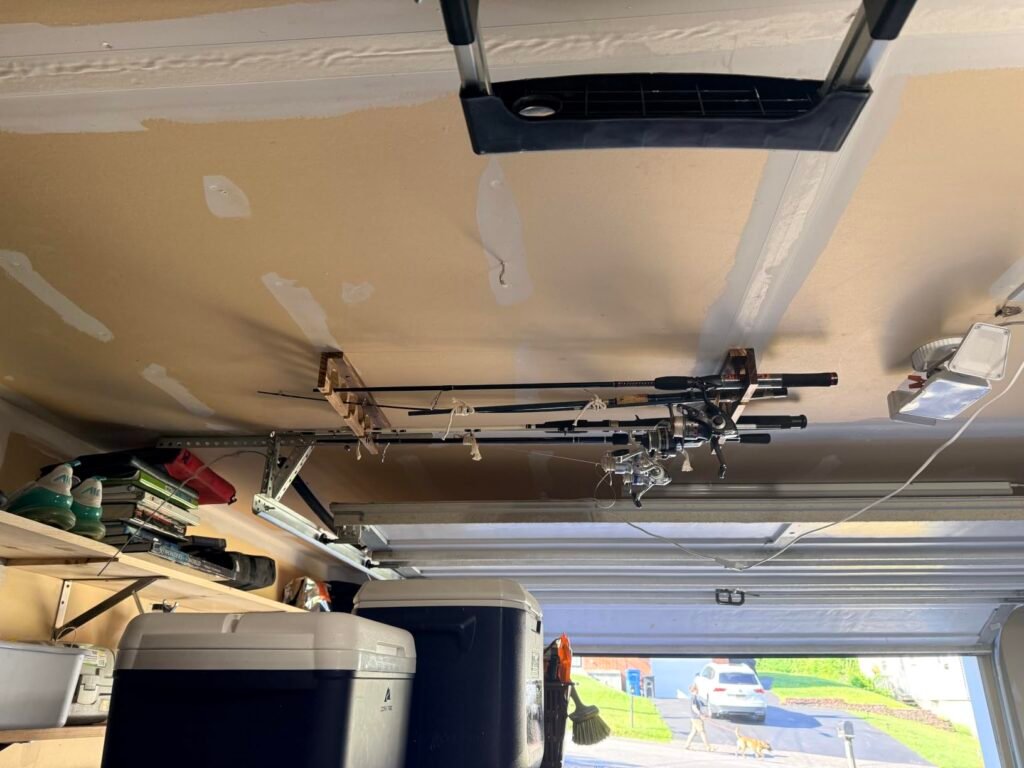
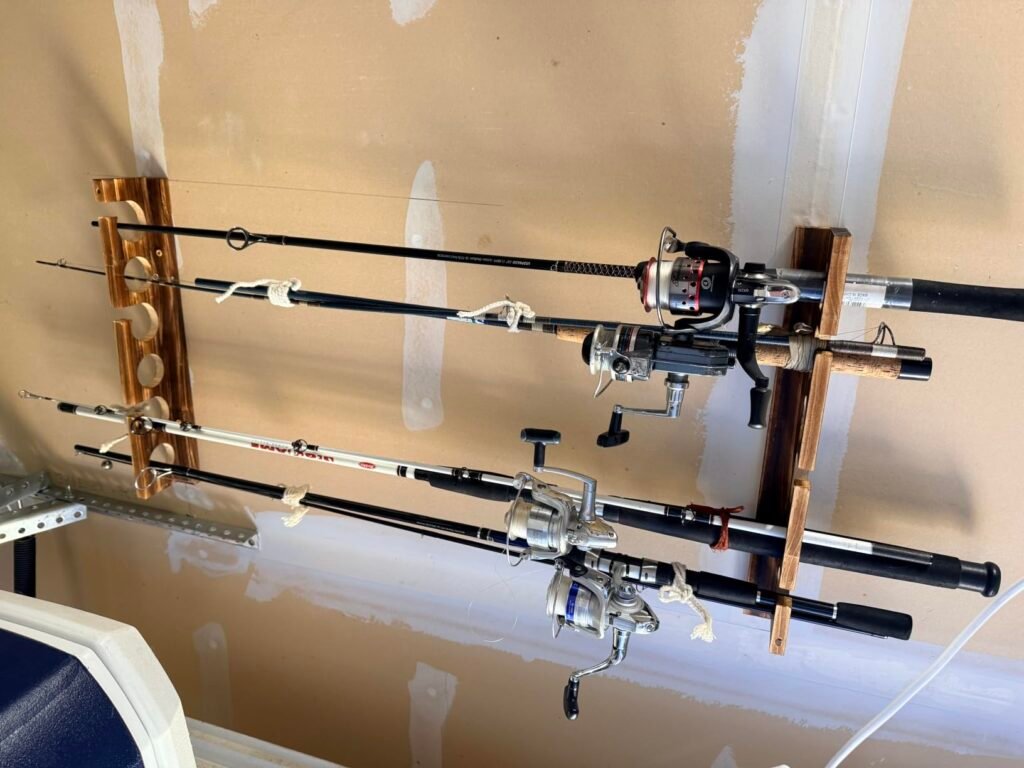
The Ghosthorn wall and ceiling rack offers a flexible mounting approach that works well in garages with limited wall space but available overhead clearance. By installing the two included rack sections on the ceiling, you can store up to 12 rods horizontally above head height, completely freeing up wall and floor space for other equipment. This overhead configuration is particularly useful in single-car garages where every square foot of wall is already occupied by shelving or tool boards.
We may earn a commission when you buy through this link, at no additional cost to you.
The solid hardwood construction with a waterproof, moisture-resistant coating gives this rack better durability in humid environments than untreated wood or particleboard alternatives. The widened rod slots accommodate everything from ultralight freshwater rods to heavier saltwater sticks, so you do not need to worry about diameter compatibility when mixing rod types in the same rack.
Installation is straightforward with the included hardware and step-by-step instructions. Wall mounting is a one-person job with a drill and level, while ceiling mounting is easier with a helper to hold the rack in position while you drive the screws into joists. The hardwood construction is sturdy enough to support the weight of multiple rod-and-reel combos without sagging over time.
Ceiling mounting is most practical when your garage walls are already full or when you park a vehicle close to the walls and need clearance for opening doors. By storing rods overhead, you keep them out of the way of daily traffic while still maintaining easy access with a step stool. Just make sure the ceiling joists can support the combined weight of the rack and loaded rods, and use appropriate lag screws for a secure hold.
The practical limitation is that each rack section holds a fixed number of rods at a fixed spacing, so you cannot easily expand capacity without purchasing additional sets. If your collection grows beyond 12 rods, you will need to add more racks or switch to a higher-capacity floor stand. For anglers with a moderate collection who want the option of overhead storage, this dual-mount Ghosthorn rack provides a clean, space-saving solution at an accessible price.
Not suitable for garages with very low ceilings where overhead rods would interfere with vehicle clearance or garage door mechanisms.
We may earn a commission when you buy through this link, at no additional cost to you.
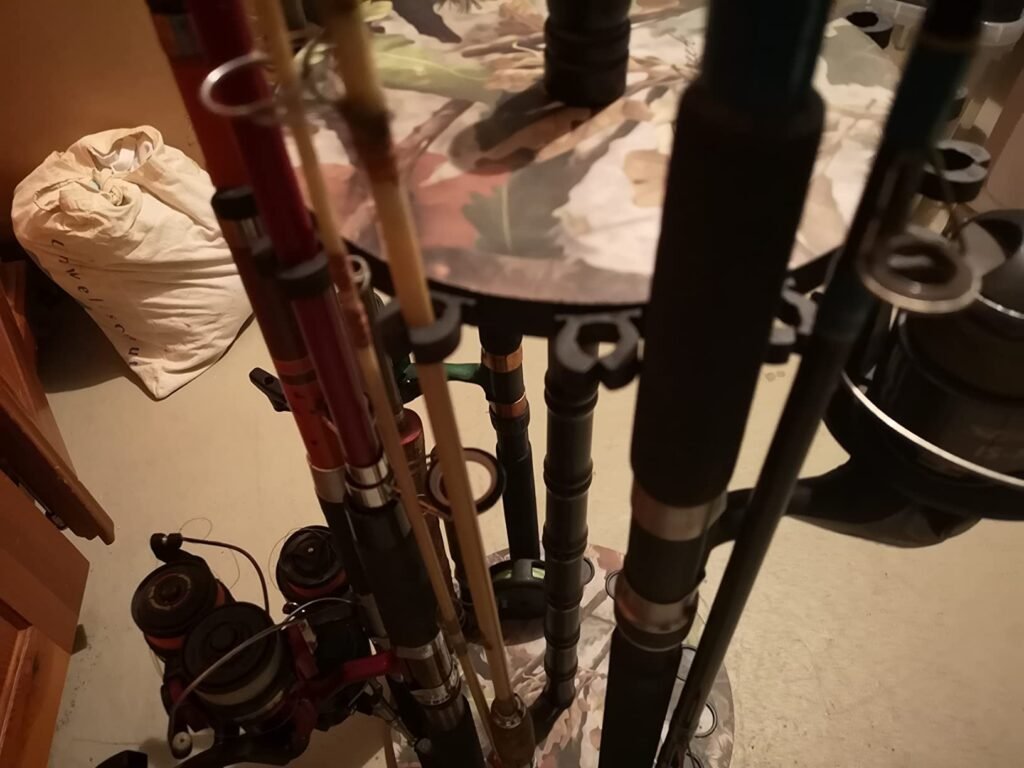
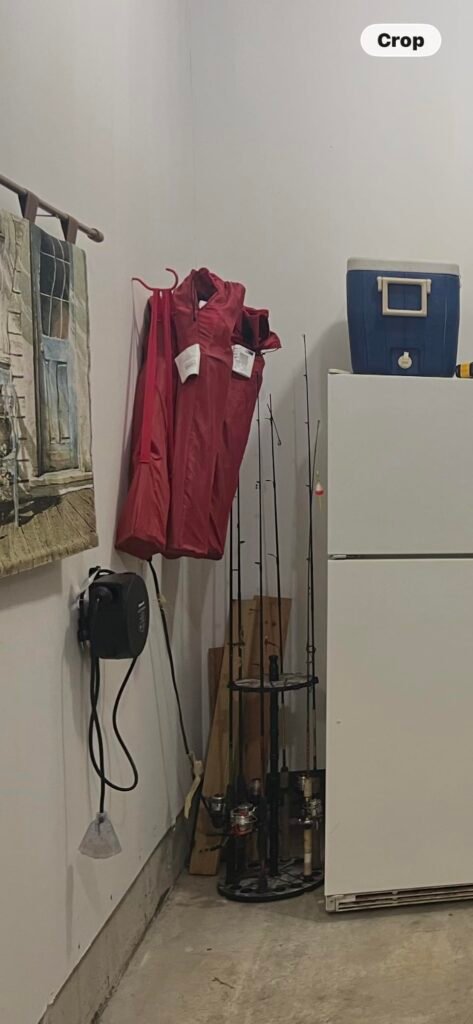
The Rush Creek Creations 16-rod round holder is a popular choice for anglers who want a high-capacity freestanding rack with minimal setup effort. The tool-free assembly means you can go from box to fully functional rod storage in just a few minutes, which is a genuine advantage if you are not comfortable with drills and screws or if you want to move the rack between locations seasonally.
We may earn a commission when you buy through this link, at no additional cost to you.
The 13.5-inch diameter footprint is compact for a 16-rod rack, and the vertical design keeps rods upright and organized without sprawling across the floor. The solid wood center post provides a sturdy backbone, and the camouflage laminate finish adds a distinctive look that appeals to hunters and anglers who enjoy an outdoorsy aesthetic in their garage, cabin, or shed.
This rack handles a wide variety of rod types, including ice fishing rods, surf rods, spinning combos, casting setups, and fly rods. The round configuration gives 360-degree access, so you can approach the rack from any angle and pull the rod you need without disturbing the others. The lightweight construction also makes it easy to reposition when cleaning the garage or rearranging your storage layout.
The tool-free design typically uses interlocking slots and friction-fit joints rather than screws or bolts. This makes initial setup fast and allows you to disassemble the rack for transport or storage if needed. The tradeoff is that tool-free joints may feel slightly less rigid than screwed connections, though the solid wood post compensates for this by providing a stable central column that keeps the entire structure upright even when fully loaded.
The main tradeoff with a round 16-rod layout is that reel clearance can become tight when all slots are filled with larger spinning or baitcasting combos. If most of your rods are ultralight or medium-power setups with compact reels, the spacing works well. If you have several oversized offshore reels, you may find that some combos need to be staggered or that a few slots go unused. For the majority of freshwater anglers, however, this Rush Creek rack delivers excellent capacity and convenience.
Not ideal for anglers with many oversized saltwater reels that require more spacing between adjacent rod slots.
We may earn a commission when you buy through this link, at no additional cost to you.
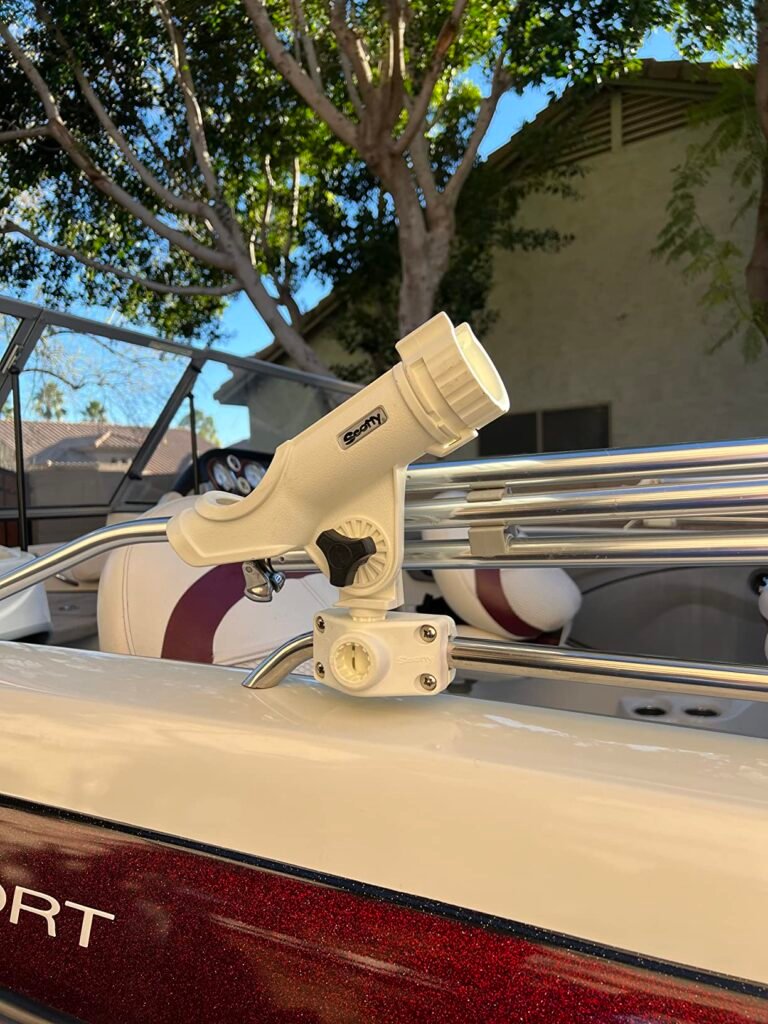
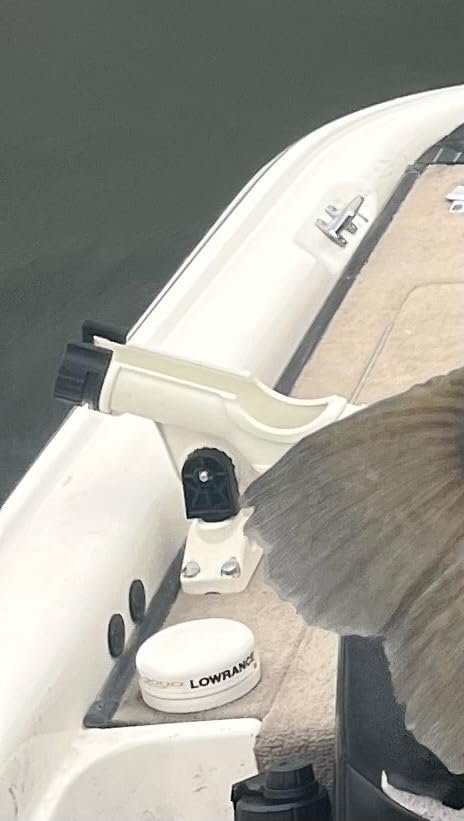
Scotty is one of the most recognized names in marine rod holders, and the Powerlock model has been a staple on fishing boats for years. This package includes the #230 Powerlock holder and the #241 side/deck mount, giving you everything needed for a permanent installation on a gunwale, transom, or deck surface. If you want a no-compromise boat rod holder that can handle the rigors of daily saltwater use, the Scotty Powerlock is a proven starting point.
We may earn a commission when you buy through this link, at no additional cost to you.
The universal cradle design is the key feature here. Rather than relying on a specific rod diameter or reel foot shape, the open cradle accommodates nearly any rod-and-reel combination, from light spinning setups to heavier conventional trolling outfits. The front locking ring flips down over the reel seat to secure the rod during transit or in rough water, which eliminates the risk of a rod bouncing free when the boat hits a wake.
The fiber-reinforced engineering-grade nylon construction provides excellent strength-to-weight ratio and resists UV degradation, salt corrosion, and impact damage far better than standard plastic. The post mount system allows full 360-degree horizontal rotation and vertical tilt adjustment, so you can position the rod at the precise angle needed for trolling, drift fishing, or live bait presentations.
The included #241 mount can be installed on the side of a gunwale or flat on a deck surface. Side mounting keeps the rod holder outboard and out of the way of foot traffic, which is ideal for smaller boats where deck space is limited. Deck mounting positions the rod closer to the centerline, which can improve balance and make it easier to reach the rod from the helm. Choose the position based on your boat layout and how many rod positions you plan to install.
The tradeoff is that the Powerlock is a permanent installation requiring drilled mounting holes, which may not appeal to boaters who prefer removable clamp-on solutions. It is also a single-rod holder per mount, so outfitting a boat with multiple positions means purchasing several units. For dedicated fishing boats where reliability and marine-grade durability are the top priorities, the Scotty Powerlock remains one of the most trusted options on the market.
Not suited for boaters who need a removable, no-drill rod holder solution for rented or borrowed vessels.
We may earn a commission when you buy through this link, at no additional cost to you.
The Berkley Twist Lock rack is the most affordable option in this guide and a practical choice for anglers who own a modest collection of four or fewer rods. At its price point, it delivers reliable wall-mounted storage with a twist-lock mechanism that adds a layer of security beyond simple gravity slots, keeping rods from bouncing free if the rack is bumped or if it is mounted on a boat or utility vehicle.
We may earn a commission when you buy through this link, at no additional cost to you.
The soft foam grip pads line each rod slot to prevent scratches and finish damage, which is a welcome feature at this price range where many competing racks use bare plastic cradles. The polypropylene construction is lightweight and moisture-resistant, making it suitable for damp garage environments, covered boat storage, or even outdoor sheds where humidity fluctuates throughout the year.
Installation is straightforward with standard tools, and the compact footprint means you can mount the rack in tight spaces such as the inside of a closet door, the side of a workbench, or the wall of a small boat cabin. The versatility of the mounting location makes this rack useful beyond just garage storage, and the twist-lock mechanism gives you confidence that your rods will stay put during transport if you mount it on a trailer or UTV.
A four-rod rack works best when you dedicate it to your most frequently used combos rather than trying to rotate a larger collection in and out. Mount the rack near your gear prep area or by the garage door so you can grab your go-to setups quickly on the way out. If you fish different techniques seasonally, consider swapping the loaded rods at the start of each season rather than storing all your combos on a single small rack.
The obvious limitation is the four-rod capacity. If your collection exceeds four combos, you will need to buy multiple racks or upgrade to a higher-capacity solution. For casual anglers, beginners, or anyone who keeps a small selection of go-to setups, the Berkley Twist Lock provides clean, secure, and extremely affordable rod storage without unnecessary complexity.
Not suitable for anglers with large rod collections who need to store more than four combos in a single location.
We may earn a commission when you buy through this link, at no additional cost to you.
Selecting a fishing rod holder starts with understanding where you will use it and how many rods you need to store or deploy. The right choice depends on a combination of mounting location, rod compatibility, material durability, and the specific fishing scenarios you encounter most often.
The first and most important decision is where the rod holder will live. Boat-mounted holders come in clamp-on and permanent-mount varieties. Clamp-on models like the PLUSINNO boat holder attach to railings and gunwales without drilling, making them ideal for kayaks, pontoons, and borrowed boats. Permanent-mount options like the Scotty Powerlock require drilling into the deck or gunwale but provide a more rigid and reliable connection for serious offshore and trolling use. Choosing between these two styles depends on whether you prioritize convenience or maximum holding strength.
For home storage, the options expand to wall-mounted racks, ceiling-mounted systems, freestanding floor stands, and mobile rolling carts. Wall racks like the PLUSINNO V9 and Ghosthorn wall/ceiling models save floor space and keep rods visible and accessible. Floor stands like the Ghosthorn rotating rack and Rush Creek round holder offer portability and high capacity without any wall damage. Rolling carts like the SOYEEZE model add the ability to move your entire gear station around the garage. Consider your available space, whether you own or rent, and how often you rearrange your storage area before committing to a mounting style.
Match the mounting type to your primary use case. If you fish from a boat most weekends and need garage storage during the week, you may benefit from purchasing both a boat clamp and a wall rack rather than trying to find a single product that does both jobs poorly.
Rod capacity numbers can be misleading if you do not also consider reel clearance. A rack rated for 16 rods may technically hold that many bare blanks, but once you add spinning reels, baitcasting combos, and oversized conventional reels, adjacent rods can interfere with each other. Look for racks with generous spacing between slots or a square layout that staggers reel positions, like the Ghosthorn rotating floor stand, which uses a wider gap between clips to accommodate larger reels.
Also pay attention to the maximum rod diameter each holder accepts. Ultralight rods may have blank diameters as small as 0.12 inches, while heavy saltwater sticks can exceed 0.68 inches. A holder with a narrow diameter range may not grip your thinnest rods securely or may not accept your thickest handles. The PLUSINNO V9 wall rack, for example, accepts diameters from 0.12 to 0.75 inches, which covers nearly every common rod type in a single rack.
Count your current rod collection and add a few slots for future growth. Buying a rack that exactly matches your current count leaves no room for expansion and often results in a second purchase within a year or two.
The material of a rod holder determines how well it withstands the environments where you fish and store your gear. For boat-mounted holders that see regular saltwater exposure, marine-grade materials are essential. The Scotty Powerlock uses fiber-reinforced engineering-grade nylon that resists UV damage, salt corrosion, and impact far better than standard plastics. The PLUSINNO boat clamp uses aluminum alloy die-casting with stainless steel hardware, which also holds up well in marine environments. Avoid cheap chrome-plated steel for saltwater use, as the plating can chip and expose the underlying metal to rapid corrosion.
For garage and indoor storage, the material requirements are less demanding but still matter over the long term. Solid hardwood racks like the Ghosthorn and Rush Creek models offer excellent durability and a premium appearance, but they should be kept in climate-controlled spaces to prevent warping or cracking. Polymer and polypropylene racks like the PLUSINNO V9 and Berkley Twist Lock are moisture-resistant and virtually maintenance-free, making them a practical choice for damp garages or outdoor sheds.
If you fish in saltwater and store your rods in the same holder on the boat, prioritize marine-grade nylon, anodized aluminum, or stainless steel. For indoor-only storage, polymer and treated hardwood are both reliable choices that will last for many years with minimal care.
Adjustability matters most for rod holders used on the water, where you need to change rod angles based on your fishing technique. Trolling typically requires a more horizontal rod position, while drift fishing and live bait presentations benefit from a steeper vertical angle. The PLUSINNO boat clamp offers 360-degree rotation in both planes plus 10-degree micro-adjustments, giving you fine control over rod positioning. The Scotty Powerlock provides full vertical and 360-degree horizontal adjustment through its post-mount system, which is the standard for serious trolling setups.
For ground spike holders used in bank fishing, adjustability determines how well you can adapt to uneven terrain and varying water levels. The height-adjustable two-pack ground holder extends from 22.4 to 34.3 inches, which lets you raise rod tips above tall grass or lower them for bottom-fishing presentations. The 360-degree horizontal and 130-degree vertical rotation on both ground spike models in this guide allows you to point rods in any direction without repositioning the stake.
For storage-only holders in the garage, adjustability is less critical. Focus instead on rod diameter compatibility and reel clearance, which have a bigger impact on daily convenience than angle adjustment when the holder is simply holding rods vertically against a wall.
A rod holder that scratches, dents, or wears down your rod blanks is counterproductive, especially if you own expensive graphite or high-modulus carbon fiber rods. Look for holders with soft contact surfaces such as rubber cushions, EVA foam liners, or silicone grip pads. The Berkley Twist Lock uses soft foam grip pads that cradle the rod blank without marring the finish, and the SOYEEZE rolling cart lines each rod slot with EVA foam for the same reason. Even budget-friendly ground spikes now include rubber cushion inserts in the cradle area to prevent direct metal-to-graphite contact.
Grip design also affects how securely the rod stays in place during a strike or in rough water. The PLUSINNO V9 wall rack uses a patented eccentric-circle roller that adjusts its grip angle based on rod diameter, providing consistent holding force across different rod sizes. The PLUSINNO boat clamp adds a safety strap that physically tethers the rod to the holder, which is the most reliable way to prevent rod loss on the water.
Inspect the contact surfaces of any holder before loading your most valuable rods. If the cradle feels rough or has sharp molding seams, consider adding a thin layer of adhesive-backed felt or foam tape to protect your rod finishes.
Portability is a key factor for bank anglers who hike to remote fishing spots and for boaters who transport their gear between different vessels. Ground spike holders like the two models in this guide are detachable and compact enough to fit inside a tackle bag or backpack, making them easy to carry to the water. The three-prong and single-spike designs both break down into small components that add minimal weight to your gear load.
For garage storage, the footprint of the holder determines how much usable space you retain for vehicles, workbenches, and other equipment. Wall-mounted and ceiling-mounted racks consume zero floor space, which is a major advantage in single-car garages. Floor stands and rolling carts require a dedicated area but offer the benefit of mobility and easier access without bending or reaching overhead. Measure your available space before ordering a freestanding rack to ensure it will fit without obstructing daily garage use.
If you split your time between multiple fishing locations, consider a modular approach: a compact ground spike for bank trips, a clamp-on holder for the boat, and a wall rack for home storage. This combination covers the most common scenarios without requiring a single oversized solution.
When installing a wall or ceiling rack, always anchor the screws into wall studs or ceiling joists rather than relying on drywall anchors alone. A fully loaded rod rack can weigh 15 to 30 pounds depending on the number of combos, and drywall anchors may pull free over time under that sustained load. Use a stud finder to locate the framing members, pre-drill pilot holes, and tighten the mounting screws firmly but without over-torquing, which can strip the wood fibers.
For boat-mounted holders, rinse the clamp or permanent mount with fresh water after every saltwater outing to prevent salt buildup on the adjustment mechanisms and hardware. Pay special attention to the rotation joints and locking screws, which can seize if salt crystals accumulate in the threads. A light application of marine-grade silicone lubricant on moving parts once a month keeps the adjustment smooth and prevents corrosion from binding the mechanism.
Ground spike holders benefit from a quick rinse and dry after use in muddy or sandy conditions. Wipe the spike clean before storing it in your tackle bag to prevent grit from scratching your other gear. During the off-season, store all rod holders in a dry, climate-controlled space to prevent moisture damage to wood components and to keep rubber and foam grip pads from drying out and cracking.
Clamp-on rod holders are the most practical choice for kayaks because they attach to existing rail systems or deck fittings without permanent drilling. Look for a model with a wide clamp range and silicone padding to protect the kayak's surface. The PLUSINNO boat clamp is a good example, as it fits round and square tubes from 0.59 to 3.94 inches and installs tool-free.
Some wall racks are designed for dual mounting on walls or ceilings, such as the Ghosthorn wall/ceiling model. Before mounting any rack on the ceiling, verify that the hardware and construction can support the downward pull of loaded rods and that you are screwing into ceiling joists rather than just drywall. Ceiling mounting works best for lighter rod collections.
Garage rod racks range from compact four-rod models like the Berkley Twist Lock to high-capacity 16-rod floor stands like the Rush Creek and Ghosthorn rotating racks. The right capacity depends on your collection size. A good rule of thumb is to choose a rack that holds about 25 percent more rods than you currently own to allow for future additions.
Not all plastics are equal in saltwater environments. Fiber-reinforced engineering-grade nylon, like the material used in the Scotty Powerlock, offers excellent saltwater durability and UV resistance. Standard polypropylene or unreinforced plastic holders may become brittle after prolonged sun and salt exposure. For dedicated saltwater boat use, prioritize marine-grade nylon, anodized aluminum, or stainless steel construction.
Ground spike holders perform best in soft to medium substrates like mud, sand, and loamy soil. On rocky shorelines, a single thick spike may penetrate cracks more effectively than a multi-prong design, but you may still need to pre-drill a pilot hole with a separate tool. The 10.6-inch spike on the reinforced nylon ground holder drives deeper than most competitors, which helps it find purchase in uneven terrain.
Choose a rack with soft contact surfaces such as EVA foam, rubber cushions, or silicone grip pads. If your existing rack has bare plastic or metal cradles, you can add adhesive-backed felt strips or foam tape to the contact points. Also avoid overloading the rack, as tightly packed rods can rub against each other when you insert or remove a combo.
Yes, clamp-on rod holders like the PLUSINNO boat model attach to railings, gunwales, and flat surfaces without any drilling. These are ideal for kayaks, canoes, pontoons, and rented boats where permanent modification is not an option. The tradeoff is that clamp-on holders may not provide the same holding strength as bolted mounts during aggressive trolling or in heavy seas.
A rod holder typically refers to a single-position mount used on a boat or in the ground to hold a rod while fishing. A rod rack is a multi-position storage system designed for organizing several rods in a garage, shed, or boat cabin. Some products blur this distinction, but the general rule is that holders are for active fishing and racks are for storage.
Choose a wall rack if floor space is limited and you want to keep rods off the ground and out of the way. Choose a floor stand if you rent your space and cannot drill into walls, if you rearrange your garage frequently, or if you want 360-degree access to a large rod collection. Floor stands are also easier to relocate if you move to a new home.
The PLUSINNO V9 wall rack stands out as the strongest overall choice for most anglers, combining a high nine-rod capacity with a compact wall footprint, wide diameter compatibility, and a patented grip system that secures rods of varying sizes without slippage. Its 4.7-star rating and practical design make it a reliable starting point for anyone looking to organize a growing rod collection in the garage.
For anglers with different priorities, the SOYEEZE rolling cart offers the most comprehensive gear organization for serious collectors, the Scotty Powerlock delivers proven marine-grade durability for dedicated boat fishing, and the Berkley Twist Lock provides clean, secure storage at the lowest price point for casual anglers with a small rod collection. The ground spike options from the two-pack adjustable and reinforced nylon models cover most bank and shoreline fishing scenarios effectively.
Start by identifying your primary use case: boat deployment, bank fishing, or home storage. Then match the mounting type, capacity, and material to your specific needs and environment. A well-chosen rod holder protects your investment in rods and reels while making your fishing routine more efficient and enjoyable, whether you are rigging up at the dock or organizing the garage after a long day on the water.