SecuLife Pendant
7.6Editor scoreAuto fall detection
GPS real-time tracking
IP67 water resistant
6-day battery life
Compare 10 fall detection devices by alert type, GPS tracking, monthly fees, battery life, and waterproofing. Find the right safety wearable for seniors.
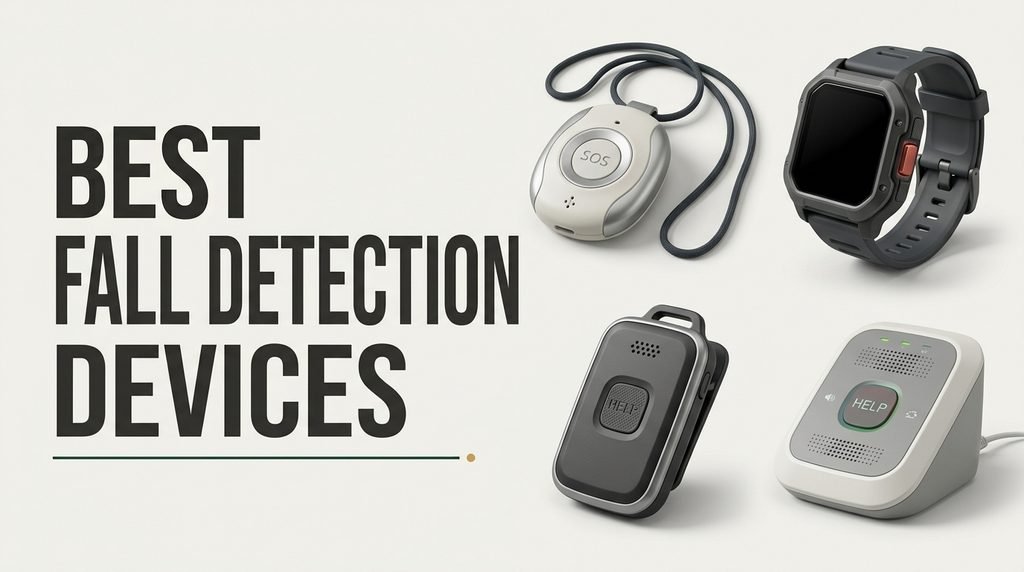
Choosing a fall detection device for 2026 means weighing automatic fall sensing accuracy, GPS tracking range, monthly subscription costs, battery life, waterproofing, and how easily a senior can operate the device under stress. We compare 10 standout options across these factors so you can match a safety wearable to the specific mobility, cognitive, and lifestyle needs of your loved one.
Fall detection devices span a wide range of form factors and service models. Smartwatch-style trackers with 4G connectivity and video calling sit alongside simple one-button pendants backed by professional monitoring centers, and no-fee options that call 911 directly. Monthly costs range from zero to $40 or more, and battery life varies from a single day to nearly a week between charges.
This guide breaks down each device’s strengths, subscription requirements, and real-world limitations so you can decide between a feature-rich smartwatch, a straightforward pendant with 24/7 monitoring, or a screen-free wristband that removes complexity for users with dementia. Each review highlights practical tradeoffs around ease of use, coverage, and ongoing cost.
We compared 10 fall detection devices using the details that matter most for senior safety: automatic fall detection reliability, GPS tracking and geofencing, two-way communication quality, monthly subscription costs, battery life, waterproof rating, ease of use for cognitively impaired users, caregiver app features, health monitoring extras, and overall value. The notes focus on practical trade-offs between professional monitoring services and direct-to-family alerting so each pick connects to real caregiving scenarios and daily wearability.


Compare key features, scores, and current prices side by side. A shorter feature list means fewer details were available, not necessarily fewer capabilities.



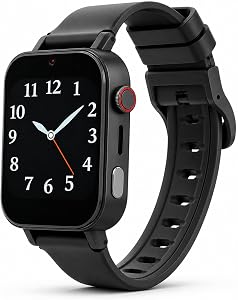
This 4G smartwatch targets families caring for seniors with dementia or Alzheimer's who need both fall protection and wandering prevention. The automatic fall detection triggers an SOS alert to preset emergency contacts without requiring the wearer to press anything, which is critical for users who may be disoriented or unconscious after a fall. The included data-only SIM with one year of free service means the GPS tracking and geo-fencing features work right out of the box without an immediate subscription commitment.
We may earn a commission when you buy through this link, at no additional cost to you.
The real-time GPS tracking paired with electronic geo-fence zones is one of the most practical features for memory care situations. Caregivers can define safe boundaries around the home or neighborhood and receive instant app notifications if the wearer wanders outside those areas. This proactive alerting can prevent dangerous situations before they escalate, which is fundamentally different from reactive fall detection alone. The 4G connectivity ensures location data updates reliably in most areas with cellular coverage.
Daily usability is well-considered for the target audience. The large high-contrast touchscreen and simplified interface reduce confusion for seniors unfamiliar with smart devices, and the magnetic charging cable eliminates the fine motor skill challenges of plugging in a standard connector. The IP67 waterproof rating handles hand washing and rain, though it may not be rated for full shower submersion. Health monitoring features like heart rate and blood pressure reference add daily value beyond emergency situations.
Geo-fencing creates virtual boundaries on a map that trigger alerts when the wearer crosses them. For seniors with dementia who may wander away from home without recognizing the danger, this feature provides an early warning system that activates before the person is truly lost. Setting a geo-fence around the immediate neighborhood gives caregivers a window of time to intervene, which can prevent search-and-rescue situations and reduce the emotional toll on families.
This watch is a strong fit for families managing dementia or Alzheimer’s care who want GPS wandering alerts alongside fall detection without an immediate monthly fee. The main tradeoff is that the pre-installed SIM only supports data, so you will need to install your own voice-capable SIM if two-way calling is important. For buyers who prioritize location tracking and wandering prevention over voice communication, this device offers excellent out-of-the-box value.
Buyers who need immediate two-way voice calling without purchasing and installing a separate voice-capable SIM card.
We may earn a commission when you buy through this link, at no additional cost to you.
The SecuLife pendant takes a different approach from traditional medical alert systems by routing emergency notifications directly to family members and caregivers rather than through a professional call center. For families who prefer to manage their own emergency response and want to avoid the impersonal feel of a monitoring center, this direct-to-family model provides faster communication with people who actually know the wearer's medical history and living situation.
We may earn a commission when you buy through this link, at no additional cost to you.
The automatic fall detection triggers both a phone call and an SOS notification to preselected contacts, which creates redundant alert pathways that improve the chances of a rapid response. The one-touch SOS button provides manual activation for situations where the wearer feels unwell but hasn’t fallen, and the hands-free auto-answer feature means incoming calls from caregivers connect automatically without requiring the senior to fumble with buttons during a crisis.
Battery life is a genuine strength at up to 6 days with 24-hour interval tracking, which significantly reduces the charging burden compared to smartwatch-style devices that need daily power. The IP67 water resistance allows shower wear, which is important because bathrooms are one of the highest-risk locations for falls. The pendant form factor with a clear display showing time, battery, and signal status keeps the interface simple and readable for elderly users.
Direct-to-family alerting sends emergency notifications straight to designated contacts, which means faster communication with people who know the wearer personally. The tradeoff is that family members may not always be available to respond, especially during work hours or overnight. Professional call centers provide 24/7 coverage and can dispatch emergency services directly, but add an intermediary step. Consider whether your family can reliably respond at all hours before choosing a direct-to-family system.
This pendant is a good fit for families who want to handle emergencies themselves and prefer direct communication over professional monitoring. The $20 monthly subscription is moderate compared to some competitors but still represents an ongoing cost to factor into the budget. The 3.8-star rating suggests checking recent reviews for specific reliability concerns. For caregivers who want to be the first point of contact during an emergency, the SecuLife pendant delivers that direct connection.
Seniors who live alone without nearby family members able to respond to emergencies at any time of day.
We may earn a commission when you buy through this link, at no additional cost to you.
This 4G fall detection watch differentiates itself with HD video calling capability, allowing face-to-face communication between the wearer and family members directly from the wrist. For seniors who find comfort in seeing a familiar face during check-in calls or who need visual reassurance during an emergency, video calling adds an emotional connection layer that voice-only devices cannot provide. The advertised no-monthly-fee structure is appealing for budget-conscious families.
We may earn a commission when you buy through this link, at no additional cost to you.
The core safety features include automatic fall detection with SOS alerts to preset contacts, real-time GPS tracking with geo-fencing for wandering prevention, and a dedicated SOS button for manual activation. Health monitoring extends beyond the basics to include heart rate, blood pressure reference, sleep tracking, and a pedometer with sedentary reminders, which positions this device as a daily wellness companion alongside its emergency functions.
The large high-contrast touchscreen and simplified interface are designed for senior usability, and the IP67 waterproof rating supports daily wear during hand washing and rain exposure. The magnetic charging cable accommodates users with limited dexterity who struggle with small charging connectors. The 4G connectivity provides reliable data transmission for GPS updates and video calls in areas with adequate cellular coverage.
A device with an extensive feature list but low owner ratings often indicates that execution falls short of specifications. Common issues with budget smartwatch-style alert devices include inconsistent cellular connectivity, inaccurate fall detection that generates false alarms, unreliable GPS positioning, and companion apps that crash or fail to deliver notifications. Reading recent reviews that describe specific failure modes provides a more realistic picture than the feature list alone.
The significant concern is the 2.5-star owner rating, which is the lowest in this guide and suggests real-world performance may not match the feature specifications. Before purchasing, carefully reading recent owner reviews to understand specific issues with connectivity, fall detection accuracy, or app reliability is strongly recommended. For buyers willing to accept the risk for the video calling feature and no-fee structure, this watch offers an ambitious feature set at a competitive price.
Buyers who prioritize proven reliability and consistent performance over an extensive feature list at a low price.
We may earn a commission when you buy through this link, at no additional cost to you.
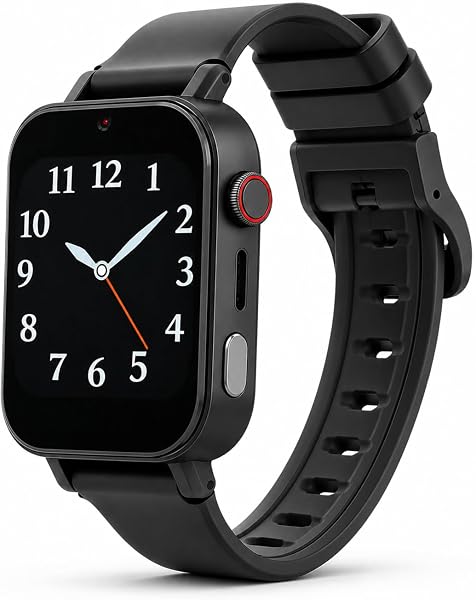
This 4G HD video watch offers a similar feature set to the previous model but with a notably higher 4.4-star owner rating, suggesting better real-world reliability and user satisfaction. The combination of automatic fall detection, HD video calling, GPS tracking with geo-fencing, and comprehensive health monitoring makes it one of the most feature-complete devices in this guide. The pre-installed data SIM with one year of free service eliminates the initial setup hurdle of sourcing a compatible cellular plan.
We may earn a commission when you buy through this link, at no additional cost to you.
The HD video calling capability functions like a wrist-mounted phone, allowing face-to-face communication with family members through the companion app on iPhone or Android. This is particularly valuable for seniors with hearing difficulties who benefit from lip-reading during calls, or for caregivers who want to visually assess the wearer’s condition during an emergency. The two-way voice chat works independently of video for simpler communication needs.
The GPS geo-fencing feature allows caregivers to set safe zones and receive instant alerts if the wearer wanders beyond designated boundaries, which is essential for dementia and Alzheimer’s care. Health monitoring includes heart rate, blood pressure reference, sleep tracking, and step counting with sedentary reminders, all syncing to the caregiver app for remote wellness oversight. The IP67 waterproof rating and magnetic charging cable support hassle-free daily wear.
The pre-installed SIM supports data services like GPS tracking, app notifications, and geo-fencing alerts but cannot make traditional phone calls. This means the watch’s SOS and communication features depend on the companion app’s internet-based calling rather than standard cellular voice. If you need the watch to function as a standalone phone for traditional calls, you will need to replace the SIM with a voice-capable plan from a compatible carrier.
This watch is a strong fit for families managing dementia care who want the reassurance of video calling alongside GPS wandering alerts and fall detection. The 4.4-star rating provides more confidence than similar lower-rated alternatives. The main limitation remains the data-only pre-installed SIM, which requires a separate voice SIM for phone calls. For buyers who want a well-rated smartwatch-style safety device with extensive features, this is one of the strongest options available.
Users who need traditional cellular voice calling without swapping the pre-installed data-only SIM card.
We may earn a commission when you buy through this link, at no additional cost to you.
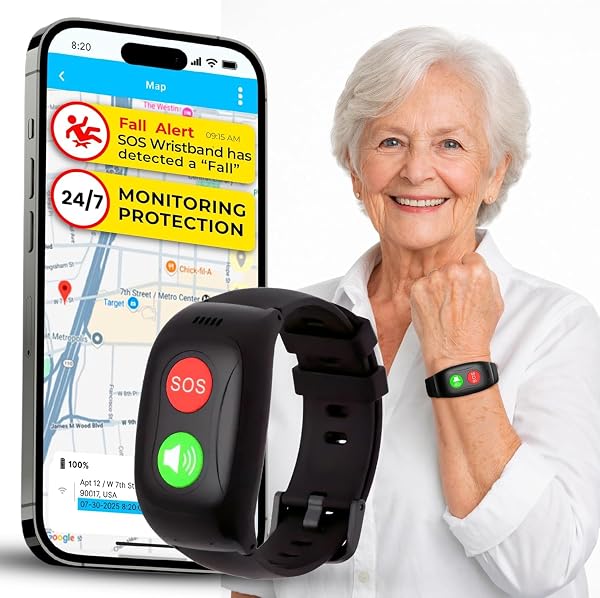
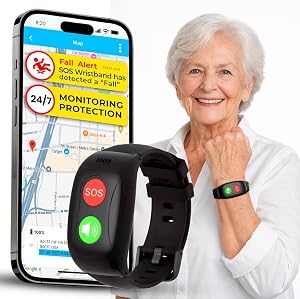
The SecuLife SOS wristband takes a deliberately minimalist approach by eliminating the screen entirely, which removes one of the biggest barriers to adoption for seniors who find technology confusing or overwhelming. Without a display to navigate, the wearer only needs to know one thing: press the button for help. This radical simplicity is particularly valuable for users with advanced dementia, cognitive impairment, or severe tech anxiety who would otherwise refuse to wear a more complex device.
We may earn a commission when you buy through this link, at no additional cost to you.
Despite the simple exterior, the wristband packs substantial functionality through its cellular connection and companion app. Automatic fall detection triggers SOS calls to preset contacts, GPS tracking with geo-fencing provides wandering alerts, and two-way voice calling works through a built-in speaker and microphone. The spam call blocking feature prevents unwanted callers from reaching the wearer, which eliminates a common source of confusion and distress for elderly users.
The Secupro companion app gives family members and caregivers full visibility into the wearer’s location, safety status, and activity without requiring any interaction from the wearer. The IP67 splash resistance handles rain and hand washing, and the lightweight screen-free design is comfortable enough for 24/7 wear. The $25 monthly subscription covers unlimited fall alerts, live tracking, voice minutes, and 7-day-a-week customer support.
A screen-free device removes the cognitive load of navigating menus, reading notifications, and responding to prompts, which can overwhelm seniors with dementia or significant cognitive decline. The simplicity also reduces the risk of accidental button presses or setting changes that could disable critical features. If the wearer has a history of removing or refusing to use complex devices, a screen-free wristband may achieve better compliance than a feature-rich smartwatch.
This wristband is an excellent fit for seniors who resist wearing complex devices or who cannot manage a touchscreen interface due to cognitive limitations. The tradeoff is the lack of a display for checking battery level or time, which means caregivers must monitor these details through the app. For families where the wearer’s willingness to actually keep the device on is the primary concern, the screen-free simplicity of this wristband can be the deciding factor.
Users who want to see the time, battery level, or incoming call information on the device itself.
We may earn a commission when you buy through this link, at no additional cost to you.
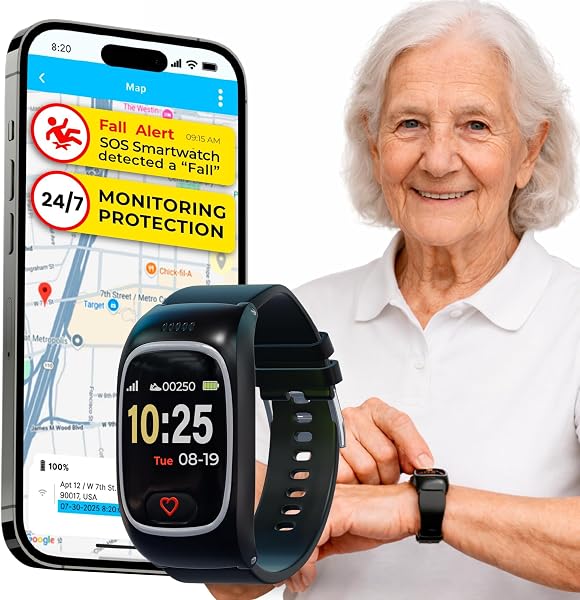
The SecuLife smartband bridges the gap between the screen-free wristband and full-featured smartwatch by offering a simplified interface with integrated health monitoring. The heart rate monitor adds a proactive wellness dimension that can alert caregivers to concerning vital sign changes before they escalate into emergencies. For seniors with cardiac conditions or those recovering from surgery, this continuous health data provides an additional safety layer beyond reactive fall detection.
We may earn a commission when you buy through this link, at no additional cost to you.
The emergency response system triggers automatic calls to preset contacts when a fall is detected or when the heart-shaped SOS button is held for three seconds. The hands-free auto-answer feature means incoming calls from approved contacts connect automatically without requiring any action from the wearer, which is critical during situations where the senior may be unable to reach or press the device. This direct-to-family model bypasses call centers for faster personal communication.
GPS tracking with geo-fencing supports wandering prevention for dementia care, and the Secupro app provides caregivers with real-time location, health data, and emergency notifications. The IP67 water resistance allows shower wear, and the large SOS button is easy to locate and press even under stress. The $25 monthly subscription covers unlimited fall alerts, live tracking, voice minutes, and round-the-clock customer support.
Continuous heart rate monitoring can detect abnormal rhythms, unusually high or low rates, and sudden changes that may indicate a medical event in progress. For seniors with known cardiac conditions, this data provides caregivers with early warning signs that may precede a fall or other emergency. While wrist-based heart rate sensors are not medical-grade devices, they can flag trends worth discussing with a healthcare provider.
This smartband is a good fit for families who want health monitoring alongside emergency response and prefer the direct-to-family alert model. The 3.9-star rating suggests reading recent reviews for specific performance feedback. If the wearer needs the absolute simplest possible interface, the screen-free SecuLife wristband may be a better match. For buyers who value heart rate data alongside fall detection, this smartband offers a practical hybrid approach.
Buyers who want to avoid monthly subscription fees or who need professional 24/7 call center monitoring.
We may earn a commission when you buy through this link, at no additional cost to you.
The ADT On-The-Go pendant leverages one of the most recognized names in home security to provide professional medical alert monitoring backed by over 150 years of experience. For families who want the reassurance of a professionally staffed, U.S.-based monitoring center available 24/7, ADT's infrastructure and trained operators provide a level of emergency response coordination that direct-to-family systems cannot match. The AT&T nationwide network ensures reliable connectivity across most of the country.
We may earn a commission when you buy through this link, at no additional cost to you.
The single-button activation is as simple as it gets: press the button to connect immediately with a trained ADT monitoring agent who can assess the situation, dispatch emergency services, and notify designated family members. The senior-sensitivity trained agents provide step-by-step updates to emergency contacts throughout the incident, including information received from first responders. This structured communication keeps families informed during the most stressful moments.
The waterproof pendant design supports 24/7 wear including in the shower, which is where a significant percentage of falls occur. The necklace form factor keeps the SOS button accessible at all times without requiring the wearer to remember to put on a wristband or watch. Activation requires a simple phone call, and the flexible monthly monitoring options come with no long-term contracts, which reduces the commitment risk for families trying the service for the first time.
When a senior lives alone, direct-to-family alerting depends on a family member being available to respond at the moment of an emergency. Professional monitoring centers provide guaranteed 24/7 coverage with trained operators who can assess the situation, dispatch appropriate emergency services, and coordinate with first responders. For solo seniors without nearby family, this professional safety net can be the difference between a rapid response and a prolonged wait for help.
This pendant is a strong fit for seniors who live alone and need reliable professional monitoring with guaranteed 24/7 response capability. The monthly monitoring fee is an ongoing cost to budget for, but the professional infrastructure provides peace of mind that family-only alerting cannot replicate. If GPS location tracking is a priority, consider the ADT fall detection model or a GPS-equipped alternative. For trusted professional monitoring from an established brand, ADT delivers proven reliability.
Families who prefer to handle emergencies directly without a call center intermediary or who need GPS location tracking.
We may earn a commission when you buy through this link, at no additional cost to you.
The Safety+ 4G Medical Alert System offers a comprehensive professional monitoring package that includes automatic fall detection, GPS location tracking, and 24/7 operator support, with the first month of service included in the purchase price. This trial period allows families to evaluate the full feature set before committing to the ongoing $40 monthly subscription, which is a practical advantage for buyers uncertain about whether professional monitoring is the right fit.
We may earn a commission when you buy through this link, at no additional cost to you.
The 24/7 monitoring connects the wearer to trained operators through nationwide 4G coverage with multilingual support. When the help button is pressed or a fall is automatically detected, the operator communicates through the device’s built-in speaker and microphone to assess the situation and dispatch emergency services as needed. The caregiver mobile app provides location tracking, activity monitoring, step count, battery status, and emergency notifications, with a Care Circle feature that lets multiple family members stay informed.
Battery life of up to 6 days on a single charge reduces the daily charging burden that plagues many smartwatch-style devices. The water-resistant design supports use in showers and rain, and the included lanyard and belt clip provide flexible wearing options. Notably, the device does not require a smartphone for operation, as cellular connectivity is provided through the monitoring service, which simplifies setup for seniors without mobile devices.
Monthly fees for medical alert services typically range from $20 to $45, with higher costs generally reflecting more comprehensive monitoring, GPS tracking, and caregiver app features. When comparing subscriptions, look at what is included: unlimited alerts, voice minutes, GPS tracking, fall detection, and customer support hours. A lower monthly fee that excludes critical features may end up costing more than a comprehensive plan that covers everything your family needs.
This system is a good fit for families who want to try professional monitoring with GPS tracking before committing to a long-term subscription. The $40 monthly fee after the trial is higher than some competitors, so comparing the feature set against lower-cost alternatives is worthwhile. The 3.7-star rating suggests reviewing recent owner feedback for reliability insights. For buyers who value a risk-free trial period with comprehensive monitoring features, the Safety+ system offers a practical entry point.
Budget-conscious buyers who want to avoid ongoing monthly fees above $30 per month.
We may earn a commission when you buy through this link, at no additional cost to you.
The SkyAngelSPORT watch addresses one of the most common objections to fall detection devices: the ongoing cost of monthly subscriptions. By connecting directly to 911 through a dedicated SOS button, this watch eliminates the need for a monitoring service entirely, which means the total cost of ownership is limited to the purchase price. For budget-conscious families or seniors on fixed incomes, this pay-once model removes a significant financial barrier to personal safety.
We may earn a commission when you buy through this link, at no additional cost to you.
The automatic fall detection uses motion sensors to recognize significant falls and initiate an emergency call if the wearer does not respond, providing hands-free protection when the user is unable to press the SOS button manually. The wellness monitoring suite includes heart rate, blood pressure, blood oxygen measurement, and a pedometer, which adds daily health tracking value beyond the emergency features. The water-resistant construction supports wearing the watch during hand washing, showers, and outdoor activities.
The watch operates independently without requiring a smartphone or additional equipment, which simplifies the setup process and removes a potential point of failure. This standalone operation is particularly valuable for seniors who do not own or use smartphones and would struggle with companion app requirements. The design targets older adults living alone and individuals with medical conditions who need reliable emergency access without technological complexity.
Direct 911 calling eliminates subscription fees but places the full emergency response burden on the 911 system rather than a dedicated monitoring center. Professional monitoring operators can assess situations, provide first aid guidance, and coordinate with specific emergency contacts before dispatching services. Direct 911 calls connect to general emergency dispatchers who may not have the wearer’s medical history or emergency contact information readily available. Consider whether the cost savings justify the reduced coordination.
This watch is a strong fit for buyers who want to eliminate monthly fees and prefer direct 911 access over family notification or professional monitoring. The lack of owner ratings makes it difficult to assess real-world reliability, so early adopters should be prepared for potential learning curves. If GPS location tracking is essential for wandering prevention, this device may not meet your needs. For straightforward emergency protection with zero recurring costs, the SkyAngelSPORT offers a compelling value proposition.
Families who want GPS location tracking, geo-fencing, or professional monitoring coordination during emergencies.
We may earn a commission when you buy through this link, at no additional cost to you.
This ADT pendant adds automatic fall detection to the trusted On-The-Go monitoring platform, combining hands-free emergency triggering with professional 24/7 response coordination. The fall detection sensor continuously monitors for sudden impacts and orientation changes associated with falls, automatically connecting the wearer to an ADT monitoring agent even if they are unable to press the SOS button. For seniors at high fall risk who may lose consciousness or be too disoriented to call for help, this automatic triggering is a critical safety feature.
We may earn a commission when you buy through this link, at no additional cost to you.
The ADT monitoring infrastructure provides U.S.-based, company-owned response centers staffed by senior-sensitivity trained agents who can assess the situation through the pendant’s two-way speaker, dispatch emergency services, and provide step-by-step updates to designated family members throughout the incident. This structured response protocol ensures that both the wearer and their loved ones receive coordinated support during the most critical moments.
The waterproof pendant design supports continuous wear in the shower and during active daily routines, which is essential because bathroom falls represent a disproportionate share of serious injuries among seniors. The AT&T nationwide network provides broad coverage for on-the-go protection beyond the home. Activation requires a simple phone call, and the flexible monthly plans come without long-term contracts.
Fall detection sensors use accelerometers and gyroscopes to monitor the wearer’s movement patterns and orientation in three-dimensional space. When the sensor detects a rapid acceleration followed by a sudden stop and a change in body orientation consistent with a fall, it triggers an alert sequence. Most systems provide a brief cancellation window to prevent false alarms from activities like sitting down quickly or dropping the device. Understanding this technology helps set realistic expectations about detection accuracy.
This pendant is a strong fit for high-fall-risk seniors who need both automatic detection and professional monitoring response. The 3.8-star rating is slightly lower than the basic ADT pendant, so reviewing recent feedback about fall detection accuracy is worthwhile. If automatic fall detection is not needed, the basic ADT pendant saves on the subscription cost. For comprehensive professional protection with hands-free fall sensing, this ADT model delivers established reliability.
Buyers who want to avoid monthly monitoring fees or who prefer direct-to-family alerting over professional call center response.
We may earn a commission when you buy through this link, at no additional cost to you.
Selecting a fall detection device involves balancing detection reliability, communication method, subscription costs, battery life, and ease of use against the specific health, cognitive, and lifestyle needs of the wearer. The factors below cover the most important decision points so you can match a device to real caregiving requirements rather than being swayed by feature lists alone.
Automatic fall detection uses built-in accelerometers and gyroscopes to sense the rapid acceleration and sudden impact patterns associated with a fall. When the sensor identifies a movement profile consistent with a fall, it triggers an alert sequence that typically includes a brief countdown allowing the wearer to cancel false alarms before the SOS is sent. The quality of the detection algorithm varies significantly between devices, affecting both the rate of missed falls and the frequency of false alarms.
No fall detection system is perfect. False alarms can be triggered by vigorous activities like clapping, dropping the device, or sitting down heavily, while some genuine falls at unusual angles may not register. Higher-quality systems use machine learning algorithms that improve over time and can distinguish between falls and normal activities more reliably. When evaluating fall detection accuracy, look for owner reviews that specifically mention false alarm frequency and detection reliability in real-world use.
Prioritize devices with adjustable sensitivity settings if available, and test the fall detection feature in a controlled environment after purchase to understand how the system responds to different movements. For high-risk users, combining automatic detection with a manual SOS button provides redundant protection.
The physical design of a fall detection device significantly affects whether the wearer will actually keep it on, which is the most important factor in its effectiveness. Smartwatch-style devices offer the most features including displays, health monitoring, and video calling, but they may feel too complex for seniors with cognitive impairment. Pendant-style devices worn on a lanyard around the neck are the simplest to operate but can be forgotten or removed during sleep.
Wristband designs, particularly screen-free options like the SecuLife SOS wristband, strike a balance between simplicity and continuous wear. The lightweight, unobtrusive form factor encourages 24/7 compliance, which is essential because falls can happen at any time. The tradeoff is fewer features and no display for checking status information. Consider the wearer’s comfort preferences, cognitive ability, and daily routine when choosing between form factors.
The best form factor is the one the wearer will actually keep on consistently. A feature-rich smartwatch that sits on a nightstand is less effective than a simple pendant worn 24/7. Involve the wearer in the selection process when possible to ensure they are comfortable with the device.
Fall detection devices fall into three cost categories: no-fee devices that call 911 directly, moderate-fee devices ($20-$25/month) that alert family members with GPS tracking, and premium monitoring services ($35-$45/month) that provide 24/7 professional call center response. The monthly fee typically covers cellular connectivity, GPS tracking, app access, and monitoring center staffing, which explains the significant price differences between tiers.
No-fee devices like the SkyAngelSPORT eliminate ongoing costs but rely on the 911 system for emergency response, which means operators may not have the wearer’s medical history or emergency contact details readily available. Family-alerting devices provide faster personal communication but depend on designated contacts being available to respond. Professional monitoring centers offer guaranteed 24/7 coverage with trained operators who can coordinate with emergency services and keep family members informed.
Calculate the total cost of ownership over two to three years when comparing devices. A $170 no-fee watch costs less over three years than a $50 pendant with a $40 monthly subscription. However, the professional monitoring service may provide significantly better emergency response coordination that justifies the additional cost for high-risk users.
GPS tracking allows caregivers to monitor the wearer’s real-time location through a companion app, which is essential for seniors with dementia or Alzheimer’s who may wander away from home. Geo-fencing takes this a step further by creating virtual boundaries on a map that trigger automatic alerts when the wearer crosses them. This proactive warning system can prevent dangerous wandering situations before they escalate into search-and-rescue operations.
GPS accuracy varies between devices and depends on cellular network coverage, satellite visibility, and the quality of the GPS chipset. Urban environments with tall buildings and indoor locations may reduce positioning accuracy. Battery life is also affected by GPS tracking frequency; devices that update location every few minutes will drain faster than those using hourly intervals. Most devices allow caregivers to adjust tracking frequency through the companion app.
If wandering prevention is a primary concern, prioritize devices with GPS tracking and geo-fencing capabilities like the 4G smartwatch models or SecuLife devices. For seniors who stay primarily at home and do not have wandering tendencies, GPS tracking may be an unnecessary feature that adds cost and reduces battery life.
Battery life ranges dramatically across fall detection devices, from roughly one day for feature-rich smartwatches with GPS and video calling to six days or more for simpler pendants and wristbands. The charging frequency directly affects daily compliance because a dead device provides zero protection. For seniors who may forget to charge their devices, longer battery life is not just a convenience but a safety necessity.
Charging method also matters for users with limited dexterity or arthritis. Magnetic charging cables, like those on the 4G smartwatch models, snap into place without requiring precise alignment, which is significantly easier than plugging in a micro-USB or USB-C connector. Charging docks, like the one included with the Safety+ system, provide a simple drop-and-charge experience. Consider the wearer’s physical ability to manage the charging process when evaluating devices.
For users who struggle with daily charging routines, prioritize devices with 4-6 day battery life and simple magnetic or dock charging. If the wearer has a caregiver who can manage daily charging, shorter battery life is more acceptable and may come with additional features.
Bathrooms are among the most dangerous locations for falls due to wet surfaces, hard tile floors, and the physical challenges of stepping in and out of tubs and showers. A fall detection device that must be removed before bathing leaves the wearer unprotected during one of the highest-risk activities of the day. Waterproof or water-resistant construction allows continuous 24/7 wear, which eliminates this dangerous coverage gap.
The IP67 rating, common across many devices in this guide, indicates protection against immersion in up to one meter of water for 30 minutes, which is sufficient for showering and hand washing. Some devices use less specific water-resistant claims that may not withstand full shower exposure. Verify the specific waterproof rating before assuming a device can be worn in the shower, and check whether the rating covers the charging port and speaker openings.
For seniors who bathe independently, prioritize devices with IP67 or better waterproof ratings to ensure continuous protection. If the wearer receives assisted bathing from a caregiver, waterproofing is less critical because the caregiver is present during the highest-risk period.
The communication pathway during an emergency is one of the most important differentiators between devices. Direct 911 calling connects the wearer to emergency dispatchers immediately but without personalized medical information. Family alerting sends notifications to designated contacts who know the wearer’s situation but may not be available at all hours. Professional monitoring centers provide 24/7 trained operators who can assess the situation, dispatch appropriate services, and coordinate with family members.
Two-way voice communication through the device allows the wearer to speak with responders or family members during an emergency, which helps assess the severity of the situation and provide reassurance. Video calling, available on some smartwatch models, adds visual assessment capability that can help responders understand the situation before arriving. Hands-free auto-answer features ensure that incoming calls connect without requiring the wearer to press buttons during a crisis.
Match the communication model to the wearer’s living situation. Solo seniors without nearby family benefit most from professional monitoring. Seniors with engaged nearby caregivers may prefer direct family alerting. Budget-conscious buyers may accept direct 911 calling to avoid subscription fees.
For seniors with dementia, Alzheimer’s, or other cognitive conditions, device complexity is the primary barrier to effective use. A device with too many buttons, menus, or notifications can confuse the wearer and lead to accidental deactivation or removal. The most effective devices for cognitively impaired users feature single-button operation, screen-free designs, and automatic functions that require no user interaction.
Screen-free wristbands like the SecuLife SOS model eliminate the cognitive load of navigating displays entirely. Devices with large, clearly labeled SOS buttons and automatic fall detection reduce the need for the wearer to understand or remember how the device works. Companion apps shift the complexity to the caregiver’s smartphone, keeping the wearer’s experience as simple as possible.
For users with significant cognitive impairment, prioritize screen-free designs with automatic fall detection and minimal user interaction requirements. The device should work effectively even if the wearer forgets it is being worn. Involve occupational therapists or care professionals in the selection process when possible.
The companion app experience significantly affects how effectively caregivers can monitor and respond to the wearer’s safety. Key app features include real-time GPS location tracking, geo-fence alerts, battery status monitoring, activity tracking, emergency notifications, and the ability to create care circles that include multiple family members. The app’s reliability and notification speed directly impact response times during emergencies.
Push notification reliability is critical because a delayed or missed alert can have serious consequences. Check owner reviews for reports of notification delays, app crashes, or connectivity issues that could compromise emergency response. Some apps also provide historical location data, activity trends, and health monitoring dashboards that help caregivers track the wearer’s overall well-being over time.
Before purchasing, download the companion app and review its interface and feature set to ensure it meets your family’s monitoring needs. Verify that the app supports multiple caregiver accounts if several family members will share monitoring responsibilities.
Most modern fall detection devices use cellular networks for GPS tracking, emergency communication, and app connectivity. The specific carrier and network technology affect coverage reliability, especially in rural areas or buildings with poor signal penetration. Devices on the AT&T network, like the ADT pendants, benefit from one of the largest nationwide coverage footprints, while 4G LTE devices on other carriers may have different coverage patterns.
Indoor coverage can be significantly weaker than outdoor coverage, which may affect GPS accuracy and call quality inside homes with thick walls or metal construction. Some devices include Wi-Fi connectivity as a backup for indoor positioning, though this is less common in the budget-friendly options. For users in rural areas with limited cellular coverage, verifying network compatibility with local carriers before purchasing is essential.
Check the device’s carrier compatibility against the coverage maps for your area, especially if the wearer lives in a rural location or a building with known signal issues. A device with excellent features is ineffective if it cannot maintain a reliable cellular connection in the wearer’s daily environment.
After unboxing, fully charge the device before first use and complete the setup process including pairing with the companion app, registering emergency contacts, and testing the SOS button and fall detection features in a controlled environment. Verify that GPS tracking is functioning by checking the wearer’s location on the app while they move around the home and neighborhood. Set up geo-fence boundaries if the device supports them, starting with a conservative radius around the home and adjusting based on the wearer’s normal activity patterns.
Establish a consistent charging routine that fits the wearer’s daily schedule, ideally during a predictable low-activity period such as during a favorite television program or while sitting for a meal. For devices with multi-day battery life, set a recurring phone reminder for the caregiver to check the battery level through the app and initiate charging before it drops below 20 percent. Ensure the wearer understands the basic operation of the SOS button and knows to keep the device on at all times, including during bathing if the device is waterproof.
Regular maintenance includes cleaning the device with a soft damp cloth to remove skin oils and debris that can accumulate on sensors and charging contacts. Check the band or lanyard for signs of wear that could cause the device to fall off, and replace worn components promptly. Test the SOS and fall detection features monthly to confirm they are functioning correctly, and update the companion app and device firmware when notifications appear. Review and update emergency contact information whenever family circumstances change to ensure alerts reach the right people during a crisis.
Automatic fall detection is generally reliable for detecting significant falls involving sudden impact and orientation changes, but no system catches every fall perfectly. False alarms can occur from vigorous movements like clapping or sitting down heavily, while slow slides or gentle collapses may not trigger the sensor. Higher-quality devices use advanced algorithms that reduce both false alarms and missed detections. Most systems include a brief cancellation window to prevent unnecessary emergency calls from false triggers.
Most modern fall detection devices use cellular networks rather than Wi-Fi for emergency communication, GPS tracking, and app connectivity. This means they work anywhere with cellular coverage, including outdoors and in locations without Wi-Fi. Some devices require a SIM card and active cellular plan, while others include connectivity as part of a monitoring subscription. Verify the specific connectivity requirements before purchasing.
Devices with an IP67 waterproof rating or higher can typically be worn in the shower without damage. This is important because bathrooms are high-risk areas for falls. Check the specific waterproof rating for your device and avoid submerging devices that are only splash-resistant. Even waterproof devices should not be exposed to high-pressure water jets or extreme temperatures like hot tubs or saunas unless specifically rated for those conditions.
When fall detection activates, the device typically initiates a brief countdown allowing the wearer to cancel the alert if it is a false alarm. If not cancelled, the device sends an SOS notification to preset emergency contacts, a professional monitoring center, or directly to 911 depending on the device model. Many devices also open a two-way voice channel so responders can communicate with the wearer to assess the situation and determine what help is needed.
No, some fall detection devices operate without monthly fees by connecting directly to 911 through a built-in cellular connection. However, devices with GPS tracking, caregiver apps, and professional monitoring typically require monthly subscriptions ranging from $20 to $45. The fee covers cellular connectivity, monitoring center staffing, and app services. No-fee devices eliminate ongoing costs but may offer fewer features and less coordinated emergency response.
Yes, most fall detection devices allow you to designate multiple emergency contacts who will receive alerts simultaneously when a fall is detected or the SOS button is pressed. Many companion apps also support care circle features that let several family members and caregivers monitor the wearer's location, activity, and battery status. This distributed notification system improves the chances that someone will be available to respond quickly during an emergency.
Battery life varies significantly by device type and feature usage. Simple pendants and wristbands can last 4-6 days on a single charge, while feature-rich smartwatches with GPS tracking and video calling may need daily charging. GPS tracking frequency, cellular signal strength, and fall detection sensitivity all affect battery consumption. For seniors who may forget to charge regularly, prioritize devices with longer battery life and simple charging methods like magnetic cables or docks.
Yes, fall detection devices can be very effective for people with dementia, especially models designed for simplicity. Screen-free wristbands, automatic fall detection that requires no user interaction, and geo-fencing alerts for wandering prevention are particularly valuable for dementia care. The key is choosing a device the wearer will keep on consistently, which often means selecting the simplest possible design and letting the companion app handle complexity on the caregiver's side.
A medical alert system provides a manual SOS button that the wearer presses to call for help during any emergency, including falls, chest pain, or other medical events. Fall detection adds an automatic sensor that triggers the alert without requiring the wearer to press anything, which is critical when the person is unconscious or disoriented after a fall. Many modern devices combine both features, providing manual SOS capability alongside automatic fall sensing for comprehensive protection.
Yes, mobile fall detection devices with cellular connectivity work anywhere with network coverage, providing protection during walks, shopping trips, and travel. GPS tracking and geo-fencing features are specifically designed for outdoor use and wandering prevention. Devices that rely on a home base station may have limited range, so verify that the device you choose provides true mobile coverage if the wearer spends significant time outside the home.
The 4G GPS Safety Watch with free data SIM stands out as the strongest overall choice for most families, combining automatic fall detection, GPS geo-fencing for wandering prevention, two-way communication, and one year of included data service at a reasonable price point. The 4.4-star owner rating provides confidence in real-world reliability, and the comprehensive feature set addresses both emergency response and daily wellness monitoring needs for seniors with dementia or mobility concerns.
For different priorities, the ADT On-The-Go pendant delivers trusted professional monitoring backed by 150 years of experience for seniors who live alone and need guaranteed 24/7 response, the SkyAngelSPORT watch eliminates monthly fees entirely for budget-conscious buyers willing to accept direct 911 calling, and the SecuLife screen-free wristband achieves maximum simplicity for cognitively impaired users who would resist wearing a more complex device. The Safety+ system offers a risk-free first month to evaluate professional monitoring before committing.
The right fall detection device depends on the wearer's cognitive ability, living situation, fall risk level, and your family's capacity to respond to emergencies at all hours. Prioritize consistent wearability above all other factors, because the most advanced device provides zero protection if it sits on a nightstand. Match the complexity to the wearer's comfort level, choose a communication model that fits your family's availability, and verify cellular coverage in the wearer's daily environment before making your final decision.