DEWALT DCS438B
9.2Editor score20V MAX XR platform
Brushless motor design
Three wheels included
AirLock dust connection
Find the right cut off saws for 2026. We compare 10 standout options by build quality, useful features, owner feedback, value, and everyday trade-offs.
Choosing the right cut off saws for 2026 means weighing motor power, blade diameter, cutting technology, portability, and the materials you work with most often. We compare 10 standout chop saws and compact cut-off tools by the specs that affect real-world cutting performance, including dry-cut versus abrasive capability, cordless runtime, miter range, and jobsite durability.
The category spans dedicated 14-inch metal chop saws, compact cordless cut-off tools for tight spaces, and specialty saws for concrete and multi-material work. Each design serves a different purpose, and matching the tool to your actual projects prevents buying either too much saw or not enough. Blade technology matters as much as motor wattage.
The models below cover entry-level abrasive chop saws, premium carbide-tipped dry-cut machines, brushless cordless units, and heavy-duty cut-off saws capable of slicing reinforced concrete. Features like soft start, spark deflectors, quick-release vises, and dust management vary significantly, and understanding those differences is the key to a confident purchase.
We compared these cut off saws using the specs that actually matter when cutting metal, concrete, or mixed materials: motor power or battery platform, blade diameter and cut capacity, blade technology (abrasive versus carbide-tipped dry cut), miter range, vise and fence quality, safety features like spark guards and electric brakes, portability, warranty coverage, and owner feedback. The notes focus on practical trade-offs so each pick connects to real fabrication, construction, and workshop use.


Compare key features, scores, and current prices side by side. A shorter feature list means fewer details were available, not necessarily fewer capabilities.


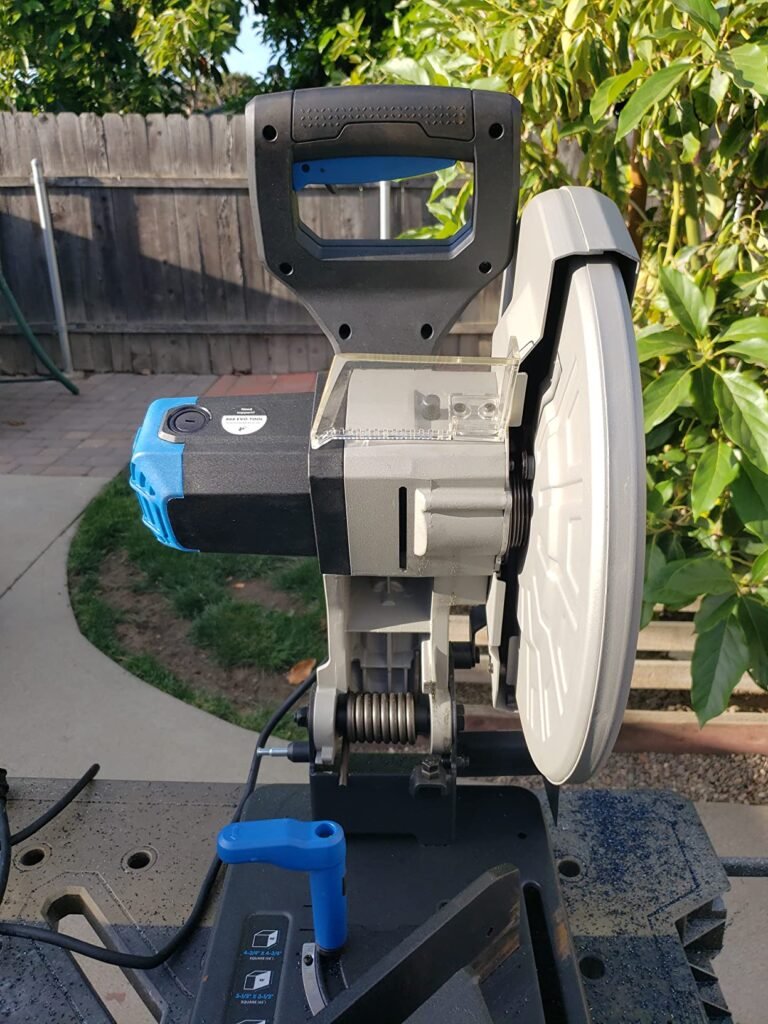
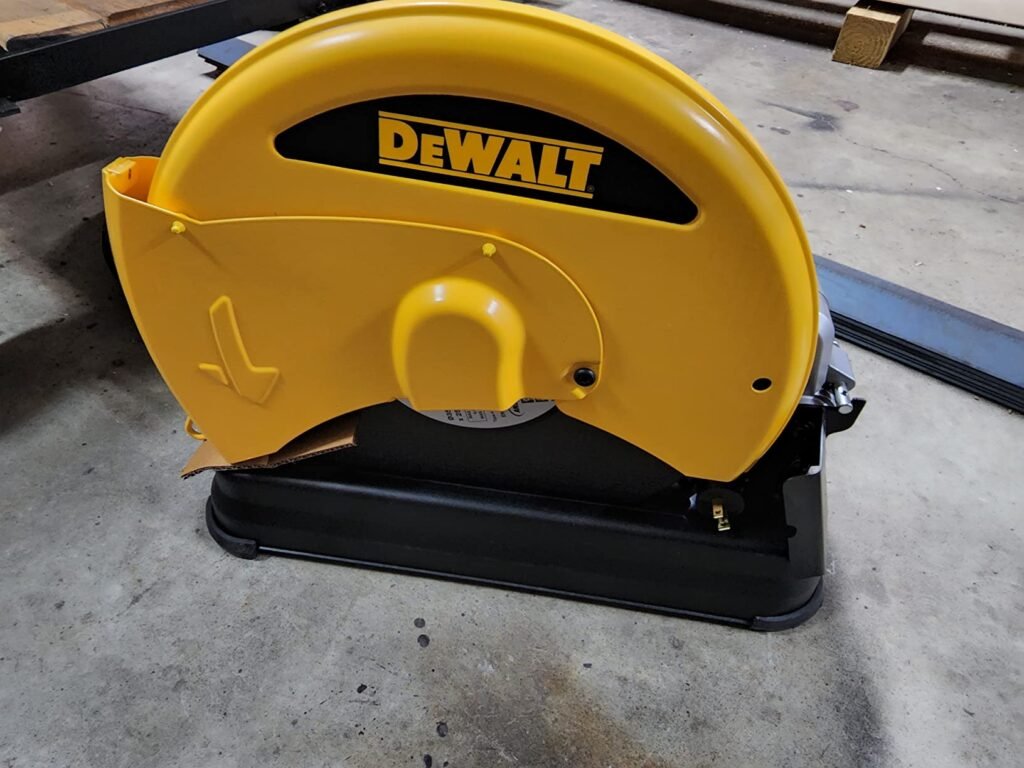
The DEWALT D28730 is the classic 14-inch abrasive chop saw aimed at welders, metal fabricators, and contractors who need a dependable workhorse that will not quit mid-project. Its 2300W motor delivers consistent cutting power on structural steel, angle iron, rebar, and tubing, and the included overload protection helps prevent burnout during back-to-back cuts on thicker stock.
We may earn a commission when you buy through this link, at no additional cost to you.
The Quick-Lock vise is one of the most practical features on this saw. Clamping and releasing material happens in a single lever motion rather than fiddling with threaded screw adjustments, which adds up to significant time savings over a production shift. The 45-degree pivoting fence allows reasonably accurate angle cuts for brackets, mitered frames, and layout work, though a true miter saw remains better for precision angled fabrication.
Ergonomics are handled better than on many budget competitors. The angled handle positions your wrist naturally during repeated cutting cycles, which matters more than it sounds when you are cutting dozens of pieces per hour. The spark deflector keeps debris aimed away from the operator, and the overall layout follows DEWALT’s familiar jobsite design language that most pros already understand.
Abrasive wheels are inexpensive to replace and cut almost any ferrous material without special blade selection. For shops that cut varied stock types and sizes, the simplicity of swapping a $10 abrasive wheel often outweighs the cleaner results of a $100 carbide blade. The tradeoff is sparks, noise, heat, and burrs that need grinding or deburring afterward.
This chop saw is the right pick for anyone who wants a reliable abrasive cutter from a brand with strong parts and service support. The abrasive wheels wear faster than carbide-tipped alternatives and generate heat, sparks, and burrs that require secondary finishing. If you cut large volumes of mild steel daily, consider stepping up to a dry-cut model. For general metal fabrication at a reasonable price, this remains an industry-standard choice.
Buyers who need cool, burr-free cuts on finished parts or who prefer carbide-tipped dry-cut technology.
We may earn a commission when you buy through this link, at no additional cost to you.
This DEWALT compact cut-off tool is built for electricians, plumbers, HVAC installers, and remodelers who need precise, controlled cuts in cramped spaces where a 14-inch chop saw simply cannot fit. The 20V MAX XR brushless motor delivers meaningful power for its size while extending battery runtime and overall tool lifespan compared to brushed designs. The 550 MWO rating reflects serious cutting capability in a hand-held package.
We may earn a commission when you buy through this link, at no additional cost to you.
What really sets this unit apart is the included wheel assortment. You get a bonded abrasive wheel for metal, a diamond multi-material wheel for mixed cuts, and a diamond tile wheel for ceramic and stone work. This versatility means one tool handles conduit, pipe, tile, and backing board on a single job without swapping between dedicated tools. For trade work with varied materials, that convenience is a genuine productivity gain.
The tool-free depth adjustment with clear inch and mm markings is a thoughtful detail for repeatable cuts. The AirLock dust extraction connection lets you plug directly into a DEWALT vacuum or dust extractor, which matters significantly when cutting silica-containing materials like tile or cement board where airborne dust is a serious health concern. The bright LED helps in dim electrical rooms and crawl spaces.
Brushless motors run cooler, last longer, and extract more work per battery charge than equivalent brushed designs. In a compact cut-off tool that may be used for dozens of short cuts across a workday, the runtime and durability gains translate directly to fewer battery swaps and a longer service life. The slight price premium over brushed alternatives is almost always worth it for daily trade use.
This cut-off tool is the right pick for tradespeople already invested in the DEWALT 20V MAX platform who need a dedicated small-wheel cutter for finish and installation work. It is sold as a bare tool, so battery and charger cost must be added if you do not already own them. For dedicated metal production cutting, a corded chop saw remains more efficient. For versatile jobsite trim and installation cuts, this is one of the best compact cordless options available.
Users who need to cut large structural steel or thick stock that requires a full-size chop saw.
We may earn a commission when you buy through this link, at no additional cost to you.
The Evolution S355CPSL targets fabricators, custom builders, and welders who are tired of grinding burrs off every cut piece and dealing with the heat, sparks, and noise of abrasive cutting. Its tungsten carbide-tipped blade and dry-cut design slice through mild steel with minimal heat generation, leaving edges that are often workable immediately without secondary finishing. For anyone producing finished parts, this changes the workflow significantly.
We may earn a commission when you buy through this link, at no additional cost to you.
The 15-amp motor pairs well with the TCT blade geometry to produce clean, accurate cuts at a reasonable feed rate. Dry-cut technology means no coolant mess and much less airborne debris than abrasive cutting, which translates to a cleaner shop and better visibility during cuts. The integrated chip deflector catches chips rather than scattering them, making cleanup noticeably easier than with an abrasive setup.
The cast steel vise with quick-release mechanism grips material securely for accurate miter cuts between 0 and 45 degrees. Evolution offers blade options tailored for mild steel, thin steel, aluminum, and stainless, so you can optimize the saw for your specific material rather than compromising with a one-blade-fits-all approach. The lightweight pressed steel base keeps the unit portable despite its heavy-duty cutting capability.
Abrasive wheels grind through metal with friction, generating heat that discolors edges and creates burrs requiring removal. Carbide-tipped dry-cut blades shear metal cleanly like a woodworking saw, producing cold edges that are often ready to weld or paint immediately. For finished work, the time saved on secondary deburring and the lack of heat distortion justify the higher blade cost on anything but the most casual cutting.
This chop saw is the right investment for shops producing finished parts where edge quality matters, or for anyone cutting enough mild steel that abrasive wheel costs become significant. The upfront investment is noticeably higher than abrasive alternatives, and replacement TCT blades are not cheap. The three-year warranty and US-based support provide meaningful peace of mind for a production tool. For clean metal cutting at serious volume, few saws in this class match the Evolution.
Occasional users or buyers unwilling to invest in higher-cost carbide blades for premium cut quality.
We may earn a commission when you buy through this link, at no additional cost to you.
The RYOBI PSBCS02B is purpose-built for one-handed, close-quarters cutting work. At only 8.5 inches long, it slips into spaces where even the DEWALT compact cut-off tool struggles to fit. Electricians, plumbers, remodelers, and DIYers invested in the RYOBI ONE+ ecosystem get a brushless cutter capable of handling metal pipe, PVC, cement board, tile, drywall, wire shelving, and vinyl siding with the right wheel installed.
We may earn a commission when you buy through this link, at no additional cost to you.
The 19,500 RPM top speed from the brushless motor is impressive for a compact tool and translates to fast, clean cuts in thinner materials. The forward and reverse functionality is a thoughtful touch that helps when a cut starts to bind or when working in orientations where chip ejection direction matters. Dual LED lights illuminate the work area from multiple angles, which eliminates most shadowing problems in cramped installation locations.
The adjustable guard and customizable depth guide let you set a precise cut depth up to 0.62 inches, which is enough for most finish and installation work but limits structural applications. The electric brake stops the wheel quickly after trigger release, a meaningful safety feature when working near your free hand or in tight quarters. Onboard blade wrench storage prevents the typical lost-tool frustration.
Buying into a cordless platform like RYOBI ONE+ means every subsequent tool purchase can be bare-tool only, saving the cost of batteries and chargers. This compact cut-off tool is a classic example: for someone already deep in the ecosystem, adding this capability costs about $100 total. For someone starting fresh, factor in battery and charger costs when comparing against other brands.
This tool is the right pick for RYOBI ONE+ battery owners who need an ultra-compact cutter for jobsite trim, installation, and remodeling work. The shallow cut depth makes it unsuitable for structural steel or thick material. The small 3-inch wheels wear faster and cover less area per cut than larger diameters. For precise, close-quarters multi-material cutting on an established 18V platform, this is one of the smartest compact tools RYOBI offers.
Users who need to cut structural steel, thick stock, or materials deeper than about half an inch.
We may earn a commission when you buy through this link, at no additional cost to you.
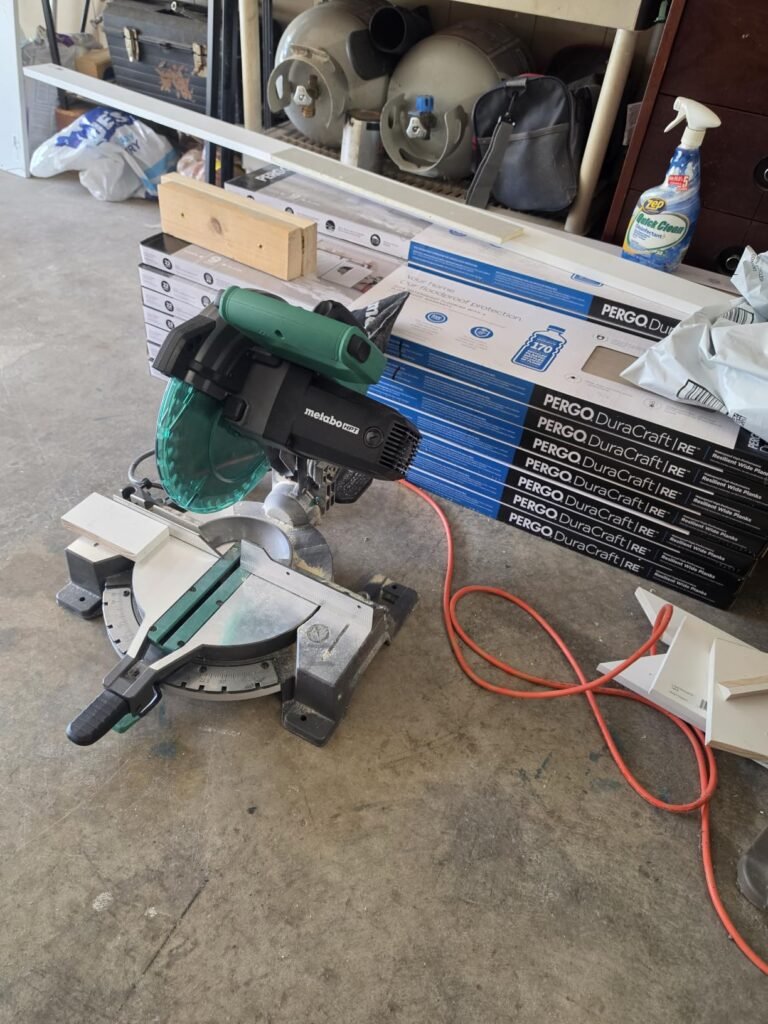
The Metabo HPT C10FCG2 is a 10-inch compound miter saw rather than a dedicated metal cut-off saw, which makes it the right choice for carpenters, trim installers, deck builders, and DIYers whose cutting needs center on dimensional lumber, trim, and millwork. At only 24 pounds, it is noticeably lighter than most 10-inch miter saws, which matters significantly when carrying the tool from truck to jobsite multiple times a day.
We may earn a commission when you buy through this link, at no additional cost to you.
The 15-amp motor delivers 5,000 RPM at the blade, which is appropriate for clean cuts in softwoods, hardwoods, trim, and most composite decking. The improved miter scale and control layout help you dial in accurate angles quickly, and the vise clamping system secures the workpiece for precision and safety during angled cuts. The wide miter range of 0-52 degrees in both directions covers virtually all common framing and trim angles.
The 0-45 degree left bevel adds compound cutting capability for crown molding, stair stringers, and complex trim work. Adjustable bevel stops ensure repeatable precision cuts when running production trim. The compact design stores easily between jobs, and the lightweight build makes solo setup and takedown much more manageable than with heavier professional miter saws.
Miter saws like this Metabo HPT are optimized for wood with high blade speeds and finish-focused design. Metal chop saws run slower RPMs with heavier construction to handle the heat and forces of cutting steel. Using a wood miter saw on metal destroys the blade and poses real safety risks. Match the tool to the material rather than hoping one saw will do both well.
This saw is the right choice for finish carpenters and DIY woodworkers who want a capable, portable 10-inch miter at a reasonable price. It is not designed for cutting metal and should not be substituted for a dedicated chop saw. The single bevel means certain complex crown cuts require material flipping that a dual-bevel saw would avoid. For wood-focused miter work with Metabo HPT’s five-year warranty, it is a strong value.
Buyers who need a dedicated metal cutting saw or anyone cutting structural steel regularly.
We may earn a commission when you buy through this link, at no additional cost to you.
The APLMAN 6-inch chop saw targets hobbyists, homeowners, and small-shop users whose metal cutting needs center on small stock like rebar, light angle iron, and plastic pipe. The compact footprint fits on a workbench or in a small garage shop without dominating the space, which is a legitimate advantage for anyone who does not have room for a full 14-inch machine.
We may earn a commission when you buy through this link, at no additional cost to you.
The 1800W motor with 3,900 RPM provides reasonable cutting power for its blade size, and the user-replaceable brushes extend motor life when they eventually wear out. The heavy-duty steel base keeps the saw stable during cuts, which matters more on compact units where the shorter wheelbase can otherwise lead to tipping or chatter. The spark deflector directs debris away from the operator and keeps the cut line visible.
The 0-45 degree adjustable fence enables angled cuts for brackets and framework, and three positions accommodate various material sizes within the compact capacity. The ergonomic horizontal handle positions the operator’s wrist comfortably during repeated cuts, reducing fatigue in production situations. The small blade diameter inherently limits what you can cut, so matching the saw to your actual stock dimensions is critical before buying.
Lower-priced chop saws typically have shorter brush life, less refined vise mechanisms, and tighter capacity limits than premium units. For light-duty intermittent use, those compromises are often acceptable in exchange for the significant savings. For production use or cutting beyond the saw’s design envelope, stepping up to a DEWALT, Evolution, or Milwaukee is almost always the better long-term value.
This chop saw makes sense for occasional users with modest cutting requirements and limited shop space. The 3.5-star rating reflects some owner dissatisfaction, so manage expectations about build quality compared to premium brands. The small blade size genuinely limits capacity. For hobbyist-level rebar, light angle iron, and plastic cutting in a compact package, it is one of the more affordable entry points available.
Daily production users or anyone cutting larger structural steel beyond the compact 6-inch blade capacity.
We may earn a commission when you buy through this link, at no additional cost to you.
The Milwaukee M18 Fuel 9-inch cut-off saw is designed to replace gas-powered concrete saws on jobsites where fumes, noise, and starting hassles make traditional two-stroke engines a liability. Concrete contractors, electricians installing conduit through slab, and plumbers cutting rough-in paths benefit from cordless convenience with power legitimately capable of slicing reinforced concrete and masonry.
We may earn a commission when you buy through this link, at no additional cost to you.
The 9-inch blade and 3.4-inch cut depth handle most concrete, masonry, and metal cutting tasks that previously required dragging out a gas saw. Running at 6,600 RPM with the M18 Fuel brushless power system, the tool delivers performance that genuinely competes with gas alternatives while weighing up to 50% less. For indoor work or enclosed spaces where exhaust is unacceptable, cordless is the only safe option.
The onboard water connection with quick-connect fitting lets you plumb directly to a pressurized water source for wet cutting, which dramatically reduces silica dust during concrete work and extends blade life. The RAPIDSTOP blade brake is a serious safety feature on a 9-inch cutter that would otherwise coast for an extended period after release. ONE-Key connectivity adds tool tracking and security features for crews managing fleets of expensive equipment.
Dry-cutting concrete produces massive amounts of silica dust, which is a serious respiratory hazard regulated under OSHA silica standards. Water feed through the onboard connection suppresses dust at the source, keeps the diamond blade cool for longer life, and makes cuts cleaner. For any significant concrete work, water-feed capability is not optional—it is required for both health and productivity.
This cut-off saw is the right investment for concrete contractors and tradespeople already committed to the Milwaukee M18 platform who need gas-free cutting power. The premium price reflects the capability, and as a bare tool it requires high-capacity M18 batteries (ideally HD12.0 or HO12.0) to deliver sustained performance. For gas-replacement cordless concrete cutting with professional-grade features, this is one of the top choices available.
Buyers not invested in the Milwaukee M18 platform or those who only cut metal and have no concrete work.
We may earn a commission when you buy through this link, at no additional cost to you.
This 60V cordless cut-off saw kit targets contractors who need serious cutting capability away from power outlets, including concrete crews, utility workers, and remote jobsite operators. The high-voltage 60V platform delivers the sustained power output needed to drive a 9-inch blade through tough materials, performance that lower-voltage cordless systems struggle to match for extended runs.
We may earn a commission when you buy through this link, at no additional cost to you.
The 9-inch blade diameter provides meaningful cut depth for structural, concrete, and masonry work, bridging the gap between compact cut-off tools and full gas-powered demolition saws. Cordless operation eliminates the setup time, maintenance headaches, and emissions of two-stroke gas saws, which is a significant advantage for indoor work, enclosed spaces, and jurisdictions with increasingly strict small-engine regulations.
Being sold as a complete kit means you get the saw, battery, and charger together, which simplifies the buying decision compared to bare-tool offerings that require separate battery purchases. For contractors building out a new battery platform or dedicated users of this 60V ecosystem, the kit format provides immediate out-of-box functionality without compatibility worries.
Higher-voltage battery platforms (54V, 60V, 80V) deliver the sustained power needed to run larger blades and heavier motors for extended periods without voltage sag. For cut-off saws, chainsaws, and large grinders, this voltage advantage translates to performance that lower-voltage platforms simply cannot match. The tradeoff is heavier batteries and higher platform entry cost, which only makes sense if you commit to the ecosystem.
This cut-off saw is the right pick for professionals who need gas-replacement cordless cutting power and are willing to invest in the 60V platform for future tool expansion. The price point is significant and only makes economic sense when the cordless convenience is genuinely valuable to your workflow. For small-shop corded fabrication or occasional metal cutting, lower-cost alternatives in this roundup deliver better value. For professional cordless cutting at serious scale, this is a legitimate workhorse option.
Casual users or anyone whose cutting needs can be met with corded power or a smaller cordless platform.
We may earn a commission when you buy through this link, at no additional cost to you.
The Evolution R355CPS targets general contractors, remodelers, and demolition crews whose cutting needs cross between metal, wood, plastic, and composite materials throughout a single workday. The ability to cut all those materials with one 32-tooth TCT blade eliminates constant blade changes and dedicated-tool duplication, which represents a genuine workflow improvement for mixed-material work.
We may earn a commission when you buy through this link, at no additional cost to you.
The large cut capacity—95 x 180mm rectangle, 120 x 120mm square, and 130mm round—handles substantial structural stock that smaller saws cannot accommodate. The 15-amp motor delivers the torque needed to push the carbide blade through demanding materials, and the minimum 160-hour motor life rating signals durability built for sustained professional use. Mild steel cuts come out with minimal heat, burrs, or sparks.
The ability to cut wood with embedded nails is a standout feature for demolition and reclaimed-material work where traditional wood saws would be destroyed by hidden fasteners. Composite decking, PVC, aluminum trim, and mild steel all cut cleanly with the same blade, dramatically simplifying tool selection for mixed trades. The 45-degree miter capacity covers most common angle work.
A multi-material TCT blade sacrifices some per-material optimization in exchange for eliminating blade changes between tasks. For contractors who might cut metal studs, treated lumber, PVC pipe, and composite decking all on the same project, that convenience saves real time. For a dedicated metal fabrication shop cutting only mild steel all day, a material-specific blade will deliver longer life and cleaner cuts.
This chop saw is the right pick for anyone whose work genuinely spans multiple materials and who values the convenience of a single-blade solution. The multi-material blade is a compromise versus specialized blades optimized for one material each, so dedicated metal shops may prefer the Evolution S355CPSL for pure steel work. For versatile cross-material cutting with Evolution’s three-year warranty backing, this unit delivers exceptional practical value.
Dedicated metal fabrication shops that would benefit from material-specific blade optimization.
We may earn a commission when you buy through this link, at no additional cost to you.
The VEVOR 14-inch cold-cut chop saw bridges the gap between budget abrasive machines and premium Evolution-style dry-cut saws. The 2800W motor combined with the ceramic alloy stainless steel blade delivers cool, low-spark cuts that leave surfaces smooth and workable, bringing dry-cut technology to a more accessible price point than name-brand alternatives.
We may earn a commission when you buy through this link, at no additional cost to you.
The thicker vise with wave-pattern surface grips material more aggressively than typical budget-saw vises, which translates to less wobble and more accurate cuts. The clamping system is engineered for closer tolerance with the blade for reduced deflection during cuts, addressing one of the most common complaints about inexpensive chop saws. The 1200 RPM speed is appropriate for the carbide-style blade geometry.
The tool-less fence adjustment is a thoughtful usability feature that lets you change angles without hunting for a wrench. The soft-start device gradually ramps up the motor rather than jolting it to full speed, which reduces mechanical stress on the drivetrain and electrical stress on circuits. The spark guard wraps around the blade when lifted, preventing chip ejection toward the operator between cuts.
A 2800W motor hitting full speed instantly draws massive inrush current and jolts the drivetrain mechanically. Soft-start electronics ramp the motor up over about a second, which prevents circuit breaker trips, extends gear and bearing life, and reduces the startup kick that can throw an improperly braced workpiece. On any serious chop saw, soft-start is a feature worth prioritizing.
This chop saw is the right pick for value-conscious buyers who want dry-cut technology without the premium brand pricing of Evolution. The 4.1-star rating is a bit lower than some roundup alternatives, so build quality expectations should be moderated accordingly. Ceramic blades are not recommended for stainless steel work. For small shops and serious DIYers wanting cold-cut performance on mild steel, iron, and aluminum at a reasonable price, it is a legitimate option.
Users who need to cut stainless steel regularly or who prioritize name-brand service networks over value pricing.
We may earn a commission when you buy through this link, at no additional cost to you.
A cut-off saw is a significant purchase that lives or dies by matching its capabilities to the materials and work volume you actually handle. The right choice balances blade technology, motor power, portability, and jobsite practicality. The factors below cover what really matters when choosing between abrasive chop saws, dry-cut machines, compact cordless tools, and concrete cutters.
Blade technology is arguably the single most important decision when buying a cut-off saw because it determines what the finished cut looks like and how much secondary work is required. Abrasive chop saws like the DEWALT D28730 use consumable wheels that grind through metal with friction, generating heat, sparks, and burrs that require grinding or deburring on finished work. Abrasive wheels are inexpensive and cut virtually any ferrous material without special selection.
Carbide-tipped dry-cut saws like the Evolution S355CPSL and R355CPS use multi-tooth blades that shear metal cleanly like a woodworking saw. The results are cold, burr-free edges that often need no secondary finishing before welding or painting. The blades cost significantly more but last much longer per dollar and produce dramatically cleaner cuts. For production work on mild steel or any application where edge quality matters, carbide dry-cut is almost always the better long-term choice.
If you cut occasionally and care more about upfront cost than finish quality, abrasive is fine. If you cut volume or produce finished parts, invest in dry-cut technology from the start.
Blade diameter directly determines maximum cut capacity, which must match the stock you actually cut. Fourteen-inch chop saws like the DEWALT D28730, Evolution S355CPSL, and VEVOR 14-inch handle substantial structural steel, large tubing, and heavy angle iron. Nine-inch cordless cut-off saws split the difference, offering reasonable depth with portable cordless power. Compact 3-inch cut-off tools like the RYOBI PSBCS02B handle only thin material but excel at precision installation work.
Look beyond blade diameter to the specific cut capacity ratings, which are usually quoted as maximum rectangle, square, and round dimensions. The Evolution R355CPS, for example, handles up to 180mm rectangles and 130mm round stock. These numbers tell you much more about real-world capability than blade size alone, because fence design and vise placement also affect what the saw can actually accommodate.
Buy the smallest saw that comfortably handles your largest regular cut. Oversizing wastes money and shop space, while undersizing creates constant frustration.
Motor power determines how aggressively you can feed material and how well the saw sustains speed under load. For 14-inch chop saws, 2000W to 2800W (or 15-amp corded equivalent) is the sweet spot for structural steel work. The DEWALT D28730’s 2300W, VEVOR’s 2800W, and Evolution’s 15-amp motors all fall in this range. More power generally means faster cuts, less motor strain, and better longevity under heavy duty cycles.
Duty cycle matters as much as peak power. Professional-grade saws like the DEWALT and Evolution models are built to handle back-to-back production cutting without overheating or burning out. Budget units can handle intermittent use but may struggle with sustained production work. Features like overload protection, soft-start, and quality cooling systems extend saw life significantly under heavy use. For cordless models, battery platform choice (18V, 20V, 60V) determines sustained power output and runtime per charge.
Match power to your actual workload. Occasional users rarely need top-tier motors, while production shops should buy premium to avoid downtime.
The vise and fence are what hold your workpiece during cutting, and quality here directly affects both cut accuracy and operator safety. Quick-release vises like the DEWALT’s Quick-Lock system clamp and release material in a single motion, dramatically speeding up production work compared to threaded screw adjustments. Cast steel vises like those on the Evolution saws grip harder and resist wear better than stamped-metal alternatives.
Fence design determines angular cut capability. Most chop saws offer 0-45 degree pivoting fences for miter cuts, but tool-less adjustment (found on the VEVOR 14-inch) is noticeably faster than wrench-based systems. The precision of the fence detents also matters: cheap saws often have vague stops that make repeatable angle cuts difficult. For production bracket or frame work where repeatability is essential, fence quality has outsized impact on your results.
Prioritize vise and fence quality for production work. Hobbyist users can get by with simpler systems, but even they benefit from quick-release clamping.
Cut-off saws spin large abrasive or carbide blades at high speeds, which creates genuine injury potential. Spark deflectors like those on the DEWALT, APLMAN, and VEVOR direct chips and sparks away from the operator and keep the cut line visible. Blade guards that wrap around the blade when lifted (like VEVOR’s protective spark guard) prevent accidental contact with the still-coasting blade between cuts.
Electric brakes like Milwaukee’s RAPIDSTOP and RYOBI’s quick-stop brake stop the blade quickly after trigger release, which dramatically reduces the time the spinning blade poses a hazard. Soft-start electronics prevent the startup jolt that can throw an improperly braced workpiece. LED work lights illuminate dark cut lines on jobsites. These features add cost but materially improve operator safety during repeated use.
Never override safety features. If a used saw has had the guard removed or brake disabled, pass on it regardless of price.
Where and how you use the saw affects which design makes sense. Dedicated shop saws like the Evolution 14-inch models can be heavier because they stay bolted to a workbench. Jobsite saws like the DEWALT D28730 need to balance capability with transportability. Compact cordless tools like the RYOBI and DEWALT 20V cut-off tools prioritize absolute portability for in-wall and overhead installation work. Match the form factor to how you actually work.
Weight matters significantly for jobsite tools. The 24-pound Metabo HPT miter saw is noticeably easier to carry than a 50-pound chop saw, and that difference adds up across multiple truck-to-location moves per day. Carrying handles, cord management, and foot design all contribute to real-world portability beyond raw weight numbers.
If the saw lives in your shop, prioritize capability over weight. If it travels daily, factor portability heavily into your decision.
Corded chop saws deliver unlimited runtime and consistent power without battery costs or management, making them the right choice for stationary shop use and extended cutting sessions. Cordless cut-off tools like the DEWALT DCS438B, RYOBI PSBCS02B, Milwaukee M18 Fuel 9-inch, and the 60V 9-inch kit trade some sustained power for portability and freedom from cord management. For jobsite installation work, cordless is often the only practical option.
Battery platform choice is a long-term commitment because batteries, chargers, and additional tools lock you into one ecosystem. DEWALT 20V MAX, Milwaukee M18, and RYOBI 18V ONE+ all offer deep tool lineups that reward platform loyalty. Higher-voltage platforms (54V, 60V) deliver more sustained power for demanding tools but require their own battery investment. Factor platform economics into your buying decision rather than evaluating individual tools in isolation.
If you are already invested in a cordless platform, prioritize staying within it. If you are starting fresh, choose a platform based on the full range of tools you plan to buy, not just this one purchase.
Proper setup starts with secure mounting and workpiece clamping. For chop saws, bolt the saw to a sturdy bench or dedicated stand to prevent movement during cuts. Always clamp material firmly in the vise before starting the motor, and never try to hold work by hand while cutting. For cordless cut-off tools used freehand, keep both hands on the tool (or one hand firmly supporting it), maintain a stable stance, and plan the chip ejection path before you pull the trigger.
Blade care extends tool life and cut quality dramatically. Replace abrasive wheels before they wear below the manufacturer’s minimum diameter, which is marked on the wheel. Inspect carbide-tipped blades for missing or chipped teeth before each use, as a damaged blade can grab, bind, or throw debris. For wet cutting on concrete, maintain consistent water flow through the entire cut and let the water do the cooling work rather than forcing feed pressure. Keep the blade perpendicular to the work and avoid side-loading, which breaks teeth and distorts blade bodies.
Routine maintenance keeps your saw performing at its best. Clean the vise, fence, and base regularly to remove metal chips and dust that can affect clamping accuracy. On corded saws, check brush wear periodically on brushed motors and replace brushes before they cause arcing damage. Store the saw in a dry location to prevent corrosion of unprotected steel surfaces. For cordless models, follow battery storage best practices by keeping batteries at moderate charge levels during long storage and avoiding temperature extremes.
The terms are often used interchangeably, but chop saws typically refer to stationary benchtop machines with 14-inch blades designed primarily for metal cutting. Cut-off saws is a broader term that includes handheld cordless cutters, demolition saws, and specialty concrete saws in addition to traditional chop saws. Both operate by chopping down into the workpiece with a spinning abrasive or carbide blade.
Most wood-focused miter saws like the Metabo HPT C10FCG2 are not designed for metal cutting and should not be used with metal cutting blades. Wood miter saws spin too fast for safe metal cutting and lack the heavy-duty construction needed to handle metal cutting forces. For metal work, use a dedicated metal chop saw or a cold-cut saw with appropriate blade and speed specifications.
For production metal cutting or finished work, dry-cut saws like the Evolution S355CPSL deliver significant long-term value through longer blade life, cleaner cuts, and less secondary finishing work. The upfront investment and replacement blade costs are higher, but the savings on deburring time and the superior cut quality typically justify the premium for anyone cutting metal regularly. For occasional use, abrasive chop saws remain the more economical choice.
Match blade size to your typical workpiece. Fourteen-inch chop saws handle most structural steel including heavy angle iron, large tubing, and thick plate up to about 5 inches thick. Nine-inch cordless cut-off saws handle most metal and concrete installation work. Compact 3-inch cordless cut-off tools are optimized for installation trim work, conduit cutting, and precision cuts in tight spaces. Buy the smallest saw that handles your largest regular cut.
High-voltage cordless cut-off saws like the Milwaukee M18 Fuel 9-inch and 60V 9-inch kits can genuinely replace gas-powered saws for most jobsite cutting tasks. They offer easier starting, zero emissions suitable for indoor use, less noise, and lower maintenance than two-stroke gas engines. The tradeoffs are battery runtime limits for extended production work and higher upfront cost. For most contractors, the convenience and health benefits justify the switch.
Blade life varies dramatically based on material cut, cutting technique, and blade type. Abrasive wheels on a 14-inch chop saw typically last anywhere from a few cuts to a few dozen depending on stock thickness and feed pressure. Carbide-tipped dry-cut blades can produce hundreds of cuts in mild steel before needing replacement. Diamond blades for concrete cutting last for many linear feet of cutting when used with proper water cooling.
At minimum, wear safety glasses or a face shield, hearing protection for noise, work gloves (leather is preferred for metal cutting), and closed-toe boots. For abrasive cutting that produces sparks, wear fire-resistant clothing or at least natural fibers rather than synthetics that can melt. For concrete cutting, add a NIOSH-approved respirator for silica dust protection. Keep a fire extinguisher nearby when cutting flammable materials or in dusty environments.
Yes, but blade selection matters significantly. Aluminum tends to clog abrasive wheels quickly and can be dangerous to cut with wood-focused saws. Dedicated aluminum-cutting carbide blades on dry-cut saws like the Evolution S355CPSL deliver clean, chip-free cuts without burrs. Use a cutting lubricant like beeswax or specialized aluminum cutting fluid applied to the blade before cutting to prevent material buildup on the teeth.
Quick-release vises like the DEWALT Quick-Lock system are extremely helpful for production work where you cut many pieces per day, as they dramatically speed up material changes compared to threaded screw adjustments. For occasional hobbyist use, a standard threaded vise works fine and often costs less. If your work involves repetitive cutting of similar sized stock, quick-release pays for itself quickly in time savings.
The DEWALT D28730 earns our top overall recommendation for most buyers because it combines proven jobsite reliability, strong 2300W motor performance, and the Quick-Lock vise convenience at a price that makes sense for both professionals and serious DIYers. Its 4.6-star owner rating reflects consistent satisfaction across years of real-world use, and DEWALT's parts and service network provides meaningful long-term support.
For premium metal cutting where edge quality matters, the Evolution S355CPSL dry-cut saw justifies its higher price with carbide-tipped blade technology that eliminates burrs and secondary finishing. Mobile tradespeople invested in the DEWALT 20V MAX platform should consider the compact DCS438B for tight-space installation work. Concrete contractors needing gas-replacement cordless power will find serious capability in the Milwaukee M18 Fuel 9-inch and the 60V 9-inch cordless kit.
Match your choice to realistic usage frequency, the materials you cut most often, and whether portability or raw capability matters more for your work. Dedicated shop fabricators should prioritize the 14-inch chop saws like the DEWALT, Evolution, or VEVOR models. Trade professionals doing installation work benefit most from compact cordless tools. In every case, invest in quality blades, proper safety gear, and secure workpiece clamping to get the best performance and longest life from whichever saw you choose.