BILT HARD 4
8.8Editor score550W electric motor
4 cubic foot drum
1750 RPM motor speed
Two 9-inch wheels
Find the right concrete mixers for 2026. We compare 7 standout options by build quality, useful features, owner feedback, value, and everyday trade-offs.
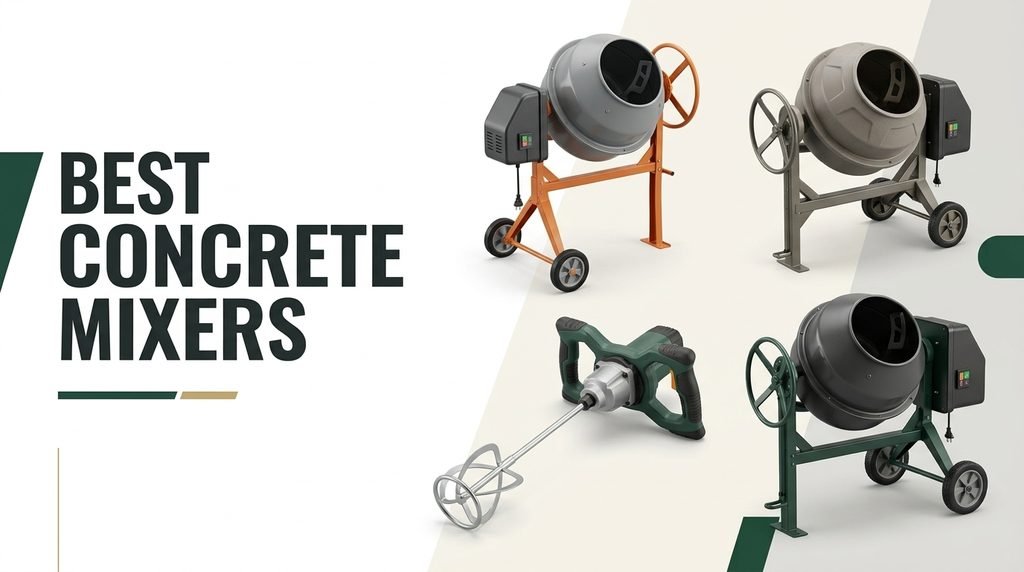
Find the right concrete mixers for 2026. We compare 7 standout options by the factors that matter most on the job site, including drum capacity, motor wattage, mixing speed, build materials, portability, tilt mechanisms, and the practical trade-offs between batch size, power, and overall value for DIY and professional projects.
Concrete mixers range from compact handheld drill attachments for small tile jobs to heavy-duty drum machines that process dozens of bags per hour. The right choice depends on your project scale, whether you need portability across job sites, and how frequently you plan to mix mortar, stucco, or standard concrete.
This guide covers handheld paddle mixers, mid-range portable drum mixers, and one commercial-grade bundle designed for high-volume production. Each pick is evaluated on the specifications that affect real-world performance: motor power, drum volume, wheel quality, frame durability, and ease of cleanup after a long pour.
We compared 7 concrete mixers using the details that actually help a buyer decide: drum capacity, motor wattage, mixing RPM, frame construction, wheel size, tilt mechanism, portability, cleanup ease, and overall value. The notes focus on practical trade-offs so each pick feels connected to how contractors and DIYers actually batch, pour, and clean up concrete, mortar, and stucco on real job sites and home projects.

Compare key features, scores, and current prices side by side. A shorter feature list means fewer details were available, not necessarily fewer capabilities.




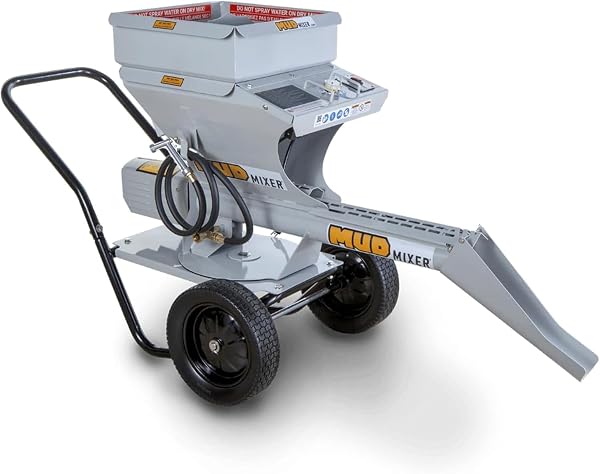
The MudMixer Evolution Bundle operates in a completely different category from the other mixers in this guide. It processes more than 45 standard 80-pound bags of concrete per hour, which puts it in the realm of commercial production equipment rather than portable job-site mixers. For contractors pouring foundations, retaining walls, or large slabs, that throughput can mean the difference between finishing in one day or stretching across multiple pours.
We may earn a commission when you buy through this link, at no additional cost to you.
The included hopper extension triples material capacity to 300 pounds, which reduces the frequency of reloading and keeps the mixing cycle continuous. The adjustable water input system dials in exact consistency for each mix type, eliminating the guesswork and variability that come with hand-measured water additions. The 18-inch chute extension adds precision placement capability, letting you direct wet concrete into tight forms or elevated pours without additional labor.
This is a complete bundle designed for maximum efficiency on high-volume jobs. The combination of hopper extension, chute extension, and adjustable water input reduces material waste and speeds up the entire pour process from batching to placement. The 4.7-star rating is the highest in this guide, reflecting strong satisfaction among the professional users who make up its target market.
At 45+ bags per hour, the MudMixer can process a full pallet of concrete in roughly the time it takes a standard drum mixer to complete two or three batches. If your crew costs $200 or more per hour in labor, the time savings on a large pour can offset a significant portion of the purchase price in a single project. Run the numbers against your typical project volume before dismissing the upfront cost.
The obvious trade-off is the price. At over $4,000, this system costs more than ten times the price of the most expensive drum mixer in this guide. It is not a practical purchase for weekend DIY projects or occasional home repairs. For contractors and serious builders who pour concrete regularly and need to maximize daily output, the MudMixer Evolution Bundle pays for itself through labor savings and reduced waste.
Homeowners, DIYers, or anyone who pours concrete fewer than a dozen times per year.
We may earn a commission when you buy through this link, at no additional cost to you.
The BILT HARD 4 cubic foot mixer is a solid entry point for homeowners tackling weekend projects like sidewalk repairs, fence post setting, or small patio pours. Its 550W motor spins at 1750 RPM internally and drives the drum at 26.7 RPM, which is a practical speed for blending concrete, mortar, and stucco without splashing material over the rim during loading.
We may earn a commission when you buy through this link, at no additional cost to you.
The 15-inch drum diameter is wider than many competitors in this size class, which makes scooping dry mix from bags noticeably easier. That extra width reduces spillage and speeds up the loading process, especially when you are working alone and trying to manage bags, water, and the drum simultaneously. The powder-coated steel frame and cast metal components hold up well to repeated use and resist the corrosive effects of wet cement.
Portability is handled by two 9-inch wheels that roll smoothly over gravel, grass, and uneven ground. The steel handle uses an iron ring and safety lock mechanism for tilt adjustments, which keeps the drum securely positioned during both mixing and pouring. The triangular bracket design adds lateral stability so the mixer stays planted even when the drum is fully loaded and rotating.
Resist the urge to fill the drum to its stated maximum. Loading a 4 cubic foot drum to about two-thirds capacity produces a more consistent mix and reduces strain on the motor. Overloading leads to dry pockets, uneven hydration, and a batch that takes significantly longer to reach the right consistency. Two-thirds loading also leaves room for the material to tumble properly inside the drum.
The main trade-off is the 4 cubic foot capacity, which limits you to roughly one to two bags of concrete per batch. For larger pours like a full driveway or foundation wall, you will spend more time batching than pouring. If your projects stay in the small to medium range, the BILT HARD delivers dependable performance at a competitive price.
Contractors or large-scale projects that require continuous high-volume batching throughout the day.
We may earn a commission when you buy through this link, at no additional cost to you.
The YARDMAX YM0115 stands out for its IP45 wash-down certified motor and gearbox, which means you can hose down the entire unit after use without worrying about water damaging the electrical components. That rating is uncommon at this price point and addresses one of the most common frustrations with concrete mixers: the tedious, careful cleanup that usually requires avoiding the motor housing entirely.
We may earn a commission when you buy through this link, at no additional cost to you.
The solid steel drum interior resists abrasion from aggregate and cleans more thoroughly than plastic-lined alternatives. The low-profile frame height makes pouring into wheelbarrows, forms, and buckets easier because the drum opening sits closer to ground level. That reduces the lifting angle and the chance of spillage during the pour, which matters when you are working with heavy, wet concrete.
Assembly is one of the fastest in this category, with a single person able to complete setup in under 30 minutes. The motor drive box arrives factory-assembled, which eliminates the most complicated and error-prone step that other mixers require. The steel handle uses the same iron ring and safety lock system found on several competitors, providing reliable tilt control during operation.
After each use, tilt the drum downward and run a garden hose into the opening while the drum rotates slowly. The IP45 rating means water spray from any direction will not damage the motor or gearbox, so you can be more aggressive with rinsing than you would with a non-rated mixer. Follow up with a quick spray of the frame and wheels to prevent cement buildup from hardening overnight.
The main consideration is the price. At nearly $300 for a 4 cubic foot drum, the YARDMAX costs more per cubic foot of capacity than several 5.3 cubic foot alternatives in this guide. You are paying for the wash-down certification, low-profile design, and quick assembly rather than raw capacity. For DIYers who value easy cleanup and straightforward setup above all else, those features justify the premium.
Buyers who prioritize maximum drum capacity per dollar over convenience and cleanup features.
We may earn a commission when you buy through this link, at no additional cost to you.
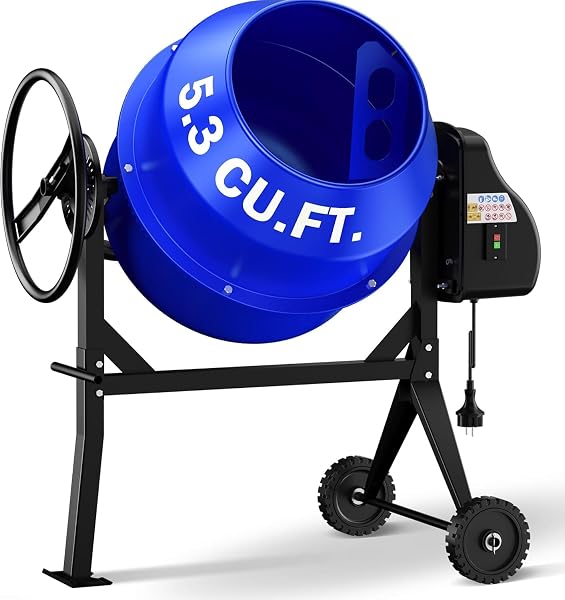
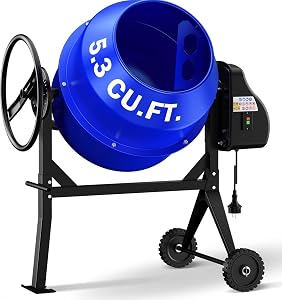
The LDHTHOPI 5.3 cubic foot mixer delivers the strongest combination of motor power and drum capacity in the mid-range segment of this guide. Its 750W copper motor produces a full 1 horsepower of output, which handles dense concrete mixes and heavy aggregate loads without bogging down. The 30 RPM drum speed is slightly faster than some competitors, which shortens mixing time per batch.
We may earn a commission when you buy through this link, at no additional cost to you.
The spring-assisted tilting wheel is a genuine usability upgrade over manual tilt handles. A loaded 5.3 cubic foot drum is heavy, and the spring mechanism reduces the physical effort needed to tip the drum for pouring. That matters over the course of a long pour day when fatigue sets in and a stiff manual tilt becomes increasingly difficult. The 360-degree rotation capability also helps with even blending and thorough cleanup.
Construction quality is solid for the price. The steel frame uses a corrosion-resistant powder-coated finish, and the cast-iron toothed ring that drives the drum is more durable than the plastic or stamped-metal gears found on cheaper mixers. Two 7-inch by 2-inch solid wheels and a triangular base provide stable positioning on uneven ground, and the handle makes repositioning between pour locations straightforward.
The toothed ring that transfers motor power to the drum takes the most mechanical stress of any component on a concrete mixer. Cast iron handles that stress far better than plastic or thin stamped steel, which can strip teeth or crack under heavy loads. A cast-iron ring extends the useful life of the mixer significantly, especially if you regularly mix dense concrete with large aggregate rather than lighter mortar or stucco.
The main trade-off is that LDHTHOPI is a less established brand compared to names like YARDMAX, which means long-term parts availability and warranty support may be less predictable. For buyers who prioritize raw performance and capacity at a competitive price, the LDHTHOPI delivers excellent value. If brand reputation and dealer support are your top concerns, consider the YARDMAX or BILT HARD instead.
Buyers who prioritize established brand reputation and extensive dealer support networks over raw specifications.
We may earn a commission when you buy through this link, at no additional cost to you.
This 5.3 cubic foot electric mixer shares many specifications with the LDHTHOPI above, including the 750W copper motor and 1 HP output, but positions itself more explicitly as a multi-purpose machine for both construction and agricultural use. If you need a single mixer that handles concrete pours during the week and seed inoculation or feed mixing on the weekend, this model is designed with that dual role in mind.
We may earn a commission when you buy through this link, at no additional cost to you.
The 360-degree full-range mixing capability ensures even blending without dead spots inside the drum, which is particularly important for agricultural applications where uneven distribution of seed coatings or feed supplements can affect results. The 5.3 cubic foot capacity handles large batches efficiently, and the high-strength steel frame with powder coating resists the corrosive effects of both cement and organic materials.
Two 7-inch solid rubber wheels provide reliable mobility across job sites, farm yards, and uneven terrain. The triangular support structure keeps the mixer stable during operation, and the compact overall footprint makes it easier to store in a garage or barn when not in use. Assembly follows the standard pattern with included hardware and a step-by-step manual.
If you plan to use the same mixer for both concrete and agricultural materials, clean the drum thoroughly between applications. Residual cement can contaminate feed and seed mixes, and organic material left in the drum can affect concrete hydration. A dedicated rinse cycle with clean water and a stiff brush between material types keeps both applications performing as expected.
The main consideration is that this mixer occupies a very similar performance space to the LDHTHOPI at a nearly identical price. Your choice between the two may come down to availability, shipping speed, or customer service responsiveness rather than meaningful specification differences. For farm and homestead use where versatility across materials matters, this model is a practical and capable choice.
Buyers who need a dedicated construction-only mixer and want to avoid cross-contamination concerns between material types.
We may earn a commission when you buy through this link, at no additional cost to you.
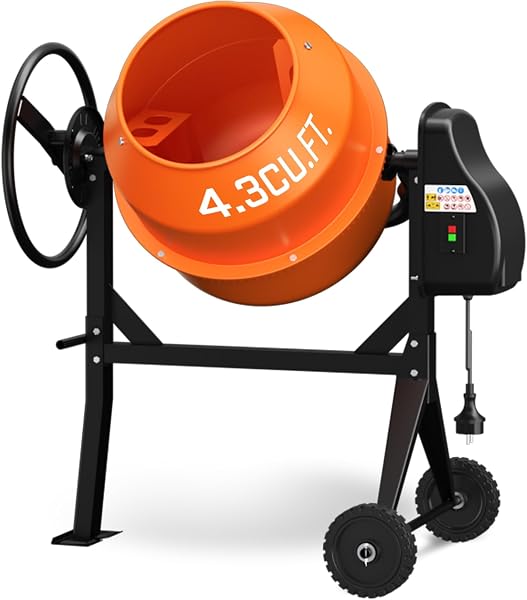
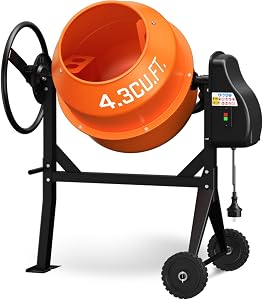
At under $230, this 4.3 cubic foot mixer is the most affordable drum-style option in this guide, making it an attractive entry point for first-time buyers or homeowners with a specific short-term project in mind. Despite the lower price, it includes a cast-iron toothed ring and a copper motor, which are features typically found on more expensive models and signal better long-term durability than plastic gearing.
We may earn a commission when you buy through this link, at no additional cost to you.
The 450W motor produces roughly three-fifths of a horsepower and drives the drum at 28 RPM, which is adequate for standard concrete, mortar, and grout mixes. The spring-loaded disc tilting wheel operates smoothly and allows 360-degree rotation for even mixing and easy dumping. The 120-liter drum capacity handles roughly one to two bags of concrete per batch, which suits small to medium residential projects.
Two 7-inch by 2-inch solid wheels and a triangular base provide stable positioning and reasonable portability across flat and slightly uneven ground. The powder-coated steel frame resists rust and corrosion, and the overall build quality is consistent with the 4.4-star rating. Assembly follows the standard pattern with included hardware and instructions.
A 450W motor handles standard 80-pound bag concrete mixes, mortar, stucco, and grout without issue when the drum is loaded to two-thirds capacity or less. The motor may slow noticeably if you overload the drum or use a mix with very large aggregate. For most residential projects involving standard bagged concrete from a home improvement store, 450W provides adequate power at a lower price.
The main trade-off is the lower motor wattage compared to the 750W models in this guide. A 450W motor handles standard mixes fine but may struggle with very dense concrete or large aggregate loads. For typical DIY projects like setting posts, patching sidewalks, or pouring small slabs, the power is sufficient. If you plan to mix heavy-duty concrete regularly, the extra wattage of a 750W model is worth the additional cost.
Users who regularly mix dense concrete with large aggregate or need to run the mixer continuously for extended periods.
We may earn a commission when you buy through this link, at no additional cost to you.
The IMAYCC handheld mixer is a fundamentally different tool from the drum mixers above. Rather than rotating a drum full of material, it uses a motor-driven paddle that you lower into a bucket, tub, or wheelbarrow of mix. This approach works best for smaller batches of thinset, grout, plaster, paint, and light mortar where a full drum mixer would be overkill and cleanup would take longer than the actual mixing.
We may earn a commission when you buy through this link, at no additional cost to you.
The 2100W motor is the most powerful in this entire guide, producing variable speeds from 270 to 900 RPM across six settings. That range lets you start slow to incorporate dry material without creating a dust cloud, then ramp up to higher speeds for final blending. The screw-shaped dual-paddle design pulls material from the bottom of the container upward, which reduces lumps and produces a more uniform mix than single-paddle alternatives.
Ergonomic features include two soft-grip handles and a locking switch that reduces hand fatigue during extended mixing sessions. The built-in overload protection with automatic shutoff prevents motor burnout if the paddle encounters heavy resistance, and the cooling vents help manage heat during continuous use. The kit includes spare carbon brushes, two installation wrenches, and a pair of gloves, which is a thoughtful addition at this price point.
Use a sturdy 5-gallon bucket for thinset and grout, or a larger mixing tub for plaster and mortar. Avoid thin plastic containers that the paddle can crack or deform under torque. Fill the container no more than halfway to prevent splashing at higher RPM settings, and always start at the lowest speed before increasing. The dual-paddle design works best in round containers where the material can circulate freely.
The main limitation is that this is a handheld tool, not a standalone mixer. You provide the container and do the physical work of holding and maneuvering the paddle, which becomes tiring with large batches or very thick mixes. The 4.1-star rating is the lowest in this guide, suggesting some owners have experienced durability concerns under heavy use. For tile setters, painters, and DIYers who need occasional small-batch mixing, the IMAYCC offers tremendous power at a very low price.
Anyone who needs to mix full bags of concrete or wants a hands-free mixing solution for large batches.
We may earn a commission when you buy through this link, at no additional cost to you.
Choosing a concrete mixer comes down to matching the machine’s capabilities to the scale and frequency of your projects. The factors below cover the specifications and practical considerations that will have the biggest impact on your experience and results.
Drum capacity is measured in cubic feet and determines how much material you can mix in a single batch. Common sizes range from 3.5 to 5.3 cubic feet for portable electric mixers, with larger commercial systems handling significantly more volume. A 4 cubic foot drum typically handles one to two 80-pound bags of concrete per batch, while a 5.3 cubic foot drum can manage two to three bags depending on the mix consistency.
Bigger is not always better. A larger drum requires more material to reach efficient mixing levels, and a half-empty 5.3 cubic foot drum may actually mix less effectively than a properly loaded 4 cubic foot model. Larger drums also add weight and make the mixer harder to transport and store. Match the capacity to your typical project size rather than the largest job you might theoretically tackle.
For most residential DIY projects like fence posts, small slabs, and repair work, a 4 to 4.3 cubic foot drum is sufficient. Step up to 5.3 cubic feet if you regularly pour larger slabs, foundations, or retaining walls where batching speed directly affects the quality of the finished pour.
Motor power in concrete mixers is measured in watts or horsepower, and it determines how well the mixer handles dense loads without stalling. Entry-level models use 450W motors that handle standard bagged concrete adequately, while mid-range and heavy-duty models step up to 550W or 750W for more demanding mixes. The 750W motors in this guide produce a full 1 horsepower, which provides noticeable headroom for heavy aggregate and stiff mixes.
Drum RPM is equally important but often overlooked. Most portable mixers rotate the drum between 26 and 30 RPM, which is the sweet spot for thorough blending without centrifugal force pinning material to the drum walls. Higher motor RPM does not necessarily mean faster drum rotation, since the gearing ratio between the motor and the drum determines the actual mixing speed.
For standard bagged concrete and mortar, a 450W motor is adequate when the drum is loaded to two-thirds capacity. If you plan to mix dense concrete with large aggregate, run the mixer for extended periods, or frequently load the drum to full capacity, invest in a 750W motor for the additional torque and thermal headroom.
The frame and drum materials determine how long your mixer will survive the harsh environment of wet cement, outdoor weather, and physical abuse on job sites. Look for steel frames with powder-coated finishes that resist rust and corrosion. The drum itself should be solid steel rather than plastic or thin-gauge metal, which can dent and deform under the weight of wet concrete.
The toothed ring that connects the motor to the drum is a critical wear component. Cast-iron rings handle the repeated stress of starting under load far better than plastic or stamped-steel alternatives, which can strip teeth or crack over time. Several models in this guide feature cast-iron toothed rings, which is a strong indicator of long-term durability regardless of the overall price point.
Prioritize cast-iron gearing and powder-coated steel construction if you plan to use the mixer regularly over multiple years. For occasional one-off projects, a less robust build may be acceptable, but even infrequent use exposes the mixer to corrosive cement residue that attacks unprotected metal quickly.
The tilt mechanism controls how easily you can tip the drum to pour mixed concrete into wheelbarrows, forms, and buckets. Manual tilt handles require physical effort that increases with drum load, while spring-assisted tilt wheels reduce the force needed to tip a fully loaded drum. The difference becomes significant over the course of a long pour day when fatigue accumulates.
Pour height also matters. Low-profile designs like the YARDMAX YM0115 position the drum opening closer to ground level, which reduces the angle and distance that wet concrete must travel during the pour. That translates to less spillage, less waste, and easier control when filling narrow forms or small containers. High-profile mixers may require you to lift the wheelbarrow or position the form directly under the drum.
If you pour concrete frequently or work alone, prioritize a spring-assisted tilt mechanism and a low-profile frame. The reduced physical strain and improved pour control make a noticeable difference in both efficiency and the quality of your finished work.
Concrete mixers are heavy even when empty, and a fully loaded drum can add several hundred pounds of wet material to the total weight. Wheel size and type determine how easily you can reposition the mixer between pour locations on uneven ground, gravel, grass, and sand. Larger wheels roll more smoothly over obstacles and soft surfaces, while smaller wheels may dig in or catch on debris.
Most portable mixers in this guide use solid rubber or pneumatic wheels between 7 and 9 inches in diameter. The 9-inch wheels on the BILT HARD model handle rough terrain slightly better than the 7-inch wheels on competing models, though the difference is modest on flat surfaces. The triangular base design found on several models adds stability during operation but can make tight turns more awkward.
If your job site involves significant repositioning across rough ground, prioritize larger wheels and a balanced frame design. For stationary setups where the mixer stays in one location for the duration of the pour, wheel size matters less and you can focus on other features.
Concrete hardens quickly, and residual material left inside the drum after use can permanently reduce capacity and damage the mixing blades. Cleanup ease is one of the most important practical considerations that buyers overlook when comparing specifications. A mixer that is difficult to clean will accumulate hardened concrete over time, eventually degrading performance to the point where replacement becomes necessary.
Features that simplify cleanup include IP-rated wash-down motors that can be hosed off directly, smooth steel drum interiors without crevices where material can lodge, and 360-degree drum rotation that lets you rinse all interior surfaces. The YARDMAX YM0115 stands out in this category with its IP45 wash-down certification, which allows aggressive hosing without risking motor damage.
Plan to clean the mixer immediately after every use, even if you intend to mix another batch the next day. A few minutes of rinsing while the concrete is still wet saves hours of chipping and scraping later. If cleanup convenience is a top priority, choose a model with wash-down certification and a smooth drum interior.
Handheld paddle mixers like the IMAYCC serve a fundamentally different purpose than drum mixers. They excel at blending small batches of thinset, grout, plaster, paint, and light mortar directly in a bucket or tub, where a drum mixer would be impractical and cleanup would take longer than the mixing itself. The 2100W motor in a handheld unit produces far more RPM than a drum mixer, which is necessary for achieving smooth, lump-free consistency in viscous materials.
Drum mixers handle larger volumes of standard concrete and provide hands-free operation once the material is loaded. They are the right choice for any project that requires more than a few gallons of mixed material per batch. The trade-off is that drum mixers are heavier, more expensive, and require more cleanup effort than a handheld paddle that you can rinse in a bucket of water.
Choose a handheld mixer for tile work, grouting, painting, and small repair jobs where you mix a few gallons at a time. Choose a drum mixer for any project that involves full bags of concrete, foundation work, or pours that require consistent batching over multiple hours.
Before your first use, assemble the mixer on a flat, stable surface and verify that all bolts and fasteners are tight. Add water to the drum before adding dry mix to prevent material from sticking to the bottom and creating dry pockets. Start the motor before loading material, and add dry mix gradually rather than dumping an entire bag at once, which can overload the motor and produce an uneven batch. Most mixes reach full consistency within three to five minutes of continuous rotation.
During operation, keep the drum loaded to roughly two-thirds of its stated capacity for the best mixing results. Overloading reduces tumbling action and creates dry spots, while underloading wastes time and energy. Monitor the motor for signs of strain such as excessive heat or slowing RPM, and reduce the batch size if the motor struggles. Always wear eye protection and gloves when handling wet concrete, which is caustic and can cause skin irritation on contact.
Clean the mixer immediately after each use by adding clean water and a few shovels of gravel to the drum, then running it for several minutes to scour the interior surfaces. Dump the rinse water and gravel, then hose down the drum, frame, and wheels thoroughly. Store the mixer in a dry, covered location to prevent rust, and inspect the toothed ring, motor brushes, and wheel bearings periodically for wear. Replacing worn components early extends the overall lifespan of the machine significantly.
A 4 cubic foot drum typically handles one to two 80-pound bags of concrete per batch, while a 5.3 cubic foot drum can manage two to three bags depending on the mix consistency and aggregate size. Always load the drum to roughly two-thirds of its stated capacity for the best mixing results. Overloading reduces tumbling action and produces uneven batches with dry pockets.
A 750W motor produces roughly one full horsepower compared to about three-fifths of a horsepower from a 450W motor. The extra power provides better performance with dense concrete mixes, large aggregate, and full-drum loads. For standard bagged concrete and mortar mixed at two-thirds capacity, a 450W motor is usually adequate. Choose 750W if you plan to mix heavy loads frequently or run the mixer for extended periods.
Yes, all the drum mixers in this guide handle mortar, stucco, and grout in addition to standard concrete. These lighter mixes actually place less strain on the motor than dense concrete with large aggregate. Adjust the water ratio to match the specific mix requirements, and clean the drum thoroughly between different material types to prevent cross-contamination.
Most portable drum mixers produce a fully blended batch of concrete within three to five minutes of continuous rotation after all materials are loaded. The exact time depends on the mix consistency, aggregate size, and drum speed. Mixing too briefly produces dry pockets and weak concrete, while over-mixing can cause the aggregate to separate from the cement paste. Stop mixing when the batch has a uniform color and consistency throughout.
A wash-down rated motor like the IP45-certified unit on the YARDMAX YM0115 allows you to hose off the entire mixer after use without risking water damage to the electrical components. This makes cleanup faster and more thorough, which extends the life of the mixer by preventing hardened concrete buildup. Non-rated motors require more careful cleaning to avoid spraying water directly on the motor housing and gearbox.
Handheld paddle mixers like the IMAYCC can mix small batches of concrete in a bucket or tub, but they are better suited to lighter materials like thinset, grout, plaster, and paint. Mixing full bags of standard concrete with a handheld unit is physically demanding and produces less consistent results than a drum mixer. For any project requiring more than a few gallons of concrete per batch, a drum mixer is the more practical choice.
Clean the drum immediately after each use by running clean water and a few shovels of gravel inside the rotating drum for several minutes. The gravel acts as an abrasive that scours residual concrete from the interior surfaces. Never let wet concrete sit in the drum overnight, as it will harden into a solid mass that is extremely difficult to remove. Regular cleaning after every use is the single most important maintenance habit for extending the life of your mixer.
For a small patio of roughly 50 to 100 square feet at 4 inches thick, a 4 to 4.3 cubic foot mixer is adequate, though you will need to mix multiple batches. For larger patios exceeding 100 square feet, a 5.3 cubic foot mixer reduces the number of batches and speeds up the overall pour. The key is to plan your pour so that each batch can be placed and finished before the previous batch begins to set.
Electric mixers in the 450W to 750W range handle the vast majority of residential and light commercial concrete work, including slabs, footings, retaining walls, and repair projects. Gas-powered mixers offer more power and portability for remote job sites without electrical access, but they require more maintenance and produce exhaust fumes. For any project where a standard 120V outlet or generator is available, an electric mixer provides reliable performance with less noise and maintenance.
The LDHTHOPI 5.3 cubic foot mixer stands out as the strongest overall choice for most buyers, combining a full 1-horsepower copper motor, spring-assisted tilt mechanism, cast-iron toothed ring, and generous drum capacity at a competitive price. It handles everything from standard bagged concrete to stucco and mortar with enough power headroom to avoid stalling under heavy loads, and the 360-degree rotation simplifies both mixing and cleanup.
Buyers with different priorities have strong alternatives. The BILT HARD and the 4.3 cubic foot portable model offer reliable performance at lower prices for smaller projects, while the YARDMAX YM0115 is the clear pick for anyone who values easy wash-down cleanup above all else. Tile setters and small-batch users should look at the IMAYCC handheld paddle mixer, which delivers enormous power in a compact, affordable package. Contractors pouring at commercial scale will find the MudMixer Evolution Bundle in a class of its own for throughput and efficiency.
Start by estimating the volume of concrete your typical project requires and how frequently you plan to mix. Match the drum capacity and motor power to that workload rather than buying the largest or most powerful option available. A well-sized mixer that you use regularly delivers far more value than an oversized unit that sits in the garage between rare projects. Choose based on your actual needs, and the right concrete mixer will pay for itself within the first few pours.