Metabo HPT C10FCG2
9.2Editor score10-inch blade
15-amp motor
5,000 RPM speed
24-pound weight
Find the right chop saws for 2026. We compare 10 standout options by build quality, useful features, owner feedback, value, and everyday trade-offs.
Choosing the right chop saw means matching motor power, blade size, and cutting capacity to the materials you work with most. We compare 10 standout models across wood-cutting miter saws and heavy-duty metal cutting saws, examining amperage, RPM, bevel range, portability, dust collection, and the practical trade-offs that matter on real job sites.
Chop saws fall into distinct categories: compound miter saws for wood framing and trim, sliding compound models for wider stock, cordless saws for mobile work, and cold-cut or abrasive saws built specifically for steel. The right choice depends on your material, cut volume, and whether precision angled cuts or raw cutting power is your priority.
Key specifications include blade diameter, no-load RPM, miter and bevel range, maximum cross-cut capacity, and weight. A 10-inch wood saw handles most trim and framing, while a 14-inch metal chop saw tackles steel stock. Dust collection, LED cut-line systems, and detent accuracy also shape the daily user experience significantly.
We compared 10 chop saws by evaluating motor amperage, blade diameter, no-load RPM, miter and bevel ranges, cross-cut capacity, dust management, portability, and material compatibility. The analysis focuses on practical trade-offs between wood-cutting precision and heavy-duty metal fabrication so each pick aligns with how carpenters, DIY builders, and metalworkers actually use these saws for framing, trim, deck work, and steel stock preparation.

Compare key features, scores, and current prices side by side. A shorter feature list means fewer details were available, not necessarily fewer capabilities.


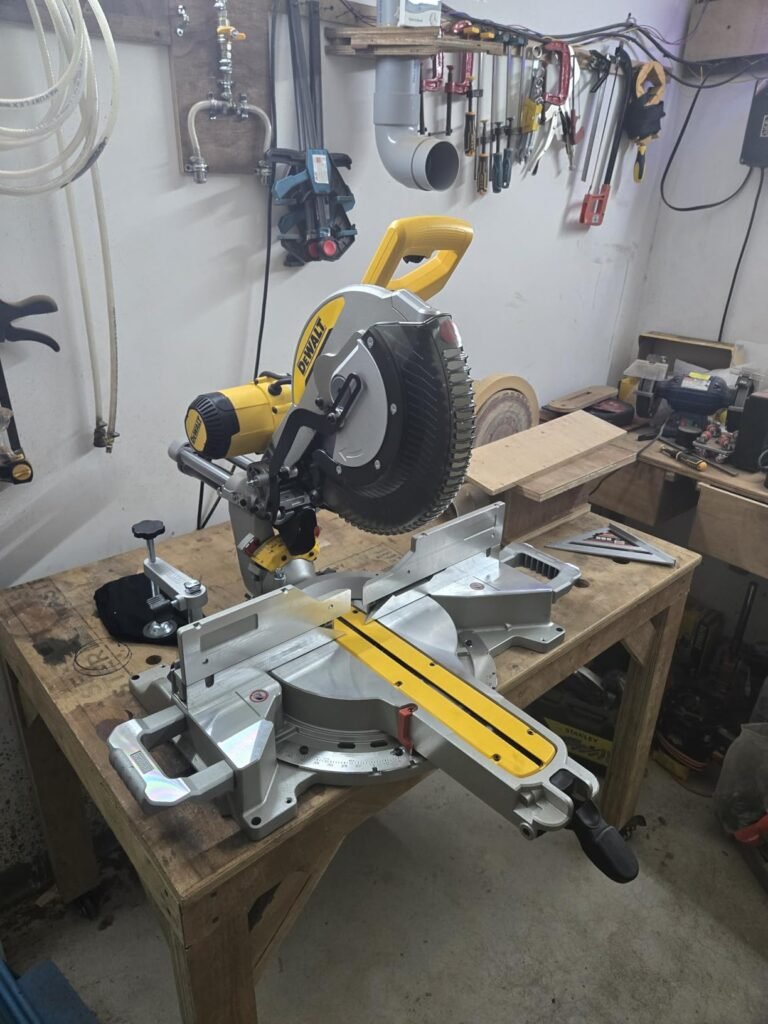
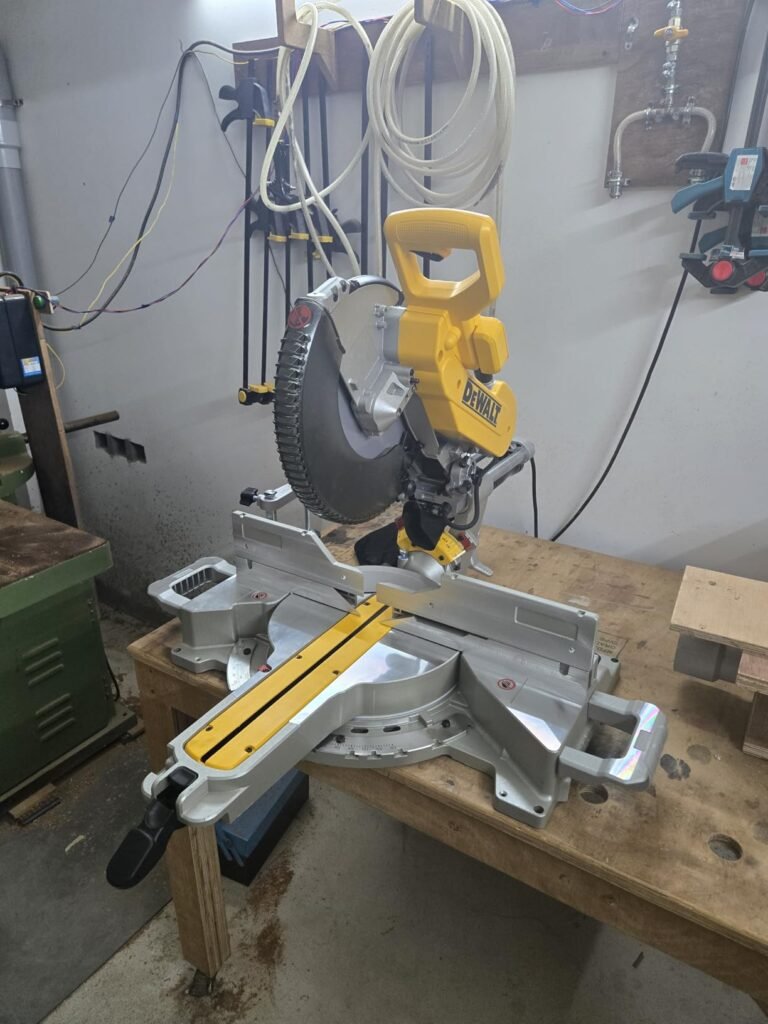
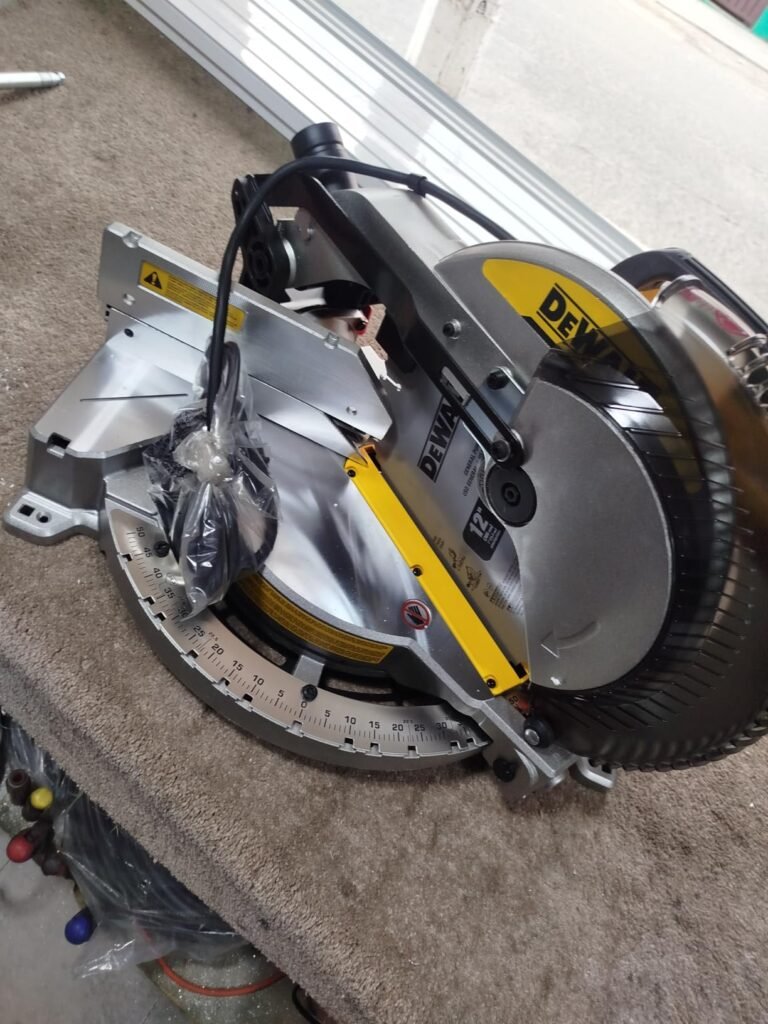
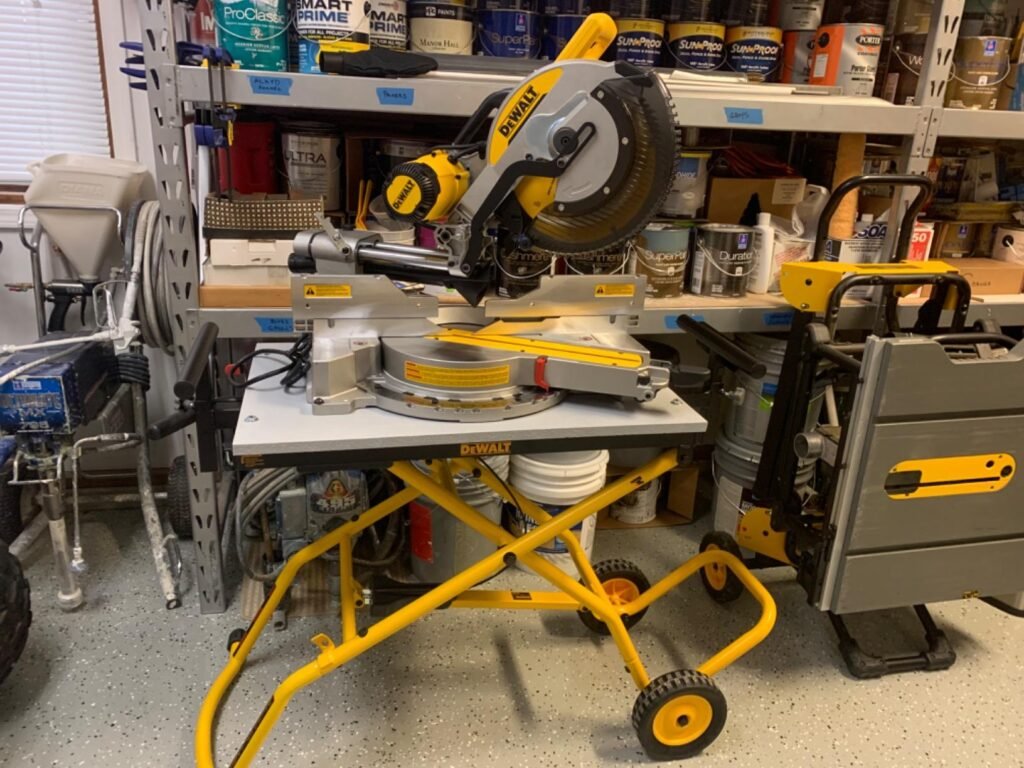
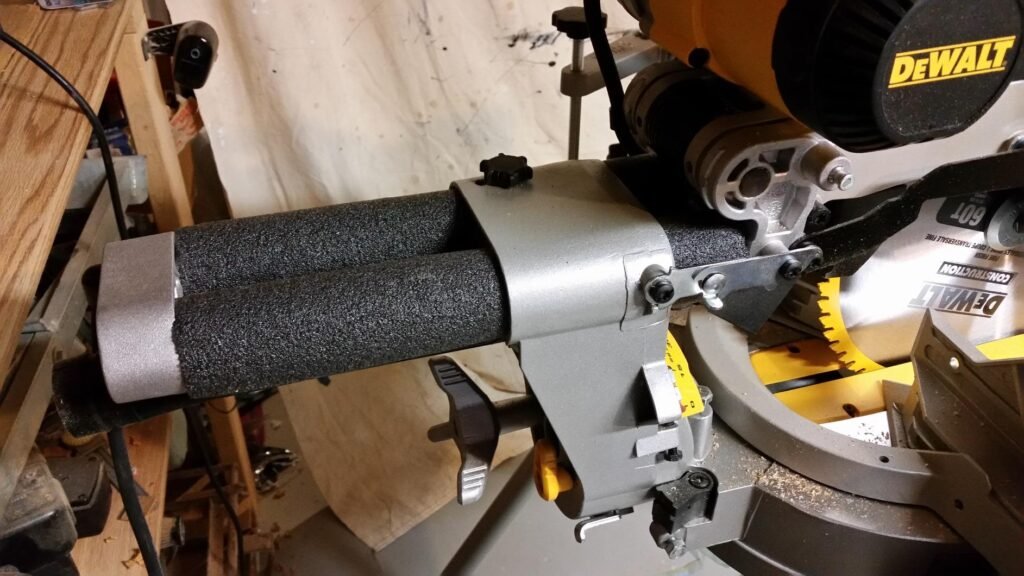
The DEWALT DWS780 sits at the top of the DEWALT miter saw lineup and has become a go-to choice for finish carpenters, cabinetmakers, and remodelers who demand accuracy and durability. The 12-inch blade handles the full range of trim, molding, and framing stock most carpenters encounter, and the double-bevel design lets you tilt the head left or right without flipping the workpiece around.
We may earn a commission when you buy through this link, at no additional cost to you.
The standout feature is the XPS LED shadow line system, which casts a precise shadow of the actual blade onto the workpiece. Unlike lasers that need calibration and can drift over time, the shadow always shows exactly where the blade will cut because it is created by the blade itself. This adjustment-free design dramatically speeds up setup for repetitive cuts and virtually eliminates layout errors.
The 1,100-watt 15-amp motor produces 3,800 RPM, which maintains blade speed through dense hardwoods and engineered lumber. The dust collection system captures over 75 percent of dust generated, which is exceptional for a miter saw and keeps your workshop or job site noticeably cleaner. The integrated cutline positioning and machined base fence support contribute to the kind of repeatable accuracy that finish work demands.
Laser cutline guides require periodic calibration and can drift out of alignment, forcing you to compensate when marking cuts. The XPS LED system projects a shadow of the blade itself, so the indicated cutline is always accurate regardless of blade changes, bumps, or wear. This is particularly valuable for finish carpentry where even a 1/32-inch error on a mitered return can ruin an entire molding piece.
This saw is the right choice for professional carpenters and serious hobbyists who want best-in-class accuracy and reliability. The premium price reflects the quality of construction, the XPS cutline system, and the superior dust management. Budget-conscious buyers who do not need the double-bevel feature can save significantly with the single-bevel DWS715 while still getting DEWALT build quality.
Occasional DIYers who do not need double-bevel capability or shadow-line precision will find the price harder to justify.
We may earn a commission when you buy through this link, at no additional cost to you.
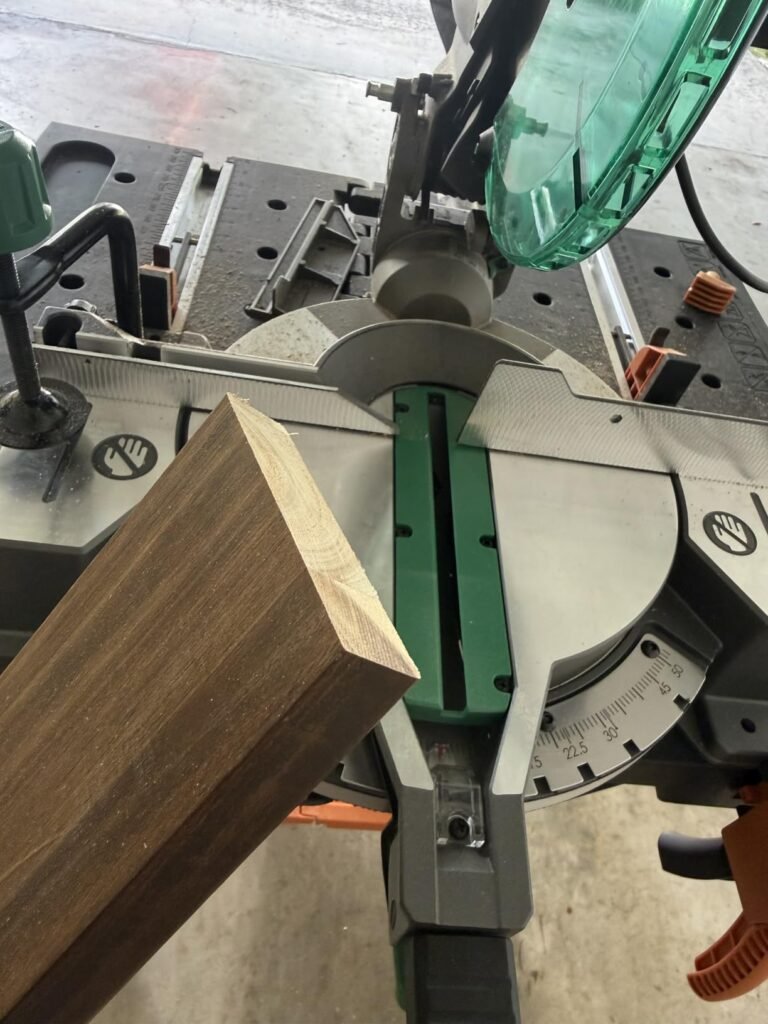
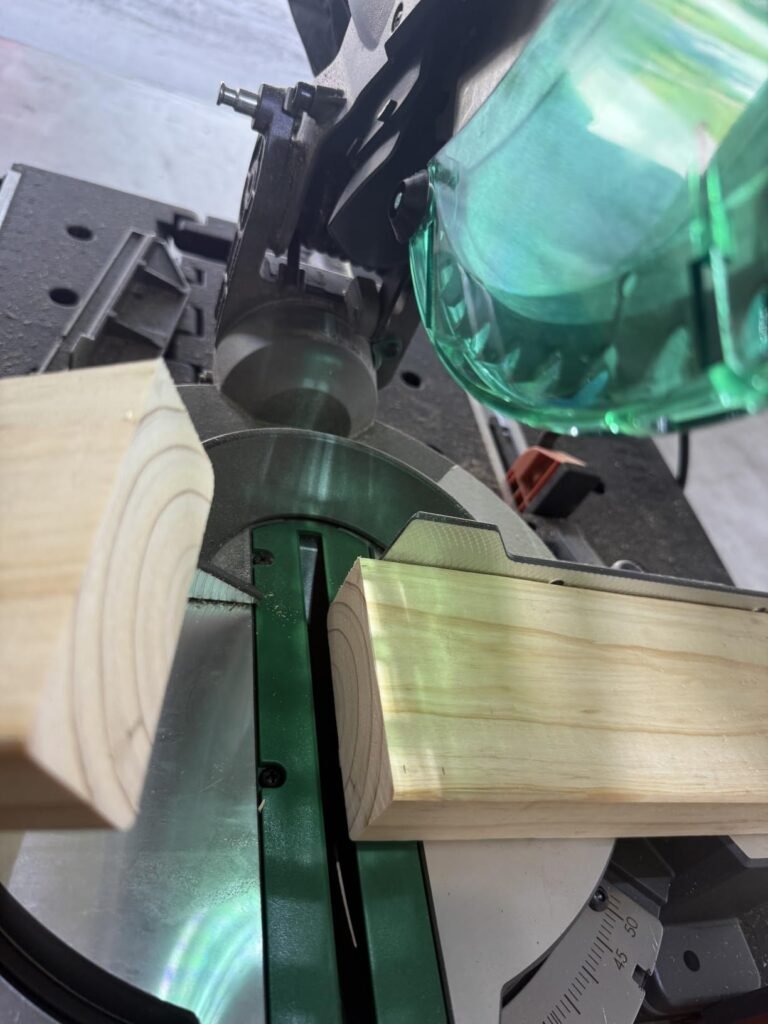
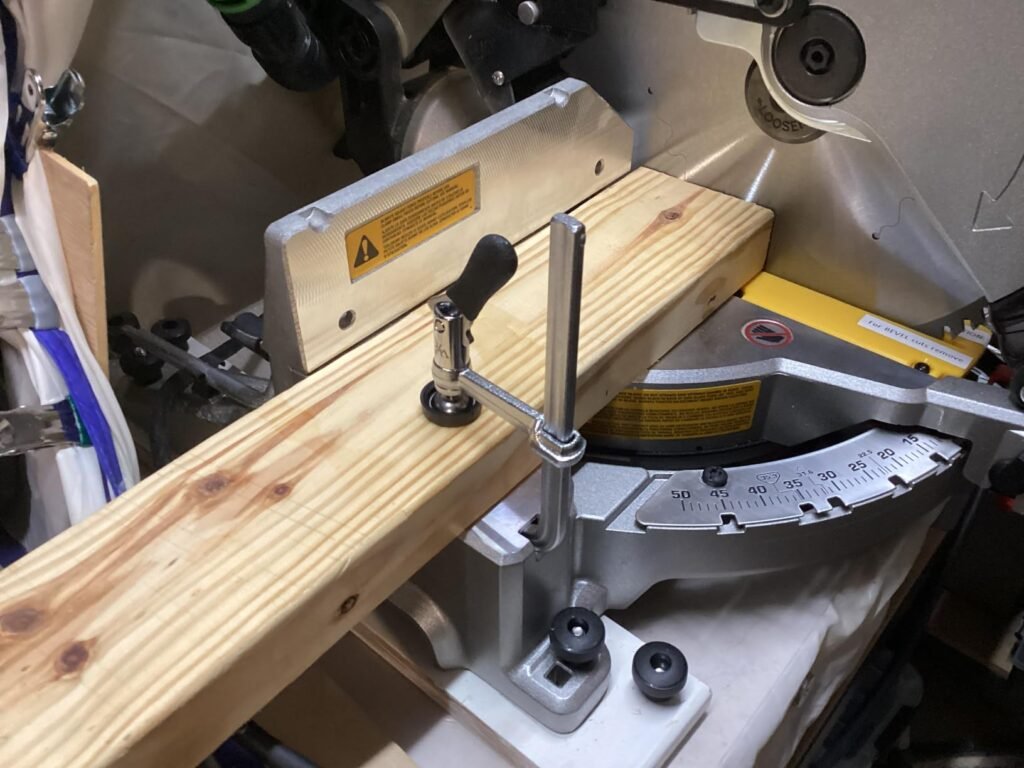
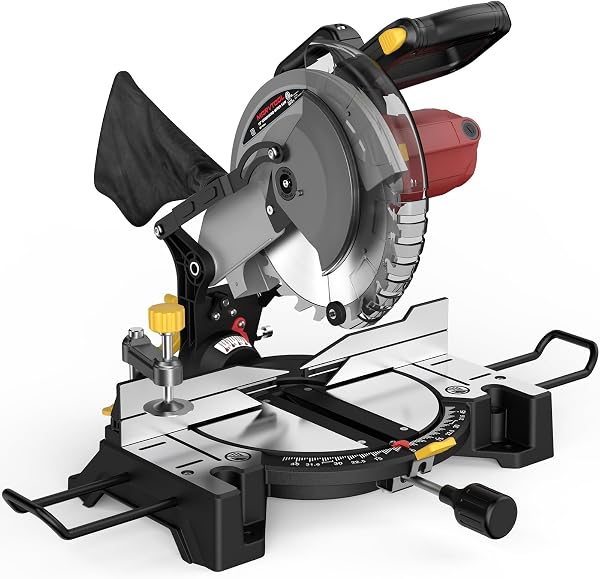
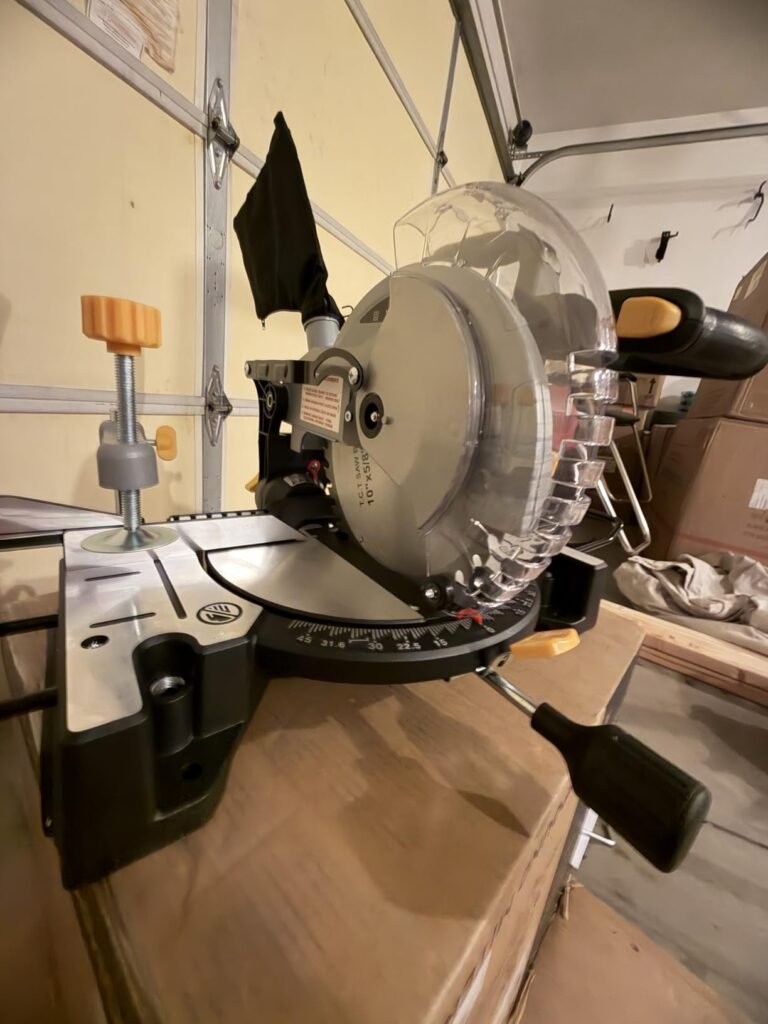
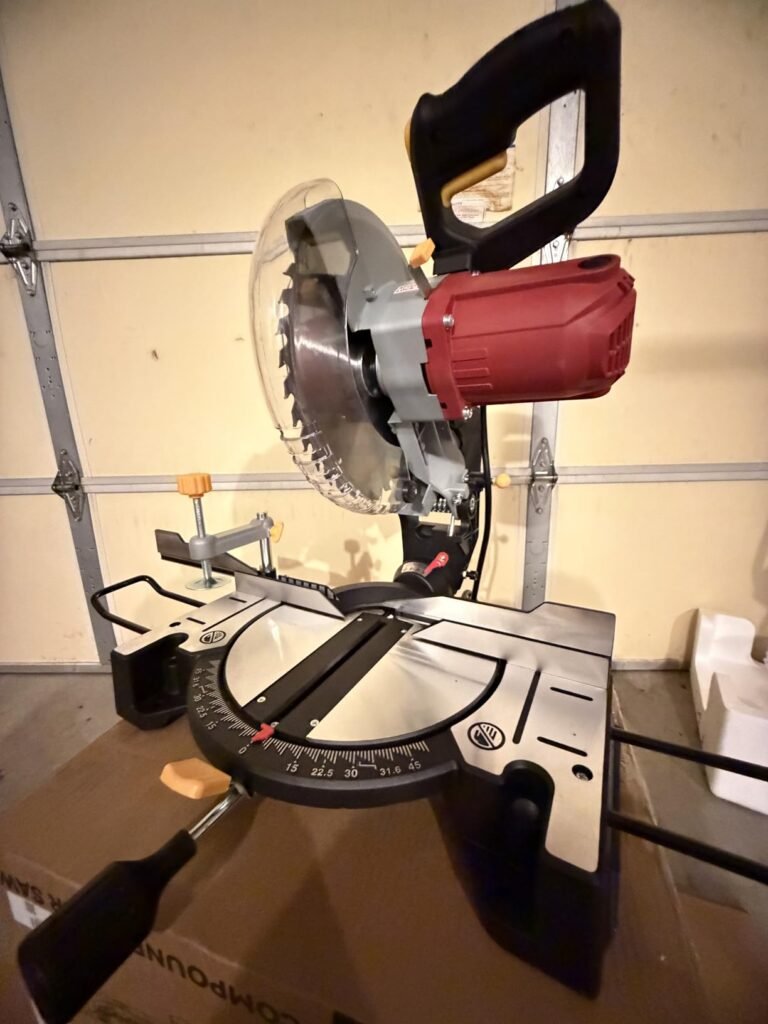
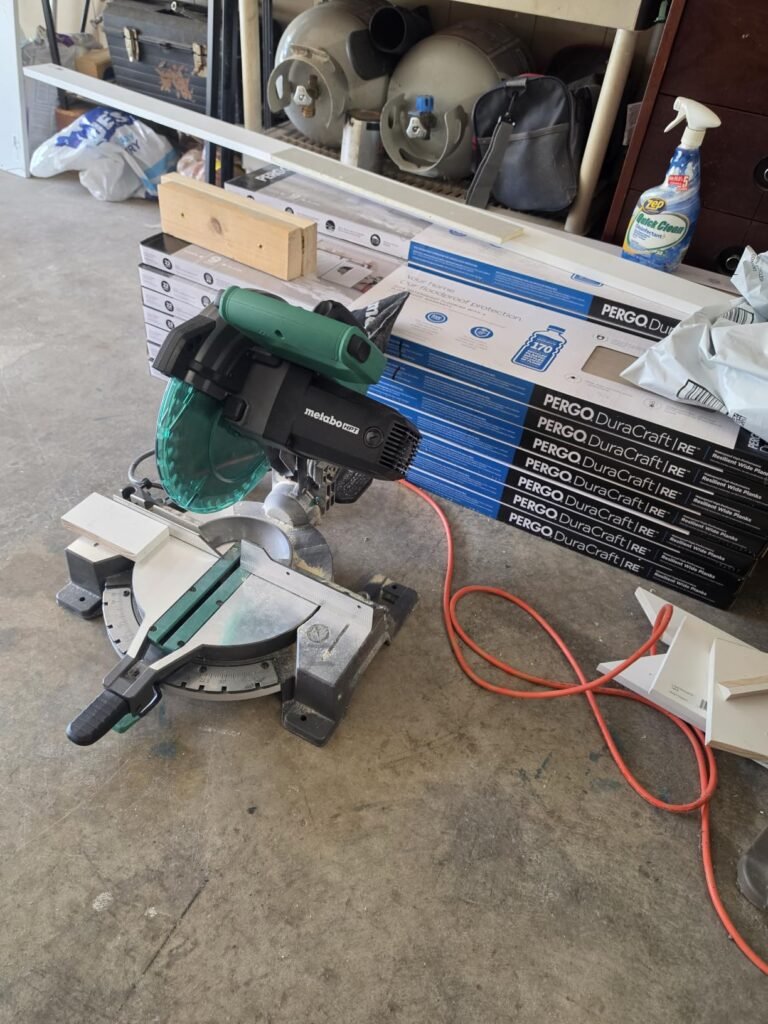
The Metabo HPT C10FCG2 targets homeowners, trim carpenters, and mobile contractors who need a dependable compound miter saw without the bulk of a 12-inch model. At just 24 pounds, it ranks among the easiest full-size compound saws to lift into a truck bed or carry up a staircase. The 15-amp motor and 5,000 RPM no-load speed deliver enough power for everyday framing lumber and trim work.
We may earn a commission when you buy through this link, at no additional cost to you.
The miter range extends 52 degrees to both the left and right, which exceeds the standard 45-to-47 degrees found on many entry-level saws. That extra range matters when cutting non-standard angles for custom trim, decking miters, or crown molding returns. The bevel adjusts 0 to 45 degrees to the left, with adjustable bevel stops that help you lock in repeatable angles without constantly reaching for a protractor.
The improved miter scale and controls make small adjustments easier to dial in, which is a frequent complaint on budget compound saws. The vice clamping system holds stock securely during angled cuts, reducing the chance of the workpiece shifting mid-cut. The 10-inch blade handles 2×6 lumber comfortably at 90 degrees, which covers most trim, baseboard, and light framing applications.
A 10-inch compound saw strikes a practical balance between capacity and portability. It handles the vast majority of trim carpentry tasks including baseboards, casings, crown returns, and door jambs while remaining light enough for daily transport. Trim carpenters who move between multiple job sites each week benefit from the reduced weight compared to 12-inch saws, which often tip the scales at 40 to 50 pounds.
Choose this saw if you want portable compound cutting at a reasonable price and do not need the extra capacity of a 12-inch or sliding model. The 5-year warranty is unusually generous at this price point. If your workflow regularly involves wide crown molding or thick 2×10 and 2×12 stock, step up to a 12-inch sliding compound saw instead.
Finish carpenters who regularly cut wide crown molding or framers working with 2×12 lumber will outgrow the 10-inch capacity quickly.
We may earn a commission when you buy through this link, at no additional cost to you.
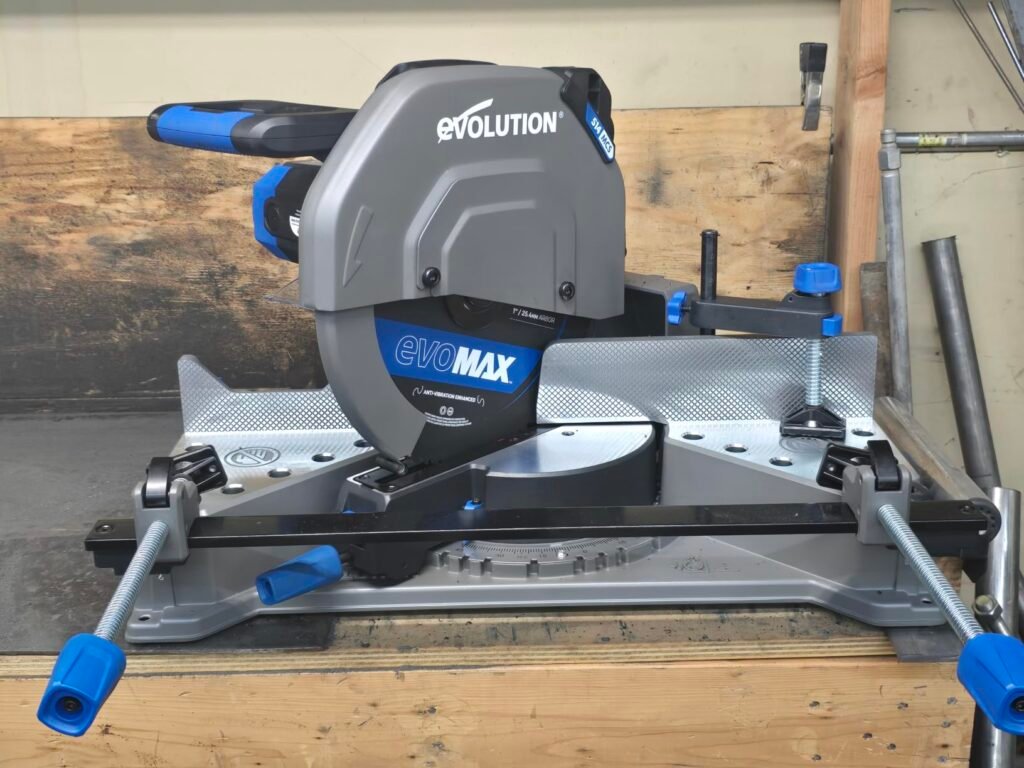
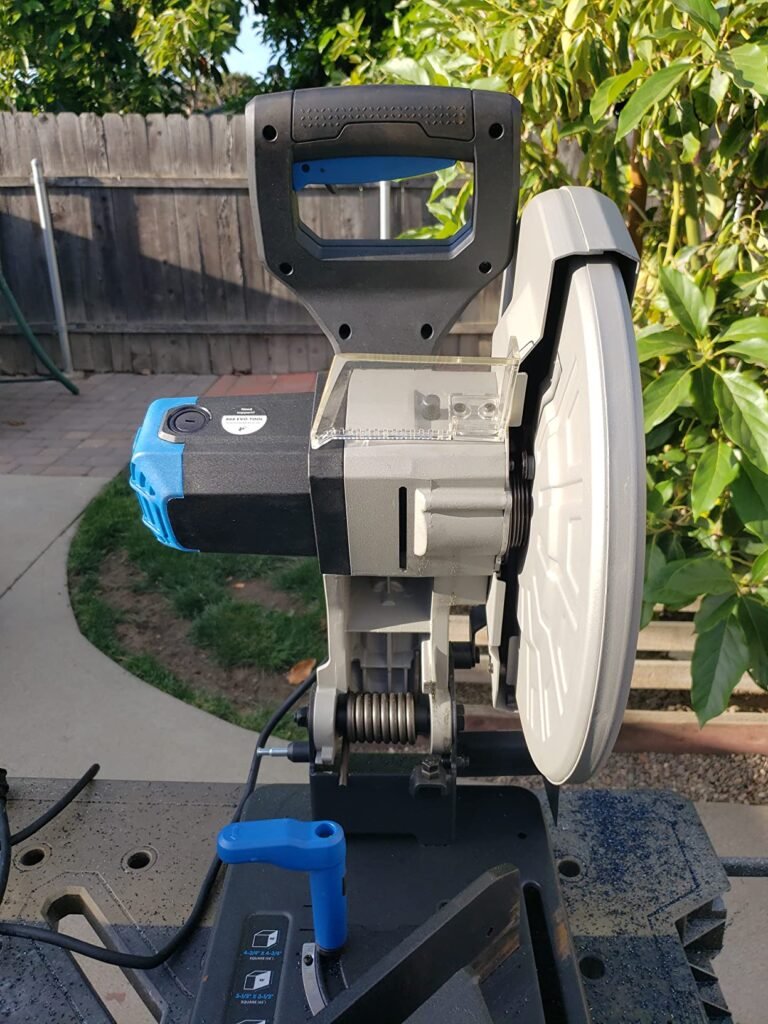
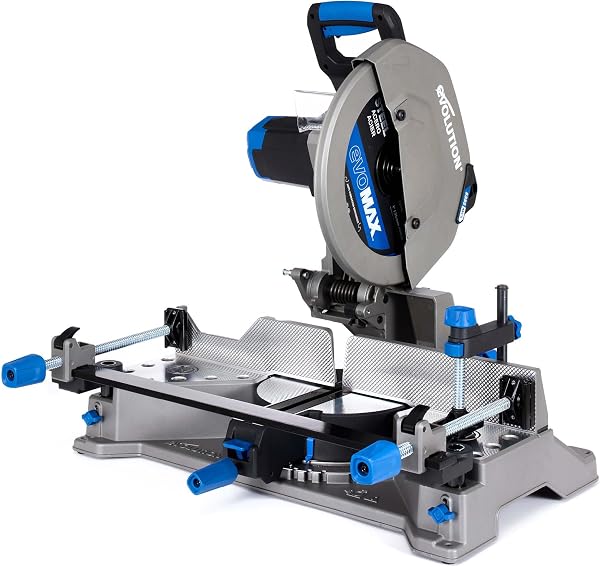
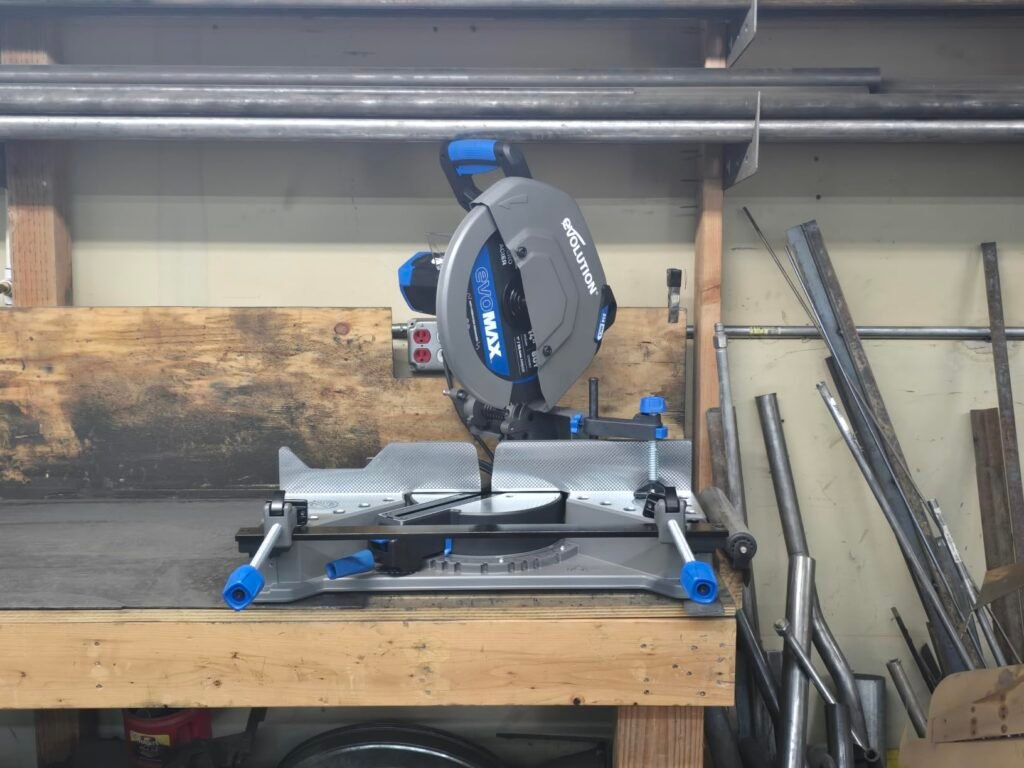
The Evolution S14MCS is a purpose-built cold-cut metal saw designed for professional fabricators and metalworkers who cut mild steel daily. Unlike abrasive chop saws that grind through metal with sparks, heat, and airborne dust, the cold-cut approach uses a carbide-tipped blade spinning at a controlled 1,100 RPM to shear steel cleanly. The result is a weld-ready edge with no burrs, minimal heat, and dramatically less cleanup.
We may earn a commission when you buy through this link, at no additional cost to you.
The EVOMAX intelligent motor actively optimizes blade speed under load, which extends blade life by roughly 30 percent compared to constant-speed designs. The soft-start feature ramps the motor up gradually to prevent breaker trips, and an electronic brake stops the blade within seconds for added safety. The included cermet carbide blade is rated for 3,500-plus cuts in 4-inch mild steel, which is 50 percent longer than many competing blades.
Precision mitering up to plus or minus 46 degrees is backed by positive detents and a stainless-steel gauge for accurate repeatable angles. The reinforced fence, ribbed alloy base, dual sliding clamps, and knurled gripping surfaces work together to hold stock rigidly in place during cuts. A shadow guide helps align cuts without a projected laser line, which can be hard to see in bright shop lighting.
Cold-cut saws spin a carbide blade at low RPM, shearing metal with minimal heat generation. This produces clean, burr-free edges that are immediately ready for welding or finishing. Abrasive saws, by contrast, grind through metal at high RPM, creating sparks, heat-affected zones that can discolor and harden the metal, and significant airborne dust. For production fabrication work, cold-cut saws pay for themselves through faster cutting, cleaner finishes, and far longer consumable life.
This saw is the right choice for metalworkers, welders, and fabricators who process significant volumes of mild steel tubing, angle iron, flat bar, and solid rod. The premium price reflects the specialized cold-cut technology and long-life blade. Hobbyists who only occasionally cut metal may be better served by an abrasive chop saw or a bi-metal bandsaw at a fraction of the cost.
Occasional DIY users who cut metal only a few times a year may find the upfront investment hard to justify compared to a basic abrasive chop saw.
We may earn a commission when you buy through this link, at no additional cost to you.
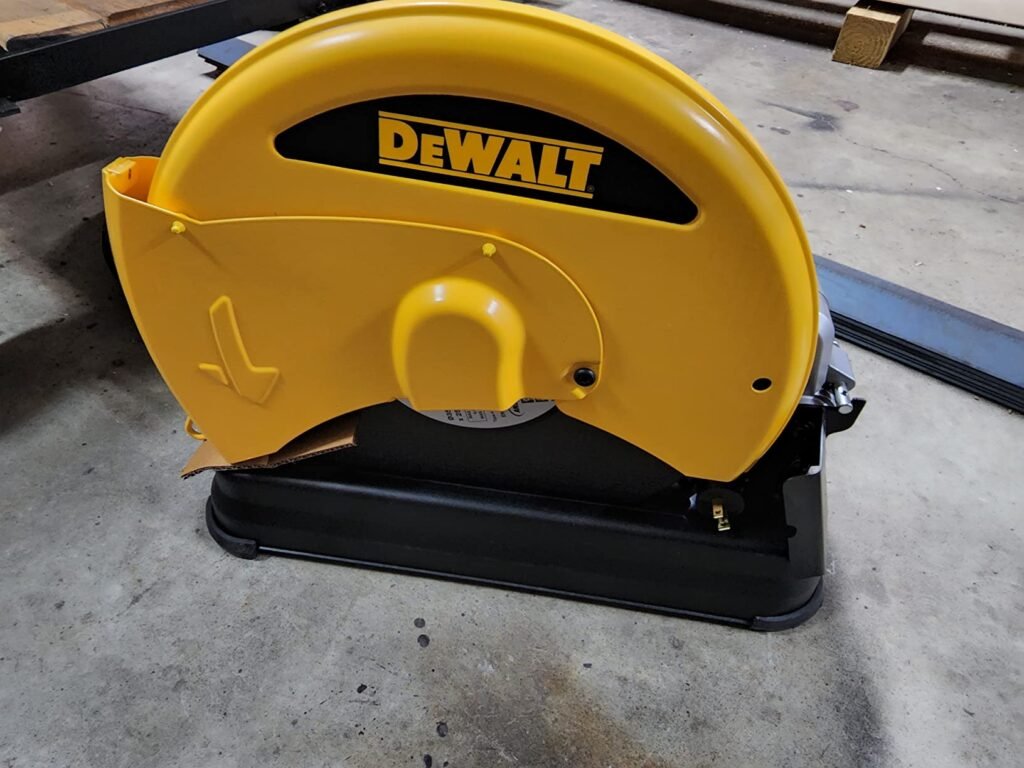
The DEWALT D28730 is a classic 14-inch abrasive chop saw that has earned its reputation on construction sites, metal shops, and home workshops for decades. It is built for cutting rebar, angle iron, square tubing, pipe, and threaded rod using replaceable abrasive wheels. The 2300W motor includes overload protection to shut the saw down before damage occurs during heavy continuous use.
We may earn a commission when you buy through this link, at no additional cost to you.
The quick-lock vise is one of the saw’s most practical features, letting you clamp down on different diameters of pipe or varying thicknesses of flat stock in seconds. Material changes between cuts are faster than on saws that require manual thread adjustments. The 45-degree pivoting fence allows accurate miter cuts for picket fencing, gate framing, and decorative metalwork without needing a separate jig.
The ergonomic handle positions your hand comfortably during the downward cutting stroke, which reduces wrist strain during long cutting sessions. The weight and rigidity of the frame keep the blade tracking straight through dense stock. Keep in mind that abrasive cutting generates sparks and heat, so protective gear and a cleared work area are essential, and the cut edges often need deburring before welding.
Abrasive chop saws remain popular because they are inexpensive, straightforward, and effective for occasional to moderate metal cutting. The replacement wheels cost a fraction of carbide blades, and a single wheel can handle dozens of cuts in common structural steel. For users who only occasionally cut pipe, rebar, or angle iron, an abrasive saw delivers the needed capability without the premium investment of cold-cut technology.
This saw is a smart choice for contractors, welders, and DIY fabricators who need reliable metal cutting at a moderate price. Abrasive wheels are inexpensive and widely available, making consumable costs predictable. If you cut large volumes of steel daily or need weld-ready burr-free edges, a cold-cut carbide saw like the Evolution S14MCS will be more efficient over time despite its higher upfront cost.
Production fabricators who need burr-free weld-ready edges or who want to avoid sparks and heat should invest in a cold-cut carbide saw instead.
We may earn a commission when you buy through this link, at no additional cost to you.
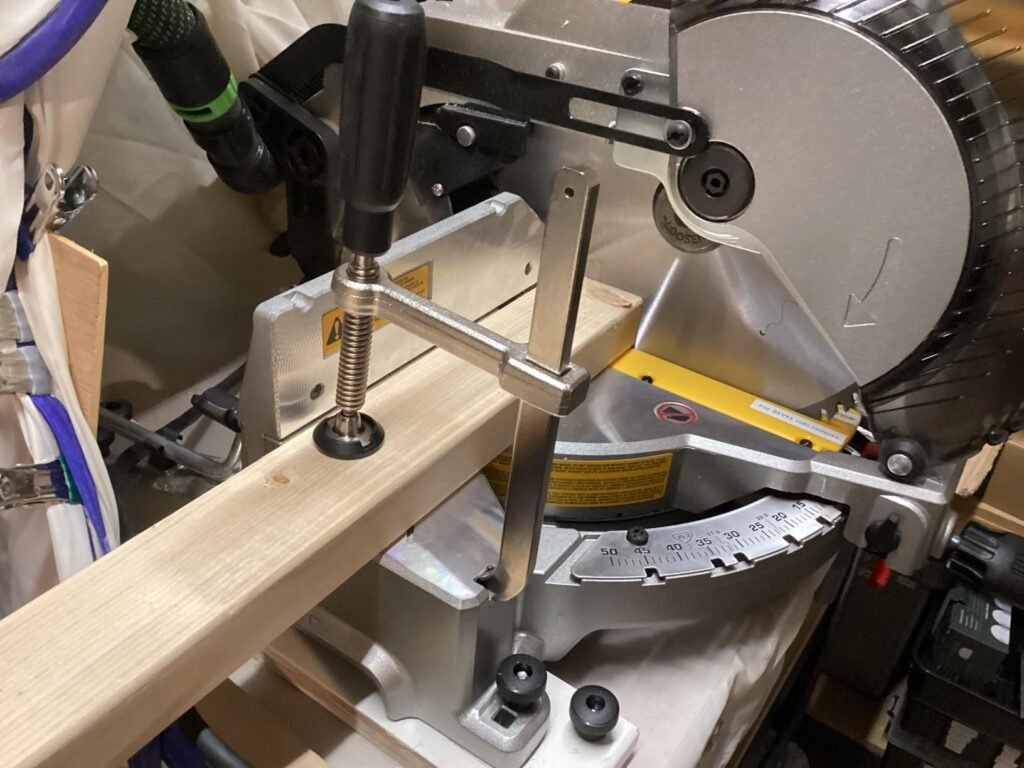
The DEWALT DWS715 delivers the core advantages of a 12-inch miter saw at a notably lower price than DEWALT's flagship models. It is a single-bevel compound miter saw, meaning the head tilts in one direction only. For users whose work consists mostly of 90-degree crosscuts and single-direction bevels, the single-bevel limitation rarely matters and the price savings go directly into your project budget.
We may earn a commission when you buy through this link, at no additional cost to you.
The stainless-steel miter detent plate includes 14 positive stops at the most commonly used angles, which speeds up setup for repeated cuts at standard trim and framing angles. The tall sliding fence supports base molding up to 5-1/2 inches vertically against the fence, which simplifies cutting tall baseboard and crown molding without laying the piece flat. The precise miter system and machined base fence support maintain accuracy over time.
The saw crosscuts 2×8 dimensional lumber at 90 degrees and 2×6 at 45 degrees, which covers nearly all residential framing and trim applications. The 15-amp motor provides enough power for dense hardwoods and engineered materials. At a tool height of 15 inches, it fits comfortably on standard workbenches and job-site stands without feeling cramped.
A single-bevel saw tilts only to one side, typically the left. When you need a bevel in the opposite direction, you flip the workpiece over and cut from the other face. This adds a step but is manageable for most jobs. Double-bevel saws tilt both ways, letting you cut mirror-image angles without moving the stock. The time savings add up on long crown molding runs but are rarely critical for occasional projects.
This saw hits a sweet spot for homeowners tackling major renovations, trim carpenters starting their first business, and DIYers who want pro-grade accuracy without the flagship price. If you frequently cut compound angles that require tilting in both directions, pay the upgrade for the double-bevel DWS780. For most other users, the DWS715 delivers excellent value.
Finish carpenters who regularly cut large volumes of crown molding or mirror-image compound angles will prefer the double-bevel DWS780 for faster workflow.
We may earn a commission when you buy through this link, at no additional cost to you.
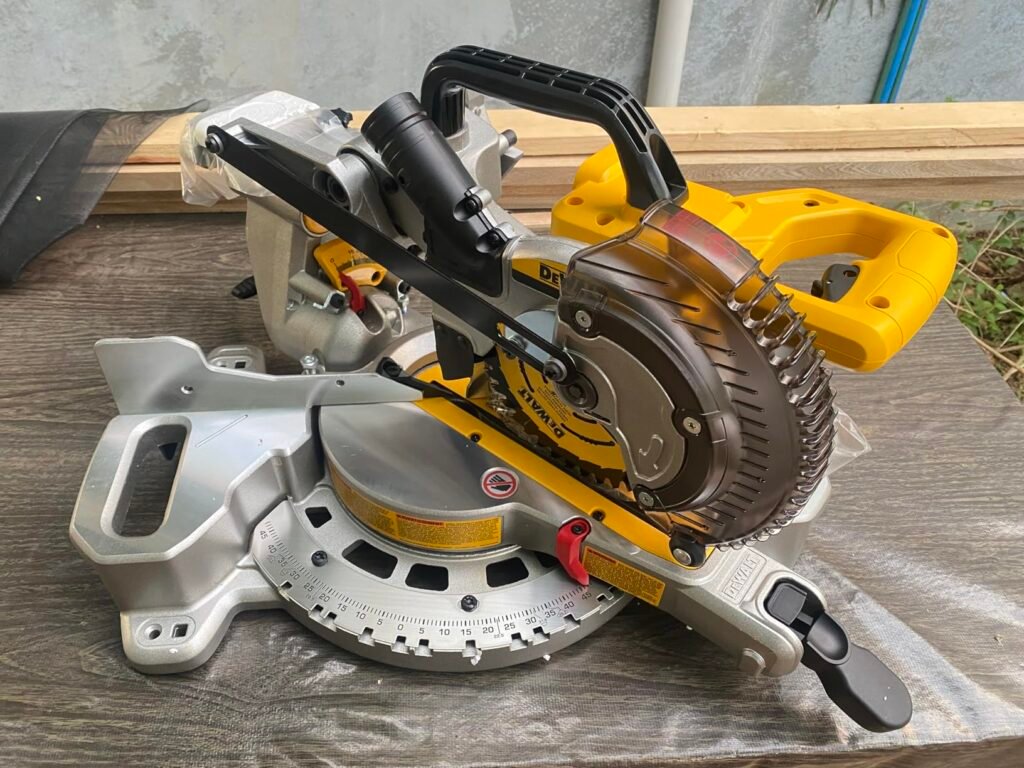
The DEWALT DCS361B solves a persistent problem for trim carpenters, deck builders, and remodelers: how to cut precision angles when the nearest outlet is nowhere in sight. Running on the 20V MAX battery platform, this saw delivers true cordless freedom without the setup time of extension cords or generators. At 30 pounds, it is light enough for one-handed carrying and compact enough to fit in most truck tool chests.
We may earn a commission when you buy through this link, at no additional cost to you.
The 7-1/4 inch blade handles 3-5/8 inch nested crown molding and 3-1/2 inch base molding vertically, which covers the vast majority of residential trim applications. The integrated cross-cut positioning system provides a reliable cutline indicator that stays accurate across blade changes. The oversized bevel scale and stainless-steel miter detent plate with 11 positive stops make angle setup fast and repeatable.
The cam lock miter handle lets you set and lock miter angles quickly without fumbling with knobs, which speeds up workflow when running through long trim lists. The precise miter system and machined base fence support deliver the kind of accuracy you need for finish work. Since this is sold as a tool-only package, you will need compatible 20V MAX batteries and a charger if you are not already in the DEWALT cordless ecosystem.
Cordless miter saws shine on new construction sites before power is connected, in attics and crawlspaces where extension cords are impractical, and for exterior trim work far from the nearest outlet. They also eliminate the trip hazards and setup time of extension cords, which adds up over the course of a day. For contractors already running the 20V MAX platform, adding this saw costs only the tool itself since batteries and chargers transfer across the system.
This saw is the right choice for trim carpenters working in houses without power, deck builders on new construction sites, and anyone already invested in the DEWALT 20V MAX battery platform. The smaller blade is a reasonable trade-off for the portability and convenience of cordless operation. If you need full 12-inch capacity or always work near power, a corded compound saw will give you more cutting range for the money.
Shop-based woodworkers with constant power access and finish carpenters who need the capacity of a 12-inch blade will prefer a corded compound saw.
We may earn a commission when you buy through this link, at no additional cost to you.
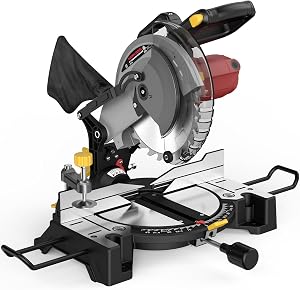
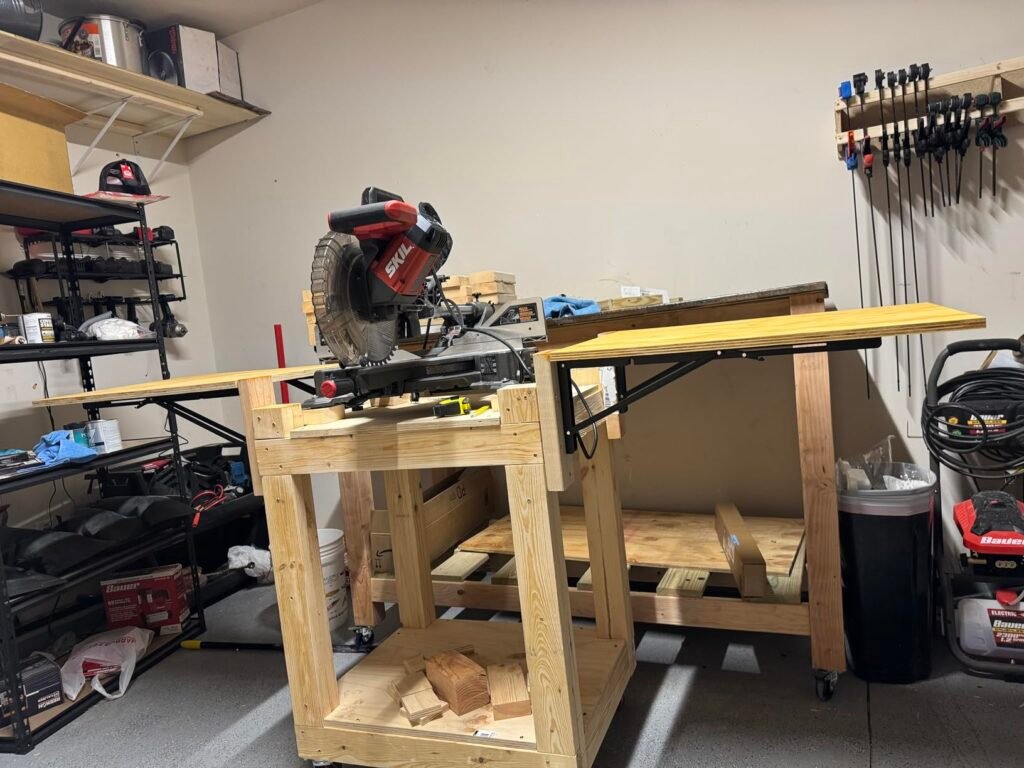
The SKIL MS6305-00 delivers a dual-bevel sliding compound miter saw at a price point that typically only buys a basic single-bevel chop saw. For DIY woodworkers, weekend remodelers, and homeowners building furniture or installing their own trim, this combination of features at this price is unusually competitive. The 10-inch blade with sliding capability gives you more cutting range than a fixed 10-inch chop saw.
We may earn a commission when you buy through this link, at no additional cost to you.
The 15-amp motor runs at 4,800 RPM, providing enough power for most hardwood and softwood applications. Dual bevel positions let you perform cuts at 48 and 45 degrees to the left, 0 degrees, and 45 degrees to the right without flipping the workpiece. The sliding carriage extends the crosscut capacity to 2×12 lumber at 90 degrees and 2×8 at 45 degrees, which handles decking, framing, and most trim work.
The LED shadow line system casts a shadow of the blade onto the workpiece, delivering greater precision than typical laser guides because the shadow always matches the actual blade position. The miter range extends 50 degrees left and right with 11 positive stops at the most commonly used angles. The combination of accuracy features at this price makes the saw especially attractive for occasional-use buyers.
A sliding carriage effectively extends the horizontal cutting range of a smaller blade, letting a 10-inch saw crosscut material that would normally require a 12-inch fixed saw. This is particularly useful for homeowners who want wider cutting capacity without the bulk, weight, and price of a 12-inch model. The sliding mechanism does add some complexity, so periodic lubrication of the rails keeps the carriage moving smoothly.
This saw is a strong choice for DIY woodworkers and homeowners who want sliding and dual-bevel capability without stepping up to professional-grade pricing. The build quality is lighter than pro saws, so very high-volume contractors will likely prefer heavier-duty options. For most home workshop projects and occasional professional use, the SKIL offers an excellent balance of capability and value.
High-volume professional contractors who demand pro-grade build quality for daily job-site abuse should consider a heavier-duty DEWALT or Metabo HPT model.
We may earn a commission when you buy through this link, at no additional cost to you.
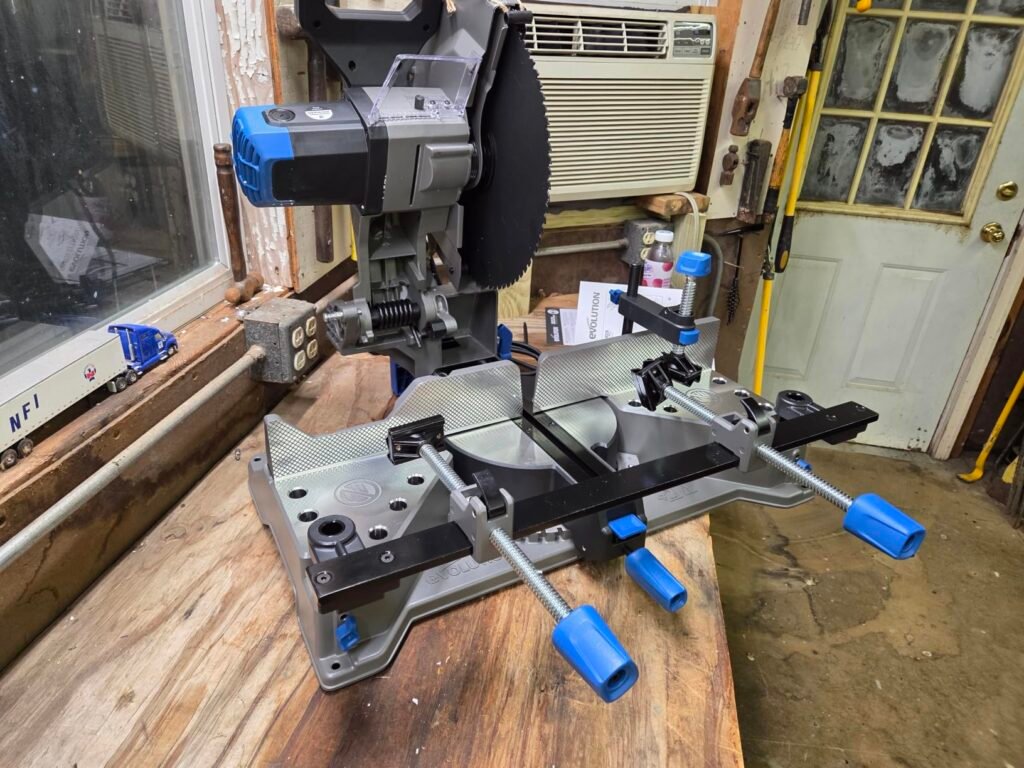
The Evolution S355CPSL sits between inexpensive abrasive chop saws and premium cold-cut industrial saws, offering carbide-tipped metal cutting at a mid-range price. It targets small fabrication shops, maintenance departments, and DIY welders who want cleaner cuts than abrasive wheels provide without stepping up to the industrial-grade pricing of the S14MCS. The dry-cut carbide blade produces smooth, burr-free edges on mild steel without the sparks and heat of abrasive cutting.
We may earn a commission when you buy through this link, at no additional cost to you.
The 15-amp motor drives a 14-inch tungsten carbide-tipped blade through mild steel efficiently and cleanly. The pressed steel base keeps the overall weight low enough for one-person transport between work areas, which is a meaningful advantage over heavier cast-iron metal saws. The integrated chip deflector directs cutting debris away from the operator, improving visibility and reducing cleanup time.
The adjustable miter capability provides angle cuts from 0 to 45 degrees, backed by a cast steel vise and fence that lock stock securely. The quick-release vise mechanism speeds up material changes during repetitive cuts. Evolution also offers specialized blades for mild steel, thin steel, aluminum, and stainless steel, so you can tailor the saw to the specific material you work with most often.
Dry-cut carbide saws fill the gap between messy abrasive cutting and premium cold-cut industrial equipment. They produce clean edges with minimal cleanup, generate far less heat than abrasive wheels, and avoid the airborne grit that abrasive cutting creates. For small shops and hobbyists, this means working in more comfortable conditions and spending less time on post-cut deburring and finishing.
This saw is a smart choice for small shops, hobbyist metalworkers, and maintenance crews who need clean metal cuts at a reasonable price. The 3-year warranty and US-based customer support provide meaningful long-term confidence. If you cut high volumes of steel daily or need the longest possible blade life, step up to the S14MCS with its EVOMAX motor and cermet carbide blade.
Production fabricators who process steel full-time will get better long-term value and blade life from the Evolution S14MCS with its intelligent motor and cermet carbide blade.
We may earn a commission when you buy through this link, at no additional cost to you.
The DEWALT DWS779 is one of the most popular 12-inch sliding compound miter saws among contractors because it delivers near-flagship performance at a notably lower price than the DWS780. It skips the XPS LED cutline system but keeps the powerful motor, sliding carriage, double-bevel capability, and generous cutting capacity that make it suitable for professional framing, trim, and deck building.

We may earn a commission when you buy through this link, at no additional cost to you.
The 15-amp motor spins at 3,800 RPM and powers the saw through dense hardwoods, engineered lumber, and treated decking without bogging down. The crosscut capacity is impressive at 2×14 lumber at 90 degrees and 2×10 at 45 degrees, which handles wide stair treads, deck ledger boards, and large structural members. The miter range extends to 60 degrees right and 50 degrees left, which is wider than most competing 12-inch saws.
The tall sliding fences support crown molding up to 7-1/2 inches nested and base molding up to 6-3/4 inches vertically, and they slide out of the way for bevel cuts without complete removal. The adjustable stainless-steel miter detent plate with 10 positive stops and the cam lock miter handle with detent override speed up setup for both standard and custom angles. The dust collection captures over 75 percent of generated debris.
The DWS779 and DWS780 share nearly identical cutting capacity, motor power, and build quality. The main difference is the DWS780’s XPS LED cutline system, which casts a shadow of the blade for pinpoint cutline accuracy. If you cut high volumes of finish trim where every mark matters, the XPS system pays for itself in reduced errors. For general carpentry, framing, and decking, the DWS779 delivers the same cutting performance for significantly less money.
This saw is the right choice for serious DIYers, remodelers, and professional carpenters who want 12-inch sliding capability and double-bevel versatility without paying for the XPS cutline. The dual horizontal steel rails and linear ball bearings deliver smooth, accurate slide action over years of use. If the LED shadow line is a must-have for your workflow, upgrade to the DWS780 instead.
Finish carpenters who demand the XPS LED cutline for maximum precision on crown and casing should pay the upgrade for the DWS780.
We may earn a commission when you buy through this link, at no additional cost to you.
The Marvtool 10-inch compound miter saw is an entry-level option aimed at homeowners, DIY enthusiasts, and anyone taking on their first serious woodworking project. The 15-amp motor spins the blade at 5,000 RPM, which matches the output of premium 10-inch saws and provides enough power for softwoods, hardwoods, soft metals, plastics, and laminates. At just 20.5 pounds, it is the lightest full-size compound saw in this guide.
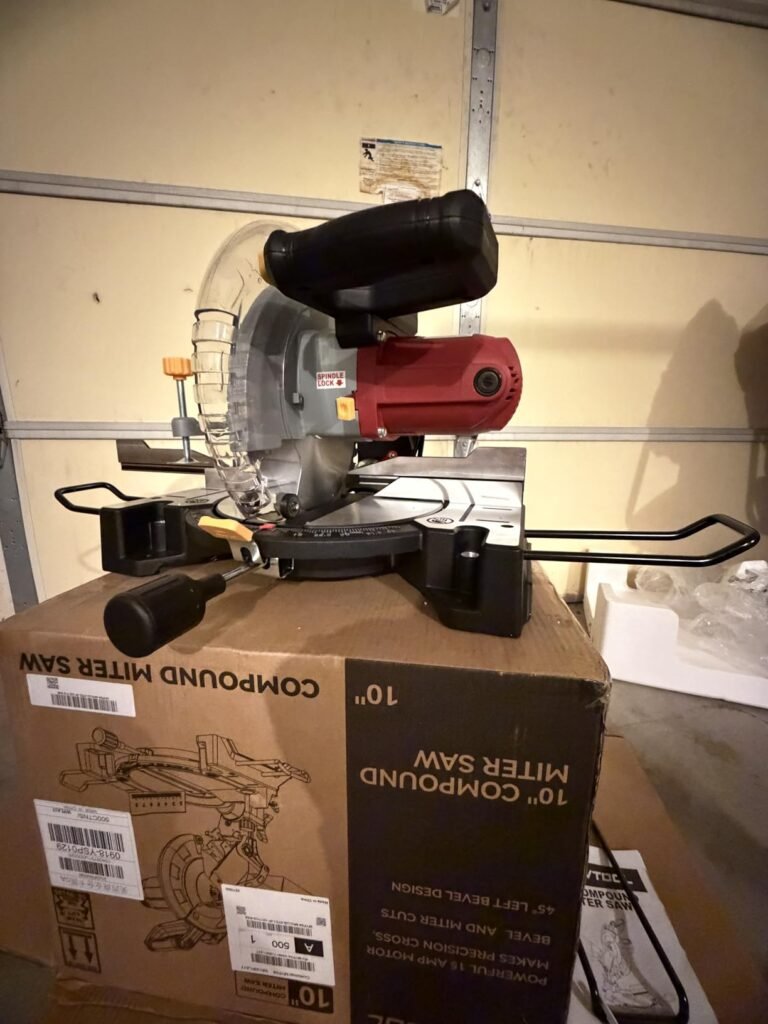
We may earn a commission when you buy through this link, at no additional cost to you.
The included 36T blade handles general-purpose cutting across multiple materials right out of the box, and the two extension tables provide support for longer workpieces. The transparent blade guard improves cutline visibility compared to opaque guards, making it easier to see exactly where the blade will enter the material. The vise clamp secures stock during angled cuts to prevent movement that could ruin a cut or create safety issues.
The miter saw supports left miter angles from 0 to 45 degrees, and the base adjusts for bevel cuts from 0 to 45 degrees in both directions. This dual flexibility enables a reasonable range of compound angle cuts for home projects, trim work, and small furniture builds. The head locks securely into the base using a release knob, which maximizes space efficiency during storage and simplifies transport between locations.
A saw that cuts wood, plastic, soft metal, and laminates with blade changes gives DIYers significant versatility without needing multiple specialty tools. Projects like custom PVC trim, aluminum extrusion for furniture, and laminate flooring installations all benefit from this capability. Just remember that different materials require appropriate blades, so investing in a dedicated metal-cutting or laminate blade when needed will produce much better results than forcing a general-purpose blade through demanding materials.
This saw is the right choice for budget-conscious DIYers, apartment dwellers who need a compact tool for occasional projects, and students or beginners who want to learn miter saw fundamentals without a major investment. The 2-year warranty and 24/7 customer support add buyer protection. Professional contractors and users who cut daily volumes should step up to a DEWALT or Metabo HPT model with heavier-duty construction.
Professional contractors who put a saw through daily heavy use should invest in a pro-grade DEWALT or Metabo HPT model with more robust construction.
We may earn a commission when you buy through this link, at no additional cost to you.
Selecting the right chop saw depends on the materials you cut, the volume of work you do, and whether portability or capacity matters more. This guide covers the key factors that separate a saw that meets your needs from one that creates frustration on every project.
Blade diameter is the single most important specification on a chop saw because it directly determines the maximum size of material you can cut. Common blade sizes are 7-1/4 inch for compact cordless models, 10 inch for lightweight compound saws, 12 inch for professional-grade compound and sliding saws, and 14 inch for dedicated metal cutting chop saws. Each size serves different applications, and choosing too small means outgrowing the saw quickly, while choosing too large wastes money and workspace.
Beyond blade diameter, pay attention to the actual cross-cut capacity in dimensional lumber terms. A 10-inch compound saw typically crosscuts 2×6 lumber at 90 degrees and 2×4 at 45 degrees. A 12-inch non-sliding saw handles 2×8 at 90 degrees. A 12-inch sliding compound saw extends that to 2×12 or even 2×14 at 90 degrees, which covers virtually all residential framing and trim work. Sliding capability effectively adds inches of crosscut range by letting the saw head travel horizontally across the workpiece.
For most trim and framing work, a 10-inch or 12-inch compound saw is ideal. If you regularly cut wide stock like stair treads, deck boards, or large structural members, invest in a 12-inch sliding model. For metal fabrication, 14-inch is the industry standard.
Motor amperage and no-load RPM together determine how a chop saw performs under load. Most quality compound miter saws for wood use 15-amp motors producing between 3,800 and 5,000 RPM. Higher RPM generally produces cleaner cuts in wood because each blade tooth takes a smaller bite per revolution, reducing tear-out. For dense hardwoods and engineered materials, a motor that maintains speed under load matters more than peak RPM on a spec sheet.
Metal cutting saws take a different approach. Cold-cut carbide saws run at much lower speeds, typically 1,100 RPM, because carbide tips cut steel most effectively at controlled speeds that generate minimal heat. Abrasive chop saws run at high RPM because the abrasive wheel grinds through metal rather than shearing it. Both approaches work, but the slower cold-cut method produces cleaner edges and far longer blade life for frequent metal cutting.
Match the motor specifications to your materials. Wood saws need high RPM for clean cuts, while metal saws benefit from controlled lower speeds and features like soft start that protect electrical circuits and extend blade life.
Chop saws come in several configurations that affect what cuts you can make without flipping or repositioning the workpiece. A basic chop saw cuts straight down at 90 degrees. A miter saw adds the ability to swivel the blade left and right for angled cuts. A compound miter saw adds bevel capability, letting you tilt the blade in addition to swiveling it, which enables compound angles needed for crown molding and complex trim work.
Single-bevel saws tilt in one direction only, typically to the left. When you need the opposite bevel angle, you flip the workpiece. Double-bevel saws tilt in both directions, which eliminates flipping and speeds up compound cutting. Sliding compound saws add a horizontal slide mechanism that extends the crosscut capacity dramatically, allowing a 10-inch or 12-inch blade to cut wider stock than it could in a fixed configuration.
If you only cut 90-degree crosscuts and occasional single-angle miters, a basic chop saw or compound saw is sufficient. For regular trim, crown molding, or deck work, invest in a sliding compound saw with double-bevel capability for maximum versatility.
Modern chop saws include various features designed to improve cutting accuracy and reduce setup time. Positive miter detents are preset stops at commonly used angles like 15, 22.5, 30, and 45 degrees. Higher-end saws include more detents, often 10 to 14 or more, which speeds up setup for repetitive cuts. Detent override features let you make fine adjustments between the preset stops when you need a non-standard angle.
Laser guides and LED cutline systems project a line onto the workpiece showing where the blade will cut. Lasers are common but can drift out of alignment over time and may be hard to see in bright conditions. LED shadow line systems like DEWALT’s XPS cast an actual shadow of the blade, which is always accurate regardless of calibration and remains visible in most lighting conditions. For finish work where every millimeter counts, shadow systems are worth the premium.
If you do precision finish carpentry, prioritize detent accuracy and shadow-line cutline systems. For rough framing and general construction, basic detents and laser guides are sufficient.
Chop saw weight ranges dramatically, from compact 20-pound compound saws to heavy-duty 60-pound sliding models with large bases. If you move your saw between job sites regularly, lower weight makes a real difference in daily fatigue and transport logistics. Compact 10-inch saws in the 20-to-30-pound range travel easily in a truck or SUV, while heavy 12-inch sliding saws often require two-person lifts or wheeled stands.
Build quality affects long-term reliability and cutting accuracy. Pro-grade saws use cast aluminum or magnesium bases, precision-machined fences, and reinforced trunnions that maintain alignment through years of use. Budget saws often use pressed steel or lighter materials that can flex under load, which reduces cut accuracy over time. The difference becomes apparent after months of daily use, when budget saws may develop play in the pivot points while pro saws remain tight.
If you move the saw frequently or work from a truck, prioritize lower weight. For shop-based use where the saw stays in one place, invest in heavier pro-grade construction that will deliver consistent accuracy for decades.
Miter saws generate significant sawdust, and effective dust collection makes a noticeable difference in workspace cleanliness, air quality, and respiratory health. Basic dust bags attached to the saw’s port capture maybe 30 to 50 percent of generated dust. Premium saws like the DEWALT DWS780 and DWS779 feature improved dust collection systems that capture over 75 percent of debris, which dramatically reduces the mess around the saw and cleanup time between cuts.
For maximum dust capture, connect the saw to a shop vacuum or dust extractor using the appropriate hose adapter. This can push collection efficiency above 90 percent on well-designed saws, which is important for indoor work or users with respiratory sensitivities. Metal cutting saws produce different debris, typically chips rather than fine dust, and chip deflectors direct this debris away from the operator rather than attempting to capture it.
If you work in an enclosed shop or indoor space, invest in a saw with strong dust collection and connect it to a vacuum when possible. For outdoor framing work, dust collection matters less and basic bag systems are usually adequate.
Before each use, inspect the blade for cracks, missing teeth, or excessive wear and replace it if any damage is visible. Check that the blade guard moves freely and returns to the closed position when released. Verify the miter and bevel locks hold firmly at your intended angle, and tighten any loose knobs or bolts before cutting. Always wear eye and ear protection, and use a push stick or workpiece clamp for short pieces that would put your hands near the blade. Let the blade reach full speed before contacting the workpiece, and ease into the cut rather than forcing the blade through the material.
Regular maintenance keeps your saw accurate and extends its lifespan. Clean sawdust from the saw after each major project using compressed air or a stiff brush, paying particular attention to the pivot points, slide rails on sliding models, and dust collection port. Lubricate moving parts periodically with a light machine oil or dry lubricant to maintain smooth operation. Check the squareness of the fence to the blade at 90 degrees every few months using a reliable square, and recalibrate if drift is detected. Replace worn brushes on brushed motors and keep the vent openings clear of debris that could cause overheating.
Store your saw in a dry, climate-controlled environment to prevent rust on cast surfaces and corrosion on electrical components. If storing for extended periods, apply a light coat of wax to the base and fence to prevent surface oxidation. Keep the blade installed during storage to protect the arbor from debris, and consider a dust cover to shield the entire saw. Transport the saw with the head locked in the down position and the miter lock engaged to prevent movement that could knock the saw out of alignment during the ride. Replace blades promptly when they become dull, as a sharp blade cuts more safely, cleanly, and efficiently than a worn one.
A chop saw technically refers to any saw that cuts straight down with a chopping motion, and the term is often used specifically for heavy-duty metal cutting saws with abrasive or carbide blades. A miter saw is a type of chop saw that swivels left and right for angled cuts, and compound miter saws add bevel capability for tilting the blade. In everyday usage, people often use the terms interchangeably for any saw with a hinged cutting head.
Standard wood miter saws spin too fast for safe metal cutting and are not designed to handle the heat and debris that metal cutting generates. Some multi-material saws like the Marvtool model are rated for soft metals with the appropriate blade, but for regular metal cutting you should invest in a dedicated metal chop saw with the correct blade speed and construction. Using the wrong saw for metal creates safety hazards including kickback, blade damage, and fire risk from sparks.
A 10-inch or 12-inch compound miter saw handles the vast majority of residential trim work including baseboards, door casings, crown molding, and chair rails. A 10-inch saw is lighter and more portable, while a 12-inch saw provides extra capacity for wide crown molding and taller baseboards. Most homeowners doing their own trim installation will be well-served by a 10-inch sliding compound saw, which combines reasonable portability with the capacity to handle wider stock when needed.
A sliding carriage dramatically increases the crosscut capacity of a miter saw, letting a 10-inch or 12-inch blade cut wider stock than it could in a fixed configuration. If you regularly cut material wider than 6 inches, a sliding saw saves significant time and avoids the need for multi-pass cutting. For users who mostly cut narrow trim and small lumber, a fixed compound saw is lighter, less expensive, and perfectly adequate.
Blade life depends on the material you cut, the quality of the blade, and how much cutting you do. A quality carbide-tipped blade used for wood can last through hundreds or thousands of cuts before needing sharpening or replacement. Metal cutting carbide blades like the Evolution EVOMAX are rated for 3,500 or more cuts in mild steel. Replace or sharpen the blade when you notice slower cutting, excessive burning or tear-out in wood, or increased effort required to complete cuts.
Essential safety gear includes ANSI-rated safety glasses or a face shield to protect against flying debris, hearing protection since miter saws typically exceed 100 decibels, and a dust mask or respirator when cutting materials that produce fine dust. For metal cutting, add flame-resistant clothing and ensure a clear area free of combustibles due to sparks. Always keep your hands at least 6 inches from the blade path and use clamps or workpiece holders for small pieces.
Modern cordless miter saws like the DEWALT DCS361B deliver cutting performance that approaches corded saws for most residential applications. The main trade-offs are typically smaller blade sizes to manage battery drain and reduced runtime on a single charge. For trim carpenters and remodelers working in locations without easy power access, cordless saws offer meaningful convenience that outweighs the modest performance differences for most cuts.
Cold-cut saws use carbide-tipped blades spinning at low RPM to shear metal cleanly with minimal heat and no sparks, producing weld-ready edges. Abrasive saws use fiber-reinforced grinding wheels that grind through metal at high RPM, generating sparks, heat, and significant airborne dust. Cold-cut saws produce much better finished edges and have far longer consumable life, but cost more upfront. Abrasive saws are cheaper and simpler but messier and less efficient for high-volume work.
Cutline guides help you align the blade with your pencil mark before starting the cut, which improves accuracy and reduces setup time. Laser guides are common but require occasional calibration and can be hard to see in bright light. LED shadow systems like DEWALT's XPS project an actual shadow of the blade, which is always accurate and highly visible. For precision finish work, shadow systems are worth the premium. For rough framing, basic laser guides or even no guide at all are adequate.
Regular calibration maintains cutting accuracy as components wear and shift. Check the fence squareness to the blade at 90 degrees every few months using a reliable framing square, and verify the common miter detent accuracy at 45 degrees using a known-accurate reference. Keep the saw clean, lubricate moving parts periodically, and avoid dropping or jarring the saw during transport. Replace worn blades promptly, as a dull blade produces inaccurate cuts even on a perfectly aligned saw.
The DEWALT DWS780 earns the overall top recommendation for serious woodworking buyers thanks to its combination of 12-inch double-bevel capability, exceptional XPS LED shadow line accuracy, strong 15-amp motor, and industry-leading dust collection. For professionals who demand precision and reliability on every cut, the DWS780 delivers the kind of long-term value that justifies its premium pricing through years of accurate performance.
Buyers with different priorities have excellent alternatives throughout this lineup. The DEWALT DWS779 offers nearly the same cutting performance at a lower price if you can live without the XPS cutline system. The Evolution S14MCS is the clear winner for professional metal fabrication with its cold-cut technology and intelligent motor. For maximum portability, the DEWALT DCS361B cordless saw and the ultralight Metabo HPT C10FCG2 both excel in mobile applications where weight and runtime matter most.
The best chop saw for you depends on your materials, work volume, and transport needs. Measure the widest stock you regularly cut, consider whether you need bevel versatility, and factor in whether the saw will stay in one shop or move between job sites. Match these needs to the specifications in this guide, and you will end up with a tool that delivers accurate cuts and reliable performance for many years of projects.