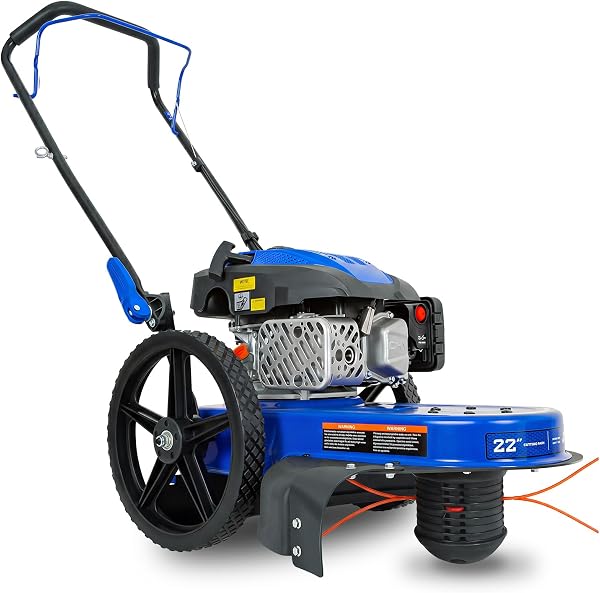
BILT HARD 170cc
8.4Editor score170cc 4-cycle engine
22-inch cutting width
14-inch flat-free wheels
One-piece steel deck
Find the right brush mowers for 2026. We compare 7 standout options by build quality, useful features, owner feedback, value, and everyday trade-offs.
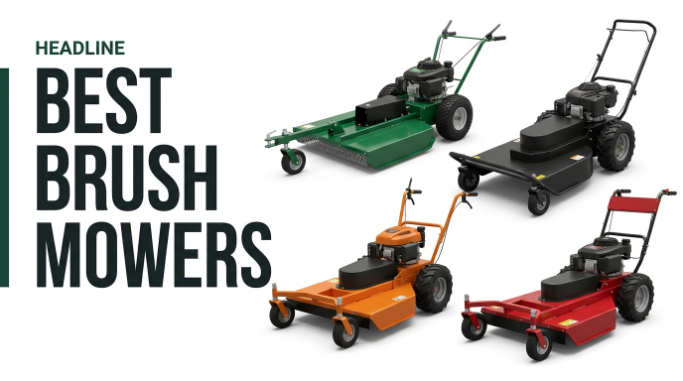
Find the right brush mower for clearing overgrown land in 2026. We compare 7 standout options by the factors that matter most when tackling tall grass, thick weeds, and woody brush: engine displacement, cutting width, deck construction, wheel size, cutting height range, string versus blade systems, and how each machine handles the terrain and vegetation you actually face.
The gap between a $297 walk-behind string trimmer and a $3,499 tow-behind rough-cut mower is enormous, and matching the tool to the job is critical. String trimmers handle tall grass and light brush on smaller properties, while blade-equipped rough-cut machines chew through saplings and heavy vegetation on acreage. Choosing wrong means either underpowered frustration or overspending on capacity you will never use.
This guide covers budget-friendly walk-behind string mowers for residential lots, mid-range models with upgraded cutting heads and wheels, and heavy-duty tow-behind and self-propelled rough-cut machines for serious land clearing. Use the comparison table, reviews, and buying guide below to match a brush mower to your property size, vegetation type, and available towing equipment.
We compared 7 brush mowers using the specifications that actually help a buyer decide: engine displacement and cycle type, cutting width and deck material, wheel diameter and type, cutting height range, string or blade cutting system, offset head capability, weight and maneuverability, tow vehicle requirements, warranty coverage, and owner feedback. The notes focus on practical trade-offs so each pick connects to how people actually clear overgrown fields, maintain fence lines, and manage acreage throughout the growing season.

Compare key features, scores, and current prices side by side. A shorter feature list means fewer details were available, not necessarily fewer capabilities.


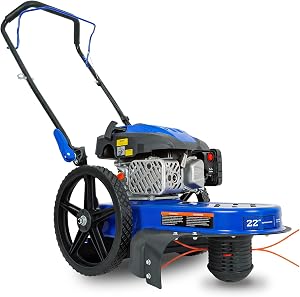


The Earthquake Hurricane earns the highest owner rating in this comparison at 4.6 stars, and the Hurricane cutting head is the primary reason. This specially designed head eliminates the wrap points where long grass and vines typically tangle around the spindle, which is the single most frustrating maintenance issue with walk-behind string mowers. Instead of stopping every few minutes to cut wrapped vegetation from the head, you can keep mowing continuously.
We may earn a commission when you buy through this link, at no additional cost to you.
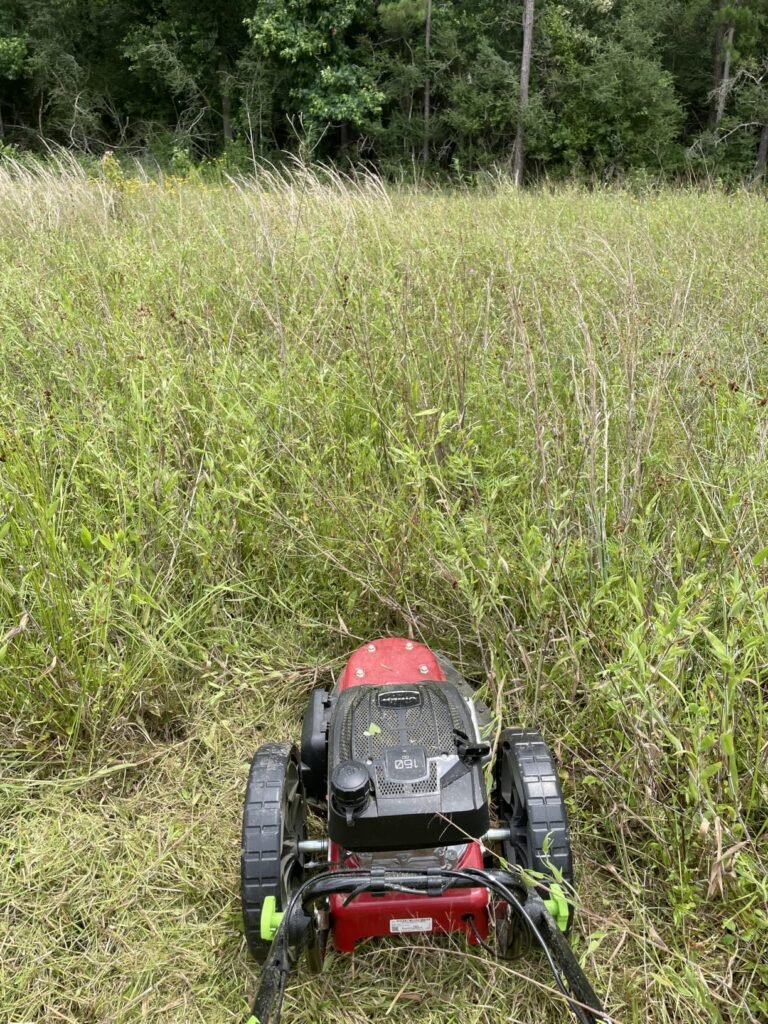
The 160cc 4-cycle Viper engine features automatic compression release for easy first-pull starts, and it delivers enough power to handle the tough vegetation that handheld trimmers cannot manage. The cutting head accepts both 0.095-inch line for lighter grass and 0.155-inch line for heavy brush, and loading new line is done on the fly without tools. Tool-less cutting height adjustment from 1 to 4 inches adapts to varying terrain and vegetation density.
The Grab-N-Go engagement bail is a genuinely useful feature that lets you stop the cutting head instantly by releasing the bail and restart it by re-engaging, all without shutting off and restarting the engine. This matters when you need to pause to clear a path, move an obstacle, or cross a gravel driveway. The extra-wide 2.5-inch by 14.5-inch airless wheels float over soft ground, ruts, and uneven terrain while providing exceptional stability.
On a standard string mower head, long grass and vines wrap around the spindle every 5 to 15 minutes in heavy vegetation, forcing you to stop, shut off the engine, and cut the tangled material free with a knife. Over a two-hour mowing session, this can add 20 to 30 minutes of downtime and significant frustration. An anti-wrap head like the Hurricane eliminates this problem entirely, which is why owners rate it so much higher than competing designs.
This is the strongest overall pick for anyone who regularly mows overgrown areas and is tired of stopping to untangle weeds from the cutting head. The 5-year limited warranty and U.S.-based customer support add long-term confidence. The higher price reflects the premium cutting head design and build quality. If budget is the primary concern, the AMERISUN or SENIX models offer similar basic specifications at lower prices.
Buyers on a strict budget who can tolerate occasional weed wrap and prefer the lowest upfront cost.
We may earn a commission when you buy through this link, at no additional cost to you.
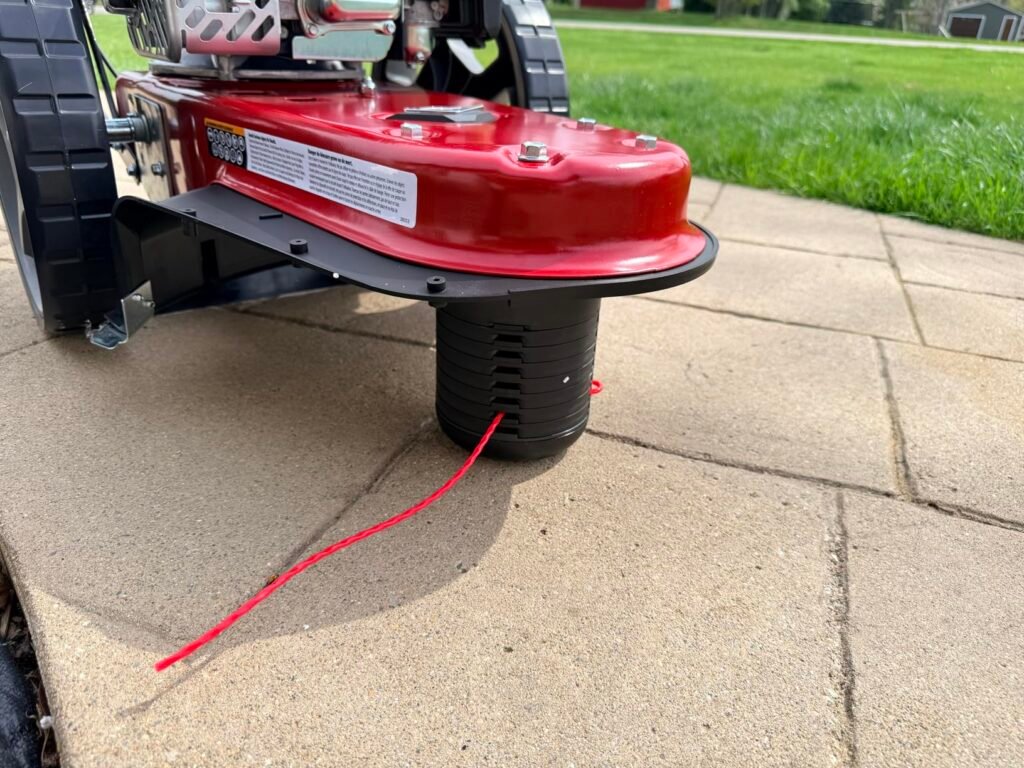
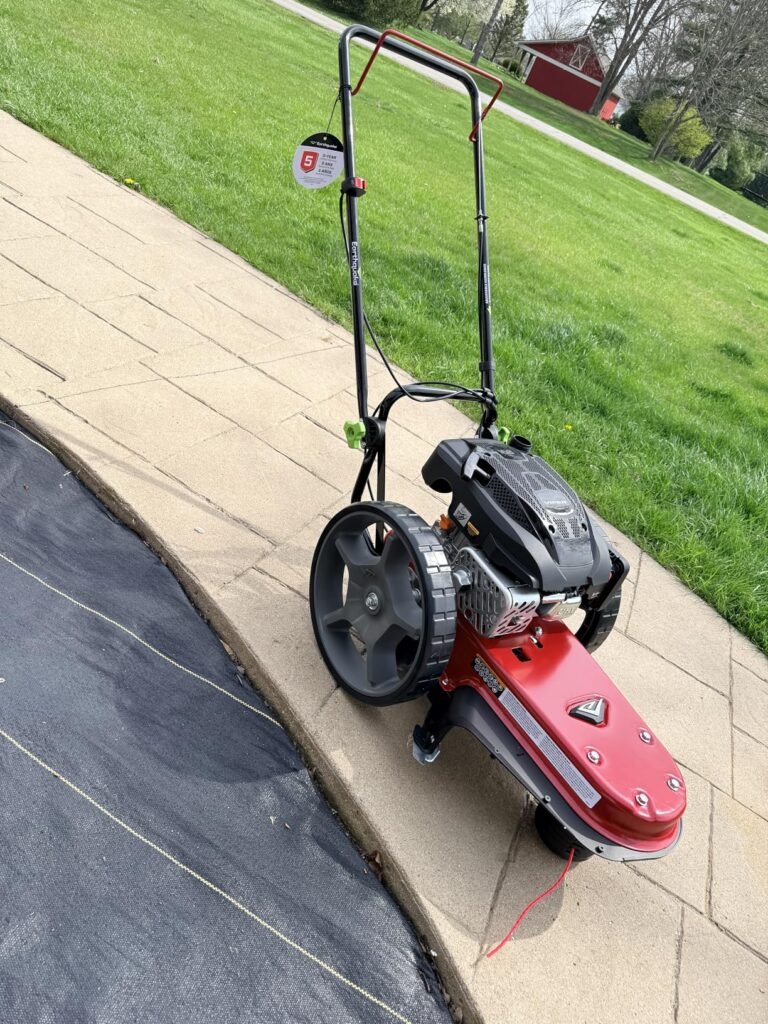
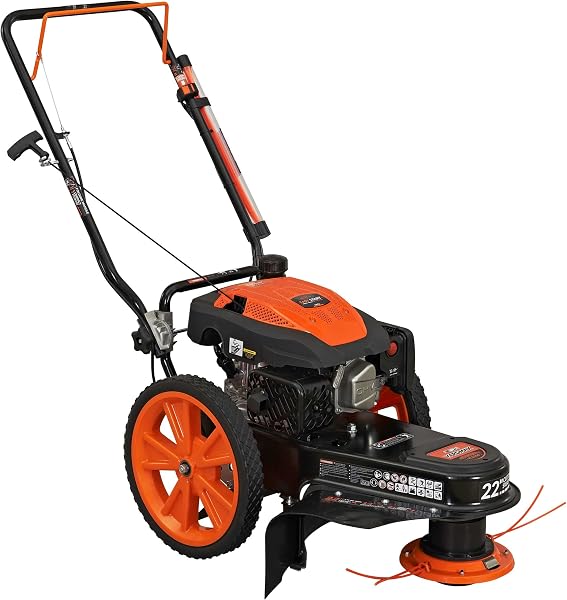
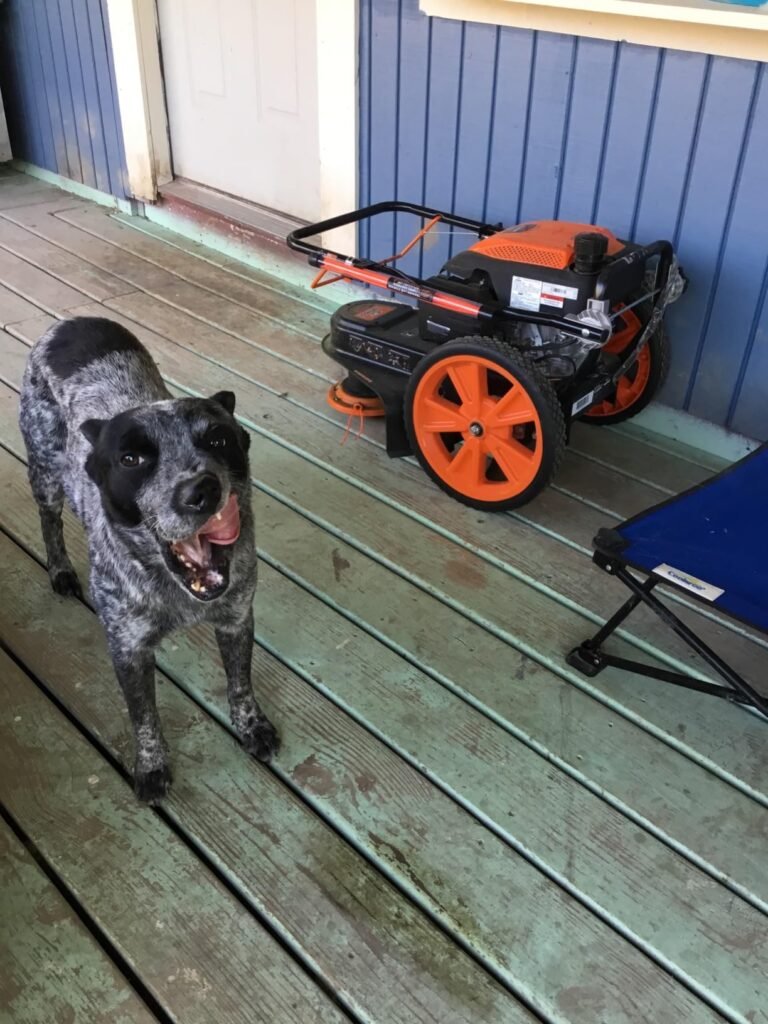
The BILT HARD walk-behind string trimmer targets property owners who need to clear overgrown grass and light brush along fence lines, around obstacles, and in tight spaces where a standard rotary mower simply cannot reach. The 170cc 4-cycle OHV engine provides enough torque to push through tall grass and thick weeds without bogging down, and the four-cycle design eliminates the need to mix oil and gas.
We may earn a commission when you buy through this link, at no additional cost to you.
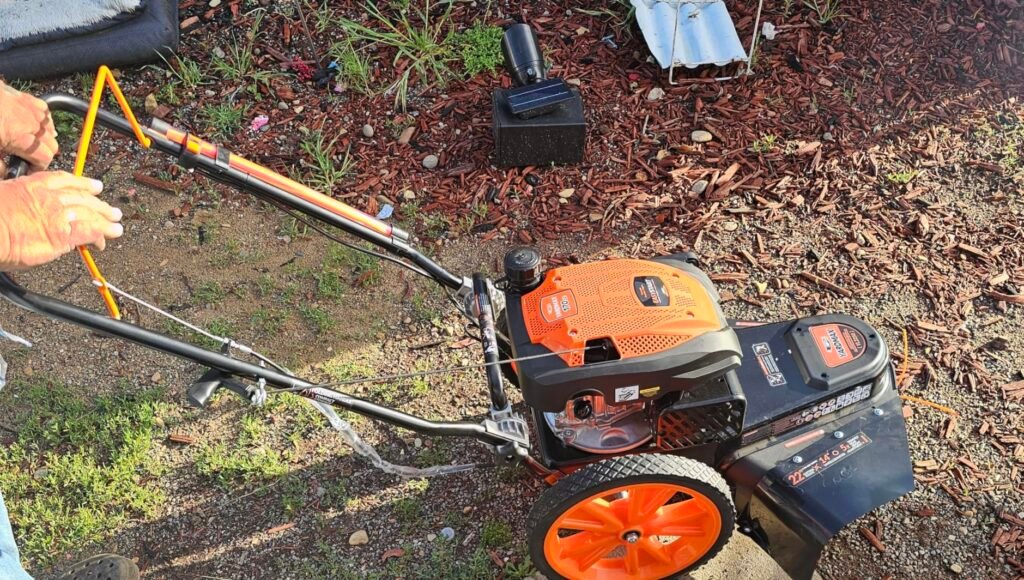
The one-piece steel deck is a meaningful durability upgrade over the stamped or plastic decks found on some competing models. A single-piece construction reduces vibration transfer to the operator and resists the bending and cracking that can occur when the deck encounters hidden rocks or roots in overgrown terrain. The 22-inch cutting path clears a generous swath per pass, reducing the number of passes needed to cover large areas.
The 14-inch flat-free wheels are a practical feature that eliminates the frustration of pneumatic tires going flat in thorny brush or on rough ground. These solid wheels roll over uneven terrain, roots, and ruts without losing air pressure mid-job. The foldable ergonomic handle improves grip during extended use and collapses for compact storage in a garage or shed when the mowing season ends.
Overgrown areas are full of thorns, sharp sticks, and hidden debris that puncture standard pneumatic tires. A flat tire in the middle of a field means dragging a heavy machine back to the shop or patching it on the ground. Flat-free wheels eliminate this downtime entirely, which matters most when you are working far from your garage on large or rural properties.
This mower is a solid choice for residential and small farm use where the primary task is clearing tall grass and light weeds around structures and fence lines. The lack of an offset trimmer head means you will need to angle the entire machine to get close to vertical obstacles. If precise fence-line trimming is a priority, the AMERISUN or YARDMAX models with offset heads provide better access.
Users who need to cut saplings or heavy woody brush that requires a blade-equipped rough-cut mower.
We may earn a commission when you buy through this link, at no additional cost to you.
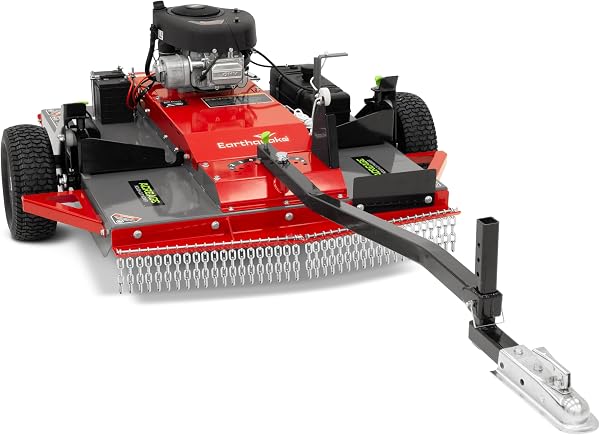
The Earthquake Acreage is a fundamentally different machine from the walk-behind string trimmers in this comparison. This tow-behind rough-cut mower uses a 17.5 HP Briggs and Stratton engine and pivoting steel blades to clear saplings up to 3 inches thick in a single 44-inch pass, making it the right tool for reclaiming overgrown pastures, clearing building sites, and maintaining large acreage.
We may earn a commission when you buy through this link, at no additional cost to you.
The two pivoting break-away blades are the critical safety and durability feature. They swing outward to cut vegetation but pivot backward when they strike immovable obstacles like rocks, stumps, or buried metal, which protects both the blades and the drive system from catastrophic damage. The 11-gauge steel deck is significantly thicker than standard mower decks and resists denting from the debris that rough-cut mowing inevitably generates.
The adjustable offset mowing capability lets you position the mower up to 4 feet to either side of the tow vehicle, which is essential for mowing under low tree limbs, along ditch slopes, and on trails where the tractor cannot drive directly over the vegetation. Tool-less cutting height adjustment from 3.5 to 7.5 inches lets you adapt to changing terrain on the fly. The keyed electric start with included battery eliminates pull-starting a large engine.
The Earthquake Acreage weighs 768 pounds in its shipping crate and requires a tow vehicle with a 2-inch ball coupler hitch. Most riding lawn mowers, garden tractors, ATVs, and UTVs can tow this mower, but verify your vehicle’s towing capacity before purchasing. The adjustable tongue offers 10 hitch height positions to match different tow vehicles, and the removable tongue assembly reduces the storage footprint when the mower is not in use.
This is the right choice for landowners with multiple acres of overgrown fields, brush, and small saplings who have a suitable tow vehicle with a 2-inch ball hitch. The 5-year product warranty and 2-year engine warranty provide long-term protection. If your property is under an acre or your vegetation is limited to tall grass and weeds, a walk-behind string trimmer will cost a fraction of the price and handle the job adequately.
Homeowners with small yards or those without a riding mower, ATV, or tractor for towing.
We may earn a commission when you buy through this link, at no additional cost to you.
The AMERISUN 22-inch walk-behind string trimmer is the most affordable option in this comparison, delivering a 170cc 4-stroke engine, 22-inch cutting width, and 14-inch wheels at under $300. For property owners who need to clear overgrown areas a few times per season and do not want to invest in a premium machine, this price point makes brush mowing accessible.
We may earn a commission when you buy through this link, at no additional cost to you.
The 170cc OHV 4-stroke engine with forced-air cooling handles tall grass, thick weeds, and light brush without the hassle of mixing oil and gas. The 22-inch cutting swath covers ground efficiently, and the offset trimmer head lets you trim precisely along fences, trees, and building foundations without angling the entire machine. Cutting height adjusts from 1.9 to 4.0 inches to match different vegetation conditions.
The 14-inch high wheels provide adequate mobility over rough terrain and uneven ground, and the foldable handle collapses for compact storage in a garage or trailer. The four-stroke engine runs on straight gasoline, which simplifies fuel management compared to two-stroke alternatives. The overall package covers the essential features needed for residential brush clearing without unnecessary complexity.
If your property has a few overgrown areas that need clearing two or three times per year, a budget brush mower can handle the job without the investment of a premium machine. The key is matching expectations to the price point: budget models use less durable components and may require more frequent string replacement or minor repairs. For occasional use, this trade-off is acceptable. For weekly mowing of large areas, the cost difference narrows as maintenance and downtime accumulate.
This mower is the right choice for budget-conscious buyers who need basic brush clearing capability for occasional use on residential properties. The lower owner rating suggests some buyers encountered quality or durability concerns, so this is best suited for lighter-duty applications rather than daily commercial use. If you plan to mow frequently or tackle heavy vegetation, investing in a higher-rated model like the Earthquake Hurricane will provide better long-term satisfaction.
Commercial users or landowners who mow large overgrown areas frequently throughout the growing season.
We may earn a commission when you buy through this link, at no additional cost to you.
The YARDMAX YL2250 focuses on practical convenience features that reduce frustration during real-world mowing sessions. The onboard trimmer string storage caddy is a small detail that makes a genuine difference: instead of returning to the garage or digging through a toolbox when the cutting line wears out, you have spare string immediately accessible on the machine itself.
We may earn a commission when you buy through this link, at no additional cost to you.
The 170cc gas engine powers a 22-inch cutting path, and the offset head position allows straight-line trimming along fence lines, barns, and landscaping edges without constantly maneuvering the entire machine in and out of tight spaces. Tool-free height adjustment across five positions from 1.5 to 3.5 inches lets you adapt to changing vegetation without carrying wrenches or stopping for extended adjustments.
The 14-inch ball-bearing wheels roll smoothly across rough terrain and provide better longevity than bushing-mounted wheels that can develop play and wobble over time. The offset head is particularly valuable for property owners with extensive fencing, outbuildings, or garden borders that require precise edge trimming alongside the main brush clearing work.
String trimmer line wears out faster in heavy brush than most new buyers expect, sometimes requiring replacement every 30 to 60 minutes in dense vegetation. Walking back to a shed or truck for spare line breaks your rhythm and wastes time. An onboard caddy keeps replacement line within arm’s reach, turning a five-minute interruption into a 30-second reload that keeps you productive throughout the mowing session.
This mower is a strong choice for property owners who value convenience features and do regular fence-line and edge trimming alongside open-area brush clearing. The 4.4 owner rating reflects solid satisfaction with the overall package. If anti-wrap cutting head technology is your top priority, the Earthquake Hurricane addresses that specific frustration more effectively.
Users who need an anti-wrap cutting head or who mow extremely dense vegetation that tangles standard heads.
We may earn a commission when you buy through this link, at no additional cost to you.
The SENIX brush cutter targets environmentally conscious buyers who want lower emissions and fuel consumption without sacrificing cutting capability. The 160cc 4-cycle professional series engine is designed for low vibration, reduced exhaust output, and efficient fuel use, which matters for users who mow in residential areas with noise and air quality concerns or who simply want to minimize their environmental footprint.
We may earn a commission when you buy through this link, at no additional cost to you.
The 22-inch cutting swath with 0.155-inch heavy-duty line handles thick weeds and brush effectively, and the steel deck provides durability against impacts with hidden obstacles. The 14-inch rubber wheels offer good traction on uneven terrain, and the 5-position height adjustment lever ranges from 1.57 to 3 inches to match different grass and weed conditions. The ergonomic handle maximizes comfort during extended mowing sessions.
The package includes engine oil and 20-inch string trimmer line, so you can start using the mower immediately without a separate trip to the hardware store. The fold-down handle enables compact storage in a garage or shed. The 3-year limited warranty provides reasonable coverage for a machine in this price range, though it falls short of the 5-year coverage offered by Earthquake.
The 0.155-inch cutting line included with the SENIX is thicker than the standard 0.095-inch line used for light grass, which gives it more cutting force and durability in heavy weeds and light brush. Thicker line lasts longer between replacements and cuts through tougher vegetation, but it also puts more load on the engine. The 160cc engine handles 0.155-inch line adequately in most conditions, though it may slow down in the densest patches where a 170cc engine would maintain speed.
This mower is a reasonable choice for buyers who prioritize low emissions and fuel efficiency alongside basic brush clearing capability. The lower owner rating and smaller engine displacement compared to 170cc competitors suggest it may struggle slightly more in the heaviest vegetation. For the toughest overgrown areas, the extra displacement of the BILT HARD or AMERISUN models provides more reserve power.
Users tackling the heaviest brush and saplings who need maximum engine displacement and cutting power.
We may earn a commission when you buy through this link, at no additional cost to you.
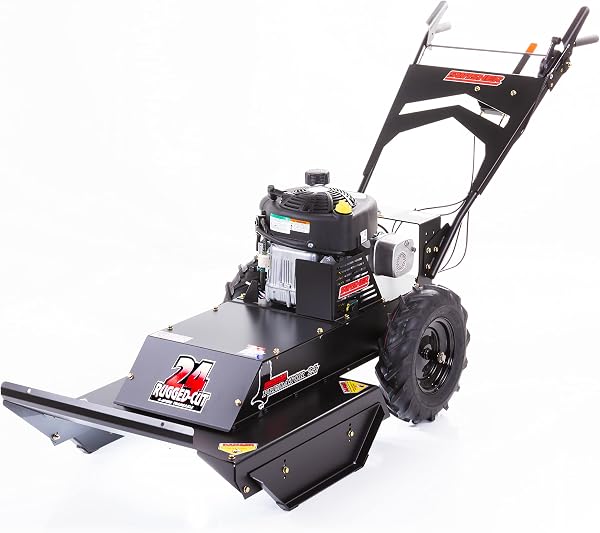
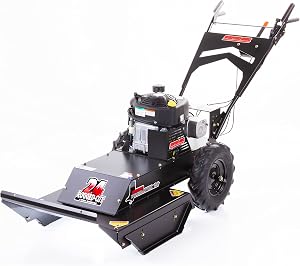
The Swisher Predator occupies a unique position in this comparison as the only self-propelled walk-behind rough-cut mower with a blade-based cutting system rather than string trimmer line. The 11.5 HP engine and 24-inch deck cut saplings up to 1.5 inches in diameter, bridging the gap between walk-behind string trimmers and tow-behind rough-cut mowers for properties that are too large for string trimmers but too small or inaccessible for tow-behind equipment.
We may earn a commission when you buy through this link, at no additional cost to you.
The 4-speed transmission with reverse is a significant advantage for maneuvering in tight areas, around trees, and on slopes where you need precise speed control. The large pneumatic chevron tires provide aggressive traction on uneven ground, muddy fields, and hillsides where standard wheels would slip. The adjustable-height handlebar improves operator comfort during extended mowing sessions on rough terrain.
The cutting height range of 3 to 4.75 inches is appropriate for rough-cut work where the goal is clearing vegetation rather than achieving a manicured lawn appearance. The self-propelled drive system reduces operator fatigue dramatically compared to pushing a heavy blade mower through dense brush, which is the primary reason this category of mower exists.
Pushing a heavy brush mower through dense vegetation on uneven ground is physically exhausting and limits how much area you can cover in a session. Self-propelled drive systems let the machine pull itself forward while you guide the direction, which dramatically reduces fatigue and increases productivity. The trade-off is added mechanical complexity, higher weight, and a significantly higher purchase price compared to push models.
This mower is the right choice for landowners with hilly, rough, or heavily overgrown terrain where a tow-behind mower cannot access but a string trimmer lacks the cutting power. The low owner rating of 3.3 stars is a genuine concern and suggests potential reliability or quality control issues that buyers should weigh carefully against the unique capability this machine offers. If your terrain allows tow-behind access, the Earthquake Acreage provides more cutting power and a stronger warranty.
Buyers who prioritize proven reliability and owner satisfaction over self-propelled capability.
We may earn a commission when you buy through this link, at no additional cost to you.
A brush mower is a specialized tool designed for vegetation that would destroy a standard lawn mower. Choosing the right type and size depends on your property characteristics, the vegetation you need to clear, and how often you will use the machine. Use the factors below to match a brush mower to your actual clearing needs.
The most fundamental decision when buying a brush mower is whether you need a string trimmer or a blade-equipped rough-cut machine. String trimmers use heavy-duty nylon line spinning at high speed to cut tall grass, weeds, and light brush up to about pencil thickness. They are lighter, less expensive, and safer to use near fences, buildings, and landscaping because the flexible line deflects off hard objects rather than throwing metal fragments.
Blade rough-cut mowers use pivoting steel blades that can cut saplings, woody brush, and heavy vegetation up to 1.5 to 3 inches in diameter depending on the model. They are heavier, more expensive, and require more maintenance, but they handle vegetation that string trimmers simply cannot cut. The Earthquake Acreage tow-behind cuts saplings up to 3 inches, while the Swisher Predator walk-behind handles up to 1.5 inches.
Choose a string trimmer if your vegetation is primarily tall grass, weeds, and light brush under half an inch thick. Choose a blade rough-cut mower if you need to clear woody brush, brambles, or saplings. Many property owners with mixed vegetation eventually own both types.
Engine displacement measured in cubic centimeters (cc) or horsepower (HP) determines how much cutting force the mower can sustain under load. Walk-behind string trimmers in this comparison range from 160cc to 170cc, which is adequate for tall grass and moderate weeds. Tow-behind rough-cut mowers use much larger engines, with the Earthquake Acreage featuring a 17.5 HP Briggs and Stratton that generates the torque needed to shear through saplings.
Four-cycle engines are standard on modern brush mowers and run on straight gasoline without oil mixing, which simplifies fuel management and reduces exhaust emissions compared to older two-cycle designs. Higher displacement engines maintain cutting speed better in dense vegetation and are less likely to stall or bog down when the cutting head encounters heavy patches. The difference between 160cc and 170cc is modest in real-world use, but the jump to 11.5 HP or 17.5 HP on blade mowers is transformative.
For residential properties with tall grass and weeds, 160cc to 170cc provides adequate power. For overgrown fields with mixed brush, step up to a blade mower with at least 11 HP. For serious land clearing with saplings, 17 HP or more ensures the engine can handle sustained heavy loads without overheating.
Cutting width determines how much vegetation the mower clears per pass and directly affects how long the job takes. Walk-behind string trimmers in this comparison all feature 22-inch cutting paths, which is the standard width for this category and provides a good balance between coverage and maneuverability in tight spaces. The Swisher Predator offers a 24-inch blade deck, while the Earthquake Acreage tow-behind provides a massive 44-inch cutting width for open-field work.
Deck construction matters for durability in rough conditions. One-piece steel decks, like those on the BILT HARD and SENIX models, resist bending and cracking better than stamped or welded multi-piece designs. The 11-gauge steel deck on the Earthquake Acreage is significantly thicker than standard mower decks and withstands the impact forces generated when blades strike rocks and stumps at high speed.
For residential and small-acreage use, a 22-inch walk-behind provides adequate coverage. For properties above 2 acres with open fields, a wider tow-behind deck dramatically reduces mowing time. Match the cutting width to your property size and the amount of time you are willing to spend mowing.
Wheel size and type determine how well the mower handles rough, uneven, and soft terrain. All walk-behind models in this comparison use 14-inch or 14.5-inch wheels, which provide adequate ground clearance for most field conditions. The Earthquake Hurricane’s extra-wide 2.5-inch by 14.5-inch airless wheels offer superior flotation on soft ground and eliminate puncture risk from thorns and debris.
Flat-free and airless wheels are a significant advantage in brush mowing because overgrown areas are full of thorns, sharp sticks, and hidden metal that puncture standard pneumatic tires. The BILT HARD and Earthquake Hurricane both use airless designs that eliminate this downtime. The Swisher Predator uses large pneumatic chevron tires for aggressive traction on slopes and muddy ground, which is appropriate for a heavier self-propelled machine.
For most residential and field use, 14-inch wheels are the standard and work well. Prioritize airless or flat-free designs if your property has thorny vegetation or hidden debris. For steep slopes and muddy conditions, look for wider tires with aggressive tread patterns like the chevron design on the Swisher Predator.
Cutting height range and adjustment method affect how well the mower adapts to different vegetation types and terrain conditions. Walk-behind string trimmers typically offer 1 to 4 inches of adjustment, which covers most grass and weed scenarios. Rough-cut mowers cut higher, typically 3 to 7.5 inches, because they are designed for clearing rather than manicuring.
Tool-less adjustment is a meaningful convenience feature when you need to change cutting height frequently during a mowing session, such as when transitioning from open field to fence-line trimming. The Earthquake Hurricane and AMERISUN both offer tool-less height changes, while the YARDMAX uses a tool-free lever with five preset positions. Tow-behind mowers like the Earthquake Acreage allow on-the-fly height changes from the operator’s seat.
For most brush mowing, a range of 1.5 to 4 inches covers typical needs. If you mow varied terrain with both short regrowth and tall first-cut vegetation, prioritize models with wide adjustment ranges and tool-less operation for quick changes in the field.
Walk-behind brush mowers are self-contained units that the operator pushes or guides on foot. They are appropriate for properties under 2 to 3 acres, areas with tight access around structures and trees, and terrain too steep or rough for a tow vehicle. Walk-behind models cost significantly less than tow-behind machines and require no additional equipment to operate.
Tow-behind rough-cut mowers like the Earthquake Acreage connect to a riding mower, ATV, UTV, or tractor via a hitch and are designed for large open areas where walking behind a mower would be impractical. They offer wider cutting decks, more powerful engines, and the ability to clear saplings and heavy brush that walk-behind string trimmers cannot handle. The trade-off is the requirement for a suitable tow vehicle and significantly higher purchase cost.
Choose walk-behind for properties under 2 to 3 acres with mixed terrain and obstacles. Choose tow-behind for larger acreage with open fields and heavy vegetation, provided you have a tow vehicle with adequate capacity. Some property owners use both: a tow-behind for open fields and a walk-behind for fence lines and tight areas.
Warranty coverage varies significantly across brush mower brands and reflects the manufacturer’s confidence in their product’s durability. Earthquake offers an industry-leading 5-year limited warranty on both the Hurricane walk-behind and the Acreage tow-behind, with an additional 2-year engine warranty on the Acreage. SENIX provides a 3-year limited warranty, while other brands offer standard 1 to 2-year coverage.
Build quality indicators include deck material and thickness, engine brand reputation, wheel construction, and the quality of cutting head components. Briggs and Stratton engines, like the one on the Earthquake Acreage, have decades of proven reliability and widespread parts availability. Viper engines, used on the Earthquake Hurricane, are also well-regarded in the outdoor power equipment industry.
For machines that will see heavy use over many years, prioritize longer warranties and proven engine brands. The 5-year Earthquake warranty provides genuine peace of mind for a significant investment. For occasional-use machines on smaller properties, standard warranty coverage is adequate and the lower purchase price may be more important than extended protection.
Before each mowing session, walk the area to identify and remove large rocks, metal debris, wire, and other hidden obstacles that can damage the cutting head, blades, or deck. Check the engine oil level, inspect the cutting line or blades for wear, and verify that all bolts and fasteners are tight. For string trimmers, load fresh cutting line before starting if the existing line is worn short, as running with insufficient line length reduces cutting efficiency and can damage the cutting head. Always wear eye protection, hearing protection, long pants, and sturdy boots when operating any brush mower.
During operation, maintain a steady walking pace and avoid forcing the mower into vegetation that exceeds its cutting capacity. For string trimmers, approach heavy patches at an angle and make multiple passes at decreasing heights rather than trying to cut everything in a single pass. For blade mowers, engage the blades before entering heavy vegetation and maintain consistent engine speed to prevent stalling. On slopes, mow across the grade rather than up and down to maintain stability and reduce the risk of the machine tipping or rolling.
After each use, clean the deck and cutting head of accumulated grass, mud, and debris to prevent corrosion and maintain cutting performance. Inspect the cutting line or blades for damage and replace worn components before the next session. Check the air filter regularly and clean or replace it according to the manufacturer’s schedule, especially when mowing in dusty conditions. Store the mower in a dry location and drain the fuel or add stabilizer before extended storage periods to prevent carburetor clogging from stale gasoline.
Regular lawn mowers are designed for maintained turf grass up to about 6 inches tall and use thin blades spinning at high speed for a clean cut. Brush mowers are built for overgrown vegetation including tall grass, thick weeds, woody brush, and in some cases small saplings. They feature heavier decks, more powerful engines, larger wheels for rough terrain, and cutting systems designed to handle material that would stall or damage a standard lawn mower.
Walk-behind string trimmers can handle light woody vegetation up to about pencil thickness using heavy 0.155-inch cutting line, but they are not designed for saplings or thick brush. For woody vegetation over half an inch in diameter, a blade-equipped rough-cut mower like the Swisher Predator or Earthquake Acreage is necessary. Attempting to cut heavy brush with a string trimmer will rapidly wear out the cutting line and can damage the cutting head.
Walk-behind brush mowers are practical for properties up to about 2 to 3 acres, depending on the density of vegetation and terrain difficulty. Larger properties become physically exhausting to mow on foot and are better suited to tow-behind rough-cut mowers or tractor-mounted equipment. For properties under 1 acre with moderate overgrowth, a walk-behind string trimmer is typically the most cost-effective and practical choice.
Tow-behind brush mowers require a tow vehicle with adequate pulling capacity and a compatible hitch. Most riding lawn mowers, garden tractors, ATVs, and UTVs can tow a rough-cut mower, but you should verify your vehicle's towing capacity before purchasing. The Earthquake Acreage uses a 2-inch ball coupler hitch and weighs several hundred pounds, so a lightweight riding mower may struggle on slopes or in heavy vegetation.
Cutting line replacement frequency depends on vegetation density and line thickness. In heavy brush, 0.155-inch line may last 30 to 60 minutes of continuous cutting, while 0.095-inch line wears faster. In lighter grass, the same line can last several hours. Models with onboard string storage like the YARDMAX make replacement quick and convenient. Anti-wrap cutting heads like the Earthquake Hurricane reduce line waste caused by tangling.
Four-cycle engines are the standard for modern brush mowers because they run on straight gasoline without oil mixing, produce fewer emissions, operate more quietly, and generally last longer than 2-cycle engines. Two-cycle engines are lighter and simpler but require precise fuel-oil mixing and produce more exhaust. All the brush mowers in this comparison use 4-cycle engines, which is the recommended choice for most buyers.
Essential safety equipment includes ANSI-rated eye protection, hearing protection, long pants, sturdy closed-toe boots, and heavy gloves. Brush mowers throw debris at high speed, and hidden rocks, metal fragments, and thorns can cause serious injury. For blade-equipped rough-cut mowers, maintain a safe distance from bystanders and never mow near areas where people or pets may be present. Always read the operator's manual before first use.
Before storing a brush mower for winter, drain the fuel tank or add fuel stabilizer to prevent carburetor clogging from stale gasoline. Change the engine oil, clean or replace the air filter, and inspect the cutting head, blades, and deck for damage. Lubricate moving parts and store the mower in a dry, covered location. For string trimmers, remove any remaining cutting line to prevent it from becoming brittle and breaking during the next use.
The Earthquake Hurricane walk-behind string mower stands out as the strongest overall choice for most property owners who need to clear overgrown grass and weeds. Its 4.6-star owner rating is the highest in this comparison, driven primarily by the Hurricane anti-wrap cutting head that eliminates the most frustrating aspect of string mowing. Combined with the 160cc Viper engine, tool-less adjustments, Grab-N-Go bail, and 5-year warranty, it delivers a polished and reliable package for regular brush clearing.
For buyers with different priorities, the AMERISUN 170cc offers the lowest entry price with an offset head for fence-line work, the Earthquake Acreage tow-behind provides unmatched cutting power for saplings and heavy brush on large acreage, and the YARDMAX YL2250 adds practical convenience features like onboard string storage for users who value time-saving details. The Swisher Predator fills a niche for self-propelled blade mowing in terrain that cannot accommodate a tow-behind.
Start by honestly assessing your property size, the type and thickness of vegetation you need to clear, and whether you have a suitable tow vehicle. Match those factors to the appropriate mower type and power level, then prioritize the features that will make your specific mowing sessions more productive and less frustrating. Use the buying guide factors above to weigh trade-offs between string and blade systems, engine power, terrain capability, and long-term durability, and choose the brush mower that will handle your land clearing needs effectively for years to come.