Evolution R230DCT
8.8Editor score3-1/2-inch cut depth
15-amp electric motor
9-inch diamond blade included
15.6-pound total weight
Find the right brick saws for 2026. We compare 10 standout options by build quality, useful features, owner feedback, value, and everyday trade-offs.
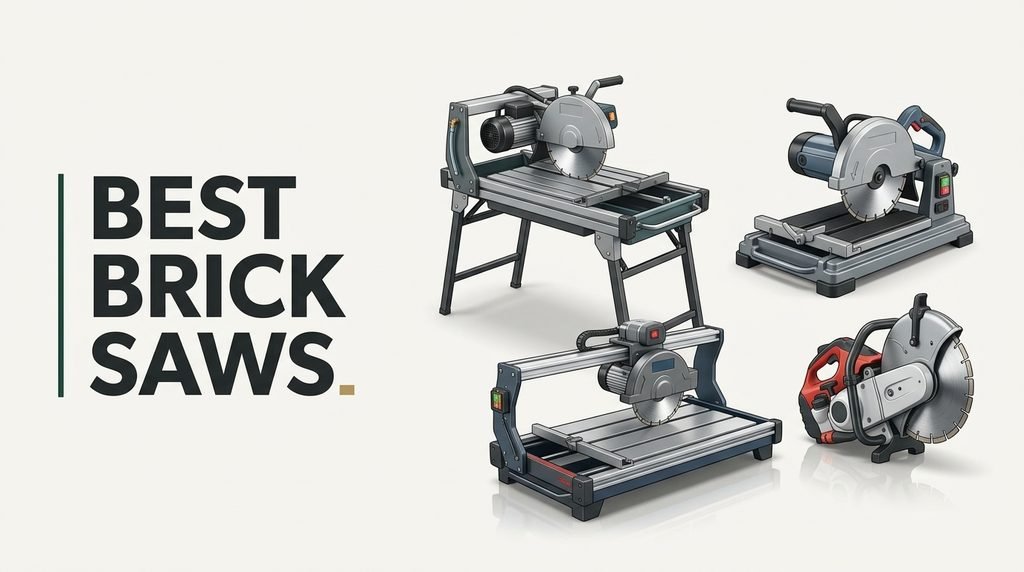
Cutting brick cleanly is a depth and blade problem before it is a horsepower problem. We compare 10 brick and masonry saws on cutting depth, blade diameter, power source, wet versus dry capability, dust control, weight, included accessories, warranty coverage, and price, so the saw you buy matches the material you actually cut.
The lineup spans 6.5-pound handheld masonry saws, a tabletop wet saw for repeatable paver cuts, 9-inch and 16-inch electric cut-off saws, one gas-powered model for off-grid work, and a cordless option. Cutting depth ranges from 1-3/8 inches at the small end to a full 6 inches at the large end.
That depth range is the real decision. A saw that reaches through a standard brick in one pass saves time and produces cleaner edges, while a shallow saw means flipping material or stepping down in multiple passes. The reviews, buying guide, and FAQs below walk through those trade-offs for every model here.
We compared 10 brick and masonry saws using the details that actually drive the purchase: cutting depth, blade diameter, whether a diamond blade is included, motor power, power source, wet and dry capability, dust management, weight, safety features such as blade brakes and GFCI protection, warranty terms, owner feedback, and price. The notes focus on practical trade-offs, since a weekend paver project and a mason’s daily workload demand very different tools.


Compare key features, scores, and current prices side by side. A shorter feature list means fewer details were available, not necessarily fewer capabilities.


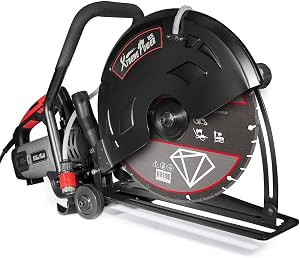

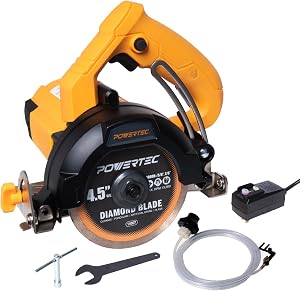

The Makita 4100NHX1 holds the highest owner rating in this guide at 4.5 stars, and its appeal is easy to understand: it is a genuine masonry saw that weighs just 6.5 pounds. It is the tool for cutting that happens overhead, on walls, inside openings, or anywhere a heavier saw becomes a burden within minutes of starting.
We may earn a commission when you buy through this link, at no additional cost to you.
A 9.6-amp motor drives the included 4-inch diamond blade at 14,500 RPM, a high speed that suits a small-diameter blade working in abrasive material. Cutting capacity tops out at 1-3/8 inches, which frames the tool honestly: it is for thin masonry, cut-in work, small repairs, and detail cutting rather than severing full brick. The power-to-weight ratio is the entire point, and the compact 8-5/8-inch body length lets it work inside tight openings.
Usability centers on the easily adjusted depth gauge, which allows repeatable precision once it is set. The small footprint stores in a truck box or job bag without rearranging anything, and the light weight makes one-handed repositioning between cuts realistic. Because no water feed is part of the package, plan your dust strategy separately, whether that means cutting outdoors, using extraction, or wearing appropriate respiratory protection.
Fatigue does not just feel bad; it degrades cuts. As arms tire, lines wander, pressure on the blade becomes uneven, and chipped edges multiply. A 6.5-pound saw keeps accuracy intact through a morning of overhead and vertical cutting where a 15-pound tool would have you resting every few minutes. For electricians cutting block openings and masons doing patch work, that sustained precision is worth far more than two extra inches of depth.
The limitation is the depth ceiling. Anything thicker than 1-3/8 inches simply is not this saw’s job. If your masonry work is mostly small-scale, vertical, or overhead, the weight advantage outweighs that ceiling by a wide margin. If your work is full-size brick on a bench, spend similar money on the Evolution instead and accept the extra pounds.
Projects requiring cuts deeper than 1-3/8 inches.
We may earn a commission when you buy through this link, at no additional cost to you.
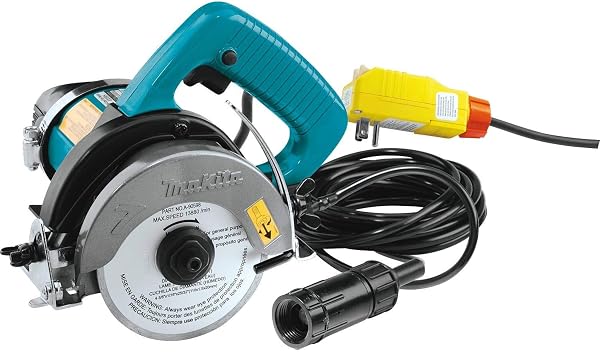
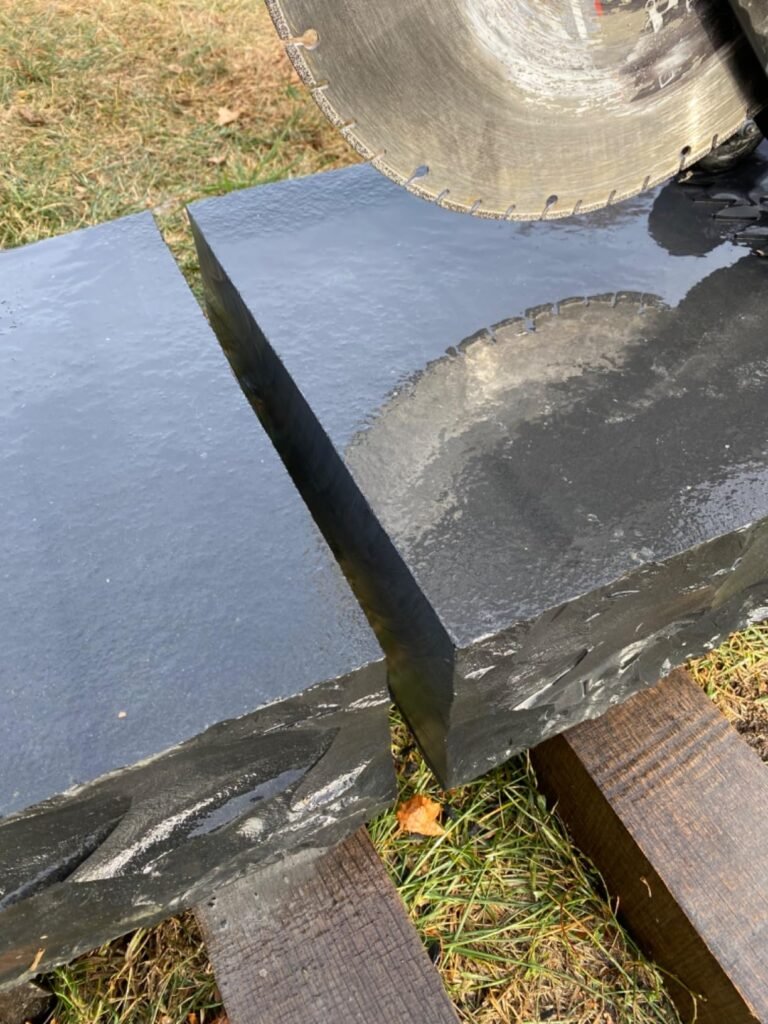
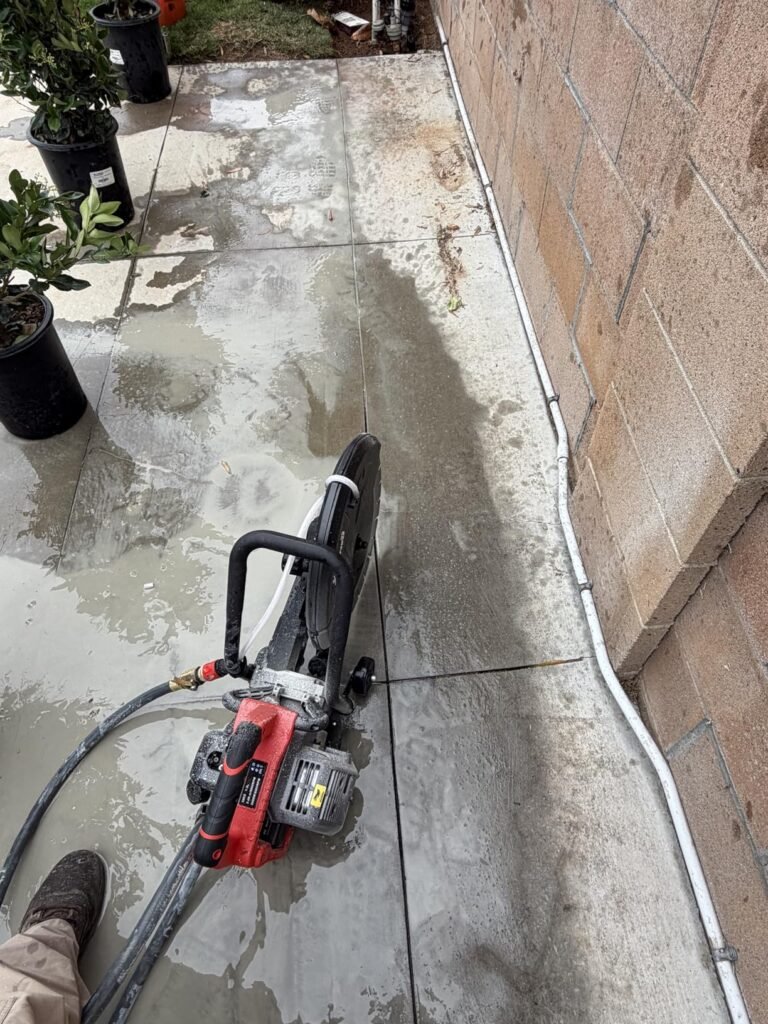
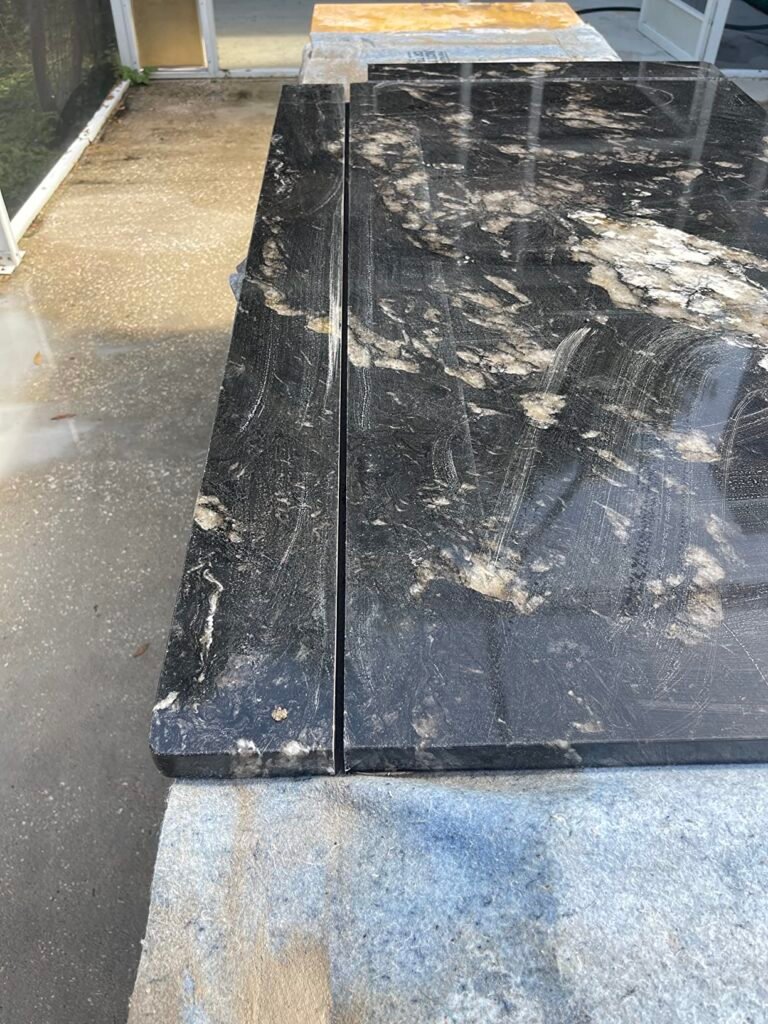
The Evolution R230DCT is the most complete brick-cutting package at the most accessible price in this guide, and that combination earns it the top spot. It arrives with a 9-inch diamond masonry blade ready for the work, so there is no separate blade purchase standing between the box and the first cut. It is aimed squarely at brick and masonry, and its 3-1/2-inch depth is enough to sever standard brick in a single pass instead of forcing you to flip and re-cut.
We may earn a commission when you buy through this link, at no additional cost to you.
Power comes from a 15-amp motor turning the blade at 6,000 RPM, and the included blade carries a high concentration of diamond in its rim for efficient, clean cuts through masonry and concrete. Beyond brick, it handles natural stone, block, and roof tile. Compared with attacking brick on an angle grinder, the blade coverage and two-handed posture make every cut more controlled, which is why repeated masonry cuts belong on a dedicated saw.
Safety and control features are unusually thorough for the money. An electric blade brake stops the blade within seconds of releasing the trigger, and a large fixed guard shields the operator from debris. The wrap-around handle supports horizontal and vertical cuts, and the weight distribution across the 15.6-pound frame keeps fatigue manageable. Built-in wheels help long cuts stay straight, a reinforced skid plate protects the underside, a dust port accepts vacuum extraction, and on-board storage keeps adjustment tools with the saw.
Because it produces no exhaust, an electric saw like the R230DCT is safe to run in garages, basements, and other enclosed spaces where a gas cutter cannot go. There is no fuel to mix, no pull cord, and no fumes to ventilate, which simplifies indoor renovation work considerably. Add vacuum extraction at the dust port and dust stays manageable even when working close to finished living space.
The trade-offs are the cord and the depth ceiling. Being electric, it needs an outlet and an appropriately rated extension cord, so remote work calls for a generator or the gas model later in this guide. And while 3-1/2 inches covers brick comfortably, thick block and slab belong to the 16-inch machines. For most buyers cutting brick, pavers, and modest masonry, the included blade, three-year warranty, and indoor-safe electric operation make this the easiest recommendation here.
Buyers who need more than 3-1/2 inches of depth for thick block or slab work.
We may earn a commission when you buy through this link, at no additional cost to you.
When the work involves reinforced concrete, deep paving, or full-thickness masonry, cutting depth is the specification that separates useful tools from rented ones. The VEVOR 16-inch electric concrete saw leads this entire lineup with a 6-inch maximum cutting depth, and it suits property owners and lighter contractor duty where buying beats repeatedly renting a bigger machine.
We may earn a commission when you buy through this link, at no additional cost to you.
The 3,200-watt pure copper motor spins at 3,600 RPM, delivering the fast, flat, stable cutting that deep passes demand, and its heat-proof construction is designed to hold up through long sessions. The 16-inch blade class gives the saw the reach to move through brick and paving with authority, and the depth rating covers stones, reinforced concrete, pavings, and bricks across a wide range of real projects.
Two design choices make it easier to live with than most cut-off saws. The wheeled base doubles as a cutting and positioning device, so long grooves and straight runs take less physical effort and stay truer than freehand work. The included wet-cutting attachment sprays water directly at the blade, suppressing dust without a second person trickling water alongside the cut. A double switch prevents accidental starts, while slow start, overload protection, and a built-in GFCI handle the electrical safety.
Deep cuts on a modest circuit work best as a series of shallow passes rather than one forced plunge. Mark the final depth on the material edge, make a first pass at roughly 2 inches, then drop the blade incrementally while keeping the water flowing. Letting the blade work at each step keeps the motor from laboring and produces a straighter kerf than pushing for full depth at once.
The honest limitation is power supply. A 32-amp circuit is recommended for full performance, and on a standard 15-amp circuit each pass should stay around 2 inches, working down in steps. It is also explicitly unsuitable for sticky material like asphalt. If you have the circuit and deep cuts on the schedule, nothing else here matches its depth; if your service is limited, plan on patience and multiple passes.
Anyone without access to a high-amperage circuit who needs full six-inch single-pass cuts.
We may earn a commission when you buy through this link, at no additional cost to you.
The Makita 4101RH is the professional's entry in this guide, and it spends its budget on the details that matter across a full workday rather than on raw cutting depth. It is a 5-inch wet masonry saw for installers and tradespeople who cut stone, veneer, and thin masonry repeatedly and need a water system that works properly every single time.
We may earn a commission when you buy through this link, at no additional cost to you.
The 7.9-amp motor is built for demanding continuous use, with a maximum cut of 1-5/8 inches at 90 degrees and 1 inch at 45. That depth positions it for thin material: stone veneer, brick tile, paver trims, and finish work rather than full structural block. The payoff is consistency, because the engineering keeps water and slurry away from the components that usually fail first on lesser wet saws.
The water delivery package is what justifies the price. Fifteen feet of tubing reaches across a typical work area, a pressure regulator keeps flow steady regardless of spigot pressure, and a valve puts adjustment at your hand. A special cover prevents water from entering the motor housing, which is the single most common death sentence for wet saws, and a GFCI plug is standard equipment wherever water and electricity meet.
Spigot pressure varies widely between houses and job sites, and a blade that runs dry for even part of a cut overheats, glazes, and loses life. The regulator in the 4101RH’s water system smooths those fluctuations into a steady, adjustable flow, which protects the blade, keeps the cut clean, and keeps overspray out of the motor housing. It is a small component that quietly prevents expensive problems.
The trade-offs are straightforward. It is the most expensive saw here, its depth rules out full-size brick in one pass, and its 4.1 owner rating means it pays to confirm your work fits its strengths. For daily wet cutting of thin masonry, the complete water system and motor protection earn their keep. For general brick work at a fraction of the cost, the Evolution or the VEVOR is the smarter buy.
General-purpose buyers who need depth more than a professional water system.
We may earn a commission when you buy through this link, at no additional cost to you.
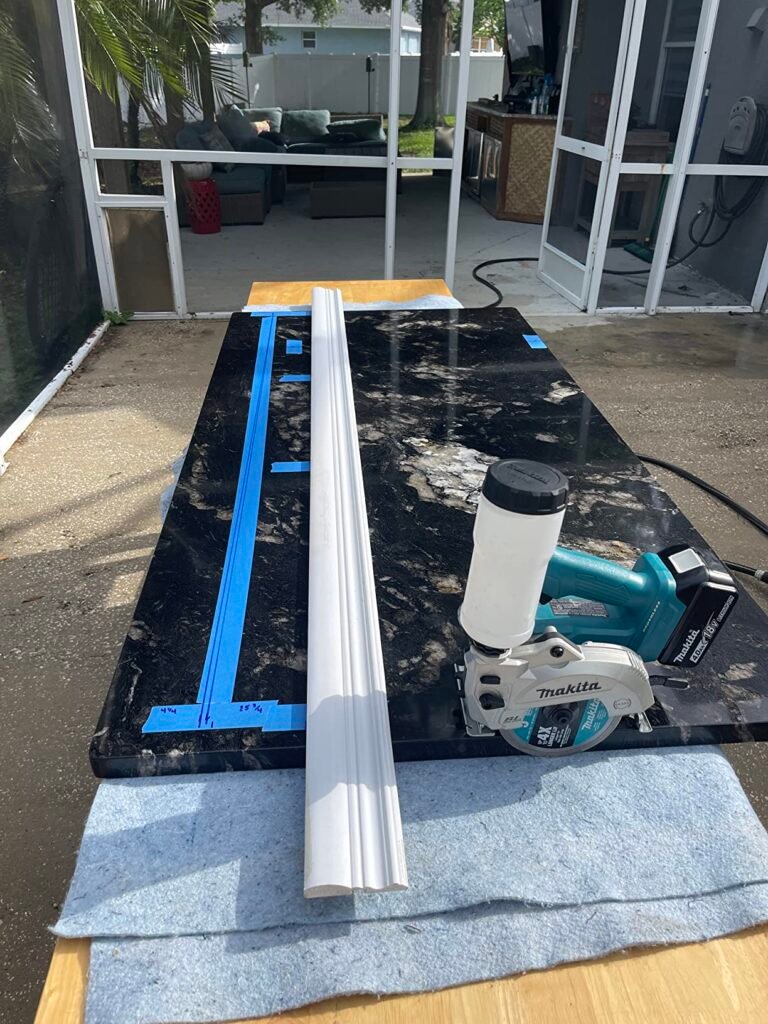
The DEWALT DWC860W is a handheld wet-cutting saw for people whose material changes daily. Granite, porcelain, concrete, and other stone all fall within its range, and the ability to switch between wet and dry cutting makes it a flexible single tool for renovation and installation work that crosses tile and masonry in the same week.

We may earn a commission when you buy through this link, at no additional cost to you.
A 10.8-amp motor producing 1,300 watts drives the premium 4-3/8-inch diamond blade at up to 13,000 RPM. The blade cuts up to 1-3/8 inches deep in either wet or dry mode, and the high blade speed helps maintain clean edges in hard stone instead of bogging down mid-cut. Bevel capacity reaches 45 degrees for angled cuts in trim and detail work.
The details are where this saw earns daily-tool status. A 12-foot water line feeds the blade to cut dust and extend blade life, so wet mode works at real distance from the spigot. The lock-on button reduces finger fatigue during production cutting, adjustable depth-of-cut handles varying material thickness, a dust-sealed switch keeps contamination out of the electrics, and the rubber overmold grip improves control, all in a 6.6-pound package.
Dry cutting is fast to set up and fine for occasional outdoor work, but it sends visible dust into the air and heat into the blade. Hooking up the water line changes the equation: dust drops sharply, the blade runs cooler, and edge quality improves on chip-prone stone. A practical approach on mixed jobs is to run dry for rough cuts outdoors and switch to wet for anything near finished space or in hard material.
Its limits match its class: 1-3/8 inches of depth means thin material and veneer, not full block, and wet cutting requires a water source within hose reach. Set against the Makita 4100NHX1, it trades a little simplicity for a bigger blade, a water feed, and bevel capability. Choose it when wet cutting and angled cuts are regular parts of the work; choose the Makita when pure lightness is the priority.
Deep cuts in full-thickness block or structural concrete.
We may earn a commission when you buy through this link, at no additional cost to you.
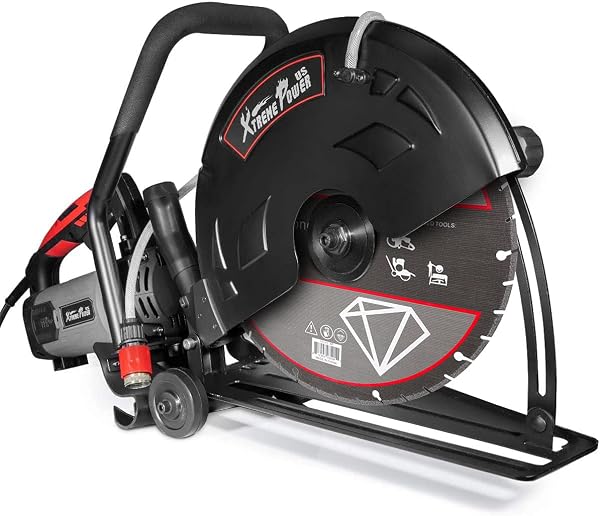
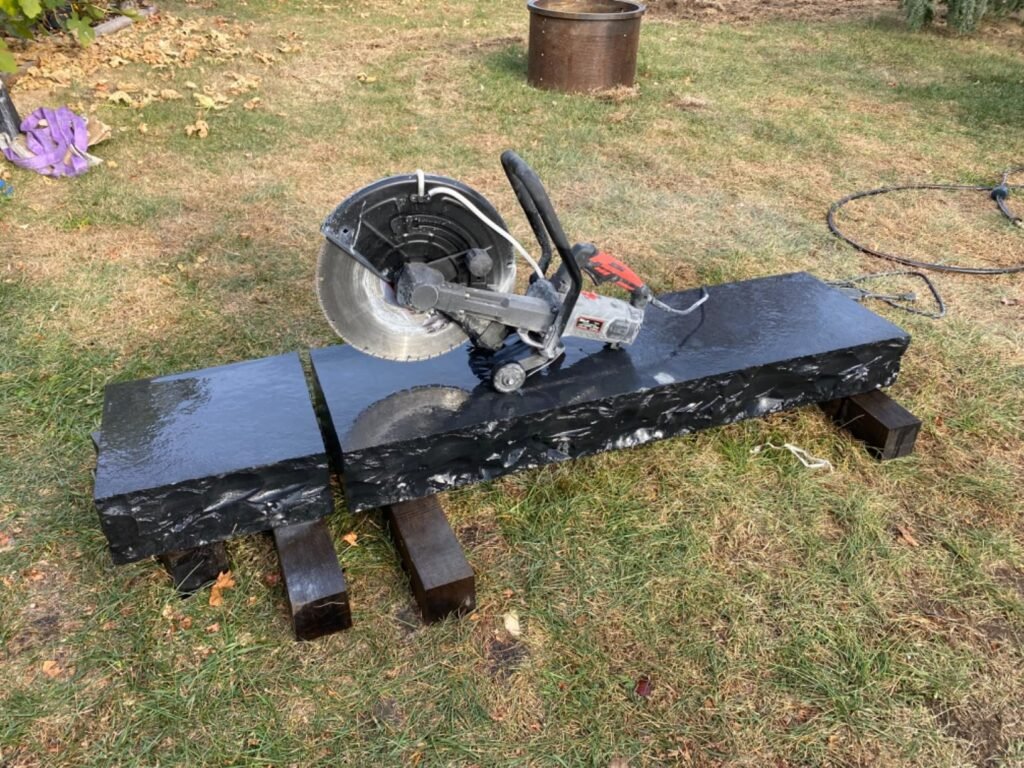
This XtremepowerUS 16-inch electric cutter shares its 3,200-watt motor class with the VEVOR but tilts its priorities toward dust management and cut visibility. It suits anyone cutting brick and concrete near finished interiors, in occupied buildings, or anywhere airborne dust is more than a passing nuisance.
We may earn a commission when you buy through this link, at no additional cost to you.
The pure copper, heat-proof motor delivers the power to cut through granite, porcelain, concrete, and other stone, with the 16-inch blade class providing serious reach into stones, reinforced concrete, pavings, and bricks. Low-vibration operation keeps strain down and helps long cuts stay on the line, and the saw can run wet or dry depending on the job and the water available.
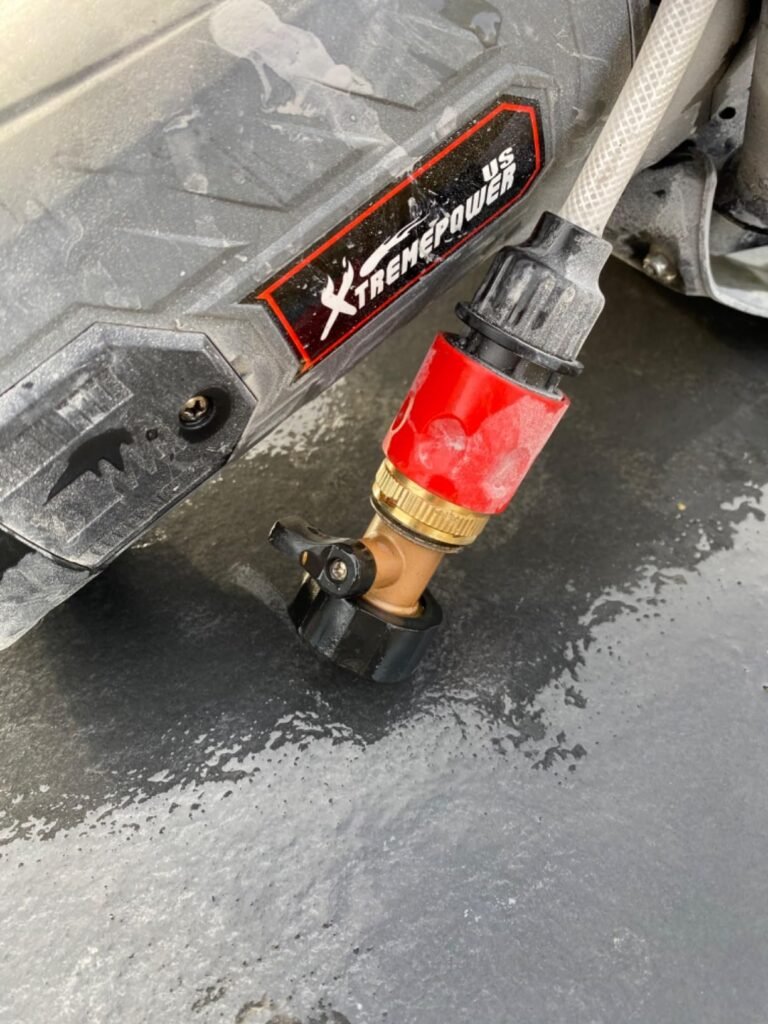
Dust handling is the standout. An extraction dust port vents cutting debris promptly and accepts vacuum hookup, which keeps the cutting line visible instead of buried in powder. For wet cutting, a built-in water feed with a control valve delivers water to the blade, decreasing dust while improving blade performance and life. A metal guard protects the operator from sparks, a double protection switch guards against accidental starts, a guide roller steadies long straight cuts, and a GFCI is built into the cord.
Connecting a shop vacuum to the extraction port does two jobs at once. It pulls silica-laden dust out of the air before it spreads through the workspace, and it keeps the marked cutting line visible so the operator is not cutting blind through a cloud. For anyone working indoors or around others, that combination is the difference between a tolerable job and an unhappy one, and it is the feature that separates this cutter from otherwise similar machines.
As a two-handed cutting platform, it is the wrong tool for small trim work, and it is corded, so remote sites remain out of reach. One specification deserves verification before ordering: confirm the cutting depth against your thickest material, since it is the number this maker communicates least clearly. For shop and property cutting where dust control drives the decision, the vacuum-ready design makes it the easiest saw here to work alongside.
Small detail work that needs a compact handheld saw.
We may earn a commission when you buy through this link, at no additional cost to you.
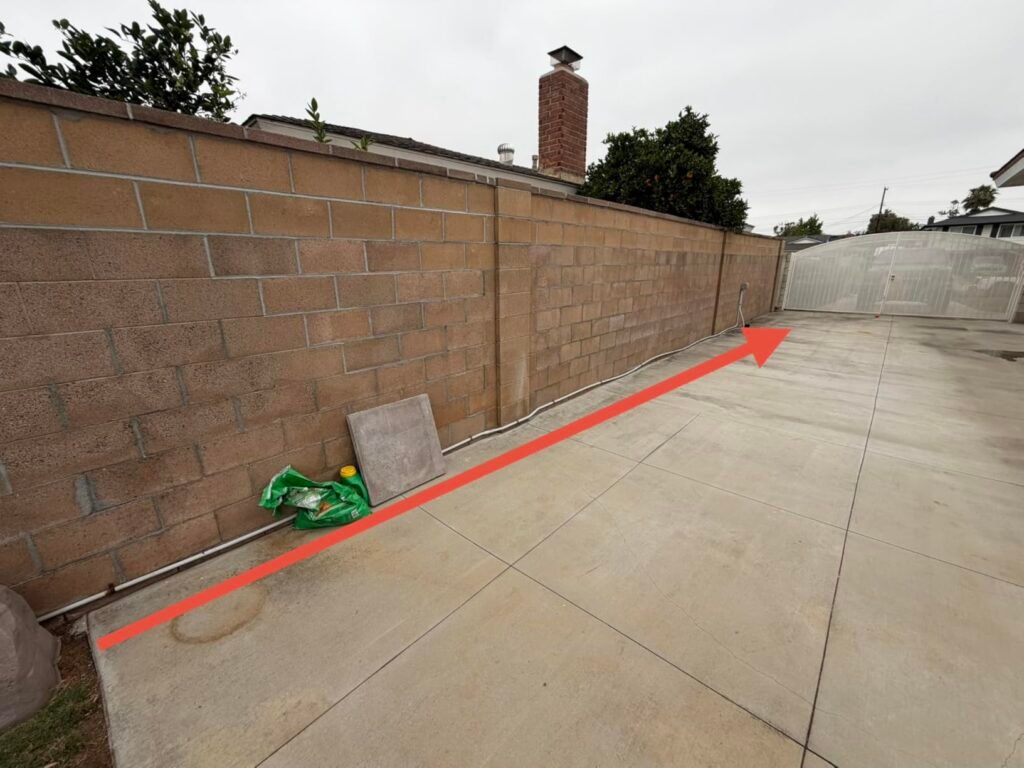
The only gas-powered saw in this guide exists for the places extension cords cannot go: remote pads, trail and fence lines, road margins, and undeveloped lots. Its 52cc two-stroke engine is aimed at contractors, utility crews, landscapers, and serious DIY users who need cutting power without a nearby outlet or generator.
We may earn a commission when you buy through this link, at no additional cost to you.
The 16-inch blade platform provides a 5-inch maximum cutting depth, enough for sidewalks, driveways, expansion joints, curbs, and paver work. With the appropriate blade fitted, the material range extends across concrete, asphalt, brick, block, stone, reinforced masonry, and metal, a wider list than any electric model here can claim, including the only asphalt capability in this lineup.
The included guide roller converts the saw into a walk-behind cutting system, which improves straight-line accuracy over long distances and reduces the fatigue of supporting a big saw by hand. The steel frame and reinforced blade guard are built for jobsite abuse, the handles are ergonomic, and the overall design works to reduce vibration, which matters on the long expansion-joint runs this type of saw is made for.
Electric saws win on cleanliness, noise, and maintenance every time there is an outlet within reach. But a distant culvert repair, a fence line across acreage, or a road job with no generator changes the math completely. Fuel is portable in a way amperage is not, and the ability to cut asphalt and metal with a blade swap makes a gas saw the fallback tool that keeps an otherwise stalled job moving.
Two cautions belong in any honest assessment. The 3.6 owner rating is the lowest in this guide, so read recent feedback and set expectations accordingly. And a two-stroke engine brings fuel mixing, fumes, and real maintenance that electric saws avoid entirely, along with an absolute ban on indoor use. For genuinely remote cutting, none of that changes the answer; near reliable power, it does.
Indoor or enclosed projects where exhaust fumes are unsafe.
We may earn a commission when you buy through this link, at no additional cost to you.
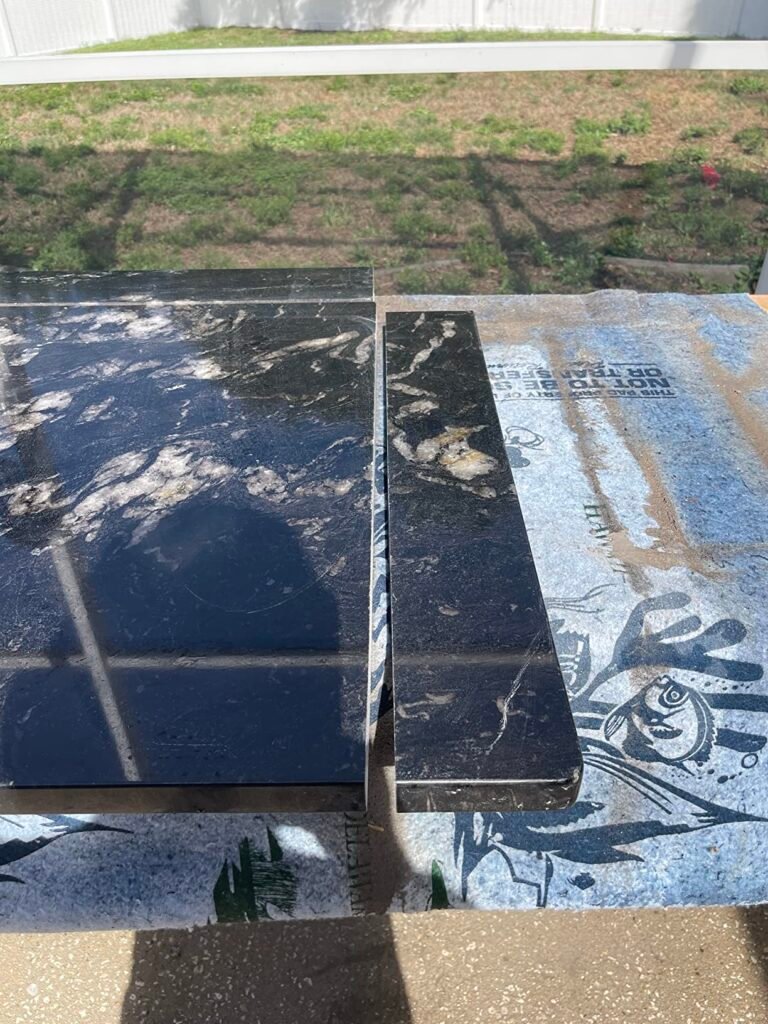
The Makita XCC01Z brings cordless convenience to masonry cutting for crews already invested in the 18V LXT battery platform. As a 5-inch wet and dry masonry saw, it targets the cuts that happen away from walls and hoses: rooftop work, remote patches, and quick cuts where dragging a cord and water line costs more time than the job deserves.
We may earn a commission when you buy through this link, at no additional cost to you.
The brushless motor delivers 8,800 RPM and runs cooler and more efficiently than a brushed equivalent, since there are no carbon brushes to wear out. Automatic Speed Change technology adjusts speed and torque during the cut to keep performance steady as the blade meets varying resistance. Depth of cut reaches 1-9/16 inches at 90 degrees, with bevel cuts up to 45 degrees for angled work.
The integrated water delivery system includes flow adjustment and is designed for OSHA Table 1 compliance in masonry cutting, meaning the water feed manages silica dust to the recognized standard rather than leaving compliance to improvisation. An electric brake stops the blade quickly for faster repositioning between cuts. The saw is also AWS capable, so it can coordinate wirelessly with compatible dust extractors that start and stop with the trigger.
Table 1 refers to the specified control methods for limiting respirable crystalline silica exposure on the job. For masonry cutting, delivering water at the blade at the specified rate is one recognized path to compliance, which is exactly what the XCC01Z’s integrated feed with adjustable flow provides. For professional crews, built-in compliance removes the guesswork of retrofitting water delivery onto a dry tool.
Remember that this is a bare tool. Battery and charger are separate purchases unless you already own LXT packs, which changes the real cost considerably for anyone starting from zero. The 1-9/16-inch depth also keeps it in thin-material territory. For existing Makita users, it is a natural and capable addition; for everyone else, the math needs to include batteries before any price comparison makes sense.
Buyers who do not already own compatible 18V batteries and chargers.
We may earn a commission when you buy through this link, at no additional cost to you.
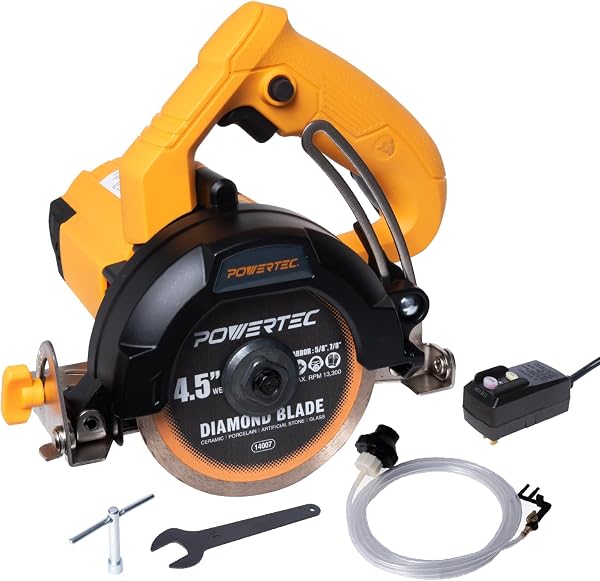
The POWERTEC HTS1045 is the most complete wet-cutting handheld kit at the friendliest handheld price in this guide. It arrives with a 4.5-inch continuous rim diamond blade, a water feed system, and GFCI protection, making it a genuine entry point into wet masonry cutting for DIY renovators rather than a bare platform needing accessories.
We may earn a commission when you buy through this link, at no additional cost to you.
A 12-amp, 1,400-watt motor reaches 12,000 RPM and drives the included blade through ceramic, porcelain, granite, marble, and masonry. Straight cuts reach 1-7/16 inches deep, with 7/8 inch of depth available at a 45-degree bevel. Sturdy locking mechanisms hold angle and depth settings firmly, which is what keeps tile joints and edge finishing precise through a full installation.
The water system is thoughtfully practical. A metal control valve allows accurate flow adjustment, and the standard 3/4-inch brass garden hose fitting connects to any household spigot without adapters. Wet cutting reduces flying dust, cools the blade, prevents chipping, and extends blade life, and the in-line GFCI plug cuts power instantly on water contact or overload. At 9.5 pounds, it is heavier than the premium handhelds here but still manageable for a day of bench work.
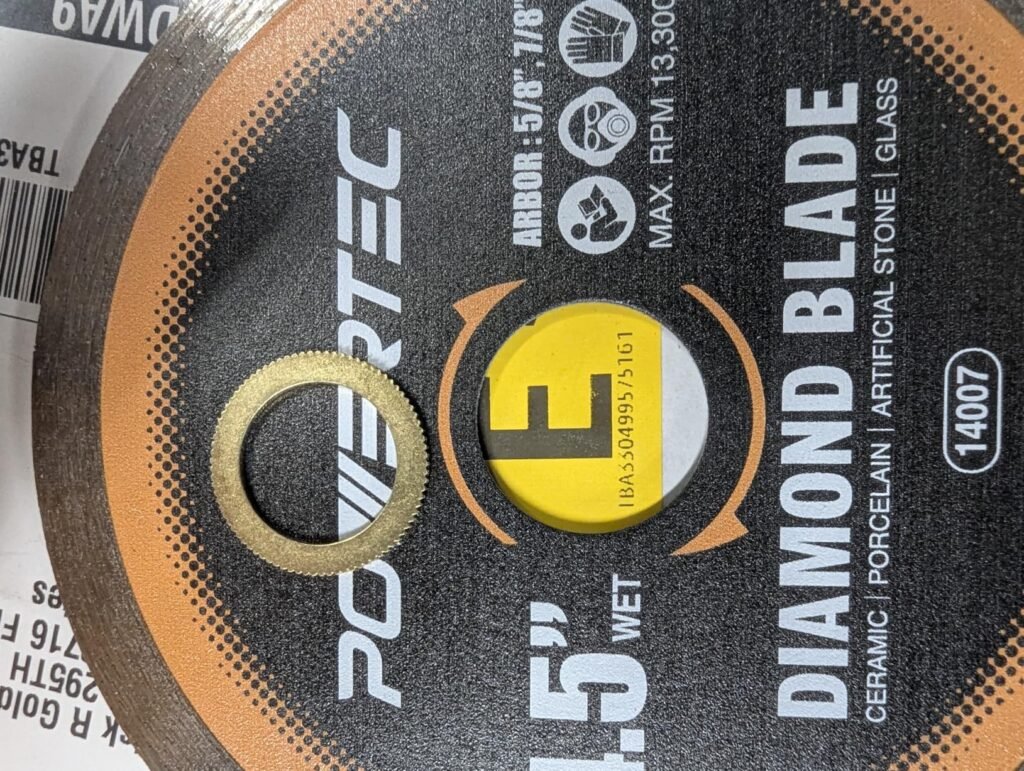
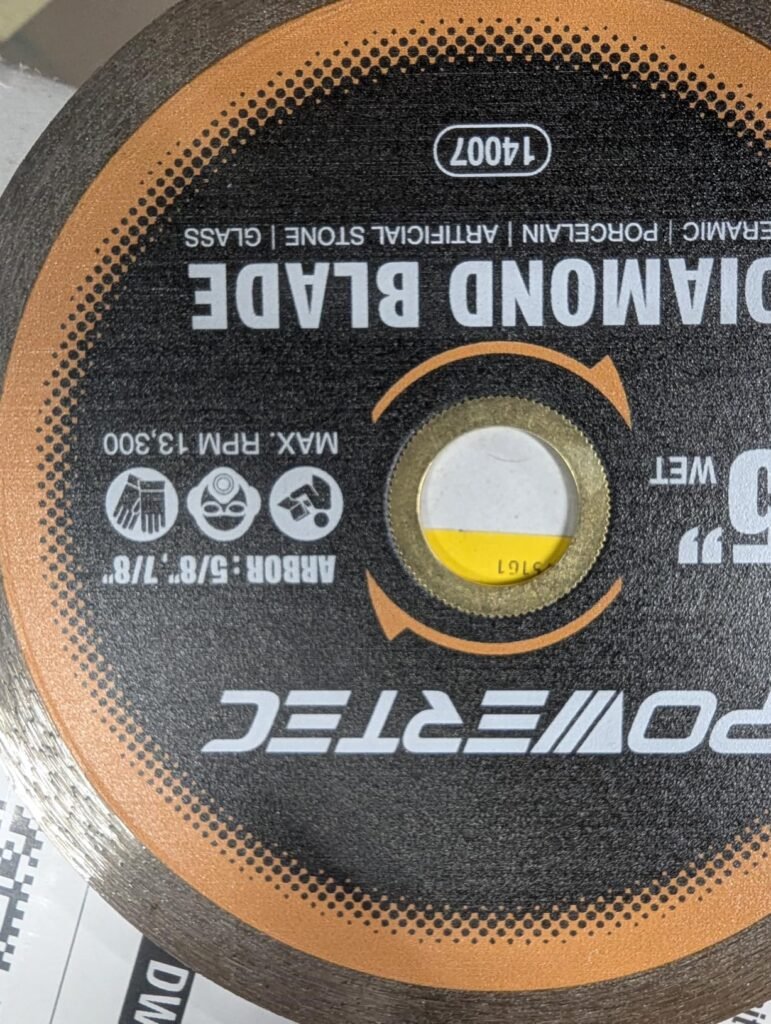
The first blade change is where most frustration happens, because the included diamond blade carries a reducer ring sized for smaller spindles. Removing the inner bushing before installing the blade onto the 7/8-inch spindle shaft is the entire secret. Take a minute to confirm the ring is out, hand-tighten the depth and bevel knobs firmly before cutting, and the saw behaves as intended from the first pass.
The caveats are real but livable at this price. The included blade ships with a removable reducer ring that must come off before the blade mounts on the 7/8-inch spindle, a small step that has confused more than a few first-time users. And the depth rules out full-size brick. For tile, veneer, and light masonry on a budget, the completeness of the package carries the day.
Masons who need to sever full-thickness brick in one pass.
We may earn a commission when you buy through this link, at no additional cost to you.
The SKIL 3540-02 is the only tabletop saw in this lineup, and it changes the working relationship entirely: the material comes to the tool. For patios, walkways, veneer panels, and any project built from repeat cuts in stone and masonry, a bench-mounted wet saw delivers accuracy that handheld cutting struggles to match.
We may earn a commission when you buy through this link, at no additional cost to you.
The seven-inch blade class cuts stone and masonry, and the corrosion-resistant stainless steel top supports material up to 12 by 12 inches. Crosscut capacity is 7.75 inches with 7.25 inches on the diagonal, and the bevel range runs from 0 to 45 degrees. A blade-cooling water reservoir keeps the blade temperature down while minimizing dust, all without a single hose connection, which is the platform’s greatest everyday convenience.
Precision comes from the adjustable rip fence with miter gauge, which enables accurate straight and mitered cuts, and repeatability is where a table saw shines. Set the fence once and every subsequent piece comes out identical, which is exactly what a hardscape project built from dozens of matching paver cuts demands. Cleanup is a matter of emptying and rinsing the reservoir rather than managing a wet work area.
Before choosing any table saw, lay out the actual pieces you will cut and compare them against crosscut and diagonal capacities. Pavers and thin brick vary more than people expect, and a piece that overhangs the table by an inch turns an accurate saw into a hazard. A quick check of a tape measure against the 7.75-inch crosscut rating takes a minute and prevents the most common tabletop-saw disappointment there is.
Capacity is the boundary. A standard modular brick at roughly 7-5/8 inches long just fits the 7.75-inch crosscut, and anything longer or wider simply cannot be cut in one setup. It is also a precision platform rather than a production machine, so pace expectations should match. For small hardscape and veneer projects, it remains the least expensive route to genuinely accurate wet cutting.
Long cuts on material wider than the table can support.
We may earn a commission when you buy through this link, at no additional cost to you.
Brick saws range from tabletop models near the hundred-dollar mark to gas machines built for road work, and the differences between them are practical rather than cosmetic. The factors below explain how to read cutting depth, blade fit, power systems, and dust control so the saw you choose can actually handle your material, your workspace, and your power situation.
Cutting depth is the single most important number on any brick saw, because it determines whether a piece drops in one pass or has to be flipped, re-marked, and cut again. Depth in this guide runs from 1-3/8 inches on the compact handhelds to 6 inches on the VEVOR 16-inch saw, with the Evolution R230DCT’s 3-1/2 inches sitting in the middle. To use those numbers, measure the material you actually cut: a standard brick presents a 2-1/4-inch face when laid flat but closer to 3-5/8 inches when cut on edge, and concrete block runs deeper still.
The common mistake is buying on blade diameter instead of depth, assuming a bigger disc automatically means deeper cuts. In reality, depth depends on blade size, guard design, and pivot geometry together. When depth is marginal, multiple passes are the workaround, and the VEVOR is explicitly designed for this on 15-amp circuits with its roughly 2-inch per-pass limit, but stepped cutting takes longer, and each extra pass is another chance for the line to wander.
Measure your thickest material before you shop, then buy depth with margin. A saw that reaches your material exactly will frustrate on the first slightly thicker piece; one with room to spare will not.
Blade diameter sets the ceiling for depth and influences cut speed, and this guide spans 4-inch blades on the compact Makita up to 16-inch blades on the cut-off saws. Just as important is whether a diamond blade is included: the Evolution, the Makita 4100NHX1, the DEWALT, and the POWERTEC all ship with a blade, while others assume you already own one. At the prices good masonry blades command, an included blade meaningfully changes the real cost comparison.
Arbor compatibility is the detail that stops projects cold. The POWERTEC uses a 7/8-inch arbor, and its included blade ships with a reducer ring that must be removed before mounting, a pattern common across the category. Continuous rim blades cut cleaner in brick and tile, while segmented rims clear debris faster in coarse material at the cost of a rougher edge. Brick itself is abrasive, so even a quality blade wears measurably over a large project, and the POWERTEC accepts its 14000 series blades when the original wears out.
Check the arbor size and the box contents before checkout, and budget one spare blade for any project involving more than a few dozen cuts.
Corded electric saws dominate this guide because they suit where most brick cutting happens: near buildings, with outlets available, and often indoors or in semi-enclosed spaces. Their constraint is amperage. Household 15-amp circuits are fine for handheld saws, but the big 3,200-watt machines draw seriously, and the VEVOR is built around a 32-amp recommendation for full-depth work, so the circuit you can access shapes which electric saw is realistic.
Gas power, represented by the 52cc XtremepowerUS, trades cleanliness for independence: no outlet, no extension cords, and the only asphalt and metal capability in the lineup. The costs are fuel mixing, engine maintenance, exhaust that forbids indoor use entirely, and the lowest owner rating in this guide. Cordless, shown by the Makita XCC01Z, offers true portability within battery limits, and its bare-tool format means the real price depends entirely on what you already own.
Let location decide. Near power, buy electric; far from it, buy gas or cordless; and only choose cordless if the battery platform already exists in your kit.
Wet cutting does three jobs at once: it suppresses dust, cools the blade, and extends blade life, which is why most serious masonry work happens wet. The implementations here range from the SKIL’s self-contained reservoir, needing no hose at all, to the POWERTEC’s garden hose fitting, the DEWALT’s 12-foot line, the Makita 4101RH’s regulator-equipped system, and the integrated feeds on the VEVOR and the cordless Makita. Dry cutting remains valid for occasional outdoor work where setup speed matters more than dust.
The health context deserves plain language: cutting brick and masonry releases respirable crystalline silica, and water delivery at the blade is the recognized control method, reflected in the XCC01Z’s OSHA Table 1 design. Wherever water and electricity meet, GFCI protection stops being optional, and most saws in this guide include it in the plug or cord. Vacuum extraction, available through the XtremepowerUS electric saw’s dedicated port and the Evolution’s dust port, is the dry-cutting alternative that also keeps lines visible.
If you cut indoors, near others, or for a living, make wet capability or vacuum extraction a requirement rather than a preference.
Handheld saws bring the tool to the material, which makes them the only choice for walls, curbs, and anything already installed. Tabletop saws invert the relationship: the SKIL holds material against a fence for repeatable precision, which is why it wins on consistency for paver and veneer work. Wheeled and walk-behind platforms, including the VEVOR’s wheeled base, the guide rollers on both XtremepowerUS models, and the Evolution’s built-in wheels, support long straight runs where freehand accuracy deteriorates.
Style also dictates the workspace. A handheld saw needs clear floor space and a stable stance for the operator; a table saw needs a level bench or stand plus room for material handling; a walk-behind setup needs a clear path the full length of the cut. Buyers frequently underestimate the last of these, then discover mid-project that the run they planned has an obstruction the saw cannot cross.
Ask where each cut physically happens, whether on the wall, on the bench, or along the ground, and let the answer pick the style.
Weight ranges from 6.5 pounds on the Makita 4100NHX1 to the substantial two-handed mass of the 16-inch platforms, and the right number depends entirely on the position of the work. Overhead and vertical cutting punishes every extra pound, and fatigue is not merely uncomfortable: tired arms wander, pressure on the blade becomes uneven, and cut quality and safety degrade together.
The saws here manage fatigue differently. The DEWALT includes a lock-on button for production cutting, the Evolution spreads its 15.6 pounds through a wrap-around handle and balanced weight distribution, and the XtremepowerUS models emphasize vibration reduction for long runs. Features like electric blade brakes also reduce effort indirectly, because faster stops mean faster repositioning between cuts.
Match tool weight to working position, not to how strong you feel at the store. A saw that is manageable for ten minutes may not be manageable for a morning.
The safety equipment on these saws is not decoration. Electric blade brakes, present on the Evolution and the cordless Makita, stop the blade within seconds of trigger release, which protects both the operator and anyone nearby during repositioning. Fixed and reinforced guards shield against debris and sparks, double switches prevent accidental starts, and the VEVOR’s slow-start and overload protection reduce both electrical stress and launch risk.
Wet cutting adds its own category of protection. GFCI plugs and cords, standard on the Makita 4101RH, the POWERTEC, the VEVOR, and the XtremepowerUS electric, cut power instantly when water reaches electricity, which is the failure mode wet saws cannot tolerate. Beyond the tool itself, eye protection, hearing protection, and a respirator rated for silica are baseline equipment for masonry cutting, wet or dry.
Treat a functioning guard and GFCI protection for wet work as non-negotiable requirements rather than upgrade features.
List prices here run from $78.98 for the Evolution to $406.33 for the Makita 4101RH, and the spread buys specific things: depth, water systems, and warranty coverage. The Evolution’s package of an included blade, 3-1/2-inch depth, and a three-year manufacturer warranty is the strongest value proposition at the low end, while the Makita’s price buys a complete professional wet-cutting system rather than more depth.
Ownership costs continue after checkout. Blades wear and need replacing, with brick’s abrasiveness accelerating the schedule. The gas saw adds fuel and engine maintenance, the cordless bare tool adds batteries and a charger that can rival the tool’s own price, and wet saws consume water and occasional fittings. Owner ratings provide a useful reality check across all of it: the Makita 4100NHX1’s 4.5 leads this guide, while the gas XtremepowerUS’s 3.6 suggests reading recent feedback carefully before committing.
Buy for how often you will actually cut. A saw used monthly justifies less investment than one used weekly, and money saved on an oversized purchase funds the blades and accessories the project will demand anyway.
Setup starts with the blade. Inspect it for cracks, missing segments, or a glazed rim before every session, confirm the arbor fit, and tighten the mounting hardware properly, since the POWERTEC’s reducer ring is a reminder that arbor mismatches are common and worth double-checking. Connect water where the saw uses it, whether that is a garden hose at the brass fitting or a regulated line, and verify flow reaches the blade before the first cut. For corded saws, use an outlet and extension cord rated for the motor, and confirm GFCI protection before any wet cutting begins.
During use, let the blade reach full speed before touching the material, and let the saw’s weight and the blade’s speed do the cutting rather than forcing the pace. Mark cut lines clearly and keep water flowing or extraction running so the line stays visible. When depth exceeds what a single pass should carry, as on the VEVOR at 15 amps, step down gradually rather than plunging. Wear eye protection, hearing protection, and a respirator rated for silica, and keep cords and hoses routed away from the cutting path.
After the work, maintenance is mostly about managing water and dust. Rinse slurry from the saw and table, dry the tool before storage, and empty the SKIL’s reservoir rather than letting water sit. Store blades flat and dry where they cannot be knocked, inspect power cords for damage, and for the gas saw, follow fuel and storage practices that keep the engine usable between seasons. A few minutes of cleanup after each session is the difference between a saw that lasts years and one that corrodes quietly in the corner.
A standard brick presents about 2-1/4 inches when cut across its face and closer to 3-5/8 inches when cut on edge, so depth needs vary with how you lay out cuts. The Evolution's 3-1/2-inch depth covers most brick orientations in a single pass, while the compact handhelds at 1-3/8 to 1-9/16 inches are limited to thin material and veneer. For block and slab, the 16-inch saws with 5- and 6-inch depths are the appropriate class. Measure your thickest cut before choosing.
Often, yes, as long as the material fits the machine. The SKIL 3540-02 is rated for stone and masonry and uses water to cool the blade and control dust, which suits thin brick, pavers, and veneer pieces. The constraint is capacity, since its 7.75-inch crosscut barely accommodates a standard modular brick's length and larger pavers will not fit. Compare your material dimensions to the table's crosscut and diagonal ratings before buying.
For most work, yes. Water at the blade suppresses silica dust, cools the diamond rim so it cuts cleaner and lasts longer, and reduces chipping on visible faces. Dry cutting is faster to set up and works for occasional outdoor cuts, but it sends dust into the air and heat into the blade. If you cut near finished spaces, indoors, or frequently, wet capability should be a requirement.
Electric saws can run indoors with attention to ventilation and dust control, and models like the Evolution are explicitly suited to enclosed environments because they produce no exhaust. Gas saws can never be used indoors. For indoor wet cutting, confirm GFCI protection and manage the slurry, and for indoor dry cutting, use vacuum extraction and a respirator rated for silica.
Several do. The Evolution includes a 9-inch diamond masonry blade, the Makita 4100NHX1 ships with a 4-inch blade, the DEWALT includes a premium 4-3/8-inch blade, and the POWERTEC comes with a 4.5-inch continuous rim blade. The others assume you will supply or upgrade a blade. Since quality masonry blades are a real expense, an included blade changes the effective price comparison between models.
A bare tool ships without a battery or charger, at a price that assumes you already own them. The Makita XCC01Z is sold this way, so buyers starting from zero need to add compatible 18V LXT batteries and a charger to the real cost, which can be substantial. If you already run Makita 18V tools, the bare-tool format is the economical path; if not, compare the complete cost against corded alternatives.
Deep, forced cuts push a motor toward its maximum draw, and household 15-amp circuits have limited headroom. The VEVOR illustrates the issue directly, since it is built around a 32-amp recommendation and limits cuts to about 2 inches per pass at 15 amps. Work in stepped passes, use a circuit without other loads on it, and avoid long extension cords that worsen voltage drop. Persistent tripping means the cut, the cord, or the circuit needs to change.
Watch for cutting that slows noticeably, requires more pressure, or produces rough, chipped edges, along with visible segment wear or a glazed rim. Brick and masonry are abrasive, so blades wear faster in this work than in tile, and a dull blade also strains the motor. Inspect the blade for cracks and missing segments before each session, since a damaged blade is a safety issue rather than just a performance one.
For a one-time project near the house, electric is almost always the better call: cleaner operation, no fuel handling, lower cost, and no exhaust for any cuts made in the garage. A 3-1/2-inch-class saw like the Evolution handles brick and paver depths for typical patio work. Gas earns its place only when the site has no power within extension-cord reach, which is rare for residential patios.
Depth and blade choice decide. A saw with 3-1/2 inches or more, like the Evolution or the 16-inch machines, has the reach for brick, pavers, and modest concrete, and diamond blades can be selected to match each material. The gas XtremepowerUS extends the range to asphalt and metal with the right blade. What no single saw does is make a thin-material handheld cut full brick, so match the depth class to the thickest material on your list.
The Evolution R230DCT is the strongest overall choice in this guide because it removes the usual compromises at its price: a diamond blade arrives in the box, the 3-1/2-inch depth handles brick and masonry in a single pass, electric operation makes it safe indoors, and a three-year warranty backs all of it. For most buyers cutting brick, block, and pavers, it is the complete answer rather than a starting point.
Different priorities point to the alternatives. The VEVOR 16-inch saw is the pick for six-inch depth on thick slab and block work, provided the circuit supports it. The Makita 4101RH serves professionals who need a regulated wet-cutting system for daily thin-masonry work, the SKIL tabletop delivers repeatable accuracy for paver projects, the gas XtremepowerUS covers remote sites and asphalt, and the cordless Makita fits crews already on the 18V platform.
Decide with depth first, then power source, then dust strategy. Measure the thickest material you will cut, check the circuit or fuel situation at the work site, and be honest about whether water or extraction will be part of your routine. A brick saw matched to those three answers will feel like the right tool on the first cut and for years afterward; one chosen on price alone rarely does.